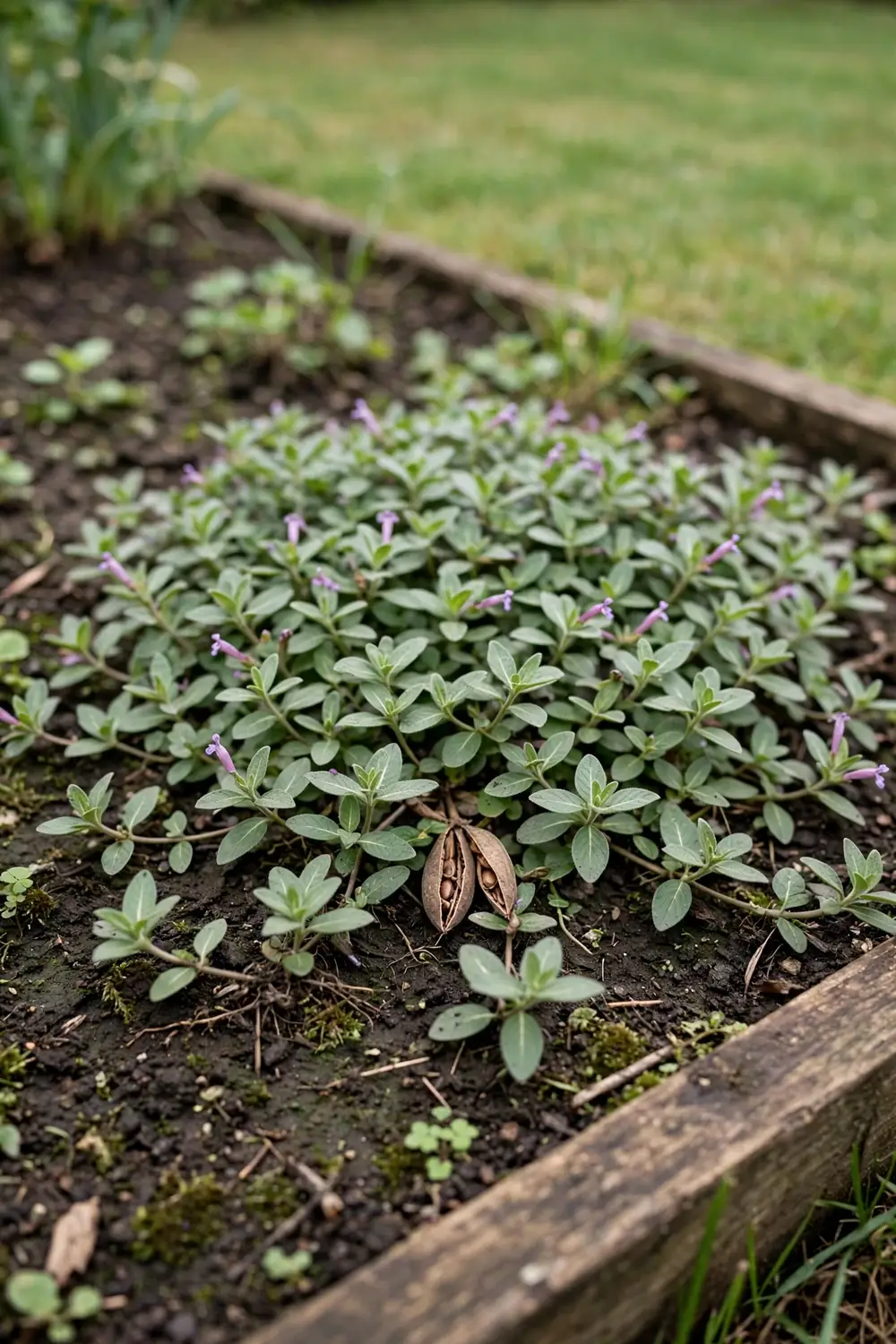

Dyschoriste nagchana, formerly Dyschoriste depressa, is the creeping weed with opposite leaves and small purple flowers tucked into the leaf axils. Catchment groups first recorded it naturalised in Queensland at Taringa in Brisbane in April 2000. Check 4 clues before you pull anything, because mowing it or yanking it wrong spreads it further.
I have learned that the patch I dig out roots and all stays gone, while the patch I mow comes back thicker. The rest of this page walks the ID check, the name change, the one lookalike that fools people, and the dig-and-clean routine that stops the patch from returning.
1. Match the 4 ID Clues Before You Pull Anything
Dyschoriste nagchana carries 4 ID clues that separate it from most lawn weeds. Check all 4 before you touch the plant. A single clue misleads. Four together name it.
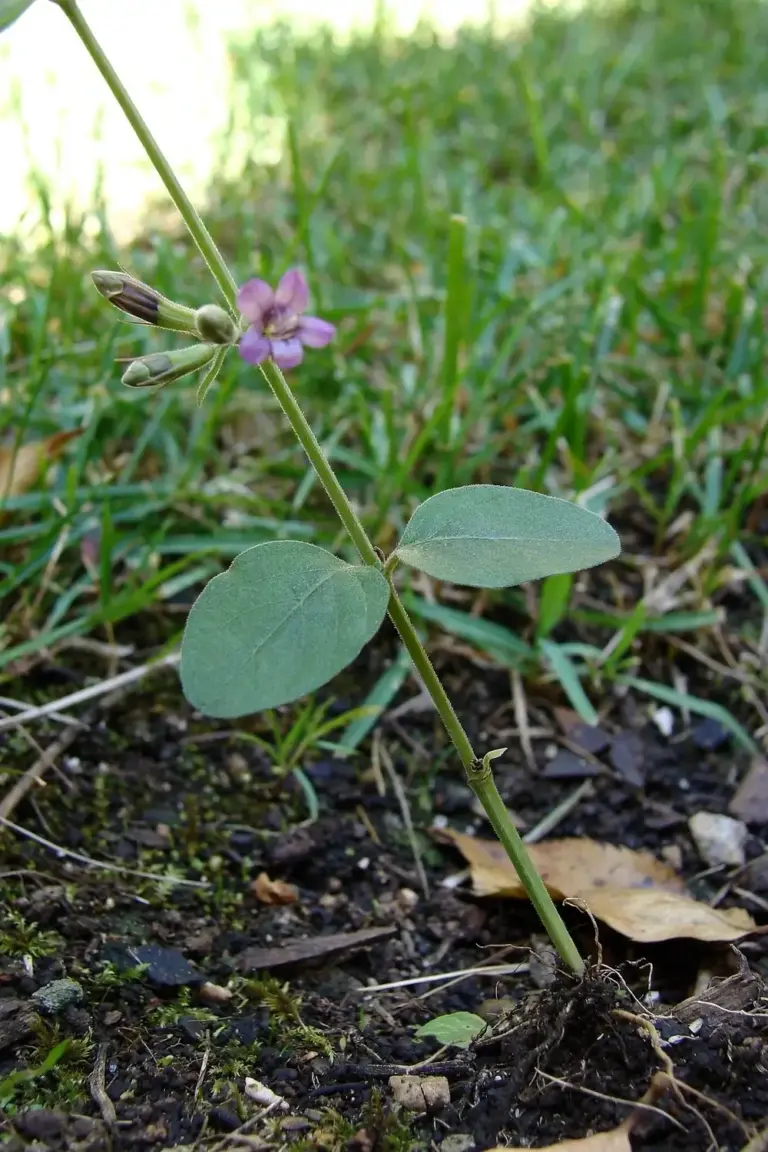
Clue 1 is opposite leaves. Leaves sit in pairs along the stem, one across from the other. The PlantNET FloraOnline entry for Dyschoriste nagchana describes leaves as ovate to elliptic, 2 to 8 cm long and 0.7 to 2.6 cm wide, with the largest reaching 10 cm. Catchment guides describe the same leaves as opposite and ovate, 60 mm long at most. Small leaves on a mown plant still sit opposite. That pairing is the first check.
Clue 2 is flowers in the leaf axils. Flowers sit in condensed clusters where each leaf meets the stem, not at the stem tips. The PlantNET entry gives the corolla at 6 to 9 mm long, stretching to 12 mm, white or pale mauve through to purple or lilac. Catchment guides call the flowers small and tubular, under 10 mm long, mauve, pinkish, or whitish, in almost stalkless clusters in the upper leaf forks. A flower spike at the stem tip points to a different plant.
Clue 3 is the stem. Stems sprawl, root where they touch soil, and rise at the tips. The PlantNET entry describes a perennial herb with a weakly developed rootstock, basal stems creeping and rooting, apical parts decumbent to ascending or erect, stems up to 65 cm long. Catchment guides describe stems as usually square in cross-section and hairless or finely hairy, spreading to upright and usually reaching 60 cm tall. Run a finger along a stem. A square feel plus rooting nodes confirms the clue.
Clue 4 is the fruit. The fruit is a capsule that splits and throws its seeds. The PlantNET entry gives the capsule at 7 to 10 mm long, longer than the calyx when ripe. Catchment guides describe an elongated cylindrical capsule 10 to 15 mm long that explosively releases its seeds. Spiky buds and pods in the leaf axils after flowering point the same way. Seeds on the soil after you brush the plant confirm the clue.
Look for the plant where it thrives. Catchment writers find it in parks, gardens, lawns, roadsides, footpaths, and waterways across Brisbane. It prefers wetter ground such as creek banks and wetlands. It also grows in drier habitats. A creeping mat in a lawn after rain, a patch along a drain, and a fringe on a creek bank all deserve the 4-clue check. The plant that looks like a harmless groundcover in a dry bed can be the same weed.
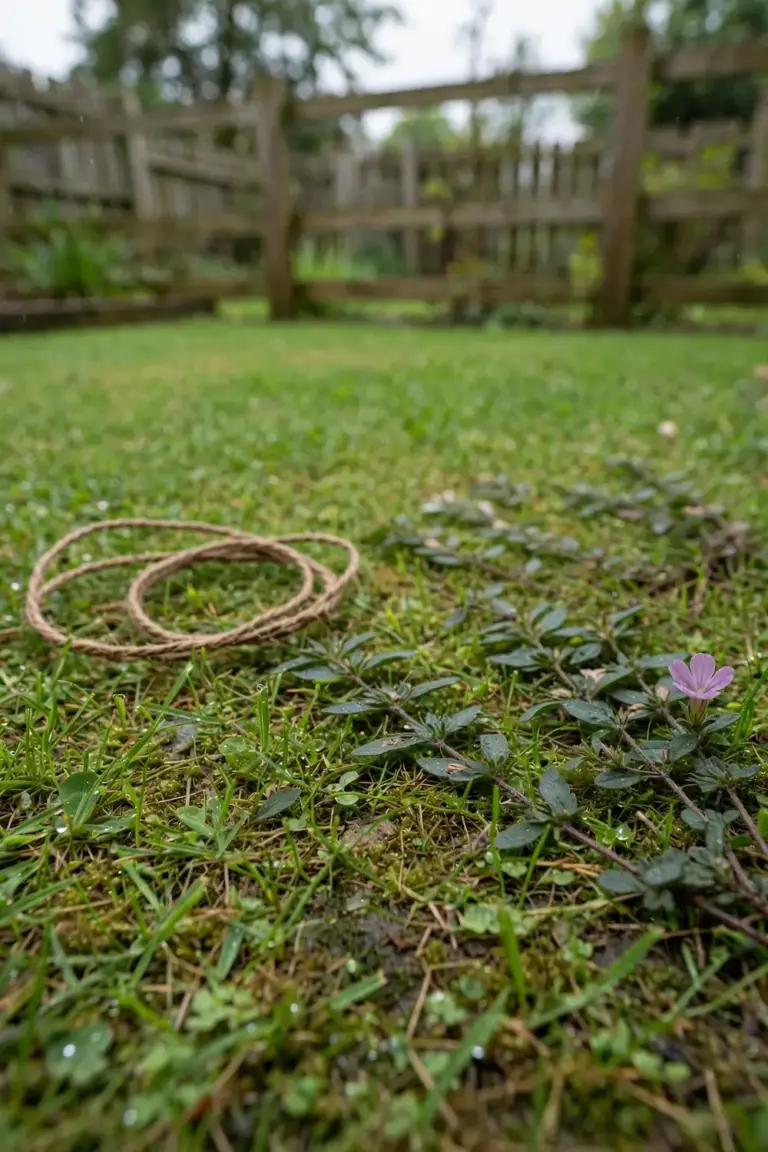
The mown-lawn form fools people most. A plant mowed weekly never rises to 60 cm. It flattens into a creeping mat, roots along its stems, and flowers low. Bush regenerators note that a plant straying into mown grassland develops a creeping habit and roots along its stems. Check a lawn mat with the same 4 clues. Opposite leaves and axillary flowers still show on a flat plant. A lawn that looks like plain grass from standing height can carry a full dyschoriste mat at ankle height.
2. Use the New Name Dyschoriste nagchana on Every Label
The plant you find in south-east Queensland carries a new name. Older guides and nursery tags call it Dyschoriste depressa. The current name is Dyschoriste nagchana. Use the current name on every label, photo caption, and council report. A report under the old name still gets read, but the current name matches the herbarium record.
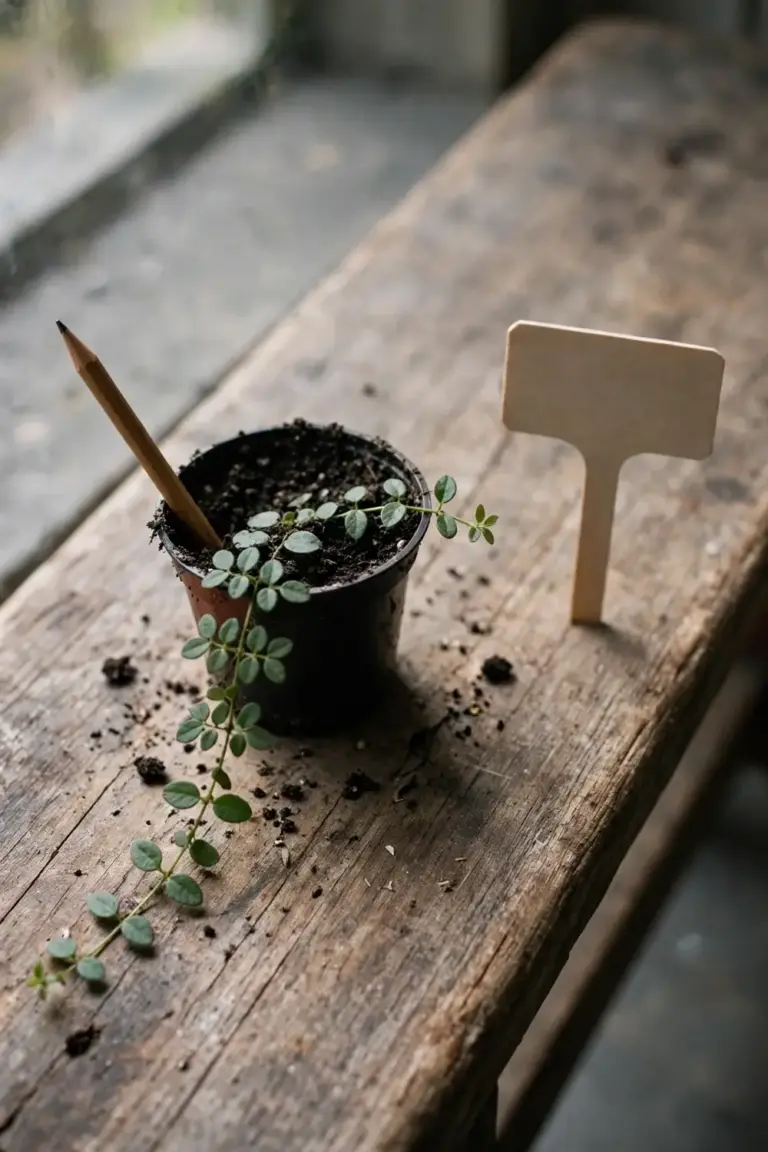
The same PlantNET flora entry lists Dyschoriste depressa Nees as a synonym of Dyschoriste nagchana. The Queensland Herbarium now uses Dyschoriste nagchana, and the world flora databases treat depressa as a synonym of nagchana. Search both names when you look the plant up. Old pages stay live under the old name. New pages use the new one. A search for one name alone misses half the guidance.
One naming trap sits inside this change. The Lucid key flags that the Australian plant may be Dyschoriste radicans. Treat that flag as a note for herbarium botanists, not as a field ID. The name on SEQ catchment pages and the current flora entry is Dyschoriste nagchana. Write that name. Add “formerly Dyschoriste depressa” once in any report so the reader can match old records.
Search both names when you look the plant up. Old catchment pages, the Logan City Council video, and the Weeds of Australia key file the plant under Dyschoriste depressa. New flora entries and herbarium records file it under Dyschoriste nagchana. A search for one name alone misses half the guidance. A search for both names finds the old ID notes and the current name in one pass.
Know where the plant comes from. Bush regenerators record dyschoriste as native to southern Africa. That origin matters because it explains the plant’s tolerance for sun, shade, wet creek banks, and dry beds. It grows across conditions that would check a fussier plant. Do not repeat the tropical America origin that appears on one commercial page. The African origin matches the flora record and the field behaviour.
3. Rule Out Rostellularia obtusa With the Woody Stem Test
Small dyschoriste fools people. Young plants look like Rostellularia obtusa, another small creeping herb with opposite leaves. The woody stem test separates them.
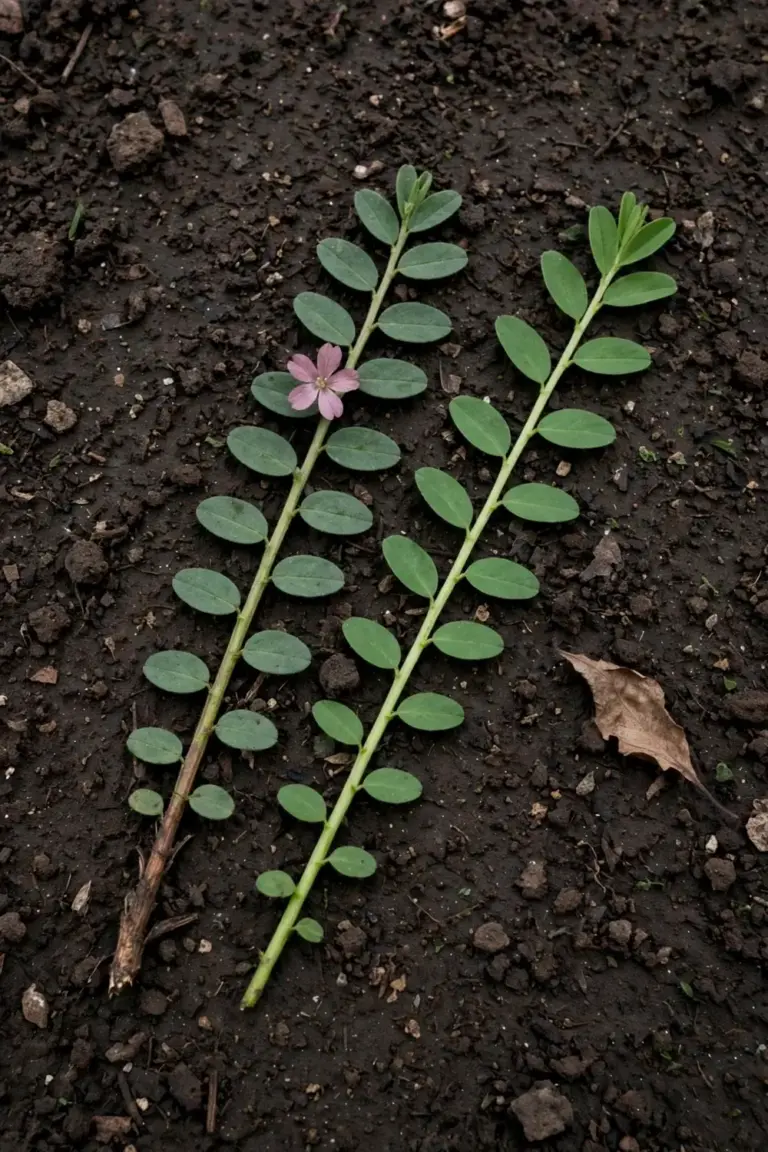
Feel the stem base. Dyschoriste stems turn rather woody toward the base, and that woody feel marks the plant even when it is small. Bush regenerators writing in the Australian Association of Bush Regenerators newsletter name Rostellularia obtusa as the confusion species and give the woody stem as the distinguishing test. A soft, fully herbaceous stem points away from dyschoriste. A stem that feels woody at the base while the tips stay soft points toward it.
Leaf shape backs the test. The same newsletter describes opposite elliptic leaves with entire margins, 50 mm long at most, and tiny mauve flowers in clusters in the leaf axils. Rostellularia carries similar small leaves. Leaf shape alone does not settle the ID. Stem feel plus axillary flower clusters does.
| Clue | Dyschoriste nagchana | What It Rules Out |
|---|---|---|
| Stem base | Turns rather woody toward the base | A fully soft herbaceous stem |
| Leaves | Opposite, elliptic, entire margins | Alternate leaves or toothed margins |
| Flowers | Tiny mauve flowers in leaf-axil clusters | Flowers on a tall spike or at stem tips only |
| Fruit | Capsule that splits and throws seeds | Fleshy berries or fluffy seed heads |
Photograph the plant before you pull it. Shoot the leaf pairing, one flower cluster, and the stem base in the same frame. A photo set beats a memory when you ask a catchment group or a council officer to confirm the ID.
Send the photos to a local catchment group when the ID stays uncertain. Catchment volunteers see this plant weekly. They confirm IDs from photos and they know which creeks already carry it. A photo set with a location and a date gives them everything they need. A pulled plant with no photo gives them nothing to check.
Ask the group which patches they already track. A patch on a creek they monitor may sit inside a control program. Your report adds a data point to their map. A patch in a new street gives them an early warning. Either way, the photo set turns a garden find into useful record.
4. Stop Mowing Over It Before You Read This
Mowing spreads dyschoriste. The plant roots along its stems, and every cut piece can start a new plant. A mower turns one patch into many.
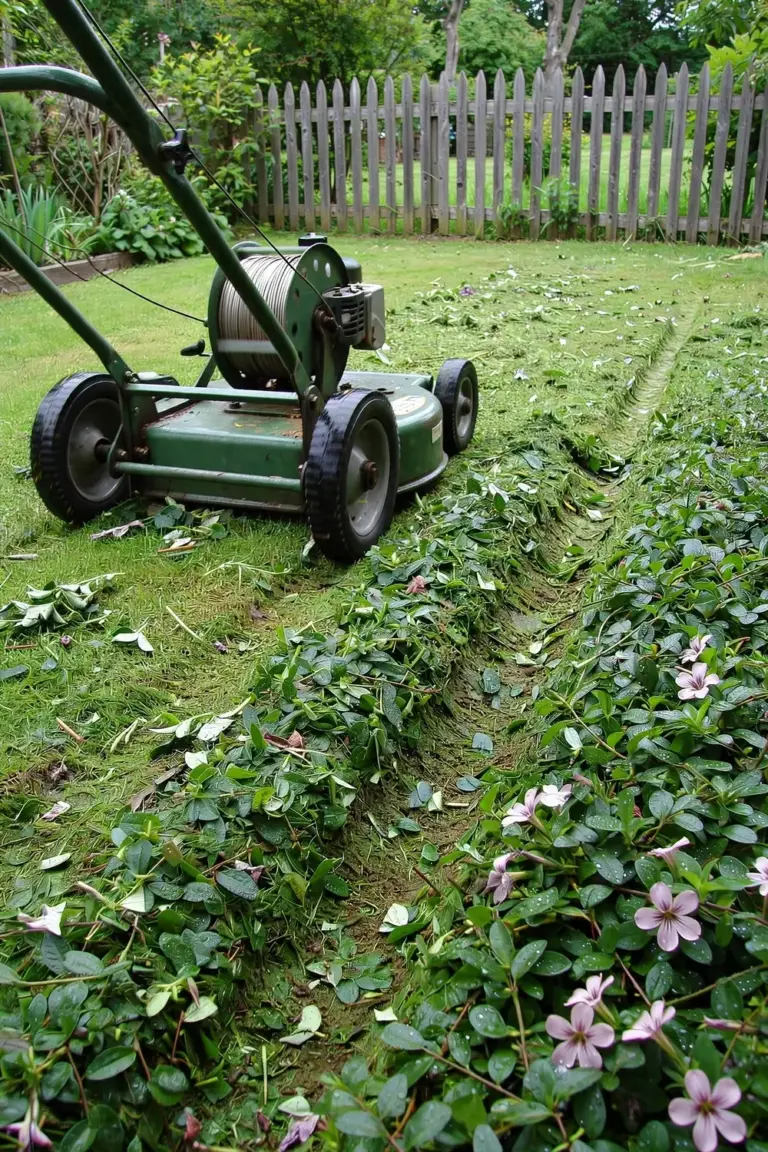
The Moggill Creek Catchment Group weed list calls dyschoriste extremely invasive and notes that it reproduces vegetatively and by seed. The same list records that the plant tolerates full sun and mowing in a lawn situation and rates it a major weed along waterways. A mown plant does not die. It flattens, roots along its stems, and keeps growing as a prostrate mat.
Catchment writers describe the spread in plain terms. Mowing, slashing, mulching, and sharing tools each move fragments from one yard to the next. Contaminated council machinery, dumped garden waste, and mud on shoes, vehicles, and animals move it over larger distances. Seed adds a second route. Capsules split and throw seeds, and seeds ride soil, mulch, and water along drains and creek banks.
| Spread Route | How It Moves | Your Fix |
|---|---|---|
| Mower and whipper-snipper | Cut fragments root where they land | Stop mowing the patch until it is gone |
| Slashing and mulching | Stems and seed move with the mulch | Keep infested material out of the mulch pile |
| Shared tools | Fragments cling to blades and tines | Clean tools before the next job |
| Garden waste dumping | Whole plants and seed leave the yard | Bag and bin every pulled plant |
| Mud on shoes and wheels | Seed and fragments ride soil | Knock mud off before you leave the patch |
Dyschoriste also holds ground once it arrives. Catchment writers report dense monocultures along waterways in the Kedron Brook, Enoggera Creek, and Ithaca Creek catchments, with infestations that damage riparian ecosystems, reduce biodiversity, and may restrict water flow. A lawn patch left alone becomes a lawn of dyschoriste within a season.
One creek infestation shows the scale. Bush regenerators recorded a dyschoriste presence along one Brisbane creek that already ran 2 km long by 20 m wide, in almost a monoculture, when first found. That patch started as garden plants. It ended as a creek-bank weed that crowds out native groundcovers. A garden patch is the same plant at the start of the same story. Dig it while it is still a garden patch.
5. Dig Out Every Fragment With a Bag Beside You
Digging beats spraying for a home garden patch. Hand removal takes the roots and the seed heads in one pass. Spray leaves roots and seed behind.
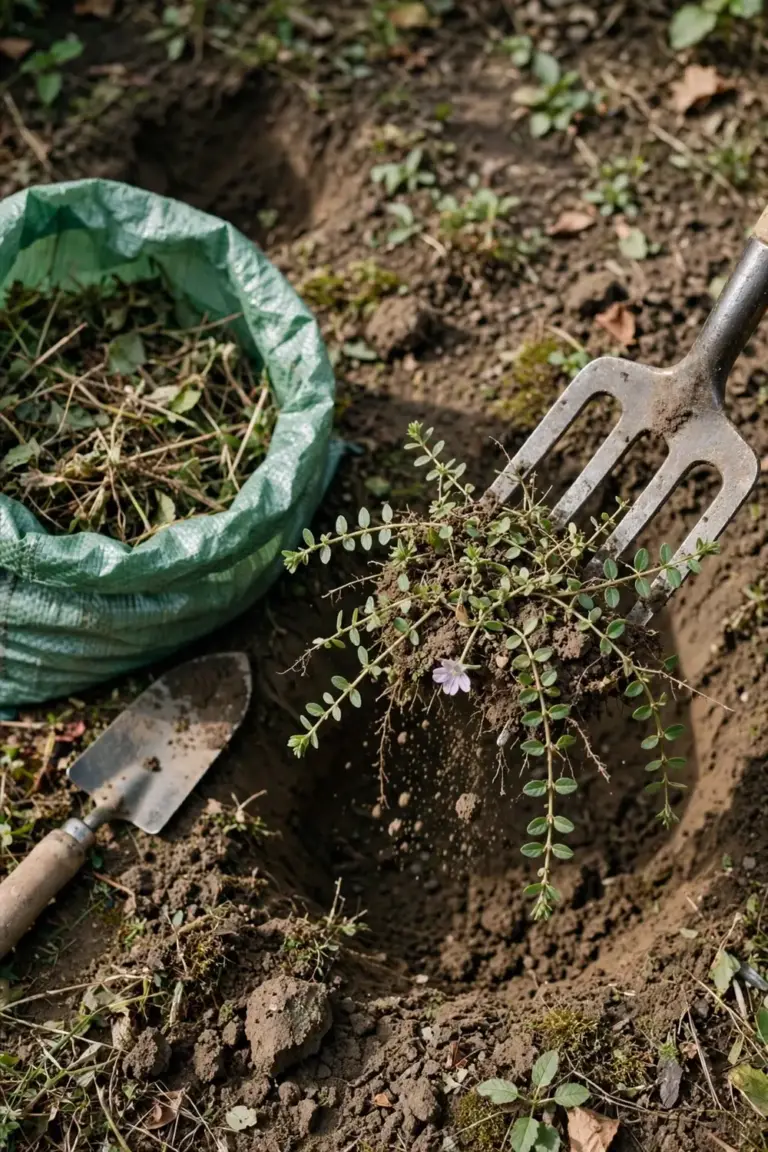
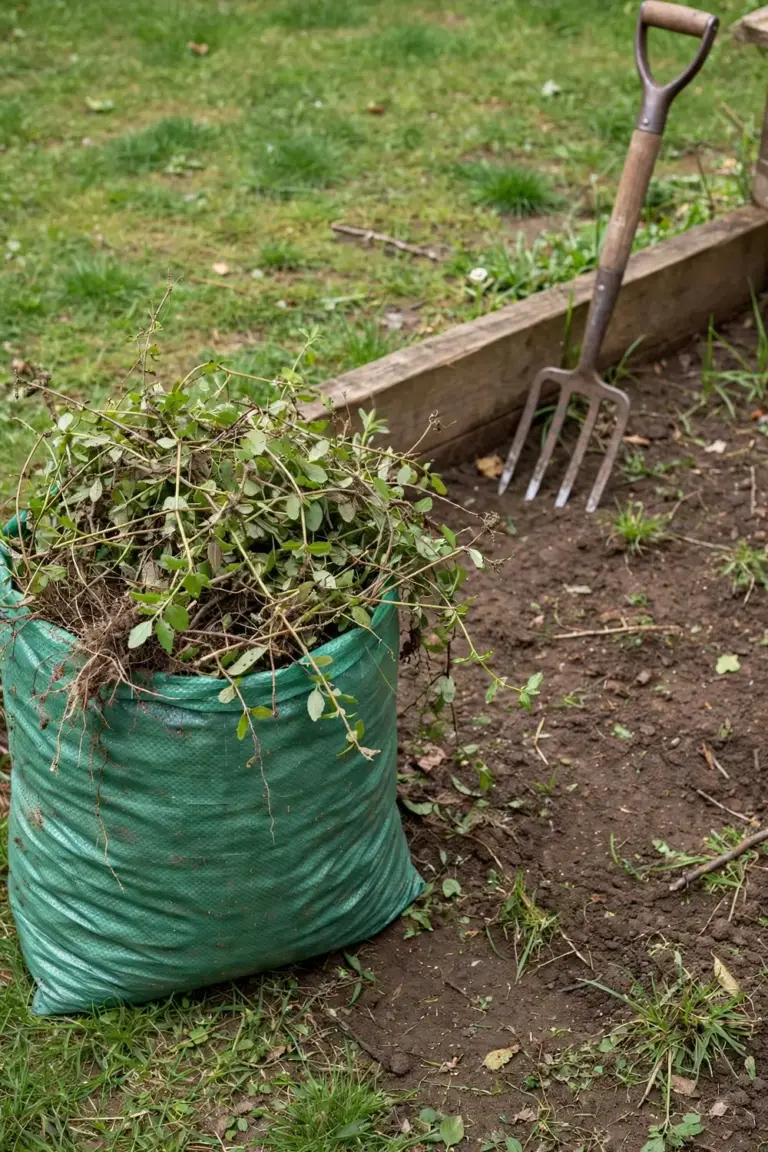
Work after rain, when the soil gives. Slide a fork under the patch edge and lift the mat. Pull each stem slowly and watch for the rooting nodes along the stem. Every node left in the soil restarts the patch. Bag each handful at once. Do not pile pulled plants on the lawn while you work. A pile sheds seed and drops fragments.
The Pullen Pullen Catchments newsletter gives the same advice in one line: dig them out, roots and all. The same newsletter notes that Brisbane City Council suggests foliar spray, while herbicides have had limited success against the plant and still pose an environmental risk to surrounding flora and fauna. Digging avoids that trade-off. It also removes the seed heads before the next capsule splits.
Check the patch edge as you dig. Dyschoriste creeps outward under grass and along edges. Probe 30 cm past the last visible stem and lift any rooted node you find. A clean edge matters more than speed. A patch dug in 20 minutes with a dirty edge returns. A patch dug in an hour with a clean edge stays gone.
Work the patch in strips. Dig one strip, bag it, and move to the next. Strips keep pulled plants off the cleared ground. A strip left bare for an hour loses less seed than a whole patch pulled and piled on the lawn. Mark each finished strip with a stick so you know where the clean edge sits.
Fill the holes with clean soil or mulch from a clean source. Bare soil invites the next weed. Organic weed control keeps the cleared ground covered without chemicals. Replant the gap with a dense groundcover or lawn grass that shades the soil. Shade slows any seed that survived the dig.
Call the council when the patch outgrows hand digging. A creek-bank infestation, a patch running along a drain, or a monoculture wider than a garden bed belongs to the council and the catchment group. They carry the tools and the permits for waterway work. A homeowner digging on a creek bank risks spreading the plant downstream. Report the patch, mark it with photos, and let the crew take it.
6. Clean Tools, Boots, and Green Waste After Every Pull
Hygiene stops the second infestation. Fragments cling to blades, tines, boots, and mower decks. Clean everything before you leave the patch.
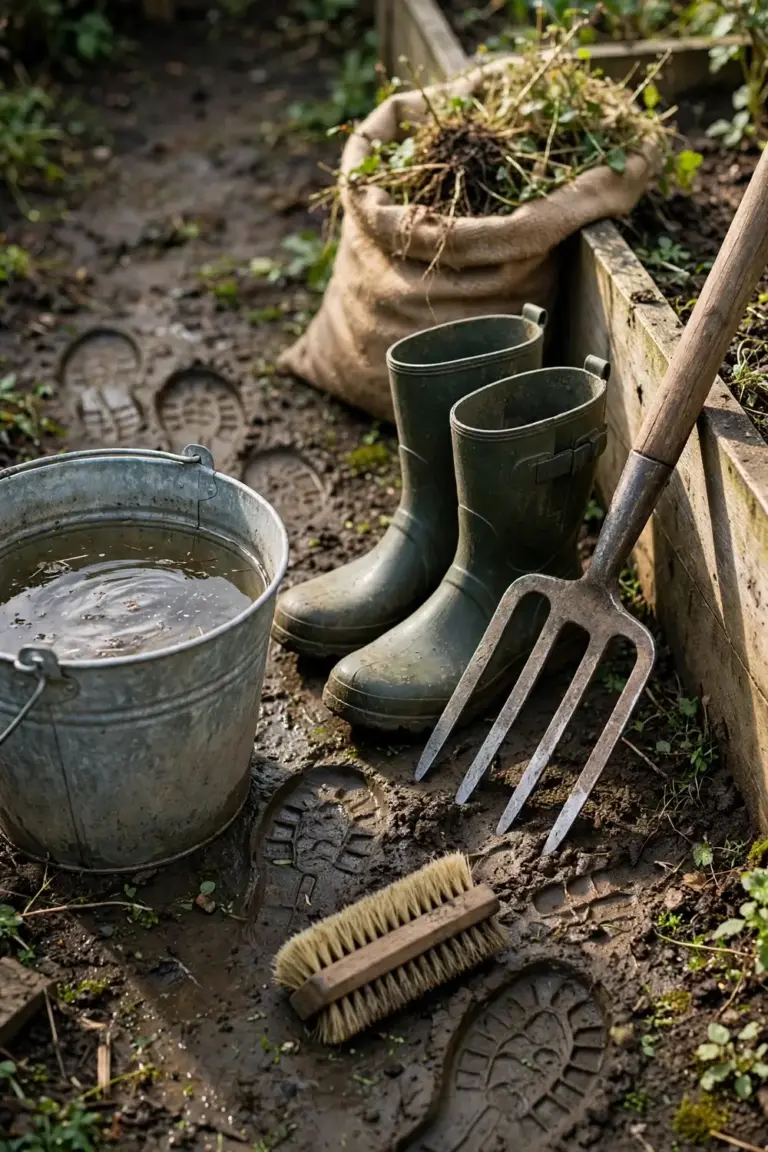
Brush soil and plant bits off the fork, the trowel, and the mower deck over the bag, not over the lawn. Rinse blades with water and let them dry. Knock mud off boots and wheels before you walk to the next bed. The same Pullen Pullen newsletter names tool sharing, mowing, and mud on shoes and vehicles as spread routes. One uncleaned fork carries the patch to the next bed.
Treat green waste as contaminated. Bag pulled plants and bin them. Never compost dyschoriste.
Set up a wash spot before you start. A bucket of water, a stiff brush, and a bag beside the patch cover the whole job. Brush tools over the bag. Rinse blades and let them dry. Wash boots at the bucket before you walk to the next bed. A wash spot takes five minutes to set up. It saves a second infestation that costs an afternoon to dig. Home compost does not reach the heat that kills weed seed reliably, and a compost heap full of stem fragments grows a new patch. Never dump garden waste in bushland or on a creek bank. Dumping moves the plant to the exact places it harms most.
Clean the mower deck with the same care. Fragments hide under the deck, in the catcher, and around the wheels. Tip the mower on its side after the engine cools, brush the deck over the bag, and rinse it. A catcher full of dyschoriste clippings emptied on the compost heap restarts the patch. Empty the catcher into the bag, not onto the lawn.
What is mulching explains how a clean mulch layer suppresses weeds. Keep infested material out of the mulch pile. Mulch made from a dyschoriste patch spreads stems and seed across every bed it covers. Buy clean mulch or make it from clean prunings only.
7. Re-Check the Patch Every Month Until Nothing Returns
One dig rarely finishes the job. Seed in the soil and a missed node restart the patch. Monthly checks catch regrowth while it is small.
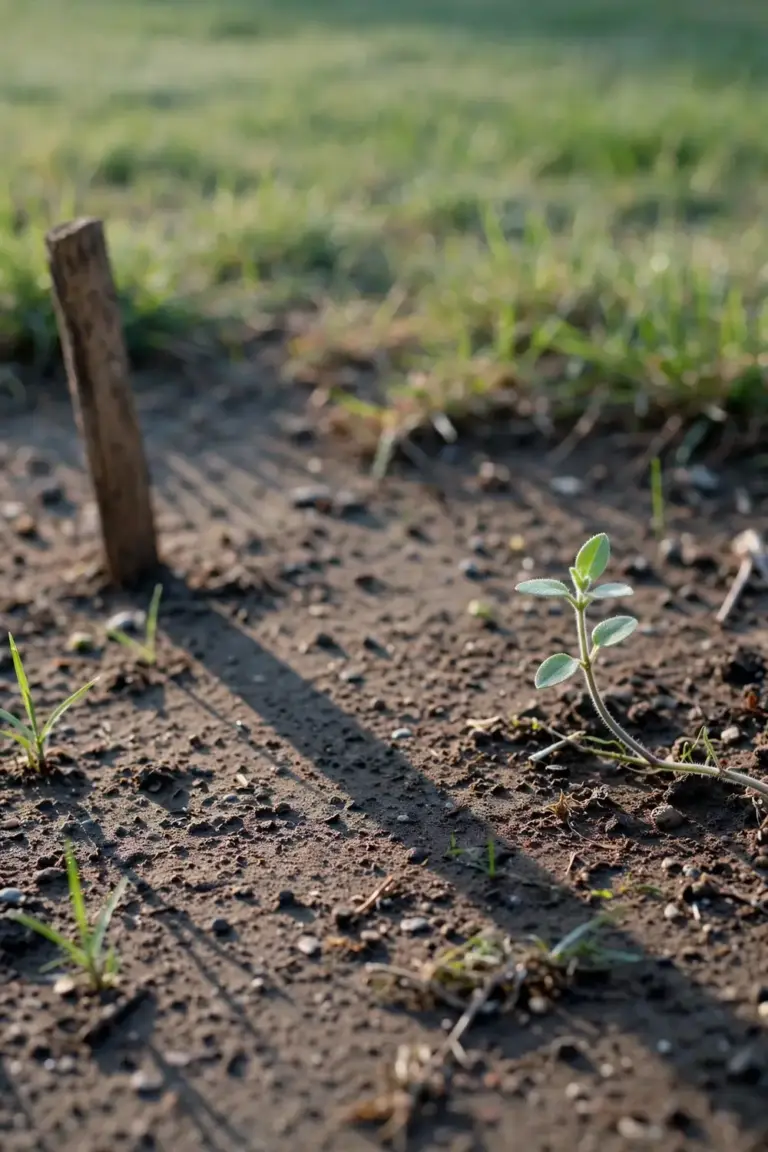
Walk the patch edge once a month. Look for opposite leaves and creeping stems in the cleared ground. Pull any seedling at once, roots and all, and bag it. A seedling pulled at 5 cm costs seconds. A patch left for a season costs another full dig.
Time the checks after rain. Seedlings show fastest in the week after a wet spell. A check on dry ground misses seedlings that wait for moisture. A check after rain catches the flush while every plant is small. Walk the patch the morning after rain, when the soil is soft and seedlings lift clean.
Keep a simple record. Note the date of the first dig and the date of each check. A written record shows whether the patch shrinks or holds. A shrinking patch means the routine works. A patch that holds its size after three checks needs a second full dig, not a third round of spot pulls.
Count seedlings at each check. Ten seedlings in month one, three in month two, and none in month three means the seed bank is emptying. Ten seedlings every month means a missed node or a fresh seed source. A count turns a feeling into a fact. It also tells you when to stop checking monthly and drop to a seasonal walk.
Soil health decides what grows back in the cleared ground. A dense lawn or groundcover shades the soil and starves dyschoriste seedlings of light. Bare soil invites them. Feed the soil, keep the cover dense, and the patch loses its foothold. A lawn that closes fast leaves no bare patch for the next seed to catch.
8. Report New Patches to Biosecurity Queensland on 13 25 23
Queensland law puts the duty on the landholder. Every Queenslander carries a general biosecurity obligation to take reasonable steps against pests under their control. Dyschoriste sits under that duty even though it carries no state restricted-matter category.
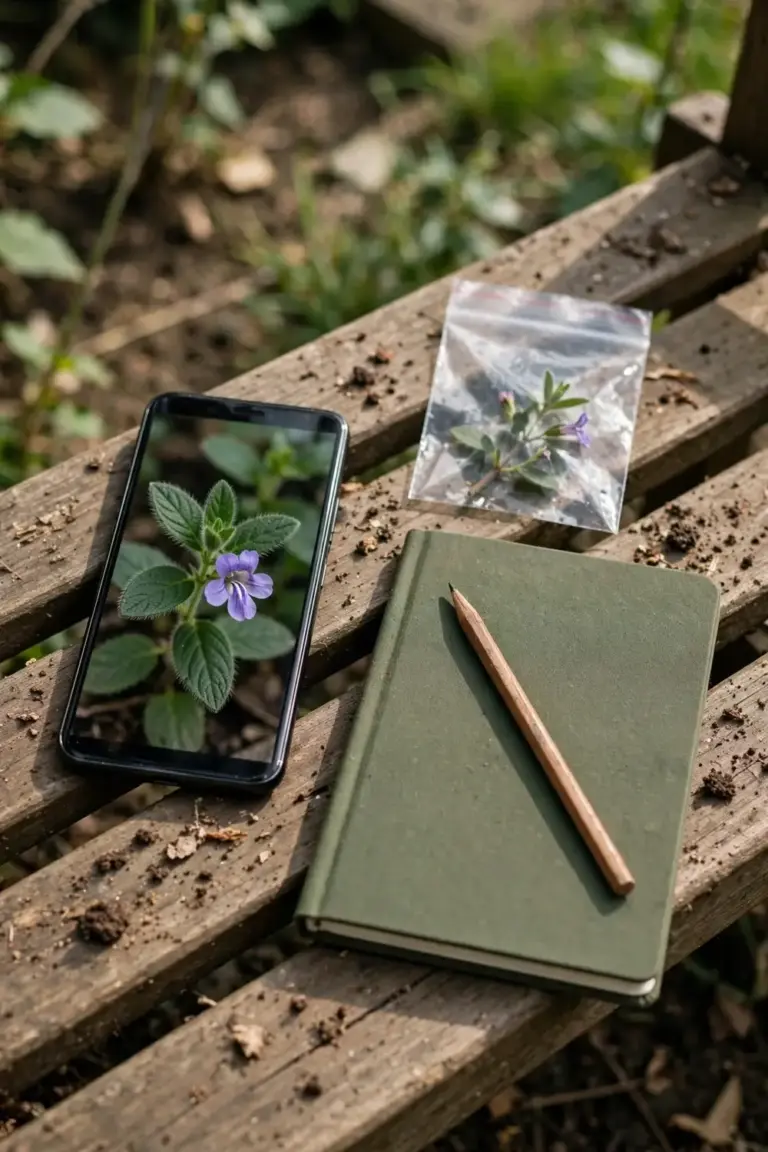
The Queensland Department of Agriculture and Fisheries general biosecurity obligation page states that everyone in Queensland must take all reasonable and practical steps to prevent or minimise each biosecurity risk, and to report anything unusual to Biosecurity Queensland on 13 25 23. Clearing your patch, cleaning your tools, and binning your green waste are the reasonable steps for this plant. Leaving a known patch to spread is not.
Report a new patch outside the known SEQ range. A plant found in a new suburb, a new catchment, or northern New South Wales helps the herbarium and the council track the spread. Take the same photo set from the ID section: leaf pairing, flower cluster, stem base. Send the photos with the location and the date. A report with photos gets used. A report without them gets filed.
Note the patch size in your report. A single plant in a garden bed reads differently from a 10 m fringe along a drain. Count the area in paces or measure it with a tape. A size estimate helps the council decide whether the patch needs a crew or a letter. A report that says “one plant in a pot” gets a different response from one that says “a full creek bank”.
Brisbane City Council lists dyschoriste as Council Pest Vegetation under the Natural Asset Local Law, according to catchment newsletter records. Council officers can advise on control for larger infestations. A homeowner patch stays a hand-digging job. A creek-bank infestation belongs to the council and the catchment group.
Join the Weed Spotters Network when you want to help beyond your own fence. The Queensland Government runs the network as a citizen science program for detecting new and emerging weed threats. Volunteers watch for species listed as prohibited or restricted under the Biosecurity Act 2014. Dyschoriste carries no listed status. The same habit of watching, photographing, and reporting still helps the herbarium track its spread. A network volunteer who knows the 4 clues spots a new patch years before it becomes a monoculture.
Frequently Asked Questions
No state restricted-matter category covers dyschoriste. Brisbane City Council lists it as Council Pest Vegetation under the Natural Asset Local Law, per catchment newsletter records. The general biosecurity obligation still applies. Take reasonable steps against any patch under your control. Clear it, clean your tools, and bin the waste. Report new patches outside the known range to Biosecurity Queensland on 13 25 23.
No. Mowing spreads the plant. Cut fragments root where they land, and a mown plant flattens into a creeping mat that roots along its stems. The Moggill Creek weed list records that dyschoriste tolerates mowing in a lawn situation. Stop mowing the patch. Dig it out roots and all, bag every handful, and clean the mower deck before the next job.
Brisbane City Council suggests foliar spray for larger infestations. Catchment writers report that herbicides have had limited success against the plant and still pose an environmental risk to surrounding flora and fauna. Hand digging works better for a home garden patch. It removes roots and seed heads in one pass. Leave spray decisions for creek-bank infestations to the council and the catchment group.
Yes. Butterfly heaven is the common name for Dyschoriste nagchana, formerly Dyschoriste depressa. The name misleads. A pretty common name does not make the plant welcome. The plant forms dense monocultures along waterways and crowds out native groundcovers. Use the botanical name in any report so the reader matches the right plant.
Bag them and bin them. Never compost them. Home compost does not reliably kill weed seed, and stem fragments in a compost heap grow a new patch. Never dump garden waste in bushland or on a creek bank. Dumping moves the plant to the places it harms most. Clean the fork, the trowel, and your boots before you leave the patch.
Start With the 4 Clues This Weekend
Walk your lawn and beds this weekend and check for opposite leaves, axillary flower clusters, square creeping stems, and splitting capsules. Photograph any suspect plant before you pull it. Dig the patch roots and all, bag every handful, and clean your tools before the next job. Report a new patch to Biosecurity Queensland on 13 25 23. The patch you dig out this weekend is the patch that never becomes a monoculture. A lawn checked once a month stays a lawn. Check it again next month.