
Ordinary avocado stem cuttings almost never root. In one journal trial, more than 370 direct cuttings produced 0 roots in any treatment. Seed and grafting are the routes that work.
I have learned that the avocado cutting I stick in water stays a stick, while the seed I plant grows into a tree. The question behind how to propagate avocado from cuttings is really about the clone: you want the same fruit, not a lottery seedling. The rest of this page is 8 sections, from the verdict to the method that gives you the fruit you want.
1. How to Propagate Avocado From Cuttings: The Short Answer
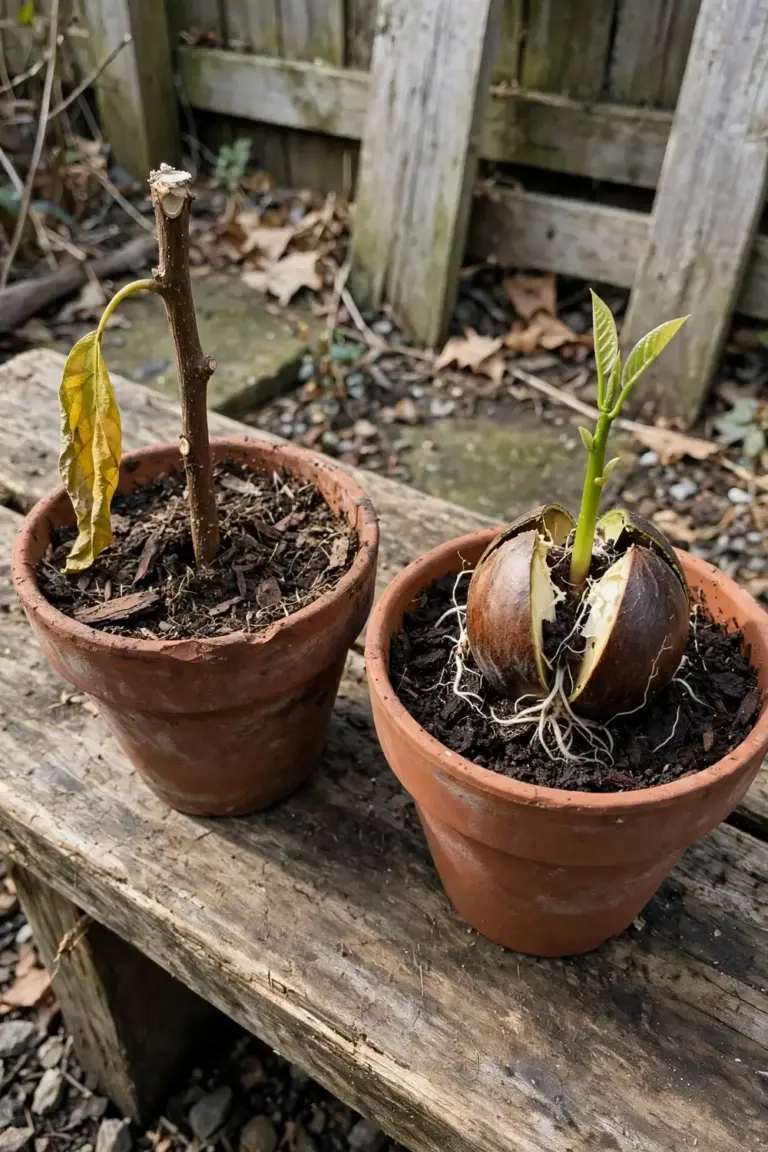
Cut a stem from a mature avocado tree, stick it in mix, and wait. The cutting almost never grows roots. University of Florida extension states the verdict in one line: propagation by cuttings and air-layering has not been successful. That sentence covers the home attempt exactly. A stem cutting from a bearing tree is mature wood, and mature avocado wood resists rooting.
The confusion comes from the pages that rank above that extension page. Content-farm how-tos claim ordinary cuttings root in weeks, sometimes with onion or tomato as a rooting aid. No extension source supports those claims. The honest answer lives in extension pages and research papers, and every one of them points the same way. Cuttings fail. Grafting works.
The table below sets out the four routes side by side. Read it before spending a season on a cutting.
| Method | Clones the parent? | What actually happens |
|---|---|---|
| Ordinary stem cutting | Yes, if it rooted | Almost never roots |
| Air-layer | Yes, if it rooted | Also not successful |
| Seed | No | Grows, fruits in 4 to 10 years, fruit unpredictable |
| Graft (scion on seedling rootstock) | Yes | Preferred method, fruit in 3 to 4 years |
The last two rows are the real choice. Seed gives you a free tree with unknown fruit. Grafting gives you the exact fruit you want on a seedling root. Cuttings promise the clone without the graft, and the promise does not hold.
2. Why Avocado Cuttings Refuse to Root
Avocado cuttings are generally difficult to root. That is the opening line of the propagation section in the Purdue University avocado account, and the rest of the section explains why. Cuttings of West Indian cultivars root only when taken from the tops or side shoots of young seedlings. Cuttings from a mature bearing tree carry mature tissue, and mature tissue forms callus instead of roots.
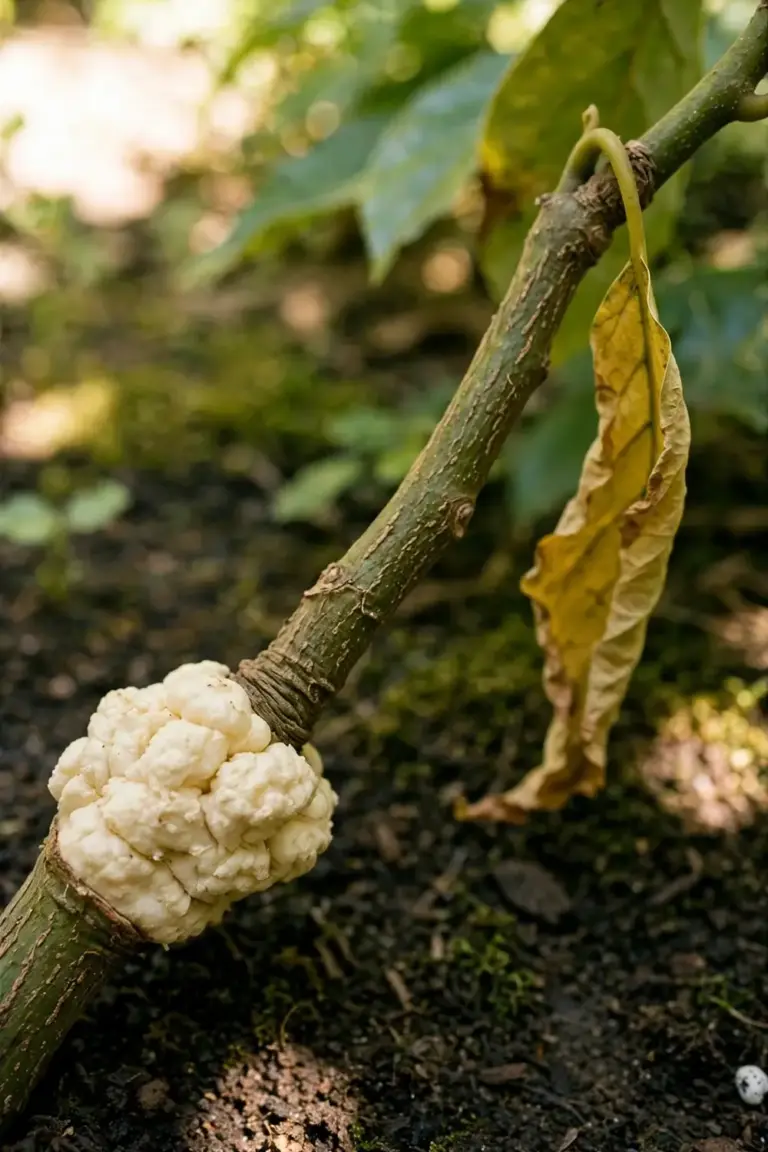
Callus is the pale, lumpy tissue that forms over a wound. Gardeners often mistake a thick callus for progress. A callus is scar tissue. Roots must grow out of it, and in avocado cuttings they usually do not. The cutting burns its stored energy making callus, then declines. Leaves yellow. The stem softens. The cutting dies without ever forming a working root system.
Tell callus from roots by look and feel: callus is a solid, knobbly swelling hugging the cut end, while roots are thin, white, branching threads that push outward into the mix. A cutting with a fat callus ring and no threads has stalled. Do not rescue it with more water, because more water rots the stem faster. Tip the cutting out, look, and compost it.
Leaves make the problem worse. A leafy cutting loses water through every leaf while it has no roots to replace it. That is why research rooting uses mist: a fine spray keeps leaves wet around the clock so the cutting does not dry out before roots form. A home propagator cannot hold that humidity with a plastic bag and a spray bottle. The bag swings between wet and dry. The cutting dries between sprays, then rots in the wet spells.
Age of the mother wood decides most of the outcome. Juvenile wood from a young seedling roots far more readily than mature wood from a bearing tree. The cutting you snip from a neighbor’s fruiting Hass is the worst possible material: mature, bearing wood from a cultivar that already roots poorly. The cutting you snip from a young seedling has a better chance, and even then the odds stay poor without specialist treatment. The journal study suggests that certain inhibitors suppress rooting in avocado shoots, which helps explain why mature wood resists rooting while juvenile wood roots more readily.
Cultivar matters too. The Purdue account records that cuttings of ‘Fuchs-20’ rooted under mist at 40 to 50 percent, and even 70 percent in Israel, while cuttings of ‘Maoz’ rooted at a rate of 60 percent by a special technique developed in California. Those figures come from research stations with mist systems and hormone control. They are not home-gardener results, and they still show wide variation between cultivars. Hass and Fuerte sit at the hard end of that range.
3. What Etiolation Proves About Avocado Rooting
Etiolation is the one technique that moves avocado rooting from near zero to real numbers. Etiolation means growing a shoot in darkness so it turns pale, soft, and stretched. The pale shoot lacks chlorophyll and carries a different hormone balance, and that balance lets roots form where a normal green cutting refuses.
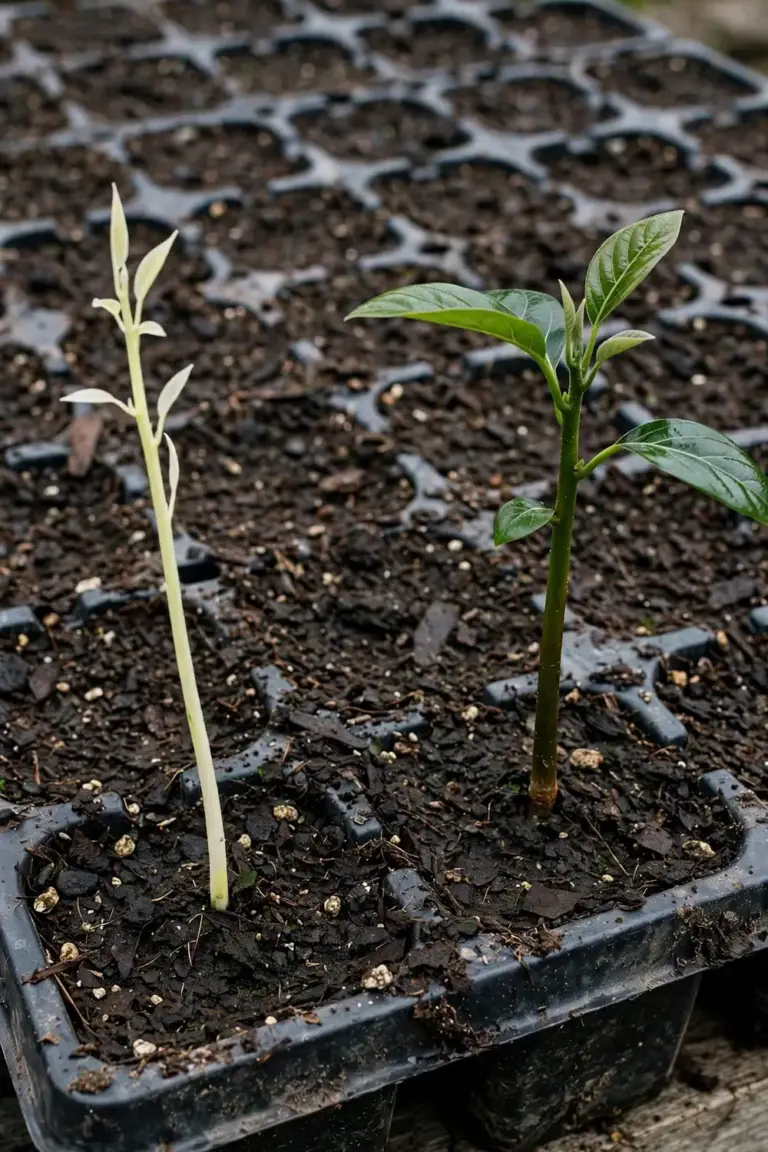
The Purdue account records the classic result. Etiolated cuttings from gibberellin-treated hardwood and semi-hardwood cuttings of ‘Pollock’ and ‘Lula’ rooted with 50 to 60 percent success, and when treated with IBA the success rose to 66 to 83 percent under mist in Trinidad. IBA is indolebutyric acid, a rooting hormone. The mist keeps the leaves wet while roots form. Every part of that setup is nursery equipment, not a kitchen windowsill.
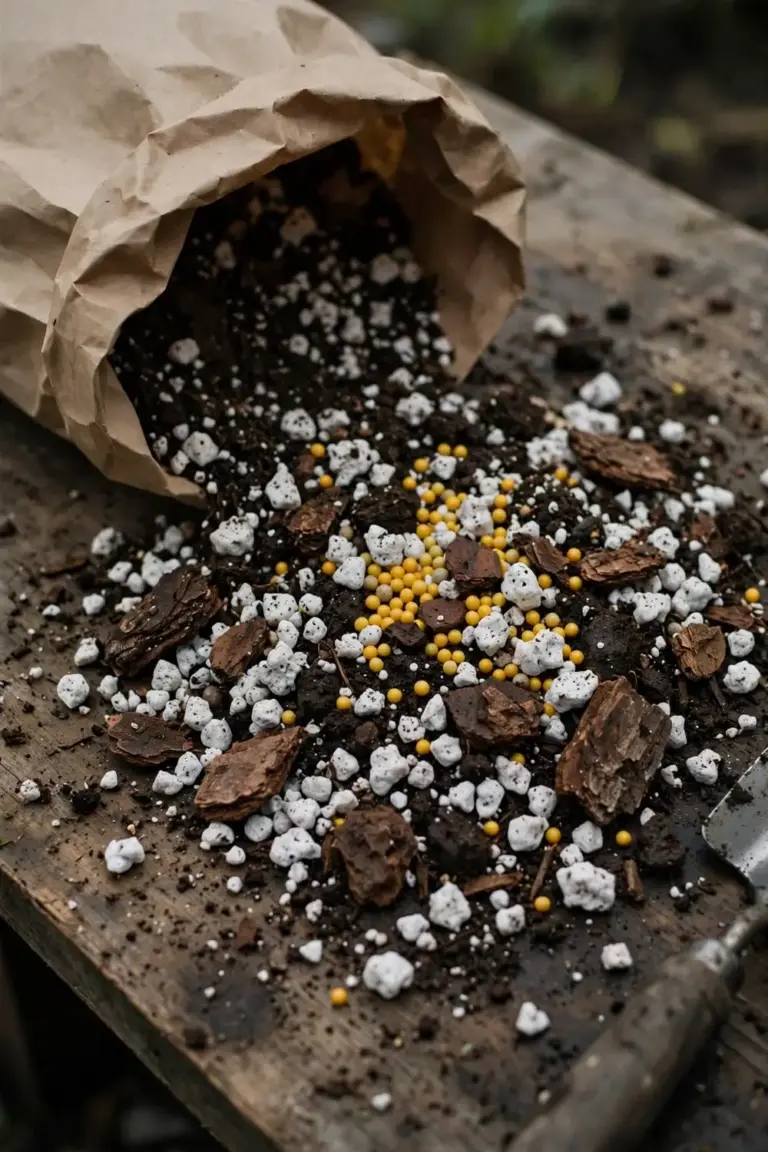
A 2024 journal study tested the same idea with modern controls, dividing avocado shoots into three groups: air-layering, direct cutting, and stem-buried etiolation. In the direct-cutting group, hundreds of cuttings went into media across many treatments. One to three months later, the whole cuttings gradually withered, and no roots were successfully induced in any of the treatments. Direct cutting failed completely. Air-layering produced one surviving shoot with a thin, frail root system that lost viability during transplanting.
Etiolation changed the result. The researchers buried whole leafy stems horizontally in media at a depth of 15 to 20 cm, let pale buds break the surface, then rooted those etiolated shoots. The best combination was an IBA concentration of 2,500 mg/L with a dipping duration of 5 seconds in a perlite to vermiculite culture at 1:1. Under those conditions, the rooting rate of ‘Dusa’ reached 82 percent, according to the journal study. The study states plainly that etiolation treatment of the mother shoot is the requisite condition for avocado shoot rooting.
Read those numbers as proof of the difficulty, not as a home method. The procedure needs a mother plant grown for the purpose, total darkness for the shoot, a hormone dip at a precise concentration, and a controlled greenhouse. A gardener who buries a cutting in a pot on a porch is not running that procedure. The study proves cuttings can root only when the plant is first rebuilt in darkness.
IBA itself is easy to buy and easy to misuse. A rooting powder or gel from a garden center carries a low dose meant for easy-rooting plants like rosemary. The trial dose was 2,500 mg/L, a laboratory concentration applied for exactly 5 seconds. Dipping a cutting in a stronger mix for longer does not improve the odds. It burns the tissue. The dose is not the lesson. The darkness is.
4. Why Air-Layering Fails the Same Way
Air-layering sounds like a workaround. Wound a branch, wrap it in damp mix, wait for roots to form while the branch still feeds from the tree. The branch stays alive, so the method looks safer than a severed cutting. University of Florida extension gives air-layering the same verdict as cuttings: propagation by cuttings and air-layering has not been successful.
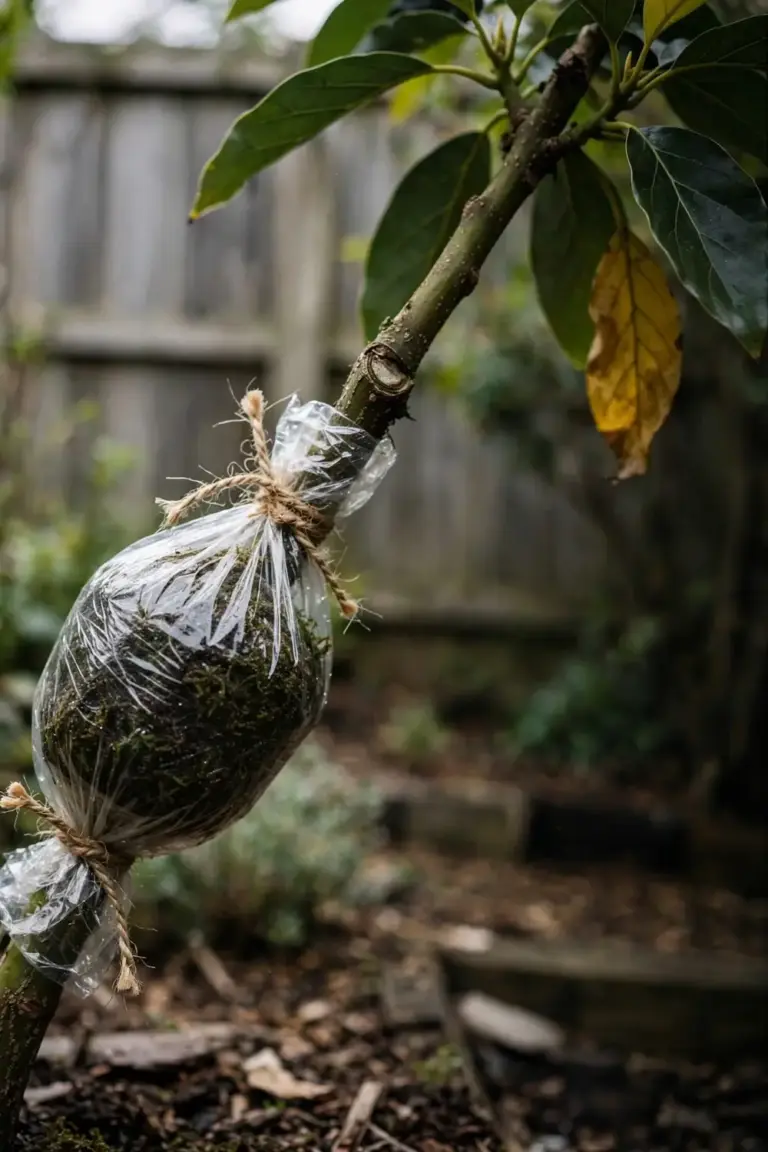
The 2024 journal study tested air-layering alongside direct cutting, ringing bark on woody shoots, covering each wound with medium, and bagging it. After three months, shoots came off the trees and went into pots. One shoot survived with a thin, frail root system. That root system lost viability during transplanting, and every other layered shoot failed.
The Purdue account adds the cultivar detail. Air-layering is sometimes done to obtain uniform material uninfluenced by rootstock, for research on specific problems. Success depends on the cultivar, with Mexican-race types rooting most quickly, and air-layering works best in spring and early summer. That is research use, not home propagation. A method that serves a research question is not a method that serves a home gardener.
Skip air-layering as a home route, because the branch you wound either heals over or dies. The wrap holds moisture against bark and invites rot. The months spent waiting end where cuttings end: no working root system. Put the same months into a seed or a graft instead. If the branch you planned to layer is in the way, prune it cleanly and let the tree seal the wound.
5. The Scion Trap: Cuttings Sold for Grafting Are Not for Rooting
Online listings sell avocado “cuttings” that are really scions. A scion is a short length of shoot wood cut for grafting. The listing may say “for grafting or rooting,” and that phrase blurs two operations with very different success rates. A scion grafted onto a seedling rootstock takes at a high rate. The same scion stuck in mix to root on its own almost never roots.
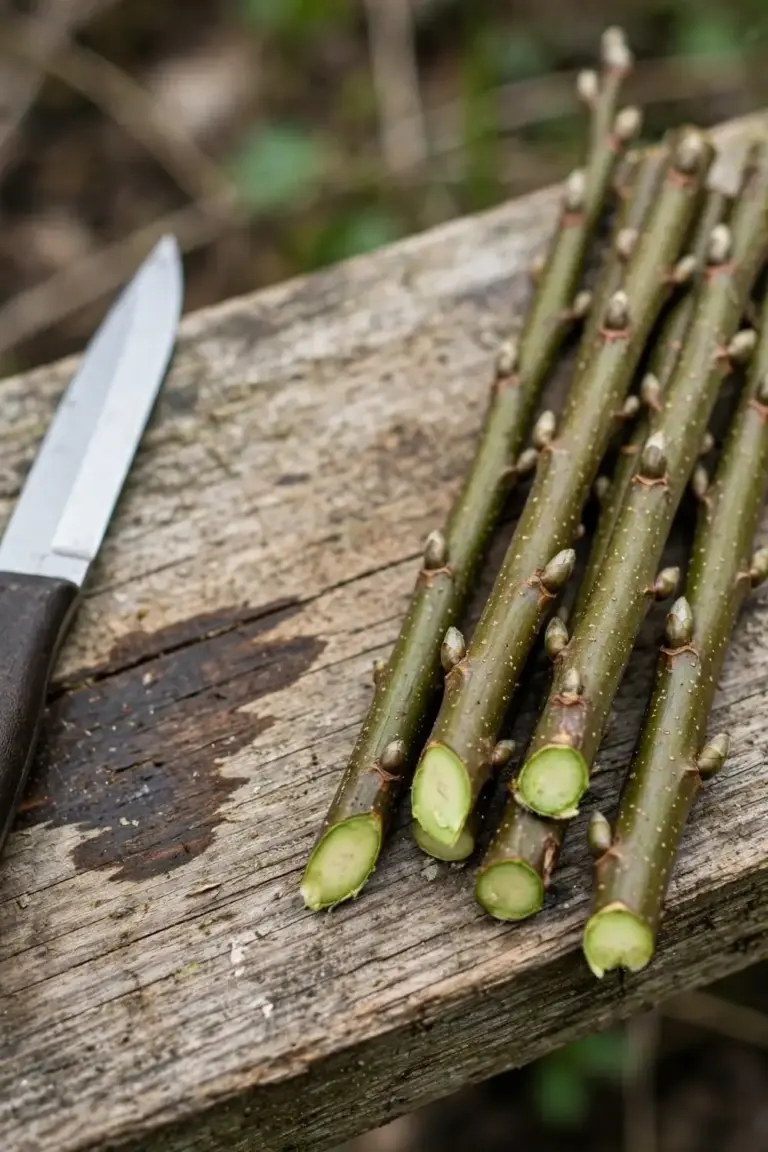
Learn the two words and the trap disappears. A scion is graft wood. It joins a living rootstock through a graft union and draws on the rootstock’s roots from day one. A cutting is a stem expected to grow its own roots. Avocado scions graft well. Avocado cuttings root badly. Sellers who write “cuttings for grafting or rooting” sell graft wood and let the buyer assume the second use works.
Buy scion wood only when you have a rootstock ready to receive it. A rootstock is a seedling tree grown for its root system, usually 4 to 8 months old at grafting time. The scion forms the top of the plant. The rootstock provides the lower trunk and root system. The graft union heals, the scion grows, and the tree fruits as the scion cultivar. That is the whole professional system in one paragraph.
Spot scion listings by their wording. Honest sellers write “scion,” “budwood,” or “graft wood” and name the cultivar. They say which rootstock the wood suits, or they tell you to graft onto a seedling. Vague listings write “cuttings” with no mention of grafting and no cultivar name. Ask the seller two questions before buying: which cultivar is this wood, and what rootstock should it go onto? A seller who cannot answer both is selling hope, not wood.
A grafted tree from a nursery carries a label with the cultivar name. Keep that label. Photograph it, or write the name on a tag wired to the tree. A tree that loses its name becomes a mystery seedling the day you forget what you planted.
Never buy a cutting sold for rooting and expect a tree. The listing is not lying about the wood. It is silent about the odds. The odds come from extension and research, and they say cuttings fail. Spend the money on a grafted tree or a seed instead.
6. Start From Seed When You Want a Free Tree
Seed is the honest free route. Scoop the seed from a fruit you ate, plant it, and it grows. Fresh avocado seeds germinate in 4 to 6 weeks, according to the Purdue University account. Keep the seed in partial shade and do not overwater it. The seedling that emerges is a real avocado tree, and it costs nothing.
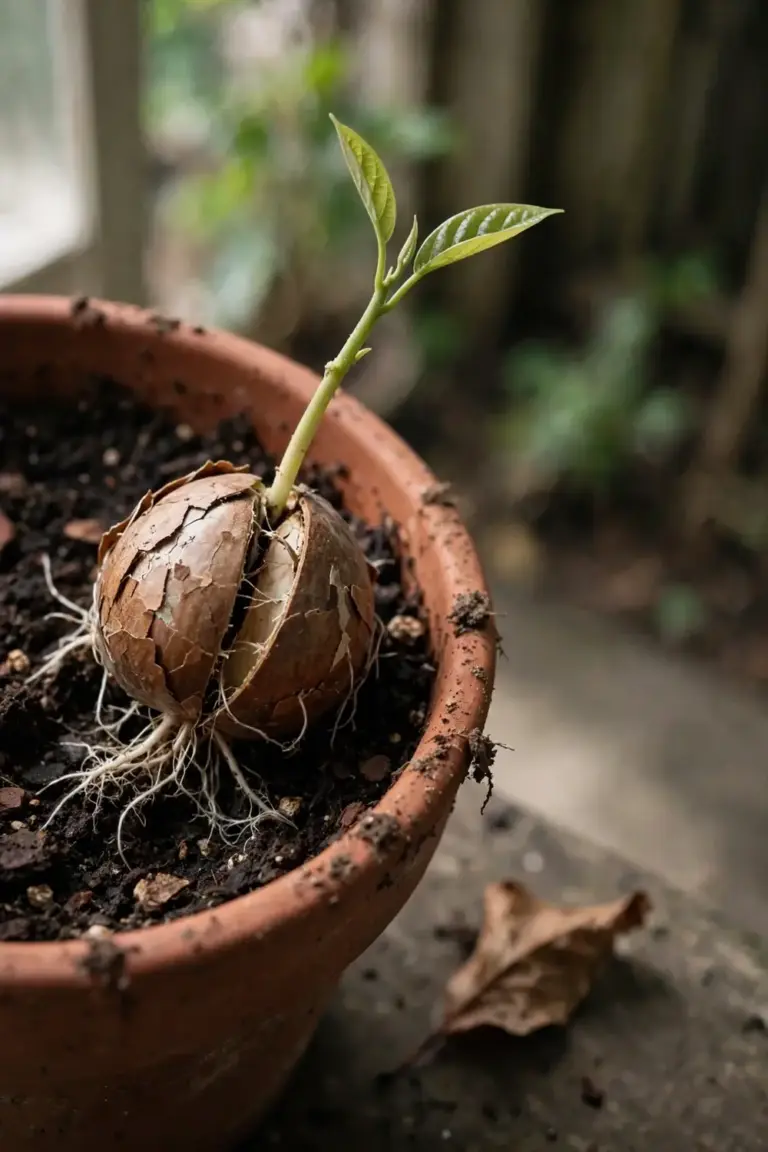
Plant the seed with the pointed end up and the broad base down. Push the base into damp mix so the lower third sits buried. The Purdue account also describes the viewing method: pierce the seed partway with toothpicks on both sides, rest it on a tumbler with water just covering 1.25 cm of the base, and wait for roots and leaves to form in 2 to 6 weeks before setting the plant in potting soil. The tumbler method is a window, not a home. Move the seedling to mix once roots and leaves show, and give it light and air.
Seed carries two limits, and both matter before you start. First, the fruit is unpredictable. Most avocado varieties do not come true from seed, which means a seed will not render the same variety as the fruit it came from. Your seedling may produce fruit nothing like the Hass or Reed you ate. It may produce poor fruit, or fruit after a very long wait.
Second, the wait is long. Trees grown from seed may take 4 to 10 years to flower and fruit, according to the University of Florida Gardening Solutions guide. That is the honest range. A seedling spends years passing through juvenile growth before it can flower. Some seedlings fruit sooner. Some take the full decade. A seedling is a long project, not a shortcut.
Start a seed when the project itself is the point. A child watching a seed split and sprout learns more botany in a month than a bought tree teaches in a year. A gardener with space for an experiment gains a tree that may surprise them. The site’s seed starting guide covers the general steps for starting seeds in containers, and the same damp-mix discipline applies here. Plant the seed with the pointed end up and the broad base down. Keep the mix damp, not wet. Wait for the crack and the sprout.
A seedling also makes the best rootstock. Grow a seedling for 4 to 8 months, then graft a scion of the cultivar you want onto it. That is the professional sequence: free rootstock from seed, named fruit from a graft. The next section explains it.
7. Graft a Scion Onto a Seedling for the Fruit You Want
Grafting is the preferred method of propagation for avocado. University of Florida extension states it directly: cleft grafting is the preferred method in Florida, although veneer grafting is also used. Grafting clones the parent. The scion carries the exact cultivar, and the fruit matches the parent tree. Seed cannot do that. Cuttings promise it and fail.
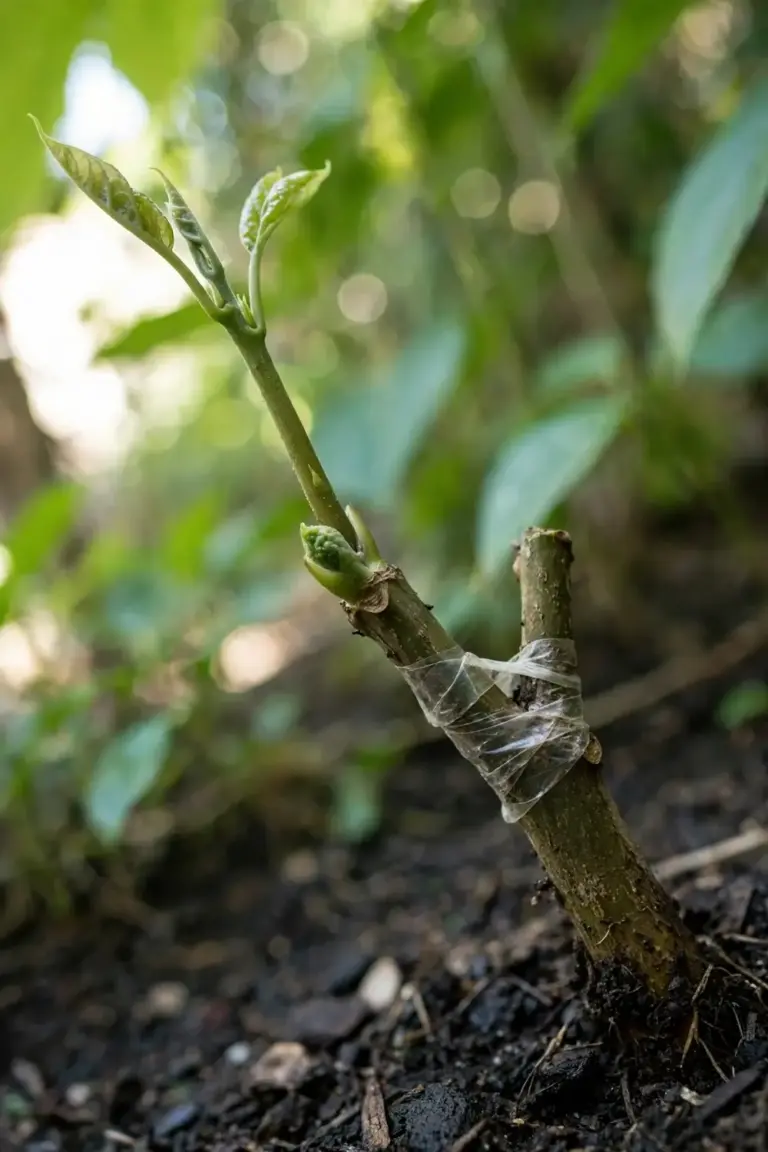
The procedure is simple to describe and needs practice to do well. Grow a seedling rootstock from seed. Take scion wood from a mature, bearing tree of the cultivar you want. Join the scion to the rootstock with a clean cut, bind the union, and keep it humid while it heals. Young, vigorously growing seedlings serve as rootstocks, and terminals of leafy shoots serve as scion material.
Match the cambium, not the bark. The cambium is the thin green layer just under the bark on both pieces. Line those layers up on at least one side of the union. Bark to bark heals nothing. A sharp knife makes one clean cut on each piece. Ragged cuts leave gaps where air and rot enter. Cut once, with confidence, and do not saw.
Cut scion wood in the morning, when the wood is full of water. Keep it cool and damp in a plastic bag until grafting time. Never let cut scion wood sit in sun. Dry wood heals slowly, and sun-dried wood may not heal at all.
Timing matters. Grafting is most successful during the cooler months from November through February or March, according to the University of Florida extension guide, and it can be done from June through March if plant material is available. In Australian terms, that window is the cooler part of the year, not high summer. A graft made in mild weather heals faster than one made in heat.
Grafted trees fruit far sooner than seedlings. Grafted trees begin to produce after 3 to 4 years, according to the University of Florida extension guide. Compare that with the 4 to 10 years for a seedling, and the graft pays for its extra effort twice over: exact fruit, years sooner. The grafted tree also stays truer to the cultivar’s growth habit, which makes pruning and spacing predictable.
Pruning skill helps at grafting time. A clean cut heals. A ragged cut invites rot. The site’s spring pruning techniques cover the clean-cut discipline that grafting depends on: sharp tools, a single confident cut, and no tearing. Use the same discipline when you cut scion wood and when you prepare the rootstock.
Aftercare decides the graft. Keep the union still. Do not test it by tugging. Water the rootstock normally and keep the mix damp, not soaked. The site’s soil health guide explains the damp, living mix that a young grafted tree needs. New growth from the scion tells you the union took. Growth from below the union tells you the rootstock is suckering, and that growth must come off so it does not outgrow the scion.
8. Buy a Grafted Tree When You Want Fruit Soon
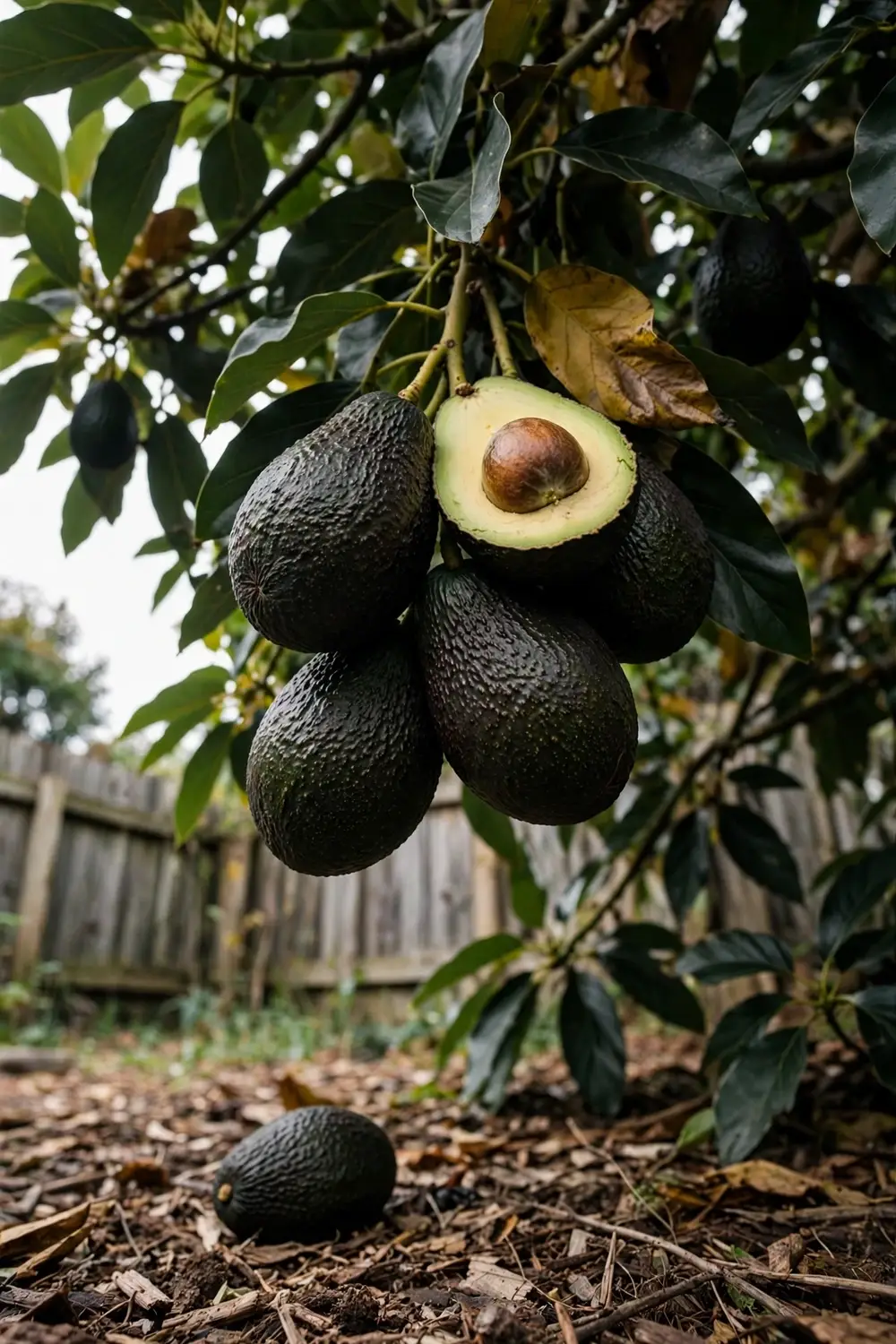
Buying a grafted tree is the fastest honest route. A nursery grafted tree skips the seedling year and the grafting practice. You plant a tree that already carries the cultivar you want on a working root system. The University of Florida Gardening Solutions guide recommends exactly this: for desirable fruit, grafted avocado trees from registered nurseries are best.
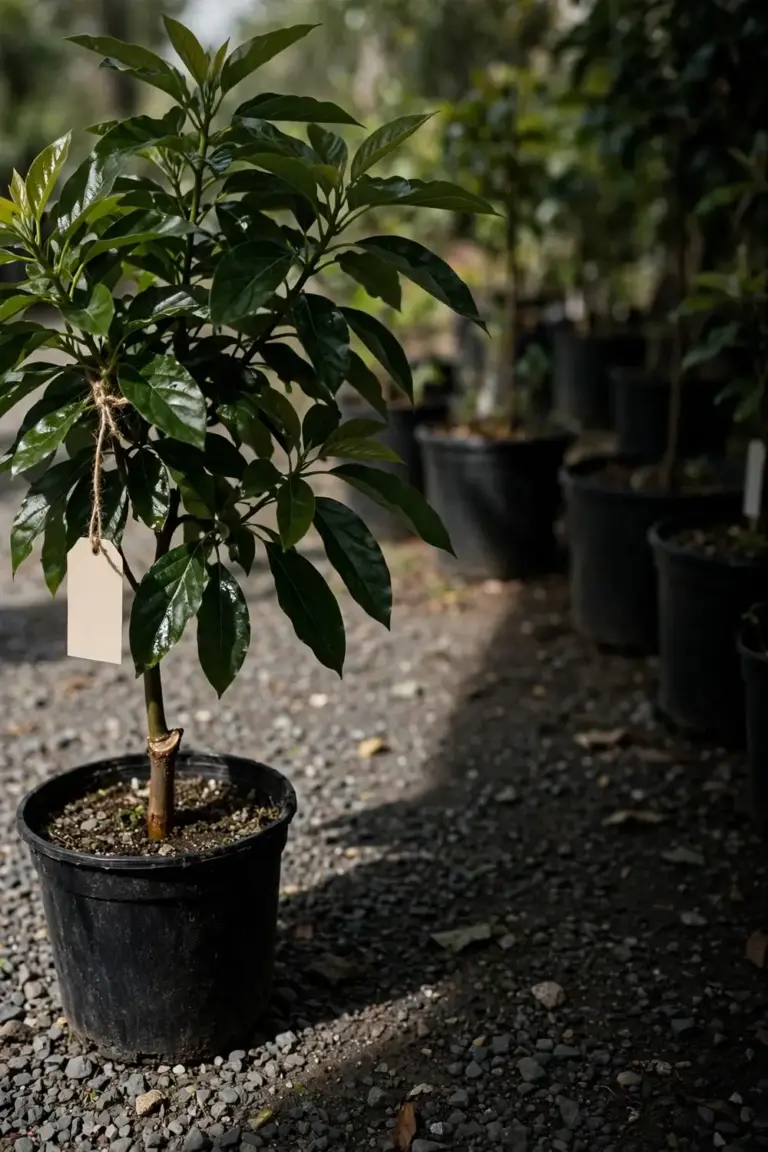
Pick a small tree. The guide advises finding a tree about 2 to 4 feet tall in a 3-gallon container. That is 61 to 122 cm tall in a container of about 11 litres. A small tree establishes faster than a large one. Its roots fill the planting hole sooner. Its top fits the root system it carries. Big trees in small pots carry the opposite problem: too much top, too little root.
Check the graft before you pay. The union should sit low on the trunk, healed clean, with no gap and no swelling that looks like a ring. The label should name one cultivar. Roots should not circle the pot in a solid mat. A tree that fails any of those checks stays at the nursery.
Give the tree room. The guide advises planting at least 23 to 30 feet away from buildings and electrical wires, as well as other trees, to ensure enough sunlight. That is 7 to 9.1 m. Avocado trees grow large, and a tree planted against a fence spends its life fighting for light and dropping limbs on the roof. Measure the space before you buy, not after.
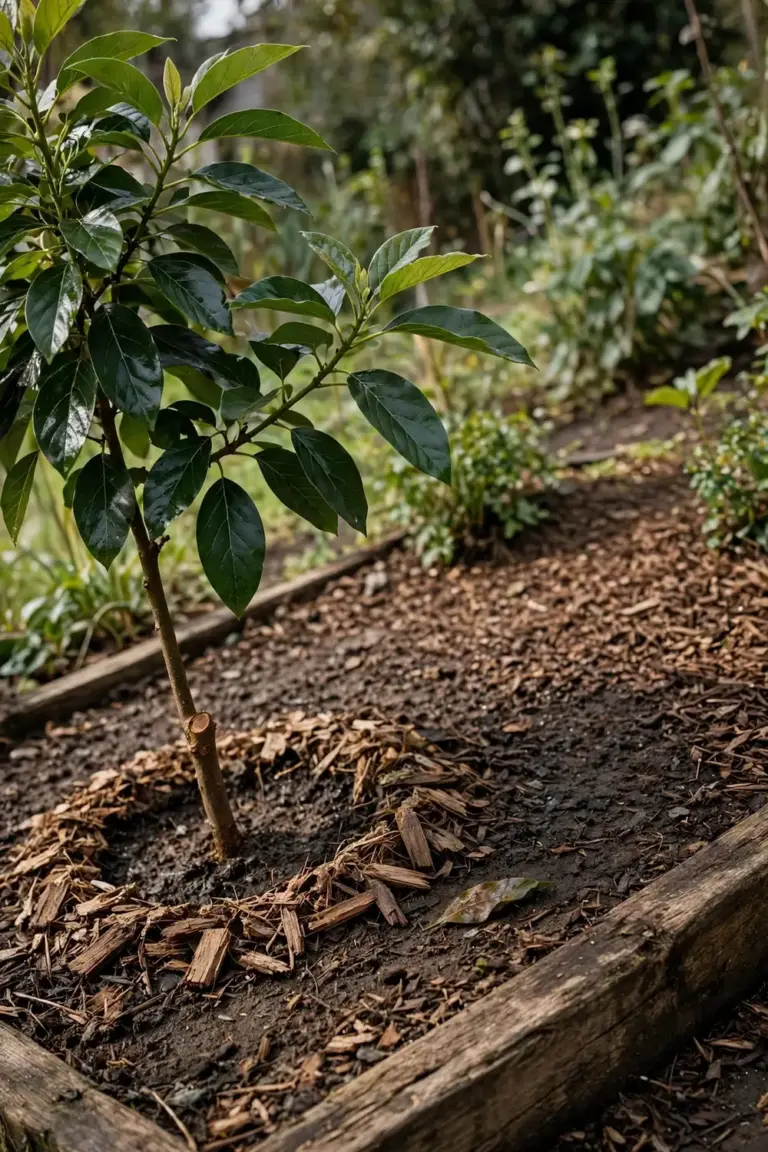
Mulch after planting. A thick organic mulch keeps the upper soil moist and feeds the soil life that a young tree needs. The site’s mulching guide explains how mulch holds moisture, suppresses weeds, and keeps roots cool. Keep the mulch off the trunk itself. A mulch ring with a gap at the trunk prevents collar rot while the tree settles.
Water the new tree deeply at planting, then keep the soil damp while roots establish. Stake a tall young tree loosely so wind does not rock the root ball, and check the tie every few weeks, loosening it before it bites the bark. A tie that girdles a young trunk strangles the tree it was meant to protect.
Frequently Asked Questions
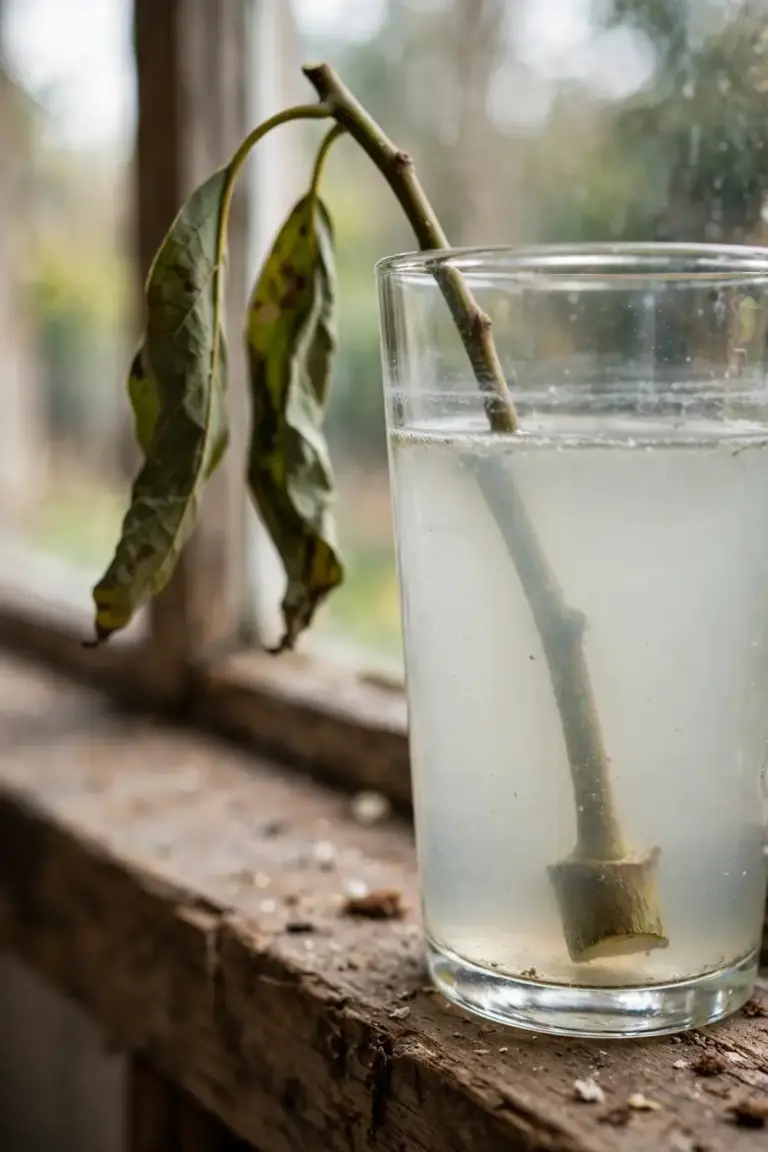
No. Water does not fix the rooting block. A cutting in water forms callus at the cut end, then the stem softens and rots. The Purdue account records that avocado cuttings are generally difficult to root in mix, and water adds nothing that mix lacks. Rooting needs the hormone balance of an etiolated shoot, not a glass of water. Plant a seed instead.
Data not available for a home timeline, because ordinary cuttings do not root. Nursery etiolation takes months: the mother shoot grows in darkness, pale buds break the surface, and the etiolated shoot roots under controlled conditions over weeks. A home cutting left in mix for months does not follow that path. Judge a cutting by roots, not by weeks waited.
No reliable home route exists. Hass must be grafted to stay Hass. A cutting that somehow rooted would clone the parent, but cuttings from a mature Hass almost never root. A seed from a Hass fruit grows a seedling with unpredictable fruit, not a Hass tree. Buy a grafted Hass or graft Hass scion wood onto a seedling rootstock.
Yes, after a long wait. Trees grown from seed may take 4 to 10 years to flower and fruit, according to the University of Florida Gardening Solutions guide. The fruit will not match the parent. It may taste good, or it may taste poor. Grow a seedling for the project, or grow one as a rootstock and graft a named cultivar onto it.
No. University of Florida extension gives air-layering the same verdict as cuttings: propagation by cuttings and air-layering has not been successful. The 2024 journal study found one layered shoot survived with frail roots that failed at transplanting. Air-layering serves research, not home propagation. Seed and grafting are the routes that work.
Start With the Right Method This Weekend
Pick the route that matches your goal: a free experiment means planting a seed and watching it grow, while the exact fruit you ate means grafting a scion onto a seedling or buying a grafted tree. Skip the cutting. The cutting promises a clone and delivers rot, while seed and grafting deliver trees that fruit years sooner than any cutting you nurse all season. That is the honest answer to how to propagate avocado from cuttings.