
Brotowali uses split into two groups that never mix. The first group is the traditional use: the stem of Tinospora crispa, a woody vine to 15 m, appears in Indonesian jamu as a bitter ingredient. The second group is the danger: a literature review ties chronic use of Tinospora crispa to acute fulminant hepatitis, and it warns that misidentification can cause hepatic injury or even death. This page names the vine, sorts the traditional uses from the proven effects, and sets out the safety rules.
I have learned to check the botanical name on any bitter jamu label before trusting it. Do not plant brotowali. No home-gardener guide to growing it exists, and this page does not try to write one. The demand is identification, traditional-use reporting, and caution, not cultivation.
The rest of this page is 12 facts, from field marks to the buying checklist. Start with the stem test, because the vine most often confused with brotowali is giloy, a different species with the opposite liver profile, covered in the site’s giloy guide. The two vines share heart-shaped leaves. Their stems and their liver records differ.
1. Identify Brotowali in 5 Field Marks
Brotowali shows five field marks that separate it from most garden vines. Check all five before you name any vine. A single mark never settles an identification, because vines share most of them.
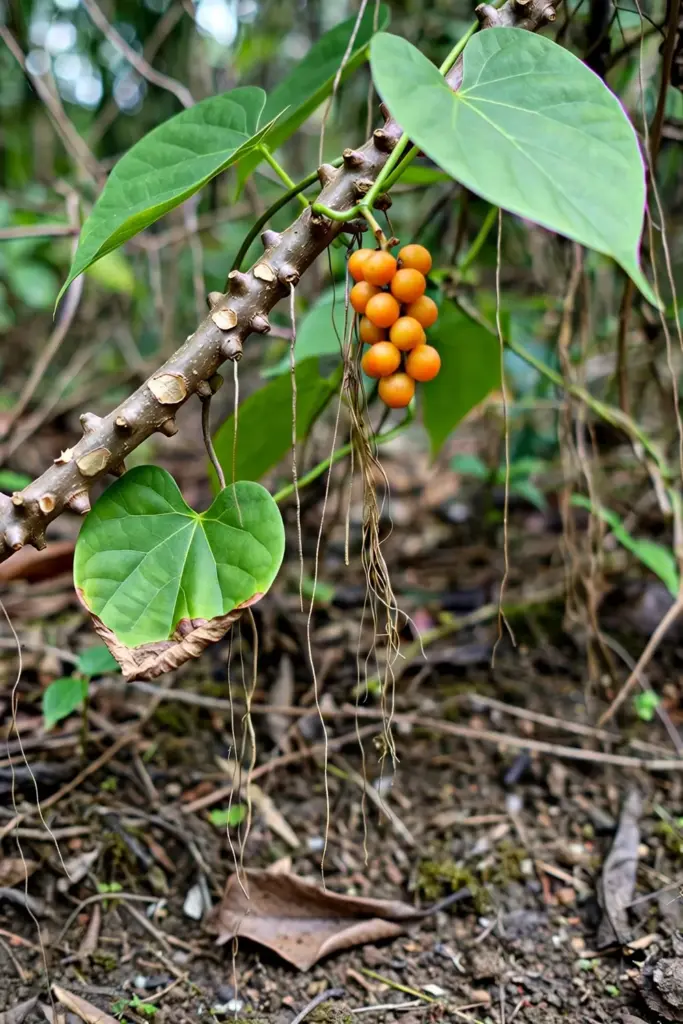
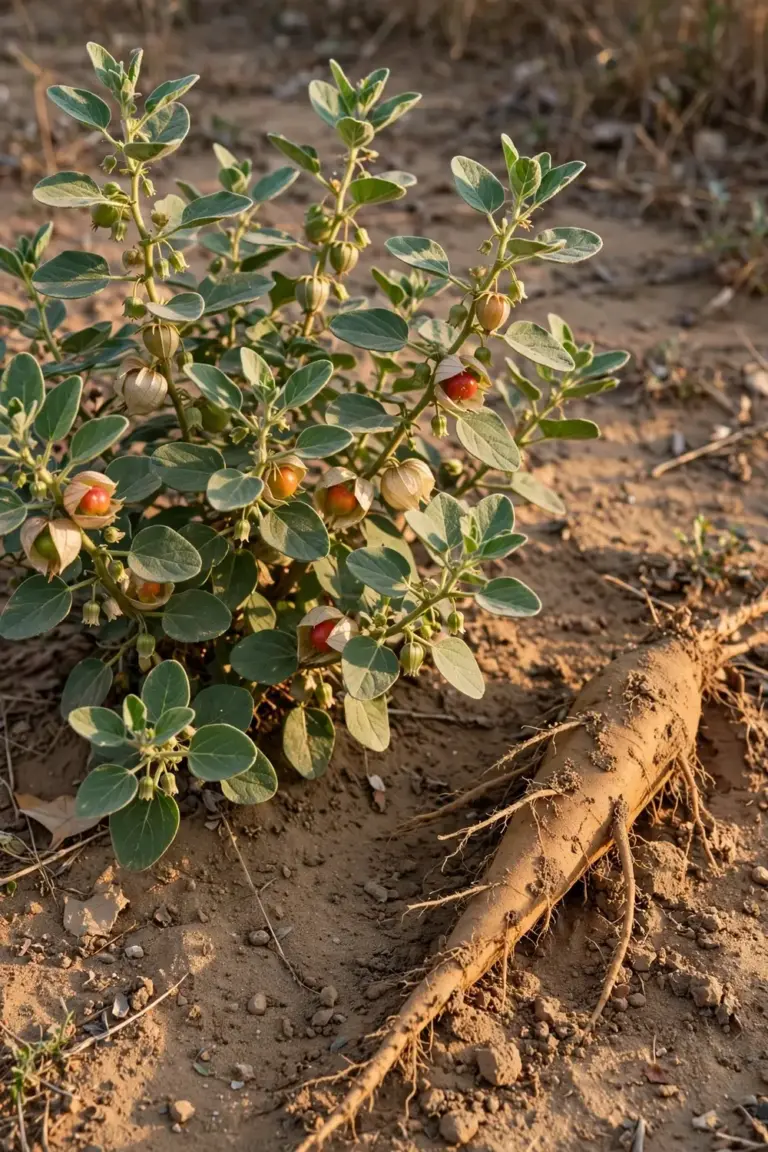
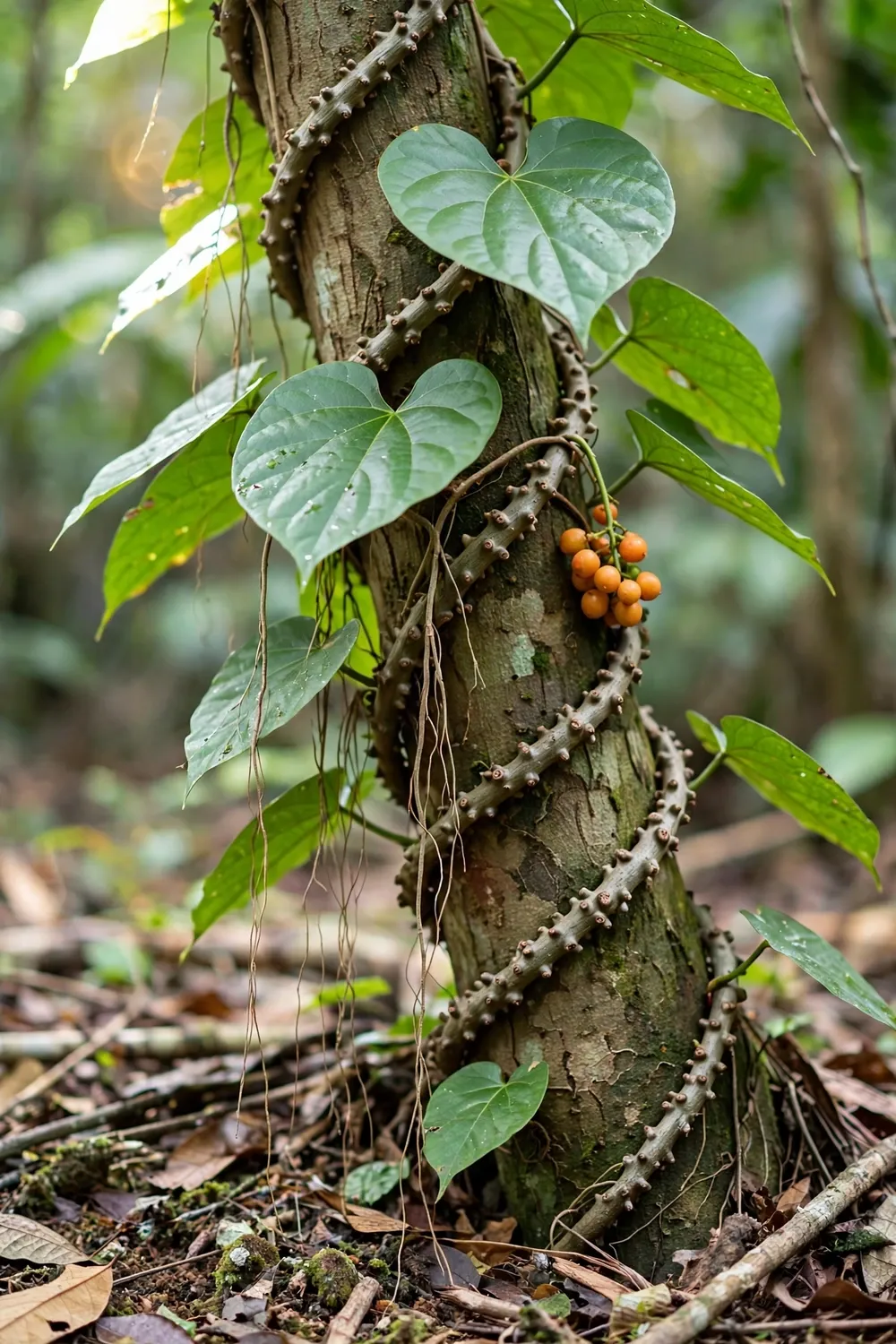
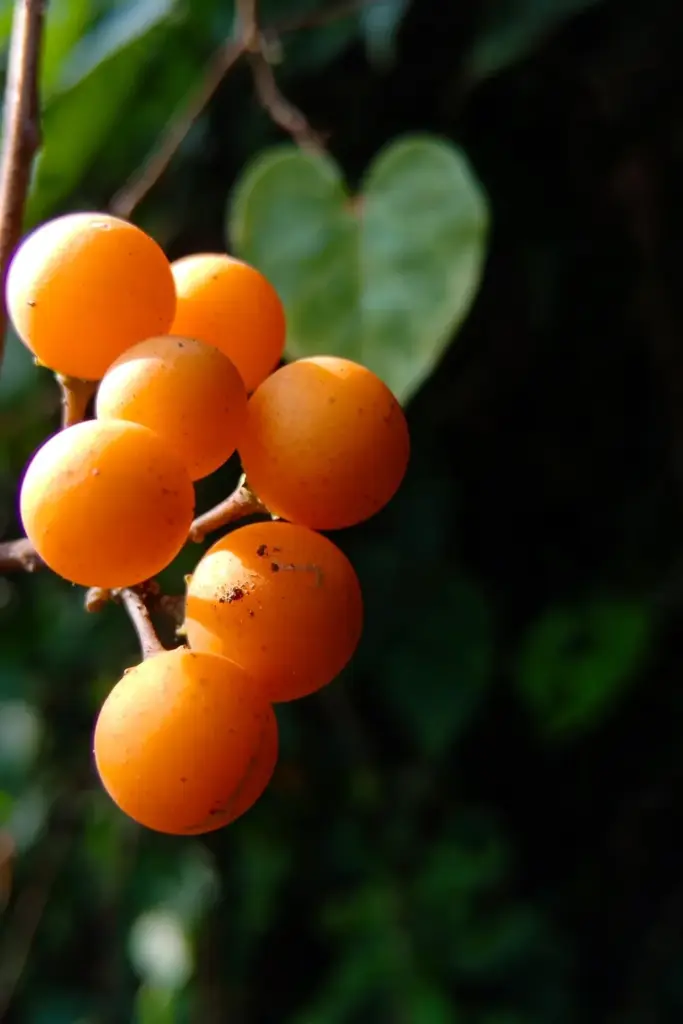
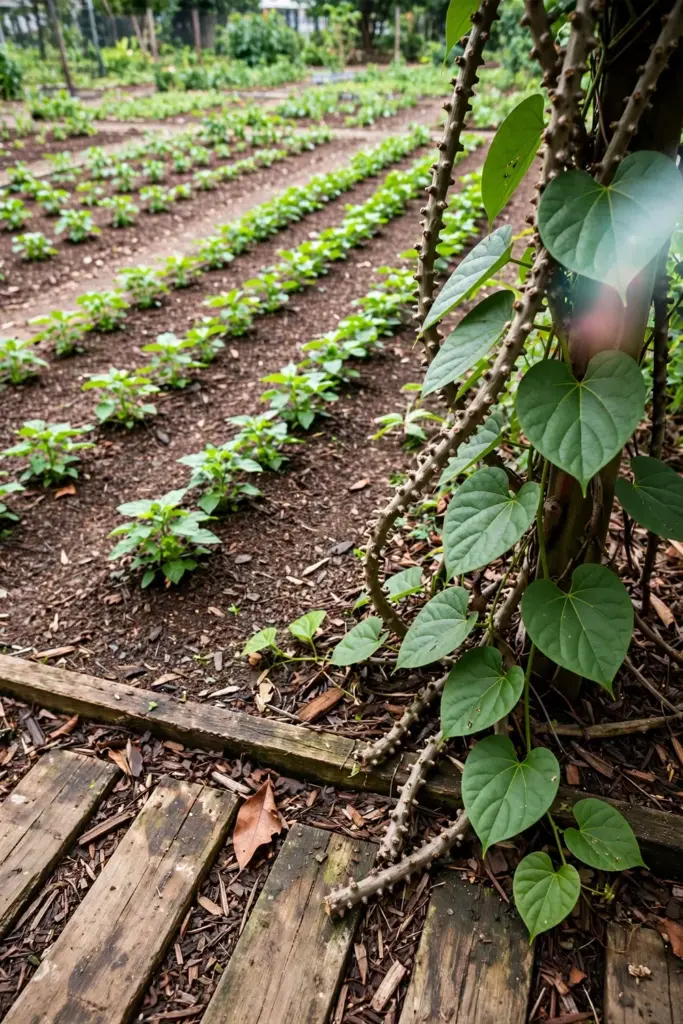
First, the vine is a deciduous, dioecious climbing shrub about 15 m long, with stems up to 1 cm thick and aerial roots, according to the Tinospora crispa entry in the Plants for a Future database. Second, the old stems are fleshy with very prominent blunt tubercles, and the lenticels are large and prominently raised, according to the Tinospora crispa description in Flora of China. Third, the leaf blade is broadly ovate to orbicular, 6 to 13 cm long and 6 to 13 cm wide, with a deeply to shallowly cordate base and an entire margin, according to the Tinospora crispa description in Flora of China. Fourth, the flowers appear before the leaves, in racemes, with small green sepals and yellow petals. Fifth, the drupes are orange, subglobose, and to 2 cm when fresh, according to the Tinospora crispa description in Flora of China.
The petiole adds one more check. It runs 5 to 15 cm long, and it can reach 30 cm, according to the Tinospora crispa description in Flora of China. A vine with a short petiole and a narrow leaf points away from brotowali. A vine with a long petiole and a round heart-shaped leaf fits the pattern, and still needs the stem test before you name it.
2. Check the Stem First for Tubercles
The stem settles more identifications than the leaf does. Brotowali stems carry blunt tubercles that you can feel with a fingertip through a mitt. The tubercles are the first mark to check, and they are the mark that separates brotowali from its dangerous lookalike.
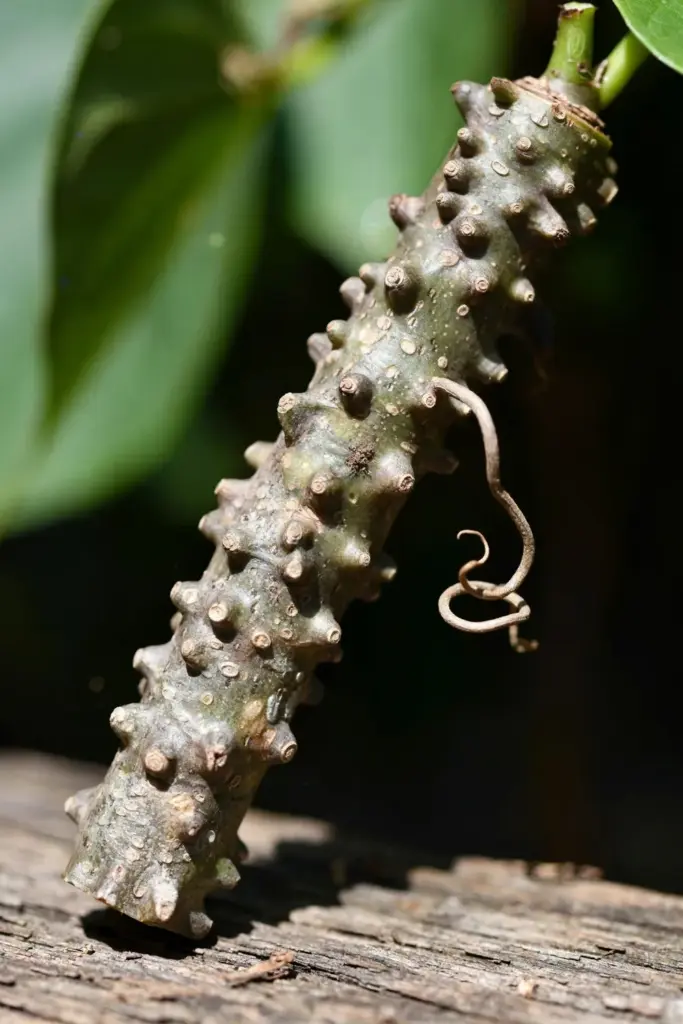
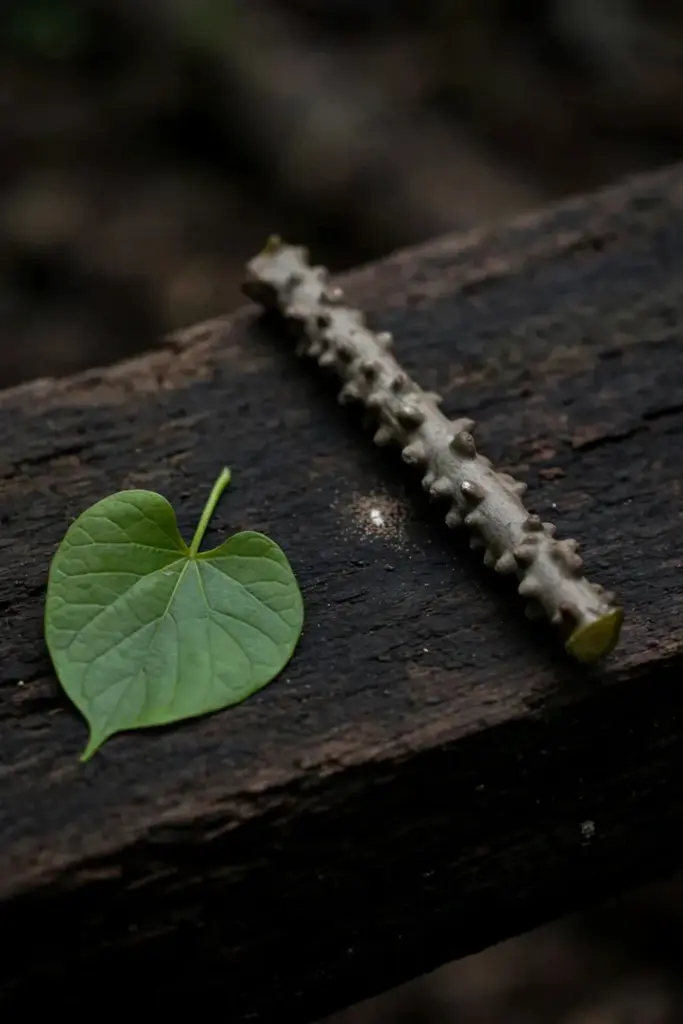
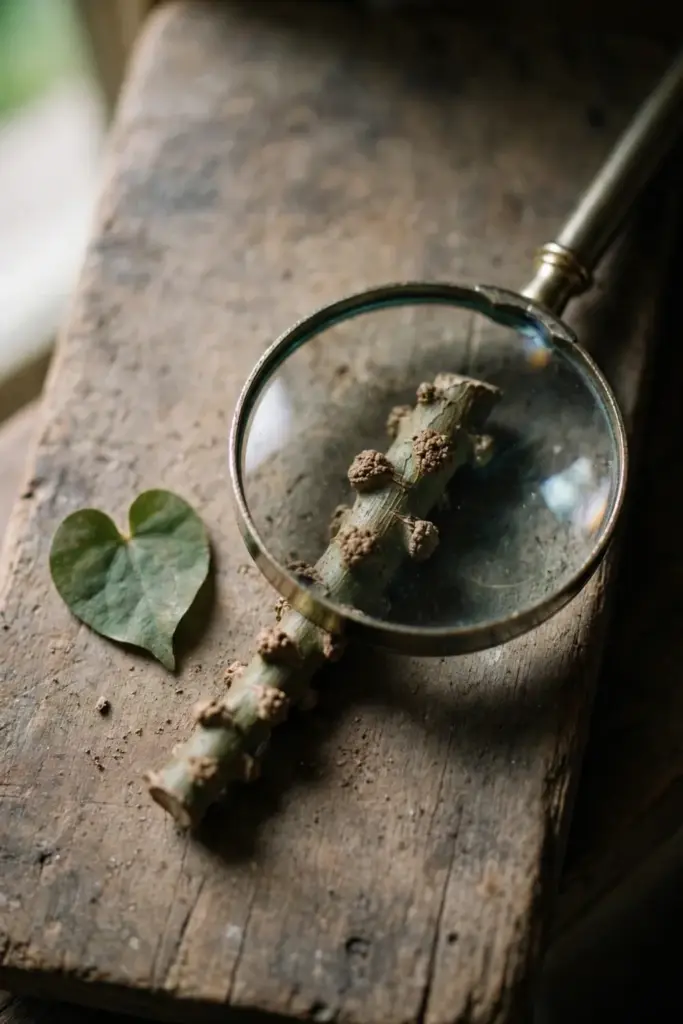
Old stems are fleshy with very prominent blunt tubercles, and younger stems carry large, prominently raised lenticels, according to the Tinospora crispa description in Flora of China. Run a fingertip along the stem. Brotowali feels knobby and warty, with raised bumps along its length. A smooth stem with no tubercles points away from brotowali, even when the leaves look right.
The contrast with giloy is sharp. Brotowali stems display a prominent tuberculate surface that is absent in the related medicinal species Tinospora cordifolia, according to a Scientific Reports analysis of a toxic hepatitis case. The same analysis notes that the tuberculate surface is also absent in Tinospora sinensis. That single difference makes the stem the most reliable field mark a buyer has. Leaves mislead. Stems tell the truth.
3. Read the Liver Warning Before Anything Else
Brotowali carries a liver warning that outranks every traditional use. A literature review reports two cases of acute fulminant hepatitis associated with chronic use of Tinospora crispa, and it concludes that people might cause hepatic injury or even death without correctly identifying the two Tinospora species, according to the PubMed abstract of the liver injury review.
The review compared the two species directly. Tinospora cordifolia has been reported to protect the liver, while Tinospora crispa might induce hepatotoxicity, and the review names cis-clerodane-type furano-diterpenoids as a candidate factor behind the harm, according to the PubMed abstract of the liver injury review. The two vines pull in opposite directions on the liver. That opposition is the reason the warning leads this page and treats every identification as a safety decision.
Misidentification drives the risk. Over 35 percent of websites failed to accurately identify the two herbs in a web review that used three search terms across image results, according to the PubMed abstract of the liver injury review. More than one site in three gets the pair wrong. A buyer who trusts a wrong page can end up drinking the liver-harming species while aiming for the liver-protecting one.
4. Learn What the Two Liver Cases Actually Show
The two liver cases share one pattern: chronic use of a misidentified vine. The review reports two cases of acute fulminant hepatitis associated with chronic use of Tinospora crispa, and it notes that the two herbs were misidentified in those two reports, according to the PubMed abstract of the liver injury review. The patients used the vine over time, believing it to be the protective species.
Acute fulminant hepatitis means sudden, severe liver failure. The liver stops clearing toxins, and the failure can turn fatal without urgent care. The review searched the literature through late July 2018 for clinical trials and case reports on the two species, and it found the contrast that runs through the evidence: one species protects, the other harms, according to the PubMed abstract of the liver injury review. The evidence is a case-based review, not a large trial. That limits what it proves about dose and frequency, and it does not limit the warning. Two cases of fulminant failure tied to one species is enough to change how you buy and use any vine in this genus.
The practical lesson is narrow. Never assume a bitter vine is safe because a page calls it giloy, guduchi, or a liver tonic. Check the botanical name, check the stem, and check the seller. A misidentified vine is the hazard the review documents. The name on the label is the first line of defense.
5. Separate Brotowali From Giloy (Tinospora cordifolia)
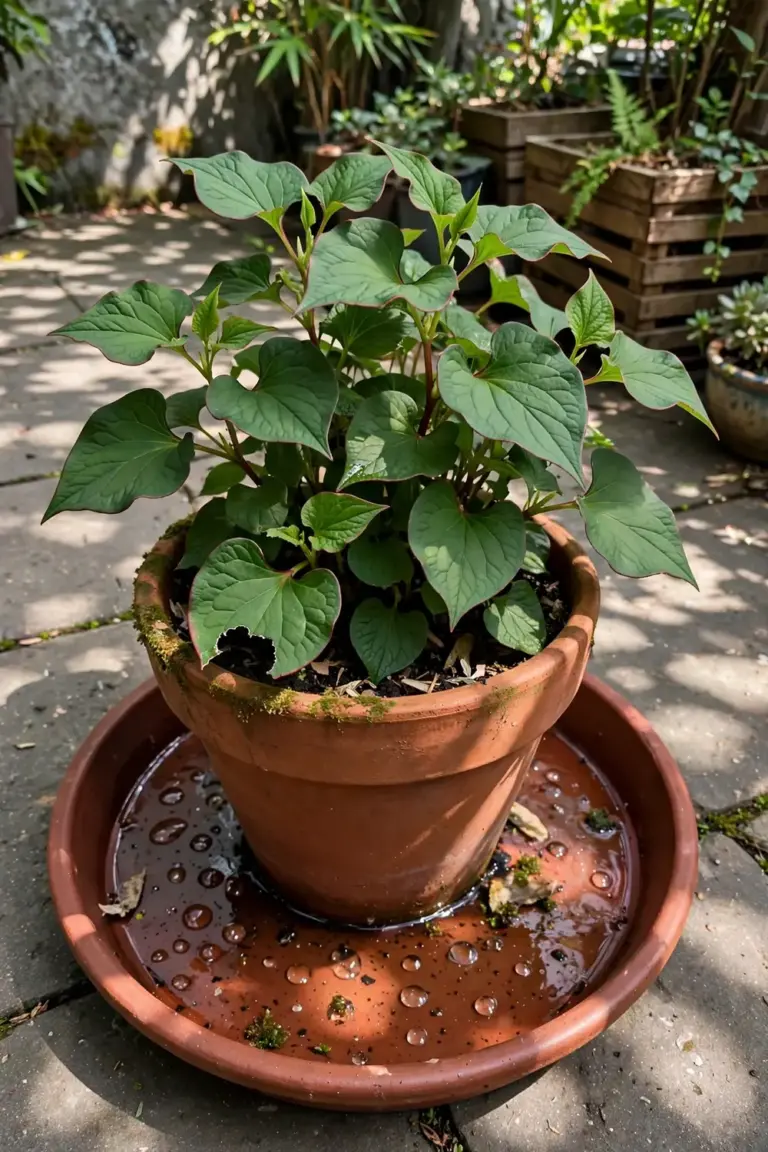
Brotowali is Tinospora crispa. Giloy is Tinospora cordifolia. The two are different species with opposite liver profiles. Confusing them is the most dangerous mistake a buyer can make, because one vine harms the liver and the other is reported to protect it.
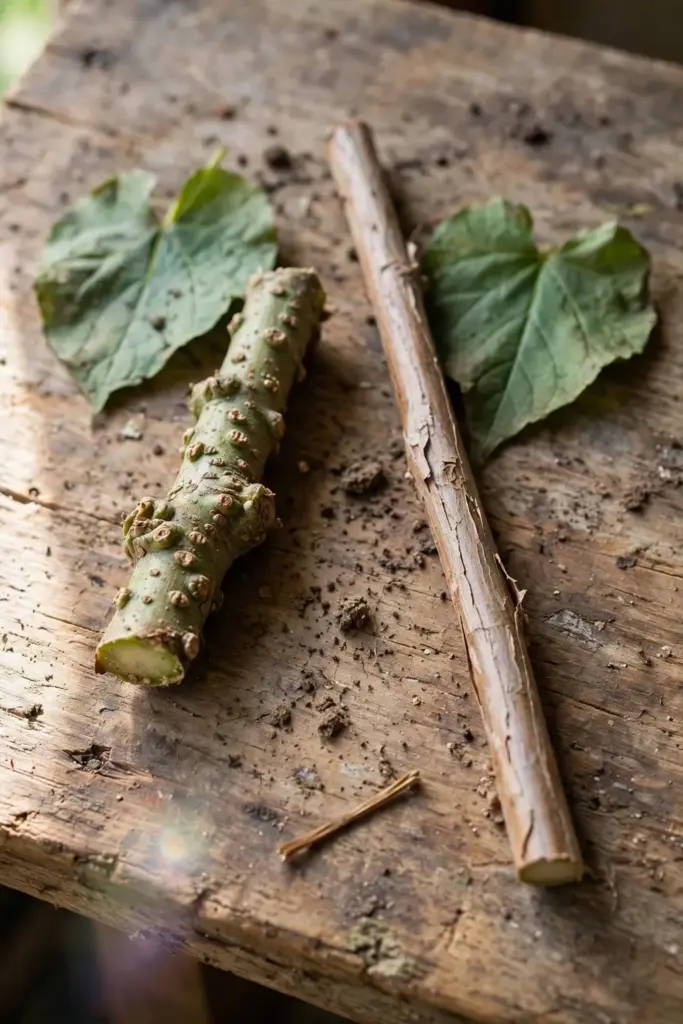
The stem gives the fastest separation. Brotowali stems carry prominent blunt tubercles. Giloy stems lack that tuberculate surface, according to a Scientific Reports analysis of a toxic hepatitis case. Leaves give no separation, because the two species share similar leaves, and people may mistake one for the other, according to the PubMed abstract of the liver injury review. A seller who identifies a vine by its leaves alone has not identified it.
| Feature | Brotowali (Tinospora crispa) | Giloy (Tinospora cordifolia) |
|---|---|---|
| Stem | Prominent blunt tubercles, large raised lenticels | Smooth stem, tuberculate surface absent |
| Leaves | Broadly ovate to orbicular, 6 to 13 cm, cordate base | Heart-shaped, similar outline, easily confused |
| Fruit | Orange drupes, to 2 cm when fresh | Data not available in the linked sources; do not use fruit to separate them |
| Liver profile | May induce hepatotoxicity; two cases of acute fulminant hepatitis | Reported to protect the liver |
| Home tradition | Indonesian jamu, bitter stem preparations | Indian Ayurveda, guduchi or giloy |
The liver row matters most. Tinospora cordifolia has been reported to effectively prevent hepatotoxicity, while Tinospora crispa might have the negative effect of inducing it, according to the PubMed abstract of the liver injury review. The table separates the pair on the two marks that hold up: the stem and the liver record. Gardeners who want the Indian species should read the site’s giloy guide and never substitute a warty-stemmed vine for it.
6. Separate Brotowali From Other Tinospora Species
Brotowali is not the only Tinospora vine in trade. Tinospora sinensis circulates under similar names, and other Tinospora species appear in regional herb markets. The genus holds many species, and leaf shape alone never separates them.
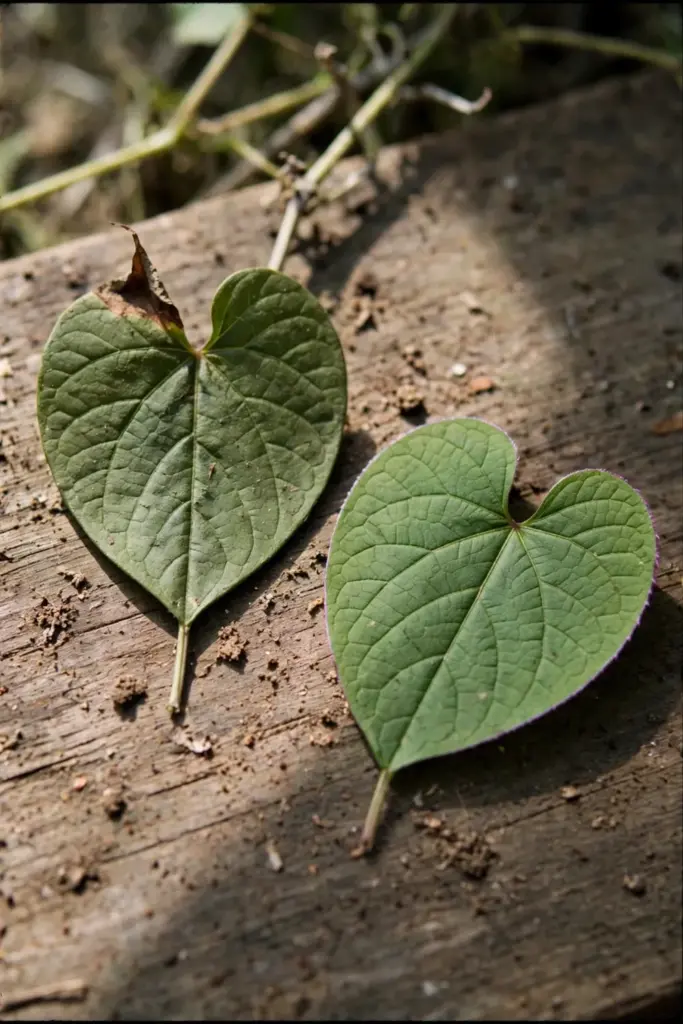
The stem test still works on the closest confusion. The prominent tuberculate surface of Tinospora crispa is absent in Tinospora sinensis, according to a Scientific Reports analysis of a toxic hepatitis case. A smooth stem rules out brotowali even when the label says otherwise. A warty stem fits brotowali and still needs the botanical name on the label to confirm it.
Common names add a second layer of confusion. Brotowali also appears as patawali or akar patawali in Malay use, and as makabuhai in the Philippines, according to the Tinospora crispa entry in the Plants for a Future database. Giloy also appears as guduchi. The names overlap across languages and markets, and a shared common name never proves a shared species. The botanical name is the only label that settles the question. When a seller cannot give it, walk away. The vine ranges across Indonesia, Malaysia, Thailand, the Philippines, and neighboring countries, according to the Tinospora crispa description in Flora of China.
7. Understand How Brotowali Is Used in Indonesian Jamu
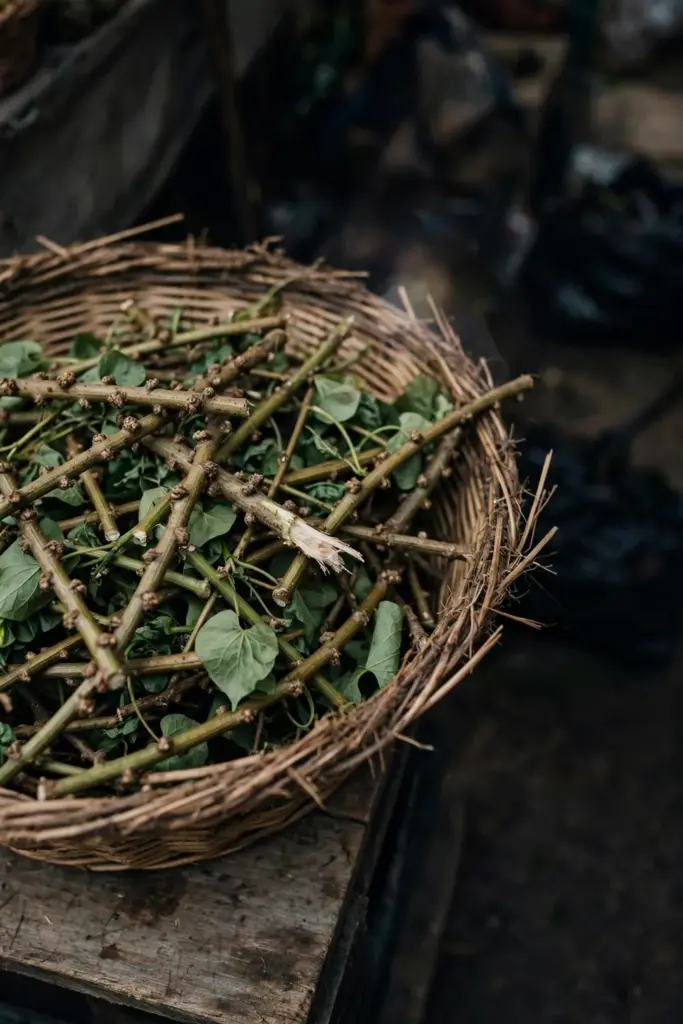
Brotowali stem is a jamu ingredient in Indonesia. Jamu is the Indonesian tradition of herbal medicine, and brotowali belongs to its bitter side. The stem is the part used, and traditional practice takes it as an infusion or a decoction rather than as food.
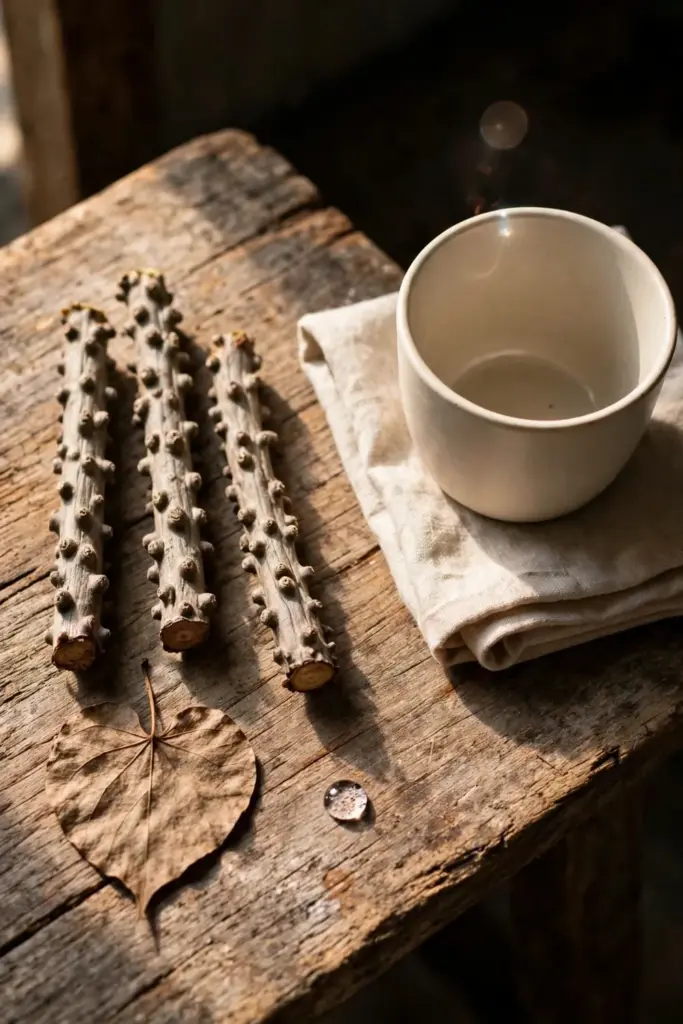
The recorded Indonesian uses are broad. An infusion of the stem is drunk in Malaysia and Indonesia as a vermifuge, and an infusion of the whole plant is used to treat cholera, while the plant is also used to treat diabetes mellitus, according to the Tinospora crispa entry in the Plants for a Future database. The same database lists fevers, stomach trouble, indigestion, and diarrhea among the conditions the plant is used for. Those are traditional descriptions, not proven medical facts. This page reports what the tradition says. It does not promise any result.
External uses form a separate group. A decoction of the stem is used as a wash for tropical ulcers and external parasites, and it is used externally against scabies and to heal wounds, according to the Tinospora crispa entry in the Plants for a Future database. A preparation made with coconut oil is used for rheumatism, and it is also used for flatulence in children. The external group still carries the identification risk. A wash made from the wrong vine is the same misidentification problem in a different form. Other jamu rhizomes carry no such confusion: the site’s ginger guide and turmeric guide cover two bitter-blend companions that a buyer can identify at a glance.
8. Sort Brotowali Uses From Proven Effects
Brotowali uses in tradition run far ahead of what human evidence proves. The plant is highly valued as a medicinal plant, and no plant part is edible, according to the Tinospora crispa entry in the Plants for a Future database. That pairing frames the whole section. Traditional value is real, and village practice keeps it alive. Edible use falls outside it. Proven clinical effect is a separate question.
Laboratory findings do not prove clinical effects. Studies of plant extracts in test tubes and in animals can show activity against a target. That activity is a starting point for more research. It is not evidence that a stem infusion treats diabetes, fever, or rheumatism in a person. The liver review itself rests on case reports and literature comparison, according to the PubMed abstract of the liver injury review. It is not a large human trial. The strongest human evidence for brotowali is a warning.
Three limits govern every traditional use, and the first is the bluntest: no dosage appears below, by design, because traditional preparation varies by healer and region and no standardized human dose exists in the sources this page links. Second, a compound in a test tube is a starting point for more research, not evidence of a clinical effect. Third, the liver warning still applies during traditional use. A bitter infusion made from a misidentified vine carries the same hepatotoxicity risk as any other preparation. The traditional use and the toxicity live in the same stem, so respect both.
9. Apply the Safety Rules Before Any Brotowali Product
Safety rules come before any purchase. The rules are short, and they all trace back to the misidentification finding. Over 35 percent of websites failed to accurately identify the two herbs, according to the PubMed abstract of the liver injury review. A buyer who skips the rules joins the group that gets the pair wrong.
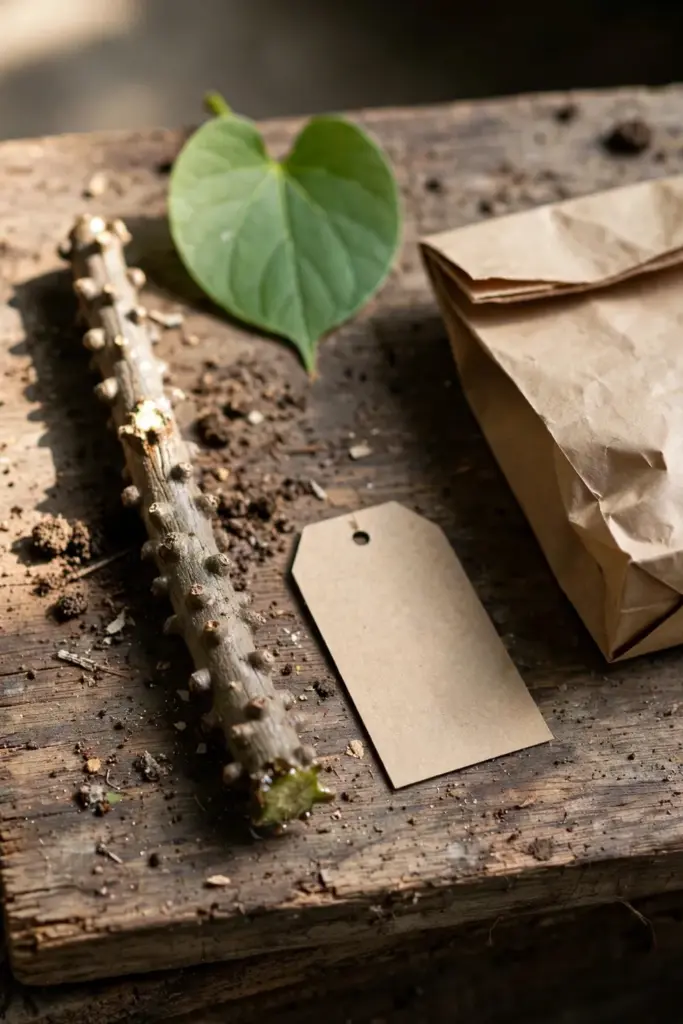
Buy from a seller who names the species on the label. The label must read Tinospora crispa in full, not a common name alone. A label that reads only brotowali, giloy, guduchi, or bitter vine tells you nothing, because those names cross species lines. A seller who cannot name the species cannot sell you the right vine. Skip that seller.
Stop use and seek urgent care when liver warning signs appear. Yellowing of the skin or the whites of the eyes, dark urine, pale stools, unusual fatigue, and pain under the right ribs all call for prompt medical attention. Tell the clinician the plant name, Tinospora crispa, and the time of use. That single sentence speeds up assessment more than any description of symptoms alone. Anyone with liver disease, anyone taking medicine that affects the liver, and anyone who is pregnant should talk to a clinician before considering any brotowali product, and the safest choice is to avoid it.
10. Handle Brotowali Safely Around Children, Pets, and Vulnerable People
Brotowali in a home with children, pets, or vulnerable people is a storage problem before it is a plant problem. The vine looks ordinary. The stem looks like any other woody cutting. The risk hides in the name on the label and in the liver record behind it.
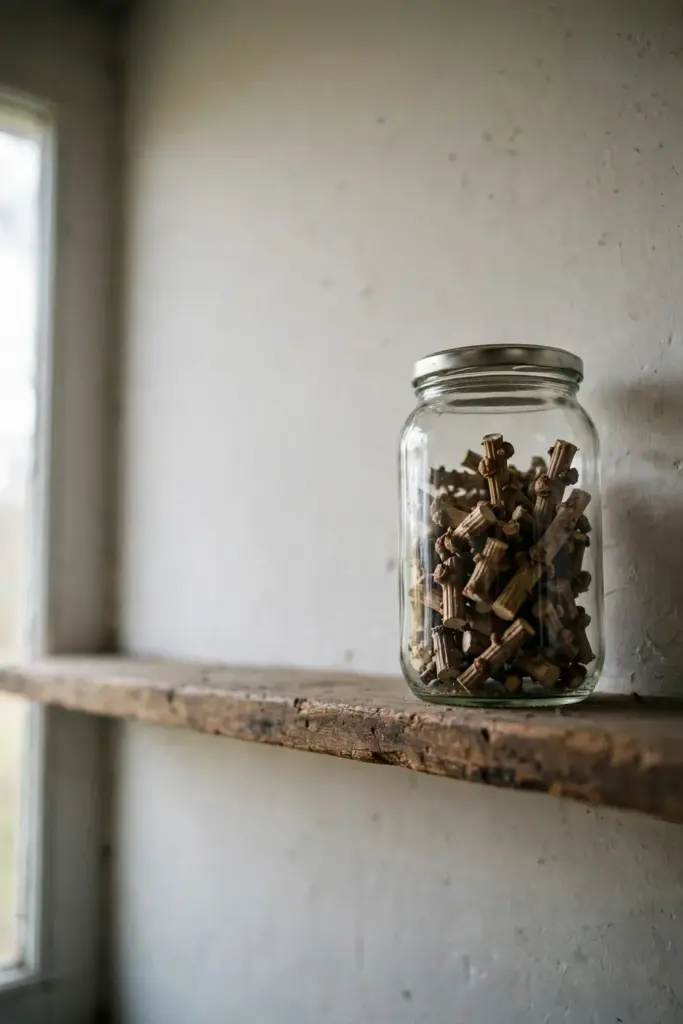
Keep children away from brotowali preparations. No plant part is edible, according to the Tinospora crispa entry in the Plants for a Future database. A child reaches for a bitter stem because it looks like a stick. A child drinks from an unattended cup because cups invite sipping. Store dried stems, powders, and infusions out of reach, in labeled containers, behind a closed door. A locked cabinet costs little. A swallowed preparation costs a hospital visit.
Keep pets away from cut stems and dried material. Dogs chew sticks. Cats rub against fresh cuts. Both behaviors put plant material in mouths or on skin. Bag trimmings at the vine and remove them the same day. Never leave a pile of brotowali cuttings where a dog can chew them overnight. Vulnerable people deserve the same caution. Older adults, people with liver disease, and people on long-term medication face higher stakes from any liver-affecting herb. When in doubt, keep the vine out of the house entirely.
11. Buy Brotowali Without Getting the Wrong Species
Buying the right species takes three checks, and each check is quick. The checks work because they target the two failure points the liver review documents: wrong identification and chronic use of the wrong vine.
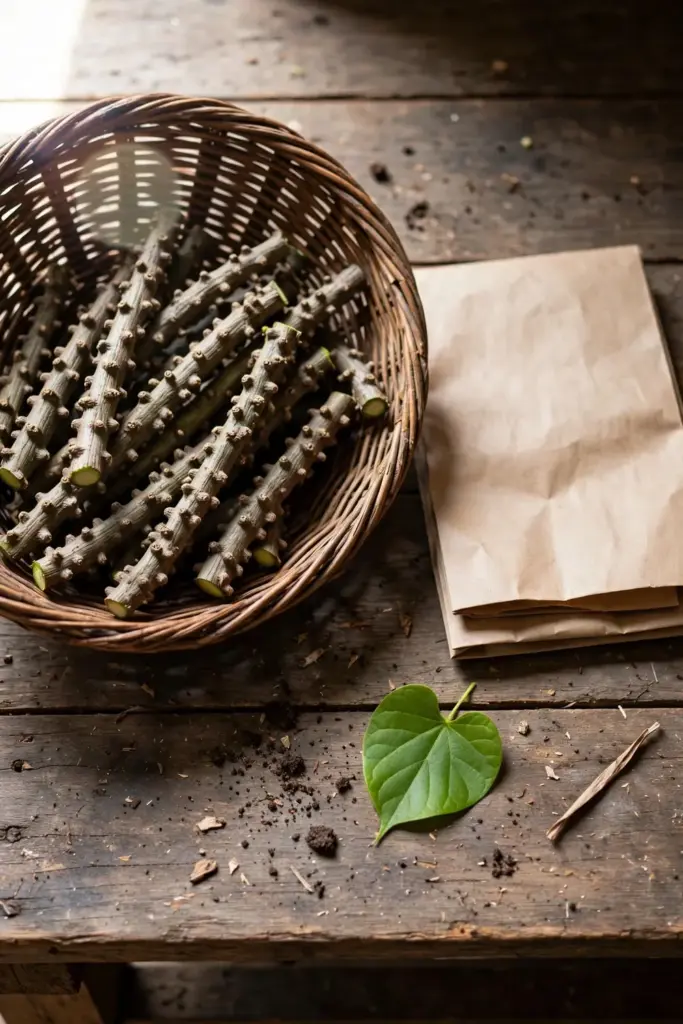
First, read the label for the full botanical name. Tinospora crispa must appear in full. A label with only a common name fails the test. A label with the wrong botanical name fails the test. A handwritten market bag with no label fails the test. Second, look at the stem when the product is whole or cut. Brotowali stems carry prominent blunt tubercles, according to the Tinospora crispa description in Flora of China. A smooth stem in a bag labeled brotowali is a mismatch. Ask the seller to explain it, and walk away when the answer does not satisfy you.
Third, buy from a reputable seller with a registration number you can check. A packaged jamu product carries a producer name, an ingredient list, and a registration number. Loose powder from an unlabeled market stall carries none of those, and powder hides the stem test entirely. Powder is the riskiest form to buy. The one field mark that separates the species is ground away. Laboratory testing can confirm the species by its chemical marker, since borapetoside C is a species-specific molecular marker of Tinospora crispa, according to a Scientific Reports analysis of a toxic hepatitis case. A buyer cannot run that test at home. The label, the stem, and the seller are the checks you have. Use all three.
12. Decide What to Do With a Brotowali Vine on Your Land
A brotowali vine on your land is a decision, not a planting opportunity. Start by naming the vine with the five field marks, then decide whether it stays or goes. The vine stays only where nobody harvests it for medicine, nobody mistakes it for giloy, and nobody leaves cut stems within reach of children or pets. A vine beside a path, a play area, or a vegetable bed fails that test. Remove it.
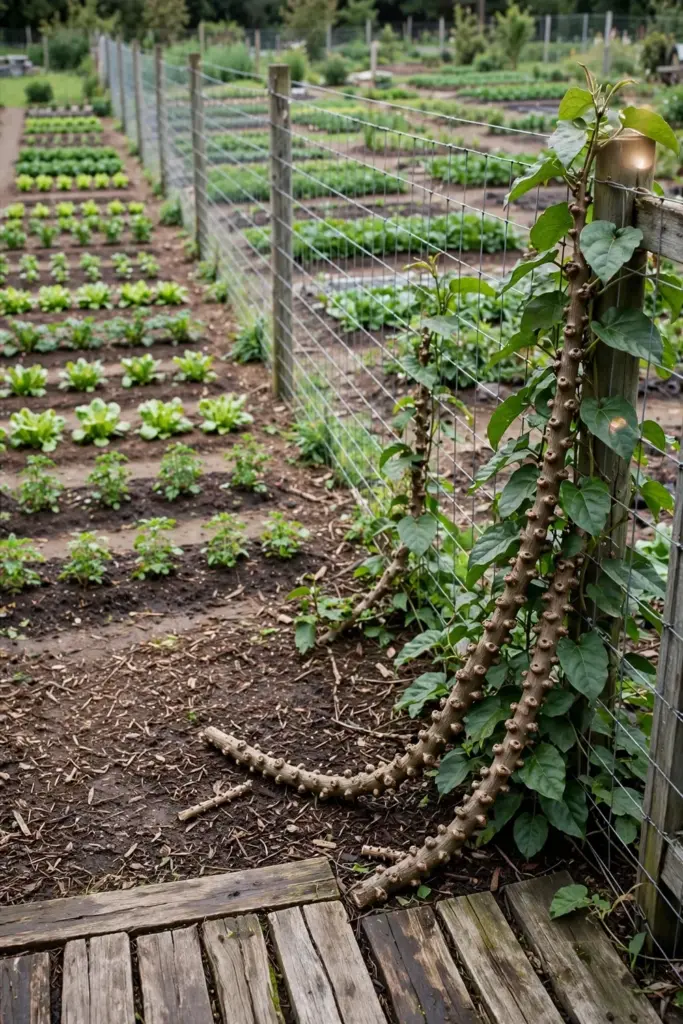
Removal starts with protection. Wear a worn garden mitt, long sleeves, and closed shoes. Cut low and bag the cut stems at the vine. Never compost brotowali stems, leaves, or roots. Bag them and send them with household trash where local rules allow. Wash tools, mitts, and boots after the job. Cut material left on the ground invites exactly the confusion the safety rules guard against.
Female plants are rarely collected, which suggests the vine has largely been distributed by the vegetative propagation of male plants for medicinal purposes, according to the Tinospora crispa description in Flora of China. That history is a reason to leave distribution alone. Every act of moving brotowali stems moves a vine with a liver warning attached. Call your local extension office when the vine stands near a crop field, a waterway, or a protected forest edge. Staff there know the local rules and the disposal guidance. A phone call costs nothing and keeps you inside the law.
Frequently Asked Questions
No. Brotowali is Tinospora crispa, a Southeast Asian vine with warty tuberculate stems and a liver-harm record. Giloy is Tinospora cordifolia, the Indian Ayurvedic vine with smooth stems and a reported liver-protecting effect. The two share heart-shaped leaves, and over 35 percent of websites failed to accurately identify the two herbs, according to the PubMed abstract of the liver injury review. Check the botanical name and the stem before you trust any product labeled with either name.
Traditional practice in Malaysia and Indonesia uses a stem infusion for diabetes. Laboratory studies have explored related activity. That is a traditional description, not proven medical fact. No standardized human dose exists in the sources this page links, and the liver review ties chronic use of Tinospora crispa to two cases of acute fulminant hepatitis. Talk to a clinician before considering any brotowali product, and never use it as a substitute for prescribed diabetes care.
No, not by the current evidence. A literature review reports two cases of acute fulminant hepatitis associated with chronic use of Tinospora crispa, and it names cis-clerodane-type furano-diterpenoids as a candidate factor behind the harm. Tinospora cordifolia is the species reported to protect the liver. The two vines pull in opposite directions, so a misidentified vine can harm the organ a buyer hoped to protect. Stop use and seek urgent care when liver warning signs appear.
Do not. No home-gardener guide to growing it exists, and this page does not write one. The vine reaches about 15 m, and female plants are rarely collected, which suggests it has largely been distributed by vegetative propagation of male plants for medicinal purposes. A home vine would put a hepatotoxic species within reach of children and pets, and it would invite the misidentification warned against here. Leave the vine where it stands, or remove it safely.
Feel the stem through a mitt. Brotowali stems carry prominent blunt tubercles and large raised lenticels that you can feel with a fingertip. Giloy stems lack that tuberculate surface. Leaves will not settle the question, because the two species share similar heart-shaped leaves. Pair the stem test with the full botanical name on the label. A smooth stem in a bag labeled brotowali is a mismatch, and powder hides the stem test entirely.
Stop use at once and seek urgent medical care when liver warning signs appear: yellowing of the skin or the whites of the eyes, dark urine, pale stools, unusual fatigue, or pain under the right ribs. Tell the clinician the plant name, Tinospora crispa, and the time of use. Keep the product, its label, and a photo of the vine for identification. Do not start a second herbal product to counteract the first one. Let the clinician assess the liver.
Make the Honest Call on Brotowali
Brotowali uses make sense only in one direction. Learn the vine, name it correctly, respect the liver warning, and keep it from spreading. That is the full program. It needs no seed packet, no garden bed, and no cultivation advice. The vine already grows where it grows, and it carries a risk that no home use justifies.
The honest call is a two part habit. First, check every bitter vine against the five field marks and the stem test before you trust it or buy from it. Second, keep every interaction inside the safety rules: botanical name on the label, reputable seller, never a substitute for giloy, clinician first when warning signs appear. A vine this easy to confuse deserves respect in both directions. Use the traditional knowledge where it already stands, and never give it a new address.