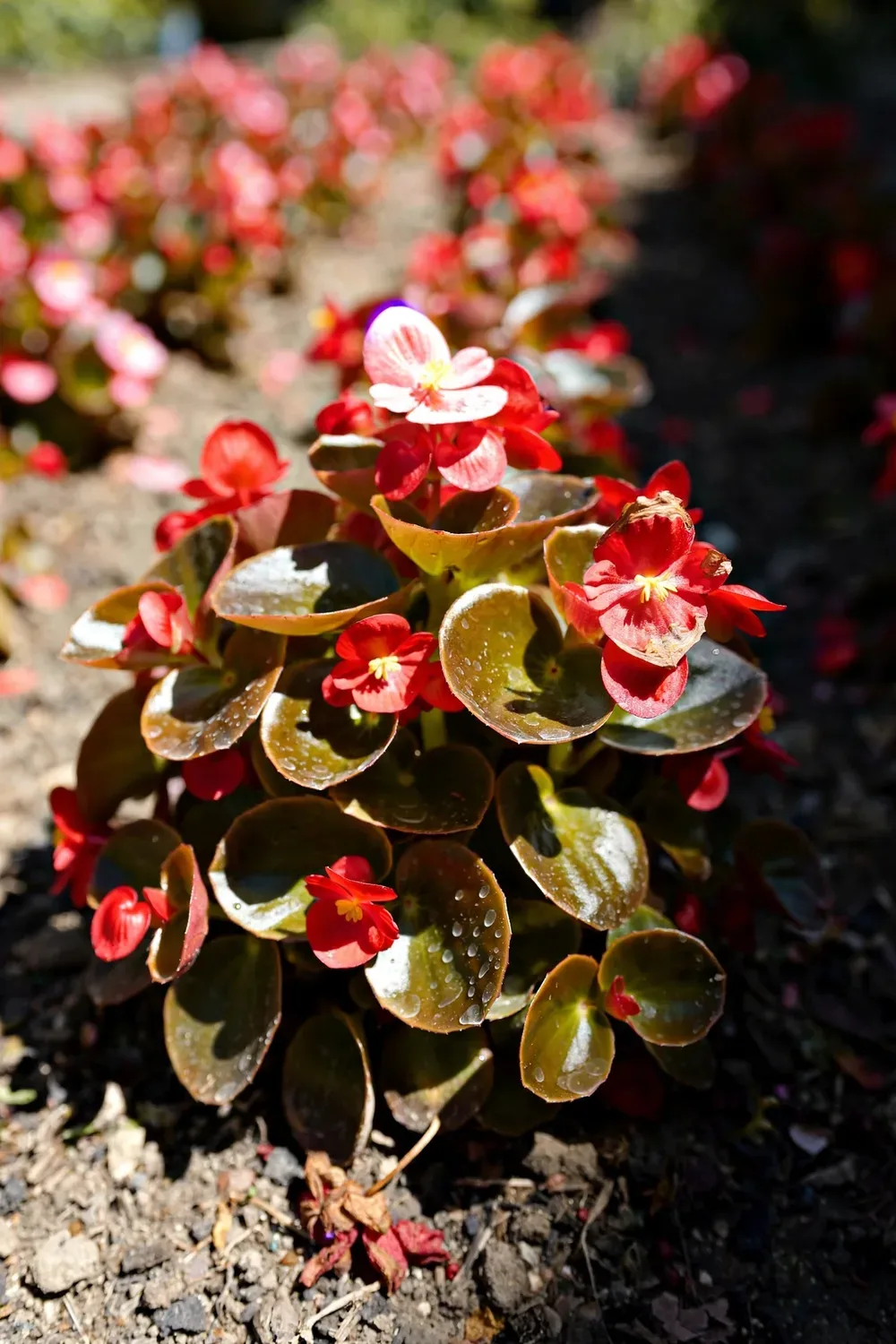

Start with the climate, not the flower. Begonias split into 4 garden groups (wax, tuberous, cane, and rex), and each one wants a different mix of sun, cold tolerance, and winter storage. Tuberous begonias grow the largest blooms but demand cool summers and a dry winter rest for their tubers. Wax begonias tolerate full sun and flower from spring until the first frost. In my experience, naming the type first is the step most new growers skip, and it is the step that decides everything else on this page.
Most guides hand out one watering schedule for every begonia, which is exactly why so many plants die. The four groups behave like different plants because their roots are different: tuberous begonias die back to a stored tuber each year, while wax, cane, and rex begonias keep growing and never need lifting. Buy the wrong type for your weather and no amount of fertilizer saves it. This guide runs through a 3-question climate check, then walks through planting, watering, feeding, propagation, and winter storage for each group. If your planting date sits near a cold snap, read our guide to protecting tender plants from a late frost before anything goes outside.
1. Name the 4 Begonia Groups Before You Buy Anything
Buy the group first, then the color. Every begonia sold at a garden center belongs to one of four groups, and the group tells you how much sun, cold, and winter care the plant needs. Guessing by flower color alone is how rex begonias end up roasting on a sunny patio and tuberous begonias melt through a hot summer.
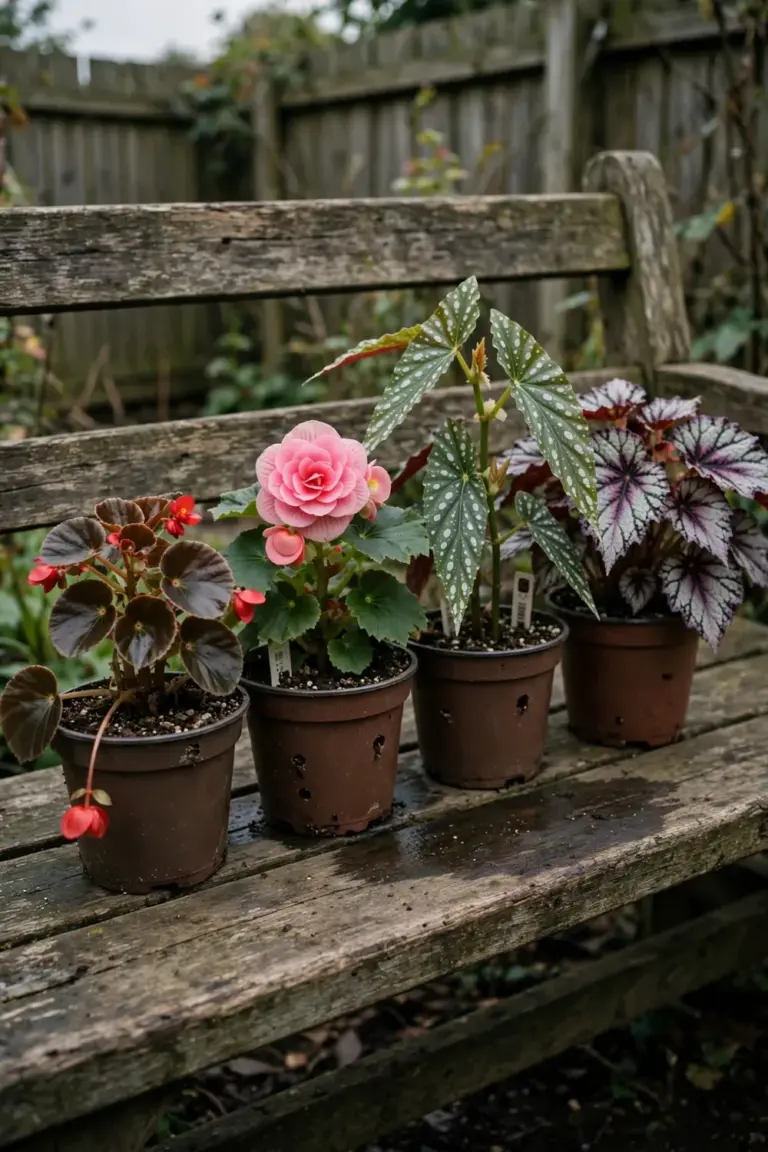
The begonia family holds more than 1,800 species and hybrids, and the University of Florida groups garden types by root structure in their begonia growing guide: fibrous-rooted (wax and cane), rhizomatous (rex), and tuberous. The root system predicts the care. Fibrous-rooted types grow continuously and never need lifting. Tuberous types die back completely each year and demand a true dormancy. Rex types grow from creeping rhizomes just under the soil surface and want indoor conditions.
| Group | Botanical name | What you see | What it demands |
|---|---|---|---|
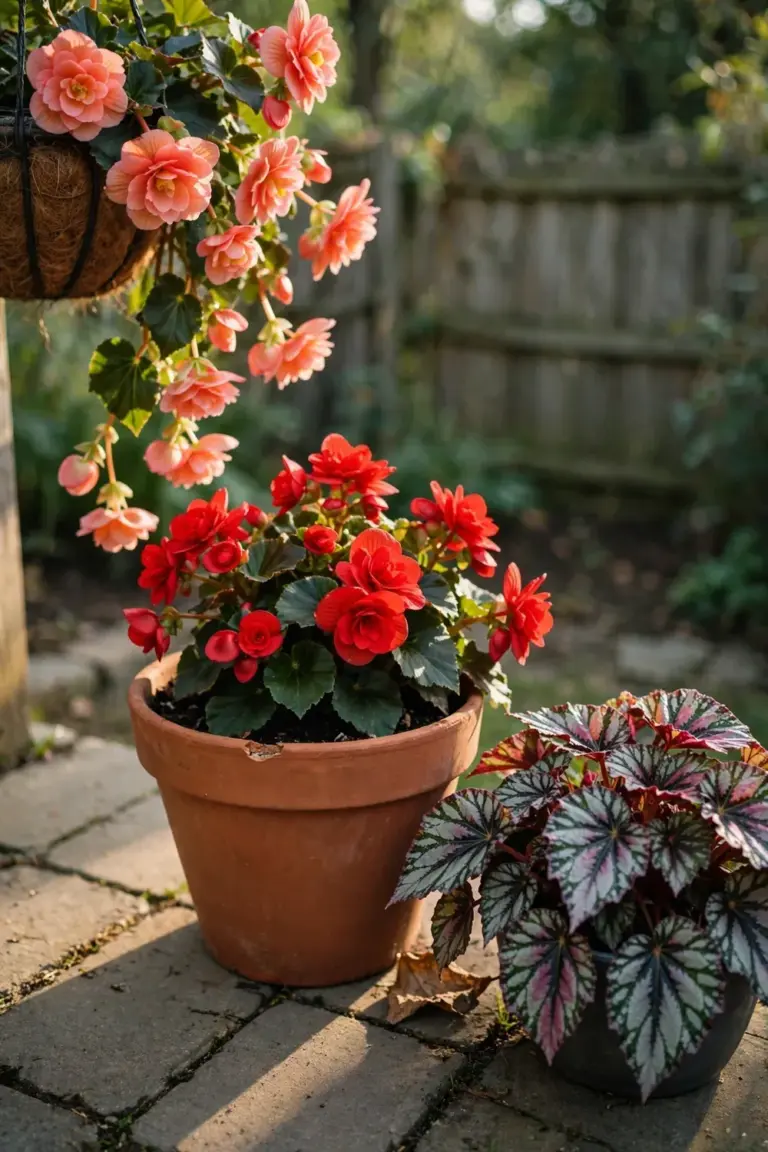
| Wax | Begonia semperflorens | Rounded glossy leaves, clusters of small flowers | Sun or shade; dies at frost; grown as a warm-season annual |
| Tuberous | Begonia × tuberhybrida | Large rose-like blooms, upright or trailing | Shade; cool summers; tubers lifted and stored dry every winter |
| Cane / Angel Wing | Begonia coccinea types | Stiff upright bamboo-like stems, wing-shaped spotted leaves | Frost-free gardens; grows tall; year-round flowers where winters stay mild |
| Rex | Begonia rex-cultorum | Painted, patterned foliage; tiny insignificant flowers | Indoors; bright indirect light; humidity above 50 percent |
Check the tag for the botanical name, not just the color name. A label that reads only “begonia” tells you nothing about winter storage. A label that reads Begonia × tuberhybrida tells you to buy peat moss and clear a cool shelf for October. Photograph the tag at the nursery. Tags fade, blow away, and get swapped by curious shoppers, and the group matters more than the cultivar name.
2. Match the Begonia to Your Climate in 3 Questions
Three questions pick the type. Answer them before the nursery trip and you will not bring home a plant your climate cannot keep.
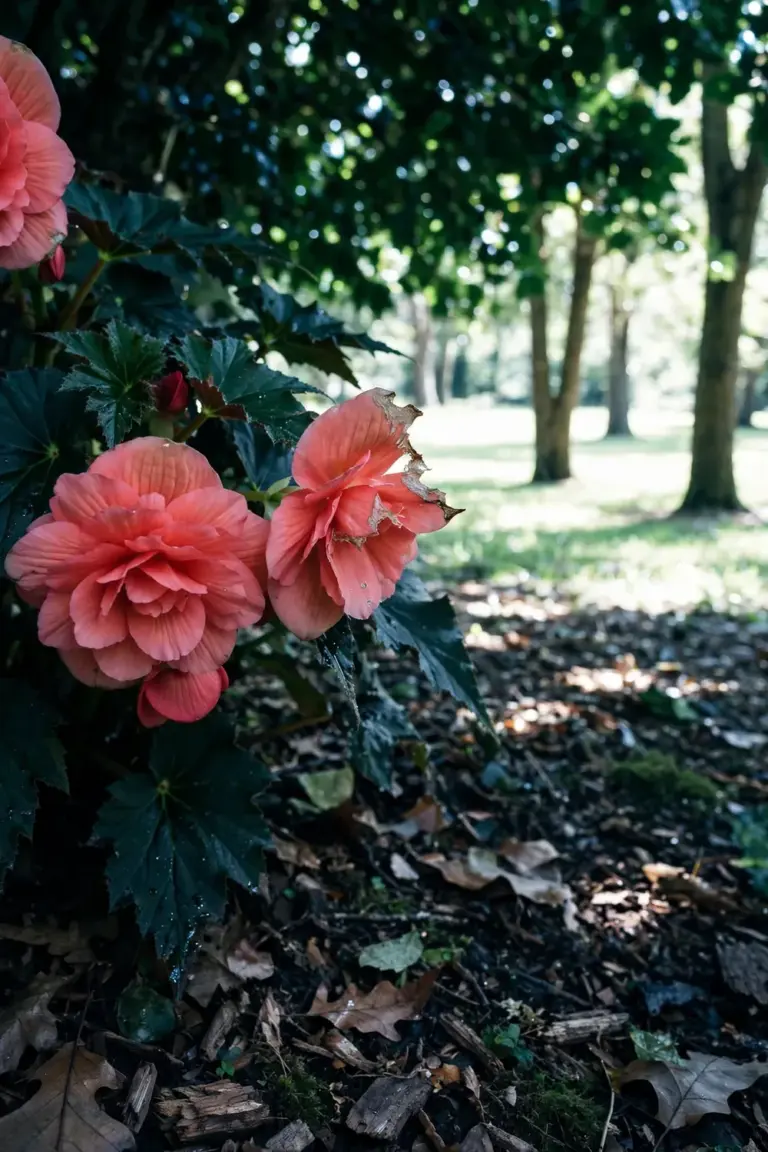
Question 1: Does your winter drop below freezing? If yes, tuberous begonias must be lifted and stored, wax begonias are one-season annuals, and cane begonias come inside or die. Only cool greenhouses keep tuberous tubers through a real winter, so the “lift and store” routine in section 12 is non-negotiable. Rex begonias live indoors regardless, which makes them the default pick for short-season regions.
Question 2: Do your summer nights stay hot? Tuberous begonias are the cool-climate group. They want shade, moving air, and nights that cool down. Gardeners in hot-summer regions (the US Gulf Coast, tropical north Australia, Southeast Asia) should skip tuberous and plant wax or cane instead. Wax begonias hold their rich flower color even through summer heat, per the University of Florida, which is why bedding schemes in hot cities are built on wax, not tuberous. This is the honesty most labels skip: the biggest blooms belong to the fussiest type.
Question 3: Do you want flowers or foliage indoors? Rex gives foliage indoors all year. Wax and cane bloom indoors too, but they need the brightest window you own. Tuberous begonias make poor year-round houseplants because they insist on going dormant; plan for a leafless tuber on a shelf for months.
Southern hemisphere and Australia notes. Flip every northern month by six months: start tubers in August or September instead of February or March, and lift them in March or April instead of September or October. Tuberous begonias belong to the cool south (Melbourne, Adelaide, Tasmania, the tablelands), where nights cool down and winter brings a genuine rest. In hot northern regions, wax bedding and cane types in frost-free pockets are the honest picks. Growers in the deep south can run tuberous begonias like the cool-summer bedding they are, in a shaded spot with morning sun only.
3. Grow Wax Begonias for Sun-Proof Beds and Containers
Wax begonias are the workhorse group. If you want months of color in a hot spot where other flowers give up, this is the type.
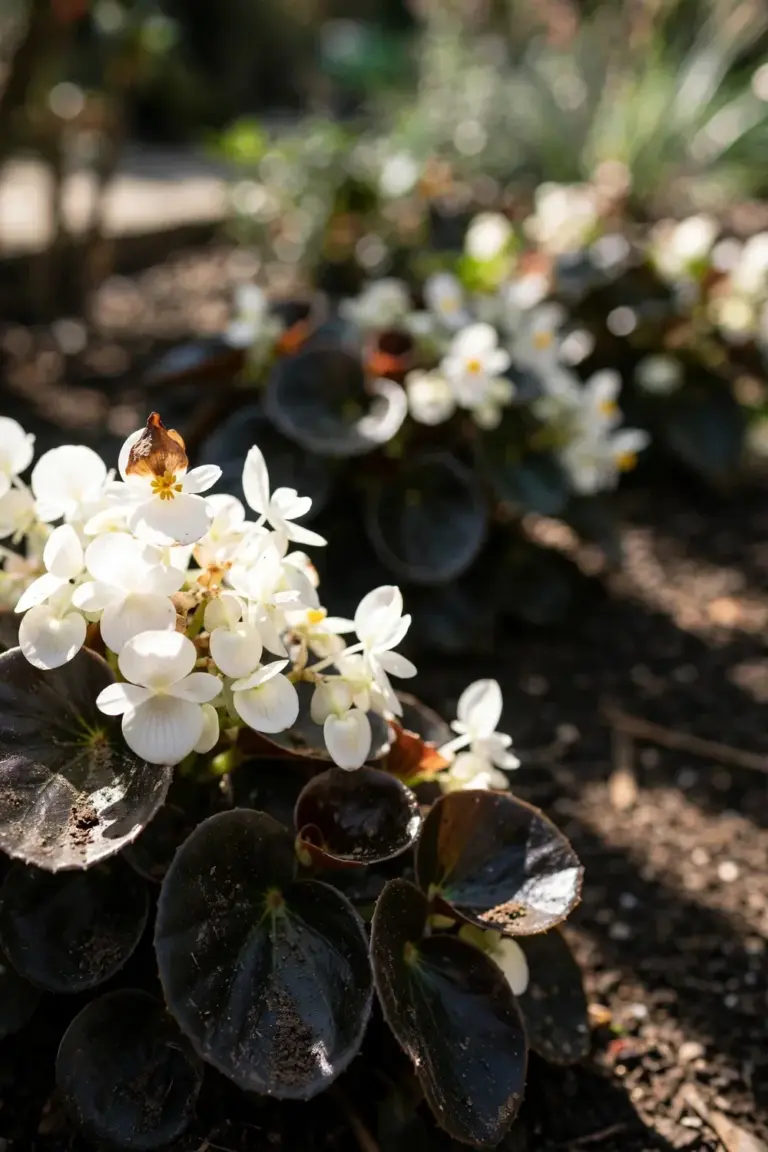
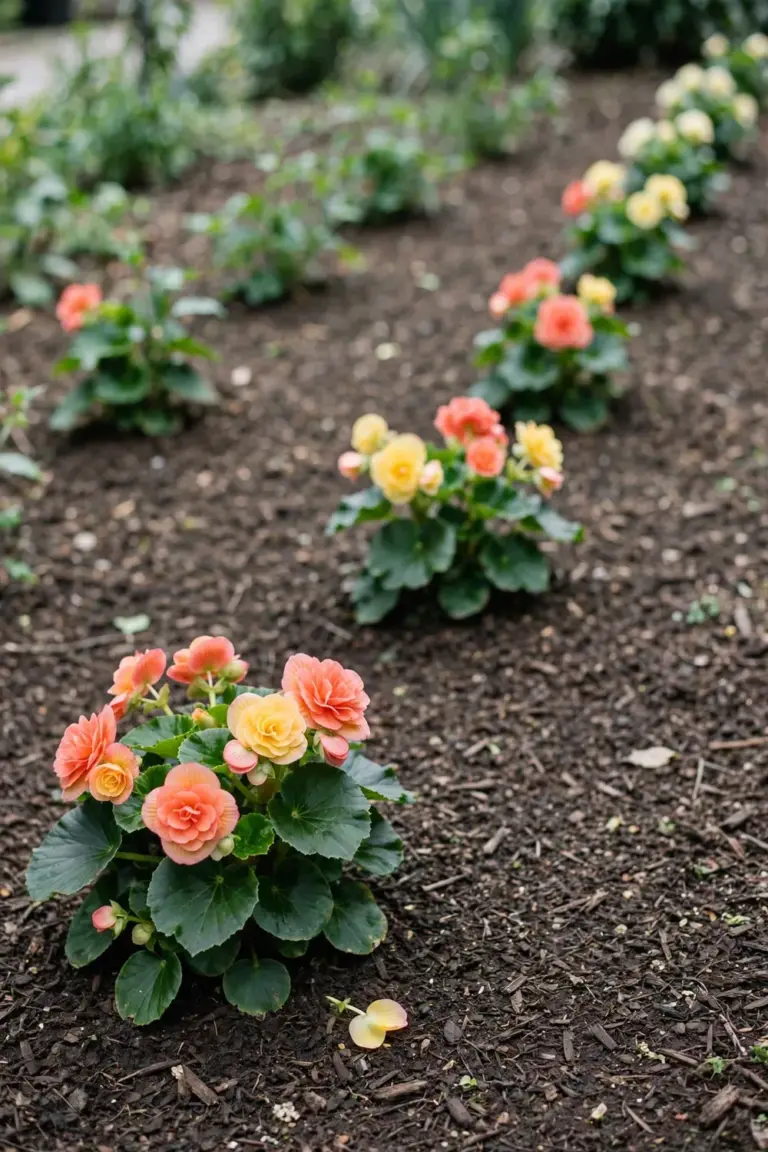
Wax begonias flower from spring planting until the first frost, and they tolerate more sun than any other begonia group. The University of Florida notes that wax begonias thrive in sun or shade and keep their rich color even during the summer in their begonia guide, and newer heat-tolerant series push that tolerance further. Bronze-leaf varieties take full sun best; green-leaf varieties prefer a little afternoon shade. They are tender to the cold, so plant them after the danger of frost has passed, like any warm-season annual.
Give them well-drained soil and consistent moisture. Wax begonias are forgiving of a missed watering but collapse fast in soggy soil. A 5 cm layer of mulch over the bed holds moisture steady without burying the stems; the mulching guide explains how mulch type changes water retention. Deadheading is optional. The spent flowers drop cleanly and new buds keep coming without help.
For containers, wax begonias suit the “thriller-filler-spiller” formula as the filler: mounded, tidy, flowering non-stop. One plant per 15 to 20 cm of pot width fills a pot in six weeks. Feed them on the same schedule as section 10. In frost-free zones they can live for several years and turn woody at the base; cut them back by half in spring to renew the shape.
4. Grow Tuberous Begonias Only Where Summer Nights Stay Cool
Tuberous begonias produce the showiest flowers in the family: huge rose-like blooms on upright or trailing stems. They also carry the strictest conditions. Treat this section as a contract. Break any clause and the tubers rot or the buds drop.
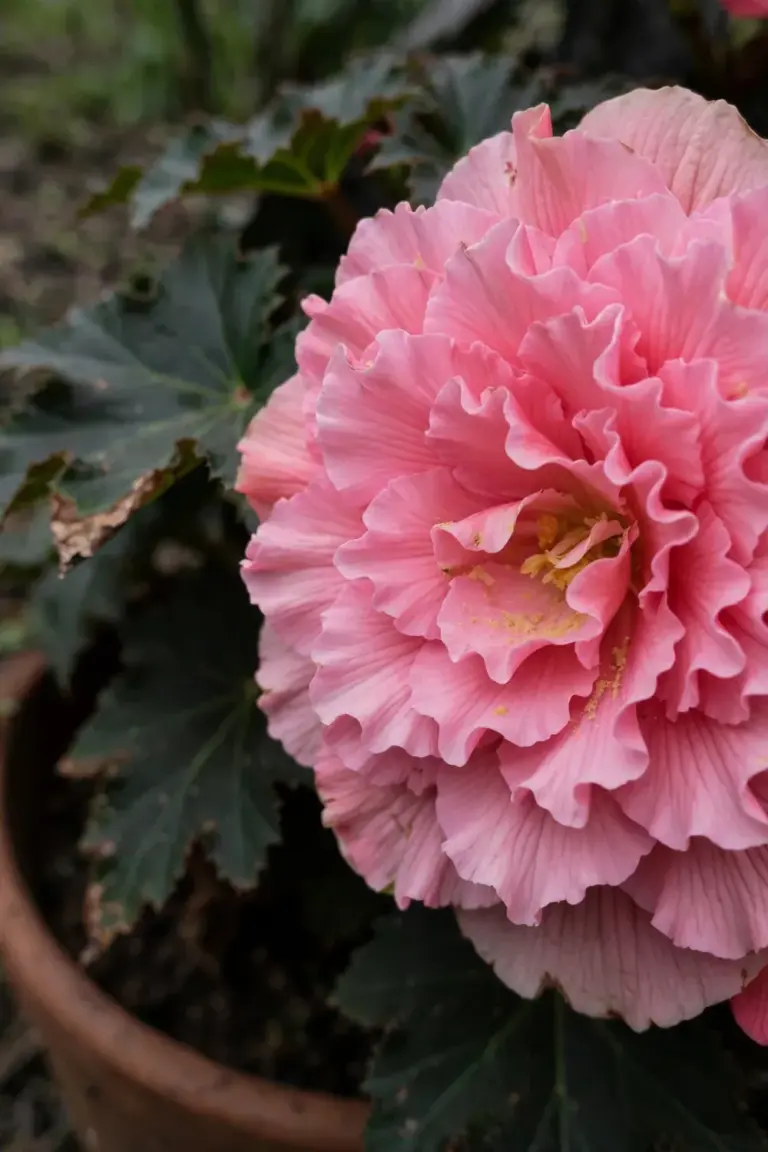
Plant them in shade. The University of Florida’s tuberous begonia fact sheet lists the light requirement plainly as shade in the tuberhybrida publication, and space plants 6 to 12 inches apart so air moves between them. Crowded tuberous begonias stay damp after watering, and damp plus still air invites powdery mildew and stem rot. Dappled shade under a tree, a north-facing wall, or a shade house all work. Afternoon sun scorches the leaves and cooks the shallow roots.
Cool nights matter as much as shade. Tuberous begonias evolved for mild summers; sustained heat stalls buds and weakens the plant. This is why the group thrives in coastal California, the Pacific Northwest, the UK, and cool southern Australia, and struggles in Florida, Texas, or tropical Queensland. Match the plant to the place. A shaded patio in Melbourne beats a sunny border in Brisbane for this group, every time.
Water at the soil level and keep the foliage dry. Large blooms catch water and tear in heavy rain, so shelter hanging baskets under eaves. Let the top 2 cm of mix dry between waterings, then soak deeply. Tuberous roots are fine and shallow; they rot in standing water faster than almost any other bedding plant. Our shade garden solutions page covers the kind of cool, protected spots this group wants.
Pinch off the first flower buds after planting. The University of Florida recommends pinching in the tuberhybrida publication, and the reason is energy: a young tuber that flowers immediately spends its reserves on blooms instead of roots. Delay gratification for two weeks and the season’s display doubles.
5. Grow Cane (Angel Wing) Begonias Tall in Frost-Free Gardens
Cane begonias are the giants of the family. Where winters stay mild, they grow into shrubs several feet tall and bloom for most of the year.
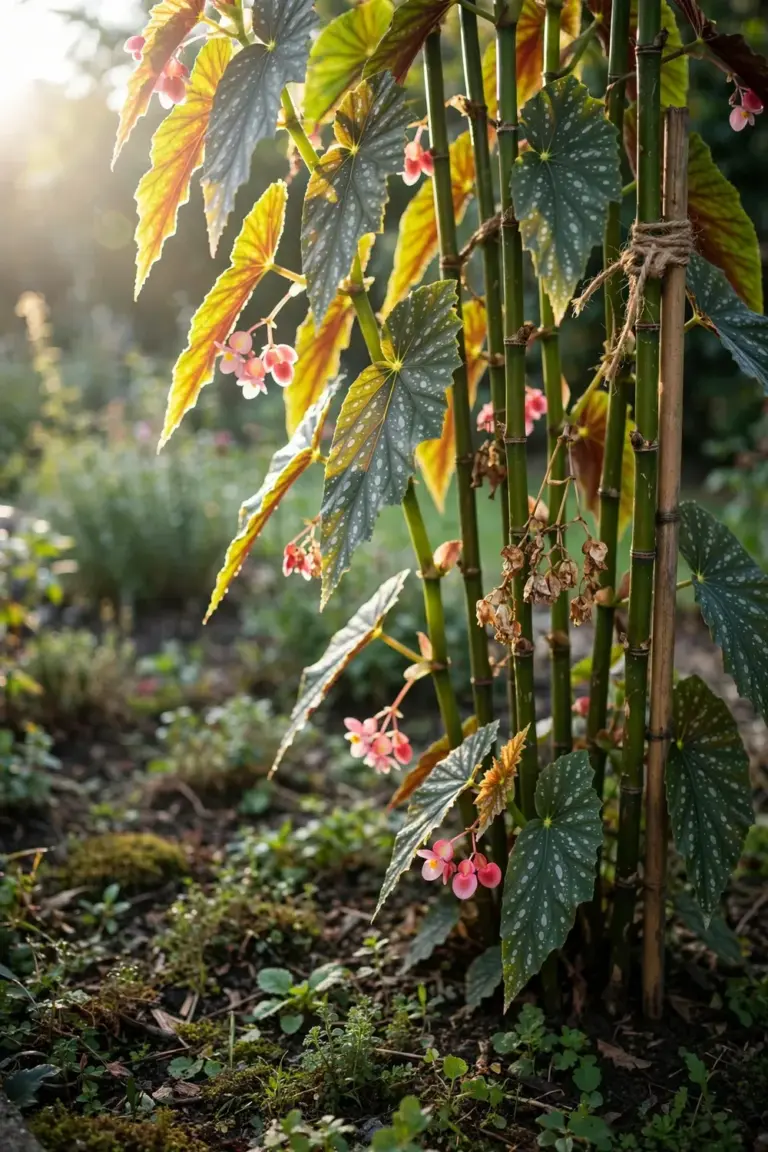
The stiff, upright, bamboo-like stems give the group its name, and the wing-shaped, spotted leaves give it the “angel wing” nickname. The University of Florida describes year-round clusters of dangling flowers in red, orange, pink, or white in their begonia guide, with landscape standouts like ‘Sophie Cecile’, whose broad foliage reaches five feet. In truly frost-free gardens they behave as evergreen shrubs. Where frosts are light, they die to the ground in winter and resprout from the base in spring.
Plant cane begonias in morning sun and afternoon shade, in rich, well-drained soil. They tolerate more sun than tuberous types but burn in all-day heat. Give each plant room: a mature cane begonia spans 60 to 90 cm wide and needs no staking unless a variety grows lanky. Cut leggy stems back by a third in late winter or early spring, just above a leaf node, and the plant branches from below the cut. Never shear the whole plant flat; cane begonias bloom on mature stems, and a hard shear removes the season’s flowers.
In cold-winter regions, grow cane begonias in large pots and move them into a bright, frost-free room before the first freeze. They drop some leaves indoors in protest. Keep watering light through winter and resume feeding when new growth starts in spring.
6. Keep Rex Begonias Indoors for Foliage, Not Flowers
Rex begonias are foliage plants. Buy them for the painted leaves, in silver, maroon, pink, and near-black patterns, and accept that the small pink flowers are a footnote. Growers who chase rex blooms usually end up disappointed; growers who treat them as living art do not.
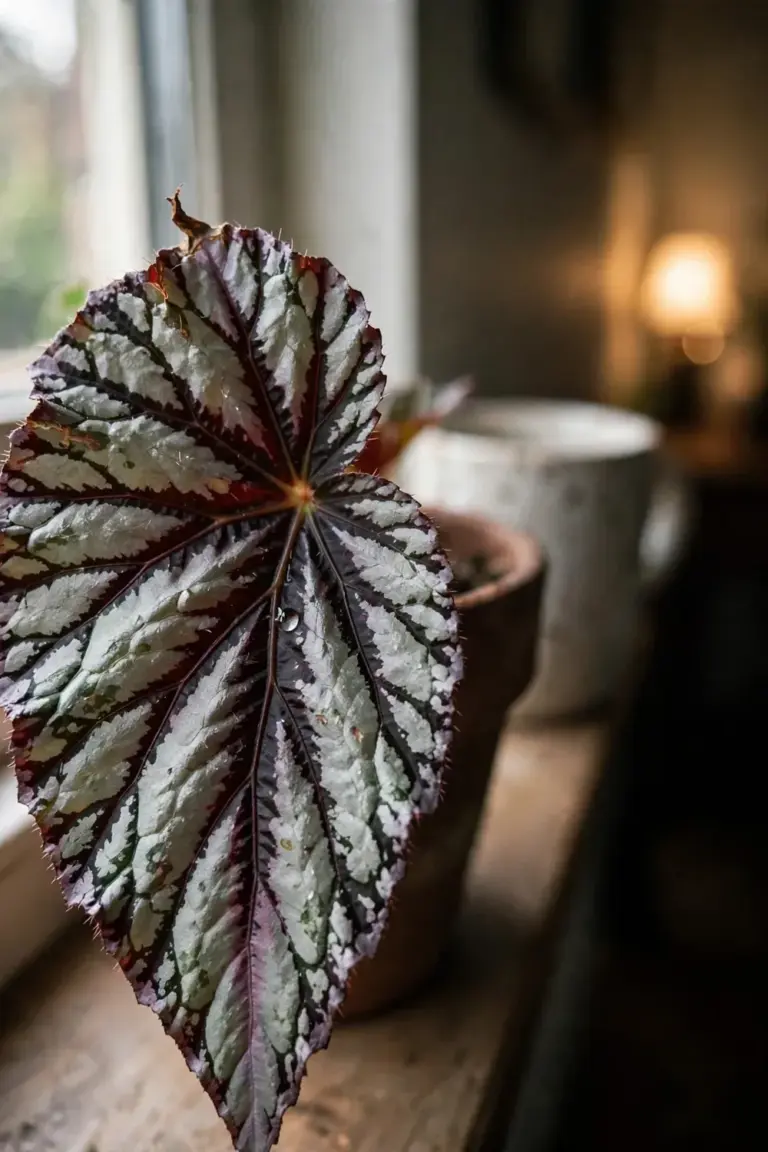
Light comes first. Give rex begonias bright indirect light, an east-facing window or a spot a meter back from a south window with sheer curtains. Too little light dulls the leaf patterns and stretches the stems. Too much direct sun bleaches the colors and scorches the margins.
Humidity decides everything else. The New York Botanical Garden’s begonia care guide states that a relative humidity above 50 percent is preferred for begonias in their houseplant guide, and rex types are the most sensitive of all. Dry indoor air browns the leaf edges, starting at the margins and moving inward. Run a humidifier, group plants together, or set the pot on a tray of pebbles with water just below the pot base. Do not mist the leaves directly; wet rex foliage invites fungal spotting.
Temperatures between 60 and 65 F suit rex begonias best, and the New York Botanical Garden advises never exposing them to temperatures below 50 F in the same guide. Keep them away from heating vents, cold drafts, and exterior doors. Water when the top 2 to 3 cm of mix feels dry, and empty the saucer after 15 minutes. Rex rhizomes sit near the soil surface and rot fast in standing water.
7. Start Tuberous Tubers 6 to 8 Weeks Before the Last Frost
Tuberous begonias bought as dormant tubers need a head start indoors. The tubers wake slowly, and planting them straight outside wastes the short season.
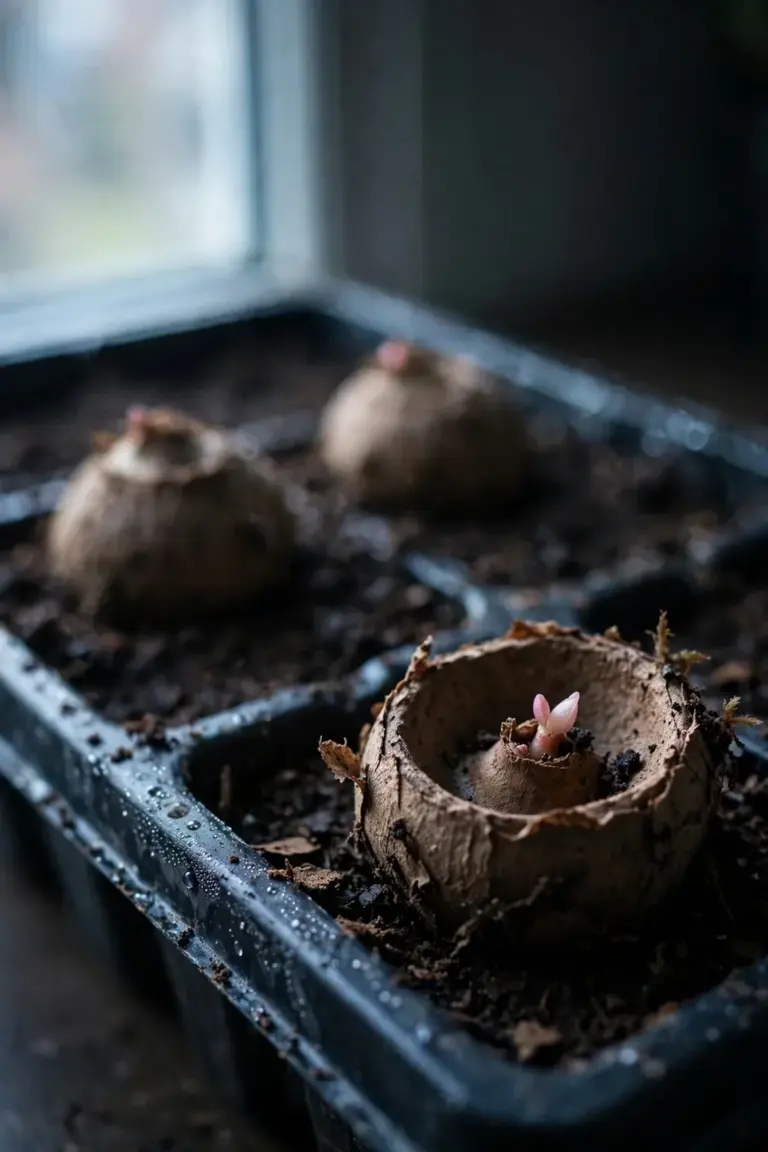
Start tubers indoors in February or March in the northern hemisphere (August or September in the southern hemisphere), at 65 to 68 F, following the University of Florida’s tuberhybrida sheet. Set each tuber indented (cupped) side up on a layer of damp peat, barely covered, in a tray. The cupped side is where the shoots emerge; planting it upside down delays everything by weeks. Keep the tray in bright indirect light and the peat just moist, never wet.
When new growth reaches 3 to 4 inches tall, pot each tuber into its own container and cover it with mix. Harden the plants off over 7 to 10 days before they go outside, and plant out only after the last frost, when nights stay above 50 F. Cold soil stalls tuberous begonias for weeks; warm soil starts them in days.
UK growers follow the same rhythm on a local calendar: start tubers indoors in late February to March at 18 to 20 C, plant out after the last frost in late May, and lift the tubers again in September or October before the first frost, as described in Dobies’ begonia growing guide. Translate those months six months forward for the southern hemisphere.
8. Plant Tuberous Begonias 6 to 12 Inches Apart in Dappled Shade
Spacing is disease control. Tuberous begonias packed shoulder to shoulder trap humidity between the leaves, and trapped humidity is where mildew starts.
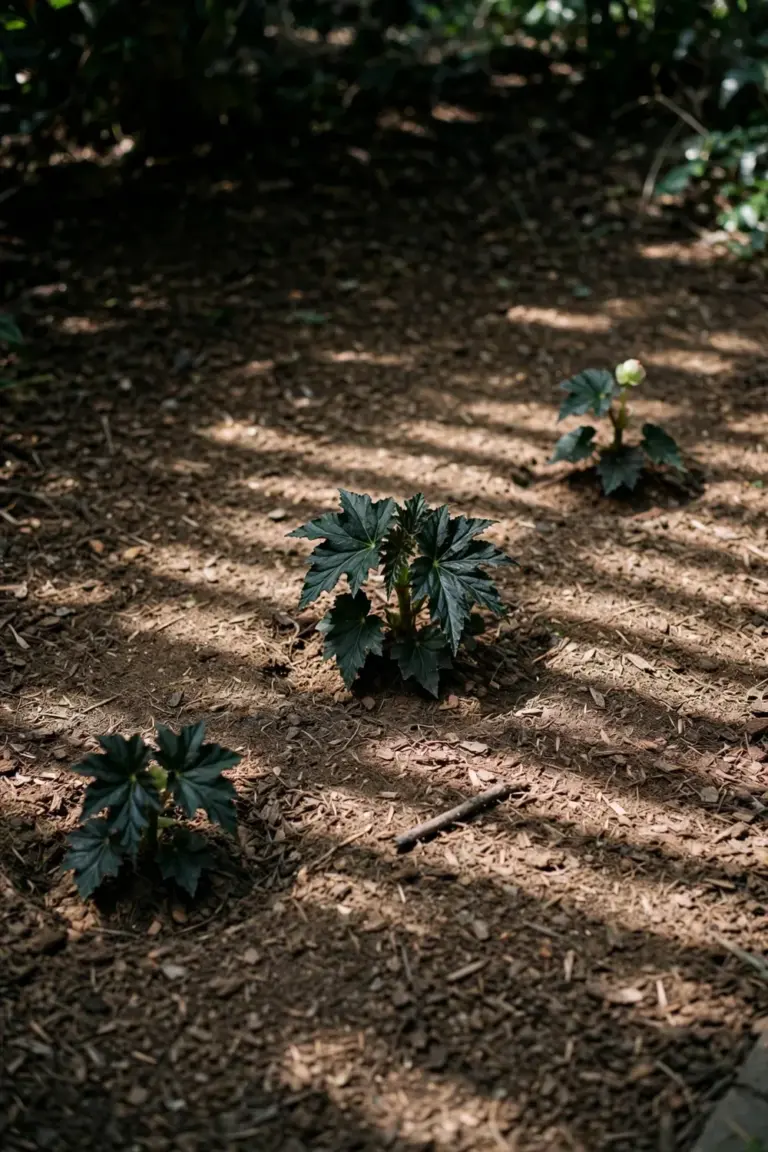
Set plants 6 to 12 inches apart, the range given in the University of Florida’s tuberhybrida publication. Use the wide end of the range in humid climates and for large-flowered varieties. The tuber’s top should sit just below the soil surface, and the mix must drain freely: equal parts quality potting mix, perlite, and fine bark suits containers. Heavy garden soil suffocates the fine roots.
For hanging baskets, choose trailing tuberous varieties and one tuber per 25 to 30 cm basket. The stems cascade over the rim and the large blooms hang clear of the foliage, which keeps them drier and cleaner. Hang baskets where they catch morning sun and afternoon shade, out of prevailing wind. Big tuberous blooms shred in strong wind.
Mulch beds lightly with 3 to 5 cm of fine bark, kept a few centimeters clear of each stem. Mulch steadies soil moisture and temperature through hot spells, and the mulching guide covers which materials suit containers versus beds. Piled mulch against begonia stems holds moisture where rot starts, so the gap matters.
9. Water at the Soil, Let the Top Inch Dry
Begonias die from wet feet more often than from thirst. Every group wants the same watering logic: soak the root zone, then let the surface dry before watering again.
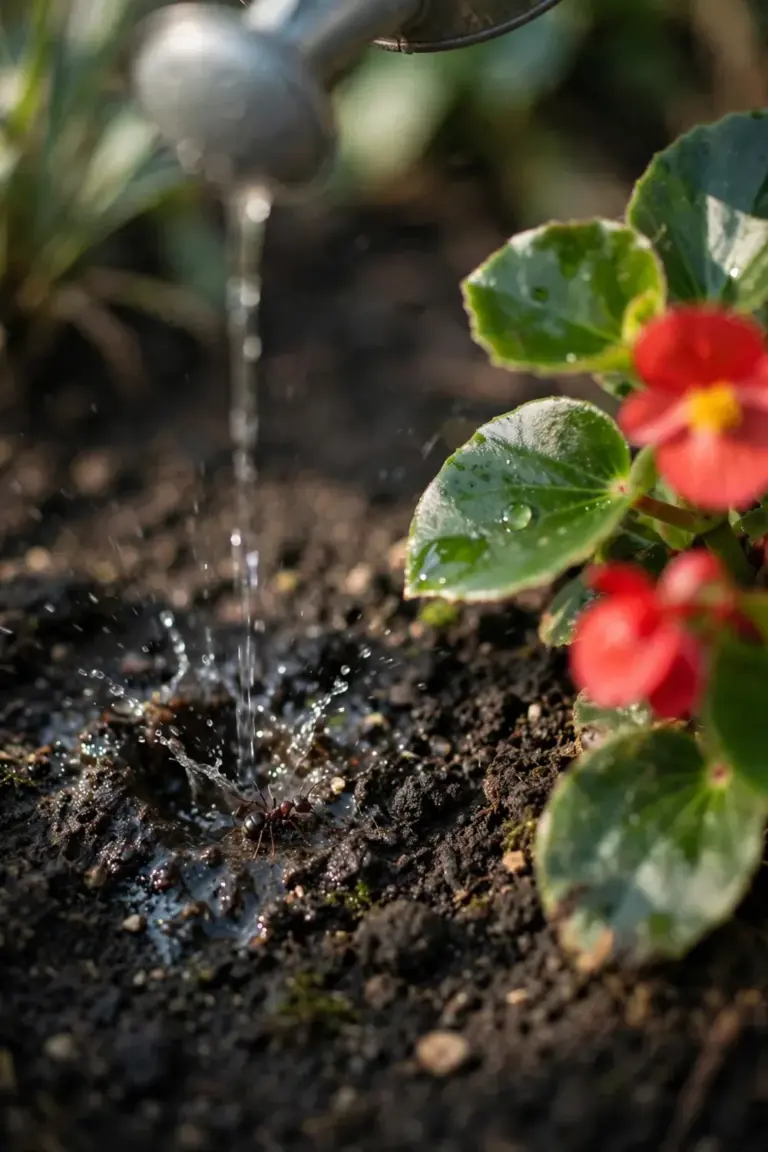
Check the top inch of soil or mix with a finger. Dry means water; damp means wait. Water in the morning so any splashed foliage dries by evening. Aim the watering can at the soil, never over the leaves. Wet foliage plus warm nights invites both powdery mildew and bacterial leaf spot, and spotted leaves do not heal.
Containers dry faster than beds, sometimes twice as fast in summer. A wax begonia in a small terracotta pot in full sun can need water daily in a heatwave; the same plant in a shaded bed needs it twice a week. Learn your own pots rather than following a calendar. Self-watering pots suit begonias well because the reservoir keeps moisture steady without wetting the crown.
In winter, cut watering sharply for every group. Tuberous begonias in dormancy get no water at all (see section 12). Rex and cane begonias resting indoors want the mix to dry halfway down the pot between waterings. Wax begonias kept as houseplants over winter follow the same rule. Cold plus wet kills more overwintering begonias than cold alone.
10. Feed Every 2 to 4 Weeks While Plants Are Growing
Begonias are steady feeders during the growing season and light feeders the rest of the year. Feed on a schedule, not on impulse.
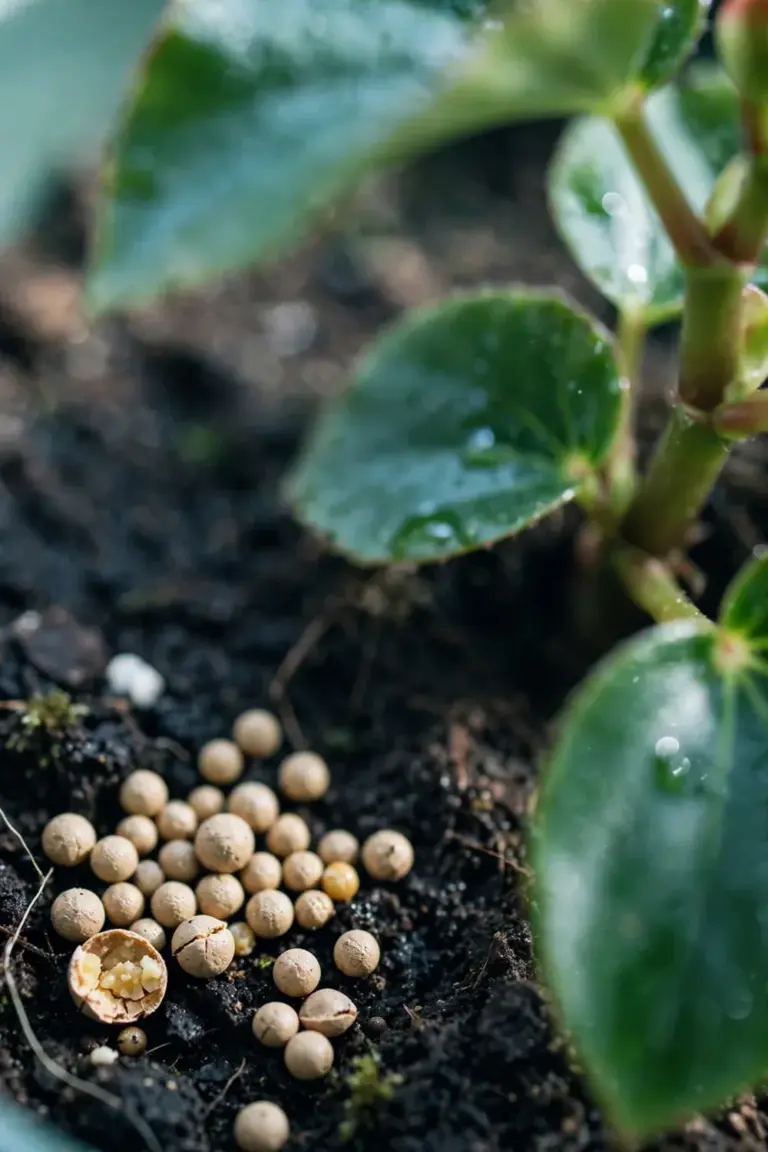
For rex and foliage types, the New York Botanical Garden recommends fertilizing every two to four weeks during active growth with a dilute, water-soluble fertilizer such as 15-30-15 in their begonia guide. The higher middle number (phosphorus) supports the flowering types too. For outdoor bedding begonias, a balanced slow-release fertilizer scratched into the soil at planting, plus a liquid feed every two weeks through the peak season, keeps blooms coming.
Dilute liquid feeds to half the label strength for indoor begonias. Begonia roots burn easily, and salt buildup shows as brown leaf tips that look exactly like underwatering. If the tips brown despite correct watering, flush the pot with plain water until it runs freely from the drainage holes, then skip the next feeding.
Stop feeding as the season winds down. Halve the frequency in early autumn and stop completely once tuberous begonias start yellowing (dormancy is coming) or when indoor plants slow down in winter. Feeding a dormant tuber pushes soft growth that rots. Resume feeding when new spring growth reaches a few centimeters tall.
11. Root 3-Inch Stem Cuttings in 5 Weeks
Cuttings are the cheapest way to multiply wax, cane, and tuberous begonias, and spring is the moment to take them. Rex begonias propagate best from leaf cuttings, covered at the end of this section.
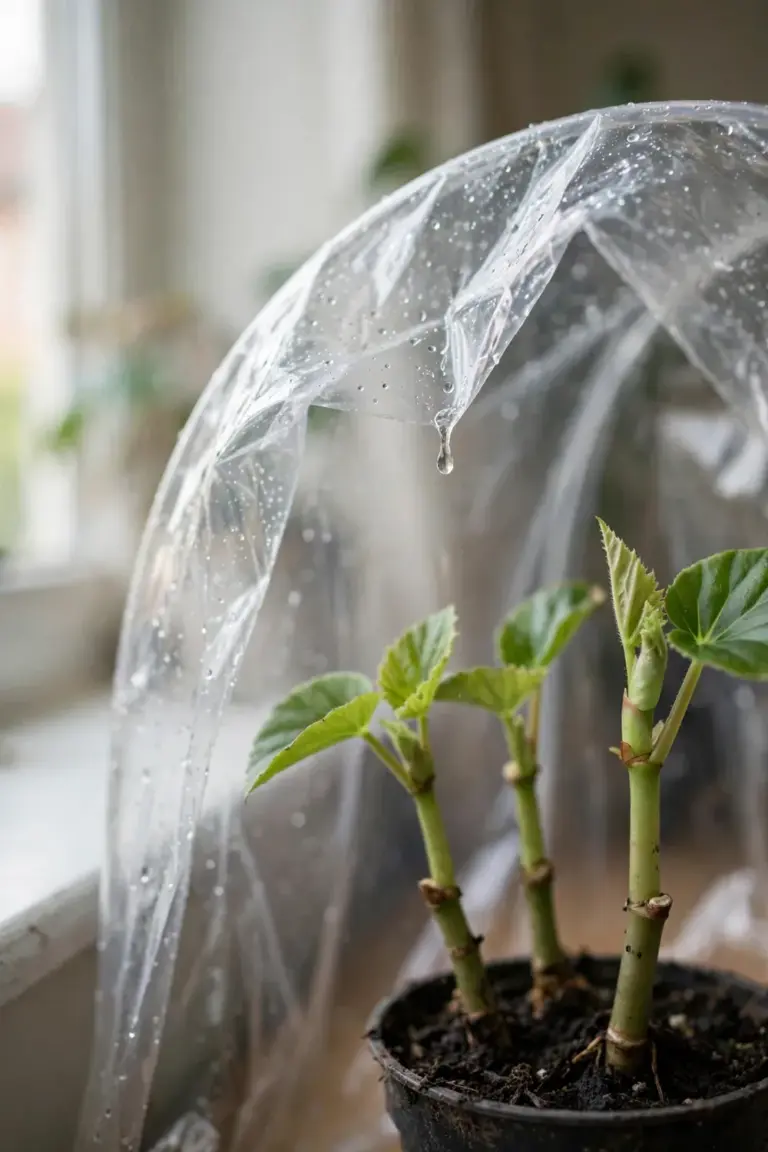
Take stem cuttings in spring or early summer from healthy, non-flowering shoots. Short: three inches, cut just below a node. The University of Florida roots them in sand at 60 to 65 F, out of direct sun, and reports rooting in five weeks (the tuberhybrida publication). Strip the lower leaves so no foliage sits in the mix, keep the medium lightly moist, and tent a clear plastic bag over the pot to hold humidity. Open the tent daily. Fresh air keeps mold out.
Tuberous begonias also propagate from tuber division. In spring, cut a large tuber into sections so each piece carries at least one growing eye. Dust the cuts with fungicide or cinnamon and let them dry for several days before potting each piece like a whole tuber. One fat tuber becomes three plants for the price of patience.
Rex begonias root from leaf cuttings. Cut a healthy leaf with 2 to 3 cm of stalk, insert the stalk into moist mix, and cover with a humidity dome. Plantlets form at the stalk base in 4 to 8 weeks. Or lay a leaf flat on the mix and nick the main veins; a plantlet can form at each nick. Keep the cuttings warm at 65 to 70 F, out of direct sun, and never tug them to check for roots; new top growth is the only signal you need.
12. Lift Tubers and Store Them Dry at 45 to 60 F Over Winter
This is the section that decides whether tuberous begonias come back next year. The tubers survive winter only if they stay dry, cool, and frost-free.
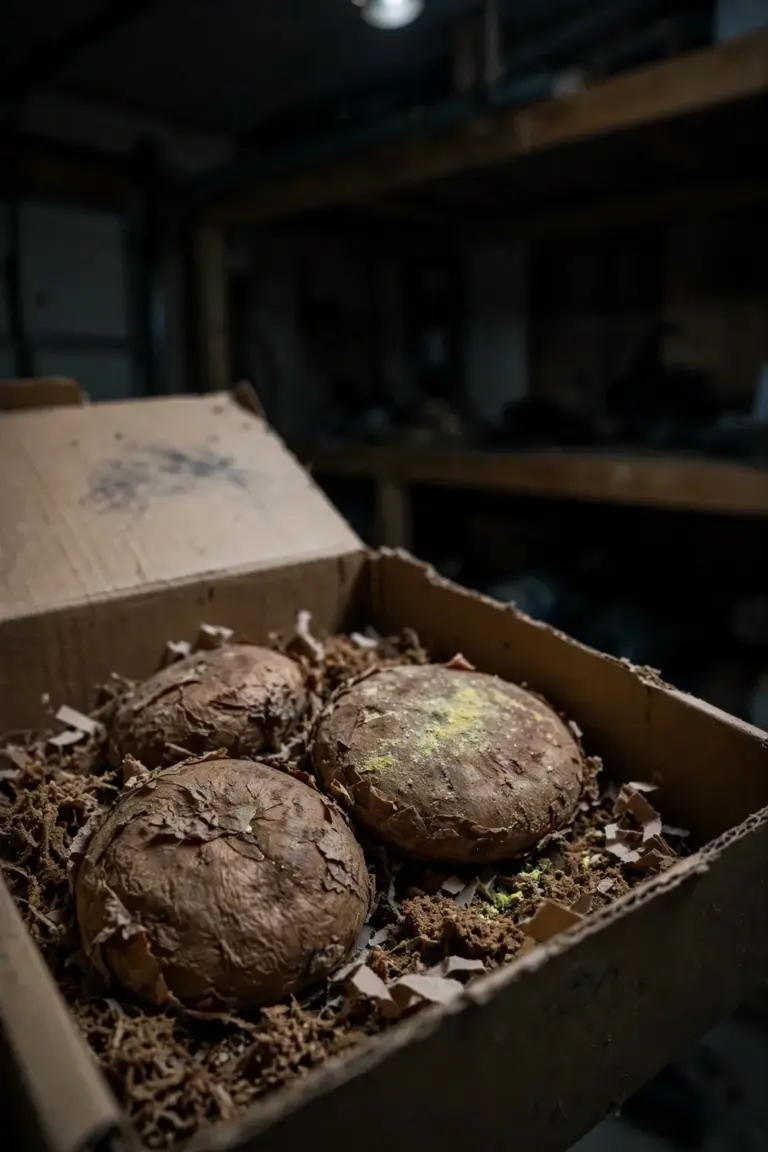
When the first light frost blackens the foliage (or leaves yellow and collapse on their own in frost-free areas), stop watering. Let the stems die back naturally; the tuber is still pulling energy down from them. The University of Florida instructs growers to dig the tubers only after the leaves and stems fall off on their own, never breaking the stems off early, in the tuberhybrida publication. Injured tubers must air-dry before storage.
Cure the tubers for one to two weeks in a dry, airy spot out of direct sun, at room temperature. Brush off the soil but do not wash them. Then pack them in dry peat moss, vermiculite, or shredded paper in a ventilated box, tubers not touching each other. Store at 45 to 60 F, the range given in the same University of Florida publication: a frost-free garage, an unheated spare room, or a cool basement shelf all work. Check monthly and discard any tuber that turns soft or moldy before it infects its neighbors.
Do not store tubers in the refrigerator. Fridge temperatures near 35 to 38 F cause chilling injury, and the humidity invites rot. Do not store them anywhere warm either; warmth above 60 F wakes them early, and a sprouted tuber in January has nowhere to go. Dry, cool, dark, and checked monthly: that is the whole protocol.
Wax begonias in frost-free climates can stay in the ground and often survive for years. In cold climates, take cuttings in late summer and root them indoors as insurance, or buy fresh plants in spring; wax begonias are cheap. Cane begonias in pots move indoors before the first frost. Rex begonias never go outside in the first place.
13. Stop Powdery Mildew With Airflow, Not Overhead Water
Powdery mildew is the most common begonia problem: a white powdery coating on the leaves, starting on the upper surfaces of tuberous and rex types in still, humid air. Prevention beats treatment because the coating does not wash off cleanly.
Space plants so air moves between them (section 8), water at the soil level (section 9), and avoid crowding pots on a humid patio. The University of Florida lists stem rot alongside crowding as a paired problem in the tuberhybrida publication: rotted areas turn black and collapse, and infected plants should be removed before the rot spreads. The same airflow that stops mildew stops stem rot.
Remove affected leaves promptly and bin them; do not compost diseased foliage. Improve ventilation around indoor plants with a small fan on low, pointed past the plants rather than at them. If mildew keeps returning on the same plant, the spot is too humid and too still: move the plant, not the spray bottle.
Black or brown spots with yellow halos point to bacterial leaf spot rather than mildew, and they need a different response (destroy affected leaves, keep foliage dry, disinfect tools). Spot identification takes a full diagnostic walk-through of its own; the prevention steps here keep most plants out of trouble in the first place.
14. Frequently Asked Questions About Growing Begonias
Wax begonias (Begonia semperflorens) are the easiest. They tolerate sun or shade, forgive a missed watering, flower non-stop from spring to the first frost, and cost little to replace. Start with a flat of wax begonias in a sunny or partly shaded bed before attempting tuberous types, which demand cool summers, shade, and winter tuber storage.
Only where winters stay frost-free and dry. Where frost never comes and winter rain is light, tubers can stay in the ground if the soil drains sharply. Everywhere else, lift the tubers after the foliage dies back and store them dry at 45 to 60 F. One hard freeze turns an in-ground tuber to mush, so lifting is the safe default.
Brown edges almost always mean dry air, not underwatering. The New York Botanical Garden recommends relative humidity above 50 percent for begonias, and heated indoor air in winter drops far below that. Run a humidifier or set the pot on a pebble tray with water. Check that the plant is not sitting near a heating vent or in direct sun, both of which dry the leaf margins further.
Yes, but cuttings and tubers are faster and more reliable. Wax begonia seed is dust-fine and needs light to germinate; sow it on the surface of fine mix and keep it warm. Seedlings take months to reach flowering size. Tuberous begonias from seed take even longer. For quicker results, buy tubers in spring or root 3-inch stem cuttings, which root in about five weeks.
It is almost always light. Cane (Angel Wing) begonias need bright light to set buds; a plant stretching toward a dim window puts its energy into stems, not flowers. Move it to the brightest spot available, ideally with some morning sun, and prune leggy stems back by a third in spring to force branching. Resume feeding every two weeks once growth restarts.
15. Choose the Begonia That Fits Your Climate
The whole guide compresses to one decision. Hot summers and full sun: wax begonias. Cool summers and a shady corner: tuberous begonias, with the winter tuber routine accepted up front. A frost-free garden with room to grow: cane begonias pruned each spring. A bright windowsill and a humidifier: rex begonias for foliage year-round.
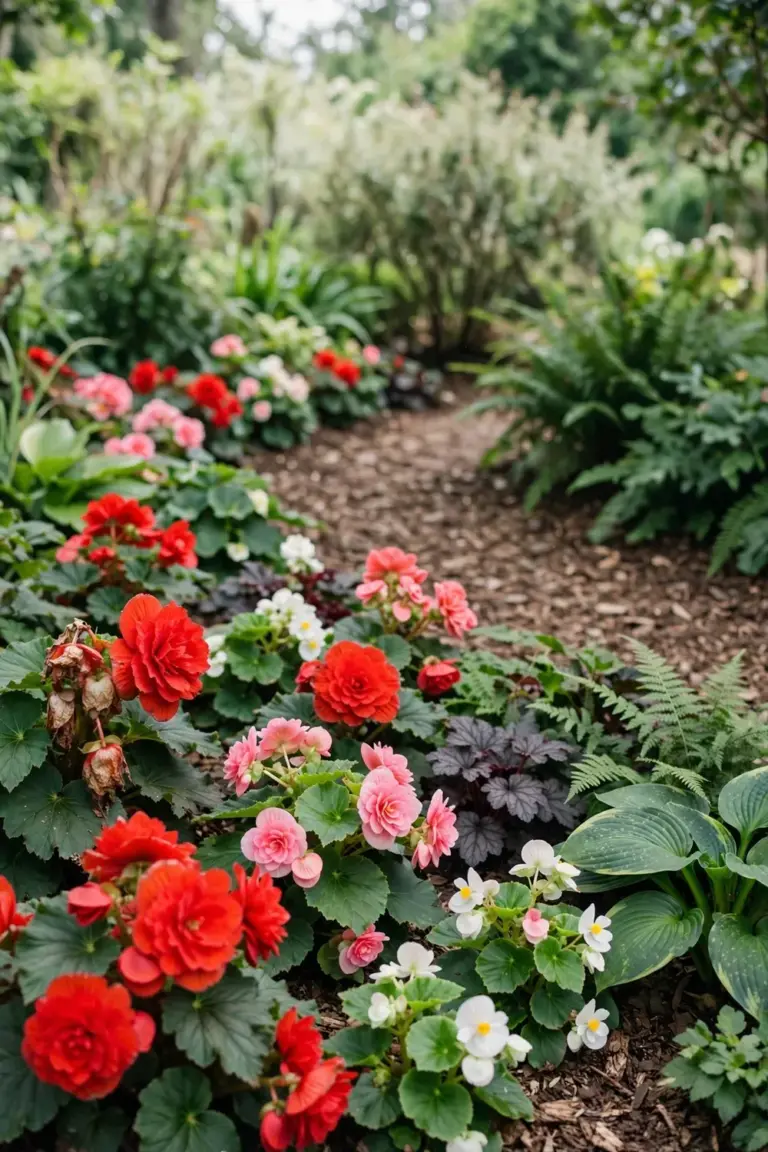
Buy the type that matches the weather you actually have, not the flowers you wish you had. Begonias reward that honesty with months of bloom or foliage, and punish the alternative with rot, mildew, and bare stems. Pick one group, master its rhythm, and add the others only when the first one thrives.