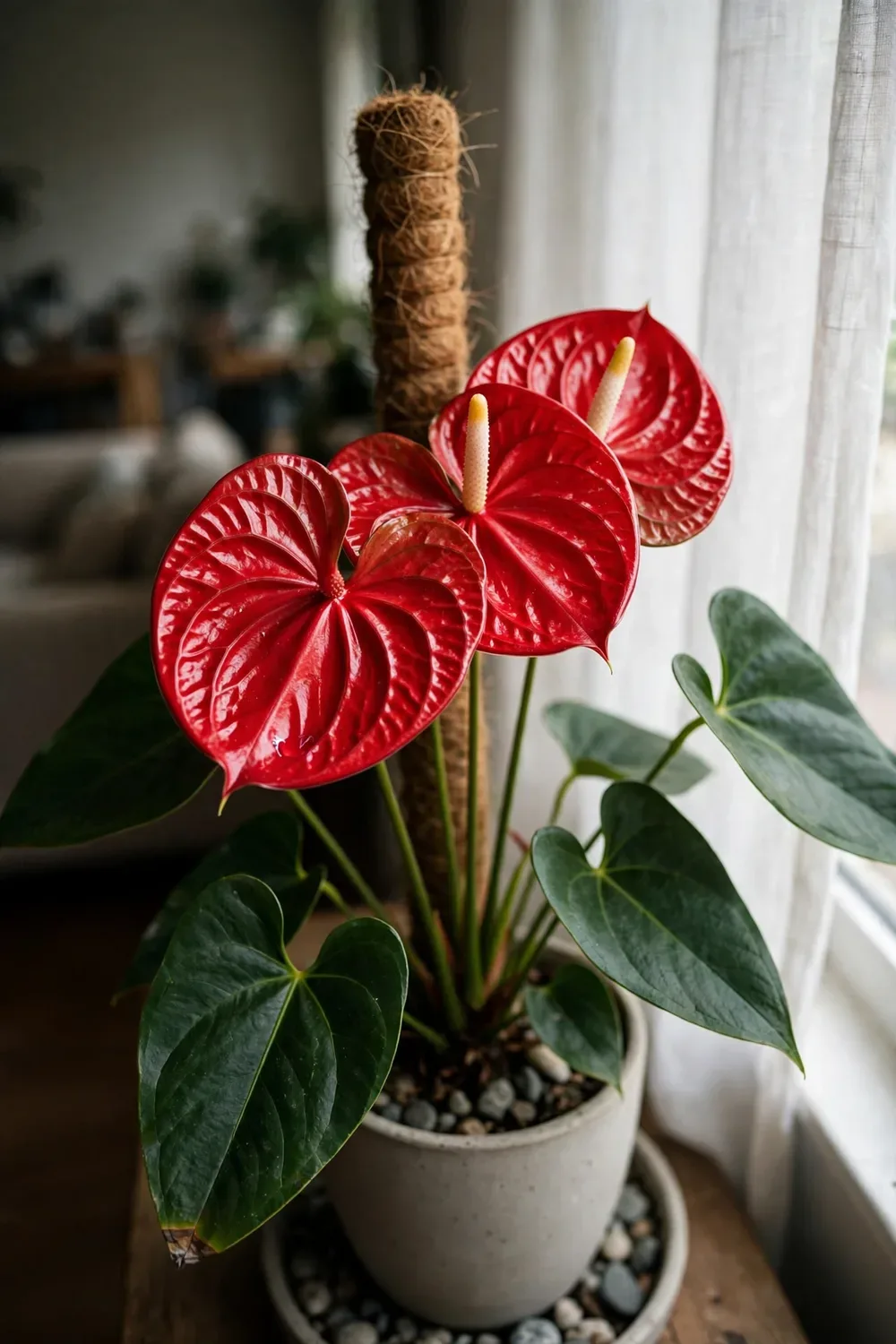

Set an anthurium 1 to 2 meters from an east-facing window, where it catches at least 4 hours of bright, indirect light a day. Hold humidity at 60 to 80 percent and keep the room between 18 and 27 degrees Celsius, the band North Carolina Extension’s anthurium plant page sets for this species. That is how to grow anthurium indoors: bright filtered light, warm moist air, and a bark-heavy mix that drains fast. The rest of this page is 14 moves, from the spathe rule to picking your species.
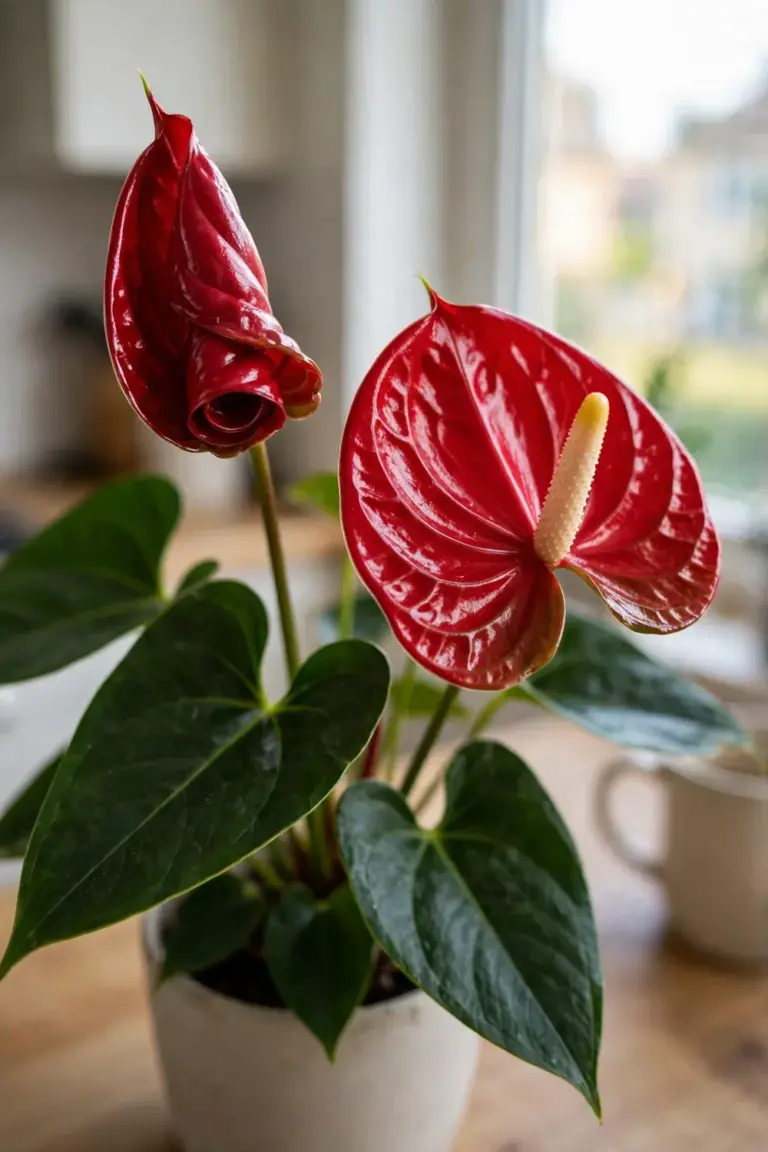
Most indoor anthuriums stop blooming for three reasons, and only three: light drops below what the plant needs, humidity crashes in heated rooms, or feeding lapses for months. Fix those and a mature plant pushes new blooms in cycles through the year. The red heart shape is a spathe, a modified leaf. The real flowers are the tiny bumps packed on the upright spike in its center.
I have learned that a sheer curtain and a humid bathroom shelf do more for an anthurium than any fertilizer. Check the mix with your finger every few days. Snip each spent bloom at the base the day it fades. These small habits are why indoor plants keep earning their shelf space, and few houseplants pay back with this much color for this little work.
Anthurium Care at a Glance
| Task | The Number | Notes |
|---|---|---|
| Light | 4+ hours bright, indirect daily | East window or sheer-filtered south/west |
| Temperature | 18 to 27 degrees Celsius | Never below 15 degrees |
| Humidity | 60 to 80 percent | Humidifier or pebble tray, not a mister |
| Watering | Top 2.5 cm of mix dry | Pot with drainage holes, empty the saucer |
| Feeding | Every 2 weeks, spring and summer | High-phosphorus, water-soluble |
| Repotting | Every 2 to 3 years | Spring, one pot size up |
1. Learn the Spathe-Spadix Rule in 60 Seconds
The showy part of the plant is not the flower. The flat, waxy, heart-shaped blade is a spathe, a modified leaf whose job is to attract pollinators. The true flowers are the tiny bumps packed on the upright spike, the spadix, that rises from the spathe’s center. Each bump opens, releases pollen, and later sets a berry if pollinated.
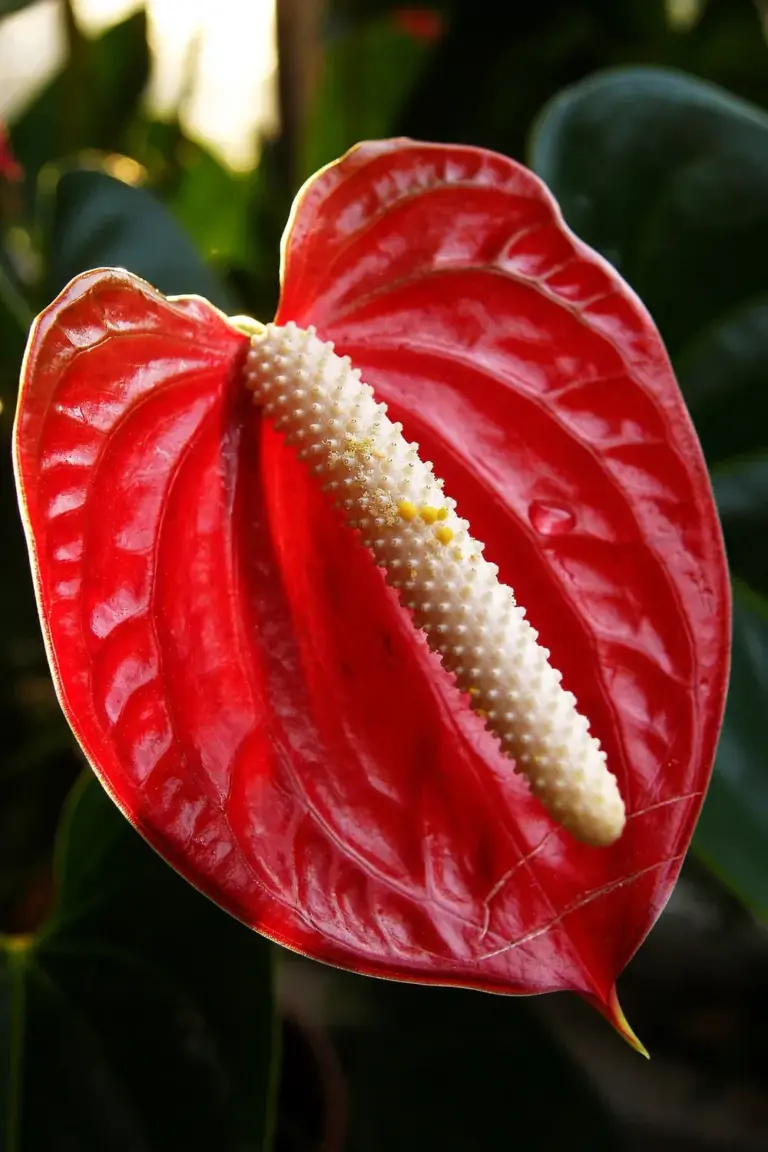
Why this matters to a grower: you read the plant through its spathes. A new spathe unrolling green means the plant is still establishing, and it colors up as it matures. A spathe that stays green long after opening usually signals low light, not a disease. The spadix tells its own story too. It pales as the tiny flowers open and darkens again when they finish, so a color change on the spike is the plant’s own calendar. When you buy, count unopened buds at the base. Each one is a future month of color, and a plant with three buds beats a plant with one giant bloom.
2. Give It 4 to 6 Hours of Bright, Indirect Light
Light drives every bloom. Aim for at least 4 hours of bright, indirect light each day, with more being better as long as the sun never strikes the leaves directly, as the guide-to-houseplants.com anthurium care page advises. An east-facing window is the sweet spot: soft morning sun, bright ambient light after. South and west windows work behind a sheer curtain.
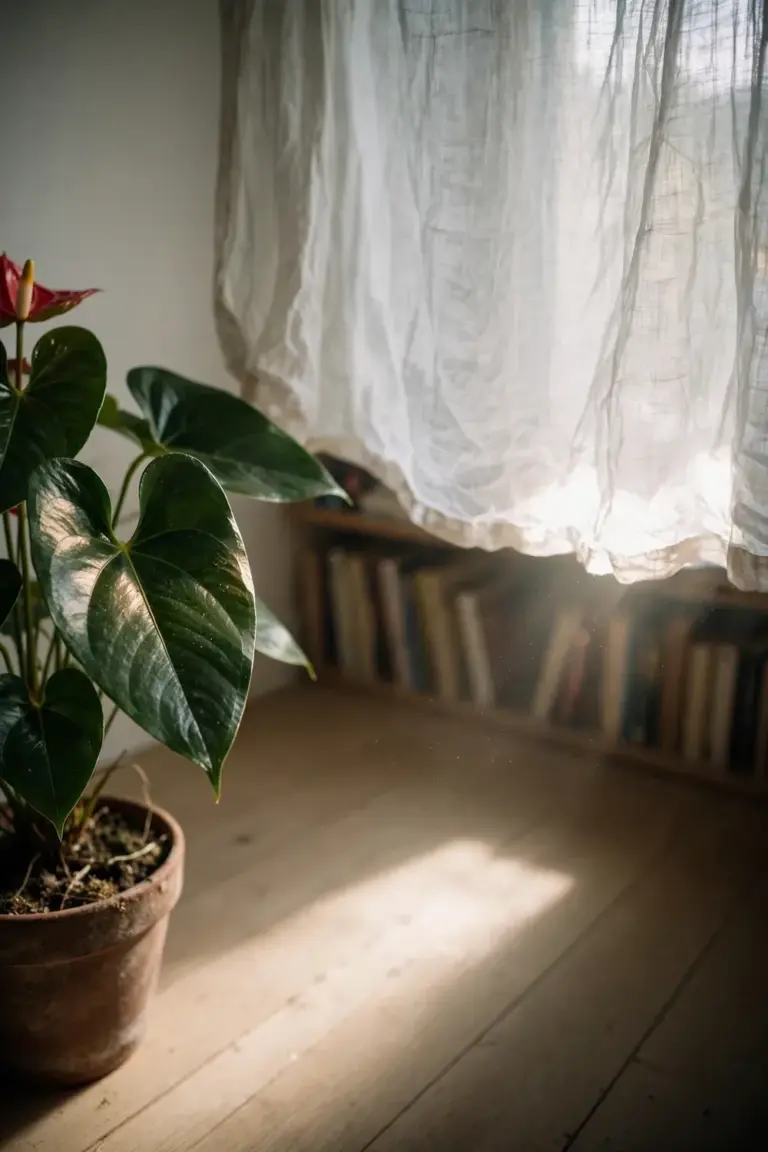
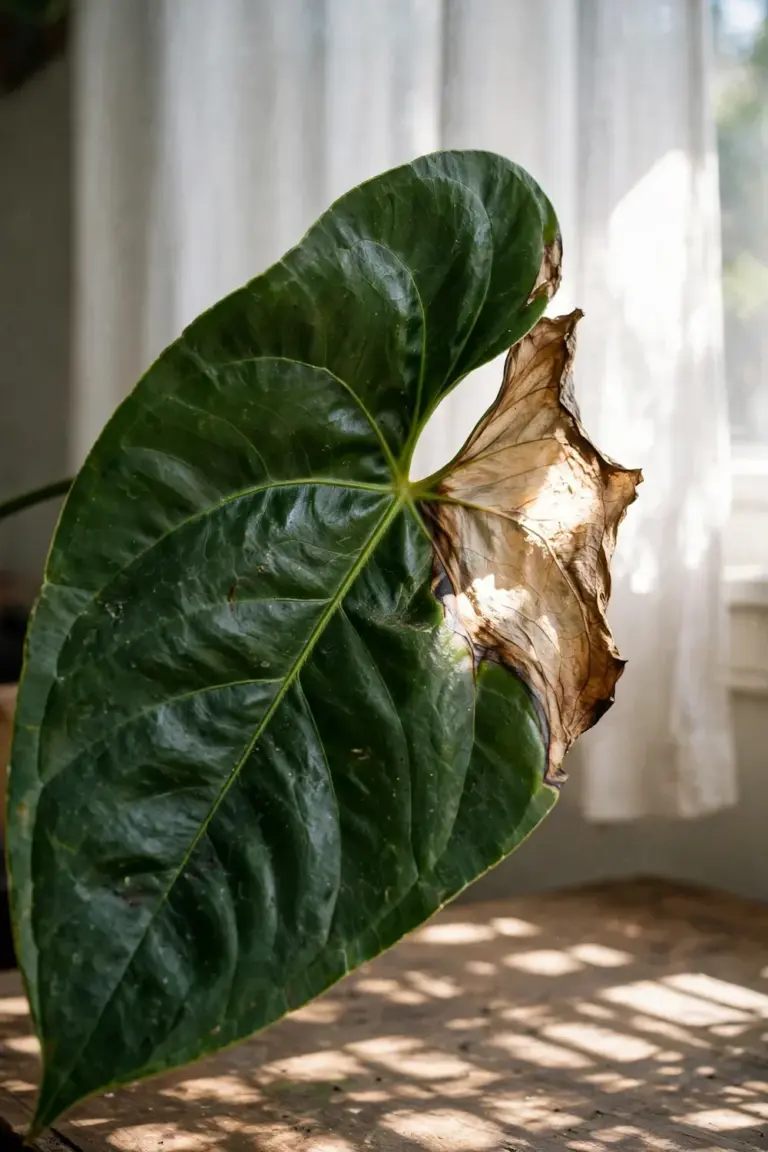
Two signs tell you the light is wrong. Bleached or brown patches on the side facing the glass mean direct sun is scorching the leaves, and North Carolina Extension notes that direct sun scorches anthurium foliage. New leaves that arrive small and the plant refuses to set buds for months mean the corner is too dark. Move the plant, not the furniture. One meter closer to the window changes the outcome.
Read the leaves like a light meter. Deep green, firm, upright foliage with regular new buds means the light is right. Pale, washed-out leaves that flop mean too much. Dark green leaves that stretch toward the window on long petioles mean too little. The plant reports its conditions honestly if you look weekly.
Southern-hemisphere gardeners: morning light still comes through the east-facing window, so the same placement rule holds in Sydney or Singapore. Rotate the pot a quarter turn every two weeks so the leaf crown grows evenly instead of leaning toward the glass.
If the only window you own faces north and stays dim, admit the mismatch. A Chameleon ZZ plant tolerates a dark corner that would starve an anthurium of blooms. A full-spectrum grow light on a timer is the other honest fix: mount it 30 to 40 cm above the plant and let it run through the daylight hours to supplement what the window gives.
3. Hold Humidity at 60 to 80 Percent
Anthuriums grow as epiphytes in the shaded rainforests of Colombia and Ecuador, where the air itself stays wet, according to North Carolina Extension’s anthurium plant page, which sets 60 to 80 percent relative humidity as the indoor target. The first symptom of dry air is brown, papery leaf tips. A heated living room in winter often holds far less moisture than the plant evolved for, so do not trust your own comfort as the gauge. A cheap hygrometer on the shelf answers the question in seconds.
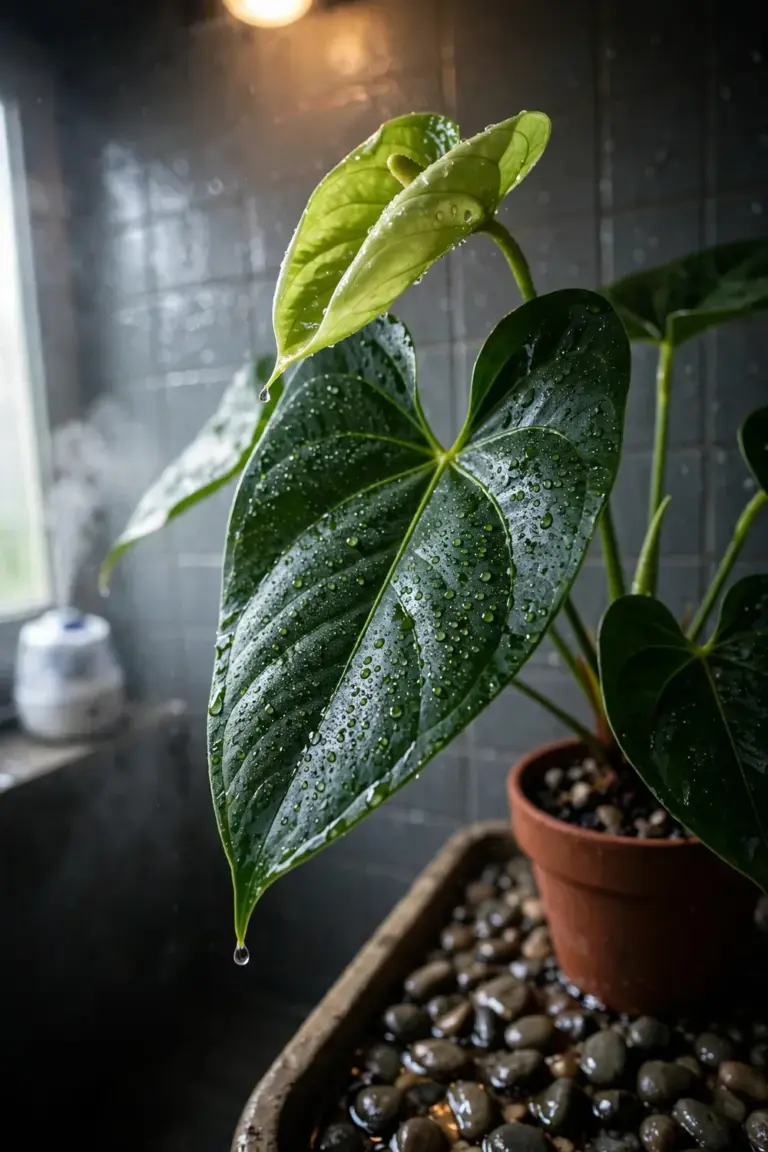
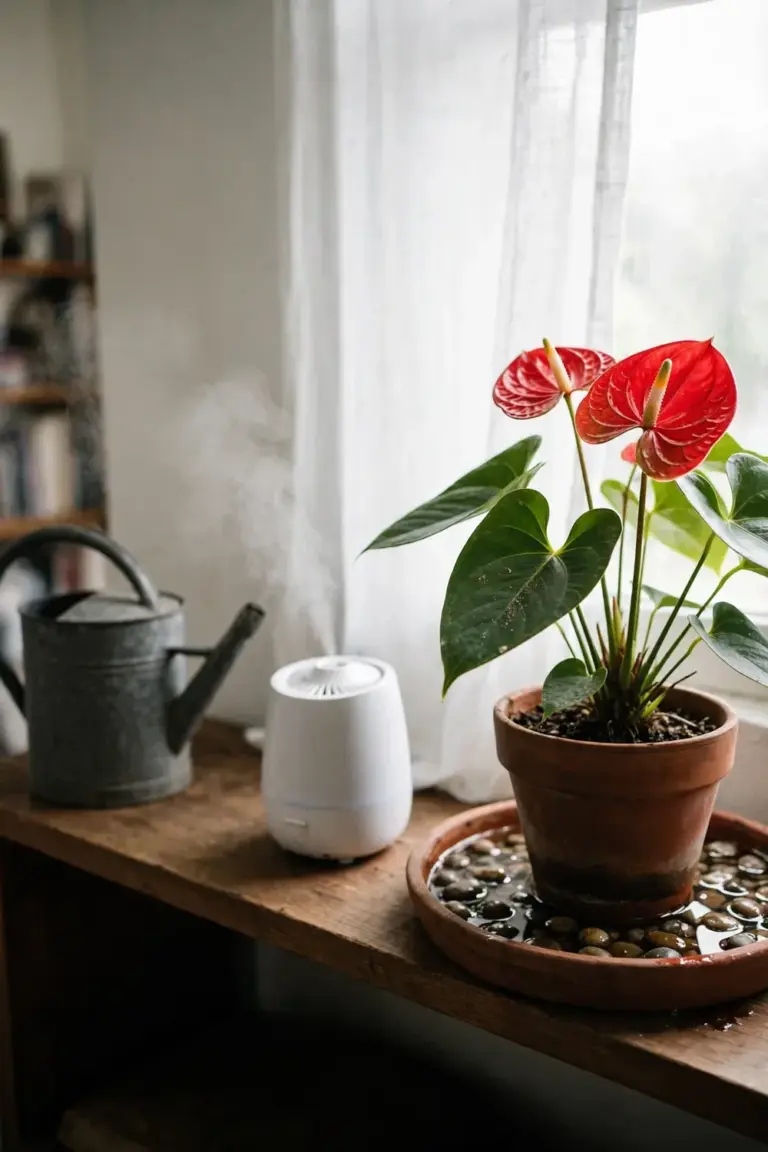
Run a small room humidifier near the plant. That beats every other method for consistency. A pebble tray works: set the pot on pebbles above water so evaporation wraps the plant, never letting the pot sit in the water. Grouping moisture-loving plants together lifts the local reading a few points, which is why a Bonnie spider plant makes good company on the same shelf. Skip misting as your main strategy. Water drops alone evaporate in minutes, and wet foliage invites leaf blight spots. Grouping plants on the same shelf lifts the shared microclimate a few points, and the site’s green oasis guide walks through setting up a room of houseplants that humidify each other.
The bathroom trick is real for one reason: hot showers spike humidity toward the plant’s target range for free. Keep it there only if the room gets bright, indirect light. A dark bathroom trades one deficiency for another.
4. Keep the Room Between 18 and 27 Degrees Celsius
Anthuriums stall below 15 degrees Celsius and suffer leaf damage when cold drafts hit them, a point both Extension and nursery growers repeat. The safe indoor band is 18 to 27 degrees, ordinary room temperature. They handle warmth well; heat is rarely the problem in a home.
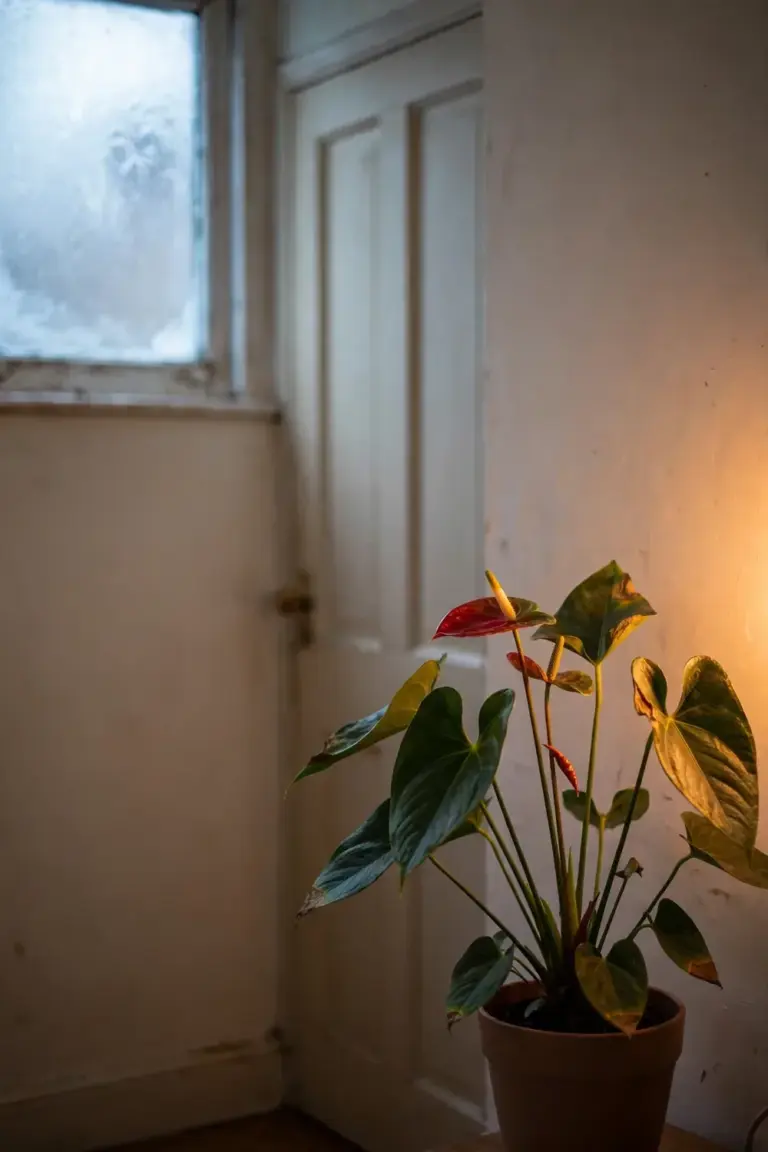
Watch three draft sources: air-conditioning vents blowing straight down onto the leaves, exterior doors that open to winter air, and single-pane windows on cold nights. Move the plant 1 meter inward from a cold window when frost is forecast.
Growth naturally slows in the cooler months. That is the plant resting, not failing. Cut watering back slightly, stop feeding, and resume the full routine in spring when new leaves pick up speed. A winter rest with less water and no fertilizer is the closest an indoor anthurium gets to a season, and it blooms harder for it.
5. Pot It in a Chunky Aroid Mix, Not Dense Potting Soil
In the wild anthuriums root onto tree bark and into leaf litter, with air flowing around every root. Dense garden soil or cheap all-purpose potting mix suffocates them, and suffocated roots rot. Build the mix chunky: equal parts orchid bark, perlite, and coco coir or peat. Pine bark fines or orchid bark chunks both work; the grade matters more than the brand, and medium grade suits most indoor pots. Water should pour through and the saucer should fill within seconds.
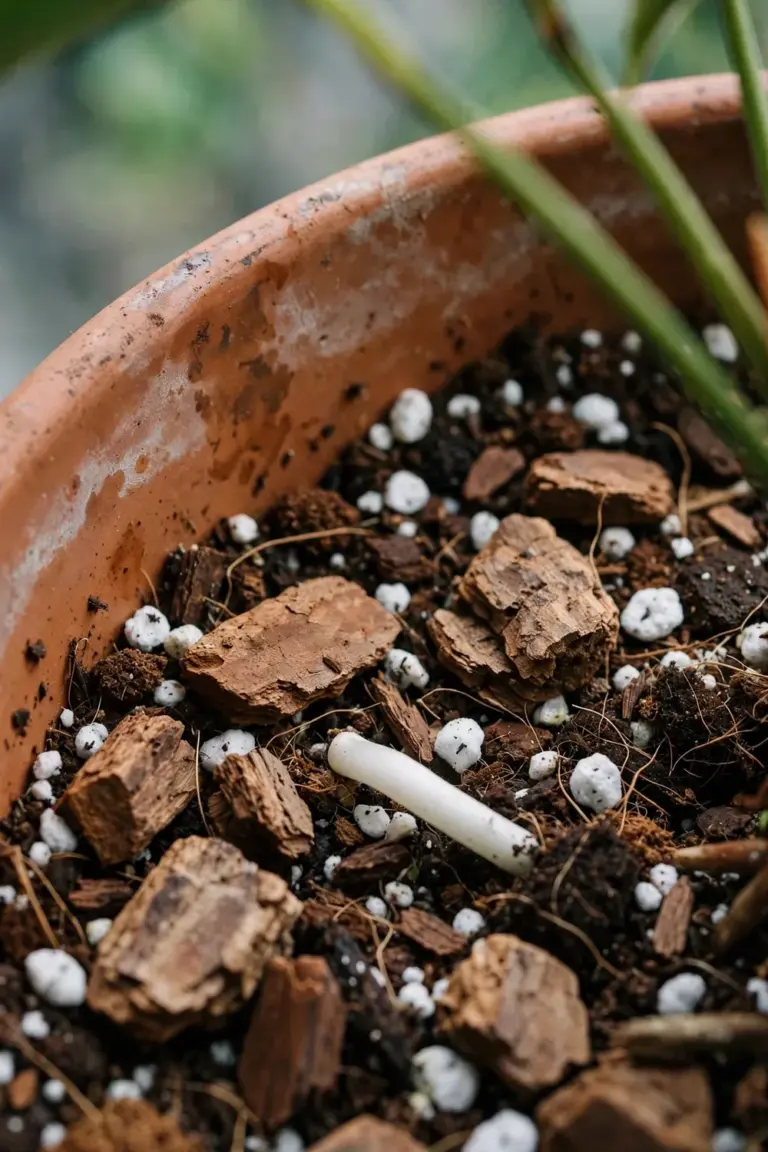
Use a pot with real drainage holes, plastic or ceramic both work. Terracotta dries fastest, which suits heavy-handed waterers. Clear nursery pots have one advantage worth knowing: you can see condensation and root tips through the wall, which tells you when the mix is actually dry inside.
A top dressing of sphagnum moss over the mix buys you two things: it slows surface evaporation between waterings and keeps the aerial roots near the crown from drying out. Replace it when it mats down. Never pack moss tight against the stem. Airflow at the crown matters more than moisture there.
6. Water When the Top 2.5 cm of Mix Feels Dry
Overwatering kills more anthuriums than every other mistake combined. Water only when the top 2.5 cm of mix feels dry to your finger. For most homes that means roughly every 7 to 10 days in the growing season, less in winter, but the finger test beats any calendar.
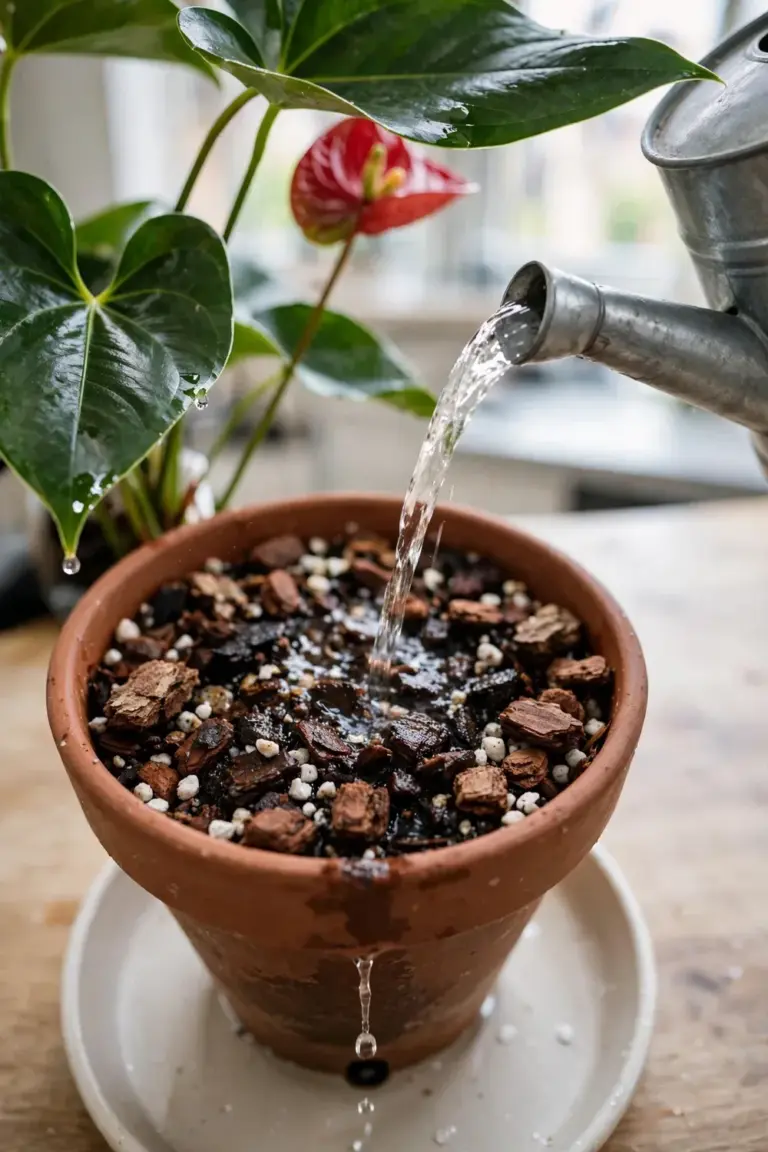
Water thoroughly until it streams from the drainage holes, then empty the saucer. Never leave the pot standing in water. Yellow lower leaves are the classic alarm for too much water, not too little. If the mix smells sour or the stems feel mushy at the base, unpot the plant, trim every black root back to firm white tissue, and repot into fresh chunky mix. Recovery takes weeks. Patience is the treatment.
Bottom watering works well for anthuriums in chunky mix. Set the pot in a basin of room-temperature water for 10 to 15 minutes so the bark drinks from below, then lift it out and let it drain fully. The crown stays dry, which keeps rot away from the one place the plant cannot afford it.
7. Feed Every 2 Weeks in Spring and Summer for Rebloom
This is the rebloom rule in one sentence: a hungry anthurium grows leaves and skips flowers. Feed every 2 weeks from spring through summer with a high-phosphorus, water-soluble fertilizer mixed at the label rate, the schedule the guide-to-houseplants.com anthurium care page recommends for steady bloom. Phosphorus drives flower formation. Nitrogen-heavy feeds push glossy leaves and delay buds.
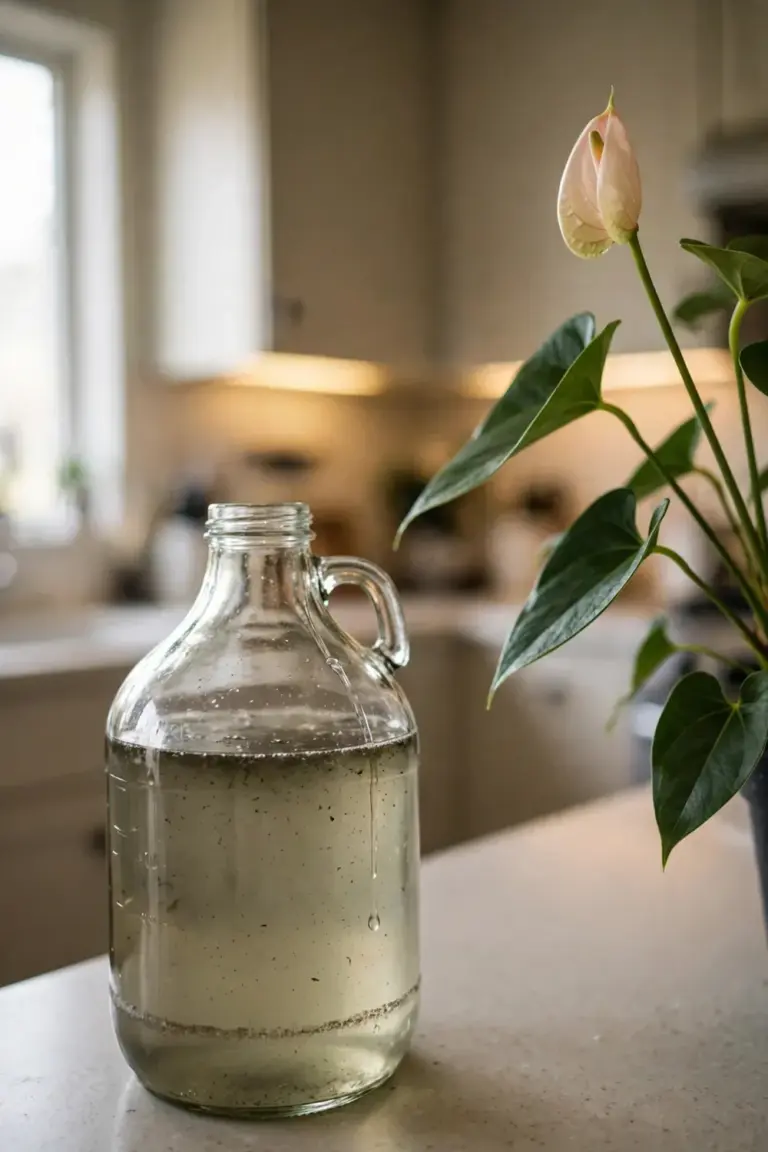
Skip feeding in autumn and winter when growth slows; unused fertilizer salts accumulate and burn root tips. If white crust forms on the mix surface, flush the pot with plain water until it runs clear, then wait a full cycle before feeding again.
Watch the plant, not the calendar, for feeding cues. Pale new leaves that stay small point to hunger. Dark green leaves with no blooms point to excess nitrogen or too little light, and more fertilizer will not fix either. One consistent season of feeding turns a leafy plant back into a flowering one.
8. Repot Every 2 to 3 Years, and Divide the Clump
Repot every 2 to 3 years in spring, or sooner if roots circle the drainage holes, per North Carolina Extension’s anthurium guidance. Move up one pot size only. A pot much larger than the root ball holds wet mix the roots cannot drink, which invites rot.
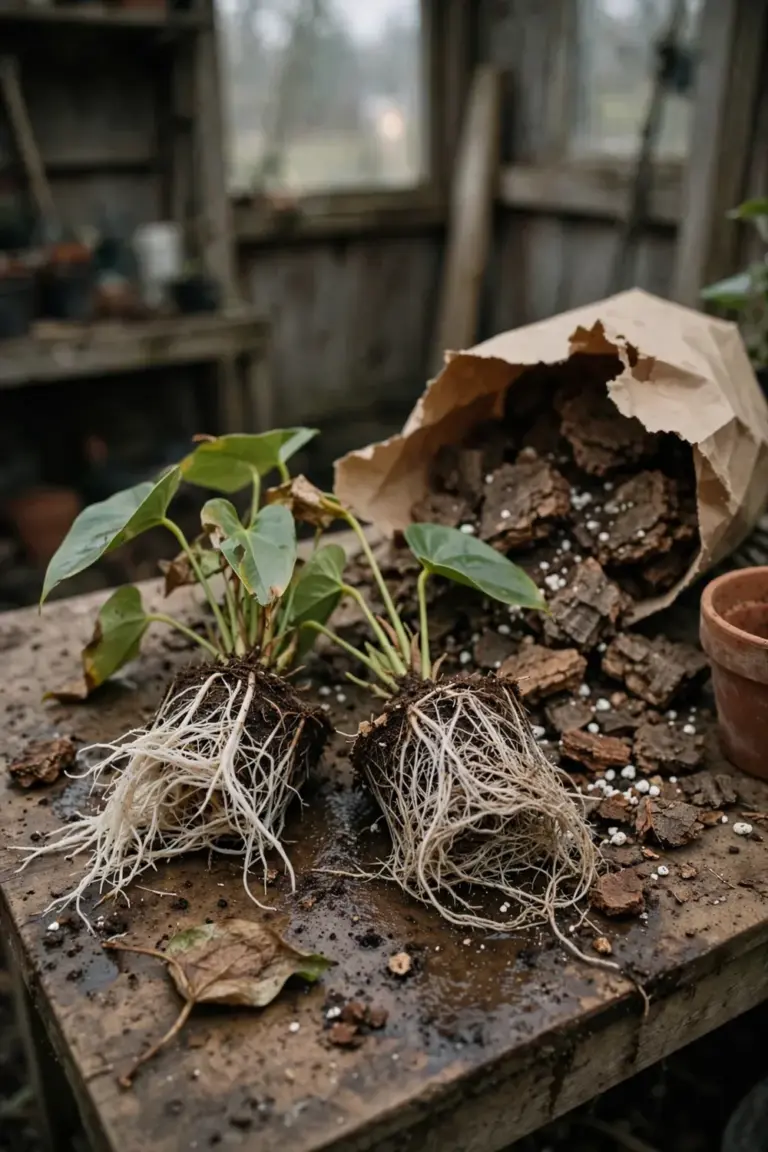
Division is the free way to multiply the plant. Slide the root ball out, tease it into clumps that each carry roots and a few leaves, and pot each division in fresh chunky mix. Water lightly and keep the new pots warm and humid for two weeks while roots settle. Expect the divisions to pause, then resume growth within a month.
Do not bury the crown. Set each division so the point where leaves meet roots sits just at the mix surface, exactly where it sat before. Buried crowns rot in the one spot the plant cannot regrow from.
9. Snip Spent Spathes to Trigger the Next One
Each bloom runs its course. When a spathe fades and dulls, cut its stem at the base with clean, sharp scissors. The plant reads the removal and redirects energy into the next bud. Leaving spent blooms on the stem costs you nothing in health, but snipping speeds the cycle. Cut close to the base without nicking the emerging leaves beside it.
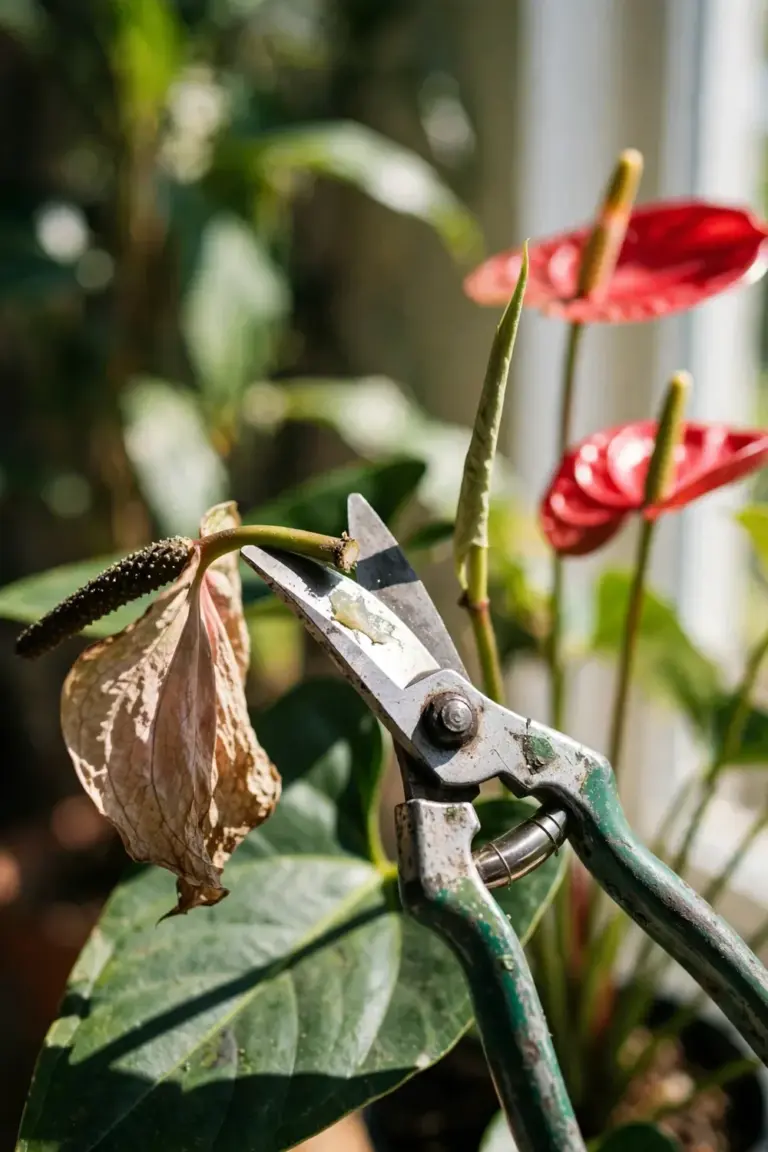
Wipe the leaves with a damp cloth every month or two. Dust blocks light on leaves that depend on it, and a clean leaf photosynthesizes measurably better than a dusty one. Work from the base of the leaf outward to the tip so you never snap the blade. This one chore noticeably improves color on the next flush of spathes.
10. Diagnose Yellow Leaves and Brown Tips in Order
Work through symptoms in the order of most likely cause.
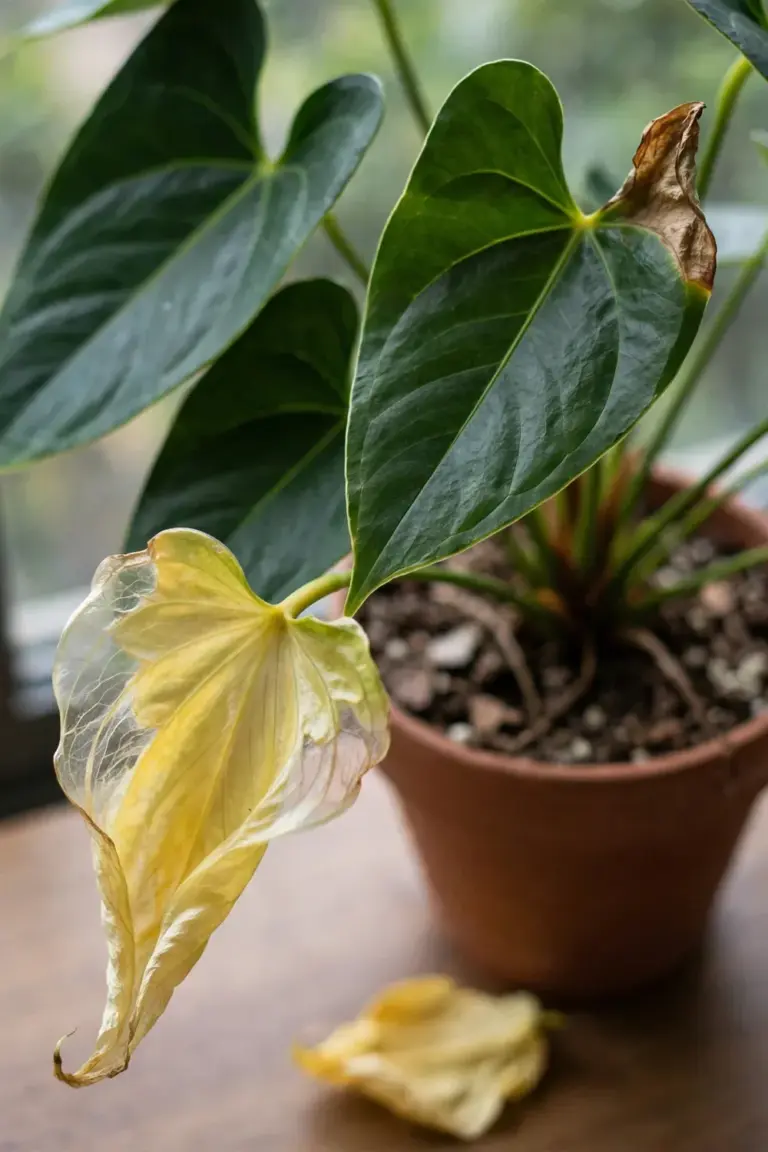
Yellow lower leaves mean too much water. Check the mix before doing anything else, because guesswork is how plants die. If it is still wet a week after watering, stretch the interval and confirm the saucer drains. One yellow leaf on an otherwise healthy plant is old age. Three at once is your watering hand.
Brown, papery tips and edges mean dry air or uneven watering. Raise humidity toward the 60 to 80 percent band North Carolina Extension sets, since indoor air is the usual culprit, then even out your watering rhythm. Hard tap water leaves the same signature over time. Resting water overnight or switching to filtered water stops the salt creep.
No flowers after months of green growth means low light, a feeding gap, or cold exposure. Move the plant brighter, restart the every-two-weeks spring and summer feed, and confirm nights stay above 15 degrees. Buds follow within one to two growth cycles once all three hold.
Soft black spots that spread fast mean bacterial or fungal trouble from leaves staying wet. Cut the affected leaves off, improve airflow, and water the mix only. Do not mist a sick plant.
Leggy stems with wide gaps between leaves mean the plant is reaching for light it cannot find. Move it brighter in steps over a week rather than all at once, so the foliage adjusts without scorching. Pruning the stretched stems will not pull them back; only the new growth comes in compact.
11. Skip These 5 Mistakes That Kill Anthuriums
Direct afternoon sun through bare glass. The leaves bleach and crisp in days. Sheer curtain or east window.
A pot with no drainage holes drowns the roots from the bottom up, silently, because you never see the water pooling inside. Drill holes or repot into a pot that has them.
Watering on a fixed weekly schedule in winter ignores that the plant drinks less when growth slows. The finger test runs year-round, not the calendar.
Dense potting soil straight from the bag packs its fine particles around epiphytic roots and chokes the air out of them. Rebuild the mix around bark, perlite, and coir, and the roots can breathe again.
Cold drafts from doors and vents. One week of chilly blasts can stall the plant for a season. Map the drafts before you place the pot.
12. Keep It Away From Pets and Small Kids
Every part of an anthurium is toxic to dogs and cats. The ASPCA lists anthurium as toxic to both, with insoluble calcium oxalate crystals as the toxic principle. Chewing causes oral irritation, intense burning of the mouth, tongue, and lips, drooling, vomiting, and difficulty swallowing.
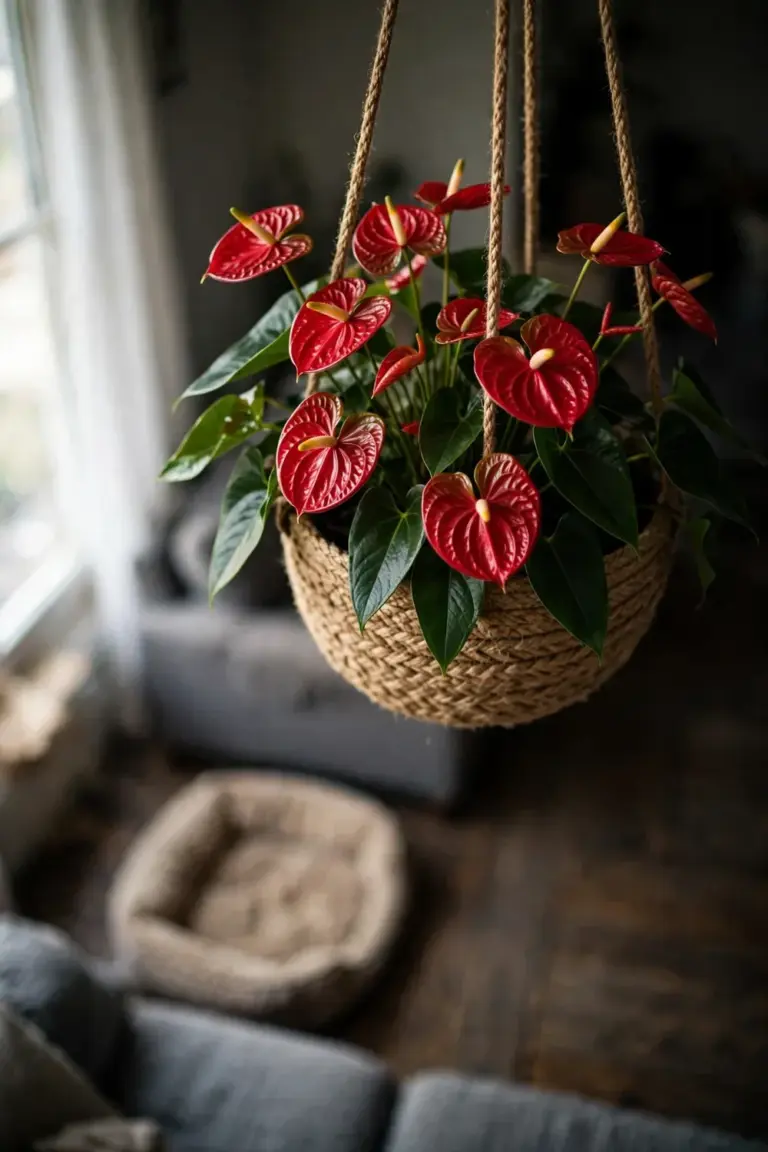
Place the plant where a curious pet cannot reach: high shelves, hanging planters, or rooms closed off during unsupervised hours. Hanging planters suit anthuriums well, since the leaves and spathes cascade outward and the pot drains freely above the floor. Small children deserve the same caution, since the sap irritates skin and mouths. Teach the rule early: this is a look-don’t-touch plant.
If a pet chews the plant, call your veterinarian or the ASPCA poison line promptly. The crystals hurt immediately, which usually stops the animal fast, but do not wait on symptoms. Rinse the mouth gently with water if the animal allows it, and bring a leaf sample so the vet can confirm the plant.
13. Grow Anthurium in Australia: What Changes Down South
For most of Australia, treat anthurium as a permanent indoor plant, with a summer holiday on a shaded patio in the frost-free coastal north if you like. The plant’s hardiness stops at USDA zones 11 to 12, which covers only the warmest frost-free pockets, so most Australian homes keep it inside year-round.
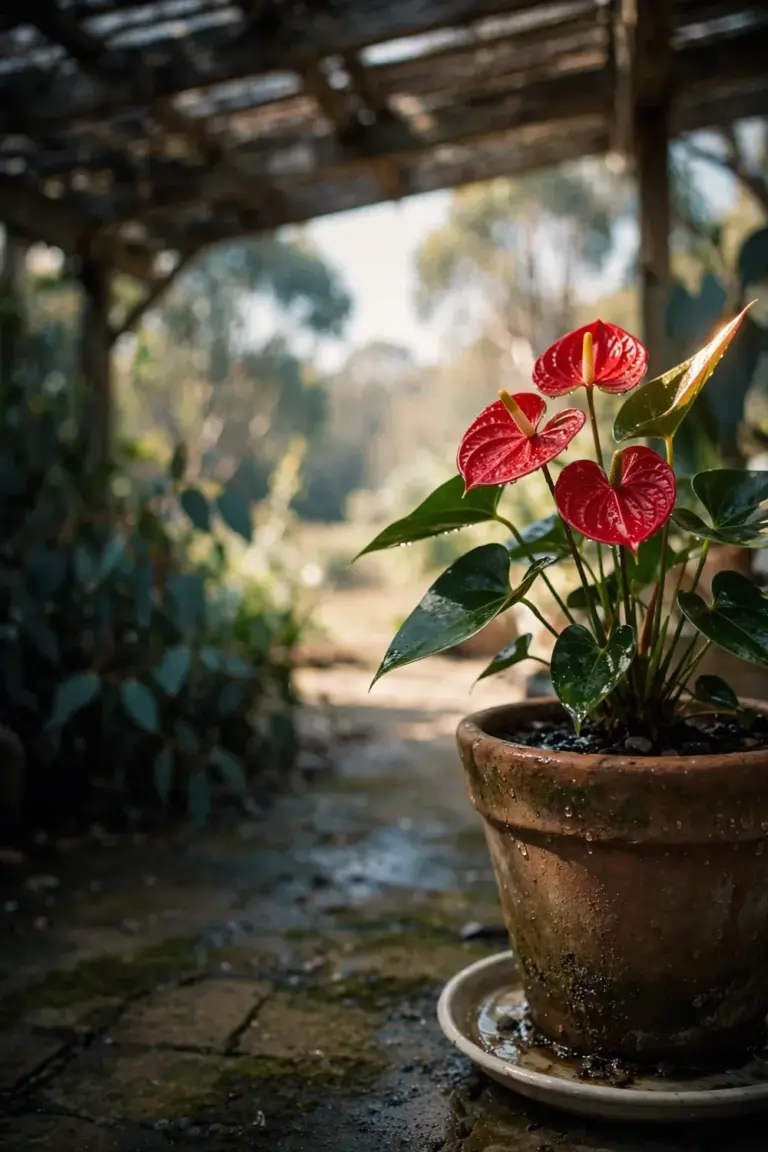
Two local tweaks earn their keep. First, the same east-facing window rule works in the southern hemisphere: morning sun is gentle in both, and rotating the pot a quarter turn every fortnight keeps growth even. Second, Australian summers in the interior bring the opposite problem, dry heat that drags indoor humidity down. Run the humidifier from November to March, not just in winter. Winter is the draft season instead: heaters plus cold nights mean checking both the temperature band and the humidity reading in July.
Air-conditioning deserves a warning of its own. A split-system unit blasting cold dry air across the room can drop local humidity and temperature at the plant’s position within hours. Keep the pot out of the direct airflow path. The plant does not care which hemisphere it is in. It cares about the numbers holding.
14. Pick Flowers or Foliage: Choose Your Species
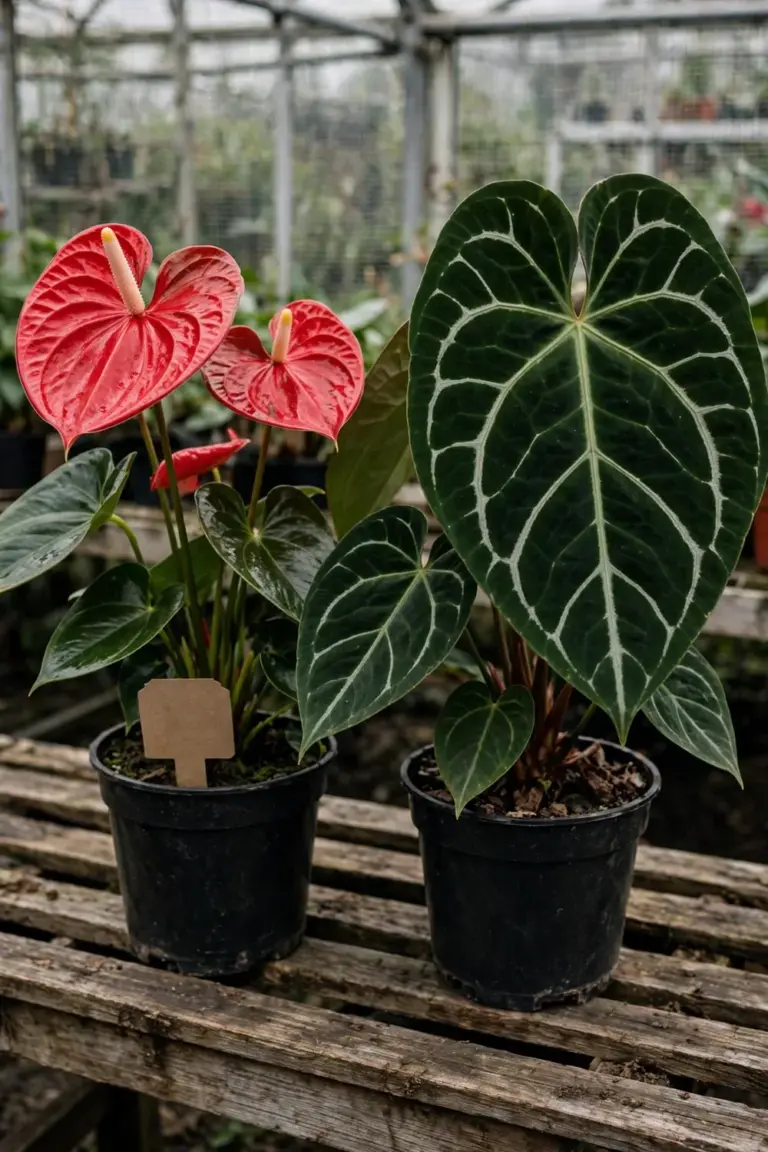
Nurseries sell several species under the single name anthurium, and they want different things from you.
| Species | What You Get | Size | Best For |
|---|---|---|---|
| Anthurium andraeanum | Glossy red, pink, orange, or white spathes; heart-shaped leaves | 30 to 45 cm tall | Flowers and color |
| Anthurium scherzeranum | Curled spadix; orange-red spathes | 30 to 45 cm tall | Compact flowering |
| Anthurium crystallinum | Silver-veined, velvety dark leaves; small greenish spathes | 60 to 90 cm spread | Foliage drama |
| Anthurium clarinervium | White-veined, leathery heart leaves; insignificant blooms | 20 to 30 cm tall | Small spaces, leaf collectors |
Flowering types (andraeanum, scherzeranum) follow this whole page as written. Foliage types (crystallinum, clarinervium) want the same light and humidity but barely bloom, so feed them a balanced fertilizer instead of a high-phosphorus one. Their leaves bruise if handled roughly and mark if water sits on them, so water the mix and leave the foliage dry. They grow slower than andraeanum, which makes them less forgiving of repotting shock, so divide them only when the clump is clearly crowded.
Buy with your eyes on the roots, not the blooms. Tip the nursery pot and look at the drainage holes: white root tips mean a healthy plant, brown mush means trouble you inherit. Skip plants with yellowing lower leaves or spathes that have already gone papery. The best specimen in the shop is the one with unopened buds at the base and firm green foliage, not the one with the single biggest flower.
Frequently Asked Questions
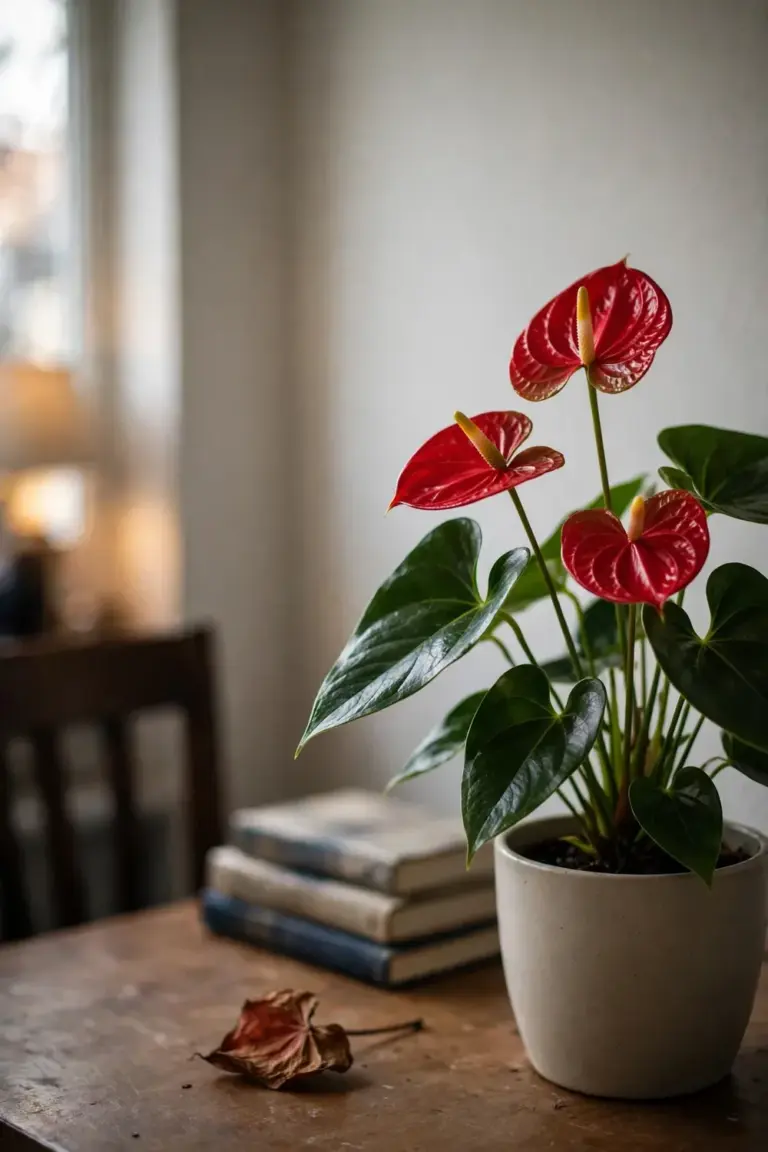
Low light is the top cause, followed by a feeding gap and cold exposure. Move the plant to at least 4 hours of bright, indirect light daily, restart a high-phosphorus feed every 2 weeks in spring and summer, and keep nights above 15 degrees Celsius. A mature plant with all three conditions met sets new buds within one to two growth cycles. Leaves alone mean the plant survives; blooms mean it thrives.
Water when the top 2.5 cm of mix feels dry, roughly every 7 to 10 days in the growing season and less in winter. Soak until water streams from the drainage holes, then empty the saucer completely. Never leave the pot sitting in water. Yellow lower leaves usually signal too much water, while drooping leaves with dry mix signal too little. The finger test beats any fixed schedule year-round.
No. Anthurium is toxic to both cats and dogs, according to the ASPCA, because all parts contain insoluble calcium oxalate crystals. Chewing causes mouth burning, drooling, vomiting, and difficulty swallowing. Keep plants on high shelves, in hanging planters, or in rooms pets cannot enter unsupervised. If a pet chews the plant, contact your veterinarian promptly rather than waiting to see symptoms develop.
Brown, papery tips usually mean the air is too dry or watering runs uneven. Anthuriums want 60 to 80 percent humidity, and heated indoor air falls well short of that through winter. Run a humidifier, or set the pot on a pebble tray holding water just below the pebbles. If your tap water is hard, mineral salts cause the same signature, so rest water overnight or switch to filtered water.
Repot every 2 to 3 years in spring, moving up one pot size into fresh chunky mix of bark, perlite, and coir or peat. Repot sooner if roots circle the drainage holes or water runs straight through without wetting the mix. Spring repotting pairs well with division: tease the root ball into clumps with roots and leaves, pot each separately, and keep them warm and humid for two weeks while they settle.
Only where winters never freeze. The plant survives outdoors in USDA zones 11 to 12, which means frost-free tropical pockets, and everywhere else it lives inside year-round. A summer holiday on a shaded patio suits it fine in warm climates, as long as direct sun never hits the leaves and nights stay warm. Bring it back indoors well before the first cold snap, since one chilly night can stall the plant for months.
Read the Next Spathe: Your One-Job Summary
Bright indirect light, humid warm air, a chunky bark mix, water when the top dries, feed every two weeks in the growing season. Six care points, one routine, years of blooms. Watch each new spathe unroll and you will know the routine is working.