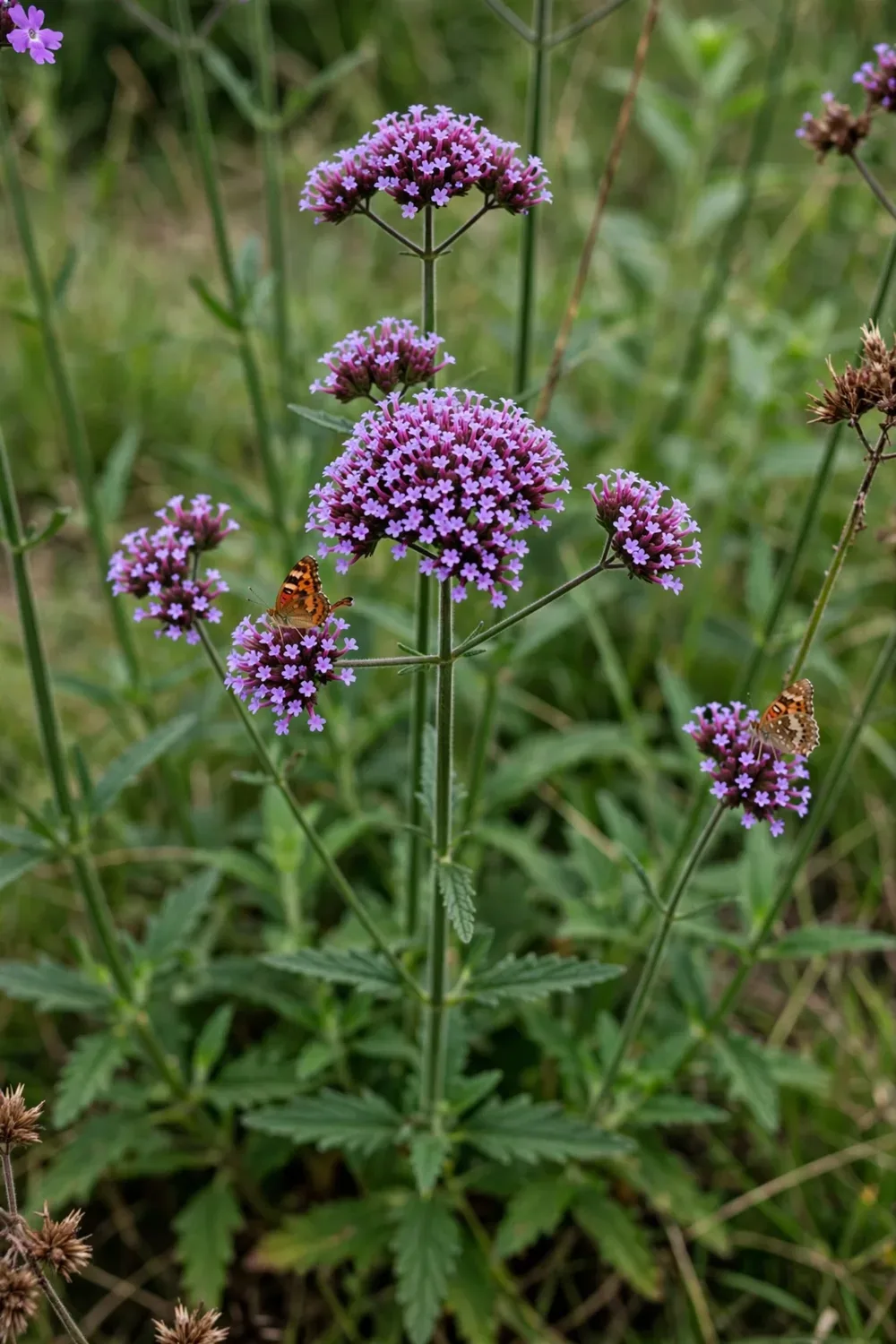

Decide the self-seeding question before you buy the first plant, because one clump flowers for 5 months, from early summer to frost, and drops its seeds wherever the wind and the birds carry them. That is the whole game of how to grow Verbena bonariensis: a floating purple cloud in exchange for seedlings you must either welcome or control. I have learned to make that call on day one, because volunteers show up exactly where they were never invited.
Two things decide whether this plant thrives for you. The first is the seed decision above. The second is the sun: full sun gives the sturdiest stems and the heaviest flowering, according to the Gardenia care sheet for purpletop vervain. Give it those two things and it asks for almost nothing else.
Plant it for the butterflies and the whole border works harder. A drift of tall verbena woven through a pollinator garden plan feeds bees and butterflies from early summer until frost, and its wiry stems let you see straight through to the plants behind.
| Trait | Detail |
|---|---|
| Botanical name | Verbena bonariensis (verbena family, Verbenaceae) |
| Common name | Tall verbena, also called purpletop vervain |
| Native range | South America, from Brazil to Argentina |
| Height | 90 to 180 cm on wiry branching stems |
| Spread | 30 to 90 cm |
| Hardiness | Tender perennial, USDA zones 7 to 11; grown as an annual where winters are colder |
| Sun | Full sun for the sturdiest stems |
| Soil | Average, well drained; tolerates poor, sandy, or gravelly ground |
| Bloom season | Early summer until frost |
| Self-seeding | The species seeds freely; the ‘Cloud’ cultivar is sterile |
1. Answer the Self-Seeding Question Before You Plant
Tall verbena self-seeds freely. Every cluster that ripens on the stem drops seed into the soil below, and those seeds come up the following spring without any help from you.
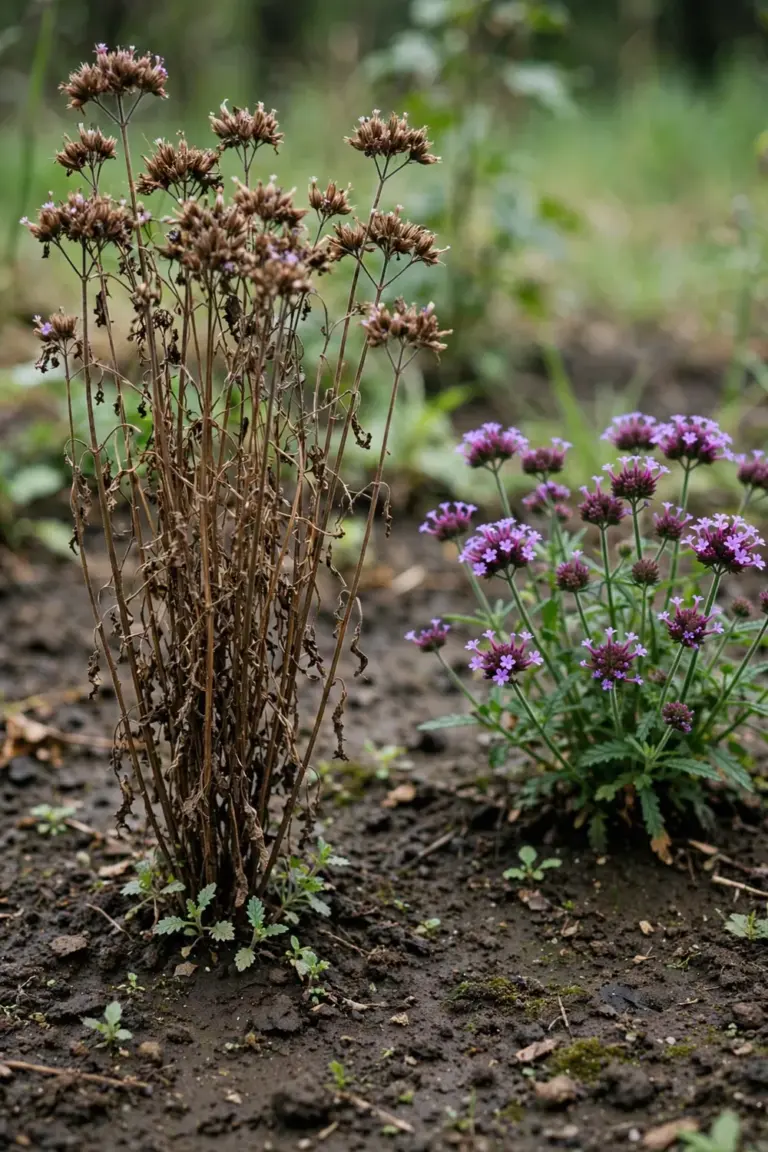
That single fact splits growers into two camps, and you should pick yours now. Camp one embraces the volunteers: never deadhead, let the plant wander, and pull the extras each spring where they land wrong. Camp two controls the spread: deadhead through the flowering season, or plant the sterile ‘Cloud’ cultivar that sets no seed at all.
There is no middle that works. Half-deadheading still gives you seedlings, and resenting them in April is worse than planning for them in October. Pick a camp and plant accordingly.
The volunteers themselves are not the enemy. They transplant easily when young, they fill gaps for free, and a gardener who wanted a drift often gets one without buying a second tray of seed. The only real mistake is planting the species along a path or a lawn edge and then acting surprised when seedlings appear in the cracks. Site it where wandering is welcome and the self-seeding becomes a feature instead of a chore. A gravel path edge, the back of a cottage border, and the sunny side of a shed all take volunteers gracefully.
2. Choose the Tall Species or the Sterile ‘Cloud’
The straight species reaches 90 to 180 cm tall and 30 to 90 cm wide, forming a low rosette of leaves with tall, slender, branched stems and an airy, see-through habit. It is the classic choice for the back of a sunny border or a meadow-style drift.
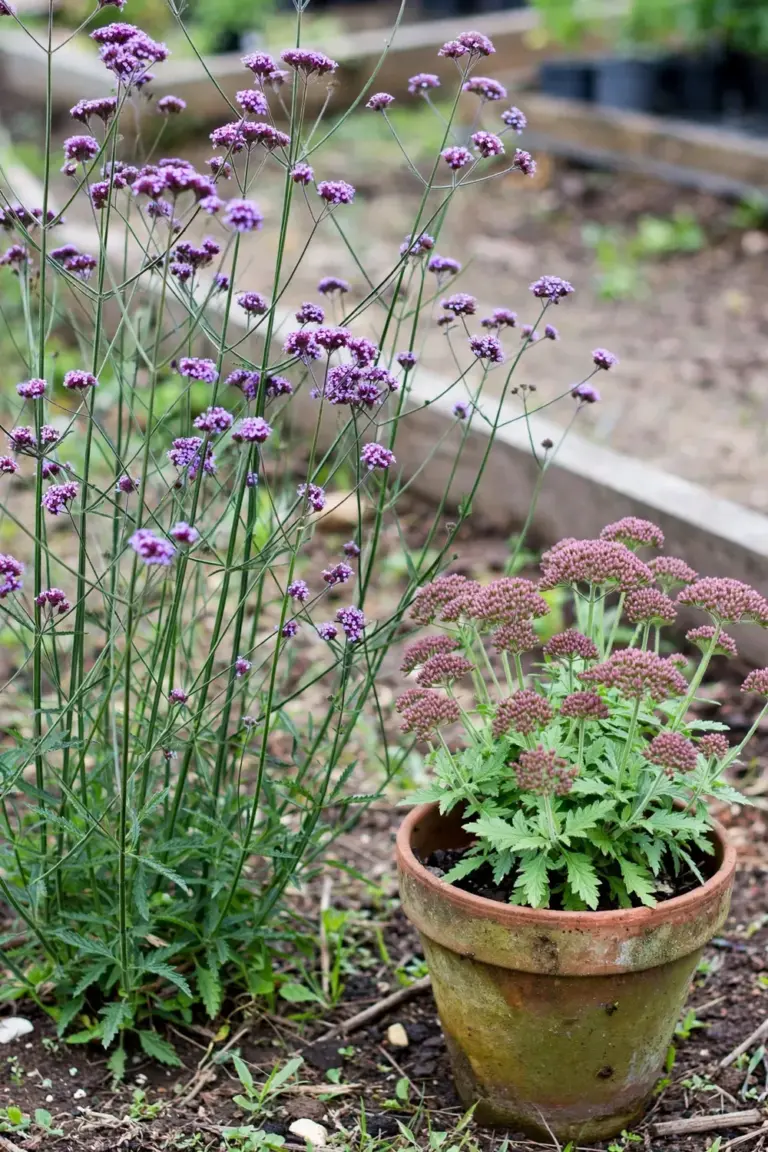
The ‘Cloud’ cultivar changes the deal. It is a compact hybrid that reaches 60 cm in flower and, crucially, is sterile: it does not self-seed, unlike its larger cousins, per the breeder’s notes on Verbena bonariensis ‘Cloud’. The same notes record it as a South American native from Brazil to Argentina, shorter and bushier than the species, with light green toothed leaves less rough than the typical variety. Choose ‘Cloud’ for containers, small beds, or anywhere volunteers would be a nuisance. In a pot it wants company: a group of three plants knits into a proper cloud by midsummer, while a single plant in the same pot looks sparse until autumn. The breeder’s notes pair it with bidens, chamomile, and ornamental grasses for a light, natural look, and those companions share its love of sun and lean soil.
Two more compact options exist if your nursery stocks them. ‘Lollipop’ grows 30 to 60 cm, ‘Meteor Shower’ reaches 50 to 76 cm and sets little seed, and ‘Vanity’ grows 61 to 76 cm; all three suit containers and tight spaces, per a nursery roundup of dwarf tall-verbena cultivars.
| Cultivar | Height in flower | Self-seeds? | Best use |
|---|---|---|---|
| Straight species | 90 to 180 cm | Freely | Borders, meadow drifts, pollinator plantings |
| ‘Cloud’ | 60 cm | No, sterile | Containers, small beds, no-volunteer gardens |
| ‘Lollipop’ | 30 to 60 cm | Lightly | Pots, bed fronts |
| ‘Meteor Shower’ | 50 to 76 cm | Little seed | Containers, compact borders |
| ‘Vanity’ | 61 to 76 cm | Yes | Borders, cut flowers |
Do Not Confuse It With Basket Verbenas
The nursery tag matters more than the common name. Verbena bonariensis is the tall, see-through species. The trailing verbenas sold for hanging baskets are low hybrids that sprawl instead of standing up. Common vervain, Verbena officinalis, is a separate medicinal herb with a different habit. Read the botanical name on the tag and you will bring home the right plant.
Seed packets are the most reliable way to buy the straight species, and they are cheap. Potted plants at the nursery are more often the named compact cultivars, because growers prefer stock that stays tidy on the bench. If the label says only “verbena” with no botanical name, ask. A basket hybrid planted in the border will never give you the floating purple cloud, and a tall species stuffed into a hanging basket will look ridiculous by August.
3. Sow Seeds in Early Spring at 17.8 to 21.1°C
Tall verbena grows easily from seed. Sow in autumn or in early spring at 17.8 to 21.1°C, following the temperature range in the Fine Gardening propagation guide. Surface-sow on moist seed-starting mix and press the seeds in without burying them deep; light helps them along.
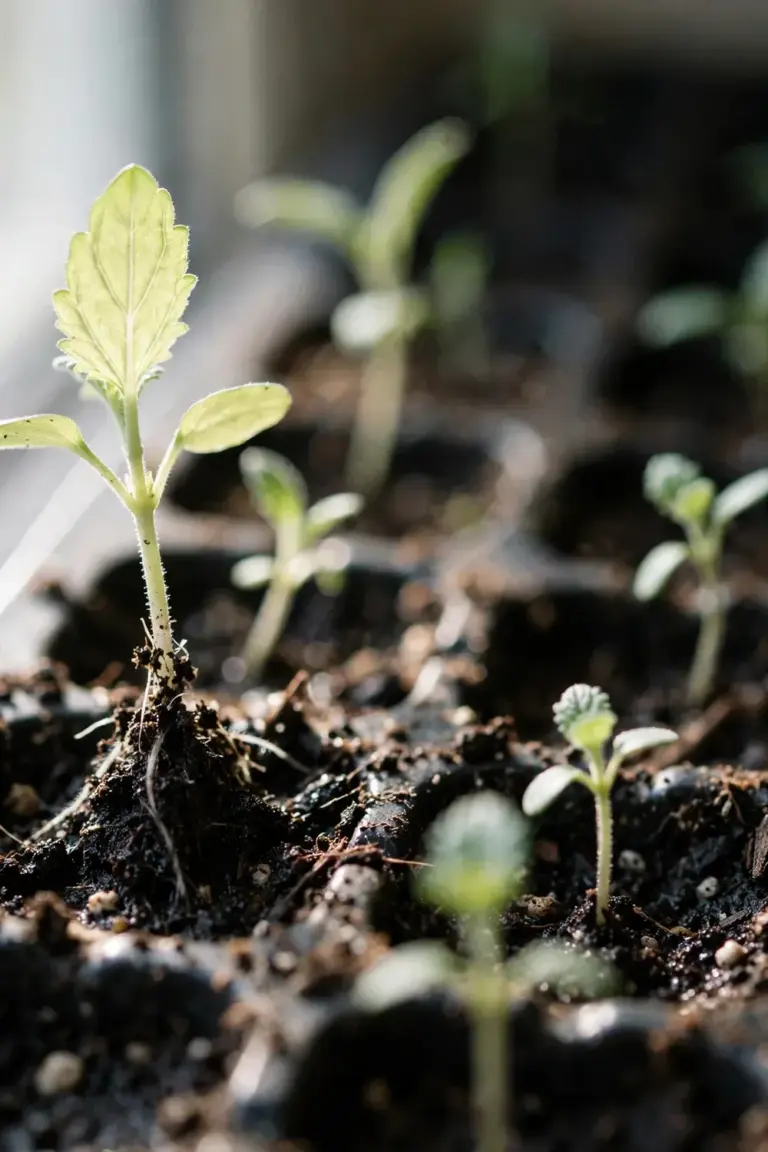
Keep the tray evenly moist and warm. Seedlings are slow to start and then suddenly fast, so do not judge the tray in the first two weeks. Grow them on in bright light until they have two sets of true leaves, then pot them up individually.
You can also start from cuttings of young branch tips in spring or summer, or by dividing rooted clumps of young shoots in spring. Seed is the simplest route for most home growers and it is how the plant spreads on its own anyway.
Harden the seedlings off before they go out. A week of days outside and nights in, lengthening the outdoor hours gradually, keeps the transplant shock that stalls young verbena. Seedlings moved straight from a warm windowsill to a windy bed sit sulking for weeks, and a sulking seedling in May is a plant that never reaches its full 180 cm. Patience in that one week pays back all summer.
4. Plant Seedlings 30 cm Apart in Full Sun
Set plants out after the frost risk has passed. Choose the sunniest open spot you have. Full sun gives the sturdiest stems and the heaviest flowering, and shade produces weak, leggy plants with fewer blooms.
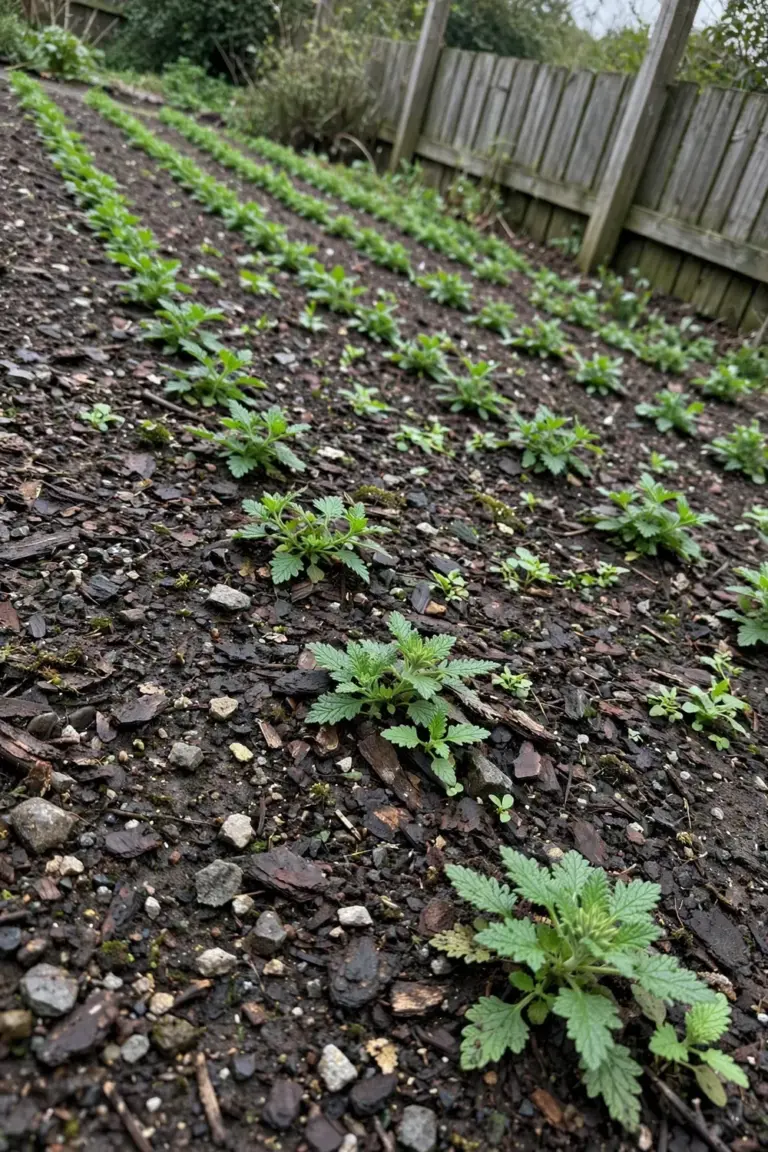
Space young plants 30 cm apart. The mature clumps spread 30 to 90 cm, and at that spacing the stems knit into the floating drift the plant is famous for. Plant in odd-numbered groups of five or seven for the strongest effect. Single specimens look lost; swathes look intentional.
Do not stake it. The wiry stems look delicate but they stand up to wind on their own, and the Fine Gardening profile notes they reach 6 feet tall without needing support. A plant that flops is telling you about shade or overfeeding, not about a missing cane. Fix the cause and the stems stand.
The soil can be average to poor as long as it drains. Tall verbena tolerates sandy and gravelly ground that would sulk under thirstier perennials. Heavy clay that holds winter water is the one soil worth fixing with grit or compost before planting.
Thread the drift through other plants rather than giving it its own bed. The wiry stems weave among roses, ornamental grasses, and solid perennials without crowding them, and the purple clusters floating above a grass clump is one of the classic combinations. Because you can see through the stems, the verbena never hides its neighbors. Plant it in front of something worth looking at and both plants look better.
5. Water Deeply the First Season, Then Back Off
New transplants need steady water while their roots establish. Soak the root zone deeply once or twice a week through the first growing season rather than sprinkling daily.
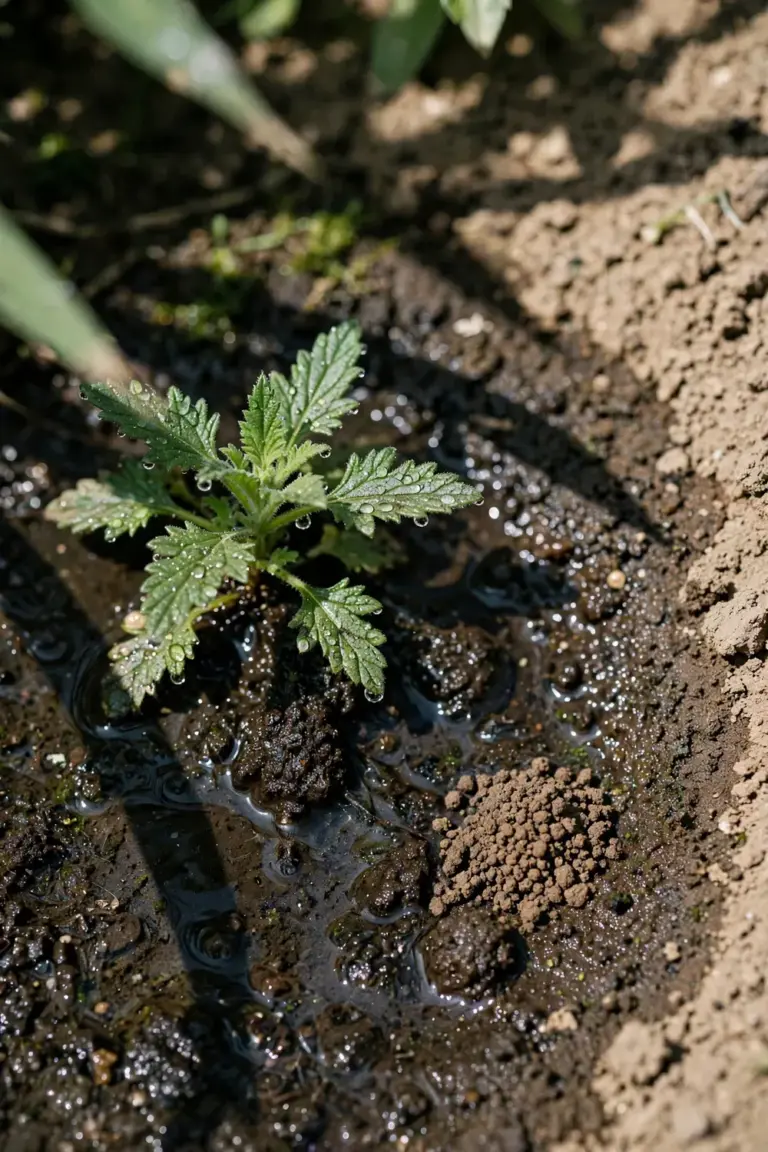
After that first season, back off. Tall verbena becomes drought-tolerant once established, and mature plants handle hot, dry spells that flatten fussier perennials. The Gardenia care notes frame the deal plainly: water regularly during the first growing season to establish a good root system, then enjoy its excellent drought tolerance in subsequent years.
The common failure is loving it too much in year two. Constantly wet soil invites root trouble and soft growth. Let the soil dry between waterings once the plants are settled.
Pots are the exception to the back-off rule. A container dries faster than open ground, and ‘Cloud’ in a terracotta pot on a sunny patio needs checking through hot spells. Water when the top 3 cm of mix feels dry, and make sure the pot drains freely. Verbena hates sitting in a saucer of water far more than it hates a missed watering.
6. Skip the Fertilizer Feed
Do not feed this plant like a hungry annual. Tall verbena evolved in lean South American soils and it flowers best when it is not pushed.
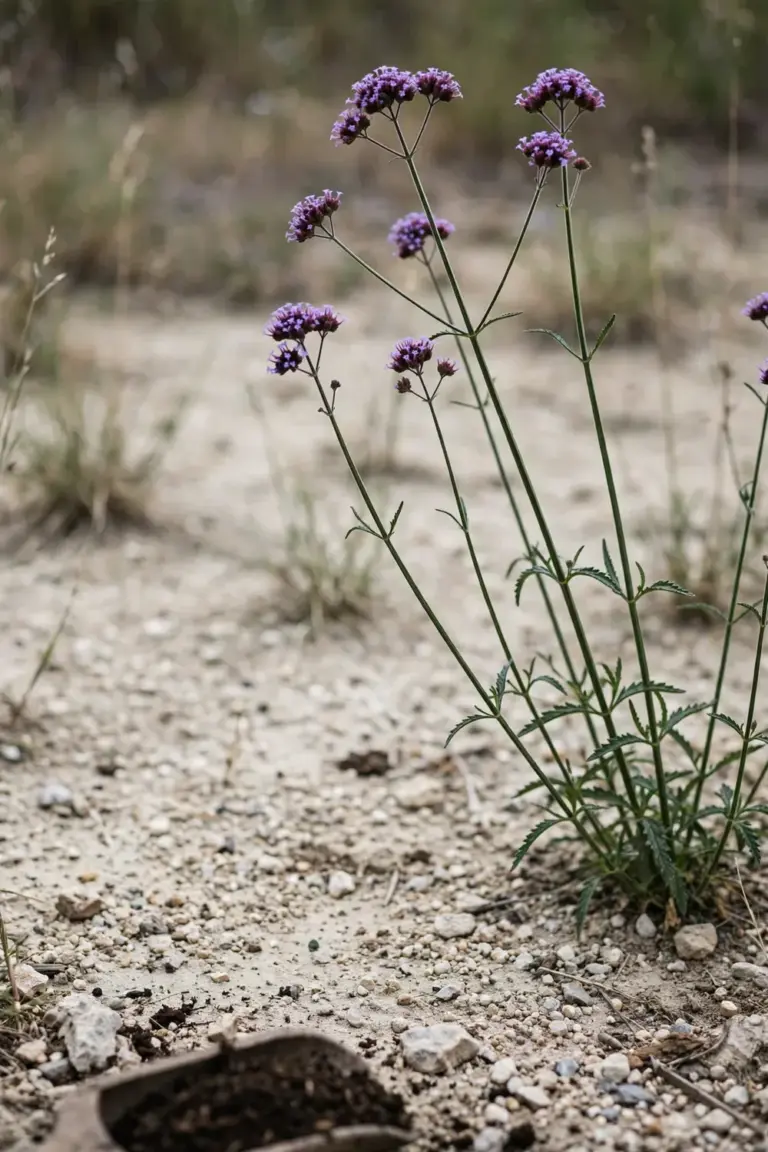
Fertilizer needs are modest: in most gardens a light spring application of balanced slow-release fertilizer or compost is plenty. Rich soil and heavy feeding produce soft leafy growth on weak stems that flop in the first storm, with fewer of the purple clusters you planted it for.
If your soil is truly poor, a single top-dressing of compost in spring does the whole job. Compost improves texture and feeds gently at the same time.
Watch for the signs that you fed too much. Stems that grow fast, soft, and dark green, then fold over in the first summer storm, are telling you the soil was already rich enough. Leaves multiplying while flower clusters stay sparse point the same way. The correction is simple and free: stop feeding, and let the plant grow hungry next season. Tall verbena forgives a lean year far more readily than a rich one.
7. Deadhead Through Summer to Control the Seed Rain
Here is where the day-one decision turns into a weekly habit. Deadhead spent flower clusters to tidy the plants and encourage additional blooming. Cut each finished cluster back to a leaf joint as soon as the purple fades and the cluster starts to brown.
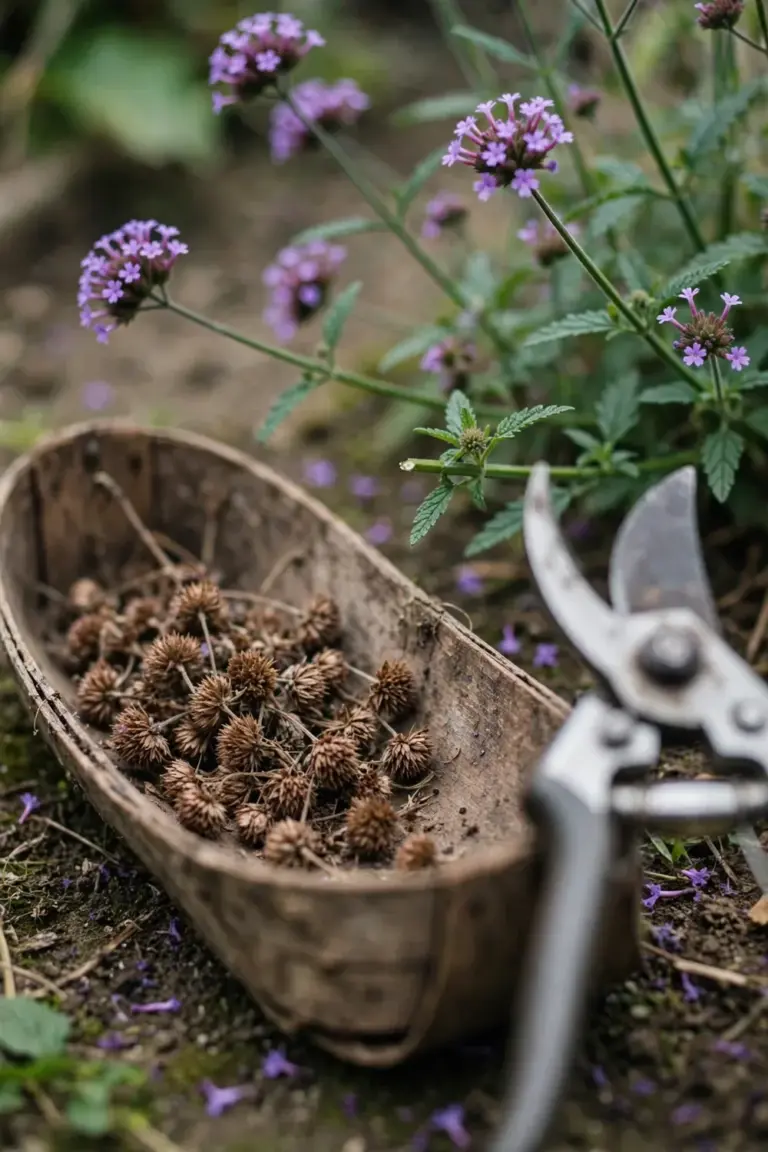
Leave a few clusters to ripen if you chose the embrace camp. Those heads drop the seed that becomes next spring’s volunteers, and goldfinches work the ripe heads too. In cold regions, leaving seed heads standing is also how the plant returns where the parent does not survive winter.
Skip deadheading entirely and you get the full self-seeding effect: dozens of seedlings the following spring, in the bed and sometimes in the lawn and the cracks of the path. That is a feature if you planned for it and a chore if you did not. The shears decide which one it is.
Work the deadheading into a weekly walk with the trug. Snip the browned clusters, drop them in, and move on. The job takes minutes on a small drift and it doubles as your pest scout: you will spot the first aphid colony or mildew patch while your hands are already in the stems. Gardeners who deadhead regularly almost always catch problems earlier than gardeners who only look from the path.
8. Pinch Young Plants Once for a Bushier Shape
Pinching is optional, and tall verbena flowers perfectly well without it. But one early pinch turns a single lanky stem into a branched plant with more flowering tips.
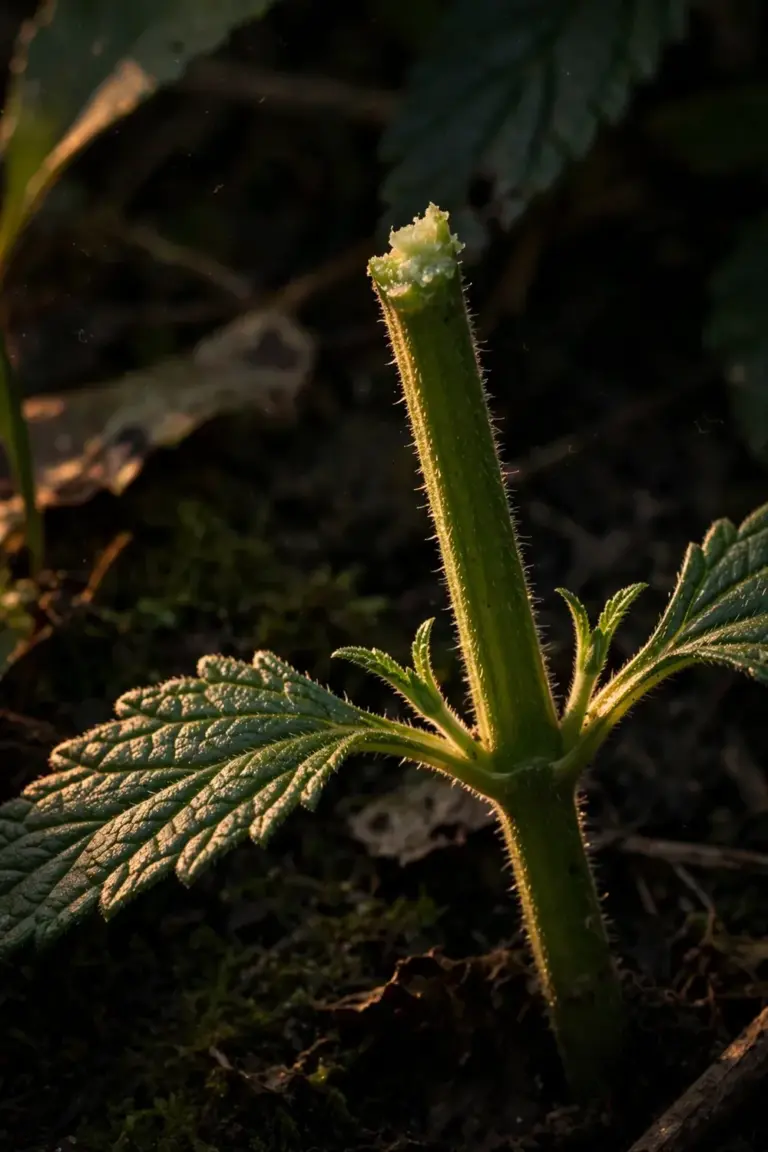
When a young plant reaches 20 cm, pinch or snip the growing tip just above a leaf pair. The plant responds by pushing two or more side shoots from the leaf axils below the cut. Those shoots each carry their own flower clusters, so the plant blooms wider instead of taller.
Do it once, early, and then leave the plant alone. Repeated pinching delays flowering and the plant never quite catches up. The species wants to be tall and airy; the pinch just gives it a fuller start.
Skipping the pinch costs you nothing. An unpinched plant grows one strong central stem with branches near the top, which is the classic see-through silhouette in the first place. Pinch the plants at the front of the border where fullness reads well, and leave the back drift unpinched for maximum height. Both habits look right because both are the plant being itself.
9. Cut Dead Stems to the Base in Late Winter
Tall verbena is a tender perennial in zones 7 to 11 and an annual anywhere colder. In mild-winter regions the crown often survives and pushes fresh growth from the base each spring.
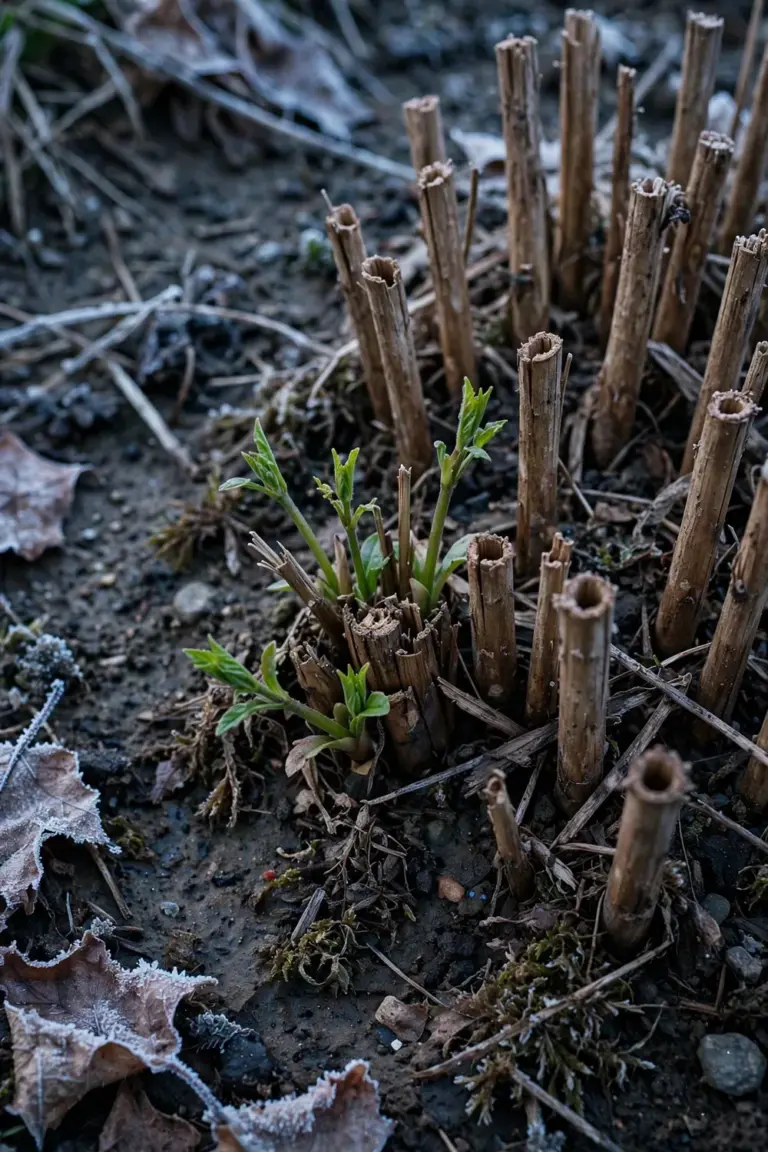
Wait until late winter or early spring, then cut the dead stems to the ground before new growth begins. Cutting too early exposes the crown to hard frosts. Cutting too late means wrestling new shoots, so watch for the first green nubs at the base and cut just before they push. The old stems pull away easily once they are fully brown.
In cold regions where the parent dies, the ritual is different. Leave some seed heads standing through winter so the seeds drop, then pull the dead stems in spring and watch for volunteers. The seedlings are easy to spot: small rosettes of toothed leaves appearing around the old planting spot.
Gardeners in marginal zones can cheat the cold a little. A dry mulch of straw or shredded leaves heaped over the crown after the ground freezes gives the roots a buffer against the freeze-thaw cycles that kill more crowns than steady cold does. Pull the mulch away as spring growth starts so the crown does not rot under it. Steady cold kills fewer crowns than freeze-thaw cycles do, and the mulch buffers exactly those swings. It will not save a plant through a zone 5 winter. At the edge of zone 7 it often makes the difference between a returning crown and a spring of seedlings.
10. Give Tall Verbena the Pollinator Border Job
This is the plant’s highest calling. The long, nectar-filled blooms are a staple of wildlife-friendly designs, and tall verbena ranks as an exceptional plant for butterflies, bees, and hummingbirds. Butterflies work the clusters from the first flowers of early summer until frost kills the last ones.
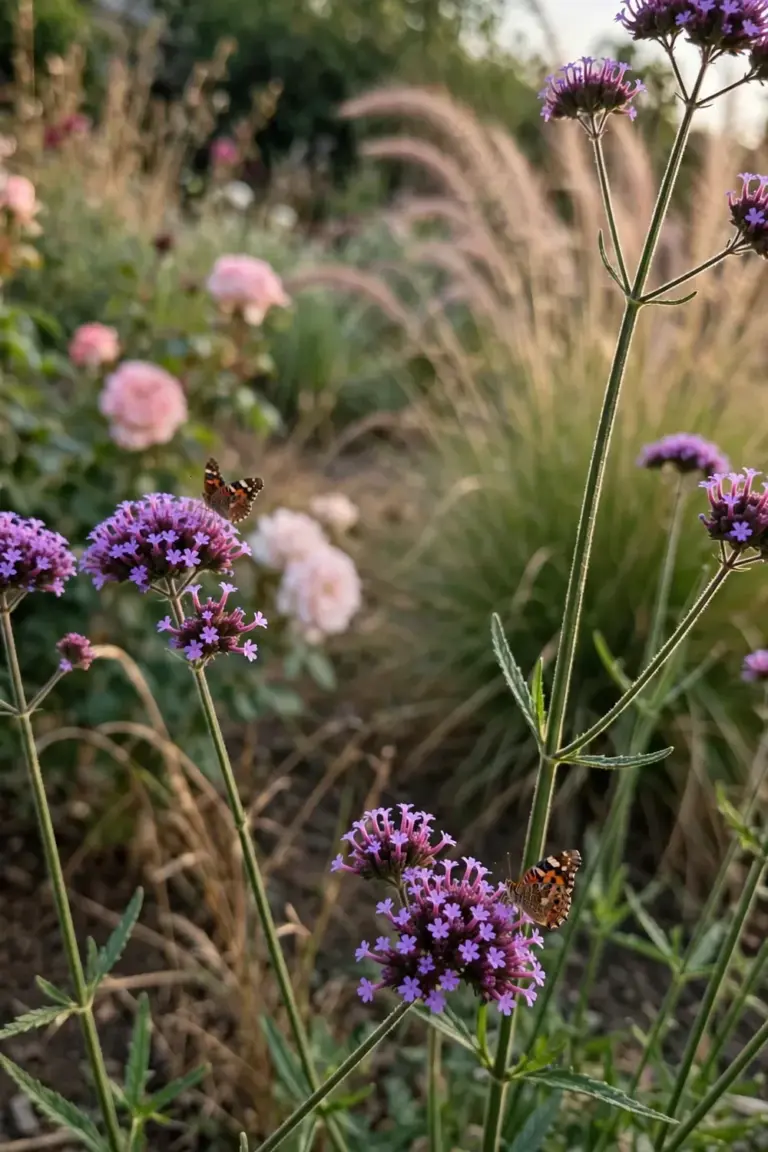
Use the see-through habit as a design tool. Plant the verbena in front of roses, grasses, or dense shrubs; you see the purple haze floating at eye level and the plants behind it at the same time. That layering is something few perennials offer, and it is why designers weave it through borders instead of lining it up in rows.
It earns its place in cut-flower plantings too. The wiry stems hold well in the vase, the clusters dry into everlastings, and cutting stems for the house doubles as deadheading. Pair it with flowers chosen to attract pollinators and the border feeds insects from spring bulbs to autumn seed heads.
One planting keeps the show running for the whole season. Because each stem branches near the top and every branch tip carries its own cluster, a single plant opens new flowers for months without any succession sowing. Deadhead the spent clusters and the plant answers with fresh buds lower down. Few perennials give you a five-month season from one spring planting with this little intervention.
11. Fix Powdery Mildew, Whiteflies, and Weak Stems
Tall verbena has few enemies. Powdery mildew is the main disease: a white dusty coating on the leaves in humid weather or crowded plantings. The fix is airflow and sun. Space plants properly, water the soil rather than the foliage, and cut back badly affected stems; the plant usually outgrows it.
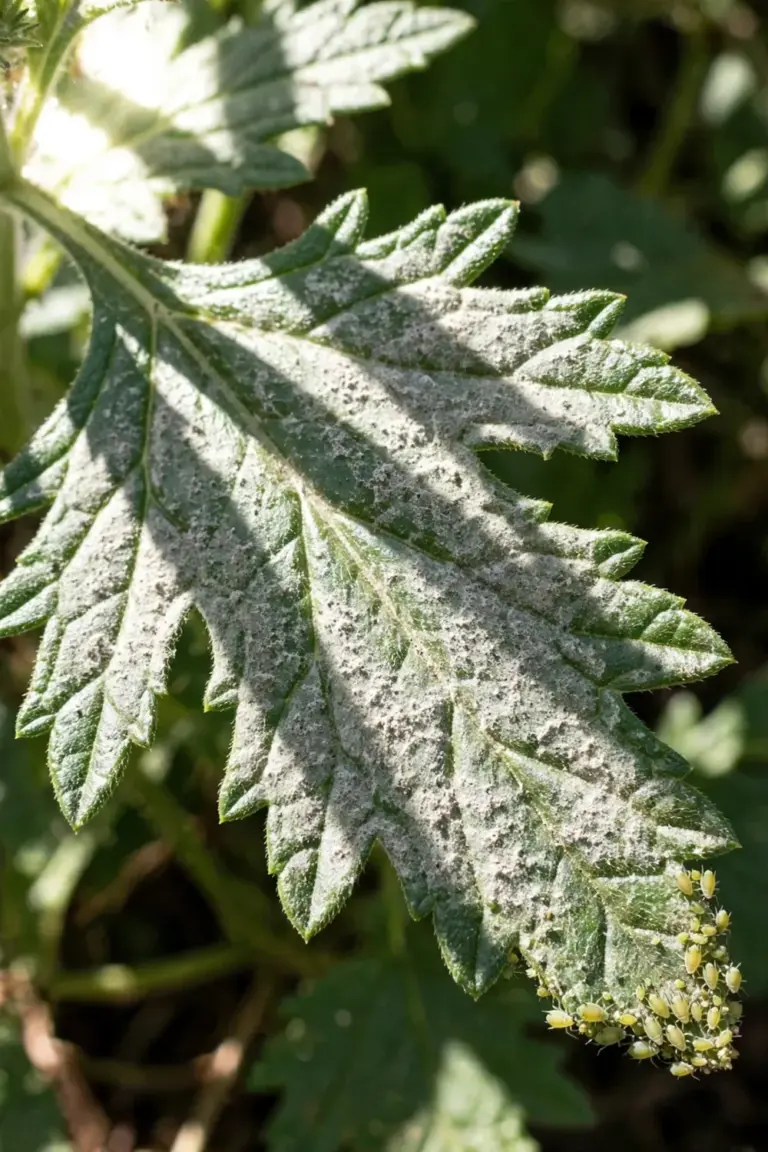
The documented pest list includes whiteflies, aphids, slugs, snails, scale insects, spider mites, Septoria leaf spot, and rust. In practice, established plants in full sun shrug most of these off. Blast aphids and whiteflies off with a hard jet of water before reaching for anything stronger.
Weak, floppy stems are almost always a light problem. A plant stretching for sun will never stand straight. Move it, or accept that this corner belongs to a shade plant and give the verbena the sunny spot it was built by evolution to want.
Young seedlings have one more enemy worth naming: slugs and snails love the tender rosettes in a wet spring. A ring of coarse grit around new transplants, or a simple evening patrol with a bucket in the first month, saves more seedlings than any pellet. Once the stems toughen up, the molluscs lose interest and the plant is on its own.
Growing Verbena Bonariensis in Australia
Australia’s frost-free regions treat tall verbena as the perennial it wants to be. Coastal New South Wales, Queensland, and Western Australia get year-round plants that flower for months and reseed gently. Inland and southern regions with real frosts get the self-seeding annual cycle: the parent dies in winter and the volunteers return in spring.
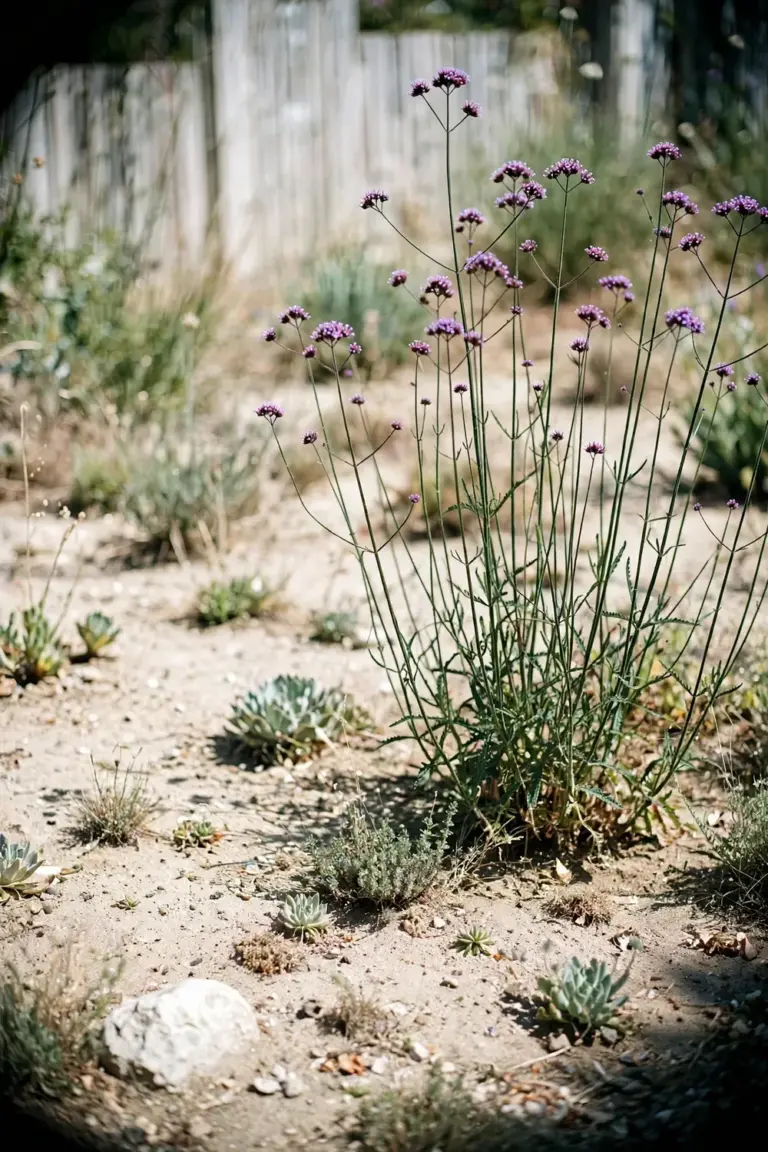
Sow in spring after the frost risk passes, exactly as you would anywhere else. Southern gardeners sow from September; subtropical gardeners can sow from August into early autumn for flowers the same season. The plant’s heat tolerance suits Australian summers; established clumps handle dry spells that stress thirstier exotics.
One caution belongs in every Australian garden plan. This plant self-seeds with real enthusiasm, so site it where volunteers are welcome and deadhead where they are not. Near bushland, choose the sterile ‘Cloud’ and deadhead it anyway. A plant this generous with seed deserves a gardener who reads the local conditions first.
Mulch lightly or not at all around the crown. A heavy mulch layer stops the volunteers you might want and holds winter wet against the crown in the cooler states. A thin layer of coarse bark between the plants keeps the soil cool in summer without burying the self-seeding zone. In the tropical north, treat tall verbena as a dry-season flower and expect the wet season to test its drainage.
Frequently Asked Questions
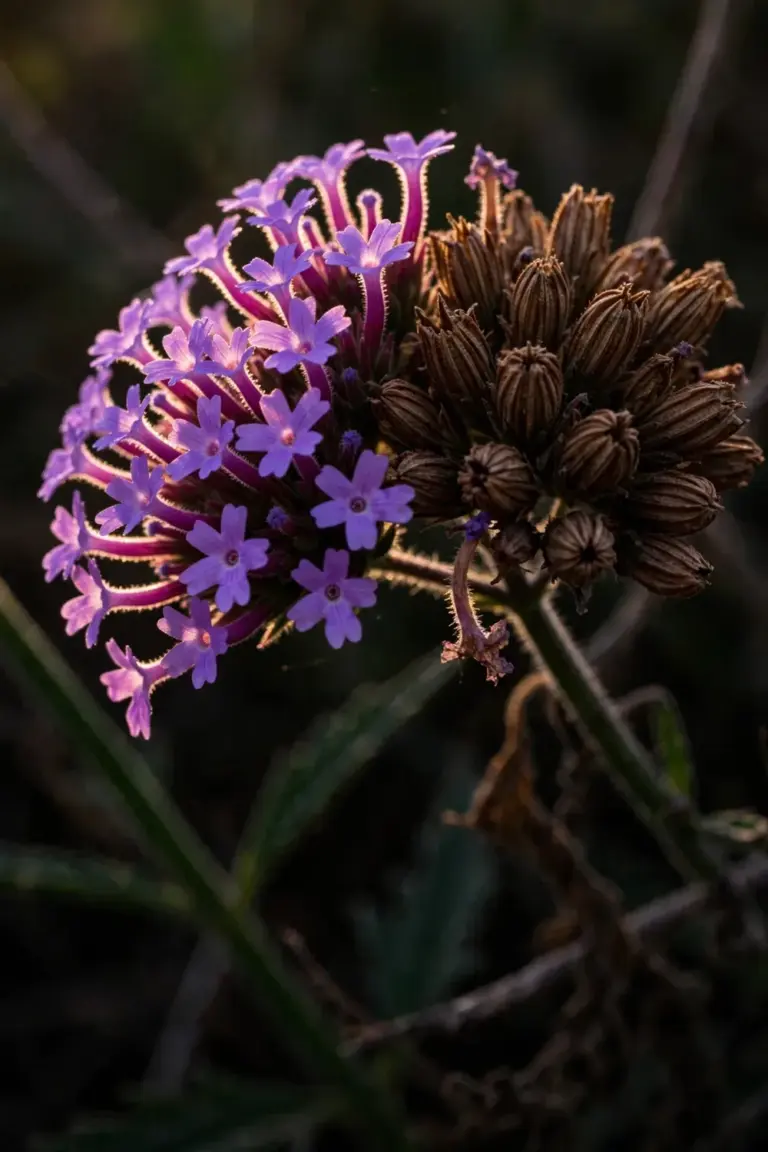
Tall verbena is a tender perennial, hardy in USDA zones 7 to 11, where the crown survives winter and regrows each spring. In colder zones gardeners grow it as an annual. Either way it usually returns, because the species self-seeds freely and volunteers fill the gap where the parent died. Leave some seed heads standing in cold regions so the next generation can establish.
It can spread enthusiastically but it rarely becomes a true thug. Volunteers pull out easily by hand when young, and the seedlings are simple to spot as small rosettes of toothed leaves. Control is straightforward: deadhead through summer so no seed ripens, or plant the sterile ‘Cloud’ cultivar and skip the problem entirely. Never compost ripe seed heads if you want zero volunteers.
Yes, and the compact cultivars make it easy. ‘Cloud’ reaches 60 cm, suits containers, and sets no seed, so a pot on a sunny patio stays exactly where you put it. Use a large pot with drainage holes and a free-draining mix, water through the first season, and deadhead to keep flowers coming. The straight species works in big containers too but wants the 90 to 180 cm its stems were built for.
Only if you want to control the seed. Deadheading spent clusters tidies the plant and pushes more blooms through summer into autumn. If you want volunteers, leave the last flush of flower heads to ripen and drop seed. Many growers do both: deadhead the front of the border for looks and let the back clumps seed for next year’s plants.
It has escaped cultivation and naturalized in disturbed areas in several warm regions, including the southeastern United States and California. In most home gardens it behaves as a manageable self-seeder rather than an invader, and young volunteers are easy to remove. Check your local weed list before letting it seed freely, especially near natural areas, and choose the sterile ‘Cloud’ where spread is a concern.
Keep the Purple Cloud, Lose the Takeover
Decide the seed question on day one. Give the plant full sun and lean soil. Water it well in year one and then leave it alone. That is the entire method, and it works because tall verbena was built for exactly this kind of benign neglect.
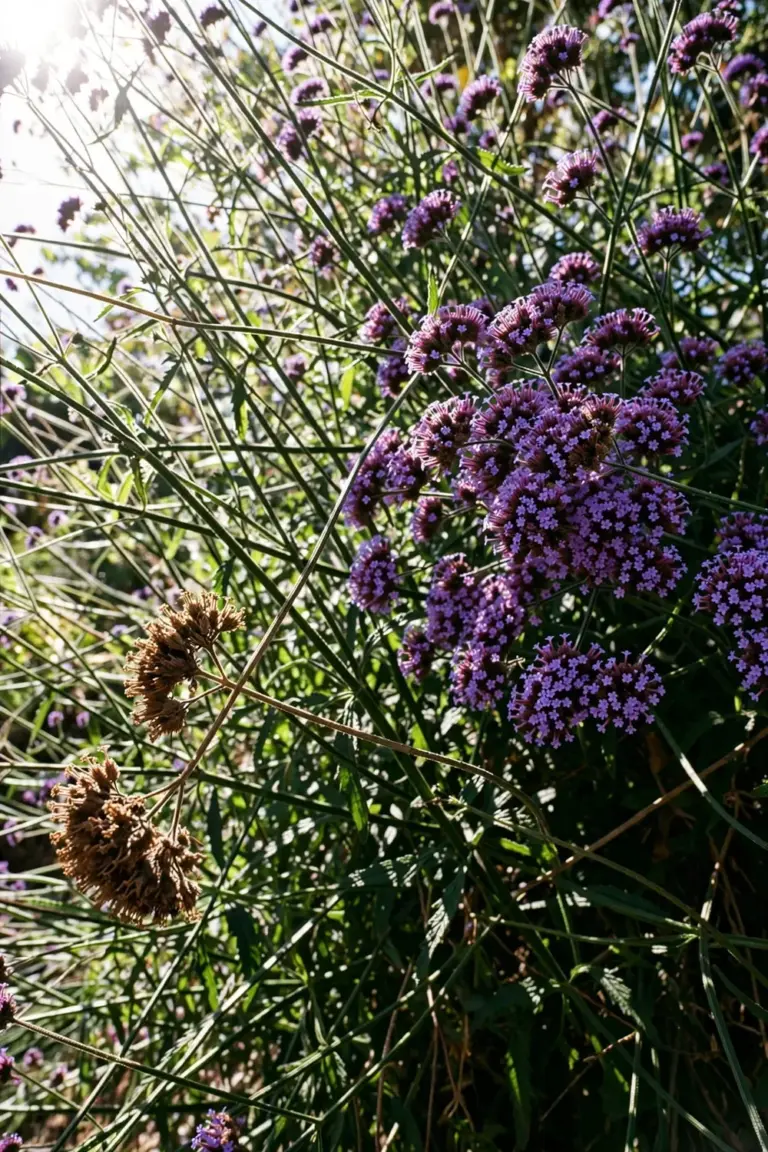
The reward is a plant that flowers from early summer to frost, feeds every butterfly in the neighborhood, and asks for nothing but a pair of shears and a decision. Make the decision early and the purple cloud is all yours. Let the seed heads stand or cut them clean; either way, you chose it, and that is what makes the plant a pleasure instead of a problem.