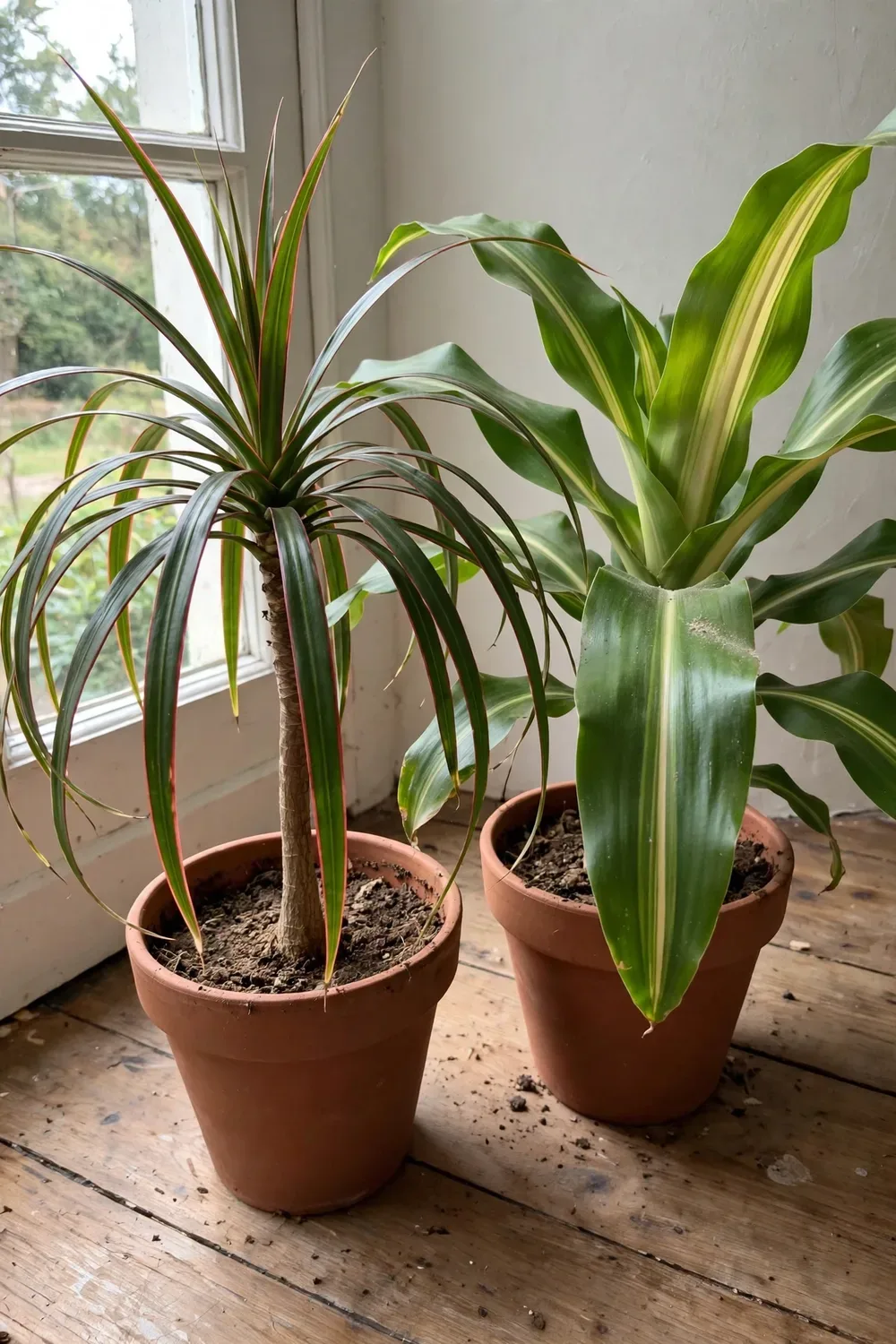

Growing a dracaena means matching the right species to your room. Give Dracaena marginata (dragon tree) bright indirect light and fluoride-free water and it reaches up to 1.8 meters indoors. Give Dracaena fragrans (corn plant) the same treatment plus a wider pot and it fills a dull corner with broad arching leaves for decades. Both species forgive missed waterings. Neither forgives tap water loaded with fluoride.
I have learned that brown tips on a dracaena are a water-quality report card, not a watering-schedule problem, and that one change fixes more plants than any feeding routine. The guide below walks through the two species side by side, then light, water, pruning, feeding, propagation, pests, and pets. Everything applies to the houseplants you can buy in a standard nursery pot; the lookalikes with different care get one honest paragraph each at the end.
1. Pick the Right Dracaena: Dragon Tree vs Corn Plant
Start with the identification. Most nursery pots labeled “dracaena” hold one of two species, and they ask for different corners of your home. Dracaena marginata, the dragon tree or Madagascar dragon tree, carries narrow sword-shaped leaves edged in red. The leaves measure 30 to 40 cm long and arch from woody canes that shed their lower leaves as the plant matures, building a palm-like trunk over time. The Madagascar dragon tree reaches up to 1.8 meters indoors, according to the dragon tree care reference that documents the species.
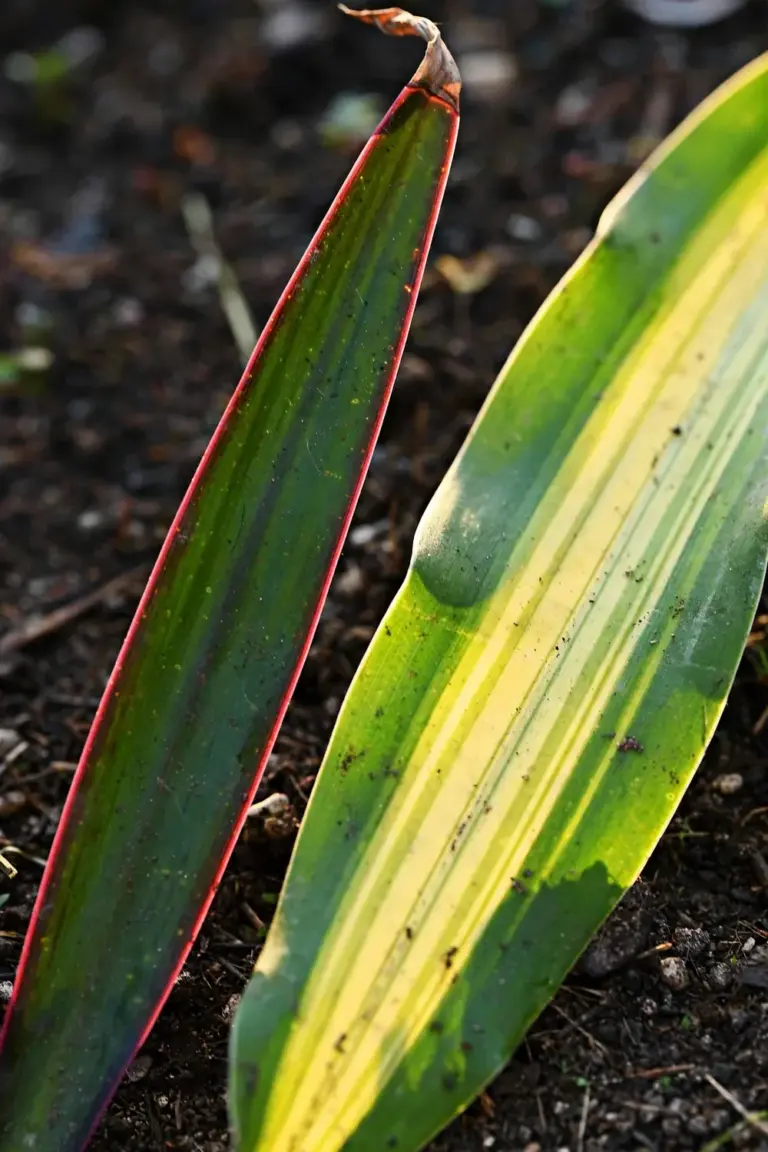
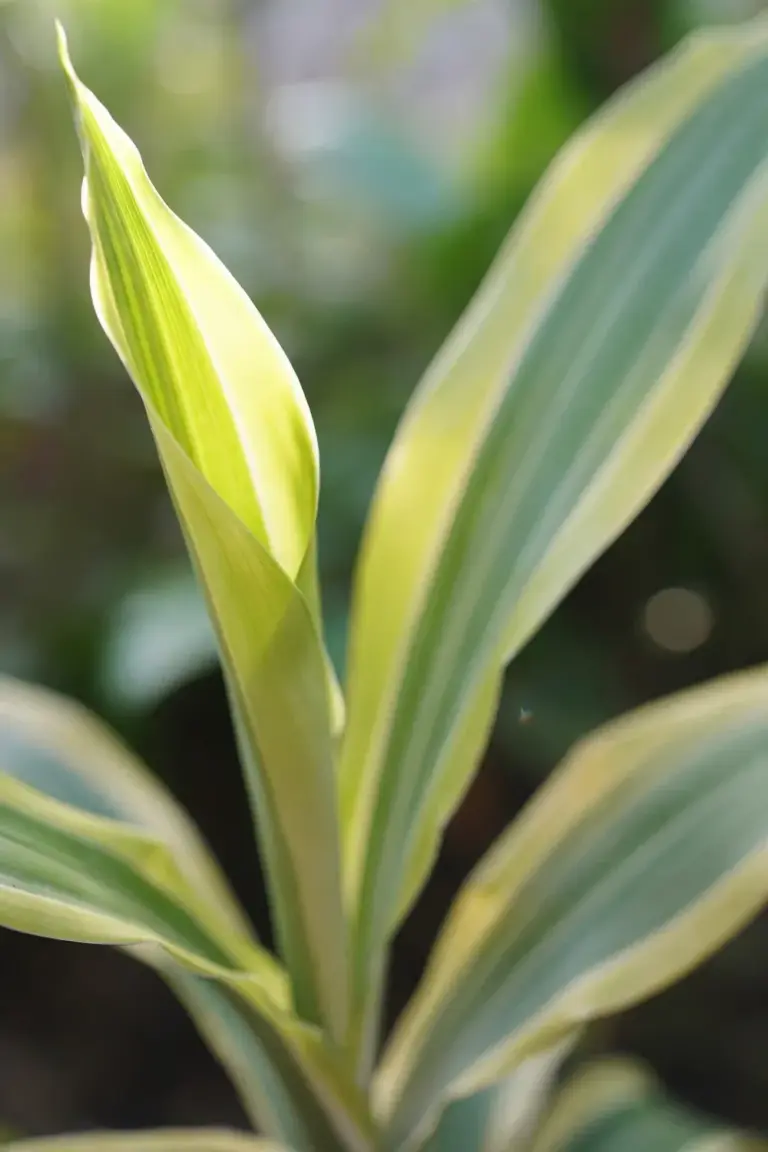
Dracaena fragrans, the corn plant, carries broad strap leaves on thicker canes that look like corn stalks. The classic nursery cultivar, Dracaena fragrans ‘Massangeana’, shows a wide pale yellow stripe down the middle of each green leaf. The corn plant grows taller and bulkier than the dragon tree on the same indoor care, and its leaves alone are twice the width.
Both species belong to the genus Dracaena in the Asparagaceae family. Both contain saponins and are toxic to cats, dogs, and horses. The care table below gives the quick comparison.
| Trait | Dragon Tree (Dracaena marginata) | Corn Plant (Dracaena fragrans) |
|---|---|---|
| Leaf shape | Narrow, sword-like, red edges | Broad, strap-like, yellow center stripe |
| Indoor height | Up to 1.8 m | Taller and bulkier on the same care |
| Light tolerance | Bright indirect; handles dimmer spots | Bright indirect; variegated types need more light |
| Water sensitivity | Fluoride-sensitive, tips brown first | Fluoride-sensitive, same rule |
| Growth speed | Slow | Slow to moderate |
| Pet safety | Toxic (saponins) | Toxic (saponins) |
Buy the dragon tree for a narrow corner or a tall skinny statement. Buy the corn plant for a big empty room corner that needs filling. The rest of this guide treats them together because the watering, feeding, pruning, and propagation rules are the same.
2. Diagnose Brown Tips Like a Water-Quality Test
Read the brown tips before changing anything else. Brown, dry leaf tips on a dracaena point at water quality first and watering frequency second. Fluoride in tap water causes necrosis, discoloration, and stunted leaf growth in dracaenas, and North Carolina State Extension notes that dracaenas are sensitive to fluoride like most other members of the genus, so using distilled or non-fluorinated water prevents the damage. The same authority links the symptom directly: dracaenas are sensitive to fluoride, which causes discoloration of leaves.
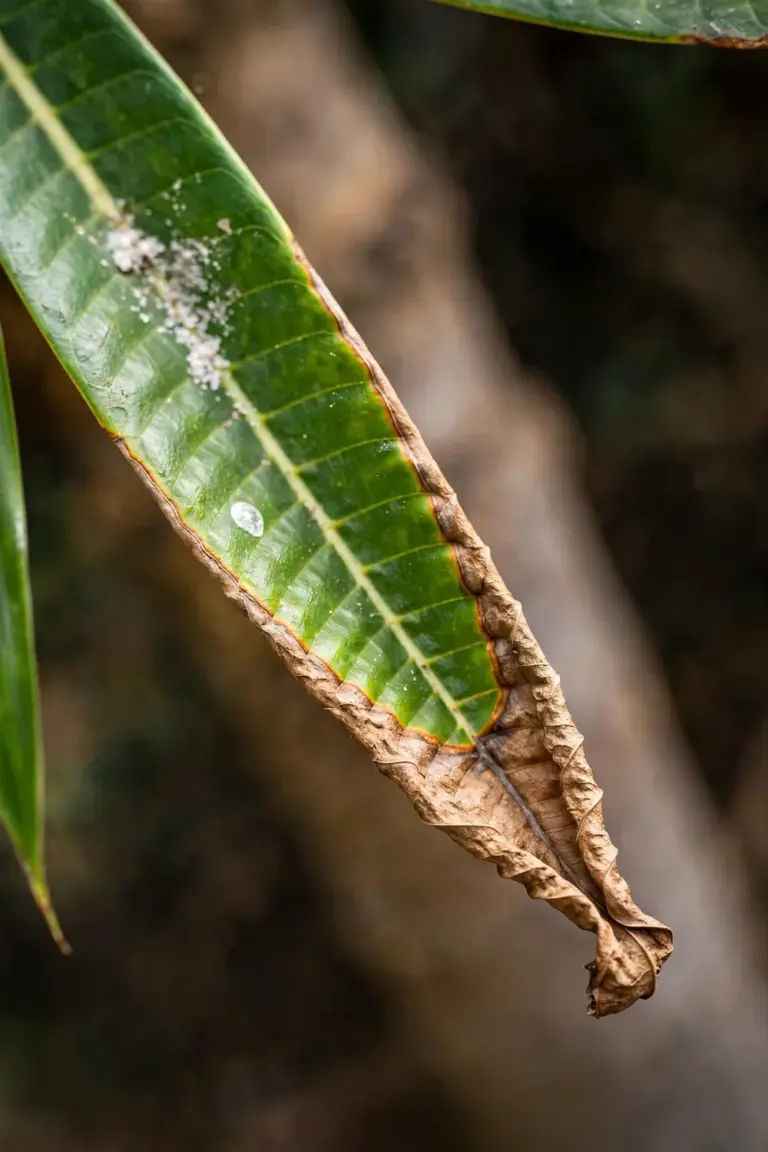
Fluoride concentrates at leaf margins where transpiration leaves salts behind. The tips die first. Letting a watering can sit out overnight does nothing to fluoride, though it off-gasses chlorine. A filter that strips fluoride, distilled water, or collected rainwater ends the cycle. Fluoride hides in one more place: superphosphate-based fertilizers. Check the label and choose a balanced houseplant food instead.
Salt crust is the second tell. A white crust on the soil surface or the pot rim means mineral salts are accumulating from hard water, fertilizer, or both. That crust burns leaf tips the same way fluoride does. Flush the pot under the sink with several potfuls of clean water and let every drop drain away. Repeat the flush twice a year.
Dead brown tissue never greens up again. Trim the dead tip with clean scissors, follow the leaf’s natural point, and leave a hairline of brown so the cut does not look blunt. Trimming is cosmetic. The water change is the fix.
Low humidity adds to the browning but rarely causes it alone. If the tips brown within days of each watering and the soil feels fine, switch the water first and watch the next two leaves that unfurl. New clean growth is the proof the diagnosis was right.
3. Give Dracaena Bright Indirect Light, 1 to 1.5 Meters From a Bright Window
Set the light level next. A dracaena grows best 1 to 1.5 meters from a bright window with sheer filtering, where it receives steady bright indirect light through the day. Direct midday sun scorches the leaves of both species, and the scorched patches turn pale then papery. The dragon tree tolerates a dimmer corner better than the corn plant, but its red edging fades and the growth slows when the light drops too far. The variegated corn plant is pickier: the yellow center stripe needs brighter indirect light to hold its contrast.
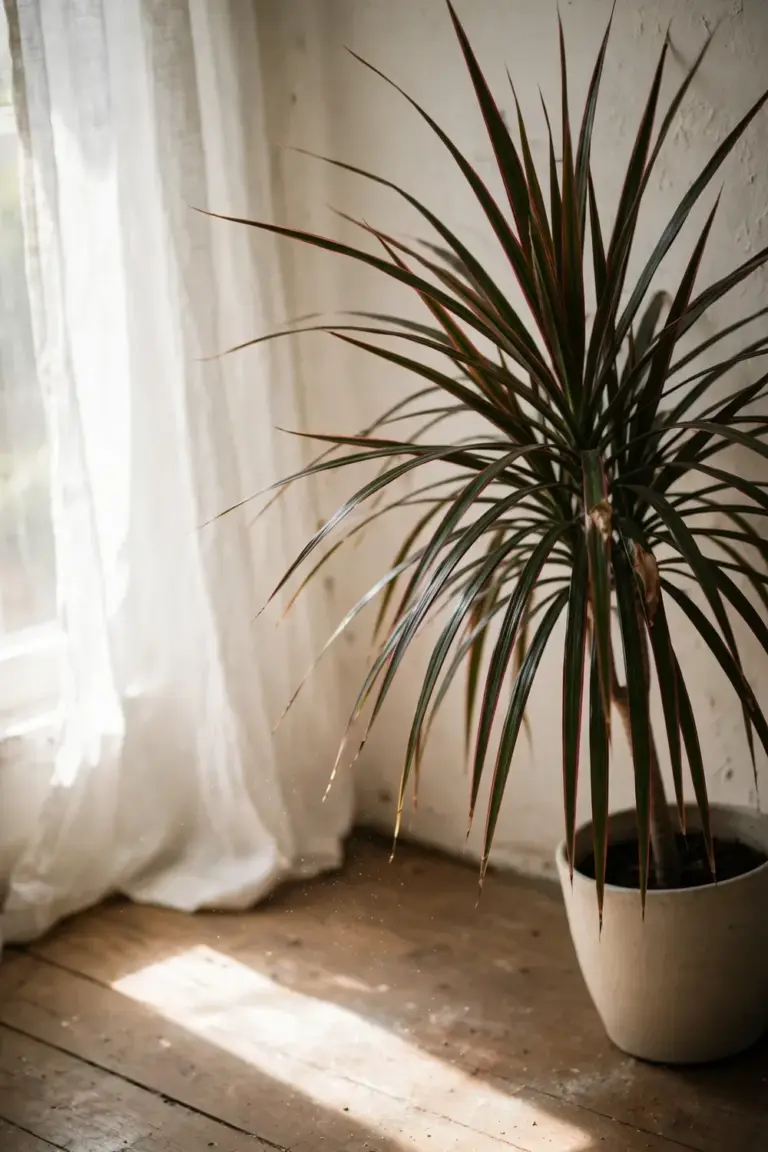
Turn the pot a quarter turn every time you water. Leaves bend toward the window over weeks, and the rotation keeps the crown symmetrical. A plant that suddenly sits in a dark hallway stops growing, sheds lower leaves faster, and makes a tempting but unhealthy spot for pests.
Weak winter daylight counts as lower light. If the only free spot is a dim corner far from any window, a grow light solves the problem cheaply. The corn plant earns its corner most of all: few plants fill an empty vertical space this fast, and the 10 benefits of indoor plants roundup explains why a tall leafy specimen changes a room more than three small pots do. Place the dragon tree where you see it every day, because a slowly browning tip is caught early by a glance across the living room. The indoor grow-light guide for houseplants covers choosing grow lights for indoor gardens with distances and wattages per room type. Run the light 10 to 12 hours a day and treat it as a cloudy window, not a tanning bed.
4. Water Dracaena on a Soil Check, Not a Calendar
Water by soil moisture, not by day of the week. A dracaena’s canes store water, and the roots rot in soil that stays soggy. The rule from an experienced corn plant nursery guide: water whenever the top 2.5 cm of soil feels dry in spring and summer, and wait until the top 5 cm dry in fall and winter. That guide spells out the seasonal depth shift in its corn plant care instructions.
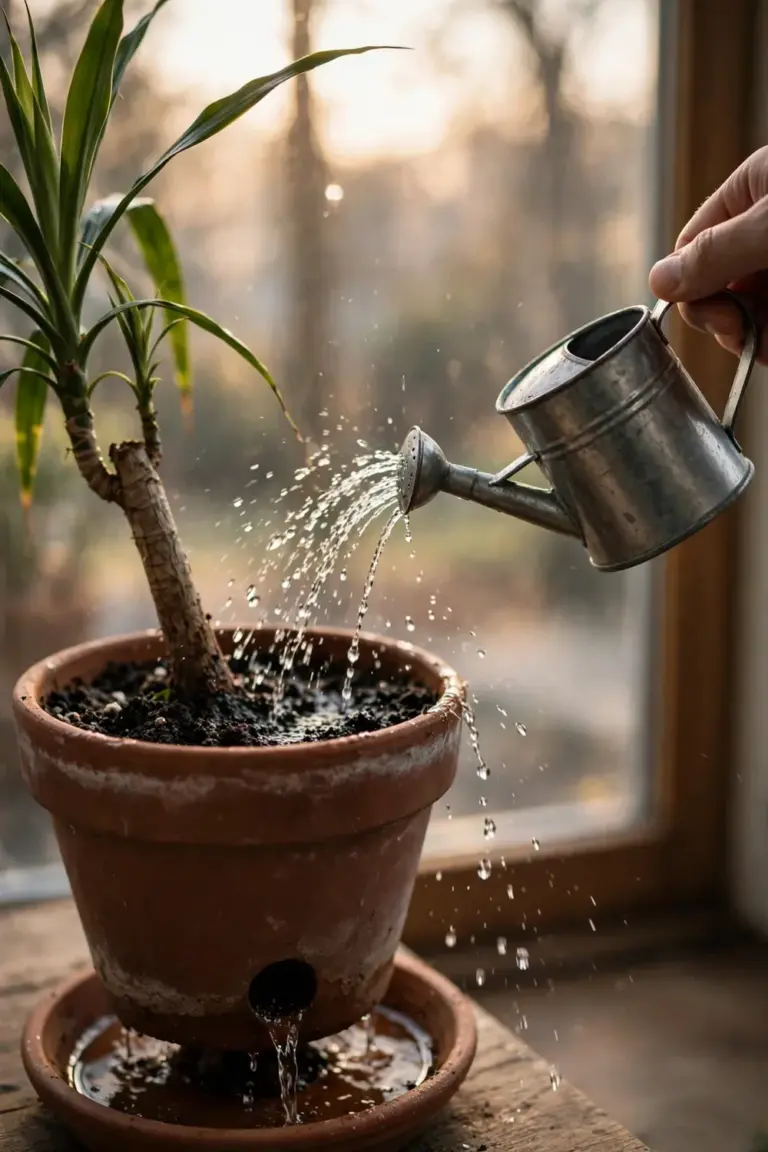
Push a finger or a wooden skewer to the stated depth before every watering. Cool, damp soil means wait. Dry soil means soak the pot thoroughly until water runs out of the drainage holes, then empty the saucer or the decorative cachepot within 15 minutes. Roots standing in a saucer puddle are the number one killer of indoor dracaenas.
Overwatering announces itself with yellowing lower leaves, a soft cane base, and a sour smell from the mix. Underwatering shows as curling leaves and crisp brown edges that start at the oldest leaves. The finger test separates the two in ten seconds, and most beginners discover they were watering too often, not too rarely.
A decorative cachepot without drainage holes is the classic trap. Lift the nursery pot out, water it in the sink, let it drain, and return it. Never let the nursery pot sit in a reservoir at the bottom of the cachepot. If the pot has no drainage hole at all, repot into one that does rather than guessing your way through each watering.
5. Hold Indoor Temperatures Above 15°C and Keep the Air Reasonably Humid
Keep the room warm and the air reasonably humid. Dracaenas sit in the 18 to 24°C comfort band and suffer below it. Bring plants indoors before night temperatures drop below 15°C; cold damage shows as curled, limp leaves that do not recover. Keep the pot away from heating vents, radiators, and drafty exterior doors, because the hot dry blast and the cold draft both crisp the leaf margins.
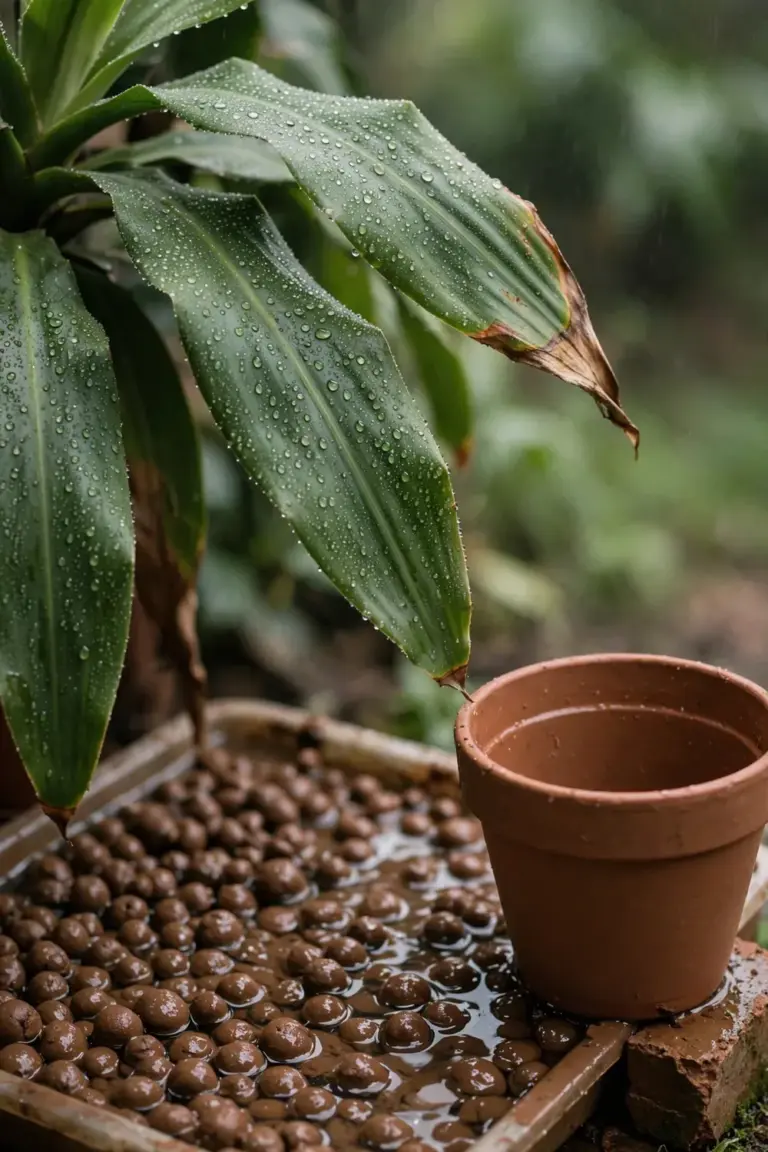
Average household humidity suits a dracaena, and the corn plant tolerates normal indoor levels. Misting raises humidity for about an hour and invites fungal leaf spots if the air does not move, so treat misting as a light supplement rather than a solution. A pebble tray with water below the pot level, or grouping several plants together, lifts the local humidity for the whole day.
Dry heated winter air is the season when humidity drops lowest indoors. Run the pebble tray from the first week of heating season, not after the tips have already browned. The fluoride fix matters more than any humidity trick, but humidity control keeps the margins clean once the water is right.
6. Cut the Cane to Branch a Leggy Dracaena
Prune to control height and force branching. A dracaena cane cut at the height you choose sprouts two or more new growth points below the cut within a few weeks of a spring cut, when the plant is actively growing and heals fastest. The cut does not kill the cane. It branches it.
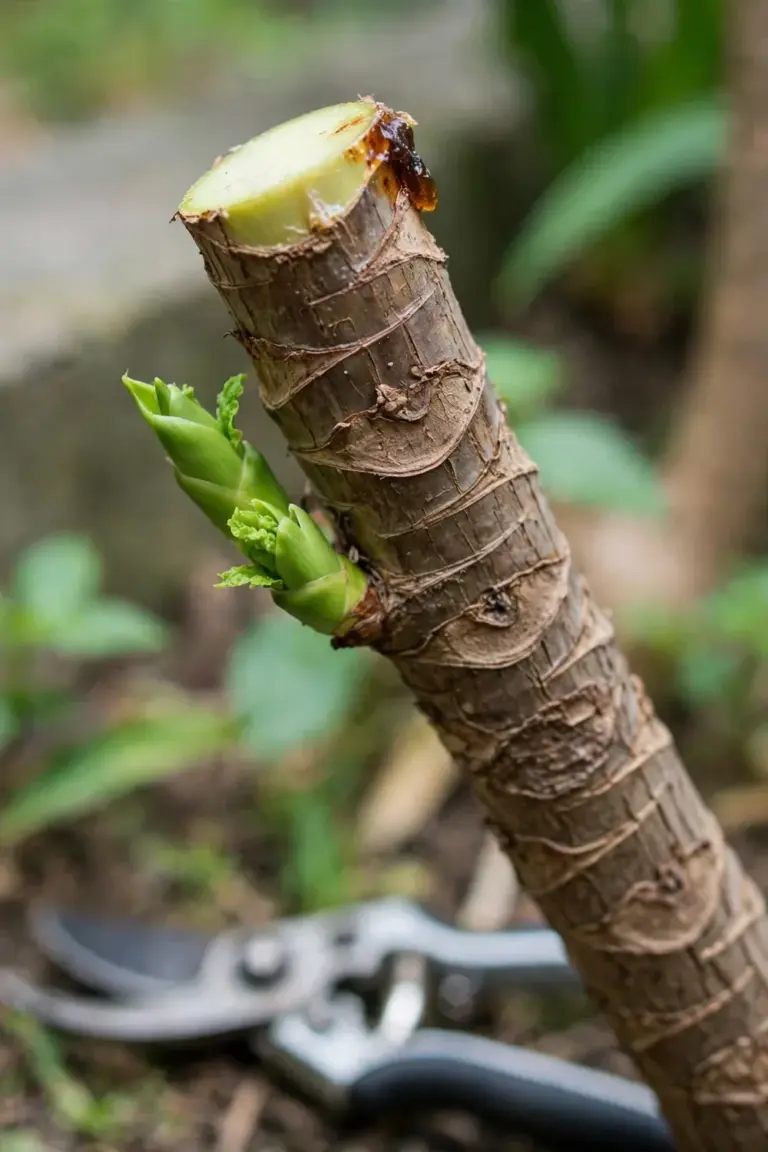
Work in spring, when the plant is actively growing and heals fastest. Use clean, sharp bypass pruners, and wipe the blades with rubbing alcohol between cuts. Cut straight across the cane at the height you want, about 5 mm above a visible leaf scar or node ring. Lower leaves yellow and drop on their own after two to three years, so strip those by hand rather than cutting into green tissue.
What to do with the cut top
Do not throw the top away. The removed top roots into a second plant: strip the lowest few leaves, stand the cane section in a jar of room-temperature water, and move it to soil once roots reach a few centimeters. Change the water weekly so it stays fresh. The rooted top grows into an exact clone of the parent, which is how nurseries multiply their stock.
If the cane has grown so tall it bends, stake it while it heals or cut it back harder. A single tall cane with one leaf tuft at the top looks awkward; a cane cut at half height with two new branches looks like the nursery specimens. Pruning is the tool that keeps a decade-old dracaena attractive rather than spindly.
7. Feed Monthly in Spring and Summer, Then Repot Every 2 to 3 Years
Feed lightly and only in the growing season. Dracaenas are light feeders, and extra fertilizer burns the same leaf tips that fluoride burns. Use a balanced liquid houseplant fertilizer at half the label strength, once a month from spring through summer. Stop feeding entirely in fall and winter, when the plant barely grows and the salts have nowhere to go. A white crust on the soil after feeding is the signal to flush the pot and skip the next month.
Avoid fertilizers based on superphosphate. Superphosphate carries fluoride as a hidden extra, and fluoride-sensitive dracaenas pay for it in brown tips. A simple balanced liquid food keeps the chemistry clean.
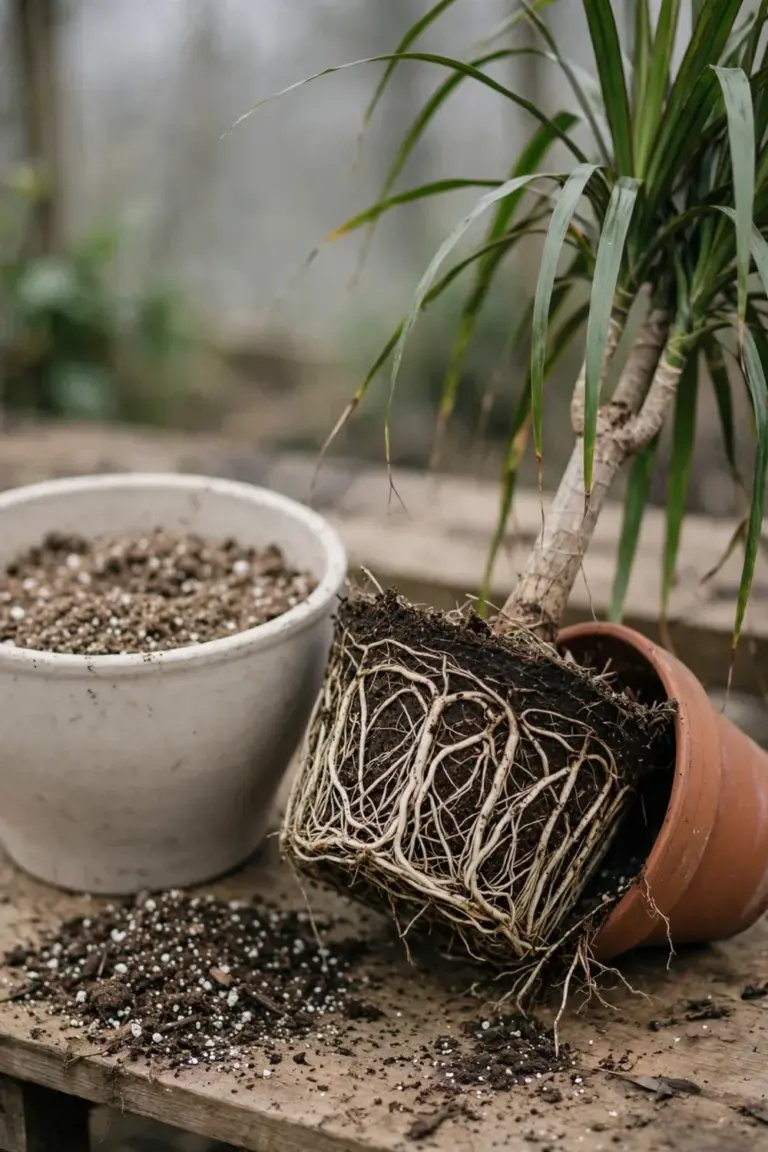
Repot every 2 to 3 years in spring, into a pot one size larger with fresh well-draining mix. A peat or coco-coir based potting mix with added perlite suits both species. Roots circling the drainage holes or poking through the surface mean the plant is overdue. Refreshing the mix matters as much as the extra space: old mix compacts, holds water against the roots, and accumulates the salts the flushes cannot reach.
Signs of a plant that needs repotting now: water runs straight through without wetting the mix, the pot wobbles top-heavy, or growth stalled for a full season with no other explanation. When repotting, keep the cane at the same depth it grew before. Burying the cane deeper invites stem rot at the buried section.
8. Root Cane Cuttings in Water or a Gritty Mix
Propagate in spring from the same cuts the pruning produces. A dracaena grows readily from tip cuttings and from leafless cane sections, and the rooted cutting becomes an exact clone of the parent plant. No seed, no graft, and no special equipment are involved.
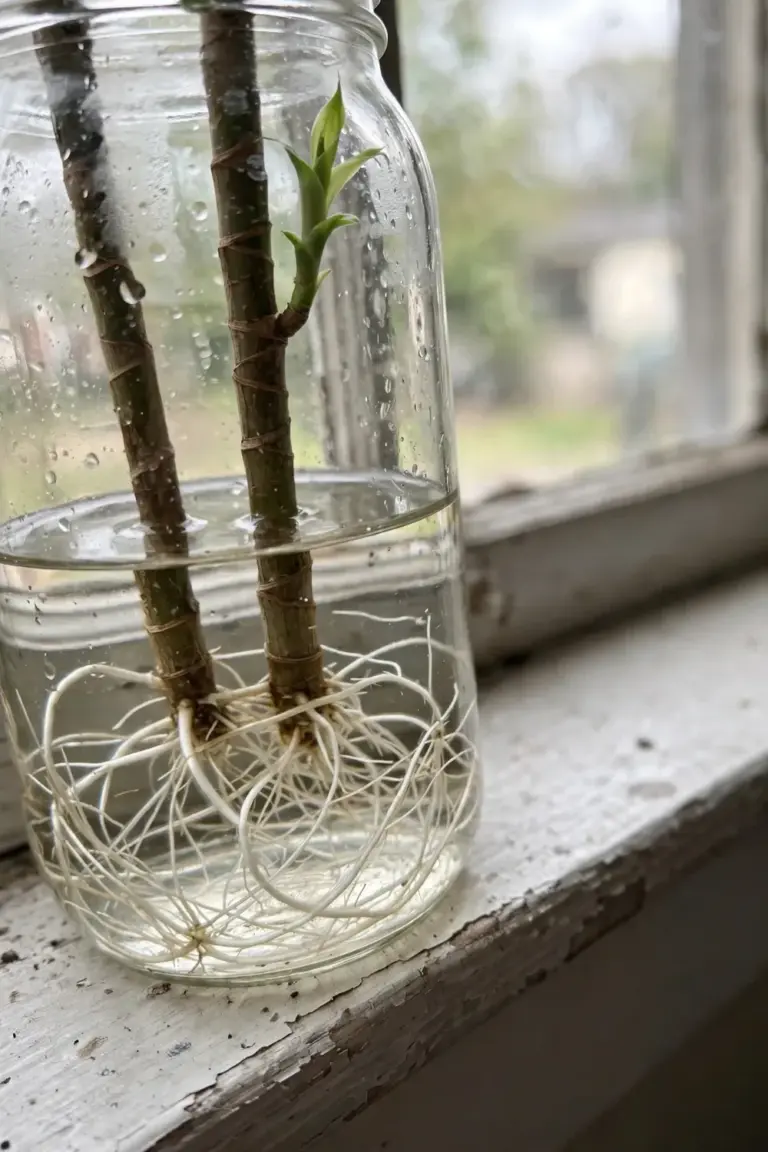
Cut a healthy cane into sections, keeping at least one visible node ring on each section. Mark the top end of every section with a light nick before you forget which way is up, because a cane section planted upside down never roots. Stand tip cuttings in a jar of room-temperature water with the lowest node submerged. Lay leafless sections horizontally on damp gritty mix or stand them upright with the marked top facing up.
Keep the cuttings in bright indirect light at room temperature. Change the water weekly for water-rooted cuttings. Keep the mix lightly moist, never soggy, for soil-rooted ones. Roots form over several weeks; the cutting is ready for its own pot when the new roots reach a few centimeters long. Pot into a small container with the same well-draining mix the parent uses, water once, and resume the normal soil-check routine.
9. Fix Drooping Stems, Yellow Leaves, and Pest Spots Fast
Walk the symptoms in order of frequency. Drooping leaves on a firm cane usually mean the soil is too dry; water thoroughly and the leaves recover within a day. Drooping on a soft, discolored cane means root rot from overwatering, and the plant needs unpotting, a trim of the black roots, and a repot into fresh dry mix. Act within days, because root rot spreads up the cane.
Yellow lower leaves are normal aging when they appear one at a time on an otherwise healthy plant. Strip them by hand. Yellow leaves arriving several at once point at overwatering, a pot-bound root ball, or a cold draft; check the soil moisture first, the roots second, and the plant’s position third.
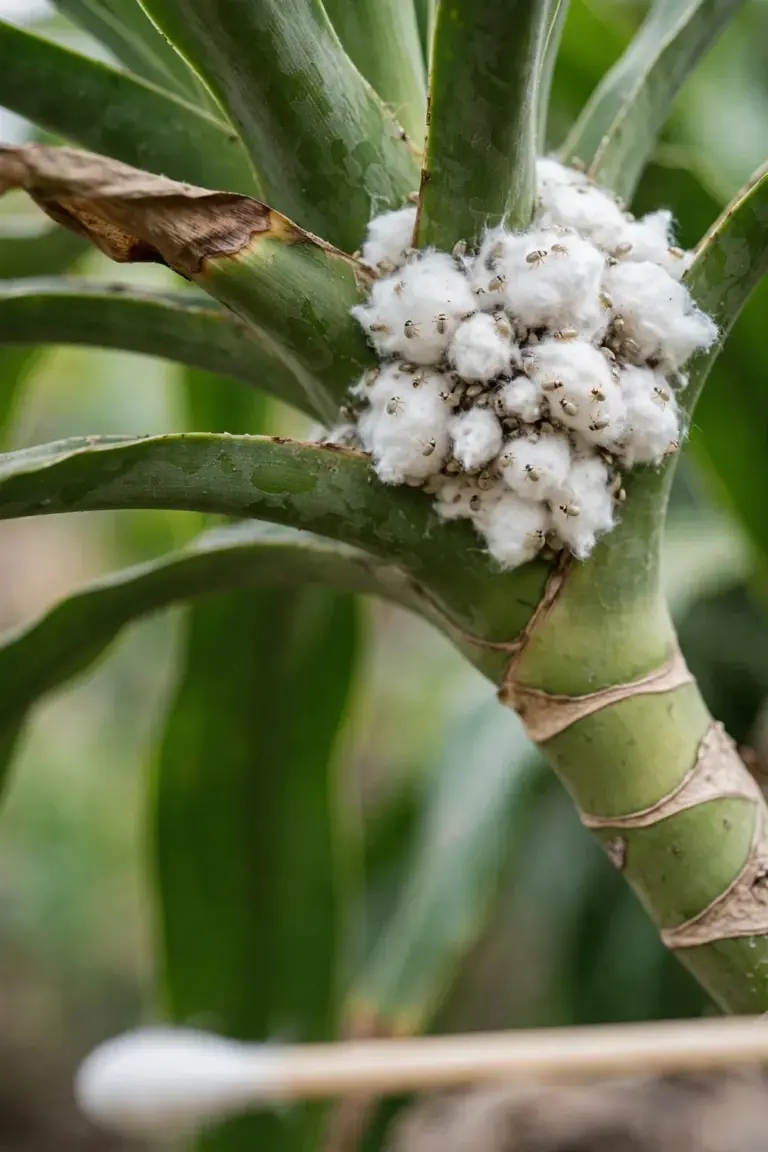
Spider mites love dry indoor dracaenas. Fine webbing in the leaf axils and stippled pale dots on the leaves are the signs. Wipe the leaves with a damp cloth to remove most of them, then raise the humidity around the plant. Mealybugs show as white cottony clusters where leaves meet the cane; dab each cluster with a cotton swab dipped in rubbing alcohol. Scale insects appear as small brown bumps along the cane; scrape them off with a fingernail and follow with insecticidal soap on heavy infestations.
Leaf spot diseases show as brown or black spots with yellow halos. They arrive with misting, crowding, and still air. Improve air circulation, stop wetting the leaves, and remove the worst leaves. Dracaenas rarely die from leaf spots; they die from the overwatering that usually accompanies them.
10. Keep Every Dracaena Away From Cats and Dogs
Treat every dracaena as a pet hazard. The ASPCA lists Dracaena fragrans (corn plant, cornstalk plant, dracaena, dragon tree, ribbon plant) as toxic to dogs, cats, and horses, with saponins as the toxic principle. The ASPCA corn plant entry records the clinical signs: vomiting (occasionally with blood), depression, anorexia, hypersalivation, and dilated pupils in cats.
Saponins irritate the gut lining, which is why vomiting and drooling are the first signs, usually within a few hours of chewing. The same saponins run through the whole genus, so the dragon tree carries the same risk as the corn plant. The plant is not considered deadly, and most cases resolve with veterinary support, but a curious cat that grazes the arching lower leaves needs a vet visit.
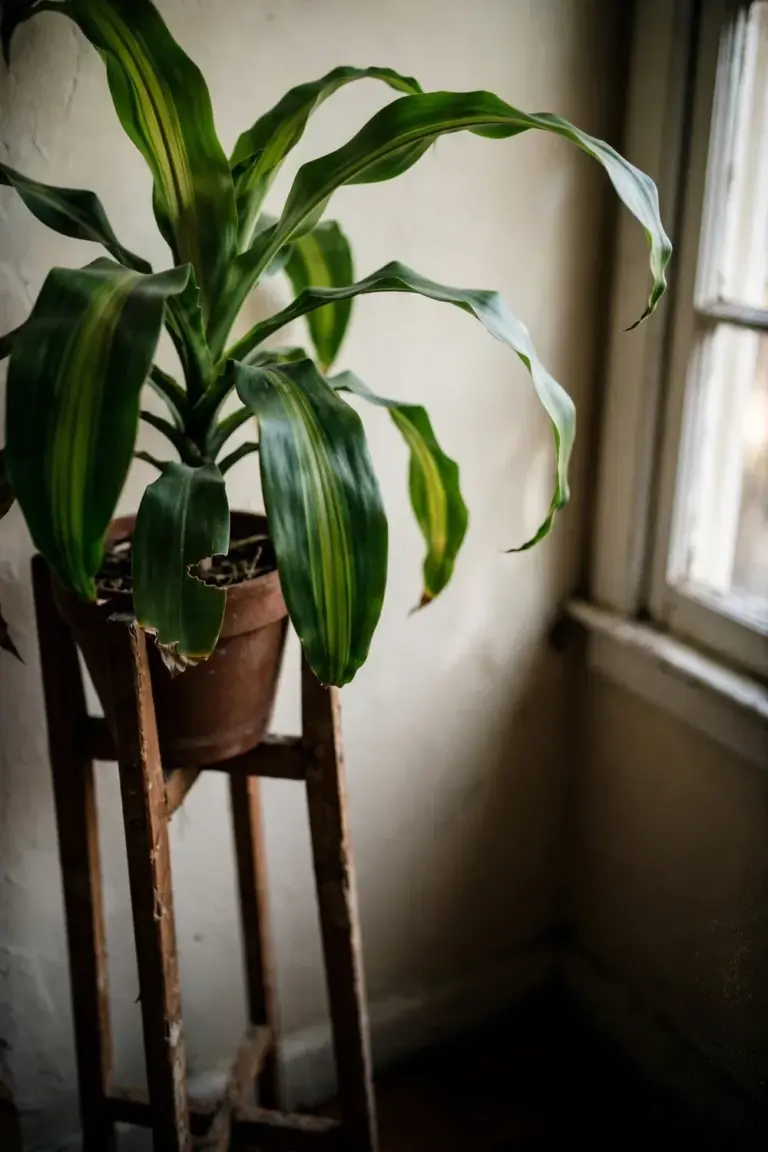
Place dracaenas on tall stands or in rooms pets cannot enter. The arching leaves of a corn plant hang exactly at cat-chewing height, which is the most common exposure. Hanging the plant is not practical at this size, so a tall plant stand or a closed room is the honest answer. The corn plant’s fragrance when it rarely flowers indoors attracts extra attention from pets, so move a flowering plant out of reach for the bloom’s duration.
11. Know the Lookalikes: Lucky Bamboo, Suji Leaf, Snake Plant
Do not follow lucky bamboo advice for a dracaena. Lucky bamboo is Dracaena sanderiana, sold in water-filled vases, and its care revolves around water changes and low light. It shares the genus name and the saponin toxicity, and almost nothing else.
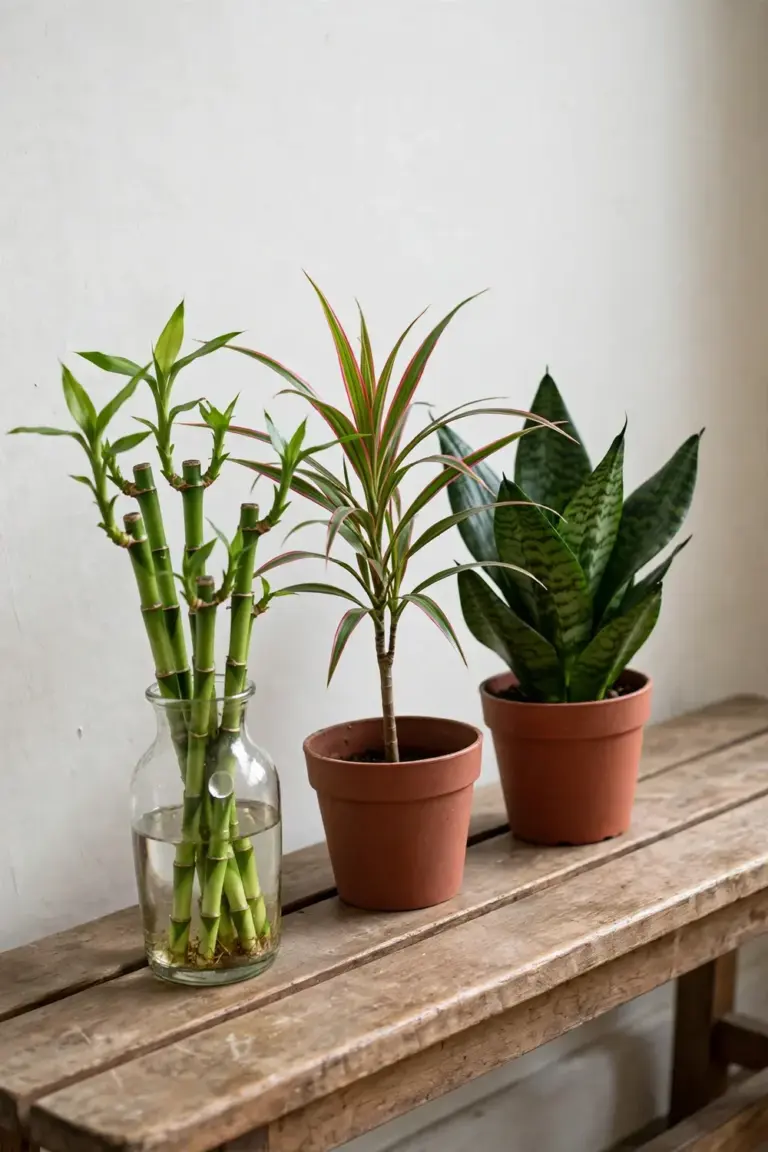
Suji leaf is Dracaena angustifolia, a different species used as an herb in Indonesian cooking. Its identity, uses, and growing notes belong to the herb lane, not the houseplant lane. The two plants look similar enough that nurseries sometimes mix the labels, so check the botanical name on the tag.
Snake plant is Dracaena trifasciata, the former Sansevieria. It wants succulent-style watering (long dry spells between drinks) and shrugs off neglect that would finish a dracaena’s roots. The shared genus means shared saponins and the same pet-toxicity warning, but the watering advice does not transfer. If your plant has thick upright sword leaves with no cane, you own a snake plant, not a dracaena.
12. Adjust the Routine for Australian Homes
Tune the routine for the southern hemisphere. The light rules stay the same but the window changes: in Australia, the brightest indirect light comes through north-facing windows, with east-facing as the gentler second choice. A south-facing spot is the dim corner of an Australian home and suits only the most shade-tolerant dragon tree.
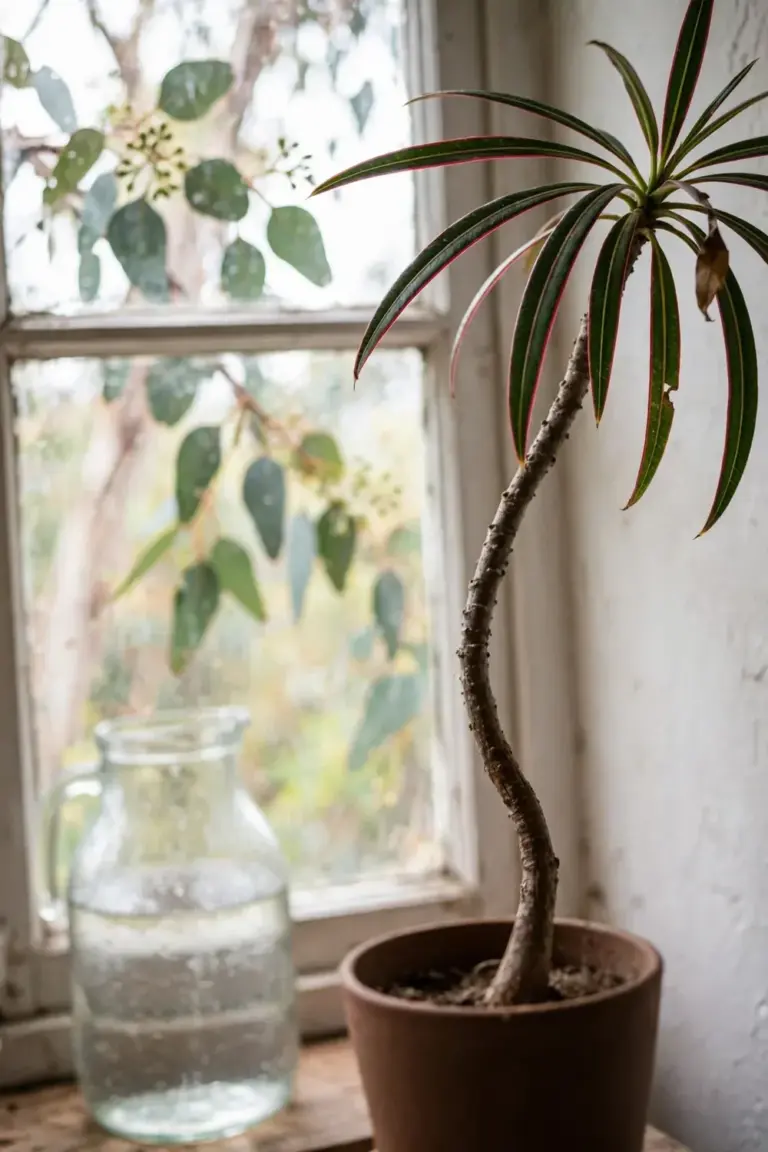
Rainwater tanks are the easy fluoride-free water source for Australian growers. Tank water collected from a clean roof has no fluoride and no chloramine, which makes it the cheapest fix for brown tips in the country. Where tank water is not available, a standard fluoride-rated filter jug does the same job for a small collection of pots.
Winter nights in the southern states dip below the 15°C safety line. Melbourne, Adelaide, Canberra, and inland New South Wales regularly see single-digit overnight temperatures, and a dracaena left on a cold patio or near a drafty sliding door suffers curled, limp leaves. Move the plant away from glass doors before the first cold snap, not after the damage shows. Queensland and the Northern Territory rarely face this problem indoors.
Summer heat is the other Australian extreme. A dracaena parked against a west-facing window in a 40°C heatwave cooks: the soil dries in a day and the leaves scorch. Pull the plant back from west-facing glass from December through February, and check the soil every two days in heatwaves instead of weekly. The care guide for styling and placing indoor plants at home helps with choosing the right room for each season.
Frequently Asked Questions About Growing Dracaena
A dracaena grows slowly. The Madagascar dragon tree adds a few centimeters of cane and one ring of leaves per year, reaching up to 1.8 meters indoors over many years. The corn plant grows slightly faster in good light. Pruning the cane does not speed growth; it redirects it into branches. Feed monthly in spring and summer and keep the light bright for the fastest honest growth the species allows.
Brown tips almost always mean fluoride or salt buildup from tap water, not bad watering habits. Fluoride concentrates at the leaf margins and kills the tissue. Switch to rainwater, distilled water, or a fluoride-rated filter, and flush the pot with several potfuls of clean water twice a year. Trim the dead tips with clean scissors, leaving a hairline of brown, and judge the fix by the next two leaves that unfurl.
A dracaena survives low light but does not thrive in it. The dragon tree tolerates dimmer corners better than the corn plant, though its red leaf edging fades and growth stalls. The variegated corn plant needs bright indirect light to keep its yellow center stripe. In a genuinely dark room, run a grow light 10 to 12 hours a day. No dracaena tolerates a windowless hallway long term.
No. Every dracaena species contains saponins and is toxic to cats, dogs, and horses, according to the ASPCA. Chewing the leaves causes vomiting, drooling, depression, and loss of appetite, with dilated pupils in cats. Most cases resolve with veterinary care, but the plant is not safe to leave within chewing reach. Place dracaenas on tall stands or in rooms pets cannot enter.
Cut the cane. Choose the height you want, cut straight across with clean sharp pruners in spring, and the cane sprouts two or more new growth points below the cut within a few weeks. Root the removed top in water as a free second plant. One straight uncut cane always looks sparse; a cane pruned once or twice develops the full branched shape nurseries sell.
Rarely. A mature corn plant can produce clusters of small fragrant white flowers that open at night, and a mature dragon tree can flower in spring, but indoor plants almost never bloom. Flowering needs maturity, strong light, and near-perfect care over many years. The flowers are a bonus, not the goal; buy a dracaena for the foliage and treat any bloom as a pleasant surprise.
Where to Go From Here
Start with the water. A dracaena given fluoride-free water, a soil check before each drink, bright indirect light, and a spring pruning grows for decades with almost no drama. The brown-tip water diagnosis is the single highest-value change here: make it once and every leaf that unfurls afterward proves it worked.
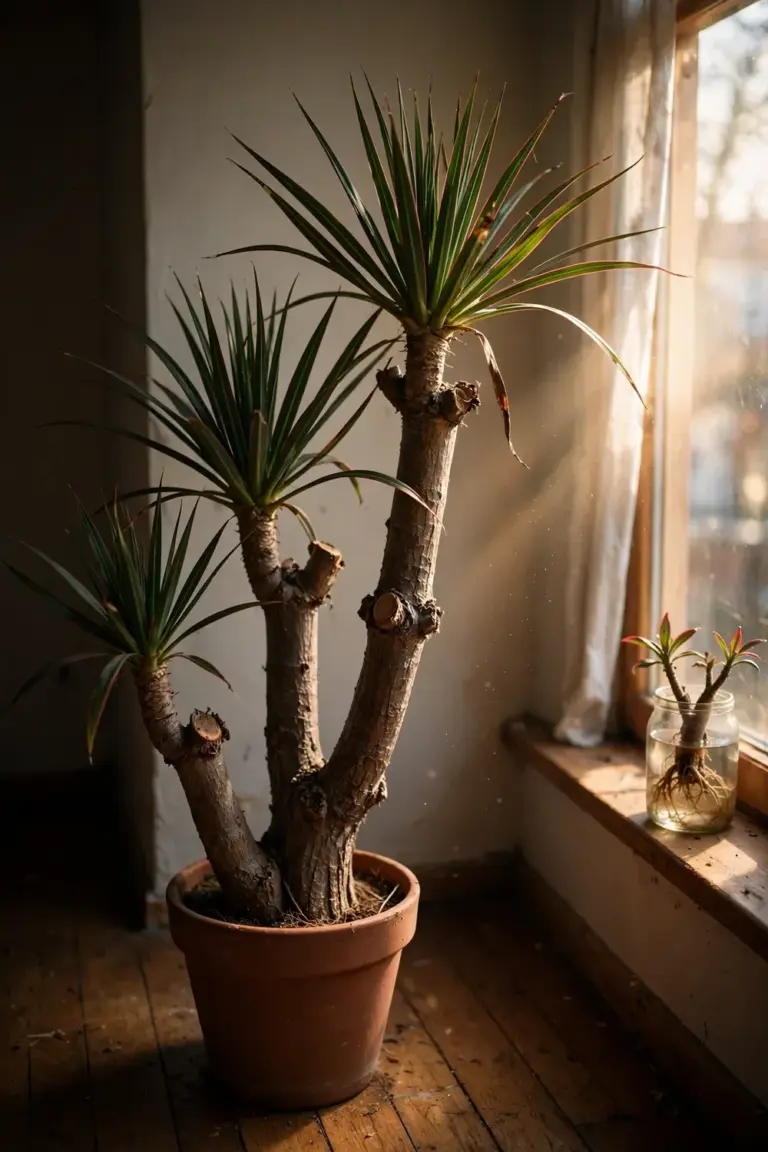
Next season, take one cutting from the pruning and root it in a jar. The free second plant is the proof that the cane-pruning rule works, and it makes a good gift for a friend who keeps killing houseplants. Keep the parent out of the cat’s reach, flush the pot twice a year, and the plant outlives the pot it came in.