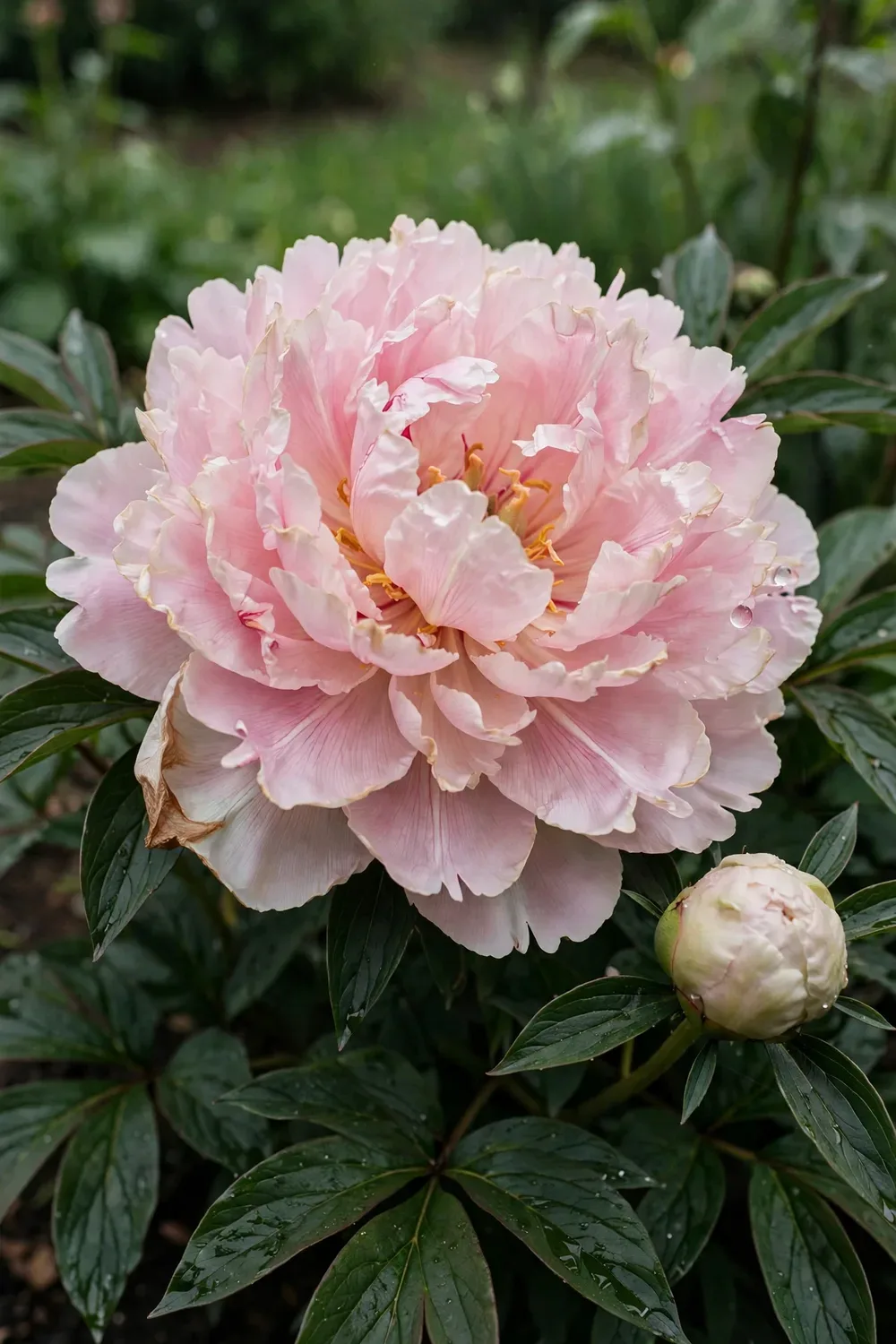

Set bare-root peony crowns with their eyes exactly 2.5 to 5 cm below the soil surface in autumn, and give them a real winter. That is how to grow peonies that actually bloom. The rest of this page is 15 moves, from choosing a type to the patience years.
Two rules decide everything. Shallow planting comes first: herbaceous peony eyes buried deeper than 5 cm leaf out fine and then refuse to flower, season after season. Cold winter comes second: peonies need vernalization, a stretch of winter cold, before spring shoots emerge and flower buds form.
I have learned to re-check the depth after the first watering. Settling soil buries the eyes deeper than the ruler promised. Planting bare roots in autumn runs on the same seasonal rhythm as the fall planting guide. This page covers growing peonies for their flowers only; the root sold for herbal use belongs to a different conversation.
Settle the Two Peony Rules Before You Buy
Every peony decision runs through two rules: plant the eyes shallow, and match the plant to a cold winter. Miss either one and the plant lives but never performs.
Buried eyes still leaf out. The flower buds never form, because a crown set too deep cannot register the seasonal cues that trigger blooming. Iowa State Extension’s peony division guide states the limit plainly: buds set more than 2 inches below the surface may not bloom well. The second rule is climate. Virginia Tech Extension’s peony production notes record that herbaceous peonies need a cold winter period, vernalization, for spring shoot emergence and flowering. Chilling breaks dormancy in the crown. Dormancy break triggers shoot emergence. Emergence feeds bud development. Break that chain with a warm winter and you get foliage without the payoff, no matter how perfect the soil is.
Buy the peony only after you can answer both questions. Can you plant the eyes 2.5 to 5 cm deep? Does your winter stay cold for weeks at a time? Yes to both means the rest of this page is execution.
Choose One of Three Peony Types
Three peony types fill nursery catalogs: herbaceous, tree, and Itoh. Herbaceous is the classic cut-flower perennial. It dies to the ground each winter and returns with enormous fragrant blooms in late spring, bred from Paeonia lactiflora over centuries of selection. Tree peonies keep woody stems through winter and carry next season’s buds on them. Itoh peonies cross the two: a herbaceous body, tree-peony flowers, and better tolerance for mild winters.
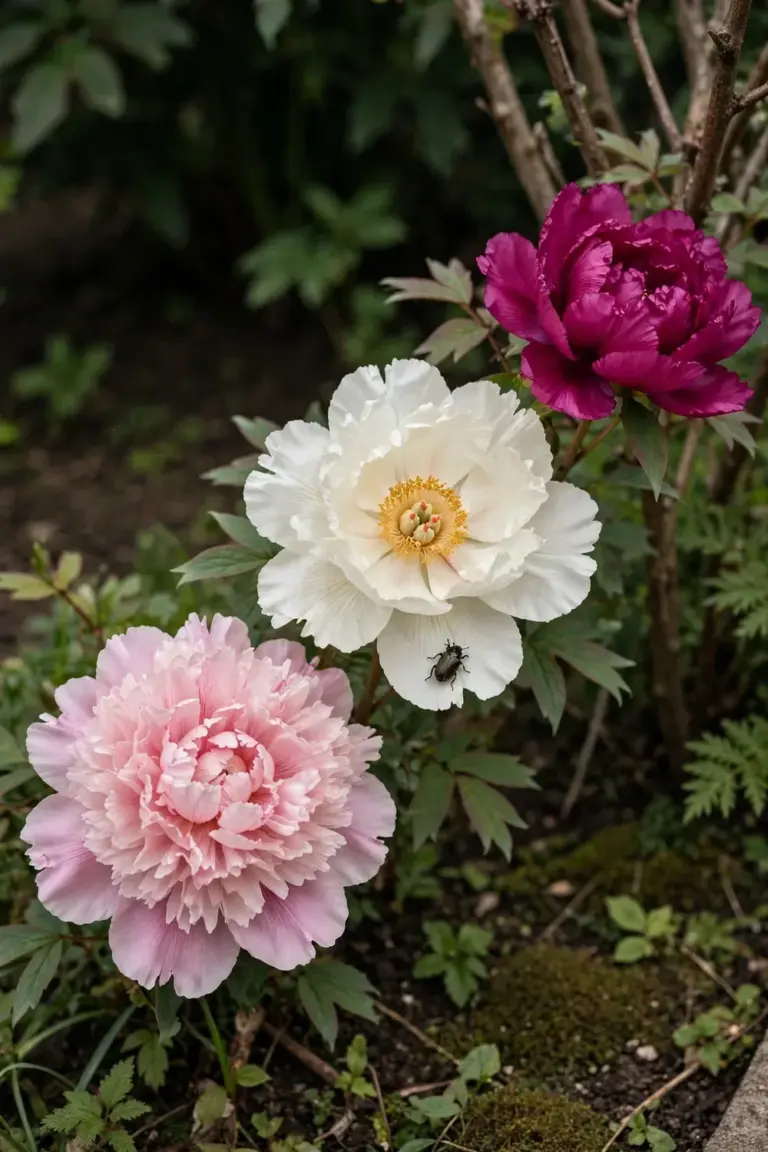
The dark foliage still looks good months after the flowers fade. Tree peony stems are the one thing you never cut back after frost, because the buds sit on them. Itoh types die back like their herbaceous parent.
| Type | Winter habit | Eye depth at planting | Years to first real bloom | Best fit |
|---|---|---|---|---|
| Herbaceous | Dies to the ground | 2.5 to 5 cm below surface | 2 to 3 | Cut-flower beds, cold climates |
| Tree | Woody stems persist | Graft union 10 to 15 cm deep | 3 to 5 | Shrub borders, patient gardeners |
| Itoh | Dies to the ground | Buds at or just below surface | 2 to 3 | Milder winters, big flowers |
Match Your Climate to Your Peony Type
Peonies bloom only after a cold winter dormancy. If your winter rarely drops near freezing for weeks at a time, choose a low-chill Itoh hybrid or a heat-tolerant herbaceous cultivar such as ‘Coral Charm’.
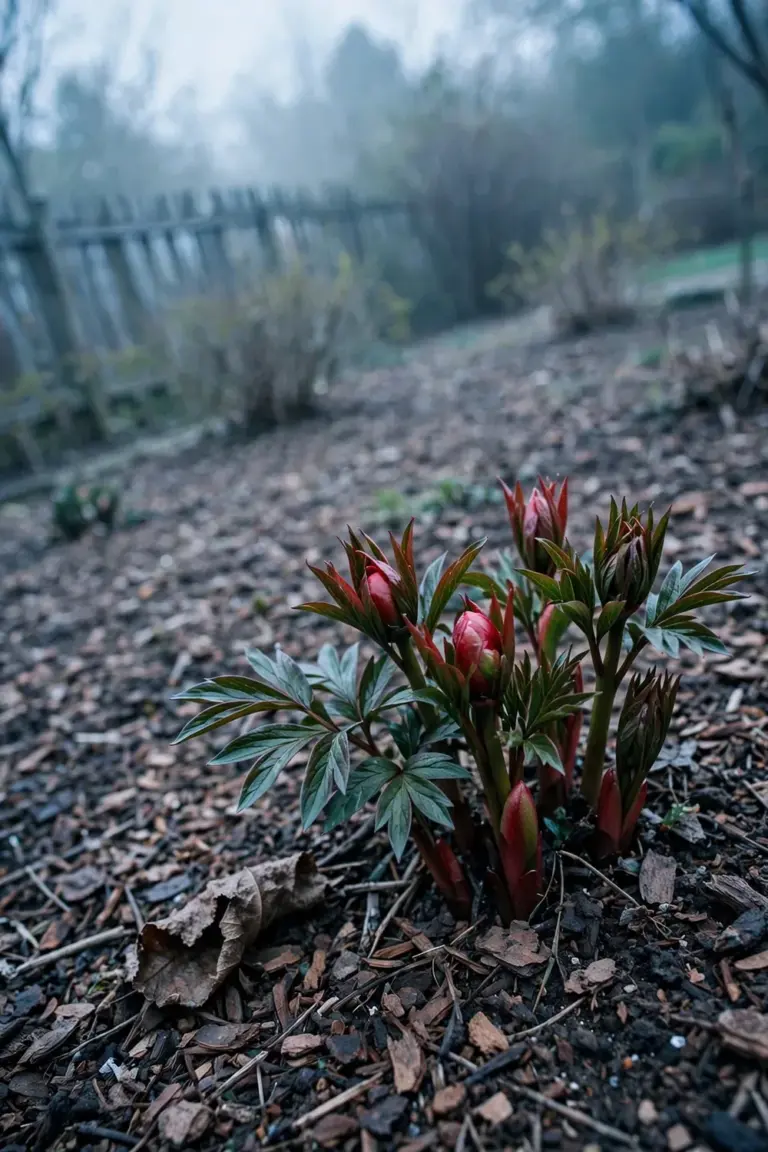
Chilling is the non-negotiable input. Vernalization breaks dormancy in the crown. Dormancy break triggers spring shoot emergence. Shoot emergence feeds flower-bud development. Break that chain with a warm winter and you get foliage without the payoff. Think of it as the plant’s winter appointment: several weeks of genuinely cold weather, the kind that keeps the ground cool and the crown dormant, reset the internal clock that releases spring growth. Herbaceous peonies perform best in cool-temperate regions with reliable winter cold. Tree peonies share the chill requirement and add summer-heat tolerance on their woody frame. Itoh hybrids hold up with less chilling than the herbaceous types, which is why nurseries recommend them at the warm edge of peony country.
Growing Peonies in Australia and New Zealand
Australian gardeners can grow excellent peonies, but only in the right postcodes. Tasmania, Victoria, the mountain districts, and the higher parts of New South Wales hold the edge, because their winters deliver the cold the crowns need. Sydney, Brisbane, and the warm coastal belt mostly cannot.
In cool districts, plant in autumn, March to April, so roots establish through winter. In milder areas, September planting also works. Australian garden guides put the soil target at pH 6.5 to 7, adding garden lime on acidic soils. Give full sun, with afternoon shade where summer afternoons scorch the buds. In warm zones where a classic herbaceous peony sulks, plant the heat-tolerant ‘Coral Charm’ or switch to an Itoh hybrid and accept a shorter bloom season. New Zealand gardeners follow the same logic: Canterbury and Central Otago winters suit peonies well, while frost-free northern districts do not. Wherever you plant in the Southern Hemisphere, remember the calendar flips; autumn soil preparation happens while Northern Hemisphere growers are waking their beds up.
Plant Every Peony in Autumn
Plant or divide peonies in early autumn, while roots still grow but top growth has stopped. September is the classic month in the Northern Hemisphere; March to April is the Southern Hemisphere equivalent.
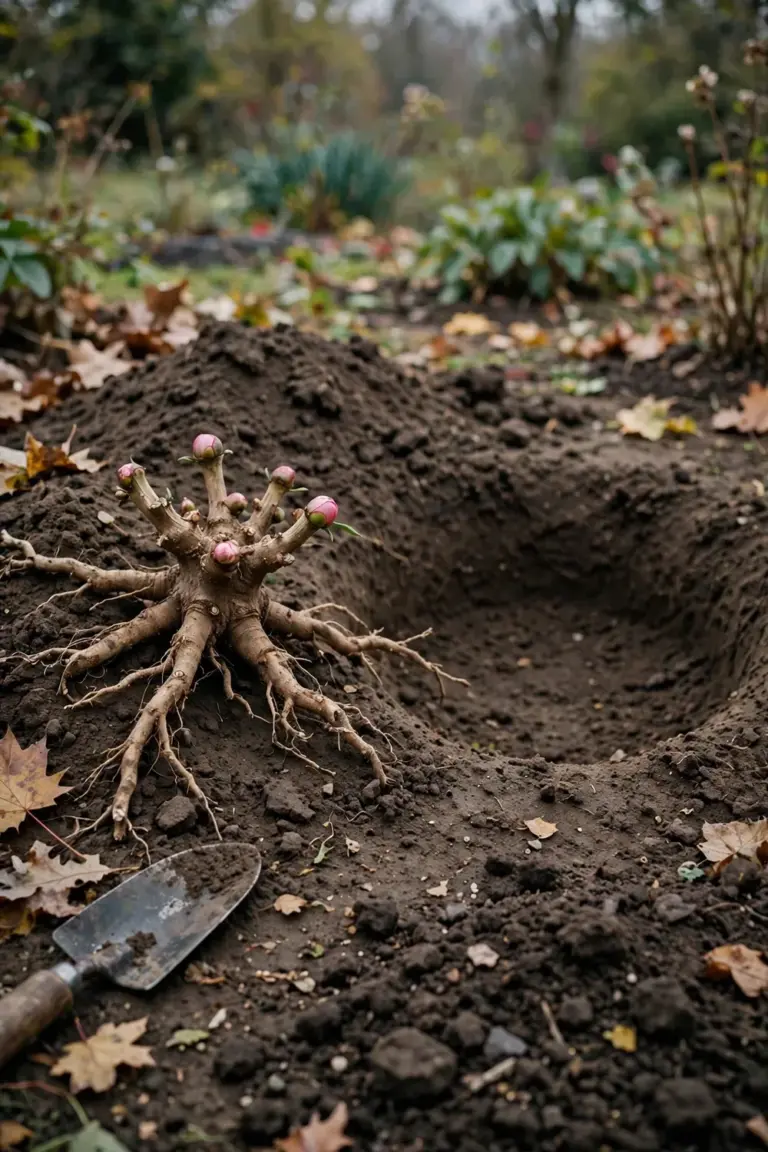
University of Missouri’s September planting notes call September ideal for both planting and dividing, because divisions get several weeks of root growth before the ground freezes. Bare roots sold in autumn are already dormant, so they skip transplant shock and wake up on schedule in spring. Spring planting works as a fallback, but it steals establishment time from the roots, and the plant spends its first summer catching up. The planting window lines up with the season for bulbs to plant in fall, so one autumn bed-prep session can cover both jobs.
Mark the spot after planting. A bare-root division disappears completely over winter, and spring gardeners have dug up sleeping peonies thinking the bed was empty.
Buy bare-root crowns in autumn from a nursery that ships them dormant. A good division feels heavy for its size, with firm, thick storage roots and three to five visible eyes. Skip bags of dried-out roots that rattle, and skip potted peonies in full leaf sold in spring unless you accept a slower start.
Bury the Eyes Exactly 2.5 to 5 cm Deep
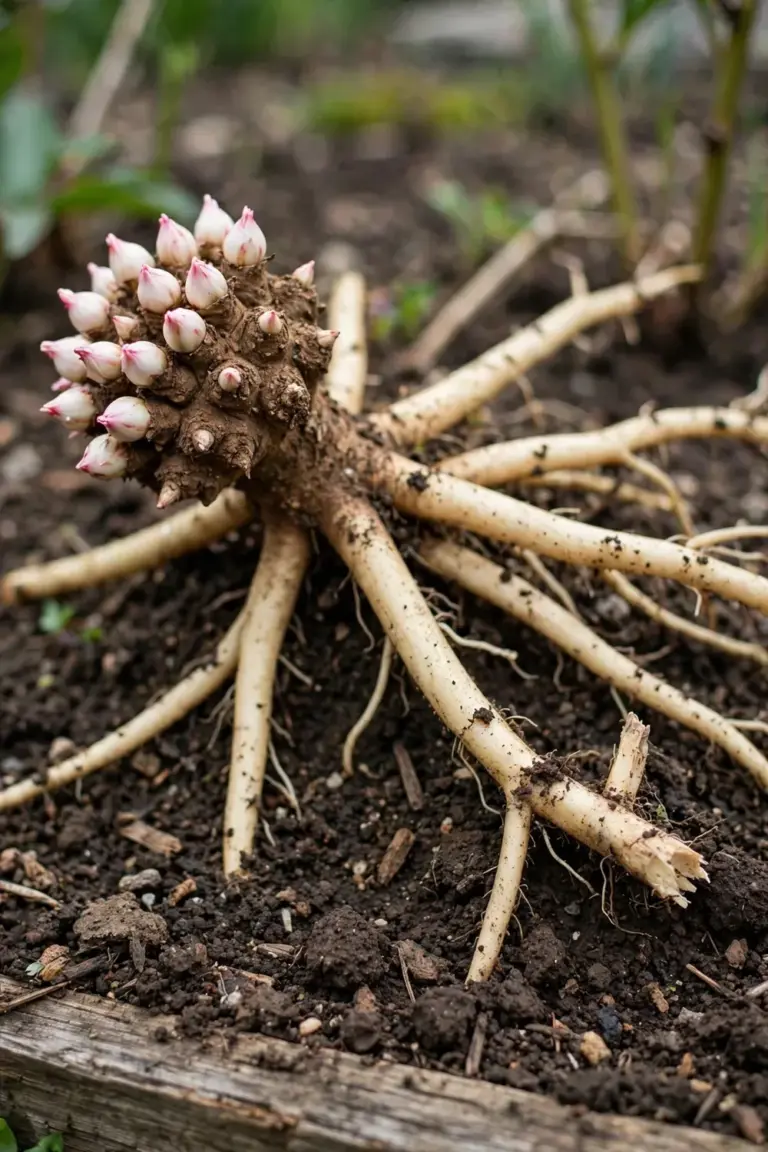
Set the pink or white eyes, the shoot buds on top of the crown, 2.5 to 5 cm below the finished soil surface. Deeper than that and flowering stalls or stops entirely.
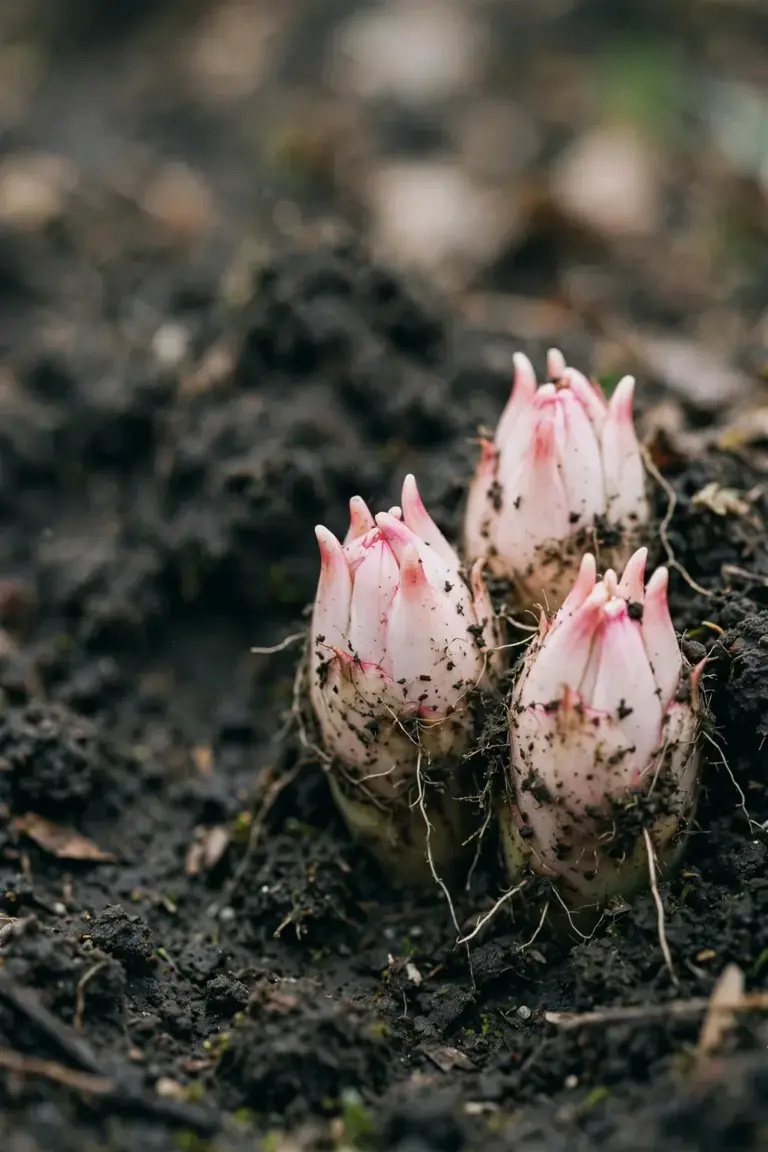
Learn what the eyes look like before the crown goes in the ground. They are toothlike nubs, pink or white, clustered on top of the crown where the thick storage roots meet. Face them up. A crown set upside down wastes a whole season while it corrects itself.
This is the single most common peony failure, and it is entirely avoidable. A crown planted far deeper than recommended produces a mound of foliage and zero buds, year after year. The fix is mechanical: lift the plant in autumn, reset the eyes at the correct depth, and wait. The Iowa depth rule from the first section is the one that matters here: more than 5 cm down, and the plant leafs out without ever flowering.
Work the depth in three passes. Set the crown on firm, settled soil with the eyes facing up and the thick roots spread downward. Backfill and firm gently, then water deeply. Watering settles the soil around the roots, so measure again after the water drains. Eyes that looked perfect before watering often sit 1 or 2 cm deeper after it.
Build a Wide Hole on a Firm Base
Dig the hole twice as wide as the spread roots and only as deep as the crown needs. A firm soil base under the crown stops it sinking after watering.
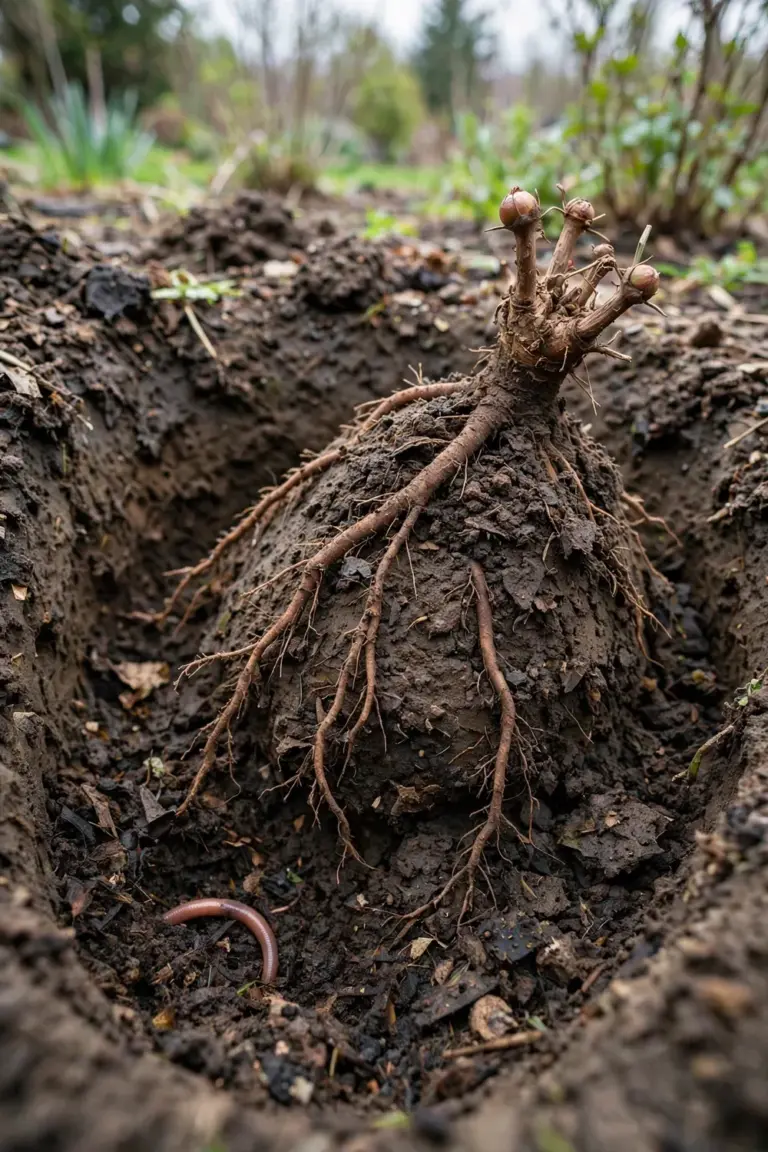
Peony roots resent cramped holes. The thick storage roots extend outward as the plant matures, and a tight hole forces them to bend and circle. Dig wide, break up the sides and bottom with a fork so they do not glaze, and work a bucket of compost through the backfill for fertility and drainage. Then shape a low cone of soil in the center of the hole. Rest the crown on that cone with the eyes up. The cone holds the crown at height while the roots drape down into the loose soil around it. Backfill in layers, firming each one, and water to settle everything before your final depth check.
Heavy clay needs one extra step. Fork coarse compost and grit through the backfill, and never set the crown into a smooth-walled bowl of clay that holds water like a pot.
Space Divisions 90 cm Apart
Give each herbaceous peony at least 90 cm of space. Crowded peonies stay damp, and damp peonies catch fungal trouble and flower less.
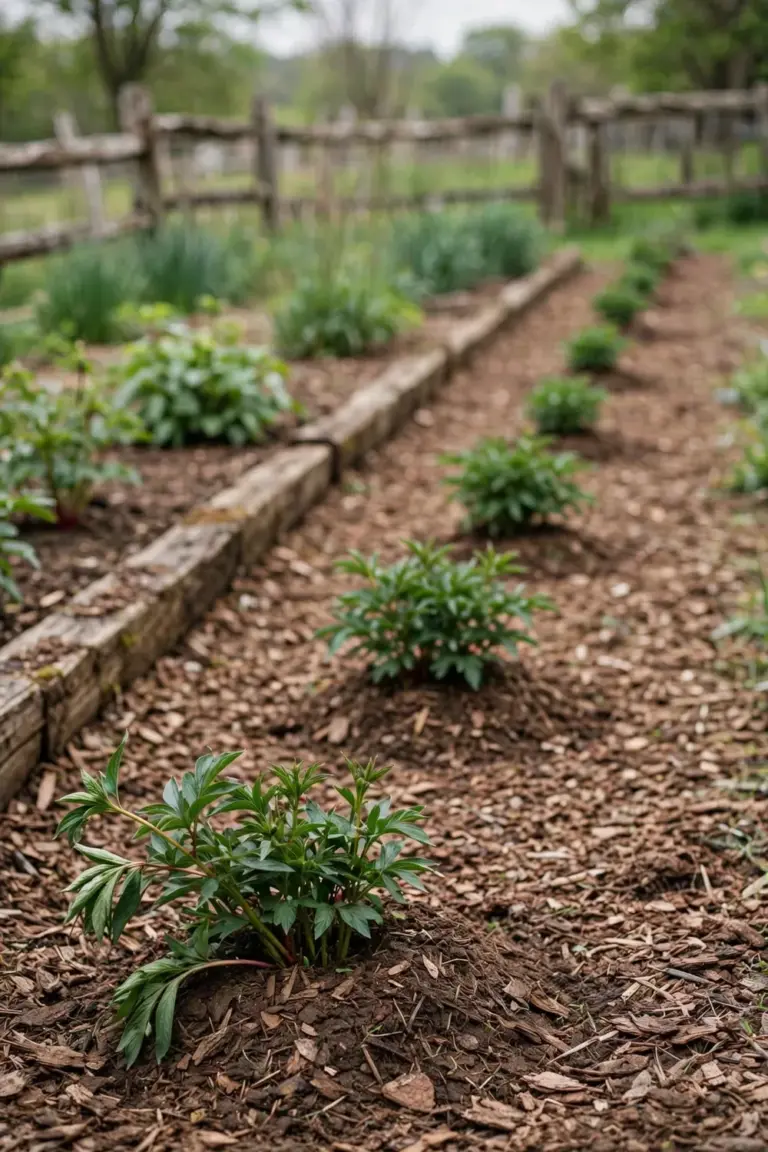
Iowa State Extension recommends 3 to 4 feet between plants, which is 90 cm to 1.2 m. That spacing looks extravagant on planting day, when each division is a fist-sized crown. Three summers later the foliage mounds touch, and the air moving between them is what keeps gray mold off the buds. Tree peonies grow larger still, so allow them a full meter or more and treat them as shrubs in the plan, not as perennials.
Resist the temptation to fill the gaps with annuals in year one. The young roots compete poorly, and by year three you will be digging those fillers out of a peony’s root zone.
Aim for Neutral to Slightly Alkaline Soil
Peonies do their best in fertile, well-drained soil with a neutral to slightly alkaline pH. Waterlogged ground rots the thick storage roots faster than any pest.
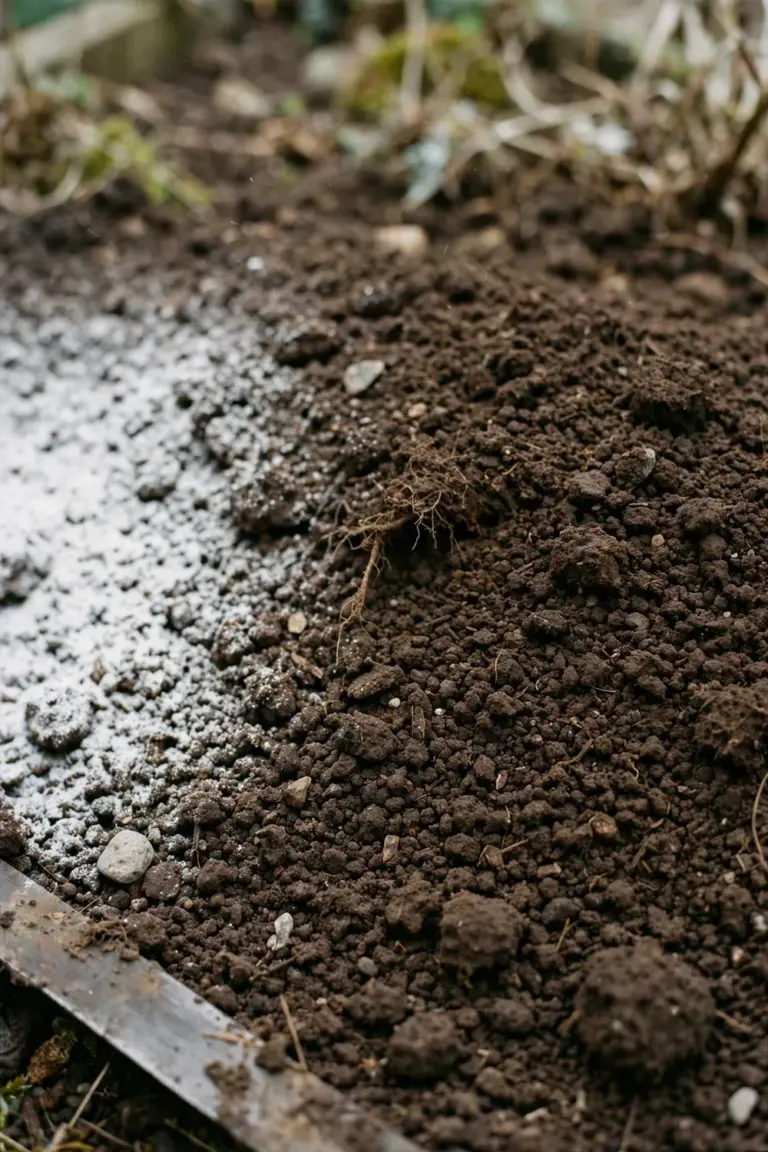
Penn State Extension’s peony guide sets the same target most garden loams already meet: neutral to slightly alkaline, with good fertility and excellent drainage. Start with a soil test rather than guessing. If the test comes back acidic, garden lime brings the pH up; alkaline soils rarely need correction downward for peonies. Drainage matters more than fertility. A peony in lean, fast-draining soil outlasts one in rich, soggy ground every time. The soil health guide covers the compost-and-structure work that fixes drainage before planting day.
Plant on a slight rise if your garden holds winter water. A crown sitting in a puddle through January is a crown that rots by March.
Water the First Summer, Then Back Off
Soak new peonies deeply through their first summer, then treat them as drought-tolerant adults. Established peonies die of overwatering far more often than of thirst.
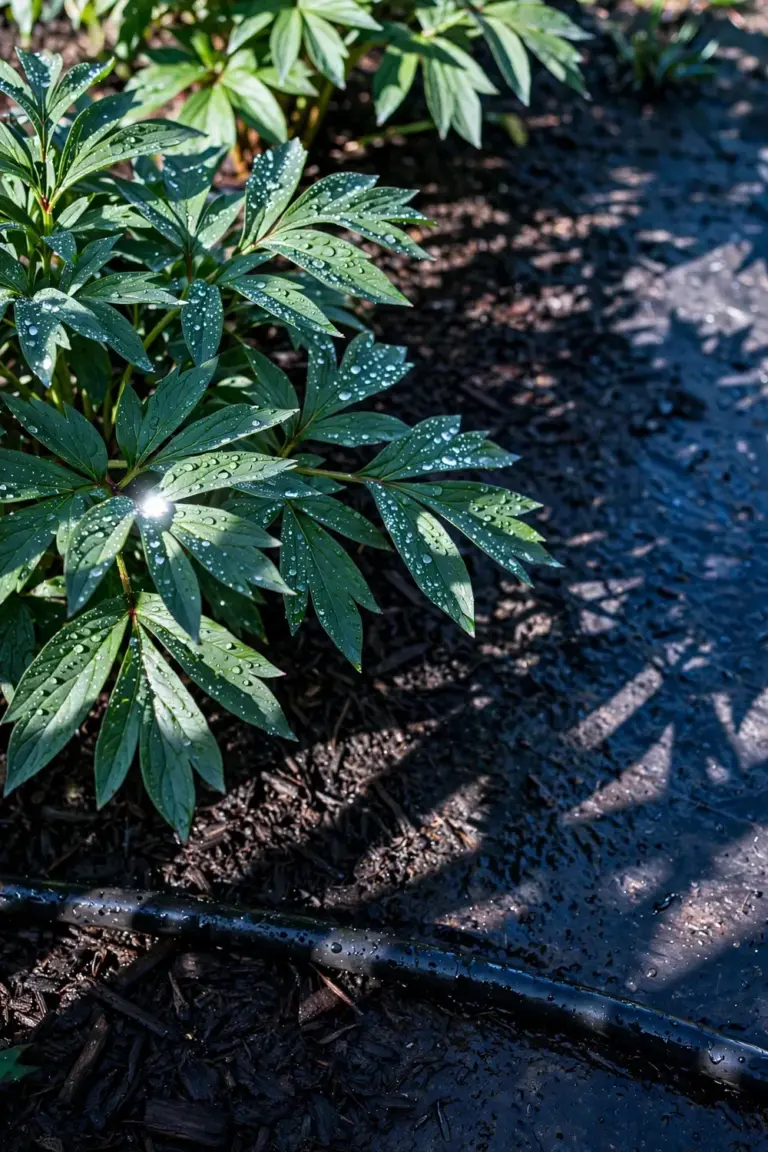
New roots need consistent moisture to colonize the backfill. Water deeply once a week through the first growing season, letting the water reach the full root zone rather than wetting the surface. A shoot that wilts in the afternoon and recovers by morning wants water. A crown that sits in mud for days wants drainage, not more water. Learn the difference early and the plant forgives most other mistakes. A simple finger test beats any schedule: push a finger 5 cm into the soil near the crown and water only if it comes up dry. Once the plant is established, the deep storage roots handle dry spells on their own. Cut back hard in the second year. Overhead watering during bloom ruins the display: heavy double flowers fill with water, droop, and snap. Water at the base with a soaker or a slow hose instead.
Mulch the first winter only. A 5 cm layer of bark or straw over the crown insulates a new division, then pull it back in spring before shoots emerge. Established peonies need no winter mulch.
Stake Heavy Double Blooms Before Buds Crack
Stake double-flowered herbaceous peonies before the buds swell. Wet spring blooms snap stems that a hoop would have held.
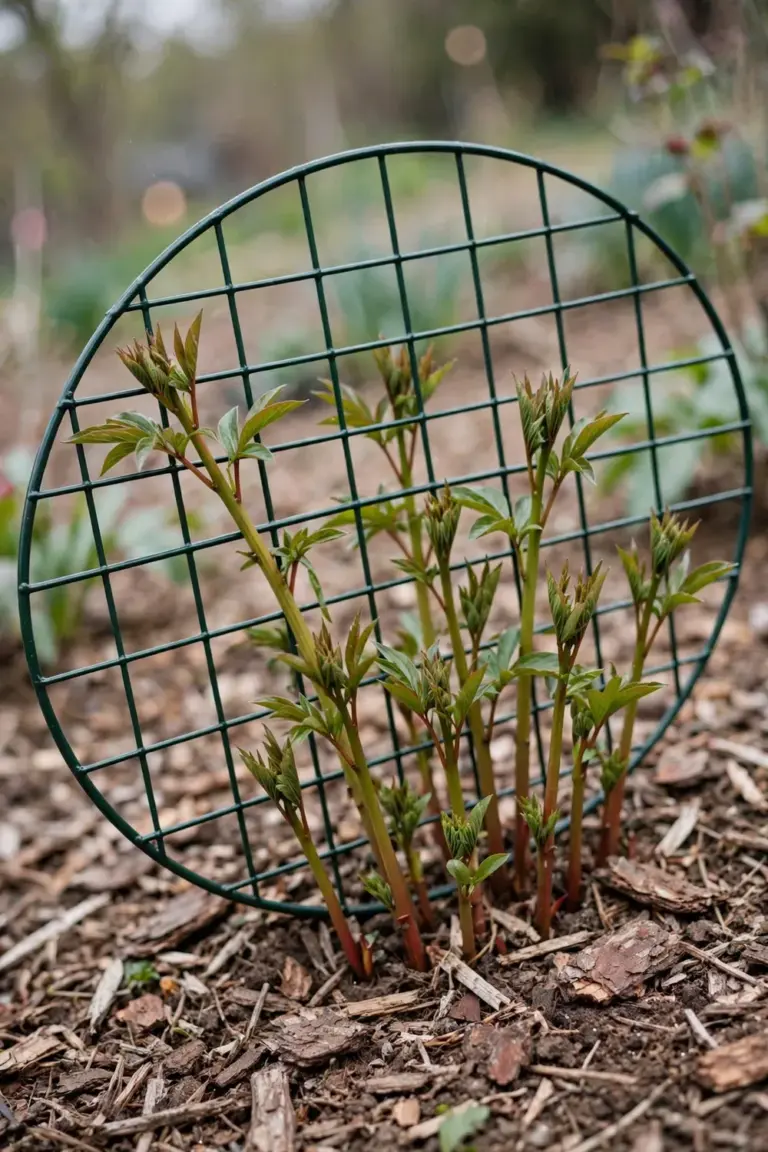
Double flowers are top-heavy by design. A rainstorm the week they open turns unsupported stems into a pile of muddy petals, which is the most heartbreaking peony failure after deep planting. Install peony hoops or a grow-through grid when the shoots are 15 to 20 cm tall, while you can still work around them without snapping stems. The foliage grows up through the support and hides it by bloom time. Single-flowered and Japanese types usually stand on their own stems and need no staking. Carry the first stems inside like any cut flowers; a peony picked at the marshmallow stage, when the bud feels soft like a marshmallow, opens fully in the vase. Cut in the cool of the morning, when the stems are turgid, and strip the lower leaves before the stems go into water. A bud picked too tight never opens. One picked fully open shatters in a day. The marshmallow stage sits in the sweet spot between the two.
Feed Lightly in Autumn or Skip It
Peonies are light feeders. A modest amount of high-phosphorus fertilizer or bonemeal mixed into the planting hole is plenty; established plants rarely need more.
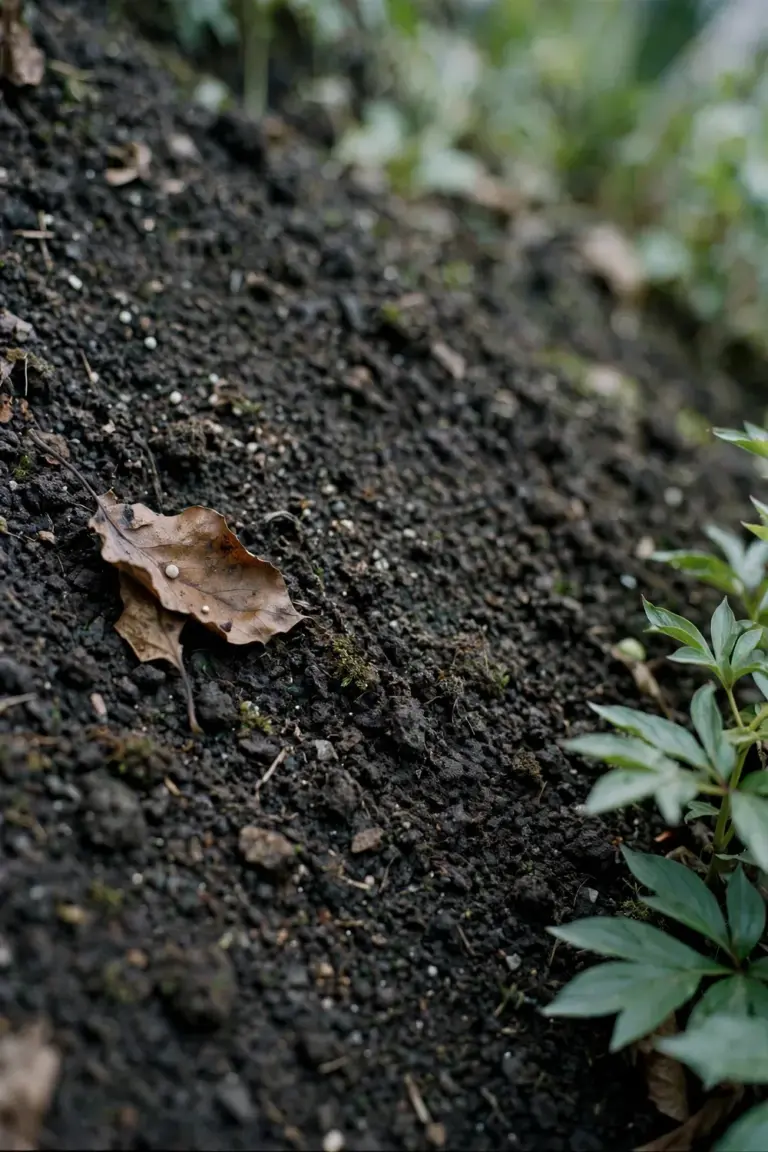
Excess nitrogen is the enemy. It pushes soft leafy growth at the expense of flowers and invites the fungal problems that thrive on dense tissue. University of Missouri’s planting notes recommend a modest amount of a high-phosphorus fertilizer or bonemeal at planting, mixed well into the soil rather than dumped under the crown. If an old plant’s vigor fades after many years, one light autumn feeding of a complete fertilizer scratched into the soil 15 to 45 cm from the crown is enough. Skip feeding entirely in rich garden soil. A peony that blooms well is telling you the soil is already right.
Cut Herbaceous Stems to the Ground After Frost
After the first hard frost blackens the foliage, cut herbaceous peony stems to the ground and clear the debris. Tree peony stems stay standing through winter.
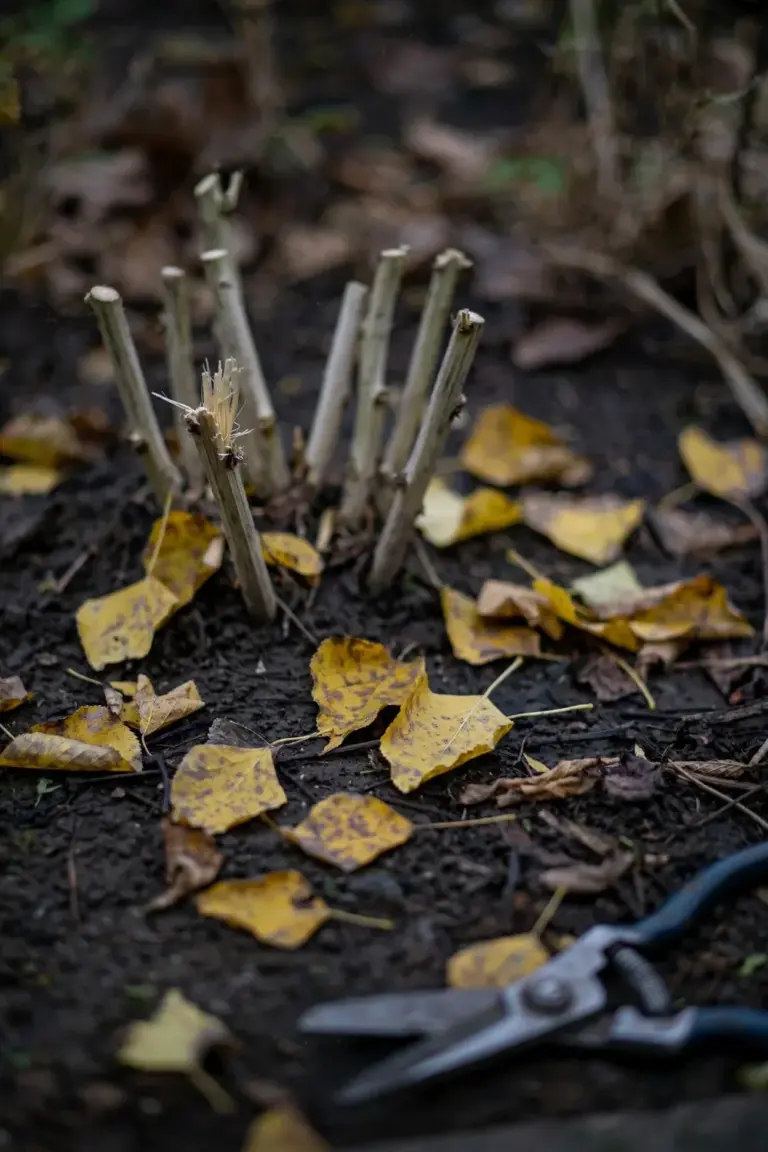
Fallen peony foliage carries next spring’s problems. Botrytis blight overwinters on dead stems and leaf litter, then attacks the new shoots in a wet spring. Cutting the stems to soil level and composting or binning the debris breaks that cycle. Do this for herbaceous and Itoh types alike: Itoh stems die back like their herbaceous parent. Tree peonies are the exception. Their woody stems hold next year’s flower buds, so cut only dead wood in early spring and never shear the shrub to the ground. During the season, snap off spent blooms so the plant feeds next year’s buds instead of seed pods, but leave every leaf standing until frost. The foliage is the factory that powers the following spring.
Do not compost diseased-looking foliage. Bag it and bin it instead, so the spores leave the garden.
Wait Two Years for the First Real Bloom
A new bare-root division often blooms lightly in its second spring and hits full stride in its third. Peonies reward patience, then flower for decades.
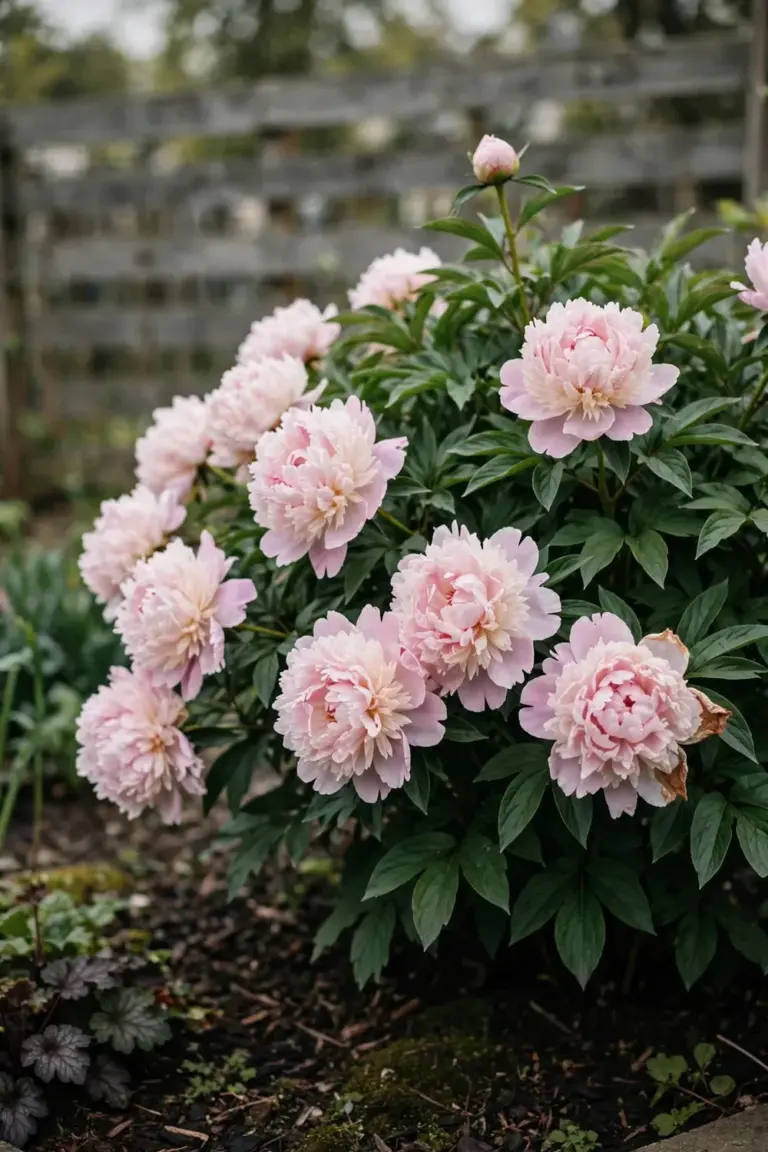
The timeline is the honest part of peony growing. Year one builds roots, and the plant may push a single bud or none at all. Year two brings a modest flush. Year three onward brings the full display, and it improves from there. Small divisions take longer: Iowa State Extension notes that divisions with fewer than three eyes may need two or more years to flower. That is why a quality division carries three to five eyes and a solid chunk of storage root. While you wait, keep the bed weeded and resist feeding the plant into hurrying. Extra fertilizer does not shorten the timeline; it only builds soft growth the first hard season will punish. Once established, leave the plant alone. University of Missouri notes that peonies can remain undisturbed for 20 or more years, with vigorous plants documented past 50 years in one spot. Divide only when flowering clearly declines, and expect the reset plant to need its own two-year patience window.
Plant Tree Peonies With the Graft Union Deep
Plant a grafted tree peony with the graft union 10 to 15 cm below the soil surface. That depth lets the scion grow its own roots instead of letting the understock take over.
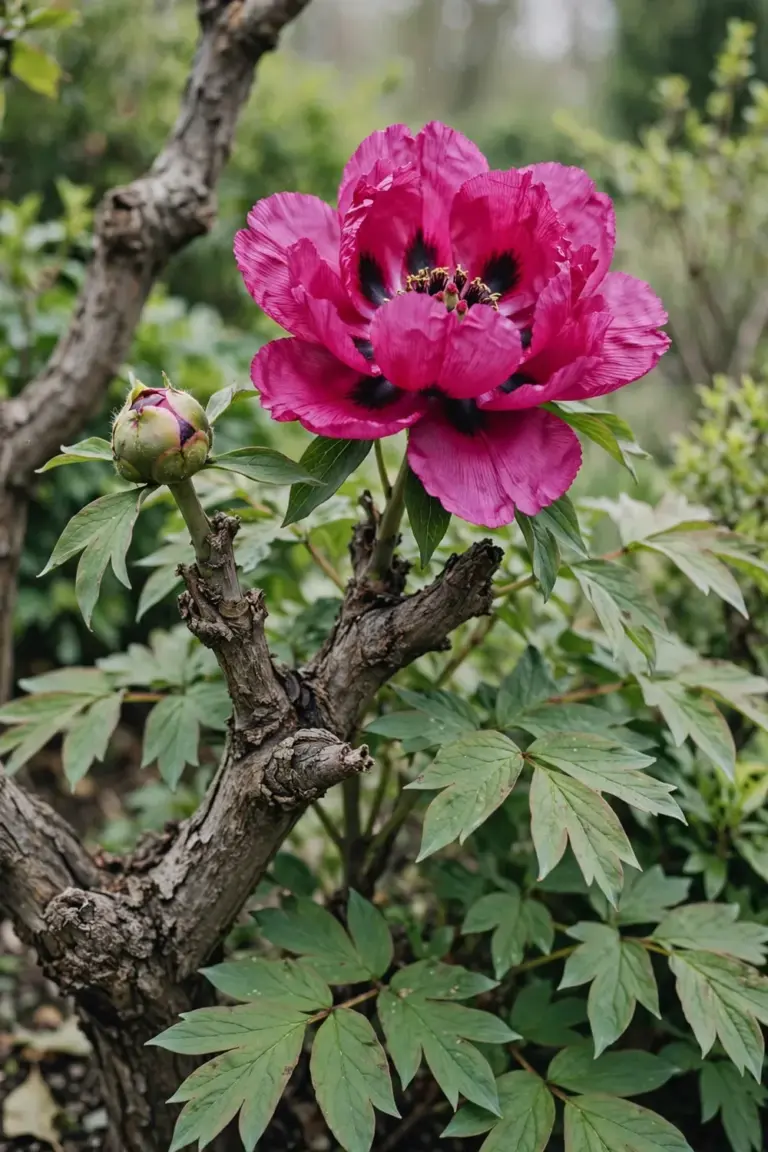
Tree peonies break the shallow rule on purpose. Most nursery tree peonies are grafted onto herbaceous understock, and a shallow graft union lets the vigorous understock sucker and outgrow the named variety. Burying the union forces the scion to root on its own, which makes a longer-lived, truer plant. Penn State Extension’s peony guide gives the numbers: the graft union sits 4 to 6 inches below the surface on grafted plants, while own-root tree peonies go shallower, with the stem junction about 2 inches down.
Treat the tree peony as the shrub it is. Give it shelter from harsh wind, prune only dead wood in early spring, and accept the slow start. Several years of establishment before serious blooming is normal, and transplanting a settled tree peony is a job to avoid.
Diagnose a Bloomless Peony in Three Steps
No blooms on a healthy-looking peony almost always means one of three things: planted too deep, too little sun, or too little winter chill. Check in that order, because depth is the fixable one.
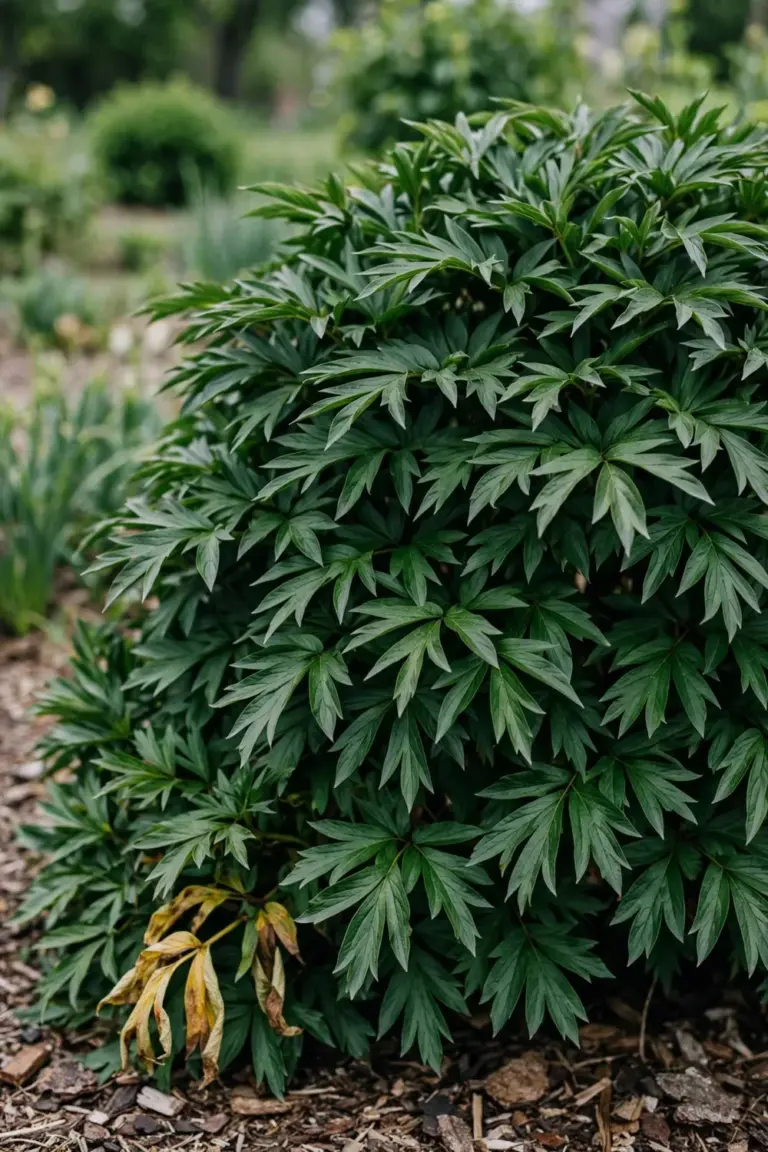
Step one: measure the eye depth. Scrape soil gently from the crown in autumn and find the eyes. If they sit deeper than 5 cm, lift the whole clump, divide if it is large, and reset every division at 2.5 to 5 cm. Expect no flowers the next spring; the plant needs a season to recover. Mark the corrected depth with a small stake so you can check it again after the first heavy rain settles the soil.
Step two: count the sun hours. Peonies need at least six hours of direct sun a day, and shade from a tree that grew up after planting is a classic slow-developing cause. Map the bed’s sun across a day in midsummer, not spring; a spot that was sunny in April can sit in full tree shade by June. Move the plant in autumn if the bed has gone shady.
Step three: assess the winter. If the plant is shallow, sunny, mature, and still budless, the climate is the answer. Mild-winter gardeners do better replacing a sulking herbaceous peony with an Itoh hybrid or ‘Coral Charm’ than fighting the thermometer for another decade.
Frequently Asked Questions

Expect the first light flush in the second spring after autumn planting, with full displays from the third year on. Divisions carrying fewer than three eyes can take two or more years just to produce their first flower. Once a peony settles in, it blooms more heavily each year for decades. Plants have been documented flowering in the same spot for over 50 years. Patience at the start buys a lifetime perennial.
Mostly no for classic herbaceous peonies, which need a real winter chill to set buds. Gardeners in warm regions have two honest options: grow an Itoh hybrid, which tolerates limited chilling, or choose a heat-tolerant herbaceous cultivar such as ‘Coral Charm’. Planting the eyes at the shallow end of the 2.5 to 5 cm range also helps in marginal climates. If winters never turn cold, lilies and dahlias make better warm-climate investments.
Deep planting is the usual cause: eyes set below the recommended depth produce foliage without buds. Lift the plant in autumn and reset the eyes to 2.5 to 5 cm. The other suspects are shade, with fewer than six daily sun hours, and a winter too mild to vernalize the crown. Young divisions under two years old need more time. Check depth first, because it is the only cause you can fix in an afternoon.
Only when flowering clearly declines, which can take a decade or longer. Peonies resent disturbance, so division is maintenance, not routine care. Lift the clump in early autumn, wash off the soil, and cut it into divisions with three to five eyes and strong storage roots each. Replant immediately at the correct shallow depth, water well, and expect two years before full blooming resumes.
They can, but pots are a compromise, not a strategy. Choose a large container, at least 40 cm deep and wide, with sharp drainage and a loam-based mix. Herbaceous types still need their winter chill, so the pot must sit somewhere cold but not frozen solid. Dwarf and Itoh cultivars suit containers best. Expect smaller plants and fewer flowers than the same peony would produce in open ground.
Where to Go From Here
Two rules, one timeline. Plant the eyes 2.5 to 5 cm deep. Give the crown a cold winter. Wait two years for the payoff, and the plant repays you for decades.
Buy bare-root divisions in autumn from a reputable nursery, and check each crown before it goes in the ground: three to five firm eyes, thick storage roots, no soft or rotten sections. Set the eyes shallow, water the soil to settle it, and measure the depth one more time. Then leave the plant alone to do the slow work. The peony has been perfecting this routine for centuries; your job is to get out of its way.
One last honest note for the impatient: there is no trick that hurries a peony. Deep planting, spring planting, and heavy feeding all promise speed and deliver delay. Shallow eyes, a cold winter, and two unhurried years deliver the blooms the seed catalogs pictured.