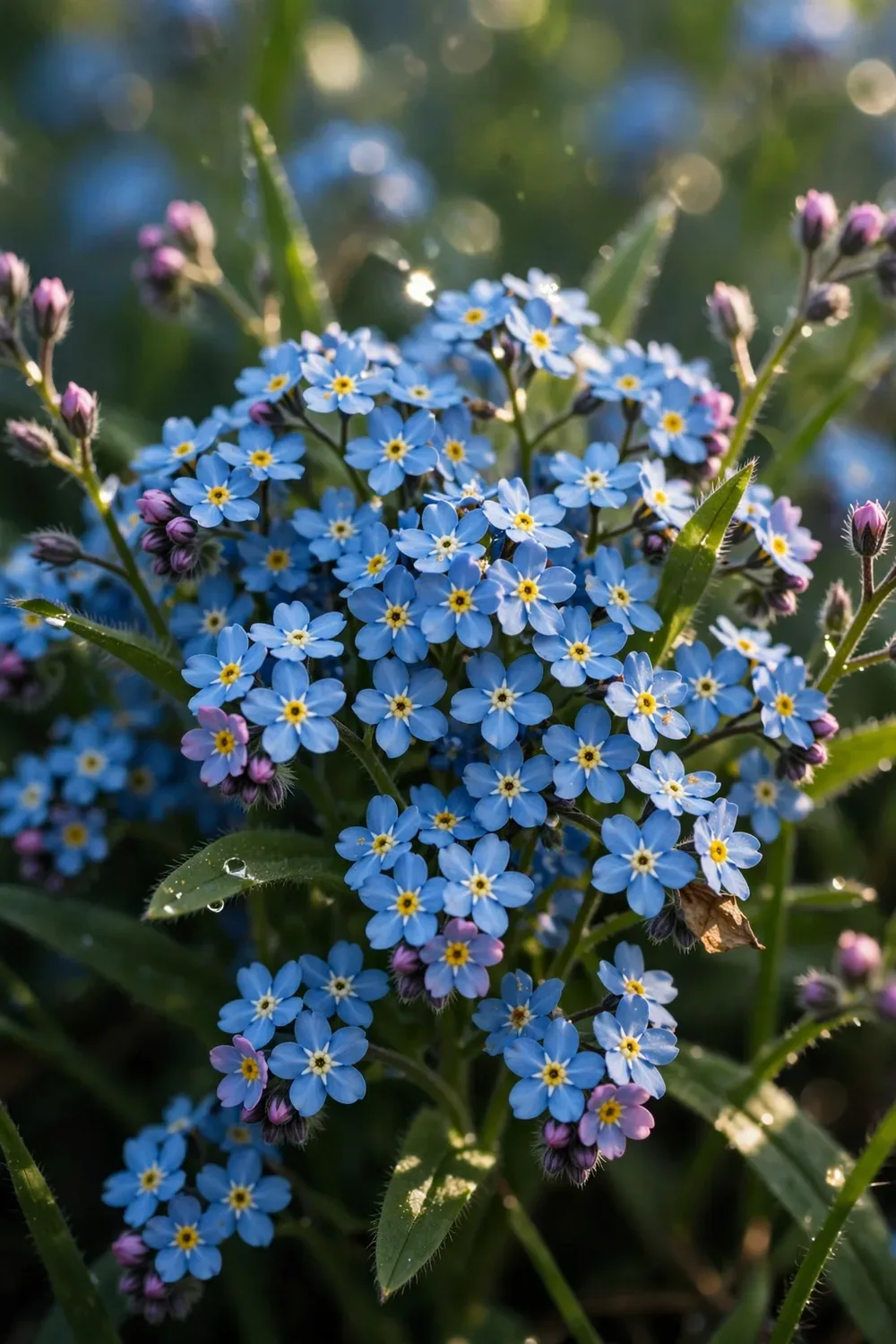

Two seasons stand between the seed and the flower. Sow forget-me-not seeds in late summer and they flower the following spring. The seed wakes within weeks, but the plant spends a full year as a leafy rosette before it blooms. Sow in spring and most plants sit through summer as leafy rosettes, then flower a year later.
That is how to grow forget-me-not flowers from seed: a biennial rhythm, not an annual sprint. The garden forget-me-not is Myosotis sylvatica, a hardy biennial that spends its first season building a low rosette of hairy leaves, overwinters as a quiet clump, and then erupts in a cloud of small blue flowers with yellow eyes the next spring. In my experience, the patch you sow once becomes a patch you manage for years, because the plants reseed themselves if you let them.
The rest of this page is 12 moves, from the late-summer sow to the self-seeding decision. You will get the biennial clock, the three plants that share the name, a regional sowing calendar, the surface-sow technique that seeds need to germinate, and an honest talk about the weedy tendency.
1. Grow Forget-Me-Not Flowers on the Biennial Clock
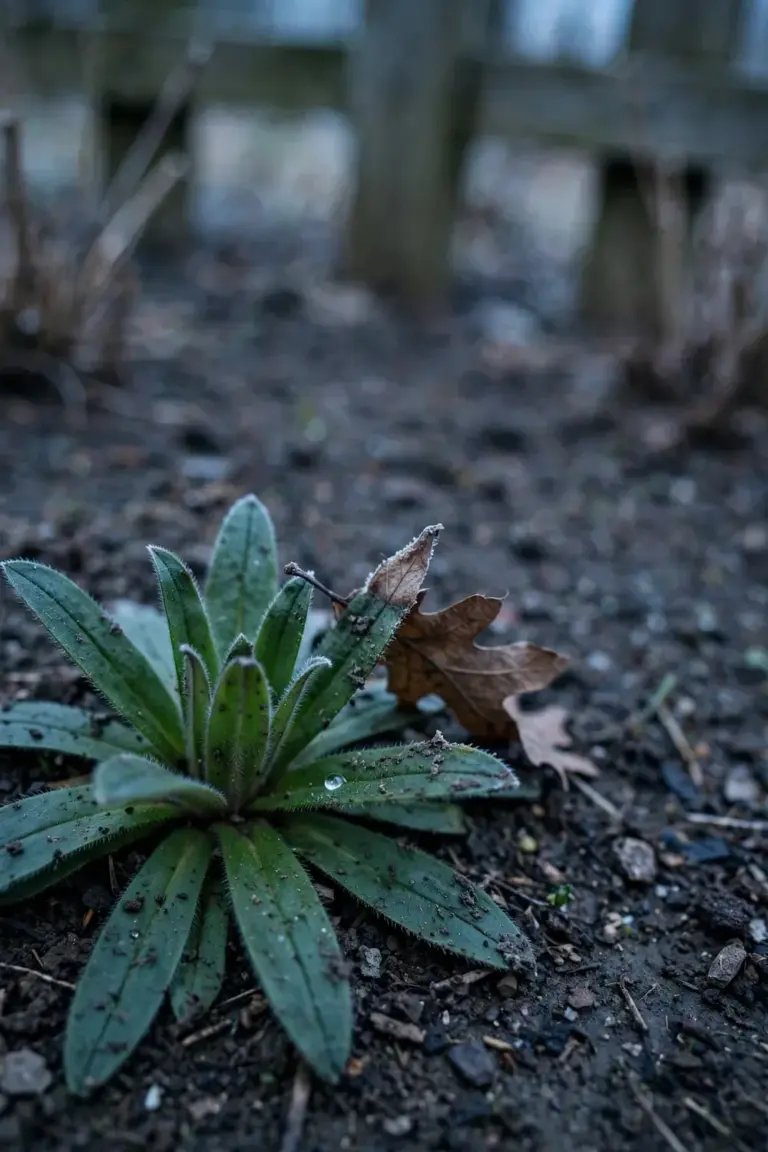
Accept the two-year cycle before you touch a seed packet. Forget-me-not flowers run on a biennial schedule. Seeds germinate in late summer, the plant grows a basal rosette through autumn and winter, and flowering happens in spring of year two, after which the parent plant dies.
GrowVeg’s growing guide states it plainly: forget-me-not is best grown as a biennial, planted in late summer for bloom the following spring (Forget-Me-Not Grow Guide). Survival Seeds, an Australian seed seller, lists the plant as a hardy biennial in its growing guide (How to Grow Forget-Me-Nots).
The number one beginner failure is spring sowing with no flowers the same year. The seed packet rarely explains this. The plant did not fail. You planted a biennial and asked it to behave like a marigold.
The rosette is tougher than it looks. It sits low through winter, the leaves hugging the soil where frost bites least. Snow cover helps it; a hard freeze on bare soil in a windy spot can brown the outer leaves, but the crown usually survives and pushes new growth at the first warm spell. Do not “tidy” the rosettes in autumn by cutting them back. There is nothing to cut, and the leaves are the plant’s winter food factory.
Here is the quick spec, so you can plan at a glance.
| Spec | Forget-Me-Not |
|---|---|
| Botanical name | Myosotis sylvatica |
| Life cycle | Hardy biennial |
| Sow window | Late summer to early autumn |
| Germination | 7 to 21 days |
| Sowing depth | Surface, pressed in, not buried |
| Spacing | 15 to 20 cm |
| Light | Partial shade |
| Soil | Moist, well drained, rich in organic matter |
| Flowers | The spring after sowing |
2. Identify the Three Forget-Me-Nots Before You Sow
Three different plants answer to the name forget-me-not, and they grow nothing alike. Sort them out before you buy seed, because advice for one will fail on another.
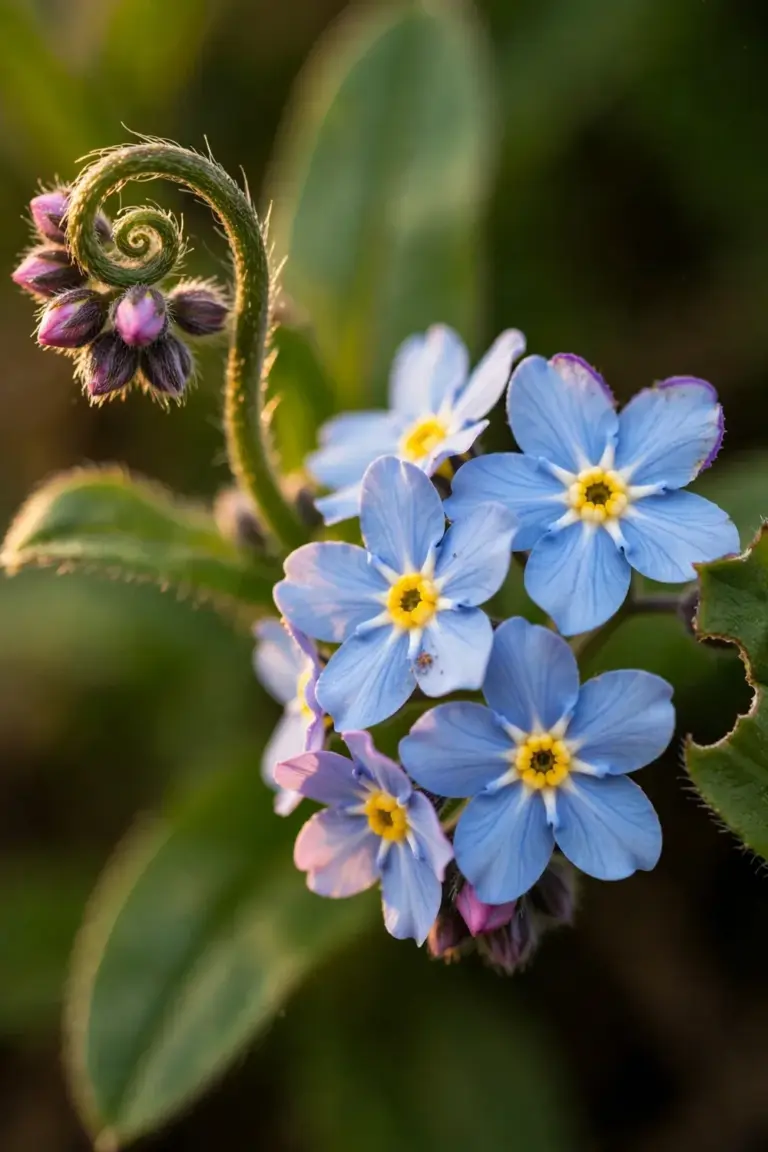
The garden forget-me-not is Myosotis sylvatica, the woodland forget-me-not. It is the biennial this article grows, with sky-blue flowers in spring. Its cousin, Myosotis scorpioides, is the water forget-me-not, a plant for ponds and bog margins that needs constant moisture.
Then there is the impostor, Chinese forget-me-not, Cynoglossum amabile. It belongs to a different genus entirely. It grows as a cool-season annual with upright stems and clusters of blue flowers in summer, and it does not need cold exposure to trigger flowering. GrowVeg’s guide fences it explicitly: Chinese forget-me-not is a different flower with different requirements (Forget-Me-Not Grow Guide).
| Trait | Garden Forget-Me-Not | Chinese Forget-Me-Not | Water Forget-Me-Not |
|---|---|---|---|
| Botanical name | Myosotis sylvatica | Cynoglossum amabile | Myosotis scorpioides |
| Life cycle | Hardy biennial | Annual (in most gardens) | Perennial |
| Flower season | Spring | Summer | Late spring to summer |
| Needs cold to flower | Yes | No | No |
| Growing method here | Yes | No | No |
One more fact, stated plainly because children and pets nibble garden plants: Chinese forget-me-not contains tumorigenic pyrrolizidine alkaloids. The North Carolina Extension Gardener Plant Toolbox lists pyrrolizidine alkaloids as the toxic principle for Cynoglossum amabile, with liver effects in livestock that ingest it (Hound’s Tongue / Cynoglossum amabile). Do not eat it. Do not use it in salads or teas. Its burr-covered seeds also hitch onto gloves and clothing, so handle the plants with care. The same chemistry question comes up for Myosotis itself, so do not eat garden forget-me-not flowers either.
3. Sow on the Right Calendar for Your Climate
Late summer means different months on different sides of the equator. The biennial clock is the same everywhere. The calendar moves.
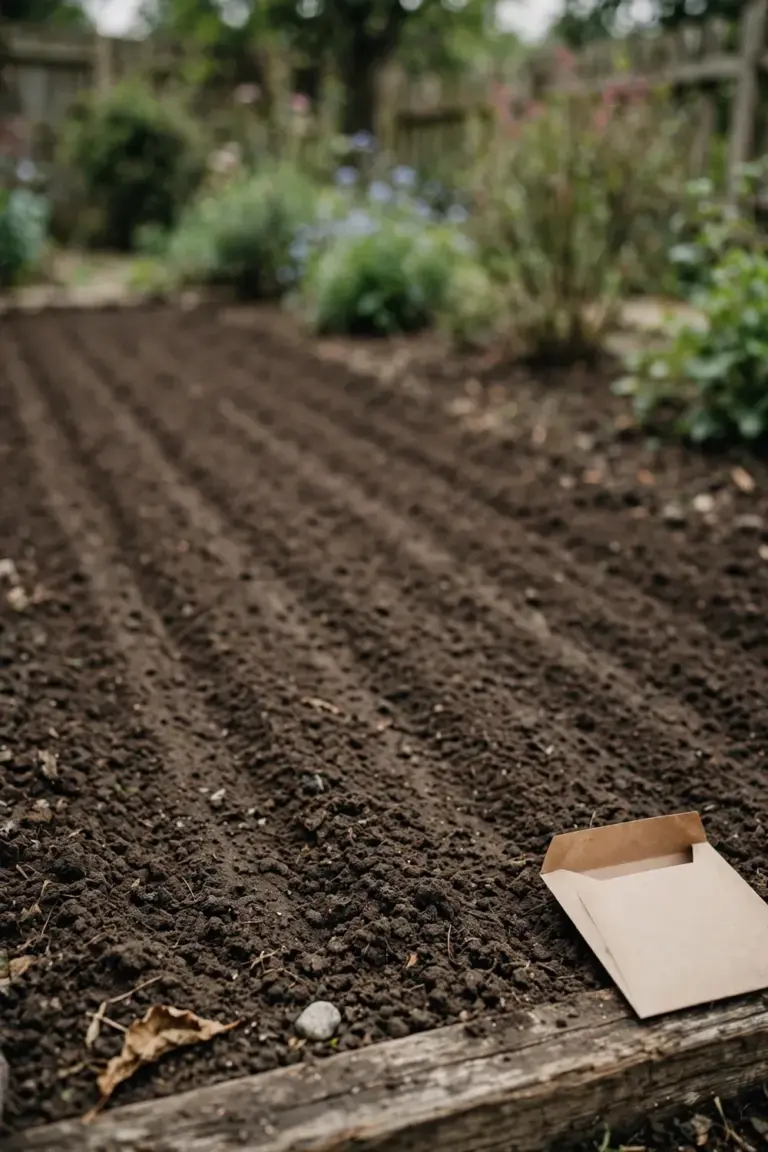
For Australian readers, Survival Seeds gives clear regional windows. In temperate regions, sow in autumn or early spring. In subtropical regions, sow in autumn and keep the seedlings out of extreme summer heat. In cooler regions, wait until spring, after the last frost (How to Grow Forget-Me-Nots).
The table below translates that into months. Southern hemisphere first, since the seed advice you are most likely holding came from an Australian seller.
| Region | Sow window | Transplant | Flowers |
|---|---|---|---|
| Temperate Australia (Sydney, Melbourne, Adelaide, Perth) | Late February to April | April to May | September to November next year |
| Subtropical Australia (Brisbane, Gold Coast) | March to April, in autumn only | April to May | September to October next year |
| Cool Australia (Canberra, Hobart, alpine) | September to October, after last frost | October to November | October to December next year |
| Northern hemisphere temperate (UK, US, Europe) | Late July to September | September to October | April to June next year |
Read the subtropical row twice. Forget-me-nots are a cool-season plant at heart. A subtropical summer cooks the seedlings, so autumn sowing after the heat breaks is the only honest option. In cooler zones the reverse applies: soil too cold in late autumn will not germinate seed, so spring sowing after the last frost takes over, and flowering shifts one season later.
In mild-winter areas you can also set plants out during winter. GrowVeg notes that established plants tolerate frost and can go out in winter where winters stay gentle (Forget-Me-Not Grow Guide). That is the frost-tolerance card playing in your favor. The rosette sits low, the cold does not kill it, and spring warmth flips the flowering switch.
4. Surface-Sow 3 mm Deep: Seeds Need Light to Germinate
Forget-me-not seeds need light to germinate. Bury them and they sit blind under the soil. Press them onto the surface and they wake up.
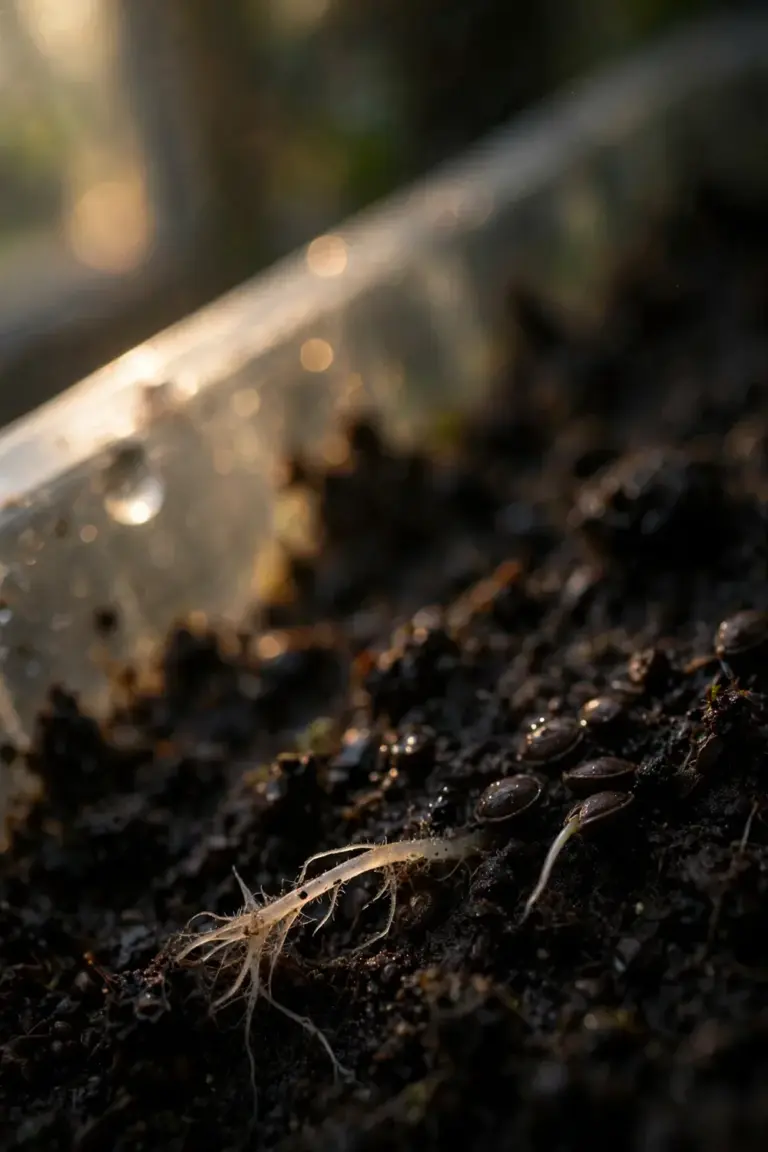
Scatter the seed thinly across the surface of moist seed compost or bare prepared soil. Press each seed down with a flat board, the back of a trowel, or your palm so it makes full contact with the soil. Do not cover them. A whisper of fine vermiculite, no deeper than 3 mm, is the most cover they should ever get. Survival Seeds lists sowing depth at 3 mm in its planting guide (How to Grow Forget-Me-Nots).
Germination takes 7 to 21 days depending on temperature. GrowVeg reports 7 to 10 days for indoor-started seed (Forget-Me-Not Grow Guide), while Survival Seeds lists 10 to 14 days at 15 to 20°C. The sweet spot is a cool room or a shaded cold frame at 15 to 20°C, with the surface kept evenly damp. A spray bottle beats a watering can here. A heavy pour dislodges seed the way rain washes ink off paper.
If nothing emerges after three weeks, the usual suspects are buried seed, dried-out surface, or old seed. Forget-me-not seed germinates best fresh. Seed kept a couple of seasons in a cool dry jar still sprouts, but fresh seed comes up faster and more evenly. Buy a new packet each late summer rather than nursing a five-year-old one, and check what else is worth sowing in that window (Best Seeds for Fall Planting).
5. Start 8 to 10 Seedlings Indoors in Late Summer
Direct sowing works, but trays give you control over the one thing that matters most: keeping the seed on the surface and damp until it germinates. A punnet of 8 to 10 plants fills a square meter of border edge, which is all the forget-me-nots most gardens need.
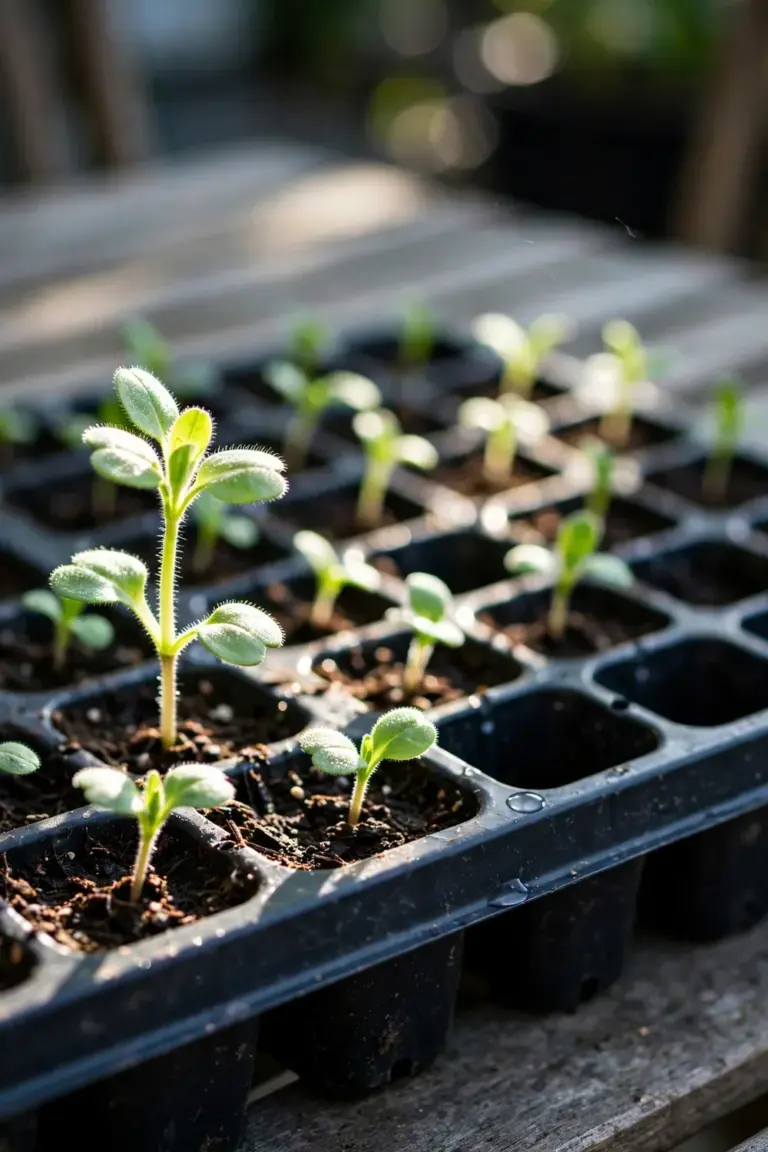
Fill a seed tray or punnet with fine seed-raising mix and water it before you sow, not after. Scatter the seed across the surface, press it in, and mist it. Set the tray in bright shade, never in direct sun. Direct sun bakes the surface dry in an hour and the seed dies thirsty.
The general seed-starting method on this site walks through tray filling, misting, and hardening off in detail (Seed Starting Guide). Follow it, then transplant the seedlings out in early autumn while the soil is still warm. Warm soil grows roots fast before winter slows everything down.
Do not start forget-me-nots on a hot windowsill. The seed wants 15 to 20°C. A laundry with a north-facing window or a shaded patio shelf in late summer hits that range in most temperate gardens. A hot sill pushes past it and stalls germination, and the seedlings that do emerge stretch weak and pale.
6. Transplant 15 to 20 cm Apart in Early Autumn
Space matters because forget-me-nots are dense, low growers that knit into a carpet. Crowd them and air stops moving through the foliage. Mildew moves in. Leaves yellow from the bottom up.
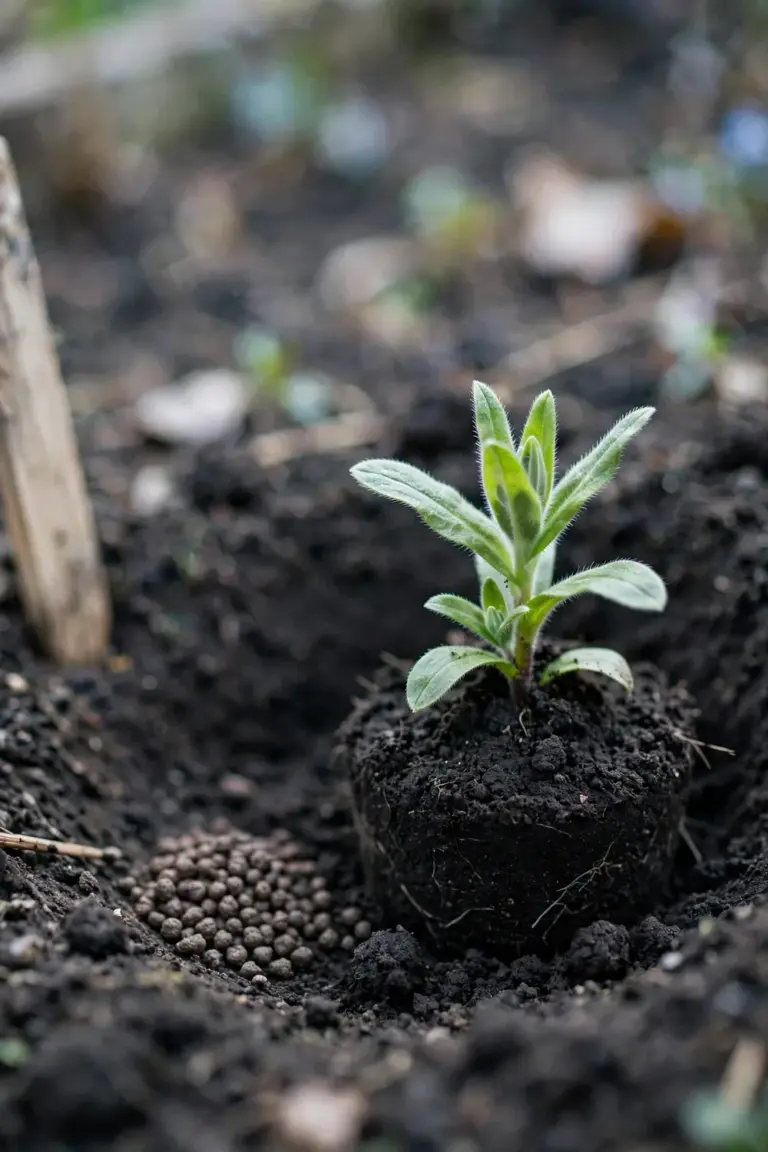
Set transplants 15 to 20 cm apart in every direction. Survival Seeds lists 15 to 20 cm plant spacing with 30 cm row spacing (How to Grow Forget-Me-Nots). Work inside that range: the tight end for a ground-cover knit, the wide end where you want to walk between clumps.
Dig the hole no deeper than the root ball. Forget-me-nots are shallow-rooted, and burying the crown invites rot. Water the seedlings in gently, then mulch lightly around them with 2 to 3 cm of fine bark or leaf mold, kept back a finger’s width from each stem. The mulch holds the moisture these plants demand without smothering the crowns.
Harden the tray seedlings off for a week first: a few hours of outdoor shade the first day, a full day by day five. Seedlings moved straight from a sheltered tray into autumn wind and sun sulk for weeks. The hardened ones take off.
7. Hold Moisture in Partial Shade
Give forget-me-nots the spot most gardeners waste: the damp, half-shaded strip along a fence, under a deciduous tree, or on the east side of the house. They want partial shade and soil that never fully dries.
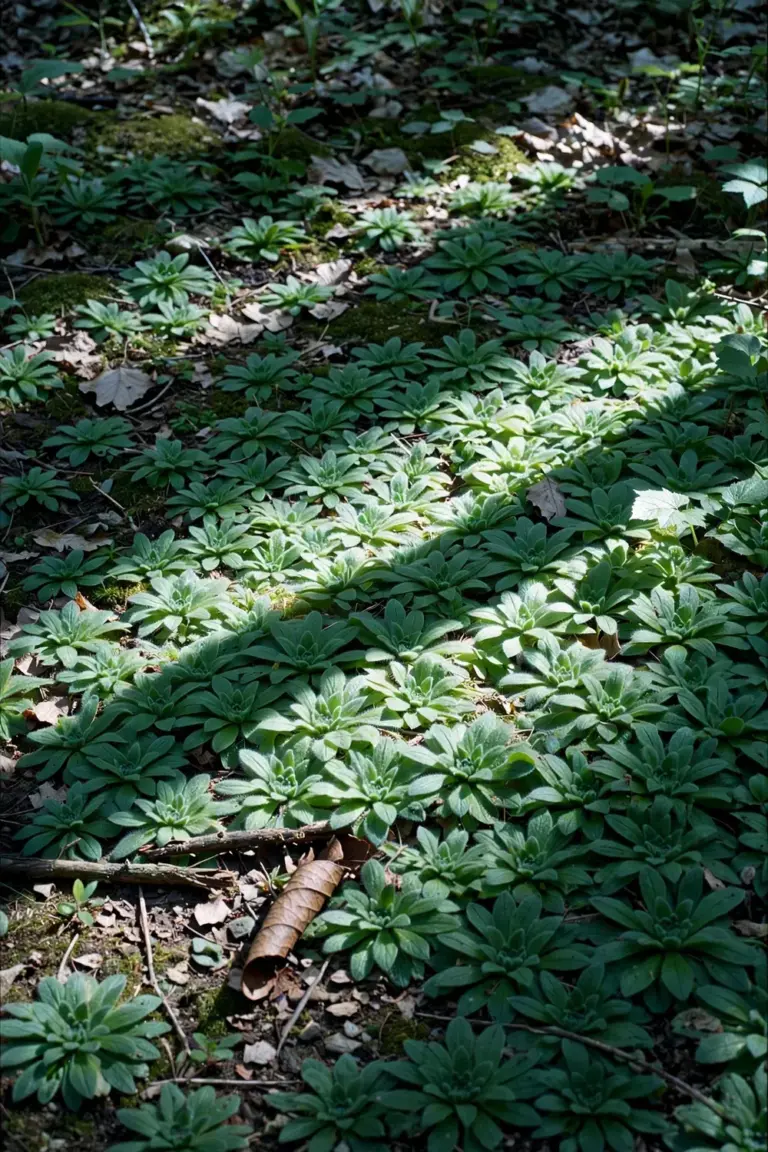
The soil brief is simple. GrowVeg calls for well-drained soil rich in organic matter (Forget-Me-Not Grow Guide). Dig a bucket of compost into each square meter before planting if your soil is sandy or heavy, the slow way to build soil health. Compost loosens clay and fattens sand in the same pass. The result holds water without going soggy, which is exactly the balance a shallow-rooted woodland plant needs.
Water deeply once or twice a week rather than sprinkling daily. Deep watering trains roots downward. Daily sprinkling trains them to sit at the surface, and then the first hot week kills them. If the leaves droop in afternoon heat and recover by evening, that is normal summer behavior in a cool-season plant. If they stay flat through the night, water immediately.
Full sun is survivable only where summers stay cool and the soil stays moist. Everywhere else, afternoon sun scorches the leaf edges brown. Heavy shade grows leggy plants with fewer flowers. Aim for the middle: morning sun, afternoon shade, or dappled light all day.
8. Feed Once in Spring With Liquid Organic Fertilizer
Forget-me-nots are not hungry plants. Rich soil grows leafy top growth and no flowers. That is a documented habit: overfed forget-me-nots put on foliage at the expense of bloom.
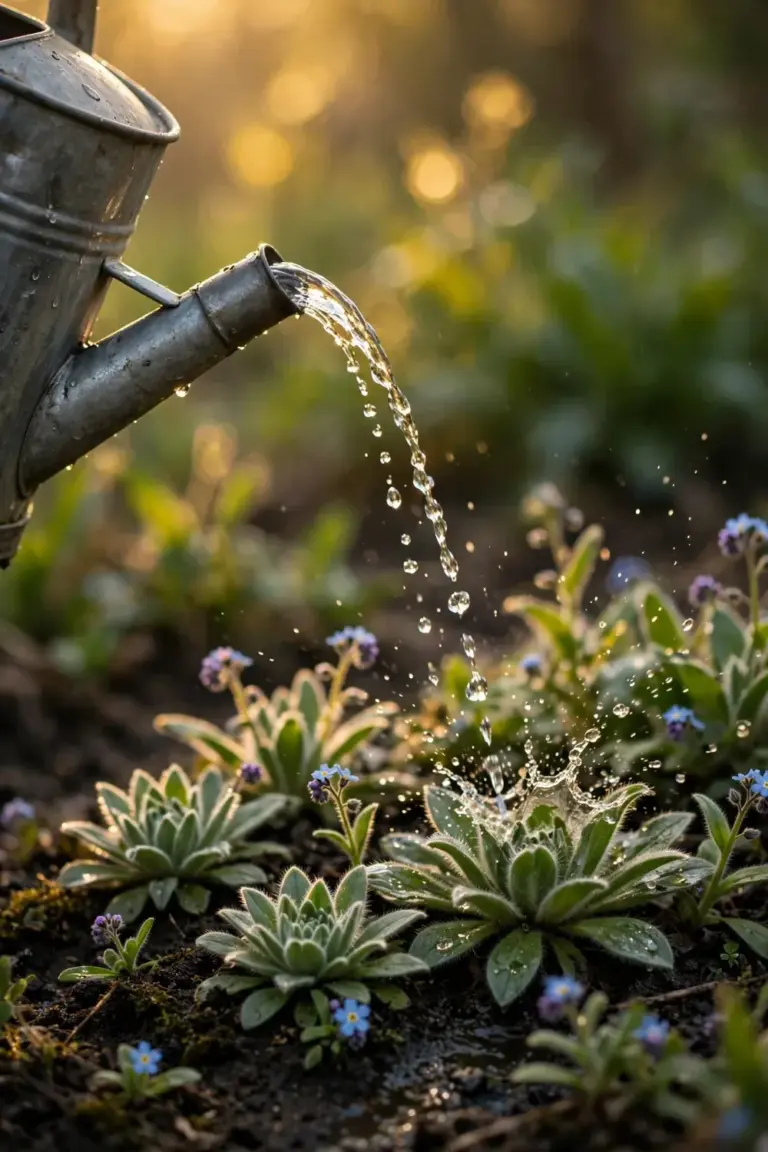
Give one feeding, timed to the moment it pays off. GrowVeg recommends drenching with a liquid organic fertilizer when the plants show vigorous new growth in spring (Forget-Me-Not Grow Guide). That spring surge is the rosette waking up and building flower stems. A watering can of diluted seaweed or fish emulsion at that moment carries the plant through the whole bloom season.
Do not feed in autumn. Autumn feeding pushes soft new growth that winter frost burns back, and the plant spends spring repairing instead of flowering. Do not feed seedlings in trays either. Seed-raising mix carries enough nutrition for the first month, and extra nitrogen grows floppy seedlings that fall over at transplant.
9. Decide Now: Deadhead or Run a Self-Seeding Colony
Here is the honest part. Forget-me-nots self-seed prolifically. One un-deadheaded plant drops hundreds of seeds onto the soil beneath it, and next spring you have a carpet of seedlings where you planted ten plants. GrowVeg flags this directly: with encouragement, forget-me-nots reseed themselves for a season or two, and in some areas they are considered weedy (Forget-Me-Not Grow Guide).
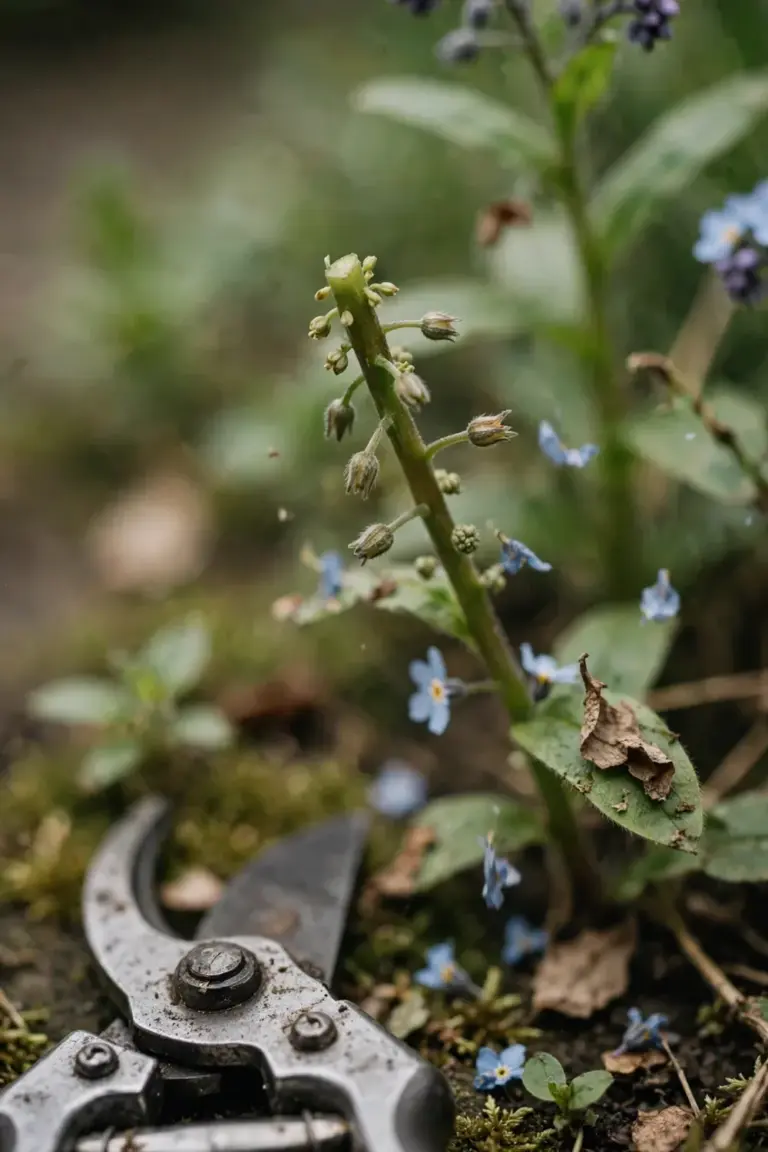
Make the decision before the flowers fade, because both options need action.
Option A: deadhead to hold the line. Snip or shear the spent flower stems as the petals drop, before the seed pods harden. This keeps the planting exactly where you put it and forces no seedlings into paths and lawns. It also tidies the plant. Spent forget-me-nots look ragged.
Option B: let a managed colony run. Leave the seed heads on plants in the spots you want them to spread: under roses, along path edges, beneath spring bulbs. Pull the unwanted seedlings in winter when they are small rosettes and easy to lift. A colony gives you free plants every year and the classic cottage-garden drift of blue. It also gives you a weeding job. Do not choose this option near bushland, creek lines, or native garden beds. A plant that is “charming” in a border is “weedy” the moment it crosses the fence.
Either way, collect some seed on purpose. Shake a few dried stems over a paper bag in early summer and store the seed in a labeled jar in a cool cupboard. That jar is next year’s sowing, free, and fresher than anything you will buy. Label it with the year and the variety, because next spring every brown paper bag looks the same and you will not remember which one held the pink ones.
10. Plant Them Behind Tulips and Spring Bulbs
This is the payoff combination, and it is the reason forget-me-nots earn their keep. The blue cloud blooms at the same time as tulips in late spring, and the low carpet hides the dying bulb foliage that every spring garden suffers through.
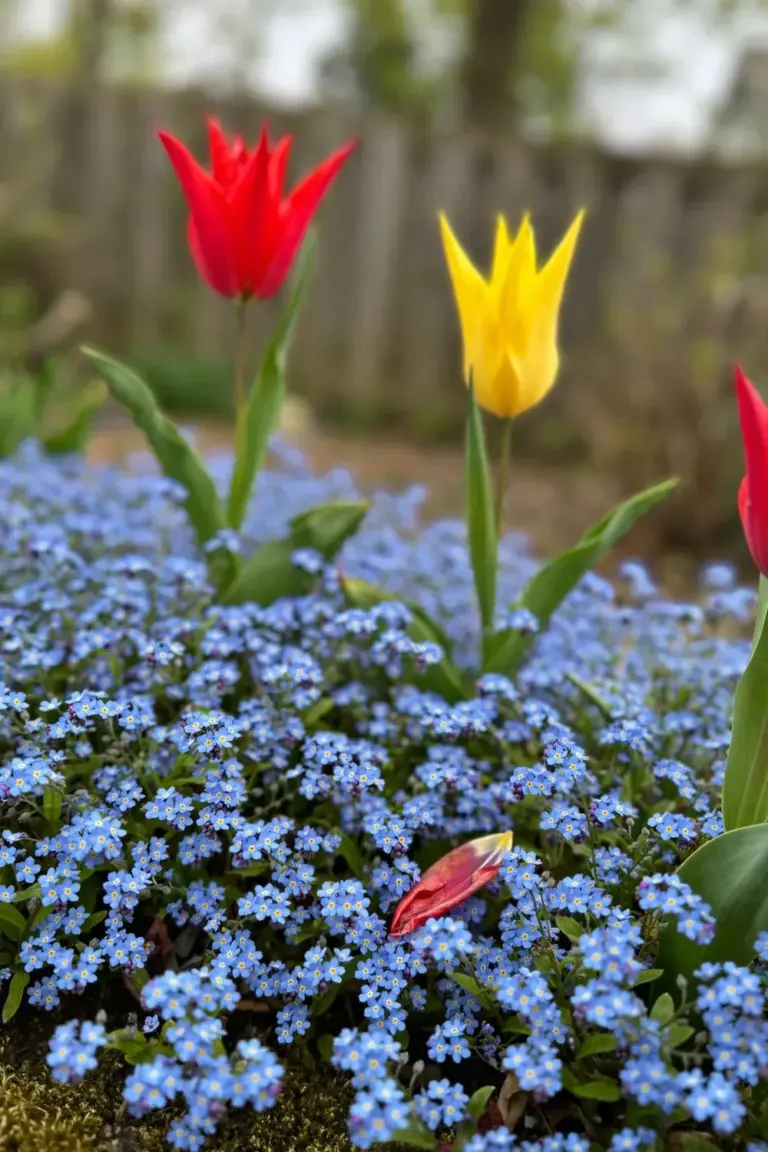
GrowVeg’s guide calls out the pairing directly: forget-me-nots create a phenomenal show as companion plants for tulips, which bloom at the same time in late spring (Forget-Me-Not Grow Guide). The low blue carpet also hides the dying bulb foliage that every spring garden suffers through.
Plant the bulbs first, 10 to 12 cm deep in autumn. Set the forget-me-not rosettes in front of them. In spring the bulbs punch up through the blue haze. After the bulb flowers fade, the forget-me-not foliage covers the yellowing leaves you are supposed to leave alone until they feed the bulb. One planting solves two problems: the display, and the ugly aftermath.
The same logic works with daffodils, hyacinths, and grape hyacinths. If you are planning the bulb side of this pairing, the fall bulb guide lists the best candidates for spring color (Bulbs to Plant in Fall). Sow or set the forget-me-nots in the same autumn you plant the bulbs, and the two rhythms lock together from year one.
11. Pick 3 Proven Varieties for Color
Most seed packets just say “forget-me-not,” and that is fine. The straight species gives you the classic sky-blue flowers with yellow eyes. But three named varieties are worth knowing when you want a different color in the mix.
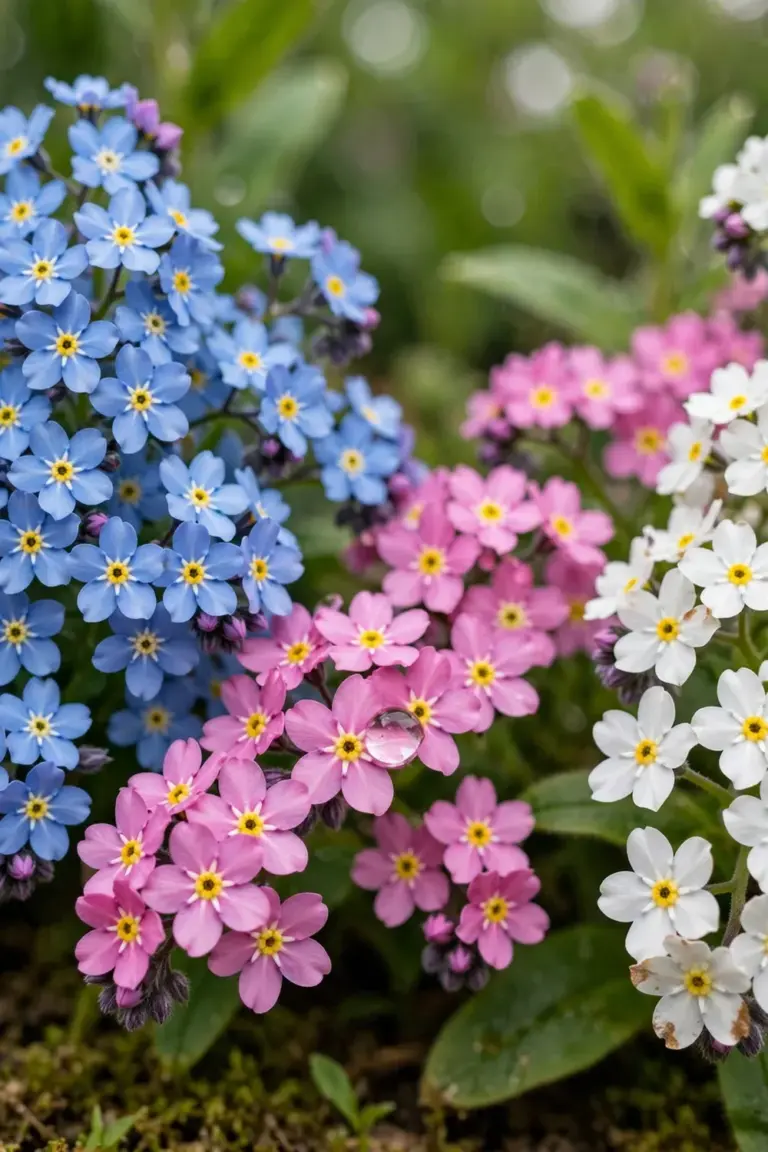
‘Blue Basket’ deepens the blue. It is the pick for the traditional look, only darker and richer. LoveTheGarden recommends it for darker blue flowers (How to Grow and Care for Forget-Me-Not Flowers).
‘Victoria Rose’ turns the flowers pink. The same guide lists it for vivid pink blooms, and nursery listings describe it as a compact biennial around 15 cm tall with rose flowers and the same self-seeding habit as the species.
‘Snowball’ goes white. Pure white flowers with the same yellow eye, useful for moon gardens and for breaking up a solid blue drift so it does not read as one flat color.
All three grow exactly like the species: same late-summer sow, same surface technique, same spacing, same biennial clock. The variety changes the flower color. Nothing else moves. If your seed rack only stocks the unnamed mix, take it. A drift of straight sky-blue with yellow eyes is the look that made the plant famous in the first place.
12. Fix 5 Failures Fast
Most forget-me-not problems trace back to the clock or the surface. Run the list.

No flowers in year one. The plant is not failing. You sowed a biennial in spring and it will flower next spring. Mark the calendar. If you want flowers this year too, buy a punnet of nursery seedlings that were sown last summer.
Seeds never sprout. Check the depth. Buried seed cannot see light, and forget-me-not seed needs light to germinate. Next sowing, press the seed onto the surface and cover with no more than 3 mm of vermiculite. Check moisture too. A surface that dries out for a day kills germinating seed.
Seedlings collapse at the base. That is damping off, a soil fungus that kills seedlings at the soil line. It strikes in warm, airless, overwatered trays. Sow thinner, water with a mister, and give the tray air movement. Throw out collapsed seedlings. They do not recover.
Plants vanish in summer heat. Forget-me-nots are a cool-season plant. In hot-summer regions the parent plants die back after seeding, which is normal. The colony continues through the self-sown seedlings if you let it. If the seedlings fry too, the spot is too hot and dry. Move the colony to afternoon shade.
The colony takes over. You chose Option B in the self-seeding decision and skipped the winter seedling pull. Shear the spent flowers before seed sets this year, and hand-pull the excess rosettes while they are small. A colony you ignore for two seasons becomes a weed problem you dig out for five.
Forget-Me-Not Flower FAQ
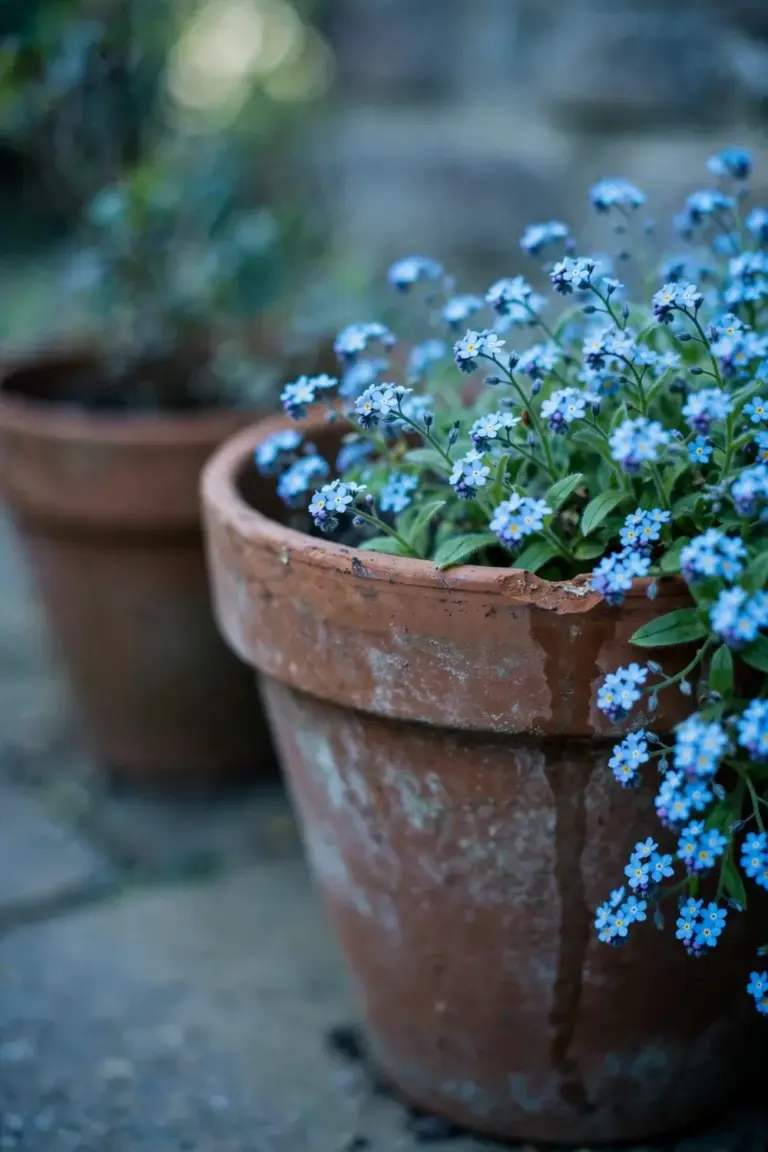
You sowed a biennial in spring. Garden forget-me-not, Myosotis sylvatica, spends its first season as a leaf rosette and flowers the following spring. Spring-sown seed almost never flowers the same year. Mark the bed, keep the rosettes watered through summer, and expect the blue cloud next spring. For flowers this season, buy nursery seedlings sown last summer.
Neither, strictly. Garden forget-me-not is a hardy biennial: it germinates one year, flowers the next, and dies after setting seed. It behaves like a short-lived perennial only because it self-seeds so freely that new plants replace the dead ones. Chinese forget-me-not, Cynoglossum amabile, is a different species grown as a cool-season annual with no cold requirement.
Yes. Use a pot at least 20 cm deep with drainage holes and a moisture-retentive potting mix. Set the pot in partial shade, because containers dry out fast and forget-me-nots hate drought. Sow or transplant 3 to 5 plants per 30 cm pot at 15 cm spacing. Water when the top 2 cm of mix feels dry. Pots suit the pink and white varieties as well as the blue.
Chinese forget-me-not, Cynoglossum amabile, contains tumorigenic pyrrolizidine alkaloids, listed as its toxic principle by the North Carolina Extension. Do not eat it, and keep it away from children and pets that nibble plants. Garden forget-me-not, Myosotis sylvatica, carries the same family-level caution, so do not eat its flowers either. Grow both as ornamentals only.
The individual plant does not. It dies after flowering and seeding in its second year. The colony comes back, because each plant drops hundreds of seeds that germinate into next year’s rosettes. Leave the seed heads on if you want a self-renewing drift. Shear the spent flowers before the pods harden if you want the planting to stay exactly where you put it.
In temperate zones, sow from late February to April for flowers the following spring. In subtropical zones, sow in March to April only, after the summer heat breaks, because heat kills the seedlings. In cool zones, wait until September or October, after the last frost. Set transplants out in early autumn while the soil is still warm.
Keep the Blue Returning
The whole method fits on an index card. Sow Myosotis sylvatica in late summer, press the seed onto the surface, keep it damp at 15 to 20°C, and set the seedlings out 15 to 20 cm apart in partial shade. Feed once in spring. Decide about the self-seeding before the seed pods harden.
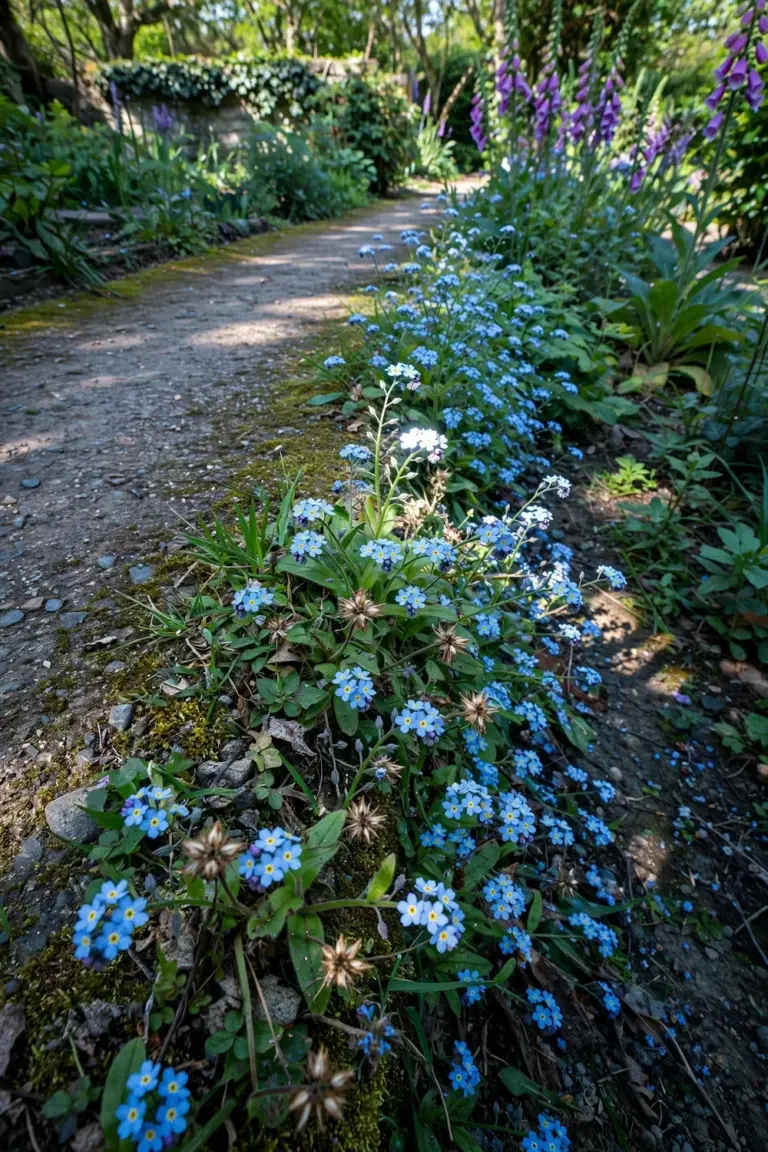
Do it once and the colony largely runs itself. A biennial asks for one thing a true annual never does: patience across a winter. Pay it, and the blue cloud comes back every spring, thicker each year, in exactly the spots you chose.