

Plant 6 to 8 weeks before your first hard freeze. That single rule decides whether planting mums in fall works or wastes your money, because a mum with weeks of warm soil grows the roots that survive winter, and a mum dropped into cold soil in late October has no time to do the same. Fall planting is the common practice, and it succeeds when you buy the right type early enough. The rest of this page walks the full decision: fall versus spring, garden mums versus florist mums, the frost-date math, the planting steps, pots versus ground, and the overwintering setup that brings fall-planted mums back. Six to eight weeks before your first hard freeze is the practical clock for everything below.
This page is the planting decision. For varieties and care, the 13 bloom classes, the hardy-versus-florist distinction, buying rules, pinching, and deadheading, see the fall-chrysanthemums companion. For the full fall roster beyond mums, fall blooming perennials; for the season’s crops at a glance, the fall planting guide; and for the frost-date math behind the clock used here, when to start fall garden.
Fall or Spring: The Headline Decision
Spring planting is the safer bet, and every extension source says so. A mum planted in spring has a full growing season to build roots before its first winter. Fall planting is the common practice anyway, because that is when garden centers overflow with blooming mums, and it works when three conditions hold: you plant a hardy garden mum, you plant it six to eight weeks before your first hard freeze, and you mulch after the first hard frost. Miss any one of the three and the plant behaves as an annual.
That is the honest answer. Fall planting is not wrong. It is a bet with a deadline. The table below lays out the odds for each choice so you can match your situation to the right one.
The Planting Decision at a Glance
| Decision | Timing | Zone | Likely outcome |
|---|---|---|---|
| Plant hardy garden mums in fall | 6 to 8 weeks before first hard freeze | 5 to 9 | Roots establish; returns next year with mulch |
| Plant florist mums in fall | Any | Any | Seasonal color; does not survive freezing |
| Plant hardy mums late (October) | Under 4 weeks before hard freeze | 5 to 9 | Roots too shallow; usually dies over winter |
| Plant hardy mums in spring | After last frost | 5 to 9 | Safest; full season of root growth |
| Keep mums in pots over winter | Before hard freeze | 5 to 9 | Survives only with shelter and mulch |
1. Answer the Headline Question First
Timing: Decide before you buy; Method: Fall or spring; Zone: 5 to 9.

Should you plant mums in the fall? Yes, if you plant early and buy the right type. The University of Illinois Extension recommends spring planting for perennials generally, and calls fall planting of mums the common practice. The distinction matters because most disappointment comes from treating a fall purchase as a perennial investment without meeting the conditions.
Buy the mum, then count backward from your first hard freeze. If the calendar gives you six to eight weeks of warm soil, plant. If it gives you three, enjoy the blooms in the pot and plan a spring purchase instead. That one count replaces most of the guessing.
2. Buy Hardy Garden Mums, Not Florist Mums
Timing: At the nursery, before planting day; Method: Selection; Zone: 5 to 9.
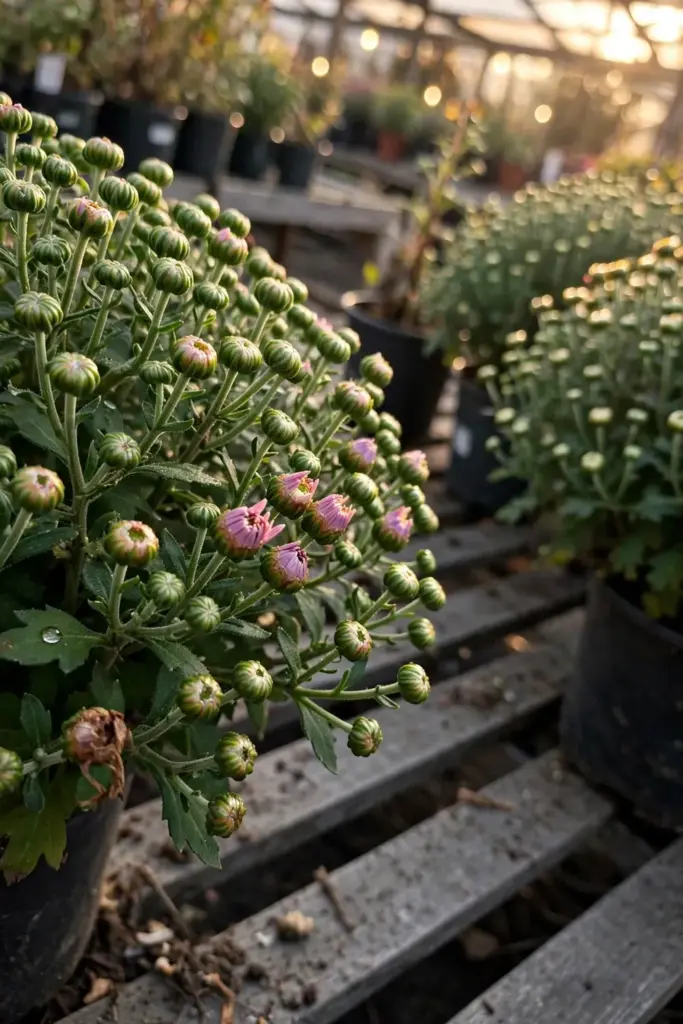
Mums and chrysanthemums are the same plant, Chrysanthemum x morifolium. The difference that decides survival is breeding. Garden mums are selected for cold tolerance and typically hold zones 5 through 9, according to Virginia Tech’s overwintering guide. Florist mums share the species name but were never bred for hardiness, and they do not survive freezing.
The tag rarely says which one you hold. Buy tight buds, not full blooms, and ask the nursery whether the cultivar is a hardy garden type. A mum bought in full bloom in October is seasonal color. A garden mum bought with tight buds and planted while roots still have weeks of warm soil can return. The companion fall chrysanthemums article walks the 13 bloom classes and the full buying guide if you want the variety detail.
3. Count Back 6 to 8 Weeks From Your First Hard Freeze
Timing: Before you buy; Method: Frost-date math; Zone: All.

This is the number the whole article hangs on. Six to eight weeks before your first expected hard freeze is the window that extension sources and experienced growers converge on, because roots grow fastest in warm soil and stop when the ground cools. A mum planted inside that window spends its energy underground. A mum planted after it spends its energy blooming, then faces winter on shallow roots.
The when to start fall garden page walks the frost-date math in full: find your average first hard freeze date, count back, and that is your planting deadline. Write the date down. Every step below keys off it.
4. September Beats October
Timing: Late August to mid-September; Method: Calendar; Zone: 5 to 9.
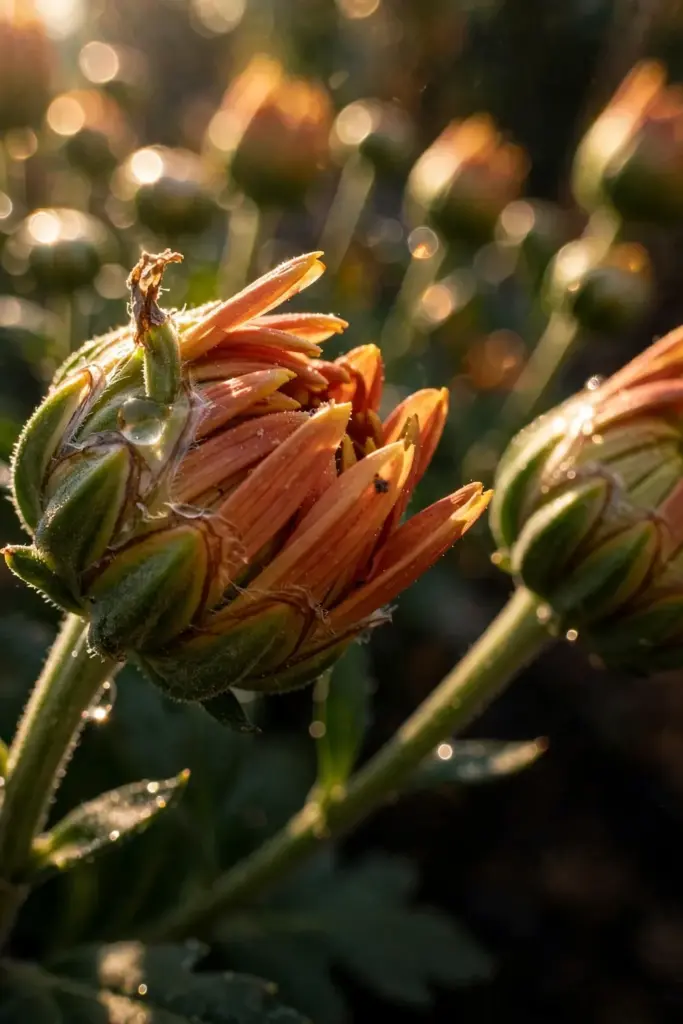
Multiple extension sources land on the same calendar: plant hardy garden mums in late August through mid-September, and treat early October as the absolute edge in most of zones 5 to 9. Virginia Tech’s guide advises planting in late August to early September so roots establish before cold arrives.
October mums are the trap. They look spectacular at the store because they are in full bloom, and full bloom means the plant’s energy is going to flowers, not roots. One grower site puts it bluntly: most autumn mums die after one season because they were planted too late, after the roots ran out of warm soil. Buy buds in September. Admire blooms in October.
5. Pick a Full-Sun, Well-Drained Spot
Timing: Planting day; Method: Site selection; Zone: All.

Mums want at least six hours of direct sun a day, per Ohio State Extension’s mum care guide. Morning sun matters most in fall, because it dries the foliage fast and cuts the mildew pressure that builds in cool, damp weather.
Drainage matters as much as light. Mums sitting in wet soil rot at the crown over winter, and cold plus wet kills more mums than cold alone. If your bed holds water after rain, plant on a slight mound or pick a different spot. A mum in average garden soil that drains freely outlives a mum in rich soil that stays soggy.
6. Dig the Hole Twice as Wide as the Root Ball
Timing: Planting day; Method: Hole prep; Zone: All.

Dig the hole about twice as wide as the root ball and no deeper than the ball itself. The wide hole gives new roots loose soil to expand into during those critical six to eight weeks. The shallow depth keeps the crown at soil level, which is where it must sit to avoid rot.
Tease the root ball gently before setting it in. Nursery mums are often pot-bound, with roots circling the container. Loosen the outer roots with your fingers or make three shallow vertical cuts so they grow outward into the new soil instead of continuing the circle. A pot-bound mum planted as-is often sits in place all fall and never anchors.
7. Space Plants 45 to 60 cm Apart
Timing: Planting day; Method: Spacing; Zone: All.

Give each mum 45 to 60 cm (18 to 24 in.) of space. Ohio State Extension recommends 18 to 30 in. apart for garden mums, which converts to roughly 45 to 75 cm. The range exists because cultivars vary: cushion types stay compact, while taller garden types spread.
Crowding is a fall disease invitation. Cool nights plus touching foliage keeps leaves wet, and wet leaves grow mildew. The spacing also gives each plant its own root zone, which matters when every plant is racing the same frost deadline. Measure once with a trowel handle rather than eyeballing it.
8. Plant at the Same Depth It Grew in the Pot
Timing: Planting day; Method: Depth; Zone: All.

Set the mum so the top of the root ball sits level with the surrounding soil. Not deeper, not mounded up. Burying the crown invites rot over winter, and planting high exposes roots to the first freeze.
Backfill with the soil you dug out, firming gently to remove air pockets without compacting. Water the planting hole before you backfill and again after, so the soil settles around the roots. The goal is root-to-soil contact everywhere, because an air pocket is a dead zone where fine roots dry out.
9. Water Deep on Planting Day, Then Keep It Steady
Timing: Planting day through first freeze; Method: Watering; Zone: All.

Soak the planting area deeply on planting day, then water steadily until the ground freezes. Fall mums need consistent moisture while roots establish, and a dry spell in September can stall a plant that otherwise had enough time. The common failure is assuming fall rain handles it; September is often dry, and a new mum has no deep roots to reach stored moisture.
Water the soil, not the foliage. Wet leaves in cool weather feed fungal problems, and a mum heading into winter with diseased foliage starts the cold season weakened. A soaker hose or a slow trickle at the base beats overhead watering every time.
10. Pots vs Ground: The Real Trade-Off
Timing: Decide at purchase; Method: Placement; Zone: 5 to 9.

Pots are for display, and ground is for survival. A mum in a pot has its roots exposed to air temperature on all sides, which means the root zone freezes harder and faster than soil in the ground. That is why potted mums so often fail to return even when the same cultivar would survive planted out.
The trade-off is honest. Keep the mum in its nursery pot for the porch display, and accept it as seasonal color. Or plant it in the ground six to eight weeks before hard freeze and give it a real shot at perennial life. What does not work is leaving a potted mum on the porch through winter and expecting spring growth. The pot is the problem, not the plant.
11. Move Potted Mums Into the Ground in September
Timing: Late August to mid-September; Method: Transplant; Zone: 5 to 9.

If you bought blooming mums for the porch and want them to live, transplant them into the ground while the calendar still allows. Slip the plant from its pot, tease the roots, and plant at the same depth in a sunny, well-drained spot, following the hole and spacing rules above.
Cut the spent blooms back by about a third at transplant time. This feels wrong when the plant looks beautiful, but the blooms are spending energy the roots need. The plant will push a smaller second flush if the season allows, and the root growth you buy now is what survives winter. A mum transplanted in September with trimmed blooms beats a mum left in its pot every time.
12. Keep Mums in Pots Over Winter Only With Shelter
Timing: Before first hard freeze; Method: Overwintering in containers; Zone: 5 to 9.

If the mum must stay in a pot, it needs shelter. Move the pot against the house wall on the sheltered side, cluster pots together, and wrap the containers in burlap or bubble wrap to insulate the root zone. An unheated garage or cold frame works for the coldest stretches, as long as the soil does not dry out completely.
Water sparingly through winter, just enough to keep the root ball from desiccating. Do not fertilize. In spring, wait for new growth before deciding the plant is dead; mums are slow to wake, and many gardeners discard living plants in April. This is a salvage operation, not a plan. Planting in the ground in September remains the better move.
13. Water Until the Ground Freezes
Timing: Fall through first freeze; Method: Watering; Zone: All.

Keep watering until the ground actually freezes, not just until the blooms fade. Roots keep growing in cool soil long after the flowers finish, and those late-season roots are the ones that anchor the plant through winter. Stopping water in October because the display is done starves the establishment you paid for in September.
Taper as temperatures drop, but do not stop early. One deep watering a week in dry fall weather is the baseline. When the soil surface freezes and stays frozen, the season is over and the hose can go away.
14. Mulch 7 to 10 cm After the First Hard Frost
Timing: After first hard frost; Method: Mulching; Zone: 5 to 9.

Wait for the first hard frost, then mulch 7 to 10 cm (3 to 4 in.) deep with a light, airy material like shredded leaves or straw, per Virginia Tech’s overwintering guide. The timing matters: mulch applied too early traps warmth and moisture around the crown and invites rot. Mulch applied after the ground cools insulates against the freeze-thaw cycles that heave shallow roots out of the soil.
Keep the mulch pulled back slightly from the crown itself. The goal is insulating the root zone, not burying the plant. Remove the mulch gradually in early to mid-April as growth resumes, per the same guide. A mum smothered under wet mulch in a warm April rots just as surely as one frozen in January.
15. Leave the Stems Standing Until Spring
Timing: After frost through winter; Method: Cleanup timing; Zone: All.

Do not cut mum stems down in fall. Virginia Tech’s guide advises leaving the foliage until after the first hard frost, and the standing stems do real work all winter: they trap leaves and snow that insulate the crown, and they mark the plant’s location so you do not dig it up by accident in spring.
Cut the dead stems back in spring when new growth appears at the base. By then the insulation job is done and the old stems are just shading the new shoots. This runs against the tidy-fall-garden instinct, and it is a habit worth keeping.
16. Skip Fall Fertilizer
Timing: Fall; Method: Feeding; Zone: All.

Do not fertilize mums at fall planting time. Fertilizer pushes soft growth that has no time to harden before frost, and soft growth is the first tissue winter kills. The plant needs roots now, not leaves.
The right feeding schedule is spring. When new growth reaches about 15 cm (6 in.) in spring, begin the pinching and feeding routine that Ohio State Extension describes: pinch at 15 cm and again at 30 cm, 100 days before the desired bloom. Fall-planted mums that survive winter get their first real feeding the following spring, not at planting.
17. Divide and Pinch the Survivors in Spring
Timing: Spring; Method: Renewal; Zone: 5 to 9.
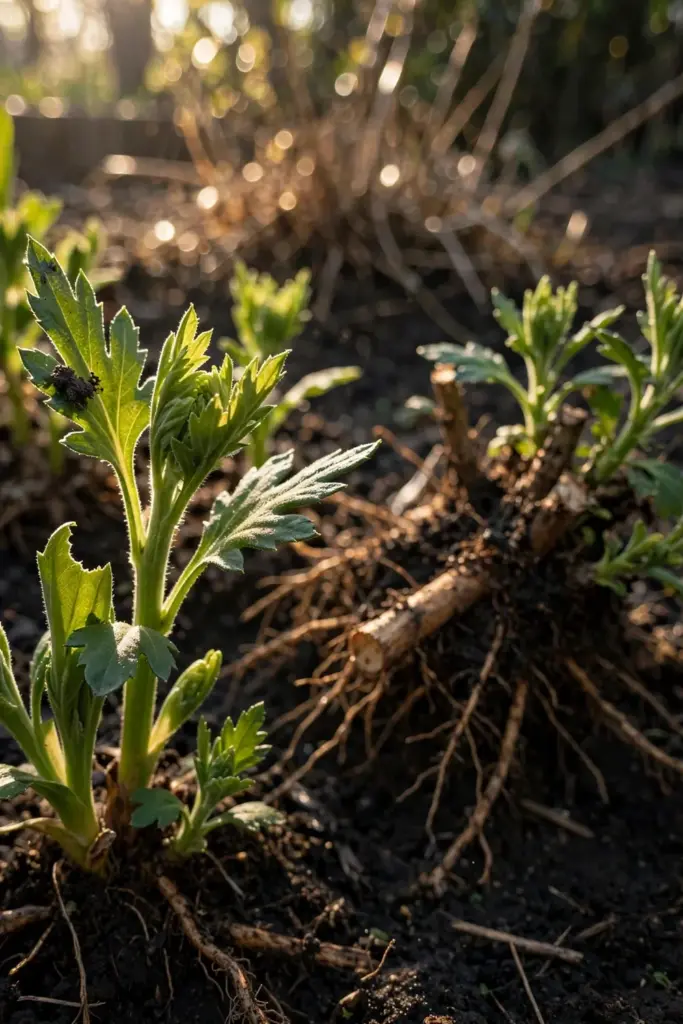
Mums that return in spring deserve division every two to three years. Lift the clump, discard the woody center, and replant the vigorous outer divisions. Ohio State Extension suggests rotating the planting site after about three years to keep the plants vigorous.
Pinch the new growth through early summer to build the branching structure that carries fall blooms. The survivors of a well-executed fall planting enter their second year with established roots, which is exactly the head start spring planting is supposed to provide. A fall-planted mum that lives becomes, for all practical purposes, a spring-planted one with a season already banked.
Mistakes That Kill Fall-Planted Mums
Planting in late October tops the list. The blooms look irresistible and the roots get nothing. Buying florist mums by mistake runs second; the tag never says, so ask. Watering the foliage instead of the soil runs third, because cool wet leaves grow the mildew that weakens plants heading into winter.
Mulching too early is the quiet killer. A thick blanket applied in warm October traps moisture against the crown and rots the plant before winter even arrives. Wait for the hard frost, then mulch. Cutting stems down in fall removes the winter insulation the plant was counting on. Each of these mistakes is a choice, and each has a fix in the steps above.
Frequently Asked Questions
Yes, when you plant a hardy garden mum six to eight weeks before your first hard freeze. Spring planting is safer, but fall planting works under those conditions. What fails is planting florist mums, planting in late October, or skipping mulch. Match the three conditions and fall-planted mums return.
Hardy garden mums do, in zones 5 through 9, when planted early enough to root before winter and mulched after the first hard frost. Florist mums do not come back; they were never bred for cold. If your mums die every winter despite early planting, you are almost certainly buying the florist type.
Six to eight weeks before your first hard freeze is the cutoff. In most of zones 5 to 9 that means late August through mid-September, with early October as the absolute edge. Planting later than that gives roots too little warm soil time, and the plant usually dies over winter regardless of mulch.
Rarely without help. Pot walls expose roots to air temperature, so the root zone freezes harder than ground soil. To try, cluster pots against a sheltered wall, wrap them in burlap, water sparingly, and move them into an unheated garage for the coldest stretches. Planting in the ground in September is the far better bet.
Spring is better for survival. A spring-planted mum gets a full season of root growth before its first winter. Fall is better for instant color, since that is when nurseries stock blooming plants. If you want both, buy in fall for the display, transplant into the ground in September, and treat spring as the real start of the plant’s perennial life.
The blooms last until hard frost, typically a few weeks. The plant lasts years if it is a hardy garden type planted six to eight weeks before freeze and mulched. A florist mum planted in fall lasts one season by design. The difference is the type you bought and the timing you gave it, not luck.