
Check your state’s weed list before you sow a single kochia seed in Australia. That check takes 5 minutes and decides whether you are planting an ornamental or committing an offence. Kochia (Bassia scoparia) is Prohibited Matter in New South Wales, which means growing it is an offence and sightings must be reported to NSW DPI. The same species sits on Australia’s National Alert List for Environmental Weeds, one of only 28 species flagged in the early stages of establishment as a serious threat to biodiversity.
That is the honest answer to “how to grow kochia” in Australia: the law answers before the spade does. I have learned that checking weed law before sowing seed saves more grief than any fertilizer schedule. The rest of this page walks through the legal status state by state, the single ornamental exception, how to grow that exception without letting seed escape, the livestock and hay-fever fences, six legal alternatives for the same burning-red look, and exactly what to do if you spot kochia growing wild.
1. Answer the Legal Question First: Kochia Is Prohibited Matter in NSW
Kochia (Bassia scoparia) is listed as Prohibited Matter under New South Wales’ Biosecurity Act 2015. A person who deals with prohibited matter, which includes growing it, is guilty of an offence, and anyone who becomes aware of or suspects its presence must notify the Department of Primary Industries immediately, according to NSW WeedWise’s kochia profile.
Prohibited Matter is the strictest category in the NSW system. It covers weeds that have not established self-sustaining populations in the state and pose a significant risk to the economy, the environment, or human health. NSW WeedWise states that kochia is not currently present in New South Wales, and the listing exists to keep it that way.
Nationally, the picture is no friendlier. Bassia scoparia appears on the National Alert List for Environmental Weeds, a list of 28 weed species identified in 2001 as early-establishment threats with the potential to cause significant damage to biodiversity if left unmanaged. Even though the list is no longer in formal government use, Weeds Australia notes that the listed species still represent serious weed risks.
2. Use the Right Botanical Name: Kochia Is Bassia scoparia, an Annual
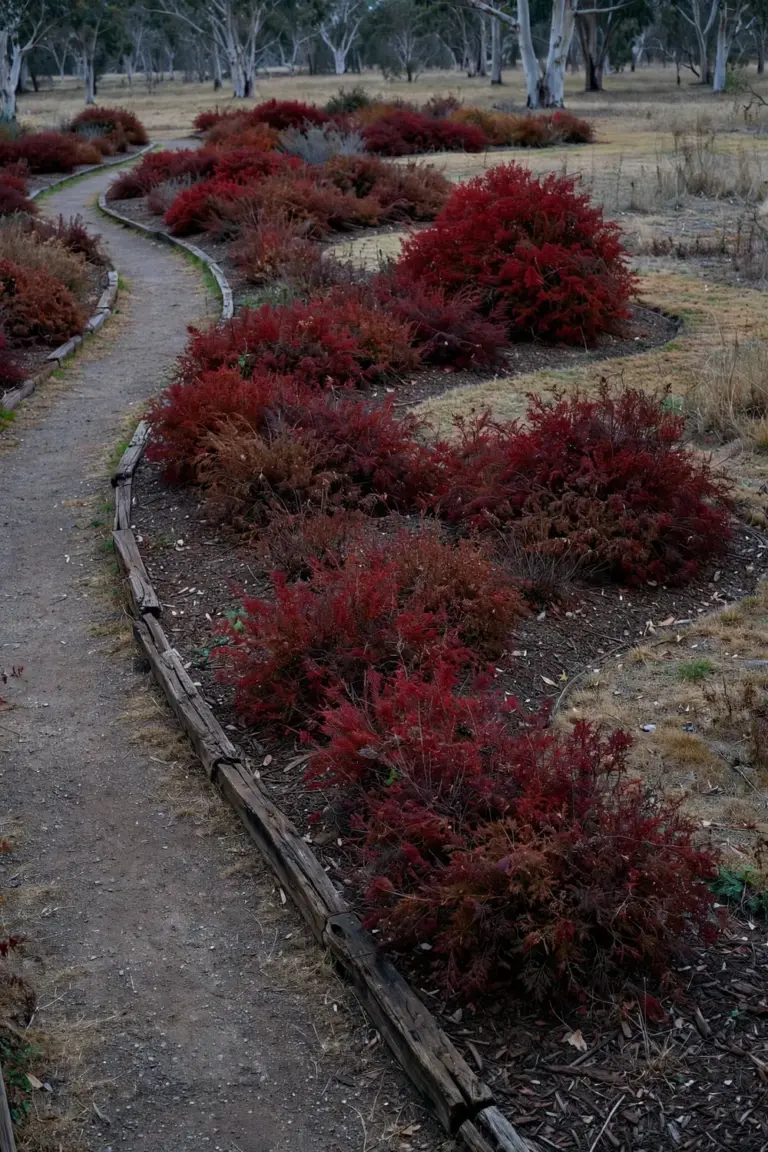
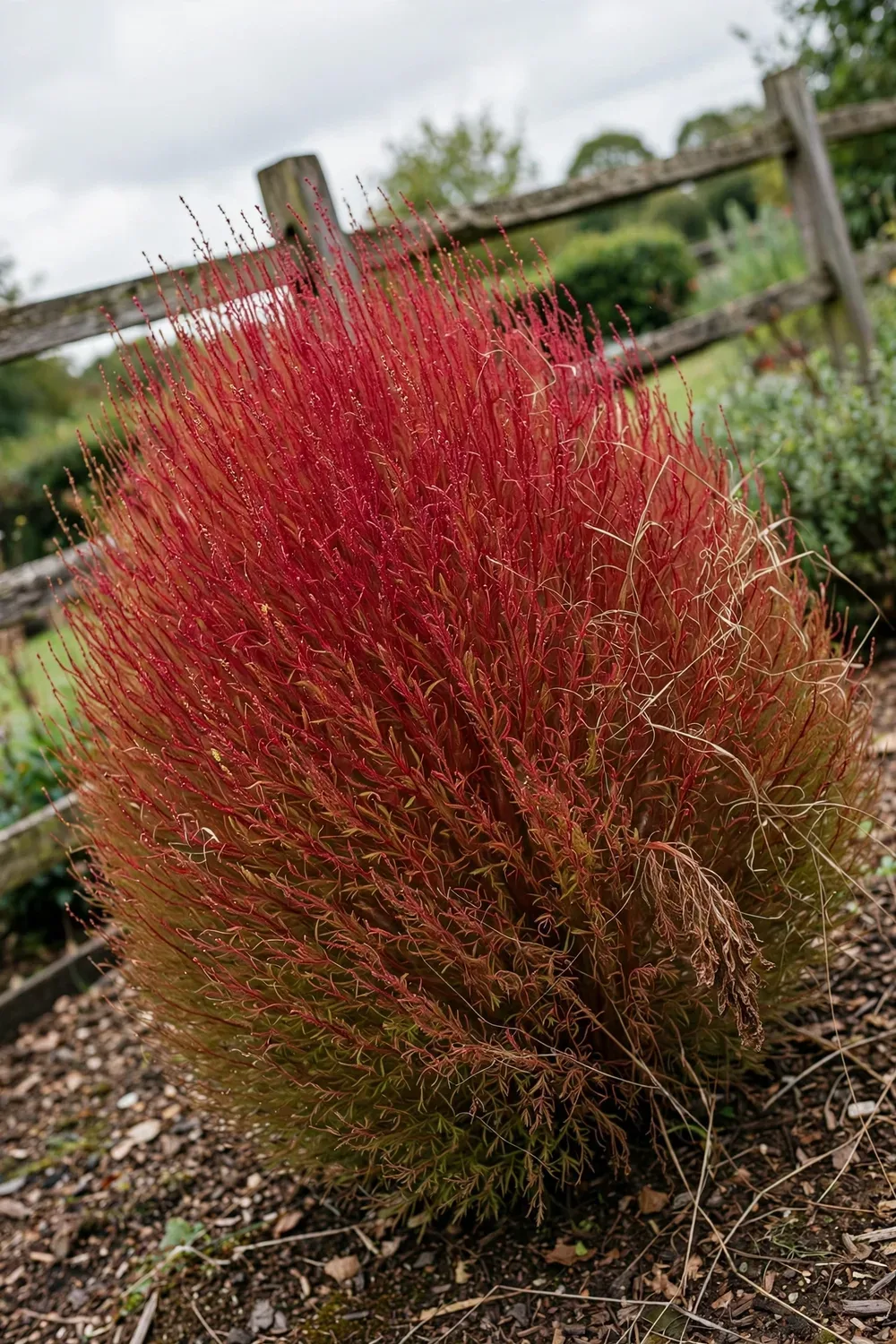
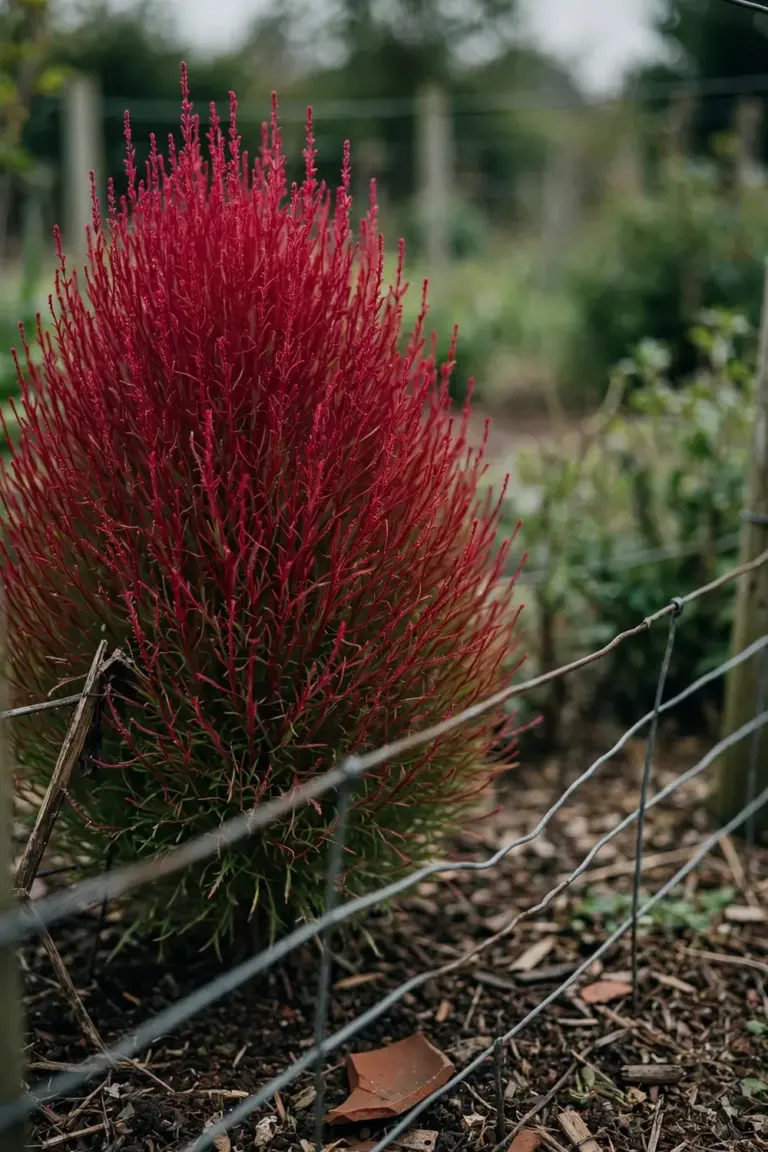
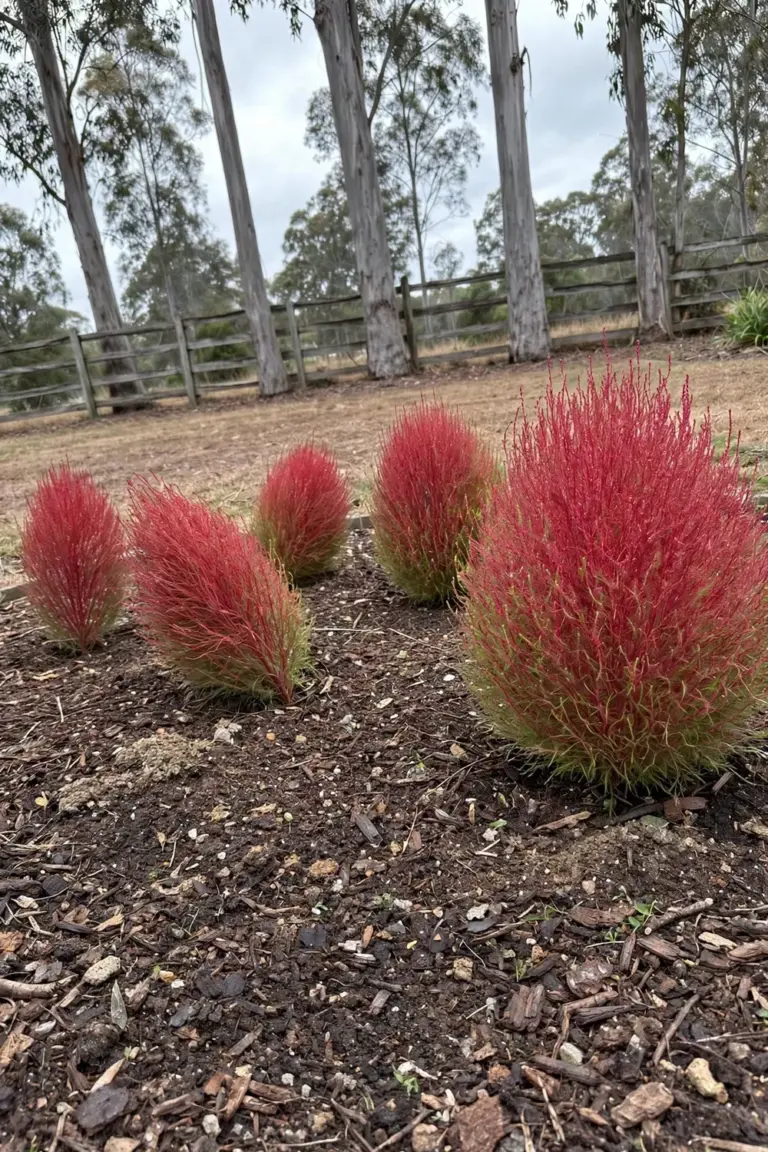
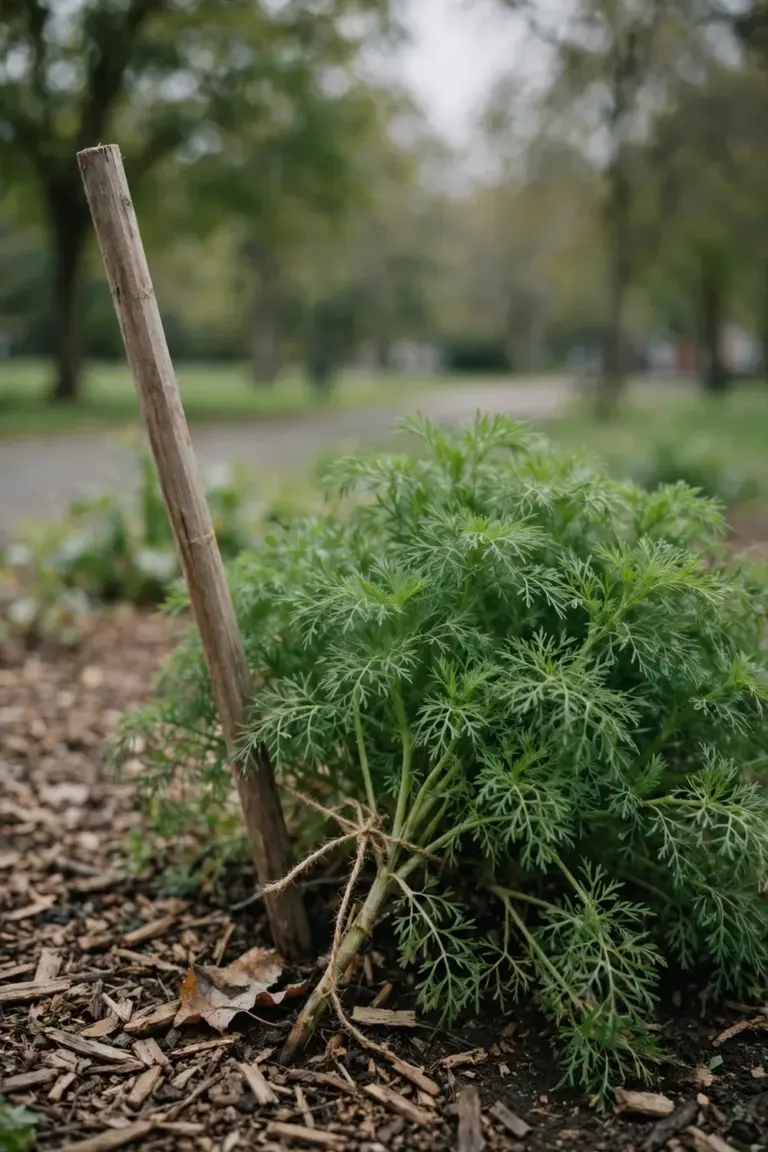
Kochia’s current botanical name is Bassia scoparia (L.) A.J.Scott, and the older name Kochia scoparia (L.) Schrad. survives as a synonym on seed packets, nursery tags, and older references. Bassia scoparia belongs to the Amaranthaceae family. The plant is a fast-growing annual that forms a neat, fine-textured, conical mound of feathery green foliage in summer and turns scarlet, maroon, or copper-red with the first cool nights of autumn.
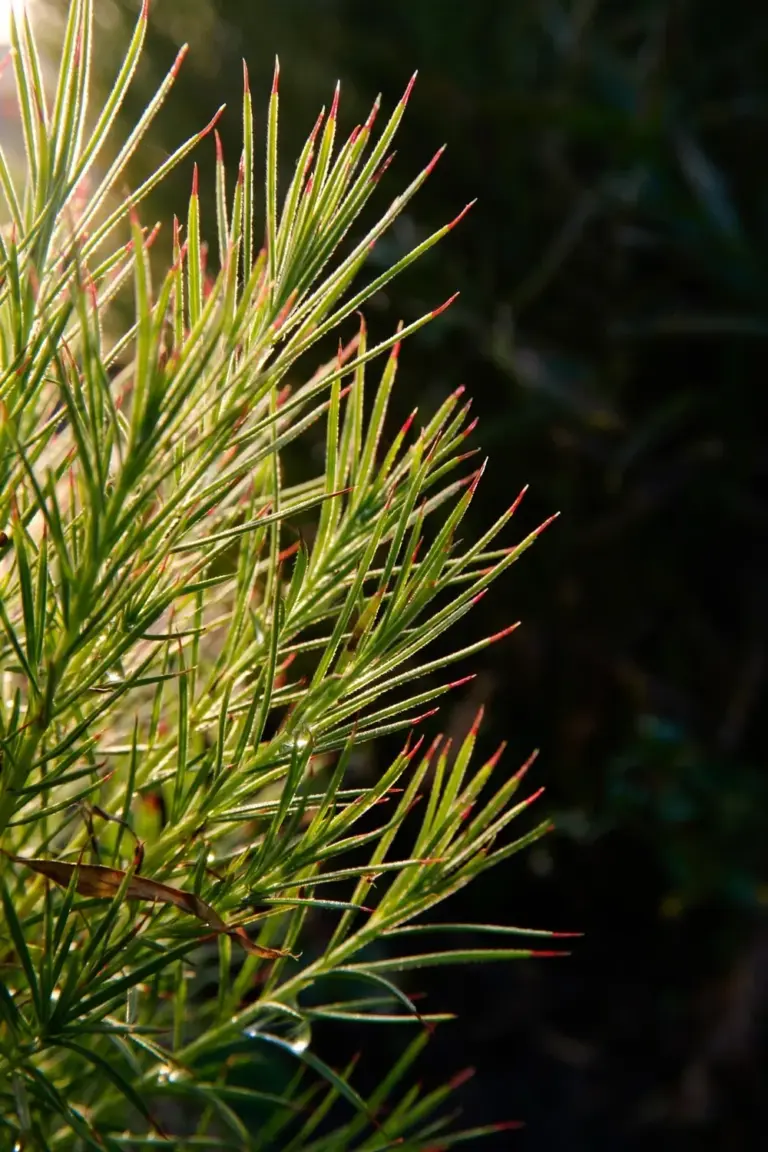
That red autumn color is the entire reason gardeners search for it. Common names multiply the confusion: kochia, burning bush, summer cypress, Mexican fireweed. Here is the naming fence to carry through the whole article. In garden-center and seed-catalog usage, “burning bush” means kochia (Bassia scoparia). The same common name is also used for Euonymus alatus, a deciduous shrub that is a completely different plant in a different family. Check the botanical name on any tag before following growing advice written for the other one.
The ornamental form sold for gardens is Bassia scoparia subsp. trichophylla (syn. Kochia trichophylla), a selected form with denser, finer foliage and the most intense red autumn color. NSW’s Prohibited Matter listing explicitly excludes this subspecies, which makes it the only kochia you can consider planting, and only where your state’s law allows it.
Use this table to keep the three “burning bush” identities straight.
| Plant | Botanical name | What it is | Autumn color | Australian legal note |
|---|---|---|---|---|
| Kochia (species) | Bassia scoparia | Fast annual weed, coarse foliage | Red, variable | Prohibited Matter in NSW; declared/prohibited in QLD, WA, TAS |
| Ornamental burning bush | Bassia scoparia subsp. trichophylla | Selected garden form, dense fine foliage | Vivid scarlet | Excluded from the NSW prohibition; check other states |
| Burning bush shrub | Euonymus alatus | Deciduous woody shrub, winged stems | Fuchsia-red | Not a declared weed; a different plant entirely |
3. Check Your State: Where Bassia scoparia Is Prohibited, Declared, or Eradicated
Australia’s weed law is state-based, so the answer changes at the border. Work through this table before buying seed.
| State / Territory | Legal status of Bassia scoparia | What it means for gardeners |
|---|---|---|
| New South Wales | Prohibited Matter (Biosecurity Act 2015), excluding subsp. trichophylla | Growing the species is an offence; notify NSW DPI of any sighting |
| Queensland | Listed as a prohibited invasive plant by the Queensland Government | Do not introduce, grow, or trade it |
| Western Australia | Declared pest (WA Department of Primary Industries and Regional Development) | Subject to control and reporting requirements |
| Tasmania | Eradicated; previously entered as a carrot-seed contaminant | Report any suspect plants to the state weeds authority |
| National | One of 28 species on the National Alert List for Environmental Weeds | Flagged as a serious national weed risk |
Victoria, South Australia, the Northern Territory, and the ACT run their own declared-plant registers, and absence from the national lists above is not permission. Each state and territory runs its own declared-plant registers, and local councils add their own requirements. Check your state weed register and ask your local weeds officer before planting any Bassia scoparia form, including the ornamental subspecies.
4. Study the Eradication Campaigns in Western Australia and Tasmania
Australia has already eradicated kochia twice, which tells you how seriously authorities treat it. NSW WeedWise records that kochia was brought to Western Australia in 1990 as a fodder plant for salt-affected land. Once its weedy behaviour was recognised, an eradication program began, and the last sightings were recorded in March 2000. The campaign was documented by Dodd and Randall in the Proceedings of the 13th Australian Weeds Conference in 2002.
Tasmania’s encounter was different. Kochia arrived as a contaminant of carrot seed in 1995, 1997, and 1998. Every infestation was eradicated, and previously infested areas were checked annually afterwards.
Both cases share a pattern worth remembering. Kochia arrived through agriculture, not gardens, and both states chose eradication over management. A plant that two state governments decided was worth hunting down to the last individual is not a plant to introduce to your backyard casually.
Ecology explains why authorities reacted so strongly. NSW WeedWise describes kochia as a plant of disturbed ground: roadsides, railways, eroded banks, crops, pastures, and rangelands. It tolerates a wide range of soils, including salty ones, and thrives in hot, sunny summers. Combine that habitat appetite with 14,000 seeds per plant and a 3-kilometre tumbleweed dispersal, and every new planting becomes a potential source population for country that is already fighting enough weeds.
5. Recognize the One Legal Exception: Bassia scoparia subsp. trichophylla
The ornamental subspecies Bassia scoparia subsp. trichophylla is the form bred for dense, fine, hair-like foliage and vivid red autumn color. It is the plant behind the “burning bush” seed packets and the red mounds in ornamental gardening photos.
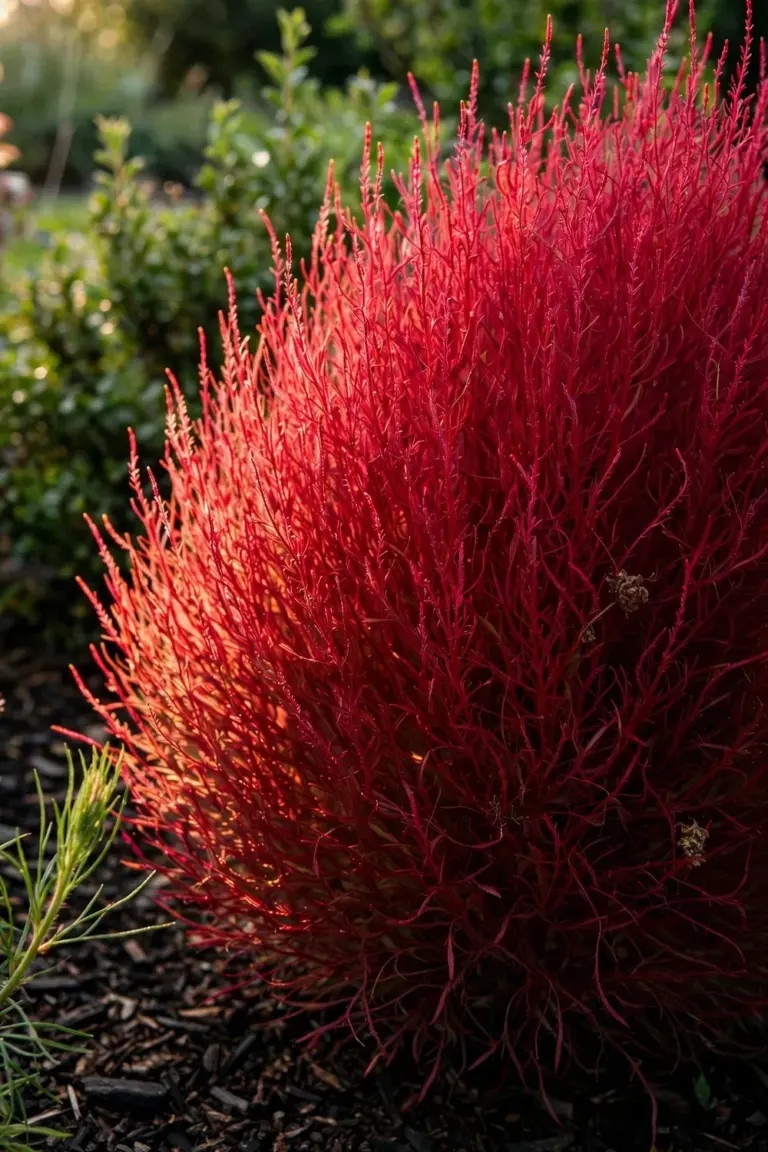
NSW’s listing draws the line at the subspecies level: Prohibited Matter applies to Bassia scoparia excluding subsp. trichophylla. That exclusion is the narrow door through which a gardener can legally grow a kochia in New South Wales. The door is narrow for a reason. The ornamental form still self-sows freely, and overseas records show it escaping cultivation, so the exclusion is a legal carve-out, not a safety certificate.
Three cautions come with the exception. First, the NSW exclusion does not automatically apply in other states, so Queensland, Western Australian, and Tasmanian gardeners must check their own registers. Second, buy seed only from a reputable supplier that names the subspecies on the packet; generic “kochia” seed may be the prohibited species. Third, even the legal form demands strict containment, which is the subject of the next two sections.
6. Grow the Ornamental Form in 7 Containment-First Steps
These steps apply only where your state allows Bassia scoparia subsp. trichophylla. If your state prohibits the species, stop at step one and plant an alternative from the later section instead.
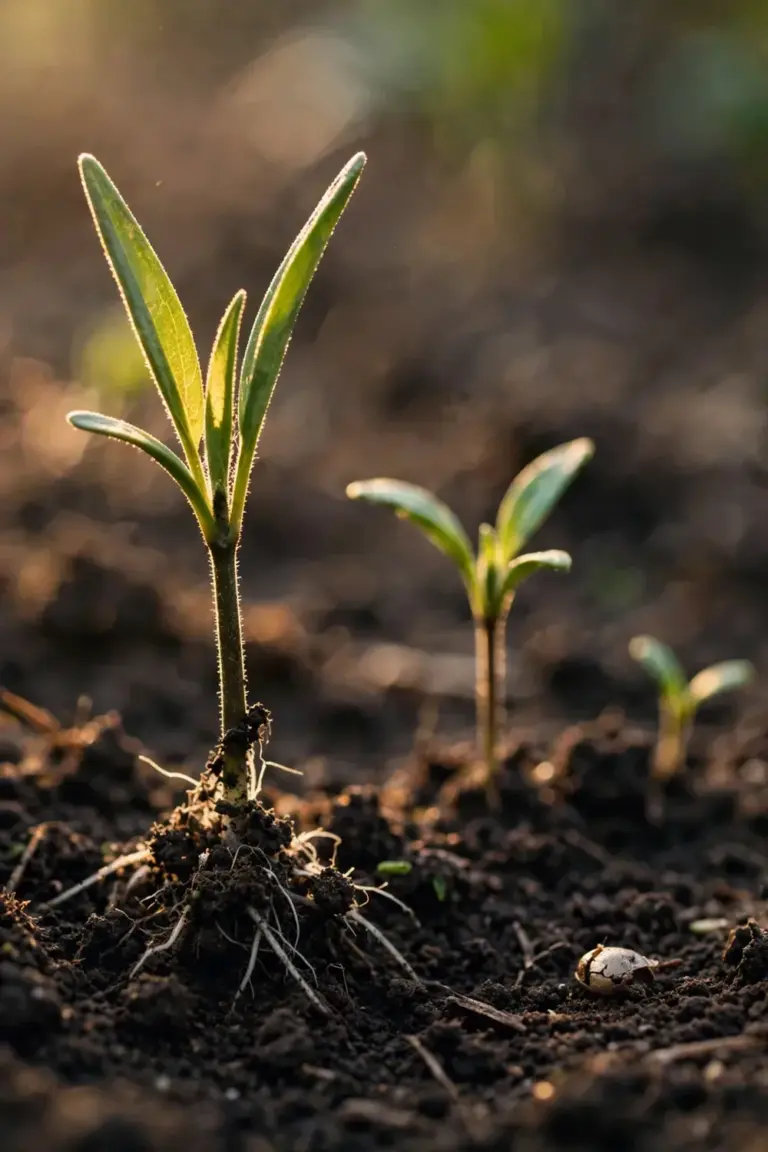
Step 1. Confirm the law in writing. Check your state weed register and your council’s declared plants list for Bassia scoparia and its subspecies. Keep a screenshot of the page. Laws change, and the screenshot is your record. If the register is ambiguous about the subspecies, email your state agriculture department with the full botanical name and ask for a written answer before you buy seed. A vague “it should be fine” from a nursery is not a legal defence.
Step 2. Sow fresh seed after the last frost. Kochia seed is short-lived. Cornell University’s weed science profile reports that most kochia seeds either germinate or die in their first year, so last season’s leftover packet is a gamble. Surface sow or press the seed into the top centimetre of soil, because it emerges best from shallow placement. Cornell’s data shows seedlings commonly breaking through the seed coat within 24 hours at 15 to 26 degrees Celsius, which is why stale seed shows itself fast.
Step 3. Give it full sun and lean, well-drained soil. Kochia tolerates an extraordinary range: Cornell’s profile records germination across pH 2 to 12 and in solutions of 10,000 parts per million salt. A plant that shrugs at salt and alkalinity does not need rich soil. Work in compost for structure the way any good soil health routine would, then leave the fertilizer bag closed. Heavy feeding pushes loose green growth and dilutes the autumn color.
Step 4. Water to establish, then back off. Keep the seedbed evenly moist until seedlings are up, following standard seed starting steps for fine seed. Once established, kochia is genuinely drought tolerant. NSW WeedWise notes it survives regions with less than 150 mm of annual rainfall. Deep, infrequent watering beats daily sprinkling.
Step 5. Pinch once for a fuller mound. Snip the growing tip of each young plant to force side branches. One pinch builds the dense conical shape the ornamental form is sold for. Skip this and the plant grows open and leggy.
Step 6. Space plants for air and access. Give each plant room to reach its full width so you can walk around every mound for inspection and deadheading. Crowded plants hide seed heads.
Step 7. Deadhead or pull before seed ripens. This step is the legal-safety core, and it gets its own section next.
7. Stop the Tumbleweed: Pull Plants Before 14,000 Seeds Scatter
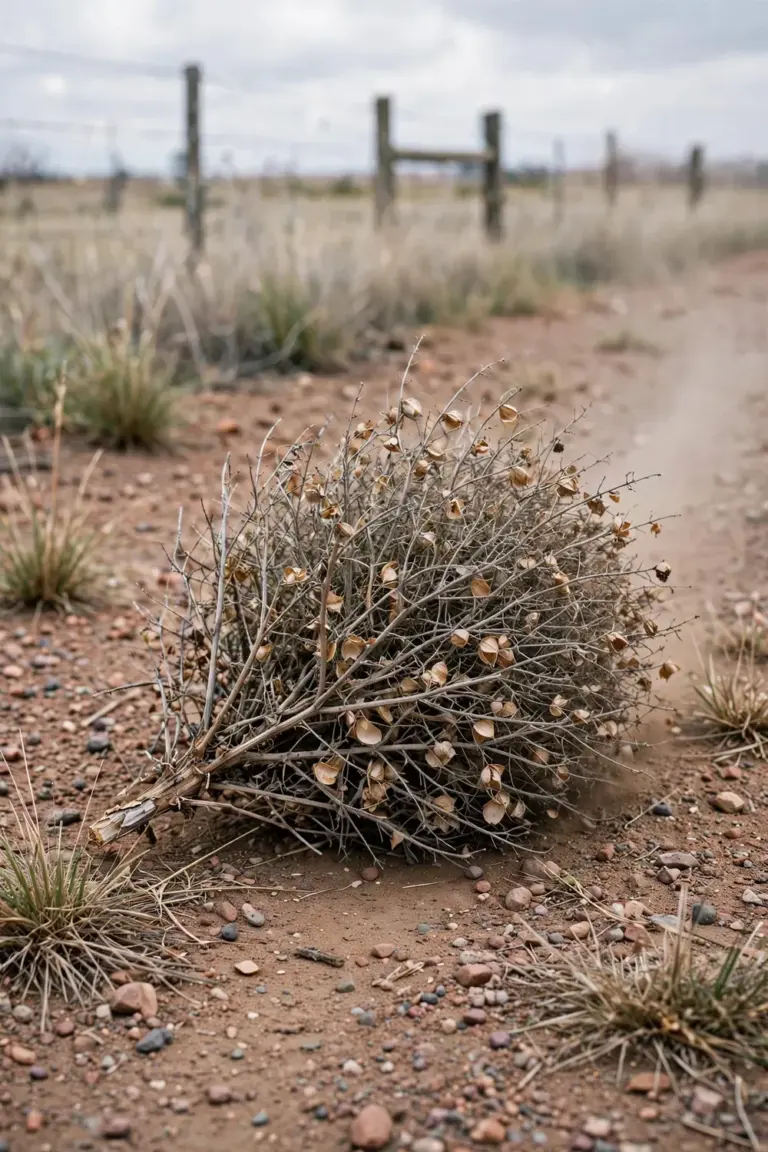
A single kochia plant produces around 14,000 seeds in late summer, according to NSW WeedWise. When autumn arrives, the dead plant breaks off at ground level and the wind rolls it like a tumbleweed, spreading seed up to 3 kilometres. Kochia seeds are usually viable for up to one year, though some remain viable for up to 4 years.
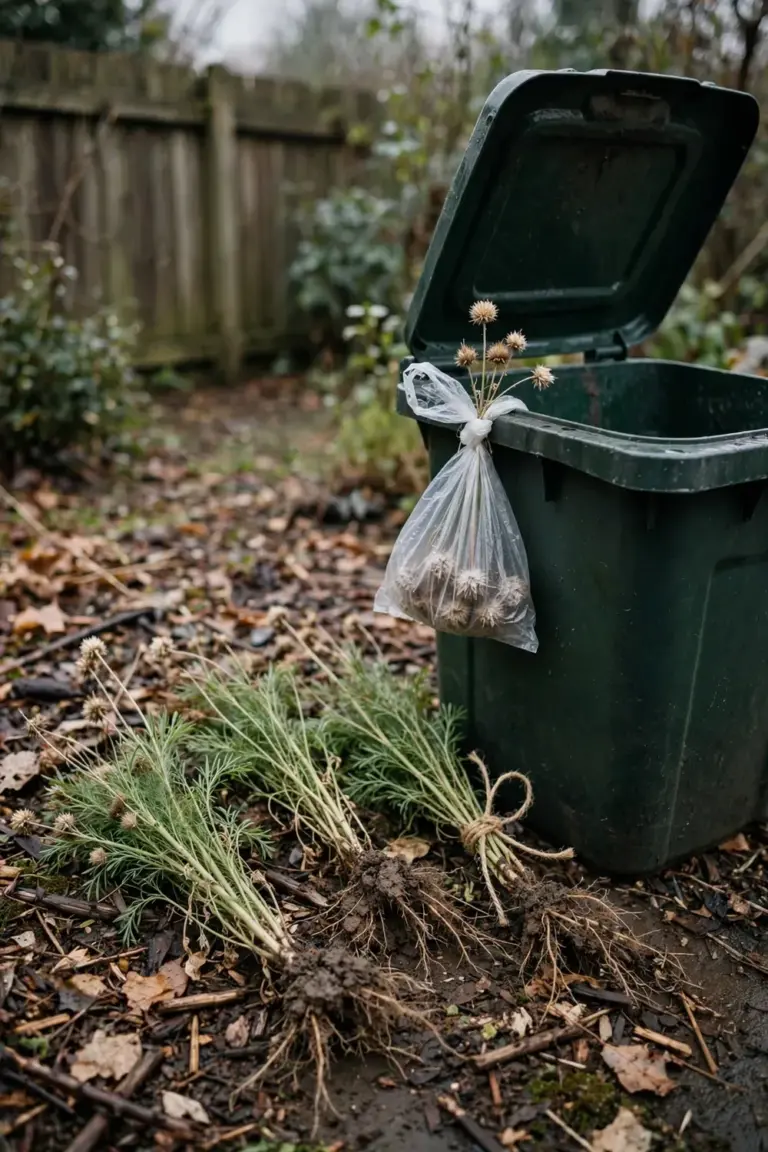
Those numbers explain the containment rules. Deadhead spent plants or pull the whole plant before the stems dry and turn brittle. Bag seed heads in the general waste bin, not the compost, because a home compost heap does not reliably kill weed seed. Sweep up fallen seed around the bed. If you let one plant tumble, you have sown next year’s crop across the neighbourhood, and in some states that escape could breach your biosecurity obligations.
Watch for volunteers the following spring. Pull seedlings while they are small, roots and all. Two seasons of diligent pulling usually exhausts the surface seed bank, since most seed dies within its first year.
8. Protect Livestock and Allergy-Prone Gardeners: Know the Toxicity Risks
Kochia carries a toxicity fence that rules out any edible or forage use in a home garden. The USDA’s plant guide for the species states that Bassia scoparia can be toxic to livestock and may cause death if consumed in large quantities by cattle, sheep, or horses, and identifies saponins, alkaloids, oxalates, and nitrates in the plant, with toxicity rising during drought and at seed maturity.
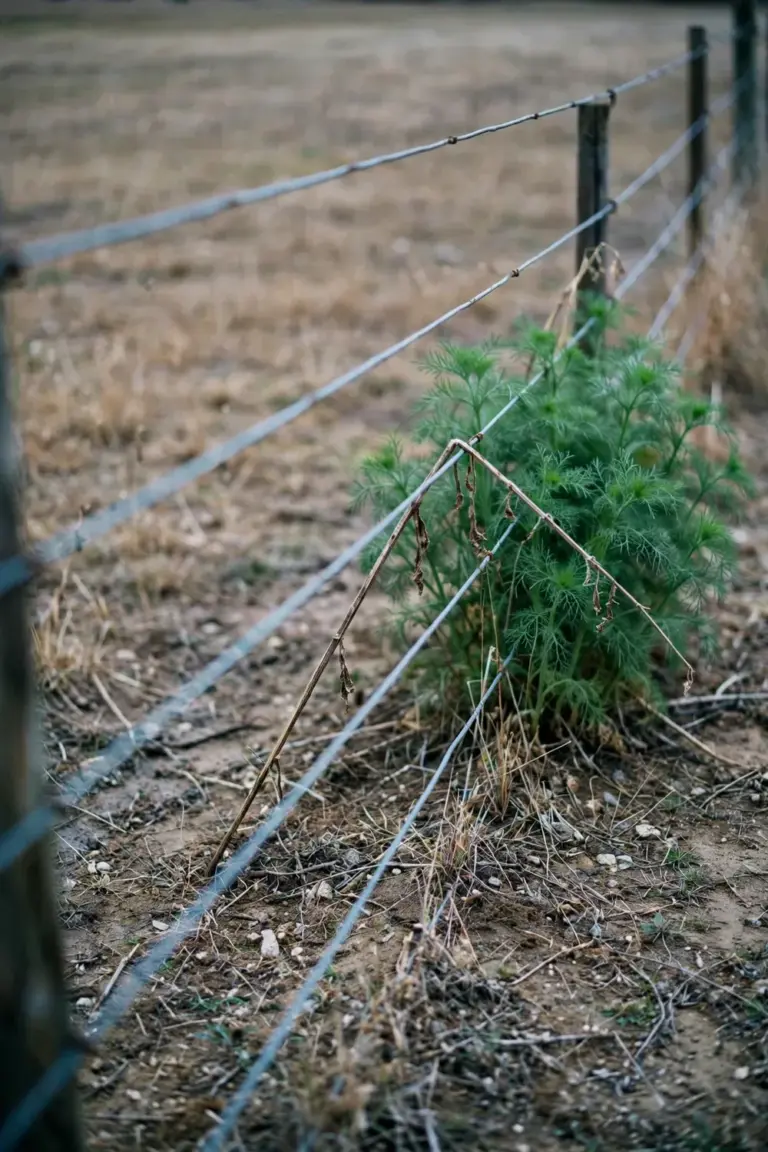
Kansas State University Extension beef veterinarian Larry Hollis spelled out the mechanism for Beef Magazine’s forage toxicity review: oxalate accumulations of 6 to 9 percent on a dry-matter basis are not uncommon in near-mature green plants, and nitrate toxicity can follow drought stress. An unidentified toxin has also been linked to liver failure in cattle, sheep, and horses.
Oxalates bind calcium in the bloodstream into insoluble crystals, which can trigger kidney failure when animals eat large amounts quickly. Nitrates convert to nitrite in the rumen, which blocks red blood cells from carrying oxygen. Both problems peak when the plant is drought-stressed or approaching seed maturity, exactly the stage when a neglected garden plant looks most “natural” left standing.
The home-garden rules follow directly. Do not plant any kochia form where grazing animals can reach it, including the ornamental subspecies. Do not feed trimmings to livestock, rabbits, or poultry. Do not present the leaves or seeds as edible; the Japanese tonburi condiment comes from a specially bred form grown under controlled conditions, not from garden kochia.
Hay-fever sufferers get a separate caution. Kochia is wind-pollinated and produces large quantities of airborne pollen in late summer. If you react to grass or weed pollen, plant the alternatives section’s picks well away from outdoor seating, or skip the genus entirely.
9. Plant These 6 Legal Alternatives for the Burning-Bush Look
If the law or the toxicity profile rules kochia out, these plants deliver the fine texture and red color without the biosecurity baggage. All are standard nursery stock in Australia.
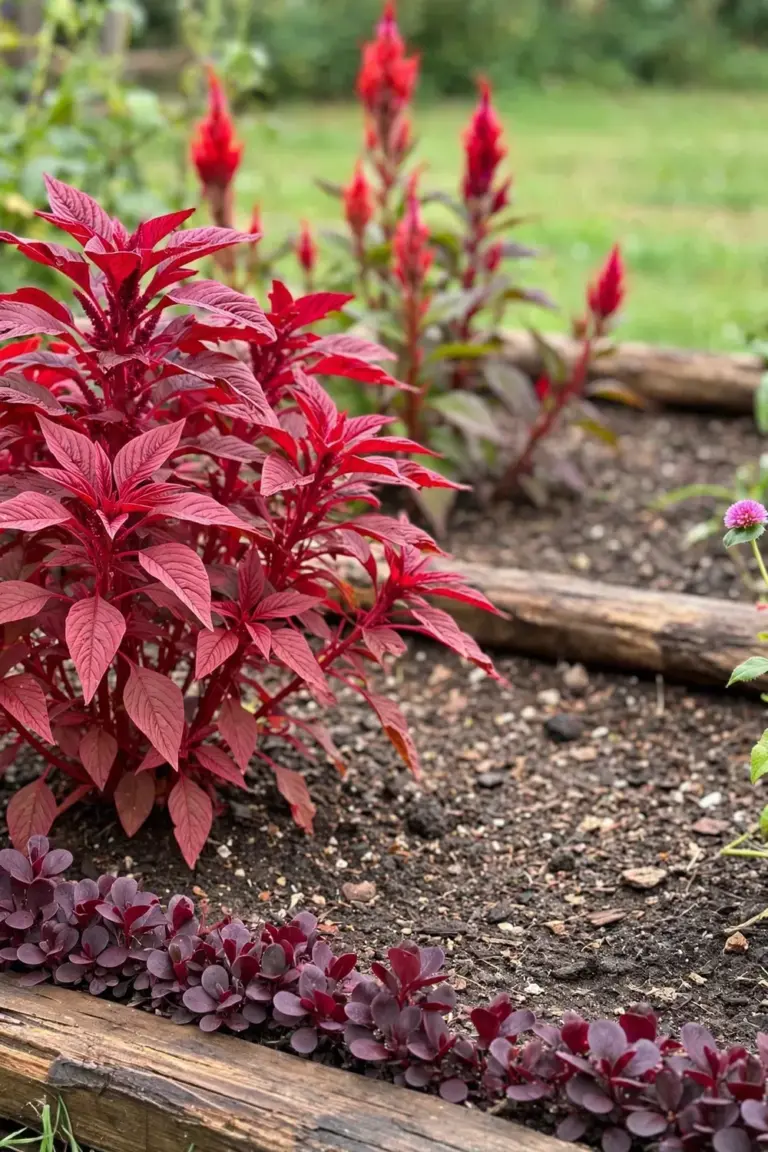
Amaranthus tricolor ‘Molten Fire’. A close relative in the Amaranthaceae family with a bushy, upright habit and foliage that flames from green to crimson. It is an annual, so it fills the same seasonal slot as kochia. growit.wiki/'s amaranth growing guide covers sowing and care.
Alternanthera dentata ‘Brazilian Red Hots’. Fine-textured burgundy foliage on a compact mound, sold as bedding across Australian nurseries. It holds its color through summer heat and clips neatly for edging.
Celosia argentea (plume types). Another Amaranthaceae cousin, with feathery red, orange, or magenta plumes rising above tidy foliage. The plumes dry well for indoor arrangements. See the site’s dracula celosia plant care guide for the genus.
Gomphrena haageana ‘Strawberry Fields’. A neat, rounded annual studded with red pompom flower heads from summer into autumn. It self-sows lightly but is not a declared weed anywhere in Australia.
Cotinus coggygria ‘Royal Purple’. The smoke bush, for gardeners who want the red as a permanent shrub rather than an annual. Burgundy foliage all season, with smoky pink flower panicles in summer. Prune hard in late winter to keep it compact.
Red Japanese maple (Acer palmatum red forms). For cool-climate gardens, a dissectum or upright red maple gives the deepest and most reliable red foliage of any plant on this list. It is slow and costs more than a seed packet, but it never needs deadheading against a 14,000-seed tumbleweed.
Match the alternative to the trait you actually want. For the fine, feathery texture, start with amaranthus or alternanthera. For a red mound that returns every year without replanting, the smoke bush or a red maple wins. For cut flowers and drying, celosia and gomphrena do the job kochia never could. None of the six appears on any Australian state weed register, so the choice is horticultural, not legal.
10. Report It, Don’t Treat It: What to Do If You Find Kochia
If you find a plant you suspect is kochia growing outside a garden, perhaps on a roadside, a vacant block, or a nature strip, do not try to control it yourself. NSW WeedWise instructs: report the plant immediately by calling the helpline listed on its kochia page, and NSW DPI will lead the initial response for treatment and disposal.
The same principle applies in every state. Photograph the plant, note the location, and contact your state agriculture department or local council weeds officer. Expect the officer to confirm the identification first; kochia’s fine foliage is easy to confuse with other chenopod weeds at a glance, and a false alarm costs less than a missed incursion. Do not pull it and carry it home in the car boot; a mature plant can shed thousands of seeds on the journey. Do not compost it, chip it, or put it in the green bin unless your council’s weeds officer tells you to.
If a neighbour is growing what looks like kochia, start with a conversation, not an accusation. Many gardeners bought “burning bush” seed in good faith and have never heard of the NSW listing. Point them at the NSW WeedWise kochia page and suggest one of the alternatives above.
Frequently Asked Questions
Kochia (Bassia scoparia) is Prohibited Matter in New South Wales, where growing it is an offence and sightings must be reported to NSW DPI. Queensland lists it as a prohibited invasive plant, Western Australia lists it as a declared pest, and Tasmania eradicated it after it arrived as a carrot-seed contaminant. It also sits on the National Alert List for Environmental Weeds. Always check your own state’s weed register before planting any form of it.
Bassia scoparia subsp. trichophylla is the ornamental “burning bush” form, selected for dense, fine foliage and intense red autumn color. New South Wales explicitly excludes this subspecies from its Prohibited Matter listing, so it is the only kochia form with a legal path in NSW. The exclusion is NSW-specific and does not automatically apply elsewhere, so check your state and council registers first and contain every plant against seed escape.
No. Two completely different plants share the common name “burning bush.” In seed catalogs and garden centers, burning bush usually means kochia (Bassia scoparia), a fast-growing annual in the Amaranthaceae family. The name is also used for Euonymus alatus, a deciduous shrub in a different family. The two plants have different care, different risks, and different legal statuses, so always check the botanical name on the tag before following any growing advice.
Yes. The USDA’s plant guide states that Bassia scoparia can be toxic to livestock and may cause death if consumed in large quantities by cattle, sheep, or horses. The plant contains saponins, alkaloids, oxalates, and nitrates, and toxicity increases during drought and at seed maturity. Kansas State University Extension puts oxalate levels at 6 to 9 percent of dry matter in near-mature plants. Never plant kochia where grazing animals can reach it, and never feed trimmings to livestock.
Do not attempt to treat or dispose of it yourself. Photograph the plant, note the exact location, and report it to your state agriculture department or local council weeds officer immediately. In New South Wales, call the helpline on the NSW WeedWise kochia page and NSW DPI will lead the response. Never transport a mature plant in your car or put it in compost or the green bin, because one plant can shed around 14,000 seeds.
Where to Go From Here
Kochia’s story in Australia is a short one: introduced as fodder, eradicated twice, and now fenced behind some of the strictest weed law in the country. That history is the reason a “how to grow kochia” search deserves a legal answer first. Check your state’s register, grow only the ornamental subspecies where it is explicitly allowed, contain every plant against the tumbleweed, keep it away from livestock, and consider whether one of the six alternatives gives you the red you wanted without the paperwork. The prettiest plant in the garden is the one you do not have to report.