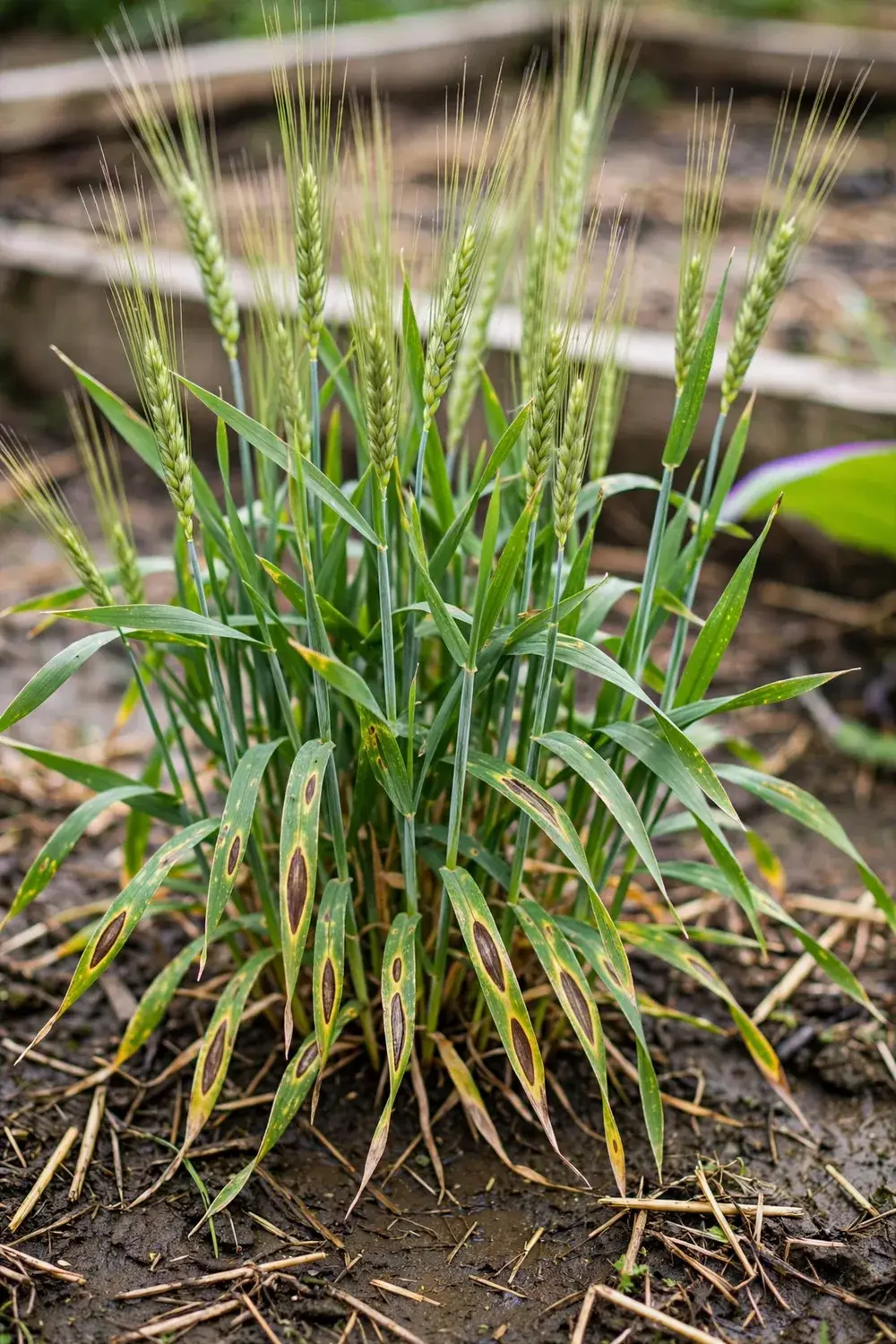

Stagonospora Blotch is a fungal disease of wheat and barley that starts as lens-shaped spots on the lower leaves and can reach the heads as glume blotch. One fungus drives both phases. This page gives you 7 cultural moves that fit a home patch, from clean seed to a lab test.
I have learned to check the lower leaves first when a wheat patch looks blotchy. Stagonospora Blotch is Parastagonospora nodorum at work. Older books call the same fungus Stagonospora nodorum or Septoria nodorum, and the older name Septoria nodorum blotch (SNB) still shows up in field guides.
The head phase has its own name, glume blotch, and its own page, Septoria Glume Blotch. This page starts with the leaves. The moves below are cultural. They stop short of field-scale spray programs, and field identification alone never settles the case.
What Stagonospora Blotch Actually Is
Stagonospora Blotch is a fungal disease of wheat and barley caused by Parastagonospora nodorum. The fungus infects leaves, stems, and heads. One infection can show all three phases in a single season.
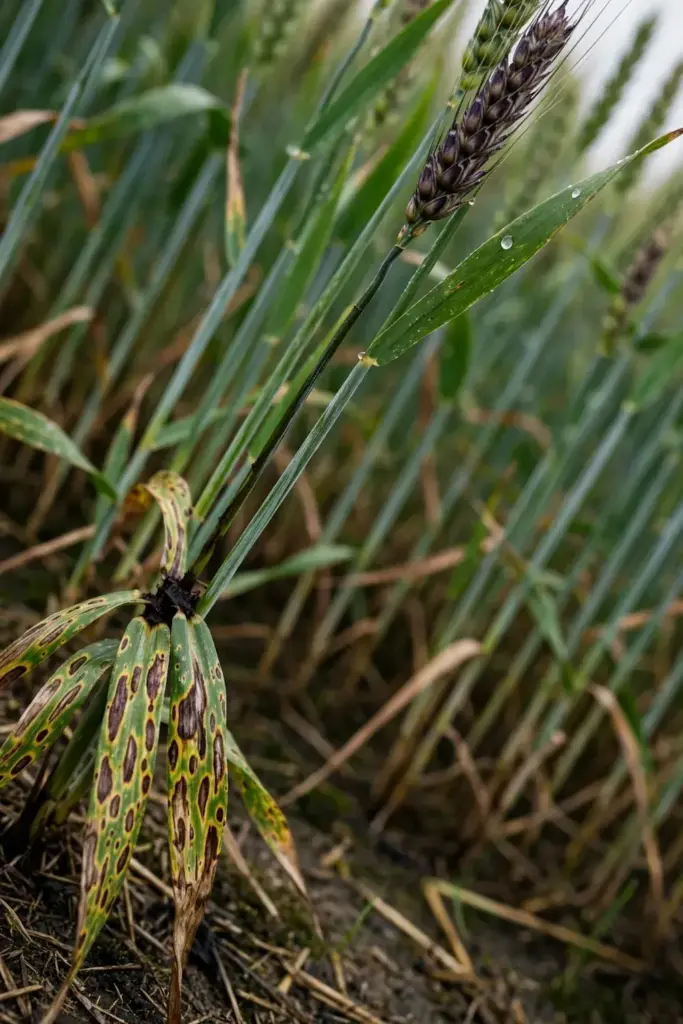
The current name is Parastagonospora nodorum. Older books list Stagonospora nodorum and Septoria nodorum as the same fungus, according to North Dakota State University on the three fungal leaf diseases of wheat. A close relative in the same genus can cause the same blotch, and the Crop Protection Network overview of Stagonospora leaf and glume blotch names both fungi. Parastagonospora nodorum is the flagship cause. This page follows the flagship.
| Phase | Plant Part | What You See |
|---|---|---|
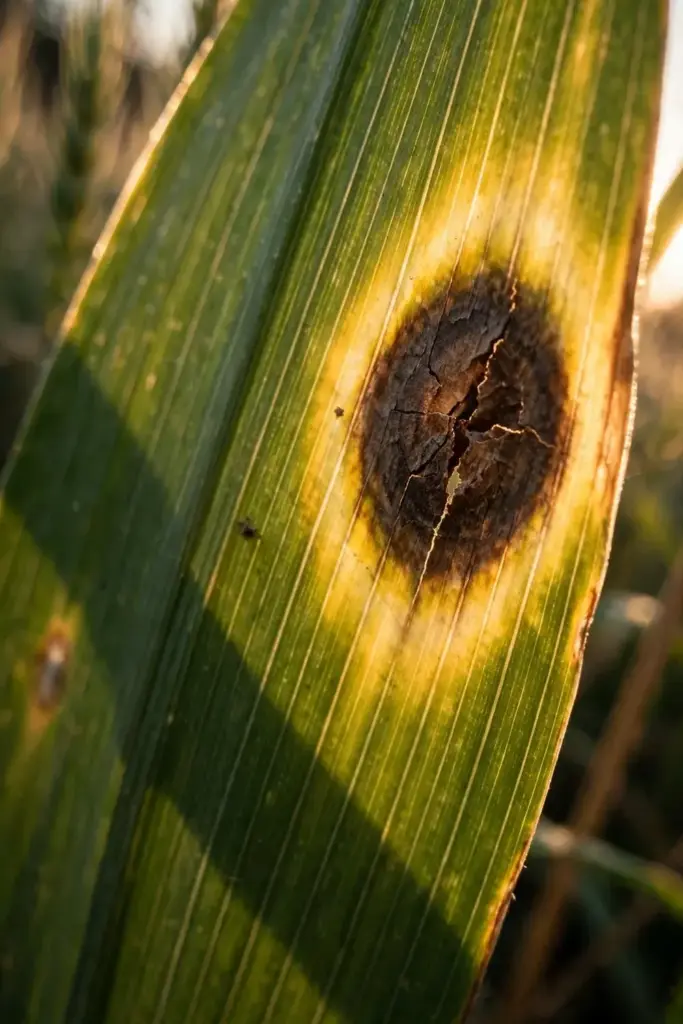
| Leaf blotch | Lower leaves first, then upper leaves | Lens-shaped spots with yellow borders and brown centers that age to ashen gray-brown |
| Stem and node blotch | Stems and tiller nodes | Dark brown lesions at the nodes where leaves join the stem |
| Glume blotch | Glumes on the head | Dark brown to dark purple lesions that can cover whole glume areas |
Seed carries the fungus into a new bed. Residue carries it between seasons. Early infections sit low on the plant, and symptoms climb to upper leaves and heads by flowering time when moisture holds, according to the University of Arkansas fact sheet on fungal leaf-spotting diseases of wheat.
A different fungus with a near name, Stagonospora curtisii, causes red blotch on amaryllis. It is a different species on a different host. It is not this disease.
What Stagonospora Blotch Looks Like on Wheat Leaves
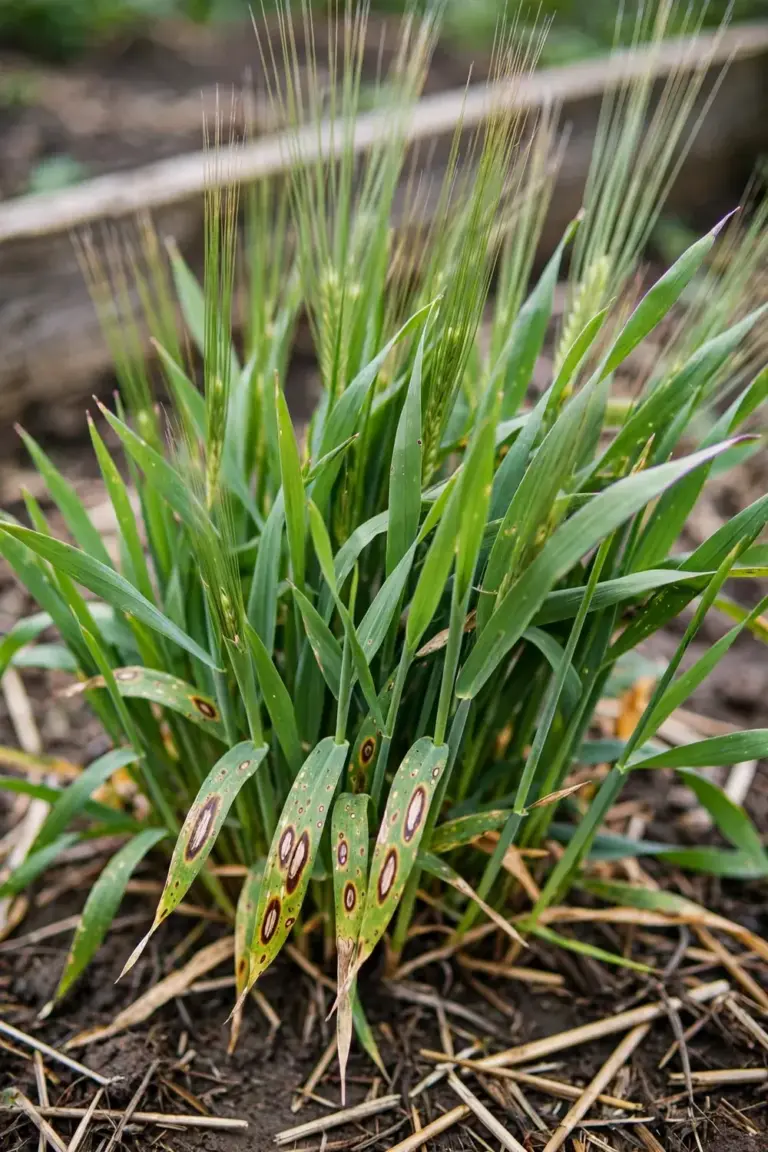
Stagonospora Blotch starts on the lower leaves as small dark brown spots. Each spot grows into a lens-shaped lesion with a diffuse yellow border and a brown center. A hand lens shows the tell.
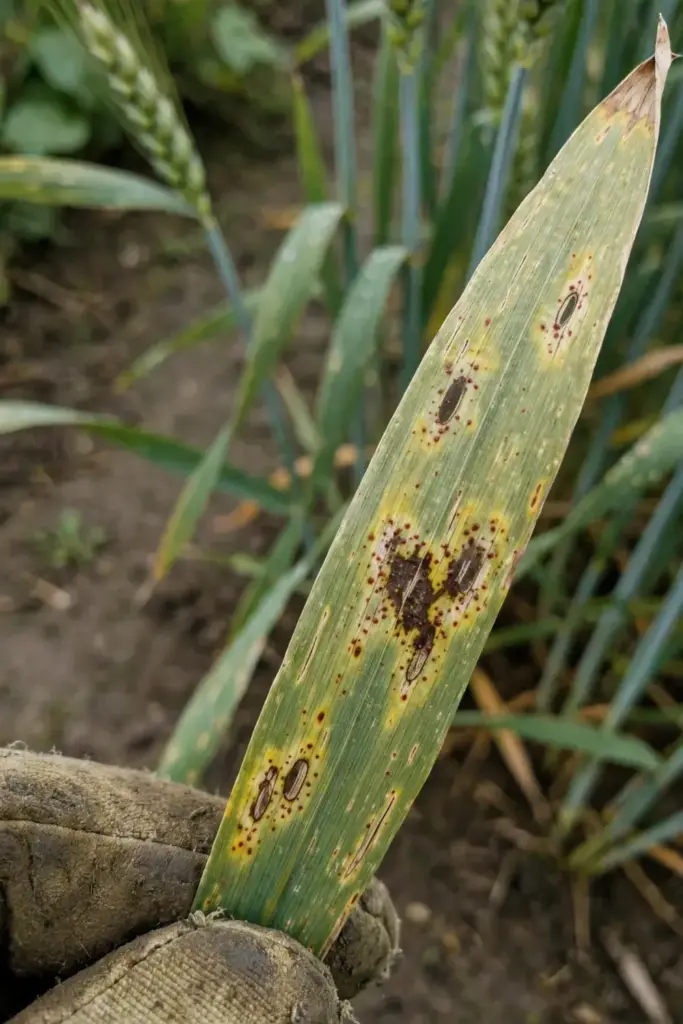
The tell is the fruiting bodies. Mature lesions carry reddish-brown pycnidia embedded in the tissue, and they are difficult to see without a hand lens, according to the University of Arkansas fact sheet on fungal leaf-spotting diseases of wheat. Mature lesions develop ashen gray-brown centers, according to North Dakota State University on the three fungal leaf diseases of wheat. Lesions can merge into large dead areas, and heavily infected leaves die early.
Warm, wet weather drives it. Arkansas sets the fastest development between 68 and 81 degrees F, with a minimum of 6 hours of leaf wetness. North Dakota puts the infection window at 12 to 18 hours of leaf wetness in the same temperature range. Read the gap as a range. Six hours can start an infection. Twelve to 18 hours makes one likely.
After flowering, wet weather can bring the head phase, and glumes show dark brown to dark purple lesions with ash gray areas. Severe head infection leaves kernels light and shriveled. The head phase has its own page, Septoria Glume Blotch, with the full head-phase detail.
Field identification sorts suspects. It never settles the case on its own. Telling this blotch apart from Septoria tritici blotch in the field is hard, and microscopy settles it, according to North Dakota State University on the three fungal leaf diseases of wheat.
1. Start With Certified Clean Seed
Buy certified disease-free seed. The fungus rides in seed, and infected seed starts the disease at multiple points in a clean bed, according to Ohio State on leaf blotch diseases of wheat.
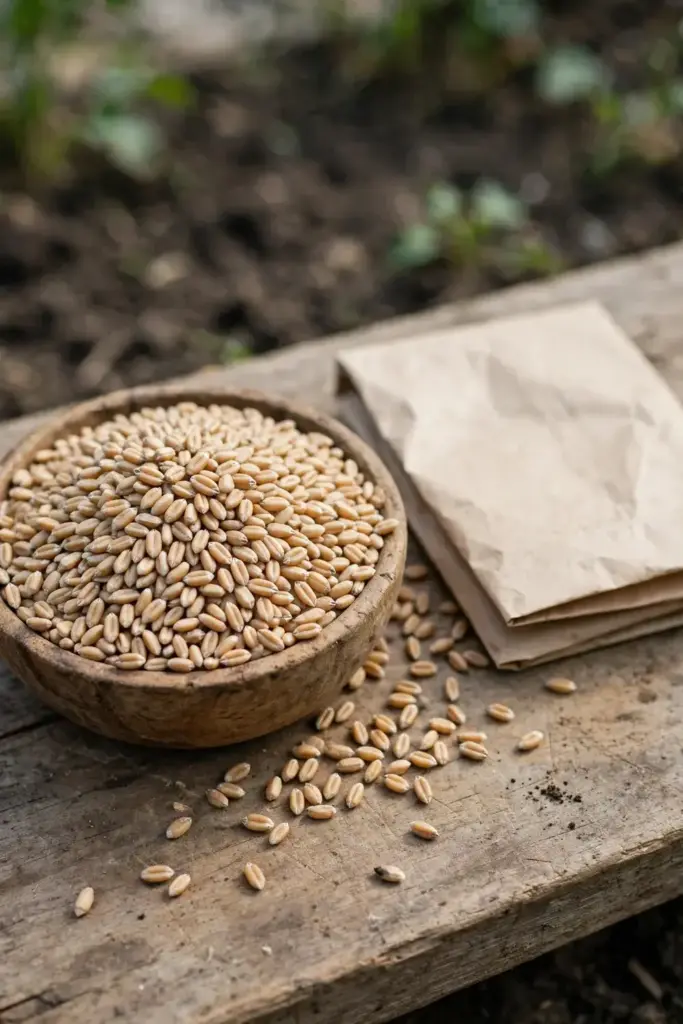
Inspect the lot before sowing. Discard seed that looks discolored or shriveled. The seed starting guide covers clean seed starting step by step.
An infected lot looks quiet at sowing. The first spots show weeks later on the lower leaves.
2. Plant Wheat Only 1 Year in 3
Plant wheat in only 1 of 3 years. Ohio State recommends that rotation because the blotch fungi survive in infested residue for several years, according to Ohio State on leaf blotch diseases of wheat.
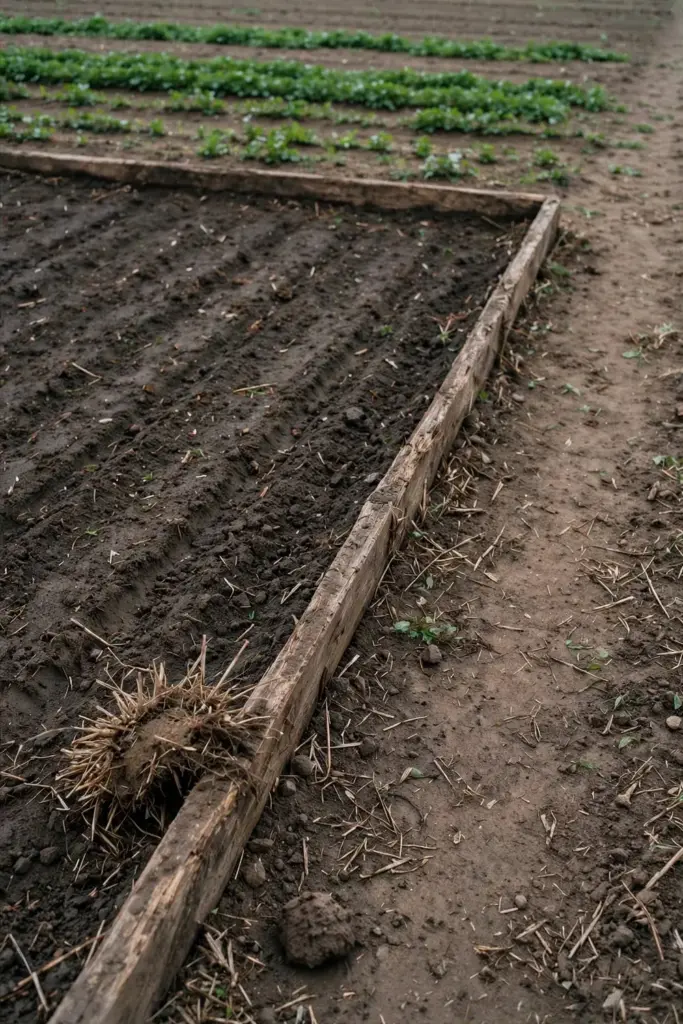
Fill the gap with non-host crops. Rotation with non-host crops keeps inoculum from building up, according to the Crop Protection Network overview of Stagonospora leaf and glume blotch.
Clear residue at season end. Bag diseased straw for the trash. Fold the cleanup into fall garden bed prep.
3. Space Plants and Water at the Soil Line
Give each plant room to dry. Wider rows let air move through the canopy and dry the leaves faster, and the Crop Protection Network overview of Stagonospora leaf and glume blotch lists wider rows among the cultural moves that reduce disease.
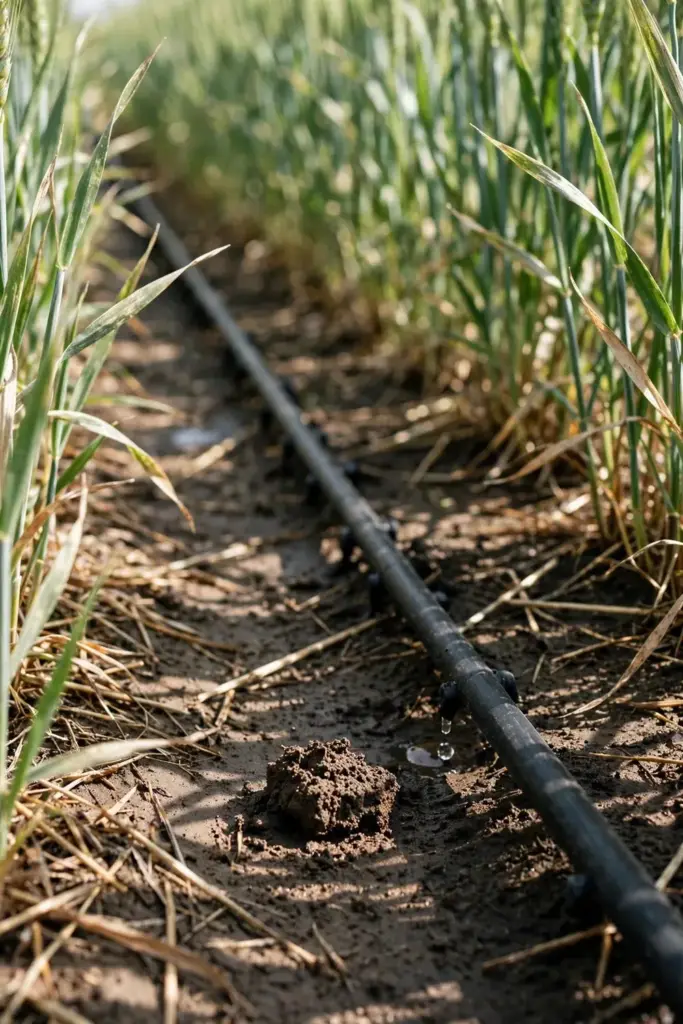
Water at the soil line with drip tubing or a soaker hose. Dry leaves starve the fungus of the wet surface it needs. Overhead watering soaks the canopy and holds it wet for hours.
Water in the morning. Morning water dries faster than evening water, because the sun has the whole day to dry the leaves.
4. Scout Lower Leaves and Pull the Worst Ones
Check the lower leaves every week once stems start to lengthen. Stagonospora Blotch starts low and climbs, so a weekly look catches the first spots while they are still small.
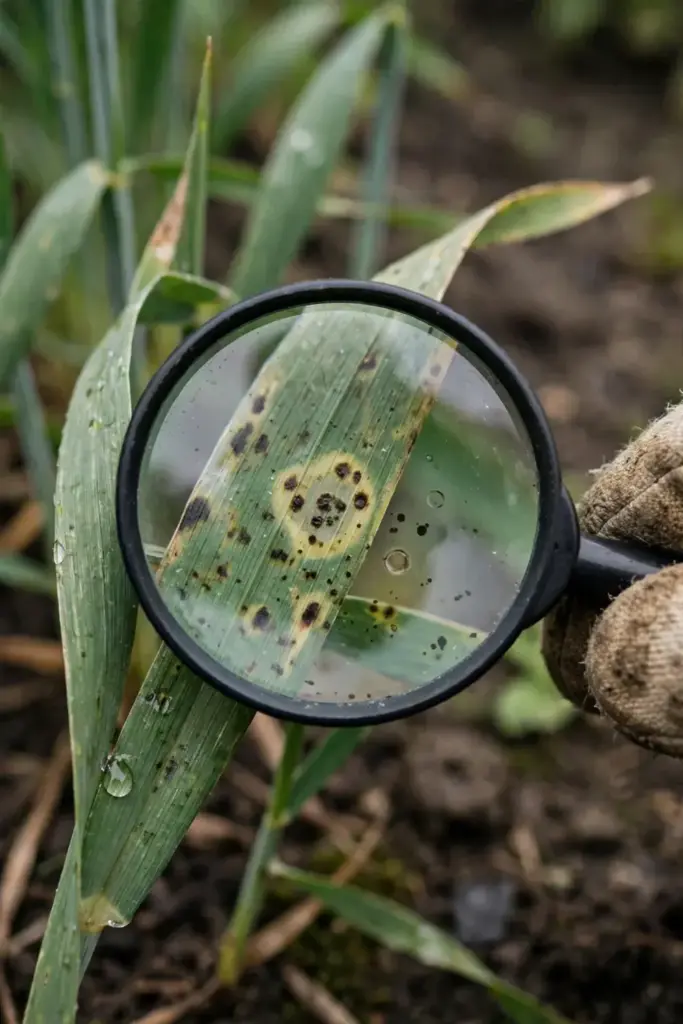
Pull the worst infected leaves and bag them for the trash. Do not compost infected leaves. Wash hands and tools after handling infected plants.
Pull volunteer wheat and wild grasses from the bed and the bed edges. Volunteers and grass weeds carry the fungus between crops, and Ohio State lists destroying volunteer wheat, rye, barley, and wild grasses before planting, according to Ohio State on leaf blotch diseases of wheat.
5. Pick a Variety With Resistance to Both Phases
Choose a variety with moderate resistance to both phases. Varieties differ greatly in reaction to this fungus, and resistance to the leaf phase does not guarantee resistance to the glume phase, according to Ohio State on leaf blotch diseases of wheat.
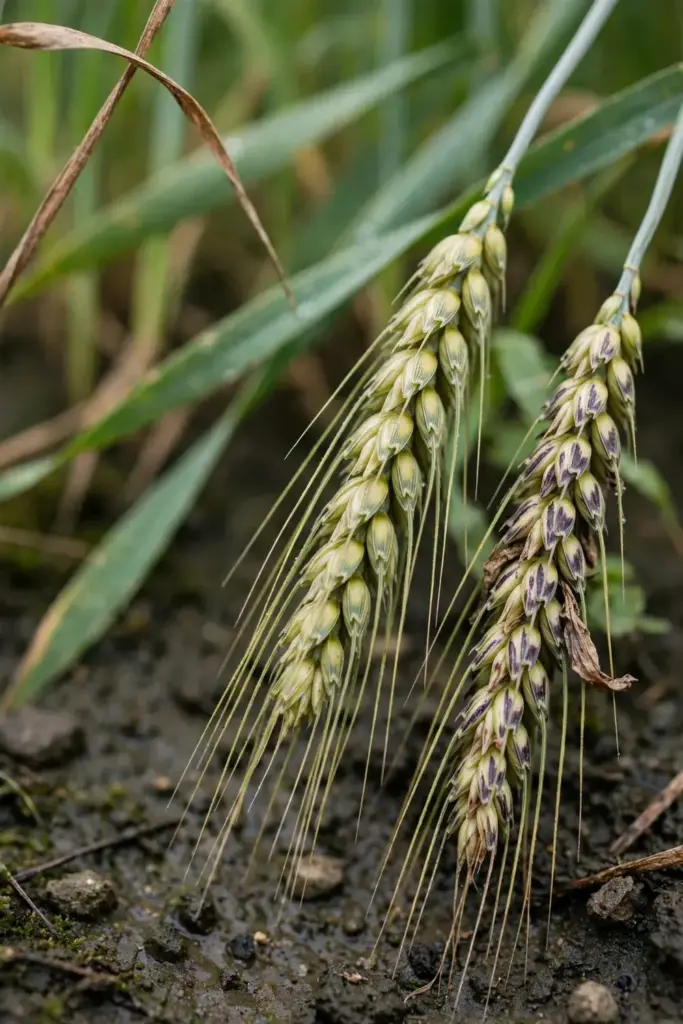
Ask the seed supplier for resistance ratings for both phases before you buy. A variety that resists only one phase leaves the other phase open.
6. Keep Nitrogen Moderate
Feed nitrogen to a soil test, not to a habit. Excessively high nitrogen rates make wheat prone to Stagonospora blotch, according to Ohio State on leaf blotch diseases of wheat.
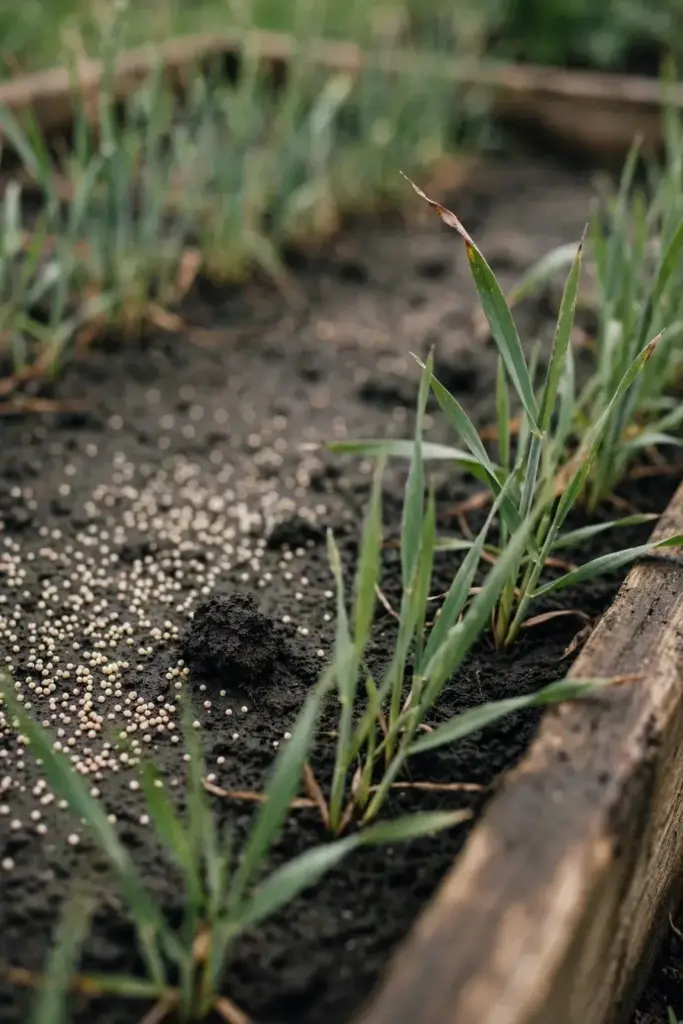
A soil test sets the rate. Building soil health keeps the bed productive while nitrogen stays moderate.
A heavy spring flush raises the risk. Moderate rates at planting plus a moderate spring top dressing hold the line.
7. Confirm With a Lab Before You Treat
Send a sample to your local Extension office or diagnostic clinic before you treat. Field identification sorts suspects. A lab names the agent.
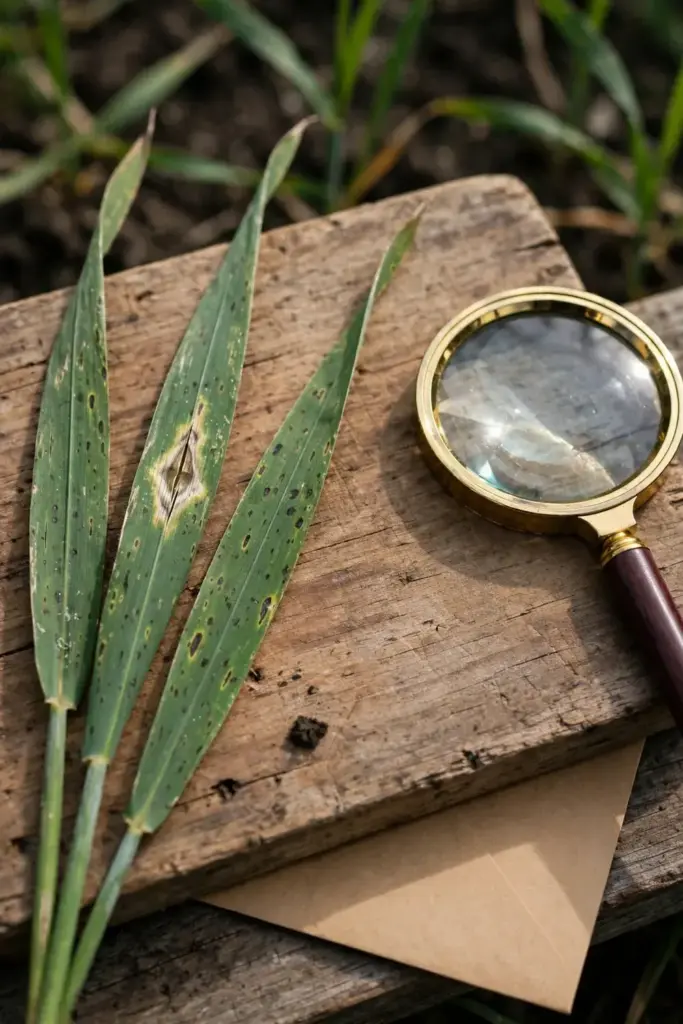
Include fresh leaves with early lesions, plus a note on the host and the planting date. A fresh sample beats a dried one.
A lab result changes the plan. It confirms which fungus you face, and it keeps you from treating the wrong disease all season.
Frequently Asked Questions
Yes. One fungus, Parastagonospora nodorum, causes both. Stagonospora Blotch names the leaf phase. Septoria Glume Blotch names the head phase on the glumes. The two pages split one disease by phase, so the head-phase detail lives on the Septoria Glume Blotch page. Treat a patch with both phases as one disease.
Wheat is the flagship host in the sources on this page. Barley sits in the same small-grain group, and the same cultural moves fit a barley patch. Barley also carries its own Septoria speckled leaf blotch, a different disease. A barley patch with spots deserves its own lab result before you carry wheat advice onto it.
Cultural control is the playbook in a home patch. Clean seed, rotation, spacing, soil-line watering, and residue cleanup cover the disease. Field-scale spray programs with per-acre rates and growth-stage timing stay in the field, and any product you use must carry a label for wheat. Read that label before you spray anything.
Start with the lower leaves. Lens-shaped spots with yellow borders, reddish-brown fruiting dots under a hand lens, and a head phase on the glumes all point toward this blotch. None of those signs settles the case alone. A lab test settles it. Send fresh leaves with early lesions to your local Extension office or diagnostic clinic.
Where to Go From Here
Walk the patch this week. Check the lower leaves for small dark brown spots.
Plan next year now. Certified clean seed, wheat in only 1 of 3 years, and a clean bed beat any rescue. The fall garden bed prep guide helps you clear a wheat bed for a clean start.
Stagonospora Blotch on wheat is manageable with clean seed and dry leaves. Start with the lower leaves. End with a rotation plan.