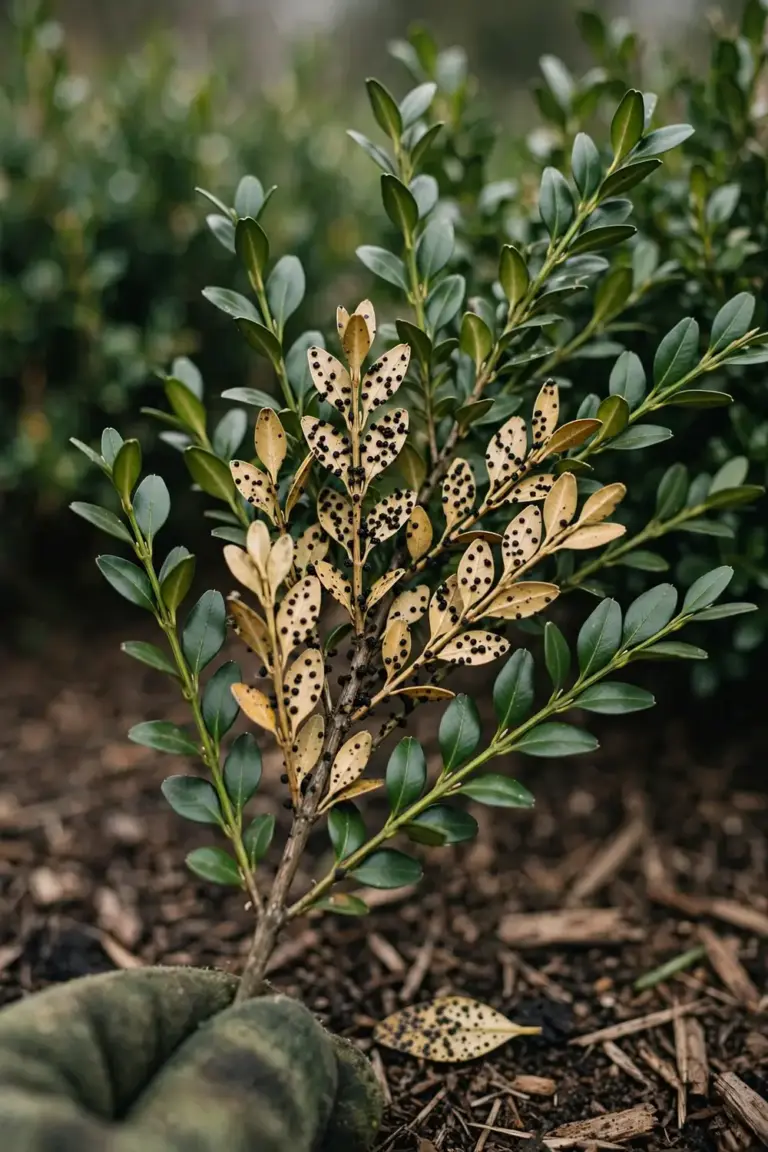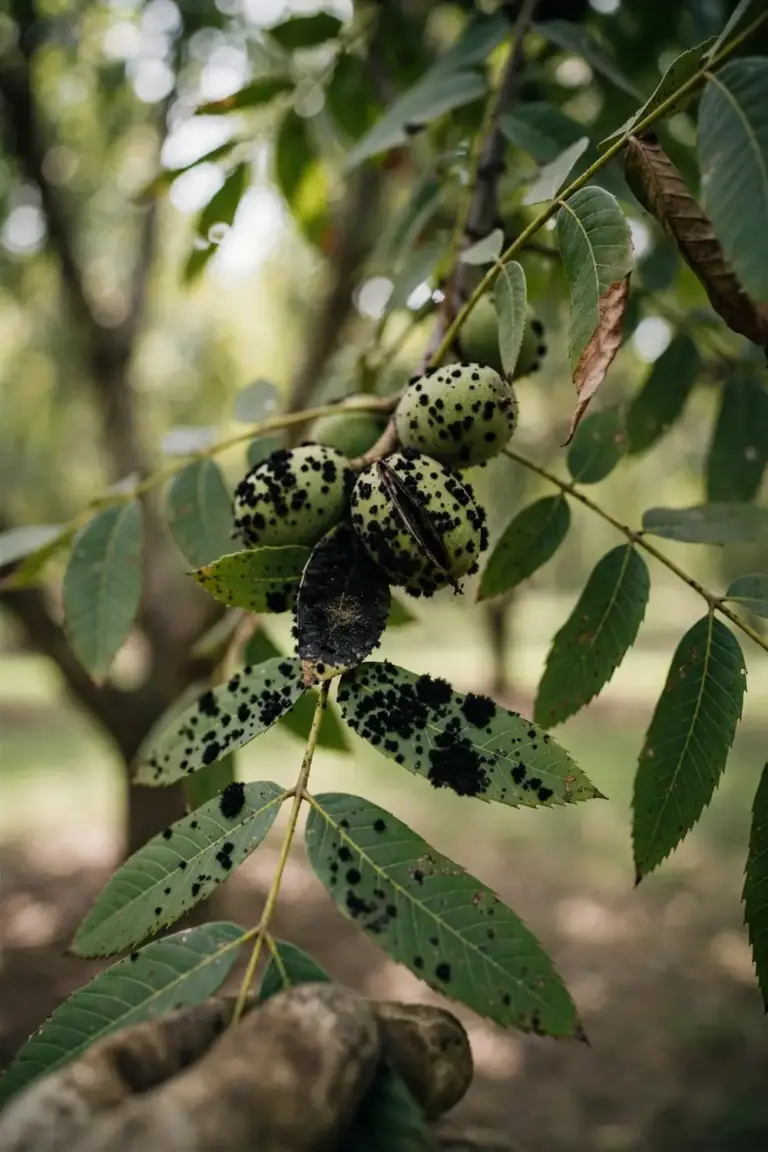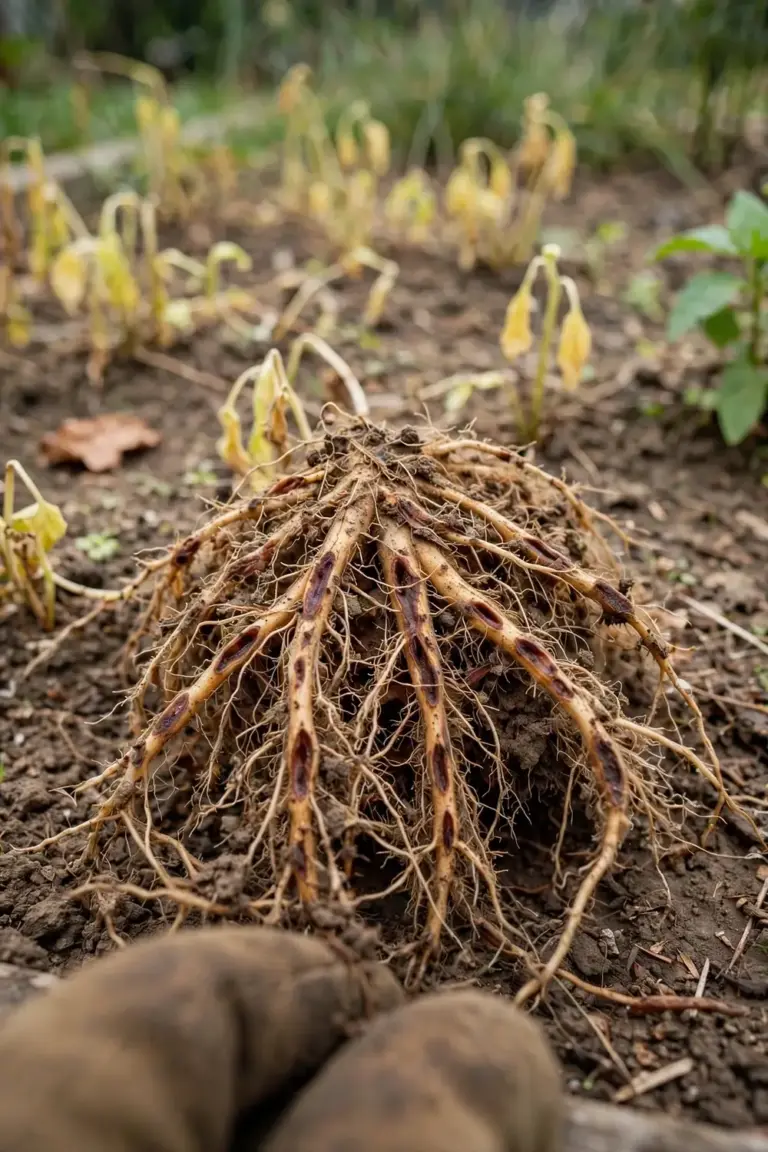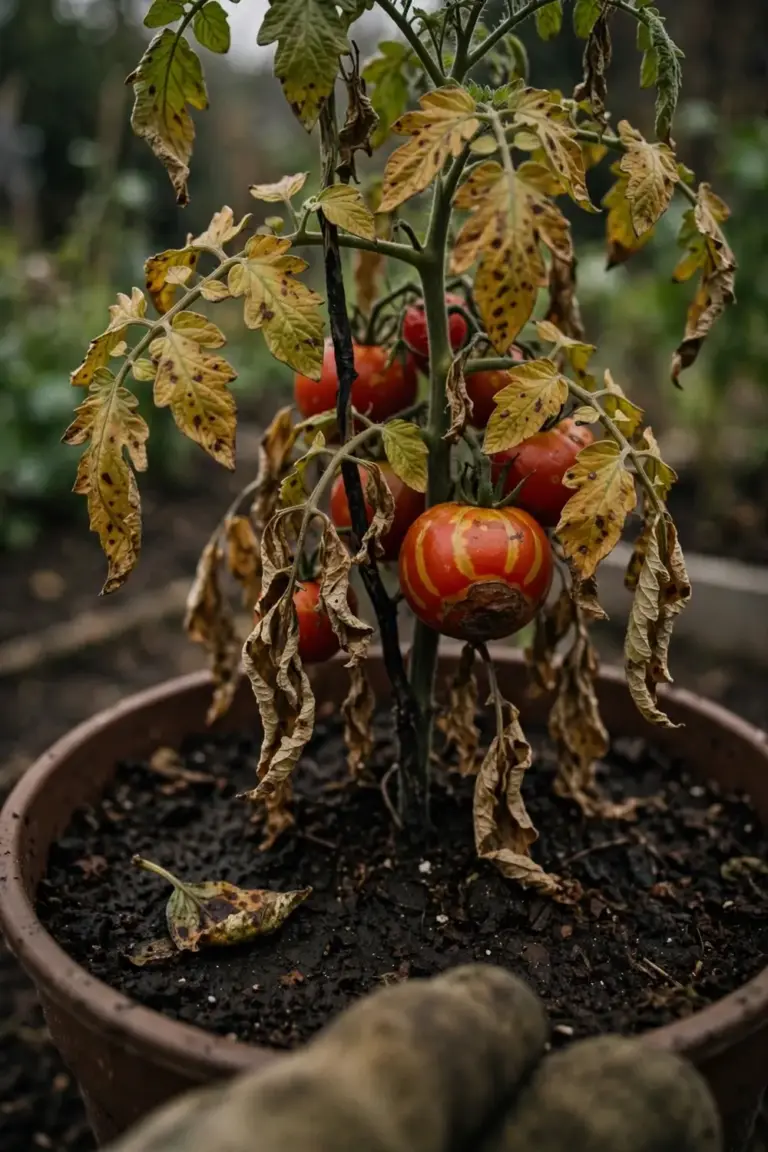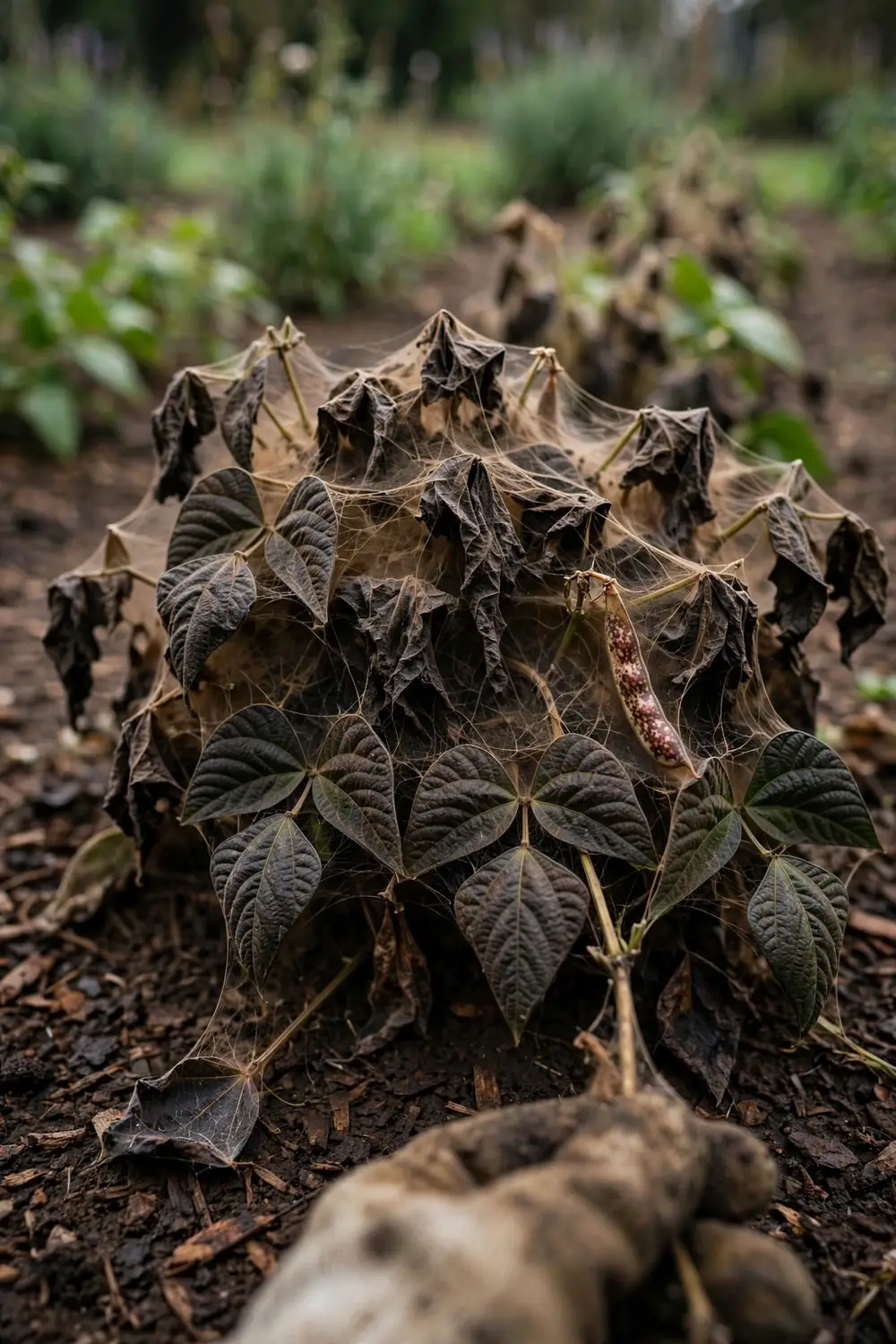

Web blight is a fast foliar disease caused by the fungus Rhizoctonia solani. It webs leaves together with fine tan mycelium, turns them dark brown or black, and collapses whole plants in hot humid weather. The 9 strategies below stop it by drying the canopy, cutting the soil splash that carries it, and removing infected tissue before the web spreads.
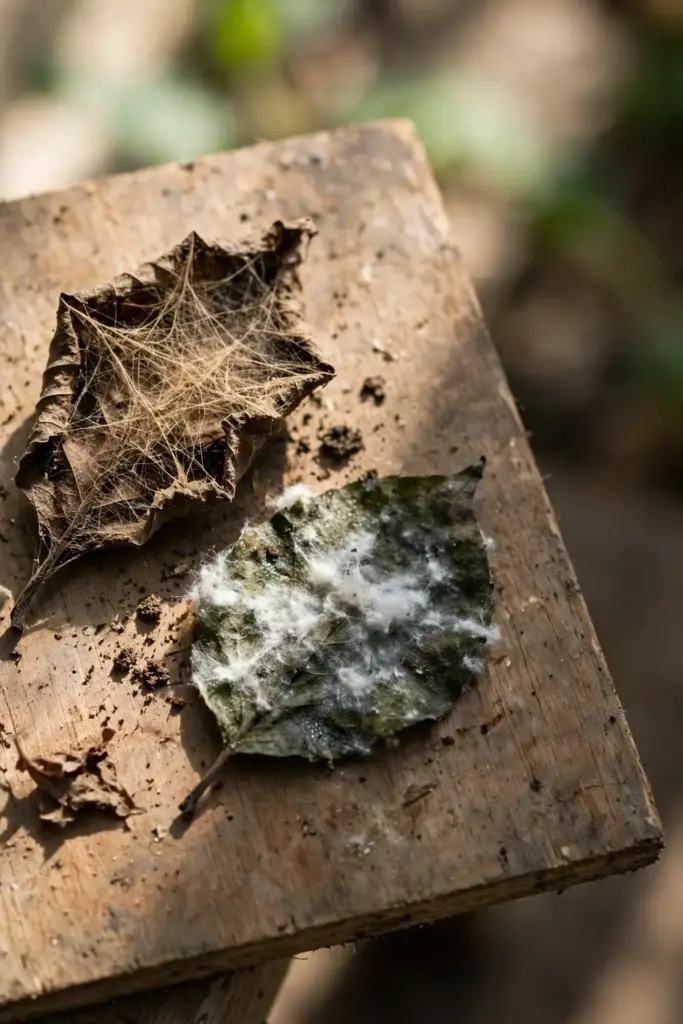
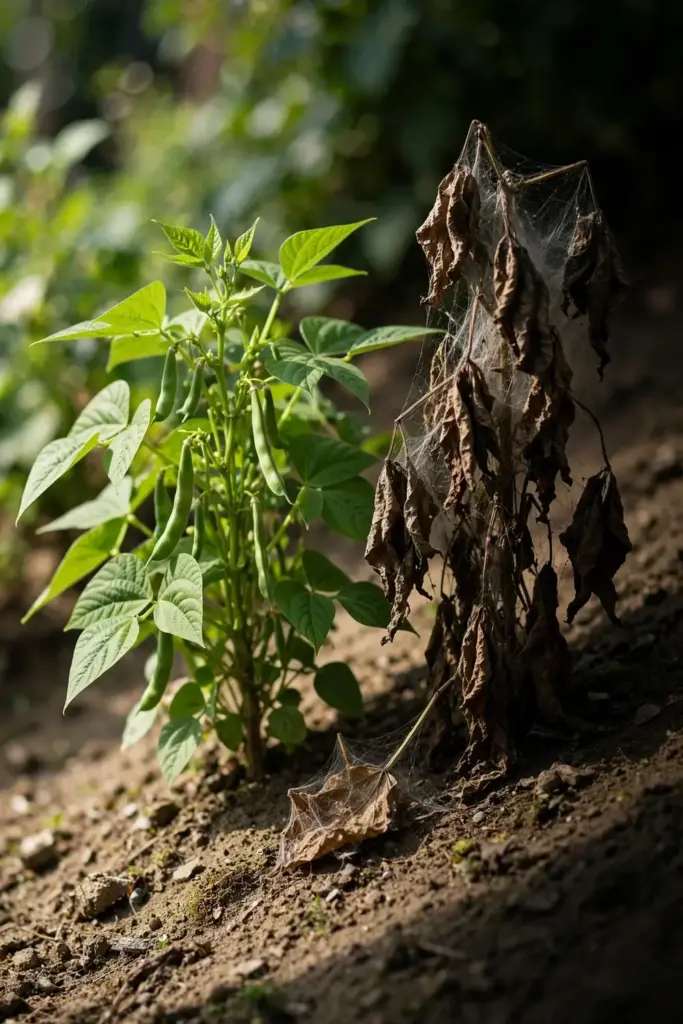
Look for the web first. Infected leaves stick together in a matted clump instead of falling cleanly. A thin tan webbing clings tight to leaves and stems, and it stays put when you lift the leaf. That clinging web separates web blight from ordinary leaf spot and from windblown debris.
The rest of this page walks the disease in order, from what it is to the weekly routine that keeps it out. Read the identification sections first if plants still stand. Start at Step 1 if the bed already shows matted foliage.
What Web Blight Actually Is
Web blight is Rhizoctonia web blight, a foliar phase of the soil fungus Rhizoctonia solani. The same fungus causes root rot and stem canker in many crops. Web blight is the above-ground form, where the fungus climbs from soil and debris into the canopy and blights the foliage it touches.
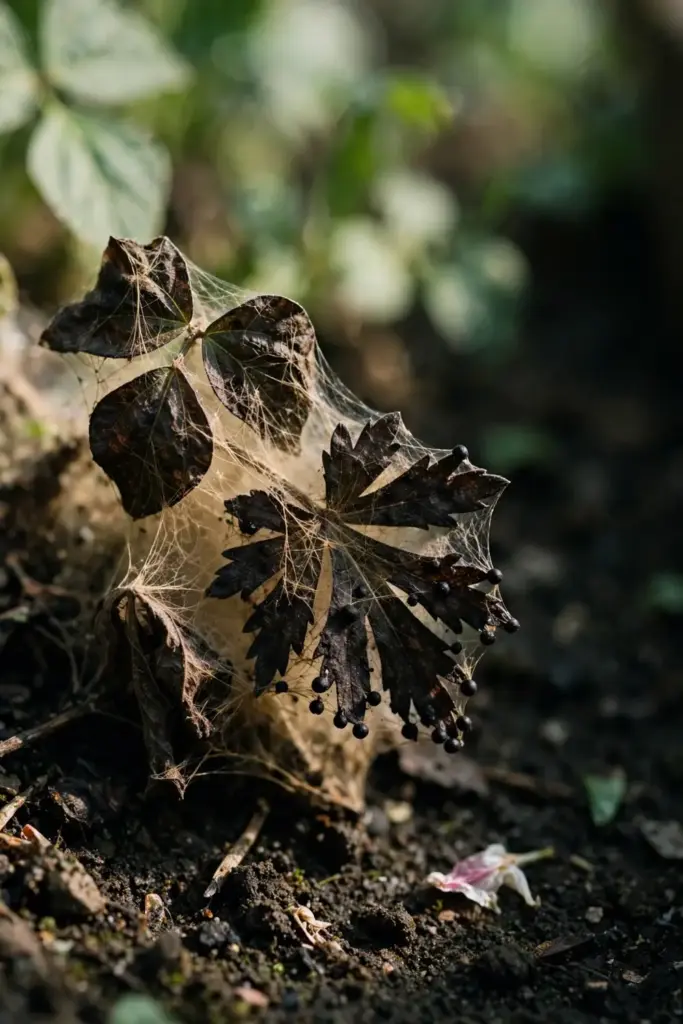
The pathogen lives in soil and plant debris. Rhizoctonia solani survives as mycelium in colonized debris and as hard sclerotia, small dark resting bodies that wait in soil for a wet spell. Rain splash and irrigation water lift soil, sclerotia, and mycelial fragments onto low leaves. The fungus then grows outward across wet foliage.
The disease favors heat plus humidity. Greenhouse Management reports the ideal temperature band for Rhizoctonia web blight as 68 to 86 degrees Fahrenheit, with relative humidity of 80 to 90 percent or more favoring development. Warm nights, still air, and leaves that stay wet through the evening set the table. A bed that dries by midday starves the fungus.
Web blight hits ornamentals and beans hardest in home gardens. Herbaceous perennials, bedding plants, and garden mums carry the ornamental load. Snap beans, dry beans, and soybeans carry the legume load. The University of Maryland Extension describes the ornamental form as a rapid blighting or dieback of foliage during hot humid conditions, with infected plants turning dark brown or black and collapsing quickly.
The root and stem form of the same fungus needs different handling. Decay at the crown and stem base, with reddish brown cankers girdling the stem at the soil line, belongs to the companion Rhizoctonia root rot treatment guide. That guide covers soil line decay. This page covers the web across the leaves.
How to Identify Web Blight on Leaves and Stems
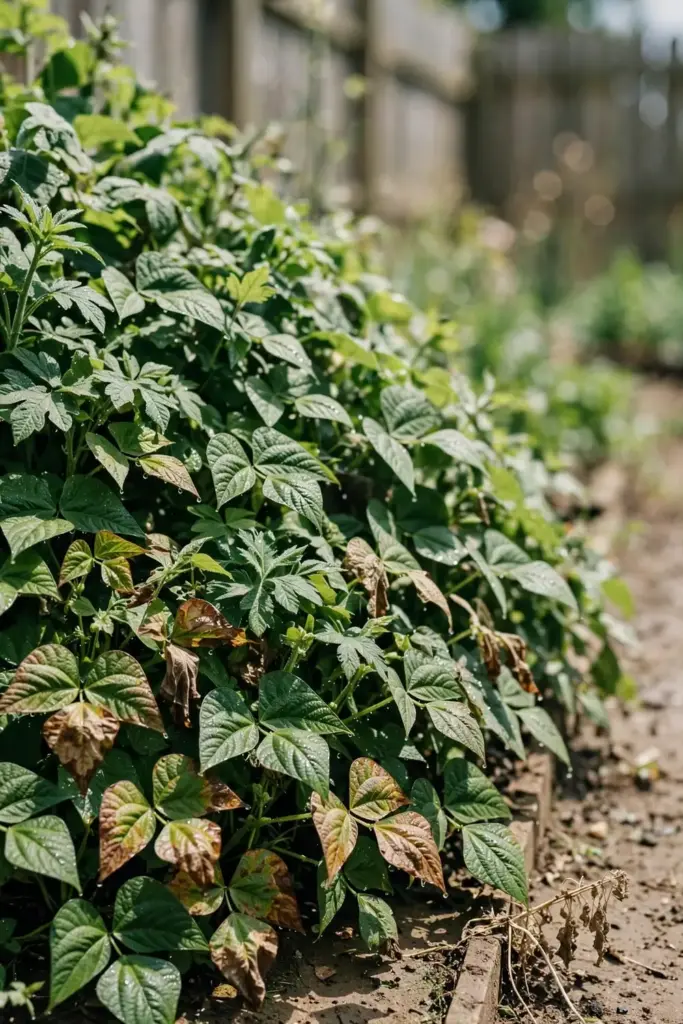
Web blight starts low and climbs. Lower leaves show the first spots because they sit closest to splashed soil. Brown irregular spots form anywhere on foliage or stems. Spots enlarge, merge, and the leaf dies fast in warm wet weather.
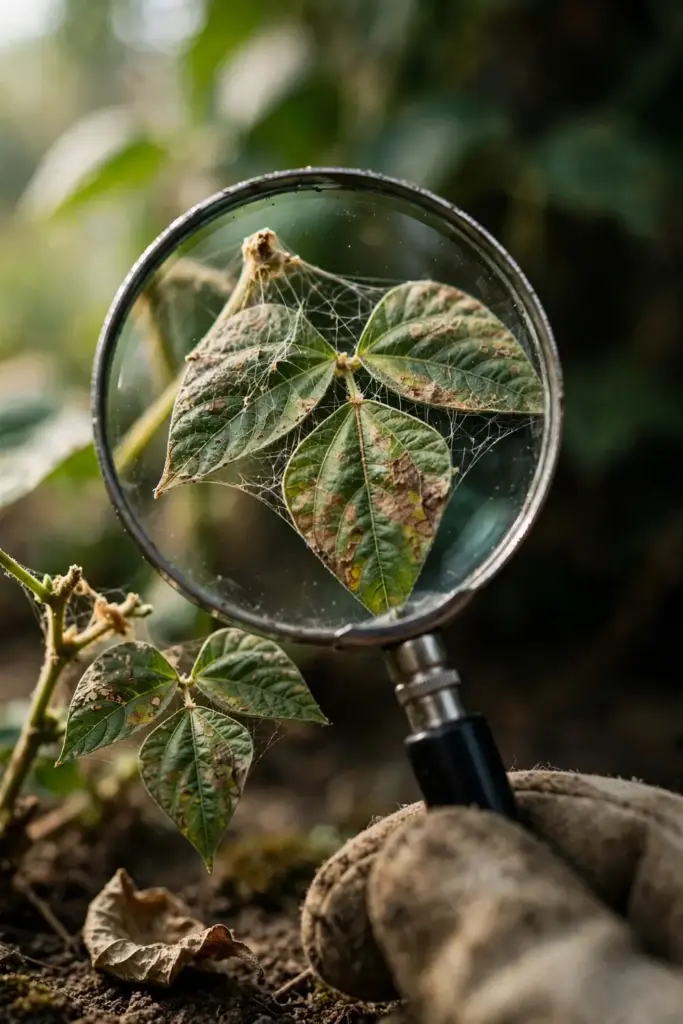
The web is the signature. Fine tan webbing adheres tightly to blighted leaves and stems. It mats leaves together so the clump lifts as one piece. Nursery Magazine notes that the weblike brown mycelium covers infected portions of the plant when humidity runs high. Cobwebs brush away. Rhizoctonia webbing clings and holds dead leaves in place.
Stems carry the same sign. Brown lesions appear on petioles and stems, and a stem coated white or tan by the fungus marks heavy infection. Greenhouse Management reports that inner foliage may appear browned and matted together, with some stems coated white or tan by the fungus. Check the center of a dense planting, since the outer edge can look healthy while the middle rots.
Dead leaves stay attached. A blighted leaf on an ornamental often hangs in the web instead of dropping. That hanging dead leaf is a warning. Pull it and look for webbing on the leaves beneath it. Early removal breaks the bridge to the next leaf.
Color helps but never settles the diagnosis alone. Blighted tissue turns dark brown or black. The University of Maryland Extension describes infected plants turning dark brown or black and collapsing quickly during hot humid conditions. A lab diagnosis settles close calls, since several blights brown leaves the same way.
How to Identify Web Blight on Beans and Pods
Web blight on beans starts the same way it starts on ornamentals, low and wet. The first leaf symptoms appear as water-soaked grayish green lesions that turn tan to brown at maturity. Those lesions sit on the lower canopy first, after the canopy closes during late vegetative growth.
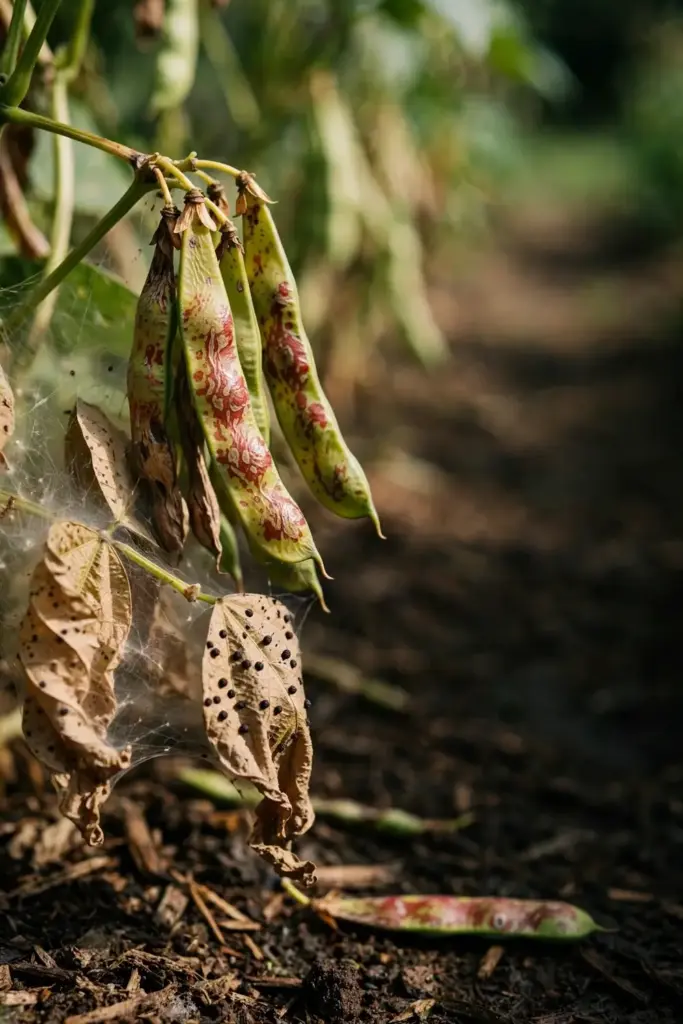
The Crop Protection Network describes aerial blight of soybean, the same Rhizoctonia disease on a legume host, as water-soaked grayish green lesions that turn tan to brown, with mycelium spreading across plants during warm 77 to 90 degree Fahrenheit wet weather and forming mats of webbed foliage. Bean web blight follows the same pattern in a garden row. Leaves glue together with cottony growth. Pods in the lower canopy catch the fungus next.
Pods show reddish brown lesions. Lesions form on petioles, stems, pods, and petiole scars. Infected pods rot where they touch wet foliage or soil. Pick a suspect pod and check the scar where it met the stem. A reddish brown lesion at that joint points toward Rhizoctonia.
Sclerotia confirm the fungus. The Crop Protection Network notes that small dark brown sclerotia, 1/16 to 3/16 inch in diameter, form on diseased tissue. Those pinhead dots feel hard when rolled between gloved fingers. Sclerotia on a bean leaf separate web blight from bacterial blight, which leaves no such bodies.
Defoliation follows fast in a closed canopy. Leaves drop once the web mats them and the lesions girdle petioles. A bean row that thins from the bottom up in a wet week deserves a close look for webbing before you blame nutrition. Yellow lower leaves alone mean little. Yellow lower leaves plus webbing mean Rhizoctonia.
Which Ornamentals and Beans Get Hit Hardest by Web Blight
Dense herbaceous perennials sit at the top of the ornamental risk list. The University of Maryland Extension names dianthus, coreopsis, ferns, goldenrod, hibiscus, statice, sweet woodruff, and yarrows as hosts it hits often. Those plants share the trait that matters, foliage that stays wet and crowded. A thick perennial border holds humidity long after the sun comes out.
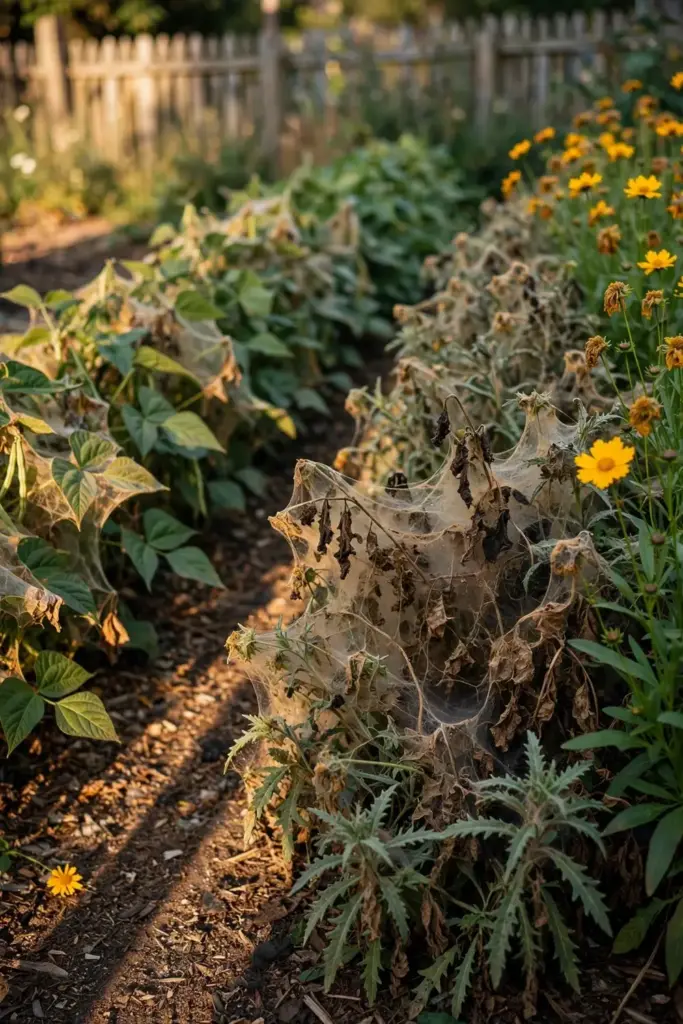
Azaleas carry the nursery form of the disease. USDA Agricultural Research Service work describes Rhizoctonia web blight as an important disease of evergreen azaleas and other ornamental plants in nurseries. Symptoms first appear in early summer on scattered plants and turn severe in July and August. Home azalea plantings in humid regions follow the same calendar.
Garden mums and rosemary catch it in tight blocks. Greenhouse Management reports that plants can appear healthy from above even as the fungus spreads through the lower foliage of densely packed mums, azaleas, or rosemary. Spacing a mum block reveals injury that the closed canopy hid. Buy mums with space between pots and keep that space in the bed.
Beans rank high on the legume side. Snap beans and dry beans share the same low canopy, close spacing, and wet soil splash that web blight needs. Soybeans carry the field version of the disease, and the Crop Protection Network notes that fields with a history of sheath blight of rice carry higher risk of aerial blight. A garden bean row after a wet spell plays the same role on a small scale.
Farr and coauthors list over 500 hosts of Rhizoctonia solani in the United States alone, according to the University of Hawaii Crop Knowledge Master. That host list means rotation must skip whole plant families with care. A bed that held blighted beans should rest from legumes and from dense ornamentals alike. The fungus is a generalist, and a narrow rotation will not starve it.
Web Blight vs Pythium Blight
Pythium blight is the lookalike that causes the most confusion. Both diseases web foliage with pale mycelium in wet weather, and both strike fast, yet the pathogens belong to different groups and the products that control one do not control the other. Nursery Magazine warns that fungicides that control Pythium do not control Rhizoctonia and vice versa. Guess wrong and you waste the spray and the week.
| Clue | Web Blight (Rhizoctonia) | Pythium Blight |
|---|---|---|
| Pathogen group | True fungus, Rhizoctonia solani | Oomycete, a water mold in the genus Pythium |
| Signature sign | Fine tan webbing that adheres tightly to leaves and stems, matting them together | White cottony aerial mycelium on wet turf and seedlings, greasy water-soaked tissue |
| First tissue hit | Lower foliage of ornamentals and beans, climbing from soil splash | Turfgrass leaves and seedlings, often in circular patches in low wet spots |
| Weather sweet spot | Hot humid weather, 68 to 86 degrees Fahrenheit, relative humidity 80 to 90 percent or more | Hot humid weather with nights above 65 degrees Fahrenheit and leaves wet 12 to 14 hours for several nights |
| Sclerotia | Small hard dark brown sclerotia, 1/16 to 3/16 inch, on diseased tissue | No sclerotia, the oomycete survives as oospores in soil |
| Host focus | Ornamentals and beans, plus more than 500 hosts | Turfgrass and seedlings across many crops, worst in saturated soil |
| Spread habit | Mycelial bridges grow from plant to plant across touching foliage | Zoospores swim in surface water, and mowing drags infected tissue across turf |
| First response | Strip webbed leaves, dry the canopy, mulch against splash | Drain the wet spot, stop overhead water, keep traffic off the wet turf |
Pythium blight behaves like a water disease because it is one. The University of Florida IFAS Extension describes Pythium blight of turf as small water-soaked dark wilted patches that collapse and mat, with white cottony aerial mycelium after extended humidity. Wet leaves for 12 to 14 hours across several nights with night temperatures above 65 degrees Fahrenheit drive it. Drainage and dry leaves beat it.
Web blight behaves like a climbing fungus because it is one. Rhizoctonia moves without spores across mycelial bridges between nearby plants. Greenhouse Management reports that Rhizoctonia moves well without spores because it forms mycelial bridges between nearby plants, growing from one plant to another. Touching foliage is the highway. Space is the roadblock.
When the table leaves doubt, send a sample to a diagnostic lab. Mixed infections happen, and a lab call beats a second wrong spray. Tell the lab which host you grow and whether the webbing clings tight or brushes away. That detail points the microscopist toward the right genus on the first look.
Why Web Blight Spreads Across Wet Foliage
Rhizoctonia web blight spreads by contact. The fungus grows mycelial bridges from an infected leaf to the next leaf that touches it. Greenhouse Management reports that Rhizoctonia moves well without spores because it forms mycelial bridges between nearby plants, growing from one plant to another. No windborne spore shower is needed. A dense canopy does the delivery work.
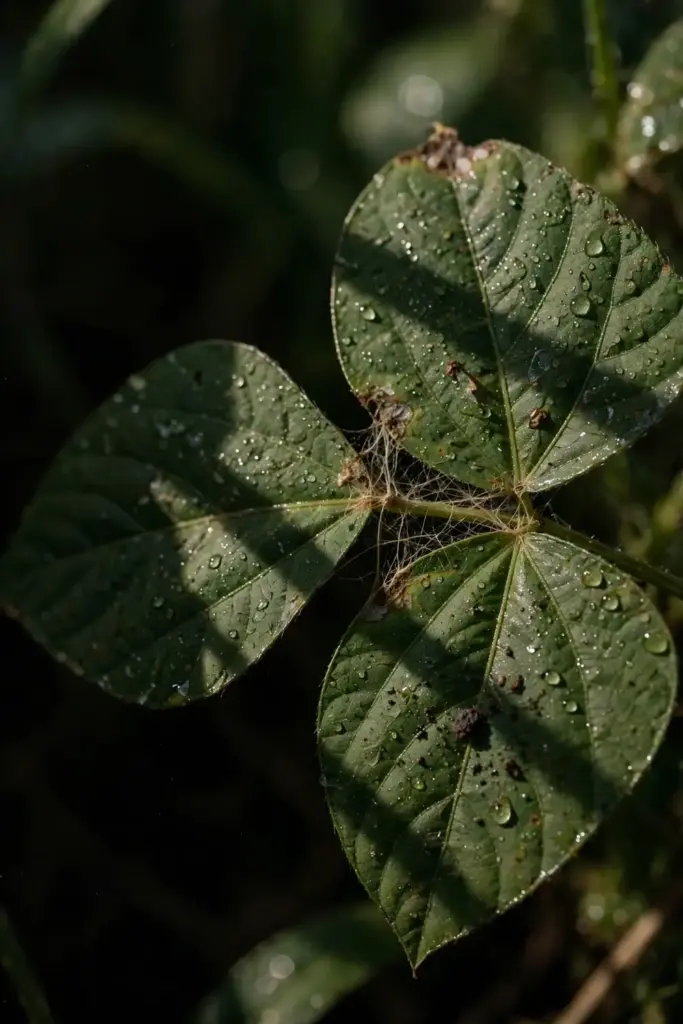
Wet leaves feed the bridges. Mycelium grows fastest across a wet leaf surface in warm still air. Leaves that dry by midday break the chain. Leaves that stay wet into the evening let the fungus cross from leaf to leaf all night. That is why overhead watering late in the day is the single worst habit in a web blight bed.
Soil splash starts each outbreak. Sclerotia and mycelial fragments ride rain splash and sprinkler droplets onto low leaves. Research on bean web blight in Costa Rica found that the main inoculum source was rain splashed soil carrying sclerotia and mycelial fragments. Mulch blocks that launch pad. Bare soil under a bean row invites it.
Sclerotia carry the fungus between seasons. Those hard dark bodies survive in soil and debris, then germinate when warmth and moisture return. Rhizoctonia survives in soil and debris as mycelium and sclerotia, so a bed that held web blight holds inoculum for the next crop. Cleanup between seasons cuts the carryover. Leaving blighted debris in the bed feeds it.
The canopy closes the trap. Once foliage touches across the row, the fungus walks the whole row without ever returning to the soil. A bean row with closed canopy and wet lower leaves can go from a few spots to a matted mass in days. Nursery Magazine warns that entire stock beds or flats can be lost to Rhizoctonia aerial blight in a few days when conditions run hot and wet. Speed is the reason scouting runs weekly, not monthly.
What Makes Web Blight Worse in a Home Garden
Overhead watering tops the risk list. Sprinklers wet the whole canopy, splash soil onto low leaves, and keep foliage wet into the evening. A sprinkler that runs at dusk gives Rhizoctonia a wet canopy all night. Drip lines and soaker hoses at the soil line keep leaves dry and cut the splash at the same time.
Crowding runs second. Plants set tight for a full look hold humidity in the middle of the block. Air cannot move through a closed perennial border or a bean row planted shoulder to shoulder. Greenhouse Management reports that crowding in azaleas does not worsen blight when conditions already favor the disease, yet spacing still matters under normal garden conditions because it breaks leaf to leaf contact.
Debris on the bed runs third. Fallen blighted leaves, old mulch matted with dead foliage, and spent bean vines hold sclerotia and mycelium through the off season, so a bed that never gets cleaned carries its inoculum straight into spring. Bag blighted debris for municipal waste, because home compost piles rarely sustain the heat that kills sclerotia, and composting sick plants seeds the next bed.
Wet soil and poor drainage run fourth. Rhizoctonia solani prefers warm wet soil, and beds that hold water after rain keep lower leaves wet longer. Raised beds drain faster and lift foliage above splash height. A low spot that puddles after every storm will show web blight first, season after season.
Warm humid weather runs fifth and cannot be changed. Greenhouse Management places the ideal band for this disease in the warm humid range that matches midsummer in much of the eastern United States. Gardeners cannot cool the summer. They can dry the canopy, open the spacing, and keep splash off the leaves.
Step 1: Decide Whether Saving This Plant Is Worth It
Look at the whole plant before you spend anything. A plant with a few webbed lower leaves and a healthy top is worth saving. A plant with webbing through the whole canopy, a matted crown, and dead leaves hanging throughout is not. The fungus has already crossed the canopy, and cleanup will cost more leaves than the plant can spare.

Check the stem base too. Web blight rides the foliage, but a stem girdled at the soil line by Rhizoctonia belongs to the root and stem form, covered by the companion Rhizoctonia root rot treatment guide. A plant with both canopy webbing and a girdled stem base will not recover. Pull it and save the neighbors.
Count the healthy leaves left. A bean plant with half its canopy still green can still fill pods after you strip the blighted leaves. An ornamental with only a few green leaves left will spend the season regrowing instead of blooming. Replace the second one. Keep the first one and move to Step 2 today.
Act the same day you decide. Rhizoctonia crosses touching leaves fast in warm wet weather, and a plant you mean to save tomorrow may be matted by the weekend. Nursery Magazine warns that severe disease development can occur in less than a week. The triage call is the cheapest move in this whole plan. Make it early.
Step 2: Strip Blighted Leaves and Bag Every Scrap
Pull webbed leaves off first. Work on a dry morning so the webbing is less active and spores and fragments stick less to your gloves. Lift each matted clump gently. Tearing through the web shakes fragments onto healthy leaves below. Place each clump straight into a bag.
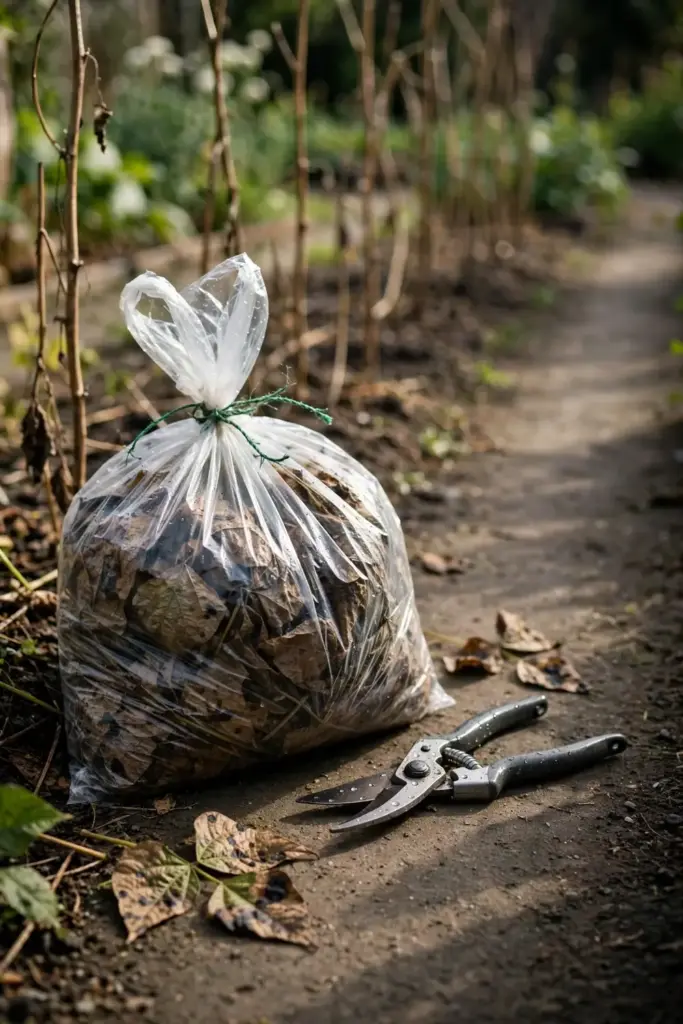
Bag debris for municipal waste and keep it out of the compost pile. Do not compost blighted leaves, stems, or pods. Home compost piles rarely sustain the heat that kills sclerotia. A composted blighted leaf returns to the bed as inoculum with the next load of compost. Bag it, tie the bag, and get it off the property.
Clean the tools and gloves after the job. Wash soil and plant sap off pruners, shears, and gloves with soap and water. Disinfect tools per the product label before they touch healthy plants. Rhizoctonia rides soil on tools, flats, and soiled hands into clean beds, so a dirty pruner can seed the next plant you touch.
Work sick plants last. Move through healthy beds first, then the blighted bed. Change gloves between beds if you wear them. Clean tools again before you put them away. The order matters because every trip from a sick bed to a healthy bed is a delivery run for the fungus.
Step 3: Open the Canopy for Air and Fast Drying
Thin the planting so leaves dry fast. Selective pruning of infected leaves doubles as thinning. The University of Maryland Extension advises thinning plantings to increase air circulation that will promote faster leaf drying. Cut out the worst leaves, then step back and look for the next layer of contact.
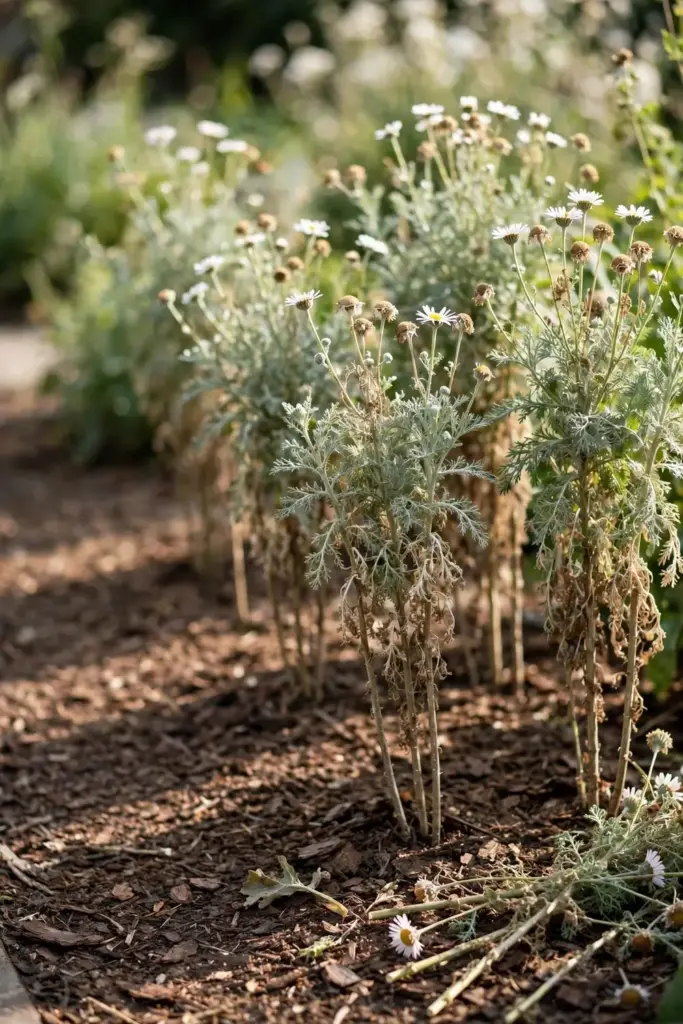
Space new plantings wider than the label minimum. A bean row with air between plants dries by midday. A perennial border with a hand width of air between crowns dries the inner foliage. The label spacing is a starting point for a dry climate. Humid gardens need more room, and the extra inches pay off in dry leaves.
Prune for airflow, not for shape, during an outbreak. Remove lower leaves that touch soil or mulch. Open the center of a dense perennial so air moves through the middle. The University of Maryland Extension notes that thinning can be accomplished by selective pruning of infected leaves or by mechanical removal. In a home bed, hand pruning does the job with less collateral damage.
Check the center of the block, not just the edges. Greenhouse Management warns that plants can appear healthy from above even as the fungus spreads through the lower foliage of densely packed plantings. Part the canopy with a gloved hand and look at the inner leaves. The center tells the truth about the bed.
Step 4: Water at the Soil Line in the Morning Only
Water at the root zone and keep leaves dry. Drip lines and soaker hoses beat overhead watering because they put water where roots drink and leave stems and leaves dry. A narrow spout watering can aimed at the mulch does the job on a small bed. The University of Maryland Extension advises avoiding overhead irrigation for web blight control.
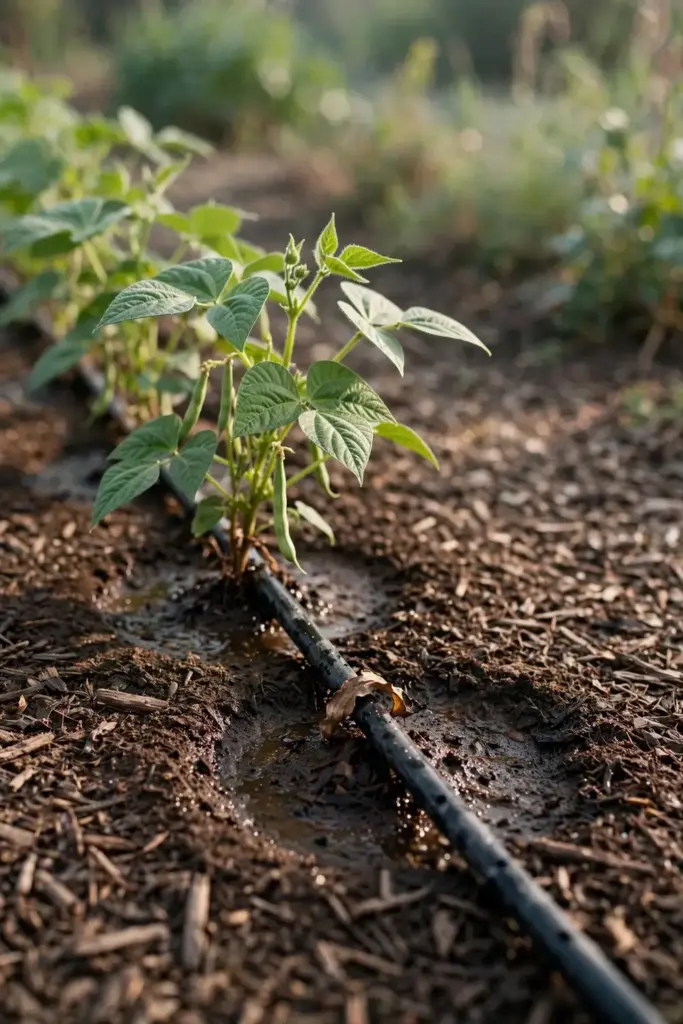
Water in the morning. Morning water gives any incidental splash the whole day to dry. Evening water leaves the canopy wet all night, which is exactly the window Rhizoctonia needs. Greenhouse Management lists irrigating early in the day among the core prevention steps for web blight.
Water deeply and let the surface dry. A deep soak followed by a dry surface starves surface mycelium. Shallow daily sprinkles keep the surface wet and the lower leaves damp. Let the top inch of soil dry before watering again, and the deep roots will follow the moisture down.
Skip overhead watering in a wet week entirely. Rain already wets the canopy. Adding sprinkler water on top of rain extends the wet period past the point where the fungus thrives. Turn the sprinkler off when rain is forecast, and let the bed dry between storms.
Step 5: Lay a Mulch Barrier Against Soil Splash
Mulch blocks the splash that starts web blight. Research on bean web blight found mulching highly effective, and superior to chemical treatments in those trials, because mulch serves as a physical barrier that prevents soil and debris from splashing onto bean tissue. A mulch layer between soil and leaves breaks the launch path.
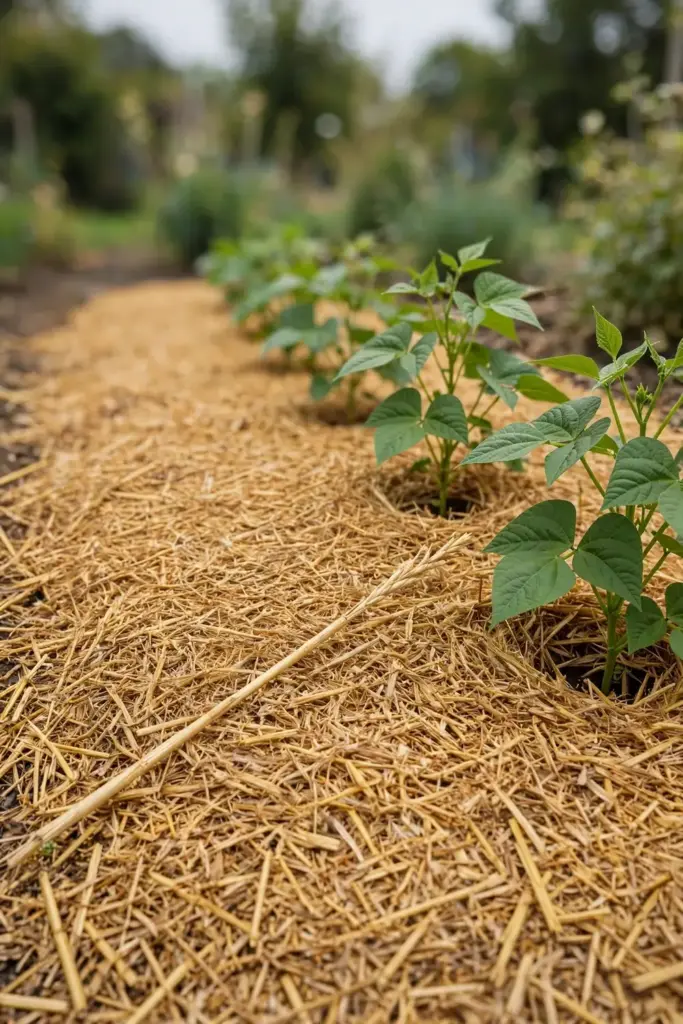
Spread 2 to 3 inches of straw mulch around beans and ornamentals. Keep mulch a finger width off the stems. Mulch piled against a stem holds moisture where Rhizoctonia attacks. A gap at the stem keeps the crown dry while the mulch still shields the soil.
Use clean straw or shredded bark, not blighted debris. Mulch made from last season’s infected vines carries the fungus back into the bed. Buy fresh mulch or shred clean prunings from healthy plants. The soil health guide walks through organic matter, structure, and drainage in practical detail.
Refresh mulch after heavy rain washes it thin. A mulch layer that has thinned to bare soil in spots leaves launch pads open. Top up the thin spots and keep the barrier continuous through the wettest weeks. The barrier only works where it covers.
Step 6: Rotate Beans and Ornamentals Out of the Bed
Move beans and susceptible ornamentals to a fresh bed next season. Rhizoctonia solani survives in soil and debris, so planting the same hosts in the same bed hands the fungus a fresh canopy on arrival. A bed that held web blight needs a season away from beans, dense perennials, and other known hosts.
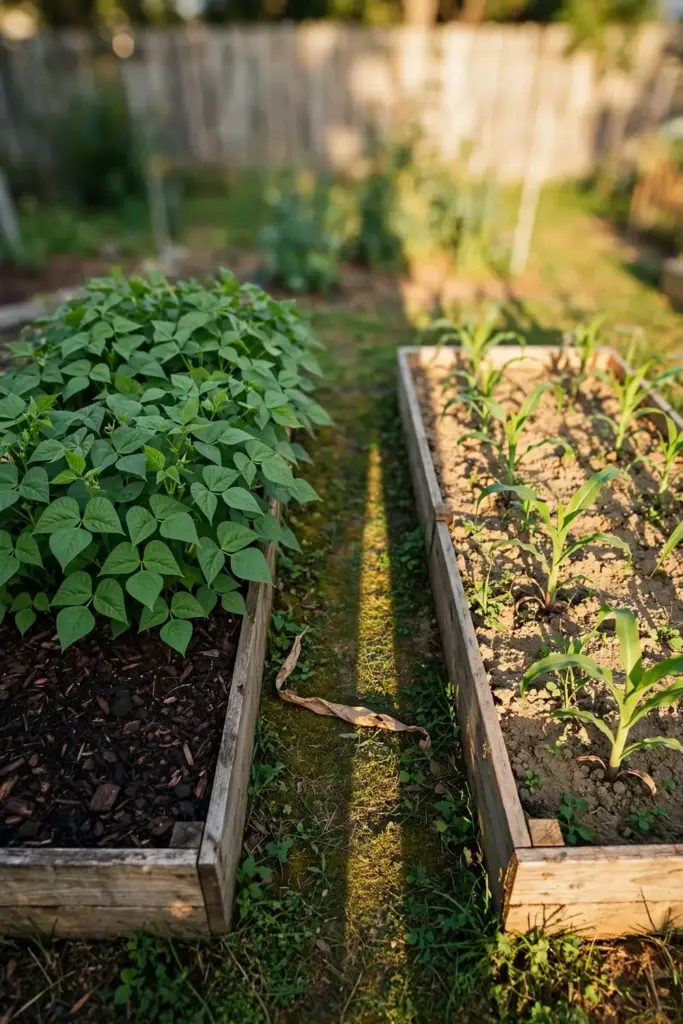
Fill the fallow year with unrelated crops. Corn, grains, and small grains break the cycle because they do not host the web blight form the same way. Grains break it well, and a mustard cover crop in the off season adds organic matter while the bed rests. Pull legume weeds through the fallow year. Weed legumes host the fungus silently and keep the bed infectious while it looks empty.
Map the bed on paper. Write down which bed held web blight, which host grew there, and which year. Memory fades. The fungus does not. A paper map stops next spring from repeating this spring, and it keeps the rotation honest when beds look identical in March.
Never follow beans with beans. Snap beans after dry beans, or ornamentals after beans in the same bed, keeps the host chain unbroken. Rotate the whole bed, not just the row. The fungus lives across the bed, and a fresh row six inches from last year’s row is still the same bed.
Step 7: Start With Clean Seed and Inspected Transplants
Buy certified disease-free seed and transplants from a reputable supplier. Seed carries Rhizoctonia, and one infected transplant can seed a bed that then punishes beans and ornamentals for seasons. Clean stock is the first defense, long before any product. The seed starting guide covers clean technique from sowing to transplant.
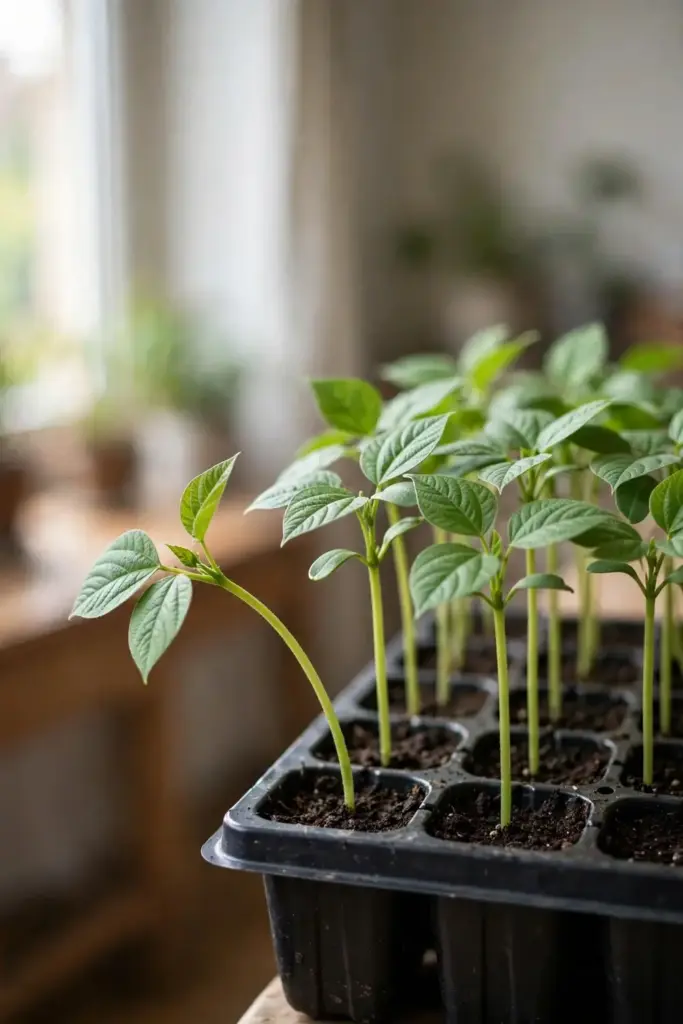
Inspect every transplant before it leaves the store. Look at the lower leaves for spots and webbing, and look at the stem base for reddish brown lesions. Any wilted, stunted, or off-color seedling stays behind. A bargain flat with one sick plant is not a bargain.
Quarantine new cuttings and pots for a few days. Keep them away from established beds until the lower leaves show clean growth. Cuttings root in warm moist conditions that favor Rhizoctonia, and USDA Agricultural Research Service work traces azalea web blight spread to infested stem cuttings used for propagation. Clean cutting stock matters as much as clean seed.
Use fresh sterile mix for seed starting. Never fill trays with bed soil, even soil that looks fine. One scoop of bed soil can carry sclerotia into every cell it touches. Fresh mix carries no soil history and no fungus, and a clean tray keeps it that way.
Step 8: Use a Labeled Fungicide Only When Pressure Demands It
Cultural control carries most home gardens. Dry leaves, open spacing, mulch, and sanitation stop web blight in many beds without any spray. Reach for a fungicide only when blight keeps spreading after you have done the cultural work, or when a high-value planting faces a wet forecast with no dry window.
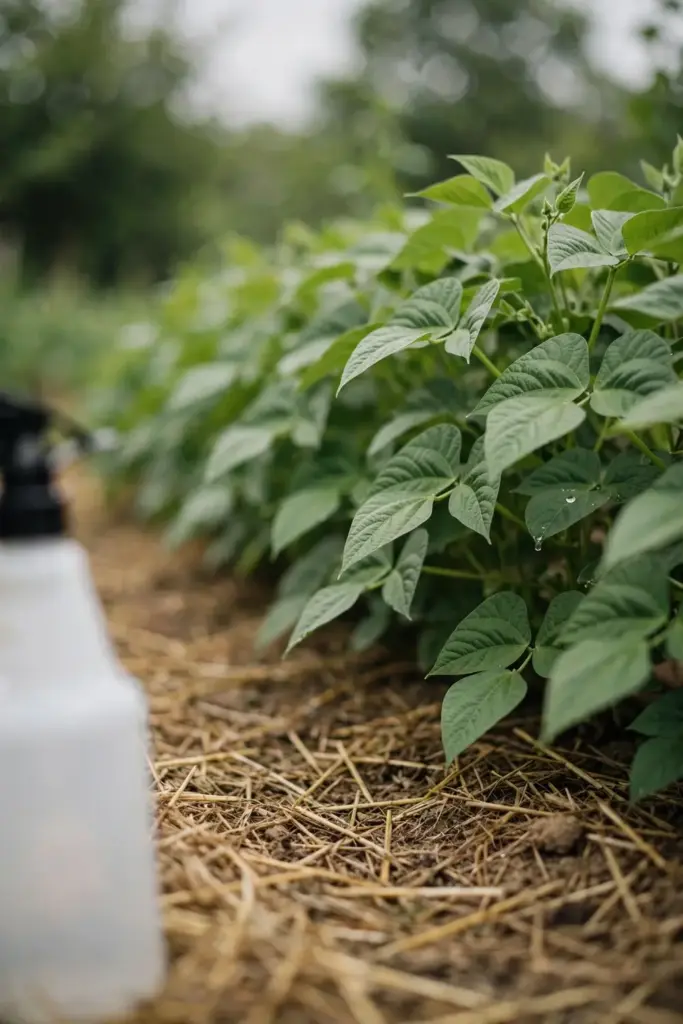
Match the product to the pathogen. Fungicides that control Pythium do not control Rhizoctonia and vice versa, according to Nursery Magazine. A Pythium product sprayed on web blight wastes the application and the week. Read the label for Rhizoctonia solani on the host you grow. If the label does not list it, the product is not the right one.
Follow the label exactly. Apply at the labeled rate, with the labeled safety gear, and keep the spray off blooming plants where pollinators work. USDA Agricultural Research Service work on azalea web blight found that a few well timed fungicide applications at labeled rates suppressed disease symptom progression in most years. Home gardeners should treat that timing as a nursery result, not a home schedule. Follow their own label.
Expect suppression, not a cure. A fungicide slows Rhizoctonia and protects healthy leaves. It does not resurrect blighted leaves. Strip the blighted tissue first, then spray the healthy canopy that remains. Spraying a matted canopy coats dead leaves and misses the living ones underneath.
Step 9: Scout Every Week and Keep a Bed Record
Scout once a week in warm wet weather. Severe Rhizoctonia disease development can occur in less than a week, according to Nursery Magazine. A monthly look misses the whole outbreak. Pick one dry morning each week and walk every bed with a gloved hand and a bag.
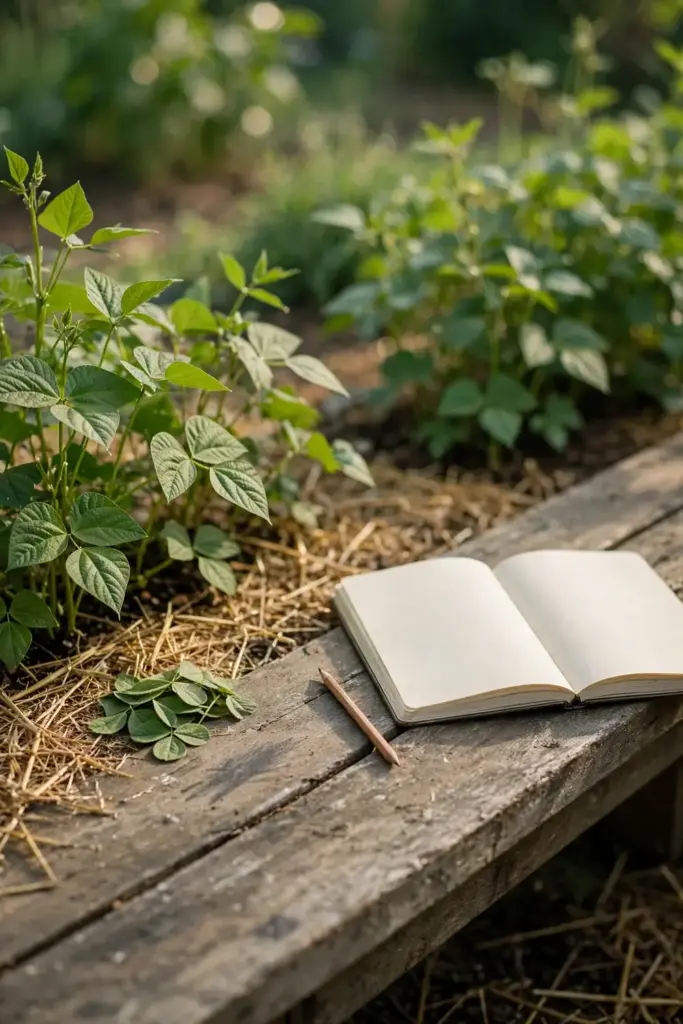
Check the center of each block. Part the canopy and look at the inner lower leaves. Greenhouse Management warns that plants can appear healthy from above even as the fungus spreads through the lower foliage of densely packed plantings. Monitor foliage quality at the center of the block, not just at the outer edges.
Write down what you find. Note the date, the bed, the host, and how many plants show webbing. A short record shows whether the outbreak is growing or shrinking, and it tells you which bed to rotate first next season. A notebook entry beats a memory every time.
Act on the first sign, not the fifth. One webbed clump pulled today is a dozen leaves saved next week. The weekly scout turns web blight from a crisis into a chore, and a chore done weekly rarely becomes a disaster.
Living With Web Blight in a Bed You Already Own
A bed with web blight is not a dead bed. It is a managed bed. Plant resistant or tolerant choices there as the default. Space them wide. Mulch the surface. Water at the soil line in the morning. Scout weekly and strip the first webbed clump you see.
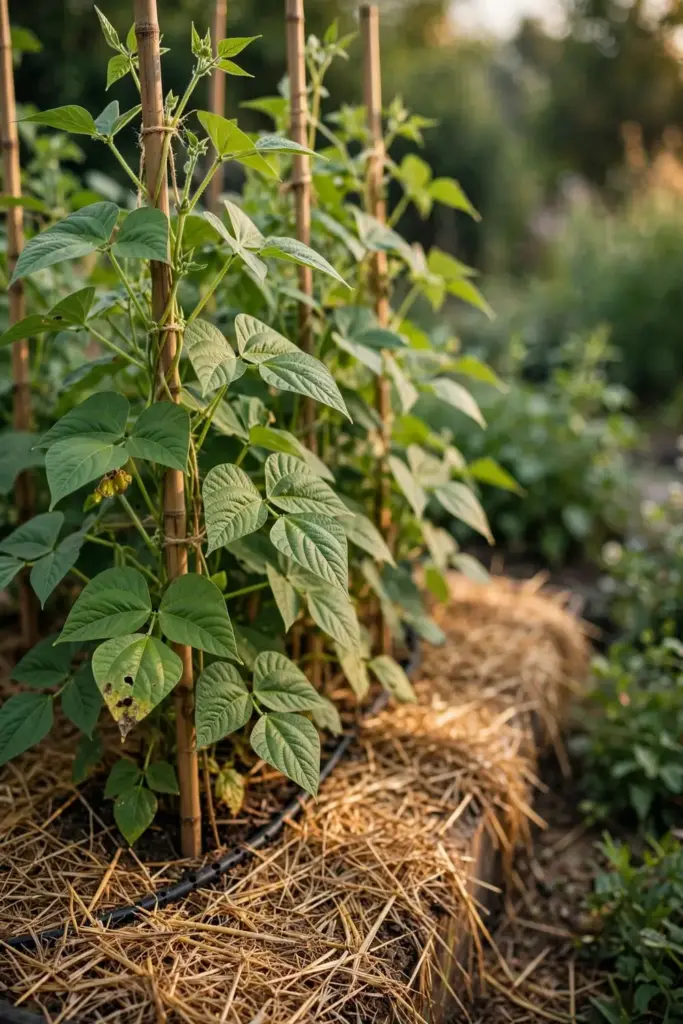
I have learned that a bed with web blight rewards dry leaves more than any spray.
Stop three habits. Do not plant susceptible beans or dense ornamentals in that bed to test it. Do not reuse its soil in seed trays. Do not compost its sick plants. Keep the sanitation, watering, and rotation discipline every season, because the sclerotia wait longer than any gardener’s memory.
Keep a bed map on paper. Write down which bed held web blight, which host grew there, and which year. The map stops next spring from repeating this spring. A managed bed grows good beans and good flowers again, as long as the canopy stays dry and the splash stays off the leaves.
If the decay sits at the roots and stem base rather than in the web across the leaves, the companion piece on Rhizoctonia root rot fits that problem. The two forms share a fungus and a bed, and they demand different fixes.
Frequently Asked Questions
No. Web blight does not leave on its own once the web mats the canopy. Dry weather slows it, and the fungus waits in soil and debris as sclerotia until warmth and moisture return. What can change is the pressure. Dry leaves, open spacing, mulch, and sanitation let you garden around the fungus. The fungus itself stays in the bed, so the routine stays too.
Yes, if the pods look sound. Web blight is a plant disease, not a human one. Harvest pods that show no lesions and wash them as usual. Discard rotted or spotted pods. The real loss is yield, not safety. A plant that loses its lower canopy early sets fewer pods, so pick what ripens before the web climbs.
No. Garden fungicides slow Rhizoctonia and protect healthy leaves, but they cannot resurrect blighted leaves. Strip the webbed tissue first, then spray the healthy canopy that remains. Match the product to the pathogen, since products that control Pythium do not control Rhizoctonia. Cultural control carries most home gardens, and fungicide serves as backup when pressure stays high.
Fast in warm wet weather. Severe Rhizoctonia disease development can occur in less than a week, according to Nursery Magazine. Mycelial bridges cross touching leaves night after night while the canopy stays wet. That speed is why scouting runs weekly and why the first webbed clump comes off the same day you spot it. A monthly look misses the whole outbreak.
Not for beans, ornamentals, or seed starting. Sclerotia ride in that soil and debris for seasons. You can reuse it for unrelated crops after a rotation year, or keep it in place and plant non-hosts there. For containers and seed trays, use fresh sterile mix instead. One bag of infested soil can seed web blight into every pot it touches.
No. Web blight is Rhizoctonia web blight on ornamentals and beans. Lawn blight usually means Pythium blight, Fusarium blight, or Ascochyta blight on turfgrass. Those turf diseases hit grass leaves in wet lawns, while web blight webs ornamental and bean foliage. The pathogens differ, the hosts differ, and the products differ. Treat the plant in front of you, not the name on a lawn product.
Where to Go From Here
Web blight rewards fast triage and steady canopy work. Confirm the clinging tan web and the matted leaves. Make the honest triage call in Step 1. Then work the sequence: strip, space, water low, mulch, rotate, and start clean.
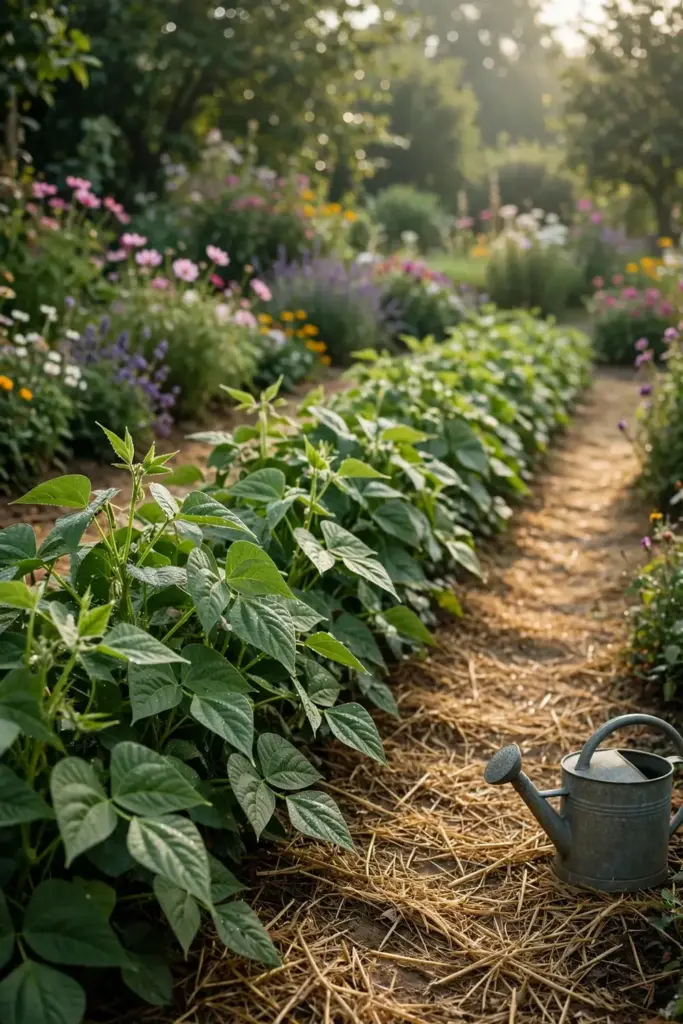
Next season, start clean. Fresh sterile mix, inspected transplants, and morning watering will prevent more web blight than any product treats. The blossom blight guide is a useful companion read if you are building a broader disease identification habit, since it trains the same look closely at symptoms approach.