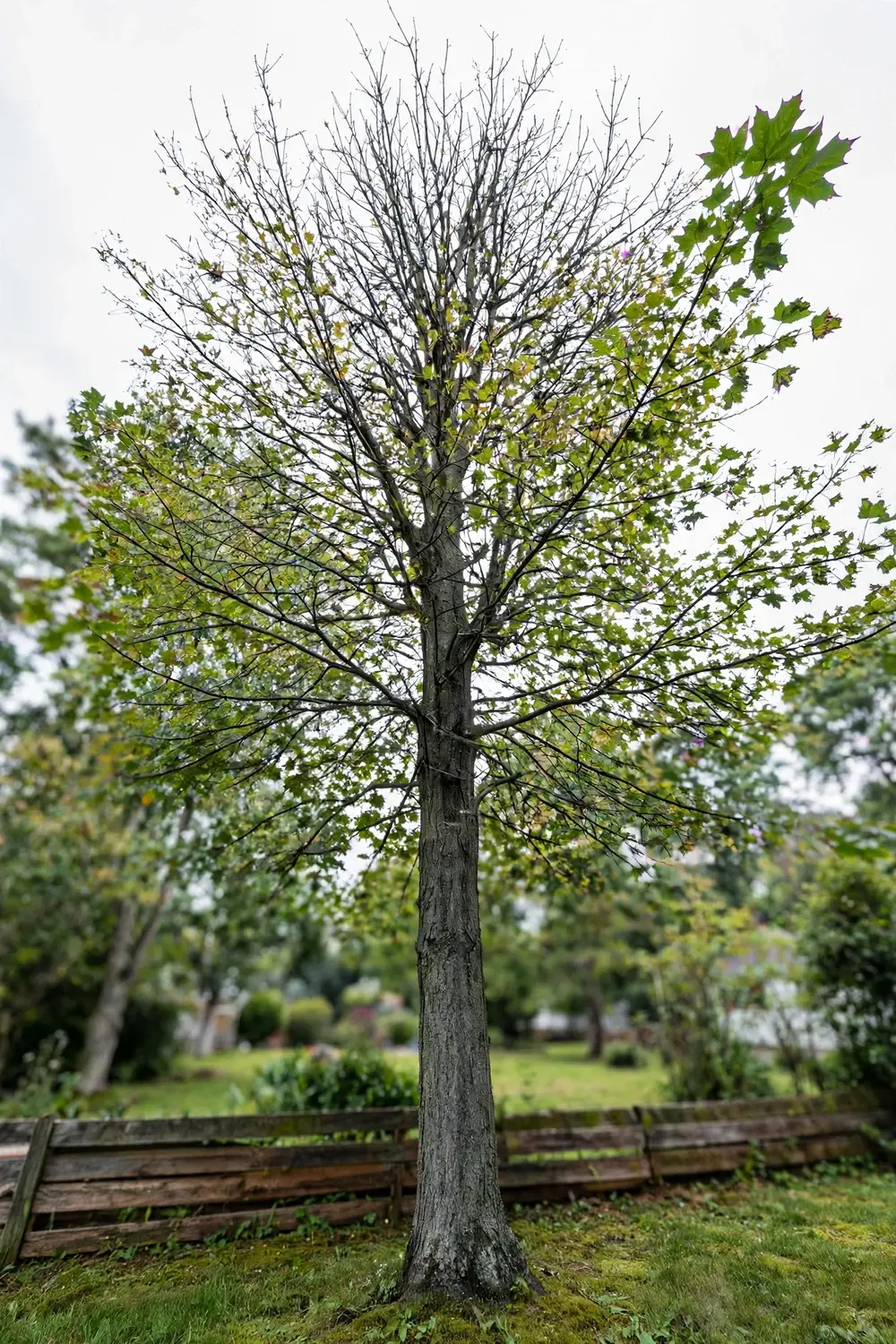

Sap Streak is a fatal fungal disease of sugar maple. It enters through wounds in the trunk base or roots, kills the sapwood, and starves the crown. The first sign is dwarfed leaves across part or all of the crown, and the tree usually dies within 3 to 4 years.
I have learned to treat a thinning sugar maple crown as a call for a professional diagnosis, not a do-it-yourself treatment. This page covers what Sap Streak does to a sugar maple, how to recognize it, and 3 moves that fit a home yard: protect the trunk and roots, get a lab diagnosis, and remove a confirmed tree.
Sap Streak has no cure. No spray or trunk treatment saves a symptomatic tree. The honest playbook is short.
What Sap Streak Actually Is
Sap Streak is a vascular xylem disease of sugar maple. The fungus invades the sapwood of roots and the lower stem through wounds, then kills that wood. The dead sapwood can no longer carry water from the roots to the crown, so the crown thins and dies back. The fungus behind the disease carries two names in the literature. The US Forest Service paper on the disease calls it Ceratocystis virescens and lists Ceratocystis coerulescens as the matching name, while the Clemson index lists it as Ceratocystis caerulescens, a spelling variant of the same name. Whether C. virescens and C. coerulescens are one species or two is still debated, so this page uses the US Forest Service name and flags the second name wherever the naming matters.
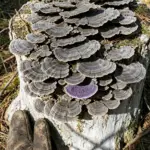
The pathogenic record covers one host only. Sap Streak disease attacks sugar maple (Acer saccharum) and no other species as a disease. The same fungus also lives as a saprophyte on freshly cut bolts of sugar maple and other northern hardwoods, which means it can sit in cut wood without causing disease. That saprophyte habit is not the same as infecting a living tree, and other maple species do not carry Sap Streak as a disease.
Sap Streak starts in wounds. The US Forest Service research paper on the disease names logging scars, road building, and sap hauling as the wound sources that let the fungus into roots and stem bases. A yard maple faces the same entry route on a smaller scale. Any wound at the trunk base or on a surface root is an open door.
What Sap Streak Looks Like on a Sugar Maple
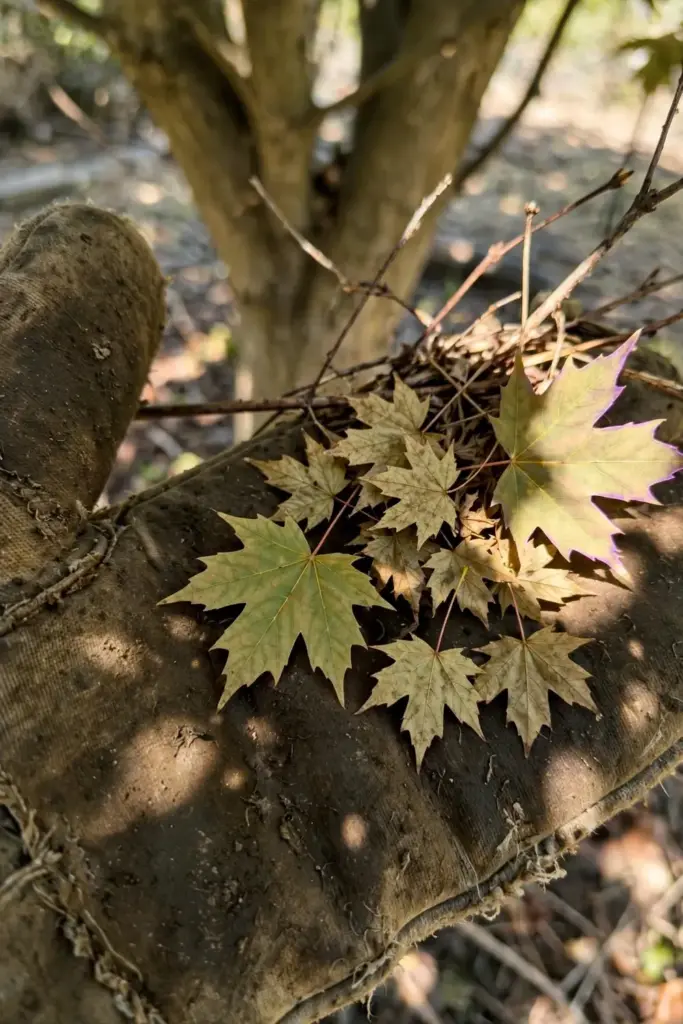
Sap Streak shows first in the crown. The first noticeable symptom is dwarfing of the foliage on all or a portion of the crown, according to the US Forest Service leaflet on Sap Streak disease of sugar maple. The following year the dwarfing grows more intense and may spread to parts of the crown that looked healthy before. Some branches begin dying back. After 3 to 4 years, the tree dies.
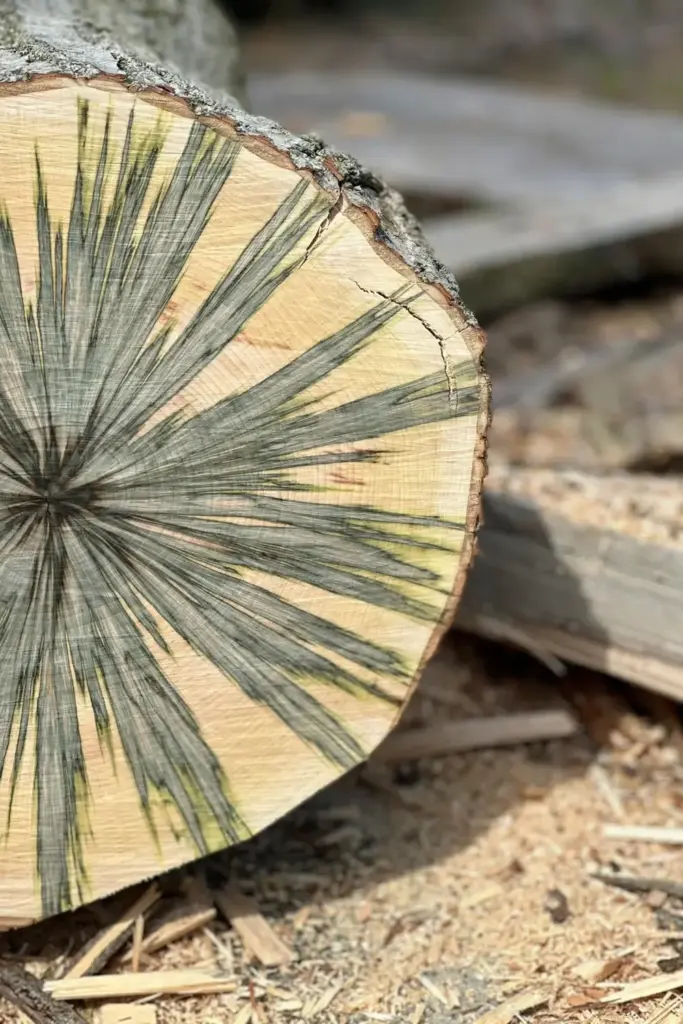
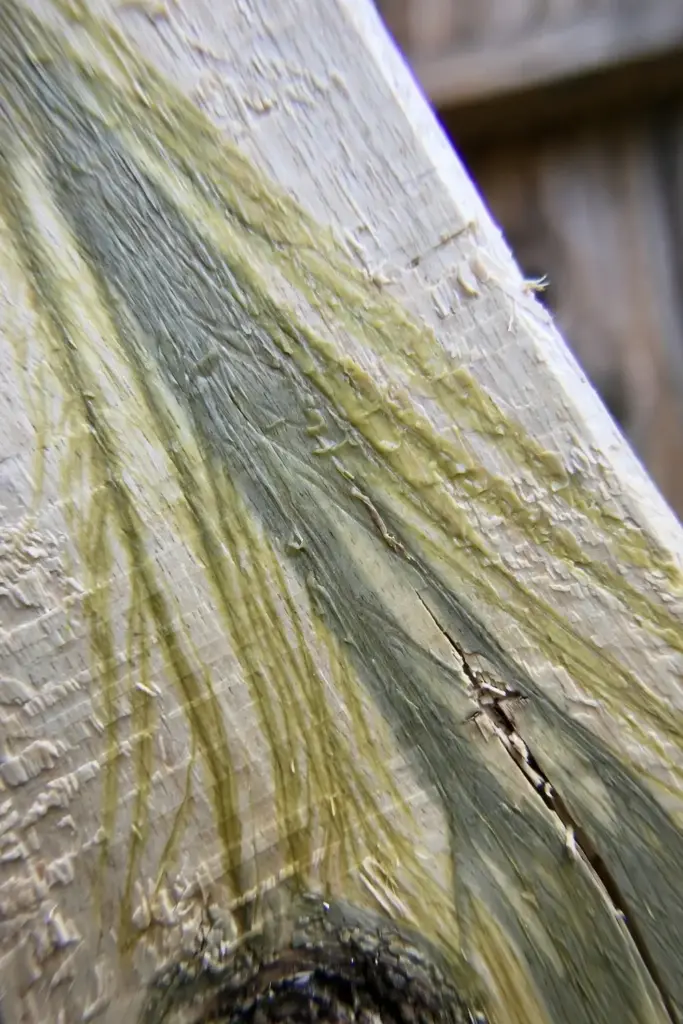
The wood tells the second half of the story. As crown symptoms develop, the wood of the lower stem and root system takes on a characteristic stain. The leaflet describes a radiating pattern with a watersoaked grayish color, and green tips nearest the cambium that may carry some reddish areas. The US Forest Service research paper on Sap Streak describes the same stain as yellowish-green and very moist. Once cut wood dries, the stain turns light brown and grows hard to see, which is one reason a field check alone cannot settle the diagnosis.
The stain sits in the sapwood, the living wood that carries water upward. A cross section of a healthy trunk shows how trees add a new ring of wood each year, and Sap Streak destroys the newest, outermost rings first, since those rings do the carrying. That placement explains why the crown fails while the trunk still looks solid from outside.
1. Protect the Trunk Base and Roots From Wounds
Keep every wound off the trunk base and roots. Wounds are the entry point, so prevention starts before any symptom shows and it works only before infection happens.
| Wound Source | How It Happens in a Yard | What to Do |
|---|---|---|
| Mower and string trimmer strikes | Blades and trimmer line nick the bark at the trunk base, week after week | Keep a mulch ring around the trunk and keep blades and trimmer line away from the bark |
| Construction and driveway work | Digging, grading, and vehicle traffic crush roots and scar the lower trunk | Fence off the root zone before work starts and reroute traffic around it |
| Root-zone digging | Planting beds, edging, and trenches cut surface roots near the trunk | Dig outside the drip line where you can and leave surface roots alone |
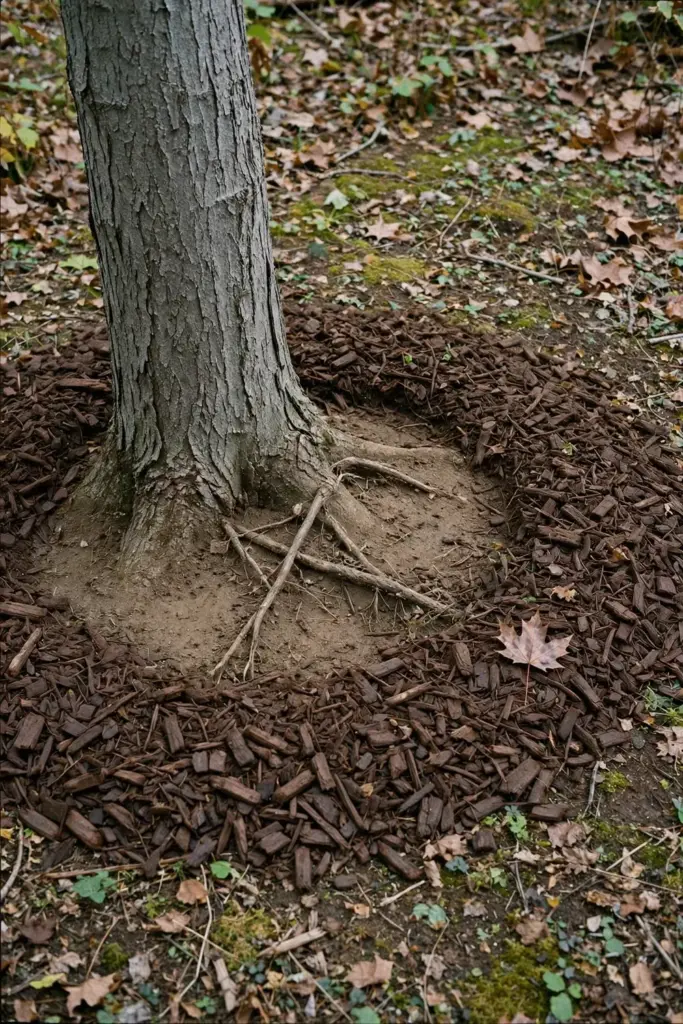
| Mulch piled against the trunk | A mulch volcano holds moisture against the bark and rots it | Spread mulch in a flat ring and leave a gap of bare soil around the trunk |
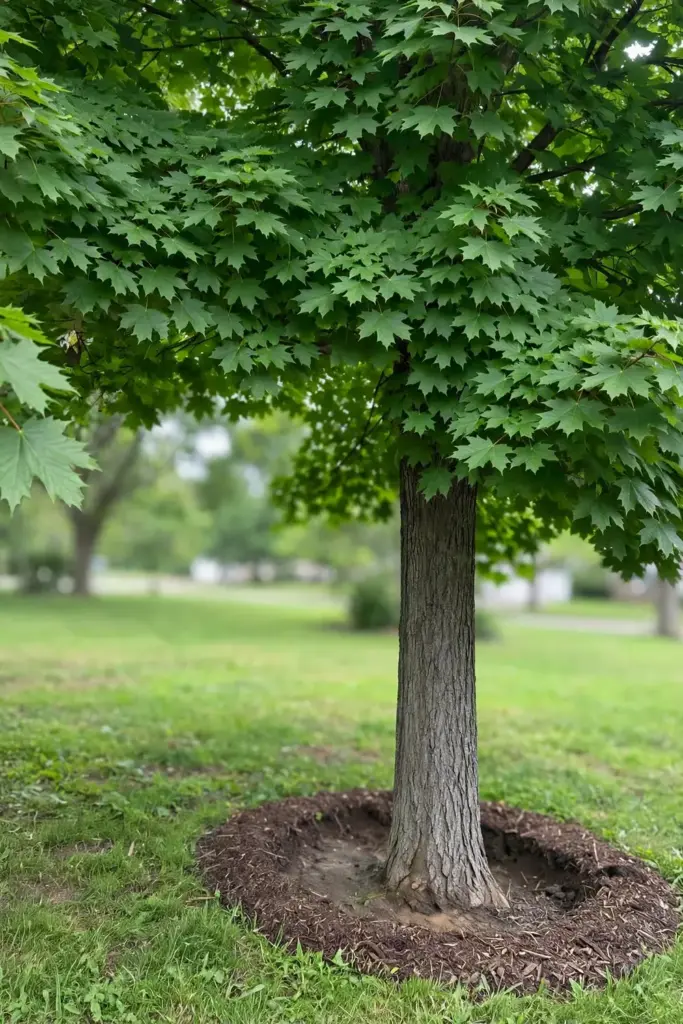
Mulch helps when it stays off the bark. A flat ring of mulch keeps mower wheels away from the trunk and holds soil moisture. The mulching guide covers mulch depth and placement in full. A volcano of mulch against the trunk does the opposite, since wet bark rots and rotting bark opens the same door as a wound.
Pruning wounds deserve the same care. Prune with clean cuts and clean tools, and prune at the right season for the tree. The spring pruning techniques guide covers timing and cut placement. A clean pruning cut closes fast. A torn stub stays open.
2. Get a Lab Diagnosis Before You Decide
Call a certified arborist and send a sample to a diagnostic lab. Field symptoms alone cannot confirm Sap Streak, and the next move depends on a firm answer.

Sap Streak shares crown-thinning symptoms with other maple problems. Maple decline and Verticillium wilt can both show dwarfed leaves, thin crowns, and branch dieback on a maple. No field check separates them with confidence. The Pacific Northwest handbook on Verticillium wilt states that proper diagnosis of Verticillium wilt requires laboratory testing to distinguish it from other vascular-wilt pathogens, and it names Ceratocystis virescens causing sapstreak in maple as one of those lookalikes. That lab step applies in both directions. A test that rules out Verticillium wilt still needs to confirm Sap Streak itself.
The arborist decides which sample the lab needs and how to collect it without wounding the tree further. Do not cut into the trunk to look for the stain yourself. A fresh exploratory cut is a new wound, and it can let the fungus in if the tree was healthy or spread decay if it was not. Let the arborist take the sample, and let the lab name the pathogen.
3. Remove a Confirmed Tree and Stop the Spread
Remove a confirmed tree promptly. No symptomatic tree recovers, and a standing infected tree holds the fungus in its wood.
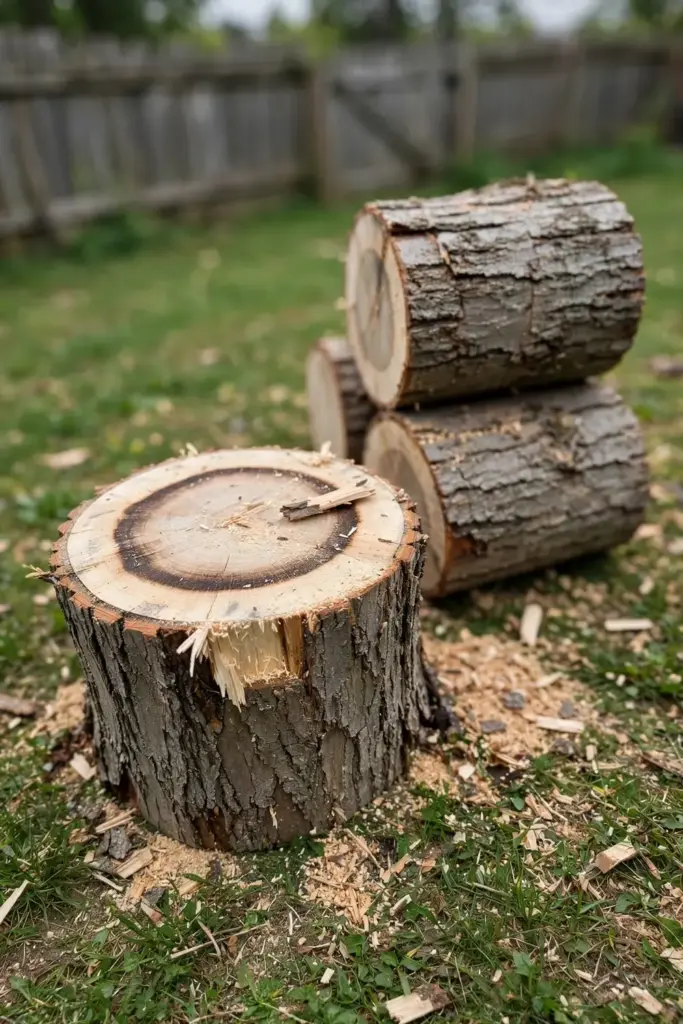
The US Forest Service leaflet on the disease records no recovery among symptomatic trees. The crown keeps thinning, the stain keeps spreading through the lower stem and roots, and the tree dies. No spray or injection changes that course. Management guidance for the disease centers on removing infected trees and preventing wounds, not on treating sick ones.
Removal is arborist work. A dying maple drops branches without warning, and a tree with dead sapwood can fail in ways a healthy tree would not. The arborist plans the fell, handles the wood, and advises on the stump. Ask the arborist whether the spot suits another sugar maple or whether a different species fits better there. If you want another maple in a different spot, the guide to growing a maple from a helicopter seed covers starting one from seed.
Frequently Asked Questions
No. No symptomatic tree recovers, and no spray or injection saves one. Infected trees usually die within 2 to 4 years, according to the Ceratocystis coerulescens species page. The honest response to a confirmed case is removal, plus wound protection for any healthy maples nearby. A tree that looks better for one season has not beaten the fungus. The stain keeps spreading in the lower stem and roots even when the crown holds steady for a while.
No. Sap Streak attacks sugar maple and comes from the Ceratocystis virescens and C. coerulescens naming pair. Oak wilt attacks oaks and comes from Bretziella fagacearum, formerly Ceratocystis fagacearum. The two diseases share a genus in the older naming, and they share a vascular-wilt pattern, but they differ in host, pathogen, and management. Never borrow oak wilt evidence for a Sap Streak decision. A lab test names the pathogen that actually sits in your tree.
No fungicide treatment exists for Sap Streak in the US Forest Service guidance. The guidance centers on removing infected trees and preventing wounds. A fungicide cannot reach the fungus inside the sapwood in a dose that kills it without killing the tree, and no product label supports that use. Money spent on sprays is money lost from the removal budget. Put the budget toward the arborist visit, the lab test, and the removal.
No, not as a disease. The pathogenic record covers sugar maple only. The fungus also lives as a saprophyte on freshly cut bolts of sugar maple and other northern hardwoods, which means it can grow in cut wood without causing disease. That saprophyte habit does not make red maple, silver maple, or Norway maple disease hosts. If a different maple species shows a thinning crown, another cause is at work, and a lab test will name it.
Where to Go From Here
Walk out to your sugar maple this week. Check the trunk base and the surface roots for mower nicks, construction scars, and mulch piled against the bark. Fix the wound sources you can fix.
If the crown looks thin or the leaves look dwarfed, call a certified arborist and ask for a lab diagnosis. Do not cut into the trunk to check for stain. A lab result gives you a firm answer, and a firm answer tells you whether removal is the next move.
Sap Streak is a short playbook: protect the wounds, confirm with a lab, and remove a confirmed tree. Do those three moves well and the rest of the yard stays in your hands.