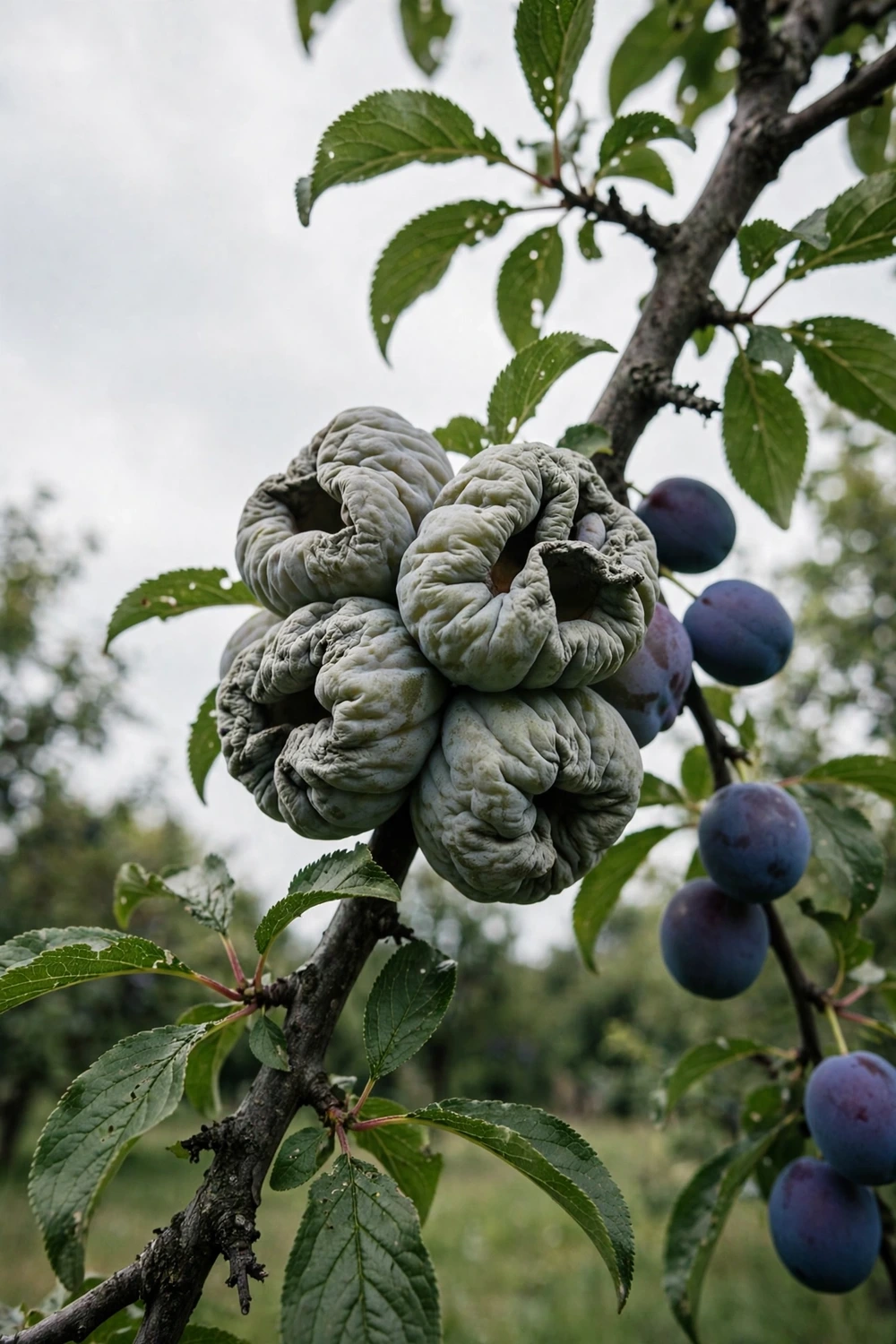

Plum pockets turn a plum harvest into hollow, swollen shells. Infected fruit can grow to 10 times its normal size, then dry brown or black, with no pit inside. Symptoms show about 6 to 8 weeks after bud break, and no spray rescues fruit that already shows the damage. The 8 strategies below start with identification, then give the one spray window that actually prevents a repeat.
Plum pockets is a fungal disease of plum trees. The fungus is Taphrina communis. It infects young fruit in cool, wet spring weather, and the infected fruit swells into a spongy pocket instead of a normal plum. In some areas the same disease is caused by Taphrina pruni, and European sources use that name. This article uses Taphrina communis throughout, because that is the name in the Clemson index and in the United States Extension sources.
I have learned that the gardener who checks the fruit with a knife before reaching for a spray bottle already has the right response. The cut test settles the diagnosis in seconds, and the diagnosis decides whether any action is worth taking at all. The rest of this page walks through identification on fruit, leaves, and shoots, the plum trees hit hardest, a compiled differential table against brown rot, the dormant-window mechanism behind every control decision, and the 8 strategies in order. If you are still deciding what kind of plum to plant, the guide to growing a plum tree from a fresh seed covers the long timeline from pit to fruit.
What Plum Pockets Actually Is
Plum pockets is a fungal disease that distorts plum fruit. The pathogen is Taphrina communis. The fungus overwinters as spores tucked into bud scales and bark crevices, then infects young tissue as buds swell in spring, as Illinois Extension describes on its plum pocket page. Cool, wet weather during that window favors infection. Mature tissue becomes resistant, so the fungus gets one infection period each year and does not keep starting new infections all summer.
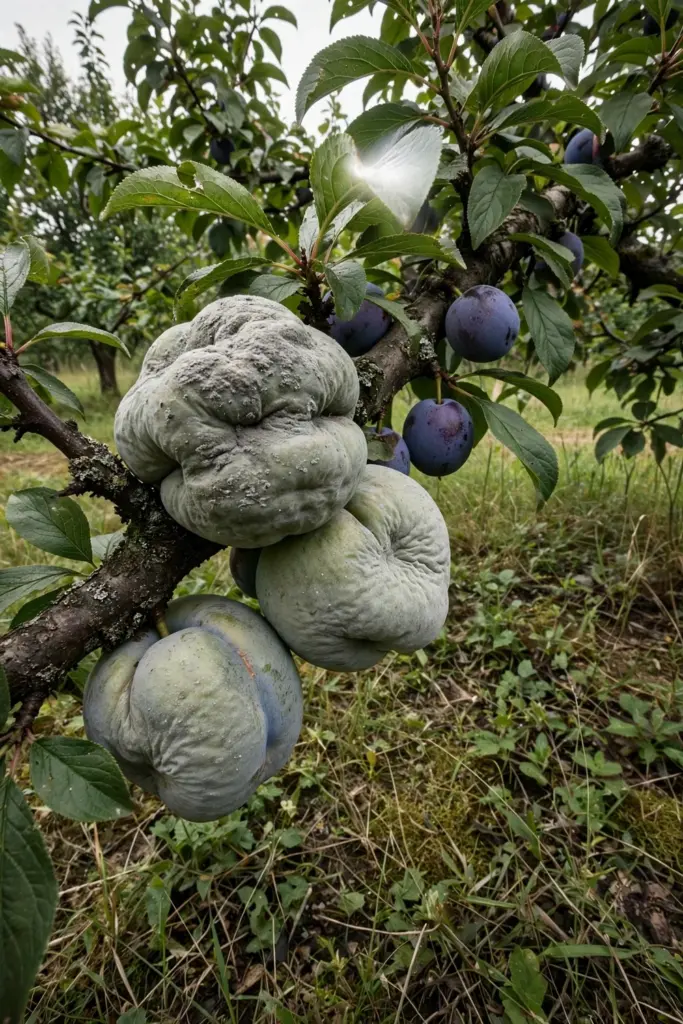
The infection changes how the fruit grows. The fungus grows between the cells of the young fruit and stimulates excessive cell growth. The fruit swells far past its normal size and forms a hollow, spongy pocket with no pit. The disease also goes by bladder plum and mock plum, and those names describe the same swollen, empty fruit. The Clemson Index of Plant Diseases in South Carolina lists this disease under plum as plum pockets, caused by Taphrina communis.
Plum pockets does not kill plum trees. The damage is the fruit crop. Infected fruit is inedible, and a heavy year can take much of the crop from a small tree. Treatment is about protecting fruit, never about saving the tree.
The disease is unusual rather than common, and many gardeners see it once before they ever learn its name. Homeowners are sometimes startled to find abnormal growths instead of fruit on their plum trees, and the University of Arkansas Extension describes exactly that reaction on its plum pockets page. The shock is understandable. A branch full of swollen, hollow fruit looks like a tree in serious trouble. It is not. It is a tree that lost part of one crop to a spring fungus.
How to Identify Plum Pockets on Fruit
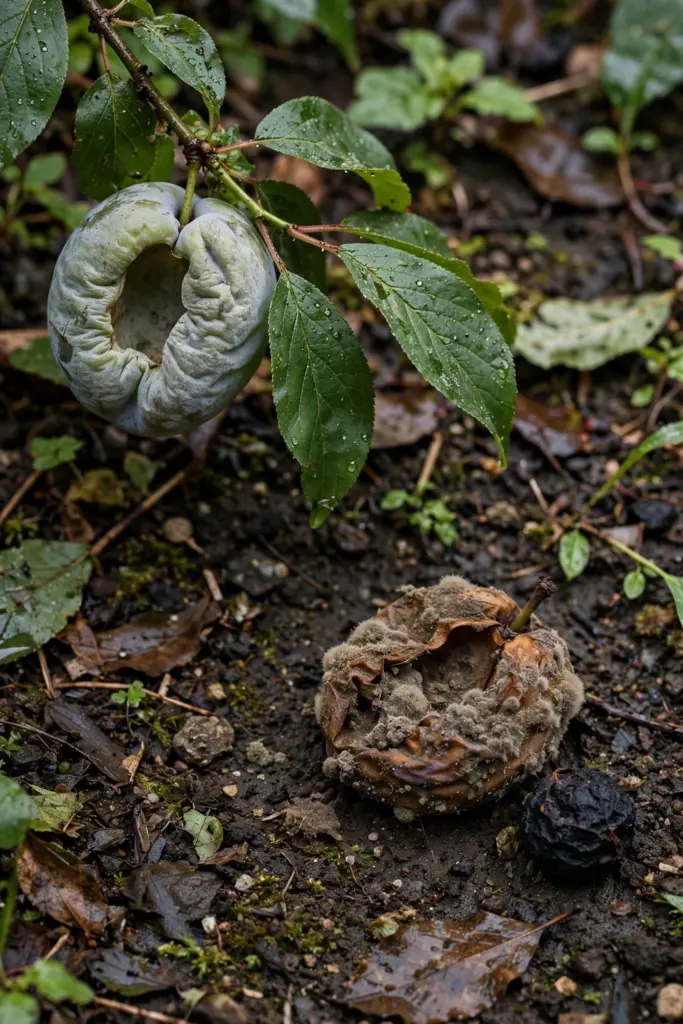
Plum pockets on fruit is hard to mistake once you know the shape. Symptoms appear about 6 to 8 weeks after bud break, starting as small blisters on the surface of young fruit, according to the University of Arkansas Extension plum pockets page. Each blister grows and soon covers the whole fruit. The fruit thickens, wrinkles, and distorts. Infected fruit may grow to ten times its normal size and develop a spongy texture, as the University of Minnesota Extension plum pockets page describes.
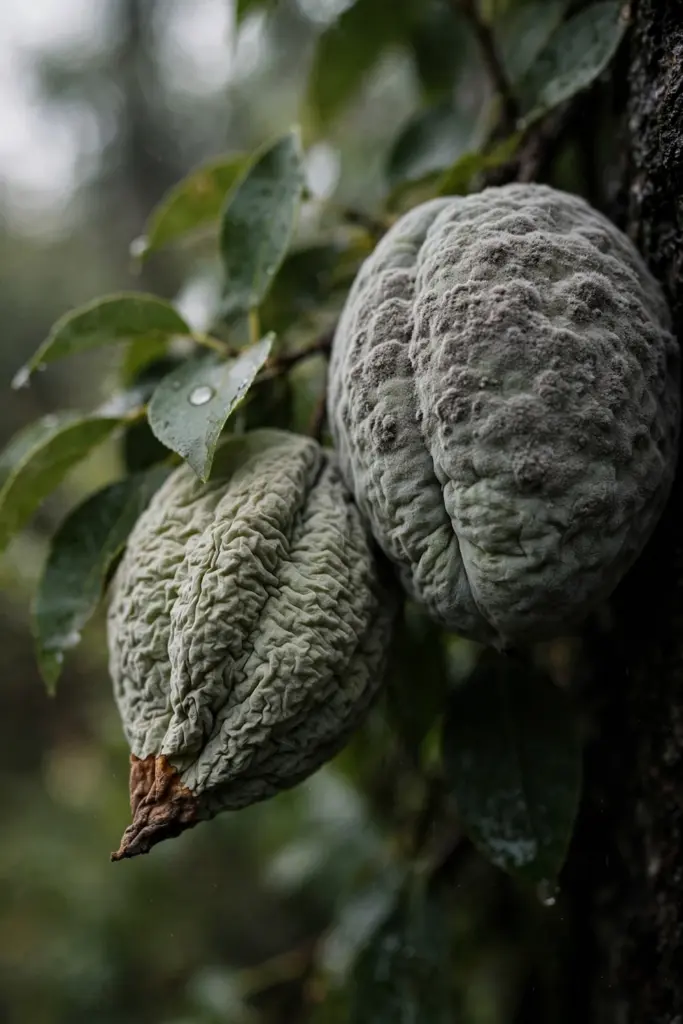
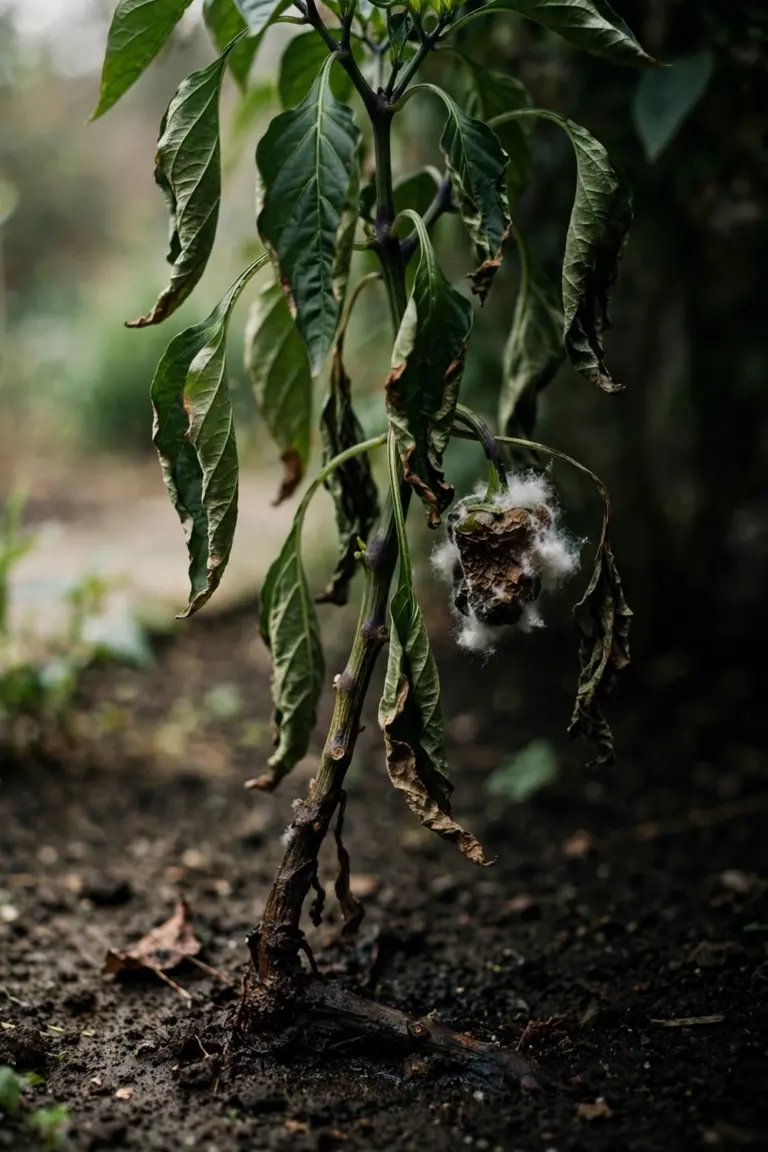
Color follows a sequence. The deformed fruit may start reddish or grayish, then turns brown or black as it dries. A gray, velvety coating of fungal spores covers the fruit before it dries. That coating is the sporulation stage. Spores released from that coating settle into bud scales and bark crevices, where they wait for the next spring. Infected fruit usually falls to the ground, although some fruit stays on the tree through winter.
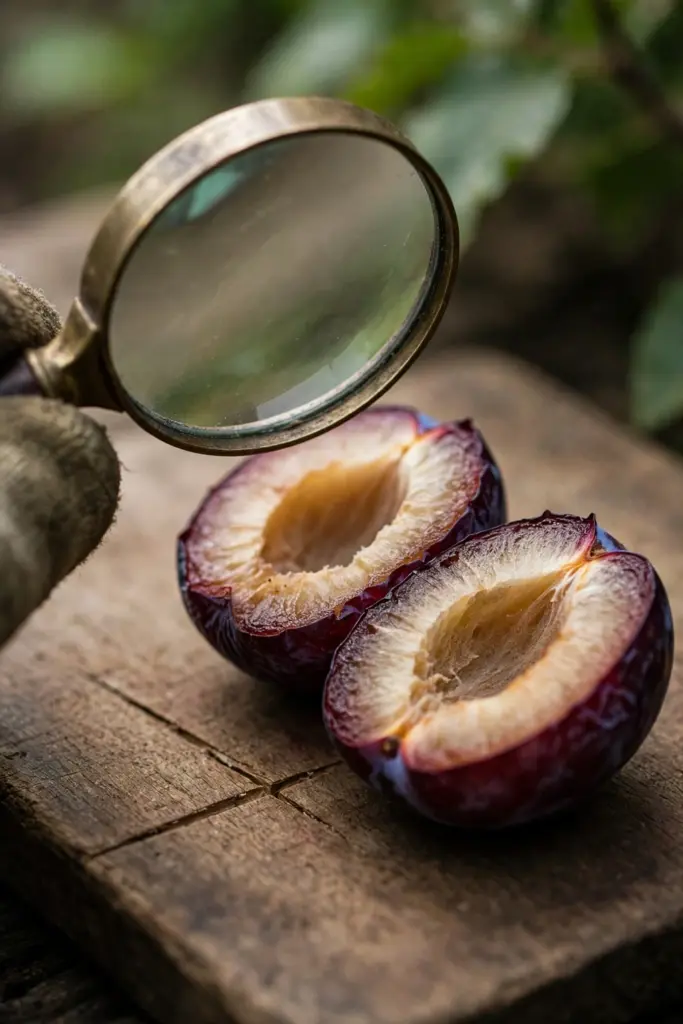
The cut test confirms the diagnosis. Slice an affected plum open. The center is empty. The fruit is spongy or hollow inside, with no pit, or with a pit that never formed. Healthy plum fruit has a firm pit at the center. Brown rot fruit has a pit inside rotting flesh. Hollow fruit with no pit is plum pockets. Cut two or three fruit, because one odd fruit proves little and three matching fruit settle the question.
Timing backs up the cut test. Plum pockets shows up early, within a month or two after bloom, on young fruit that never ripens. Fruit that was normal size, colored up, and then rotted near harvest points toward brown rot instead. Early plus hollow beats late plus rotten as a field rule, and the differential table below lays out the full comparison.
How to Identify Plum Pockets on Leaves and Shoots
Leaves and shoots show plum pockets less often, and the signs are easy to miss. Infected leaves thicken and curl, with symptoms like peach leaf curl, although the leaf symptoms are generally not as noticeable on plum as on peach and nectarine. The University of Arkansas Extension makes that comparison directly. A few curled, thickened leaves on a plum tree with swollen fruit support the diagnosis. Curled leaves alone, with no fruit symptoms, do not prove plum pockets.
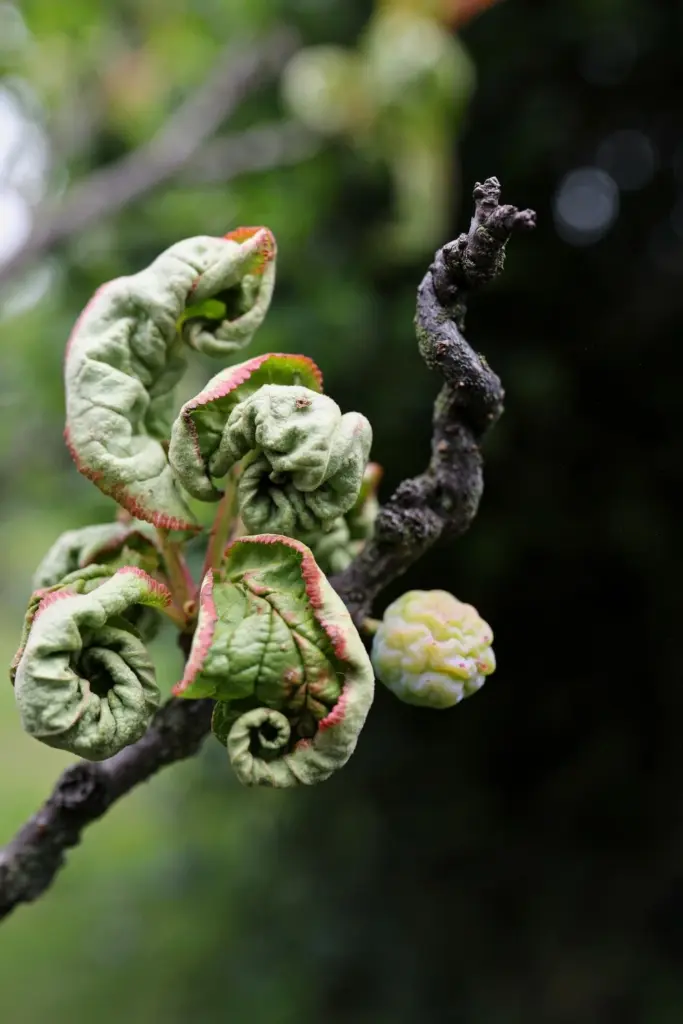
Shoots can thicken and twist where the fungus infects them. The twisting and curling are the most common signs of leaf and shoot infection, but those symptoms may not appear at all in a given year. Fruit carries the diagnosis. Leaves and shoots only confirm it. When the fruit is gone and only curled leaves remain, the season for a firm diagnosis has already passed.
Peach leaf curl deserves a clear fence here. Peach leaf curl is a different disease on different hosts. The pathogen is Taphrina deformans, and it attacks peach and nectarine leaves and shoots. Plum pockets attacks plum. The two diseases share a genus, a cool wet spring infection window, and the same dormant spray timing. They do not share a host, and evidence from peach leaf curl never stands in for plum pockets evidence. If your peach tree has puckered red leaves, that is a peach problem, and this guide does not cover it.
Which Plum Trees Get Hit Hardest
Plum pockets mostly infects wild plums and American type plums. The University of Minnesota Extension states that directly, and adds that most of the dessert plums grown in Minnesota are unlikely to be affected. That host pattern is the most practical fact for a gardener deciding how hard to fight this disease. A wild plum thicket or an American plum tree in a home garden faces real pressure. A European or Japanese dessert plum faces far less.
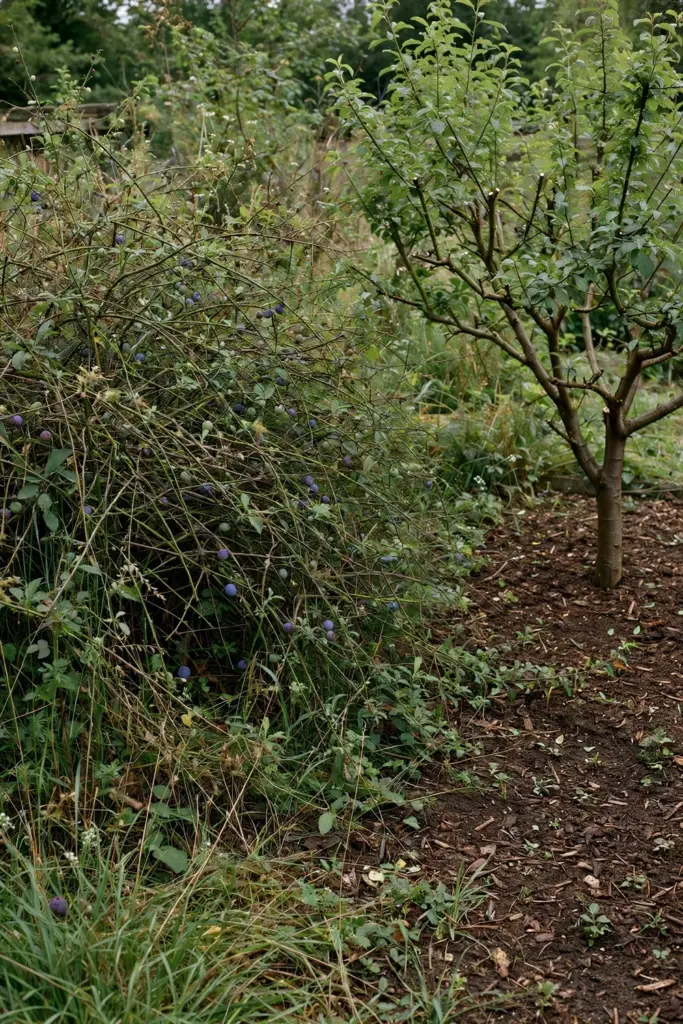
The sources disagree at the edges, and the disagreement needs an honest reading. The University of Illinois Extension says plum pockets attacks a number of cultivated and wild plum species. The University of Minnesota Extension says most Minnesota dessert plums are unlikely to be affected. Both statements can be true at once. The disease has a broad potential host range across plum species, and in practice it concentrates on wild and American type plums. Dessert plum growers should not assume immunity, and they should not assume equal risk either.
European and Japanese dessert plums sit at the low-risk end of that range. Wild plums and American type plums sit at the high-risk end. Your tree type decides how much of this guide applies to you. If you grow a dessert plum and saw one odd fruit in a wet spring, note it and move on. If you grow an American plum and lose fruit two years running, the full strategy list earns its place.
No plum type needs a different diagnosis. The cut test works the same on every plum. The host ranking changes the urgency of the response, not the identity of the disease. A hollow, pitless fruit on any plum tree is plum pockets, whatever the variety.
Plum Pockets vs Brown Rot
Plum pockets and brown rot both destroy plum fruit, and gardeners confuse them because both end with ruined plums on the tree. The two diseases differ in shape, timing, interior, and the kind of damage they do to the tree. The table below is compiled from parallel Extension sources. No published head-to-head comparison of the two diseases exists, so the table carries that compiled status openly. The plum pockets side comes from the University of Minnesota Extension and the University of Arkansas Extension. The brown rot side comes from the University of Minnesota Extension brown rot page, Oklahoma State University Extension, and the University of Arkansas Extension brown rot note.
| Feature | Plum Pockets (Taphrina communis, fungus) | Brown Rot (Monilinia spp., fungus) |
|---|---|---|
| Fruit shape | Fruit swells far past normal size, wrinkled and distorted, up to ten times normal size | Fruit keeps its normal size and shape, then rots |
| Fruit interior (cut test) | Hollow or spongy center, no pit | Pit present inside rotting flesh |
| Fruit color sequence | Reddish or grayish, then dries brown or black | Brown spot spreads fast across ripening fruit, then the whole fruit rots |
| Spore sign on fruit | Velvety gray fungal spore coating before drying | Tan to gray powdery tufts of spores on the rotting fruit |
| Timing | Young fruit, about 6 to 8 weeks after bud break, within a month or two after bloom | Ripening fruit near harvest, plus blossoms in spring |
| Blossom signs | None typical | Blossoms turn brown and die, often staying attached with a sticky gummy droplet |
| Twig and branch signs | Shoots may thicken and twist, uncommon | Twig cankers with discolored bark and gummy drops; cankers can girdle and kill twigs |
| End state of fruit | Dries brown or black, usually falls, some fruit hangs through winter | Dries into a firm black mummy that may hang on the tree or fall |
| Overwintering | Spores in bud scales and bark crevices | Mummies and infected twigs on the tree or on the ground |
| Harm to the tree | None; fruit loss only | Twig dieback and cankers in addition to fruit loss |
| What stops it | One dormant spray plus removal of infected fruit before sporulation | Sanitation plus a spray schedule through bloom and ripening, not one dormant spray |
The management fork is the reason the table matters. Plum pockets has one infection window and one preventive spray. Brown rot infects blossoms and ripening fruit across the season, and it needs sanitation plus sprays timed through bloom and harvest. A single dormant spray controls plum pockets. A single dormant spray does not control brown rot. Diagnosis comes first. Spray timing follows the diagnosis.
Three lookalikes deserve one line each, never a second table. Peach leaf curl shows puckered, reddened leaves on peach and nectarine, and it shares the dormant spray window with plum pockets. Plum curculio is an insect, and it leaves crescent-shaped scars and larvae inside the fruit rather than hollow bladder fruit. Black knot shows hard black swellings on twigs and branches, a different disease entirely. If the symptom does not match the table, check the blossom blight guide for the blossom side of stone fruit disease.
Why the Dormant Window Decides Everything
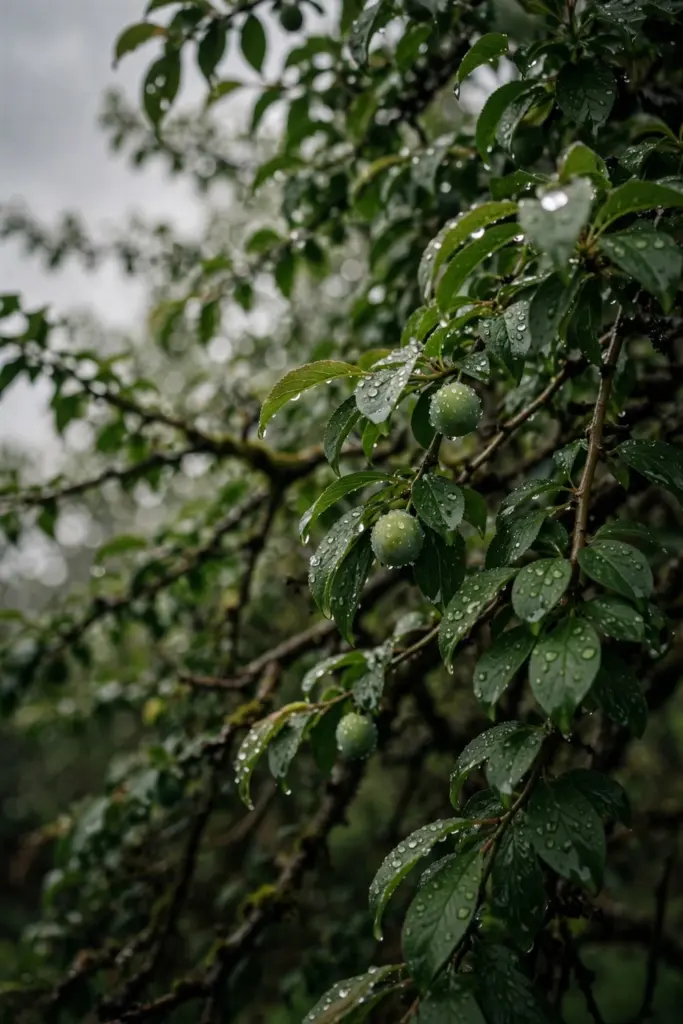
The dormant window decides everything because the fungus infects only young tissue. Spores overwinter in bud scales and bark crevices. In spring, as buds swell and open, spores germinate and infect the swelling leaves and flowers inside the buds. Cool, wet weather during that period favors infection. Once buds have broken and tissue matures, the tissue becomes resistant, and the fungus cannot start new infections.
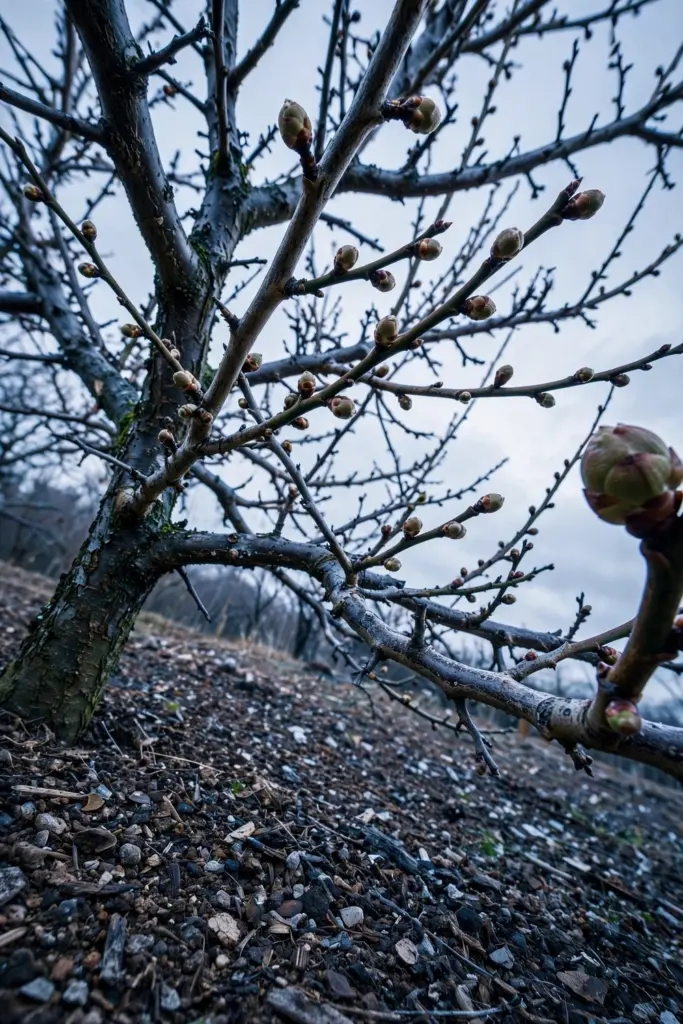
That single infection period explains the whole control story. A fungicide applied after bud break cannot reach fungus that is already inside the tissue. The University of Illinois Extension states the rule plainly. Applications of fungicides after bud break are ineffective. The spray must coat buds and twigs before the fungus enters, either in fall after leaf drop or in spring before buds begin to swell. Miss that window and the season is decided before symptoms appear.
The fungus also spreads on a one-way schedule. A single layer of spore-producing tissue develops on infected fruit, and spores release from that tissue from late spring into midsummer. Those spores settle into bud scales and bark crevices, where they wait for the next spring. Removing infected fruit before the gray spore coating appears breaks that loop. Leaving infected fruit on the tree feeds it.
Secondary infections do not generally occur during the season. The fungus does not jump from a sick fruit in June to a healthy fruit in July, because healthy mature tissue resists it. Every infected fruit traces back to the spring infection window. That fact keeps the strategy list short. One window, one spray, one cleanup pass before sporulation, and the disease loses its foothold.
What Makes Plum Pockets Worse in a Home Garden
Cool, wet springs are the top risk factor. The fungus needs wetness during bud swell and bud opening to infect. A spring with frequent light showers during that window produces a heavy year. A dry spring during bud break produces a light year, even on a tree that suffered the year before. Weather decides the baseline. Gardening moves the number up or down from there.
Infected fruit left on the tree or on the ground raises pressure for the next year. Spores from the gray coating settle into nearby bud scales and bark, and a tree that keeps its infected fruit through summer carries more spores into the next spring than a tree that was cleaned. The cleanup pass in Strategy 3 is the cheapest pressure cut available, and it costs nothing but a bucket and a few minutes.
Wild plums near the garden add inoculum. The fungus attacks wild plum species as well as cultivated ones, so fruit left on a wild plum near the garden keeps spores in the neighborhood. You do not need to remove a wild thicket. You do need to know it is there, because a garden tree downwind of an unmanaged wild plum faces steadier pressure than an isolated tree. Strategy 7 covers the check.
Dense, shaded canopies stay wet longer after rain. A canopy that never dries holds moisture on buds and young fruit through the infection window. Pruning for light and air flow shortens the wet period, and it also makes the dormant spray reach every bud. The pruning cut itself does not kill the fungus. The drying and the spray coverage do the work.
A susceptible tree type raises the stakes. An American plum or a wild plum in a wet-spring climate will see this disease more often than a European dessert plum in the same yard. That is host reality, not gardener failure. Strategy 6 covers the planting decision, and Strategy 1 covers the decision to do nothing at all, which is sometimes the right call.
Strategy 1: Decide Whether Action Is Worth It
Plum pockets does not affect the health of the tree, and no management is necessary. The University of Minnesota Extension plum pockets page says exactly that, and it is the most important sentence a gardener can read about this disease. The tree will leaf out, grow, and fruit again next year whether you act or not. Action is about fruit, not about the tree. That reframes the whole decision.
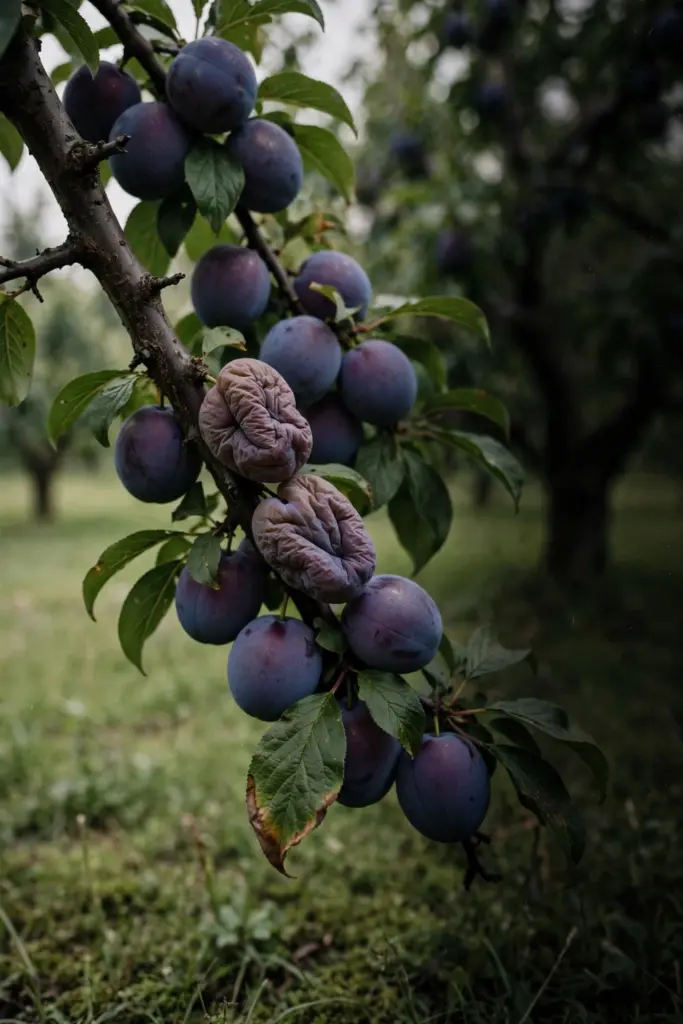
Act when fruit loss recurs or matters. A tree that lost fruit two years running, in wet springs, with the same symptoms each time, has a pattern worth breaking. A tree that feeds a family, or a tree whose fruit you preserve, justifies the effort. A single odd fruit in one wet year does not. Watch the tree, note the year, and wait for a second data point before you commit to a spray program.
Do nothing when the stakes are low. A wild plum grown for wildlife, a tree whose fruit you rarely pick, or a dessert plum with a single pocket in a wet spring needs no spray and no cleanup campaign. The disease is cosmetic at the level of the tree, and the tree outgrows it every year. Skipping treatment is a decision, not neglect, when the tree is healthy and the fruit loss is small.
Weigh the spray honestly. One dormant spray is a small job, but it is still a chemical applied to a food tree, and it only pays off if the disease returns. Spraying every year on a tree that had one pocket in five years wastes product and effort. Spraying on a tree that loses fruit most years buys back a crop. The pattern, not the panic, decides.
Strategy 2: Confirm the Diagnosis With the Cut Test
Cut the fruit before you act. Slice two or three affected plums open and look at the center. Plum pockets gives a hollow or spongy center with no pit. That single check separates plum pockets from brown rot, from insect damage, and from a malformed fruit that means nothing. The cut test costs a minute, and it prevents a season of wrong treatment.
Check timing alongside the cut. Plum pockets symptoms appear about 6 to 8 weeks after bud break, on young fruit that never ripened. If the fruit was normal size, colored up, and then rotted near harvest, the cut test should show a pit in rotting flesh, and the diagnosis points to brown rot. Early plus hollow means plum pockets. Late plus rotten means brown rot. Use both facts together, because either one alone can mislead.
Look at the whole tree, not one fruit. Plum pockets often hits scattered fruit rather than the whole crop. The University of Minnesota Extension notes that in many trees only a small number of fruit are infected. A few hollow fruit among healthy fruit fits the disease. Every fruit on the tree swollen and hollow in the same week also fits, in a heavy year. Either pattern works with the cut test. What does not fit is a single fruit with a pit and a brown spot near harvest.
Record what you find. Write the date, the number of affected fruit, and the cut test result. A one-line note turns a vague memory into a pattern. Next spring, that note tells you whether the disease recurs and whether Strategy 4 earns a place on your calendar. Memory fades. A notebook line does not.
Strategy 3: Remove Infected Fruit Before the Gray Bloom Appears
Remove infected fruit as soon as you spot it. The University of Minnesota Extension recommends removing infected plums before they are covered with spores. The gray velvety coating is the deadline. Before that coating appears, the fruit carries little loose inoculum. After it appears, every touch shakes spores onto nearby buds and bark. Early removal cuts next year pressure. Late removal still helps, but it works with gloves on and a bag in hand.
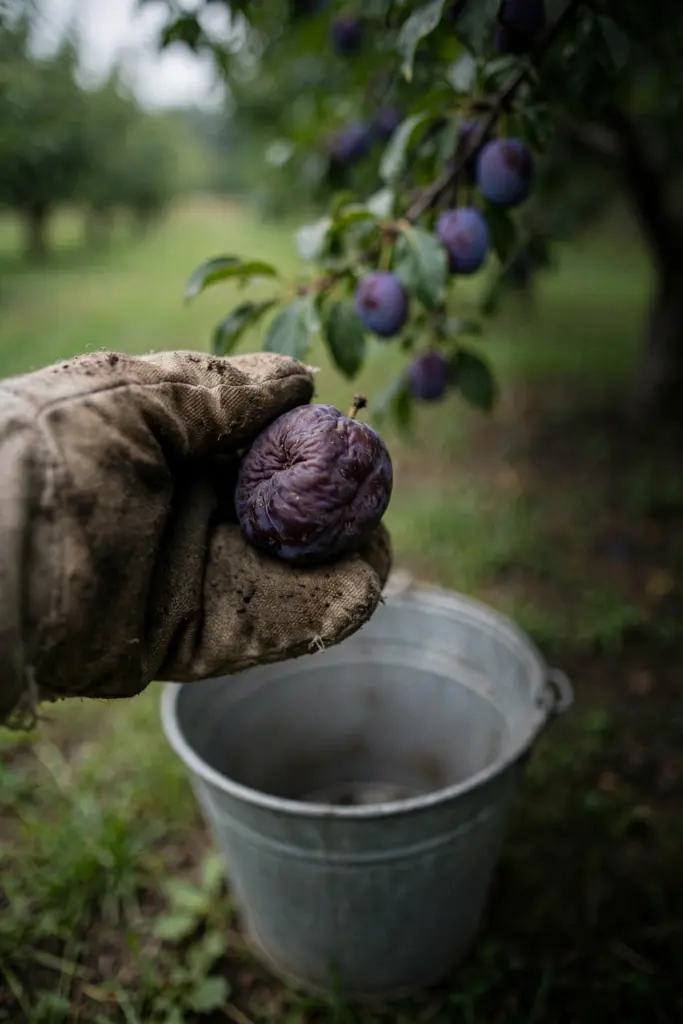
Pick the fruit off the tree and off the ground. Infected fruit that falls stays infectious on the ground, and some infected fruit hangs on the tree through winter. Check both places. Rake up fallen fruit and fallen leaves with the same pass, because the University of Arkansas Extension pairs those two cleanups in its control advice. One pass, tree and ground together, keeps the job simple enough to actually finish.
Bag the fruit and put it in the trash. Do not drop infected fruit in an open pile under the tree, and do not toss it into the compost heap on top of everything else. The University of Minnesota Extension phrases the disposal rule as burying infected fruit in a compost pile. The point is the same in both wordings. Spores must not sit on the ground under the tree or blow around the garden. A sealed bag in the trash meets that standard with the least fuss for a home gardener.
Wash your hands and tools after the cleanup. Spores travel on hands, gloves, and picking buckets. A rinse keeps the cleanup from becoming a delivery service. This step is small, and it is the kind of small step that separates a cleanup that works from one that moves the problem around the yard.
Strategy 4: Time One Dormant Spray to Bud Swell
One dormant spray is the entire chemical playbook for plum pockets. The University of Illinois Extension recommends one fungicide application as a dormant spray to buds and twigs, in fall after leaf drop or in spring before buds begin to swell. One thorough spray, timed before bud swell, should provide nearly perfect control, because the fungus has only that one infection window. There is no second spray, no rescue spray, and no mid-season spray in the plum pockets playbook.
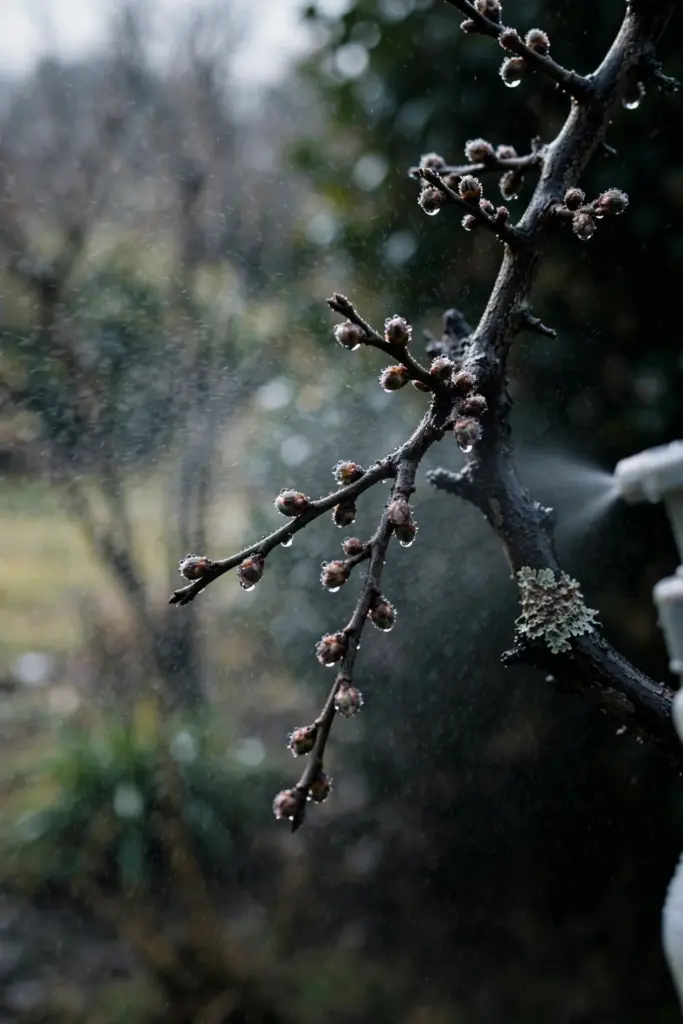
Pick one of the two windows. Fall after leaf drop works when autumn weather cooperates and the tree stands bare. Late winter or very early spring before bud swell works when you missed fall or when a wet autumn washed the question away. Either window works. The spray must coat every bud and twig before the fungus enters. Coverage matters more than the calendar date. A half-sprayed tree keeps half its infection sites open.
Use a product labeled for plum pockets on plums. The University of Arkansas Extension names chlorothalonil or liquid lime sulfur applied in fall after leaf fall. Read the label and follow it for mixing, safety gear, and harvest intervals. The label is the law for that product, and a garden article never overrides it. If the label does not list plums or plum pockets, do not use that product on this tree.
Spraying after bud break wastes product and effort. The fungus is already inside the tissue, and surface spray cannot reach it. Illinois Extension states that applications after bud break are ineffective. If you find yourself holding a sprayer in May looking at swollen fruit, put the sprayer down and go back to Strategy 3. Removal is the only move left that season, and the spray waits for the next dormant window.
Strategy 5: Prune Infected Wood and Clean Up Fallen Fruit
Prune during the dormant season, when the tree stands bare and the structure shows. Remove visibly infected shoots and any twiggy growth that held pocketed fruit. Cut back to healthy wood, and destroy the prunings with the same bag-and-trash rule as the fruit. Pruning does not cure infected fruit. It removes infected shoots, opens the canopy, and lets the dormant spray reach every bud.
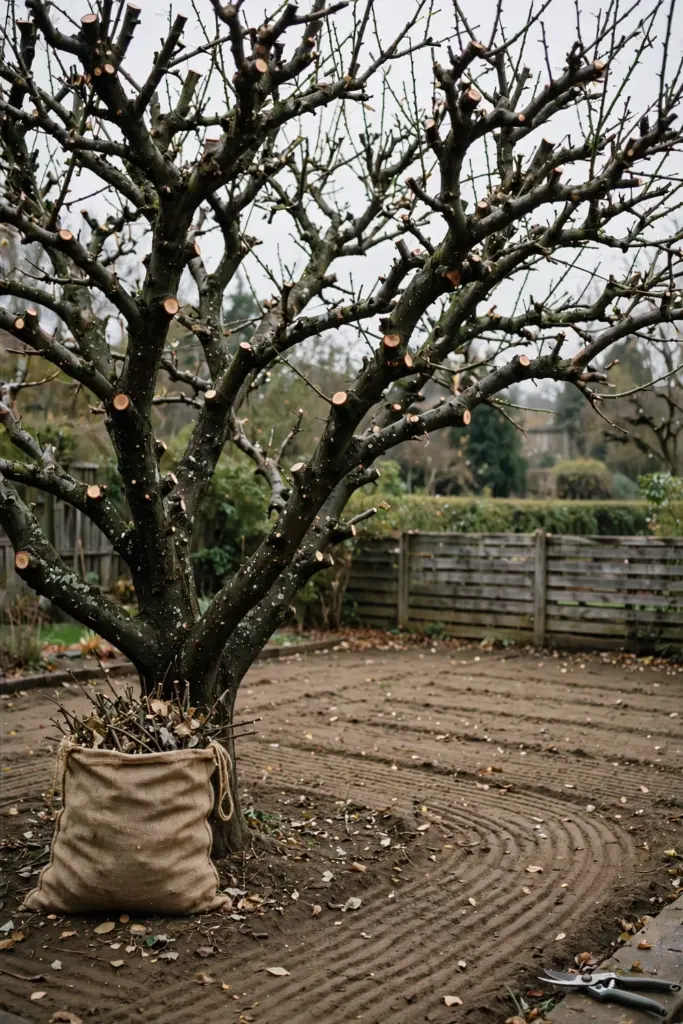
Thin the canopy for air and light. A dense canopy stays wet after rain, and wet buds invite infection during the spring window. Opening the center lets sun and wind dry the buds faster. The goal is not a sculpted tree. The goal is a tree that dries within hours of rain instead of staying damp through the day. Every hour of drying shortens the infection window.
Clean the ground under the tree in the same dormant pass. Rake up fallen fruit, fallen leaves, and prunings, and bag them. The University of Arkansas Extension pairs raking damaged fruit and fallen leaves as one control measure. Dormant cleanup plus dormant spray in the same week gives the tree the cleanest start possible. Either job alone helps. The pair works better than either alone.
Keep pruning tools clean between trees. Wipe blades between trees when you move from a tree with pockets to a healthy tree. Spores ride on sap and debris, and a dirty blade moves them from one tree to the next. The wipe takes seconds, and it keeps one tree’s problem from becoming an orchard problem.
Strategy 6: Choose Resistant Cultivars When You Plant New Trees
Resistant cultivars exist. Planting one is the only decision that prevents the disease before it starts, and it pays off for decades at no cost after planting day. The University of Arkansas Extension notes that cultivars with resistance to plum pockets exist, and Mississippi State Extension likewise advises selecting resistant cultivars when planting new trees. Resistance is a planting decision, not a treatment.
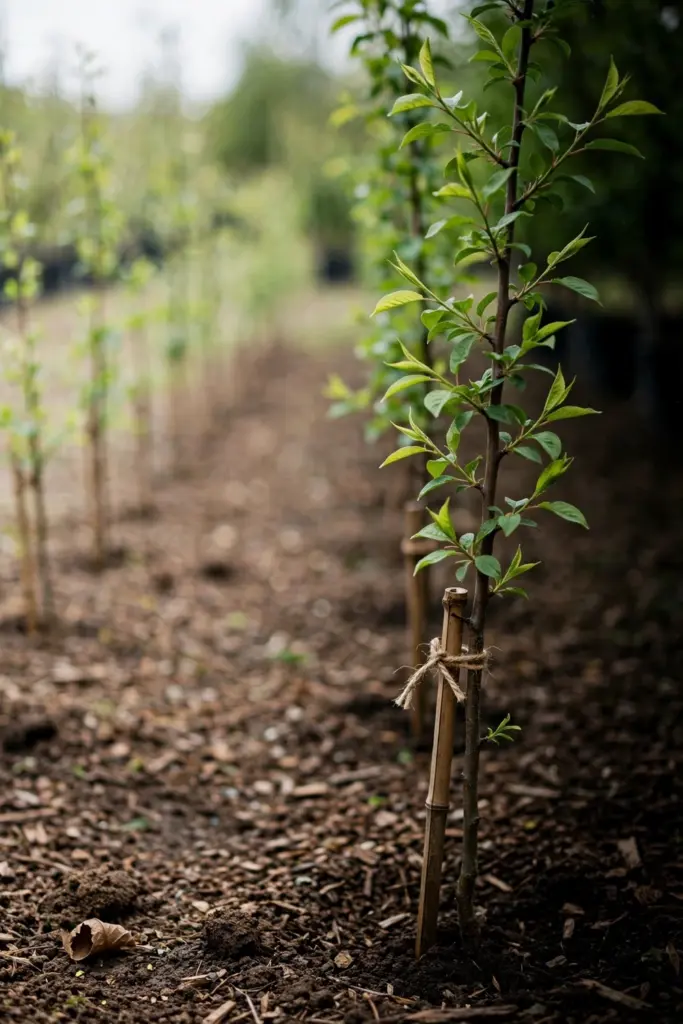
Ask for named resistant cultivars at the nursery or through your local Extension office. The home-garden sources name no specific resistant plum cultivars for plum pockets, and this guide will not invent a list. A nursery that sells plums in your region knows which varieties hold up locally. An Extension office knows which varieties carry documented resistance. Either source beats a catalog claim with no data behind it.
Match the cultivar to your plum type and your climate. An American plum cultivar that resists pockets in one region may behave differently in another. Chill hours, pollination partners, and fruit quality matter as much as disease resistance. A resistant tree that never fruits in your climate solves nothing. The plumcot growing guide shows how chill hours and pollination pairs shape stone fruit choices, and the same thinking applies to a new plum planting.
Do not replant a healthy tree to chase resistance. A mature tree with an occasional pocket is not a failure, and removing it wastes years of growth. Resistance matters when you plant a new tree, when you replace a dead one, or when you add a second plum. For the tree already in the ground, Strategies 1 through 5 carry the load.
Strategy 7: Check Wild Plums Near Your Garden
Walk the ground around your garden in late summer and look for wild plums. The fungus attacks wild plum species as well as cultivated ones, so fruit left on a wild plum near the garden keeps spores in the neighborhood. You do not need a surveyor’s map. You need to know whether a wild plum thicket stands close to your tree, and whether its fruit shows the same hollow pockets.
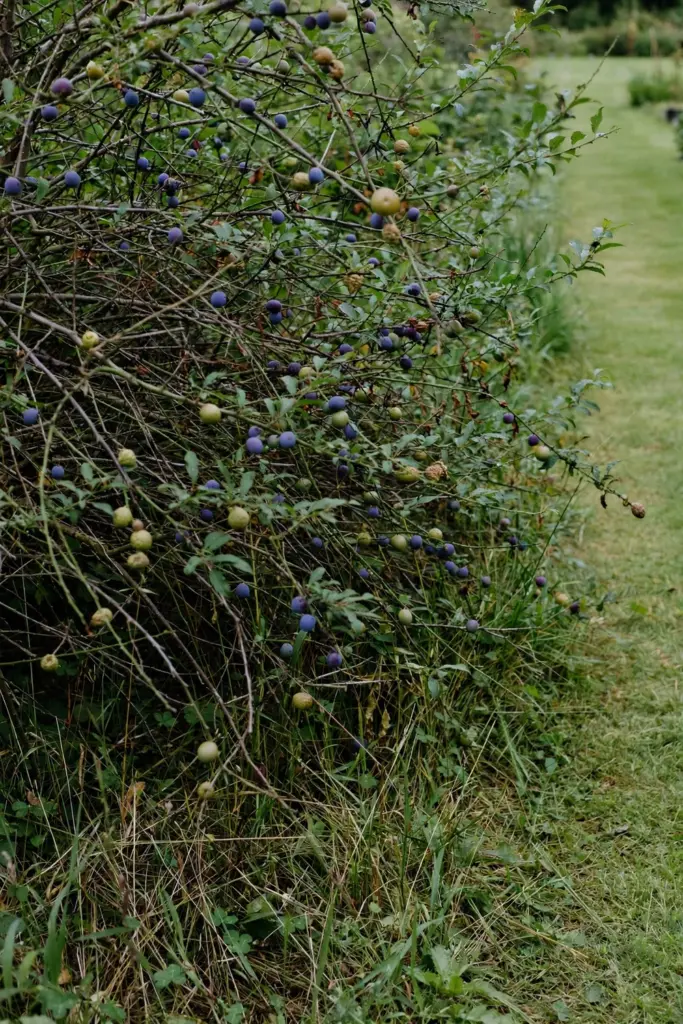
Remove pocketed fruit from nearby wild plums when you can reach it. The same bag-and-trash rule applies. A wild tree you can reach with a picking bucket is worth the few minutes. A wild thicket in a ravine is not worth a rescue mission. The goal is pressure reduction, not eradication. Every pocket removed is spores that never reach your tree.
Do not cut down a wild plum to fight this disease. Plum pockets does not kill trees, and removing a wild tree for a fruit-only disease trades a healthy plant for a small pressure cut. The wild tree feeds birds and pollinators, and its fruit loss harms nobody. Clean its reachable fruit, note its location, and leave the tree standing.
Use the check to set expectations. A garden tree beside an unmanaged wild plum thicket will face steadier pressure than an isolated tree, even with a good spray year. If your tree sits in that situation, Strategy 3 matters more, and Strategy 4 earns its place sooner. The neighborhood sets the baseline. Your cleanup and spray move the number from there.
Strategy 8: Run the Missed-Window Plan When You Are Too Late
A missed window is common, and it is not a disaster. Most gardeners discover plum pockets by seeing the fruit, which means the infection window already closed weeks earlier. No spray, no pruning cut, and no product brings that fruit back. The missed-window plan keeps the tree strong, limits next year pressure, and puts the dormant spray on the calendar where it belongs.
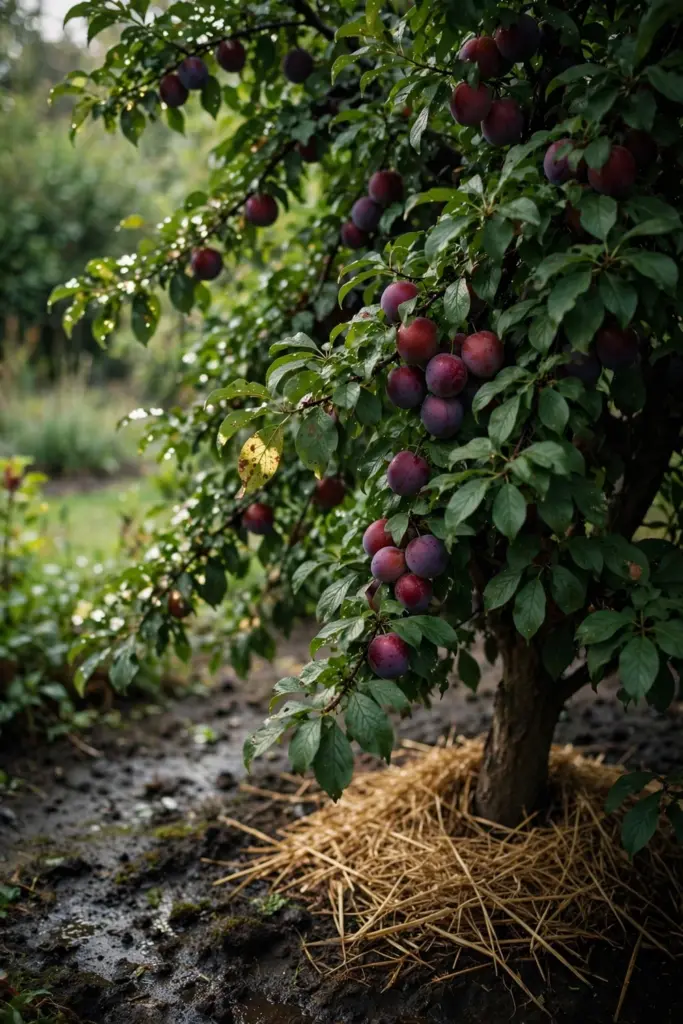
Keep the tree vigorous through the season. Water during dry spells, mulch the root zone, and avoid heavy nitrogen feeding that pushes soft late growth. A vigorous tree fruits well next year, and vigor is the one thing you can still improve after the window closes. The University of Illinois Extension lists promoting tree vitality through pruning, fertilization, and watering among its management steps. Vitality does not cure pockets. It keeps the tree in good shape for the year the spray lands.
Thin the remaining healthy fruit if the crop load is heavy. A tree that lost part of its crop to pockets still carries the rest, and thinning gives the remaining fruit room to size up. Thinning also improves air flow around the fruit, which helps every other fruit disease at the same time. Pick the healthy fruit at normal ripeness. Pocketed fruit never ripens, so it never joins the harvest.
Mark the calendar for the next dormant window. Write the spray date down in fall, not in spring when buds are already swelling. Fall after leaf drop is the first chance, and late winter before bud swell is the second. A note on the calendar beats a memory in March. When the window arrives, Strategy 4 takes over, and the missed year becomes the year you learned the timing.
Living With Plum Pockets Damage You Already Have
Pocketed fruit never recovers, and the season is already decided when you see it. The work left is cleanup, patience, and a calendar note. Remove the pocketed fruit, bag it, and keep the ground clean. The tree will leaf out and grow normally. The crop loss stings, and the tree does not notice it the way you do.
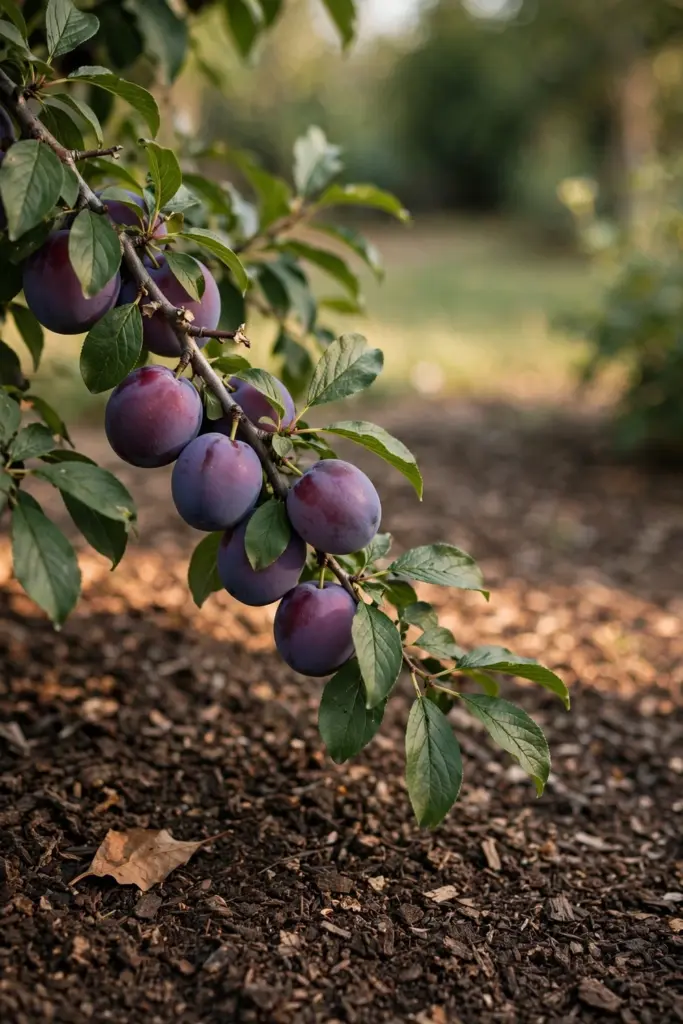
Do not strip healthy leaves to punish the disease. The tree needs its leaves to store energy for next year. Removing healthy foliage weakens the tree and costs next year fruit. The fungus lives in buds and bark, not in healthy leaves, so leaf stripping removes vigor without removing inoculum. Leave the healthy leaves alone.
Do not compost pocketed fruit on top of an open pile. Bag it and trash it, per Strategy 3. Some gardeners worry that trashing fruit wastes organic matter, but the amount is small and the spores in it are the problem. A bucket of pocketed fruit is not worth next year pressure. The compost pile will survive without it.
Expect variation year to year. A wet spring brings pockets back. A dry spring during bud break brings a clean crop on the same tree with no action at all. That variation is weather, not gardener skill. Judge your management across several years, not one season. Two clean years after a spray-and-cleanup program means the program works. One bad wet year after the same program means the weather won that round.
Frequently Asked Questions
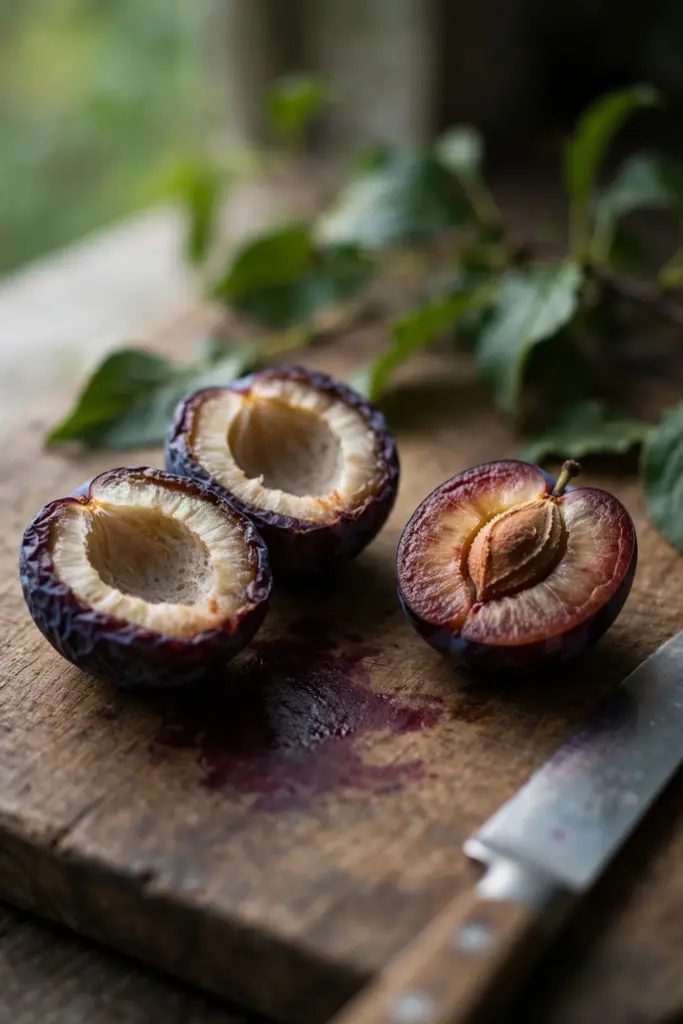
No. Pocketed fruit is hollow, spongy, and inedible. The fungus changes the fruit structure, and no washing or cooking restores it. Infected fruit never ripens into a normal plum, and it dries brown or black on the tree. Pick it off, bag it, and trash it. Eat only sound fruit from the same tree, and wash that fruit normally before eating.
No. Plum pockets does not affect the health of the tree, and no management is necessary for the tree itself. The University of Minnesota Extension states that directly. The disease takes fruit, not the tree. The tree leafs out, grows, and fruits again the next year. Twig dieback and cankers belong to brown rot, not to plum pockets, and they need a different response.
No. Fungicide applications after bud break are ineffective against plum pockets, because the fungus is already inside the tissue. The University of Illinois Extension states that rule plainly. A spray applied after symptoms appear wastes product and effort. Remove the infected fruit instead, and save the spray for the next dormant window, either fall after leaf drop or spring before bud swell.
No. Plum pockets never justifies tree removal. The tree stays healthy, and the disease costs fruit only. A tree that loses fruit two years running still earns its place with one dormant spray and a cleanup pass. Remove the tree only if it fails for other reasons, such as poor fruit quality, wrong variety for your climate, or structural decline. Pockets alone is never the reason.
Plum pockets often hits scattered fruit rather than the whole crop. In many trees only a small number of fruit are infected, as the University of Minnesota Extension notes. Infection depends on which buds the spores reached during the spring window, and on microclimate across the canopy. Buds that stayed dry during bud swell escape. Buds that stayed wet during the same window become pockets. That scatter is normal.
Where to Go From Here
Plum pockets is a fruit problem with a short playbook: confirm the diagnosis with the cut test, decide whether the fruit loss justifies action, remove infected fruit before the gray spore coating appears, and time one dormant spray to bud swell. Those four moves cover most home gardens. The rest of the strategies handle planting, neighbors, and missed windows.
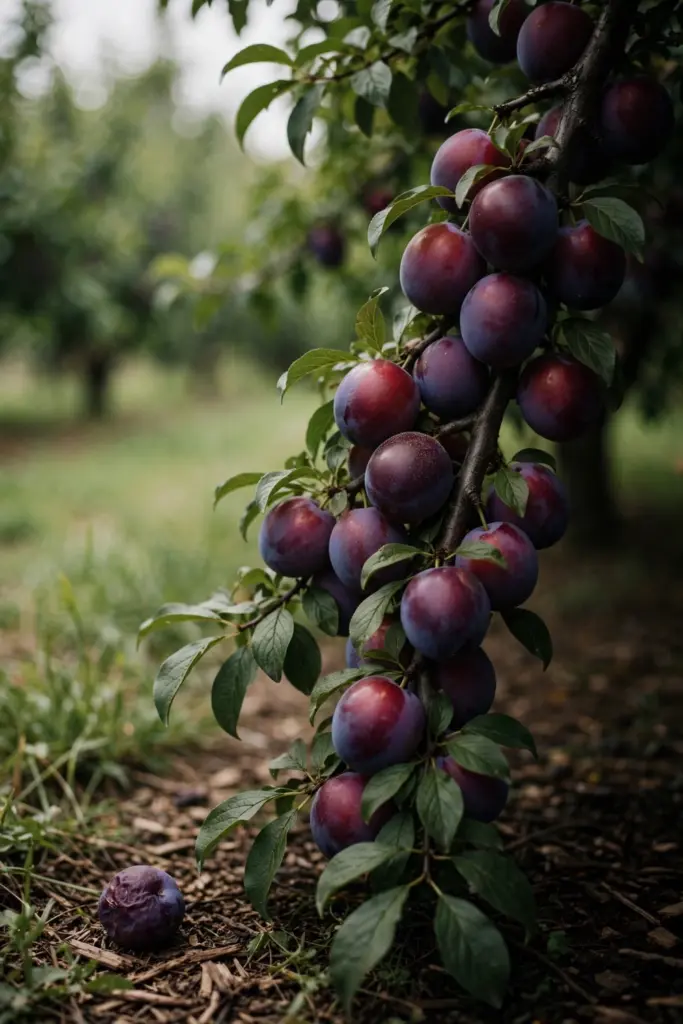
Start this week with a walk around the tree. Cut two or three odd fruit open. If the centers are hollow with no pit, you have plum pockets, and you have the diagnosis in hand. Bag the pocketed fruit, mark the calendar for the dormant window, and let the tree do the rest. The tree is not in danger. The crop is the only thing at stake, and one timed spray protects it.