
Phytophthora blight on peppers has no cure once it takes hold. A plant that looks fine in the morning can wilt by evening, and the blackened ring at its stem base tells the story before the leaves do. The 10 strategies below separate this disease from bacterial spot, then lay out the prevention playbook that actually works: drainage, water discipline, rotation, and clean starts.
I have learned that a gardener who treats this disease as a water problem, not a spray problem, already has the right response. The pathogen swims. Every move that keeps soil from staying wet, and every move that keeps wet soil off the plant, cuts its odds. Sprays sit at the very end of the list, and only as prevention, because nothing sprayed on an infected plant pulls it back.
The rest of this page walks through identification on each plant part, the peppers hit hardest, a side-by-side differential table against bacterial spot, the water-driven mechanism behind the damage, and the 10 strategies in order. If you grow bell peppers, the growing guide for bell peppers in a home garden pairs with this page: healthy plants in drained soil resist this disease far better than stressed plants in wet soil.
What Phytophthora Blight on Peppers Actually Is
Phytophthora blight on peppers is an oomycete disease of pepper plants. The pathogen is Phytophthora capsici. Oomycetes are water molds, not true fungi, and the distinction drives every control decision. Fungicides aimed at true fungi do not touch this organism, and sprays aimed at bacteria do not touch it either. The pathogen survives in soil as thick-walled resting spores called oospores, and NC State Extension reports that those oospores can persist for over 10 years. Plan around a decade, not a season.
The same pathogen attacks bell pepper, hot pepper, eggplant, tomato, snap bean, lima bean, and most cucurbits, so a bed that held any of those crops can carry the disease into the next pepper planting. Cereal crops such as corn and wheat are not hosts, which is why rotation toward grains works. This article covers pepper only. Eggplant, tomato, beans, and cucurbits appear here as rotation hosts, never as covered crops, and no evidence from those crops stands in for pepper evidence.
The Clemson Index of Plant Diseases in South Carolina lists this disease under pepper as “Pepper blight, Phytophthora root rot.” Those two names describe one disease on one host, not two diseases. Current Extension sources call it Phytophthora blight of pepper, and this article uses that name throughout. The bare name “pepper blight” stays out of the title on purpose, because gardeners also use “blight” for Southern blight, for bacterial spot, and for unrelated problems. A pathogen-qualified name keeps the identification honest.
A related Phytophthora disease attacks a different host entirely. The avocado root rot guide covers Phytophthora cinnamomi on avocado, a different species on a different plant. The two diseases share a genus and a love of wet soil. Nothing else crosses over between them.
How to Identify Phytophthora Blight on Stems, Roots, and Crowns
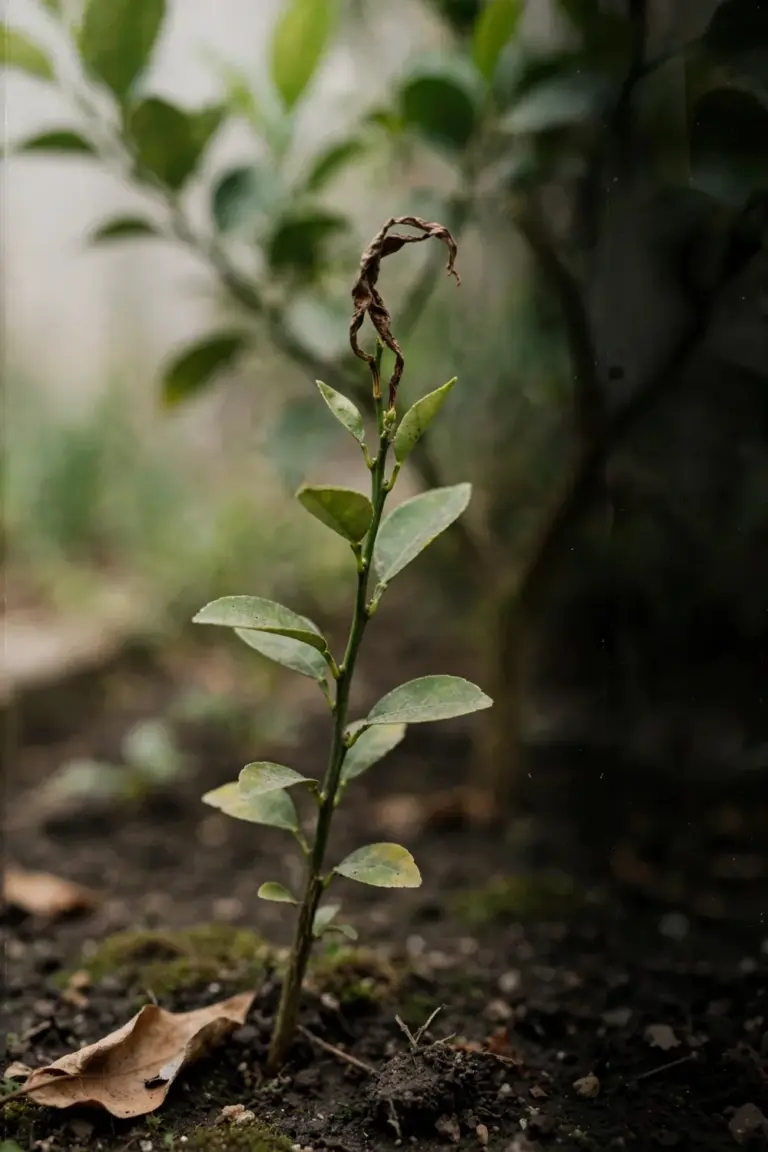
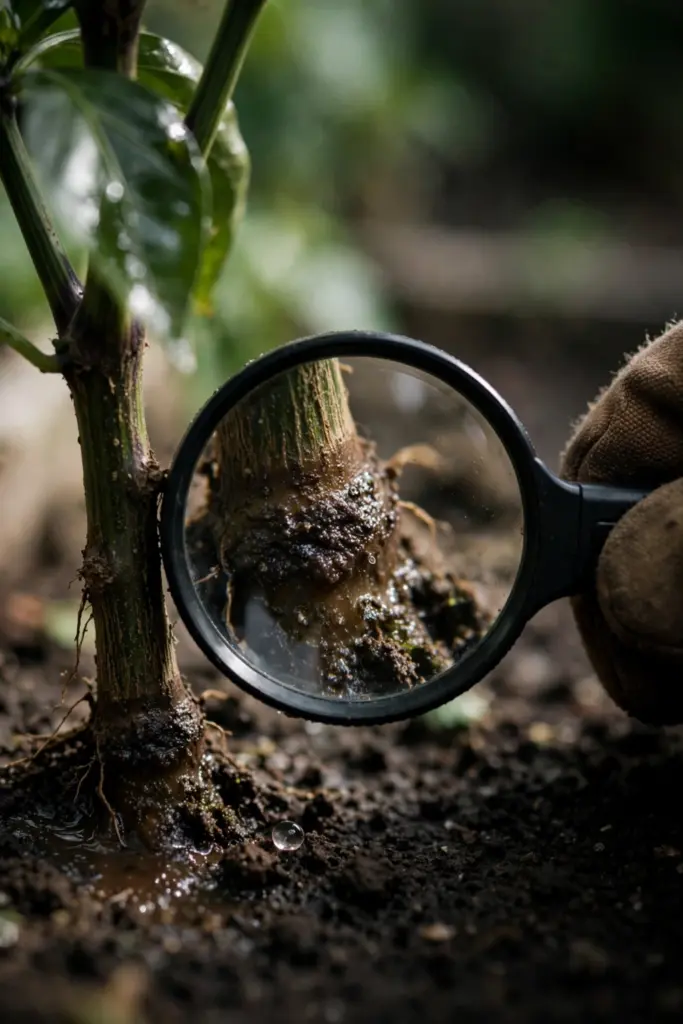
Phytophthora blight on peppers usually starts at the soil line. Look for a dark brown lesion on the crown or lower stem, right where the stem meets the soil. The lesion turns dark brown and extends upward, and as it girdles the stem it cuts off water and nutrient flow. Wilting follows, then plant death, often with little or no yellowing first. Sudden wilt on a plant with a dark stem base is the signature combination.
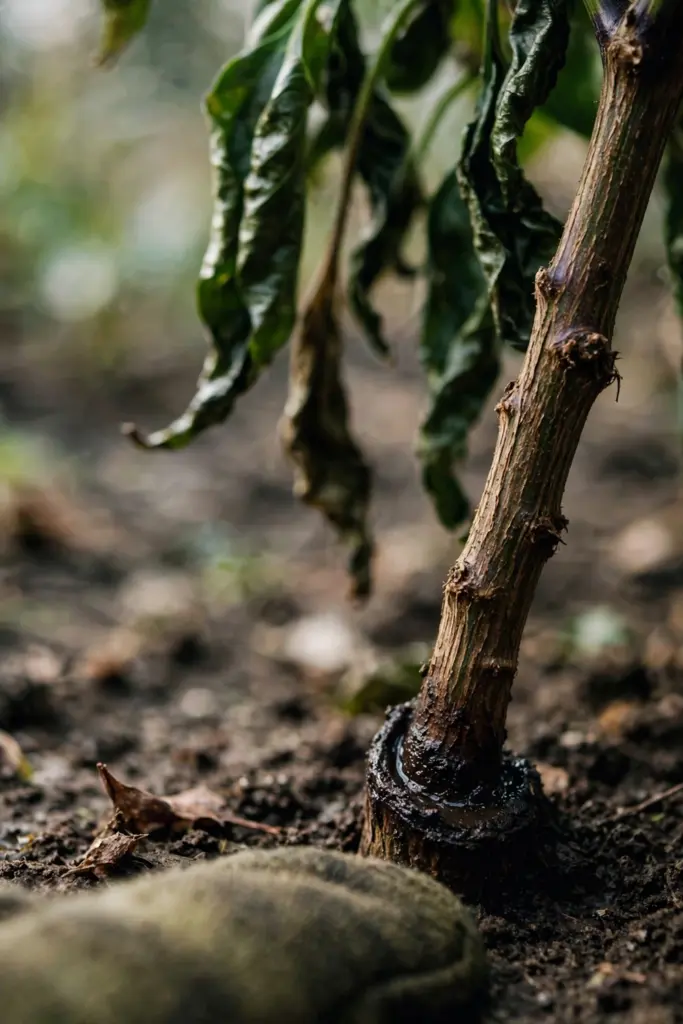
Roots tell the same story underground. Infected roots turn dark brown and mushy, and seedlings infected early can die shortly after emergence. Older plants keep growing for a while, which is why the disease fools gardeners: the plant looks alive above ground while the crown lesion closes around the stem. Dig up a wilted plant and check the crown before you blame heat or a missed watering. A healthy crown is firm and pale inside. An infected crown is discolored, soft, and dark on the outside.
The stem sign separates this disease from ordinary stress. Heat wilt recovers by evening. Drought wilt recovers after watering. Phytophthora wilt does not recover, because the girdled stem cannot move water no matter how wet the soil is. When a plant wilts in wet soil, stop watering and inspect the stem base. That one check saves more plants than any spray.
How to Identify Phytophthora Blight on Leaves and Fruit
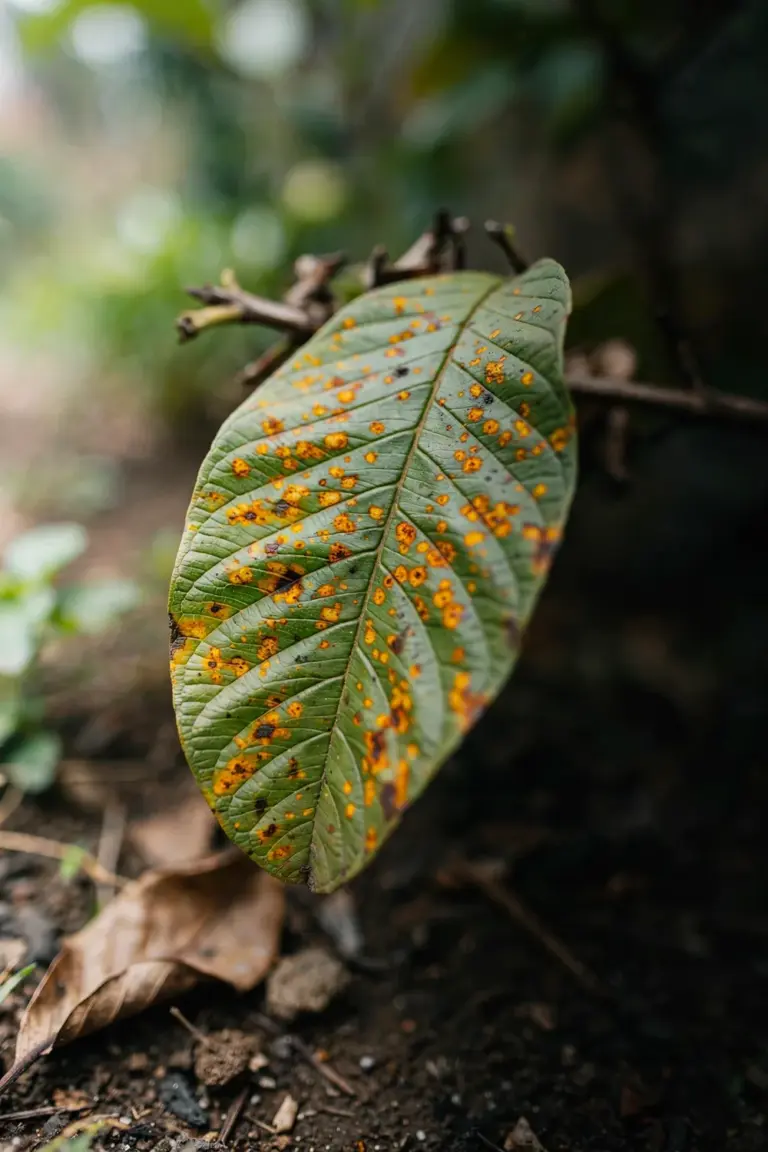
Leaf symptoms appear less often than crown rot, and they start where splashed soil lands. Water-soaked spots form on leaves, then dry to a light tan color. Some spots crack as the tissue dries. Leaf damage alone rarely kills a pepper plant, but it marks a plant that is already fighting the pathogen at the crown, so treat leaf spots as a warning, not as the main problem.
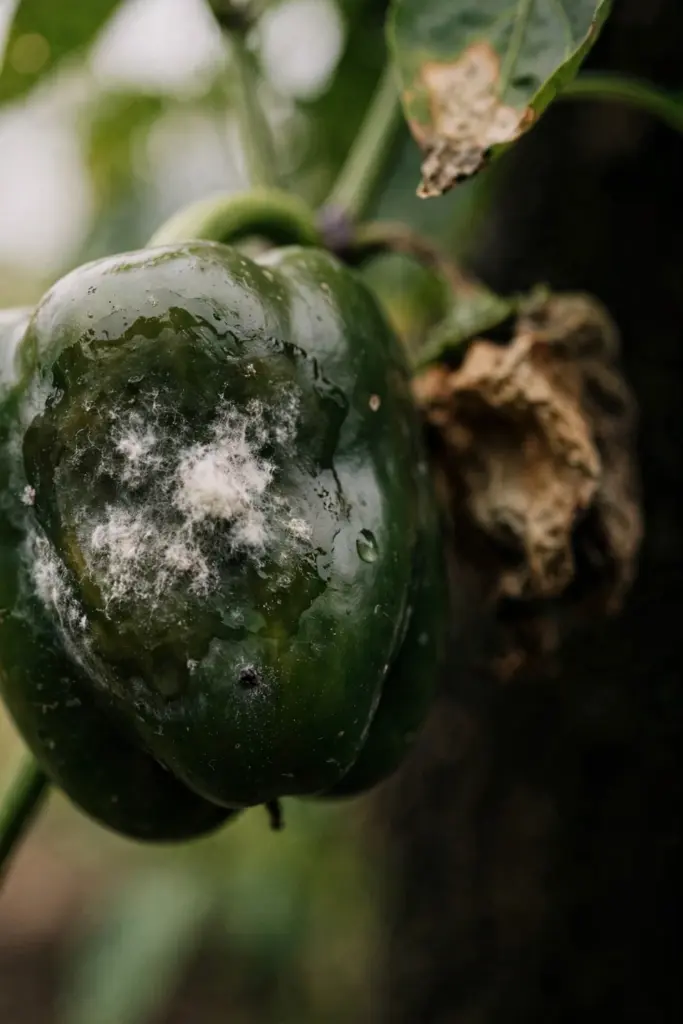
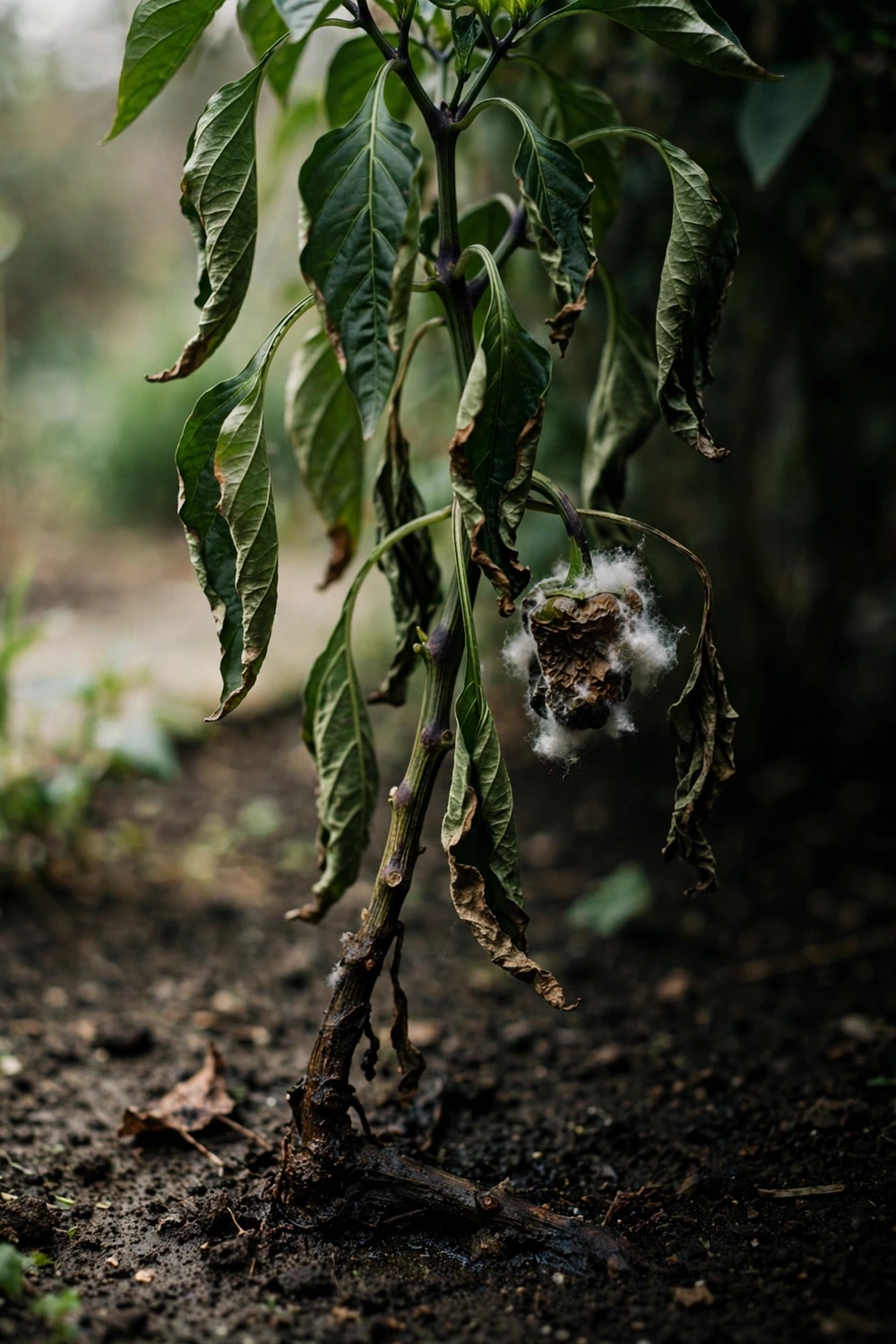
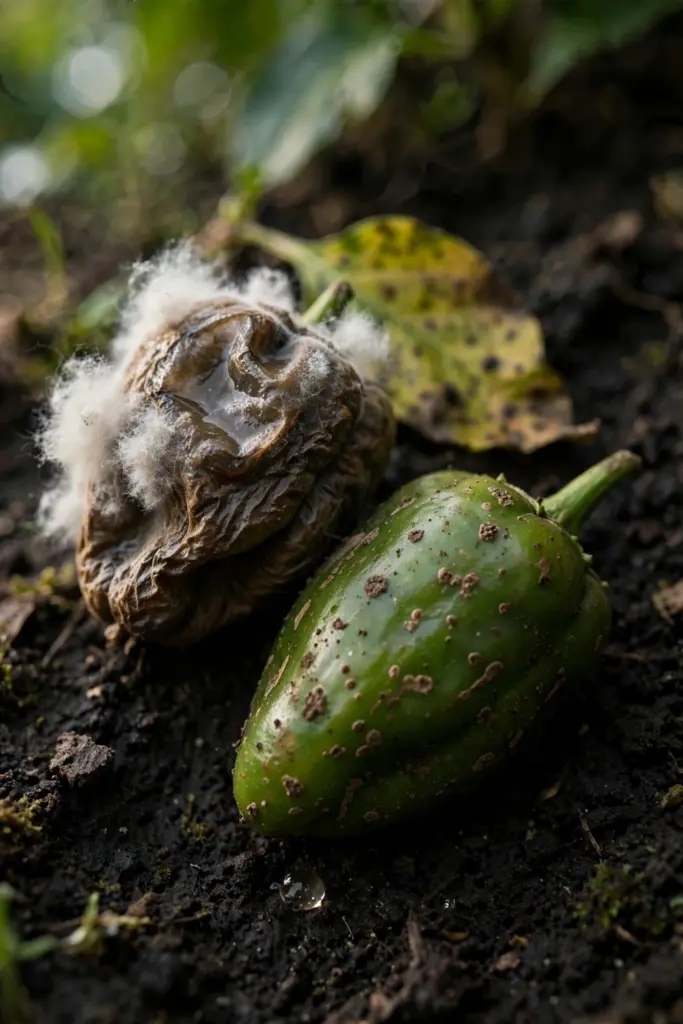
Fruit rot is the second most common symptom, and it is the one gardeners notice first on a fruiting plant. Infection starts as water-soaked areas on the fruit, often where soil splashed onto low-hanging peppers. Those areas become covered with white powdery to cottony mold, and the fruit then shrivels and dries. The University of Tennessee describes the same rot as a tan, water-soaked soft rot with a thin layer of white powdery mold visible to the naked eye, in its guide to managing Phytophthora blight of peppers and cucurbits. Infected fruit stays attached to the stem instead of dropping. A shriveled, moldy pepper still hanging on a wilting plant is a strong field sign.
Fruit that looks sound but grew on a plant with crown rot still goes in the trash with the plant. The plant is dying, the fruit ripens poorly, and keeping it risks carrying the pathogen into the compost pile or the kitchen. Bag it, trash it, and wash your hands and tools after handling it.
Which Peppers Get Hit Hardest
All peppers are susceptible. Bell peppers and hot peppers both appear on the host list, and no pepper type escapes the disease entirely. The practical difference is exposure, not immunity. Peppers planted in low spots, in heavy soil that holds water, or under overhead irrigation face the highest pressure. Peppers in raised beds with drip irrigation and mulch face far less.
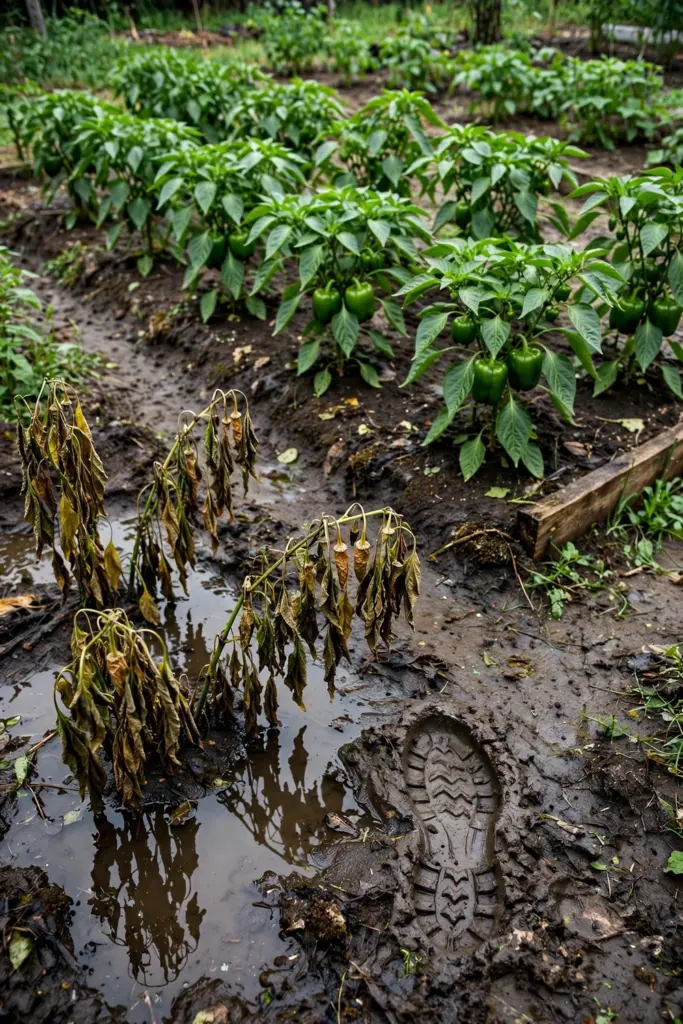
Fruit that touches soil or hangs low enough for rain splash to reach it rots first. That pattern explains why the same variety can look clean on a trellised plant and rotted on a sprawling one. Staking, pruning low foliage, and mulching all reduce fruit contact with soil, and each one lowers fruit rot without a single spray.
Variety choice shifts the odds for one phase of the disease only. Some bell varieties carry resistance to the root rot phase, and Step 9 names them with the limits attached. No variety on the market resists the crown rot phase, so a resistant label never excuses wet soil. Drainage decides the outcome. Variety choice only softens it.
Phytophthora Blight vs Bacterial Spot on Pepper
Phytophthora blight and bacterial spot are the two pepper diseases gardeners confuse most often, because both start with water-soaked spots. The table below is compiled from parallel Extension sources: NC State and the University of Tennessee for the Phytophthora side, and the Pacific Northwest Pest Management Handbooks for the bacterial spot side. No published head-to-head comparison exists, so the table carries that compiled status openly. Field identification from this table is presumptive. A lab confirms the pathogen where the decision matters, such as a bed you plan to replant next year.
| Feature | Phytophthora Blight (Phytophthora capsici, oomycete) | Bacterial Spot (Xanthomonas spp., bacteria) |
|---|---|---|
| First place to look | Crown and lower stem at the soil line | Leaves, starting on lower foliage |
| Stem sign | Dark brown lesion at the soil line that girdles the stem | Dark streaks and patches on stems and petioles, no girdling ring |
| Wilt | Sudden wilt with little yellowing, then rapid plant death | Plants usually survive; heavy leaf loss causes a scorched look |
| Leaf spots | Water-soaked spots that dry to light tan and may crack | Water-soaked spots that turn brown or brown-black; centers may fall out and leave holes about 0.25 inch across |
| Spot pattern | Scattered, tied to splash height | Spots merge into large dead areas and cause severe defoliation |
| Fruit sign | Water-soaked areas with white powdery to cottony mold; fruit shrivels and stays attached | Water-soaked spots that turn brown, raised, and scabby; no cottony mold |
| How it arrives | Soilborne oospores that persist 10 years or more; swimming zoospores in water | Seedborne and transplant-borne; survives in infected debris and weeds |
| How it spreads | Splashing water, water running across beds, contaminated irrigation water | Splashing water and handling wet plants; enters through stomata and wounds |
| Favorable weather | Warm and wet, with saturated soil and standing water | Warm and wet, 75 to 86 degrees F with high humidity |
| What stops it | Drainage, raised beds, rotation away from all susceptible hosts, sanitation | Clean seed and transplants, drip irrigation, dry handling, rotation |
| Spray logic | Oomycete-labeled products, preventive only, last resort | Bactericides labeled for bacterial spot, preventive only; never a cure for either disease |
The management fork is the reason the table matters. A spray labeled for bacterial spot will not control Phytophthora blight, because the two pathogens belong to different groups. A spray labeled for oomycetes will not control bacterial spot. Diagnosis comes first. Spray comes last, and only with a product labeled for the pathogen you actually have.
Two lookalikes deserve one line each, never a second table. Southern blight shows a dense white fungal mat on the stem at the soil line, often with small hard tan round sclerotia, and the Southern blight treatment guide covers that disease in full. Anthracnose shows sunken circular spots on ripe fruit. One more non-disease deserves a line: some bell pepper varieties grow purple-black streaks on healthy stems, and that color alone is not disease. The black girdling ring plus wilt is disease. Color alone is not.
For the wider bacterial spot picture across plants, the bacterial leaf spot guide covers the genus-level disease. This article stays on pepper and on the Phytophthora side of the comparison.
Why Water Moves This Disease So Fast
Phytophthora blight on peppers is a water-driven disease at every stage. Oospores wait in soil for years. When soil saturates and stands wet, the oospores germinate and produce sporangia, and each sporangium releases swimming zoospores that move through water to find roots and stems. The University of Tennessee reports that a single sporangium can release 40 swimming zoospores. One wet week can turn a few resting spores into millions of swimmers.
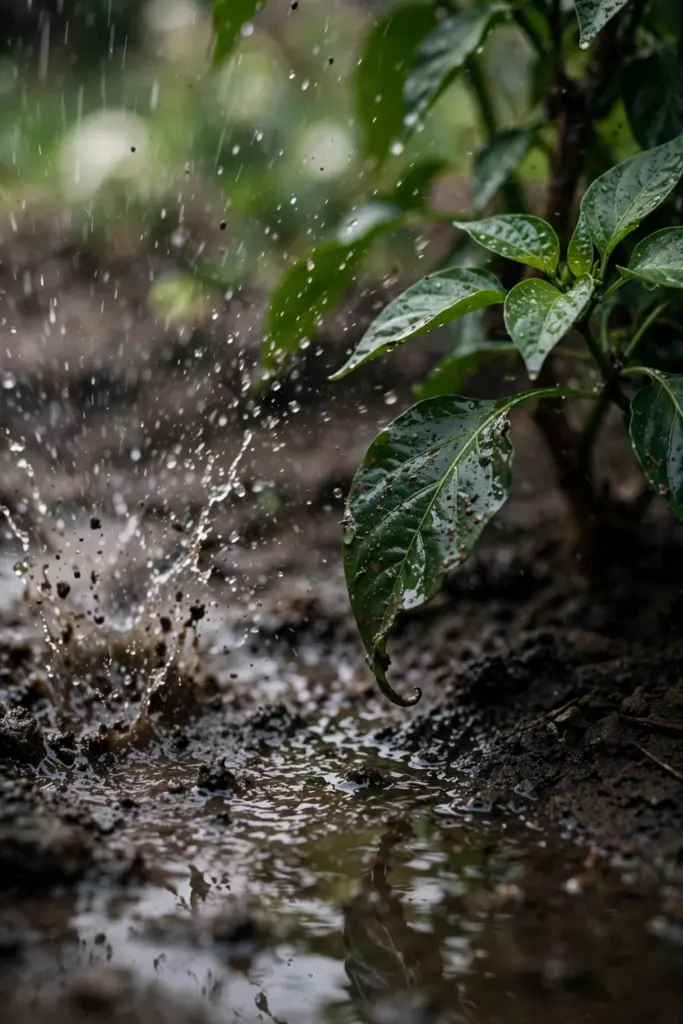
Splash does the rest. Rain and overhead irrigation throw infested soil onto stems, leaves, and low fruit, and each splash lands a fresh batch of spores on a new infection site. Water running across a bed carries spores down the row, and water that ponds in a low spot concentrates them. The disease often appears first in the lowest corner of a bed after a heavy rain, then spreads uphill along the wet path.
Dry soil breaks the cycle. Zoospores cannot swim without water, and sporangia cannot release them without wetness. That single fact explains why drainage, drip irrigation, and mulch outperform every spray in a home garden. Remove the standing water and the pathogen loses its transport. Keep the soil wet and no spray schedule keeps up.
What Makes Phytophthora Blight Worse in a Home Garden
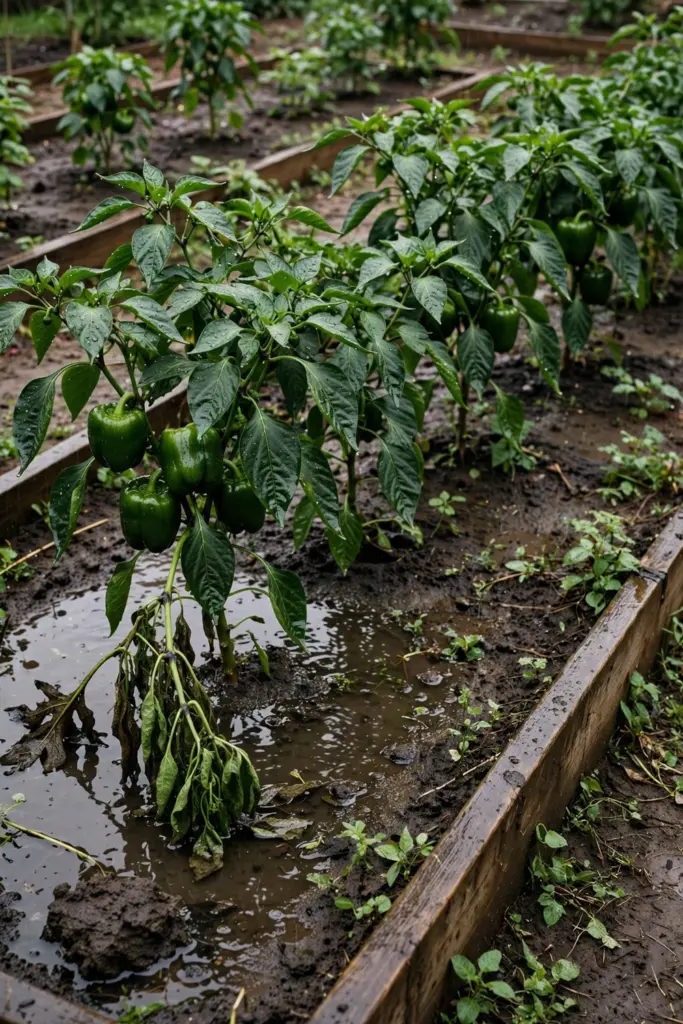
Saturated soil is the top risk factor. Low spots, heavy clay, compacted paths, and beds that sit where roof runoff lands all hold water after rain. A bed that ponds for a day after a storm is a bed where this disease starts. Walk the garden after the next heavy rain and watch where water stands. Those spots decide where peppers go next year.
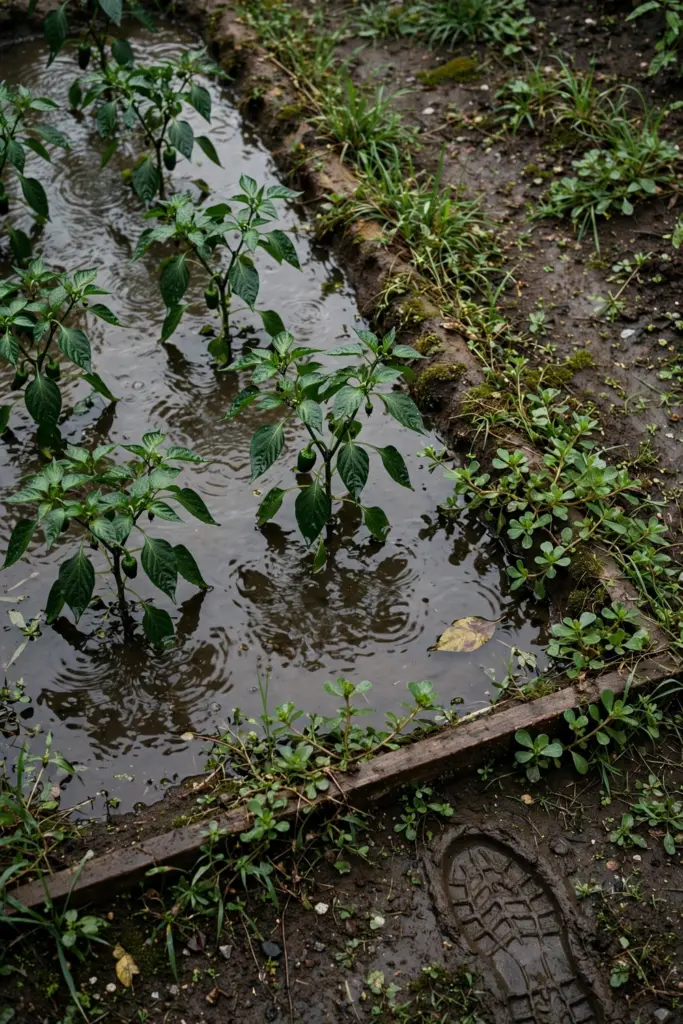
Overhead watering ranks second. Sprinklers and hose-end sprayers wet the foliage, splash soil onto stems and fruit, and keep the soil surface wet for hours. Drip irrigation and soaker hoses put water at the root zone and leave the surface dry, which starves the swimming stage. Watering in the morning beats watering at night, because the surface dries before the cool, damp hours.
Infested soil and dirty tools move the disease between beds. Soil clinging to boots, trowels, and wheelbarrow wheels carries oospores. Compost made from infected plants carries them too, because a home compost pile rarely heats evenly enough to kill resting spores. Irrigation water from ponds, ditches, or creeks can carry the pathogen as well, and NC State Extension warns that the pathogen can contaminate irrigation ponds and creeks. Step 10 covers the water source in full.
Weed hosts add a quiet reservoir. Nightshade, velvetleaf, Carolina geranium, purslane, and jimsonweed can host the pathogen, and the University of Tennessee lists them as weed hosts to manage. A weedy bed edge next to peppers keeps the disease fed between pepper crops. Clean bed edges are part of prevention, not tidiness for its own sake.
Step 1: Decide Whether Treatment Is Worth It
Step 1 is a cost and benefit call, and for most home gardeners the honest answer is prevention only. Once Phytophthora blight on peppers establishes in a bed, the University of Tennessee states that it is nearly impossible to remove. No spray cures an infected plant. No soil drench revives a girdled stem. The money and effort go to the next planting, not to the dying one.
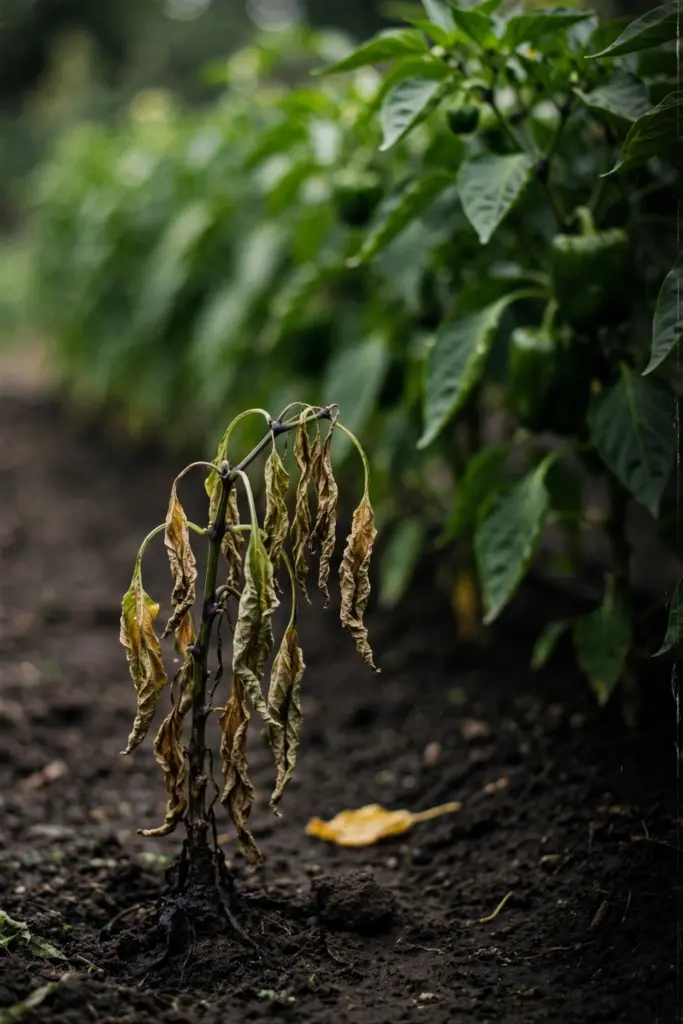
Weigh three facts before you spend anything. First, the infected plant is already lost once the stem girdles, so treatment spending buys nothing for that plant. Second, the oospores in that bed outlast any product you apply, so a sprayed bed is still an infested bed. Third, the prevention moves in Steps 4 through 8 cost less than a season of fungicides and protect every crop that follows, not just peppers.
Act on the answer right away. Pull infected plants, fix the drainage, and plan the rotation. A gardener who spends the season chasing a cure for a dead plant loses the same season twice. A gardener who accepts the loss and rebuilds the bed wins the next one.
Step 2: Confirm the Identification Before You Act
Confirm the identification with three checks before you pull plants or change plans. First, look at the stem base for the dark brown lesion at the soil line and test whether the stem feels girdled and soft there. Second, check whether the plant wilts in wet soil and fails to recover after watering, which separates crown rot from drought or heat wilt. Third, check the fruit for water-soaked areas with white powdery to cottony mold, and check whether shriveled fruit stays attached.
Run the bacterial spot comparison while you inspect. Bacterial spot shows brown leaf spots whose centers may fall out and leave holes, raised scabby fruit spots with no cottony mold, and plants that keep living despite heavy leaf loss. The Pacific Northwest handbook entry for bacterial spot on pepper gives the full symptom set. When the plant shows the girdling stem ring plus sudden wilt, the answer is Phytophthora blight. When the plant shows leaf spots and scabby fruit but no girdling ring, the answer is bacterial spot.
Send a sample to your local Extension clinic when the call matters. A bed you plan to replant, a large planting, or a case where the symptoms sit between the two columns all justify a lab test. Field identification is presumptive. Lab identification is the record you plan a rotation around.
Step 3: Remove and Destroy Infected Plants at Once
Pull infected plants the day you confirm them, and pull the apparently healthy neighbors in the same wet spot too, because they are likely already infected. Work when the soil is dry if you can, so you carry less infested soil on your boots and tools. Lift the whole plant, roots and all, and bag it before you carry it across the garden.
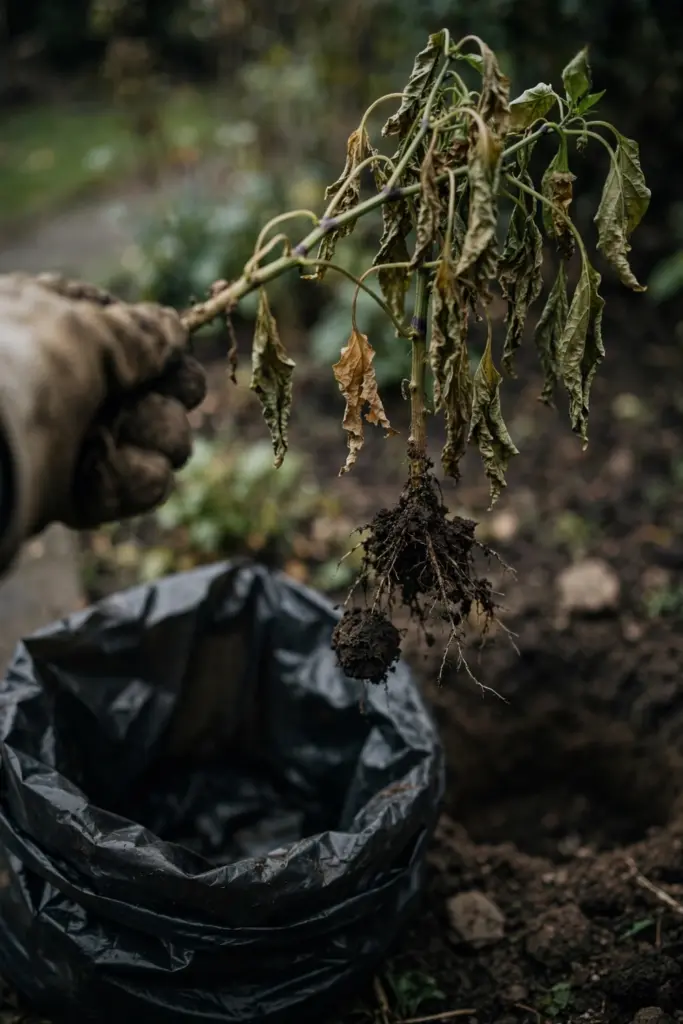
Trash the bagged plants. Never compost them, never dump them on a cull pile, and never leave them at the bed edge. A cull pile is an inoculum pile: it feeds oospores back into the soil and lets spores splash onto the next crop. The same rule covers infected fruit. Bag it, trash it, and keep it away from production beds and water sources.
Clean up after the removal. Wash soil off boots, trowels, and wheelbarrow wheels before you use them in a clean bed. Rake out fallen fruit and leaf debris from the infested bed, bag it, and trash it. The goal is to leave as few oospores behind as the season allows, even though no cleanup removes them all.
Step 4: Fix Drainage With Raised Beds and Mounds
Drainage is the highest-value move, because it attacks the swimming stage directly. Plant peppers in raised beds, and keep the beds out of low spots where water ponds after rain. A raised bed sheds water, dries its surface faster, and keeps the crown above the wet zone. For peppers, the University of Tennessee recommends planting non-vining crops such as pepper into raised beds.
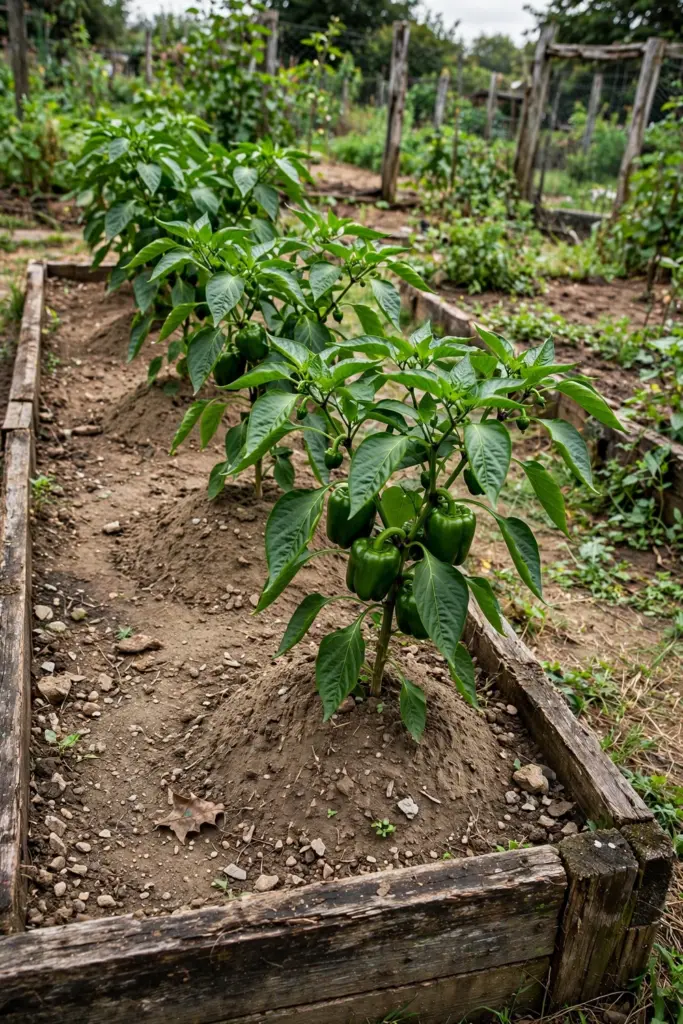
Shape the bed to shed water. Crown the bed slightly so water runs off instead of pooling at the stem. Where the ground is flat and heavy, mounding the soil around each plant lifts the crown out of the wettest layer. Break up compacted soil under the bed before you build it, so water drains down instead of perching on a hard pan.
Improve the soil itself. Work compost into the bed to open heavy soil, and avoid working the bed when it is wet, because wet tillage compacts the soil you are trying to loosen. Keep paths out of the bed, and keep foot traffic off the bed surface, so the loosened soil stays loose. A bed that drains in hours after a storm is a bed where Phytophthora struggles.
Step 5: Water at the Base and Keep Foliage Dry
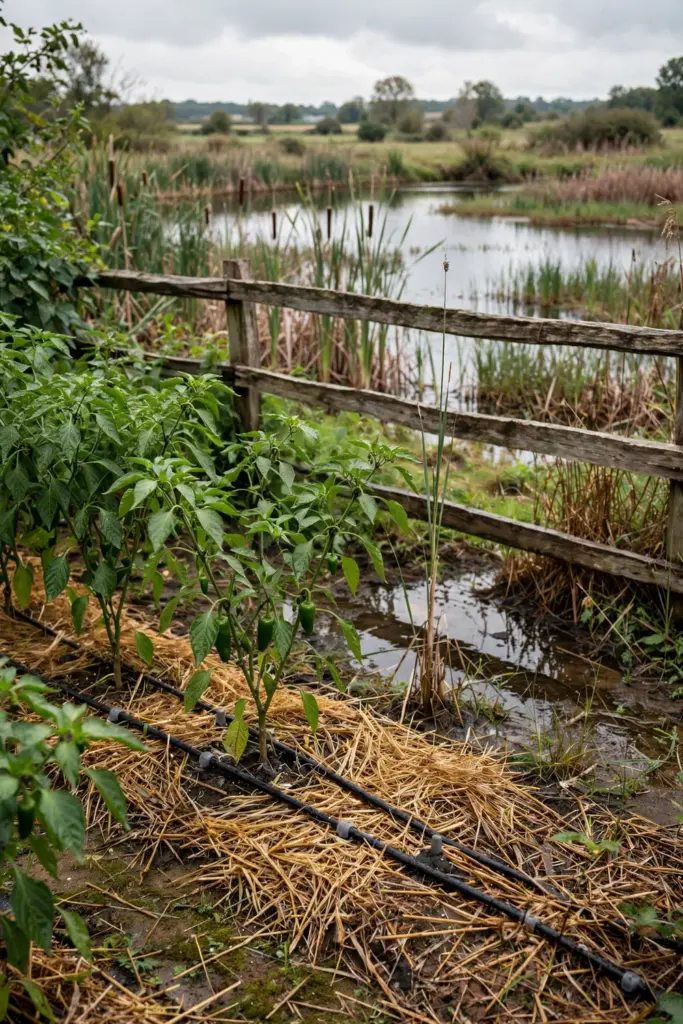
Switch to drip irrigation or soaker hoses for peppers. Drip lines put water at the root zone and leave the foliage dry, which cuts both splash and leaf wetness. Overhead sprinklers do the opposite: they wet the leaves, splash soil onto stems and fruit, and keep the surface wet for hours. In a bed with a Phytophthora history, overhead watering is the fastest way to start the next outbreak.
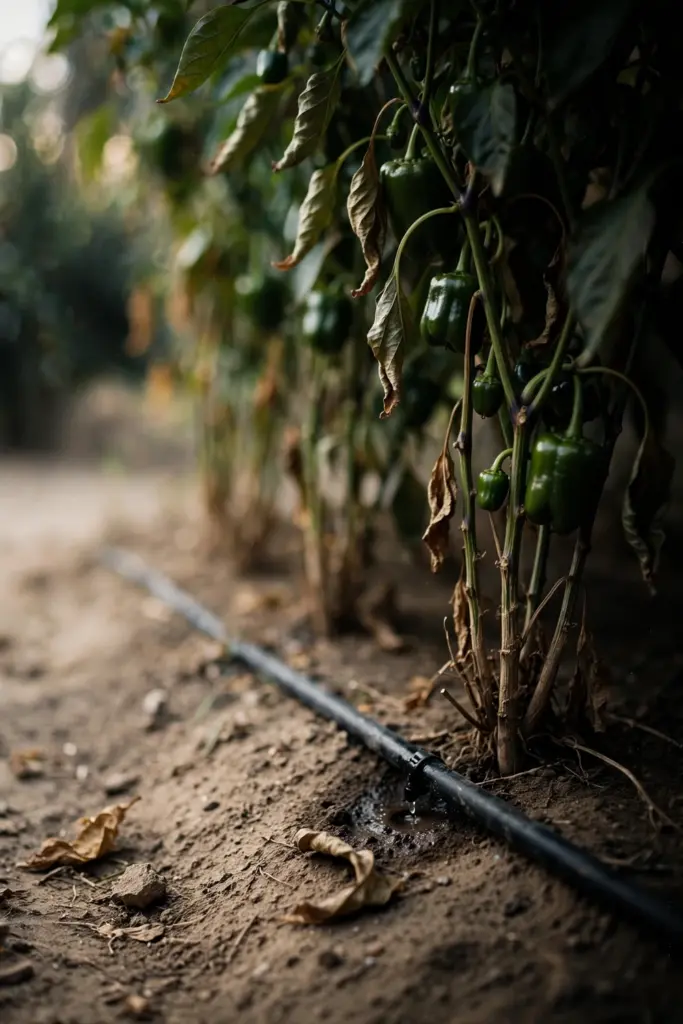
Water in the morning. Morning watering gives the soil surface the full day to dry, and a dry surface overnight denies zoospores their swimming window. Evening watering leaves the surface wet through the cool night hours, which is exactly when the pathogen benefits. The same volume of water does different work depending on when it lands.
Water only when the soil needs it. Wait until the soil below the surface feels dry before you water again, and check with a finger or a trowel instead of guessing from the surface. Overwatering keeps the top layer wet between rains and holds the bed in the disease window. A pepper plant that gets a deep drink and then a dry interval grows stronger roots and faces less disease pressure than a plant kept constantly damp.
Stay out of wet beds. Do not pick, prune, or cultivate peppers while the plants are wet, because wet handling moves spores from plant to plant on hands, tools, and clothing. Let the foliage dry first. That pause costs an hour and saves a bed.
Step 6: Mulch to Block Soil Splash
Mulch is a splash barrier. A layer of straw or plastic mulch between the soil and the plant stops raindrops from throwing infested soil onto stems, leaves, and low fruit. The University of Tennessee recommends plastic or organic mulch such as straw to limit fruit contact with soil and reduce soil splashing. That single layer cuts the infection route that starts most fruit rot.
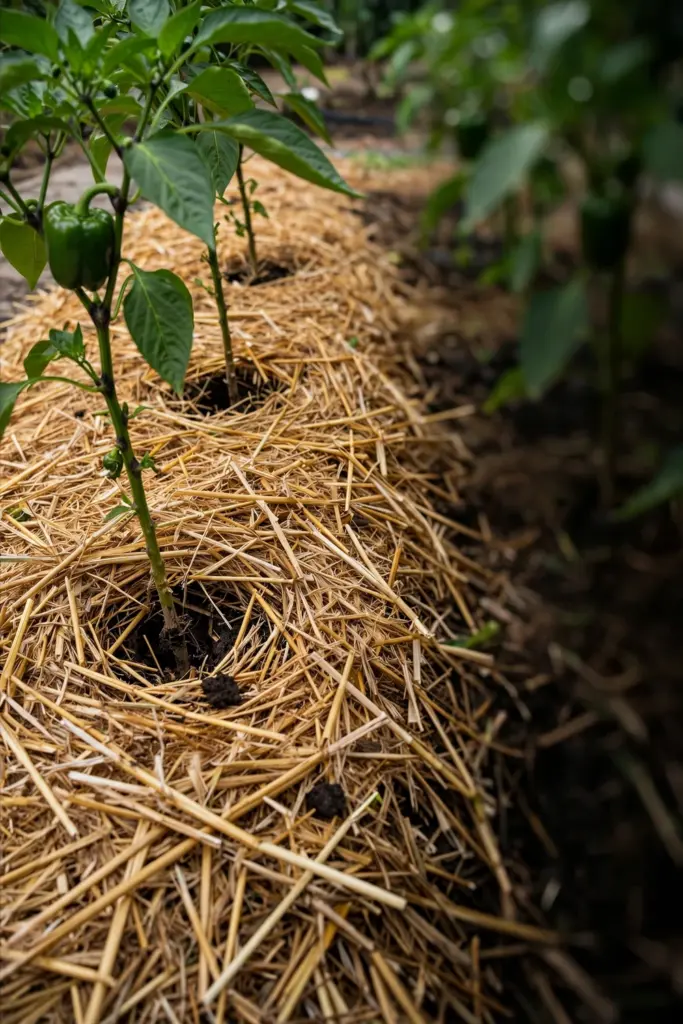
Lay mulch at planting time, before the first heavy rain. Tuck it around each stem without piling it against the stem itself, because mulch piled against a stem holds moisture right where crown rot starts. Keep a small gap at the stem base so the crown dries between rains. Extend the mulch under the full drip line of each plant, so no bare soil sits within splash range of the lowest fruit.
Choose straw for a home bed when you want organic matter as a bonus, and choose plastic mulch when you want the driest surface and the strongest splash block. Either one beats bare soil. Refresh organic mulch as it breaks down, and pull up plastic mulch at season end so it does not trap debris and spores against the bed.
Step 7: Rotate Away From Susceptible Hosts for 3 to 5 Years
Rotate away from every susceptible host for 3 to 5 years. The susceptible list covers pepper, tomato, eggplant, cucurbits, and beans, so a rotation from peppers to tomatoes is no rotation at all. The University of Tennessee advises rotating away from susceptible hosts for at least 3 to 5 years. Ohio State advises 4 to 5 years out of peppers, cucurbits, and green beans where Phytophthora blight has already been a problem. The two figures differ, so use the longer end for a bed that has already shown the disease: 5 years out of susceptible hosts for a bed with a confirmed outbreak.
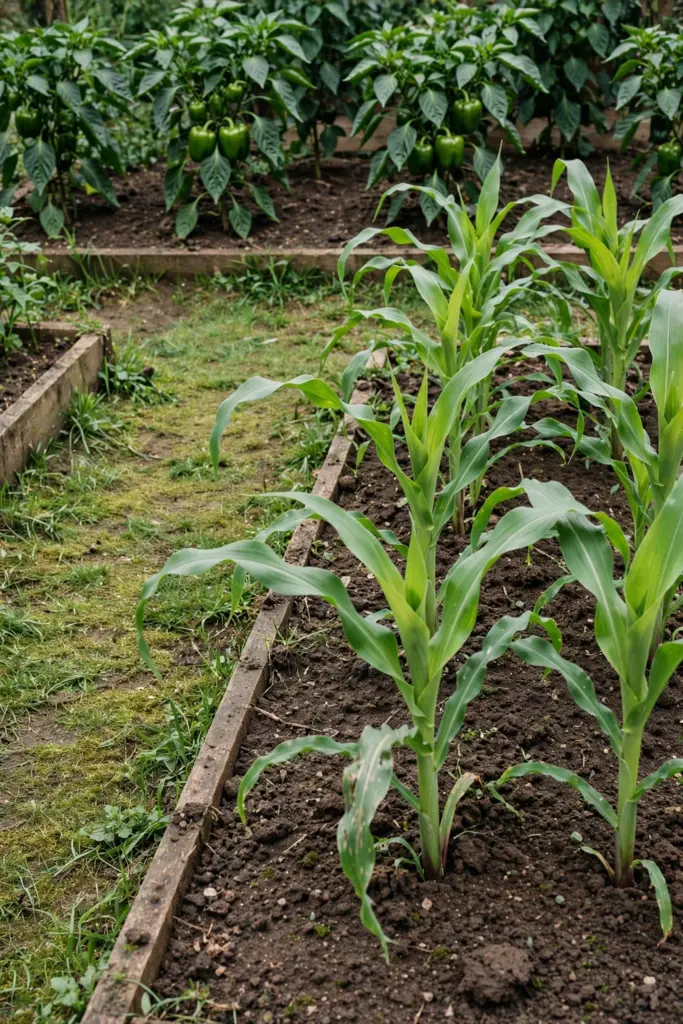
Fill the rotation years with nonhosts. The University of Tennessee lists corn, wheat, soybean, grasses, broccoli, cabbage, cauliflower, kale, kohlrabi, mustard, basil, chives, celery, dill, and parsley as nonhost crops. Cereals are the strongest choice for a home garden, because corn and wheat are firmly nonhosts and they break the cycle cleanly. Brassicas and herbs fill the remaining years and keep the bed productive while it rests from peppers.
Keep rotation honest about its limits. Rotation alone will not clear infested soil, because oospores outlast any rotation a home gardener will run. Rotation slows the buildup, starves the pathogen of fresh hosts, and buys time for drainage and sanitation to do their work. A bed that gets rotation plus drainage plus mulch recovers far faster than a bed that gets rotation alone.
Track the rotation on paper. Write the bed name, the year, and the crop family on a card or a notebook page, and check it before you plant. Memory fails after two seasons. A written rotation keeps a pepper from slipping back into a bed that still needs two more years of rest.
Step 8: Start Clean With Certified Seed and Healthy Transplants
Start with certified disease-free seed. The pathogen survives on and in seed, in soil, and in debris, so a clean start matters as much as a clean bed. Certified seed carries a disease-free claim you can check. Saved seed from a bed that showed Phytophthora blight carries the opposite: a risk you cannot see and cannot wash off.
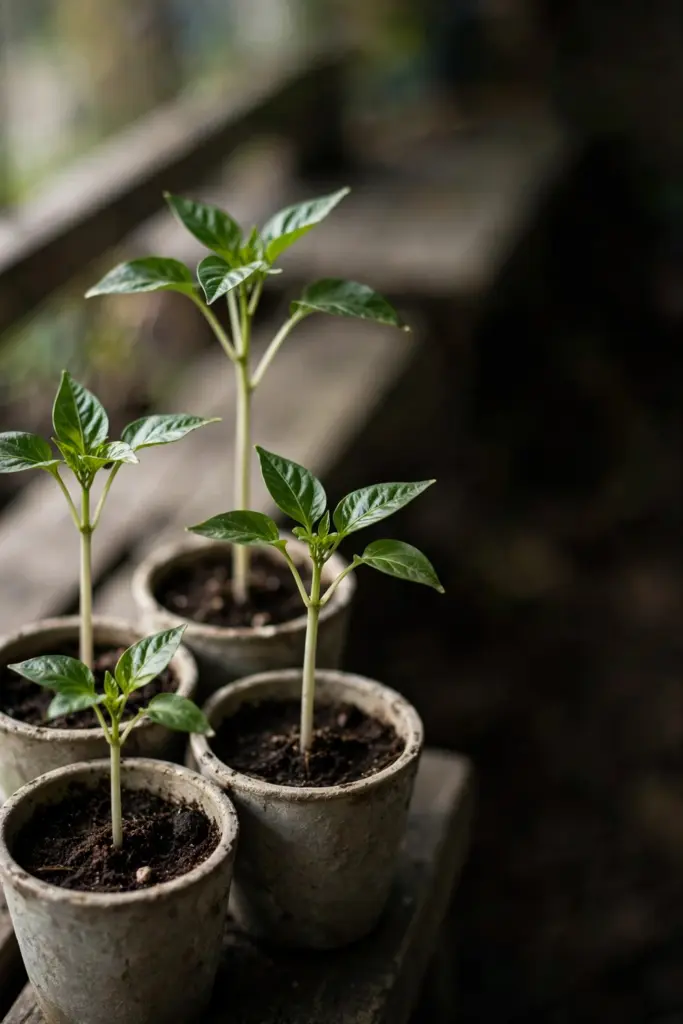
Buy transplants from a reputable source and inspect them before they go in the ground. Reject transplants with dark stem bases, wilted tops, or mushy roots, even if the price is good. A cheap infected transplant costs the whole bed. Quarantine new transplants for a day or two if you can, and check the stem base again before planting.
Never bring in soil or compost of unknown history. Soil from a neighbor’s infested bed, compost made from unknown garden waste, and bagged compost from an untrusted source can all carry oospores into a clean bed. Buy soil and compost from sources you trust, and keep receipts or labels so you can trace a problem back to its source. A clean bed stays clean only if everything entering it is clean.
Clean tools and boots between beds. Wash soil off trowels, hoes, and wheelbarrow wheels after working an infested bed, and work clean beds before infested ones when the same tools serve both. The rule is simple: clean first, dirty last, wash between.
Step 9: Choose Resistant Varieties With Open Eyes
Choose resistant varieties as one layer of defense, never as the whole plan. Ohio State lists varieties with moderate to good resistance to Phytophthora blight: Paladin, Aristotle, Declaration, Intruder, and Vanguard among bell peppers, Hechicero among jalapeños, and Sequoia among anchos. Those varieties earned their place on the list in field trials, and they are worth planting in a bed with a Phytophthora history.
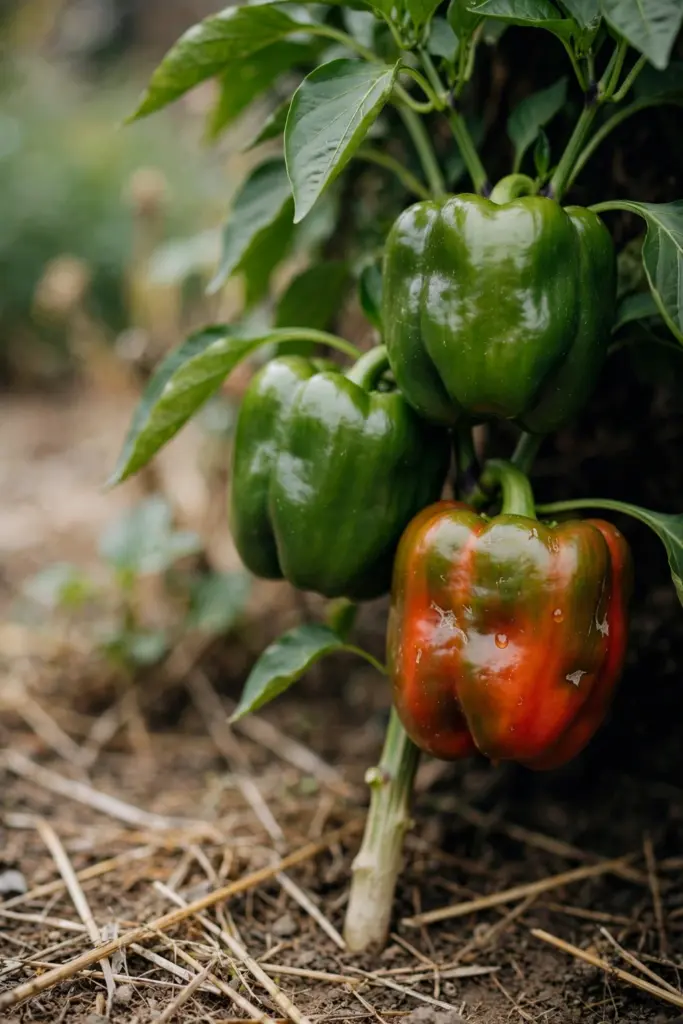
Read the limit before you buy. The resistance covers the root rot phase of the disease only. In general, these varieties stay susceptible to the crown rot phase, which attacks the foliage and fruit. A resistant variety in wet soil still girdles at the crown and still dies. Resistance buys time and reduces losses. It never replaces drainage.
Match the variety to the pepper you actually grow. A bell list does not help a gardener who grows only jalapeños, and a jalapeño list does not help a gardener who grows only bells. Where no resistant variety exists for your type, lean harder on Steps 4 through 8 and treat variety choice as unavailable for that crop.
Step 10: Guard Your Water Source and Keep Sprays as a Last Resort
Guard the water source. The pathogen moves in water, and it can contaminate ponds, ditches, and creeks, so irrigation drawn from surface water can carry the disease into a clean bed. Irrigate from a well or municipal water whenever you can. When surface water is the only option, treat it as a risk: avoid irrigating with it during wet periods, keep it off the foliage, and never let runoff from an infested bed drain into the source you irrigate from.
Keep sprays as a last resort, and keep them preventive. The University of Tennessee states that fungicides work best preventively against this disease, and that the pathogen readily develops resistance to fungicides, particularly those with the active ingredient mefenoxam, so rotation of active ingredients matters. A spray applied after symptoms appear does not cure the plant. A spray applied before disease onset, on a plant in drained soil with mulch and rotation behind it, adds a thin layer of protection.
Read the label as law. Use only products labeled for Phytophthora on pepper in your state, follow the label rate and interval exactly, and rotate active ingredients rather than repeating one product all season. Home gardeners who spray should treat the label as the full instruction set: no product name anywhere else overrides it. When in doubt, skip the spray and spend the effort on drainage, because drainage never develops resistance.
Living With Phytophthora Blight Damage You Already Have
Living with the damage means managing the bed, not saving the plants. Pull the infected plants, bag them, and trash them. Leave the bed fallow or plant a nonhost cover for the rest of the season. The bed is infested, and the honest move is to start the rotation clock now instead of replanting peppers into the same soil and watching the same wilt repeat.
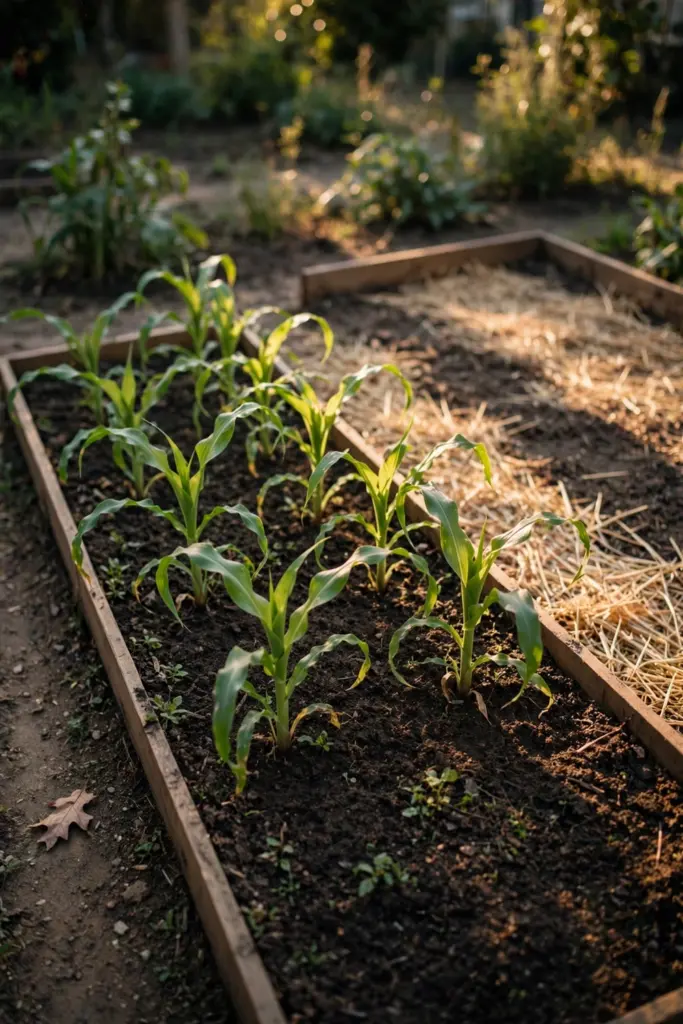
Do not replant peppers, tomatoes, eggplant, cucurbits, or beans into that bed for the rotation window in Step 7. Plant corn, wheat, brassicas, or herbs instead, and use the season to rebuild the soil and fix the drainage. A bed that rests under a nonhost crop while you improve its drainage comes back stronger than a bed that gets replanted in hope.
Watch the neighbors of the pulled plants. Plants that looked healthy in the same wet spot may already carry the pathogen, and a second round of wilting two weeks later is common. Pull those plants too, and keep the bed clean of debris through the season. The season you lose to Phytophthora still pays, because every cleanup step lowers the spore load for the next planting.
Plan next year from the loss. Sketch the new bed layout on paper: peppers on the highest, best-drained ground, drip lines instead of sprinklers, mulch down at planting, and a written rotation that keeps susceptible crops out of the infested bed. The garden that recovers from Phytophthora blight is the garden that treats water as the disease, not the sprayer.
Frequently Asked Questions
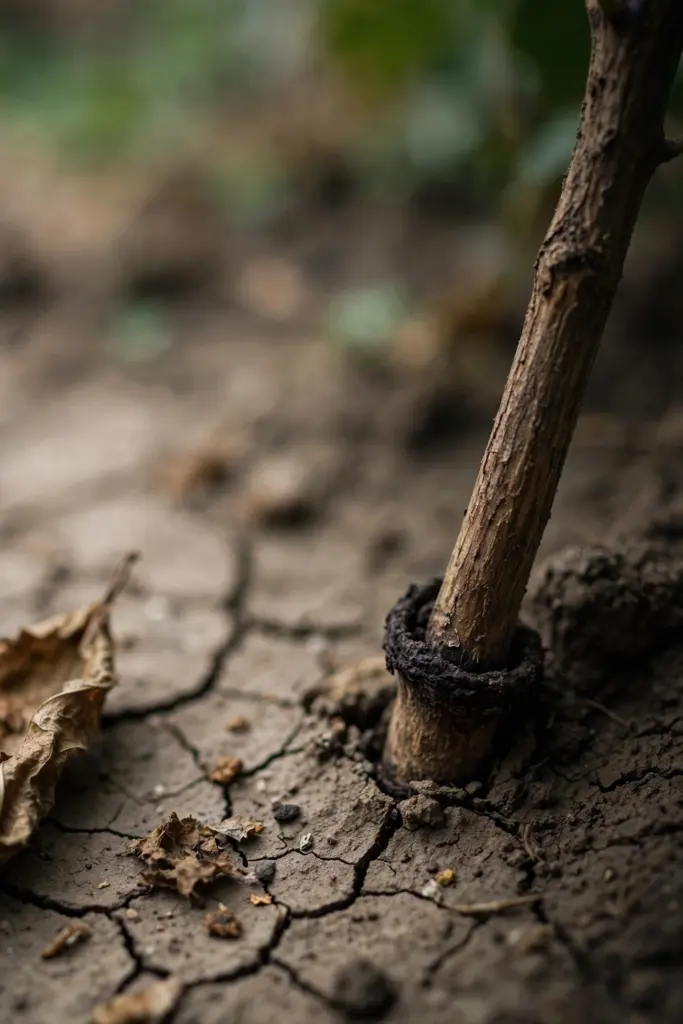
No. A black ring that girdles the stem has already cut off water flow, and no spray, drench, or pruning step restores it. Pull the plant, bag it, and trash it the day you confirm the sign. The effort that would go into saving that plant belongs to the next planting: drainage, mulch, rotation, and clean starts. A gardener who accepts one lost plant early saves the rest of the bed.
No. Phytophthora blight on peppers is an oomycete disease caused by Phytophthora capsici, and it girdles stems, causes sudden wilt, and rots fruit with white cottony mold. Bacterial spot is a bacterial disease caused by Xanthomonas species, and it spots leaves, raises scabby fruit lesions, and defoliates plants that usually survive. The differential table above lays out the full comparison. Diagnosis decides the management, because a spray for one never controls the other.
Wait 3 to 5 years out of all susceptible hosts, and use 5 years for a bed with a confirmed outbreak. The susceptible list covers pepper, tomato, eggplant, cucurbits, and beans, so none of those crops counts as a rotation. Fill the gap years with corn, wheat, brassicas, or herbs. Rotation alone never clears the soil, because oospores outlast it, so pair the wait with drainage and mulch.
Do not eat fruit that shows water-soaked spots, white mold, shriveling, or soft rot. Bag that fruit and trash it with the plant. Fruit from a wilting plant with crown rot goes in the trash too, because the plant is dying and the fruit will not ripen well. Harvest only sound fruit from healthy plants, and wash your hands and tools after handling any infected material.
No. A spray labeled for bacterial spot targets bacteria, and Phytophthora blight is an oomycete disease, so the product does not match the pathogen. The reverse holds too: an oomycete-labeled product does not control bacterial spot. Diagnose first, then choose a product labeled for the pathogen you actually have, and use it preventively only. Drainage, rotation, and sanitation carry the real weight in a home garden.
No. Resistant varieties such as Paladin, Aristotle, Declaration, Intruder, Vanguard, Hechicero, and Sequoia resist the root rot phase of the disease only, and they stay susceptible to the crown rot phase. A resistant variety in wet soil still girdles at the crown and still dies. Plant resistant varieties as one layer of defense, and back them with raised beds, drip irrigation, mulch, rotation, and clean starts for the protection that actually holds.
Where to Go From Here
Phytophthora blight on peppers rewards the gardener who acts on water first. Check the stem base at the first wilt, pull infected plants the same day, and rebuild the bed around drainage and mulch, with a written rotation behind them. The 10 strategies above give you the order: confirm, remove, drain, water at the base, mulch, rotate, start clean, choose varieties with open eyes, guard the water, and keep sprays last.
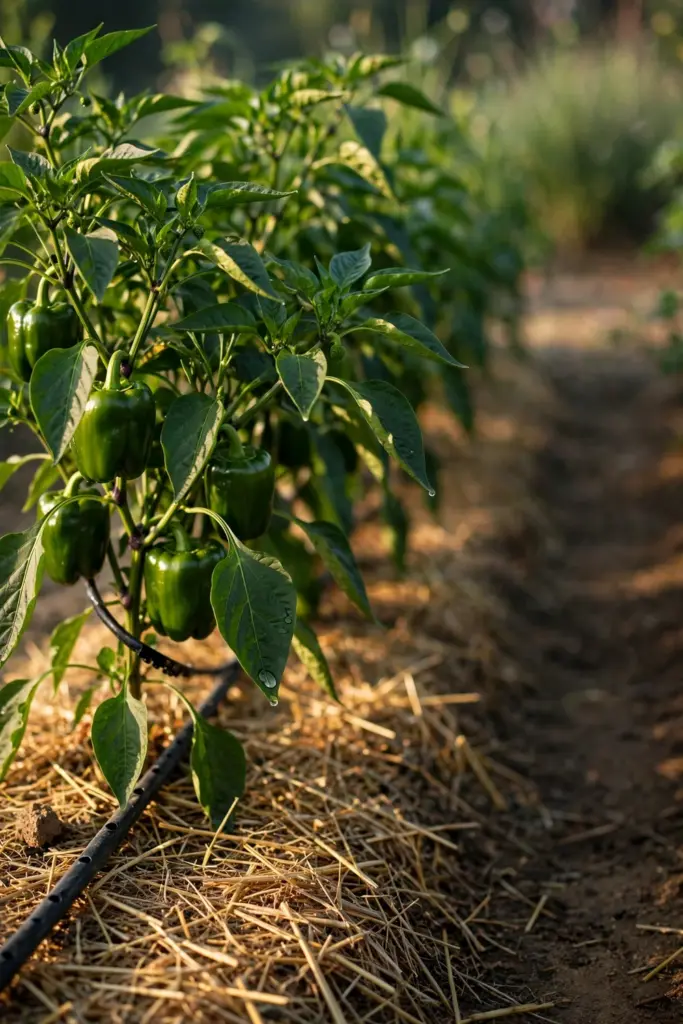
Start with one bed this week. Walk it after the next rain, mark where water stands, and move next year’s peppers to the highest, best-drained ground you have. Write the rotation down. The bed that lost peppers this year can grow corn, brassicas, or herbs next year, and peppers can return to it when the rotation clock runs out. That is the whole plan, and it works because it follows the pathogen instead of fighting the symptom.