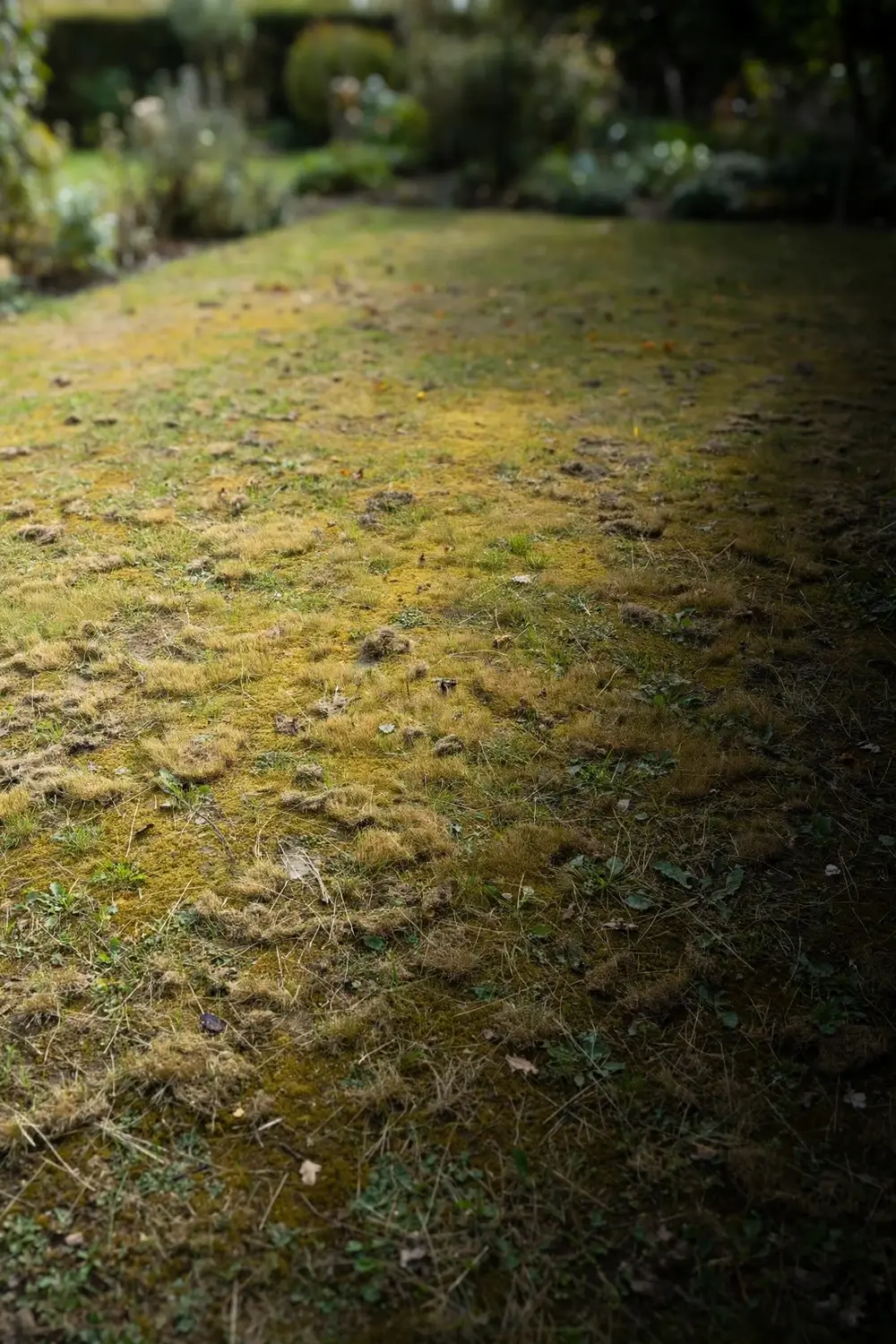

Sheath nematode is a low-damage lawn nematode. The 7 steps below test the lawn and rule nematodes in or out, starting with the assay that replaces guessing.
The signature is no signature. Thinning, yellowing, and wilting mimic drought, disease, and nutrient deficiency. Sheath nematode often sits in the soil without causing damage. The promise of this page is ruling it in or out, then caring for the lawn. There is no cure to apply and no homeowner nematicide to buy.
The rest of this page runs the order a homeowner should follow. Understand the nematode first, clear the naming confusion, learn why field identification fails, then work the 7 steps from sampling to prevention. I have learned that the assay I run before treating is the lawn I never waste money on.
What Sheath Nematode Actually Is
Sheath nematode is a plant-parasitic nematode of lawns and turfgrass. Nematodes in the Hemicycliophora group cause sheath nematode damage.
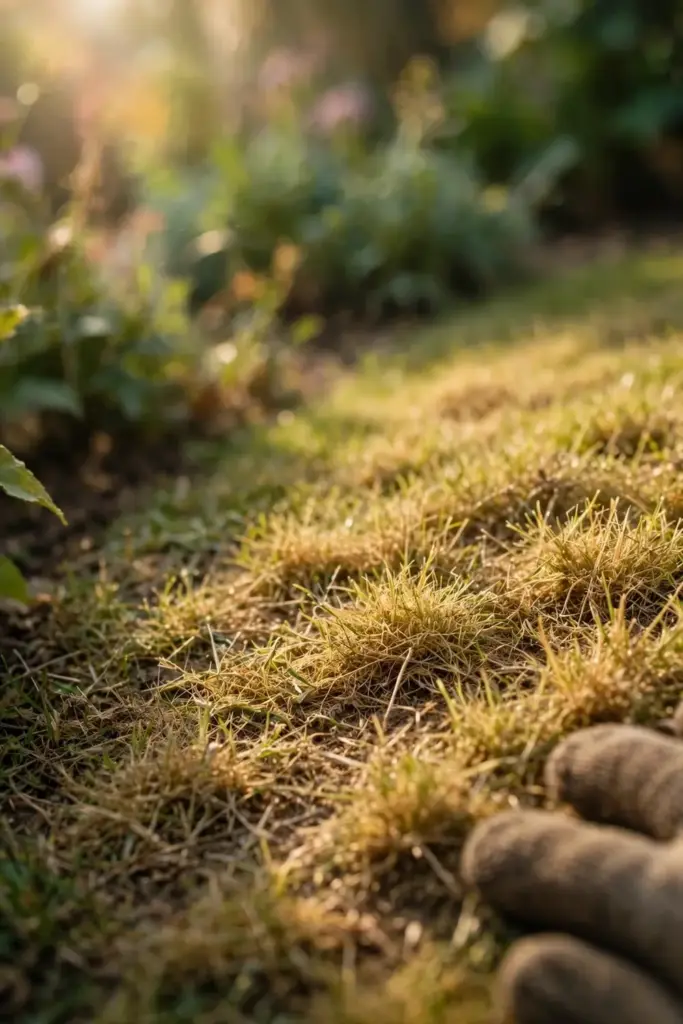
The honest frame comes first. Sheath nematode is a low-damage genus. One pathogenicity rating puts sheath nematode at 3 out of 10, against sting nematode at 10 out of 10. Arkansas Extension sets the sheath threshold at 200 to 400 nematodes, against a sting threshold of 10 to 25. The University of Georgia does not even include sheath nematode in its home-lawn assay table. The nematode is often present without causing damage. A lawn with sheath nematode is often a lawn with no nematode problem.
The nematode is named for the female’s sheath. The adult female carries a protective sheath around her body. The sheath is the mark. The sheath is the name. Mississippi State University’s archived nematode guidance gives the naming: the adult female carries a protective sheath around her body. The sheath is the identification feature under the microscope. The sheath is not visible in the lawn.
The nematode feeds on roots. The feeding is mild. The damage is mild. The nematode does not kill grass at normal counts. The nematode does not thin a lawn at normal counts. The nematode matters only at very high counts, and very high counts are rare on home lawns. The article’s promise is ruling the nematode in or out, then caring for the lawn. The promise is not killing the sheath nematode.
The scope stays on home lawns and residential turfgrass. Golf courses, sod farms, and commercial turf stay out. Citrus and vegetable Hemicycliophora species stay out. This article is an assay-first care guide, not a treatment guide. There is no treatment to apply on an established home lawn.
The Name Problem: Three Things Share the Name Sheath
Three things share the name sheath. The grass leaf sheath, the beneficial nematode, and the sheath nematode are three different things.
The grass leaf sheath is a plant part. Bermudagrass mites live and feed beneath the leaf sheath. A mite problem under the leaf sheath is a mite problem, not a nematode problem. Mississippi State University Extension gives the leaf-sheath note. The leaf sheath is anatomy. The sheath nematode is an animal. The name is the only link.
The beneficial nematode is a different animal with the opposite meaning. Beneficial nematodes are insect-killing roundworms sold for lawns, applied to kill grubs and leatherjackets. A beneficial nematode is a predator. A plant-parasitic nematode is a pest. The two share the word nematode. They share nothing else. A homeowner who buys beneficial nematodes buys a predator. A homeowner who finds sheath nematodes finds a pest. The words match. The animals do not.
The sheath nematode is the subject of this article. Hemicycliophora species, named because the adult female carries a protective sheath around her body. The article covers this animal only. The leaf sheath gets one line. The beneficial nematode gets one line. The sheath nematode gets the article.
The naming confusion is a plain plant fact, not a search-engine problem. A homeowner who hears “sheath” and reaches for a mite treatment wastes the treatment. A homeowner who hears “nematode” and buys beneficial nematodes buys the wrong animal. The name tells the homeowner which action to take. The wrong name buys the wrong action.
How to Spot a Possible Sheath Nematode Problem (Assay First)
No distinctive aboveground symptoms mark sheath nematode. Thinning, yellowing, and wilting mimic drought, disease, and nutrient deficiency. The lab assay confirms.
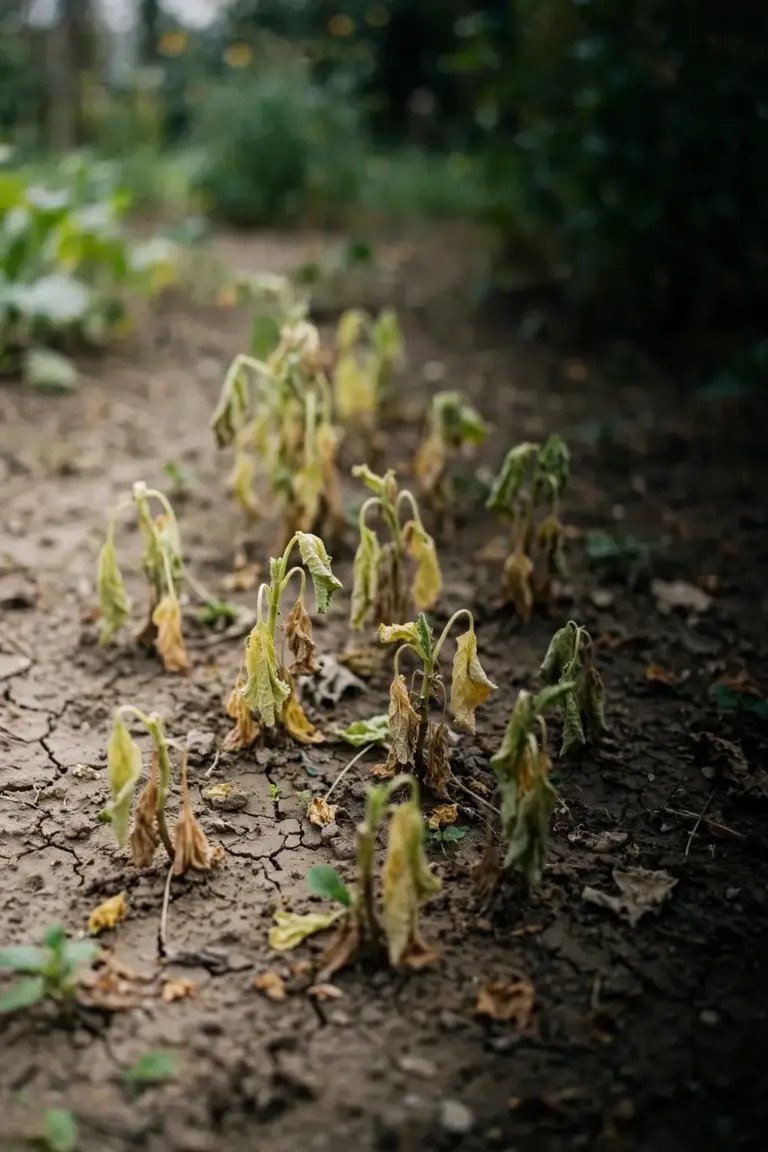
Look at the aboveground symptoms with suspicion, not certainty. A lawn that thins, yellows, and wilts may hold sheath nematode. A lawn that thins, yellows, and wilts may hold drought. A lawn that thins, yellows, and wilts may hold disease. A lawn that thins, yellows, and wilts may hold nutrient deficiency. The symptoms are the same. The causes differ. The symptoms are a suspect. The symptoms are not a diagnosis.
Look at the roots with the same suspicion. A lawn with thin roots and poor growth may hold sheath nematode. A lawn with thin roots and poor growth may hold compaction. A lawn with thin roots and poor growth may hold drought. The roots are a suspect. The roots are not a diagnosis.
Do not diagnose from aboveground symptoms alone. The article states the rule in the first step and repeats it here, because the rule is the whole article. A homeowner who diagnoses from symptoms guesses. A homeowner who assays knows. The assay costs a fee. The guess costs a season.
Check the whole lawn, not one patch. Sheath nematode in one patch points at that patch’s soil. Sheath nematode across a whole lawn points at the lawn’s soil. The spread of symptoms across the lawn tells the homeowner whether the problem is one patch or one lawn. The assay tells the homeowner which nematode.
| Assay Finding | What It Means | Action |
|---|---|---|
| Sheath count below threshold | Population too low to matter | Do not treat, build lawn vigor |
| Sheath count at or above Arkansas threshold (200 to 400) | Population high enough to matter | Improve vigor, consider renovation on infested ground |
| Sting count at or above threshold (10 to 25) | High-damage nematode present | Different nematode, different response, follow lab guidance |
| Any count, symptoms absent | Nematode present without damage | Monitor, keep the routine, retest next season |
Step 1: Never Diagnose From Aboveground Symptoms Alone
Never diagnose from aboveground symptoms alone. Thinning, yellowing, and wilting mimic drought, disease, and nutrient deficiency.
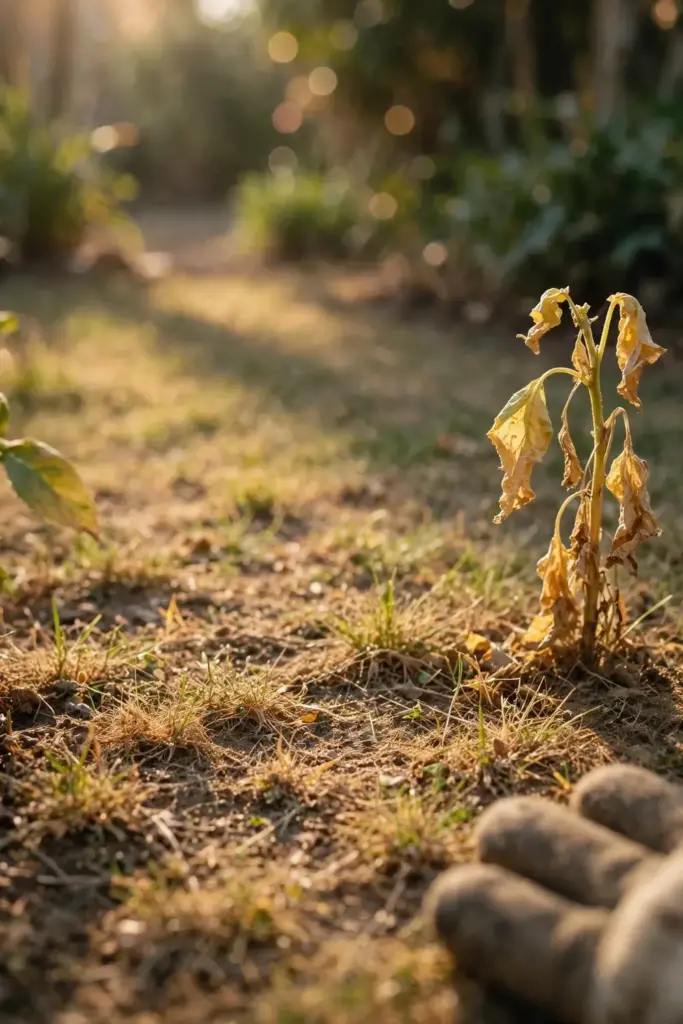
A lawn that thins in summer may hold drought. A lawn that yellows in spring may hold nitrogen deficiency. A lawn that wilts in heat may hold compaction. A lawn that thins, yellows, and wilts may hold sheath nematode. The symptoms overlap completely. A homeowner who reads the symptoms as nematodes guesses. A homeowner who reads the symptoms as drought guesses. The guess is the problem. The assay is the answer.
Rule out the common causes first. Check the watering. Check the mowing height. Check the fertility. Check the compaction. Check the grubs. Each of these is more common on a home lawn than sheath nematode. A lawn that thins because the mower scalps it does not need an assay. A lawn that thins after the common causes are ruled out earns an assay. The common causes come first. The assay comes second.
Do not buy a nematicide on symptoms alone. No nematicide is available for homeowners on established home lawns, per the University of Georgia. A homeowner who buys a golf-course nematicide on symptoms alone buys a product that is not for the home lawn, for a nematode that may not be present, at a count that may not matter. The purchase wastes money. The purchase risks the lawn. The assay comes first. The purchase never comes.
Step 2: Collect a Proper Nematode Assay Sample
Collect a proper nematode assay sample. Fifteen to 20 cores, 6 to 8 inches deep, 1 pint of soil plus roots, kept at room temperature, submitted promptly.
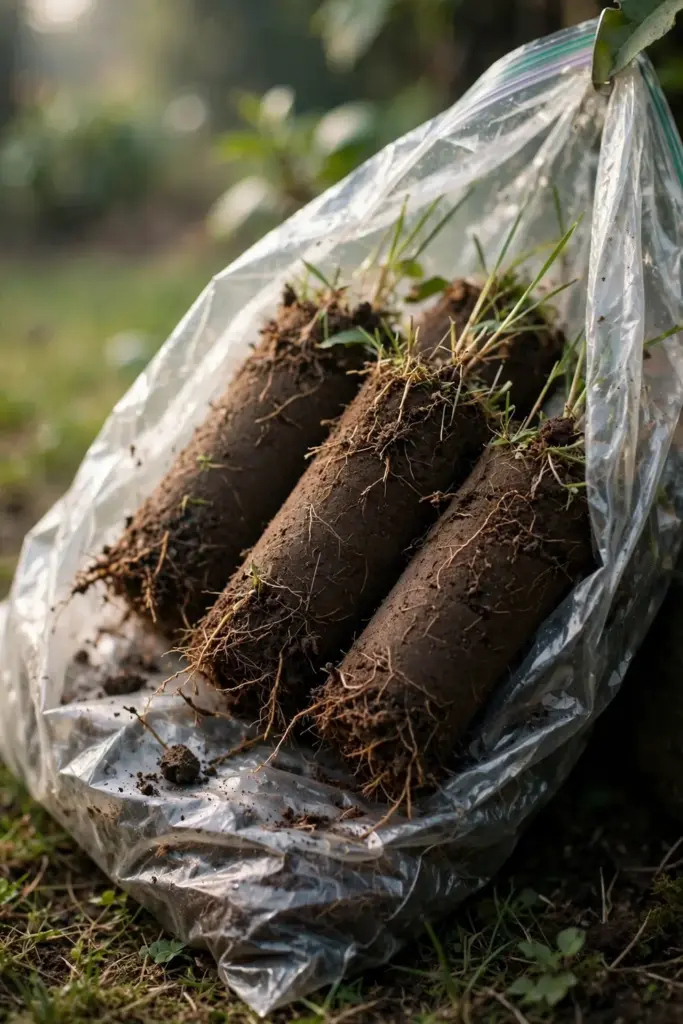
Louisiana State University Extension gives the sampling rule: take 15 to 20 cores, 6 to 8 inches deep, collect 1 pint of soil plus roots, keep the sample at room temperature, and submit it promptly. The cores cover the lawn. The depth reaches the root zone. The pint is the lab’s sample. The room temperature keeps the nematodes alive. The prompt submission keeps them alive. A sample taken from one corner measures one corner. A sample zig-zagged across the lawn measures the lawn.
Take the cores from the symptomatic area and from a healthy area. A sample from the thin patch measures the thin patch. A sample from the healthy lawn measures the healthy lawn. The comparison tells the lab whether the nematode load differs between the two areas. A thin patch with a high count and a healthy lawn with a low count points at the nematode. A thin patch with a low count and a healthy lawn with a low count points elsewhere. The comparison is the diagnosis. The single sample is half a diagnosis.
Keep the sample at room temperature. Do not refrigerate the sample. Do not freeze the sample. Do not leave the sample in a hot car. Cold kills nematodes. Heat kills nematodes. A sample that arrives dead measures nothing. A sample kept at room temperature arrives alive. The room temperature is the handling. The handling is the assay.
Submit the sample promptly. A sample that sits for a week loses nematodes. A sample submitted the same day keeps them. The lab needs live nematodes to count. The prompt submission is the assay. The delayed submission is the waste.
Step 3: Read the Assay Honestly Against Thresholds
Read the assay honestly. Ask the lab for the genus and the count per 100 cubic centimeters, and compare the count to the thresholds.

Ask the lab for the genus and the count. The genus tells the homeowner which nematode. The count tells the homeowner how many. A report that names the genus without the count is half a report. A report that gives the count without the genus is half a report. The full report names both. The full report is the diagnosis.
Compare the sheath count to the Arkansas threshold. Arkansas Extension sets the sheath threshold at 200 to 400 nematodes. A sheath count below 200 is a population too low to matter. A sheath count above 400 is a population high enough to matter. A sheath count between 200 and 400 is the gray zone. The gray zone earns vigor, not treatment. The threshold is the decision. The count is the measurement.
Read the sting contrast honestly. Arkansas Extension sets the sting threshold at 10 to 25 nematodes. Sting nematode at 10 to 25 matters. Sheath nematode at 10 to 25 does not. The contrast is the point. A homeowner who treats sheath at sting thresholds treats a nematode that does not matter at that count. The thresholds differ because the damage differs. The sheath threshold is high because the damage is low. The sting threshold is low because the damage is high.
Check the University of Georgia home-lawn table. The University of Georgia home-lawn assay guide lists sting at 20 or more, root-knot at 80 or more, lance at 100 or more, stubby-root at 100 or more, and ring at 500 or more. The guide does not list sheath at all. The absence is the message. Sheath nematode does not earn a row in the home-lawn table. The table is the standard. The absence is the verdict.
Date-check the Arkansas thresholds before presenting them as current. The Arkansas guide is a mid-2000s-era publication. The University of Georgia guide is newer and is the primary home reference. This article uses the Arkansas sheath-versus-sting contrast as an illustration, and it presents the University of Georgia guide as the primary home reference. The contrast illustrates the damage gap. The University of Georgia guide governs the home lawn.
Step 4: Build Lawn Vigor When Counts Sit Below Threshold
Build lawn vigor when counts sit below threshold. Do not treat. Raise the mowing height, water deeply and infrequently, feed to a soil test, and aerate compacted soil.
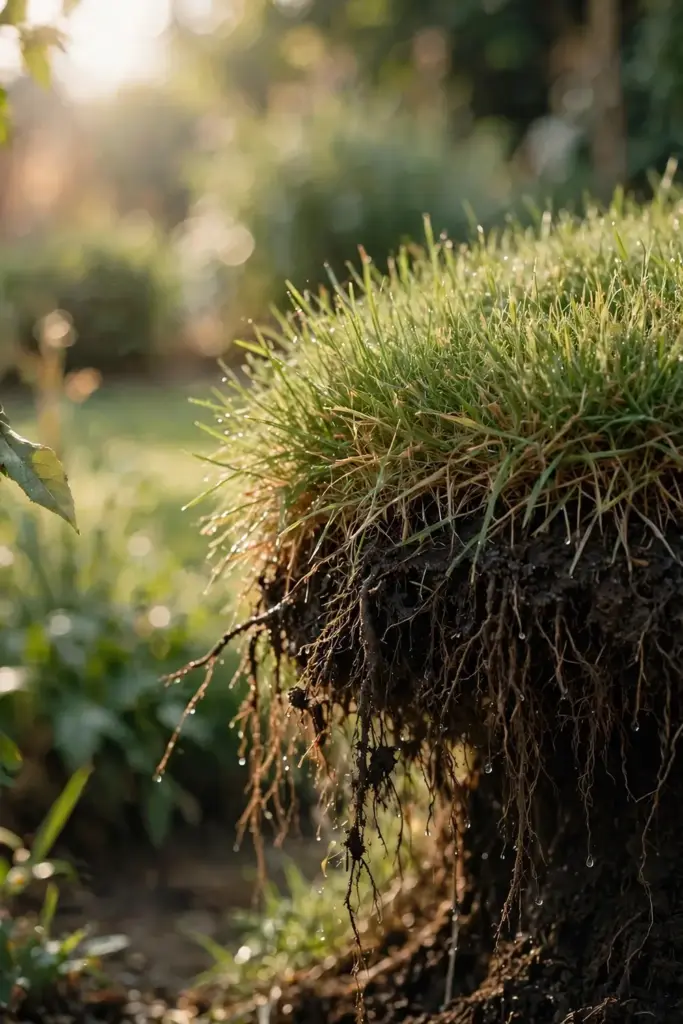
The University of Georgia gives the vigor rule: no nematicides can be used by homeowners or even by lawn-care professionals on established home lawns. Therefore, nematode management for home lawns must focus on good turf management practices. The University of Georgia guide for interpreting nematode assay results carries the home-lawn assay guidance, including the no-nematicide rule. The vigor is the management. The management is the vigor.
Raise the mowing height. A lawn mowed high grows deep roots. Deep roots tolerate nematode feeding. A lawn mowed short grows shallow roots. Shallow roots do not tolerate feeding. Mow at the recommended height for the species. Mow high in summer. The height is the tolerance. The scalping is the stress.
Water deeply and infrequently. A lawn watered deeply once a week grows deep roots. A lawn watered lightly every day grows shallow roots. Deep roots tolerate nematodes. Shallow roots do not. Water deeply. Water infrequently. Let the soil surface dry between waterings. The deep watering is the tolerance. The shallow watering is the stress.
Feed to a soil test, and never apply more than 1 pound of nitrogen per 1,000 square feet per application. Louisiana State University Extension gives the nitrogen limit: never more than 1 pound of nitrogen per 1,000 square feet per application. A lawn fed to its test result grows steady tissue. A lawn fed by guesswork gets either starved or pushed. Both extremes open the door. Test the soil, feed to the result, and stop when the result says stop.
Aerate compacted soil. A lawn with compacted soil holds water on the surface and starves the roots of air. Compacted soil grows weak grass and wet thatch. Weak grass catches every problem. Aeration punches holes through the compaction, lets air into the roots, and lets water drain. A lawn aerated in fall grows stronger grass in spring. A lawn left compacted grows weaker grass and more problems.
Step 5: Prevent Spread and Re-Import With Clean Sod and Soil
Prevent spread and re-import. Buy nematode-free sod and soil, ask the sod producer for a recent assay, and clean equipment between sites.
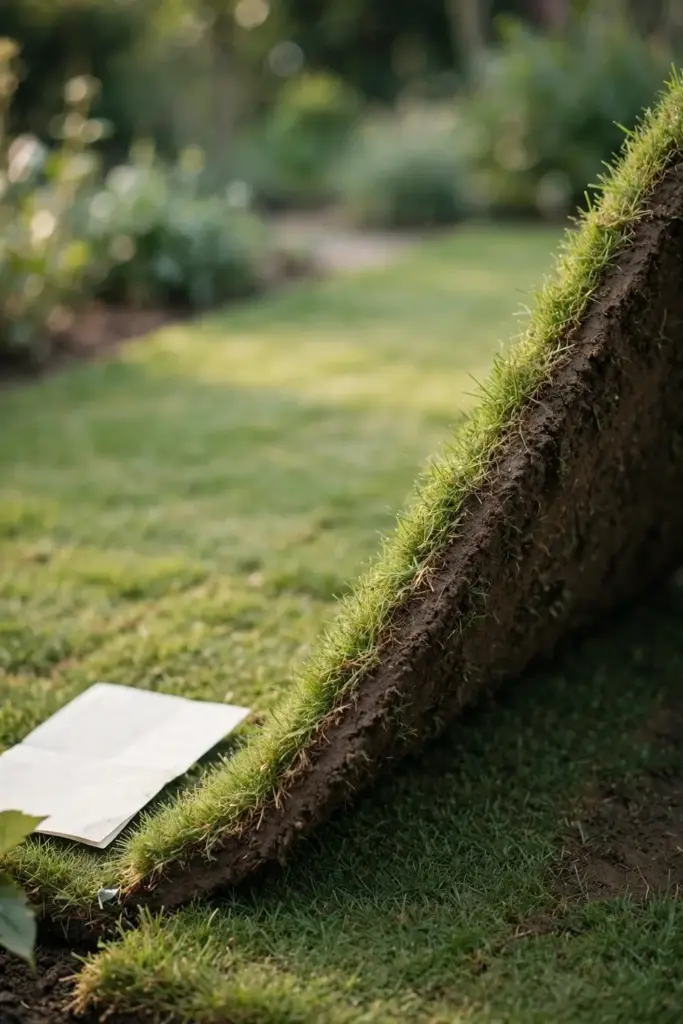
Arkansas Extension gives the sanitation rule: buy nematode-free sod and soil, and clean equipment between sites. A sod pallet that carries sheath nematode brings the nematode into a clean lawn. A soil delivery that carries sheath nematode brings the nematode into a clean lawn. A clean sod pallet starts clean. A clean soil delivery starts clean. The purchase is the gate. The gate is the prevention.
Ask the sod producer for a recent assay. A reputable sod producer tests its fields and shares the results. A sod producer that cannot share an assay earns no sale. The question costs nothing. The infected sod costs the lawn. The assay is the gate. The question is the key.
Clean equipment between sites. A mower that cuts an infested lawn and then cuts a clean lawn carries nematodes on its deck and wheels. A wheelbarrow that hauls infested soil and then hauls clean soil carries nematodes. Knock off soil. Wash the deck. Rinse the wheels. The cleaning takes minutes. The minutes save the clean lawn. The cleaning is the prevention.
Do not move soil from an infested lawn to a clean lawn. A wheelbarrow of soil from an infested lawn carries nematodes into the clean lawn. A shovelful of soil on a boot carries nematodes to the next lawn. The soil is the nematode’s home. Moving the soil moves the nematode. The soil stays. The nematode stays. The clean lawn stays clean.
Step 6: Solarize Bare Soil Before Planting a New Lawn
Solarize bare soil before planting a new lawn on infested ground. Clear plastic, 2 summer months, soil over 140 degrees Fahrenheit, plus compost before planting.
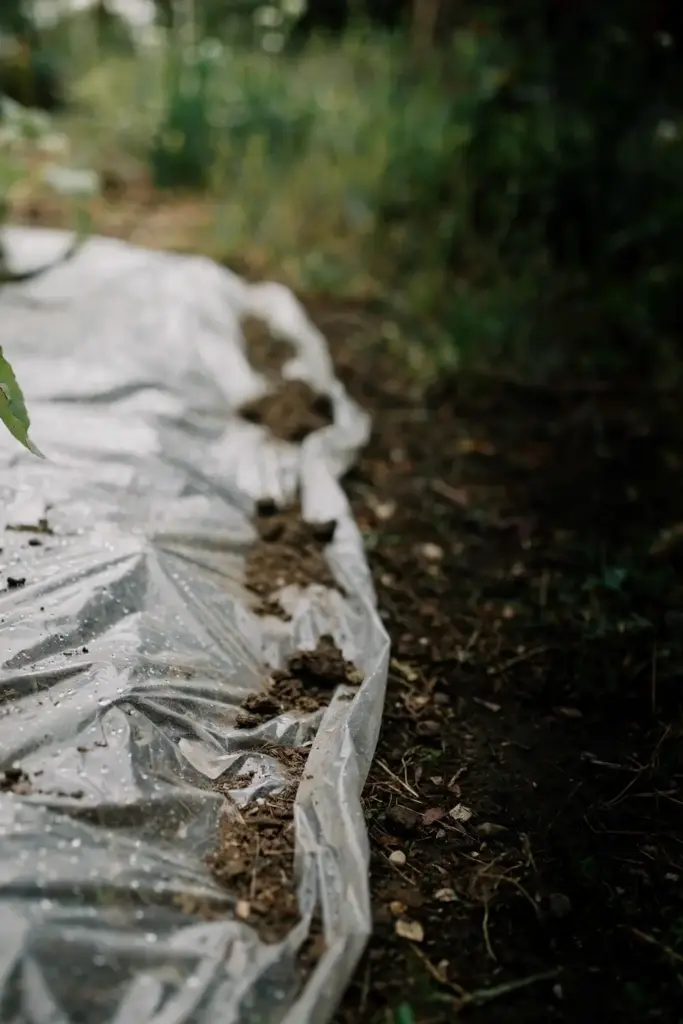
Arkansas Extension gives the solarization rule: solarize bare soil with clear plastic for 2 summer months, with soil over 140 degrees Fahrenheit, and incorporate compost before planting. Clear plastic over bare soil traps the sun’s heat. The soil temperature rises past 140 degrees. Nematodes in the heated soil die. The heat is the treatment. The plastic is the trap.
Solarize bare soil only. Solarization works on bare soil. Solarization does not work on an established lawn. A homeowner who lays plastic over a lawn kills the lawn. A homeowner who lays plastic over bare soil kills the nematodes. The bare soil is the condition. The established lawn is the exclusion. Do not solarize a lawn you want to keep.
Solarize in the hottest weeks of summer. A bed solarized in July heats past 140 degrees. A bed solarized in October heats weakly. The summer sun is the treatment. The autumn sun is the warm blanket. Time the solarization for the hottest window. The hottest window is the treatment. Two summer months is the duration. The duration matters. A week of plastic is a warm blanket. Two months of plastic is a treatment.
Incorporate compost before planting. A solarized bed is clean and empty. Compost feeds the soil life that suppresses nematodes. Compost improves the soil structure. Compost holds moisture. A bed with compost plants better than a bed without it. The compost is the soil life. The soil life is the suppression. The suppression is the prevention.
Step 7: Never Buy Golf-Course Nematicides and Avoid Transition Overseeding
Never buy golf-course nematicides. Avoid overseeding bermudagrass during transition, which feeds the population.
The University of Georgia gives the nematicide rule: no nematicides can be used by homeowners or even by lawn-care professionals on established home lawns. Golf-course nematicides are commercial products for golf courses, sod farms, and licensed applicators. A homeowner who buys a golf-course nematicide buys a product that is not for the home lawn. The purchase wastes money. The purchase risks the lawn. The purchase is not a treatment. The vigor is the treatment.
Do not present golf and commercial nematicide rates as home advice. The Louisiana State University tables list Basamid, Telone II, Divanem, abamectin, fluopyram, methyl bromide combinations, and Indemnify. Those products are commercial, golf, and sod-farm products. Some are restricted. Some are phased out. None belong on a home lawn. This article never lists them as options. The home lane is no nematicides. The vigor is the management.
Avoid overseeding bermudagrass during transition. The University of Florida IFAS Extension residential guide gives the rule: avoid overseeding bermudagrass during transition, which feeds the population. Transition is the period when bermudagrass greens up in spring or browns down in fall. An overseeding during transition feeds nematodes with fresh roots. The fresh roots feed the population. The population grows. The overseeding waits. The transition passes. The overseeding after transition feeds a lawn, not a nematode population.
Living With Sheath Nematode in the Lawn
Some risk stays. A lawn with a sheath history lives under prevention habits for as long as the lawn is in use.
Keep the lawn under the vigor routine through every season. The mowing height. The deep watering. The soil-test feeding. The aeration. The routine never expires. A lawn kept under the routine holds nematode populations low. A lawn left off the routine lets populations rebound. The routine is the management. The management never ends.
Do not present citrus sheath nematode as lawn content. Citrus sheath nematode, Hemicycliophora arenaria, is a citrus pest that causes root-tip galls. It is a different host and a different problem. This article covers lawn sheath nematode only. The citrus species gets one line and no more. The hosts differ. The article never mixes them.
Do not present vegetable seedling lab studies as home advice. One Oregon State University thesis studies Hemicycliophora similis on vegetable seedlings in the lab. A lab study is research, not home advice. The thesis stays in the lab. The home lawn follows the assay and the vigor routine. The research is the background. The routine is the action.
General bacterial blight care follows the same order: cut, clean, destroy, then keep the canopy dry. The guide to bacterial blight simple solutions covers that order for bacterial blight problems across the garden. The pathogens differ. The habits do not.
Do not re-sod a lawn with a nematode history without testing, solarizing, and clean sod. The nematodes stay. The soil stays. The compaction stays. A new sod in the same soil faces the same season with the same disadvantage. Fix the soil first: test it, solarize it, feed it, and give the new sod clean soil from the day it goes in.
Frequently Asked Questions
Sheath nematode rarely damages a home lawn. The pathogenicity rating puts sheath nematode at 3 out of 10, against sting nematode at 10 out of 10. Arkansas Extension sets the sheath threshold at 200 to 400 nematodes, against a sting threshold of 10 to 25. The University of Georgia does not even include sheath in its home-lawn assay table. Sheath nematode is often present without causing damage. Most thinning comes from drought, disease, or deficiency.
Collect a proper nematode assay sample: 15 to 20 cores, 6 to 8 inches deep, 1 pint of soil plus roots, kept at room temperature, submitted promptly. Louisiana State University Extension gives the sampling rule. Submit the sample to the Extension nematode assay lab. Ask the lab for the genus and the count per 100 cubic centimeters. Compare the count to the thresholds. The assay is the diagnosis. The symptoms are not.
Never buy nematicide for sheath nematode on a home lawn. The University of Georgia states that no nematicides can be used by homeowners or even by lawn-care professionals on established home lawns. Golf-course nematicides are commercial products for golf courses, sod farms, and licensed applicators. A homeowner who buys one buys a product that is not for the home lawn. The vigor routine is the management. The chemical bottle is not part of the home routine.
Solarization works on bare soil, not on an established lawn. Arkansas Extension gives the rule: solarize bare soil with clear plastic for 2 summer months, with soil over 140 degrees Fahrenheit. A homeowner who lays plastic over a lawn kills the lawn. A homeowner who lays plastic over bare soil kills the nematodes. Solarize before planting a new lawn on infested ground. Do not solarize a lawn you want to keep. The bare soil is the condition.
Sheath nematode and beneficial nematodes are opposite animals. Sheath nematode is a plant-parasitic nematode that feeds on roots. Beneficial nematodes are insect-killing roundworms sold for lawns, applied to kill grubs and leatherjackets. A beneficial nematode is a predator. A plant-parasitic nematode is a pest. The two share the word nematode. They share nothing else. A homeowner who buys beneficial nematodes buys a predator. A homeowner who finds sheath nematodes finds a pest.
Do not overseed bermudagrass during transition. The University of Florida IFAS Extension residential guide gives the rule: avoid overseeding bermudagrass during transition, which feeds the nematode population. Transition is the period when bermudagrass greens up in spring or browns down in fall. An overseeding during transition feeds nematodes with fresh roots. The overseeding waits. The transition passes. The overseeding after transition feeds a lawn, not a nematode population.
Where to Go From Here
Start with the assay. Collect a proper sample and submit it to the Extension nematode assay lab.

The order is never diagnose from symptoms, collect a proper sample, read the assay honestly, build vigor, prevent spread, solarize bare soil, and never buy golf-course nematicides. One next action beats ten good intentions. Test the lawn. Read the count. The lawn stays healthy because the homeowner tested first.