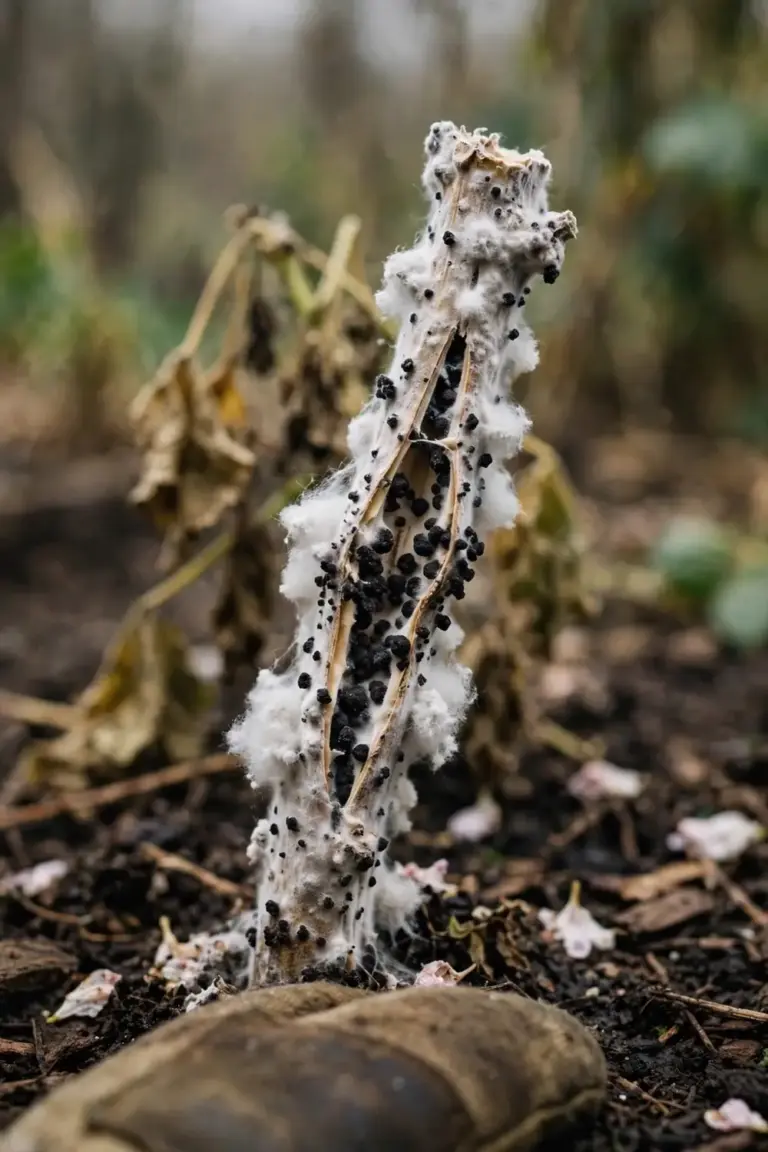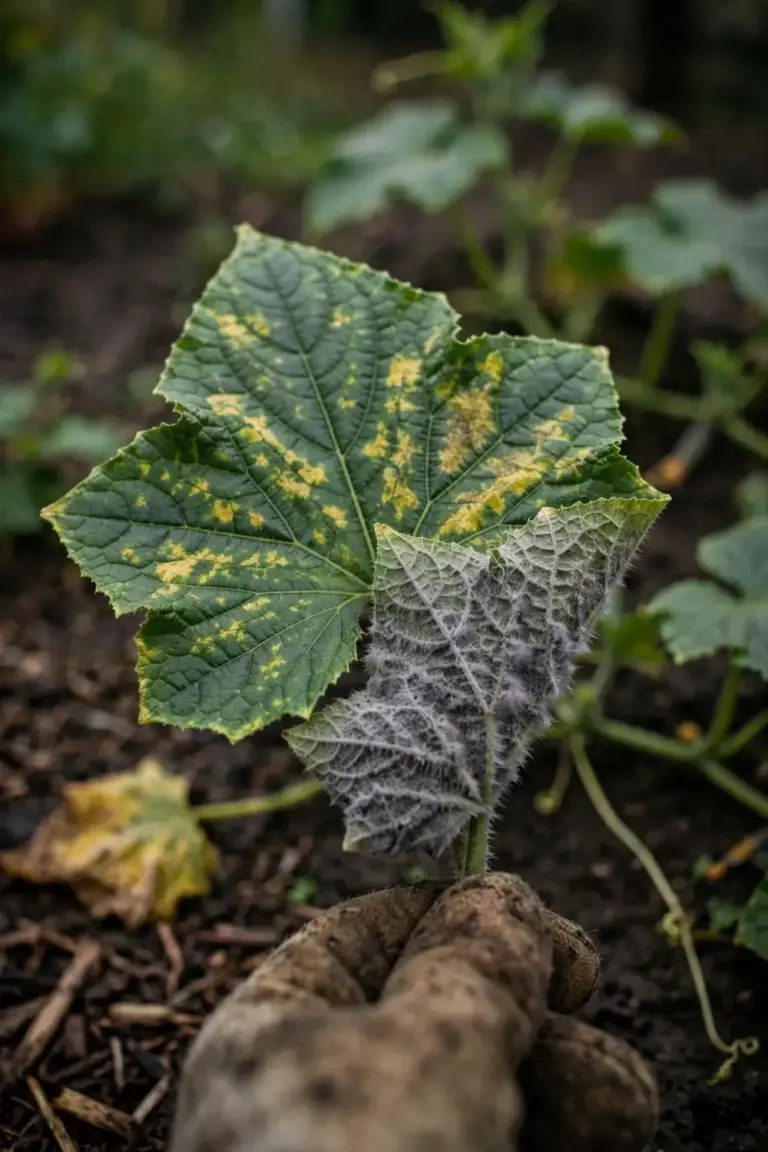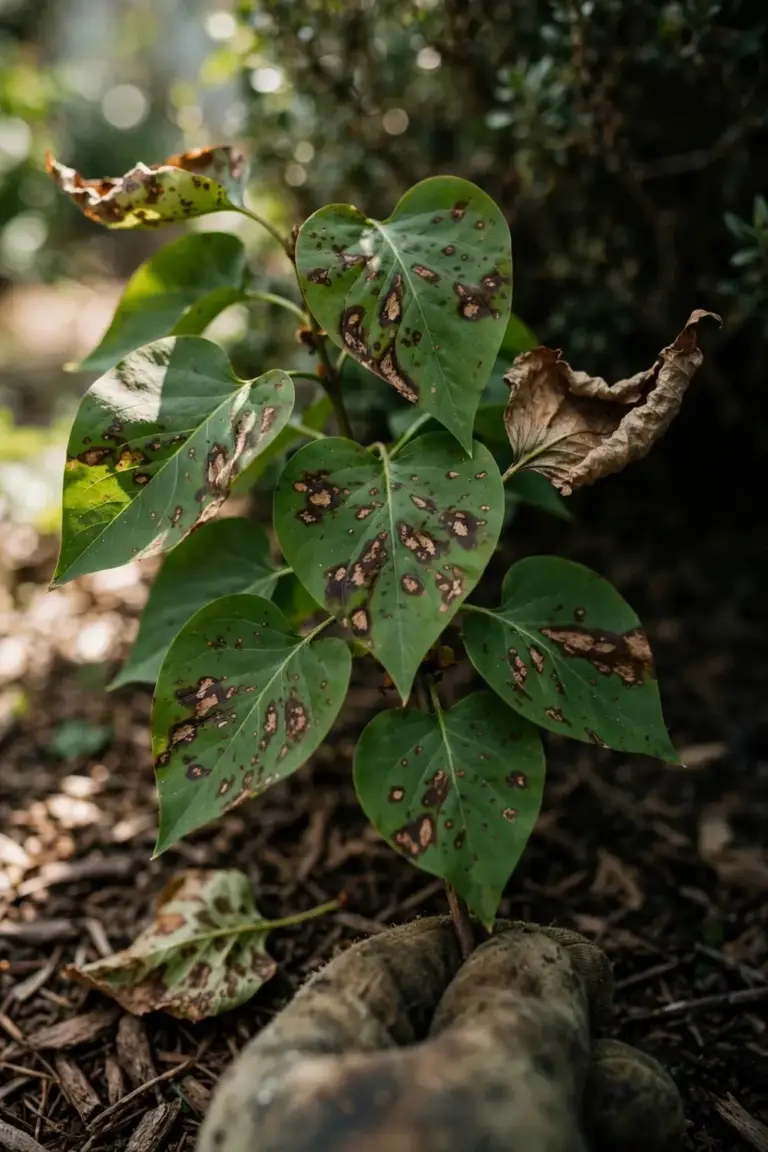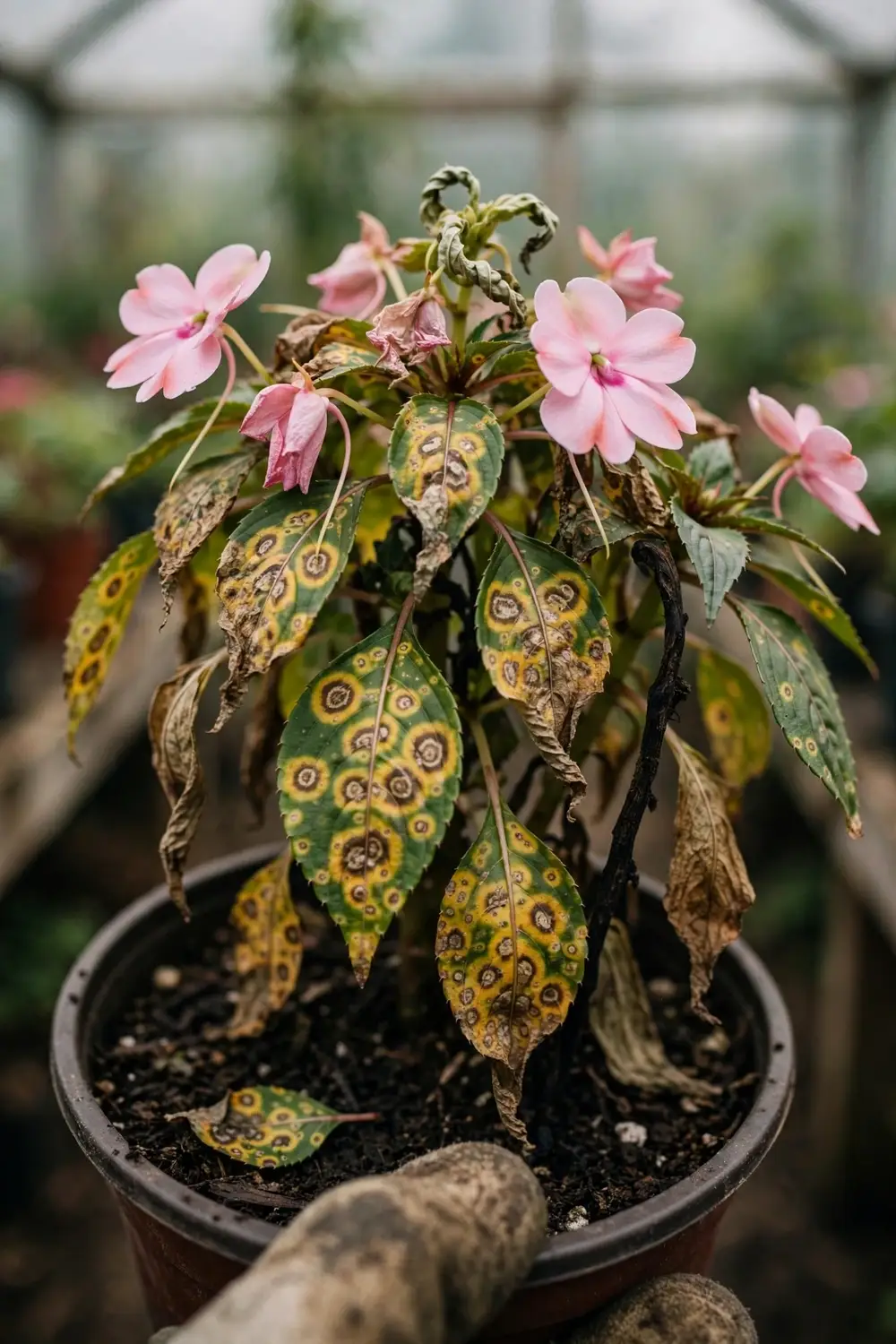

Impatiens necrotic spot virus has no cure. Once the virus enters a plant, the plant stays infected for life, and western flower thrips carry the virus from plant to plant for the rest of their lives. The 9 strategies below protect the ornamentals around the sick plant, starting with the honest discard decision that stops the spread.
The virus hides in plain sight. Symptoms vary by host, by plant age, and by season, and some infected plants show nothing at all while they still pass the virus on. That gap between infection and visible symptoms is why prevention beats treatment in every home greenhouse, sunroom, and patio collection.
The rest of this page is 9 moves, from the discard call to clean starts next season. Read the identification sections first if the plant still stands. Start at Step 1 if the plant already shows ringspots and stunting.
What Impatiens Necrotic Spot Virus Actually Is
Impatiens necrotic spot virus is a plant virus in the tospovirus group. The full name is Impatiens necrotic spot virus, and the short form is INSV. INSV spreads through feeding by western flower thrips, and INSV also spreads when a gardener takes cuttings from an infected plant.
The virus infects a huge host list. More than 600 plant species are susceptible to INSV, according to the University of Massachusetts Extension fact sheet on INSV and tomato spotted wilt virus. Most of those hosts are ornamentals. A few are vegetables and weeds. The breadth of that host list is why one sick impatiens can threaten a whole mixed collection.
INSV was once treated as a strain of tomato spotted wilt virus. Genetic work separated the two viruses. INSV kept its own name and its own ornamental focus. Tomato spotted wilt virus kept the broader host range and the vegetable focus. The two viruses still look alike in the garden, and the differential section below separates them.
The virus lives inside the plant. INSV moves systemically through infected tissue, so pruning off a spotted leaf does not remove the infection. The plant may look better for a week after a hard prune. The virus remains. That persistence is the fact that drives every strategy below.
How to Identify Impatiens Necrotic Spot Virus on Leaves and Stems
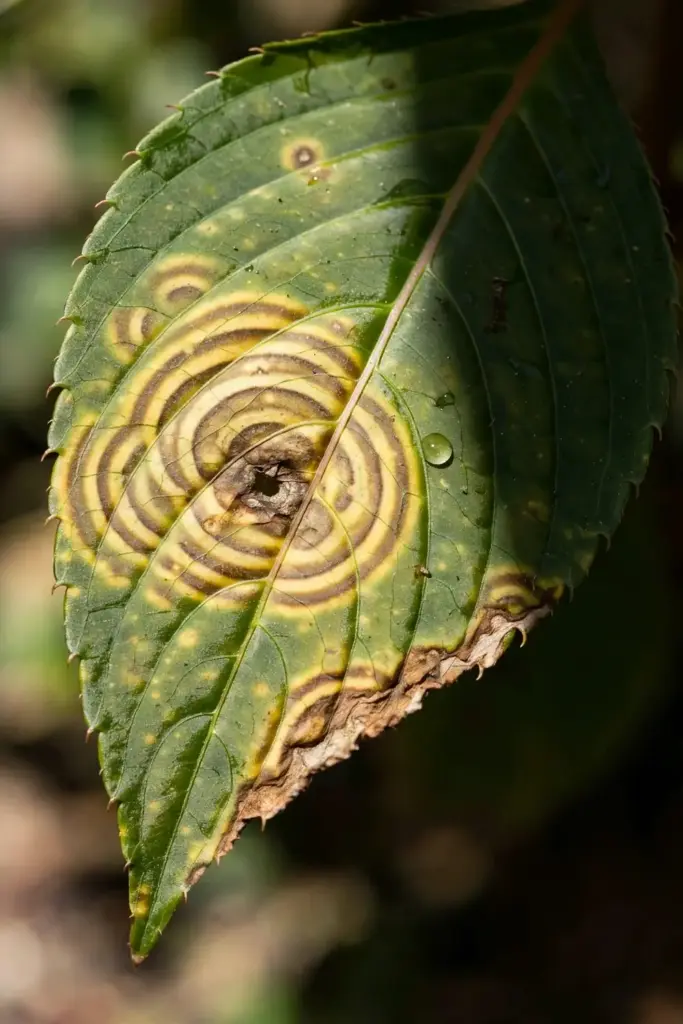
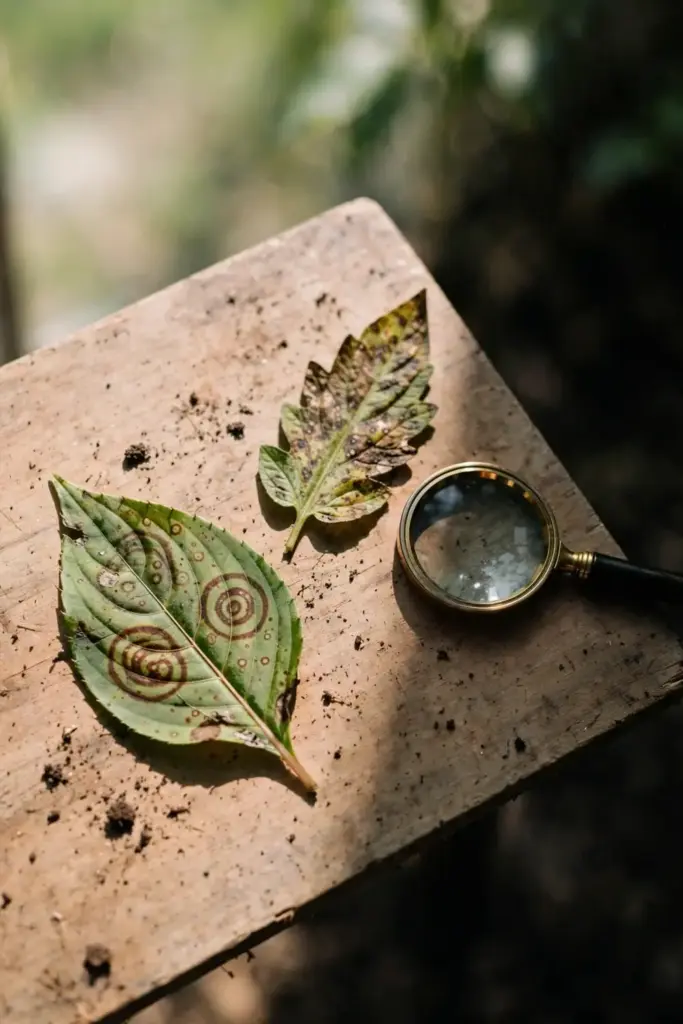
Impatiens necrotic spot virus shows ringspots first on many hosts. Look for yellow or brown rings, arcs, and line patterns on leaves. Look for dark spots that sink into the leaf surface like chicken pox marks. Penn State Extension describes the range as wilting, stem death, stunting, yellowing, poor flowering, sunken spots, etches, and ringspots on leaves. No single leaf mark proves the virus. The pattern across the plant is what raises the alarm.
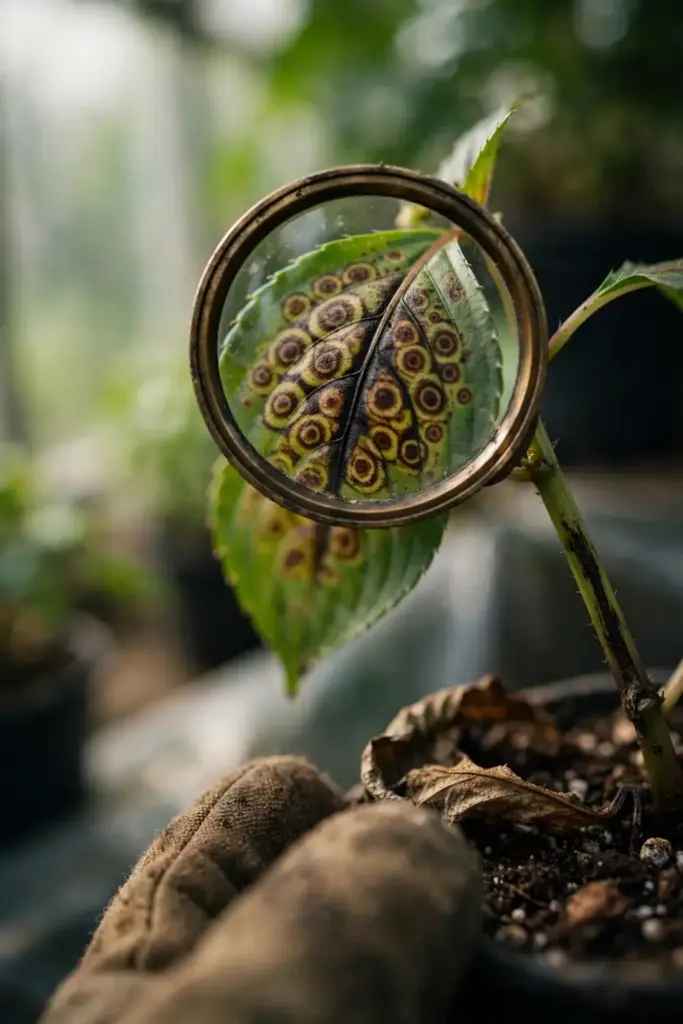
Veins and stems carry the next clues, and they separate a virus from a nutrition problem. Leaf veins turn brown or black on some hosts. Stems show dark streaks, bands, or blackened sections. New growth comes in small, twisted, and distorted. A plant infected young shows worse symptoms than a plant infected late, and the University of Wisconsin Extension notes that young infections run more severe. Check the growing tip, because a dead or blackened tip on a plant with ringspotted leaves points hard toward a virus.
Color break in flowers is a quiet signal. Petals show streaks of pale color where the pigment failed. Flowers open small, misshapen, or not at all. Poor flowering on a plant with spotted leaves deserves a virus test, even when the plant otherwise looks vigorous. Flower symptoms alone can pass for nutrition trouble. Flower symptoms plus ringspots cannot.
Asymptomatic carriers break every visual rule. Some infected plants show no symptoms at all. Those plants still carry INSV and still feed the virus to thrips. A clean-looking plant next to a sick one is a suspect, never a proven clean plant. Testing settles the question. Eyes alone do not.
How to Identify Impatiens Necrotic Spot Virus on Flowers and Growing Tips
Impatiens necrotic spot virus attacks the growing tip on impatiens. New leaves emerge small and distorted. Stems turn black and firm. Growth stalls. The University of Massachusetts Extension describes a garden impatiens case with leaf spots, poor growth, distorted small new growth, and black firm stems that tested positive for INSV with an on-site kit. Black stems plus stunting on impatiens is a strong field signal.
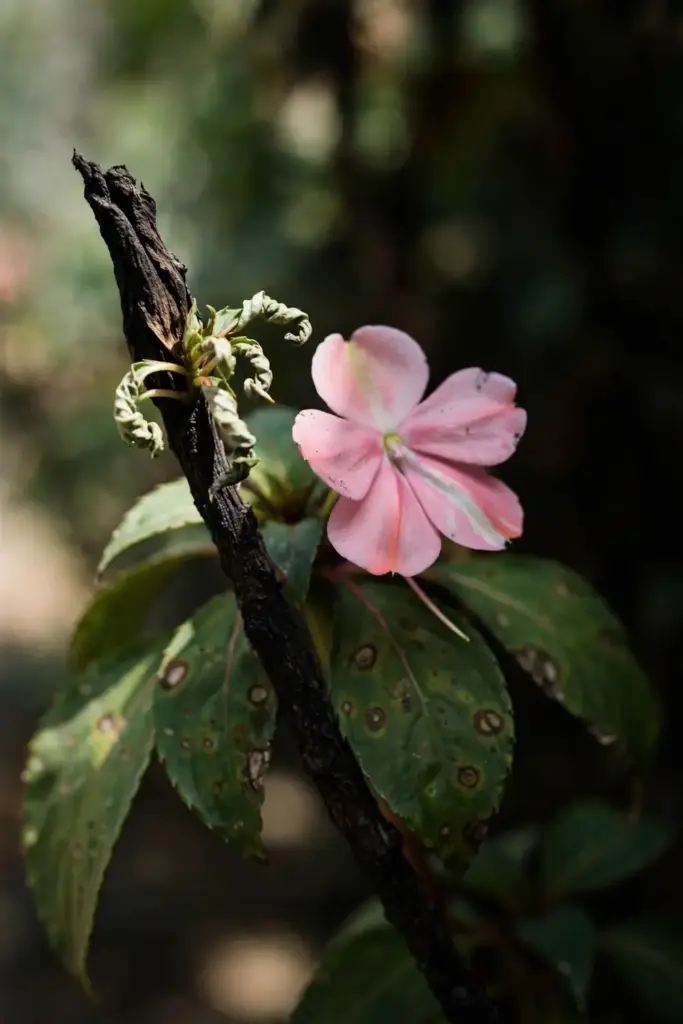
Gloxinia shows a different face. Young gloxinia plants develop dead tissue in the center leaves and then collapse. Older gloxinia plants develop necrotic ringspots on the foliage, with dead tissue along the veins. The University of Massachusetts Extension records both patterns. A gloxinia that collapses from the center outward fits INSV. A gloxinia that wilts from the base upward fits something else.
Cineraria and begonia add their own signatures. Cineraria develops pale ringspots or mottling on the upper leaf surface, with purple to black lesions on the veins underneath. Reiger begonias develop necrotic ringspots, mosaic patterns, and dead leaf veins. The University of Massachusetts Extension records both sets of marks. Leaf vein death plus ringspots is the shared thread across these hosts.
Exacum carries stem cankers. The virus causes tan to dark brown cankers on exacum stems. Those cankers look like physical injury. The difference is the company they keep. Cankers plus ringspots plus stunting on exacum point toward INSV. Cankers alone, on a plant with clean leaves, point toward mechanical damage or another pathogen.
Cyclamen plays the long game. Cyclamen can show no symptoms for a long stretch after infection, and the University of Massachusetts Extension puts that silent stretch at two months in some cases. A cyclamen bought healthy can carry INSV for weeks before the first ringspot appears. That delay is why quarantine matters more than inspection alone. Inspection catches visible symptoms. Quarantine catches the invisible window.
Which Ornamentals Get Hit Hardest by Impatiens Necrotic Spot Virus
Impatiens sits at the top of the risk list. Garden impatiens and New Guinea impatiens both host INSV, and the virus takes its common name from the necrotic spots on impatiens. A flat of impatiens with ringspots, blackened stems, and stunted new growth is the classic INSV picture. Growing impatiens from seed starts clean, since seed does not carry the virus, and that clean start is the safest way to rebuild an impatiens bed after an outbreak.
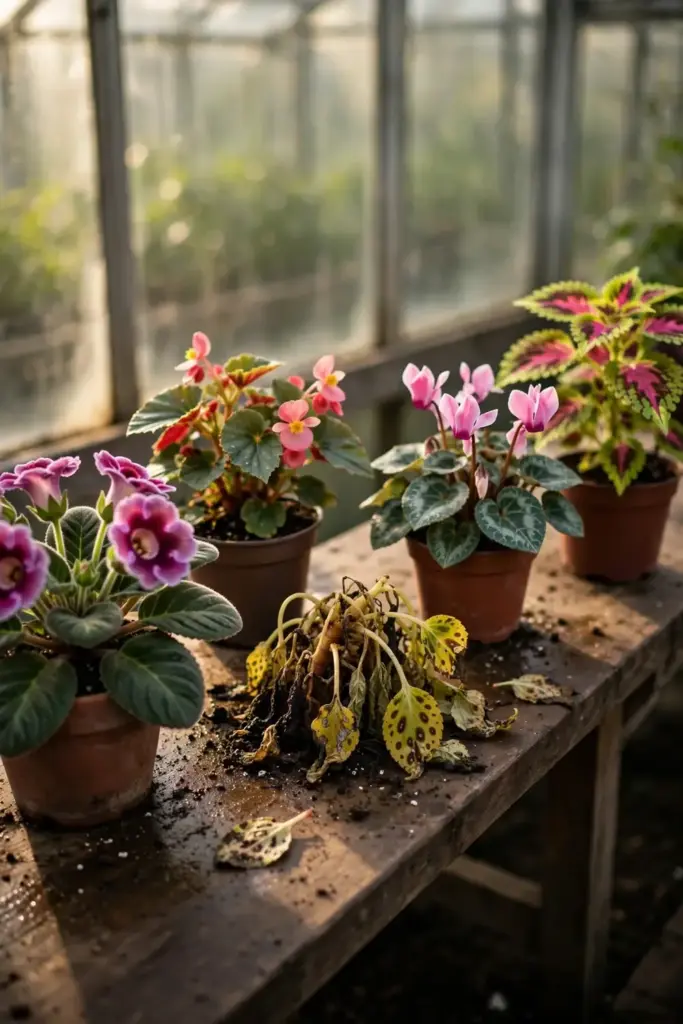
Gloxinia, cineraria, cyclamen, exacum, petunia, begonia, primrose, and ranunculus follow close behind. The University of Wisconsin Extension lists all eight as ornamental crops affected by impatiens necrotic spot. These are the greenhouse and windowsill staples. A mixed windowsill with three of them in one tray is a single outbreak waiting for one thrips generation.
Coleus shows ringspots with unusual clarity. The ring pattern on a coleus leaf reads like a textbook plate, with concentric rings and pale centers. Coleus also grows fast, so symptoms appear fast. A coleus cutting taken from an infected mother carries the virus straight into the new pot. Never propagate coleus from a plant with ringspots, even when the cutting itself looks clean.
Vegetables sit lower on the home-garden risk list for INSV. Cucumber, tomato, and pepper can host the virus, and the University of Wisconsin Extension names all three as susceptible vegetables. The practical risk runs the other way. A gardener who grows ornamental bedding plants and vegetable transplants in one greenhouse gives thrips a bridge between the two groups. Keep the groups apart. The separation costs nothing and removes one transmission route.
Weeds carry the virus silently. Chickweed, jewelweed, oxalis, and gill-over-the-ground host INSV, and the University of Wisconsin Extension names all four as weed hosts. Those weeds grow in greenhouse corners, under benches, and along the outside walls. A weed-free greenhouse is virus work, not tidiness. Step 7 returns to the weed list with a pull schedule.
Impatiens Necrotic Spot Virus vs Tomato Spotted Wilt Virus
Symptoms alone cannot separate the two viruses. INSV and tomato spotted wilt virus are closely related tospoviruses, and their leaf marks, ringspots, stunting, and wilting overlap completely. UC IPM states that symptoms of INSV are similar to those caused by tomato spotted wilt virus, and that INSV has a host range that consists mostly of ornamentals and is not as broad as that of tomato spotted wilt virus. A lab test or an on-site test kit names the virus. Eyes do not.
| Clue | Impatiens Necrotic Spot Virus | Tomato Spotted Wilt Virus |
|---|---|---|
| Full name | Impatiens necrotic spot virus (INSV) | Tomato spotted wilt virus (TSWV) |
| Virus group | Tospovirus | Tospovirus |
| Vector | Western flower thrips, plus onion thrips | Western flower thrips, plus six more thrips species |
| Host range | More than 600 plant species, mostly ornamentals | More than 800 plant species, some counts reach 1000 |
| Home-garden center | Ornamentals, greenhouse crops, houseplants | Tomatoes, peppers, vegetables, plus ornamentals |
| Signature host | Impatiens, with necrotic ringspots | Tomato, with spotting followed by wilt |
| Fruit marks | Spots and rings on pepper and tomato fruit | Spots, blotches, and rings on tomato and pepper fruit |
| Symptom difference | None reliable in the field | None reliable in the field |
| Test needed | Yes, lab or on-site kit | Yes, lab or on-site kit |
| Cure | None | None |
| Best defense | Thrips control, clean stock, quarantine | Thrips control, clean stock, resistant varieties where available |
Host range splits the two viruses first. INSV covers more than 600 plant species, and the University of Massachusetts Extension gives that figure. Tomato spotted wilt virus covers more than 800 species, with some counts reaching 1000, and the University of Massachusetts Extension gives both figures. A virus on impatiens, gloxinia, or cyclamen leans INSV. A virus hammering tomatoes and peppers in the open field leans tomato spotted wilt virus. Leans, never proves.
Setting splits them second. INSV dominates greenhouse ornamentals, houseplants, and bedding plants. Tomato spotted wilt virus dominates field vegetables and hits ornamentals as a second target. A home gardener with a sick impatiens on a windowsill faces INSV. A gardener with a sick tomato in an open bed faces tomato spotted wilt virus. The fence between this article and the companion Tomato Spotted Wilt Virus article follows that split. Ornamentals and greenhouses live here. Tomatoes and home vegetables live there.
Why Western Flower Thrips Make Impatiens Necrotic Spot Virus So Hard to Stop
Western flower thrips move the virus. The insect is Frankliniella occidentalis, a tiny slender insect that hides in buds, flowers, and leaf folds. Thrips feed by puncturing plant cells and sucking out the contents. Feeding leaves silvery scars on leaves and petals. Those scars are the visible trail of the vector.
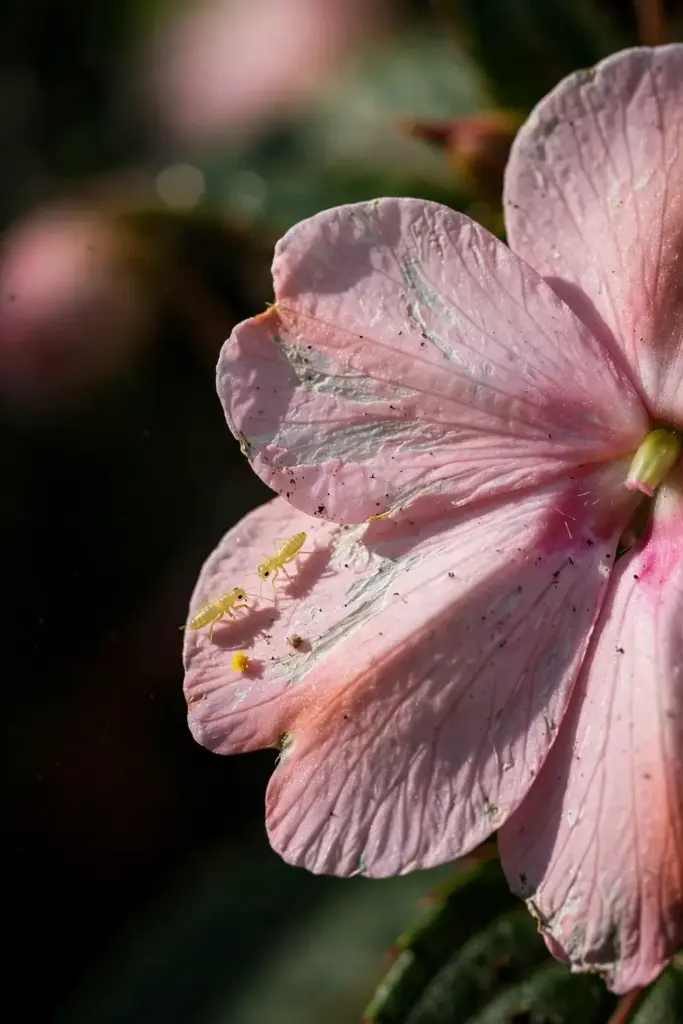
Only larvae acquire the virus. Thrips pick up INSV by feeding on an infected plant during the larval stages, and the University of Massachusetts Extension states that thrips acquire the viruses only as larvae. Adults cannot acquire INSV from an infected plant. Once a larva acquires the virus, the thrips carries it for life. The virus passes into the saliva, and feeding adults inject it into every new plant they probe.
Timing makes the vector dangerous. Thrips acquire INSV after feeding for 30 minutes on an infected plant, and the University of Massachusetts Extension gives that figure. After a latent period of 3 to 18 days, the thrips can transmit the virus, and the University of Massachusetts Extension gives that range. Transmission itself takes 15 to 30 minutes of feeding, and the University of Wisconsin Extension gives that window. A single afternoon of thrips traffic can seed a whole bench.
The thrips life cycle hides the next generation. Eggs sit inside plant tissue, protected until they hatch and emerge 3 to 4 days later, and Penn State Extension gives that span. Larvae feed, hide among buds and flower parts, then drop to the soil or leaf litter to pupate. Adults emerge from the soil 2 to 5 days later, and Penn State Extension gives that span. Adults live 30 to 45 days and transmit the virus throughout their lives, and Penn State Extension gives that span. Sprays that hit adults miss the eggs inside the tissue and the pupae in the soil. That gap is why one spray never finishes the job.
Overlapping generations keep the virus moving. Adults do not pass the virus to their eggs, and the University of Massachusetts Extension states that fact. Each new larval generation must feed on an infected plant to acquire INSV. Overlapping generations in a warm greenhouse mean fresh larvae, fresh acquisitions, and continuous transmission all year. Break the chain at the infected plant, and the next generation finds nothing to acquire.
What Makes Impatiens Necrotic Spot Virus Worse in a Home Garden
Mixed collections raise the risk. A sunroom with impatiens, gloxinia, begonia, and cyclamen in one tray gives thrips a buffet of susceptible hosts within crawling distance. One infected plant feeds the thrips that infect the neighbors. A collection with one susceptible genus per bench, separated by empty space, slows that crawl. Separation is not a cure. Separation buys time to spot the first ringspot.
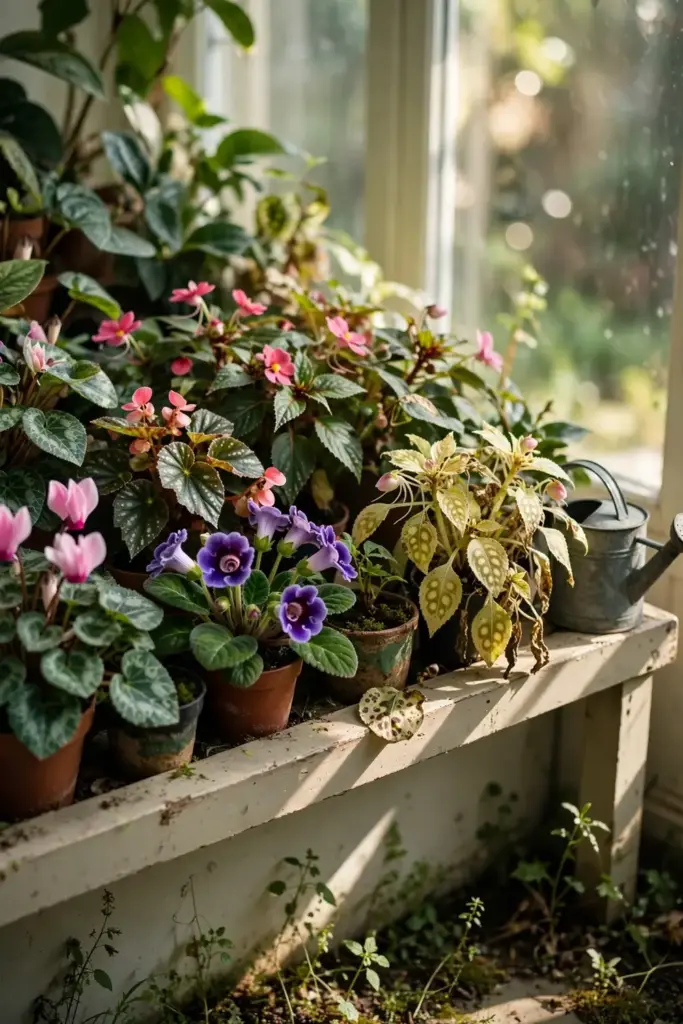
Warm indoor growing keeps thrips active all year. Greenhouses, sunrooms, and conservatories hold the temperatures thrips need through winter. Outdoor thrips pressure drops with cold weather. Indoor pressure never drops. A houseplant collection under lights in January faces the same vector pressure as a greenhouse in June. Year-round vigilance is the price of year-round growing.
Cuttings multiply the virus faster than thrips do. Taking vegetative cuttings from an infected plant copies the virus into every new plant, and Penn State Extension warns that infected plants must never be vegetatively propagated. A single infected mother can seed dozens of infected cuttings before the first ringspot appears on the mother. Cuttings from a plant with any virus suspicion go in the trash, never in the propagation tray.
Bargain plants and plant swaps import the virus. A plant with no symptoms can carry INSV for weeks, and the silent window on cyclamen reaches two months in some cases, according to the University of Massachusetts Extension. A swap plant that looks perfect today can show ringspots in three weeks. Quarantine every incoming plant, regardless of source. Trust the isolation period, never the first impression.
Weeds and leftover plants bridge the seasons. Greenhouse weeds host INSV without symptoms, and leftover stock plants carry the virus from one crop to the next. Penn State Extension urges growers to eliminate all weeds inside the greenhouse and near the building exterior, and to remove every plant that is not being carefully tended. A clean bench between crops is the cheapest virus control available.
Step 1: Decide Whether to Save or Discard the Infected Plant
Discard the plant. That is the whole step, and the honesty matters more than the action. Infected plants cannot be cured, and the University of Wisconsin Extension states that plants remain infected indefinitely after infection. No spray, no prune, and no fertilizer removes INSV from a plant. Every day a sick plant stays on the bench, thrips feed on it and carry the virus to healthy neighbors.
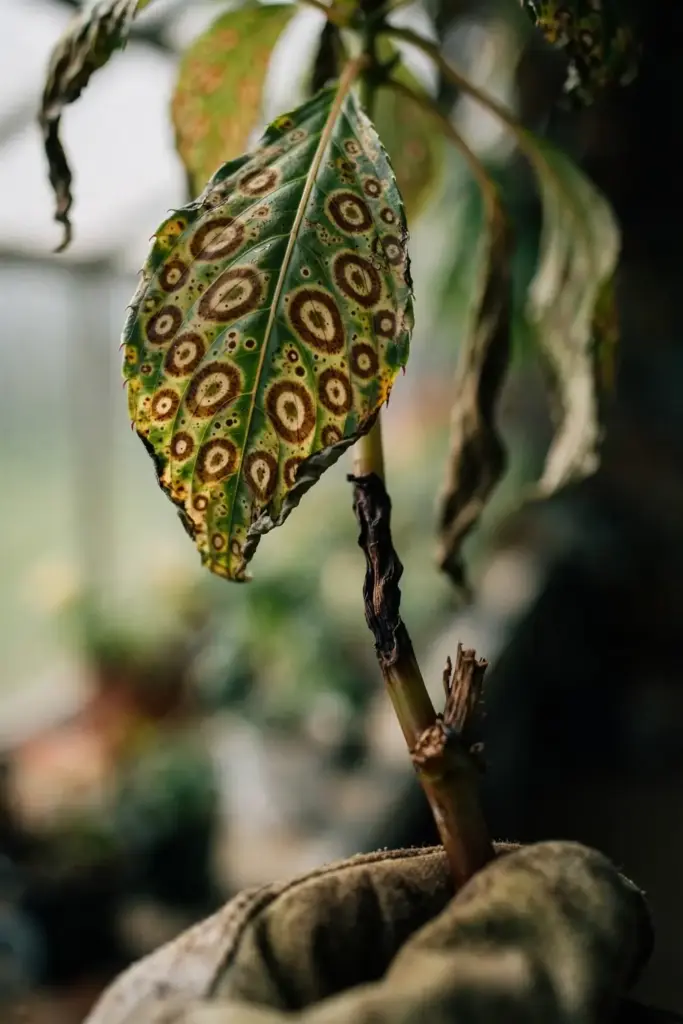
Test before you toss when the diagnosis is uncertain. A ringspot that might be INSV and might be nutrition trouble deserves an on-site test kit or a sample sent to a plant disease clinic. The University of Massachusetts Extension notes that on-site test kits can detect tospoviruses, with separate tests for INSV and tomato spotted wilt virus. Sample the tissue that shows symptoms, including green or pale tissue next to the dead area. A negative test on the wrong tissue proves nothing. Sample the symptomatic edge.
Keep one exception. A rare or irreplaceable plant with a faint single ringspot and no thrips in the room deserves isolation and a test, not instant disposal. Isolate the plant in a separate room. Test it. Discard it on a positive result. The exception is a delay for evidence, never a reprieve. A positive test ends the debate.
Count the cost of keeping the plant against the cost of losing the whole bench to thrips traffic. A sick impatiens costs a few dollars to replace. A bench of infected gloxinia, begonia, and cyclamen costs the whole collection. The discard decision protects every plant the sick one would have infected next. Pull the plant, bag it, and move to Step 2.
Step 2: Rogue the Infected Plant Without Spreading the Virus
Bag the plant before you move it anywhere, because an open sick plant shakes thrips loose across the room. Slip a plastic bag over the whole plant, tie it at the base, and lift the bagged plant out of the pot. Bagging first traps the thrips sitting on the plant. Carrying an open sick plant across the room shakes thrips loose onto every bench along the path. The bag is the cheapest quarantine tool in the house.
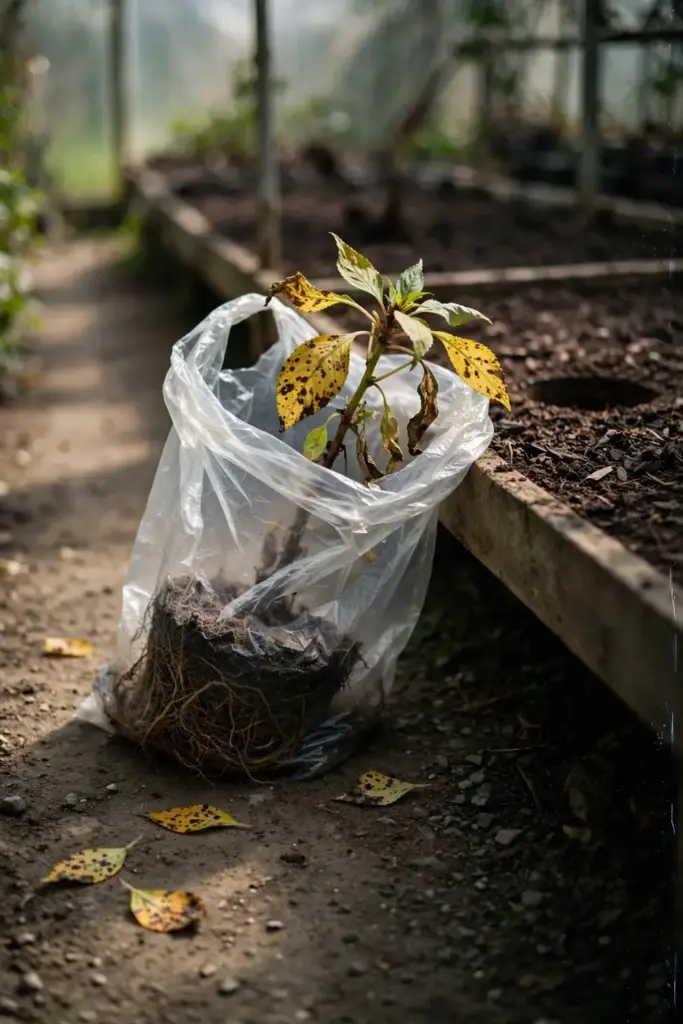
Destroy the bagged plant. The University of Wisconsin Extension lists burning where local rules allow, burying, or composting as disposal routes. Home compost piles rarely hold the sustained heat that a municipal facility reaches, so municipal waste is the safer choice for a home gardener. Never drop a sick plant in the garden waste pile beside the greenhouse. That pile sits within thrips range of the clean plants.
Clean the empty spot. Remove fallen leaves and petals from the bench. Wipe the bench surface and the pot with soapy water, then rinse the pot before it holds another plant. Wash hands and tools after handling the sick plant. INSV does not travel on hands or tools the way fungi do. Thrips ride on clothing and pots, and fallen debris shelters pupae. A clean bench breaks the local thrips cycle.
Check the neighbors the same day, while the removed plant is still fresh in your mind and the bench is still open. Inspect every plant within arm’s reach of the removed plant, top and bottom of every leaf, inside every open flower. Look for ringspots, vein death, and thrips scars. Mark any suspect plant with a tag, isolate it, and give the neighbors a second inspection in one week. Thrips move fast, and one inspection misses the plant that was infected yesterday.
Step 3: Quarantine Every New Plant Before It Joins the Collection
Isolate every incoming plant. New purchases, swap plants, gift plants, and plants returning from outdoors all enter quarantine. The University of Wisconsin Extension directs growers to inspect any plants entering a greenhouse for viral symptoms and thrips, and to isolate new plants until they are determined to be thrips-free and virus-free. Quarantine is a room, a shelf, or a sealed clear box away from the main collection. The barrier matters, not the furniture.
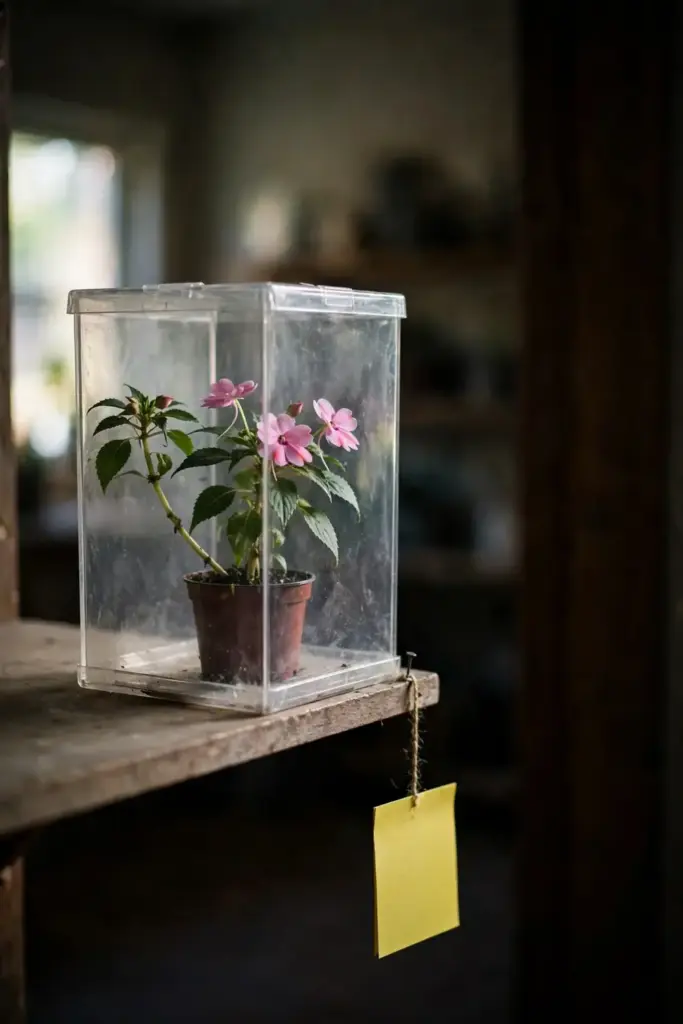
Hold the plant for at least two weeks. Two weeks covers the visible symptom window for most hosts, and it lets hidden thrips emerge and show themselves on sticky cards. Cyclamen can stay silent for a longer stretch, so a cyclamen purchase deserves a longer hold. Watch the plant daily. Look at new growth first, since new growth shows distortion earliest. Look inside flowers, since thrips hide there.
Inspect with a hand lens. Thrips are tiny, and they hide in buds and leaf folds. Penn State Extension advises checking white and yellow flowers first, tapping the plant with a pencil over white paper to catch falling insects, and using a hand lens for the inspection. White paper turns a near-invisible insect into a visible speck. A hand lens turns the speck into an identification.
Refuse the plant that fails quarantine. A plant that shows ringspots, vein death, or live thrips during quarantine never joins the collection. Return it to the seller when a return is possible, and tell the seller why. Discard it when a return is not possible. One refused plant saves the whole collection. One admitted plant risks it.
Step 4: Monitor Thrips With Sticky Cards Every Week
Hang sticky cards at crop height. Yellow, white, or blue cards all catch thrips, and the University of Wisconsin Extension lists all three colors for monitoring in growing areas and near entry points. Blue cards target thrips with unusual precision, while yellow cards catch a broader insect mix. Hang cards just above the canopy, where flying thrips travel. Cards on the floor catch nothing.
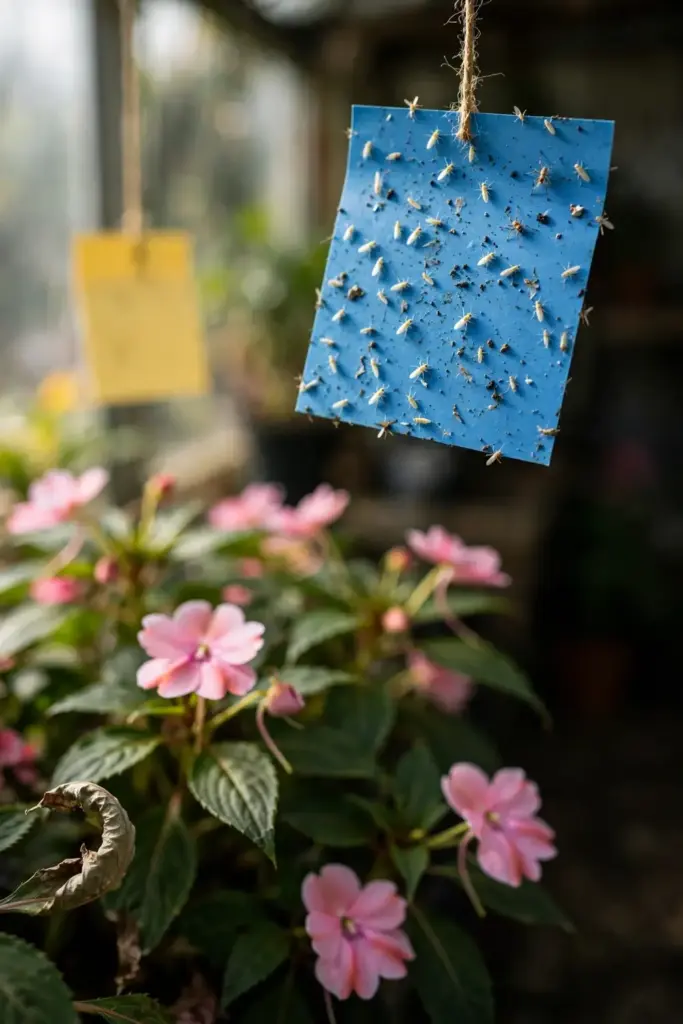
Use enough cards. Penn State Extension recommends 1 to 3 cards per 1000 square feet, and notes that placement matters more than card size. A home greenhouse needs one card per bench, plus one card near each door and vent. A windowsill collection needs one card per shelf. Place cards near vents, doors, and other openings first, since those are the entry points.
Read the cards every week. Count the thrips on each card. Write the count down with the date. Penn State Extension advises recording the number of thrips trapped each week to judge whether the population is rising or falling. A rising count means the control steps need to tighten. A falling count means the plan works. Memory fades. The notebook does not.
Change the cards regularly. Dust, debris, and a full catch surface cut the catch rate. Cover used cards in one layer of clear plastic wrap when you remove them, as Penn State Extension advises, so the trapped insects stay on the card for identification. Fresh cards catch fresh thrips. Old cards catch dust.
Step 5: Cut Thrips Numbers With Traps, Water, and Targeted Sprays
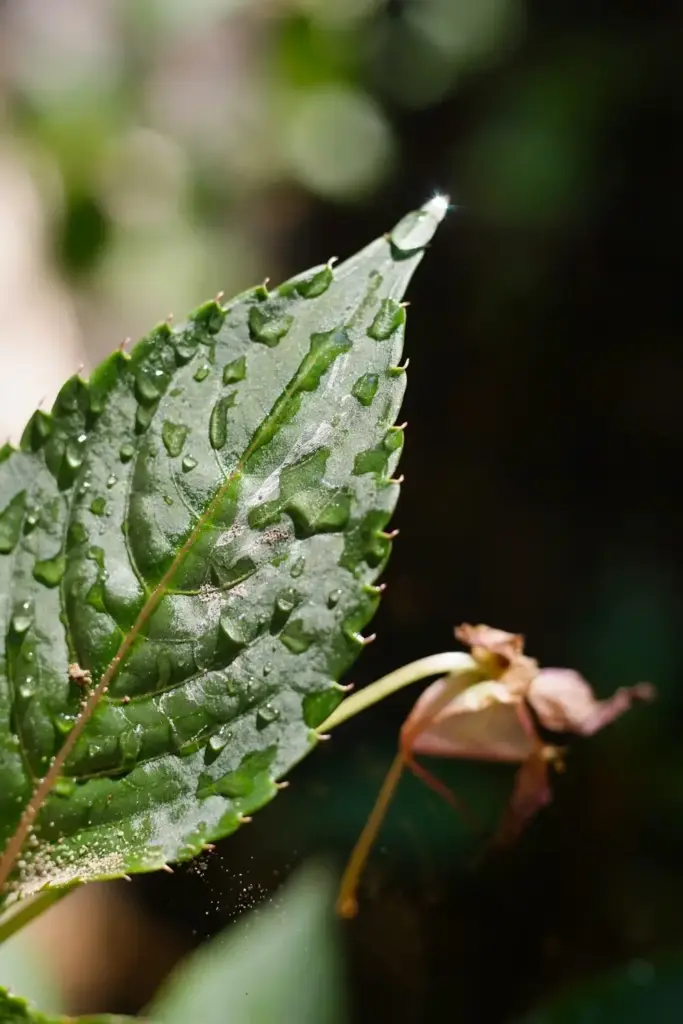
Start with water and removal. A firm spray of water knocks thrips off leaves and flowers. Remove spent flowers, since thrips feed and breed inside blooms. Prune heavily infested flower clusters and bag them. Water and sanitation cut thrips numbers without chemicals, and they cut them today. Repeat the wash every few days through the thrips season.
Add biological controls where they fit. Predatory mites and minute pirate bugs feed on thrips in greenhouses, and they work best when thrips numbers are still low. Release them early, before the population explodes. Biological controls need a living thrips population to feed on, so they pair with monitoring, never with broad insecticide sprays that kill the predators too.
Use insecticides with a rotation plan. Penn State Extension warns that a single application of any material is inadequate, and advises applications at 5-day intervals when the label allows, with one product used 2 to 3 times over a 14 to 15-day period, then a switch to a different class. Rotation slows resistance. One product used all season breeds thrips that survive it. Read the label for the crop and the site, and follow it exactly.
Accept the hard limit. Spraying for the thrips vector will not prevent virus disease from occurring, and UC IPM states that limit plainly while still urging growers to manage thrips populations when possible. A thrips that feeds for 15 to 30 minutes can transmit INSV before any spray kills it, and the University of Wisconsin Extension gives that window. Sprays reduce the number of transmission events. Sprays never reduce the number to zero. Managing thrips in the garden covers the wider thrips toolkit for the home garden, including the non-chemical options that pair with the steps here.
Step 6: Screen Vents and Doors Against Thrips
Screen every opening. Thrips enter through vents, doors, and gaps in greenhouse glazing. Screening blocks the entry route that no spray can close. The University of Wisconsin Extension directs growers to exclude thrips by screening greenhouse vents and doors, with screening apertures at 0.135 mm or finer. That mesh is finer than ordinary insect screen. Ordinary fly screen passes thrips. Thrips screen stops them.
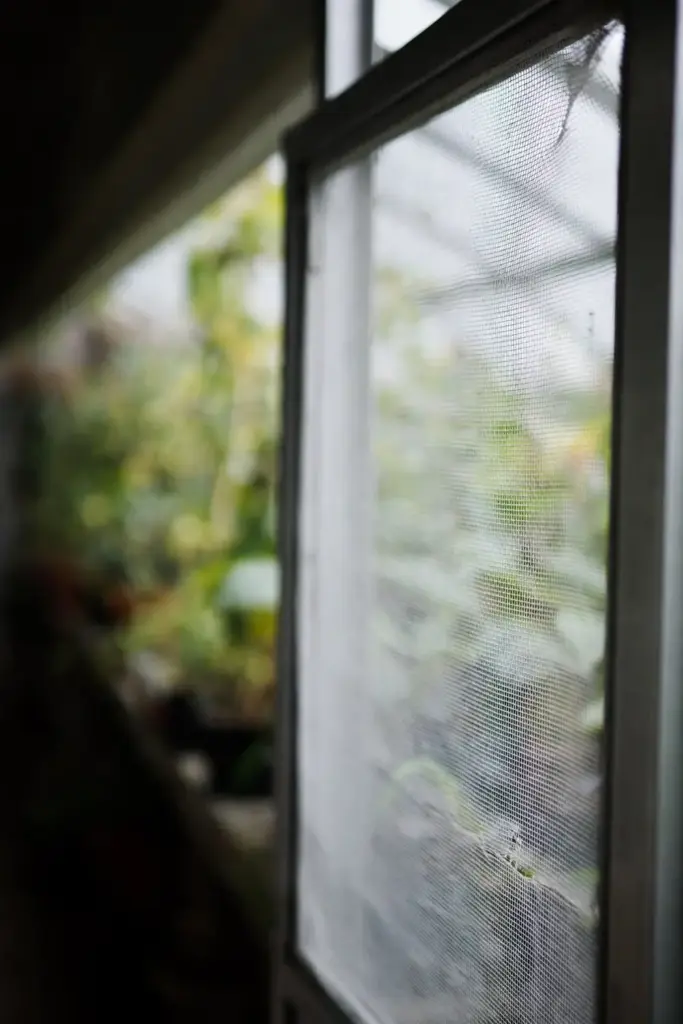
Seal the gaps around the screen. A perfect screen with a gap at the frame is an open door. Check the screen frame, the door sweep, and the vent seals. Caulk the glazing gaps. Fit a door sweep that touches the threshold. Thrips ride air currents, and a gap the width of a pencil admits them. The seal matters as much as the mesh.
Screen the intake, not just the door. A greenhouse with a screened door and an open roof vent is unscreened. Screen every vent, including the roof vents that open on warm afternoons. Screen the fan intake when the greenhouse uses one. One unscreened opening feeds thrips to the whole house.
Screen the sunroom version too. A houseplant collection on an open balcony faces outdoor thrips all summer. A fine mesh screen on the balcony door cuts that traffic. A screened porch for new plants doubles as a quarantine room. The same mesh rule applies at every scale. Small openings, big protection.
Step 7: Pull Weeds That Hide the Virus Between Seasons
Pull greenhouse weeds first. Weeds inside the greenhouse host INSV without symptoms, and they host thrips between crops. Chickweed, jewelweed, oxalis, and gill-over-the-ground all carry the virus, and the University of Wisconsin Extension names all four. Pull them roots and all. Bag the pulled weeds. Never compost greenhouse weeds beside the greenhouse.
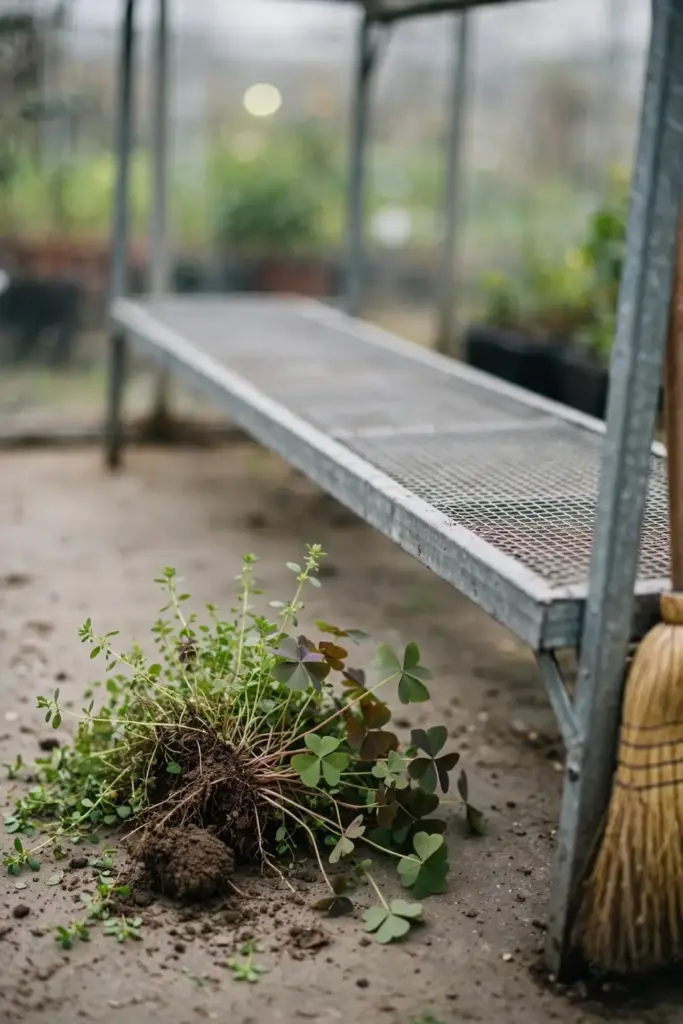
Clear the outside wall. Weeds along the outside of the greenhouse feed thrips that fly in through every gap. Clear a weed-free strip around the building. Mow the strip short. Keep it clear through the growing season. A clean perimeter starves the thrips that wait outside the door.
Remove leftover stock plants between crops. Stock plants and carryover plants bridge the virus from one crop to the next, and the University of Wisconsin Extension warns against carrying plants from fall production into spring. Finish the crop. Clear the bench. Start the next crop on a clean bench. A mother plant kept for one more cutting batch is a virus reservoir with a watering schedule.
Clean the bench between crops. Sweep the bench. Wash the surface. Remove leaf litter and soil debris, since thrips pupate in soil and litter. Penn State Extension notes that the second larva moves to the soil or leaf litter before pupation, and that adults emerge from the soil days later. Litter on the bench is a thrips nursery. A clean bench breaks the cycle.
Step 8: Buy Virus-Indexed Stock and Start Clean From Seed
Buy virus-indexed stock. Virus-indexed plants come from suppliers that test their mother plants and certify the stock as virus-free. Ask the supplier for the testing policy before you buy. A supplier that tests every mother block beats a supplier that tests one sample per year. The certificate is not a guarantee. The certificate is evidence of a testing habit.
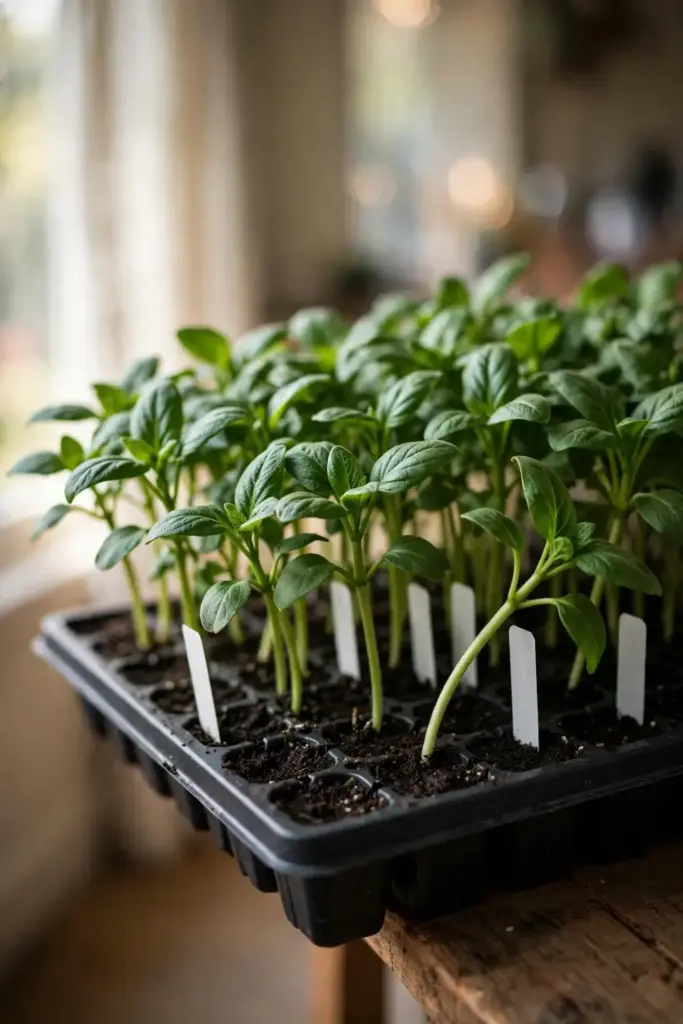
Inspect every shipment at arrival, before the box travels anywhere near the main collection. Open the box away from the main collection. Check every plant for ringspots, vein death, stunting, and thrips. Quarantine the shipment under Step 3, even when the supplier holds a certificate. Certificates cover the mother block. Shipping stress, mixed loads, and warehouse thrips add risk after the certificate. Trust the quarantine, never the paperwork alone.
Start from seed when the host allows. Seed does not carry INSV, so a seed-grown plant starts life virus-free. Impatiens, petunia, and many bedding plants grow well from seed, and seed-grown stock removes the cutting-transmission route entirely. Starting seeds with clean technique covers sterile mix, clean trays, and the inspection habits that keep seed-grown plants clean through transplant.
Never take cuttings from a suspect plant. Vegetative propagation copies the virus into every cutting, and Penn State Extension states that infected plants must never be vegetatively propagated. A cutting from a plant with one faint ringspot carries the same virus load as a cutting from a plant covered in spots. The cutting looks clean. The virus rides inside. Propagate only from tested, quarantined, symptom-free mothers.
Step 9: Grow Petunia Indicator Plants for Early Warning
Plant petunias as sentinels. Petunia plants react to INSV-carrying thrips with visible spots within days, while the virus stays local in the petunia leaf and never goes systemic. The University of Wisconsin Extension lists Petunia x hybrida varieties Summer Madness, Super Magic Coral, and Red Cloud as indicator plants. Petunia leaves fed on by virus-free thrips show whitish feeding scars. Petunia leaves fed on by INSV-carrying thrips show small brown to black spots that turn tan with a dark border. The spot color tells the story.
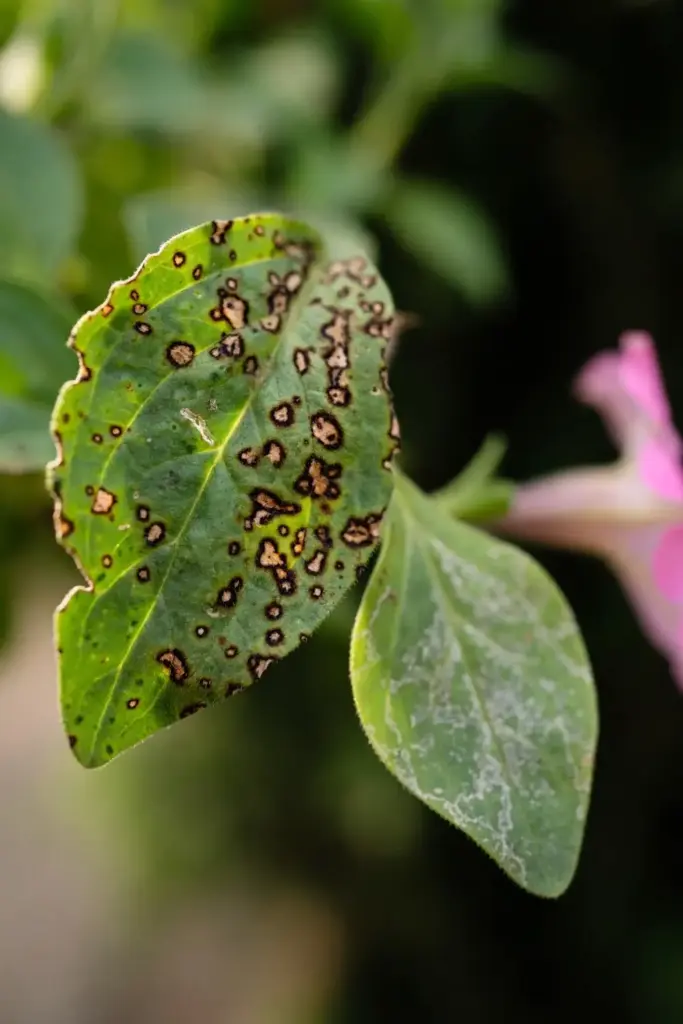
Remove the flowers from indicator plants. Thrips prefer flowers, and flowers on the indicator plant let thrips feed without touching the leaves. The University of Wisconsin Extension specifies indicator plants with flowers removed. No flowers means thrips feed on foliage, and foliage feeding leaves the diagnostic spots. A flowering indicator plant reports nothing.
Place indicators across the growing area. Put one indicator pot per bench, one near each door, and one near each vent. Place indicators several weeks before the susceptible crop arrives, so the sentinels are in place when thrips arrive. Water and feed the indicators so they stay attractive to thrips. A starved indicator plant attracts no thrips and reports nothing.
Check indicators twice a week. Early morning is the best time to spot small new spots, and the PNW Handbooks note that early morning checks catch the freshest marks. A new brown spot on an indicator leaf means INSV-carrying thrips are active in that zone. Isolate the nearby plants. Tighten thrips control in that zone. The indicator bought days of warning that the main crop never would have given.
Living With Impatiens Necrotic Spot Virus in a Collection You Already Own
A collection with INSV is not a dead collection. It is a managed collection. Discard the sick plants. Quarantine the rest. Screen the openings. Monitor thrips weekly and grow the next round from seed or virus-indexed stock. The virus leaves when the last infected plant leaves and the last infected thrips dies. The collection recovers when the grower stops reintroducing the virus.
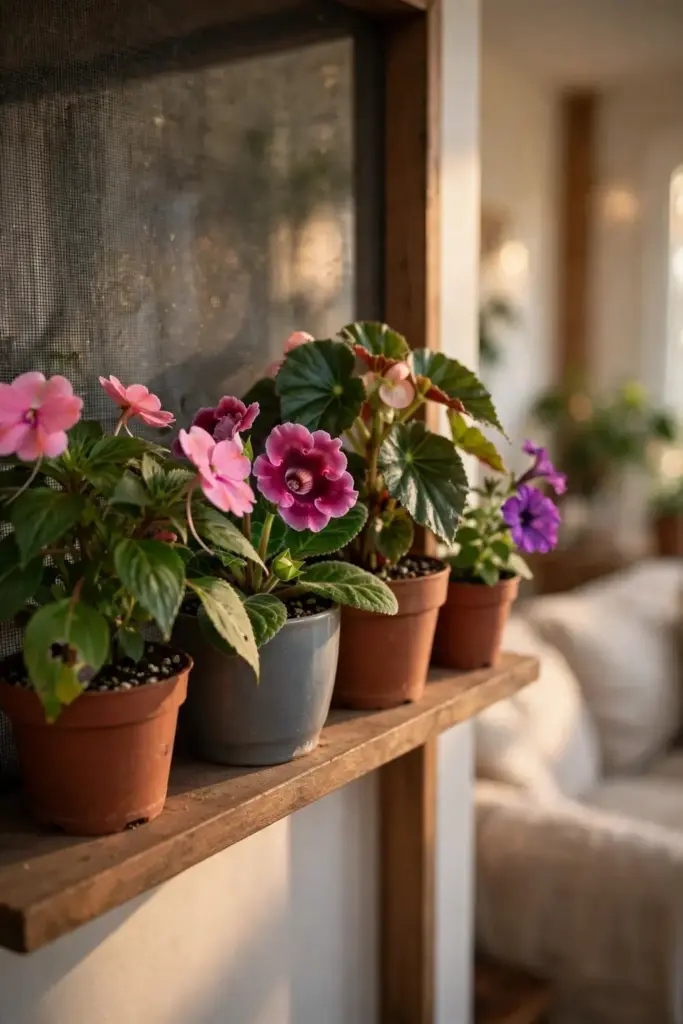
I have learned that a virus-free start beats any rescue spray.
Stop three habits. Do not take cuttings from a plant with any virus suspicion. Do not carry plants over from one season to the next without testing. Do not skip quarantine for a plant that looks healthy. Each habit reintroduces the virus through a different door. Each habit feels harmless on the day it happens, and the ringspots arrive weeks later.
Keep a notebook. Write down which plant showed symptoms, which bench held it, which supplier shipped it, and which week the symptoms appeared. The notebook shows patterns that memory misses. A supplier with two bad shipments in one season earns a switch. A bench with two outbreaks in one year earns a full cleanout. Data beats hunches.
If the problem sits in the water pipes of a tomato rather than in the ringspots of an ornamental, the companion guide on bacterial wilt covers a different wilt with a different field test. Ringspots plus thrips plus ornamentals mean INSV. Wilt plus ooze plus vegetables means something else. The distinction keeps the grower from treating the wrong disease.
Frequently Asked Questions
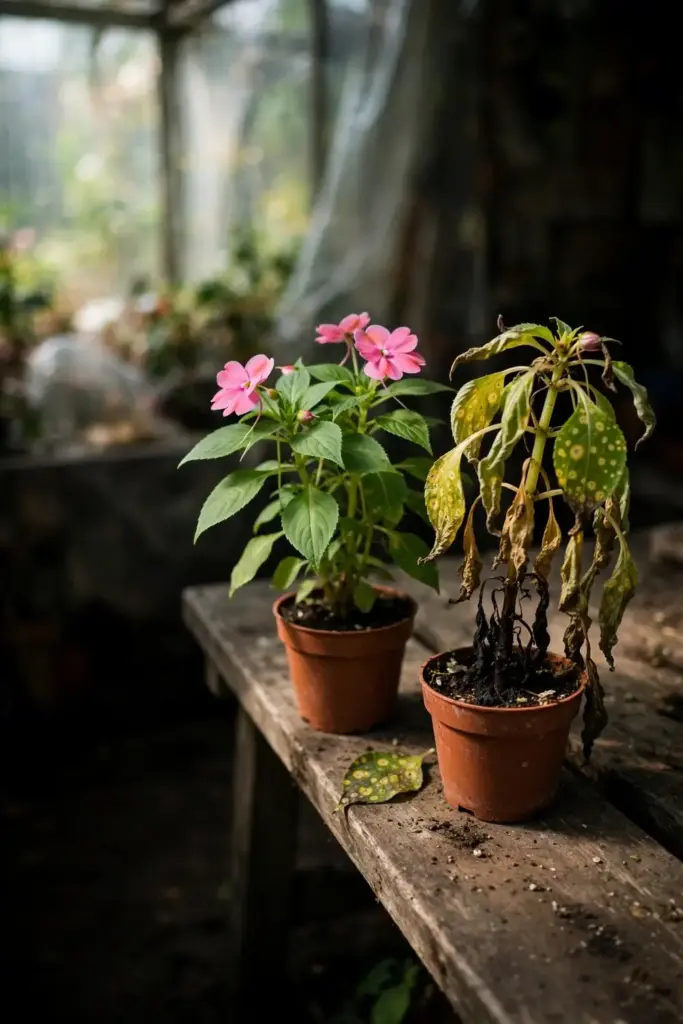
Yes. Vegetative propagation spreads INSV without any thrips at all. Cuttings taken from an infected mother carry the virus into every new plant, and the new plants look clean for weeks. Seed does not carry INSV, so seed-grown plants start clean. The thrips route dominates in greenhouses. The cutting route dominates in home propagation. Both routes demand the same discipline from the grower, every time, with no exceptions for gift plants. Quarantine mothers and test before cutting.
Yes, when the fruit looks sound. INSV is a plant virus, never a human pathogen. Harvest fruit from infected pepper or tomato plants and wash it as usual. Discard rotted or moldy fruit. The real loss is yield and quality, since infected plants stunt and set poor fruit. Pick what ripens before the plant fails. The virus harms the plant, never the eater.
No. Insecticides kill thrips, and insecticides never remove INSV from an infected plant. The virus lives inside the plant tissue, beyond the reach of any spray. UC IPM states that spraying for the thrips vector will not prevent virus disease from occurring, while still urging thrips management. Sprays cut the number of transmission events. Sprays never cure the infected plant. Discard the sick plant and protect the healthy ones.
For life. Once INSV enters a plant, the plant stays infected indefinitely, and the University of Wisconsin Extension states that fact directly. Pruning spotted leaves never removes the virus. The plant may look better after a hard prune. The virus remains in the tissue. Asymptomatic plants stay infectious through the whole silent period. A plant that tests positive stays positive, so discard is the only endpoint for an infected plant.
Yes, with care, since INSV spreads through thrips and cuttings rather than through soil. The risk in reused soil is thrips pupae hiding in the mix and debris, not virus particles waiting in the soil. Dump the old mix away from the collection. Wash the pot. Refill with fresh sterile mix. Never reuse mix from a pot that held a thrips-infested plant without cleaning the pot first.
Partly, and only where breeders have built resistance into the host. Resistant varieties slow infection and reduce symptoms, and resistant varieties never make a plant immune. Thrips still feed on resistant plants. Virus still enters through feeding wounds whenever a thrips probes a resistant leaf. Resistance buys time and reduces losses. Resistance never replaces thrips control, quarantine, or clean stock. Combine resistant varieties with every other step here for real protection.
Where to Go From Here
Impatiens necrotic spot virus rewards fast triage and steady prevention. Confirm the ringspots and the thrips scars on the plant in front of you before you decide anything. Make the honest discard call in Step 1. Then work the sequence: rogue, quarantine, monitor, cut thrips numbers, screen, weed, buy clean stock, and grow indicator petunias.
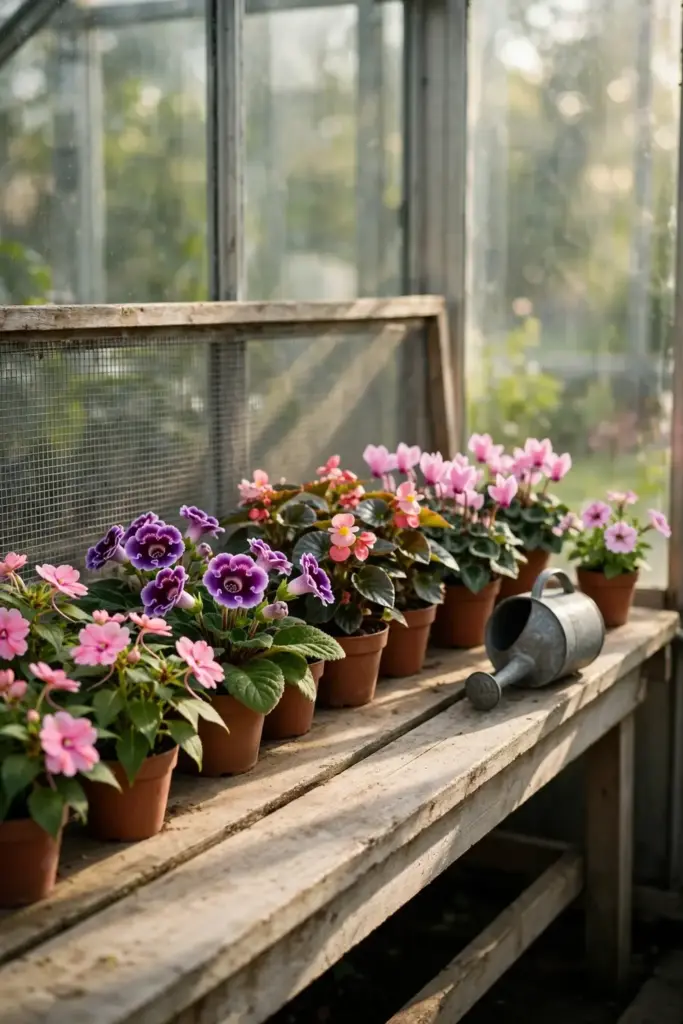
Next season, start clean. Fresh sterile mix, disinfected trays, and a quarantine shelf will prevent more INSV than any product treats. The blossom blight guide is a useful companion read if you are building a broader disease-identification habit, since it trains the same look-closely-at-symptoms approach.