
How to grow gambir starts with wet tropical land, not a pot on a balcony. Gambir is Uncaria gambir, a climbing vine that plantation growers in Indonesia raise for its leaves, and the first leaf harvest arrives 12 to 18 months after sowing. This page gives the full plantation method, from seed beds to extract, and it states the honest limits up front. No temperate garden, no container, and no indoor setup will carry this vine to a useful harvest.
I have learned to check the botanical name before trusting any vine sold as cat’s claw. Gambir carries the English name Hook-thorn Cat’s Claw. That name pulls buyers toward a different species entirely. The sections below separate gambir from its lookalikes before any growing advice appears. A wrong vine wastes years.
The rest of this page follows the plantation sequence, from climate and land through identification, fences, seed, cuttings, planting, care, harvest, and processing. History and the betel quid risk close the growing story. How to grow gambir is a land and climate decision before it is a gardening project. The climate section tells you whether your site can even qualify.
1. Decide Whether Gambir Fits Your Climate and Land
Gambir fits a narrow band of wet tropical lowland, and most home gardens fall outside it. The vine grows best where annual daytime temperatures sit within 25 to 32 degrees Celsius, and it tolerates 20 to 36 degrees, according to the Uncaria gambir cultivation details at Useful Tropical Plants. The same page puts survival near 10 degrees. A site that drops near that floor will stall the vine, and a site with frost will kill it. Treat any winter below 10 degrees as a hard stop, not a challenge to work around.
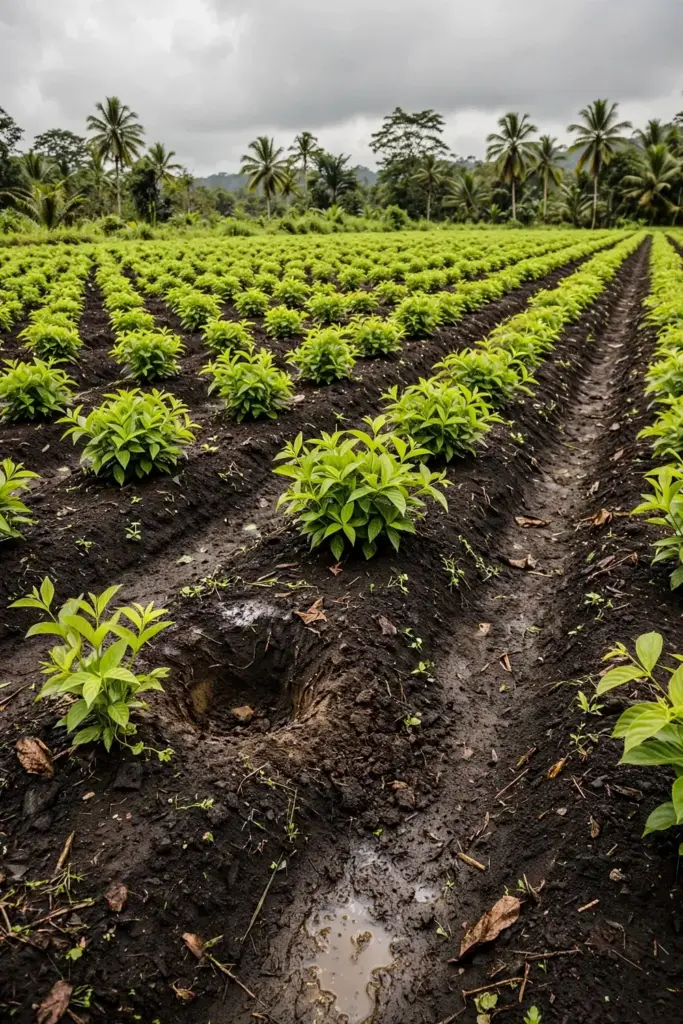
Rainfall sets the second gate. Gambir prefers a mean annual rainfall in the range 2,200 to 2,400 mm, and it tolerates 2,000 to 2,600 mm, according to the Uncaria gambir cultivation details at Useful Tropical Plants. Rain must fall through the year, not in one wet season followed by months of drought. The vine does not occur in dry regions, and it does not tolerate waterlogging, according to the Uncaria gambir entry in the PROSEA database. A site with a long dry season or a waterlogged flat fails both halves of that test.
Altitude, soil, and light complete the screen. Gambir grows well at altitudes of 0 to 200 m, and cultivation up to 1,000 m is possible, according to the Uncaria gambir entry in the PROSEA database. It prefers a pH in the range 6 to 7, tolerating 5.5 to 8, and it succeeds in full sun to light shade, according to the Uncaria gambir cultivation details at Useful Tropical Plants. Soils with a rich humus layer or much clay suit it best, and the ground must drain well. A temperate garden, a dry inland plot, and a shaded city yard all fail this screen on at least two counts.
| Requirement | Gambir Needs | What That Rules Out |
|---|---|---|
| Daytime temperature | Best 25 to 32 degrees Celsius, tolerates 20 to 36, survives near 10 | Any site with frost or cool winters |
| Annual rainfall | Prefers 2,200 to 2,400 mm, tolerates 2,000 to 2,600, spread through the year | Dry-summer climates and long dry seasons |
| Altitude | Grows well at 0 to 200 m, cultivated to 1,000 m | High mountain sites |
| Soil | Rich humus or much clay, well drained, pH 6 to 7 | Waterlogged flats and strongly acidic or alkaline soils |
| Light | Full sun to light shade | Deep shade and indoor windowsills |
| Space | Field rows at 2 by 3 m or 3 by 3 m | Pots, small beds, and balconies |
Land area decides the rest. Planting distance is 2 m by 3 m or 3 m by 3 m, according to the Uncaria gambir entry in the PROSEA database. At 2 by 3 m, each plant takes 6 square metres, so one hectare holds about 1,666 plants. That arithmetic shows the scale plainly. A home bed of a few square metres holds one vine at most, and one vine yields no usable extract. Gambir pays only at field scale, and the field must sit inside the climate band above.
2. Identify Gambir by 5 Field Marks
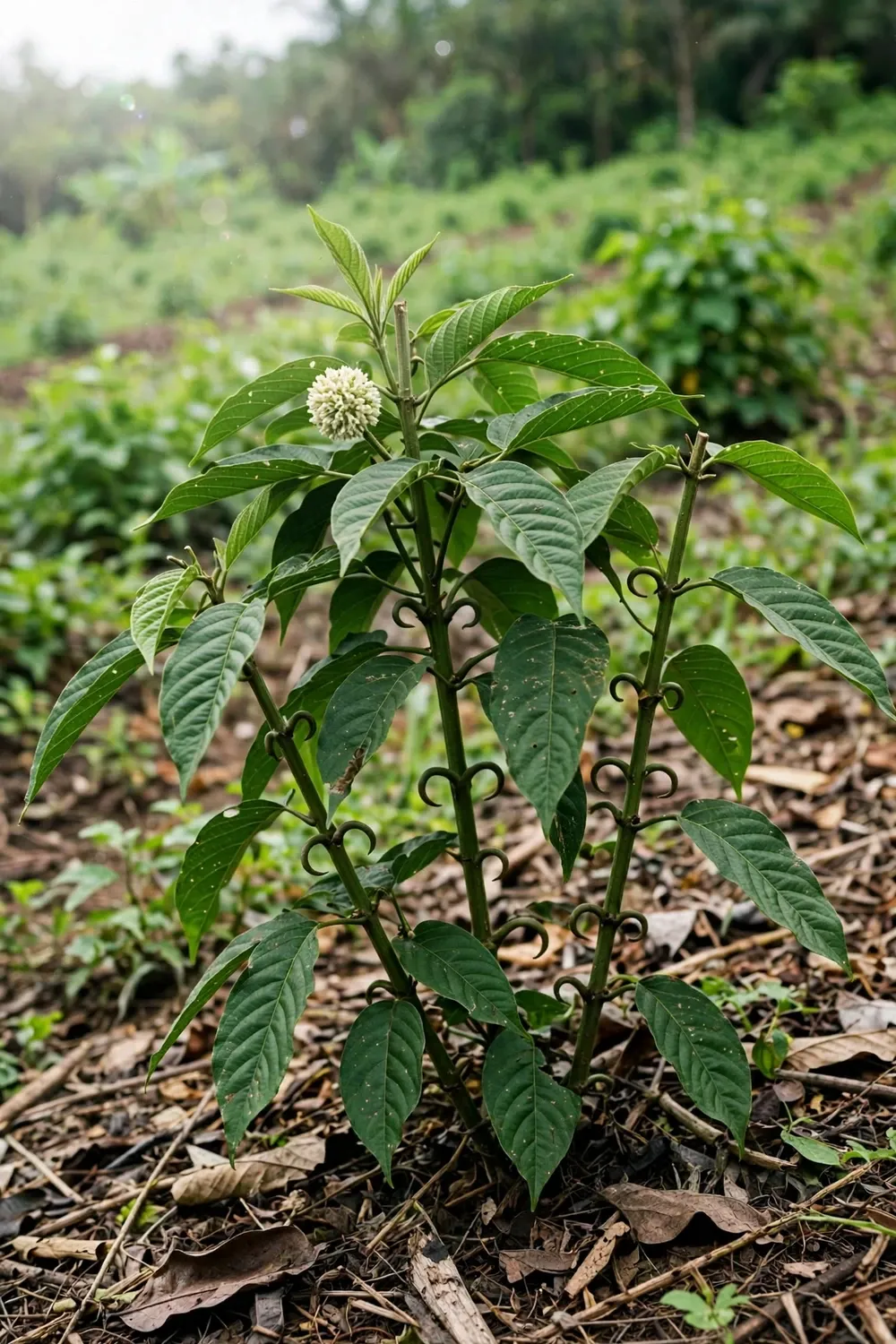
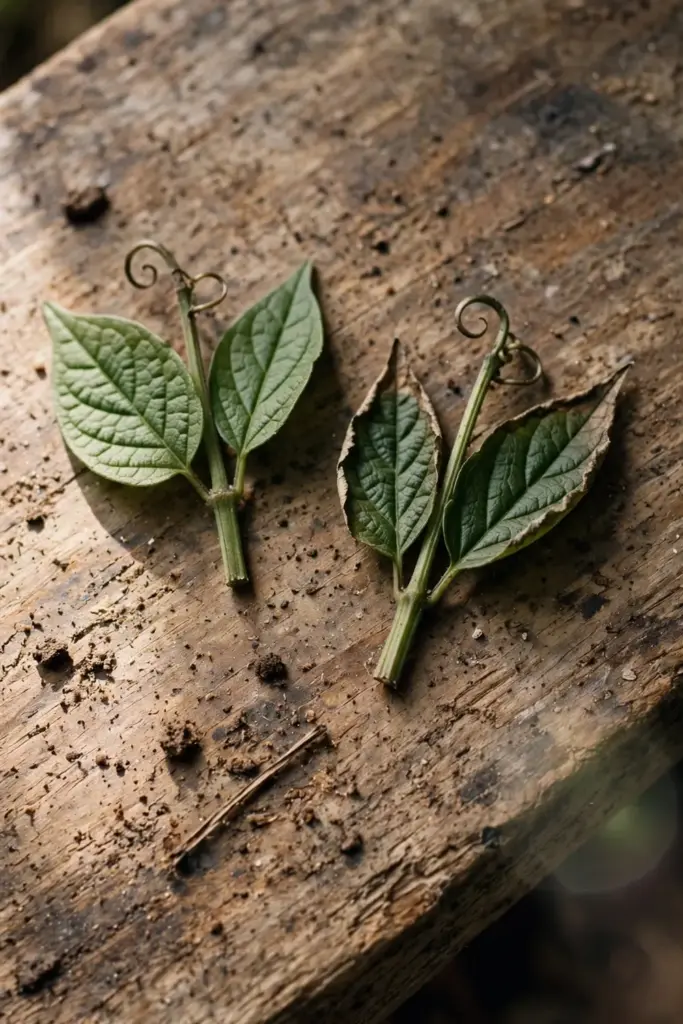
Gambir is Uncaria gambir, a liana that growers train into a straggling shrub. The vine climbs with recurved hooks, which are modified stalks of old flower clusters, and young stems are square in cross section, according to the Uncaria gambir entry in the PROSEA database. In cultivation the vine forms a bush around 2.4 m tall, and Malays call it kekait, from kait-kait, meaning to climb in grapples, according to the National Library Board Singapore article on gambier. Check all five marks below before you name any vine. A single mark never settles an identification, because vines share most of them.
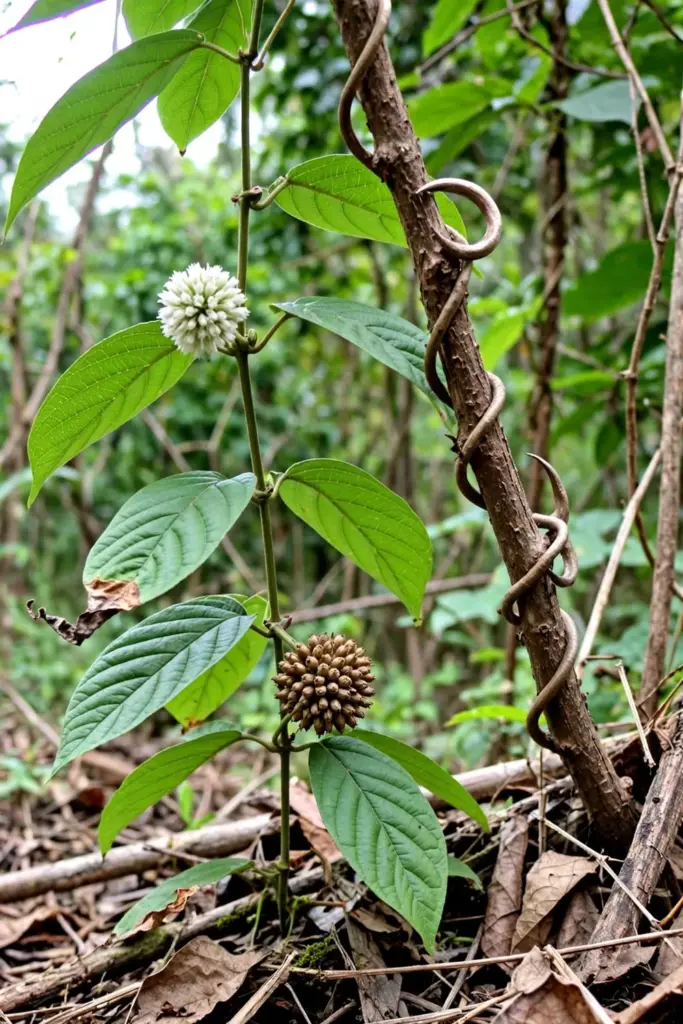
First, the hooks. Recurved hooks line the horizontal branches, and they grip bark and neighboring stems. A vine with straight thorns or no climbing hooks points away from Uncaria gambir. Second, the young stems are square, not round. Roll a young stem between two fingers and feel the four edges. Third, the leaves sit opposite each other, ovate to broadly elliptic, and measure 9 to 12 cm long and 5 to 7 cm wide in the typical range, with 5 to 6 pairs of lateral nerves raised below, according to the Uncaria gambir entry in the PROSEA database. The leaf base runs rounded to nearly heart shaped, and the tip comes to a point.
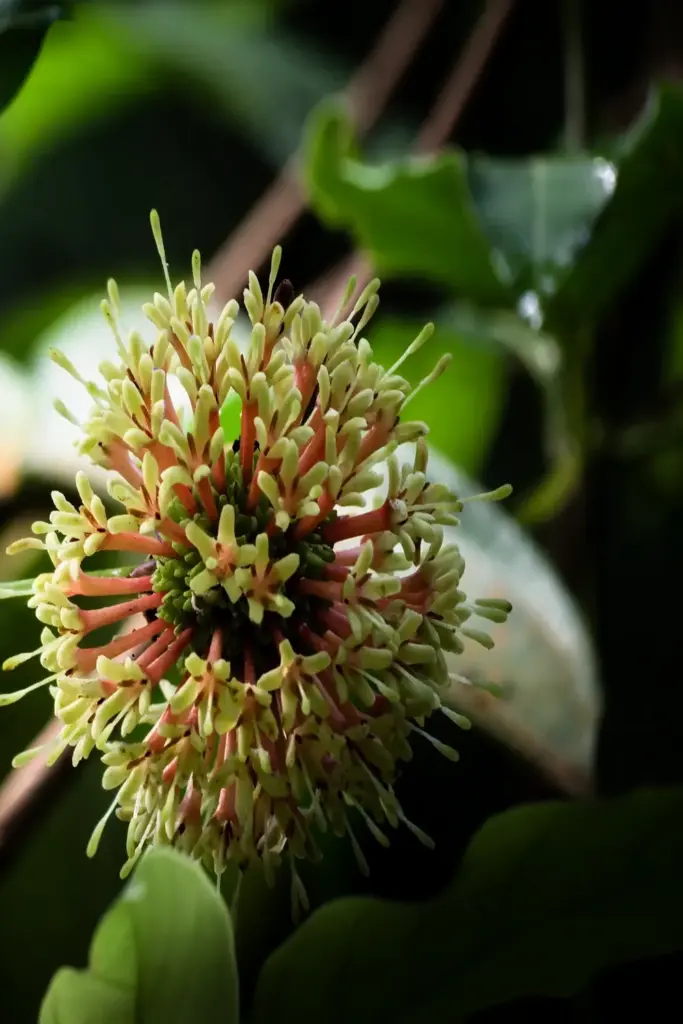
Fourth, the flower heads. Flowers gather in heads on horizontal branches, and each head measures 4 to 5 cm across the open corollas, according to the Uncaria gambir entry in the PROSEA database. The flower tube runs 8 to 10 mm long, and the style sticks out 5 to 7 mm past the corolla. Fifth, the fruiting heads. A fruiting head reaches 60 to 80 mm across, and its small capsules run 14 to 18 mm long, according to the Uncaria gambir entry in the PROSEA database. Seeds are very tiny and silvery gray. One kilogram holds about 25,000,000 seeds, according to the same PROSEA entry. That number explains the seed bed method in the propagation section. Seed this small blows away in a breeze, and it loses viability fast.
3. Separate Gambir From 3 Confusion Species
Uncaria gambir is frequently confused with three related species, and those species have been reported as incidentally used in gambier production, according to the Uncaria gambir entry in the PROSEA database. The three are Uncaria callophylla, Uncaria acida, and Uncaria elliptica, which also carries the synonym Uncaria dasyoneura. A grower who plants a confused species harvests leaves of uncertain tannin content, and a buyer who accepts mixed leaves gets extract of uncertain strength. The table below states what the linked PROSEA page actually confirms for each name. It does not invent separating field marks that the source never gives.
| Name | What the Linked Source Confirms | What That Means for a Grower |
|---|---|---|
| Uncaria callophylla | Frequently confused with Uncaria gambir, reported as incidentally used in gambier production | Do not accept this name on a seed or seedling label |
| Uncaria acida | Frequently confused with Uncaria gambir, reported as incidentally used in gambier production | Do not accept this name on a seed or seedling label |
| Uncaria elliptica (syn. Uncaria dasyoneura) | Frequently confused with Uncaria gambir, reported as incidentally used in gambier production | Do not accept this name on a seed or seedling label |
| Uncaria payakumbuh | A Sumatra plant with denser foliage, mentioned as a gambier source, with somewhat less catechin than true gambier | Denser foliage does not mean better extract, and lower catechin means weaker product |
The linked PROSEA page gives no field key that separates the three confusion species from Uncaria gambir by leaf or hook alone. That gap matters. A seller who claims to separate them by leaf shape alone is guessing, and a buyer who trusts that guess risks planting the wrong vine. The only safe check is the full botanical name on the label, matched against the five field marks in the previous section. When the label reads only gambir with no botanical name, ask for the species before you pay. When the seller cannot give it, walk away.
Origin adds one more check. The origin of gambier is uncertain, and plants that are probably truly wild have been collected in Sumatra and Borneo, according to the Uncaria gambir entry in the PROSEA database. Cultivation runs through Peninsular Malaysia and Indonesia, across Sumatra, Java, Bali, Kalimantan, and the Moluccas. A vendor who claims South American origin for Uncaria gambir is selling the wrong story. South America belongs to the cat’s claw species in the next section, not to gambir.
4. Separate Gambier Extract From Black Cutch and Cat’s Claw
Gambier is the extract, and gambir is the plant. The resinous substance from the leaves and young branches of Uncaria gambir is crystallized and traded in small cubes or blocks, according to the Uncaria gambir entry in the PROSEA database. PROSEA lists white cutch and pale catechu as English names for that product. Keep those two names attached to Uncaria gambir, and keep the contrasting names away from it.
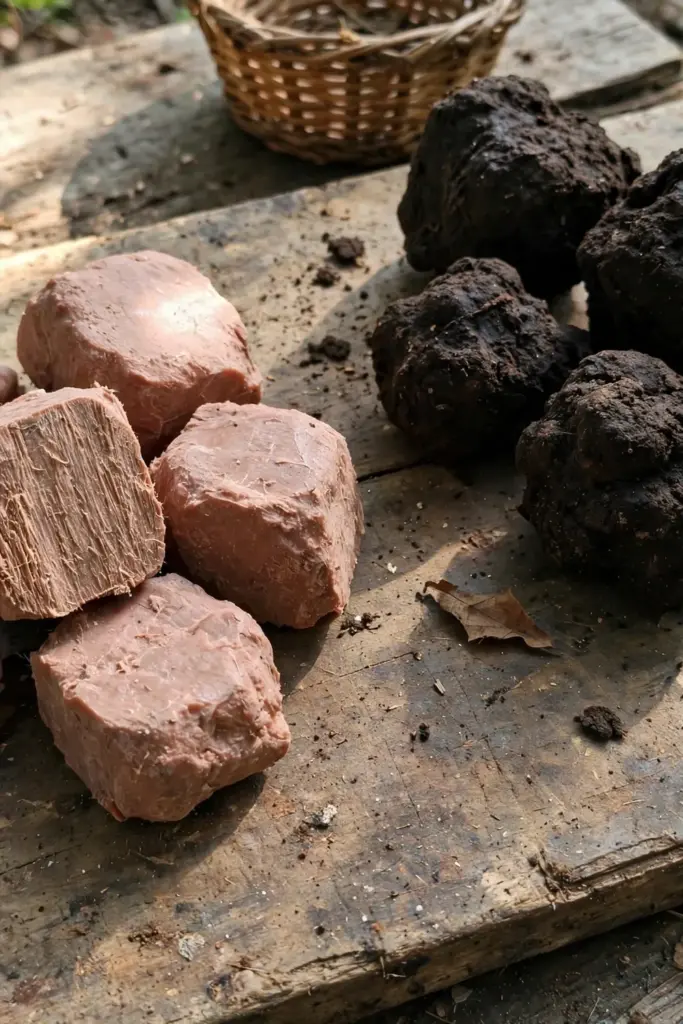
Black cutch is the contrasting product. It comes from the heartwood of Acacia catechu, a different tree in a different family, and it is not gambier. Trade catalogs have long sold the two under the shared word catechu, which is where the confusion starts. A bag labeled black cutch holds Acacia heartwood extract. A bag labeled white cutch, pale catechu, or gambier holds Uncaria gambir leaf extract. The color word in the trade name is the tell. When a seller uses catechu alone with no color word and no botanical name, the product is unidentified. Do not buy it as gambier.
Cat’s claw is the second trap. Gambir carries the English common name Hook-thorn Cat’s Claw, and that name pulls buyers toward the famous supplement vine. The supplement vine is Uncaria tomentosa, a woody vine of the Amazon rainforest in South and Central America, and it is a different species from Uncaria gambir. Its bark and root supply the supplement trade, while gambir supplies leaf extract for tanning, dyeing, and betel use. The two vines share hooked climbing thorns and a genus name. They share nothing else that matters to a grower or a buyer. Check the botanical name on every label, and treat any product that says only cat’s claw as unidentified.
5. Grow Gambir From Seed in 7 Steps
Seed is the standard propagation route for Uncaria gambir, and the method below follows the plantation practice that PROSEA records. Propagation is usually by seeds, and the very small and light seeds rapidly lose their viability, according to the Uncaria gambir entry in the PROSEA database. Fresh seed matters more than any other single factor. Old seed sown with care still fails, because the viability window closes fast. Buy seed from a supplier who states the harvest date, and sow within days of arrival.
Step 1 covers seed selection. Choose seed from a supplier who names Uncaria gambir in full on the label, and ask for the harvest date in writing. Reject any lot labeled only gambir, cat’s claw, or catechu. Reject any lot with no harvest date. The seed count tells you how little margin you have. One kilogram holds about 25,000,000 seeds, according to the Uncaria gambir entry in the PROSEA database. A pinch holds thousands. Sow more seed than you need, because germination will still be uneven.
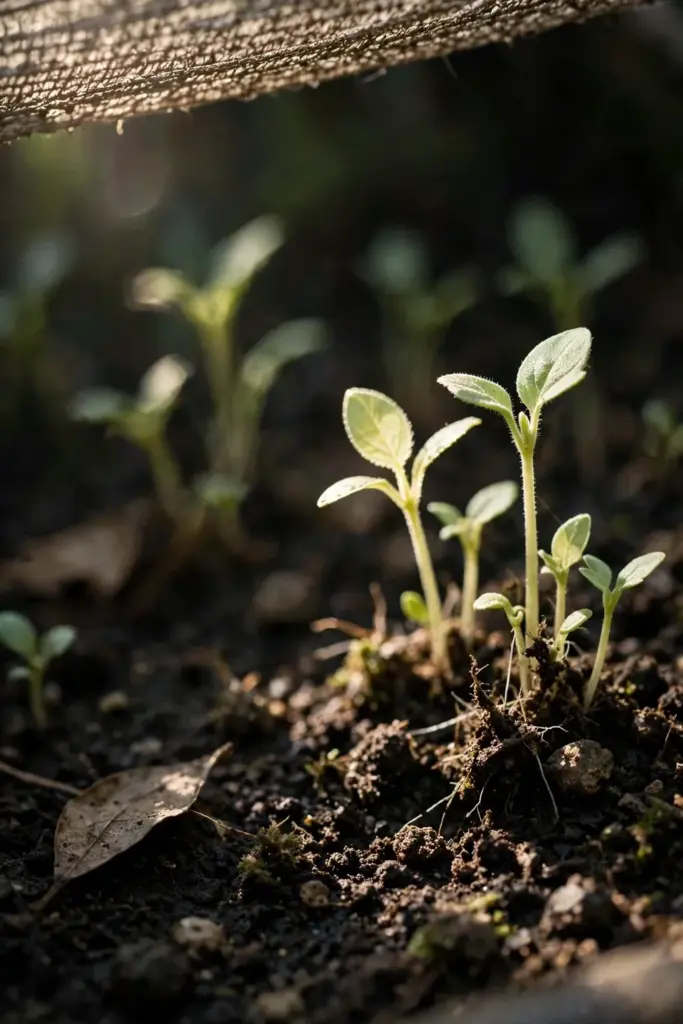
Step 2 covers the seed bed. Seeds are usually sown in seed beds, and the seeds are often blown into the beds to achieve a uniform spread, according to the Uncaria gambir entry in the PROSEA database. On slopes, growers sometimes use the vertical walls of terraces as seed beds and blow the seeds onto the walls. Horizontal seed beds need protection from sun and rain. A simple shade cover and a rain shield do the job. The bed soil should stay moist and drain freely, because standing water rots seed this small before it sprouts. General seed starting practice for tiny seed follows the same pattern, and the site’s seed starting guide covers the bed preparation and moisture routine in detail.
Step 3 covers sowing. Scatter the seed thinly across the bed surface, and blow it gently into place rather than burying it. Seed this small needs light and air at the surface. Press the surface lightly with a flat board so the seed contacts moist soil, then mist the bed. Do not cover the seed with a layer of soil. A buried seed of this size runs out of energy before it reaches the surface.
Step 4 covers germination. Seeds take about 2 weeks to germinate, according to the Uncaria gambir entry in the PROSEA database. Keep the bed moist and shaded through that window, and check daily for drying at the surface. A bed that dries out for a day loses the seedlings that were about to emerge. A bed that stays sodden loses them to rot. Moist, shaded, and drained is the target for all 14 days.
Step 5 covers early seedling care. By week 10, seedlings stand 3 to 4 cm tall, according to the Uncaria gambir entry in the PROSEA database. Growth this slow surprises growers who expect seedling vigor, and it sets the pace for the whole crop. Keep shade on the bed, keep weeds out by hand, and keep water steady. Hand weeding beats hoeing here, because a hoe at this scale uproots seedlings along with weeds.
Step 6 covers hardening. Ease the shade off the bed over two to three weeks, and let the seedlings meet full morning sun before they meet full midday sun. Reduce watering slightly so the root zone firms up, and keep the bed free of weeds through the whole period. Seedlings that move to the field without hardening wilt on the first hot day, and seedlings that stay shaded too long stretch weak and fall over at transplant.
Step 7 covers transplant timing. Seedlings are usually transplanted into the field 2 to 7 months after sowing, depending on the region, according to the Uncaria gambir entry in the PROSEA database. The wide window reflects real regional practice, not sloppy records. Transplant when the seedling stands firm, carries several true leaves, and holds a root ball that stays together when lifted. A seedling that falls apart on lifting needs more time in the bed. How to grow gambir from seed rewards patience at this stage, because a firm transplant survives field conditions that kill a soft one.
6. Root Gambir From Cuttings, Layering, or Grafting
Vegetative propagation works for Uncaria gambir, and it trades one advantage for one cost. Gambir may be propagated vegetatively by cuttings, by layering, or by grafting, and vegetative methods usually result in an advanced first harvest, according to the Uncaria gambir entry in the PROSEA database. The same entry records the cost. Vegetative plants contain less tannin at harvest than seed grown plants. A grower who chooses cuttings gets leaves sooner, and those leaves yield weaker extract. That trade decides the method for most commercial growers, and most choose seed.
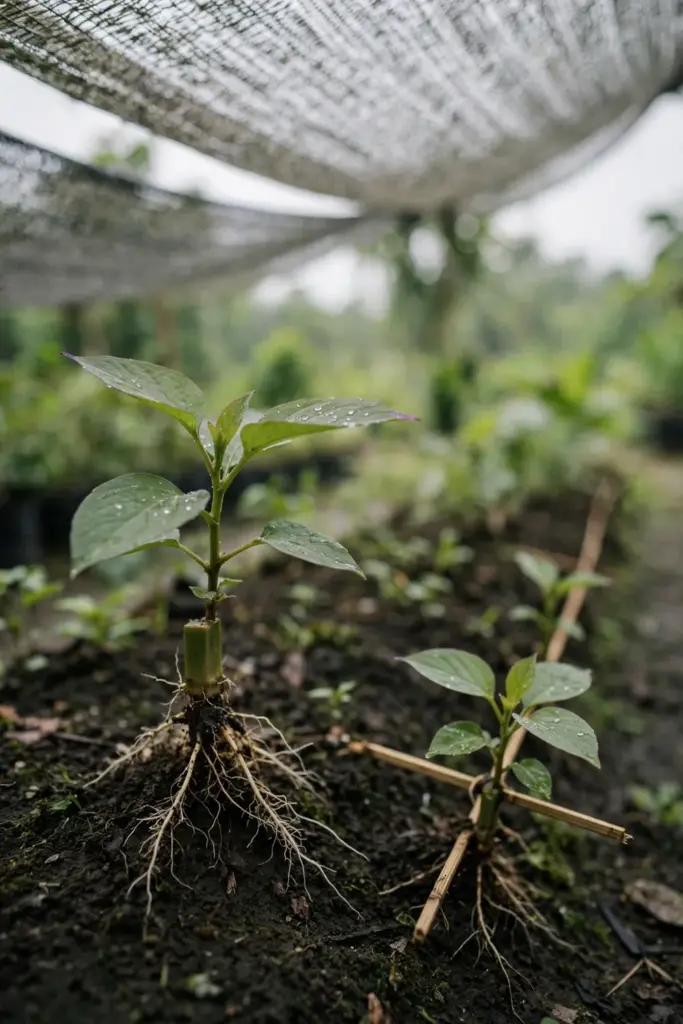
Cuttings suit a grower who needs a small number of plants fast and accepts the tannin penalty. Take cuttings from healthy young shoots on a known Uncaria gambir mother plant, and keep the botanical name attached to the batch from cutting to field. A cutting batch with no name is a confusion risk, because the three species in the fence section root just as easily. Keep cuttings moist and shaded until roots hold the medium, then harden them the same way as seedlings before field planting.
Layering suits a grower who wants a few plants with almost no equipment. Bend a low flexible shoot to the ground, wound a short section lightly, peg it into moist soil, and leave the tip exposed. Roots form at the buried section while the shoot still draws from the mother plant. Sever the layered shoot only after new growth shows that roots are working. Grafting suits a grower with a specific mother plant worth copying, and it needs a compatible rootstock of the same species. All three methods carry the same tannin penalty, and all three need the same naming discipline as seed.
7. Plant Gambir at 2 by 3 Metres
Field planting follows one spacing rule and one hole rule. Planting distance is 2 m by 3 m or 3 m by 3 m, according to the Uncaria gambir entry in the PROSEA database. The tighter spacing suits smallholdings that harvest by hand, and the wider spacing suits estates that need room for workers and baskets between rows. Either spacing gives the vine room to form a bush and room for harvest crews to reach every plant. Closer spacing saves land and costs yield per plant. Wider spacing costs land and eases harvest.
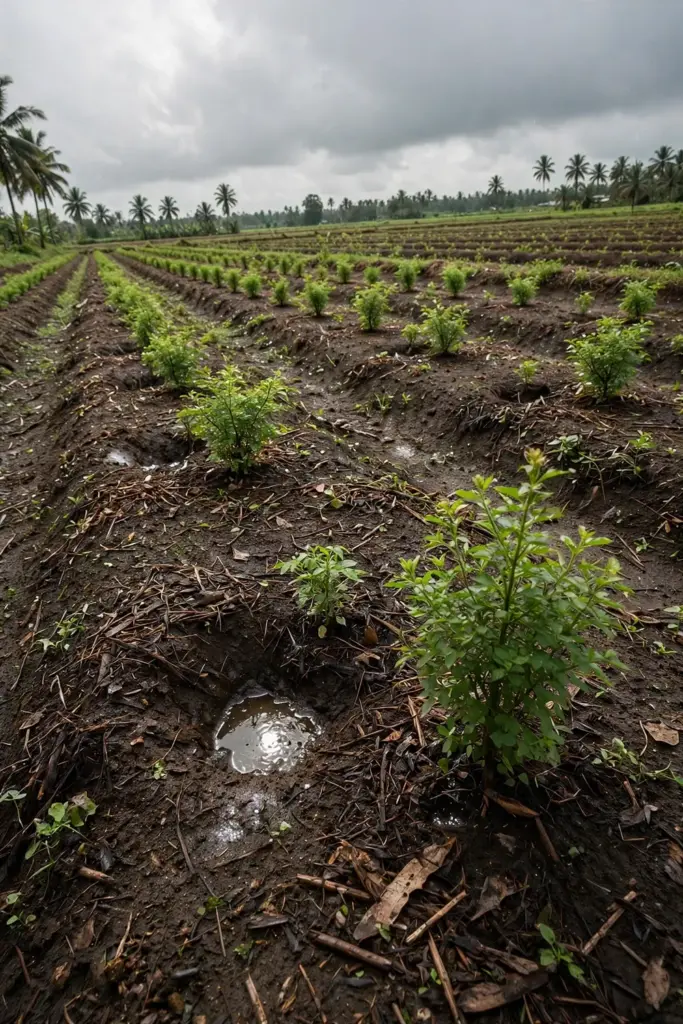
The hole rule is unusual, and it matters. Seedlings are usually planted at the edge of a hole, and the hole is not filled with soil, according to the Uncaria gambir entry in the PROSEA database. The open hole catches rain and holds moisture near the young roots. Filling it defeats the purpose. Set the seedling at the hole edge, firm the root ball into place, and leave the depression open. Mulch around the hole, not inside it, so water still collects where the roots sit.
Soil preparation stays light. Gambier has no special soil requirements, and it is usually cultivated on soils with a rich humus layer or containing much clay, according to the Uncaria gambir entry in the PROSEA database. The same entry notes that the plant does not tolerate waterlogging. Work humus into the topsoil before planting, and check that the field drains after heavy rain. A field that ponds for a day after rain needs drainage work before a single seedling goes in. The site’s soil health guide covers humus building and drainage checks for growers who need to improve a field before planting.
Timing follows the rain. Transplant at the start of the reliable wet season, so young plants root into moist soil from day one. A transplant that goes in at the end of the rains faces months of drought on a shallow root system, and no amount of hand watering at field scale replaces steady rain. When the rains arrive, plant quickly and in order, row by row, so no seedling waits a day in the sun.
8. Manage Gambir With Weeding, Topping, and No Fertilizer
Field care for Uncaria gambir is lighter than for most plantation crops, and the record is explicit about how little it needs. No special practices are necessary except weeding during the first year, and fertilizers are usually not applied, according to the Uncaria gambir entry in the PROSEA database. That sentence saves a grower money and effort. A fertilizer program built for a hungry crop wastes cash on a vine that does not ask for it. Spend the effort on weeding instead, because weeds in the first year steal the light and water that slow seedlings need.
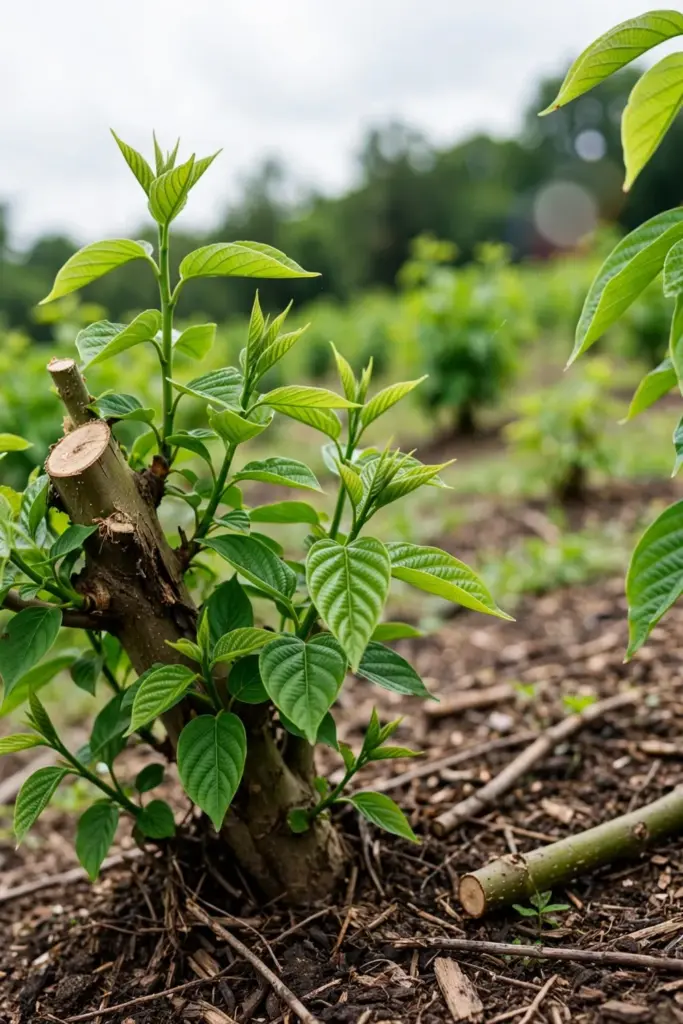
Weeding runs through the first year and then eases off. Hand weed around young plants, and keep a clean ring at each hole edge so the open depression still catches rain. Once the vines close their canopy, shade does much of the weed work. A clean field in year one and a shaded field in year two is the whole weed program. Slashing between rows beats hoeing near plants, because a hoe near a young vine cuts the shallow roots that feed it.
Support is not part of the program. Although gambier is a natural climber, no support is needed for cultivated plants when the crop is managed properly, according to the Uncaria gambir entry in the PROSEA database. Topping does the work that a trellis would do. During harvesting, the upright shoots are topped at about 2 m, and that topping pushes new shoots from dormant buds below the horizontal branches, according to the same PROSEA entry. The vine answers topping by branching low and bushy, which keeps leaves within reach of a harvest crew. The site’s spring pruning techniques cover the clean cut and tool care that topping needs, and the same habits apply here.
Pest and disease pressure stays low on smallholdings. In smallholdings, gambier is usually free from serious diseases and pests, while in large monocultures plagues of caterpillars and beetles have been reported, according to the Uncaria gambir entry in the PROSEA database. A mite causes monstrous flower heads and also attacks the leaves. Small scale is its own protection here. A grower who spots caterpillars early can strip them by hand, and a grower who spots mite damage on flower heads should remove and destroy the affected heads before the mites spread.
9. Harvest Gambir Leaves Twice a Year
Harvest is a cutting job, not a picking job, and it sets up the next flush at the same time. The upright main shoots are cut back to 1.3 to 1.5 m from the ground, and the shoots are dried, usually in the shade, then bundled and moved to the factory, according to the Uncaria gambir entry in the PROSEA database. The cut looks harsh. The vine answers it with new shoots from dormant buds, and the cycle repeats. A crew that cuts cleanly and low gets a dense flush. A crew that tears and leaves stubs gets weak regrowth and a ragged bush.
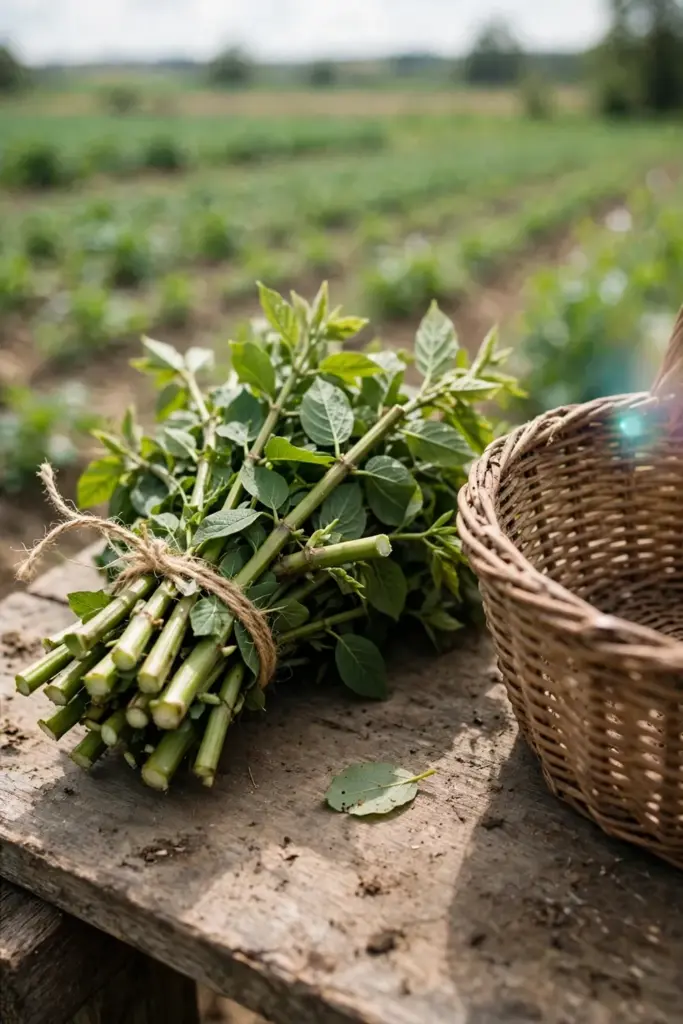
The first harvest sets the clock. The first harvest is usually obtained when plants are 12 to 18 months old, according to the Uncaria gambir entry in the PROSEA database. Improved cultivation methods allow harvesting 9 months after sowing, even when plants have been grown from cuttings. The 9 month figure is the best case with improved methods, not the planning figure. Budget labor and cash around the 12 to 18 month window, and treat an earlier first cut as a bonus.
Frequency follows the planting pattern. When grown in pure stands, harvesting is usually twice per year, while a plant grown as a cash crop between rubber or other crops can be harvested up to 4 times a year, according to the Uncaria gambir entry in the PROSEA database. Intercropping pays twice here. Gambir can be intercropped as a cash crop in rubber and oil palm plantations, according to the same entry. The shade and soil of an existing plantation suit the vine, and the extra harvests turn idle row space into income.
Yield varies wide, and the range below keeps planning honest. Smallholdings obtain a yield of block gambier of 180 to 200 kg per hectare per year, with reports of 700, while larger plantations have achieved 1,000 to 3,000 kg per hectare per year, according to the Uncaria gambir entry in the PROSEA database. The gap between a smallholding and an estate is a factor of five or more. A new grower should plan around the smallholding band, not the estate band, until the field proves itself across two full seasons. The maximum yield of crude gambier is 6.5 percent of the leaf weight, according to the Uncaria gambir entry in the PROSEA database. Leaves are mostly water and fiber, and the extract is a small fraction of what the crew carries in.
10. Turn Gambir Leaves Into Extract in 6 Steps
Processing turns leaf into gambier, and the process is factory work, not kitchen work. The most widespread method is the Chinese method, and it runs in six stages below, according to the Uncaria gambir entry in the PROSEA database. A home gardener cannot run this process at any useful scale. Boiling vats, evaporation time, and moulding volume all demand equipment and space that a kitchen lacks. Read the steps to understand the product, not to replicate it at home.
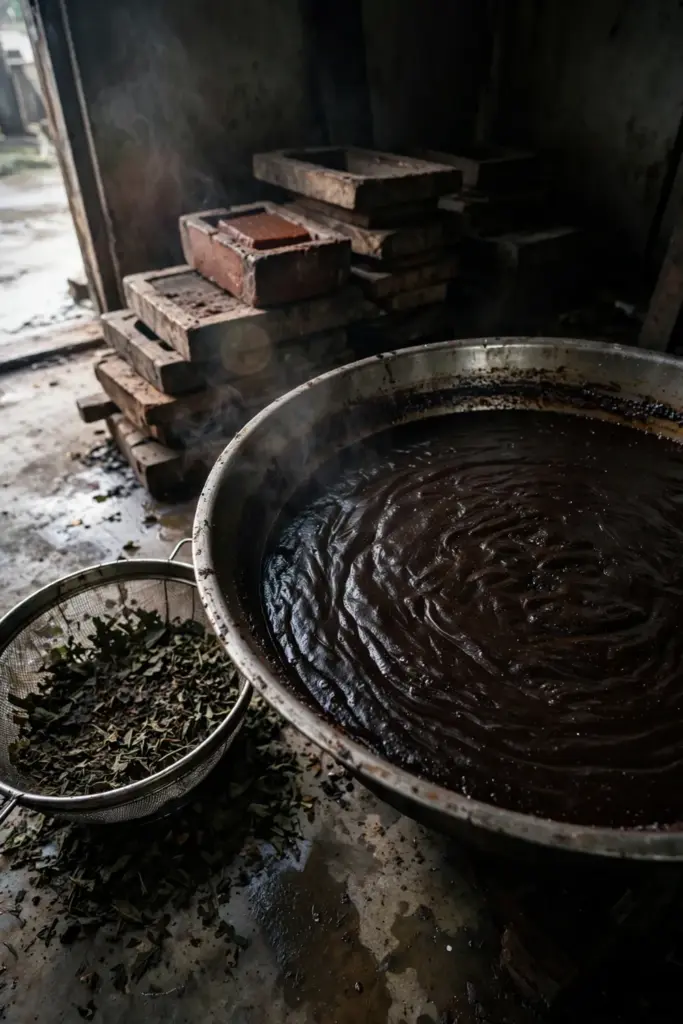
Step 1 is the boil. Crushed leaves and twigs are boiled in water for about 1 hour. Step 2 removes the spent plant fragments from the liquid. Step 3 concentrates the liquid by boiling and evaporation for about 3 hours. Step 4 moves the concentrate to smaller containers, seeds it with catechin crystals, and lets it solidify into a treacle-like mass. Step 5 pours that mass into simple moulds, and after about 12 hours it solidifies into a solid cake, which is cut into blocks and sun dried into sticky red brown blocks. Step 6 covers cube gambier for chewing, which is made by pouring the liquid into bottomless wooden frames on absorbent cloth, dividing the mass into cubes, and drying at low temperatures for ten days.
Traditional preparation in Singapore followed a smaller version of the same idea. Gambier was prepared by steaming leaves tied into a bundle, pouring boiling water through the bundle in small amounts, squeezing out the diluted juice, and drying and moulding the leaves into cakes, according to the National Library Board Singapore article on gambier. In West Sumatra, the same steam and press tradition carries the name mangampo. The principle never changes. Heat and water pull the tannin and catechin out of the leaf, and drying fixes the extract into a storable block.
Modern methods lift the catechin share. Leaves are extracted by steaming or boiling, then pressed with a hydraulic press at a pressure of 18,000 kg per square cm, after which they are dried for 3 to 4 days, according to the Uncaria gambir entry in the PROSEA database. The best quality comes from steaming for 5 minutes, and the catechin content runs higher with steaming than with boiling, up to 65 percent as compared with up to 55 percent, according to the Uncaria gambir entry in the PROSEA database. Block gambier used for tanning in Europe contained 35 to 40 percent tannin, according to the Uncaria gambir entry in the PROSEA database. The chemistry decides the market. Tanning blocks need tannin, and chewing cubes need catechin with the catechu-tannic acid removed.
11. Learn What Gambier Was Worth in Trade and History
Gambier built a plantation economy in Singapore before rubber replaced it, and the numbers show how large that economy ran. By the late 1840s, there were 600 gambier and pepper plantations under cultivation, employing some 6,000 Chinese labourers, according to the National Library Board Singapore article on gambier. The plantations clustered in the north and west of Singapore, and the trade ran through merchant houses along the Singapore River. British dyeing and tanning demand in the 1830s to 1850s pulled the trade forward, because gambier tanned leather and dyed cloth at a price European tanners accepted.
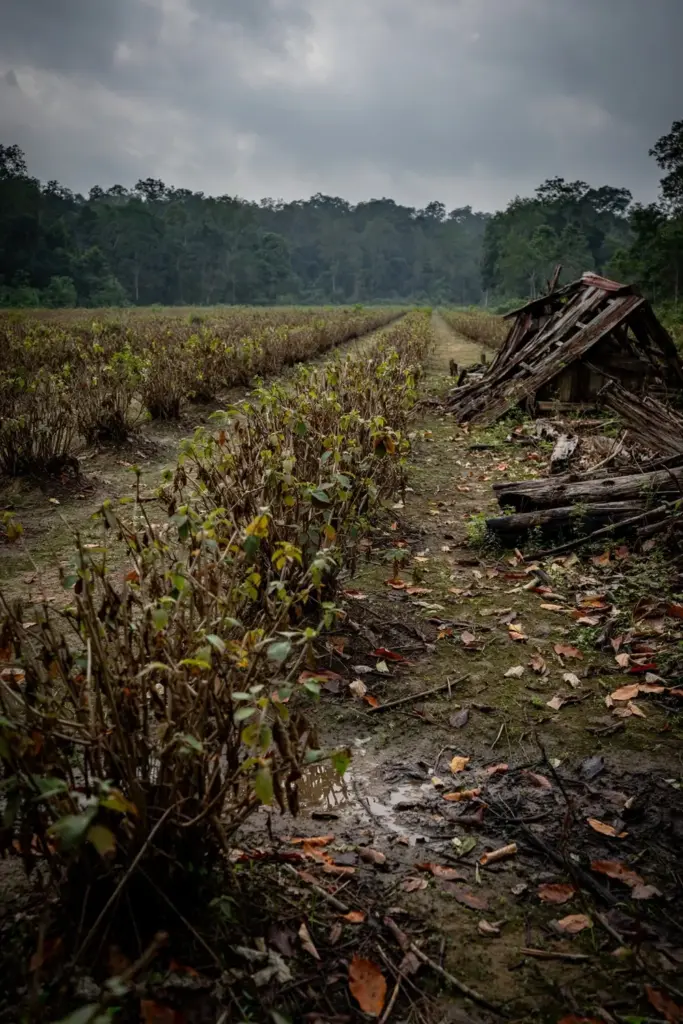
The same plantations carried the seed of their own end. Within 15 years, the soil in the gambier plantations became infertile, and it could no longer sustain further growth of the gambier plants, according to the National Library Board Singapore article on gambier. Plantations moved to Johor from the late 1840s onward, with more moving in the 1860s. In 1883, there were reportedly 4,000 gambier producing factories in Johor. Around 1905, gambier and pepper lost favor among the Chinese planters, who turned to growing pineapple and cultivating rubber. Fifteen years of cropping exhausted the soil, and the industry walked away from spent land rather than restoring it. A modern grower should read that as a warning about monoculture, not as a footnote.
Indonesian production dwarfed the Singapore trade at its peak. In the period 1920 to 1940, total production of gambier in Indonesia was approximately 15,000 t per year, of which one third was exported primarily to Britain and the United States, according to the Uncaria gambir entry in the PROSEA database. Peninsular Malaysia produced less during this period, exporting about 3,000 t per year, half of which went to India. The market price of the finished product fluctuated between US$ 100 and 400 per t during this period. Eight large estates with a total area of 1,750 to 2,000 ha accounted for most of the exports, and smallholdings on some 6,000 to 10,000 ha produced gambier for local consumption.
After the Second World War, gambier lost most of its importance as an export product, because tanneries in Europe and the United States replaced it with other vegetable tanning materials and syntans, according to the Uncaria gambir entry in the PROSEA database. The plant kept local importance as a masticatory, medicinal, and dye plant. In 1985, about 1,200 t of gambier worth approximately US$ 1 million was exported from Indonesia. The main exporting areas are Sumatra and Riau, with average exports in 1985 and 1986 of 340 and 620 t per year, respectively. The trade shrank, and it never vanished. Block gambier still sells in Indonesian markets, and the vine still matters to the farmers who grow it.
Plantations are usually maintained for 12 to 15 years, spanning 8 to 20, and gambier plants have been recorded to reach an age of 60 years, according to the Uncaria gambir entry in the PROSEA database. The long life of a single plant contrasts with the short life of a plantation on one patch of soil. A vine can live 60 years. A field worked as a monoculture gave out in 15. The difference is management, not botany, and it is the strongest argument for intercropping and soil care in any new planting.
12. Weigh the Betel Quid Risk Before Any Chewing Use
Gambier has three major uses, and chewing is one of them. The resinous extract has three major uses: tanning leather, chewing as a stimulant with betel nut, lime, and betel leaf, and medicine, according to the Uncaria gambir entry in the PROSEA database. Minor uses include dye in the traditional batik industry, dyeing silk black, clearing beer, and removing scale from boilers. The medicinal record lists astringent use, an infusion of fresh leaves against diarrhoea and dysentery, a gargle for sore throats, styptic use, and external lotions for burns and paste for scurf. This page reports those uses as tradition and trade fact. It does not promise any result from them, and it gives no dose for any of them.
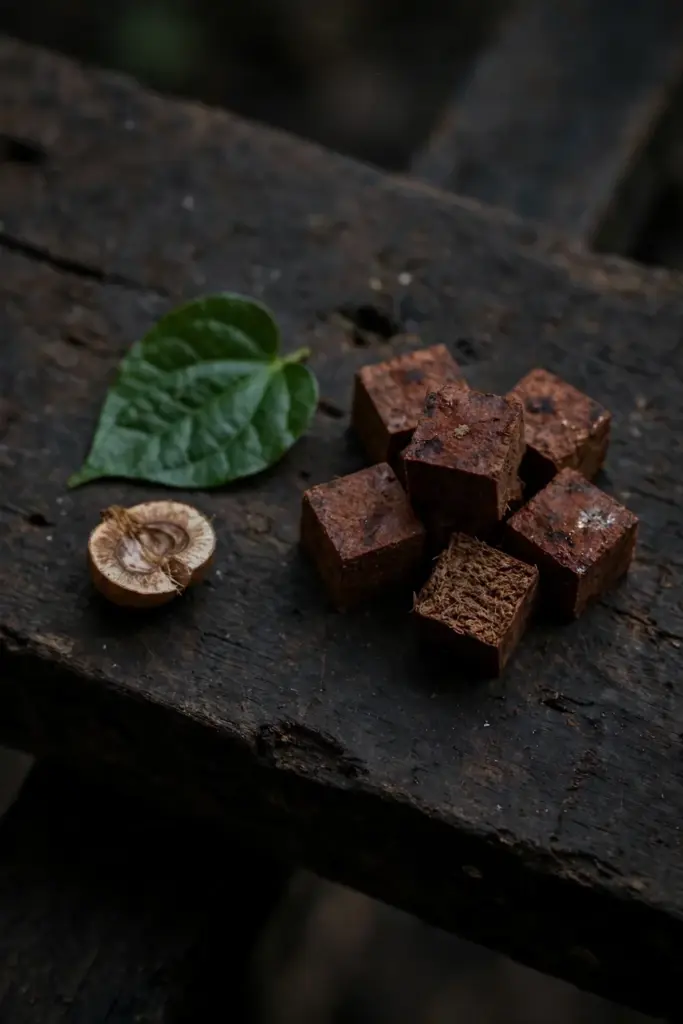
The chewing use carries a cancer warning that outranks every other use on this page. Betel quid generally consists of betel leaf, areca nut, and slaked lime, to which tobacco is often added, and an international expert group convened by the International Agency for Research on Cancer concluded that chewing betel quid without tobacco is also carcinogenic to humans, according to the World Health Organization report on the IARC evaluation. The same evaluation concluded that the areca nut itself is carcinogenic to humans. Gambier is one ingredient in that quid, not the whole quid, and the warning attaches to the quid as chewed. This page does not promote betel chewing, and no reader should start it on the strength of a gardening article.
The honest position is short. Grow gambir for the plantation trade, for tanning and dye, and for the study of a historic crop. Do not grow it to supply a chewing habit. The chewing market still exists, and older chewers in Southeast Asia still buy block gambier. That demand does not make the habit safe, and a grower who supplies it should know what the product is used for. The IARC finding stands as the last word on this section, and it stands above the traditional-use list.
Frequently Asked Questions
No. No container or indoor growing record exists in the linked sources, and every growing figure below assumes open field rows at 2 by 3 m or 3 by 3 m. Gambir is a climbing vine that growers train into a bush about 2.4 m tall. It needs wet tropical heat, high year round rainfall, and full sun to light shade. A pot on a windowsill fails all three tests at once.
No. Gambir grows best where daytime temperatures sit within 25 to 32 degrees Celsius, and it survives only near 10 degrees. Temperate winters drop far below that floor, and a single frost kills the vine outright. The rainfall demand adds a second barrier, since the vine wants 2,200 to 2,400 mm spread through the year. A temperate garden cannot supply that heat and that rain together. The honest answer is to admire the crop and plant something else.
No. Gambier is white cutch or pale catechu, the leaf extract of Uncaria gambir. Black cutch is the heartwood extract of Acacia catechu, a different tree in a different family. Trade catalogs have long sold both under the shared word catechu, which causes the mix-up. Check the color word and the botanical name on the label. A bag labeled black cutch is not gambier, and a bag labeled catechu alone with no color word is unidentified.
No. Gambir is Uncaria gambir, a Southeast Asian vine grown for leaf extract. The supplement vine sold as cat’s claw is Uncaria tomentosa, a woody vine of the Amazon rainforest in South and Central America. Gambir carries the English name Hook-thorn Cat’s Claw, and that shared common name causes the mix-up. The two vines share hooked climbing thorns and a genus name. They are different species with different uses. Check the botanical name before you buy or plant either one.
Plan on 12 to 18 months from sowing for the first harvest of seed grown plants. Improved methods allow harvesting 9 months after sowing, even for plants grown from cuttings. Treat the 9 month figure as the best case, not the planning figure. After the first cut, pure stands are harvested about twice per year. Plants intercropped in rubber or oil palm can be harvested up to 4 times per year.
Do not start. Gambier is one ingredient in betel quid, which also holds betel leaf, areca nut, and slaked lime, with tobacco often added. An expert group convened by the International Agency for Research on Cancer concluded that chewing betel quid without tobacco is carcinogenic to humans. It also concluded that the areca nut itself is carcinogenic to humans. This page reports the chewing use as trade fact. It does not promote it.
Make the Honest Call on Gambir
How to grow gambir ends with a land decision, not a shopping list. The vine needs wet tropical heat, 2,200 to 2,400 mm of rain through the year, drained humus rich soil, and field rows at 2 by 3 m. It pays at plantation scale, with a first harvest in 12 to 18 months and two cuts a year in pure stands. It fails in pots, in temperate gardens, and on dry land. That is the whole picture, and it fits in one paragraph because the plant itself is simple.
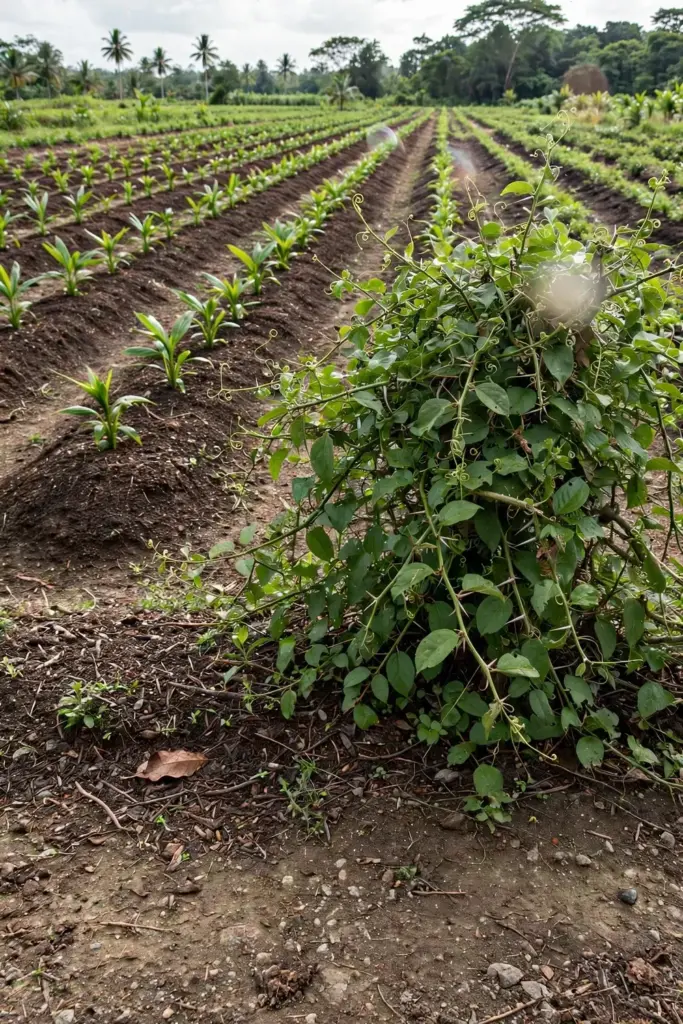
The honest call runs in one direction. Name the vine correctly, check the climate screen before you spend anything, and treat the extract trade as the goal. Learn the confusion species, keep black cutch and cat’s claw off your labels, and keep betel chewing out of your plans. A crop with this much history deserves a grower who reads the record straight. Plant it where it belongs, or leave it to the farmers who already grow it well.