
Tempuyung is Sonchus arvensis, a perennial sow thistle that Indonesian jamu sellers know as a leaf for kidney complaints and that weed boards know as a persistent invader. One plant carries creeping roots that send up new shoots, plus flower heads that release wind-borne seed, and one large isolated shoot carried 62 seed heads. Tempuyung uses fall into three buckets: identification, traditional jamu, and careful foraging of plants that already grow wild. Planting it on purpose belongs in none of them.
Do not plant tempuyung. A large isolated shoot produced 62 seed heads and a seed count approaching 10,000 in one study of perennial sowthistle biology, and spreading roots are the primary way the plant reproduces, according to the Sustainable Agriculture Research and Education perennial sowthistle profile. I have learned to treat a plant with creeping roots as a permanent tenant, not a guest. This guide shows how to name the plant in front of you, how jamu tradition uses it, how to forage it without spreading it, and what to do when it shows up uninvited.
The honest starting point is the record. Gardeners searching for this plant want to identify, control, or forage it. No home-gardener guide to planting it exists, and this guide does not try to write one. It teaches use and identification. It gives zero cultivation instructions.
1. Identify Tempuyung in 5 Field Marks
Tempuyung shows five field marks that separate it from most yellow-flowered weeds. Check all five before you name any plant. A single mark never settles an identification, because sow thistles share most of them.
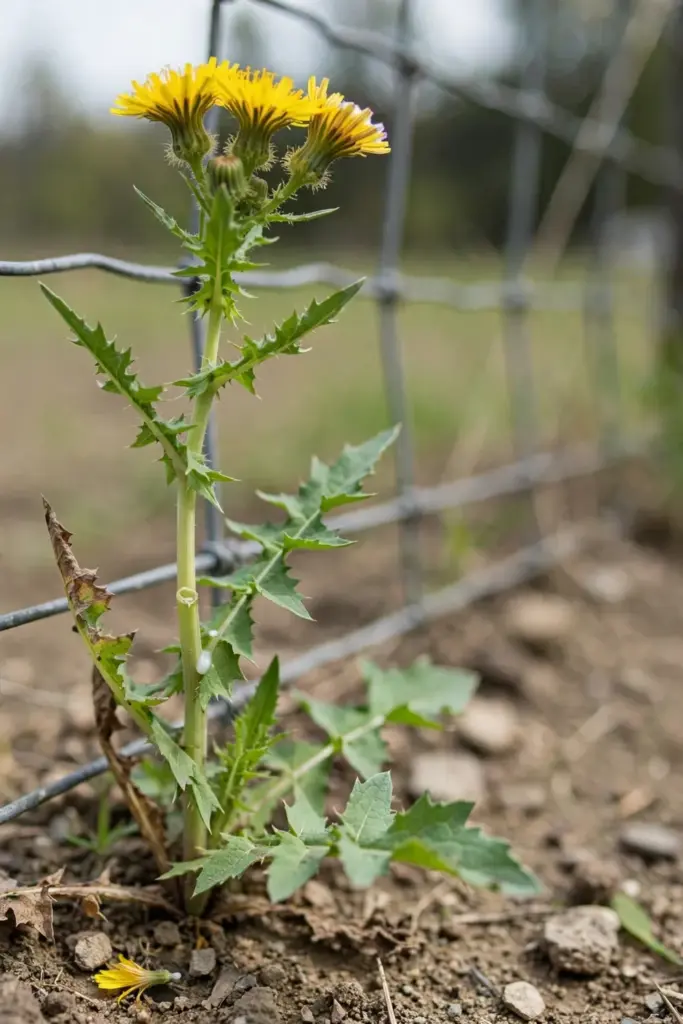
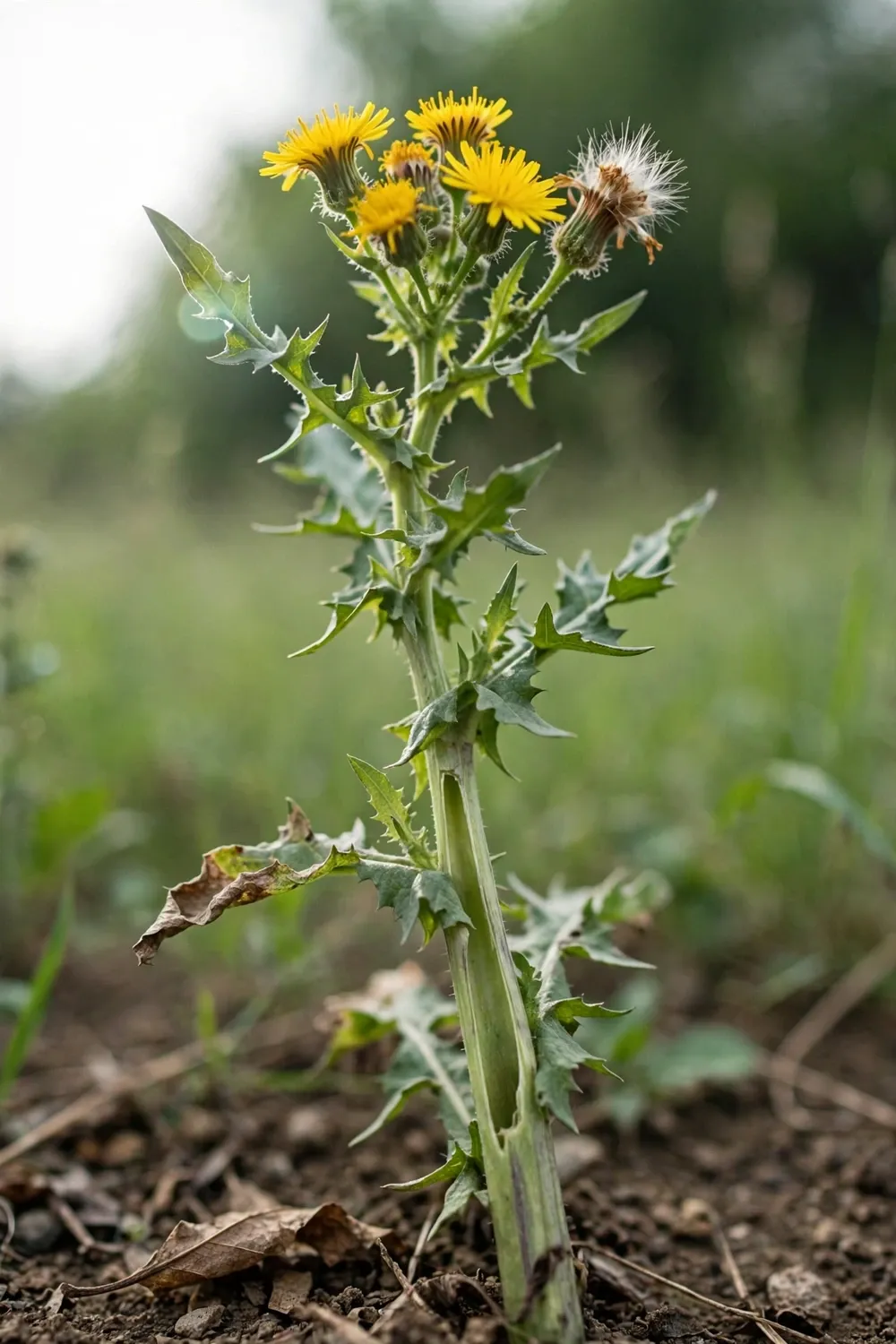
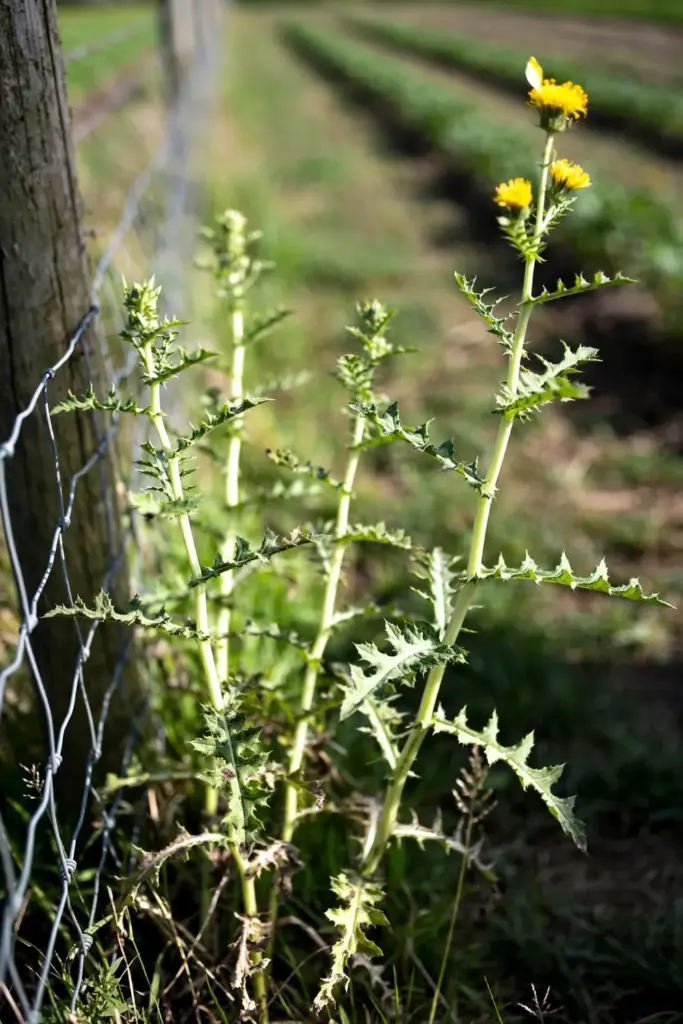
First, the stem stands upright, hollow, and branched only near the top, and it reaches 1.5 to 6 feet tall, according to the Washington State Noxious Weed Control Board perennial sowthistle page. Second, the leaves sit alternate along the stem, with prickly edges and pointed lobes, and they shrink and lose lobes as they climb the stem. Third, the flower heads shine bright yellow and measure 1.5 inches wide. Fourth, the bracts at the base of each flower head carry green, bristly, sticky hairs. Fifth, the whole plant bleeds bitter, milky juice when cut.
Flower timing adds one more check. The flowers open 2 to 3 hours after sunrise and close around noon, according to the Washington State Noxious Weed Control Board perennial sowthistle page. A yellow-flowered plant still wide open in late afternoon deserves a second look. It may be a different species, or the same species on an overcast day. Use the full set of five marks, not the clock alone.
2. Confirm the Milky Sap and Hollow Stem Test
Snap a leaf stalk and watch what comes out. Tempuyung releases white, milky sap from stems and leaves, and the stem itself is hollow. That pair of traits rules out the true thistles at a glance. True thistles bleed clear sap, and their stems feel solid and often winged with spines.
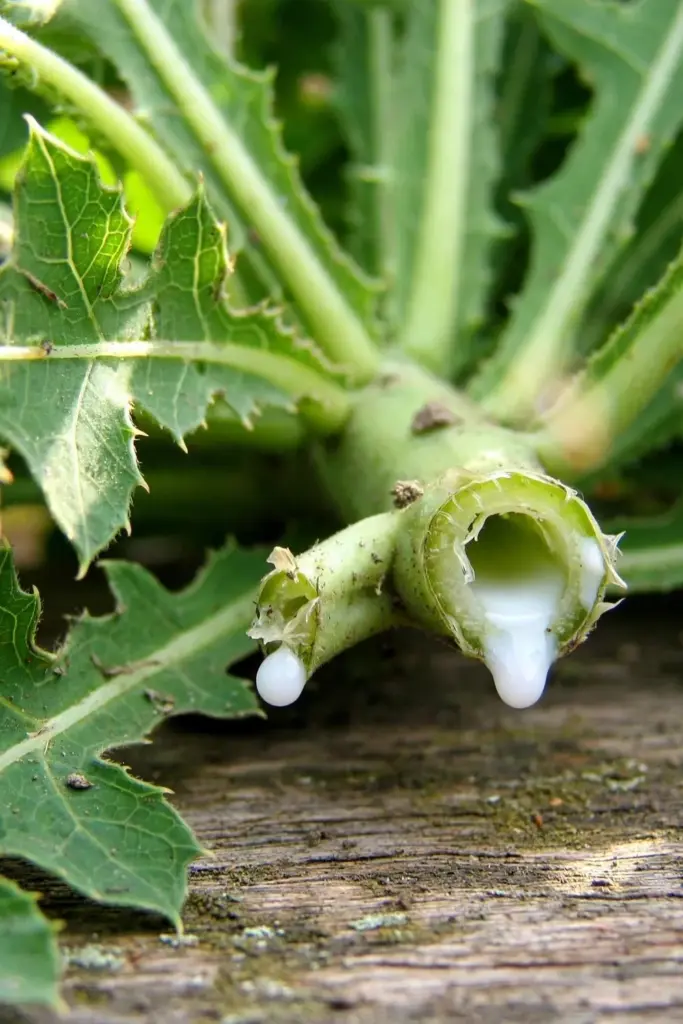
Cut low on the stem for the test, then look at the cross section. A hollow tube with milky juice points to the sow thistle group, while a solid stem with clear sap points to a true thistle. The Virginia Tech weed profile describes mature plants with a vast horizontal root system and hollow, succulent, branching stems reaching 7 feet tall, in the Virginia Tech perennial sowthistle profile. Height alone never identifies the plant, because the same species grows short in poor soil and tall in rich soil.
Wash your hands after the test. The sap tastes bitter, and the leaf edges carry soft prickles that scratch. Wear a worn garden mitt when you handle a plant you have not yet named. The mitt keeps the prickles off your skin and keeps the sap off your fingers while you check the stem.
3. Separate Tempuyung From Common Sow Thistle (S. oleraceus)
Common sow thistle, Sonchus oleraceus, is the annual cousin that causes the most confusion. It grows from a taproot, lives one season, and dies after seeding. Tempuyung lives for years from creeping roots and returns each season from the same root system. Digging tells the story. A single taproot means an annual sow thistle. A web of horizontal roots with new shoots means tempuyung.
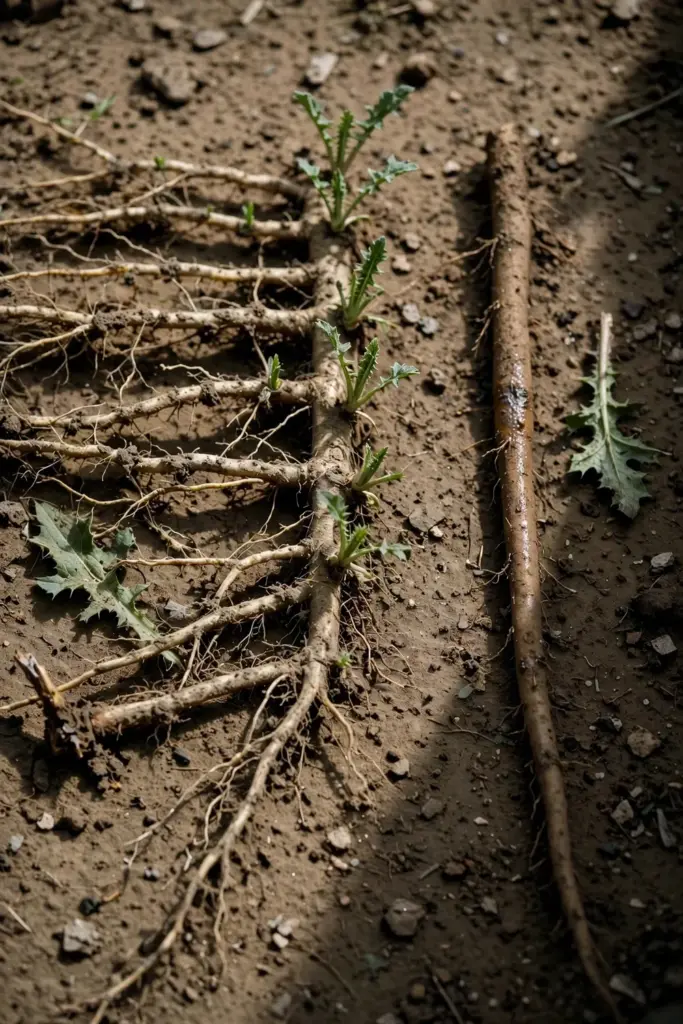
Flower size gives the faster field check. Annual and spiny sowthistle flower heads are only 0.75 inch or smaller, while tempuyung heads run larger, according to the Sustainable Agriculture Research and Education perennial sowthistle profile. The same profile notes that annual sowthistle leaves usually carry a large triangular terminal lobe that the other two sow thistle species lack. Annual sowthistle leaves also lack prickles in the strict sense, while tempuyung leaves carry soft prickly margins.
Seed shape backs up the field check when you have a lens. Tempuyung seeds measure 3.0 mm long and less than 1 mm wide, reddish brown and rectangular, according to the Virginia Tech perennial sowthistle profile. Common sow thistle seeds run lighter brown with shallow surface wrinkling. You rarely need the lens. Roots plus flower size settle most cases in the field.
4. Separate Tempuyung From Prickly Sow Thistle (S. asper)
Prickly sow thistle, Sonchus asper, is the second annual cousin. It shares the taproot and the one-season life of common sow thistle. It differs in armor. Spiny sowthistle leaves have larger, spinier teeth than perennial sowthistle leaves, according to the Sustainable Agriculture Research and Education perennial sowthistle profile. Run a fingertip along the leaf edge with a mitt on. Tempuyung feels softly prickly. S. asper feels harsh and catches the mitt.
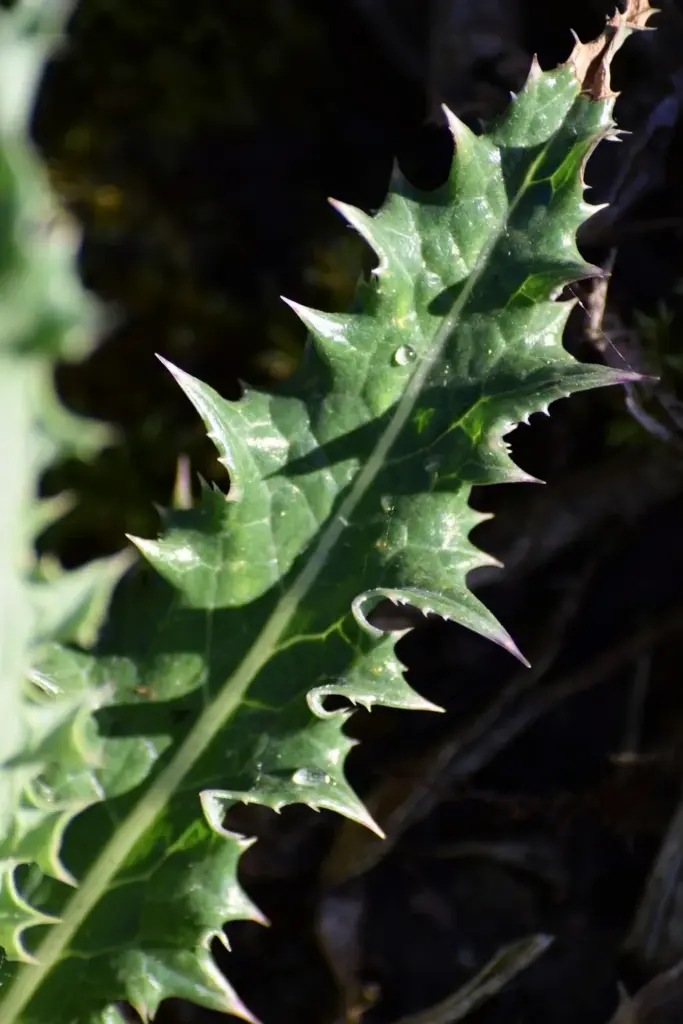
Leaf bases add a second check. Prickly sow thistle carries rounded lobes that clasp the stem. Common sow thistle carries pointed lobes. Tempuyung carries clasping upper leaves with backward pointing lobes, and its lower leaves ride on winged stalks that curl back. The Virginia Tech profile describes lower leaves with winged curled back stalks and deeply lobed blades with soft prickly margins, in the Virginia Tech perennial sowthistle profile.
Treat any sow thistle you cannot separate as tempuyung for handling purposes. The annual cousins pull out with a taproot and end the story. Tempuyung left behind as root fragments resprouts. The cautious rule costs nothing when the plant is an annual, and it saves a new infestation when the plant is perennial.
5. Rule Out Dandelion, Canada Thistle, and Milk Thistle
Dandelion causes the most false identifications. The flowers look alike, and the milky sap matches. The growth form differs completely. Dandelion grows as a basal rosette with one flower on each hollow, leafless stalk. Tempuyung grows a tall leafy stem with several flower heads in a loose cluster. Count the flowers per stalk. One flower on a bare stalk means dandelion. Several flowers on a leafy stem means a sow thistle.
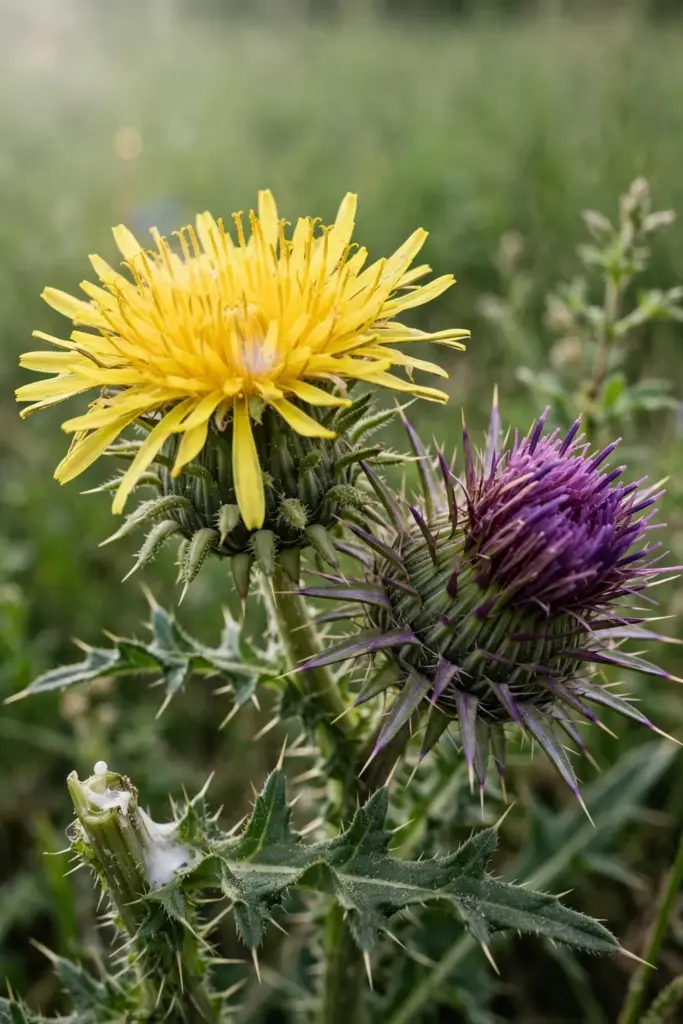
Canada thistle, Cirsium arvense, shares the perennial creeping roots and the weedy reputation. Flower color and sap settle it. Sowthistles have yellow flower heads and bleed milky sap when damaged, while Canada thistle has purple flower heads and clear sap. Canada thistle also carries true spines on leaves that feel far harsher than tempuyung prickles. If the flower is purple and the sap runs clear, you hold a true thistle, not tempuyung.
Milk thistle, Silybum marianum, confuses people through its common name. The plant looks nothing like tempuyung once you see the leaves. Milk thistle carries large, spiny, dark green leaves with milky white veins marbling the surface, plus a single large purple flower head ringed with spines. Tempuyung leaves show no white marbling, and its flower heads are yellow and far smaller. Growers who want the real milk thistle should read the site’s milk thistle guide and never substitute a yellow-flowered sow thistle for it. Dandelion fans should likewise check the site’s dandelion guide before eating any yellow-flowered rosette.
6. Sort Out the Asian Lookalikes: S. wightianus, S. integrifolius, and Cicerbita
Asian sow thistles complicate the picture for Indonesian readers. Sonchus wightianus grows across much of Asia, including Indonesia, and it reaches 150 cm as a perennial herb. Its stems and the bracts around the flower heads carry many purple hairs. Tempuyung bracts carry yellowish glandular hairs instead. Purple hairs on the bracts point away from tempuyung and toward S. wightianus. A plant-name database once filed a PictureThis care page under S. wightianus while describing tempuyung traits, which shows how easily labels cross.
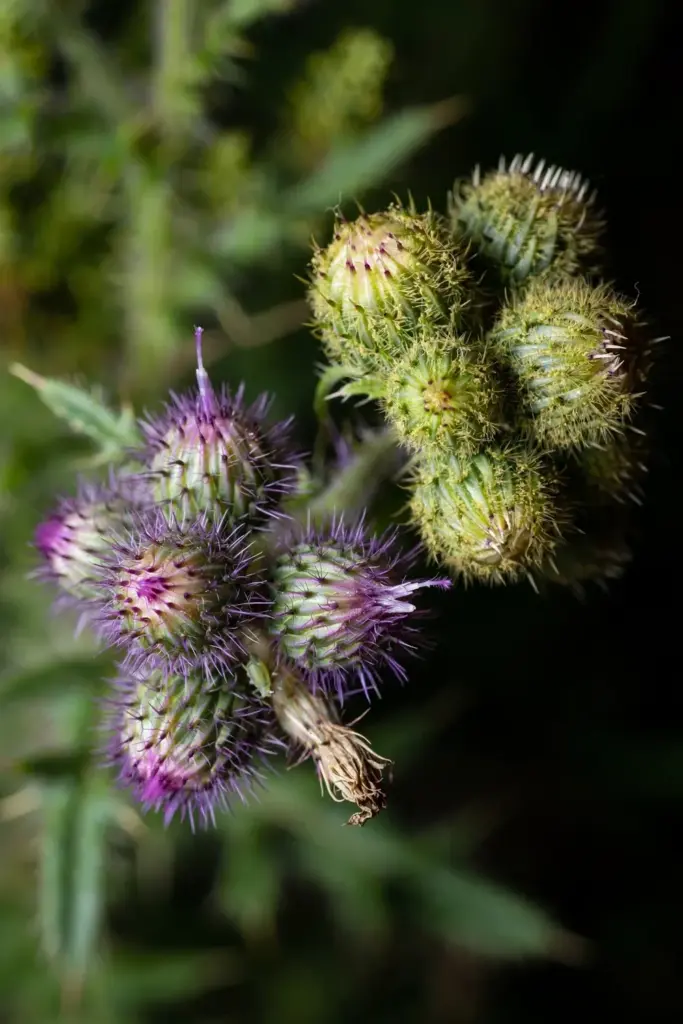
Sonchus integrifolius adds a naming trap. The name belongs to a separate accepted species in the Sonchus genus, and the same epithet also appears as a variety name inside S. arvensis for plants with nearly unlobed leaves. A label alone never settles it. Check the full botanical name, the flower size, and the root system together. An unlobed leaf on a sow thistle plant still needs the hollow stem, milky sap, and creeping root checks before you name it.
Cicerbita species carry the common name blue sow thistles, and they sit in a different genus. Their flower heads run blue or purple, or occasionally white or yellow. A blue or purple flower head on a sow-thistle-like plant rules out tempuyung at once. Tempuyung flower heads stay bright yellow.
| Plant | Life Cycle and Roots | Flower Heads | One Field Mark That Settles It |
|---|---|---|---|
| Tempuyung (Sonchus arvensis) | Perennial, creeping horizontal roots | Bright yellow, 1.5 inches wide, sticky glandular bracts | Hollow stem with milky sap plus creeping roots |
| Common sow thistle (S. oleraceus) | Annual, single taproot | Yellow, 0.75 inch or smaller | Taproot, large triangular terminal leaf lobe |
| Prickly sow thistle (S. asper) | Annual, single taproot | Yellow, 0.75 inch or smaller | Harsh spiny leaf teeth, rounded clasping leaf lobes |
| S. wightianus | Perennial herb to 150 cm | Yellow, flat-topped arrays | Many purple hairs on stems and bracts |
| Sonchus integrifolius | Perennial Sonchus species | Yellow, sow-thistle type | Separate species, and the epithet also appears as a variety name inside S. arvensis, so the label alone never settles it |
| Cicerbita spp. | Mostly perennial, often rhizomes | Blue or purple, sometimes white or yellow | Blue or purple flower heads rule out tempuyung |
| Dandelion (Taraxacum officinale) | Perennial, taproot, basal rosette | Yellow, one per leafless stalk | One flower per bare stalk, no leafy stem |
| Canada thistle (Cirsium arvense) | Perennial, creeping roots | Purple, small heads in clusters | Purple flowers plus clear sap |
| Milk thistle (Silybum marianum) | Annual or biennial, taproot | Purple, large spiny heads | Milky white veins marbling the leaves |
7. Understand Why Tempuyung Spreads So Fast
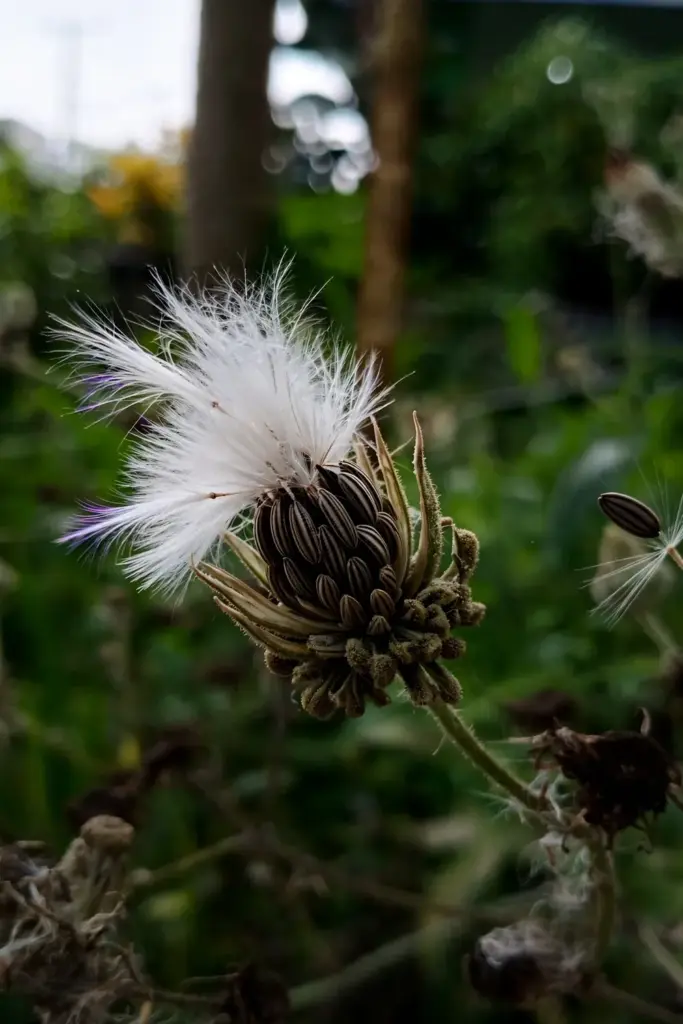
Tempuyung spreads on two tracks at once, and that double track explains its reputation. Seeds ride the wind on a tuft of white hairs, and roots creep sideways underground and throw up new shoots. Either track alone would make a strong weed. Together they make a plant that recolonizes ground you thought you had cleared.
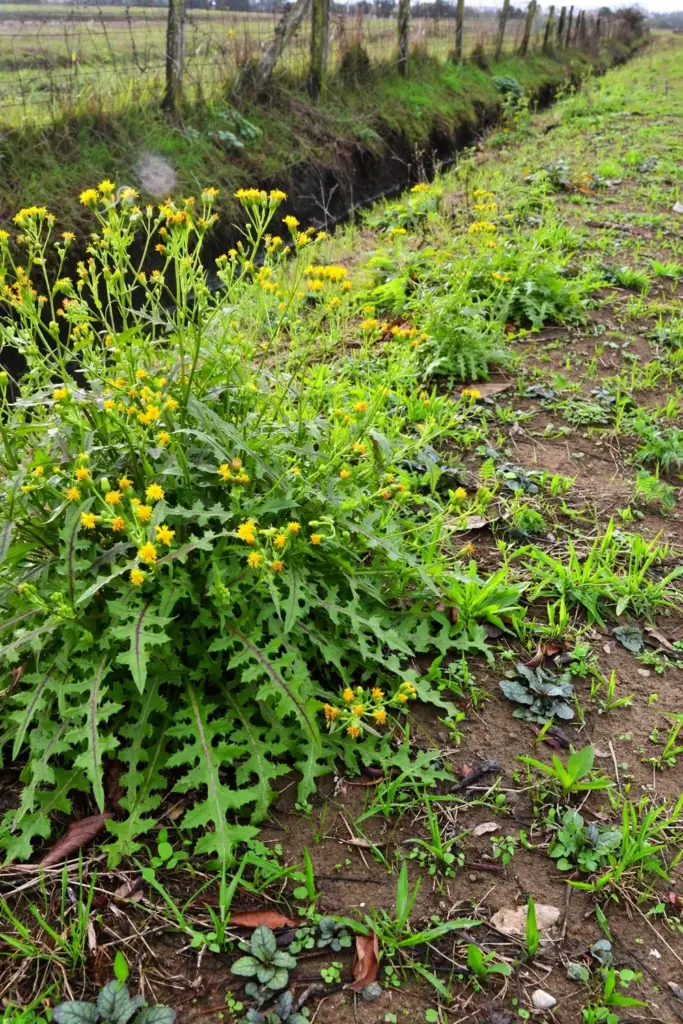
The seed numbers run high. Perennial sowthistles produce an average of 30 seeds per head, and a particularly large, isolated shoot reportedly produced 62 seed heads and a seed count approaching 10,000 seeds, according to the Sustainable Agriculture Research and Education perennial sowthistle profile. Five to 20 seed heads is more typical of plants growing in agricultural fields. A second profile puts a single plant at 4,000 seeds that may remain viable in the soil for several years, according to the Virginia Tech perennial sowthistle profile. Seeds can mature on cut stems once the flowers are pollinated, so cutting a flowering plant and dropping it does not end the seed supply.
The root track matters more. Spreading roots are the primary means of vegetative reproduction, and the edges of clones spread outward at a rate of 1.6 to 9.2 feet per year, according to the Sustainable Agriculture Research and Education perennial sowthistle profile. Storage roots sit mostly in the plow layer, and root fragments probably disperse in soil clinging to tillage machinery, according to the Sustainable Agriculture Research and Education perennial sowthistle profile. Tillage drags fragments to new ground. That is why this article gives no planting advice. Every act of moving tempuyung roots moves the weed.
8. Check the Weed Law Before You Touch a Plant
Tempuyung is a listed noxious weed in many jurisdictions. Washington State lists perennial sowthistle as a Class C noxious weed, after changing it from Class B to Class C in 2013, according to the Washington State Noxious Weed Control Board perennial sowthistle page. The same page notes that the plant is classified as a noxious weed in many states and provinces. A Class C listing still means the plant is recognized as a weed of concern. It does not mean the plant is harmless.
Check your own local rules before you move, sell, or share any tempuyung plant or seed. Some jurisdictions require control on private land. Some restrict the sale or transport of listed weeds. A gardener who mails seeds to a friend across a state or provincial line can break a rule without knowing it. Your county extension office or noxious weed board gives the answer for your address. Search for your county name plus noxious weed board, and ask about Sonchus arvensis by its botanical name.
The legal status also shapes foraging. Picking leaves from a plant that already grows wild is one matter. Digging roots, saving seed, or planting it in a garden bed is another. Keep every use described here on the wild-plant side of that line. Forage plants that already grow. Never introduce tempuyung to new ground.
9. Put Tempuyung Uses to Work the Jamu Way
Tempuyung uses in jamu center on the leaves. Indonesian ethnobotany records tempuyung leaves boiled and used for treating kidney stones, in a survey of Javanese medicinal plants published in E3S Web of Conferences, which lists the leaf as boiled for kidney stones in its ethnobotany survey of Javanese medicinal plants. The same tradition describes the plant as a diuretic, a stone breaker, and a remedy for swelling. Those are traditional descriptions, not proven medical facts. This article reports what the tradition says. It does not promise any result.
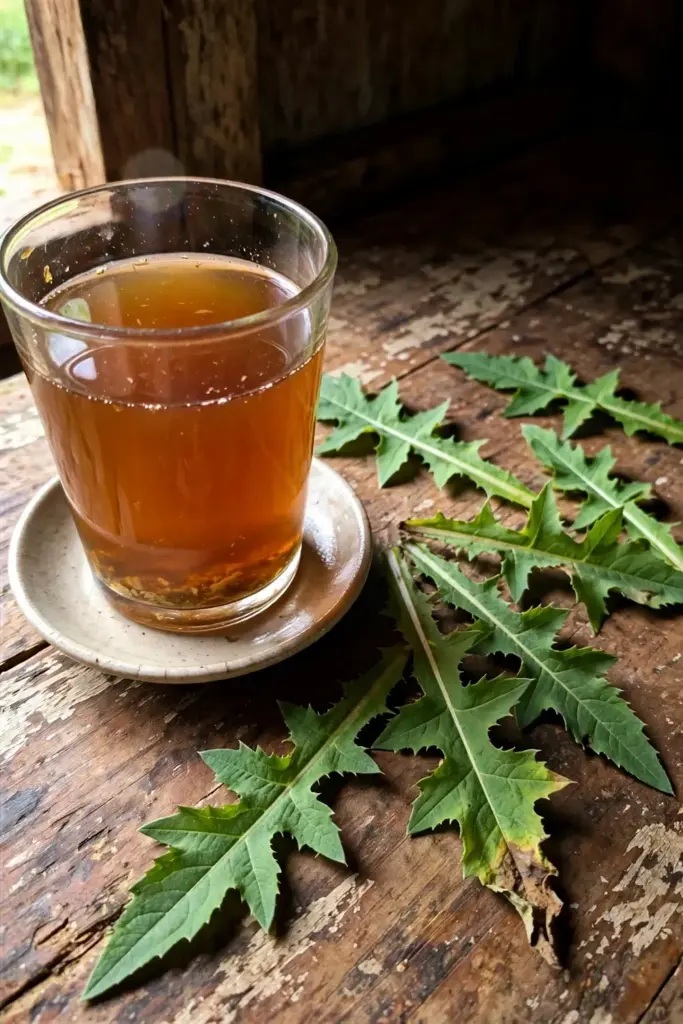
Animal research exists and human proof does not follow from it. Rat studies have tested tempuyung leaf extract for uric acid and blood pressure effects. A rat result is a starting point for more research. It is not evidence that a cup of leaf tea treats kidney stones, gout, or hypertension in a person. No dosage appears below, by design. Traditional jamu preparation varies by seller and region, and no standardized human dose exists in the sources this article links. Anyone with kidney stones, gout, high blood pressure, or a kidney condition should talk to a clinician before using tempuyung in any form. Kidney stones can block urine flow and need prompt medical care.
Buy jamu from a reputable seller when you want the traditional preparation. A packaged jamu product carries a producer name, an ingredient list, and a registration number you can check. Leaves picked from a roadside carry exhaust dust, spray drift, and soil contaminants that no seller would accept. The traditional use deserves a clean source. The wild plant deserves to stay where it grows.
10. Eat Young Leaves as a Foraged Green With 4 Safety Rules
Tempuyung leaves also serve as food. The leaves have sometimes been eaten as a salad or pot herb, according to the Sustainable Agriculture Research and Education perennial sowthistle profile. Young leaves taste best. Older leaves turn bitter and tough, and bitterness is the plant telling you the season has passed. Pick young leaves in spring growth, before flower stalks rise.
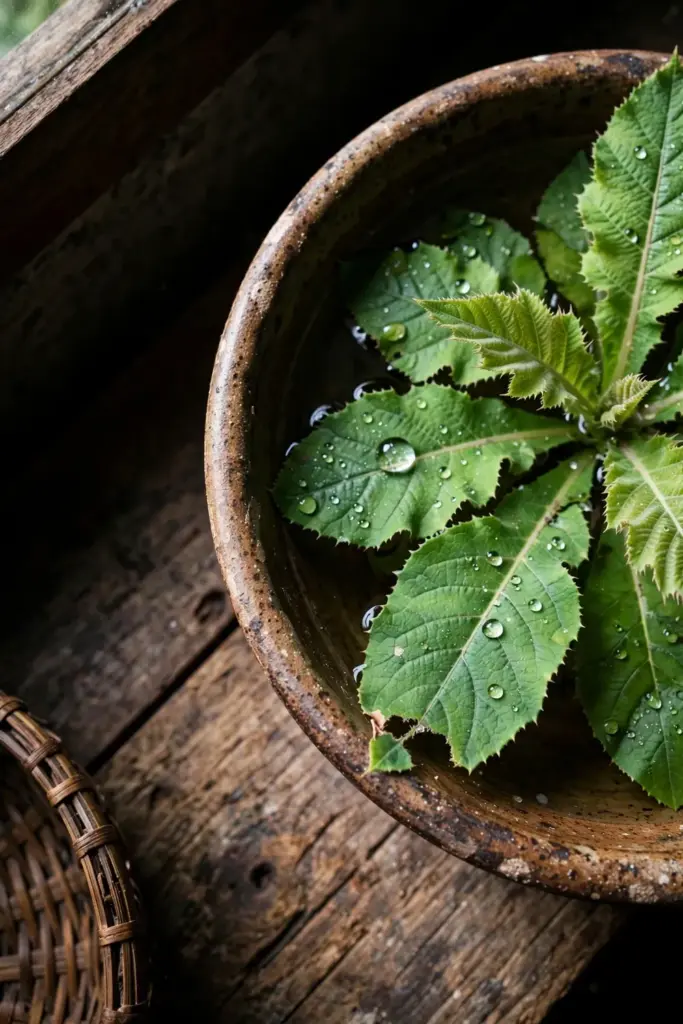
Four safety rules govern every foraged bite. First, confirm the identification with all five field marks from the first section, plus the hollow stem and milky sap test. Never eat a plant you named from a single photo. Second, pick only from ground you trust. Skip roadsides, sprayed field edges, drainage ditches, and any site with unknown chemical history. Third, wash the leaves well and cook them when in doubt. Cooking softens bitterness and suits a pot herb better than a raw salad. Fourth, respect the Asteraceae family. People with ragweed family allergies should skip sow thistles entirely. Stop eating a new wild green at the first sign of mouth tingling, stomach upset, or rash, and seek care if symptoms persist.
Foragers who want a gentler introduction to wild greens should start with dandelion, a well known edible with a long record as food, which teaches the same rosette and milky sap checks in a lower risk plant. Tempuyung suits a forager who already knows the sow thistle group. It never suits a first wild green eaten on a guess.
11. Handle Harvested Plants So They Never Spread
Every tempuyung plant you pick carries the next infestation inside it. Seeds mature on cut stems once the flowers are pollinated, according to the Sustainable Agriculture Research and Education perennial sowthistle profile. A flowering stem tossed on a compost pile finishes ripening its seed there. A root fragment dropped on a path takes root. Harvest with the exit plan settled before the first cut.
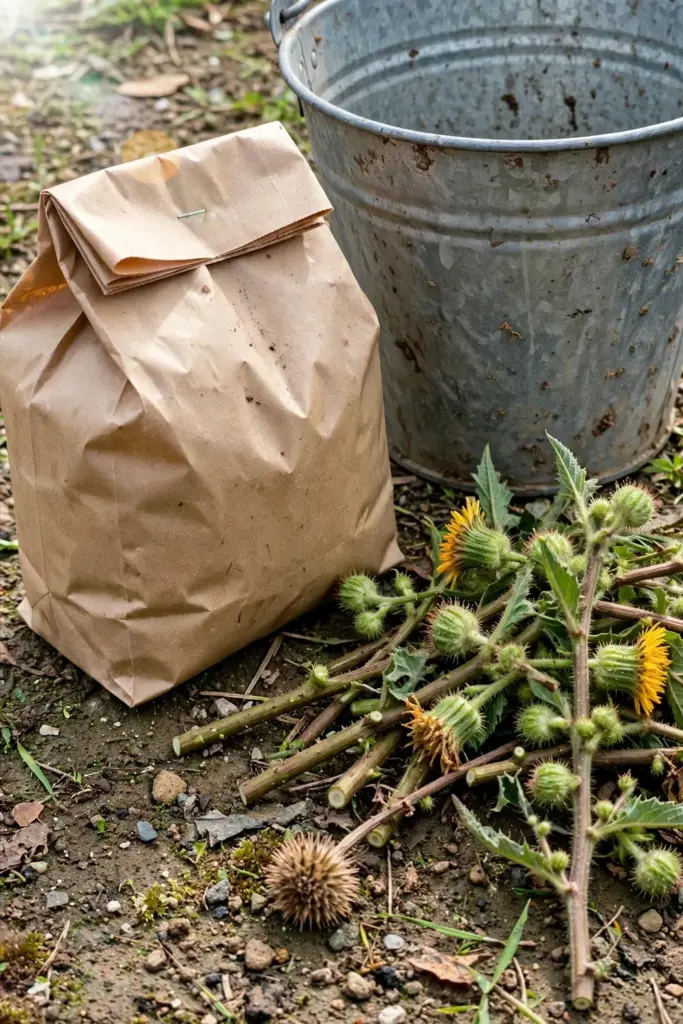
Bag flower heads at the plant. Carry a bag, snip the heads into it, and seal it before you move on. Never compost tempuyung flower heads, stems with open flowers, or roots. Bag them and send them with household trash where local rules allow, or follow your weed board’s disposal guidance. Clean tools and boots after working around a patch. Soil clinging to a trowel or a boot tread carries root fragments and seed to the next bed.
Never move soil from a tempuyung patch to another bed. Spreading roots are the primary means of vegetative reproduction, and root fragments travel in soil on tools, according to the Sustainable Agriculture Research and Education perennial sowthistle profile. A shovelful of infested soil plants the weed for you. Keep harvested plants in one spot, work them there, and wash the tools there. The discipline sounds fussy. It is the difference between one patch and five.
12. Decide What to Do When Tempuyung Appears in Your Garden
Tempuyung in a garden bed is a removal job, not a harvest opportunity. Start early, while the patch is small. Young plants pull more cleanly than established clumps with deep roots. Work after rain, when the soil gives. Grip low, pull slow, and chase the horizontal roots as far as they run. Every fragment left behind becomes a new shoot.
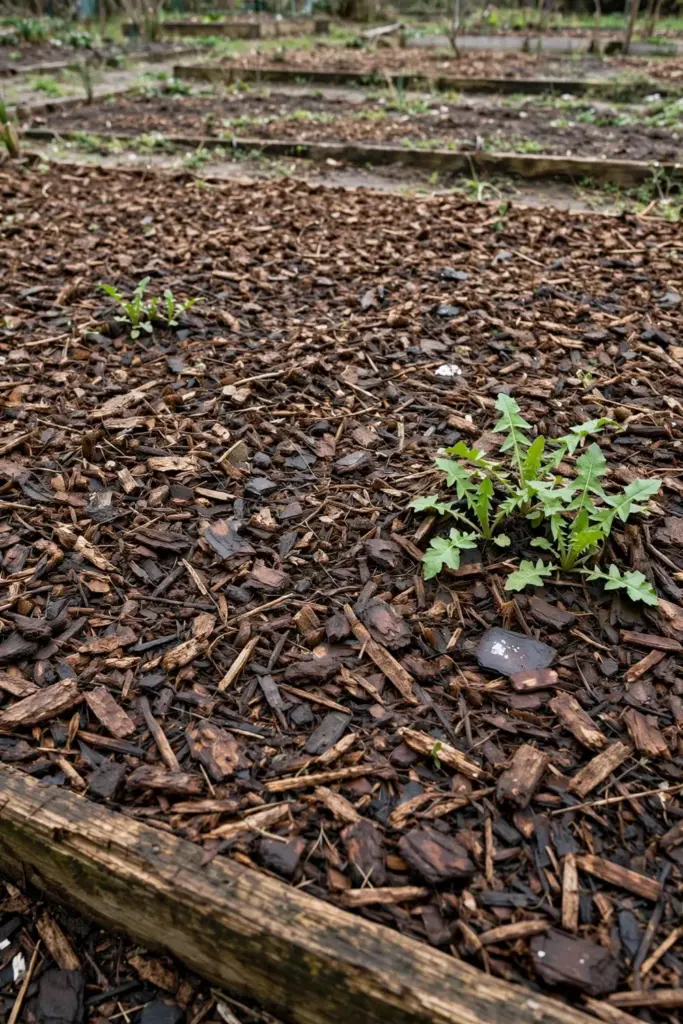
Repeat visits beat one heroic session. New shoots emerge from root fragments for weeks after the first pull. Walk the patch weekly and remove regrowth before it flowers. A plant that never flowers never seeds. That single rule cuts the seed track to zero while you wear down the root track. Persistence across a season does what one afternoon cannot.
Cover bare ground after clearing. Mulch blocks light and slows regrowth, and dense planting leaves less room for new shoots. The site’s organic weed control guide covers mulch, cover, and competition in detail. Gardeners fighting a different persistent root weed will find a parallel story in the site’s field bindweed guide. Both plants punish half measures. Both yield to steady removal before flowering, season after season.
Call your local extension office when the patch covers a large area or sits near a crop field. Staff there know the local listing, the control calendar, and the disposal rules. A phone call costs nothing and keeps you inside the law. Never reach for a herbicide on a label you have not read, and never spray near water, food beds, or a neighbor’s fence without checking the label and the local rules first.
Frequently Asked Questions
No. Tempuyung is Sonchus arvensis, a tall leafy stem with several yellow flower heads, hollow stems, milky sap, and creeping roots. Dandelion is Taraxacum officinale, a basal rosette with one yellow flower on each hollow, leafless stalk and a single taproot. The flowers look alike at a glance. The growth form never matches. Count flowers per stalk and check for a leafy stem before you name any yellow-flowered plant.
Do not. A pot does not contain this plant. Roots escape through drainage holes, seeds blow off the balcony, and soil from the pot carries fragments to the next bed. A large isolated shoot carried 62 seed heads, and root fragments regenerate into new plants. The plant is a listed noxious weed in many jurisdictions. Forage wild plants that already grow, or buy jamu from a reputable seller, instead of planting it.
Young leaves have a record as a salad or pot herb, but safe eating depends on positive identification, clean ground, and your own allergies. Confirm all five field marks plus the hollow stem and milky sap test. Skip roadsides and sprayed sites. Wash well and cook when in doubt. People with Asteraceae or ragweed family allergies should skip sow thistles entirely. Stop at the first sign of tingling, stomach upset, or rash.
Traditional jamu use describes tempuyung leaves boiled for kidney stones, and rat studies have tested leaf extract for uric acid and blood pressure effects. Neither source proves that leaf tea dissolves kidney stones in people. No dosage appears below because no standardized human dose exists in the linked sources. Kidney stones can block urine flow and need prompt medical care. Talk to a clinician before using tempuyung for any kidney condition.
Remove plants before they flower, pull slowly to chase horizontal roots, and repeat weekly through the season. Bag flower heads at the plant and never compost roots or flowering stems. Mulch and dense planting slow regrowth. Check your local weed listing and disposal rules, and call your county extension office for large patches. Persistence across a season beats one heroic session, because root fragments resprout after the first pull.
Tempuyung is Sonchus arvensis, a yellow-flowered sow thistle with milky sap, a hollow stem, and creeping roots. Milk thistle is Silybum marianum, a purple-flowered true thistle with large spiny leaves marbled by milky white veins and a single large spiny flower head. The shared word thistle is the only link. Never substitute one for the other in food or jamu, and check the botanical name on any product you buy.
Make the Honest Call on Tempuyung
Tempuyung uses make sense only in one direction. Learn the plant, name it correctly, forage it where it already grows, and keep it from spreading. That is the full program. It needs no seed packet, no garden bed, and no cultivation advice. The plant already grows where it grows, and it spreads faster than any gardener can use it.
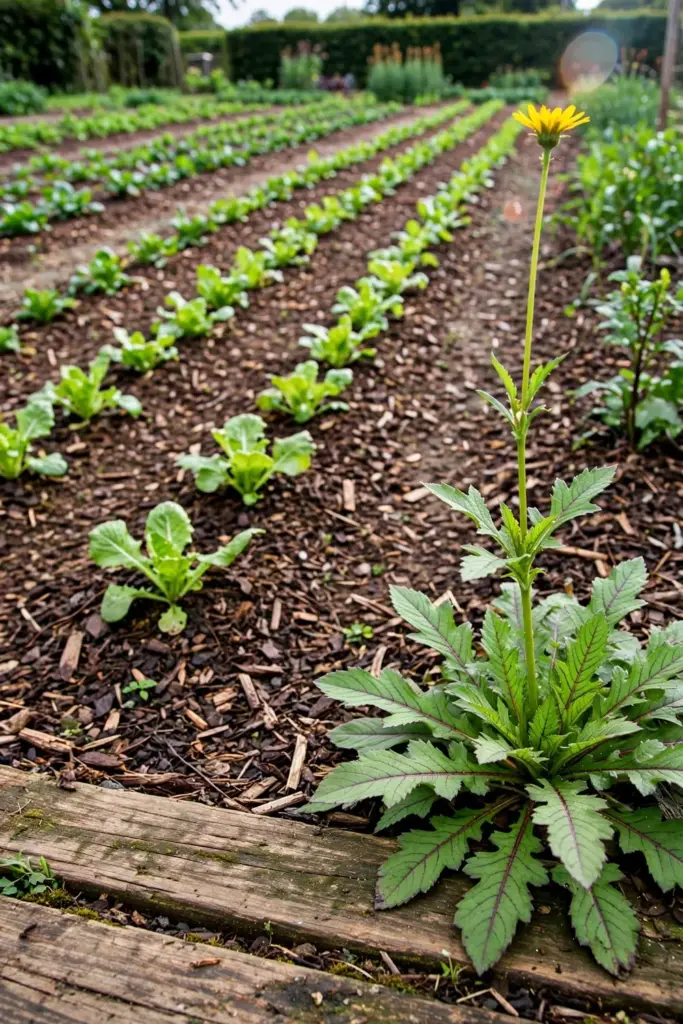
The honest call is a two part habit. First, check every yellow-flowered weed against the five field marks, the hollow stem, and the milky sap before you name it or eat it. Second, keep every harvest inside the containment rules: bag the flower heads, never compost the roots, never move the soil. A plant this persistent deserves respect in both directions. Use it well where it already stands, and never give it a new address.