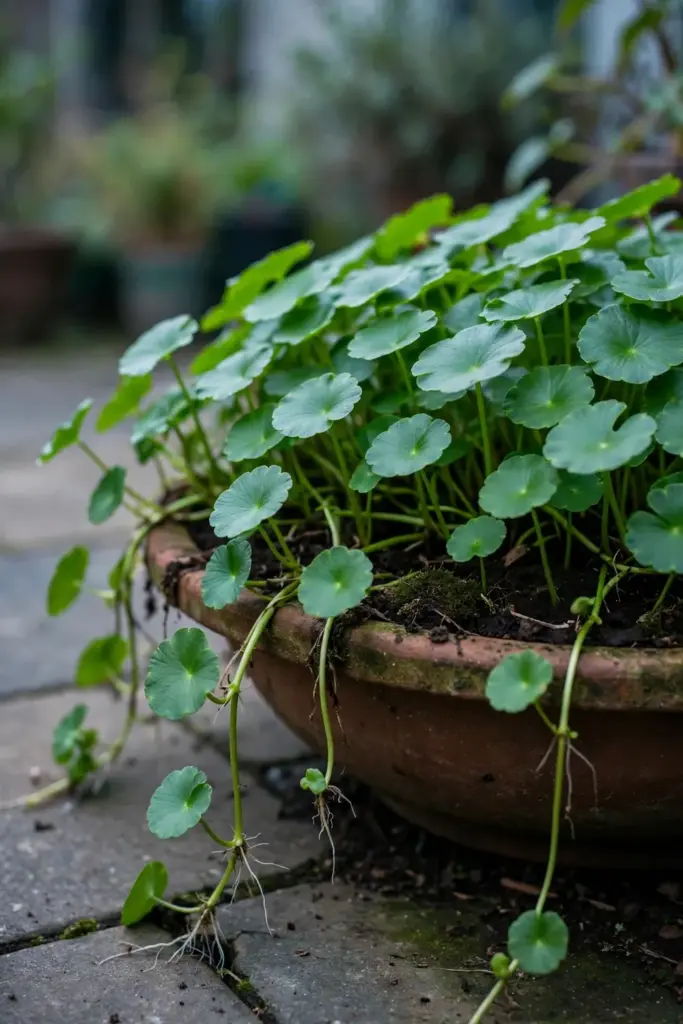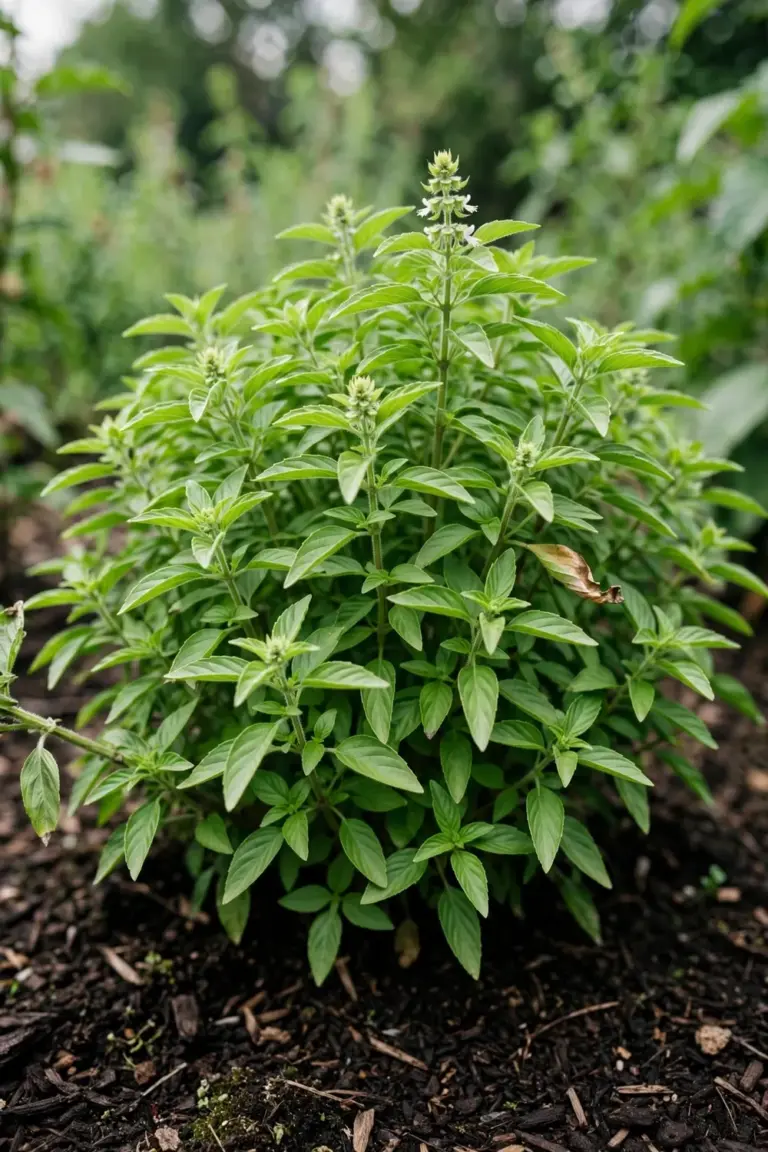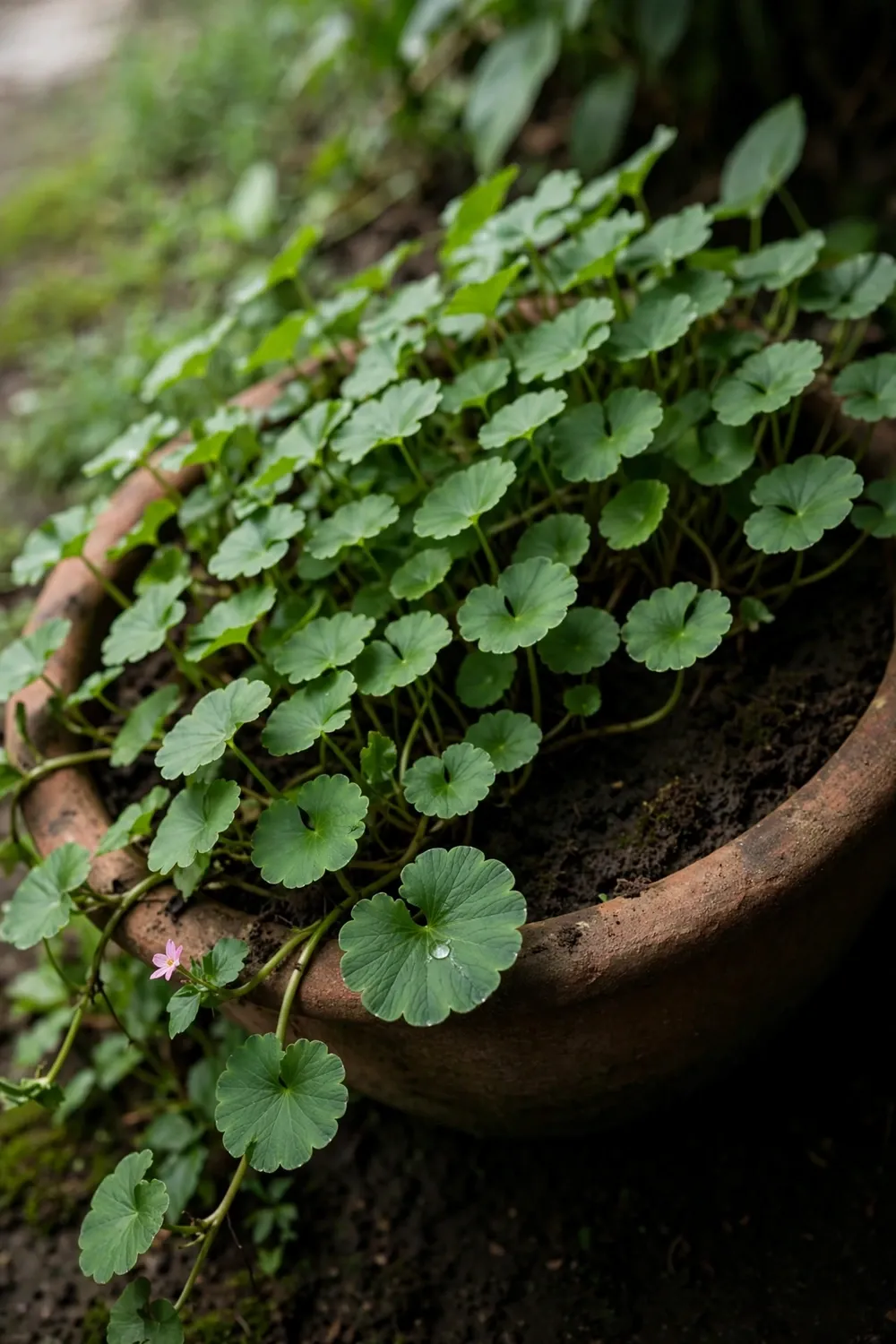

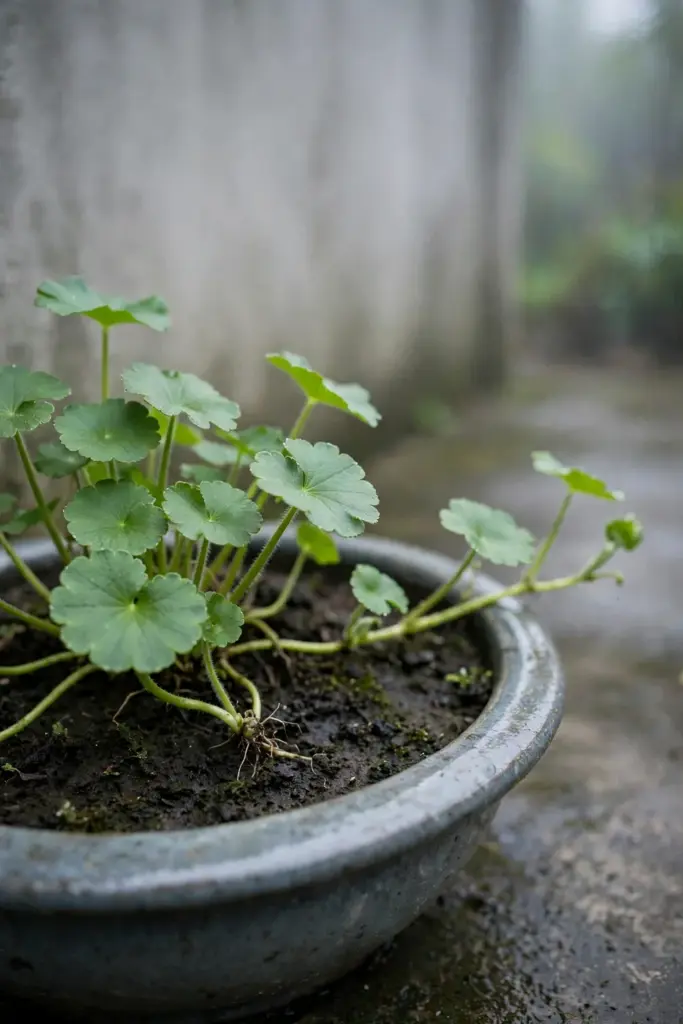
Gotu kola (pegagan) grows in 90 days from a rooted runner and belongs in a pot, not the open garden. This creeping tropical perennial sends out stolons that root at every node, so a wide shallow container holds it in check while keeping its fan-shaped leaves harvestable. Learn how to grow gotu kola from surface-sown seeds, multiply runners in 7 to 14 days, and keep the patch contained season after season.
Most seed trays sit empty for a month before the first kidney-shaped cotyledons appear. That wait is normal. Seeds of gotu kola germinate in 14 to 28 days in warmth, and stragglers can take 60 days to emerge. Division and runners skip the wait entirely. Gardeners who grow gotu kola in pots alongside other moisture-loving herbs, like growing ginger at home in containers, already own the main skill this plant demands: never letting the soil dry out.
Gotu Kola Quick Specs
| Spec | Value |
|---|---|
| Botanical name | Centella asiatica, carrot family (Apiaceae) |
| Common names | Gotu kola, pegagan, Indian pennywort, Asiatic pennywort |
| Habit | Low creeping perennial, 10 to 20 cm tall, spreads 20 to 80 cm |
| Hardiness | Zones 8 to 12 as a perennial; a potted plant or summer annual elsewhere |
| Container size | At least 12 inches wide and 8 inches deep, drainage holes required |
| Soil | Rich, moisture-retentive mix; pH 6.0 to 7.2 |
| Light | Partial shade; morning sun with afternoon shade in hot climates |
| Water | Never let the mix dry out; daily in summer heat |
| Seed germination | 14 to 28 days in warmth; stragglers 60 days |
| Runner rooting | 7 to 14 days when nodes stay pressed on damp mix |
| First harvest | 3 to 5 months from seed; 4 to 6 weeks from a runner division |
| Feed | Balanced liquid fertilizer at half strength every 3 to 4 weeks |
Tell Gotu Kola From True Brahmi in 5 Field Marks
Before you spend a dollar, check these five marks. Seed buyers receive the wrong plant more often than any other herb in the trade. True brahmi is Bacopa monnieri, a completely different species in the Plantaginaceae family, while gotu kola is Centella asiatica in the Apiaceae (carrot) family. Nursery stalls and seed packets across Asia sell gotu kola under the name “Brahmi.”
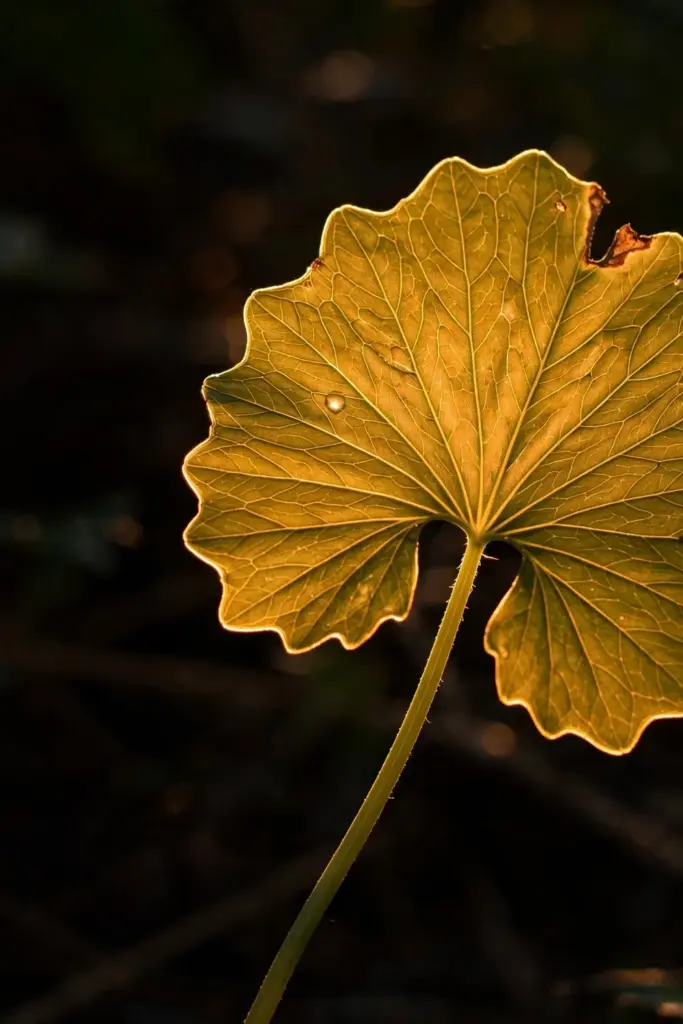
Gotu kola carries fan-shaped, scalloped leaves on long petioles. NC State’s extension plant toolbox describes small fan-shaped green leaves and small white or pinkish flowers on a rhizomatous perennial of the carrot family, the same plant group that gives us parsley. Bacopa looks nothing like this up close. Both are creeping perennials with traditional cognitive reputations. But the chemistry differs. Gotu kola builds asiaticoside and madecassoside as its major bioactive compounds, while brahmi builds bacosides, per a peer-reviewed botanical comparison of the two species. That distinction is exactly why the label matters to growers who want the right plant.
| Mark | Gotu Kola (Centella asiatica) | True Brahmi (Bacopa monnieri) |
|---|---|---|
| Botanical family | Apiaceae, the carrot family | Plantaginaceae |
| Growth habit | Creeping perennial with long-petioled, fan-shaped scalloped leaves | Creeping perennial with small leaves paired along the stems |
| Flowers | Small, white or pinkish | Small and pale; check the species name before buying |
| Key compounds | Asiaticoside and madecassoside, both triterpenoid saponins | Bacosides |
| Trade label | Often sold as “Brahmi” in Asian nurseries and seed shops | True brahmi of the Ayurvedic trade |
The same botanical comparison documents that the trade name “Brahmi” is used interchangeably for Centella asiatica and Bacopa monnieri, and that their active constituents differ significantly. Read the Latin name on the packet before you sow.
Start Seeds 8 to 10 Weeks Before Your Last Frost
Start gotu kola seeds indoors 8 to 10 weeks before your region’s last frost date, because the germination window runs long. That head start gives seedlings time to reach the 1-to-2-inch transplant size before summer warmth arrives. Seeds lose viability in storage, so buy from a supplier that moves fresh stock and sow soon after the packet arrives. Look for firm, intact, medium-to-dark brown seeds and skip packets full of dust or cracked hulls.
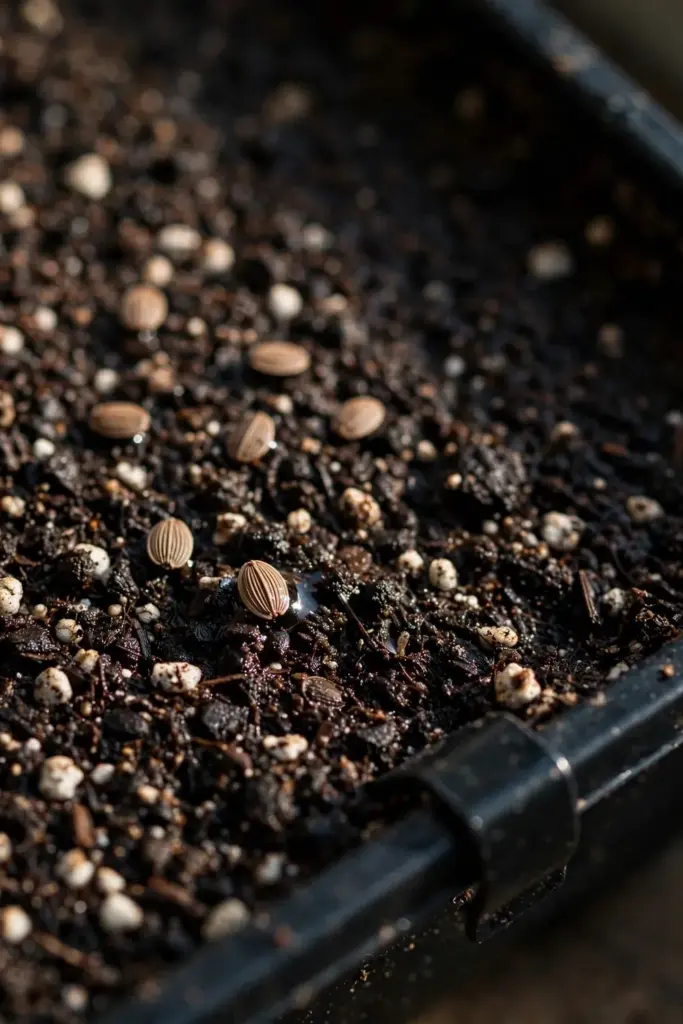
Store unplanted seeds in a sealed vial or airtight envelope in a cool place between 45°F and 55°F. Never freeze them. Germination rates typically run 30 to 70 percent, according to TheRike’s gotu kola propagation guide, so sow extra seed to compensate for the natural variability.
What you need before step one: a seed tray or small pots, a fine-textured sterile seed-starting mix (peat or coconut coir with perlite), a clear plastic dome or sealable bag, a spray bottle, and a seedling heat mat. A heat mat set between 75°F and 85°F holds the tray in the zone where metabolism stays active.
Sow Seeds on the Surface Under a Humidity Dome
Gotu kola seeds need light to germinate, so never bury them. Fill the tray with pre-moistened sterile mix, scatter the seeds thinly across the surface, and press them in with a fingertip or a flat board to make seed-to-soil contact. At most, dust them with a paper-thin layer of fine vermiculite, no deeper than 1/16 inch.
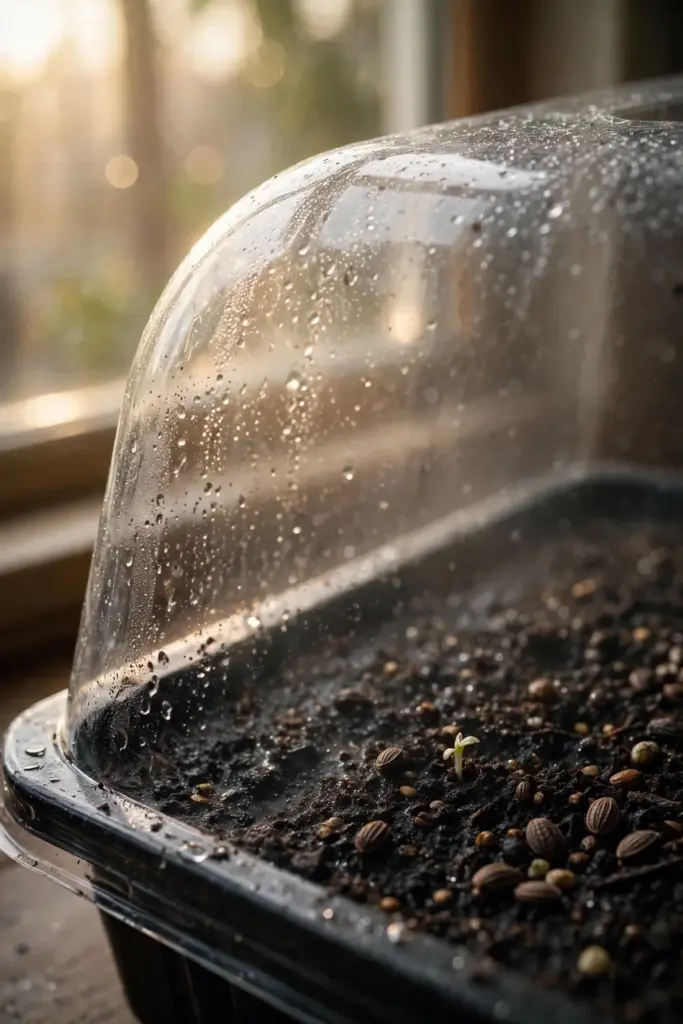
Cover the tray with a clear dome or slide it into a sealable plastic bag. The sealed cover keeps the tiny seeds from drying out during their long emergence window. Set the covered tray on the heat mat in bright, indirect light. Direct midday sun on a covered tray cooks the soil surface, so keep the tray under a grow light or in a warm room with indirect window light.
Check the tray daily and mist the surface when the top layer begins to dry. Bottom-watering also works and avoids disturbing the seeds. One detailed sowing plan gives 14 to 28 days for most seeds to emerge in steady warmth, with stragglers continuing for 60 days. When seedlings emerge, prop the dome open slightly to increase air circulation. For a full refresher on the basics, the site’s seed starting guide covers sterile mix, light distance, and hardening off in one place.
Transplant when seedlings produce two to three sets of true fan-shaped leaves and stand about 1 to 2 inches tall. Prick them out into 3-inch or 4-inch pots of rich, moisture-retentive potting mix. Hold them under bright, indirect light for one week before they move to their permanent pots or outdoors.
Multiply Runners by Pinning 4 to 6 Inch Stolons
A runner division beats seed in every measure that matters to a home gardener: speed, reliability, and identity. Find a healthy stolon trailing across the pot surface and choose a section 4 to 6 inches long with multiple nodes. Lay it across damp potting mix so several nodes touch the soil, and pin each node down with a bent wire or a landscape staple. Roots emerge from the nodes within 7 to 14 days. Once roots reach an inch long, snip the runner from the parent plant and move the new plant to its own pot.
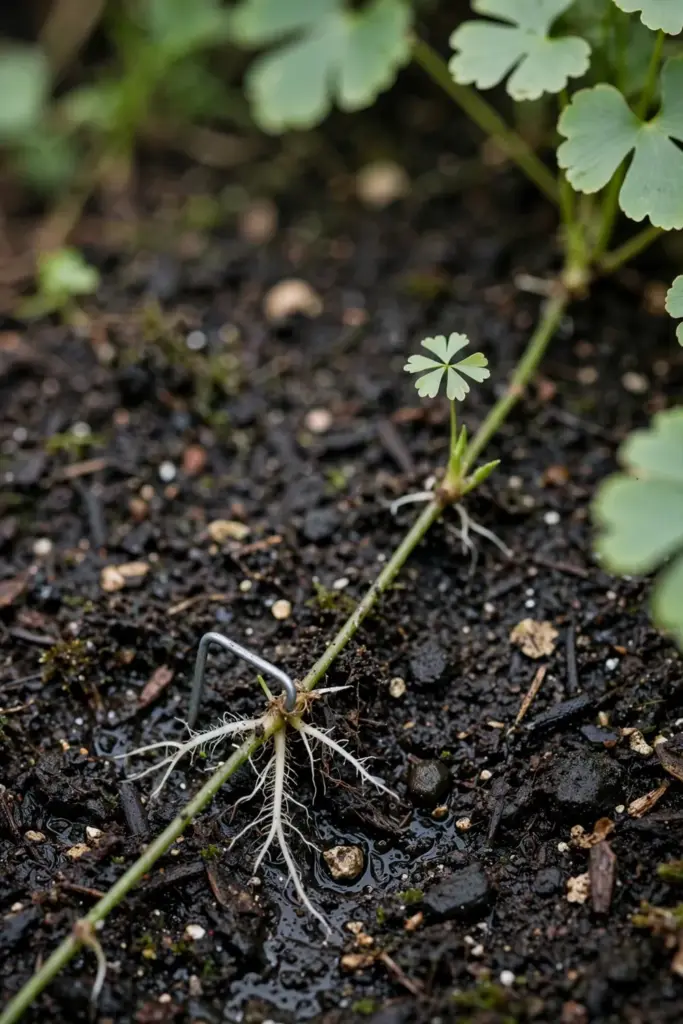
Seed propagation runs 3 to 5 months from sowing to the first leaf harvest, while runner divisions reach the first harvest in 4 to 6 weeks after transplanting, per the same propagation guide’s comparison table. Seeds carry high genetic diversity and a low disease risk, since seed skips the soil-borne problems of a parent pot. Divisions are clones of the parent, so pick runners from your healthiest, most vigorous plant.
| Factor | Seed | Runner division |
|---|---|---|
| Time to first harvest | 3 to 5 months from sowing | 4 to 6 weeks after transplanting |
| Ease | Slow, uneven, needs warmth and steady moisture | Very easy once runners trail |
| Genetics | New variation in every seedling | Identical clone of the parent |
| Best when | You want clean stock or a large patch from one packet | You already own one plant and want more |
| Risk | Low germination rate, long wait | Can carry pests from the parent pot |
If you can buy one healthy nursery plant, buy the plant. Seeds are for gardeners who enjoy the slow game. For most home gardeners, learning how to grow gotu kola means learning runners first and seeds second.
Build the 1:1:1 Moisture-Holding Potting Mix
Gotu kola wants soil that feels like a wrung-out sponge: always damp, never waterlogged. Mix one part garden soil, one part fine compost, and one part perlite. The compost feeds. The perlite keeps air in the mix so roots breathe, and coconut coir or peat moss works as the base if you skip garden soil. Heavy clay or plain sand both fail here. One stays anaerobic; the other dries out by noon.
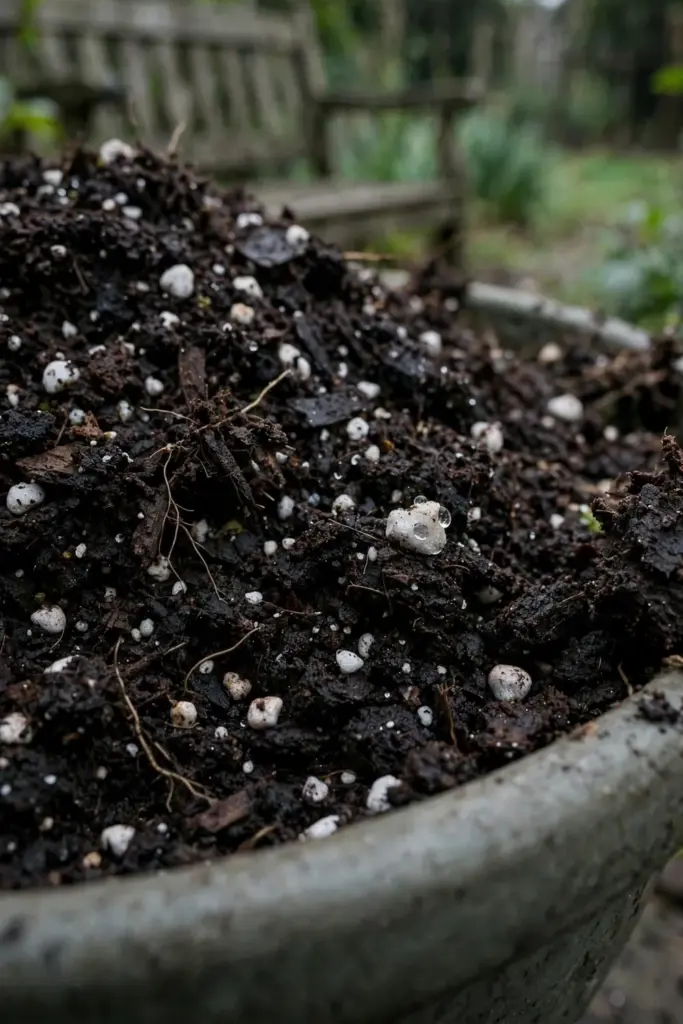
Aim for a slightly acidic to neutral pH between 6.0 and 7.2, the range TheRike’s container growing guide recommends. Gardeners with alkaline soil can bring the number down with peat moss or elemental sulfur. A rich organic layer matters more than fertilizer at planting time, because gotu kola draws most of its early vigor from composted matter in the mix. The site’s soil health guide explains how compost, structure, and biology hold a mix together over a season.
Fill a wide, shallow container rather than a deep narrow one. Gotu kola roots sit shallow and its stolons run horizontally across the surface. A planter at least 12 inches across and 8 inches deep gives one plant room to fill out, per the same guide’s pot sizing advice. Glazed ceramic or plastic holds moisture better than terracotta, which wicks water away from thirsty roots. Every pot needs drainage holes. Gotu kola tolerates wet feet, but stagnant water with no air movement rots roots.
Give Morning Sun, Then Shade After Midday
Put pots in partial shade. Morning sun followed by afternoon shade suits gotu kola in most climates, and bright filtered light under a tree canopy works just as well. Full sun forces the leaves to hug the ground and scorches the margins in hot regions. In cooler northern zones, the plant tolerates more direct sun because heat intensity is lower.
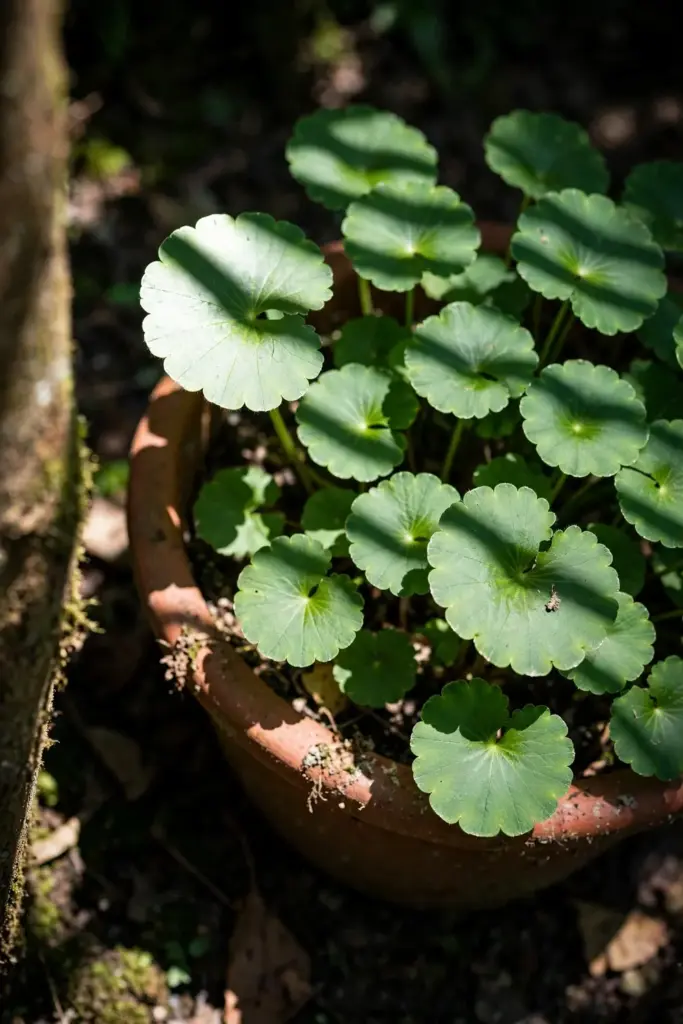
Shade changes the leaf shape. Plants in shade push longer petioles and larger leaves, while sun-grown plants stay flatter and tighter. Deep shade goes too far: plants stretch, grow leggy, and produce smaller leaves. Watch the first week in a new spot. Wilting by afternoon means the sun is too strong or the water too little, and moving the pot a foot or two into softer light often fixes both.
Water Daily in Summer Heat, Every 2 to 3 Days When Cool
Water is the whole job with gotu kola. Check the top inch of mix each morning during warm weather. When the upper layer feels only slightly dry, water at the soil level until it drains from the bottom. Container plants in hot weather need daily watering, sometimes twice a day during a heat wave, as TheRike’s watering protocol describes. Garden-planted gotu kola needs watering every 2 to 3 days between rains.
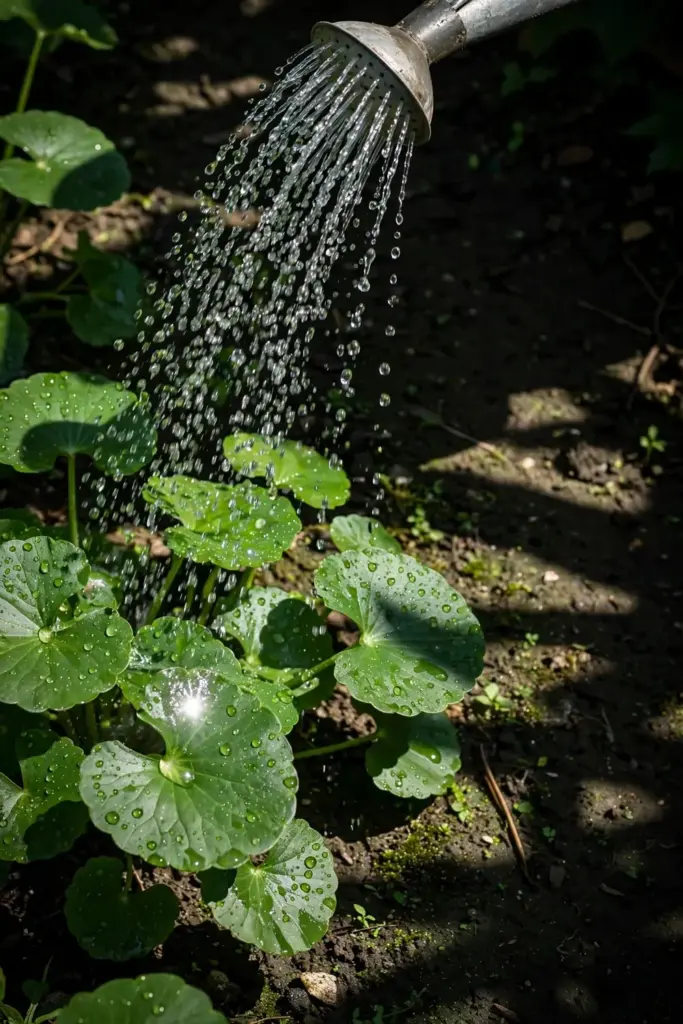
Morning watering uses moisture best and keeps foliage dry into the evening, which lowers fungal risk. A pebble tray of water under the pot raises local humidity around the leaves without soaking the roots. Mulch the surface with a half inch of fine compost or coconut coir to slow evaporation. Wilting, leaf curling, and brown margins signal a water deficit; yellowing leaves and stem rot at the soil line signal too much water with too little drainage. Adjust the schedule before you adjust anything else.
Keep Runners Inside Pots and Buried Edging
Gotu kola spreads by stolons that root at every node they touch. In warm, wet climates it can cover a bed in one season, and NC State’s extension toolbox calls it a highly invasive plant in several Pacific islands where it was introduced. That is the honest version: a vigorous, weed-suppressing creeper that treats the garden bed as a starting point.
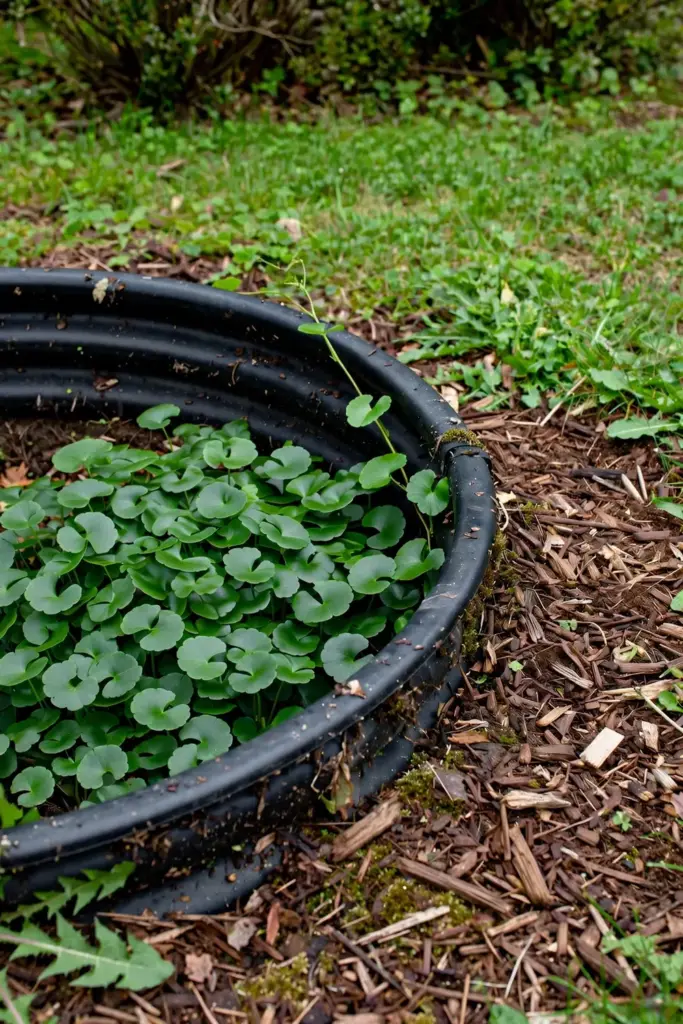
Pots are the containment method. Growing gotu kola in a wide pot holds every runner inside the rim, and the portability lets you move the plant to shade in summer and indoors before frost. Gardeners in warm regions who want it in the ground should sink a pot with its bottom cut out, or bury a solid edging ring 8 to 10 inches deep around the patch. Never dump potting mix that contains gotu kola roots or runners near ditches, ponds, or natural wetlands. I have learned to treat every runner crossing the pot rim as a plant that has already left the reservation: pin it into a new pot or cut it off.
In zones below 8, frost handles the escape risk. Gotu kola dies back under frost and restarts from protected roots, so cold-climate gardeners grow it as a summer annual or bring the pot indoors. The zone 8 to 12 perennial range comes from Strictly Medicinal Seeds’ own growing notes, which also advise potted culture or annual treatment anywhere colder.
Feed Monthly at Half-Strength Liquid Fertilizer
Feed gotu kola lightly and regularly. Apply a balanced liquid organic fertilizer, such as fish emulsion or kelp, diluted to half strength every 3 to 4 weeks through spring and summer, following TheRike’s feeding schedule. Slow-release organic granules worked into the surface in spring cover the same ground. Compost tea every two weeks adds micronutrients and feeds the soil biology that this plant favors.
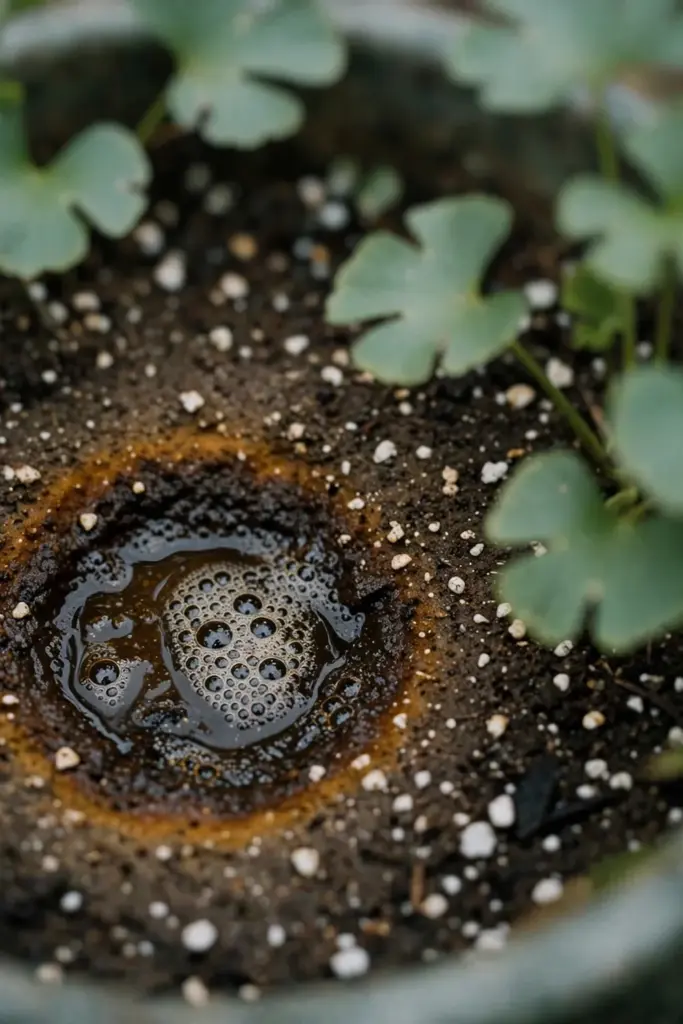
Skip heavy synthetic nitrogen. It pushes weak, watery growth and dilutes the compounds that make gotu kola worth growing. The Asian ecotype, with smaller rounder leaves, already grows more vigorously and resists disease better than the Hawaiian large-leaf type, so feeding more does not fix what genetics already handle. If leaf growth stalls in midsummer, the pot is usually root-bound, not hungry. Move up to a wider container before you reach for the bottle.
Harvest Pinches Without Taking More Than One-Third
Start harvesting once the plant holds a healthy cluster of leaves and runners spread across the pot. Pinch individual mature leaves with their petioles near the base of the plant, using clean scissors or sharp fingers. Morning picking carries the best flavor and leaf turgor, since the leaves rehydrate overnight. Leave the tender new growth alone; it powers the next flush.
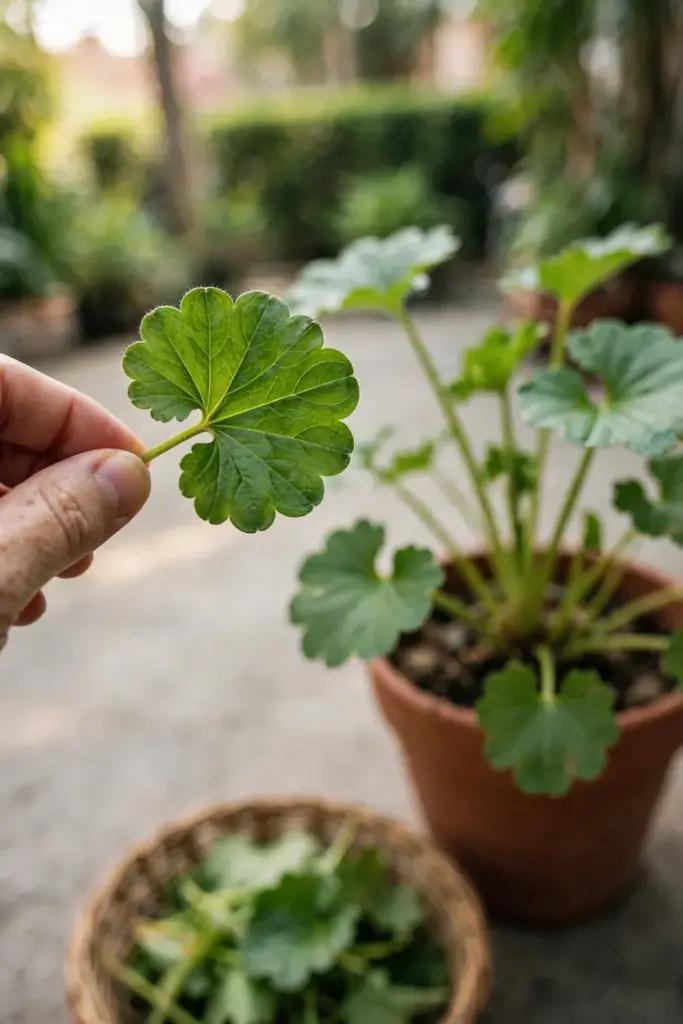
Take no more than one-third of the foliage in any single harvest. The plant needs its remaining leaf area to photosynthesize and push new runners. Wash leaves in cold running water before use. Fresh leaves keep a few days in the refrigerator in a damp paper towel inside a loose bag.
Gotu kola reaches first harvest 90 days after planting as a young transplant. Field plants spaced 2 feet apart can grow large, but container gardeners harvest continuously once the pot fills in. For storage, dry leaves at low temperature (95°F to 105°F) to preserve their compounds, or freeze fresh leaves in ice cube trays topped with water for later tea.
Move Pots Indoors Before the First Frost
Bring gotu kola indoors when nights drop toward freezing. Cold-climate gardeners treat it as a summer herb and overwinter one pot in a bright spot. Set the pot near a sunny south or east-facing window, or under full-spectrum LED grow lights for 12 to 14 hours a day. Keep the mix consistently moist and raise humidity with a water tray or a room humidifier. Winter air from heating dries leaves fast, so misting and the tray both earn their keep.
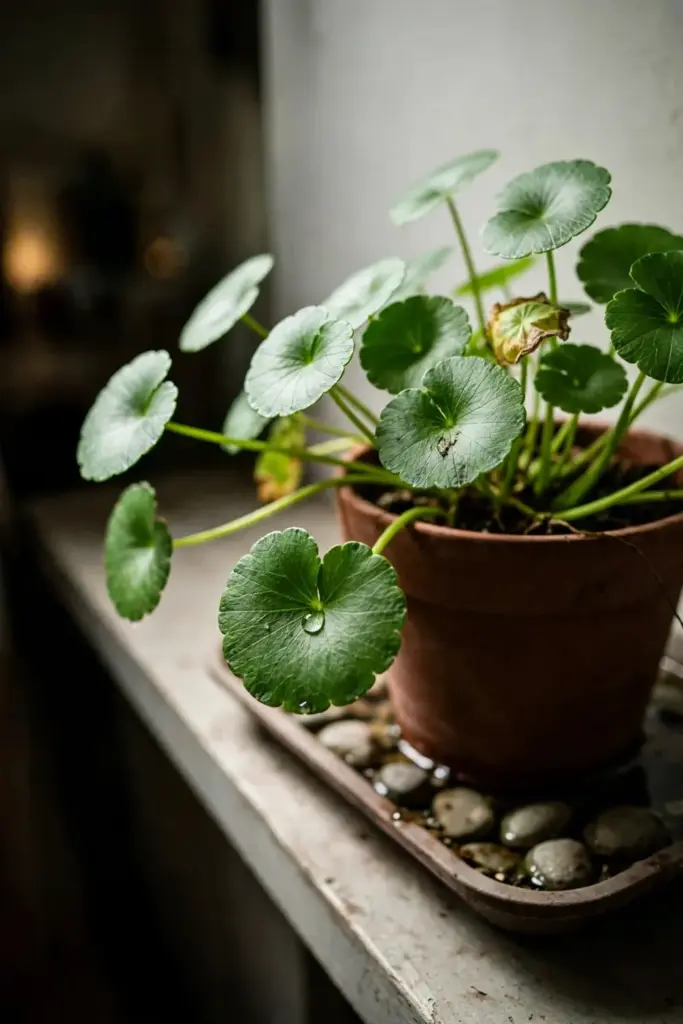
Indoors, gotu kola sometimes gets cranky: growth slows, a few leaves yellow, and pests like spider mites, aphids, or fungus gnats move in. Rinse foliage with tepid water, apply diluted insecticidal soap, and keep air moving around the plants to prevent fungal leaf spot. Do not bring pots in dirty. Cut back declining foliage, check for hitchhiking slugs, and quarantine the pot from houseplants for a week. A pot that stays alive through winter becomes your runner source for the next spring division.
Watch Aphids, Slugs, and Powdery Mildew Early
Gotu kola resists most pests, but three problems show up regularly. Aphids cluster on tender new growth indoors and during spring flushes. Slugs chew notches in leaves during wet weather. Powdery mildew and leaf spot appear when humidity runs high and air circulation runs low. Root rot strikes in stagnant, waterlogged mix: plants wilt even though the soil is wet, and excavated roots turn brown and mushy instead of cream-colored and firm.
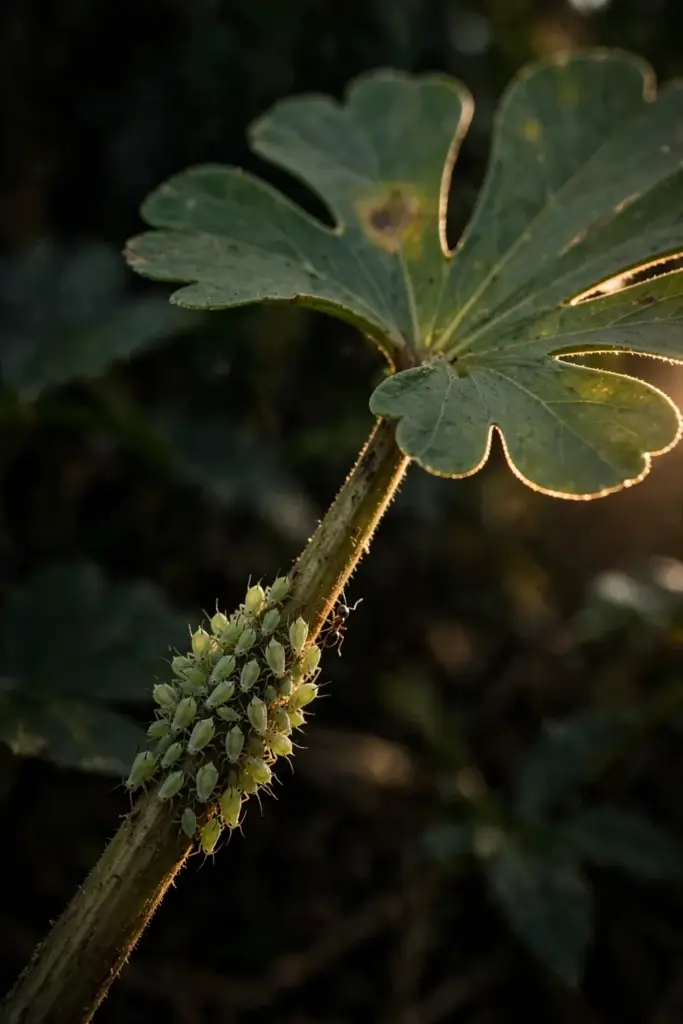
Start with the gentlest fix. Knock aphids off with a strong rinse of tepid water. Hand-pick slugs at night. Remove spotted or mildewed leaves immediately and thin crowded growth so air moves through the canopy. Water at the soil level instead of overhead. For active fungal infections, neem oil or potassium bicarbonate controls the spread. Prevention beats all of it: correct spacing, drainage that never sits, and foliage that dries by evening.
Respect the Safety Fences Around Eating Gotu Kola
Gotu kola is a food and traditional medicine in Asia, and it carries real cautions alongside its uses. Keep consumption at general-info level and talk to a clinician before using it beyond the kitchen. Do not use gotu kola if you are pregnant, and do not use it while breastfeeding. People with liver disease should avoid it entirely. Stop using gotu kola at least 2 weeks before any surgery. It can cause drowsiness, and it interacts with sedative medicines and other products that strain the liver.
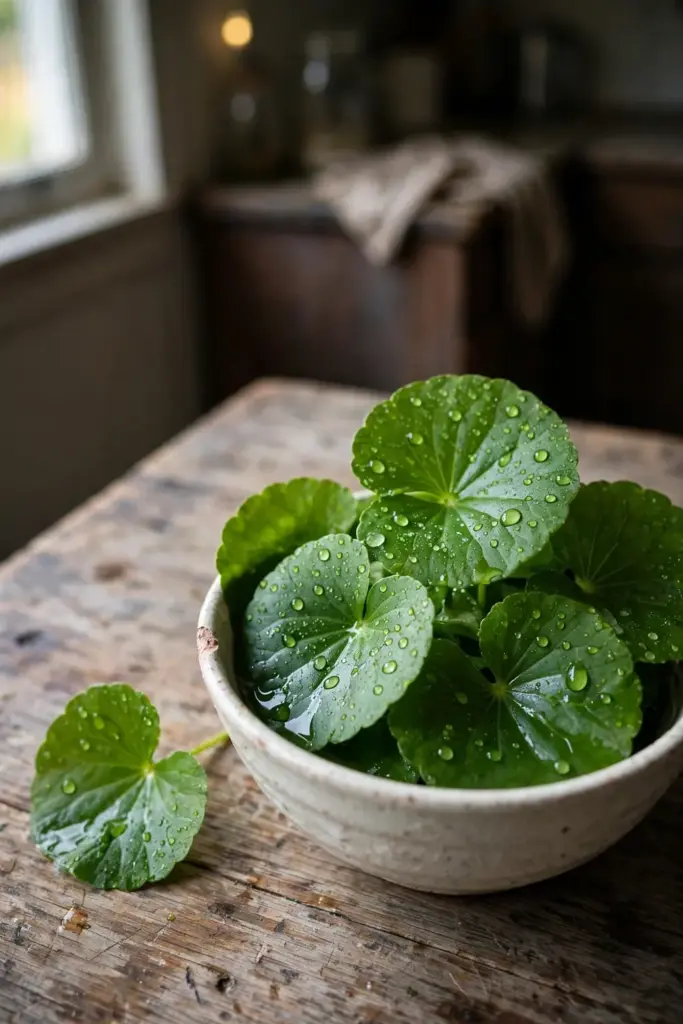
A second fence is environmental. Gotu kola is a bioaccumulator: it readily absorbs heavy metals and residues from polluted soil and water. Never harvest leaves from plants near roadsides, runoff ditches, or chemically treated lawns. Home-grown plants in clean mix and potable water sidestep both the contamination and the identity problems of wild or traded material. Buy supplements only from reliable sources, since some marketed products have been found contaminated with toxic metals.
Fix 5 Failures That Stall Gotu Kola
Seeds never sprout. The tray was too cool, too dry, or the seeds were too old. Hold 75°F to 85°F on a heat mat, keep the dome on, and mist daily. Give stragglers a full 60 days before you declare failure. Buy fresh seed next time; old seed barely sprouts.
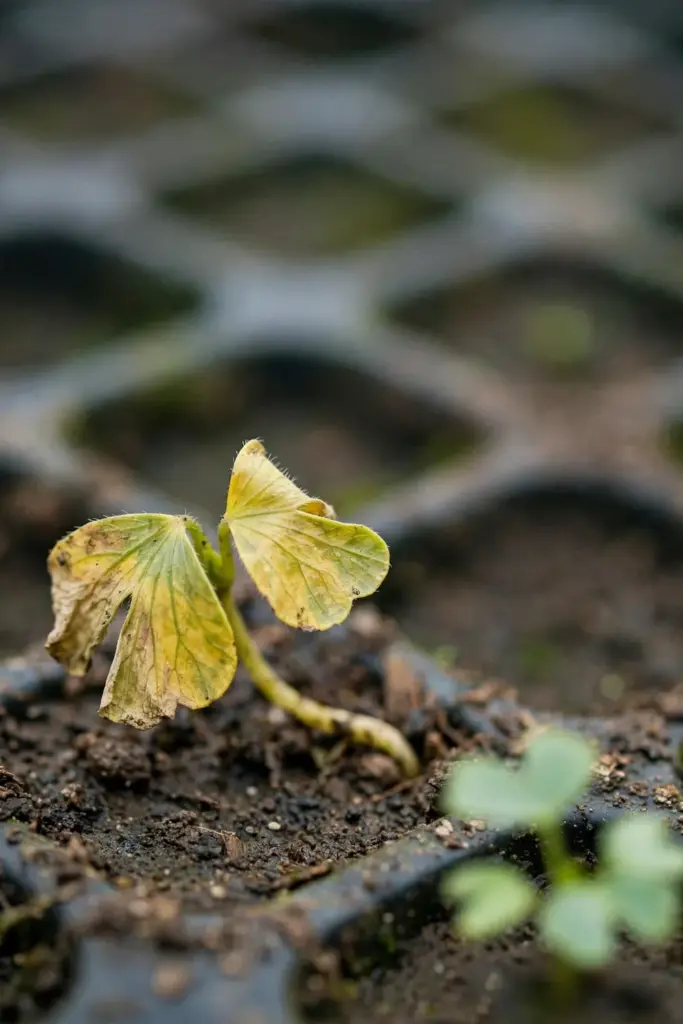
Seedlings collapse at the soil line. Damping-off fungi kill crowded, wet seedlings. Sow thinly in sterile mix, keep light strong, and let the surface breathe once sprouts appear. Start over in fresh mix; infected seedlings do not recover.
Leaves yellow with brown margins. The plant is underwatered. Increase frequency and mulch the surface. Yellowing lower leaves on an otherwise healthy plant can also mean the pot is root-bound: move up to a wider container.
Runners reach the bed and root there. The containment failed. Lift the runner, pin it into a spare pot, and either add buried edging or accept that the pot-only rule exists for a reason. Cut or pin runners weekly during the growing season.
Growth stalls indoors in winter. Light and humidity are too low. Move the pot to your brightest window, run a grow light 12 to 14 hours a day, and set the pot over a water tray. Accept slower growth; the plant is resting, not dying.
Frequently Asked Questions
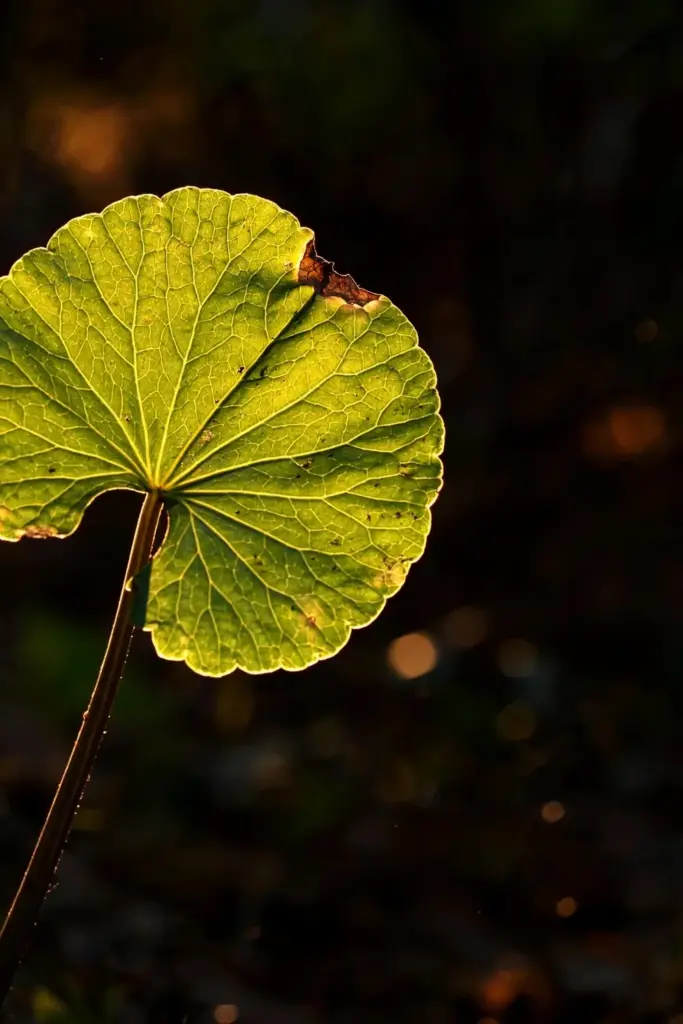
Gotu kola seeds germinate in 14 to 28 days in steady warmth of 75°F to 85°F, with stragglers emerging for 60 days. Seed-grown plants reach their first leaf harvest in 3 to 5 months. Runner divisions are much faster: pinned nodes root in 7 to 14 days and yield a first harvest 4 to 6 weeks after transplanting. Start with a division if you want leaves this season.
Gotu kola spreads aggressively by stolons that root at every node, and NC State’s extension toolbox lists it as a highly invasive plant in several Pacific islands where it was introduced. In warm, wet climates it escapes beds and forms dense mats. Grow it in pots, in beds lined with root barriers, or with buried edging 8 to 10 inches deep. Never dump soil containing runners near waterways or natural wetlands.
Gotu kola grows indoors as a pot plant through winter in cold climates. Give it a sunny south or east-facing window, or full-spectrum LED grow lights for 12 to 14 hours daily. Keep the mix consistently moist. Heated winter air dries leaves fast, so add a humidity tray under the pot. Growth slows, aphids and spider mites move in, and the first frost decides the deadline: bring the pot indoors before it hits.
Gotu kola is Centella asiatica in the Apiaceae (carrot) family, with fan-shaped scalloped leaves on long petioles. True brahmi is a separate plant: Bacopa monnieri in the Plantaginaceae family. Their key compounds differ. Gotu kola builds asiaticoside and madecassoside; brahmi builds bacosides. Always check the Latin name on the packet, since Asian nurseries often sell gotu kola labeled “Brahmi.”
Water gotu kola before the mix dries out. In hot weather, container plants need water daily, sometimes twice a day during a heat wave. When weather is cool, watering every 2 to 3 days usually suffices. Keep the soil like a wrung-out sponge: consistently damp but never waterlogged. Morning watering at the soil level works best and lets foliage dry by evening, which reduces fungal problems.
Your Runner Patch Starts With One Division
Gotu kola rewards the patient seed sower and the practical divider in equal measure. Start seeds on the surface under a dome 8 to 10 weeks before your last frost, or pin a runner into damp mix and watch it root within two weeks. Give the plant a wide pot, daily water in summer, morning sun with afternoon shade, and light monthly feeding. Keep the runners inside their containers, harvest no more than one-third at a time, and bring the pot in before frost. One healthy plant becomes next year’s patch through divisions alone. How to grow gotu kola comes down to three habits: water before the mix dries, keep the runners in their pots, and never bury the seed.