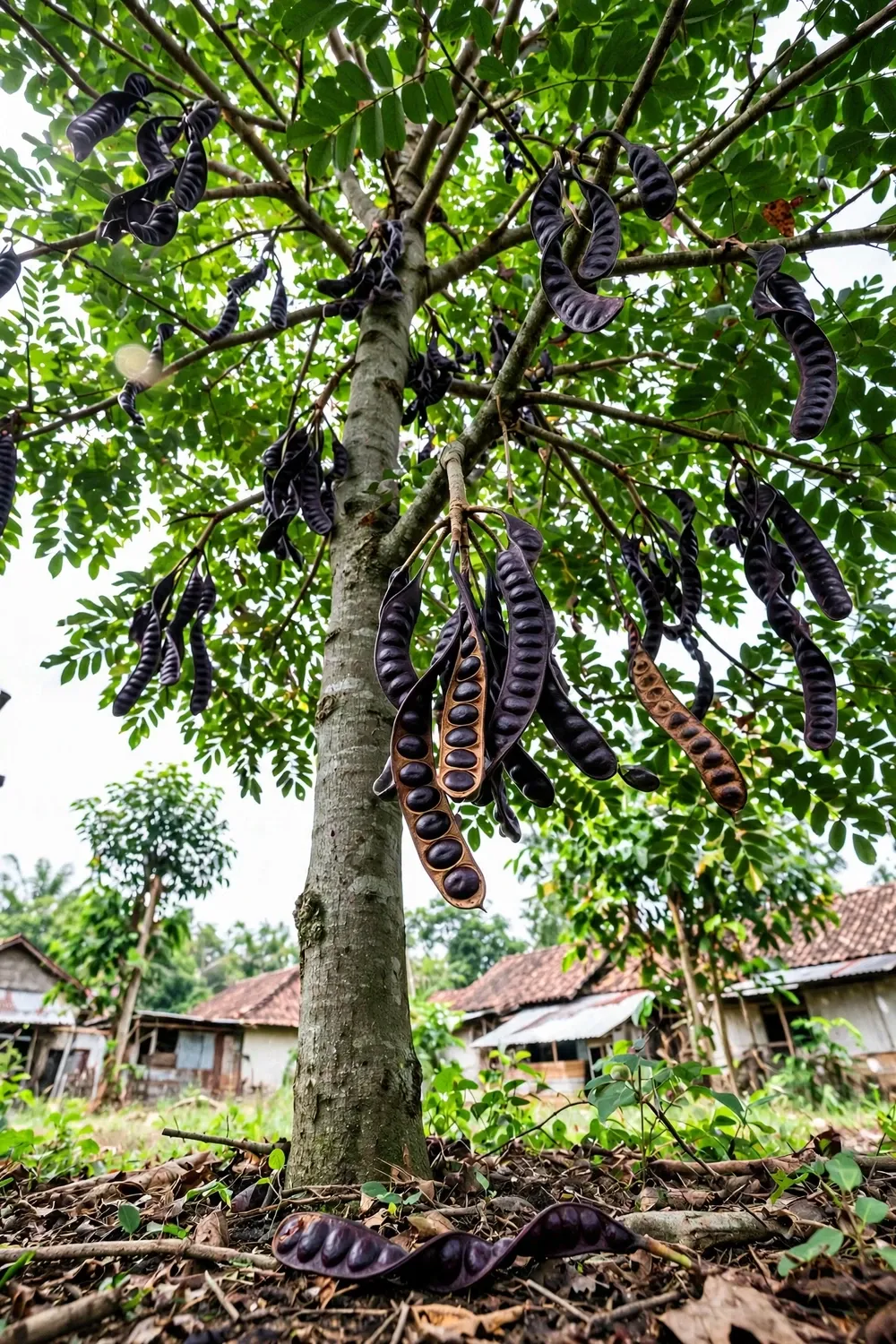

Learn how to grow jengkol by starting with two facts that decide everything else. The jengkol tree grows 20 to 25 m tall with a crown 20 m across, and its seeds carry djenkolic acid, a compound linked to kidney injury and recorded deaths. The tree needs frost-free tropical ground, years of patience, and a cook who understands the risk before the first bean reaches the table.
I have learned to treat jengkol as a tree to respect, not a crop to rush. If you want a fast tropical harvest from seed, growing papaya from seed in under a year gives you fruit while a jengkol seedling is still a young tree. Jengkol rewards a different kind of grower, one with tropical land, steady warmth, and years to spare.
The rest of this page is 18 moves, from naming the tree correctly to deciding whether it belongs on your land at all. One thread runs through them. Most readers should buy seeds for dinner. A few readers with tropical land should plant trees. The rest of this article shows both groups how to decide.
| Spec | Detail |
|---|---|
| Botanical name | Archidendron pauciflorum in the Kew taxonomy, Archidendron jiringa in most food and growing sources (Fabaceae) |
| Indonesian names | Jengkol, jering, jiringa, djenkol |
| Other names | Dogfruit, blackbead, ngapi nut, luk nieng tree |
| Plant type | Large evergreen tropical legume tree |
| Height | To 20 m in the database entry, up to 25 m in the medical review |
| Spread | To 20 m across |
| Trunk | To 60 cm in diameter |
| Flowers | Cream to white clustered flowers, pollinated by moths and insects |
| Pods | Dark purple pods 20 to 25 cm long and 3 to 4 cm wide, twisted in a wide spiral |
| Seeds | 3 to 8 round, flat, dark brown seeds per pod |
| Leaves | Compound bipinnate leaves |
| Main propagation | Seed, sown where the tree will stand |
| Cold floor | No frost-survival figure exists in the sources checked. Treat any frost as a killing risk |
| Kitchen uses | Seeds eaten raw, boiled, fried, roasted, or made into emping chips |
| Native range | A. pauciflorum: Sulawesi, Philippines, Lesser Sunda Islands. A. jiringa: Bangladesh, Myanmar, Thailand, Malaysia, Borneo, Java, Sumatra |
1. Learn How to Grow Jengkol by Starting With the Tree
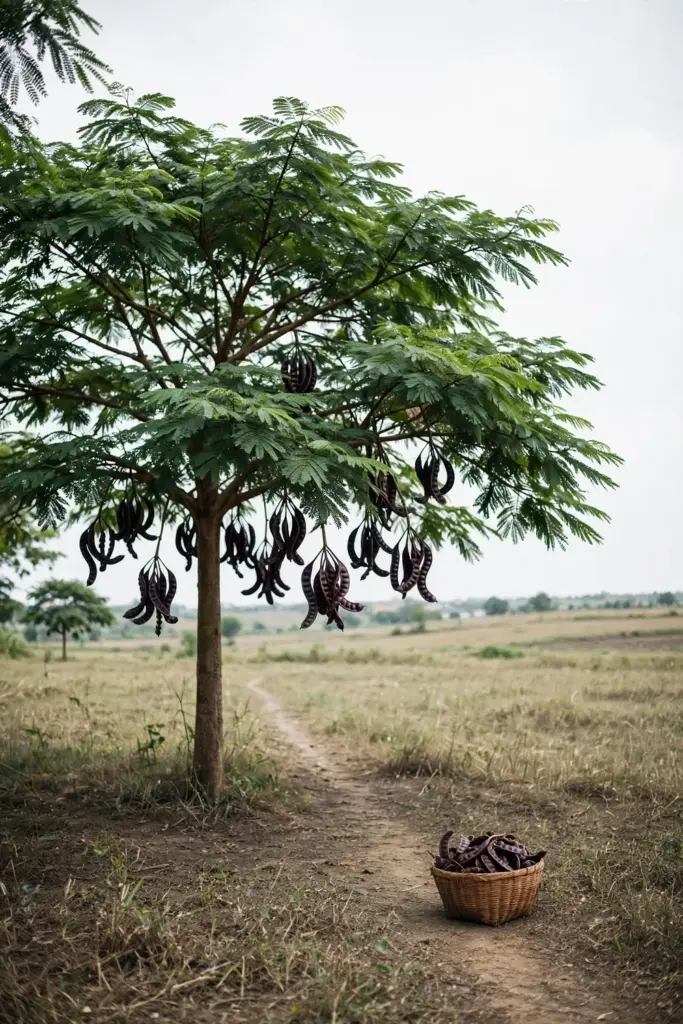
Start with the tree, and the seeds second. Learning how to grow jengkol means accepting a plant that outgrows every structure in a home garden. The database entry describes an evergreen tree growing to 20 m by 20 m at a medium rate, with a spreading crown, according to the Plants for a Future database entry for Archidendron jiringa. The medical review puts the top end higher, with the djenkol tree growing up to 25 m in height, according to the peer-reviewed review of djenkolism. A tree that size shades a house, drops pods across a wide radius, and needs a crew, not a ladder, for canopy work.
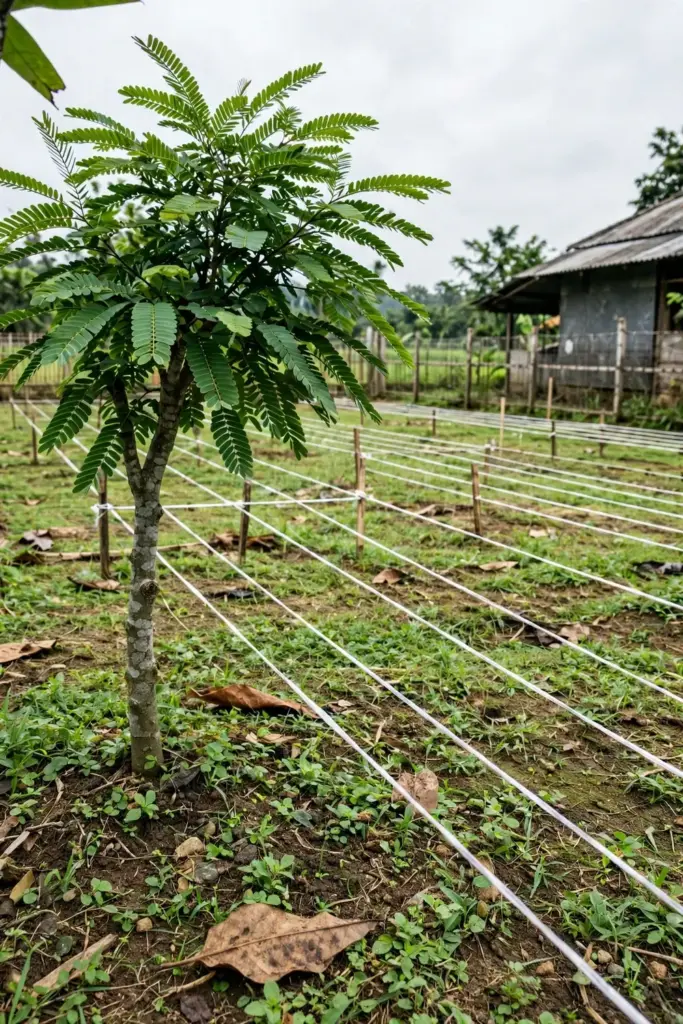
That scale sets the first filter. A suburban lot fails it. A farm or a village home garden with room for a 10 to 15 m spacing grid passes it. A community orchard or an agroforestry plot passes it if the members agree to wait years for the first harvest. Measure your land before you order seed. Draw a circle with a 15 m radius around the planting spot and check what falls inside it. Roof lines, power lines, drains, and a neighbor fence all count as failures.
The second filter is the kitchen. Jengkol seeds carry a real food-safety risk, covered in full in the fifth and sixth sections. Read those sections before you plant. A tree that produces food you cannot serve safely to your household is a shade tree with a hazard attached. Decide the kitchen question first, and the planting question second.
2. Name the Tree Correctly Before You Buy Jengkol Seed
Check the botanical name before you buy seed or follow any growing advice. Two scientific names circulate for the jengkol tree, and the sources do not agree on which one is correct. The confusion is real, and it reaches into nurseries, markets, and garden databases.
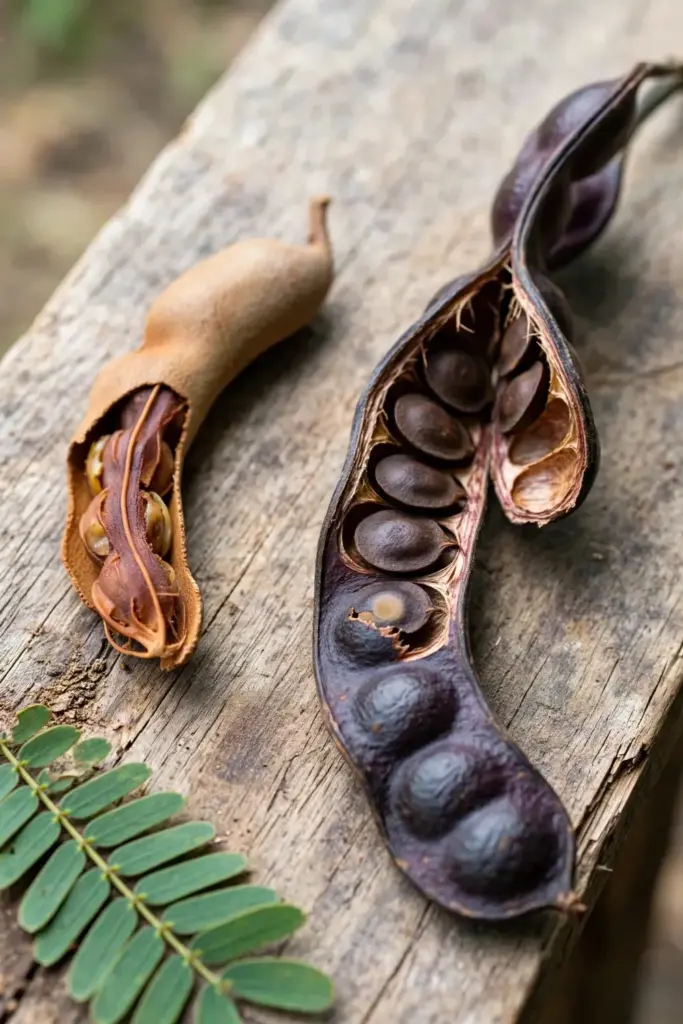
Kew accepts Archidendron pauciflorum as the name for a tree native to Sulawesi, the Philippines, and the Lesser Sunda Islands, according to the Kew Plants of the World Online page for Archidendron pauciflorum. Most food and growing sources use Archidendron jiringa for the tree whose seeds people eat. The database entry linked below uses A. jiringa. The medical review of djenkolism uses A. pauciflorum. Both names describe the same food tree in practice, and the safety evidence applies to the seeds sold as jengkol under either name.
| Name | What it is | Why it matters |
|---|---|---|
| Archidendron pauciflorum | The Kew-accepted name for the Sulawesi, Philippines, and Lesser Sunda tree | The name on the medical review and the taxonomy databases |
| Archidendron jiringa | The name on most food and growing sources for the jengkol tree | The name on seed packets, market stalls, and grow guides |
| Pithecellobium dulce | Manila tamarind, a different genus entirely | A different tree with sweet pods. Never confuse it with jengkol |
| Phoradendron pauciflorum | A mistletoe, a different plant that shares the epithet | Same second word, unrelated plant. Check the genus, not the epithet alone |
Tamarind belongs in the same fence. Growing tamarind from seed gives you another large tropical legume tree, and tamarind pods are safe and sour. Jengkol pods are not tamarind pods. Keep the two trees apart in your notes, your shopping, and your advice to others.
Buy seed sold under a full botanical name. A seller who prints Archidendron jiringa or Archidendron pauciflorum on the packet has done the first check for you. A seller who prints only “jengkol” has not, and the seeds could come from any tree in the table.
3. Match Jengkol to a Frost-Free Tropical Climate
Grow jengkol outdoors only where the climate stays warm all year. The database entry describes a plant of the humid tropics, found at elevations up to 1,600 m, growing best where annual daytime temperatures sit within 20 to 30 degrees Celsius, but tolerating 12 to 40 degrees, according to the Plants for a Future database entry for Archidendron jiringa. That profile describes a humid tropical tree, not a temperate garden plant.
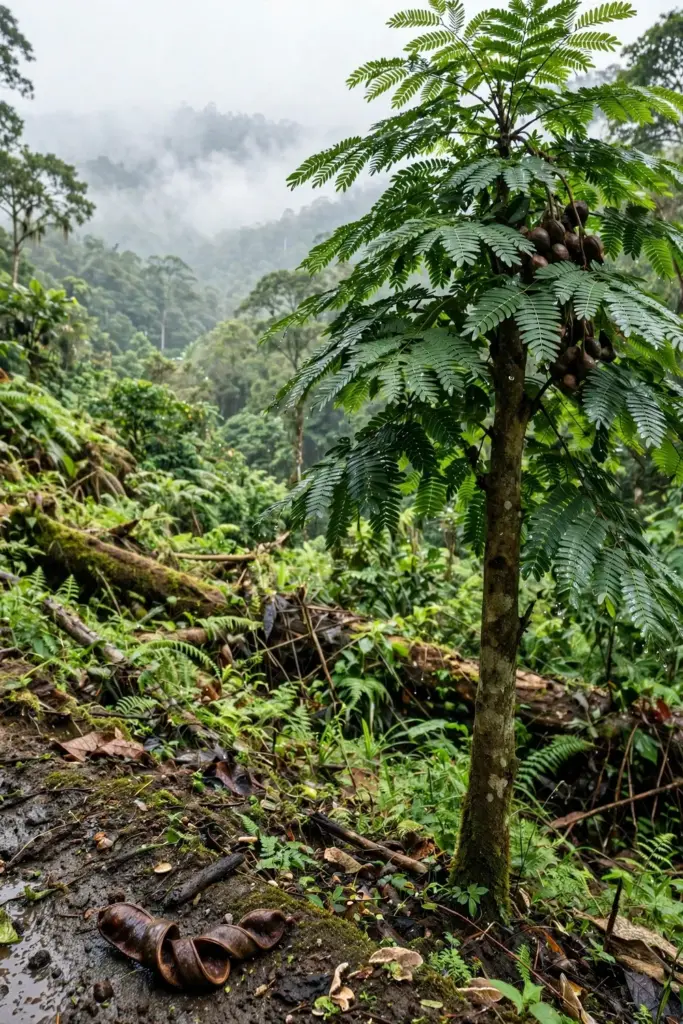
Rainfall and soil follow the same tropical pattern. The same entry prefers a mean annual rainfall of 2,000 to 3,000 mm, tolerating 1,000 to 4,000 mm, and prefers a pH of 5.5 to 6.5, tolerating 4.5 to 7. The tree grows well in full sun and in light shade, and it prefers a well-drained soil and moist ground. It grows on sandy soils, lateritic soils, and reddish sandy clay on flat land and low undulating hills. A site with a long dry season and thin soil will stress it. A site with deep, moist, fertile soil and steady rain suits it.
No source checked gives a frost-survival figure for jengkol. Treat any frost as a killing risk. A single hard freeze can end a young tree outright, and no table in the sources checked promises recovery. The hardiness listing runs to zones 10 to 12. Gardeners who see frost in most winters have no outdoor path for this tree, and the honest options are to buy seeds or to plant something else. Growing mango from seed or grafted stock suits a wider range of warm gardens, and it still needs real heat.
4. Buy Jengkol Seeds for Dinner Before You Plant a Tree
Buy seeds first, and plant second, if dinner is the goal. Most demand for jengkol is a buying demand. Cooks want fresh seeds for semur jengkol, rendang, balado, or emping chips, and a market seed delivers that tonight. A planted tree delivers it in years, on a 20 m frame, after seasons of watering, weeding, and waiting. Learning how to grow jengkol starts with asking which of those two timelines you want.
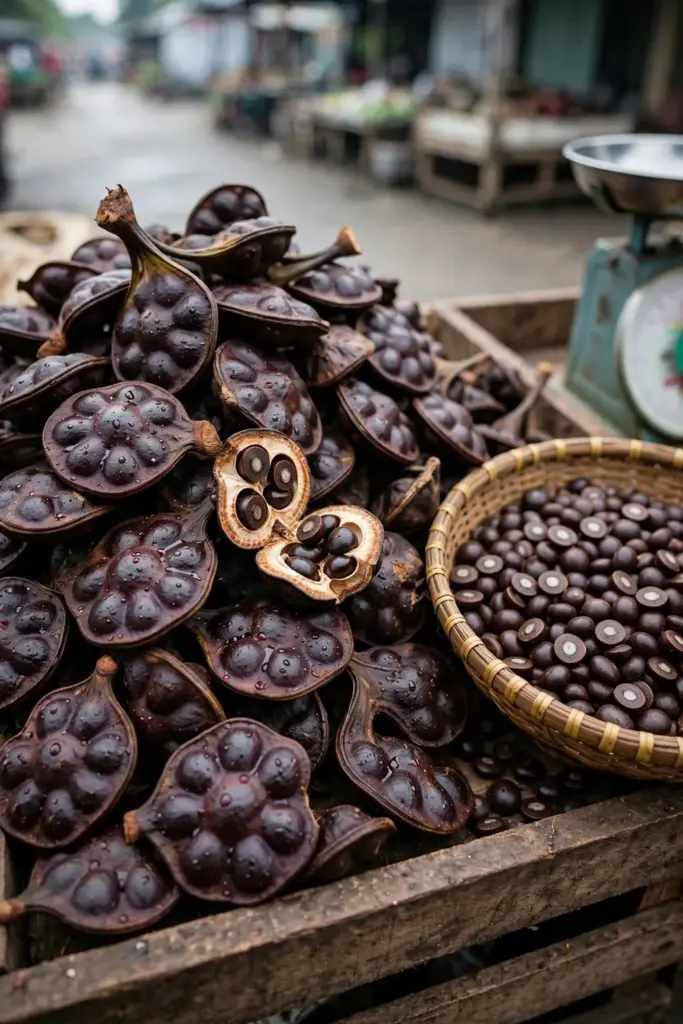
Jengkol is traded on local markets only in its home region, and diaspora grocers carry it where Indonesian and Malaysian communities shop. Fresh seeds should look dark brown, round, and flat, with a firm coat and no mold. Ask the seller for the origin and the name on the box. A market that sells jengkol beside petai is the exact place where the two beans get mixed up, so check the seed before you pay. The seeds you buy for dinner can also supply planting seed, which the seventh section covers.
Do the arithmetic before you plant. A household that eats jengkol twice a month buys a small pile of seeds a year. A single mature tree produces pods for decades once it starts bearing. The tree suits a seller, a village, or a farm. It overshoots one kitchen by a wide margin, and it overshoots it with a food-safety risk attached. Buy first. Plant only after the fifth and sixth sections have had their say.
5. Read the Jengkolism Warning Before You Eat One Bean
Read this section before you eat one bean. Jengkol seeds contain djenkolic acid, and eating them can trigger djenkolism, a syndrome of kidney injury. The djenkol bean contains djenkolic acid in the range of 0.3 to 1.3 g per 100 g wet weight, with 93 percent of the acid in the free state, according to the peer-reviewed review of djenkolism. The acid forms sharp needle-like crystals in the kidney and urinary tract. Those crystals obstruct urine flow, lacerate tissue, and cause bleeding.
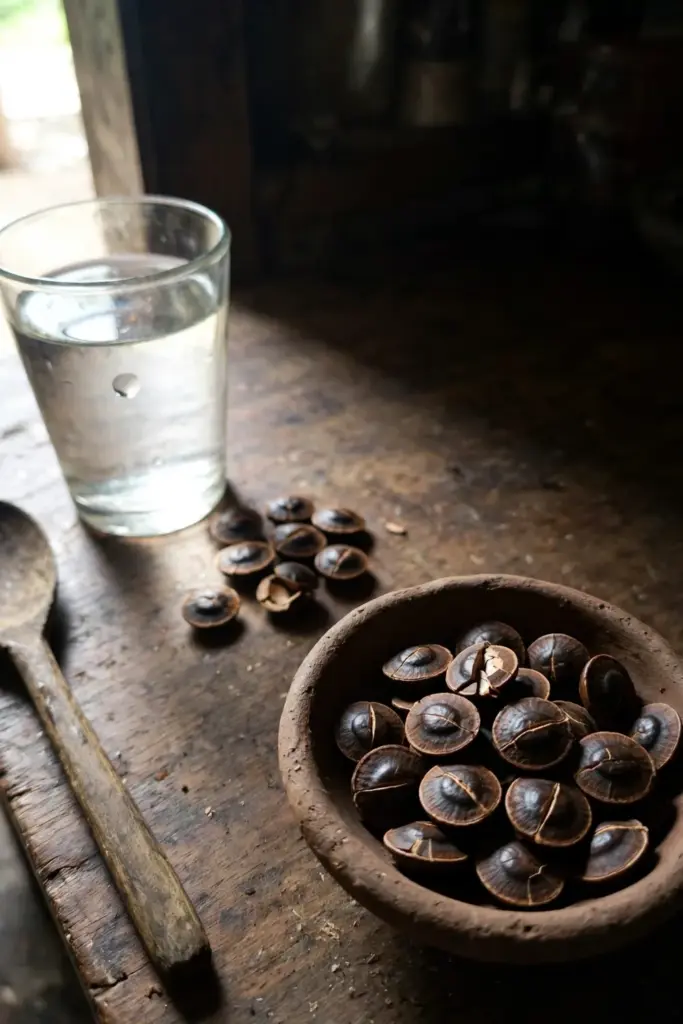
The review gathered 96 reported cases of djenkolism, and 4 of the 96 patients died from acute kidney failure, according to the peer-reviewed review of djenkolism. Three of the four deaths occurred in children, where dialysis was not available. Patients ranged in age from 1.5 to 57 years, with 70 percent male, according to the peer-reviewed review of djenkolism. The average number of beans eaten was 10, and symptoms began between 2 hours and 4 days after eating, according to the peer-reviewed review of djenkolism. The main signs were abdominal, loin, or colicky pain in 70 percent of cases, painful urination in 66 percent, reduced urine in 59 percent, blood in the urine in 55 percent, and high blood pressure in 36 percent, according to the peer-reviewed review of djenkolism.
Mild djenkolism brings pain and blood in the urine from brief blockage by crystals. Severe djenkolism brings high blood pressure, reduced urine, and kidney failure. Most patients recovered with hydration, bicarbonate therapy, and pain medication. Three patients needed surgery, and one needed a ureteral stent for obstructing stones. The review notes that people who had djenkolism once do not always develop symptoms on later exposures, and that people eating from the same dish do not all fall ill. Susceptibility varies from one exposure to the next, and no test predicts who will react.
A gardening page cannot give medical advice. Blood in the urine, severe flank pain, painful urination, or reduced urine after eating jengkol means seek medical care promptly. Keep jengkol away from children. The three child deaths in the review are the strongest single reason for that rule. Do not eat jengkol to test your own tolerance.
6. Treat Every Preparation Claim as Unresolved
Treat every claim about making jengkol safe as unresolved. Two findings pull in opposite directions, and neither one settles the question for jengkol itself. The honest position is to hold both findings in view and to eat with the risk in mind.
The first finding comes from a laboratory study of Australian acacia seed, not jengkol. That study found djenkolic acid at levels comparable to the djenkol bean, and found that dry roasting at 180 degrees Celsius cut djenkolic acid by over 90 percent, according to the acacia-seed study. The seeds in that study were acacia seeds. The result has not been shown to hold for jengkol beans in a kitchen, and a 90 percent cut in one seed does not equal a safe dose in another, per the acacia-seed study.
The second finding comes from the clinical review. The review states that djenkolism does not seem to depend on the quantity eaten or the mode of preparation, according to the peer-reviewed review of djenkolism. People eating from the same dish did not all become ill. The review also notes a proposal that boiling the bean in dilute alkali would remove the acid, while adding that acceptance of the practice is unknown. No preparation method has been proven to make jengkol safe, and no safe dose exists.
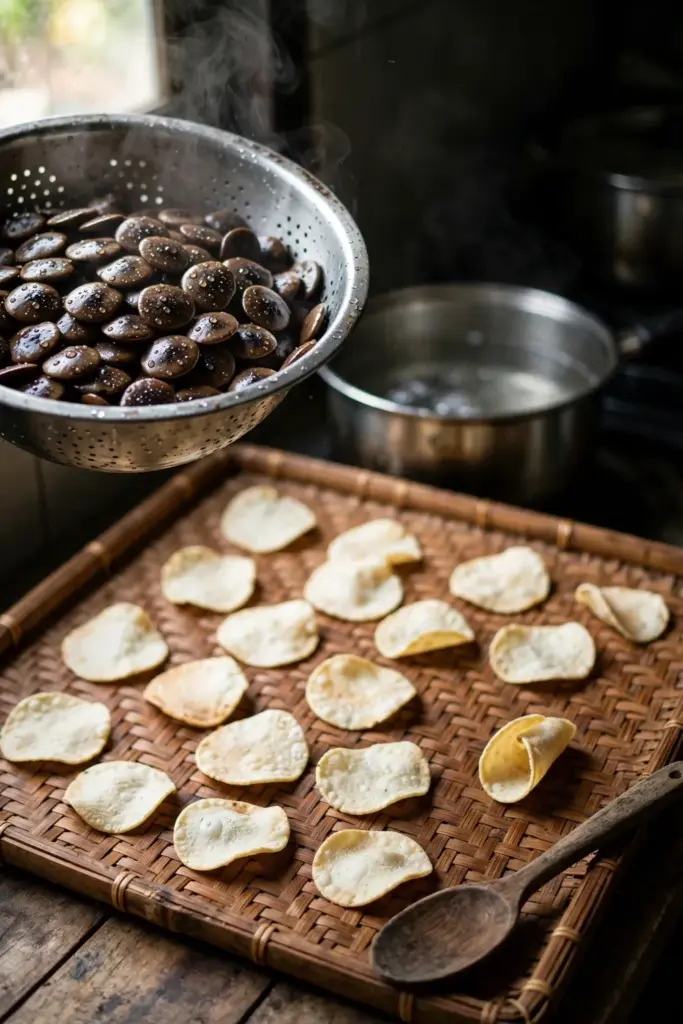
Traditional preparation still has value as kitchen practice, and it should be reported as tradition, not as a safety guarantee. The database entry lists the traditional methods: seeds boiled in three changes of water, seeds boiled in water with wood ash, bamboo leaves, and pieces of steel or nails with the cook water discarded several times, seeds steeped for a couple of hours in salt water before frying in oil, seeds flattened into emping chips after cooking, and seeds buried for 14 days until they germinate, then dug up and washed, according to the Plants for a Future database entry for Archidendron jiringa. The same entry says the burial method is said to minimize the danger of intoxication, and it recommends drinking much water when eating the seeds. “Said to” is the right weight for these claims. They are kitchen tradition, not measured safety.
7. Source Fresh Seeds From a Ripe Pod
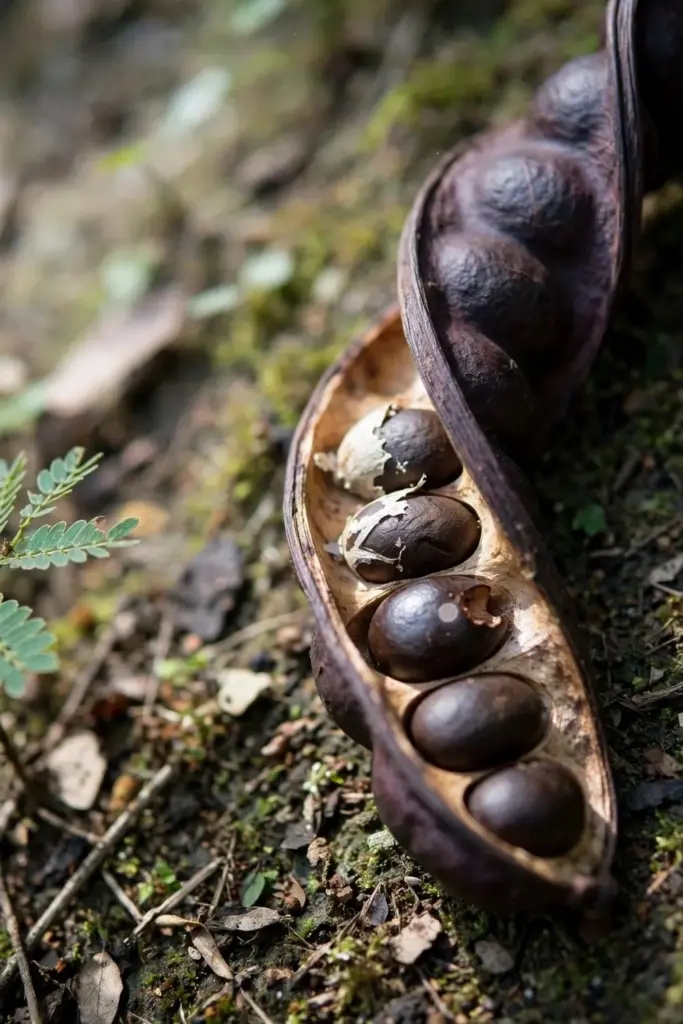
Source seeds from a ripe pod, and sow them fresh. Djenkol pods are dark purple and contain 3 to 8 round and flat beans per pod, according to the peer-reviewed review of djenkolism. The seedpod runs 20 to 25 cm long and 3 to 4 cm wide, twisted in a wide spiral, according to the Plants for a Future database entry for Archidendron jiringa. Open the pod along its seam and slide the seeds out. Each seed is dark brown, round, and flat, with a firm coat.
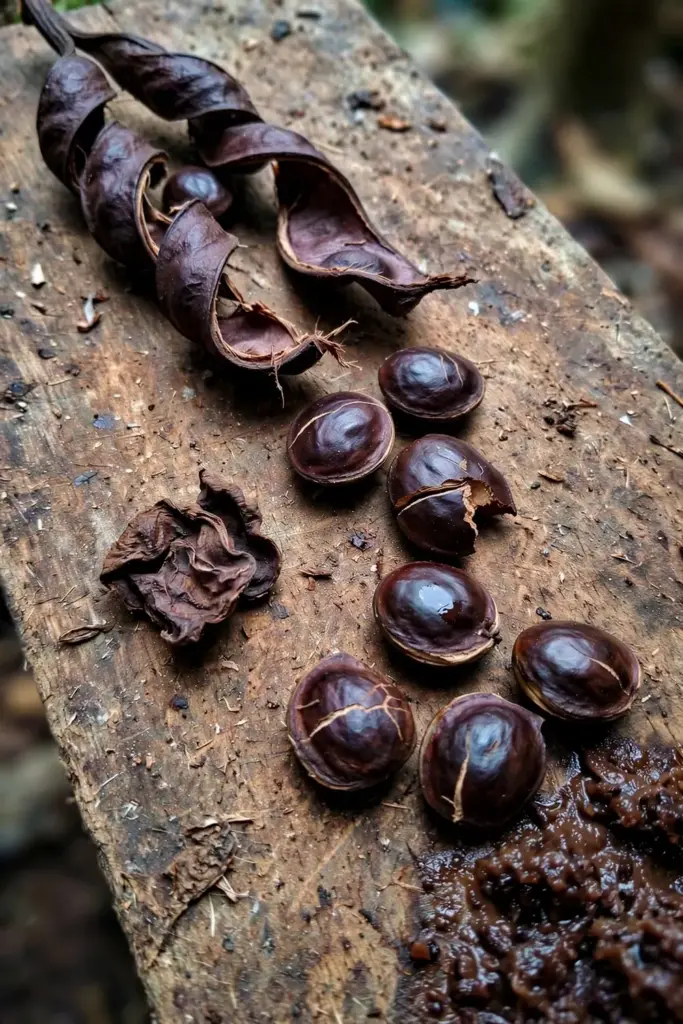
Keep the plump, intact seeds. Discard seeds that look shriveled, cracked, or moldy. Wash the kept seeds to remove pulp, then sow them the same day when you can. Freshness matters because a seed coat hardens as the seed dries, and a hard coat slows water uptake. A pod that still bends without cracking holds better seed than a pod that rattles.
Market seeds can supply planting seed, but no viability figure exists in the sources checked for seed taken from market pods. No figure exists, so treat market-pod seed as an experiment, not a plan. Sow more seeds than you need, label the batch with the shop and the date, and watch what comes up. A seed that fails to sprout tells you about that batch, not about the species.
8. Sow Seeds Where the Tree Will Stand
Sow seeds where the tree will stand. The database entry states the rule plainly: the trees are grown from seed planted in the location where they are to grow, according to the Plants for a Future database entry for Archidendron jiringa. Direct sowing keeps the taproot intact and skips the transplant shock that sets a young tree back for months.
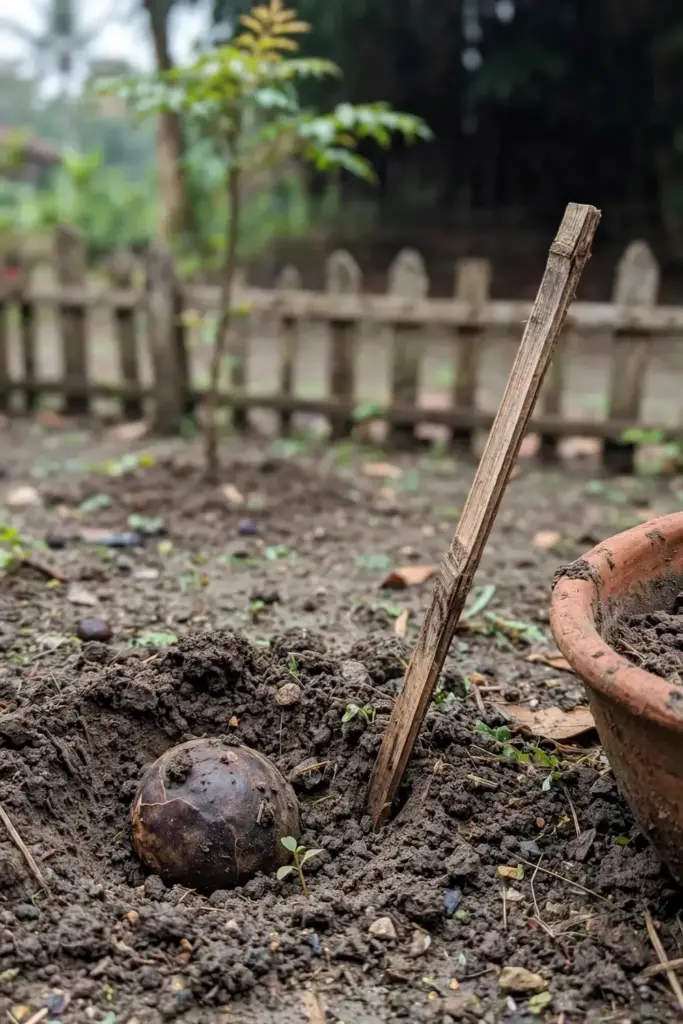
Exact sowing depth is data not available in the sources checked. Cover the seed lightly with soil, so the coat sits under the surface, and press the soil gently to close air pockets. Water the spot until the soil is evenly moist through its depth, then let the surface dry slightly between waterings. Soggy soil rots seed. Dry soil stalls emergence.
Mark each sowing spot with a stake and a label carrying the date and the seed source. Expect emergence across several weeks, not on one day. A seed that has not emerged after two months may still be alive, and a seed that emerges fast is not a better tree. Judge the batch at the end of the season, not at the end of the week.
9. Give Each Tree 10 to 15 Meters of Clear Space
Give each tree 10 to 15 m of clear space in every direction. The database entry gives that exact spacing for trees grown from seed planted in place, according to the Plants for a Future database entry for Archidendron jiringa. A tree that grows 20 m tall and 20 m across needs that room, and two trees planted closer will fight for light, water, and root space for decades.
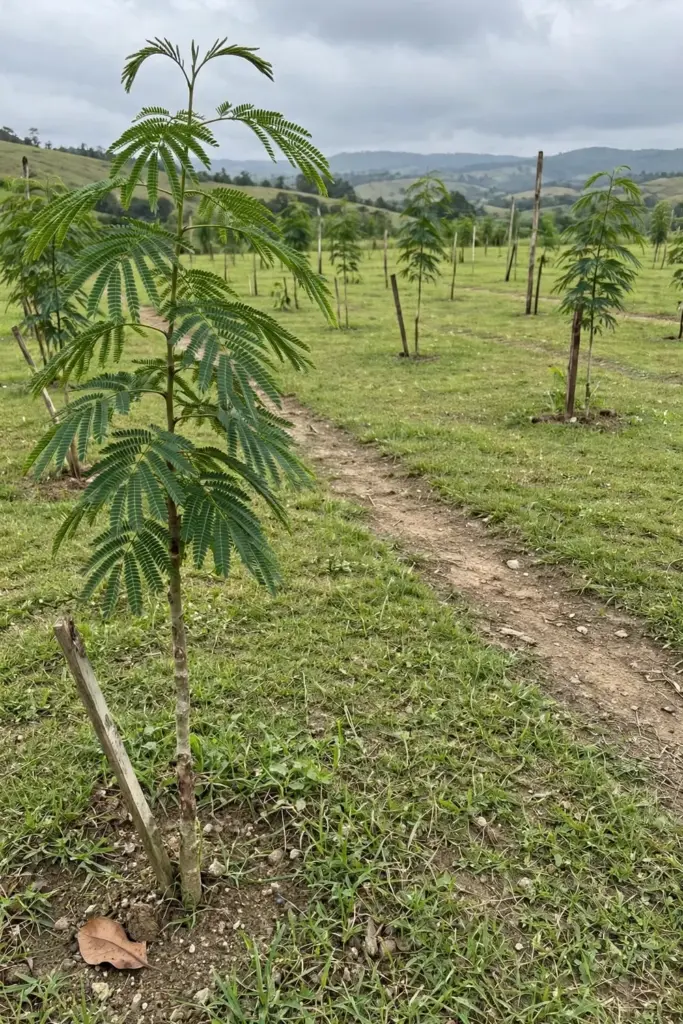
One conflict deserves an honest note. An Indonesian grow guide lists 5 to 6 m spacing, against the 10 to 15 m in the database entry. The two figures likely describe different plantings, one for a full-size tree and one for tighter plantation rows. Plan on the wider figure for a full-size tree. A spacing choice made at planting locks in for the life of the tree, and a tree moved later is a tree lost.
Mark the grid before you sow. Drive a stake at each planting point, then walk the grid and check every stake against roofs, power lines, drains, paths, and fences. A jengkol tree at 20 m drops pods across a wide radius, and a pod that lands on a roof or a road is a nuisance, not a harvest. Move the stake now, while moving it costs nothing.
10. Water Young Trees Through the Dry Months
Water young trees through the dry months. Jengkol prefers a mean annual rainfall of 2,000 to 3,000 mm and tolerates 1,000 to 4,000 mm, according to the Plants for a Future database entry for Archidendron jiringa. A site that receives that much rain needs little help in the wet season. A site with a long dry season needs a watering plan for the first years.
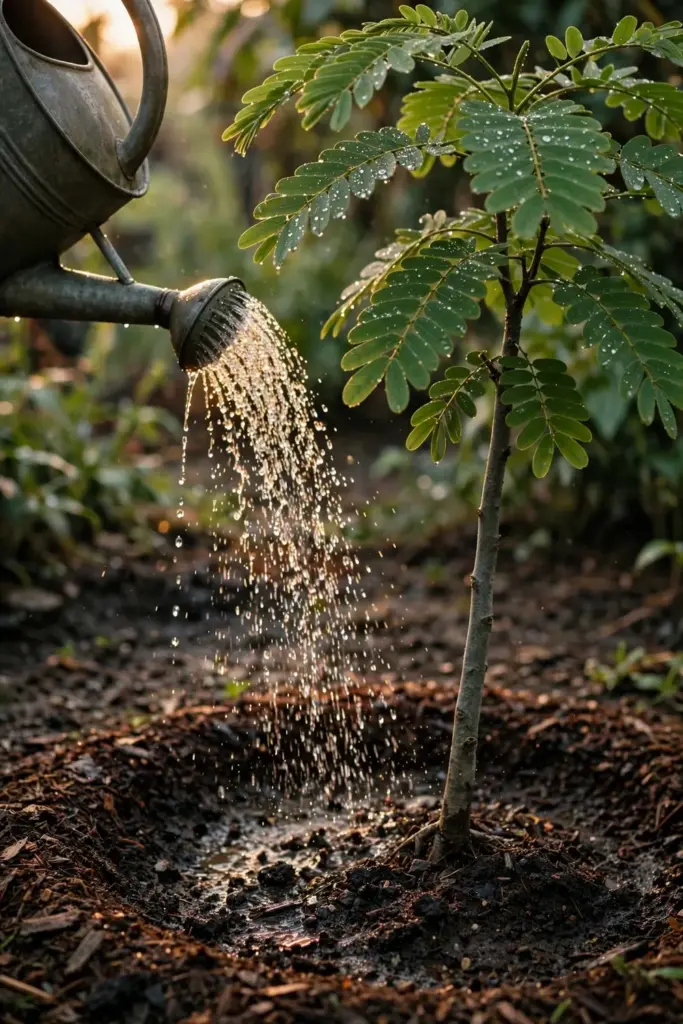
Keep the soil moist, never waterlogged, around a young tree. Water deeply, then let the surface dry slightly before the next watering. A young tree that never dries out between waterings grows soft and rots at the collar. A young tree that dries to wilt grows slowly and drops leaves. The middle path, moist with a short dry interval, grows the sturdiest stem.
Mulch around the seedling with a ring that stays clear of the stem. The mulch holds moisture and suppresses weeds while the roots settle. A buried collar rots. A raised root ball dries out. Keep the mulch 10 cm away from the stem, and check the ring after heavy rain. A mulch ring that slides against the bark holds fungi and borers.
11. Feed Young Trees With Compost and Mulch, Not a Label Rate
Feed young trees with compost and mulch. No fertilizer grade or rate appears in the sources checked for jengkol, so none appears here. A rate borrowed from another crop, another soil, or another country would mislead. Spread compost across the root zone, keep it clear of the stem, and water it in. Record what you applied, with the date, and watch the tree. Deep green new leaves and a straight leader say the site suits the tree. Pale leaves and stalled growth say the site needs a soil test, not a bigger handful.
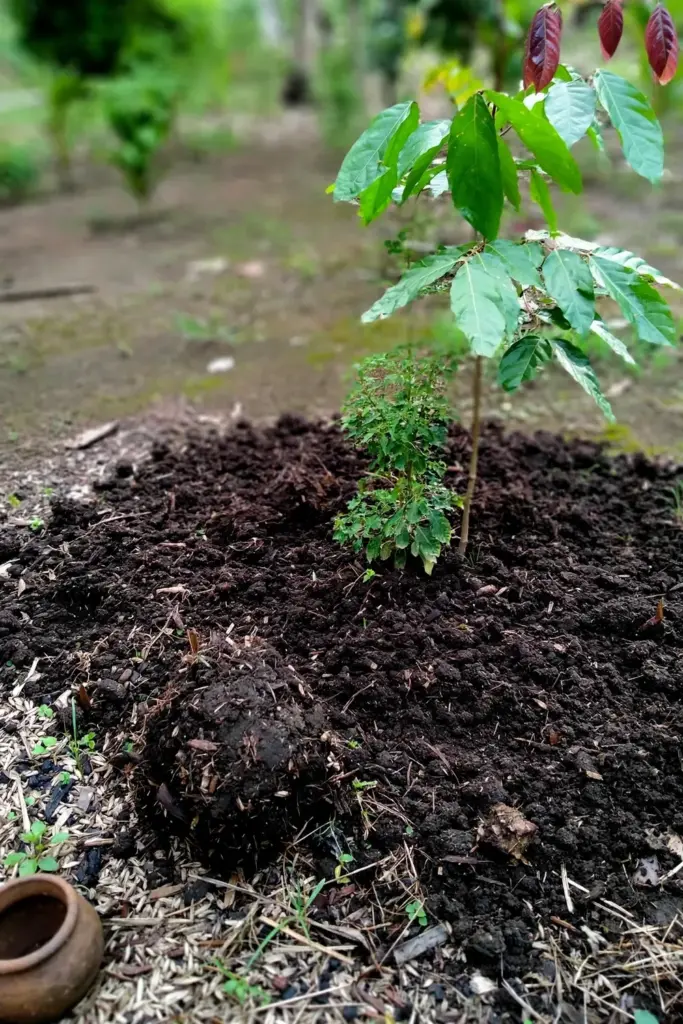
Do not count on nitrogen fixation. The database entry lists jengkol as a plant that can fix nitrogen, and the same entry notes a report that this species does not have the root-bacteria relationship, according to the Plants for a Future database entry for Archidendron jiringa. Both statements sit on the same page. The honest reading is that the question is unsettled, and a grower who plans around free nitrogen may be planning around nothing.
12. Clear Weeds Around Young Trees Until the Canopy Closes
Clear weeds around young trees until the canopy closes. Weeds steal water and nutrients, and tall grass around a young tree hides pests and slows the stem. A tree that competes with weeds for its first years grows slowly and fruits late.
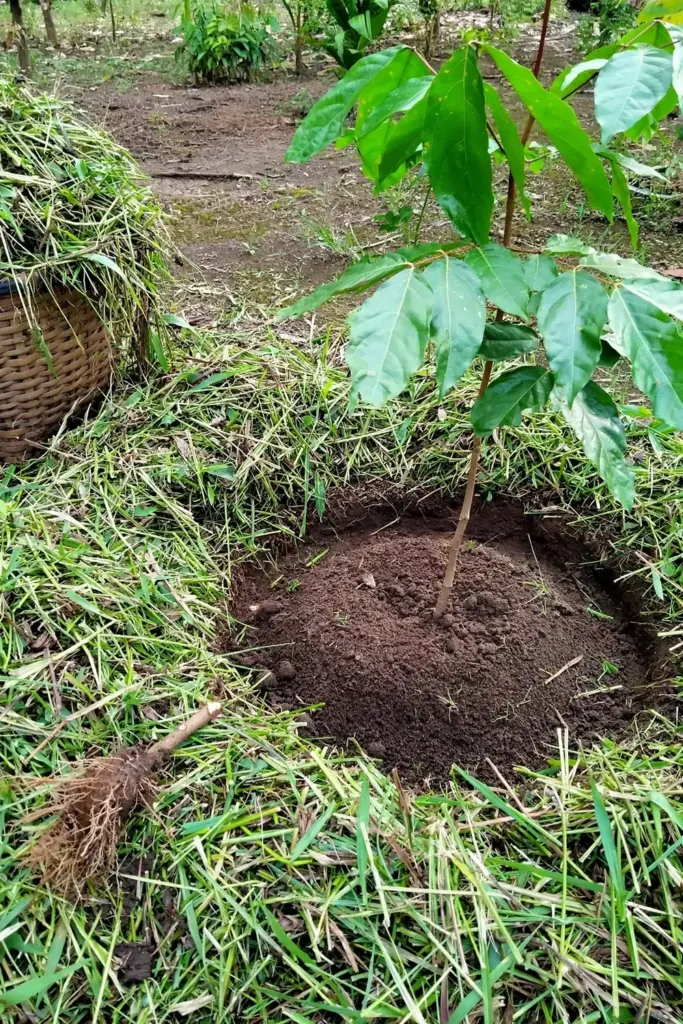
Clear by hand or with a blade, and pull the weeds out by the roots where you can. Cut weeds at ground level when the roots hold a slope together, and return before they seed. Keep the cleared ring wide around young trees. Around mature trees the ring can run narrower, because the canopy shades the ground itself. Never pile cut weeds against the trunk, since a damp pile against bark holds fungi and borers.
Judge by the weeds, not by the calendar. If grass reaches the seedling’s lower leaves, clear it. If vines climb the stem, pull them the day you see them. A clean ring and a clear stem cost an afternoon and save a season.
13. Watch for Pests and Disease With No Spray Plan for a 20-Meter Canopy
Watch for pests and disease. Plan no spray regime for a 20 m canopy. No pest list appears in the sources checked for jengkol, so none appears here. Data not available covers that gap. Inventing a pest list would send readers hunting for insects that may never arrive.
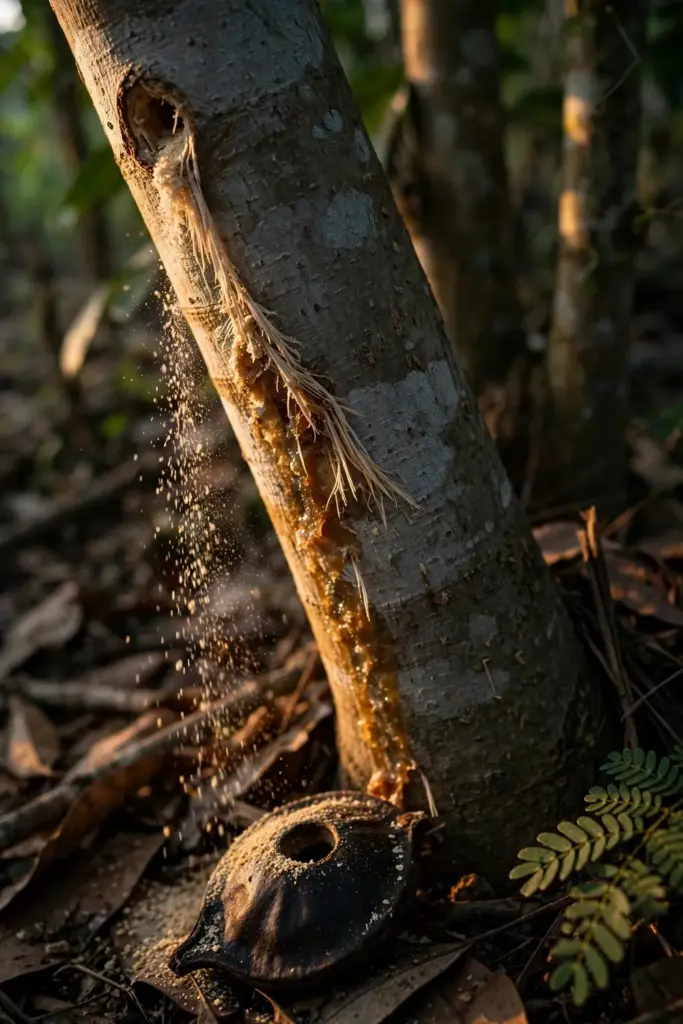
Check the trunk monthly. A borer hole with fresh frass, a weeping patch on the bark, or a dying branch on an otherwise healthy tree all point to trouble. Check leaves for chewing, spots, and curling. Check pods at harvest. Set aside any pod with a hole, mold, or soft spots. A pod with damage goes to the compost, not the kitchen.
Spraying a 20 m canopy is a hazardous job for the applicator. It wastes product on leaves the spray never reaches. Reserve any treatment for nursery stock and young trees, and follow the label exactly. A mature canopy outgrows light leaf damage. A mature tree with a dying branch needs a climber and a saw, not a sprayer.
14. Leave Pollination to Moths and Night Insects
Leave pollination to moths and night insects. The flowers are pollinated by moths and insects, according to the Plants for a Future database entry for Archidendron jiringa. The flowers are cream to white and clustered, and the tree sets pods when night visitors work the blooms. No hand-pollination method appears in the sources checked, and none is needed.
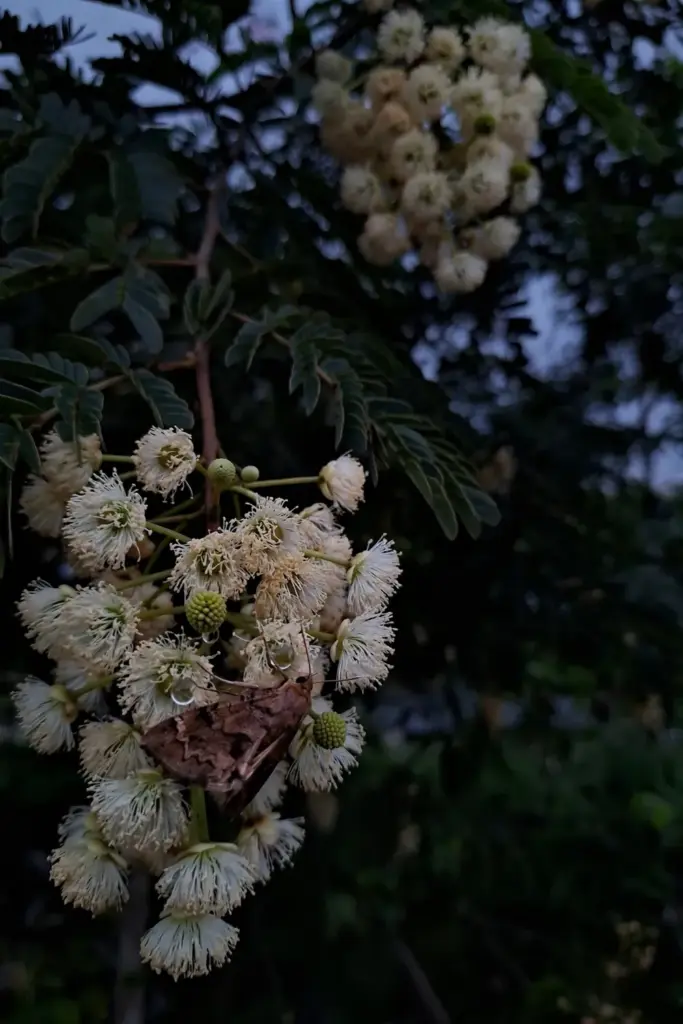
A tree that flowers in a garden without moths still sets pods when other night insects visit, but a site rich in night insects sets the heaviest crop. Avoid spraying insecticide on a flowering tree. A spray that kills the pollinators kills the harvest with them. Record flowering dates and harvest dates for three seasons before you call any month the peak. A tree in your garden will set its own rhythm in the first bearing years.
15. Wait Years for the First Pods, Not Months
Wait years for the first pods, not months. No botanical source checked gives a measured years-to-first-fruit figure for jengkol. Data not available covers that gap, and a guess dressed up as a measurement would mislead.
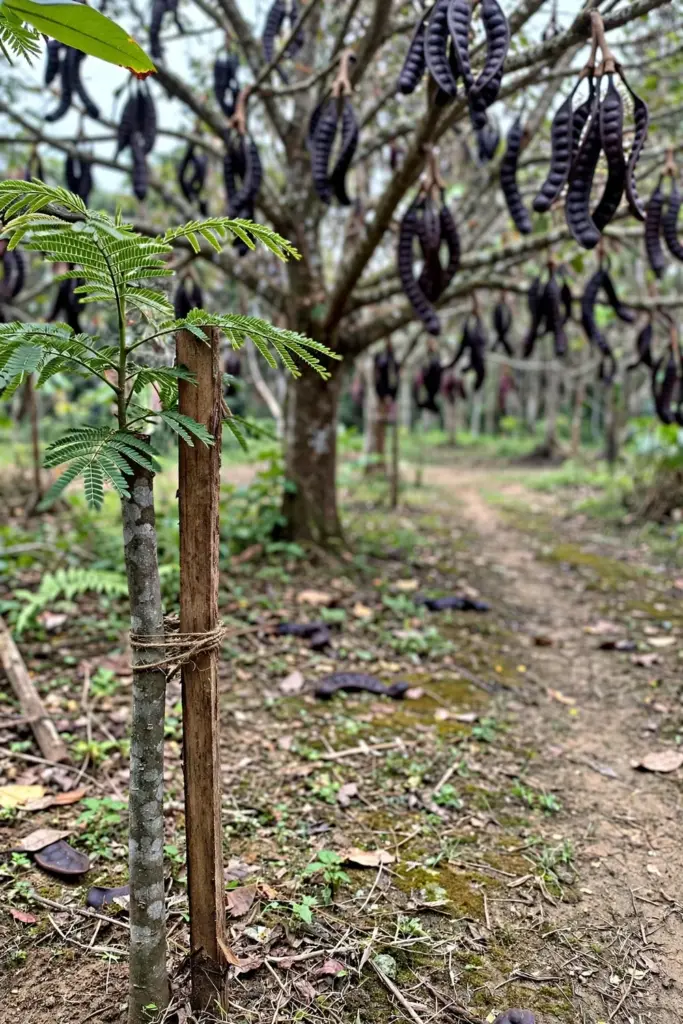
Indonesian grower videos describe income from jengkol planting in about 4 years. Treat that figure as a grower claim, not a measured result. A seedling that fruits at 4 years is a fast one, and a slower tree may need longer. Plan your labor, your spacing, and your patience around a tree that pays nothing for its first several seasons and then produces for decades. Mangosteen, which takes many years to bear, teaches the same lesson about patience, and jengkol adds a safety question to the waiting.
16. Harvest Pods With a Pole and a Helper
Harvest with a long pole, a tall ladder, and a second person on the ground. Pick pods when they turn dark purple and feel firm, with seeds that swell visibly inside the pod wall. A pod that still feels flat and thin needs more time. A pod that softens, molds, or splits on the tree goes to the compost.
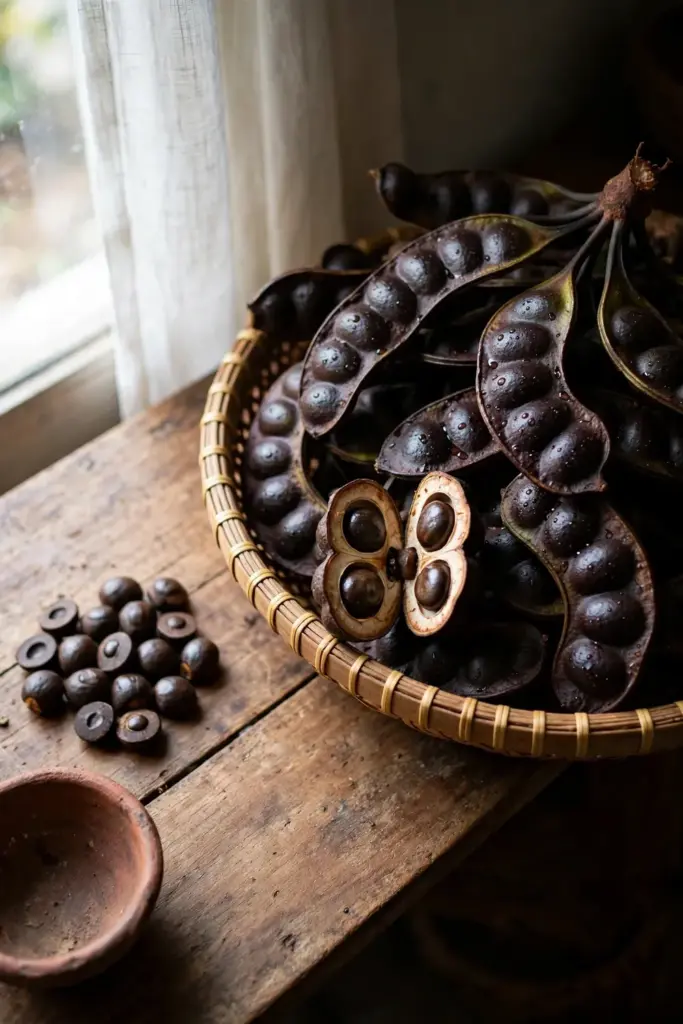
Work from the ground first. A hooked pole pulls low pods within reach, and a helper gathers them into a basket. Climbing a 20 m tree for pods is a job for a trained climber with ropes, not for a gardener with a ladder. Falls from jengkol trees injure people, and the seeds are never worth that risk. If you cannot reach the pods safely, hire the climber and pay the rate.
Sort pods at the tree. Keep firm, dark purple, unbroken pods for the kitchen. Set aside pods with holes, mold, or soft spots. Count the kept pods and record the number with the date. A written harvest record turns a vague expectation into your tree’s own number, and that number tells you whether the water, the weeding, and the spacing are working.
17. Cook Jengkol Seeds With the Safety Rules in View
Cook jengkol seeds with the safety rules in view. The traditional methods are on record, and the safety question is unresolved. Hold both facts at once. The database entry lists the methods: boil the seeds in three changes of water, boil them in water with wood ash, bamboo leaves, and pieces of steel or nails while discarding the cook water several times, steep them for a couple of hours in salt water before frying in oil, flatten the cooked cotyledons into emping chips that are sun-dried and fried, or bury the seeds for 14 days until they germinate, then dig them up and wash them, according to the Plants for a Future database entry for Archidendron jiringa. Young seeds are often eaten raw, and older seeds are usually cooked.
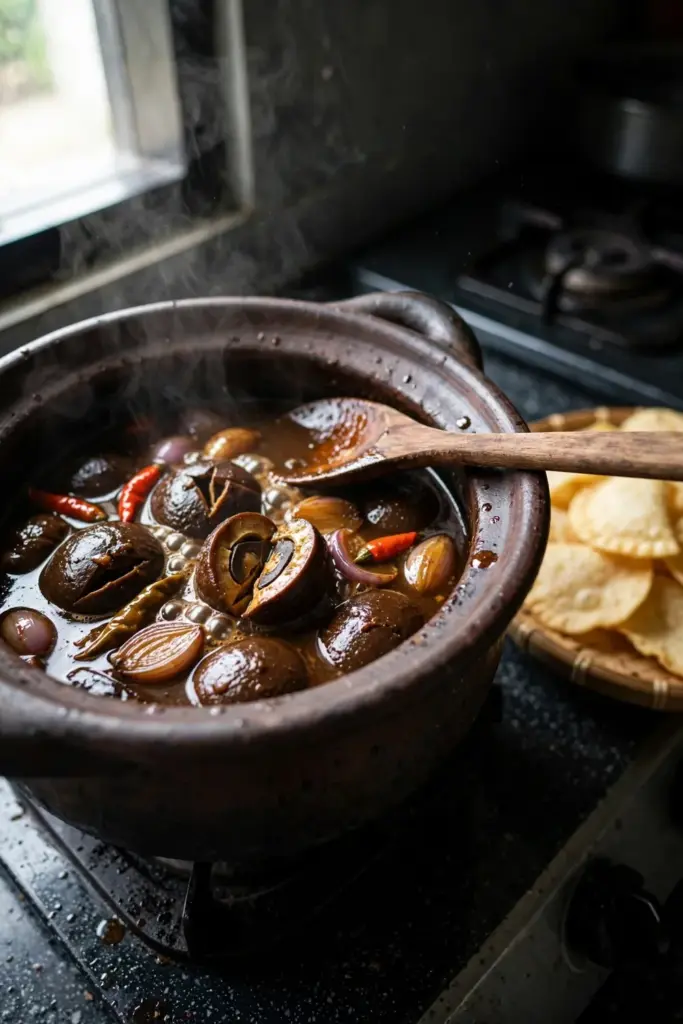
Eat small portions. Drink water when eating the seeds, per the traditional advice in the same entry. Keep jengkol away from children. Do not serve jengkol to anyone with kidney trouble, and do not serve it at a gathering where you cannot warn every eater. A dish that one guest eats safely and another guest does not is a dish that needs a warning spoken aloud before serving.
Stop eating at the first warning sign. Flank pain, painful urination, blood in the urine, or reduced urine after eating jengkol means seek medical care promptly. Do not wait to see whether the symptoms pass. The review records patients who recovered with hydration and bicarbonate therapy, and patients who needed surgery or a stent. Early care is the difference between those two groups.
18. Skip the Pot, the Greenhouse, and the Temperate Shortcut
Skip the pot. No source checked describes a temperate container method for jengkol that ends in pods. A pot holds a seedling for its first months, and that is the one honest container job here. A pot cannot hold a 20 m tree to fruiting, and pruning cannot shrink a rainforest canopy into a patio plant while keeping the pod crop. Anyone who promises a potted jengkol harvest is selling a seedling, not a method.
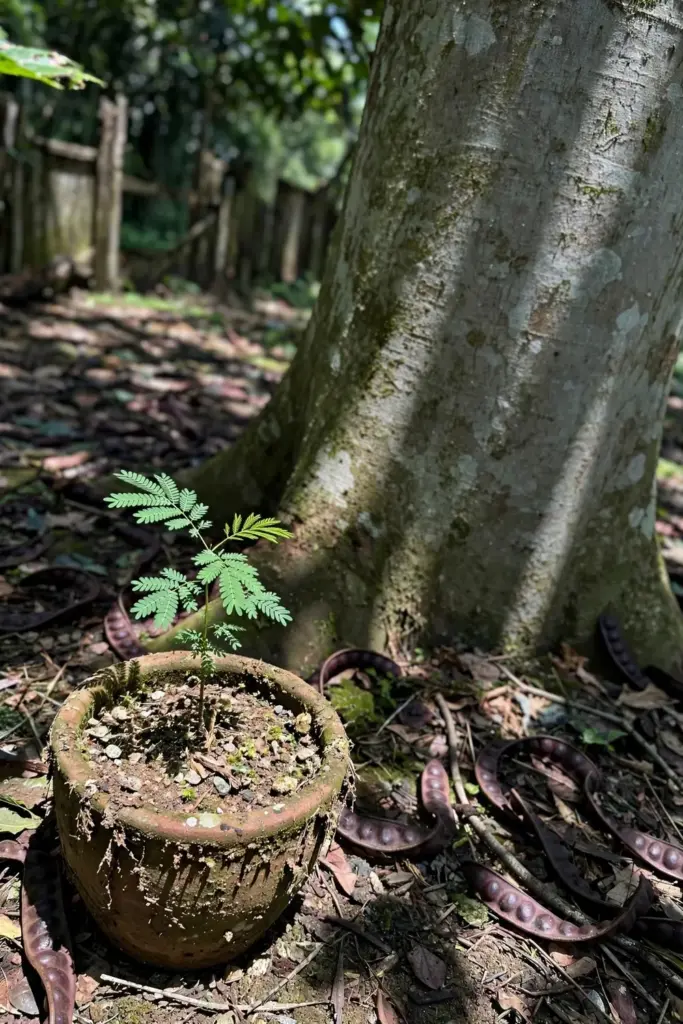
Skip the greenhouse shortcut too. A heated glasshouse that holds a 20 m tree is not a home greenhouse. It is a botanical garden palm house, with staff, with heating bills, and with a roof that opens for a crane. A home greenhouse grows seedlings, and it grows them well. It does not fruit a canopy tree. Moving a large tree indoors for winter is equally impossible at scale, and the sources checked describe no overwintering regime for this species.
Pruning offers no escape hatch either. No pruning regime for size control appears in the sources checked, so the honest statement is that a dwarfing method is data not available. A tree that loses its canopy to hard pruning loses its pods with it. The temperate shortcut does not exist, and pretending otherwise wastes years. Buy seeds, grow a different tree, or move to the tropics. Those are the three honest options, and the first one is available this week.
Frequently Asked Questions
A seedling grows in a pot for its first months. A fruiting tree does not. The tree reaches 20 to 25 m, needs a 10 to 15 m spacing grid, and flowers for moths and night insects, so no indoor pot, balcony, or home greenhouse carries it to pods. Keep a seedling potted briefly if you enjoy the experiment, then plant it in tropical ground or compost it. Cooks without tropical land should buy seeds.
No botanical source checked gives a measured years-to-first-fruit figure for jengkol. Indonesian grower videos describe income from planting in about 4 years, and that figure is a grower claim, not a measured result. Plan on several seasons of waiting, then decades of production once bearing starts. Record flowering and harvest dates for three seasons before calling any month the peak.
Sources split on the name. Kew accepts Archidendron pauciflorum for the tree native to Sulawesi, the Philippines, and the Lesser Sunda Islands. Most food and growing sources use Archidendron jiringa for the tree whose seeds people eat. Both names describe the same food tree in practice. Check for either name on a packet, and treat the seeds as carrying the same djenkolic acid risk under either name.
No preparation method has been proven to make jengkol safe, and no safe dose exists. The seeds carry djenkolic acid at 0.3 to 1.3 g per 100 g wet weight. Traditional methods include boiling in three changes of water and burying the seeds for 14 days, but the clinical review found djenkolism did not seem to depend on preparation method. Keep jengkol away from children, eat small portions, and seek care for pain, blood in the urine, or reduced urine.
Jengkol and petai belong to different genera, and only jengkol carries djenkolic acid. Jengkol is Archidendron, with dark purple pods and round, flat seeds. Petai is Parkia speciosa, with long twisted green pods and green seeds that smell strong from sulfur compounds. A strong smell is not the same as djenkolic acid. Keep the two beans apart in shopping, cooking, and advice, and never transfer a petai cooking tip to jengkol as a safety claim.
Indonesian and Malaysian grocers carry jengkol where those communities shop, and fresh markets in the home region sell the pods. Buy firm, dark brown, round, flat seeds with no mold, and check the seed before you pay. Market seeds can supply planting seed, but no viability figure exists for market-pod seed. Treat planting from a market batch as an experiment, sow more seeds than you need, and label the batch.
Make the Honest Call on Jengkol
Make the call with the tree and the risk in view, not the recipe. Learning how to grow jengkol means planting a 20 to 25 m rainforest tree, spacing it 10 to 15 m from its neighbors, watering it through dry months, waiting years for the first pods, and harvesting from a canopy that needs a pole or a climber. It also means cooking seeds that carry djenkolic acid, with no proven safe method and no safe dose, and keeping them away from children.
Buy seeds if dinner is the goal. The market gives you fresh jengkol this week, with no waiting and no ladder, and you can apply the traditional preparation and the safety rules in full. Plant a tree if you hold tropical land, steady warmth, and years to spare. Give it sun, moisture, a wide grid, and compost, and it will pay you back in pods for decades. Either choice is honest. The only wrong choice is planting a rainforest giant in a temperate garden, or serving its seeds without understanding the risk.