
Sow a fresh Myristica fragrans seed within days of harvest, and hold the sand bed warm and damp for 5 weeks until it sprouts. That is how to grow nutmeg from seed: a tropical evergreen from Indonesia’s Banda Islands that yields two spices from one fruit. The rest of this page follows the tree from fresh seed to the two-spice harvest, including the male-female lottery that decides everything at year 8. I have learned to sow nutmeg seed the same week it arrives, since viability falls off fast after harvest.
The honest catch is the tree’s sex life. Nutmeg is dioecious, so male flowers and female flowers grow on separate trees. Only the females bear fruit. Seed-grown trees split roughly evenly between the sexes, and you will not know which seedlings are female until the first flowers appear.
This guide covers how to grow nutmeg from seed, step by step, from choosing fresh seed to curing two spices from one fruit. It assumes a frost-free climate or a warm conservatory, and it works for any home grower willing to wait. Start with proven seed-starting basics if your germination has ever failed you, because stale seed is the most common reason nutmeg never sprouts.
1. Grow Nutmeg Only Where Frost Never Reaches
Nutmeg grows outdoors year round only in frost-free tropical climates, roughly USDA zones 10 and 11. A single hard freeze damages the evergreen canopy, and repeated cold stalls a tree for a full season. If your winters drop near freezing, keep the tree in a pot and move it under cover for the cold months.
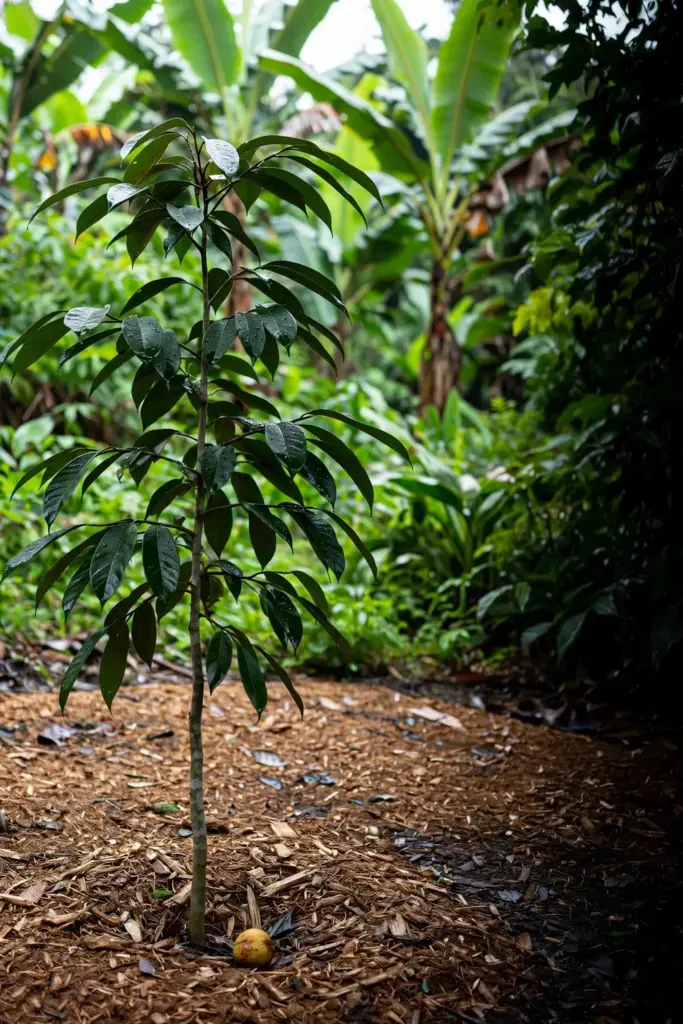
The tree wants heat and humidity, not warmth alone. Plant it where the air stays moist and the soil drains freely, because standing water rots the roots of a young tree faster than drought does. Shelter from strong wind matters too, since wind strips moisture from the broad evergreen leaves and can snap branches on a tall tree. Nutmeg trees grow large, so site the tree with a full canopy in mind from day one.
| Attribute | Value |
|---|---|
| Species | Myristica fragrans, family Myristicaceae |
| Native range | Banda Islands, a small archipelago in Eastern Indonesia (Moluccas) |
| Mature height | About 18 m, or 21.3 m tall with a 7.6 m canopy spread |
| Years to first fruit | 8 to 9 from seed; 3 from a grafted female |
| Spices per fruit | Nutmeg (the seed kernel) and mace (the aril) |
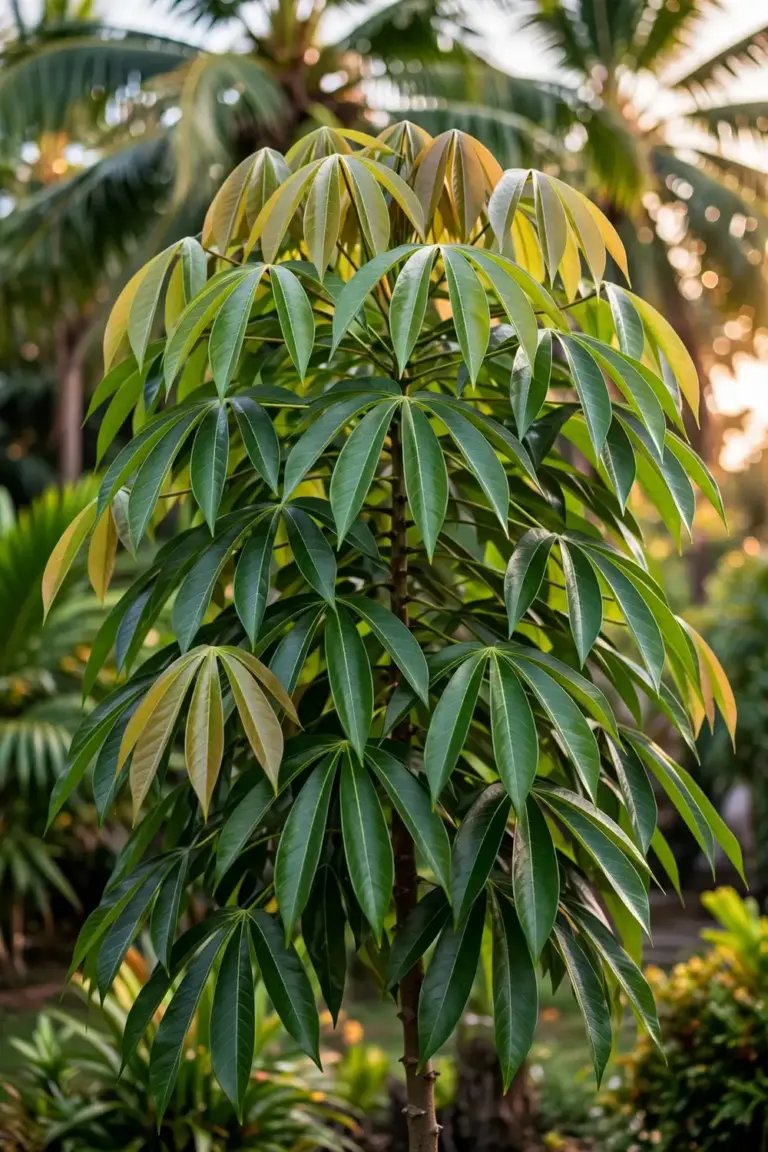
Nutmeg is native to the Banda Islands, a tiny archipelago in Eastern Indonesia, as Kerala Agricultural University’s crop profile records. That origin explains everything about its demands: constant warmth, high humidity, and rich volcanic soils. The same profile puts the tree at about 18 m tall, while the UF/IFAS Extension profile describes mature trees reaching 21.3 m tall and 7.6 m wide. If you live outside the tropics, treat the tree like a conservatory specimen and plan the move indoors before your first cold night.
Gardeners learning how to grow nutmeg in marginal climates sometimes try a sheltered courtyard microclimate. That can work in zone 10b, where frost is rare and brief, but zone 9 and colder needs the pot-and-greenhouse routine described later. Match the climate first, because no amount of care compensates for a frozen trunk.
2. Accept the 50-50 Male-Female Odds Before You Sow
Nutmeg is dioecious, so male flowers and female flowers grow on separate trees. Only the females bear fruit. Seed-grown trees split roughly evenly between the sexes, and you will not know which seedlings are female until the first flowers appear.
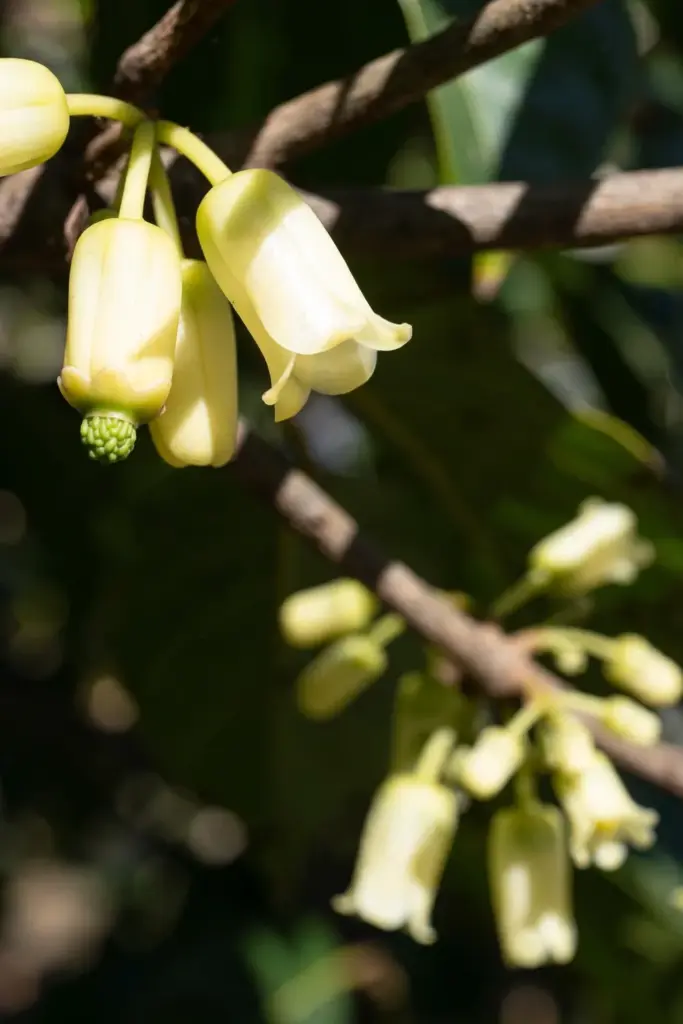
Sex shows itself only at flowering, and that takes patience. Most trees will not begin to flower until they are at least 8 years old, according to the UF/IFAS Extension profile, and only then can you tell a male tree from a female one. Seed sowing is a blind lottery. One male tree pollinates several nearby females, which is plenty for a home garden, so plant a small group and thin later. Do not bet on a single seedling. You cannot select the sexes in advance.
| Feature | Male flowers | Female flowers |
|---|---|---|
| Arrangement | Groups of 1 to 10 | Groups of 1 to 3 |
| Length | 5 to 7 mm | To 10 mm |
| Role | Release pollen | Develop into fruit |
The flowers themselves are small, bell shaped, and pale yellow, as described on the Myristica fragrans species page. Male flowers cluster in groups of 1 to 10 and reach 5 to 7 mm long, while female flowers sit in smaller groups of 1 to 3 and grow to 10 mm long. Occasionally a single tree carries both flower types, but that is the exception, not the plan. Learn this split before you sow, because it changes every decision that follows, from how many seeds you start to whether you graft.
3. Sow Nutmeg Seeds While They Are Still Fresh
The single most important rule of how to grow nutmeg is this: sow fresh seed, and sow it fast. Nutmeg seeds lose viability quickly after harvest, and dry stored seeds rarely sprout at all.
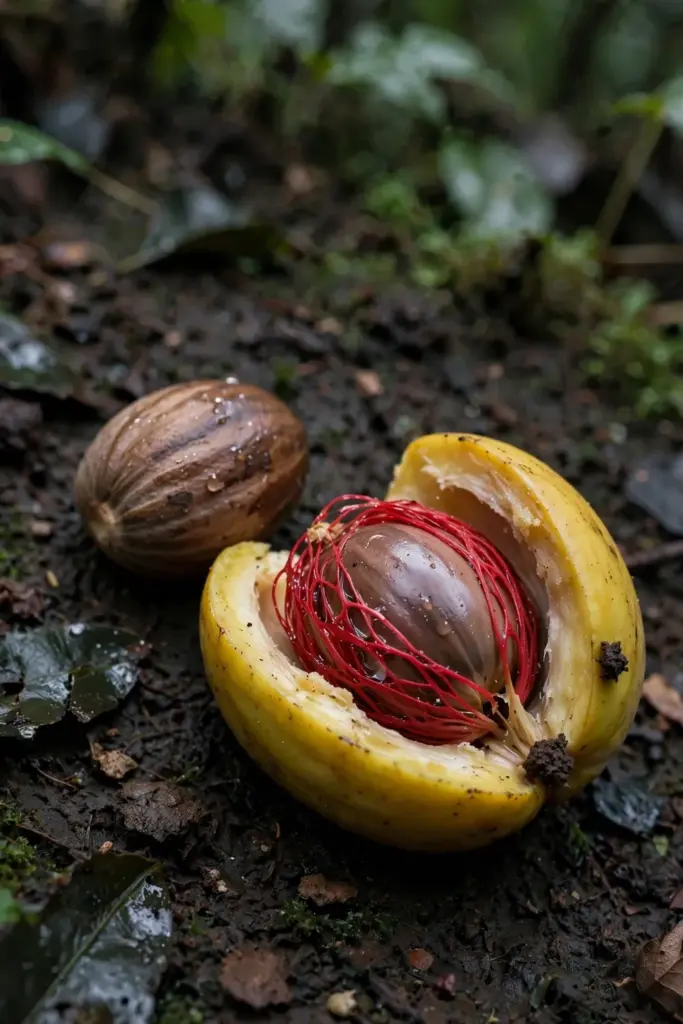
The UF/IFAS Extension profile states it plainly: to grow from seed, planting must be done shortly after harvesting because the seeds have very low viability. Buy or collect seeds from a freshly split fruit, not from a packet that has sat on a shelf for months. Choose heavy, intact seeds with no cracks in the shell and no mold on the surface. A seed that feels light or sounds loose inside has already dried out and will not germinate.
Source from a grower who ships fresh, and ask when the fruit was harvested. Seeds pulled from a ripe fruit that split open on the tree are ideal, because the split itself signals full maturity. If the seeds arrive dry or you must hold them for a few days, keep them in barely damp coir or sand, never in a sealed plastic bag, and never in the refrigerator. Cold damages tropical seed, and airtight storage invites mold.
4. Nick and Soak Nutmeg Seeds to Break the Hard Shell
Nicking the hard shell and soaking the seed overnight wakes up germination. The thick seed coat slows water entry, so a light scarification plus a soak gives the embryo the moisture it needs to swell and crack the shell.
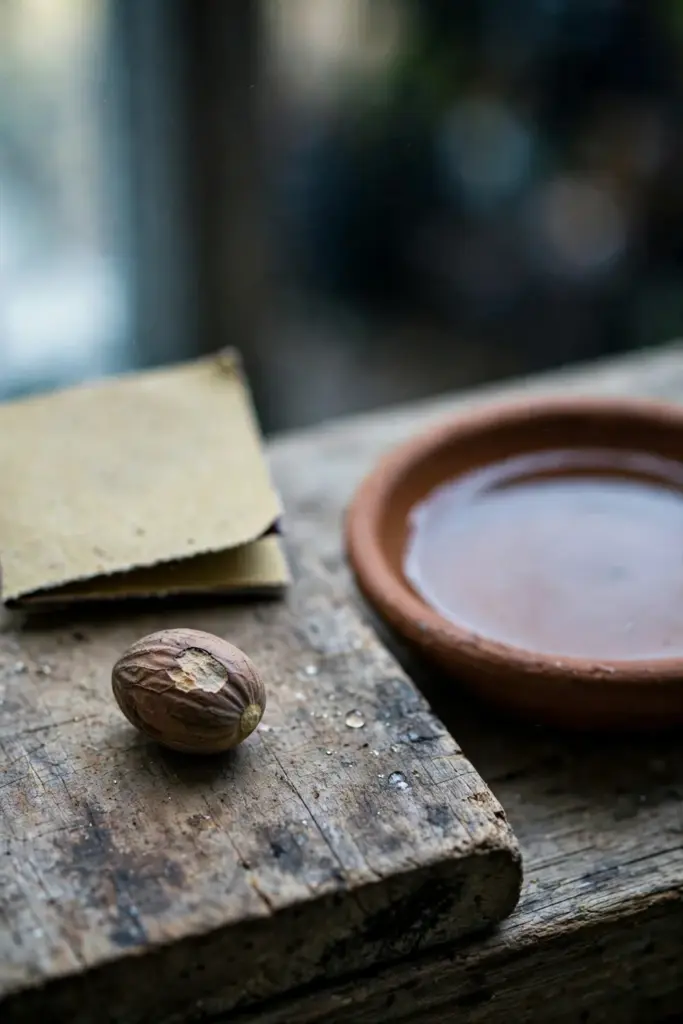
Work on a stable surface and nick one spot on the shell with medium sandpaper or a small file. Remove enough shell to show a paler layer underneath, then stop. Deep cuts reach the kernel and invite rot, so keep the abrasion shallow and limited to one or two spots. After nicking, soak the seeds in room temperature water overnight. The soak softens the shell further and hydrates the kernel.
Sow the soaked seed the next day, before the surface dries. Press each seed into a bed of clean, damp sand so it sits barely below the surface, spaced a few centimeters apart. Cover the bed lightly with more damp sand and keep it shaded. Indonesian nursery research found that scarification plus a pre-sowing soak, combined with a sand medium, lifted germination and root growth well above untreated seed, with sand outperforming heavier mixes. A seed tray with drainage holes works, but a simple wooden box of sand with holes in the bottom is the classic setup, and it costs almost nothing.
5. Keep Nutmeg Seeds Warm and Damp for 4 to 8 Weeks
Keep the seed bed warm, damp, and shaded, and the seeds sprout in about 5 weeks, sometimes a little longer. Tropical warmth does most of the work. Aim for steady warmth around room temperature or above, and never let the sand dry out.
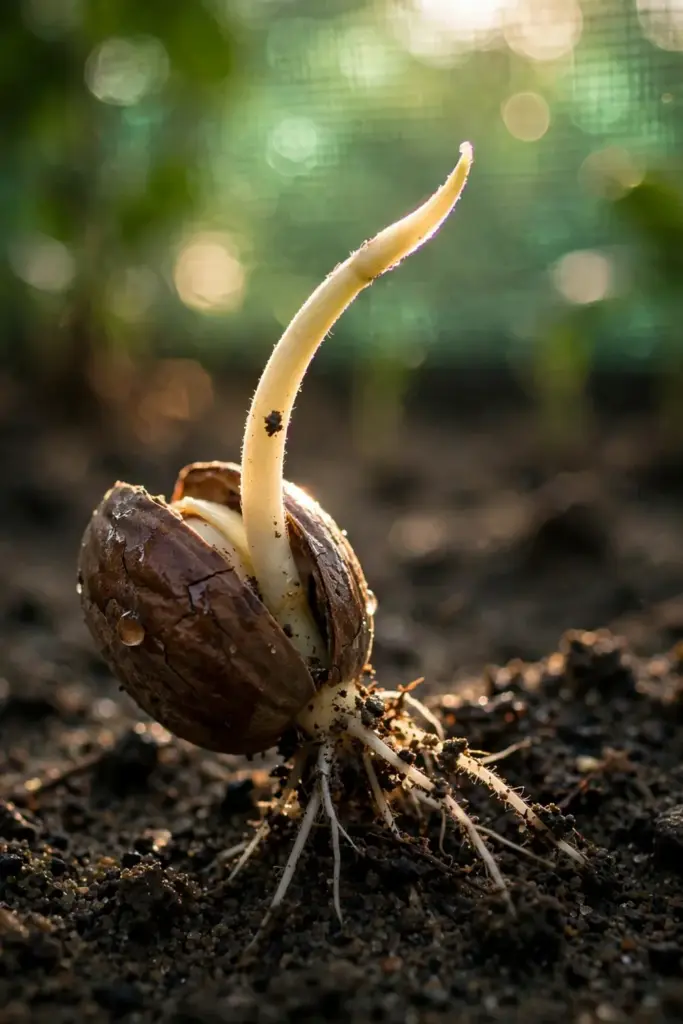
The UF/IFAS Extension profile notes that nutmeg seeds take a long time to germinate, sometimes upwards of 5 weeks, even under good conditions. That timeline is normal, not a failure. Check the bed every day and mist it when the surface starts to lighten in color. Water gently from the side or with a fine spray, because a hard stream displaces the seeds and exposes them. Shade the bed with cloth or a board raised above it, since direct sun bakes the sand and cooks the seeds.
| Step | Action | Typical time |
|---|---|---|
| 1 | Nick the shell and soak overnight | Day 0 |
| 2 | Sow in a damp sand bed | Day 1 |
| 3 | Hold warm, moist, and shaded | Weeks 1 to 5 |
| 4 | First sprouts emerge | From week 5 |
Once a sprout shows, resist the urge to dig it up and inspect it. The first root grows down fast, and disturbing it stalls the seedling for weeks. When the shoot carries two or three true leaves and stands a few centimeters tall, the seedling is ready for its first move to a nursery bag or pot. Patience at this stage pays off in stronger plants.
6. Shield Nutmeg Seedlings From Harsh Sun in Year One
Young nutmeg seedlings burn in direct sun, so give them bright shade for their first year. Dappled light under a tree or under shade cloth is the right level: enough light to grow, never enough to scorch.
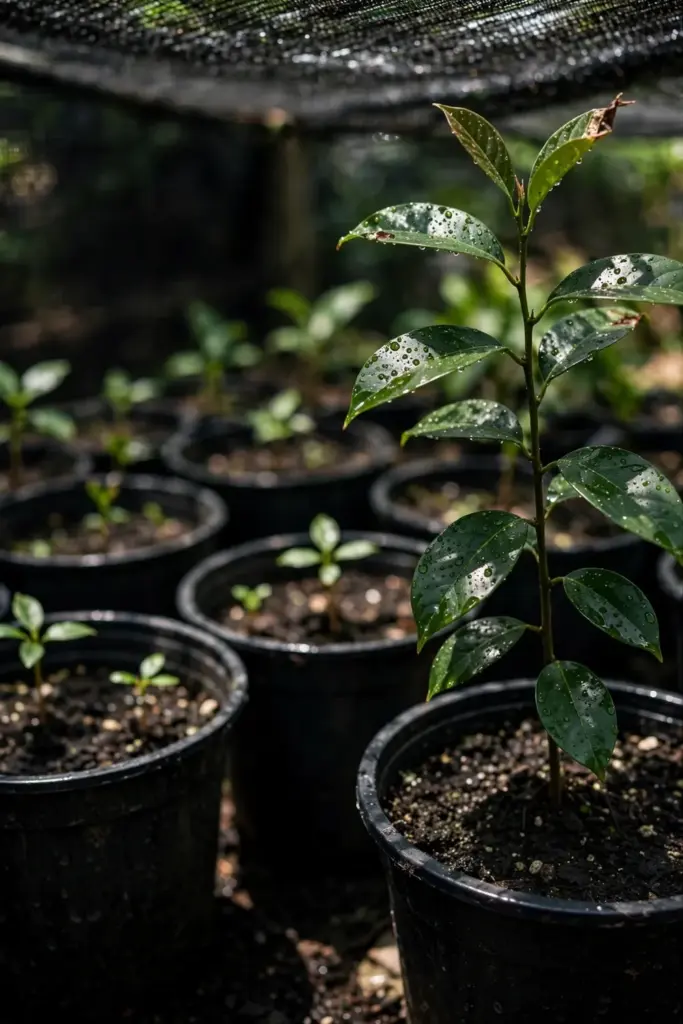
Pot each seedling into a deep container filled with a loose mix of garden soil, sand, and compost. The young taproot wants depth, so choose pots at least 20 cm tall. Skip wide shallow trays. Water when the top of the mix dries. Once the seedling carries several sets of leaves, feed it lightly: a weak liquid fertilizer every few weeks through the warm season. Heavy feeding pushes soft growth that pests love, so keep it lean.
Watch for the classic seedling failure, which is rot at the soil line. It comes from soggy mix and poor air flow, not from disease arriving out of nowhere. Keep the mix damp but never waterlogged, space the pots so air moves between them, and remove any seedling that collapses, because rot spreads fast in a crowded nursery. Seedlings grown this way stay compact and green, and they establish far better at planting time than leggy, shade-starved plants.
7. Plant Nutmeg Seedlings Out With Room for a Full Canopy
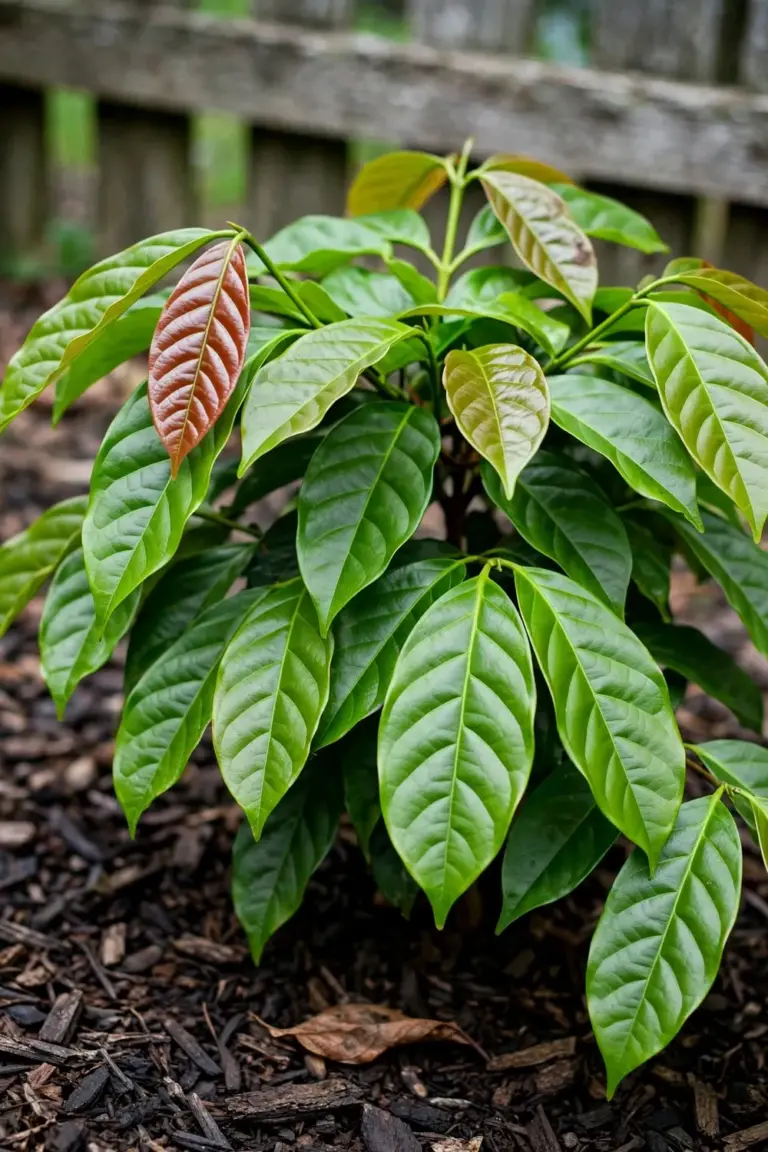
Move the tree to its final spot once it stands knee high and carries a woody stem. At that size the root system fills a deep nursery pot, and the tree survives transplant shock far better than a small soft seedling does.
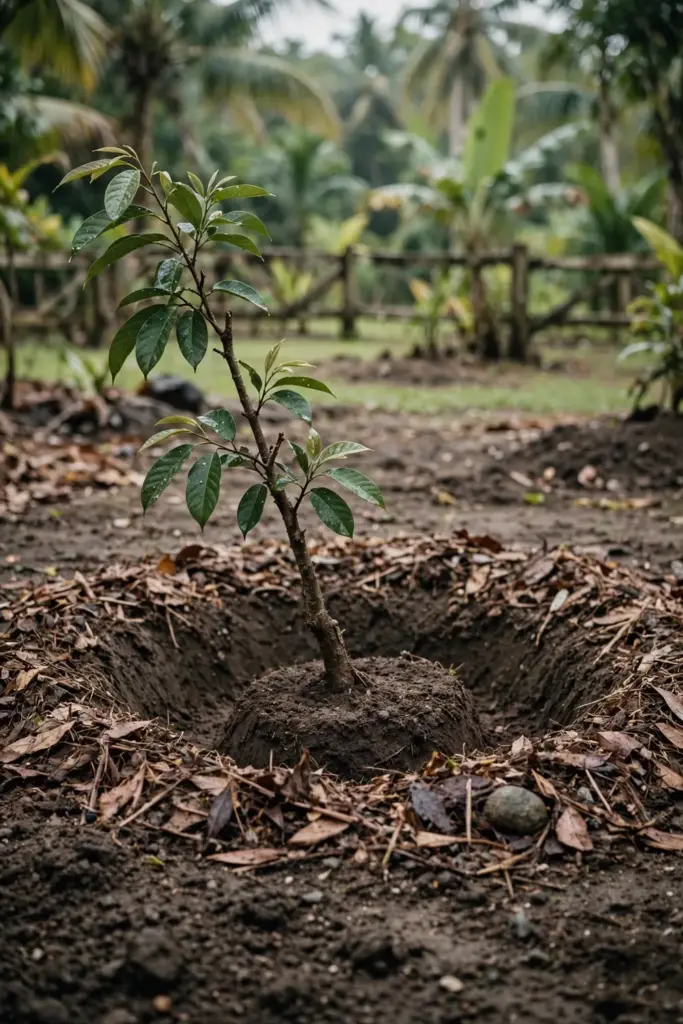
Dig a wide planting hole, twice the width of the root ball but no deeper than it sat in the pot. Set the tree at the same depth it grew in the nursery, because burying the stem invites rot. Backfill with the native soil mixed with compost, water deeply to settle it, and mulch a wide ring around the tree while keeping the mulch clear of the trunk. The tree will grow into a broad evergreen, so allow space for a full canopy from the start. Do not squeeze it between other plantings.
Water the new tree deeply twice a week through the first dry season, then taper as the roots spread. A tree planted at the start of the rainy season establishes fastest, since the rain does the watering work for you. Stake only if wind rocks the trunk; a tree that sways a little grows a stronger trunk than one tied rigidly to a stake.
8. Graft a Female Scion to Get Fruit in 3 Years
For anyone weighing the seed lottery against a faster harvest, grafting is the shortcut. A graft taken from a fruiting female tree is guaranteed female, and it starts producing in about 3 years instead of 8 or more.
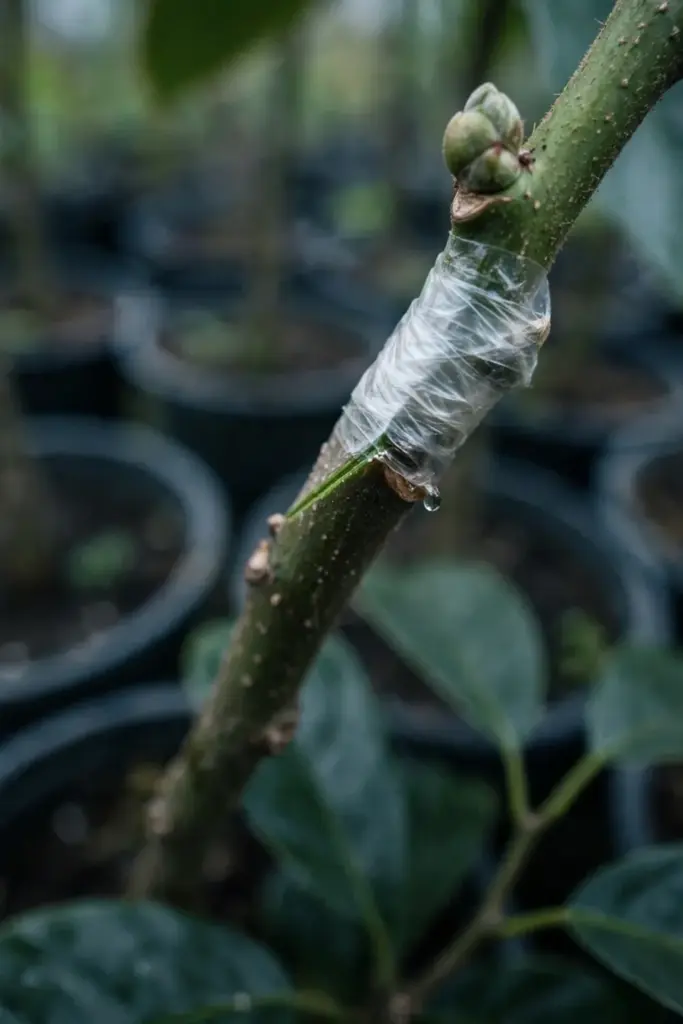
The numbers make the case. Seedlings flower at 8 to 9 years after planting, per Kerala Agricultural University, and half of them turn out male. Grafted trees from a female start producing in 3 years and reach maximum production in 15 to 25 years, according to the UF/IFAS Extension profile. That profile also notes that grafting is the more common practice precisely because waiting 8 years to learn a tree’s sex is a long gamble. The productive life stretches for decades, with the same profile reporting close to five decades of production, so the investment pays back over a lifetime.
| Option | Years to first fruit | Notes |
|---|---|---|
| Seedling | 8 to 9 | Roughly half turn out male; sex known only at flowering |
| Grafted female | 3 | Guaranteed female; full production at 15 to 25 years |
The standard method is epicotyl grafting onto a seedling rootstock, a technique Indonesian researchers use to multiply selected female trees. For a home grower, the practical path is simpler: buy a grafted tree from a nursery that labels the scion source as a fruiting female. Ask for that label explicitly. An unlabeled “nutmeg tree” from a general nursery is usually a seedling, and you are back in the lottery. Long-lived tropical trees reward this kind of patience; the mangosteen long-term guide covers another tropical tree that takes many years to bear and is worth the same long view.
9. Water Nutmeg Trees Deeply Through Dry Spells
Keep the root zone evenly moist and water deeply whenever the top few centimeters of soil dry out. Nutmeg evolved under frequent tropical rain, so it dislikes both drought and waterlogging. Deep, less frequent watering beats daily sprinkles.
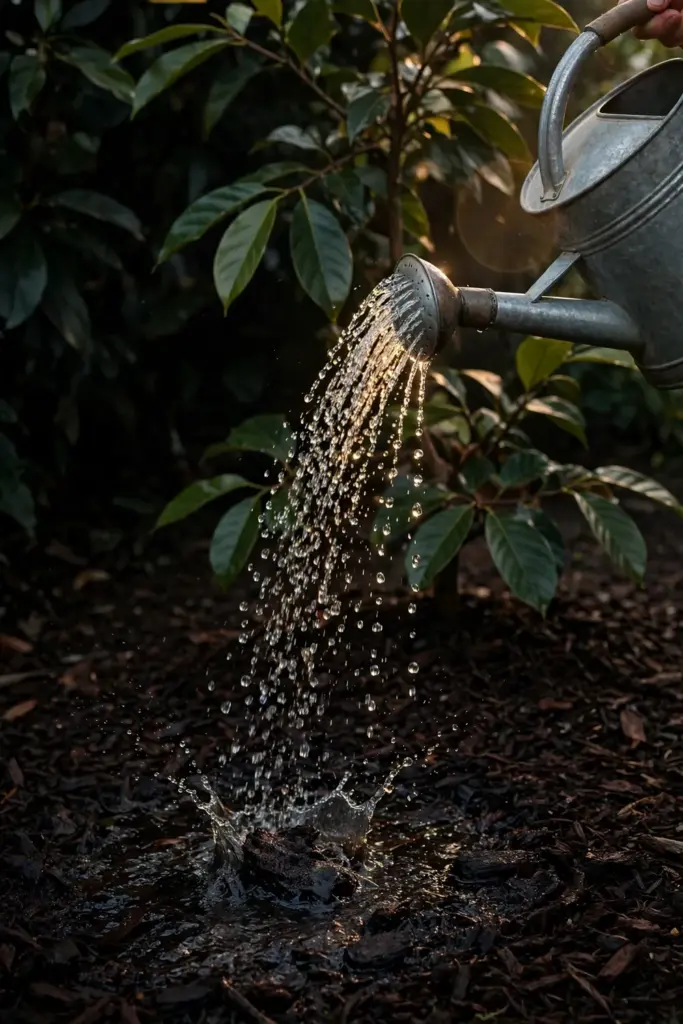
Mulch is the quiet workhorse here. A 10 cm layer of leaf litter or wood chips over the root zone holds moisture, feeds the soil as it breaks down, and keeps the shallow feeder roots cool. Refresh the mulch as it thins, and keep it a hand’s width away from the trunk to prevent collar rot. Young trees need the most attention: water them through every dry week of their first two years, because a young tree has no deep roots to draw on.
Mature trees tolerate short dry spells once their roots reach deep soil, but fruit set drops when the tree is thirsty during flowering. If your climate has a real dry season, give the tree a deep soak every week or two through it. Drip irrigation or a slow hose at the dripline works better than a sprinkler, which wets the leaves and invites fungal problems. Like other tropical fruit trees, nutmeg rewards consistent moisture; the mango growing guide covers similar watering logic for another heat-loving tree.
10. Feed Nutmeg Trees Lightly and Steadily
Feed nutmeg with a balanced fertilizer two to three times a year during the growing season. Young trees need small, frequent doses, while mature trees take larger annual feeds. Spread the fertilizer in a wide ring under the canopy, never piled against the trunk, and water it in.
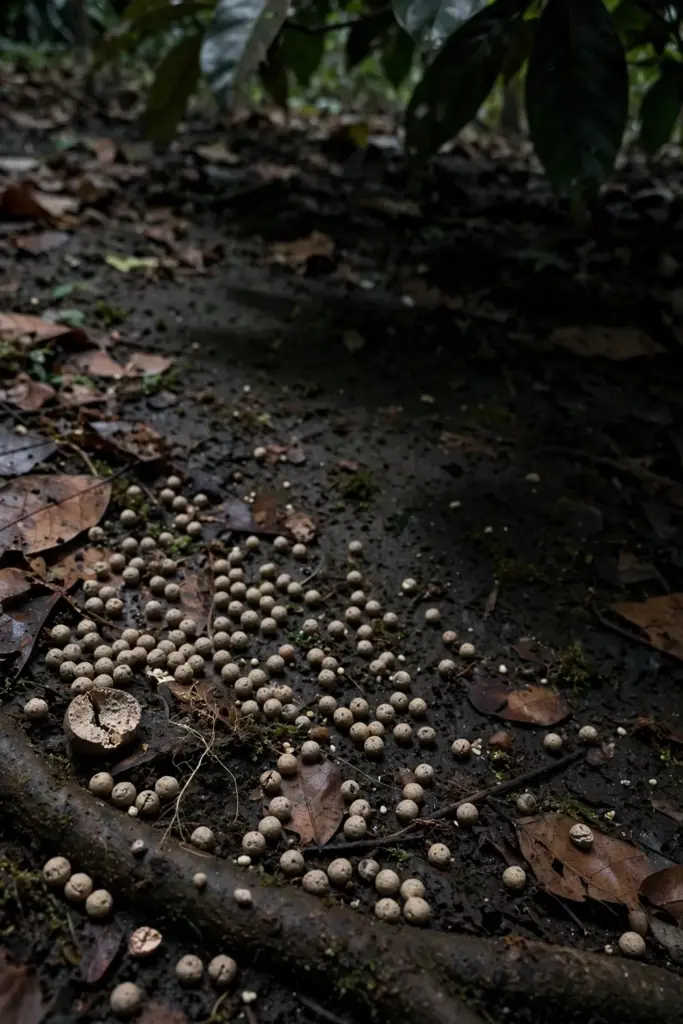
Organic matter does half the feeding work. The tree evolved on rich forest soils, so compost, leaf mold, and aged manure around the root zone keep it productive with less synthetic fertilizer. Apply compost as a top dressing at the start of the rainy season and let the rain carry the nutrients down. Watch the leaves for feedback: pale new growth calls for nitrogen, while dark green leaves and steady flushing mean the current program is working.
Avoid the two common feeding mistakes. The first is dumping a large dose of granular fertilizer against the trunk, which burns roots and can kill a young tree outright. The second is feeding heavily in the dry season with no water to carry the nutrients in, which salts the soil around the roots. Small doses, spread wide, timed with rain or irrigation: that is the whole program.
11. Prune Nutmeg Trees to Remove Dead and Crossing Wood
Prune nutmeg lightly, and only to remove dead, damaged, or crossing branches. The tree forms a naturally rounded evergreen canopy and needs no shaping to fruit well.
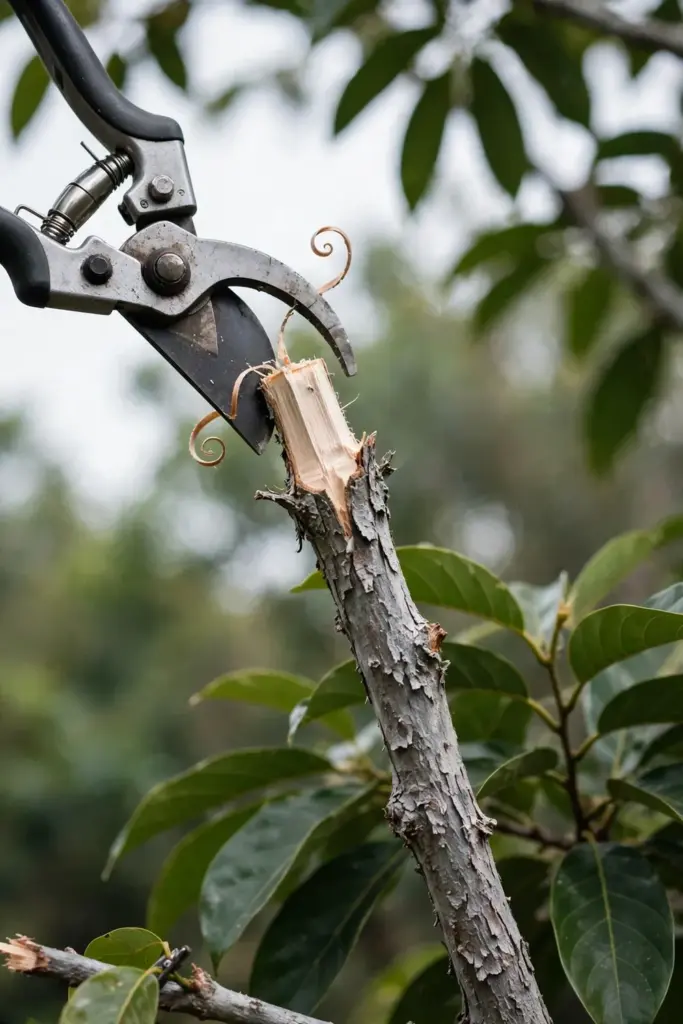
Do the work right after a harvest flush, when you can see the structure clearly and the tree has months to heal before the next flowering. Cut dead wood back to living tissue, remove branches that rub against each other, and take out any low suckers from the base. Make clean cuts just outside the branch collar, and never leave stubs, because stubs rot back into the trunk. Disinfect your tools between trees if you have pruned anything diseased.
The goal is light and air in the canopy, not a smaller tree. A dense, tangled center stays damp and invites fungal problems, while an open canopy dries fast after rain. If you need technique refreshers, the spring pruning techniques guide covers clean cuts and timing for woody plants generally. Never top a nutmeg tree: the lost leader never grows back properly, and the regrowth is weak and crowded.
12. Stop Fruit Rot, Dieback, and Thread Blight Early
The documented problems on nutmeg are fruit rot, dieback, and thread blight. Prevention beats cure for all three, and the prevention is cultural: drainage, air flow, and sanitation.
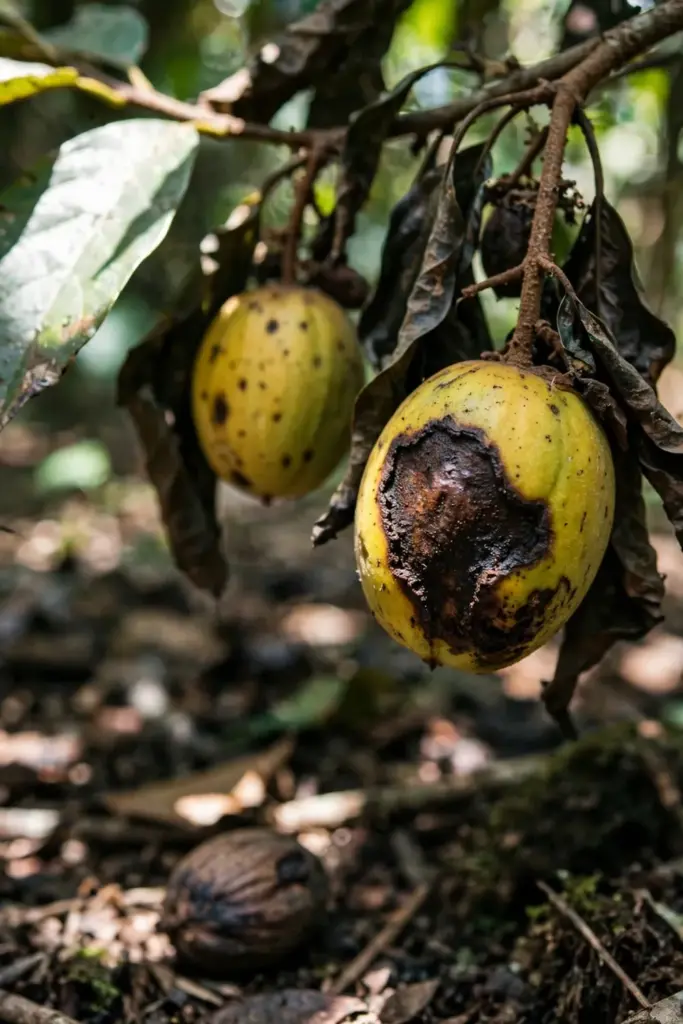
Fruit rot shows as soft, dark patches on developing fruit, and it spreads fastest in wet, crowded canopies. Dieback dries out branch tips and works inward, often starting where a wound or a pest opened the bark. Thread blight webs leaves and twigs together with fine fungal threads during long wet spells. For each one, the first response is the same: prune out the affected wood well below the damage, disinfect the tools, and remove the prunings from the garden. Do not compost diseased material.
Keep the ground under the tree clean. Fallen fruit and dead leaves hold the fungi that cause the next round of infection, so rake them up regularly during the wet season. Space trees for air movement, mulch for soil health, and avoid overhead watering, which keeps the canopy wet for hours. A tree with an open canopy, dry leaves by midday, and clean ground underneath rarely needs anything stronger than the pruning shears.
13. Pot Nutmeg Trees for the Conservatory Below Zone 10
Outside the tropics, grow nutmeg in a large pot and bring it under cover before the first cold night. The tree adapts to container life for years if the pot is big enough and the air stays humid.
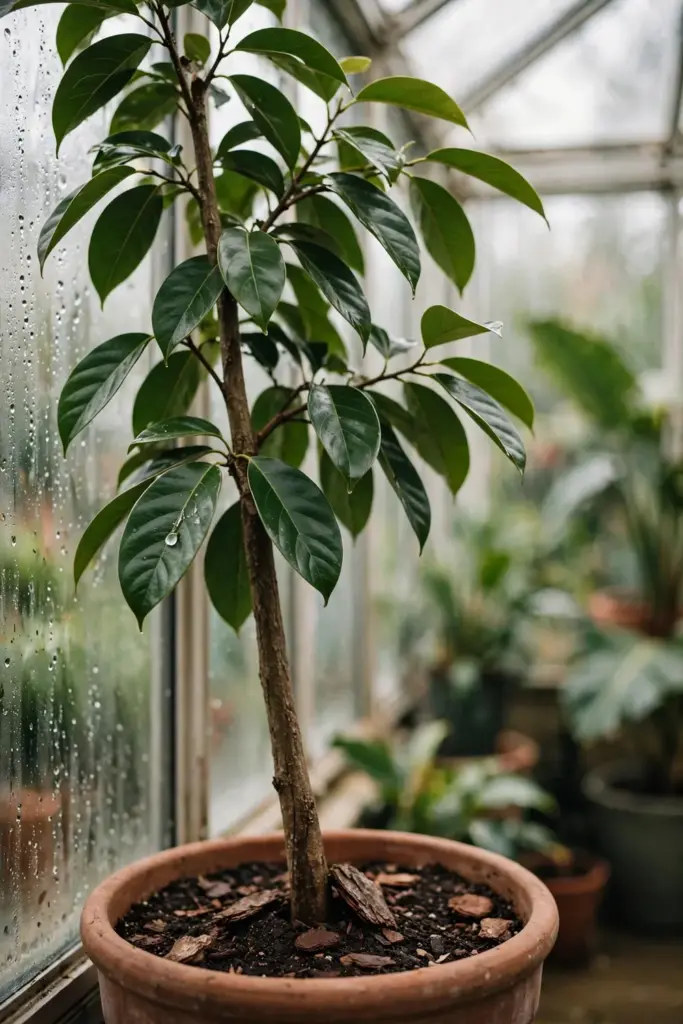
Choose the largest pot you can move, at least 50 liters, with drainage holes and a loose, rich mix, since terracotta breathes better than plastic but any sturdy container works with good drainage. In summer, stand the pot outdoors in bright indirect light. In winter, move it to the brightest warm spot you have, ideally above 15°C, far from heating vents, because dry air drops flowers and stalls growth. Humidity is the real limiter indoors. Run a humidifier nearby or set the pot on a wide tray of wet pebbles.
Feed and water container trees like hungry houseplants. Water when the top 3 cm of mix dries, feed monthly in the warm months with a balanced liquid fertilizer, and repot every two to three years as the roots fill the pot. Prune lightly to keep the canopy in proportion to the root space. A container tree may never reach full production, but it will flower and set some fruit, and it keeps the species alive in your collection until a warmer garden comes along.
14. Split, Separate, and Dry Two Spices From Each Ripe Fruit
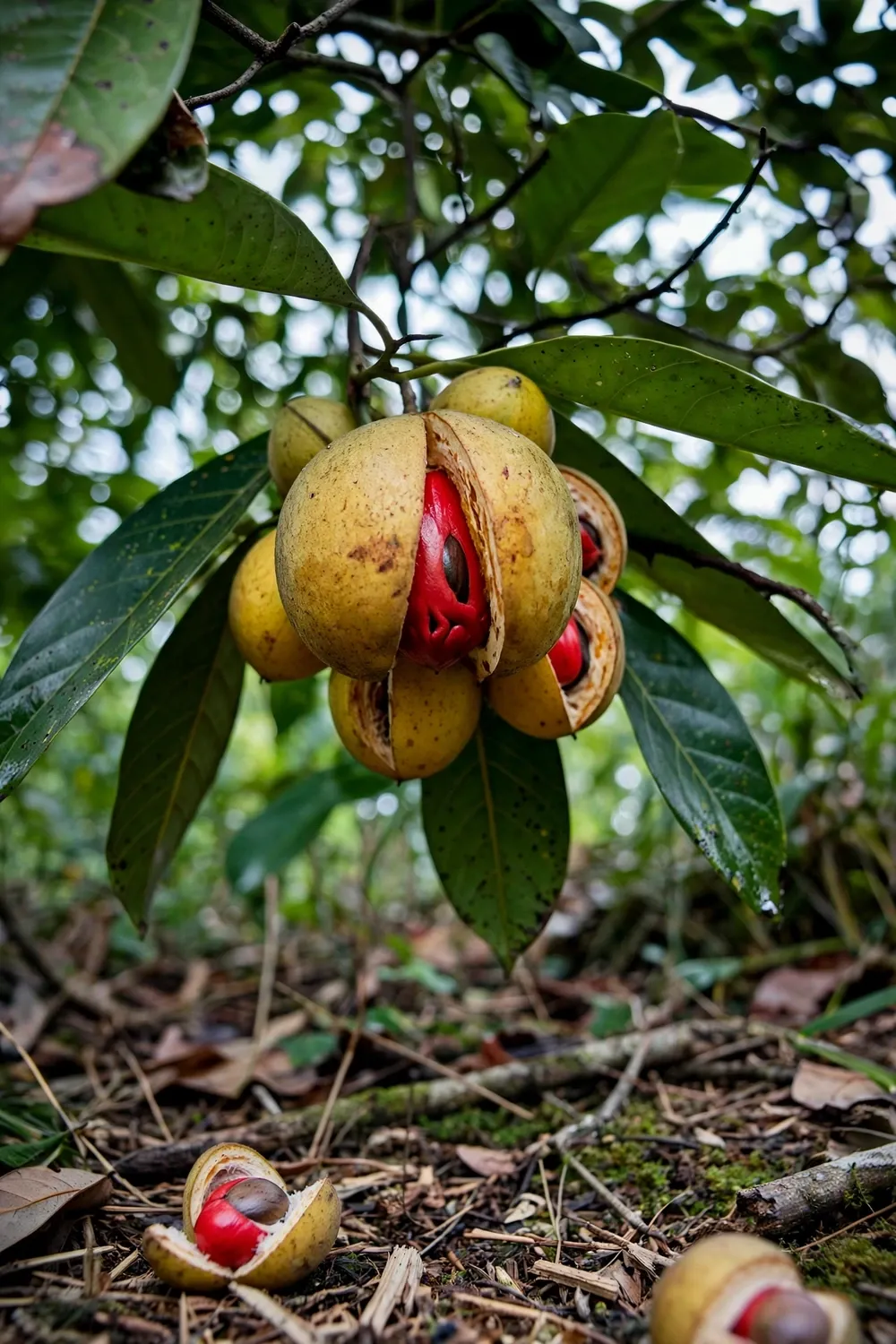
Harvest each fruit when the husk splits open on its own and reveals the red aril inside. A naturally split fruit is fully ripe; forcing unripe fruit open gives pale, weak-flavored spice.
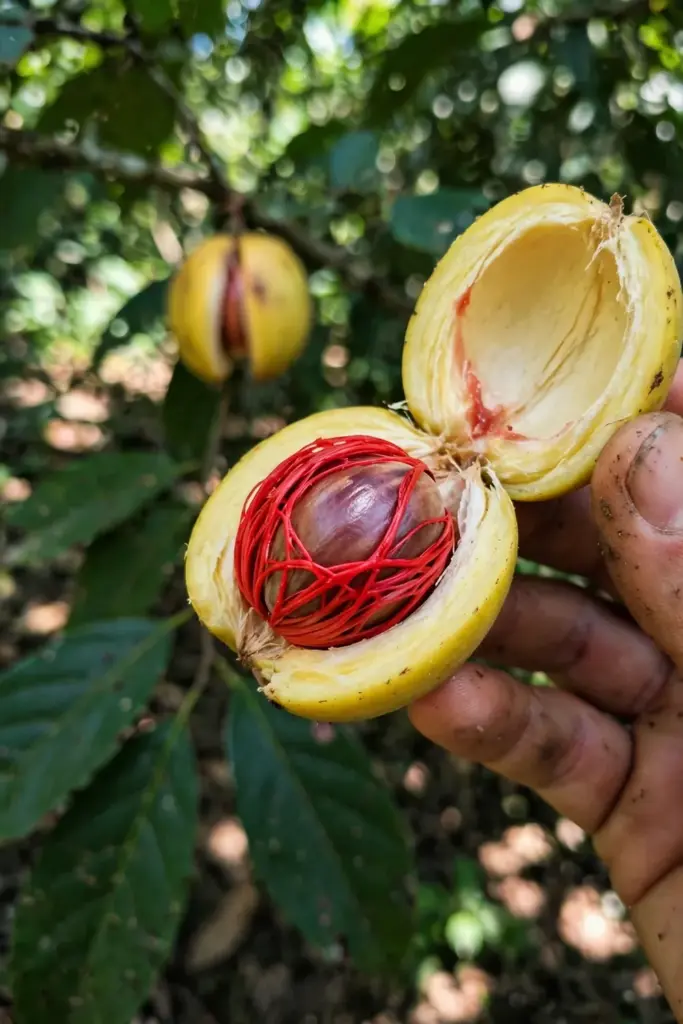
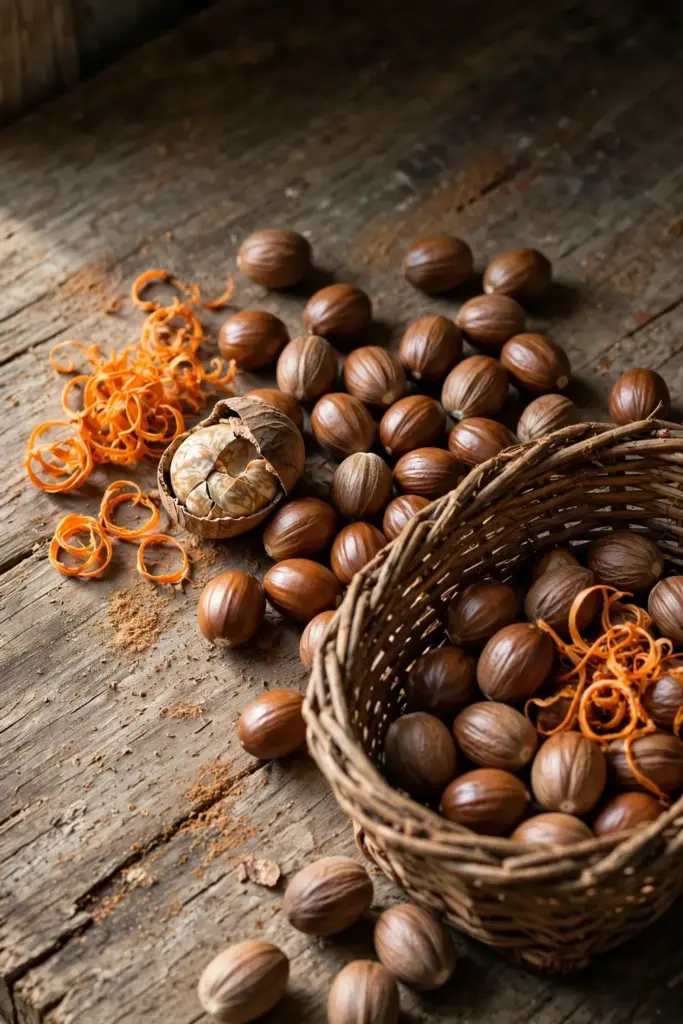
Pull the bright red aril away from the seed shell gently and lay it flat to dry. This aril is mace, and it changes color as it dries, turning from red to the orange blades sold as a spice. Dry it in thin layers in warm shade with good air flow, turning the pieces daily until they are brittle. The nut itself needs drying too: spread the shelled nuts in a single layer and dry them for several weeks, turning them, until the kernel rattles inside the shell. That rattle means the kernel has shrunk free of the shell and the moisture is low enough for storage.
Kerala Agricultural University describes exactly this transformation: the red arils on drying become orange in color and are the mace of commerce, while the nut is dried until the kernel inside rattles. Crack the shell only when you are ready to use the nutmeg, because the whole kernel keeps its aroma far longer than the ground powder. Store both spices in airtight jars away from light and heat. The two-spice harvest is the payoff for the whole long project: one fruit, two distinct flavors, and nothing wasted.
15. Fix Slow Germination, Yellow Leaves, and Flowerless Trees
Most nutmeg failures trace to three causes: old seed, bad drainage, or a male tree. Work through them in that order before assuming the worst.
| Symptom | Likely cause | Fix |
|---|---|---|
| No sprout after 8 weeks | Seed too old or dried out | Start over with fresh seed, nicked and soaked |
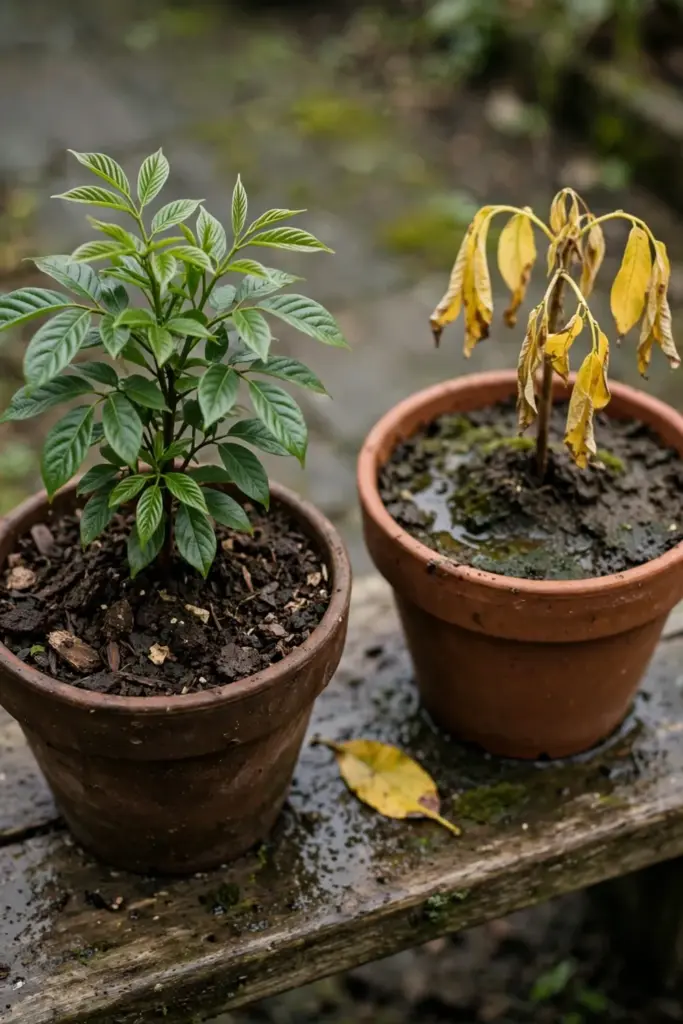
| Yellow leaves on a young tree | Waterlogged soil or overwatering | Improve drainage, ease off watering, refresh mulch |
| Leggy pale seedlings | Too little light under heavy shade | Move to brighter shade gradually over two weeks |
| No fruit after 9 years | Male tree, or no male nearby for a female | Plant a second tree, or graft a female scion onto the tree |
Slow germination is the most common complaint, and the fix is almost always the seed. Nutmeg seeds have very low viability once they dry, so a batch that never sprouts usually started stale. Buy fresh, nick, soak, and sow the same week. If a batch fails twice from the same supplier, change suppliers. Do not change your method.
Yellow leaves on a young tree point at the roots. Dig down a few centimeters: if the soil smells sour or stays soggy a day after watering, the drainage is the problem. Lift the tree, amend the hole with coarse sand and compost, and replant at the right depth. A tree that flowers but never sets fruit is usually a lone female with no male pollinator nearby, or a male tree doing exactly what male trees do. The graft fix from section 8 solves both.
16. Frequently Asked Questions About Growing Nutmeg
A seedling tree bears its first fruit 8 to 9 years after planting, according to Kerala Agricultural University. Grafted trees from a fruiting female start producing in about 3 years, reach maximum production between 15 and 25 years, and keep producing for close to five decades, per the UF/IFAS Extension profile. Plant grafted stock if you want fruit in this decade.
You can grow it in a large container and overwinter it indoors, but a full-size indoor tree is unrealistic. Use a pot of at least 50 liters, give it bright indirect light and humid air, and move it outside for the warm months. Indoor trees flower and set some fruit, yet they stay smaller and less productive than trees grown in tropical ground year round.
Only the flowers tell. Male flowers grow in clusters of 1 to 10 and reach 5 to 7 mm long, while female flowers sit in smaller groups of 1 to 3 and reach 10 mm. The tree must be at least 8 years old before it flowers at all. Before that age, sexing a seedling is guesswork, which is why nurseries sell grafted females.
Both come from the same fruit. Nutmeg is the dried seed kernel inside the hard shell, and mace is the dried aril, the thin red web that wraps the shell. The aril turns from red to orange as it dries. Mace tastes warmer and more delicate than nutmeg, which is why cooks reach for each in different dishes. One fruit yields both spices.
Normal culinary amounts are safe. The caution is myristicin, a compound in nutmeg that causes myristicin intoxication at high doses: a published case involved symptoms after about two teaspoons (10 grams), with hallucinations, drowsiness, and dizziness reported, according to Healthline’s nutmeg safety review. This is general information, not medical advice. Keep ground nutmeg in culinary pinches, store it away from children, and talk to a clinician with any concern.
17. Where to Go From Here
Nutmeg rewards the patient grower with two spices no store-bought jar fully matches. Start with fresh seed, respect the male-female split, and give the tree the frost-free warmth its Banda Islands origin demands. Learning how to grow nutmeg rewards patience more than skill, and every year the tree stands, the harvest gets better.
Your next move is the seed order. Ask the seller for the harvest date, plan to sow within days of arrival, and start more seeds than you need so you can select the strongest seedlings. If fruit in this decade matters more than the seedling adventure, buy a grafted female and skip the 8-year lottery. Either way, the tree you plant now becomes a decades-long producer, and the first split fruit with its red aril is worth the wait.