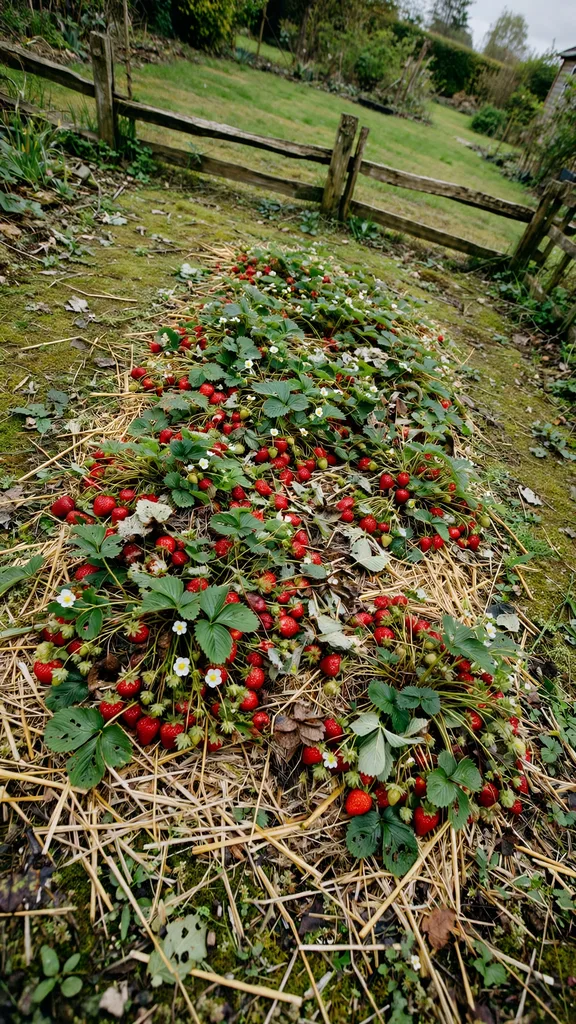
Start 12 weeks before your last spring frost with one packet of named seed, a shallow tray, and a cold shelf in the refrigerator. That is how to grow strawberries from seed. Chill the seed first, surface sow it in bright light, and give the young plants one full season to build crowns before you ask them for a serious crop. Seed is the slow route to a strawberry bed. It is also the cheap route, the route that opens alpine and day-neutral types that nurseries rarely stock as plants, and the only route that starts with genetics you picked yourself.
Patience is the real input. A seed grown June-bearing plant fruits in its second year, while day-neutral and everbearing plants fruit in the planting year once early flowers are removed, according to the Ohio State University Extension fact sheet on growing strawberries in the home garden. Plan the calendar around that split and the wait stops feeling like a delay. It becomes the design.
Growing cane fruit from seed is a different job, and that work lives on the site’s guide to growing juicy blackberries from seed. This page stays on strawberries: tiny seed, a cold month in the refrigerator, and a crown set exactly at soil level.
| Item | Specification |
|---|---|
| Seed start | 10 to 12 weeks before the last spring frost |
| Cold stratification | 2 to 4 weeks at 1 to 4 degrees Celsius |
| Sowing depth | On the surface, pressed into the mix, uncovered |
| Germination window | 7 to 42 days at 18 to 24 degrees Celsius |
| Light for seedlings | 14 to 16 hours a day, lamp 5.1 to 10.2 cm above the leaves |
| Soil pH | 5.8 to 6.5 |
| Sun | 6 hours minimum, 10 hours or more for the heaviest crop |
| June-bearing spacing | 45.7 to 61 cm apart, rows 91.4 to 121.9 cm apart |
| Day-neutral spacing | 20.3 to 30.5 cm apart, rows 76.2 to 91.4 cm apart |
| Water | 2.5 to 3.8 cm a week during the fruiting stretch |
| First harvest | Planting year for day-neutral and everbearing types, second year for June-bearing types |
Choose June-Bearing, Everbearing, Day-Neutral, or Alpine Before You Buy Seed
Pick the type before you pick the variety name. The type sets your harvest calendar, your spacing, your runner work, and the year of your first bowl. Seed catalogues bury that decision under flavour notes. Put it first.
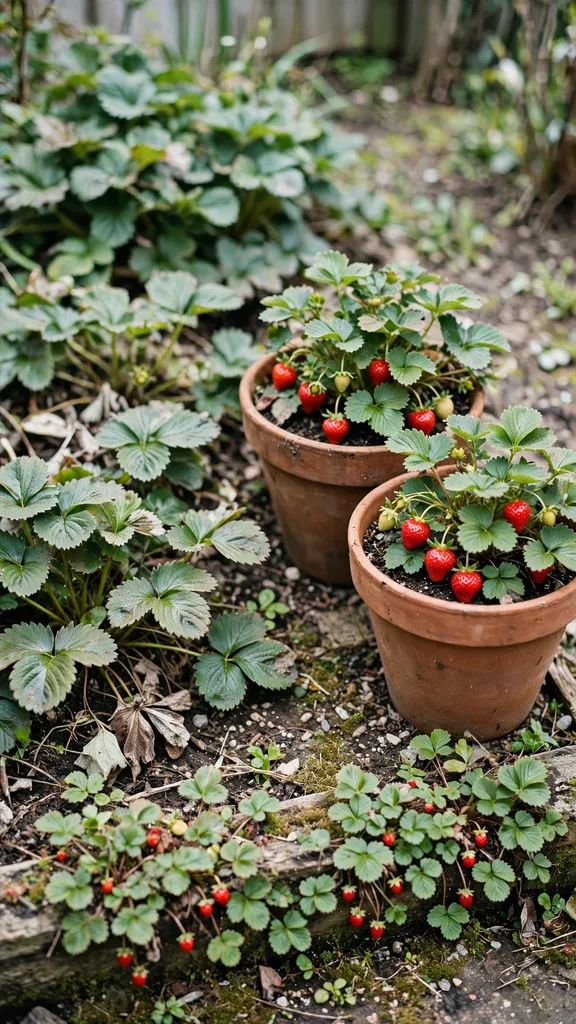
June-bearing plants give one large, concentrated crop in late spring to early summer, and the Ohio fact sheet puts the Ohio ripening window from late May to the end of June, with each plant yielding a quart of fruit, 946 millilitres, in a matted row during the first fruiting year, as the Ohio State University Extension fact sheet records. Everbearing plants give two smaller crops, one in early summer and a second in early fall. Day-neutral plants fruit through most of the growing season in small, steady pickings. Alpine plants, a form of Fragaria vesca, give tiny, intensely flavoured berries across the season and tolerate part shade that would starve the other three types.
| Type | Harvest Pattern | First Crop From Seed | Runner Load | Best Fit |
|---|---|---|---|---|
| June-bearing | One heavy crop over 3 to 4 weeks in late spring | Second year | Heavy, fills a matted row | Jam, freezing, one big preserving session |
| Everbearing | Two crops, early summer and early fall | Planting year, small | Moderate | Fresh eating with a fall bonus |
| Day-neutral | Steady fruit through most of the season | Planting year | Light, remove most runners | Containers, small beds, continuous picking |
| Alpine | Small berries across the whole season | Planting year, light | None on true alpine forms | Shade edges, borders, pots by a door |
Match the type to the job. A freezer full of jam needs June-bearing plants and a free weekend in June. A kitchen door pot that yields a handful of berries three times a week needs a day-neutral variety such as Seascape. A shaded border that never sees six hours of sun needs alpine seed, the one type that earns its place there. The wrong match fails quietly: day-neutral plants in a matted row drown in their neighbours, and June-bearing plants in a small pot spend the season making runners over the rim. Crowns cost a season. Choose once, on paper, before the seed order goes in.
Named varieties matter inside each type. Earliglow and Jewel carry the June-bearing flavour reputation in eastern gardens. Seascape and Albion lead the day-neutral lists for containers. Alexandria and Yellow Wonder cover the alpine slot. Buy seed of a named variety from a seed house that prints the type on the packet. A packet labelled only strawberry seed, with no type and no variety, is a lottery ticket. The plants grow. The calendar stays unknown, and every later decision on flowers and runners depends on that calendar.
Save Seed From a Fully Ripe Berry or Buy Named Seed
Start with named seed from a packet in your first year. Saved seed is a second-year project, once you own a plant whose type you know. Strawberry seed sits on the outside of the fruit, in the small pits across the skin. Those seeds are achenes, and each one carries a cross of the mother plant and whatever pollen arrived that day. Seedlings vary. Some match the mother closely, some drift toward smaller fruit or weaker runners, and that variation is the honest price of saved seed.
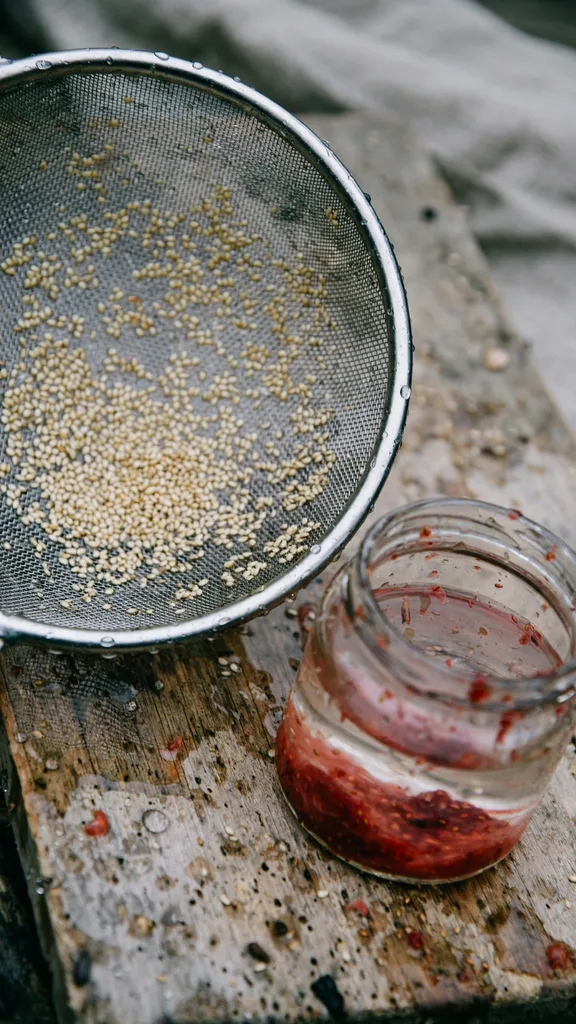
Extract seed from a berry that ripened fully on the plant, deep red to the tip with no white shoulder. Mash the berry in water in a small jar. Viable seed sinks within a day, pulp and hollow seed float, and you pour the floaters off with the water. Spread the sunken seed on a paper towel. Dry it for 48 hours at room temperature, then store it in a paper envelope in a sealed jar in the refrigerator. Label the envelope with the variety and the year. Unlabelled strawberry seed is compost with extra steps, because the type decision above collapses without a name.
Store bought berries are the weakest seed source on the shelf. Commercial fruit is picked firm, the seed inside often matured in a cold truck, and the variety is a shipping hybrid bred for firmness. Seed from such a berry germinates in patches and fruits late, small, or both. Grow one tray as an experiment if curiosity demands it. Build the bed on named seed. A bed planted from a mystery tray spends two years revealing what it is, and two years of bed space is the most expensive input in this whole article.
Chill Seed for 2 to 4 Weeks to Break Dormancy
Refrigerate the seed before you sow it. Strawberry seed carries a dormancy set by the cold season the species evolved with, and a warm windowsill alone breaks that dormancy slowly and unevenly. The cold treatment is called stratification. It is simple, and skipping it is the single most common reason a tray of strawberry seed gives three seedlings instead of thirty.
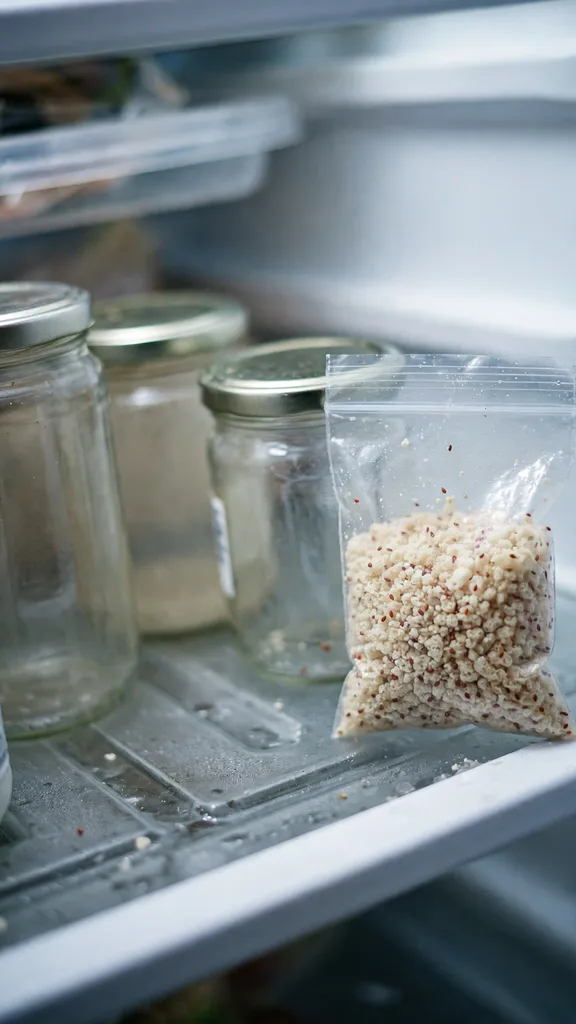
Mix the seed with a spoonful of barely damp vermiculite or fine sand in a small sealed bag. Keep the bag at 1 to 4 degrees Celsius, the temperature band of a home refrigerator, for 2 to 4 weeks. Check the bag once a week. Open it for a minute if droplets coat the plastic, because still wet air grows mould on the seed coat, and mouldy seed rots in the tray. Mark the sow date on the bag the day it goes in. Seed that enters the refrigerator without a date leaves it late, and a late start costs the seedlings their long indoor runway.
Work backwards from the last frost. Seedlings need 10 to 12 weeks of indoor growth before they can harden off and move outside, and the cold weeks sit in front of that block. A district with a mid May last frost starts stratification in late January and sows in late February. Write the three dates on the calendar in one sitting: chill start, sow day, transplant week. The tray then runs on rails. Seed chilled for six weeks by accident still germinates, so an overshoot is a smaller error than a skipped chill. A skipped chill is the expensive one.
Why Must Strawberry Seed Sit on the Surface in the Light?
Sow the seed on the surface of the mix and press it down with the flat of a spoon. Strawberry seed germinates in response to light, and a covering of mix blocks that signal. Buried strawberry seed is the second classic failure in this crop: the tray stays moist, the temperature sits right, and nothing rises for six weeks because the seed never received the one cue it waits for.
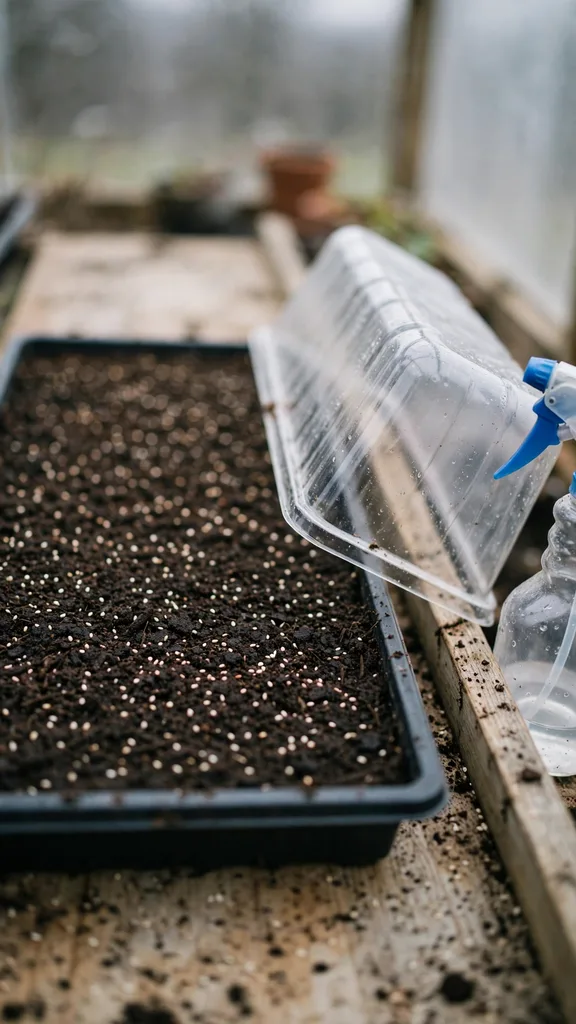
Fill a shallow tray with fine seed raising mix, firm it level, and water it before the seed goes down. Scatter the seed thinly across the surface. Thin sowing matters more than precision here, because strawberry seedlings resent root disturbance and a crowded tray forces a damaging prick out session later. Mist the surface after sowing. Cover the tray with a clear lid or a sheet of clear film to hold humidity, and set the tray where it holds 18 to 24 degrees Celsius. A heat mat under the tray steadies that band in a cold room.
Expect a slow, staggered rise. The first seedlings can show in 7 days and the last stragglers can take 42 days, so the tray is a six week commitment, never a ten day verdict. Remove the lid in stages once half the tray is up: prop it open for a few hours on day one, longer on day two, and off by day four. A lid left sealed over emerged seedlings grows gray mold at the soil line, and the seedlings fall over at the base within days. Vent early. The mould wins every sealed tray it enters.
Grow Seedlings Under Strong Light for 14 to 16 Hours
Move the tray under strong light the day the first seedling shows. Strawberry seedlings stretch fast in dim rooms, and a stretched seedling never fully recovers its stocky shape. Hang a simple LED or fluorescent lamp 5.1 to 10.2 cm above the leaves and run it for 14 to 16 hours a day. Raise the lamp as the plants grow, holding that same gap. A bright windowsill alone rarely delivers enough light in late winter, when the days are short and the sun angle stays low. The lamp is the difference between a plant and a thread.
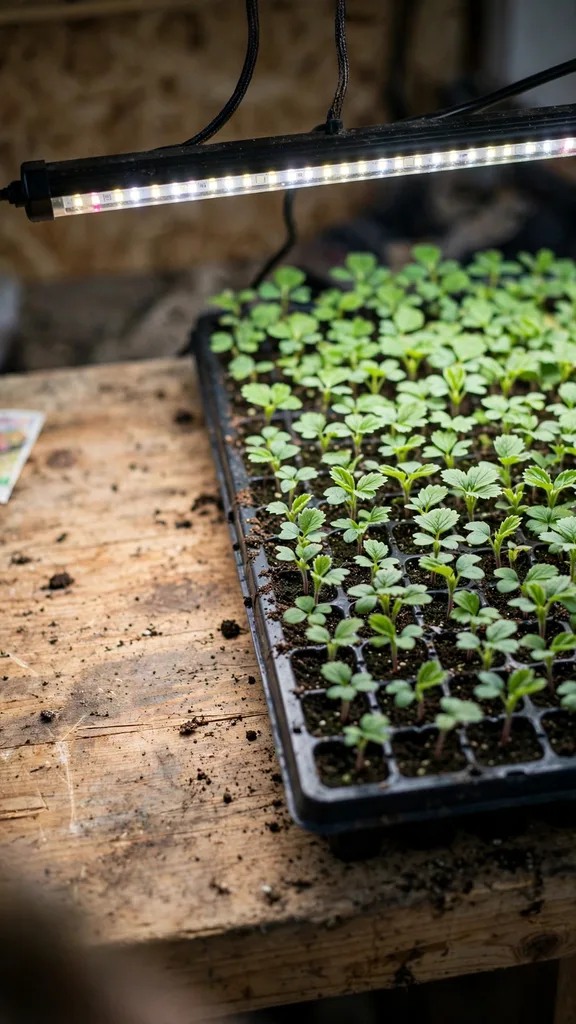
Feed lightly once the first true leaves open, the three part leaves that follow the round seed leaves. Apply a half strength liquid feed once a week. Full strength feed on a four week seedling salts the small root ball and burns the leaf edges, and the damage reads as disease for weeks. Water from below where the tray allows it: stand the tray in a shallow dish of water for 20 minutes, then drain it fully. Wet foliage in still indoor air invites the same mould that kills sealed trays.
Pot seedlings on when they carry three or four true leaves and the roots hold the plug together. Lift each seedling by a leaf, never by the stem. A crushed stem kills the plant outright, while a torn leaf costs it a week. Set each seedling in its own 7.6 cm pot of standard potting mix, at the same depth it grew in the tray. Grow the pots on under the lamp for two more weeks. Crowded seedlings left in the tray past this point stall hard: roots circle the cell, leaves shade each other, and the plants sulk for a month after transplant. Pot on time. The calendar beats the rescue every season.
Harden Off Seedlings and Set Them Out After Frost
Harden the seedlings off before they meet the garden. Indoor leaves burn in direct sun and tear in wind that a garden grown plant shrugs off. Move the pots outside into shade for 2 hours on the first day. Add an hour a day and shift the pots into morning sun across 7 to 10 days. Bring the pots in on any night that threatens frost during that week. A single frost night on soft indoor growth blackens the crown, and a blackened crown on a seedling is the end of that plant.
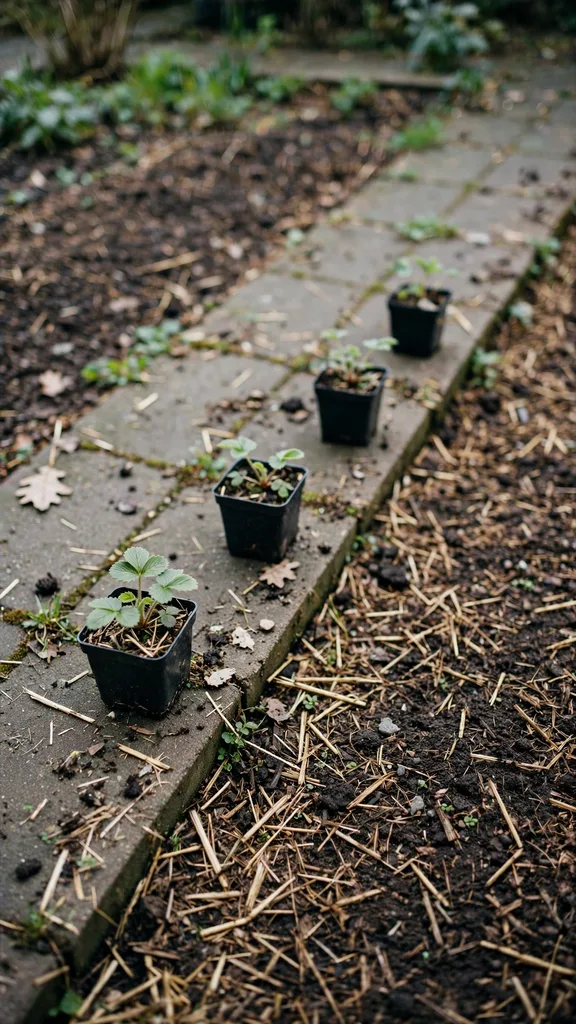
Transplant after the last frost date, on a cloudy day or in the late afternoon. Water the pots an hour before planting so the root ball slides out whole. Space June-bearing plants 45.7 to 61 cm apart in rows 91.4 to 121.9 cm apart, the matted row spacing in the University of Minnesota Extension guide to growing strawberries in the home garden, because those plants fill the gaps with runners across the first season. Set day-neutral and everbearing plants 20.3 to 30.5 cm apart with runners removed through the season. Alpine plants sit 20.3 cm apart along a border edge, where their small crowns stay visible and pickable.
Water each plant in at planting with a full can across the row. Mulch between the plants with clean straw once the soil warms, keeping the mulch off the crowns themselves. Straw under the fruit keeps berries off wet soil, and berries resting on wet soil rot from the contact patch outward. Hold the straw back a hand width from each crown. A buried crown in warm mulch rots quietly, and the plant collapses in the first hot week with no pest and no disease to blame.
Set the Crown Exactly at Soil Level
Plant every seedling with the crown exactly at soil level. The crown is the short, thick stem junction where the leaves rise and the roots fall. Set it too deep and the growing point sits under wet soil, where it rots within weeks. Set it too shallow and the roots dry at the surface, and the plant wilts at noon every day no matter how much water the bed receives. More seed grown strawberries die from planting depth than from any pest on the list. The Ohio fact sheet states the same rule for transplants: cover the roots and only half of the crown with soil, as the Ohio State University Extension guidance puts it.
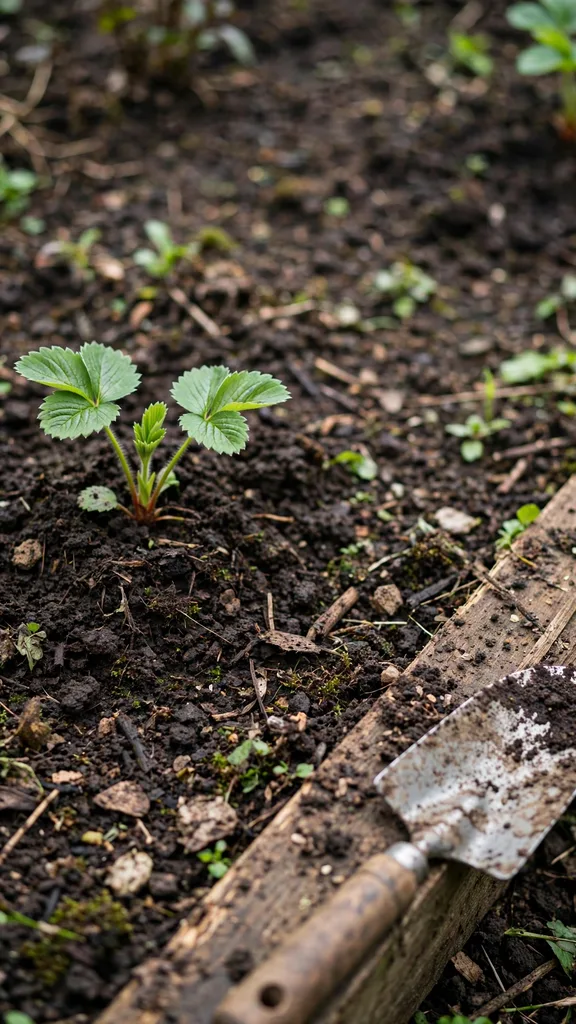
Dig a hole wide enough for the roots to hang straight down. Roots bent upward into a J shape grow slowly and anchor badly, and the plant rocks in the wind for a season. Build a small cone of soil in the hole for bare plugs, drape the roots over it, and backfill in stages, firming gently with your fingertips at each stage. The finished plant sits with the midpoint of the crown level with the surrounding soil surface. Tug the plant lightly. A correctly firmed plant resists the tug. A loose plant moves, and a moving plant dries at the root line.
Site the bed in full sun on soil that drains after rain. Strawberries need at least 6 hours of direct sun a day and do best at 10 or more hours, per the University of Minnesota Extension guide, and standing water after a storm is the other disqualifier. Test the soil before planting and hold the pH between 5.8 and 6.5, the band both extension guides agree on. That same acid leaning band suits the site’s lingonberry groundcover article, so the two crops share a soil preparation day well. Skip beds where potatoes, tomatoes, or peppers grew in the last three years. Those crops share soil diseases with strawberries, and verticillium wilt carried in old solanum soil takes a new bed apart plant by plant.
Water Deeply and Feed Lightly Through the Season
Water the bed deeply once or twice a week rather than lightly every day. Strawberry roots run shallow, mostly in the top 15.2 cm of soil, and shallow daily watering trains them shallower still. Plants require 2.5 to 3.8 cm of water a week from mid June to mid August, the irrigation band in the Ohio State University Extension fact sheet, and a rain gauge in the bed tells you what the sky already delivered. Water in the morning. Leaves that dry before nightfall carry far less leaf disease than leaves that stay wet through the night, and the morning slot costs nothing.
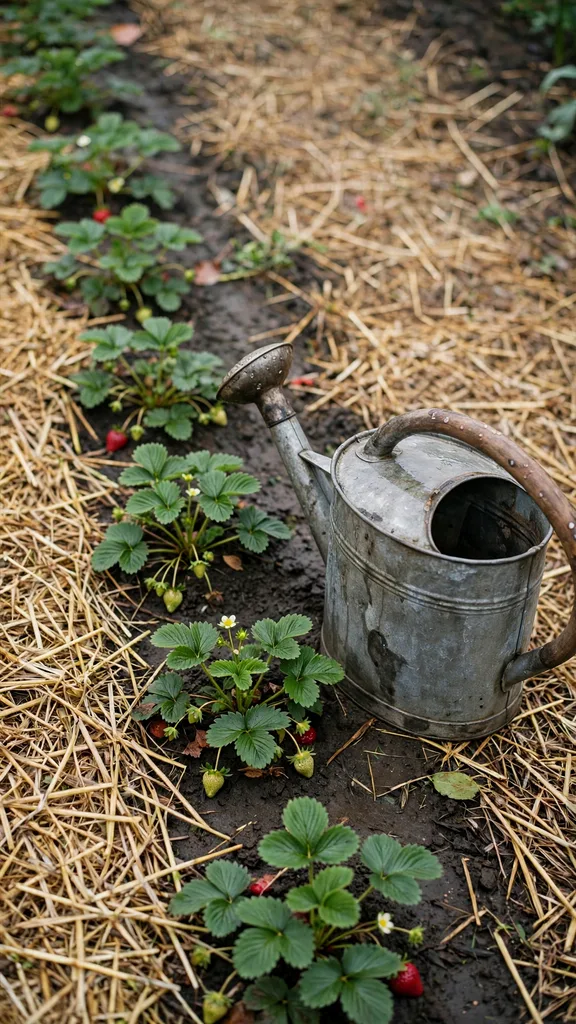
Feed with restraint. Excess nitrogen grows a dense green canopy that shades the fruit, softens the berries, and feeds gray mold. Apply compost around the plants after harvest and again in late summer, and side dress day-neutral plants with compost in July and August if growth stalls, following the University of Minnesota Extension calendar for the crop. A pale plant with small leaves in midsummer is asking for nitrogen. A dark green plant with no fruit is drowning in it. Read the plant before you open the feed bag. The bag cannot read the plant for you.
Weed by hand. Work shallowly, and work often, because strawberry roots resent deep cultivation and a hoe swung deep beside a crown severs the feeder roots that carry the crop in a single careless pass. Pull weeds while they are small. A bed weeded for 10 minutes a week in May stays clean all season. The same bed ignored until July needs an afternoon of hard work and loses plants in the rescue, since mature weed roots and strawberry roots come up together in the same handful, every time. Mulch is the second weeder: a straw layer across the bed cuts the weed seed germination underneath it and keeps the fruit clean at the same time.
Pinch First Flowers and Manage Runners by Type
Remove the first flowers. A seed grown plant that fruits on a small crown in its first summer spends its root budget on three berries and enters winter weak. Remove the flower stalks of June-bearing plants as they appear through the whole first growing season, and remove day-neutral flowers for the first 6 weeks after planting, then allow fruiting for the rest of the season, as the Ohio State University Extension fact sheet directs. The pinched weeks feel wasteful. They are the purchase price of the second year crop, and the second year crop is the one that fills bowls.
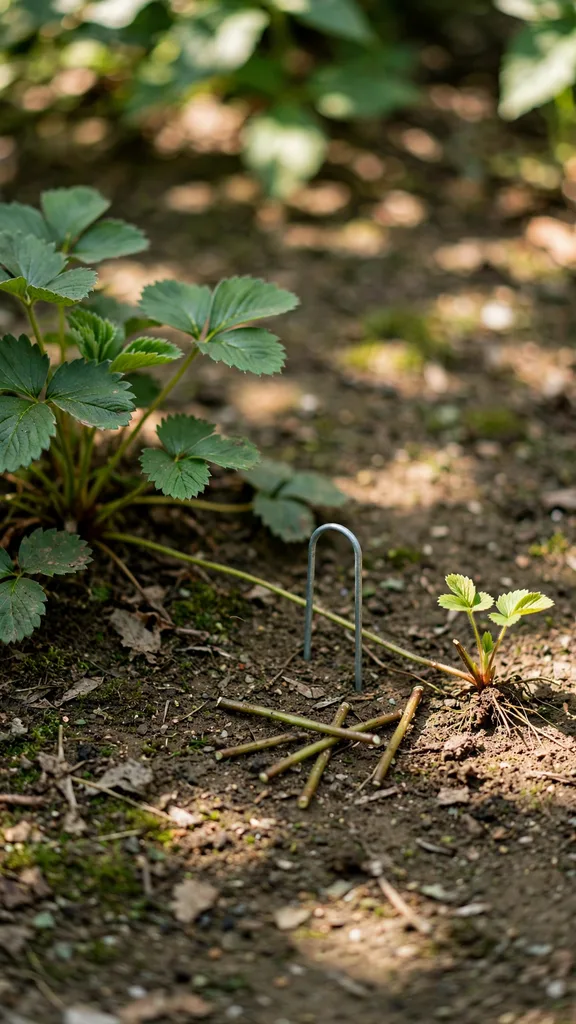
Runners decide the shape of the bed from July onward. A June-bearing plant in a matted row needs its runners: position the strongest ones where gaps sit, press the runner tip into the soil, and let the daughter plant root. One June-bearing plant can throw a long line of daughters in a season, and the University of Minnesota Extension guide warns that unplaced runners take over a yard. Cut the surplus. A matted row works at a finished width of 45.7 to 61 cm, with plants thinned to 15.2 to 20.3 cm apart after harvest. Wider than that, the row becomes a thicket where air stalls, berries hide, and slugs hold meetings you never see.
Run the rule in reverse on day-neutral and everbearing plants. Cut every runner on those types through the season. Their crop comes from the mother crown, and every rooted daughter steals water and feed from fruit already sizing on the mother. Alpine plants settle the argument by making no runners at all on true forms. Three types, three runner rules. Write your type on the bed label the day you plant, because by August every strawberry plant looks like every other strawberry plant, and the runner decision cannot wait for a memory check.
Pick Fully Red Fruit at the First Harvest
Pick berries fully red, with no white tip and no green shoulder. Strawberries stop ripening at picking. A berry lifted at half color stays half sweet for good, and the kitchen verdict lands on the variety when the fault sits with the picking hand. Fruit follows bloom by roughly four weeks on June-bearing plants, per the University of Minnesota Extension guide, so mark the bloom week on the calendar and start checking the bed daily as that window closes. Check under the leaves. The ripest berries hang low, hidden, exactly where the birds look first.
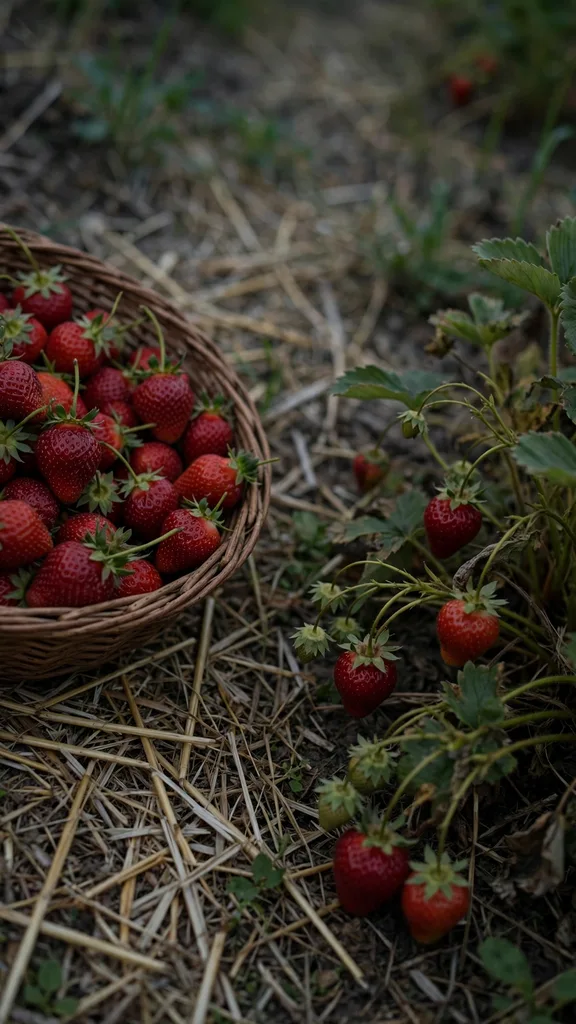
Pick in the morning after the dew dries, with the green cap and a short piece of stem attached. Pinch or cut the stem. Pulling the berry off by force tears the cap out of the fruit or drags the whole truss, and torn fruit rots in the punnet by evening. Hold picked fruit in a shallow layer, two berries deep at most. A deep bucket crushes the bottom layer under the weight of the top, and crushed berries mould across the whole container within a day at room temperature. Refrigerate the harvest within the hour, unwashed. Wash berries only at eating time. Water on stored berries is mould food.
Expect the first year honestly. Day-neutral and everbearing plants from seed give a light first crop, a handful at a time from midsummer onward. June-bearing plants give nothing in year one by design, because you removed their flowers, and then deliver the heavy crop in year two. A seed grown bed reaches full stride in its second and third years. Judge the project at the second June, never at the first August. Beds pulled up after one light season are the saddest waste in this crop: the expensive year is already paid, and the cheap, heavy years were next.
Renovate June-Bearing Beds and Mulch for Winter
Renovate a June-bearing bed within a week after the last harvest. Renovation is the reset that keeps a matted row productive: mow or cut the old leaves off high, above the crowns, thin the row back to a 30.5 cm width, and leave the strongest plants standing 10.2 to 15.2 cm apart, the thinning pattern set out in the Ohio State University Extension fact sheet. Topdress the thinned row with 1.3 to 2.5 cm of soil over the crowns and water the bed with 2.5 cm of water a week while regrowth runs. The bed looks destroyed for a fortnight. It returns with young leaves, a clean row, and next year flower buds forming in the crowns by fall.
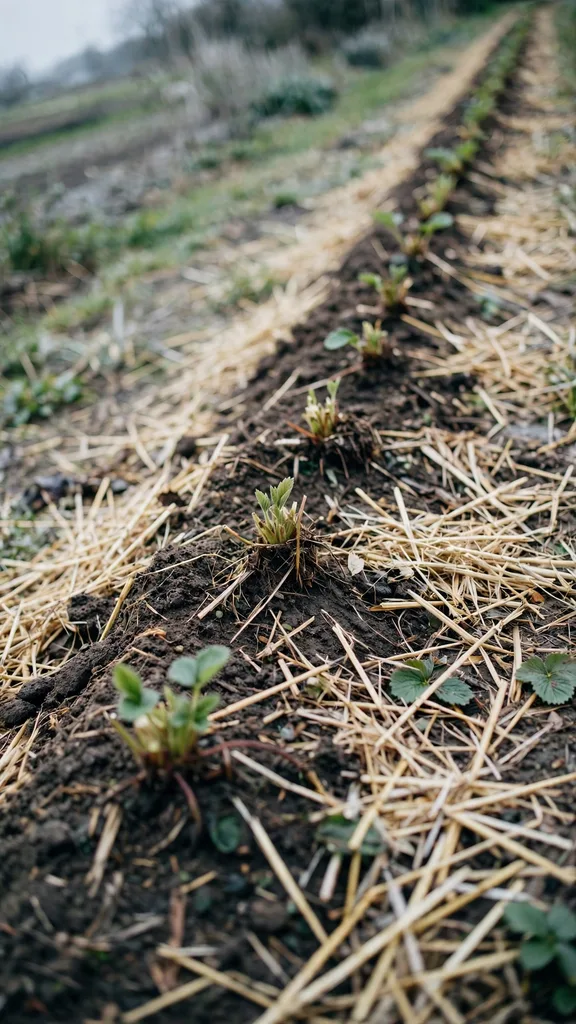
Day-neutral and everbearing beds skip renovation. Remove dead leaves, cut the runners, top up the straw, and carry the plants forward. Plan the end of every bed from the start: yields slide during the second and third fruiting years, and a fresh planting belongs in the ground after three to four years of fruiting, per the Ohio State University Extension guidance. Rotate the new bed to fresh soil. Strawberries following strawberries on the same patch inherit every soil disease the old bed collected, and the decline arrives a year earlier each cycle. The site’s cranberry growing guide covers the other long lived berry planting on the property, and the rotation habit transfers directly.
Mulch for winter after the plants go dormant and the nights turn properly cold. Apply clean straw 10.2 to 15.2 cm deep over June-bearing plants once temperatures stay below 4.4 degrees Celsius, following the University of Minnesota Extension calendar, and hold the mulch in place with branches or netting in windy districts. Mulch applied too early, over plants still growing in a warm fall, traps heat and moisture and rots crowns. Mulch skipped entirely leaves crowns exposed to freeze and thaw cycles that heave them out of the soil. Pull the straw off in spring as growth starts, and leave it between the rows as the summer mulch. One load of straw does both jobs. Buy it once, use it twice, compost what remains after the second season.
Frequently Asked Questions
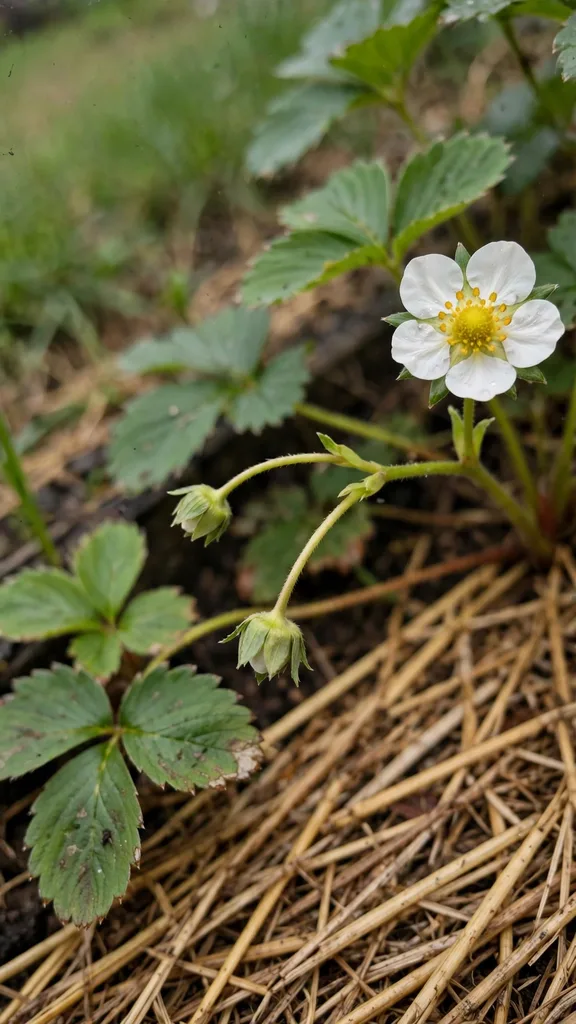
Strawberry seed germinates across a wide window, with the first seedlings rising in 7 days and late seed still rising at 42 days. Warmth at 18 to 24 degrees Celsius and light on the seed surface drive the pace. Cold stratified seed rises faster and more evenly than seed sown dry from the packet. Keep the tray moist for the full six weeks before judging the sowing a failure.
Yes, for reliable results. Hold the seed at 1 to 4 degrees Celsius for 2 to 4 weeks in barely damp vermiculite inside a sealed bag. The cold period breaks dormancy and compresses the germination window, so the tray rises together instead of straggling across two months. Seed sown without the chill still sprouts in part, though the count drops and the wait stretches. The refrigerator month is cheap insurance.
Thin, pale seedlings are short of light in almost every case. Move the lamp down to 5.1 to 10.2 cm above the leaves and run it for 14 to 16 hours a day. Warm rooms make the stretch worse, so a cooler room near 18 degrees Celsius holds seedlings stockier. Seedlings stretched past saving are rarely worth rescuing. Sow a second tray under the lamp and compost the threads.
Day-neutral and everbearing plants give a light harvest in the planting year, once the first 6 weeks of flowers are removed. June-bearing plants give their first real crop in the second year, in one concentrated late spring picking. Alpine plants fruit lightly in the first year from midsummer onward. Every type reaches full production in its second and third years, so the second season is the fair test.
You can, and the seedlings will grow, though the results vary widely. Commercial berries are shipping hybrids picked before full ripeness, so the seed inside is often immature and germination runs patchy. Grow a small tray as an experiment. Build the real bed on named seed of a known type.
Your first bowl from seed takes a year of patience and one cold month in the refrigerator. The plants that follow it crop for three more years.