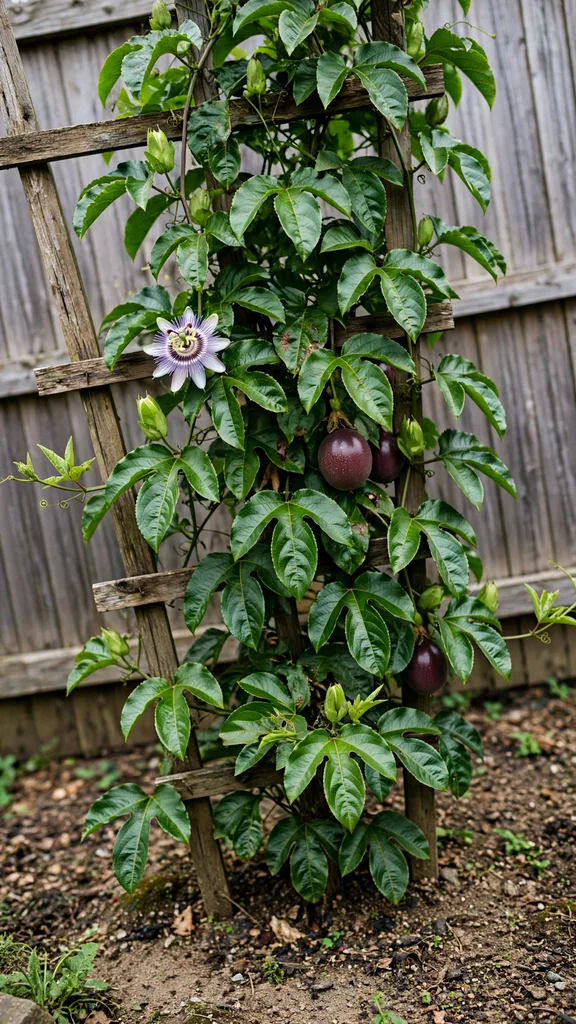
Sow 20 fresh seeds 1 cm deep this week, and the first sprouts open in 10 to 20 days when the tray stays warm. That is how to grow passion fruit from seed, and the calendar runs 12 to 18 months from that tray to the first ripe fruit on the vine. Seed work decides the outcome. Clean seed, a scarified coat, steady warmth, and a strong trellis carry a seedling further than any feed bag. Gardeners who build the support before planting and learn hand-pollination before the first flower opens harvest fruit. Gardeners who skip those two jobs grow a large green vine and a long complaint.
| Attribute | Detail |
|---|---|
| Botanical name | Passiflora edulis |
| Plant family | Passifloraceae |
| Plant type | Short lived evergreen perennial vine |
| Productive life | 3 to 4 years |
| USDA zones outdoors | 9b and above |
| Vine growth in one year | More than 10.67 m |
| Flower width | 6.35 to 7.62 cm |
| Fruit size | 6.35 to 7.62 cm long, 5.72 cm wide |
| Germination, scarified seed | 10 to 20 days |
| Germination temperature | 25 to 30 degrees Celsius |
| Best growth temperature | 18.33 to 32.22 degrees Celsius |
| Soil pH | 6.0 to 7.5 tolerated, slightly acid best |
| In-row spacing | 1.83 to 3.05 m |
| Flowering to harvest | 70 to 75 days |
| Yield, one year old vine | 2.27 to 6.8 kg of fruit |
Choose Purple or Yellow Fruit Before You Sow
Pick the type before the seed touches water. Purple passion fruit and yellow passion fruit share one species, and the choice changes pollination, flavour, and root behaviour for the life of the vine. Purple fruit suits higher ground and cooler nights. Yellow fruit suits low, hot ground and carries stronger roots in wet soil.
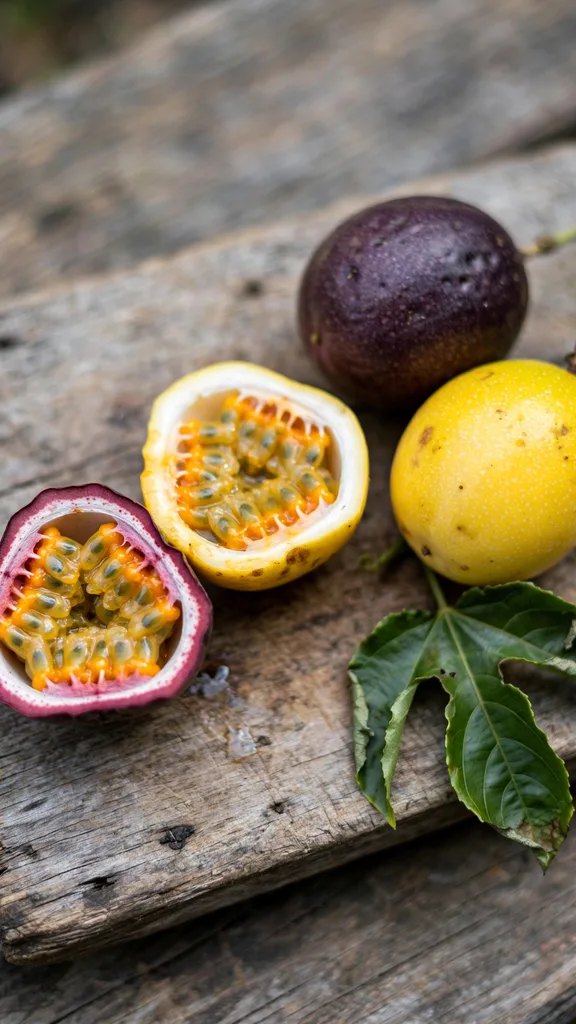
Purple types can set fruit with their own pollen. Some purple varieties can be self-pollinated, while yellow varieties are not considered capable of self-pollinating, according to the UF/IFAS guide to the passion fruit in Florida. A single purple vine in a small garden still fruits. A single yellow vine flowers, drops every bloom, and teaches the pollination lesson the hard way.
Seed carries a second warning. A seedling grows into its own plant, and its fruit can differ from the fruit the seed came from in size, sweetness, and pulp fill. Commercial growers select superior seedlings and then copy the winners with cuttings or grafts, per the same UF/IFAS Florida guide. Sow seed from the best tasting fruit you can find, sow more seed than you need, and keep the strongest seedlings.
Fruit size sets a fair target. Mature fruit run 6.35 to 7.62 cm long and about 5.72 cm wide, per the UF/IFAS Florida fruit measurements. A seedling that fruits far below that band in its first season is a weak plant. Rogue it out and give its trellis space to a better sibling.
Clean the Seed and Strip the Gel Coat in 5 to 7 Days
Start with fully ripe fruit. Seeds pulled from hard, underripe fruit carry weak embryos, and weak embryos rot in the tray instead of sprouting. Cut the fruit, scoop the pulp and seeds into a clean glass jar, and leave the seeds in their own juice.
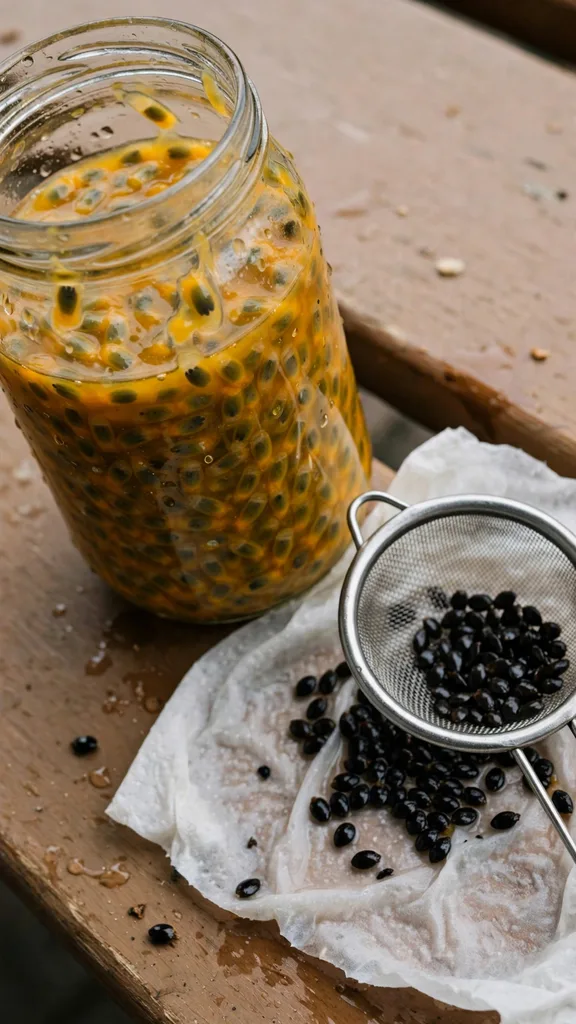
The gel coat around each seed slows water entry and feeds mould. To facilitate removal of the mucilage covering the seeds, pulp and seeds sit in a disinfected glass container covered with foil for 5 to 7 days, stirred daily, according to the UF/IFAS passion fruit propagation guide. The coat loosens as the pulp ferments lightly. The jar smells sharp by day five. That smell is the process working.
Rinse the seeds in a wire strainer under clean water at the end of the wait. Rub the seeds gently against the mesh until each seed feels gritty and clean. A seed that still feels slippery still wears its coat. Slippery seed goes back for one more day in the jar.
Dry cleaned seed on paper for 24 hours at room temperature, following the UF/IFAS propagation drying step. Sow within days for the best result. Fresh seed beats stored seed at every step of this crop, and a packet forgotten in a drawer for a season sprouts thin and late.
Scarify With 100 to 150 Grit and Soak for 24 Hours
Rub the dried seed between two sheets of sandpaper before sowing. The hard outer coating causes slow and uneven natural germination, and scarification weakens that coat so water enters faster, per the UF/IFAS propagation guide. Skipping this step is the single most common reason a tray sits empty for a month.
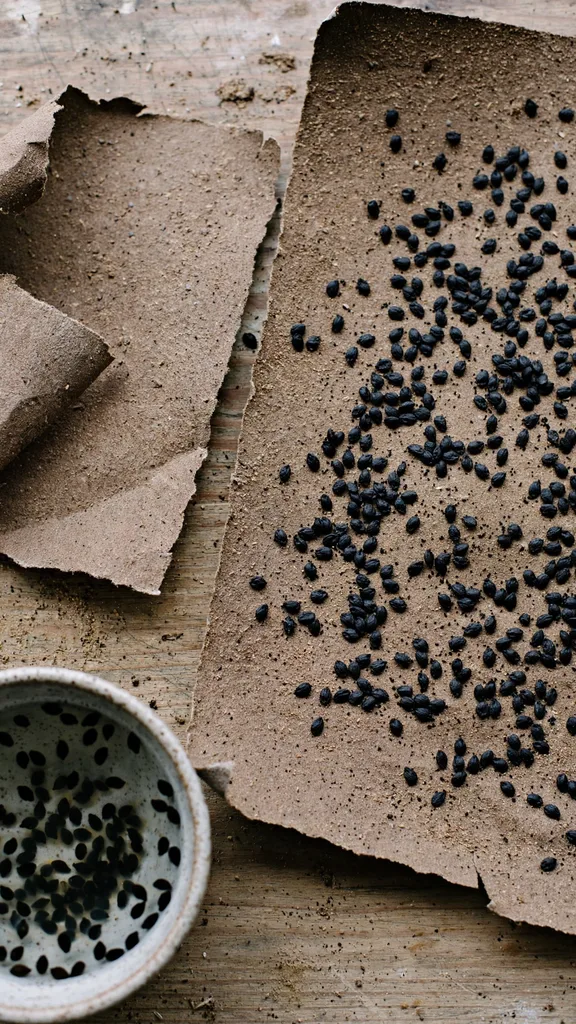
Use commercial sandpaper with a grit size between 100 and 150, one sheet face up on a flat board and the second sheet face down over the seed, rubbed gently for 3 to 5 minutes, per the UF/IFAS scarification method. Moderate pressure thins the coat. Heavy pressure cracks seed and kills the embryo inside. Stop when pale abrasion marks show along the seed edges.
Soak the scarified seed in water for 24 hours next. Scarified seeds submerged for 24 hours take up the water the embryo needs to start germination, according to the UF/IFAS propagation soak step. Seed that floats after the soak is usually hollow. Discard floaters and sow the seed that sinks.
Work seed in small batches. Twenty seeds scarify evenly between the sheets. Two hundred seeds slide over each other, and half the batch keeps a full thickness coat. An uneven batch sprouts across three weeks and ruins the potting schedule. Even abrasion gives an even tray.
Sow 1 cm Deep and Hold 25 to 30 Degrees Celsius
Fill a tray or small pots with clean seed starting mix and wet the mix before sowing. Sow each seed at a depth of about 1 cm, tip pointing down, since the first root emerges from the tip, per the UF/IFAS sowing depth guidance. Seed sown on the surface dries out. Seed sown 3 cm deep exhausts its store before the shoot finds light.
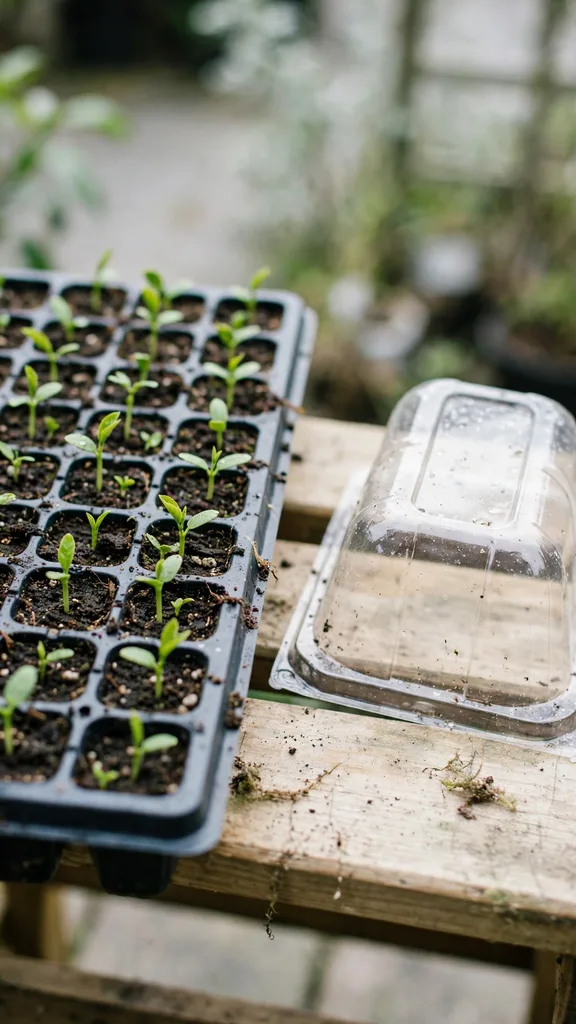
Hold the tray between 25 and 30 degrees Celsius. Trays kept between 25 and 30 degrees Celsius give the fastest, most even sprouting, and scarified seed usually germinates 10 to 20 days after sowing, according to the UF/IFAS germination figures. A heat mat under the tray holds that band through cold nights. A tray on a cold floor at 18 degrees Celsius sprouts slowly and unevenly.
Cover the tray with a clear lid or plastic film. High humidity around the seed keeps the mix evenly moist, and the mix must stay moist without turning saturated. Wet mix with no air in it rots seed in days. Lift the lid each morning, wipe the heavy condensation off, and set the lid back.
Move sprouted seedlings into indirect light at once. Young plants kept in partial shade avoid the leaf burn direct sun causes at this stage, per the UF/IFAS Florida propagation notes. A seedling left in a dark corner stretches into a pale thread within four days. A stretched seedling never thickens into a strong vine.
Pot Seedlings On and Harden Them Into Full Sun
Pot each seedling into its own container once the second set of leaves opens. Seedling leaves start oval and single, then shift to the deeply lobed adult form, and leaves can reach 20.32 cm long on a mature vine, per the UF/IFAS leaf description. The leaf change is a useful clock. Oval leaves mean nursery care. Lobed leaves mean the plant can take stronger light and a bigger pot.
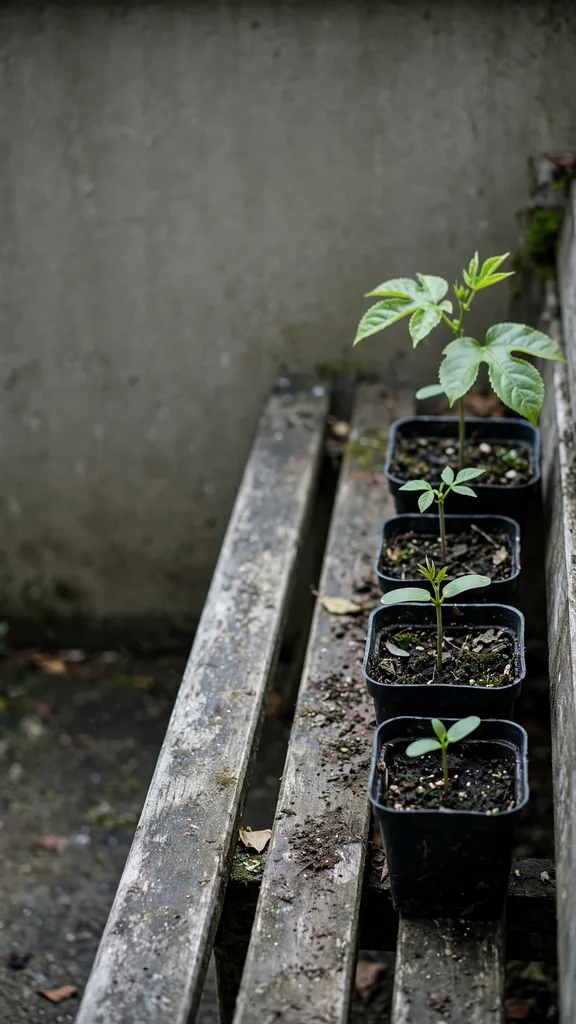
Grow the young plants in partial shade, then move them through partial sun for several days before planting in full sun, following the UF/IFAS hardening sequence. One jump from shade to a full sun wall scorches white patches into the leaves within hours. Scorched seedlings stall for weeks while they replace the damaged leaf area.
Feed potted seedlings lightly once growth speeds up. A young vine in its first year needs steady nutrition to build roots and vine length, and maximum fruit production usually begins after a full year of growth, according to the UF/IFAS fertilizer guidance. Starved seedlings in small pots turn yellow between the veins and harden into stunted plants that never catch up.
Plant out when the seedling stands sturdy, roots hold the pot ball together, and frost risk has passed. In areas with freezing or cold temperatures below 10 degrees Celsius, young plants go in during early spring once frost danger ends, per the UF/IFAS planting timing notes. A seedling planted into cold soil sits still and rots at the collar.
Plant on a Strong Trellis in Free Draining Soil
Build the trellis before planting day. Passion fruit grow as perennial woody vines that can exceed 30.48 m in total length and grow more than 10.67 m in a single year, per the UF/IFAS growth habit notes. A vine of that weight in full leaf pulls a weak fence flat in the first storm. Posts, wire, and fixings go in first, and the plant follows.
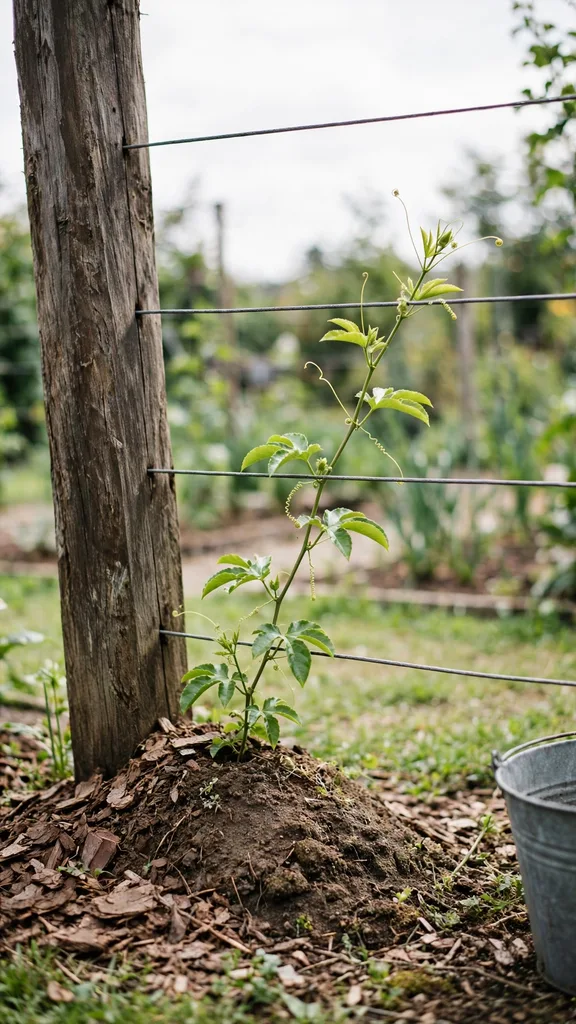
Set home vines on a strong fence or trellis that can withstand high winds when covered with a vine, with rows spaced 3.05 to 4.57 m apart and plants spaced 1.83 to 3.05 m within the row, according to the UF/IFAS planting and spacing guidance. One vine per fence panel is a good home rule. Two vines on one panel tangle into a single mass that no pruning session unties.
Dig the planting hole in well drained soil. Passion fruit prefer well drained soil and tolerate pH 6.0 to 7.5, with slightly acid soil best, per the UF/IFAS location and soil notes. Clay that holds a puddle for a day kills this vine at the roots. Gardeners on clay plant on a low mound or in a large grow bag raised off the ground on blocks.
Plant in full sun, or in a spot the vine can climb out of shade into full sun. Vines growing in shade or partial shade typically drop their leaves, per the UF/IFAS growth habit section. A shaded base with a sunny top works. A fully shaded fence grows leaves in spring and drops them by midsummer.
A sunny tropical fence often carries more than one crop in this batch of plantings. Gardeners laying out that fence this season can pair the vine with how to grow pineapple at the fence base, a ground crop that shares the full sun and sharp drainage rules. A second climbing crop for the next panel is how to grow kiwi berry, a hardy vine that uses the same post and wire structure in cooler districts.
Train One Stem to the Wire and Prune in Late Winter
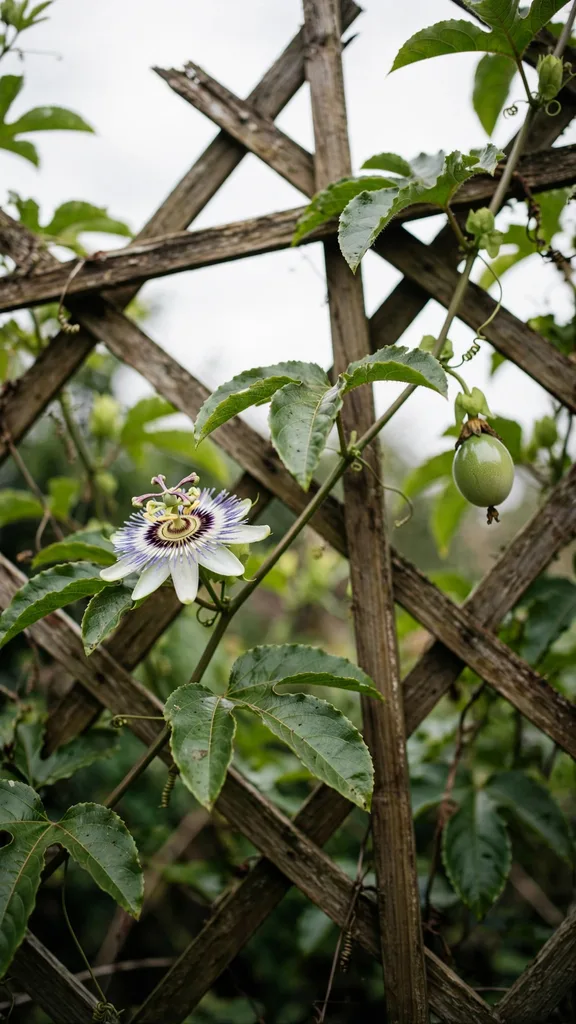
Train one main stem up to the top wire and let laterals spread along the wire from there. In the curtain system, one main stem reaches the top support wire, vines spread horizontally, then droop down like a curtain to fill the space below, per the UF/IFAS training description. Tendrils wrap around any object they touch, and the vine fixes itself once the stem reaches the wire.
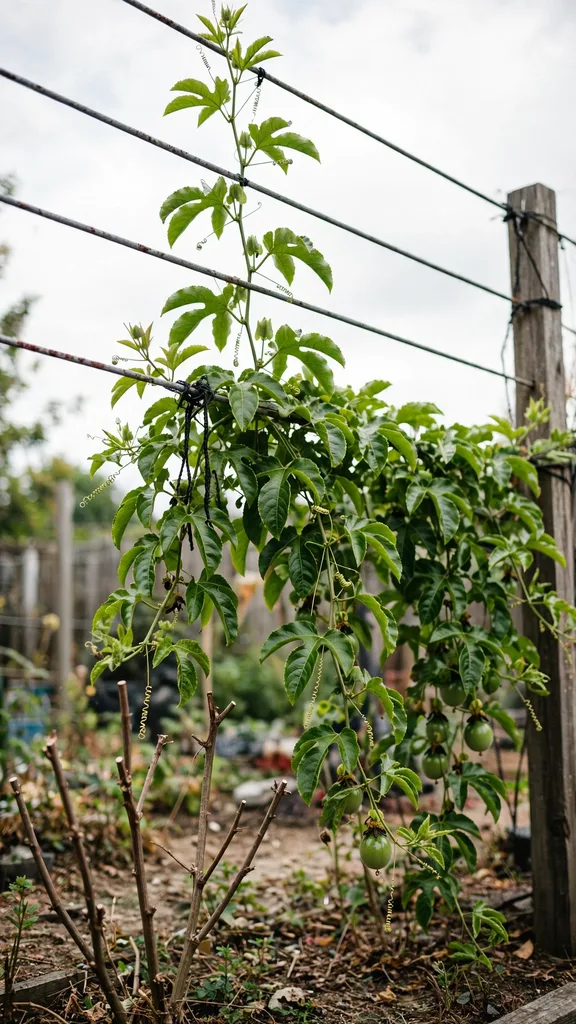
Pinch out side shoots below the wire while the main stem climbs. Energy spent on low laterals is energy taken from the climb. A stem that reaches the wire in one season fruits along its curtain the next. A bushy plant with six weak stems fruits late and lightly.
Prune in late winter when the vine rests. Vines should be pruned in late winter when they are not actively growing, and all dead and weak stems should come out, according to the UF/IFAS pruning guidance. Cut back to the main vine or to vigorous stems so growth resumes clean in early spring. Old thatch left in the canopy holds dead leaves against new growth and shelters fungal disease.
Disinfect cutting tools between plants. A 10 percent bleach solution or quaternary ammonium disinfectant on the blades between each plant stops disease moving vine to vine on the steel, per the UF/IFAS tool hygiene rule. One infected vine pruned first can seed virus and fungus through a whole row in a single afternoon.
Water Small and Often and Feed Every 4 to 6 Weeks
Water little and often. Passion fruit need small but frequent irrigation so soil moisture stays adequate without saturation, and the shallow root system gives the vine limited drought and flood tolerance, according to the UF/IFAS irrigation notes. A deep weekly soak followed by six dry days swings the roots between flood and drought. Short drinks every second day in dry weather hold the middle ground.
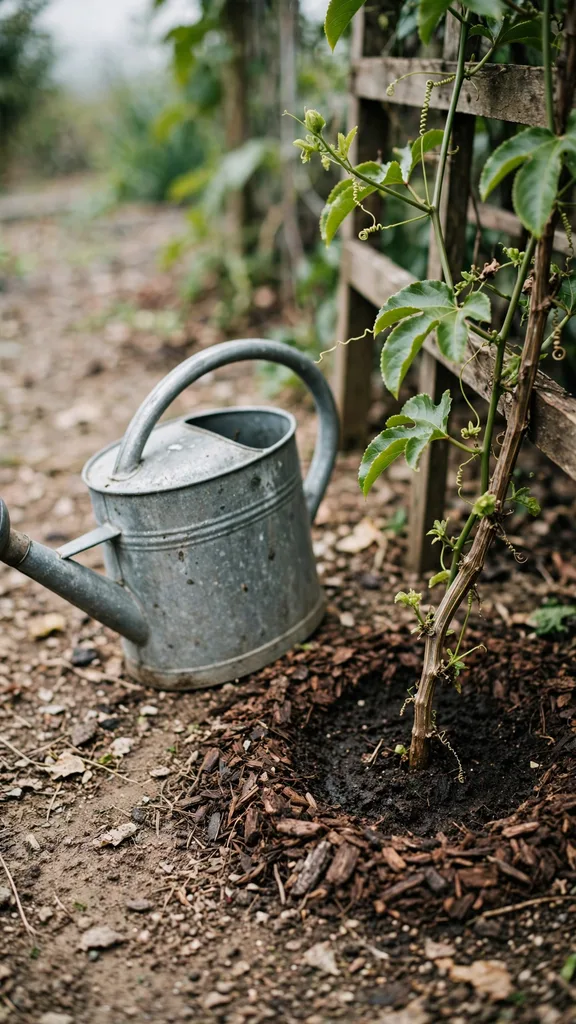
Watch the vine during dry spells. Drought stress reduces vine growth, flowering, fruit set, and fruit size, and severe drought causes defoliation, fruit drop, and vine death, per the UF/IFAS drought stress section. Wilting at midday that recovers by evening is a warning. Wilting still present at dawn means the root zone is dry to depth.
Feed granular fertilizer in small amounts through the growing season. Applications of 113.4 to 453.59 g per plant on 4 to 6 week intervals from late winter through fall suit a home vine, with common formulas such as 10-10-10 or 8-3-9, according to the UF/IFAS fertilizer schedule. Scatter the granules over the root zone, keep them off the stem, and water them in.
Cut nitrogen back after the first year. After the first year of growth, nitrogen should be substantially reduced to facilitate flowering rather than excessive vegetative growth, per the UF/IFAS fertilizer guidance. A vine fed like a lawn grows a wall of leaves and sets almost no fruit. The leaf wall is the most common feeding failure on this crop.
Hand Pollinate Flowers When Bees Miss a Day
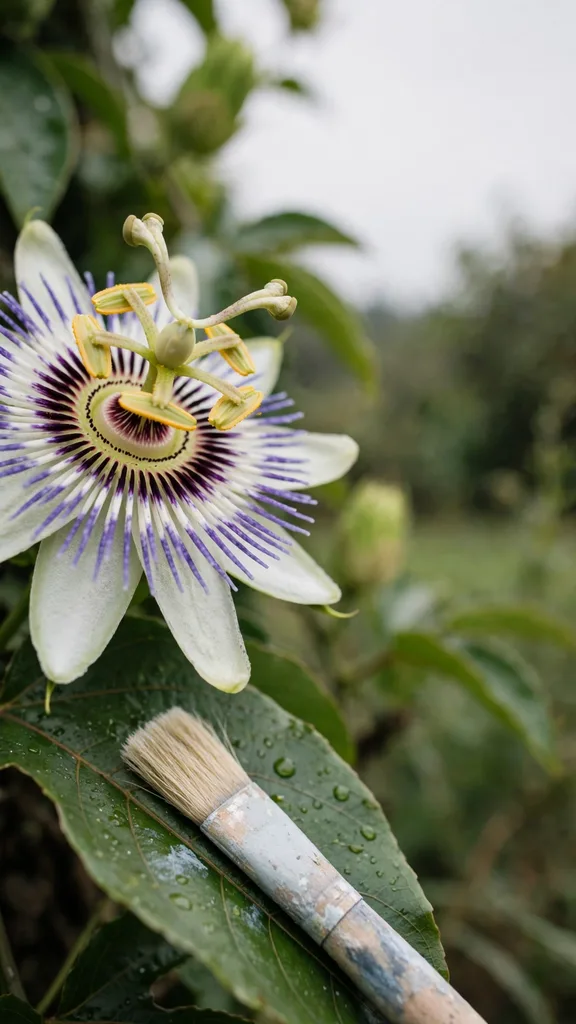
Learn the flower before the first one opens. Flowers run 6.35 to 7.62 cm wide, carry both male and female parts, and hold the ovary below a three pointed stigma, per the UF/IFAS flower description. Pollen sits on five anthers below the stigma. A flower that receives no pollen on its stigma drops within days and leaves nothing behind.
Carpenter bees do the heavy work where they live. The large carpenter bee is the most effective insect pollinator of passion fruit, and other bees and nectar feeding insects also move pollen, according to the UF/IFAS pollination notes. Gardens with carpenter bees on the fence can skip the brush work on most days. Gardens in districts where carpenter bees are rare cannot.
Hand pollinate on dry afternoons when flowers stand fully open. Hand pollination with a clean cotton glove or a paintbrush is a labor intensive but effective way to ensure fruit production, per the UF/IFAS pollination guidance. Brush pollen from the anthers of one flower, then dust the three stigma lobes of the same flower on a purple vine, or carry pollen between two different vines for yellow types and self incompatible hybrids.
Work every open flower on the day it opens. Each flower gets one day. Pollen moved the next morning lands on a stigma that has already closed its window, and the flower falls by the weekend. Ten minutes with a brush at midday, repeated daily through the flowering flush, converts a decorative vine into a cropping vine.
Why Is My Passion Fruit Vine Not Setting Fruit?
Check pollination first. Flowers emerge on new growth and produce fruit only if pollinated, and the quantity of pulp is determined largely by pollination quality, according to the UF/IFAS fruit set notes. A half pollinated flower sets a small fruit with a hollow center and few seeds. A fully pollinated flower sets a heavy fruit full of juice sacs.
Check the age of the vine second. Young vines do not flower until maturity, and new plants typically begin producing flowers and fruit within a year of planting under favorable conditions, per the UF/IFAS maturity notes. A six month old seedling with no flowers is on schedule. Patience is the correct treatment, and extra fertilizer is the wrong one.
Check the feed bag third. Flowers always emerge on new growth, and a vine pushed with heavy nitrogen grows leaves at the expense of blooms. Excess fertilizer delays flowering, and reducing fertilizer rates once the vine reaches maturity encourages flowering, per the UF/IFAS flowering guidance. A dark green vine with no buds in midsummer is an overfed vine until proven otherwise.
Check the weather fourth. Temperatures between 18.33 and 32.22 degrees Celsius suit growth and fruit production best, and temperatures outside that band reduce flowering, pollen viability, and fruit production, according to the UF/IFAS temperature range. Chilling injury appears below 15 degrees Celsius. A cold snap during the flowering flush can empty a vine of set fruit in one week, and the vine flowers again when warmth returns.
Seed or Cuttings: Which Route Fruits Sooner?
Cuttings win on speed and certainty. Propagation by cuttings generates clones of the mother plant, ensures genetic consistency, and gives plants a shorter juvenile phase, with cuttings growing into healthy plants in just a few months, according to the UF/IFAS cuttings section. A cutting copies a proven vine exactly. Its fruit tastes like the parent fruit because the plant is the parent, continued.
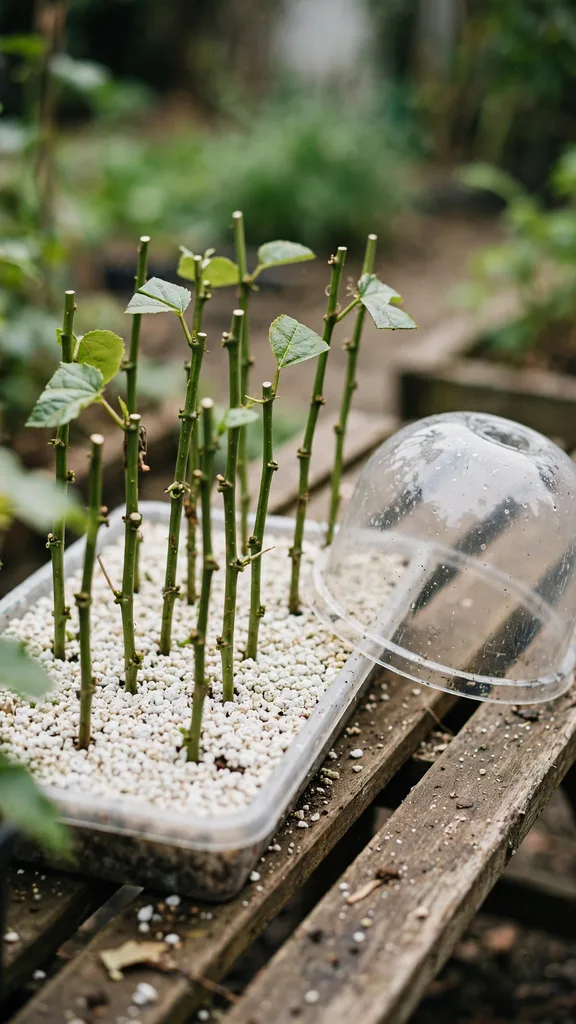
Take cuttings with 2 to 4 nodes from one year old wood on a healthy, fruiting, disease free plant, avoiding stems that carry flower buds, per the UF/IFAS cutting selection rules. Cut at a 45 degree angle just above the bottom node, strip the tendrils, cut the leaves in half, and sanitize the clippers in a 10 percent chlorine solution before the work starts.
Root cuttings 5.08 to 10.16 cm deep in a peat based mix with perlite, held moist in high humidity at about 29.44 degrees Celsius with weekly fungicide spray, and roots develop over 2 to 3 months, according to the UF/IFAS cutting rooting method. New leaf growth plus resistance to a gentle pull signals roots ready for transplant.
Seed wins on cost, volume, and rootstock. Seed produces many plants from one fruit, seedlings make the grafting rootstocks this crop relies on, and a seedling vine often roots deeper than a cutting. The price is time and variation. The practical route for a home garden runs both. Sow seed this season for numbers and rootstock, then take cuttings from the best fruiting seedling next season and fix that plant as the permanent vine.
Harvest Fallen Ripe Fruit and Save Fresh Seed
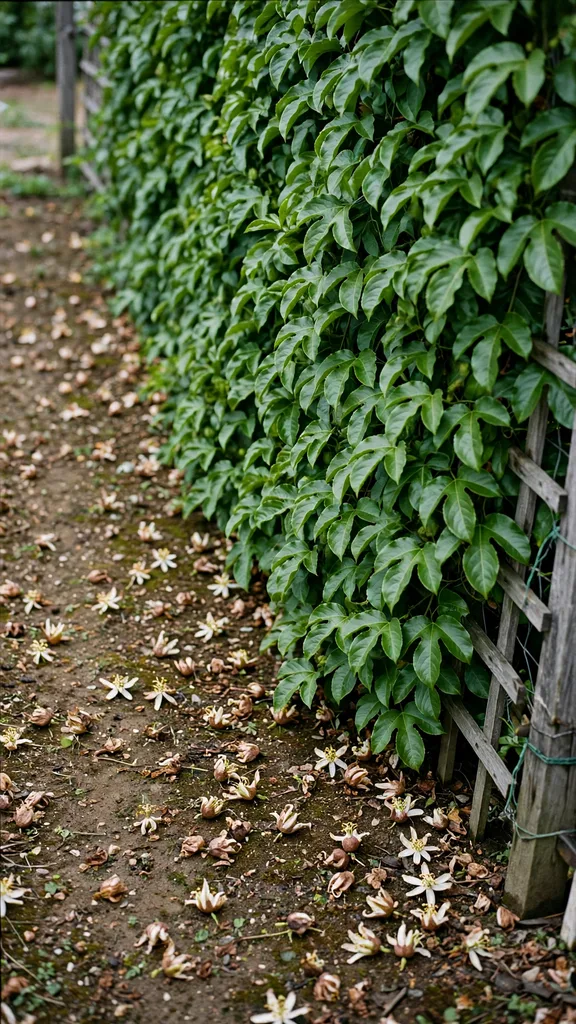
Wait for the drop. Once fruit are ripe they drop to the ground, and the thick skin protects the fruit in the fall, while fruit picked early off the vine carries inferior aroma and flavor, according to the UF/IFAS harvest notes. Collect fallen fruit daily during the flush. Fruit left on damp ground for days picks up mould at the stem scar.
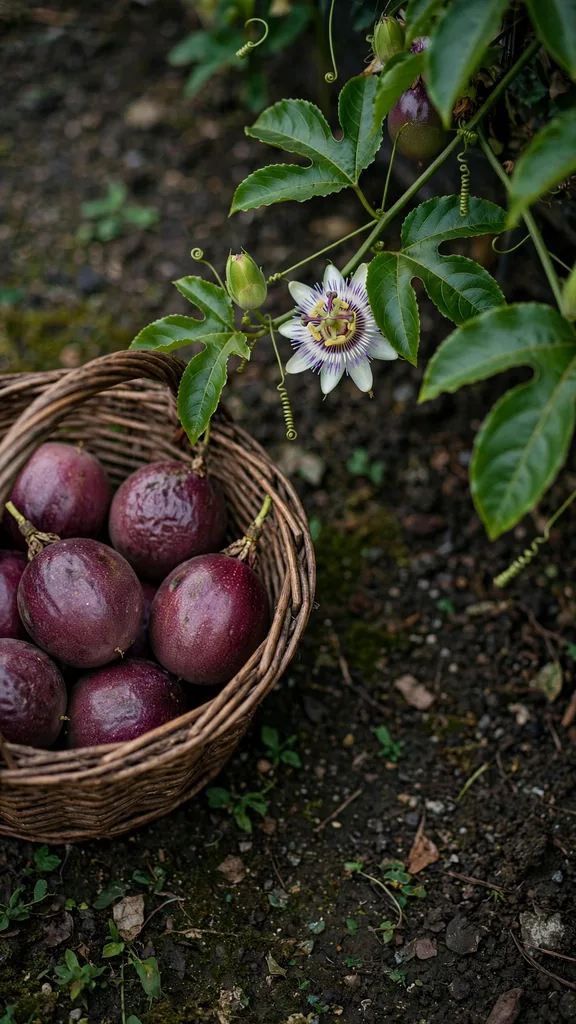
Count the days when the drop test is unclear. The time from flowering to harvest is generally 70 to 75 days, and a one year old vine can produce 2.27 to 6.8 kg of fruit per plant, per the UF/IFAS yield figures. Mark flowering dates on a tag tied to the wire. The tag settles arguments the calendar cannot.
Store ripe fruit cool and humid. Fresh fruit keeps for up to two or more weeks in plastic bags at 5 to 12.22 degrees Celsius and 85 to 90 percent relative humidity, per the UF/IFAS storage figures. Fruit wrinkles as the peel loses water during storage. Wrinkled fruit still eats well, and many growers find the flavour concentrates as the skin creases.
Save seed from the heaviest, best filled fruit of the season. Cut those fruit, run the full cleaning and scarification sequence from the opening sections, and sow fresh. A vine lives 3 to 4 productive years, per the UF/IFAS lifespan notes, so a replacement seedling started in year three stands ready when the parent vine fades. Waiting until the parent dies before sowing costs a full season of fruit.
Frequently Asked Questions
Scarified seed sown 1 cm deep and held between 25 and 30 degrees Celsius sprouts in 10 to 20 days. Unscarified seed can sit for a month and sprout in ragged waves. Rub the seed between 100 to 150 grit sandpaper for 3 to 5 minutes, soak it for 24 hours, and the tray sprouts as one batch.
Yes. Grow the vine in a large container of free draining mix, set the pot in full sun, and train the stem up a trellis fixed to a wall or fence. Container plants dry faster than ground plants, so water little and often. Move the pot under cover before frost, since chilling injury starts below 15 degrees Celsius and a hard freeze kills the vine.
Heavy nitrogen feeding is the usual cause. A mature vine fed at first year rates puts its energy into leaf growth, and flowers form on new growth that heavy feeding turns vegetative. Cut the nitrogen back, hold a 4 to 6 week feeding interval, and prune out weak stems in late winter. Flowers follow on the spring flush.
Yes. Yellow types are not self fertile and need pollen from a compatible vine that is genetically different. Plant two different yellow cultivars in the same area, or pair a yellow vine with a compatible hybrid. Hand pollinate between the two vines with a clean brush on the day each flower opens. One yellow vine alone flowers and drops every bloom.
Replace the vine when cropping fades in year three or four. A productive vine typically lives 3 to 4 years. Start a replacement seedling a season ahead, and remove the old vine once the young plant reaches the wire.
A seed tray started this week becomes a fruiting vine next season. A seed tray postponed to next month becomes a story about a vine that never fruited.