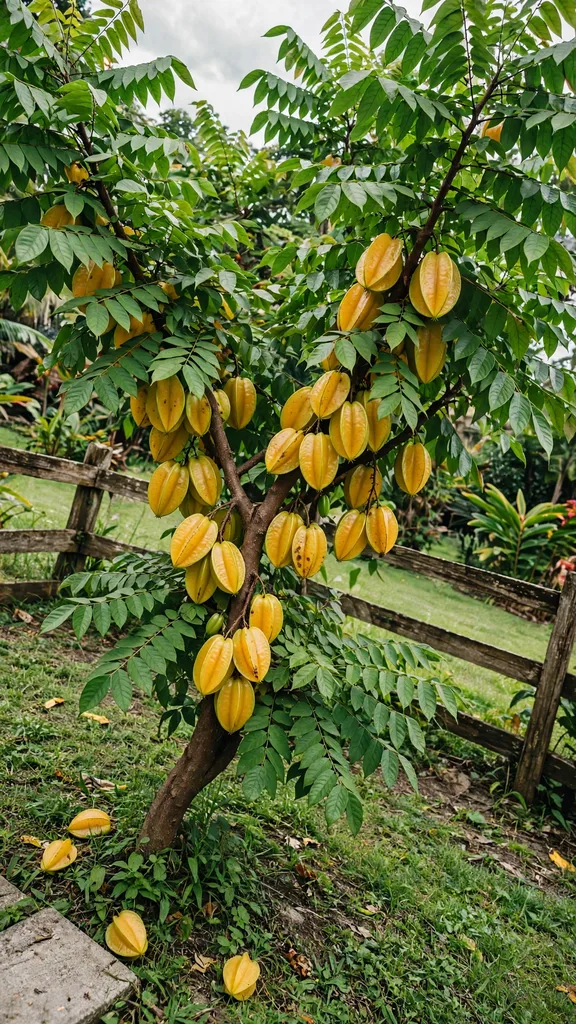
Sow 10 seeds the same week you cut the ripe fruit open, because learning how to grow star fruit starts with seed that dies fast once it leaves the flesh. A starfruit, sold in most shops as one word and written as star fruit here, is Averrhoa carambola, a tropical tree from Southeast Asia. Fresh seed sown warm germinates in weeks. A seedling tree then takes 3 to 5 years to carry its first crop, and that long wait is the price of the free seed.
Buy the ripest fruit on the shelf. A ripe star fruit is fully yellow, with browning only at the thin edges of the ribs, and it smells faintly sweet at the blossom end. Green fruit carries immature seed that germinates poorly or fails outright. One good fruit holds enough seed for a full tray of seedlings, and the extras cover the seedlings that stall in their first dry week.
| Attribute | Detail |
|---|---|
| Botanical name | Averrhoa carambola |
| Other names | Star fruit, starfruit, carambola, five finger |
| Plant type | Evergreen tropical tree, single or multi trunked |
| Height | 7 to 10 m, held lower with pruning |
| Spread | 6 to 7.6 m across the crown |
| Seeds per fruit | 10 to 12 at most, sometimes none |
| Seed size | 0.6 to 1.3 cm long, thin, light brown |
| Seed life | A few days out of the fruit |
| Germination | 1 to 3 weeks in warm mix |
| Best growth temperature | 20 to 35 degrees Celsius |
| Soil pH | 4.5 to 7 |
| Time to fruit from seed | 3 to 5 years |
| Time to fruit, grafted tree | 1 to 3 years |
Pick a Ripe Sweet Fruit and Sow Its Seeds Within Days
Cut the fruit across the ribs and the star shape shows in every slice. The seeds sit in the core of each slice, one or two per cell, each wrapped in a clear gelatinous coat. The University of Florida IFAS Extension carambola guide counts no more than 10 to 12 seeds per fruit, each 0.6 to 1.3 cm long and wrapped in a gelatinous aril. Pick the seeds out with the tip of a knife. Tweezers crush the thin seed coat and kill the embryo inside.
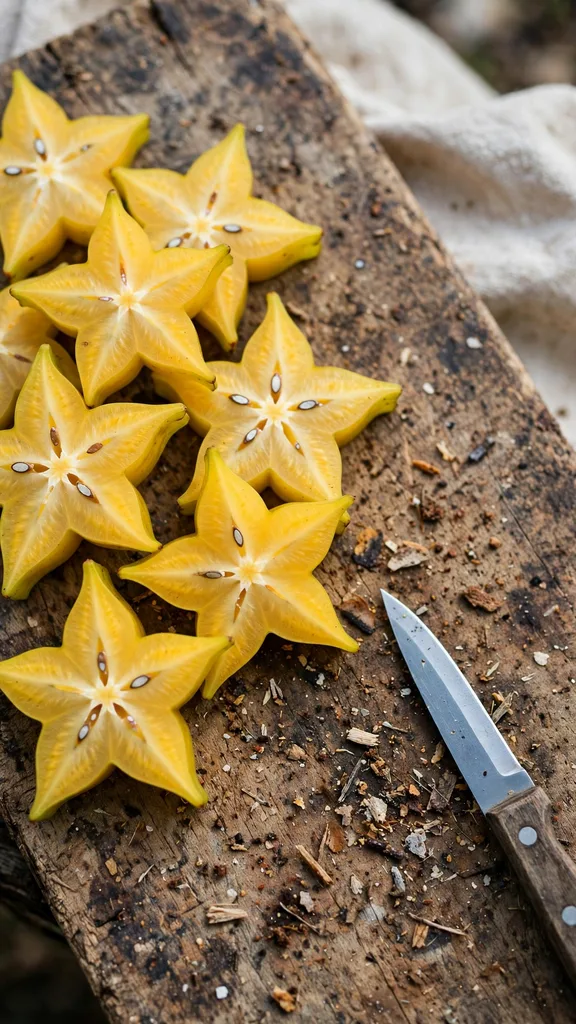
Rinse the seeds under a tap to strip the coat and the fruit sugars off the surface. Sugar left on the seed feeds mould in the tray within days. Spread the rinsed seeds on a paper towel for ten minutes so the surface water drains, then sow at once. Drying the seed out on a sunny sill is the classic failure at this step. A dried star fruit seed is a dead seed.
The clock runs from the moment the fruit opens. The same IFAS guide states that carambola seeds lose viability in a few days after removal from the fruit. Sow on the day you eat the fruit whenever the calendar allows it. A delay of a weekend in a sealed bag in a warm kitchen still works. A delay of two weeks in a dry envelope does not.
Pick a sweet type of fruit at the shop, since seedling flavour follows the parent loosely. Sour fruit from an unnamed tree gives sour seedlings more often than sweet ones. Named sweet cultivars such as Arkin and Fwang Tung exist as grafted trees, and their seedlings vary. A seedling is a lottery ticket with a 3 to 5 year draw. Gardeners who need a known flavour buy the grafted tree and grow seedlings as rootstock or as a gamble.
Sow more seed than the garden needs. Germination of truly fresh seed runs high, and the cull happens later, at the first dry spell and the first cold night. Ten seeds for two planting spots is a sane ratio. The surplus seedlings make gifts, grafting rootstock, and spares for the tree that dies in its first winter.
Sow Seeds Shallow in Warm, Free Draining Mix
Fill a tray or a row of small pots with a seed mix of equal parts coarse sand, fine bark, and compost. The mix must drain in seconds when watered. Star fruit seed rots in a mix that stays soggy, and the rot starts at the seed coat within the first week.
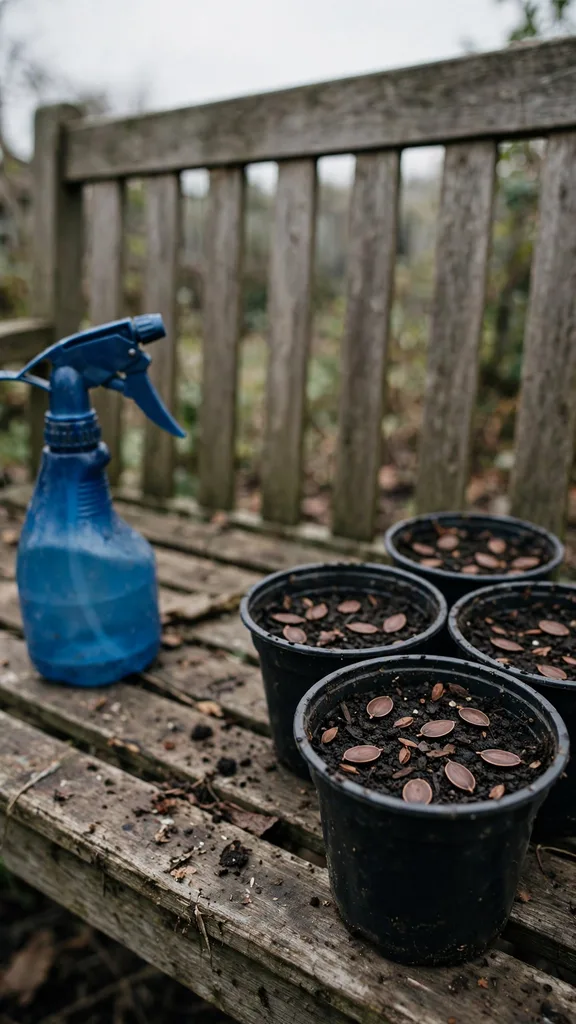
Sow each seed flat, 0.6 to 1.3 cm deep, and firm the mix over it with a fingertip. One seed per small pot beats a crowded tray, because the seedlings resent root disturbance at pricking out. Water the pots from below until the surface darkens, then set them somewhere warm and bright, out of direct midday sun.
Cover the tray with a clear lid or a sheet of clear plastic to hold humidity around the seed. Lift the cover for an hour each morning. Trapped stale air grows gray mold on the mix surface, and mould on the surface reaches the seed in days. Ventilation is the cheap fungicide here.
Label the tray with the fruit source and the sowing date, written on a plastic tag in pencil. Ink washes off in the humidity under the cover. Six weeks later, an unlabelled tray of seedlings from two different fruits is a guessing game, and the guessing wastes the whole point of sowing from a sweet parent.
Keep the mix moist and never wet. A spray bottle handles the first week better than a watering can, since a heavy pour floats the shallow seed out of the mix. Check the pots each morning. A tray that dries to dust at noon in a warm room loses its seed before the roots ever form.
What Temperature Do Star Fruit Seeds Need to Germinate?
Warmth drives the whole germination. IFAS Extension gives 20 to 35 degrees Celsius as the temperature band for best carambola growth and fruiting. Seed on a heat mat or on top of a water heater sits in that band day and night. Seed on a cold windowsill in spring sits below it for half of every day, and the tray takes twice as long or fails in patches.
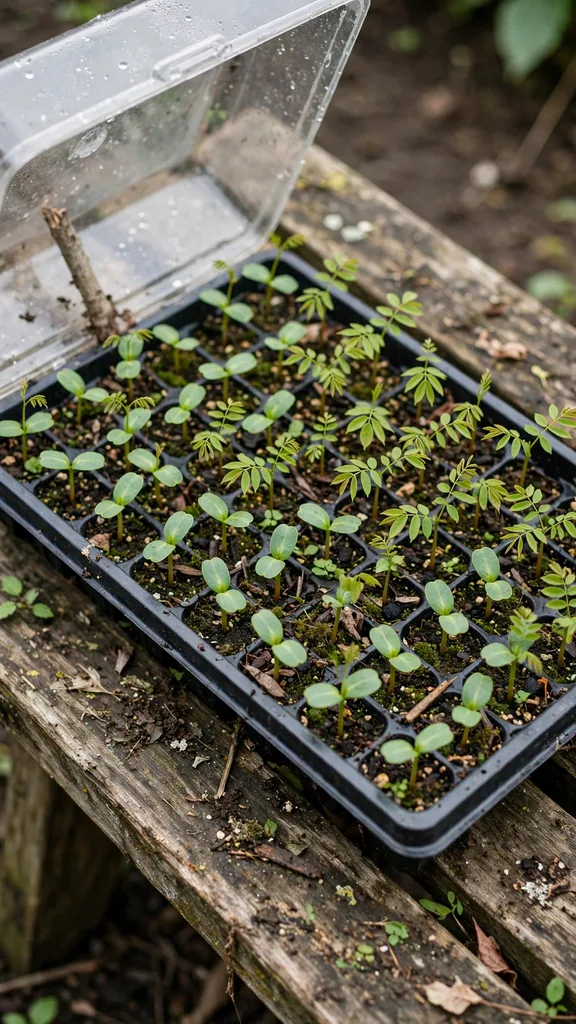
Growth stops as the temperature falls. The IFAS guide records that carambola trees generally stop growing at temperatures below 18.3 degrees Celsius. A seed tray at that temperature is not dead, only stalled. Move the tray somewhere warmer before writing the batch off. Seedlings that sprout into a cold room stretch pale and thin, then collapse at the soil line.
Expect the first sprouts in 1 to 3 weeks from fresh seed in warm mix. The seedling pushes up a pair of small oval seed leaves, then compound true leaves with leaflets that fold down at night. Slow trays deserve patience up to the end of the third week. After that point, tip one unsprouted seed out and cut it open. A brown, hollow seed was dead on arrival. A firm white seed wants more warmth and one more week.
Cold damages the seed itself during storage. Seed held in a cold room or a refrigerator loses vigour fast, and frozen seed dies. The warm kitchen counter beats the refrigerator for the few days between cutting the fruit and sowing. This is a tropical seed with no winter in its ancestry, and it behaves like one at every stage.
Pot Seedlings On Before the Roots Circle
Move each seedling into its own 15 cm pot once the second pair of true leaves opens. Slide the root ball out whole. Set it at the same depth in the new pot, water it in well, and leave it in shade for the rest of that day while the roots settle into the fresh mix and the leaves recover from the move. Seedlings handled this way pause for a day. Seedlings teased apart from a shared tray pause for a month, and some never restart at all.
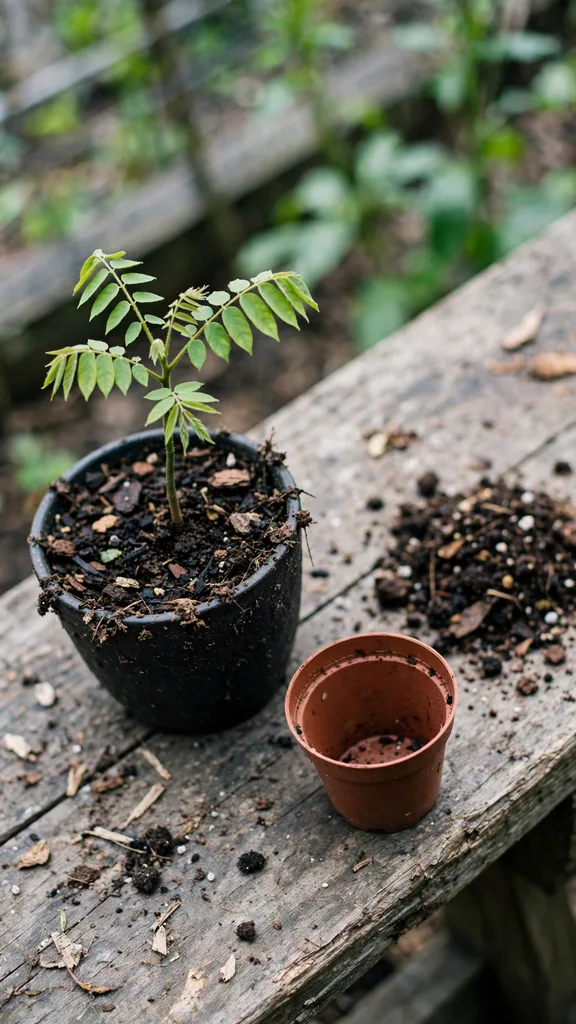
Feed the potted seedlings weakly and often. A quarter strength liquid feed every second watering keeps the leaves deep green without burning the fine roots. Pale leaves on a seedling in rich mix usually mean cold roots or wet feet, and more feed fixes neither. Check the drainage holes first. A blocked hole drowns a seedling in a week of wet weather.
Grow the seedlings in bright light with air movement. A still, humid corner grows soft stems that flop at the first move outdoors. A gentle breeze through the growing area thickens the stem in weeks. Turn each pot a quarter turn every few days so the seedling grows straight toward the light from every side in turn.
Pot on again when roots show at the drainage holes and the pot dries out a day after watering. Step up one pot size at a time. A small seedling in a huge pot sits in cold wet mix that its roots cannot reach, and the mix sours before the roots arrive. Two or three pot changes carry a seedling through its first year.
Harden the seedlings off before any move outdoors. Set the pots outside in morning sun for two hours, then shade, and lengthen the sun by an hour a day across a week. Leaves raised indoors scorch white in a single afternoon of full tropical sun. Scorched leaves fall, and the seedling starts again from the stem.
Seed Grown or Grafted: Which Timeline Fits Your Garden?
The seed route and the grafted route end at the same species and very different calendars. A seedling grows on its own roots, carries unknown fruit quality, and takes its time. A grafted tree carries a named cultivar on seedling roots and fruits fast, at shop prices.
| Route | First Fruit | Fruit Quality | Cost | Best For |
|---|---|---|---|---|
| Seed grown | 3 to 5 years | Unknown, varies by seedling | One ripe fruit | Patient gardeners, rootstock, warm climates |
| Grafted | 1 to 3 years | Named cultivar, known flavour | Nursery tree price | Small gardens, known sweet fruit, containers |
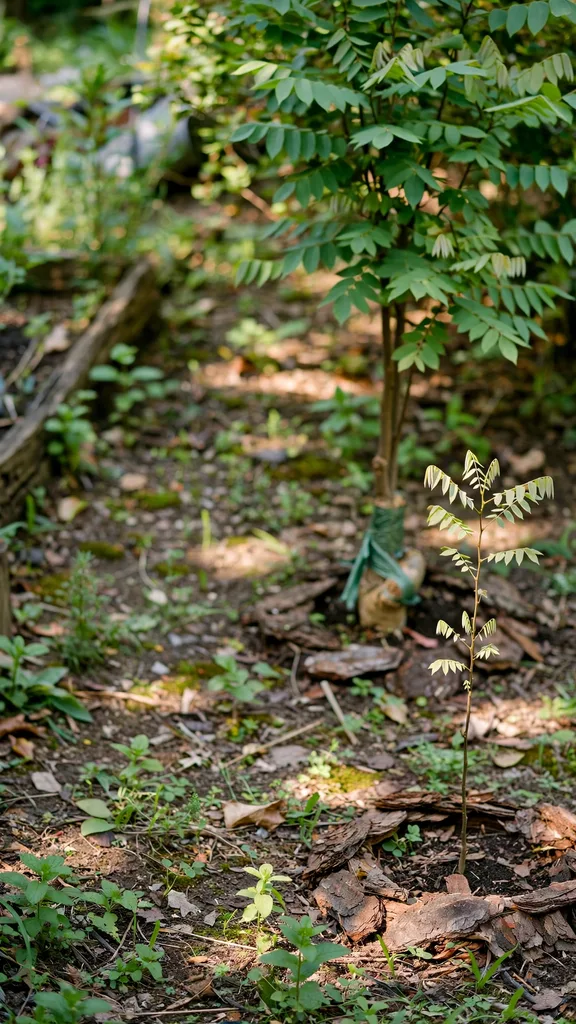
Grafting works because the scion wood is already mature. The IFAS Extension St. Lucie County guide notes that grafted star fruit may start producing fruit within 10 to 14 months after planting in a desirable environment. Veneer grafting and chip budding onto seedling rootstock are the standard methods named in that guide, done while the rootstock grows actively. A home gardener with ten surplus seedlings owns ten rootstocks and a free grafting classroom.
Seedlings still earn their place. A seedling tree on its own roots shrugs off graft union failures, and a batch of seedlings gives the gardener selection: keep the sweetest, graft the rest over, compost the sour. Florida growers raised the sweet cultivars used today from seedlings, then fixed the winners by grafting. The seed tray is where cultivars come from.
Growing lychee from seed is a different job with its own long calendar. That lives on How to Grow Lychee. This page stays on star fruit.
Choose the seed route when space is wide, the climate is warm, and the wait is part of the project. Choose the grafted route when one tree must earn its hole with known fruit. Gardeners with room for two trees plant one of each, eat from the grafted tree in year two, and judge the seedling when its turn comes.
Plant Out in Full Sun With Room to Spread
Plant out at the start of the warm season, when nights stay warm and the seedling has a full summer of root growth ahead. A tree planted into cooling autumn soil sits still for months and enters its first winter with shallow roots. Spring planting in the tropics, or the last frost date in the subtropics, sets the calendar.
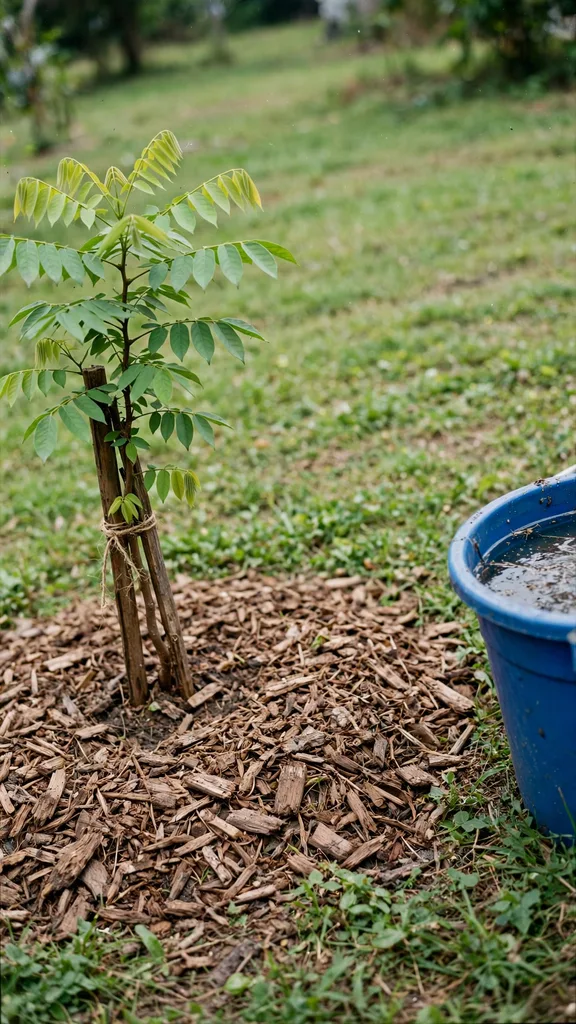
Size the hole for the adult tree, not the seedling. The IFAS guide gives the carambola tree at 7 to 10 m tall with a crown spreading 6 to 7.6 m across. Plant the tree at least that crown width away from buildings, paths, and other trees. A star fruit planted 2 m from a wall grows into the wall, and the fruit on the shaded side never colors.
Dig the hole twice the width of the pot and at the same depth. Set the tree so the top of the root ball sits level with the finished ground, backfill with the soil that came out, and water the backfill down to settle air pockets. A buried collar rots. A proud root ball dries and rocks in the wind.
Shelter the young tree from strong wind for its first two years. The IFAS St. Lucie County guide lists well drained soil, continuous access to soil moisture, and protection from wind as the core needs of the tree. A windbreak fence, a hedge line, or the lee of a house wall does the job. Wind rock loosens the root ball in the hole, and a rocked tree grows a weak root plate that fails in its first storm as a semi mature tree.
Mulch the planted tree in a wide ring, 7.6 cm deep, kept a hand span clear of the trunk. The mulch holds the soil moisture the tree demands and cools the surface roots through hot spells. Grass growing to the trunk steals both water and feed, and a strimmer ring at the bark kills more young fruit trees than any pest on this page.
Build Well Drained Soil at pH 4.5 to 7
Star fruit grows across a wide soil range and sulks in only two conditions: standing water and hard alkaline ground. The IFAS St. Lucie County guide puts the best soil pH for star fruit at 4.5 to 7, in neutral or slightly acidic ground. Test the planting site before the tree goes in. A cheap probe meter lies often enough to waste a season, so a laboratory test earns its fee on a tree meant to stand for decades.
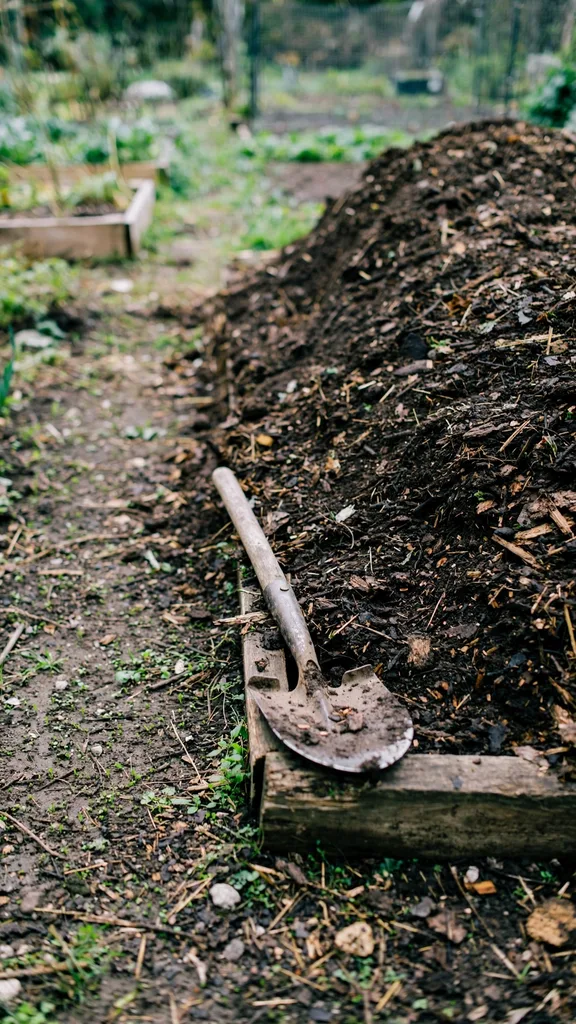
Sandy soil drains well and holds nothing. Work compost through the whole planting zone, not only the hole, so the roots find fed ground as they spread. A single enriched hole in hungry sand fills with roots that refuse to leave it, and the tree behaves like a potted plant with a very large pot.
Clay soil holds water and drowns roots after heavy rain. Plant on a broad low mound in clay country, with the root ball set on the mound top and the backfill blended half and half with coarse compost. The mound sheds the worst of a wet week away from the collar. A star fruit sitting in a clay sump yellows, drops leaves, and dies from the roots up in one wet season.
High pH ground shows up as pale new leaves with green veins. Seedling rootstocks differ in their tolerance of alkaline soil, and a chlorotic young tree responds to chelated iron as a holding measure while soil sulfur lowers the pH across seasons. Gardeners on limestone often do better with the tree in a large container of acidic mix, and the container section below covers that route.
Water Steadily and Feed Young Trees Every 30 to 60 Days
Water a newly planted tree twice a week through its first dry season, soaking the full root zone each time. The tree wants continuous access to soil moisture, and a seedling root system reaches only as far as the pot it came in. Deep, spaced watering pulls roots down and out. Daily sprinkles grow a shallow root mat that collapses in the first hot week.
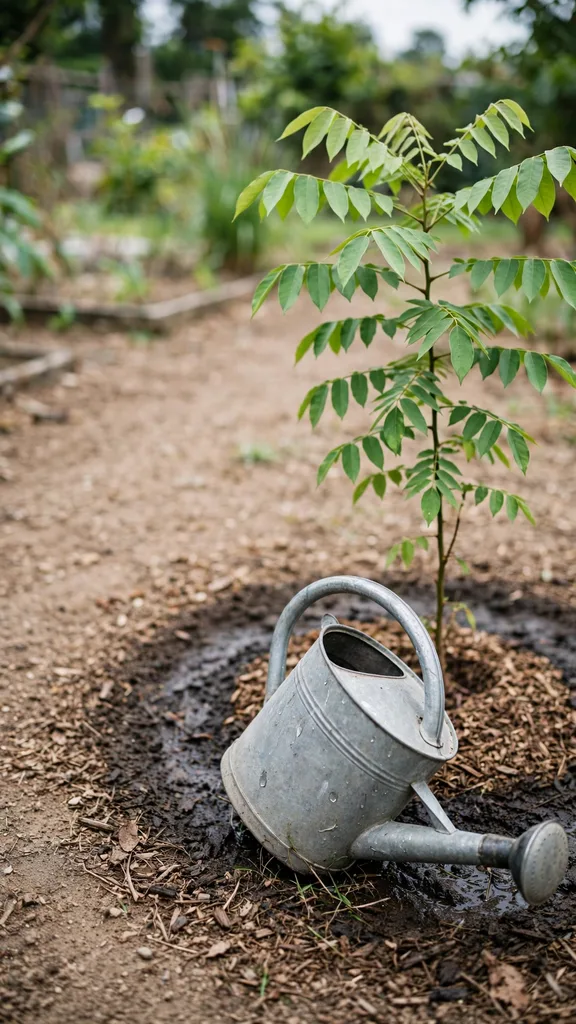
Established trees ride out short dry spells and pay for them in dropped fruit. A tree that wilts at midday in a dry spell drops its setting fruit within days, then flowers again when the water returns. Irrigation during flowering and fruit fill is the difference between a crop and a blossom display. Watch the soil, not the calendar: water when the top 5.1 cm of soil under the mulch dries out.
Feed young trees little and often. The IFAS St. Lucie County guide recommends 0.11 to 0.23 kg of a mixed fertilizer with nitrogen, phosphorus, potassium, and magnesium for young trees, applied every 30 to 60 days. Scatter the granules in a ring at the canopy edge, never against the trunk, and water them in. A trunk burn from a fertilizer pile scars the bark for the life of the tree.
Mature trees take larger dressings split across the growing season. Yellow leaves across the whole crown on a fed tree point at waterlogging or pH trouble before they point at hunger. Diagnose before feeding harder. A drowned tree fed with salts dies faster than a drowned tree left alone.
Prune Lightly and Thin Heavy Fruit Sets Early
A young star fruit needs almost no pruning. Take out crossing branches, dead wood, and shoots from below the graft union on a grafted tree. The crown forms its own spreading shape, and hard pruning in the early years delays the first crop by pushing the tree back into leaf growth.
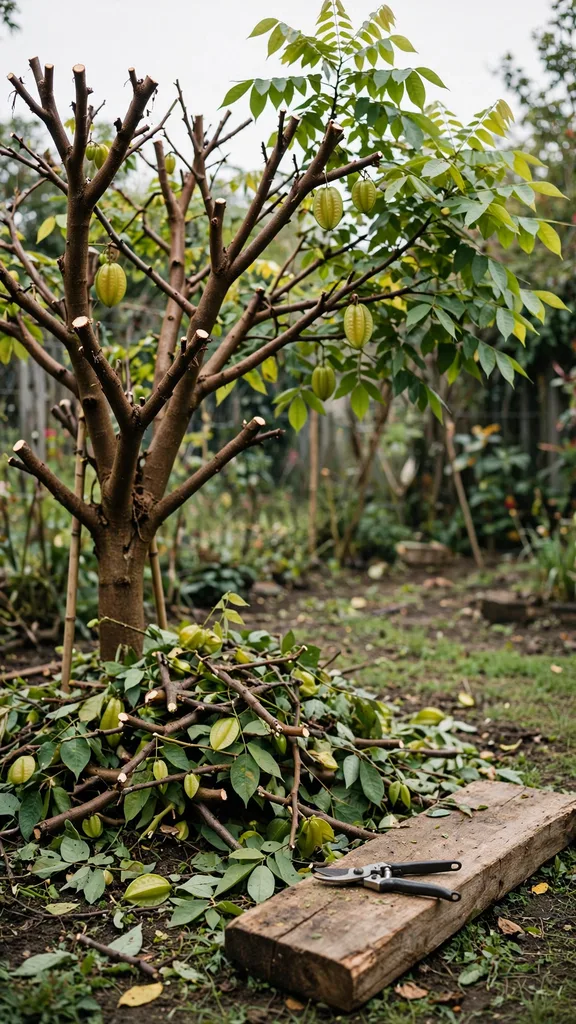
Hold the mature tree at a picking height with one annual pass after the main harvest. Cut back the longest upright shoots to a side branch, open the center to light, and leave the short fruiting wood alone. Flowers form on twigs and small branches throughout the crown, so a tree shaved into a ball carries its crop only on the shell that regrows.
Thin heavy fruit sets while the fruit is small. A young tree that carries a full load in its first fruiting year stalls, and the next year comes up empty. Leave one fruit per cluster on a first crop tree, two on a strong mature tree. Thinned fruit grows larger, colors evenly, and sweetens properly. Unthinned fruit stays small and sour, and the branch that carried it snaps in wind.
Watch for scale insects on the stems and fruit fly sting marks on the ripening fruit in warm districts. Scale yields to a horticultural oil spray timed for the crawler stage. Fruit fly calls for bagging the best clusters in mesh bags once the fruit sizes up. Clean up fallen fruit under the tree every week of the season. Fallen fruit breeds the next round of fruit fly in the mulch.
Grow Star Fruit in a Container Outside the Tropics
Gardeners outside the warm zones grow star fruit in a pot and move it under cover for winter. Start a seedling in a 15 cm pot and step it up through 25 cm and 38 cm pots to a final container of 50 cm or wider. Each step up waits until roots fill the current pot. A tree potted straight into its final container sits in cold wet mix and rots at the roots.
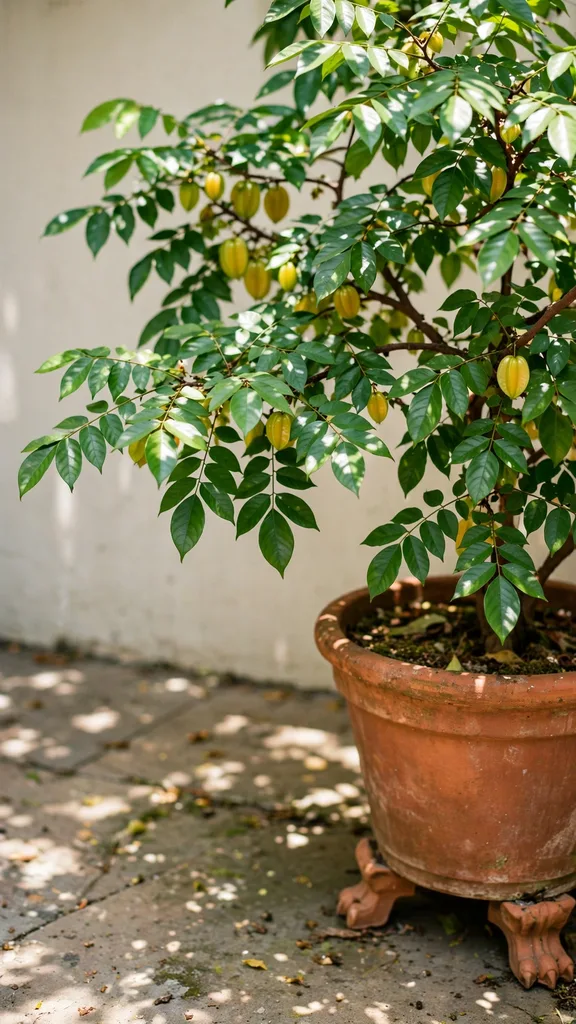
Use a gritty, free draining mix in the pot: half composted bark, a quarter coarse sand or perlite, a quarter good compost. Water a potted tree daily in summer heat and feed it at half the ground rate, since salts build up in a closed pot. Flush the pot with plain water once a month to wash the salts out through the drainage holes.
Bring the pot indoors or into a greenhouse before the first cold night. The IFAS guide records that air temperatures of minus 1.1 to 0 degrees Celsius may kill young leaves, and young trees and twigs die at minus 2.2 to minus 1.7 degrees Celsius. A potted tree has no soil mass to buffer a freeze, so the pot comes in earlier than a ground tree needs protection. Set the indoor pot in the brightest window available and cut the water back to match the slow winter growth.
Potted citrus care is a different job. That lives on How to Grow Kaffir Lime from Indonesia. This page stays on star fruit in a pot.
A container tree fruits smaller and earlier than a ground tree, and grafted cultivars suit pots best. Prune the potted tree after harvest to hold it at door height. A star fruit that outgrows the doorway gets dragged through it once, loses its crown tips, and sulks for a season.
Harvest When the Ribs Turn Fully Yellow
Pick star fruit when the green drains out of the ribs and the whole fruit turns yellow, with the rib edges just starting to brown. The IFAS guide gives 60 to 75 days from fruit set to maturity, depending on variety, cultural practice, and weather. Fruit picked green and hard ripens poorly on a counter and stays sour. Fruit left to soften on the tree splits and draws wasps within days.
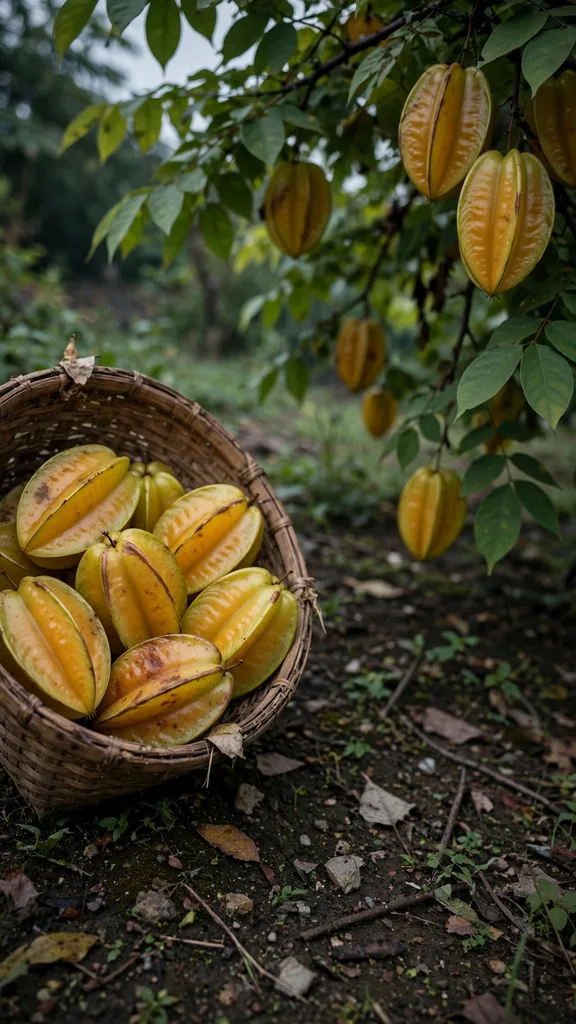
Cut the fruit off with scissors or small shears, leaving a short stalk attached. Pulled fruit tears the thin skin at the stem end, and the tear rots in storage. Handle the crop like eggs. The thin skin bruises at every knock, and a bruised star fruit browns at the bruise by the next day.
Eat the crop fresh within days, or refrigerate it for a short holding period in the crisper drawer. Star fruit carries oxalic acid, and the IFAS guide carries a plain warning: people diagnosed with kidney disease should eat carambola only when their doctor says it is safe for them. Healthy gardeners eat the fruit in normal portions and treat that warning as a label on the tree, not a footnote.
Save seed from the best fruit of the best seedling. Cut that fruit the day it colors fully, sow the seed the same week, and the next generation starts with the parent already proven in your soil. That loop, repeated across years, is how a free seed from a shop fruit turns into a tree matched to one garden. Skipping the loop and sowing seed from a sour fruit repeats the sour result.
Frequently Asked Questions
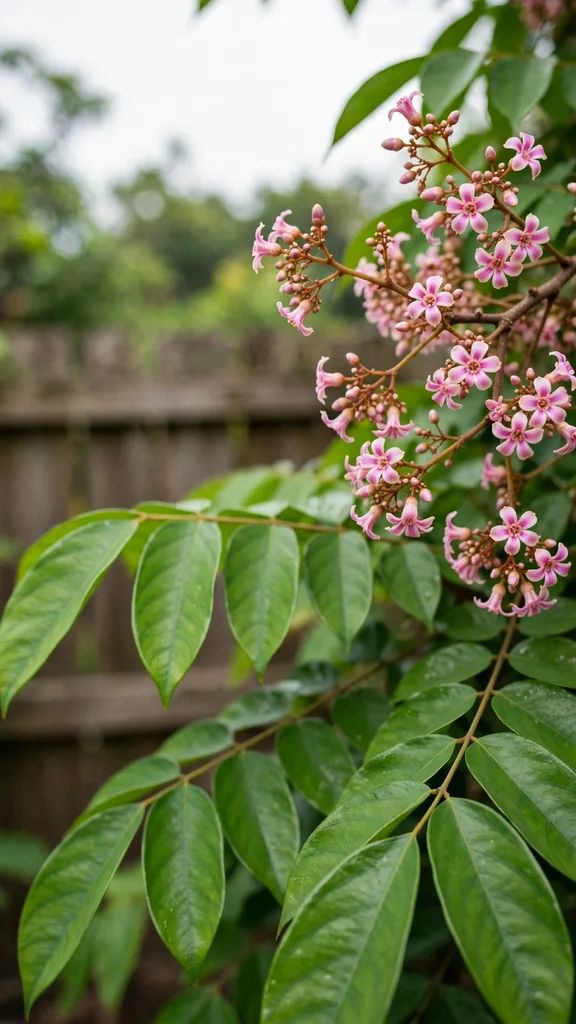
Yes, and the store bought fruit is the standard seed source for home gardeners. Pick a fully yellow, ripe fruit, cut it the day you bring it home, and sow the seed within days, since carambola seed loses viability fast out of the flesh. Expect 1 to 3 weeks to sprout in warm mix and 3 to 5 years to the first crop.
Plan on 3 to 5 years from sowing to the first crop in warm ground with steady water and feed. A grafted tree fruits in 1 to 3 years, and a well grown grafted tree may crop within 10 to 14 months of planting out. Cold winters, dry spells, and hard pruning each push the seedling calendar back.
Most home garden plantings fruit from a single tree. Some cultivars set heavier crops with a second cultivar of the opposing flower type nearby, since carambola flowers come in short styled and long styled forms. A lone tree that flowers well and drops every fruit points first at water stress or cold nights during flowering, not at pollination.
Yes, in a final pot of 50 cm or wider with a gritty free draining mix, daily summer water, and a hard prune after harvest to hold the tree at door height. Bring the pot under cover before any night near freezing, since potted roots have no soil buffer. Grafted cultivars fruit best in pots. Seedlings fruit too, on the slower calendar.
Fruit drop on a young tree usually traces to dry soil during fruit set, a cold snap during flowering, or a tree carrying more fruit than its roots can fill. Water deeply through flowering, thin heavy clusters to one or two fruit, and shelter young trees from cold wind. A tree that drops fruit every year in rich, wet ground wants its drainage checked first.
No. Star fruit contains oxalic acid and a neurotoxin that healthy kidneys clear, and people with kidney disease should eat it only with a doctor’s approval. The warning comes from the University of Florida IFAS Extension guidance for home growers. Healthy adults eat ripe star fruit in normal portions without trouble, and children try small portions first.