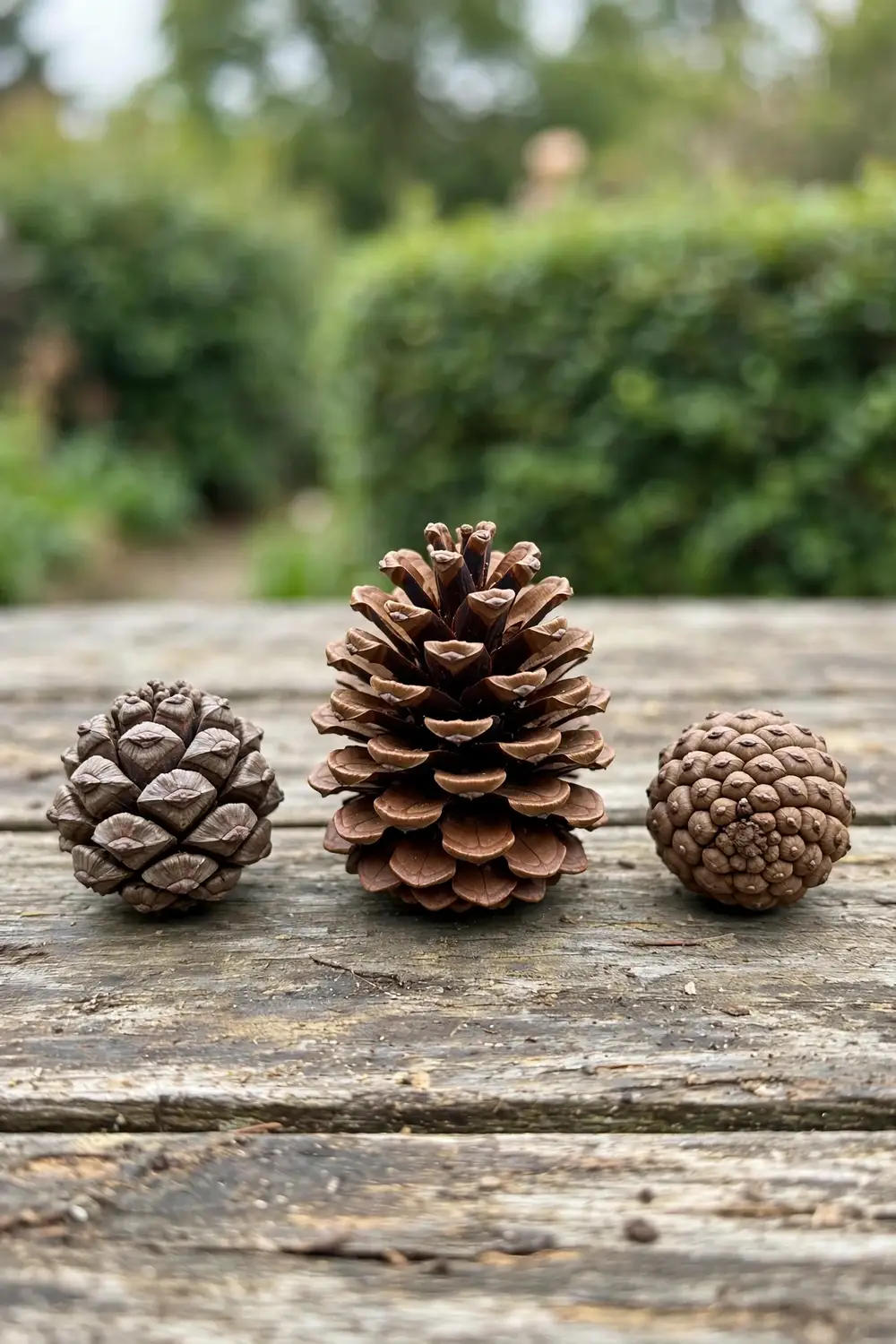

Three kinds of tree answer to “cypress” in Australia, and only one of them is native. The native cypress-pine (Callitris) carries globose cones 1 to 3 cm across with six thick woody scales arranged in two whorls of three, while the exotic Monterey cypress bears larger cones 20 to 50 mm long and its foliage gives off a lemony smell when crushed. That is cypress identification in Australia in one line: read the cones first, then the leaves, then the bark. The rest of this page is a 13-step key, from the scale-leaf entry test to the lookalikes that are not cypresses at all.
Cypress means a conifer in the cypress family (Cupressaceae) with small scale-like leaves pressed against the twigs. In Australia the name covers three groups: the native cypress-pines (Callitris, Australia’s own genus), the exotic true cypresses (Cupressus, including Monterey and pencil cypress), and the Leyland cypress (a sterile hybrid planted for hedges). Identification means telling these three apart from each other and from the lookalikes: true cedar, true pine, casuarina, and the non-tree plants that borrow the name.
I check the cones before I trust the foliage, because two scale-leaved conifers can look identical until the cones give them away.
1. Confirm Scale Leaves, Not Needles
Your first test is the foliage. A cypress carries small scale-like leaves pressed flat against the twigs, not long needles. Run a finger along a twig. If the surface feels like overlapping fish scales, you are holding a cypress-family conifer. If you feel distinct needles, even short ones, you are holding something else.
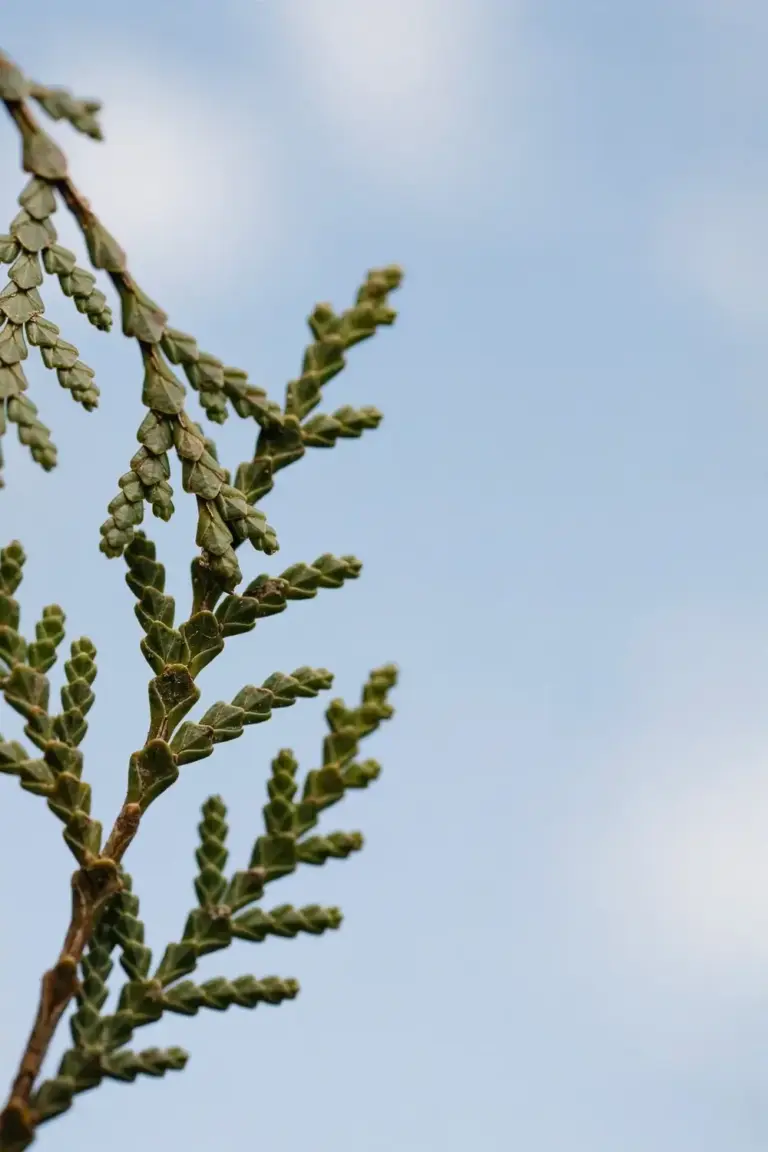
This single test eliminates the two biggest confusions at once. True pines (Pinus) carry their needles in bundles called fascicles, never as pressed scales. Casuarina, the so-called “Australian pine,” carries what look like needles but are actually multi-jointed green branchlets, with the true leaves reduced to tiny teeth at the joints.
Young Callitris seedlings break this rule. They start life with needle-like leaves and only develop the adult scale foliage later, which catches out gardeners who learned the scale test from a book. If your tree is a seedling under a metre tall with soft needles, check the mature trees nearby before you rule out cypress-pine. Look for older Callitris in the same area and compare the bark. The scale test applies to adult foliage, and juveniles always get the benefit of the doubt.
2. Read the Cone: Your Decisive Test
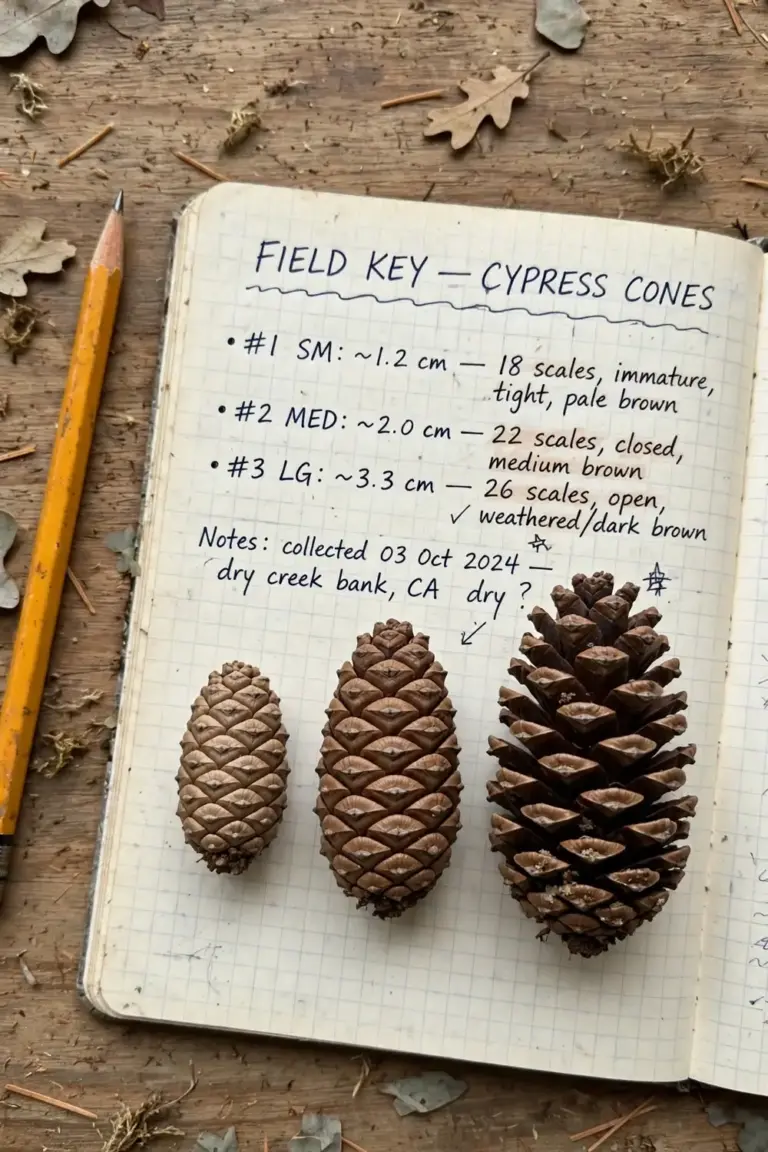
Cones settle what foliage cannot. Pick up a mature female cone from under the tree or from a low branch. Count the scales and measure the cone across its widest point. Three cone signatures cover nearly every cypress you will meet in Australia.
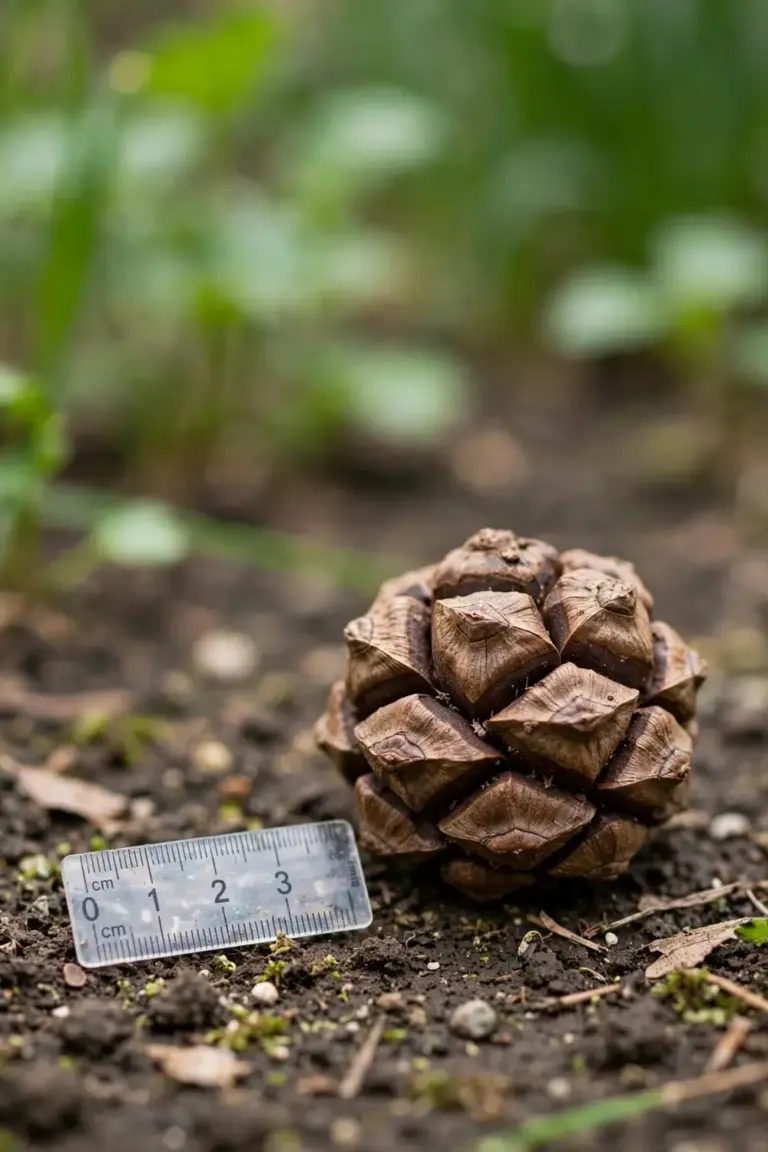
A native cypress-pine (Callitris) cone is globose, 1 to 3 cm long and wide, with six overlapping, thick, woody scales arranged in two whorls of three, according to the botanical description of the genus. The cones stay closed on the tree for years and open only after bushfire in many species. If you count six chunky scales, you are almost certainly holding Callitris.
An exotic Monterey cypress cone is larger and looser. Mature female cones run 20 to 50 mm long, oval to cylindrical, solitary at the ends of the branchlets, with 6 to 14 scales. They feel less chunky than a Callitris cone and sit singly rather than in clusters.
A Leyland cypress cone is small and mostly pointless for ID because the tree is a sterile hybrid. Its cones run about 2 cm long with eight scales, and the seeds inside are sterile. If the cones are few, small, and the tree is a fast-growing hedge, Leyland is your answer.
No cones on the tree and none underneath is itself a clue. Leyland cypress often carries few cones because it is a sterile hybrid with little reason to make them. A heavily pruned hedge may carry none at all, since pruning removes the mature wood where cones form. And Callitris cones can sit closed on the tree for years, so check the leaf litter and look up into the crown before you decide the tree is coneless.
3. Meet Callitris: Australia’s Native Cypress-Pine
Callitris is Australia’s own cypress genus, and the name “cypress-pine” belongs to it. The genus holds around 15 species, most of them native to Australia, with two more in New Caledonia. Alongside eucalyptus and acacia, Callitris ranks as one of Australia’s dominant tree genera. These are small to medium trees or large shrubs, 5 to 25 m tall, found across every Australian state.
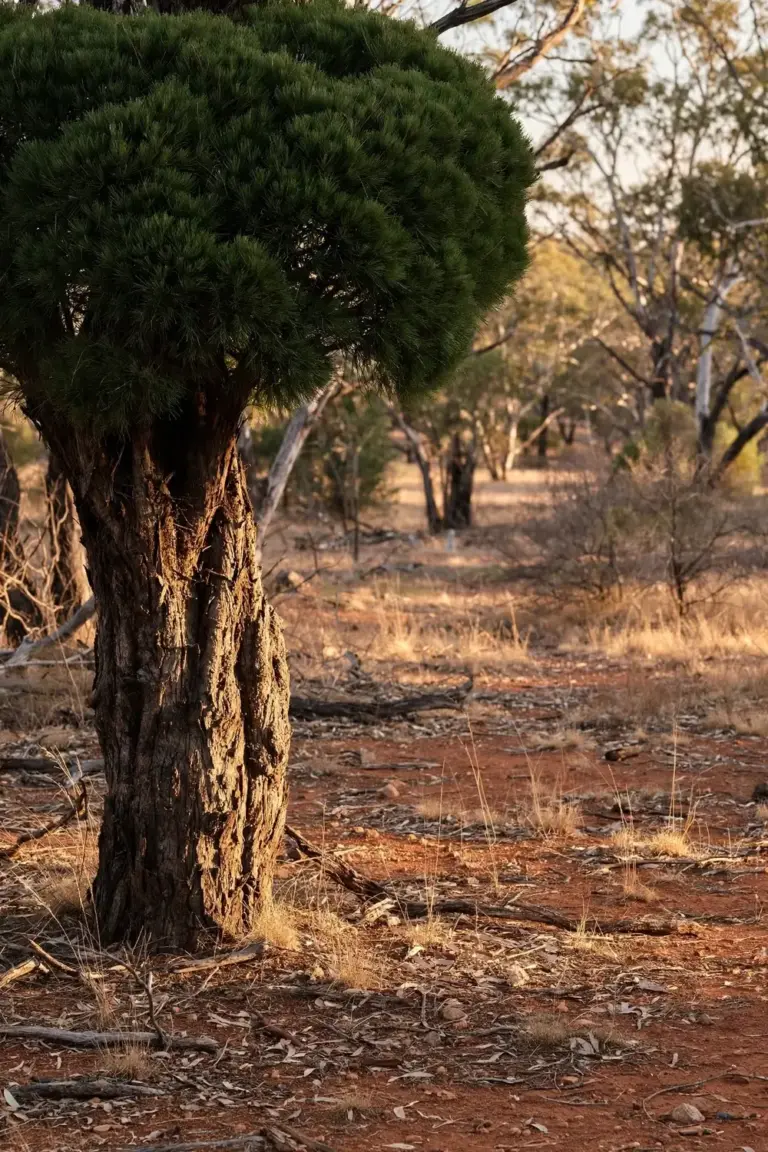
The foliage is the entry point. Adult leaves are evergreen and scale-like, arranged in six rows along the twigs in alternating whorls of three. That whorl-of-three pattern is worth memorising. Exotic cypresses arrange their scales differently, usually in opposite pairs.
The timber tells you why settlers cared. Callitris wood is termite-resistant, and European settlers prized it for fence posts and building frames that had to survive in the ground. That same durability made it one of Australia’s most harvested native timbers through the 19th and early 20th centuries. The tree you are identifying may be a remnant of old woodland, a regrowth stand, or a planted windbreak from the soldier-settler era. Old fence lines of cypress-pine posts still stand across the wheat belt, and they outlast the fences built around them.
Callitris grows on dry sites across the continent, with one exception. Callitris macleayana breaks the pattern by growing in east-coast rainforest and keeping needle-like leaves mixed with scales throughout its life. If your “cypress” has both needles and scales on an adult tree in a wet forest gully, consider C. macleayana.
4. Split White Cypress-Pine From Black
Two cypress-pines dominate the Australian landscape, and telling them apart is the classic field test. White cypress-pine (Callitris columellaris, also treated as C. glaucophylla) and black cypress-pine (Callitris endlicheri) grow across eastern Australia, and graziers and foresters have separated them for generations.
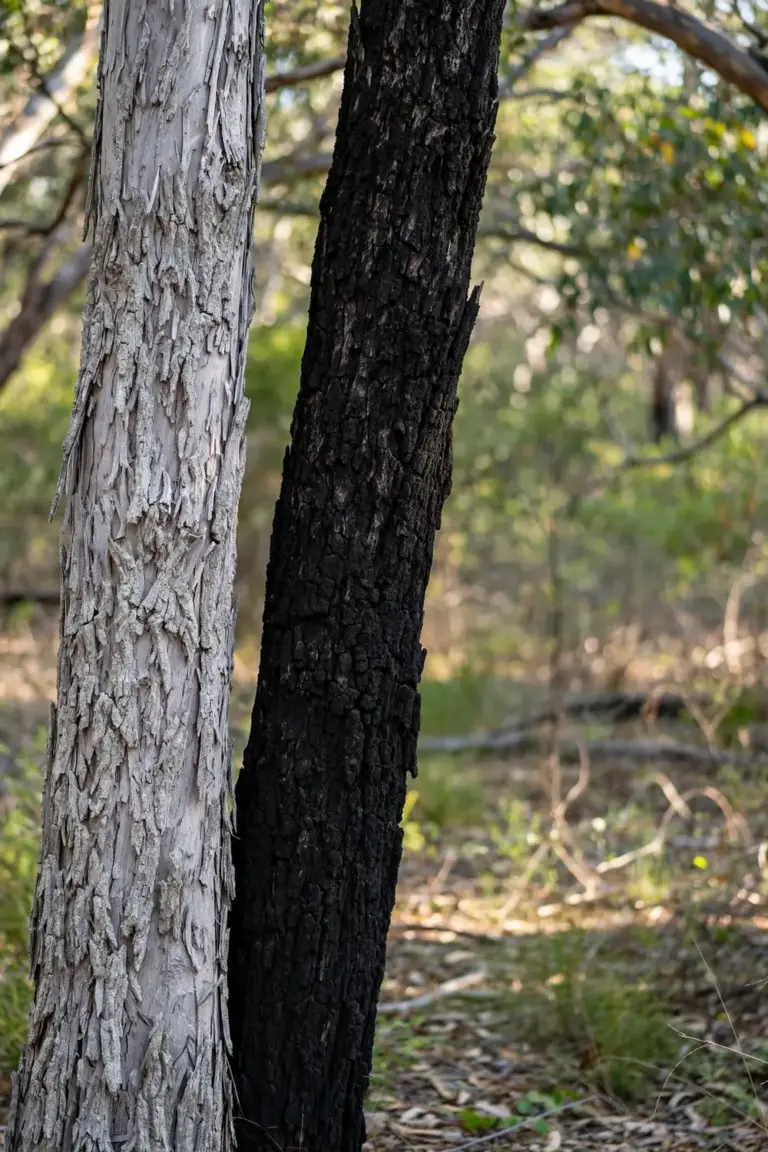
White cypress-pine is a small evergreen tree, 4 to 12 m high, with scale-like leaves 2 to 6 mm long arranged in whorls of three on very slender shoots. Its cones are globose, 1 to 2 cm in diameter, with six triangular scales. The foliage runs green on the east coast and glaucous (blue-gray) in the interior, which is why botanists have argued over whether it is one species or three.
The practical field distinction rests on bark and timber color, which is where the common names come from. White cypress-pine has paler, furrowed bark and pale timber. Black cypress-pine has darker bark and dark timber. Cone size overlaps between the two, so do not try to split them on cones alone.
Range helps. White cypress-pine in the broad sense spans most of Australia, while black cypress-pine centres on the tablelands and slopes of New South Wales and southern Queensland. If you are west of the Divide on red soil, white cypress-pine is the likelier tree.
5. Meet Monterey Cypress: The Wind-Shaped Exotic
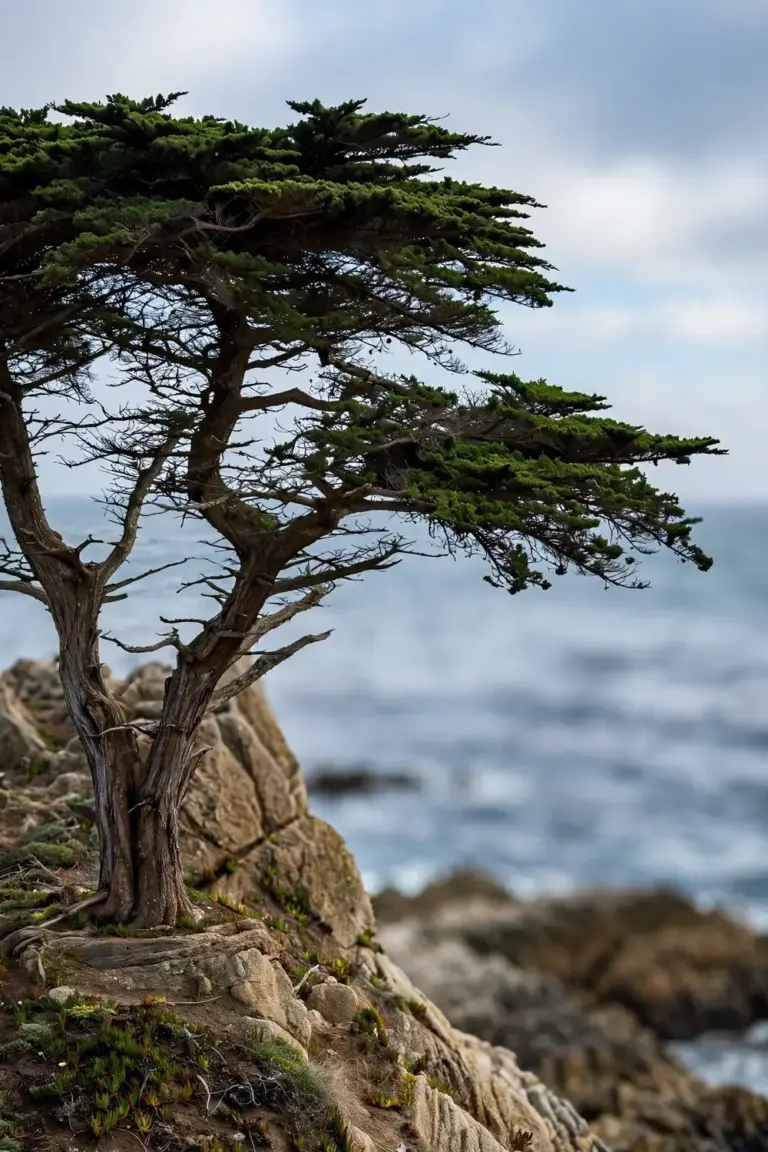
Monterey cypress (Hesperocyparis macrocarpa, still widely listed as Cupressus macrocarpa) is the big exotic cypress of coastal Australia. It was planted across the southern coastline as a windbreak against the Roaring Forties, and old specimens now lean and sprawl into unmistakable sculptures.
The cones give it away. Mature female cones are oval to cylindrical, 20 to 50 mm long, solitary at the ends of the branchlets, according to the Lucidcentral key for plants of south-eastern New South Wales. That is distinctly larger than a Callitris cone and more elongated.
Crush the foliage and smell. Monterey cypress leaves release a lemony scent when rubbed, a trait few other cypresses share. The leaves sit opposite each other, scale-like, usually 2 to 8 mm long, dark green. Male cones are oblong, 3 to 6 mm long, on the same tree.
The bark and habit confirm. Bark is brown, becoming whitish with age, rough, fibrous, and shallowly ridged. The tree reaches 25 m, spreading widely, with branches thrusting horizontally. A windswept, flat-topped giant on a coastal cliff is Monterey cypress until proven otherwise.
Monterey cypress has escaped cultivation in parts of coastal Australia and is listed as an environmental weed in some areas, particularly where it seeds into coastal scrub and displaces native vegetation. If you find seedlings spreading into coastal scrub near old plantings, that self-seeding habit supports the ID and tells you something about how the tree behaves. Councils in parts of Victoria and South Australia manage wild Monterey cypress as a weed, which is worth knowing before you plant one.
6. Meet Pencil Cypress: The Living Exclamation Mark
Pencil cypress is not a species but a form. It is Cupressus sempervirens ‘Stricta’ (and the closely similar ‘Glauca’), a cultivar of the Mediterranean cypress selected for an extremely narrow, upright habit. If your tree is a dark green column barely wider than a doorway, you are looking at pencil cypress.
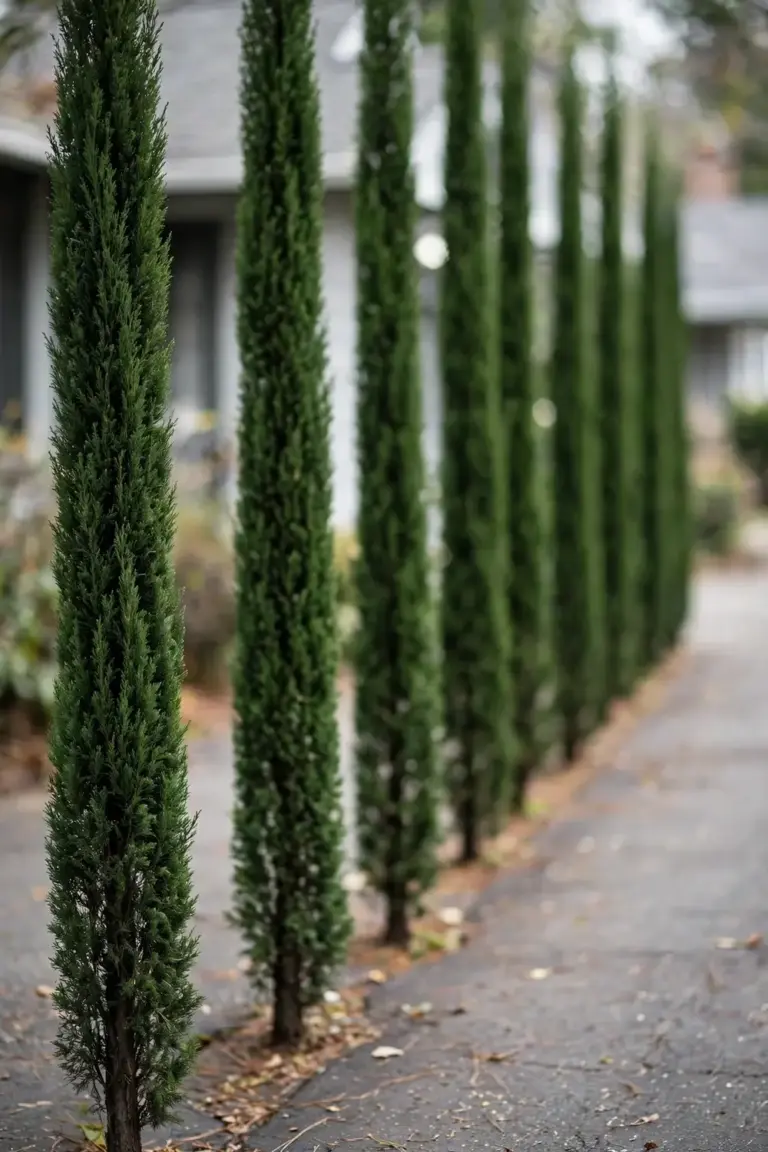
The silhouette is the whole ID. No other common cypress in Australia grows as a tight vertical spike. Monterey cypress sprawls. Leyland cypress broadens into a pyramid. Callitris forms a rounded crown. Pencil cypress just goes up.
The cones are small and globose, typical of the species, and the foliage is dark green scale-like sprays. Because it is a cultivar, every pencil cypress in Australia is a clone propagated from cuttings, so trees of the same age look strikingly uniform. A row of identical green pencils along a driveway is almost certainly this cultivar.
Do not confuse pencil cypress with a young, untrimmed Leyland. Leyland grows fast and broadens quickly, while pencil cypress stays narrow for decades. If the column is wider than about 2 m at the base and still young, suspect Leyland instead.
7. Meet Leyland Cypress: The Sterile Hybrid
Leyland cypress (× Cuprocyparis leylandii) is a hybrid between Monterey cypress and Nootka cypress, first raised in Britain in the late 19th century. It is the default fast hedge of Australian suburbs, planted by the thousand along boundary fences.
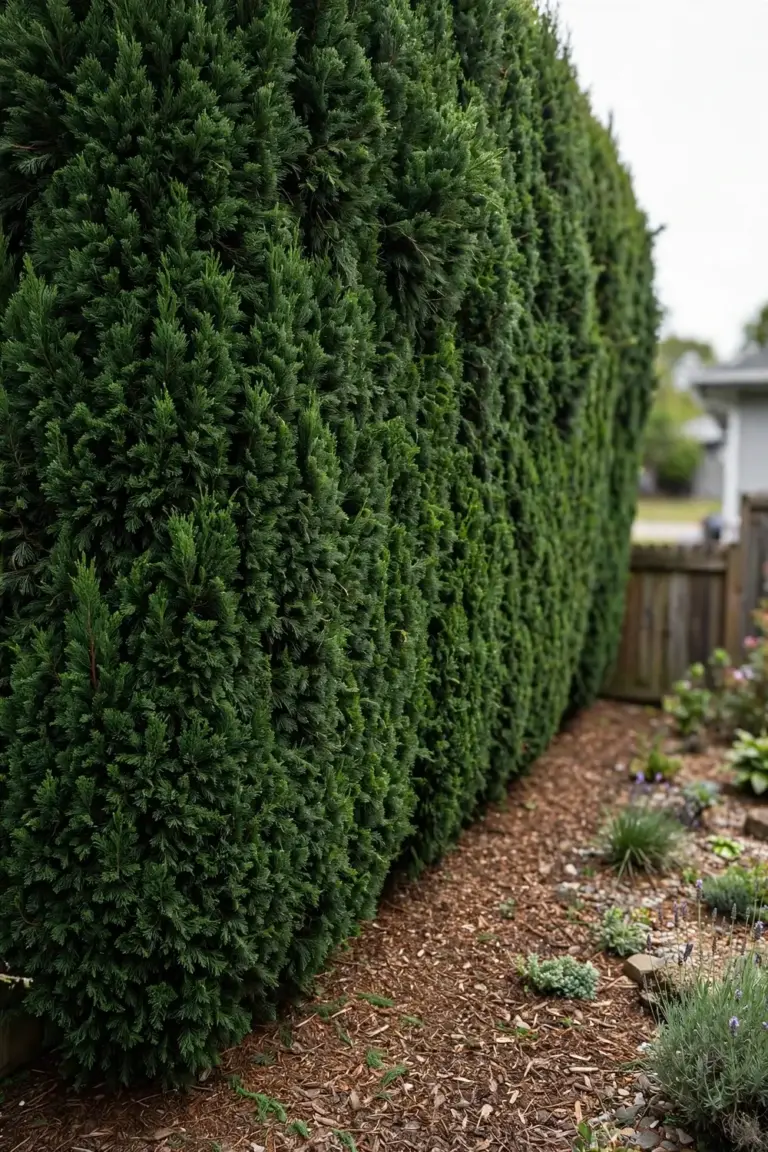
Its hybrid origin is the ID shortcut. Because it is a hybrid, its seeds are sterile, and the tree is propagated entirely from cuttings taken from selected cultivars. Cones are small, about 2 cm long with eight scales, and they shrink and turn gray as they dry. A “cypress” with few small cones and no seedlings underneath is very likely Leyland. The uniformity of a Leyland hedge is itself a clue: every plant is genetically identical, so they grow at the same rate and respond to pruning the same way.
The growth rate is the field mark. Leyland cypress puts on around 1 m of height a year in good conditions, faster than any other common cypress. A hedge that went from tube stock to a 3 m screen in three years is Leyland. Nothing native grows that fast.
The foliage sits between its parents. Leaves are about 1 mm long, close to the twig, in slightly flattened sprays, dark green and faintly aromatic. Branch tips often overhang slightly, giving the crown a soft, feathery outline rather than the stiff sprays of Monterey.
If branches die back from the tips with resinous cankers, that is cypress canker (Seiridium), a disease Leyland is prone to. Dieback is damage, not an ID trait, so confirm the living foliage matches Leyland before you name it.
8. Cross Off True Cedar
True cedars (Cedrus) belong to a different genus. The names get tangled at nurseries. “White cedar” and “red cedar” in Australian usage usually mean Melia or Toona, which are not conifers at all. True Cedrus (Atlas cedar, deodar, Lebanon cedar) are conifers with a completely different leaf arrangement.
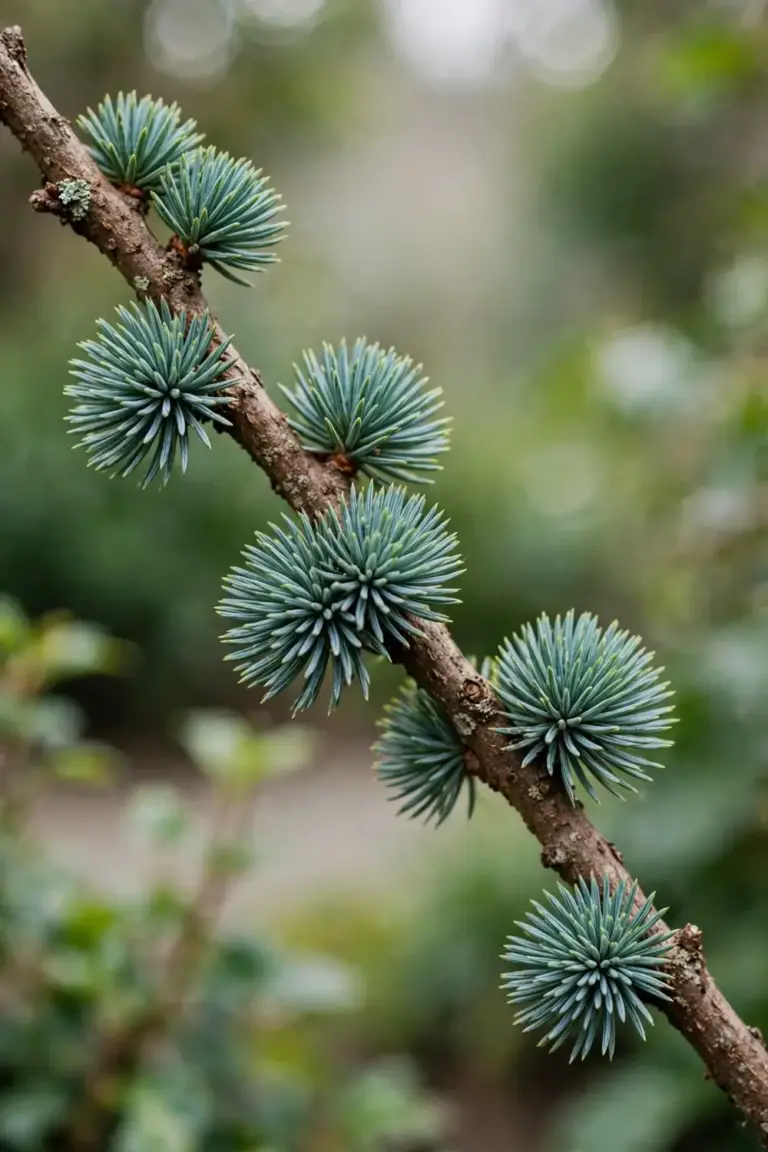
The test is the leaf. Cedrus carries true needles, not scales, borne in dense rosettes on short spur shoots. If you can pick out individual needle clusters sitting like little brushes along the twig, it is a cedar, not a cypress. No Australian cypress does this.
The cones confirm. Cedrus cones stand upright on the branches and disintegrate while still on the tree, leaving a bare central spike. Cypress cones hang or sit in the foliage and fall whole. An upright, barrel-shaped cone breaking apart on the branch rules out cypress immediately.
Cedar foliage also tends to be longer and more needle-like than any cypress, often 2 to 5 cm, blue-green or silvery. If the “cypress” has a silvery-blue cast and obvious needles, walk it over to the cedar key instead.
9. Cross Off True Pine
True pines (Pinus) are the other great confusion, helped by the name “cypress-pine.” But Callitris is a cypress-family tree, not a pine, and the leaf test separates them in seconds.
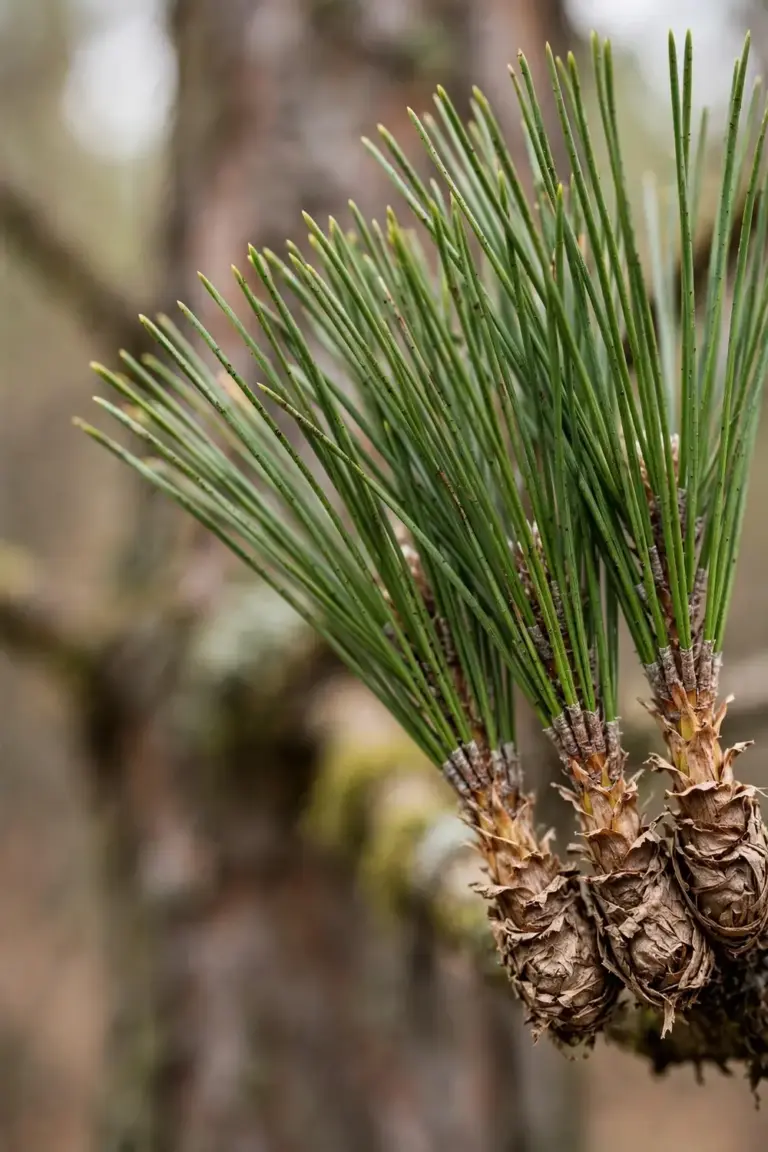
Pines carry needles in bundles. Look at the base of a needle cluster: pine needles emerge from a papery sheath in groups of two, three, or five (the fascicle). Cypress scales never do this. If you find even one bundle of needles in a sheath, it is a pine.
Pine cones are woody and scaly but built differently. They are typically larger, with many thin scales spiralling around a central axis, and they often persist on the tree. Radiata pine, the plantation species across south-eastern Australia, holds its cones in whorls and keeps them for years.
The bark can help at a distance. Many pines develop thick, plated, orange-brown bark with age. Cypress bark tends to be fibrous and stringy (Monterey) or furrowed and dark (Callitris). Bark alone never settles it, but it points you toward the right test.
10. Cross Off Casuarina, the “Australian Pine”
Casuarina is the trickiest lookalike because its common name is “Australian pine” and it looks pine-like from a distance. It is not a pine, not a conifer, and not a cypress. It is a flowering tree in its own family, Casuarinaceae.
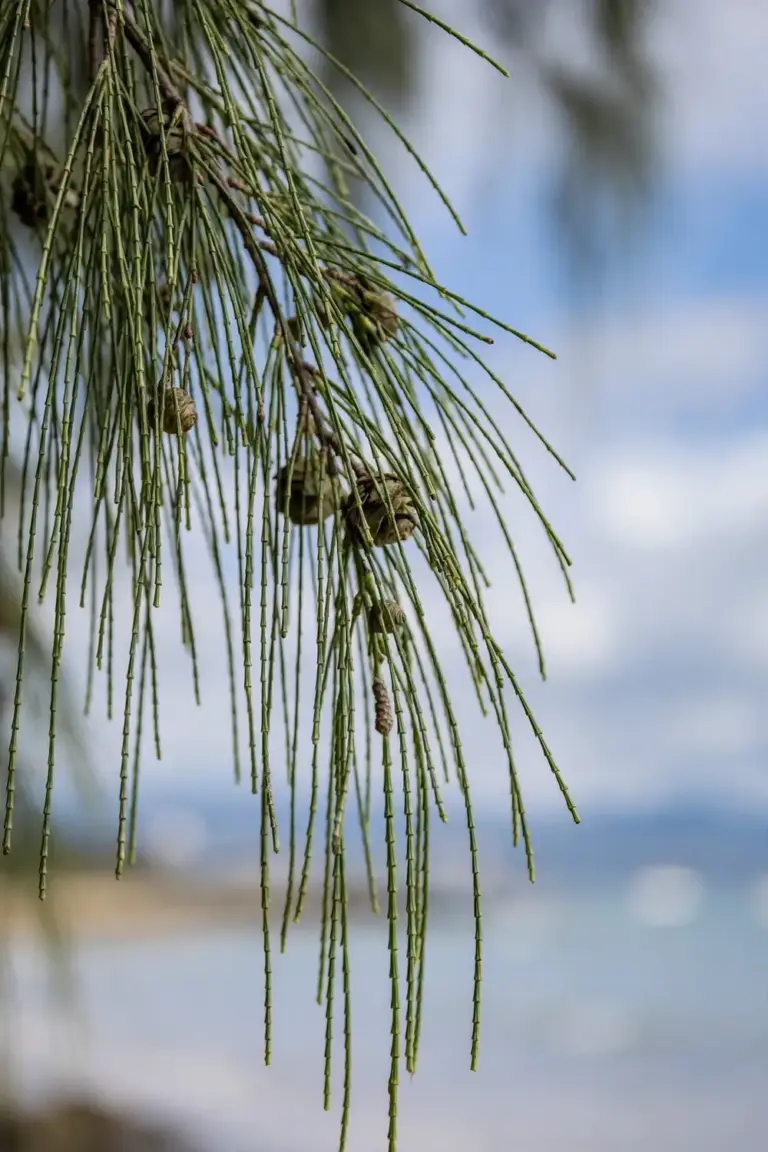
The “needles” are the giveaway. What look like long, soft, gray-green needles are actually multi-jointed green branchlets, with the true leaves reduced to tiny, inconspicuous teeth at each joint, according to the University of Florida extension profile. Roll a “needle” between your fingers. If you feel distinct segments like a tiny bamboo, it is casuarina.
The cones are small and spiny, less than half an inch long, woody but obviously different from a cypress cone. They look like miniature pine cones but feel light and papery compared with the dense woody cones of Callitris.
Casuarina also whistles. The fine branchlets sway in wind and produce a distinctive soft whistle in strong breezes. No cypress does this. If the tree sings, it is a she-oak, not a cypress.
In Australia, casuarina is native and widespread, especially along coasts, watercourses, and disturbed ground where it pioneers bare sand. You will meet it as beach she-oak behind the dunes, river she-oak along inland creeks, and planted windbreaks on farms. Do not let the “pine” in the name push you toward the pine key. Run the jointed-branchlet test first, and listen for the whistle on a windy day.
11. Cross Off the Non-Tree “Cypresses”
Two garden plants borrow the cypress name without being conifers at all. They cause confusion in nurseries and seed catalogues, so they earn a place in the key.
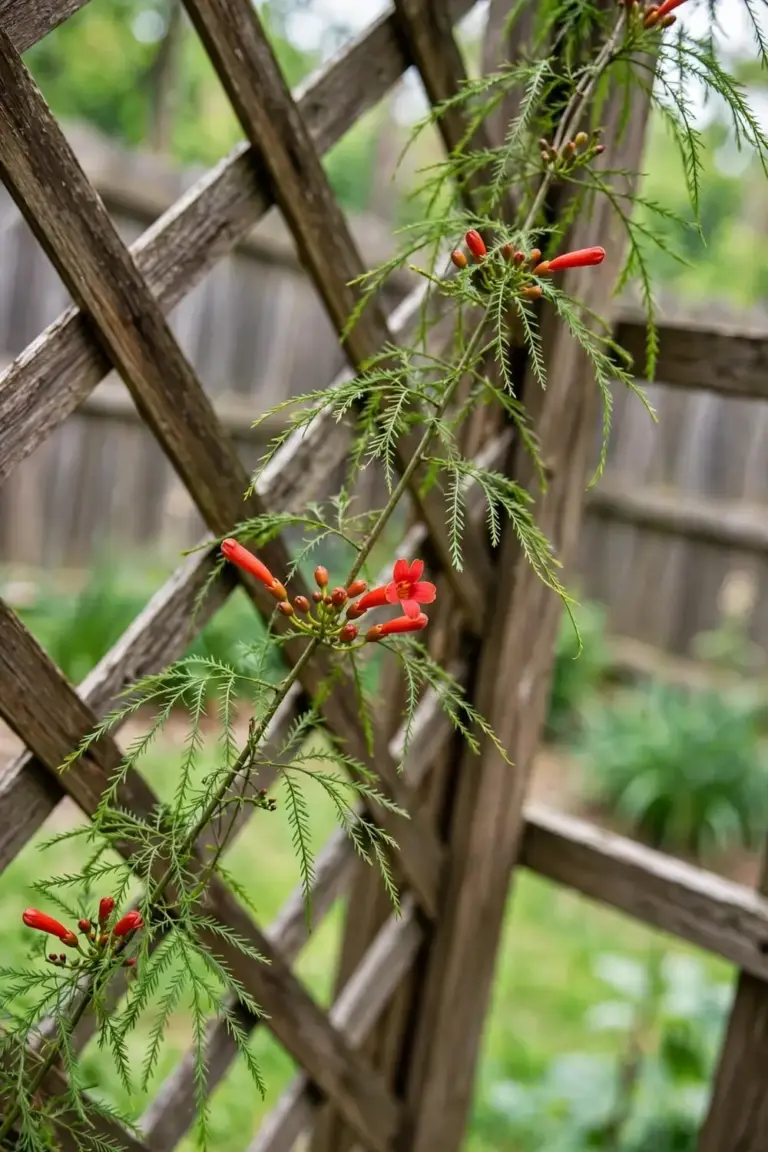
Cypress vine (Ipomoea quamoclit) is a climbing annual with fine, feathery foliage and red trumpet flowers. It is a morning glory relative, not a tree. If your “cypress” is a vine scrambling over a trellis, the name is the only thing it shares with Cupressus.
Summer cypress (Bassia scoparia, sold as Kochia) is a bushy annual grown for its fine texture and autumn color. It forms a soft, rounded mound, not a woody tree, and dies down each year. If it is herbaceous and under 2 m, it is not a cypress tree.
Neither produces woody cones. That is the instant eliminator. No woody cones, no cypress. Check for last season’s dead stems at the base to confirm the plant is annual or herbaceous.
12. Back It Up With Smell and Bark
Once cones and foliage point to an answer, smell and bark lock it in. These are secondary tests, useful when cones are out of reach or the tree is heavily pruned.
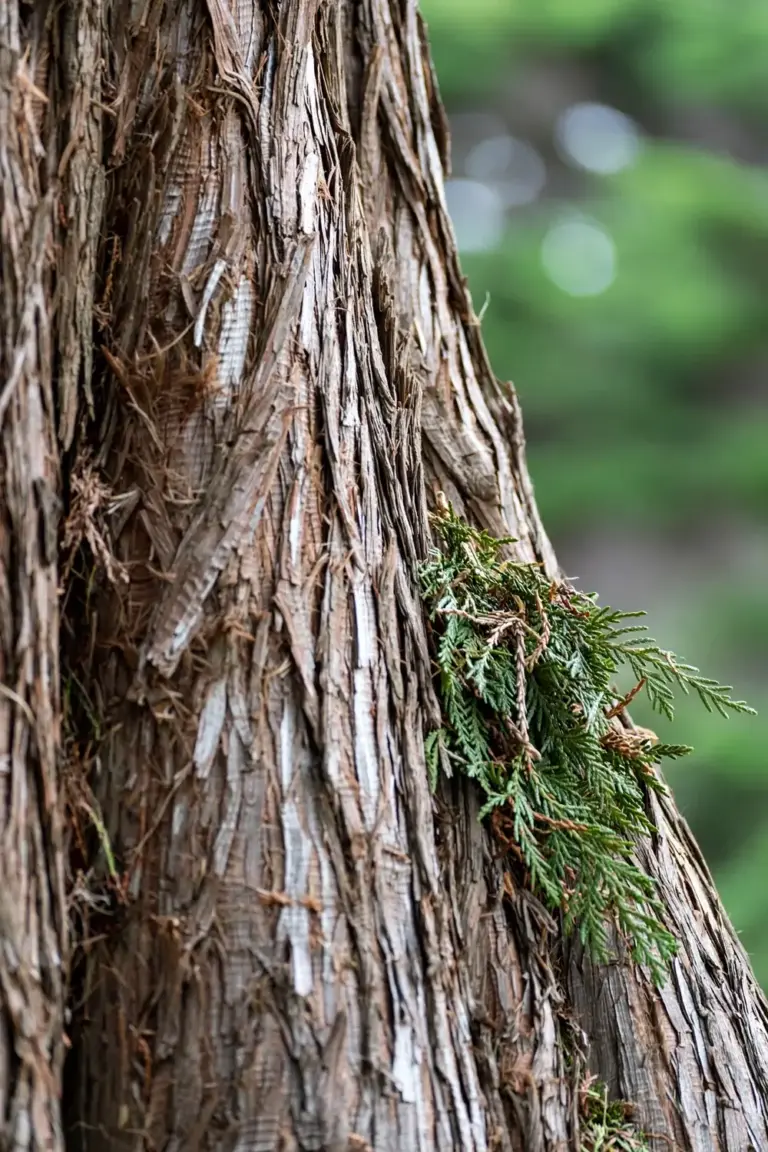
Crush a sprig and smell it. Monterey cypress gives a clear lemony scent that you will not mistake once you know it. Leyland smells faintly resinous. Callitris carries a mild, woody resin smell. If there is no lemon in the crushed foliage, cross Monterey off your list.
Read the bark at chest height. Monterey cypress bark is brown, turning whitish with age, rough and fibrous with shallow ridges. Callitris bark is typically dark, hard, and furrowed. Leyland bark is dark red-brown with deep grooves on older trunks. Bark varies with age, because trees add a new ring of wood each year, so use it as confirmation, not as the primary test.
Step back and read the whole tree, because habit is the fastest field test once you know the four shapes. Monterey spreads and flattens with age, especially where coastal wind sculpts it into something wild. Pencil cypress holds its narrow column for decades without widening. Leyland builds a broad, fast pyramid. Callitris rounds into a neat cone.
13. The One-Page ID Table
When you have worked the key once, this table is the shortcut for next time. It compresses the cone, foliage, and habit tests into one view.
| Feature | Callitris (native cypress-pine) | Monterey cypress (exotic) | Leyland cypress (hybrid hedge) |
|---|---|---|---|
| Mature cones | Globose, 1–3 cm, 6 thick woody scales in 2 whorls of 3 | Oval to cylindrical, 20–50 mm, solitary, 6–14 scales | About 2 cm, 8 scales, seeds sterile, often few |
| Leaves | Scale-like, whorls of 3 | Scale-like, opposite, 2–8 mm, lemony when crushed | About 1 mm, close to twig, faintly aromatic |
| Bark | Dark, hard, furrowed | Brown to whitish with age, rough, fibrous | Dark red-brown, deep grooves |
| Habit | Rounded or conical crown, 5–25 m | Spreading, wind-sculpted, to 25 m | Broad pyramid, very fast growth |
| Where in Australia | All states, dry sites | Coastal south, windbreaks, gardens | Suburban hedges everywhere |
Keep a cone in your pocket when you walk the street. The table works best with a real cone in hand, and after three or four trees you will stop needing it.
Frequently Asked Questions
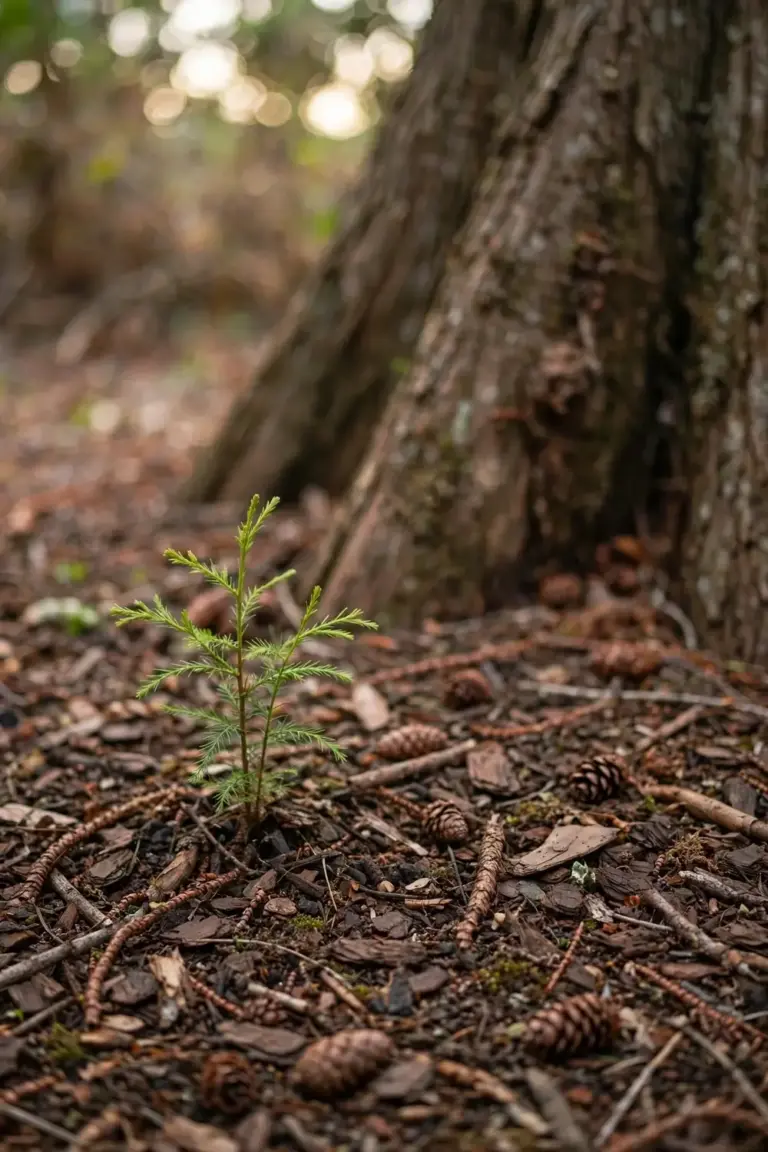
No. Cypress-pine (Callitris) belongs to the cypress family (Cupressaceae), not the pine family (Pinaceae). The common name is historical, from the timber trade, and it misleads gardeners into running the pine key. Use the scale-leaf test: Callitris has pressed scales, while true pines carry needles in sheathed bundles. Once you see scales instead of bundles, the pine key is the wrong key.
Read the cones. Native Callitris cones are globose, 1 to 3 cm across, with six thick woody scales in two whorls of three. Exotic Monterey cypress cones are larger, 20 to 50 mm long, oval to cylindrical, and solitary at the branchlet ends. Leyland cypress cones are small, about 2 cm, and often scarce because the hybrid is sterile. Cone size and scale count separate the three groups faster than any other test.
Both are Callitris species of eastern Australia, separated in the field mainly by bark and timber color rather than cones. White cypress-pine (Callitris columellaris, also treated as C. glaucophylla) has paler bark and pale timber, with globose cones 1 to 2 cm across bearing six triangular scales. Black cypress-pine (Callitris endlicheri) has darker bark and dark timber. Their ranges overlap on the tablelands, so use bark color first and range second.
Practically no. Leyland cypress is a hybrid between Monterey cypress and Nootka cypress, and its seeds are sterile. Nurseries propagate it entirely from cuttings, which is why a row of Leyland hedge plants looks so uniform. You will find few cones on a Leyland, and you will not find seedlings underneath it. If seedlings are spreading under your “cypress,” it is not Leyland.
Several honest reasons. Leyland cypress is a sterile hybrid and often carries few cones. Heavily pruned hedges put energy into foliage, not cones. Young trees of any cypress may not cone for years. And Callitris cones can stay closed on the tree for years, opening only after fire, so a mature tree may look coneless from the ground. Check the leaf litter under the tree before you conclude it never cones.
It depends which cypress it is. A self-sown Callitris is a native tree and usually worth keeping where it suits the site. A self-sown Monterey cypress near the coast may be an environmental weed, and some councils list it for control. Leyland cypress does not self-sow because its seed is sterile, so a seedling under a Leyland came from something else. Name the parent tree first, then decide.
Write the Name Down Before You Prune
You now hold the full key. Start with the scale-leaf test, read the cone, and let the bark and smell confirm. Native cypress-pine means Callitris with six-scaled globose cones. Exotic cypress means Monterey with large lemony cones or pencil with its narrow column. A sterile fast hedge means Leyland.
If the tree turns out to be a native Callitris, it belongs in the broader story of Australian native plants, and the best Australian native plants for container gardens shows where natives fit in designed spaces. But name it first. A tree with the wrong name gets the wrong care, and cypresses are patient enough to wait while you check.
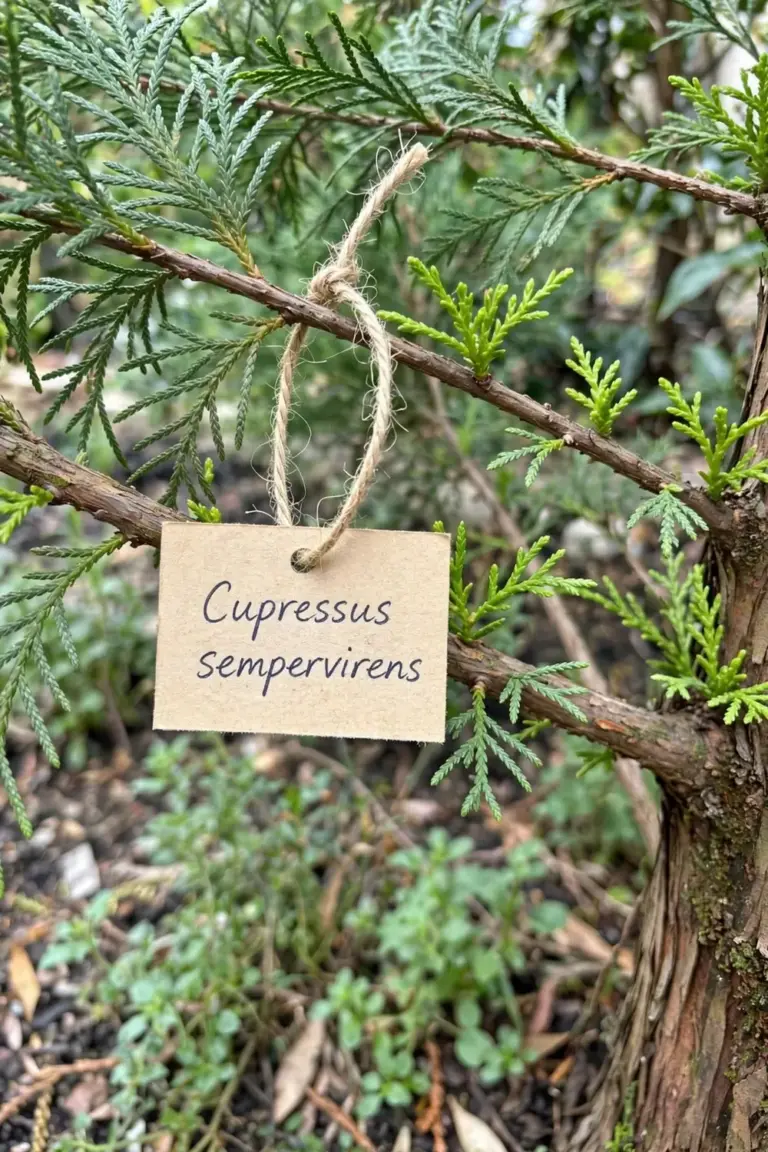
Write the botanical name on a tag and tie it to a low branch. Next time you walk past, you will read Callitris or Cupressus and know exactly which key you used.