
A cherry tomato that stalls in Australia is usually short of sun, water, warmth, or root room. The question why is my cherry tomato not growing well in Australia has one of 11 answers, and the first four cover most stalled plants. Work through the symptom table below, then read the matching section for the fix.
A cherry tomato is Solanum lycopersicum var. cerasiforme, the small-fruited form of the garden tomato. “Not growing well” means growth problems: stunted stems, pale leaves, dropped flowers, or fruit that never sizes up. “Diagnosis” means matching symptoms to causes, one at a time, starting with the most common cause. This article diagnoses cherry tomato plants only. It does not teach general tomato growing from seed to harvest.
Australian timing matters. Tomatoes are warm-season plants that hate frost. In cool and temperate zones, plant out after the last frost, when nights stay warm. In the tropical north, plant during the dry season, when humidity drops and fungal pressure eases. The rest of this page is 11 causes, from sun to variety, each with its fix.
| Symptom | Likely Cause | First Check |
|---|---|---|
| Pale, stunted plant, thin stems | Not enough sun, or cold nights | Hours of direct sun on the bed |
| Lower leaves yellow first | Nitrogen shortage, or wet feet | Soil moisture and feeding history |
| Flowers fall without fruit | Blossom drop from heat or cold | Day and night temperatures |
| Yellow leaves with dark spots | Fungal leaf spot | Spots with rings on lower leaves |
| Wilting when the soil is wet | Wilt disease | Whether water revives the plant |
| No growth in a pot | Pot too small, roots cramped | Root ball at the drainage holes |
| Fruit ends rot | Uneven watering | Watering consistency, not calcium |
1. Start With Sun When a Cherry Tomato Is Not Growing Well
A cherry tomato in shade grows slowly, stretches toward light, and sets little fruit. Sun drives every other fix on this page. A plant that gets four hours of sun will never match one that gets eight, no matter how much fertilizer you pour on it.
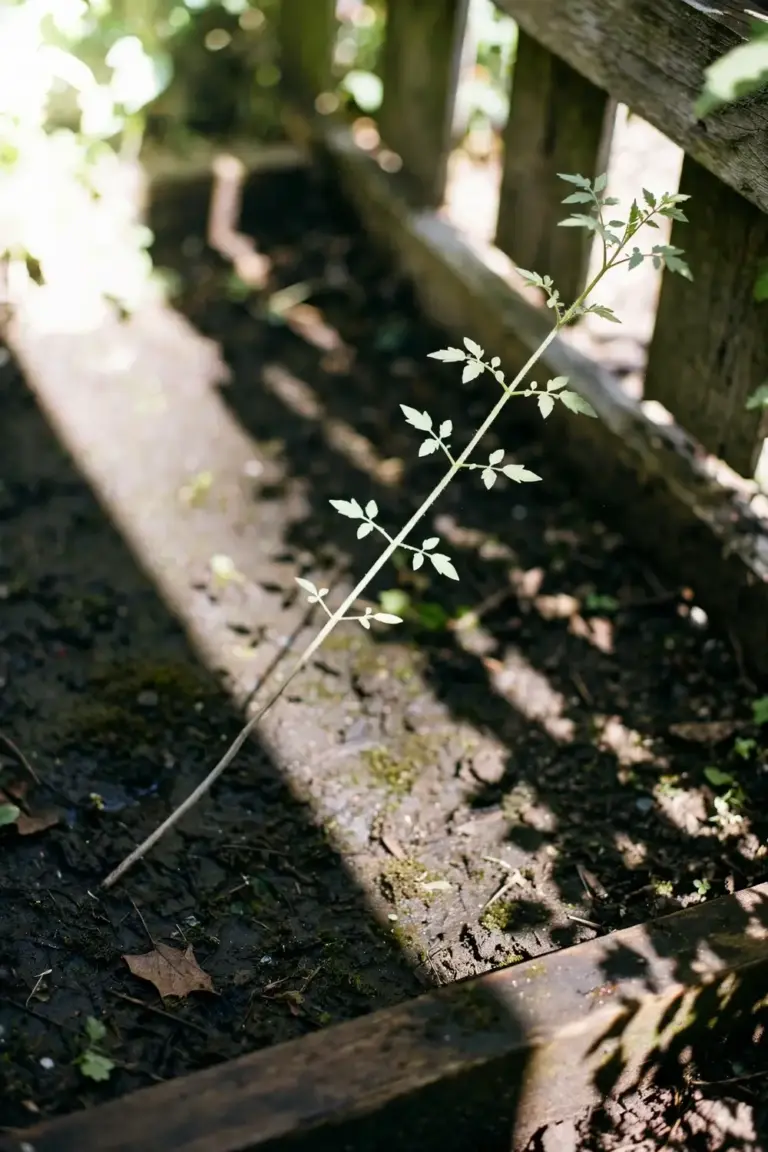
Vegetables do best in full sunlight of at least 4 to 6 hours a day, according to UC IPM’s cultural tips for growing tomato. That figure is a floor, not a target. The University of Georgia Extension puts the bar higher in its home tomato guide, calling for at least eight hours of sunlight each day. Aim for the higher figure in Australia. A bed that gets morning sun and afternoon shade in Melbourne winter will stall a cherry tomato that would race in a full-sun spot.
Walk the bed at 9 a.m., noon, and 3 p.m. Count the hours of direct sun that actually hit the plant. Fences, eaves, and a neighbor’s tree steal more sun than most gardeners guess. A pot on a shaded balcony grows a pale, leggy plant that never fruits well. Move the pot to the sunniest hard surface you have. In a bed, prune the overhanging branch that shades the row, or move the plant to the sunniest row. Shade from a wall in winter is worse than shade in summer, because the sun sits lower and the shadow stretches further.
2. Fix Watering Swings Before You Feed
A cherry tomato that swings between dry and soaked grows roots near the surface, then loses them. Shallow watering is the most common watering mistake, and it shows up as stunting long before it shows up as wilt. Feed will not fix a root system that never grew deep.
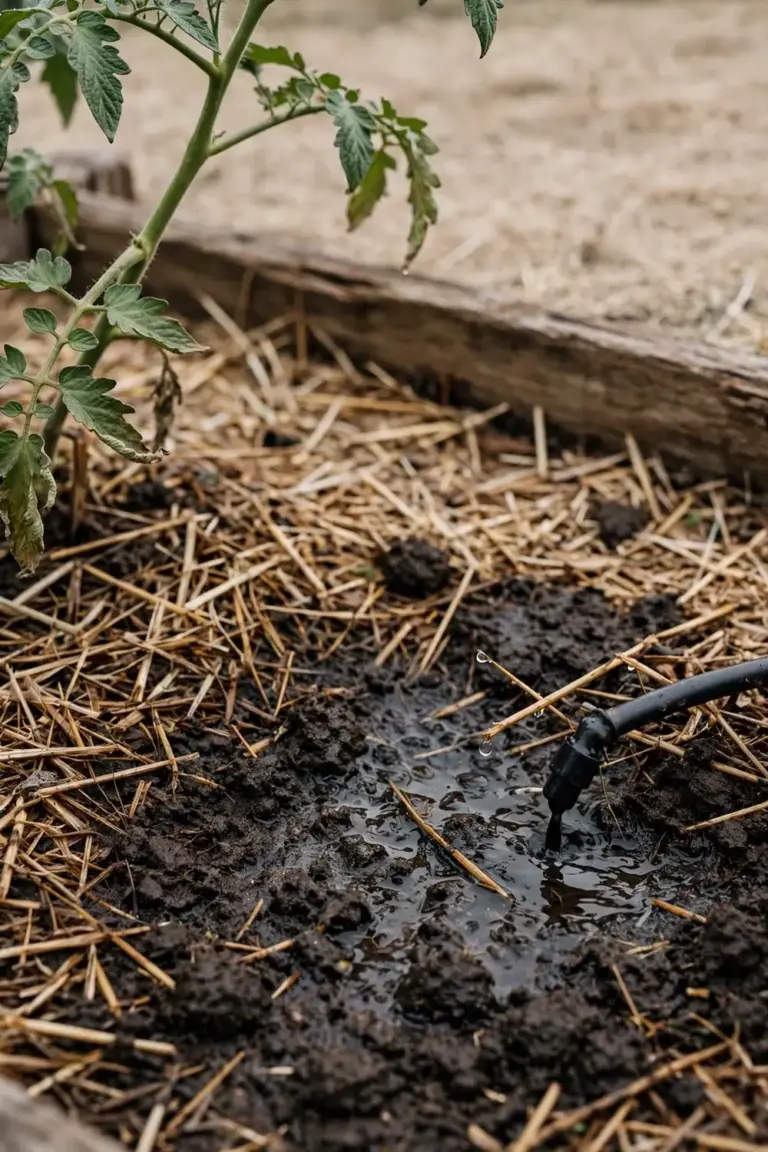
Water deeply by drip or furrow irrigation to encourage deep rooting, and keep adequate moisture in the deeper soil layers even when plants are small, according to UC IPM’s cultural tips for growing tomato. The same guide warns that letting water seep through to the top few inches of soil only leaves root growth stunted and can cause blossom drop. Deep water, less often, beats a daily sprinkle. The top few centimeters dry out between waterings. The root zone should stay moist.
Push a finger 5 cm into the soil before you water. Water only when the soil at that depth feels dry. Water at soil level, not over the leaves. Wet leaves invite fungal leaf spot, and wet fruit cracks. Mulch around the plant with straw or sugarcane to hold moisture steady, keeping the mulch clear of the stem. A mulch layer that holds moisture and suppresses weeds evens out watering between waterings. Illinois Extension puts the weekly target at about 2.5 cm of moisture from rain or irrigation, with mulch to even it out. A pot dries faster than a bed, so check pots daily in hot weather. If the pot feels light when you lift it, water it. If it feels heavy, leave it.
3. Wait for Warm Nights Before You Plant Out
A cherry tomato planted into cold soil sits still. It does not grow, it does not root, and it invites disease. Cold is the first suspect when a plant that looked healthy at the nursery stalls for weeks after planting out. The calendar means nothing. Night temperature decides.
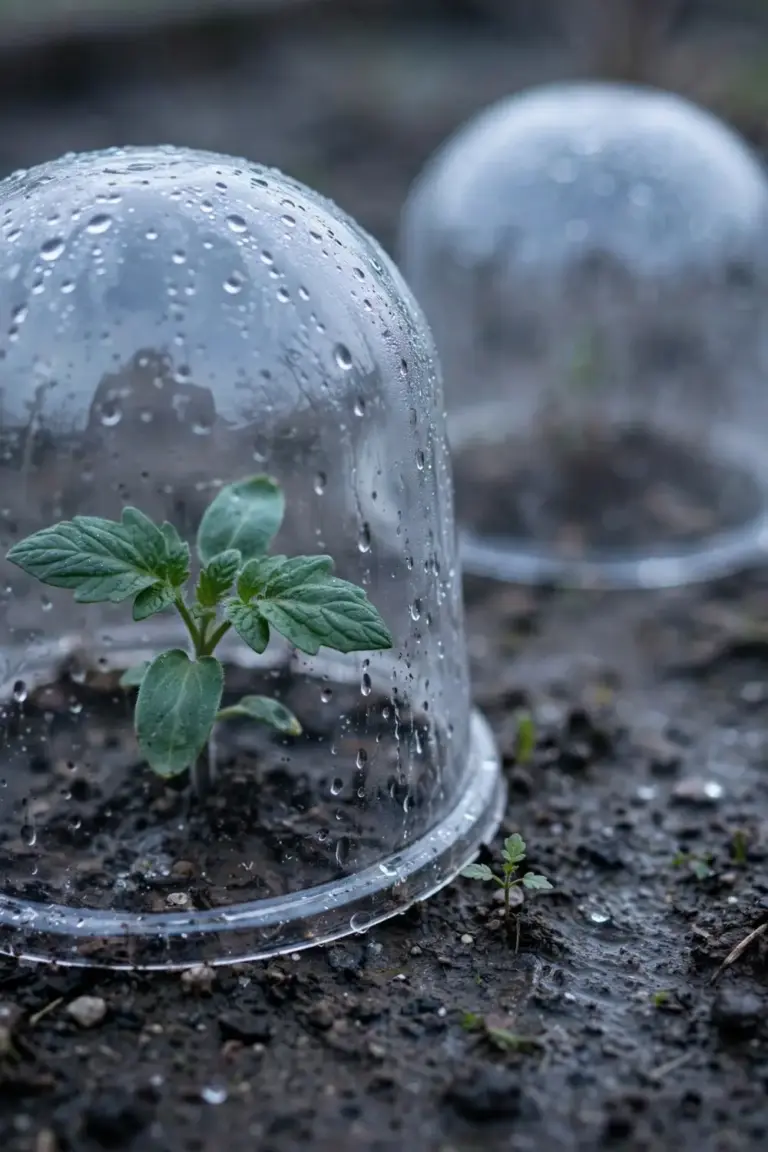
Tomatoes grow best at 26.7 to 32.2 degrees Celsius, and the minimum night temperature for fruit set is 10 to 12.8 degrees, according to UC IPM’s temperature guide for tomato. The same guide sets 7.2 degrees as the point where growth turns slow, and 0 degrees as the point of potential frost injury. A Melbourne night of 8 degrees stalls a cherry tomato. The plant survives. It does not grow.
In temperate Australia, plant out after the last frost, once nights hold above 10 degrees. RACV’s Victorian tomato guide puts Melbourne planting at late September to October, after frost risk passes, and warns that cherry types planted in November still carry a higher risk of fruit that never ripens. In the tropical north, plant during the dry season. In cool zones, harden seedlings off for a week before planting out, and cover young plants with a cloche or row cover if a cold snap threatens. How to protect plants from late frost covers cloches, row covers, and after-frost steps. UC IPM notes that row cover traps daytime heat and slows overnight heat loss, which protects tomato plants from spring temperature swings. A plant that goes out two weeks late into warm soil outgrows a plant that goes out early into cold soil.
4. Give the Roots Room in a Bigger Pot
A cherry tomato in a pot that is too small stops growing, dries out by noon, and drops its flowers. The roots circle the pot wall, mat together, and cannot take up water fast enough. The plant looks starved, but the real problem is space. No amount of fertilizer fixes a root ball with nowhere to go.
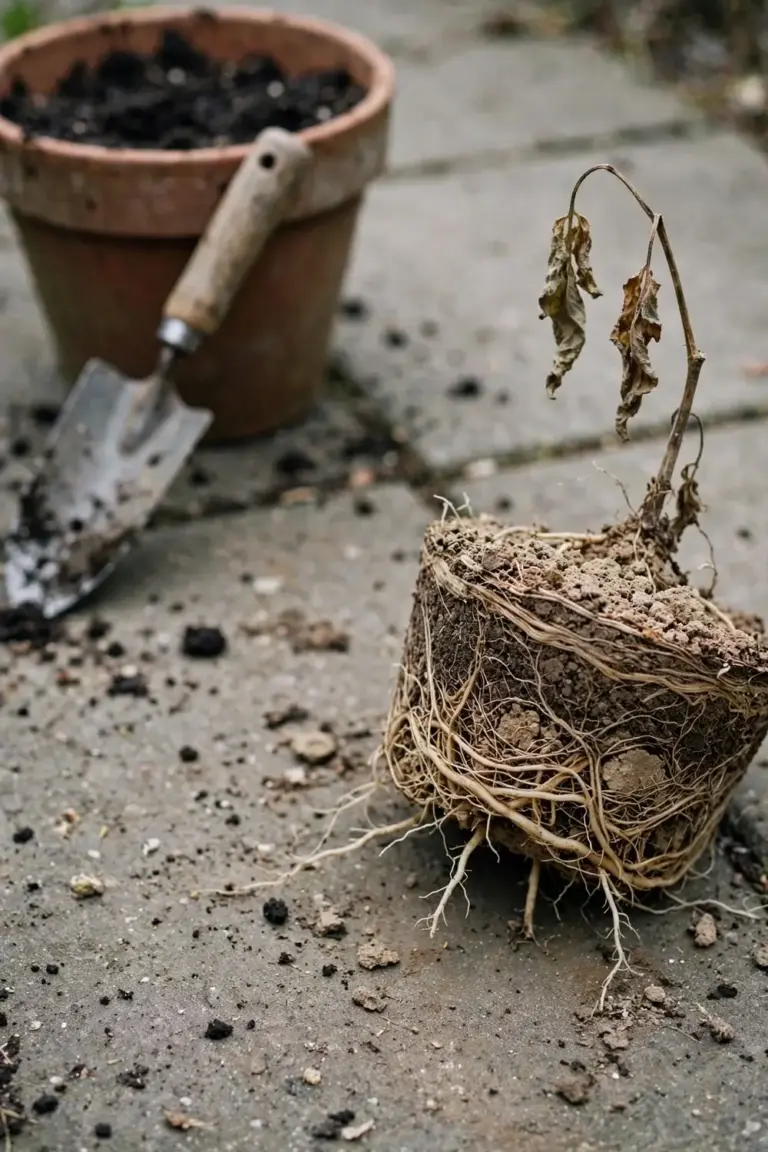
Large four to five gallon containers are usually sufficient for growing individual tomato plants, according to University of New Hampshire Extension’s container tomato guide. Four to five gallons is 15.1 to 18.9 liters of potting mix. A five gallon plastic bucket with drainage holes drilled in the base works. The same guide warns that garden soil compacts, dries fast, drains poorly, and can carry weed seeds and diseases, so use a quality soilless potting mix in containers. Drainage holes matter more than pot material.
Tip the plant out and look at the root ball. White roots circling the outside mean the pot is too small. Move the plant into a larger pot with fresh potting mix, and tease the circling roots loose with your fingers before replanting. Water deeply after repotting, and shade the plant for a few days while it settles. In a bed, give each plant 61 cm of space in rows 122 to 152 cm apart, the spacing UC IPM sets for transplants. Crowded plants compete for water and nutrients, and the dense canopy traps humidity that feeds fungal disease.
5. Test Soil pH Before You Add Anything
A cherry tomato in soil with the wrong pH cannot take up nutrients, even when the soil holds plenty of them. The plant looks hungry. The gardener adds fertilizer. Nothing changes. The pH was the lock on the door.
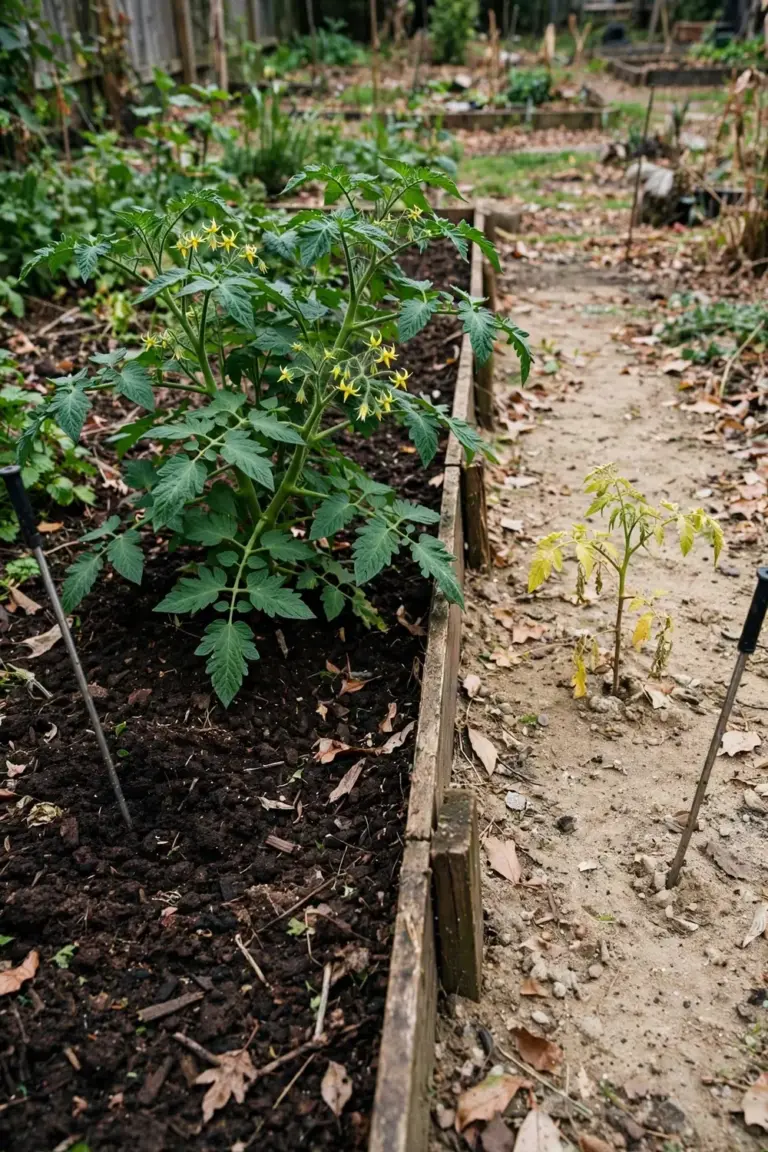
Tomatoes require soil with a pH in the range of 6.2 to 6.8, according to University of Georgia Extension’s home tomato tips. UC IPM sets a slightly lower band, 6.0 to 6.5, for vegetable beds. Both bands sit in slightly acidic soil. Below 6.0, phosphorus and calcium turn hard for the plant to reach. Above 7.0, iron and other trace elements lock up. A pH test costs little and answers the question in minutes.
Buy a pH test kit from a garden center, or send a sample to a soil lab. Test before you add lime, ash, sulfur, or fertilizer. Lime and wood ash raise pH. Sulfur lowers it. Never add lime or wood ash without a test that says the soil needs it. If the pH sits in the 6.2 to 6.8 band, the problem lies elsewhere, and you just saved yourself a season of chasing the wrong fix. Building healthy soil with compost and organic matter improves nutrient uptake once the pH is right.
6. Balance Nitrogen Before the Plant Goes All Leaf
A cherry tomato fed with too much nitrogen grows a big leafy plant with few flowers and fewer fruit. The leaves look dark green and soft. The fruit never comes. The opposite fault looks worse: a plant short of nitrogen turns its oldest leaves uniformly yellow, then drops them, while new growth stays pale and thin.
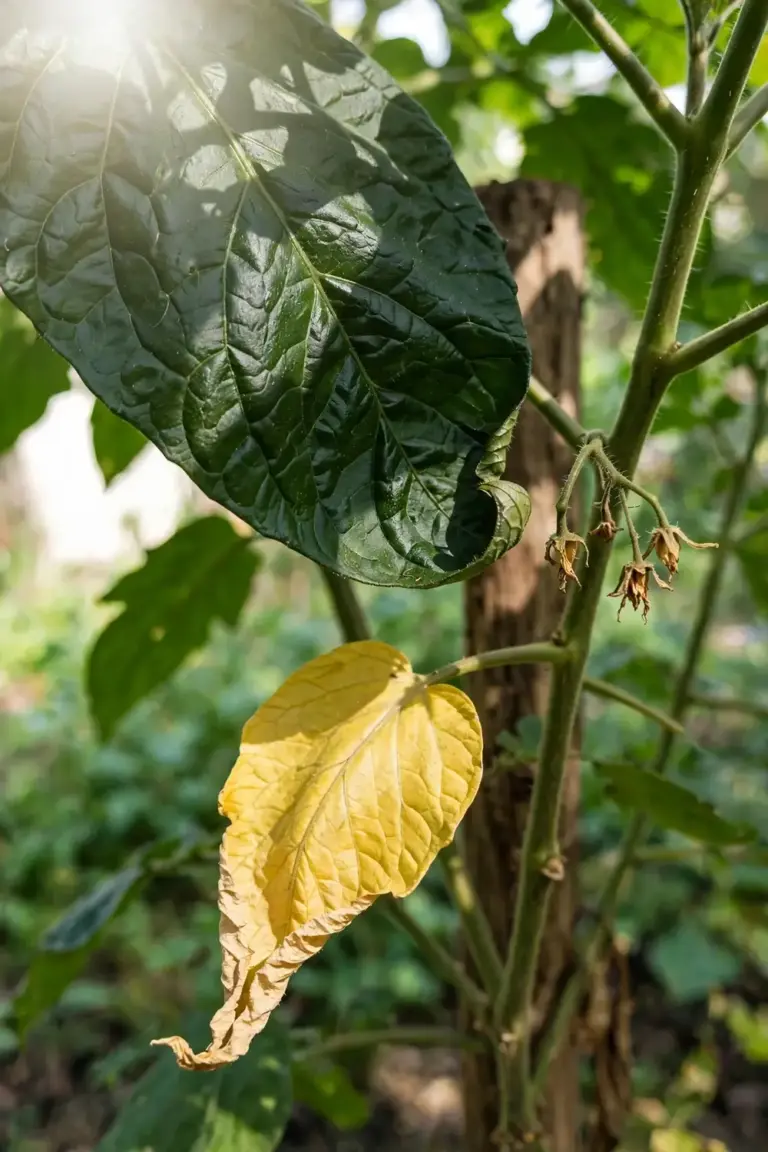
Nitrogen is a mobile nutrient. The plant pulls it from older leaves and sends it to new growth and developing fruit. That is why nitrogen shortage yellows the lowest leaves first. University of Georgia Cooperative Extension guidance on tomato cultural problems describes this upward-moving yellowing as a key marker of nitrogen deficiency. A plant that shows bottom-up yellowing plus slow growth, thin stems, and small fruit is short of nitrogen. A plant that shows yellowing on one or two shaded bottom leaves only, while flowering well, is shedding old leaves naturally. That plant needs no fertilizer.
Feed from a soil test, not from a schedule. The University of Georgia Extension guide gives a starter solution of 2 tablespoons of 5-10-10 fertilizer dissolved in 3.8 liters of water, poured around each plant at planting, then a side-dress of 454 g of 10-10-10 fertilizer per 9.3 square meters of bed once the first tomatoes reach the size of a 20 cent coin, repeated every three to four weeks until harvest ends. The same guide warns against over-fertilizing with high ammoniacal nitrogen fertilizers, because excess nitrogen depresses calcium uptake. In a pot, use a balanced liquid tomato fertilizer at half the label rate, every two weeks, and stop if the plant pushes leaves at the cost of flowers.
7. Stop Blossom Drop by Fixing Heat and Humidity
A cherry tomato that drops its flowers without setting fruit is not sick. It is stressed. Blossom drop is the plant aborting flowers it cannot pollinate or cannot afford to carry. The cause is almost always temperature or humidity, not fertilizer. I count dropped flowers after a hot week before I feed, because heat drops flowers faster than hunger does.
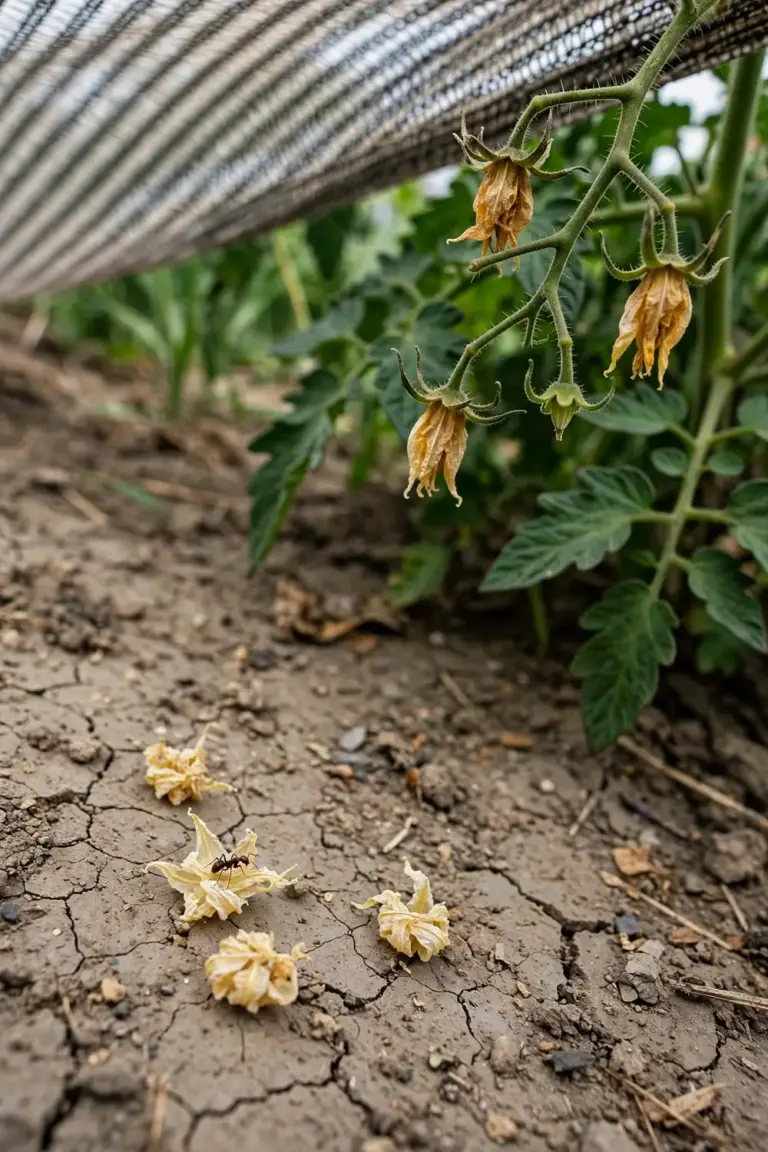
Tomato plants drop their flowers when daytime temperatures rise above 29.4 degrees, when nighttime temperatures rise above 21.1 degrees, or when nighttime temperatures fall below 12.8 degrees, according to University of Tennessee Extension’s blossom drop guide. The same guide sets the ideal daytime band at 21.1 to 29.4 degrees, and warns that temperatures over 40 degrees for only four hours can cause flowers to abort. Fruit does not set until nighttime temperatures stay above 12.8 degrees for at least two consecutive nights. Air that is too dry or too wet stops pollen from reaching the stigma.
Fix the environment, not the plant. Shade cloth over the bed during a heatwave drops leaf temperature and slows flower loss. Water in the morning so the plant faces the heat with a full root zone. Tap each flower truss gently at midday to shake pollen loose when the air is still. According to University of Tennessee Extension’s blossom drop guide, the ideal humidity range is 40 to 70 percent. In a cold snap, cover the plant overnight and uncover it in the morning. A cherry tomato that drops flowers in a 38 degree week will set fruit again when nights cool, as long as the plant stays healthy. Do not rip out a plant for blossom drop alone. Wait for the weather to turn.
8. Treat Yellow Leaves With Spots as a Fungal Problem
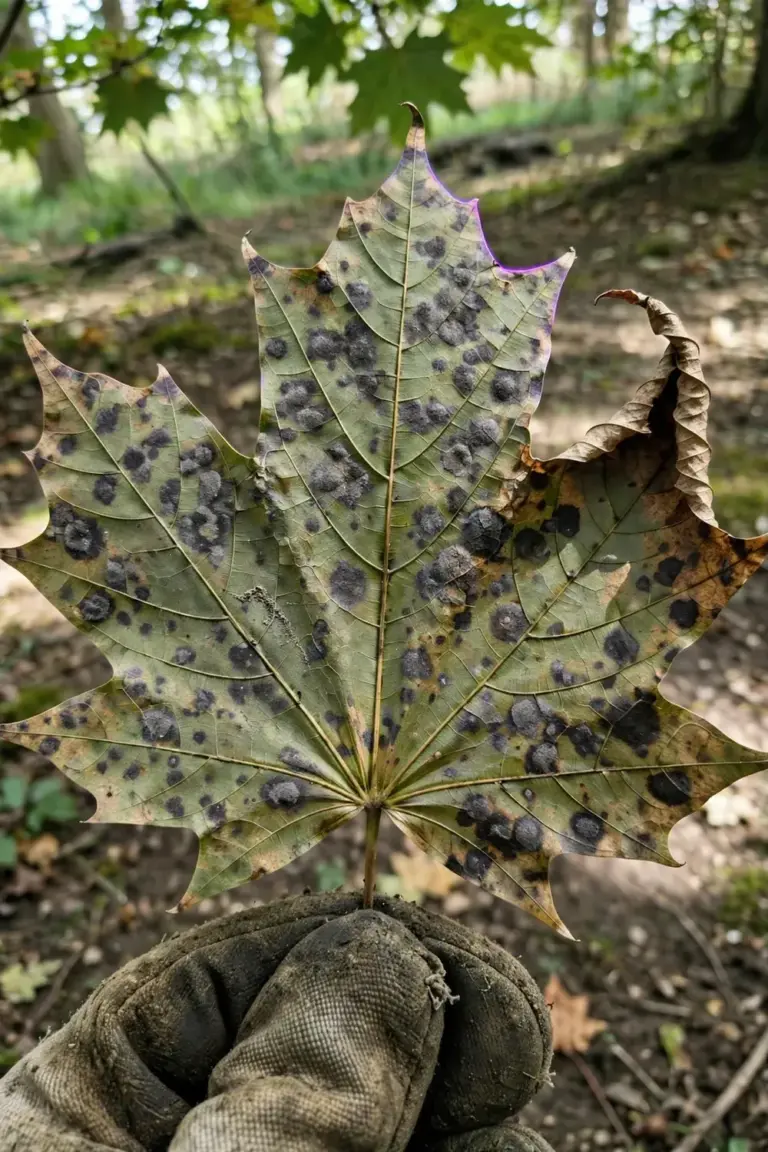
Yellow leaves with dark spots are a different problem from plain yellow leaves. Spots with dark centers and concentric rings point to early blight, a fungal leaf spot that starts on the lowest leaves and climbs. Septoria leaf spot makes smaller spots with pale centers. Both spread in wet, crowded conditions. Both defoliate a plant that would otherwise keep fruiting.
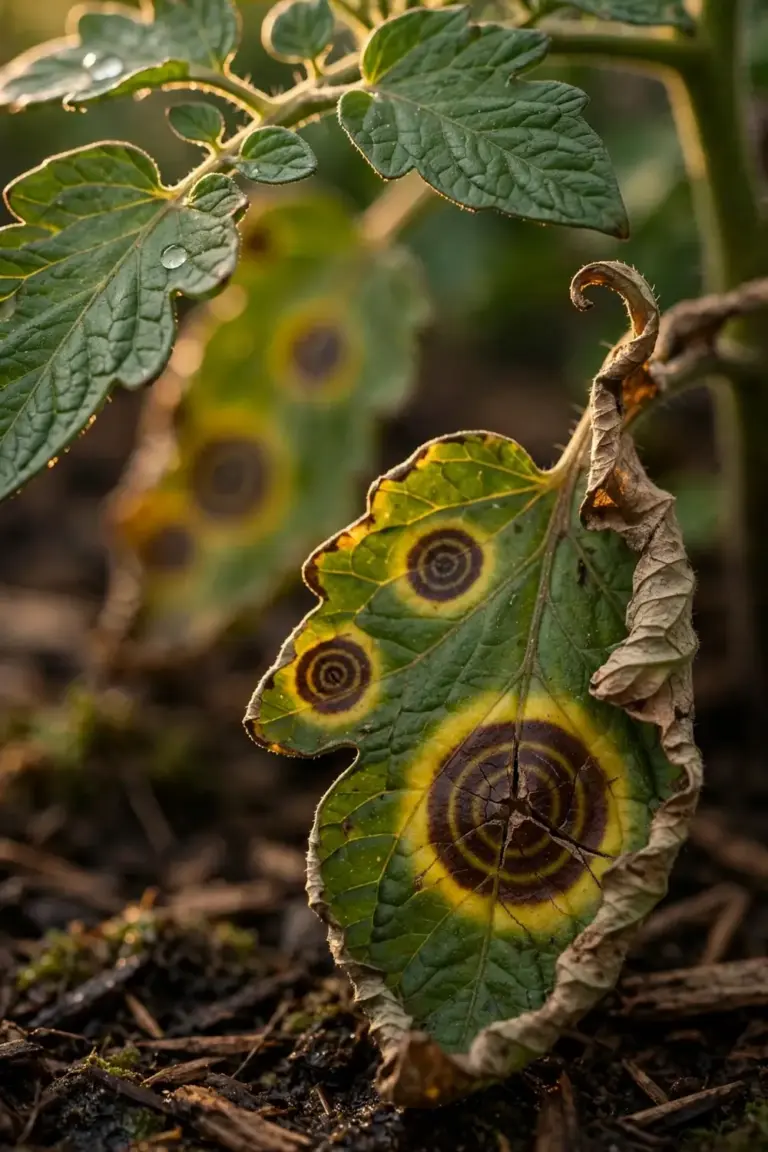
Remove the spotted leaves first. Pick them off, bag them, and bin them. Do not compost diseased leaves. Do not leave them on the soil under the plant. Water at soil level from now on. Keep water off the leaves. Mulch under the plant so soil does not splash onto the lower leaves in rain. Space plants so air moves through the canopy and leaves dry fast after rain or watering. A dense, unpruned plant holds humidity in its center. Fungal spores love that damp pocket.
Prune the lowest leaves so no foliage touches the soil. Keep two or three stems on an indeterminate plant. Pinch out side shoots once two leaves have formed above them: that is the pruning rule UC IPM sets for tomatoes. Rotate beds. Do not plant tomatoes, potatoes, capsicums, or eggplants in the same bed next season. Fungal spores survive in soil and old plant debris. A plant that loses its lower leaves to leaf spot can still crop well if the top growth stays clean. A plant that loses its whole canopy will not. Act on the first spots, not the fiftieth.
9. Pull a Plant That Wilts When the Soil Is Wet
A cherry tomato that wilts in wet soil has a root or stem problem, not a water problem. Watering it more makes it worse. Two soil-borne wilts cause this pattern. Neither has a cure. Fusarium wilt yellows one side of the plant first, then wilts it. Verticillium wilt yellows lower leaves and wilts in patches. Both fungi live in the soil for years and block the water pipes inside the stem.
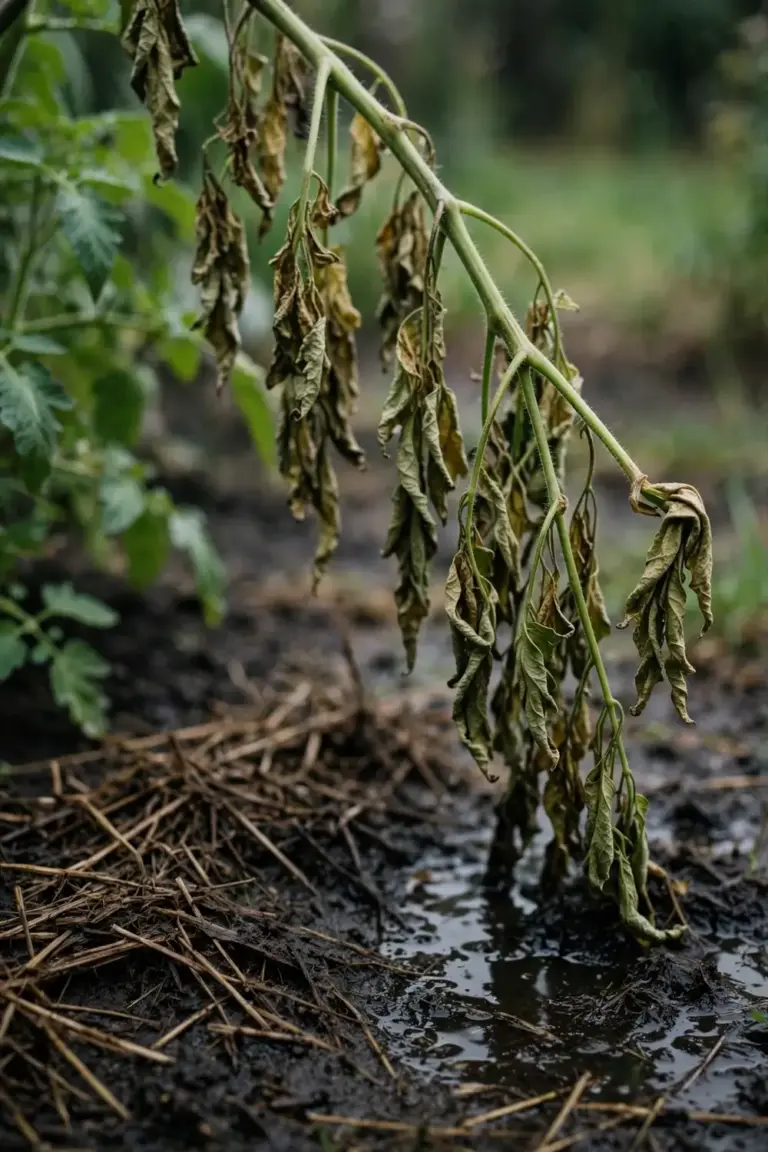
Check the soil before you decide. Push a finger 5 cm down. If the soil feels moist and the plant still wilts, suspect wilt disease. If the soil feels dry, water deeply and watch for recovery within hours. A plant that perks up after watering was thirsty. A plant that stays wilted in moist soil is diseased. Cut a stem open: brown streaks inside confirm a wilt fungus. Healthy stems show pale green tissue throughout, with no brown streaks.
Pull a wilted plant at once. Bag it and bin it. Do not compost it. Do not leave it in the bed to shed spores. Clean your tools after handling it. Do not plant tomatoes or their relatives in that bed next season. Buy resistant varieties next time: seed packets and nursery labels mark resistance with letters, and wilt-resistant types carry the F or V code. A cherry tomato that wilts in wet soil is not worth nursing. Replace it with a healthy seedling in fresh mix, in a different spot, and the season is still salvageable.
10. Check for Pests Before You Spray Anything
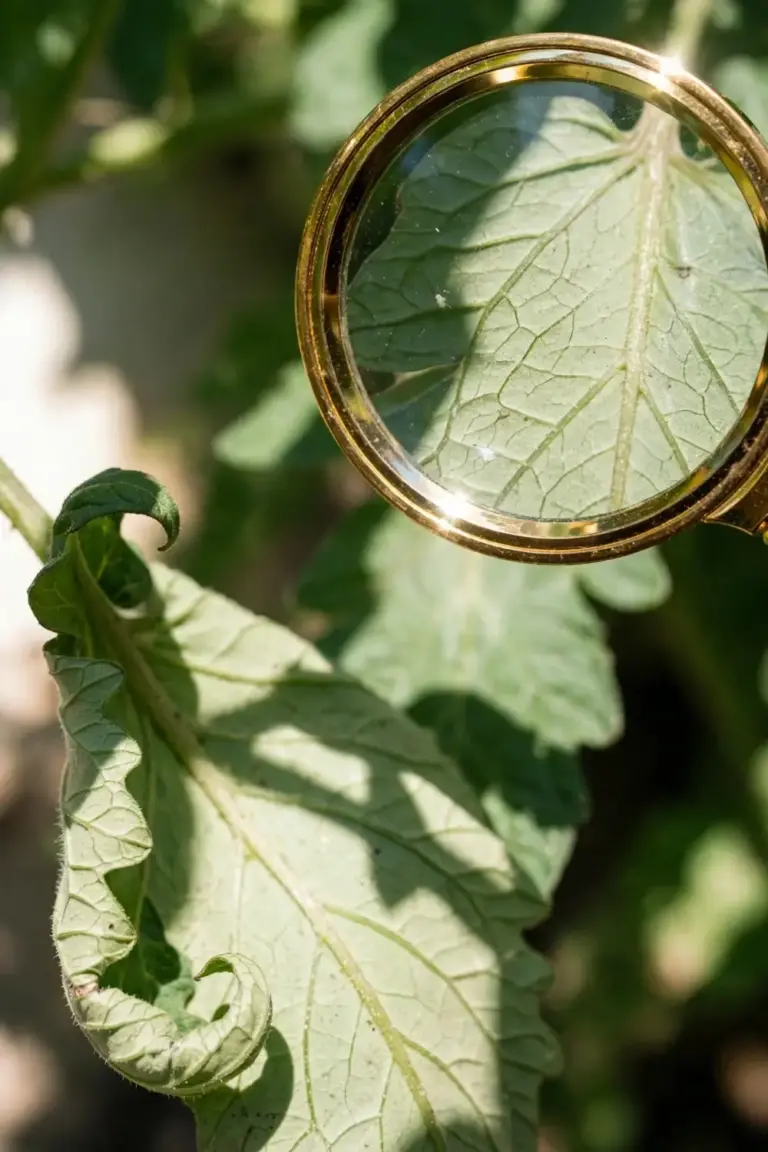
A cherry tomato that stops growing may be feeding an insect colony. Aphids cluster on shoot tips and leaf undersides, suck sap, and leave sticky honeydew that grows black sooty mold. Whiteflies rise in a cloud when you brush the plant. Psyllids distort leaves and shoots and excrete sticky honeydew. UC IPM’s psyllid guide lists tomato among the plants psyllids attack, and notes that heavy infestations stunt growth and distort shoots. Check the undersides of leaves with a magnifying lens before you reach for a spray.
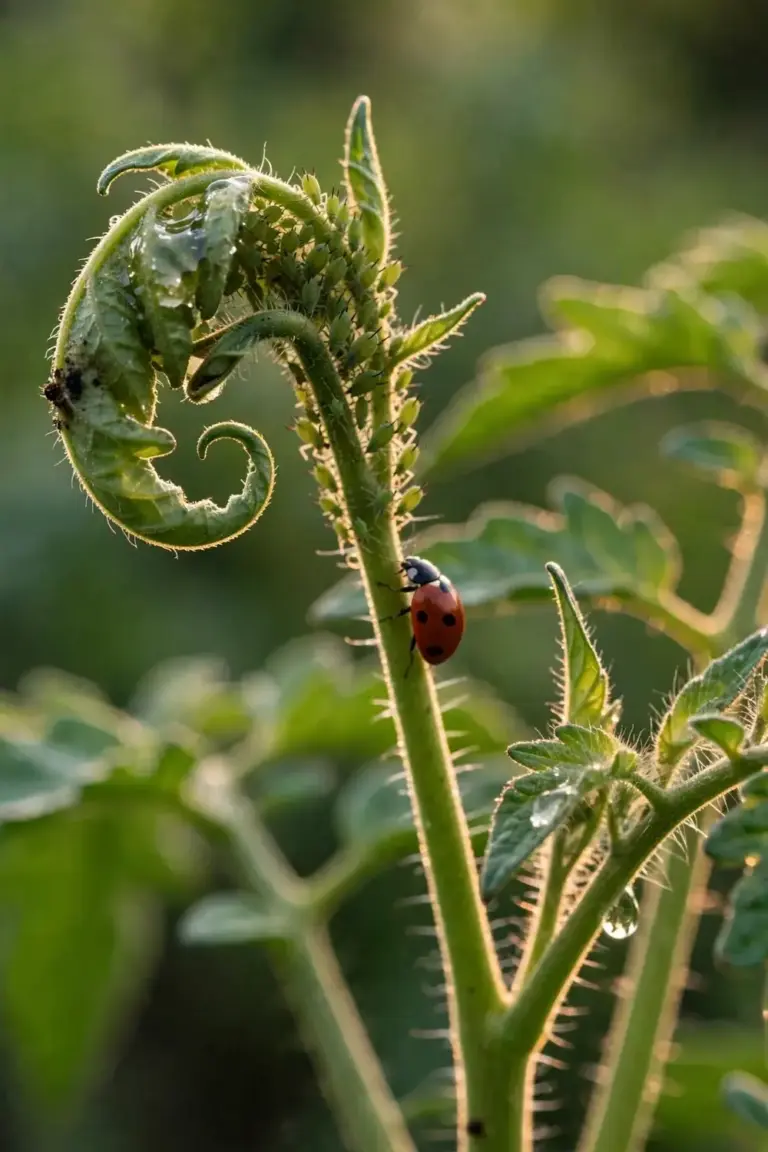
Hose aphids off with a strong jet of water. Repeat every few days until the colony collapses. Leave ladybirds and lacewings alone: they eat aphids faster than any spray. For whitefly, hang yellow sticky traps near the plant and keep the canopy open so predators can hunt. For fruit fly, cherry tomatoes carry a small advantage: Gardening With Angus notes that fruit fly generally leaves cherry tomatoes alone, preferring larger fruit. Net the plant with fine exclusion netting if fruit fly is active in your area, and pick fruit as soon as it colors. A caterpillar that chews leaves gets hand-picked and dropped into soapy water.
One problem is probably not your problem. Cherry tomatoes are almost never affected by blossom end rot, the dark sunken patch on the fruit end that hits larger tomatoes. Illinois Extension lists cherry tomatoes among the types less prone to blossom end rot, and UC Master Gardener guidance notes that all varieties except cherry tomatoes seem susceptible when conditions suit the disorder. If a cherry fruit shows a dark end, fix watering consistency first. Do not add calcium. The disorder comes from uneven water delivery, not from a soil calcium shortage, and foliar calcium sprays rarely help.
11. Match the Variety to Your Season and Space
A cherry tomato variety that suits a long warm season will stall in a short cool one. A tall indeterminate type that needs a 2 meter stake will sulk in a small pot on a balcony. Variety choice is a growth problem, not a shopping problem. Pick the plant for the space and the season you actually have.
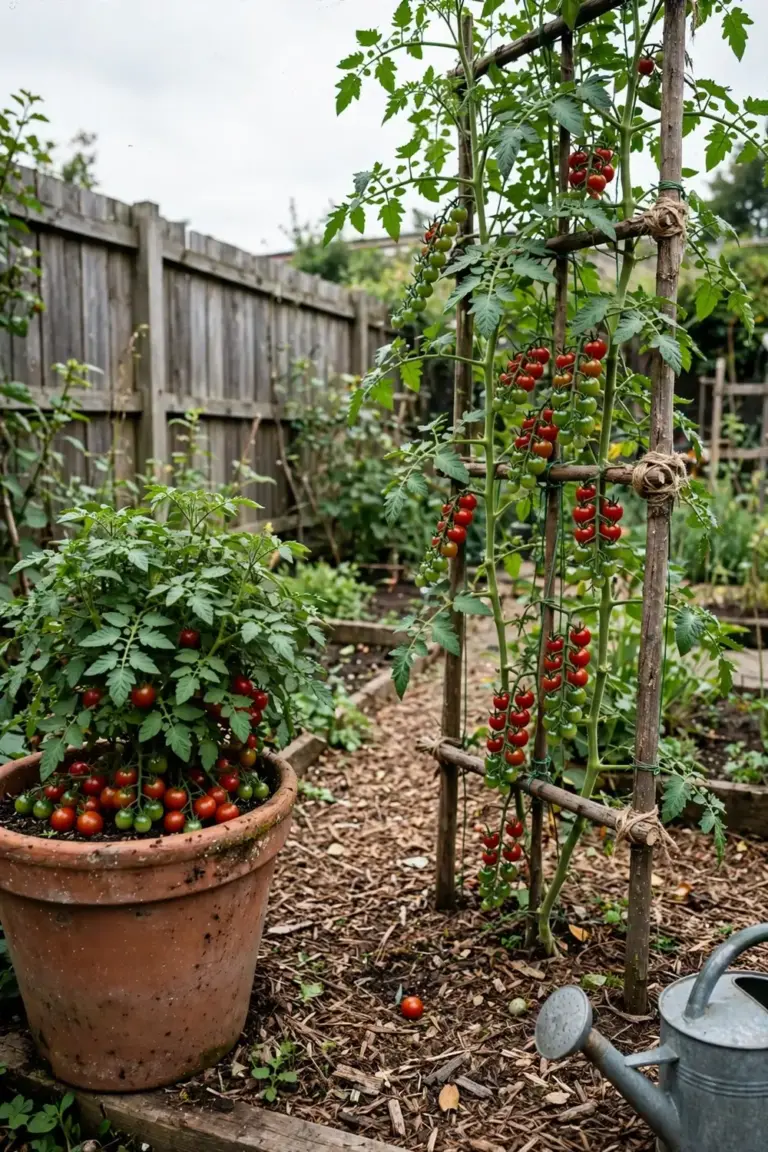
Indeterminate cherry tomatoes grow, flower, and fruit until frost stops them. They need a tall stake or trellis, regular tying, and room to climb. Determinate cherry types grow to a set height, fruit in a flush, and stop, which suits pots, small beds, and gardeners who want one big pick. Dwarf types such as Tiny Tim and Balcony stay compact and crop well in containers. A tall indeterminate in a small pot outgrows its root room by midsummer and stalls. A dwarf type in a big bed fruits early and finishes early. Match the habit to the space.
Plant at the right time for your climate. In temperate zones, plant out after the last frost, from September to November. RACV’s Victorian guide puts Melbourne planting at late September to October, and warns that cherry types planted in November still carry a higher risk of fruit that never ripens. In warm frost-free zones, plant through the year. In the tropical north, plant during the dry season. Buy sturdy transplants: short, stocky, with 4 to 6 true leaves, wider than tall. If you start from seed, seed starting steps cover light, warmth, and hardening off.
Frequently Asked Questions
A small, stalled cherry tomato is usually short of sun, water, warmth, or root room. Count the hours of direct sun first, then check soil moisture at 5 cm depth, then check night temperatures. A plant in shade, in a small pot, or in cold soil will not grow no matter how much you feed it. Fix the limiting factor first. Most stalled plants resume growth within two weeks once all four check out.
A cherry tomato needs at least 4 to 6 hours of direct sun a day, and eight hours grows a stronger plant. Morning sun counts. Afternoon shade in summer helps in very hot zones, but shade all day stalls growth. A pot on a shaded balcony grows a pale, leggy plant. Move pots to the sunniest hard surface available, and prune branches that shade the bed. Measure the sun across a full day before you blame soil or fertilizer.
Yellow leaves have several causes. The pattern tells you which one. Lower leaves yellowing first points to nitrogen shortage or natural aging. Yellow leaves with dark spots point to fungal leaf spot, while yellow leaves on a wilting plant in wet soil point to wilt disease. Check where the yellow starts, whether spots are present, and whether the soil is wet or dry. Match the pattern to the cause, then act on that cause only.
Flowers fall when temperatures sit outside the fruit-set band. Daytime heat above 29.4 degrees, nights above 21.1 degrees, or nights below 12.8 degrees all trigger blossom drop. Humidity outside the ideal range also blocks pollination. Shade the plant in heat, cover it in cold snaps, and wait for two nights above 12.8 degrees. A plant that drops flowers in a heatwave will set fruit again when nights cool.
It depends on why it wilted. A plant that wilts in dry soil recovers within hours of deep watering. A plant that wilts in moist soil has a root or wilt problem and rarely recovers. Check soil moisture at 5 cm depth first. If the soil is moist and the plant still wilts, pull it, bin it, and do not compost it. Replace it with a healthy seedling in fresh mix in a different spot.
Check Sun, Water, Warmth, and Room Before You Feed
When you ask why is my cherry tomato not growing well in Australia, the answer is usually one of four things: more sun, steadier water, warmer nights, or more root room. Those four cover most stalled plants. Test them in that order, with your eyes and your hands, before you buy fertilizer or spray. Sun first, because no feed fixes shade, and water second, because shallow watering stunts roots. Warmth third, because cold soil stalls growth. Room fourth, because a cramped pot starves the roots.
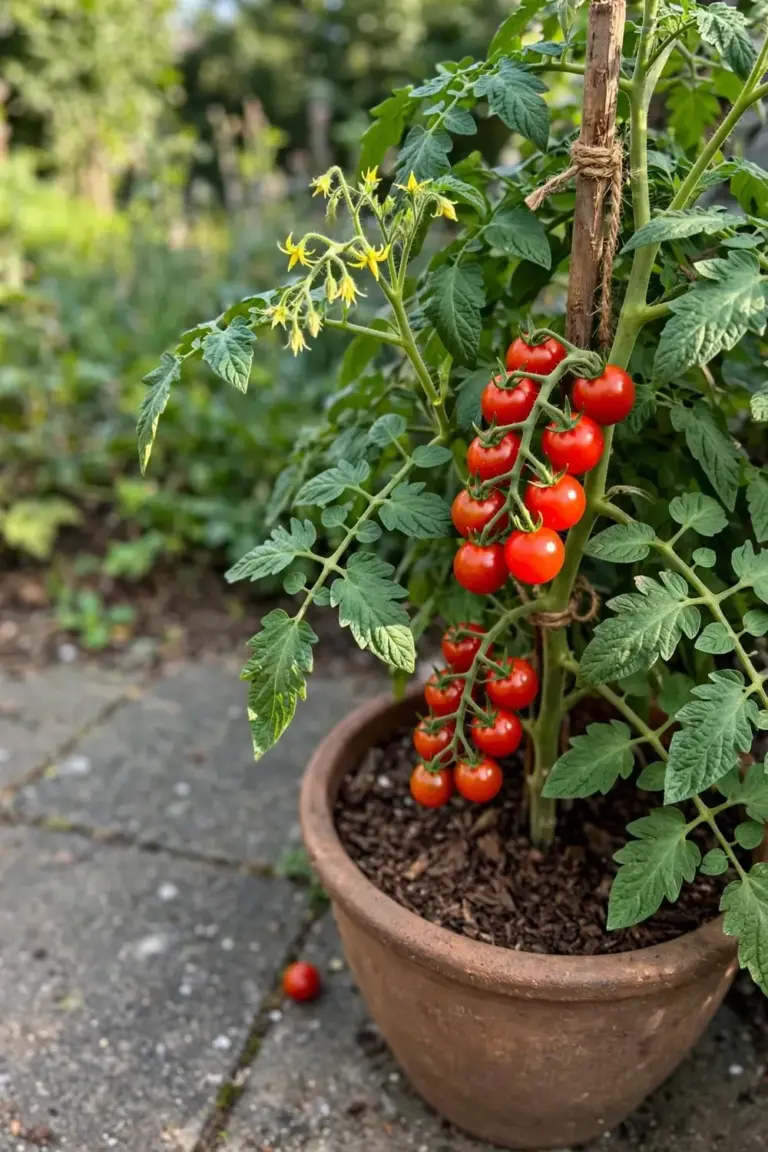
Walk the plant once a week and run four checks: sun hours, soil moisture at 5 cm, the night forecast, and the undersides of the leaves. Pick off spotted leaves early, before the problem spreads. The weekly walk catches trouble while the fix is still small: a moved pot, a deeper watering, a night cover, a pruned branch. A cherry tomato that gets those four things right grows fast, fruits heavily, and shrugs off the small problems that flatten a stressed plant.