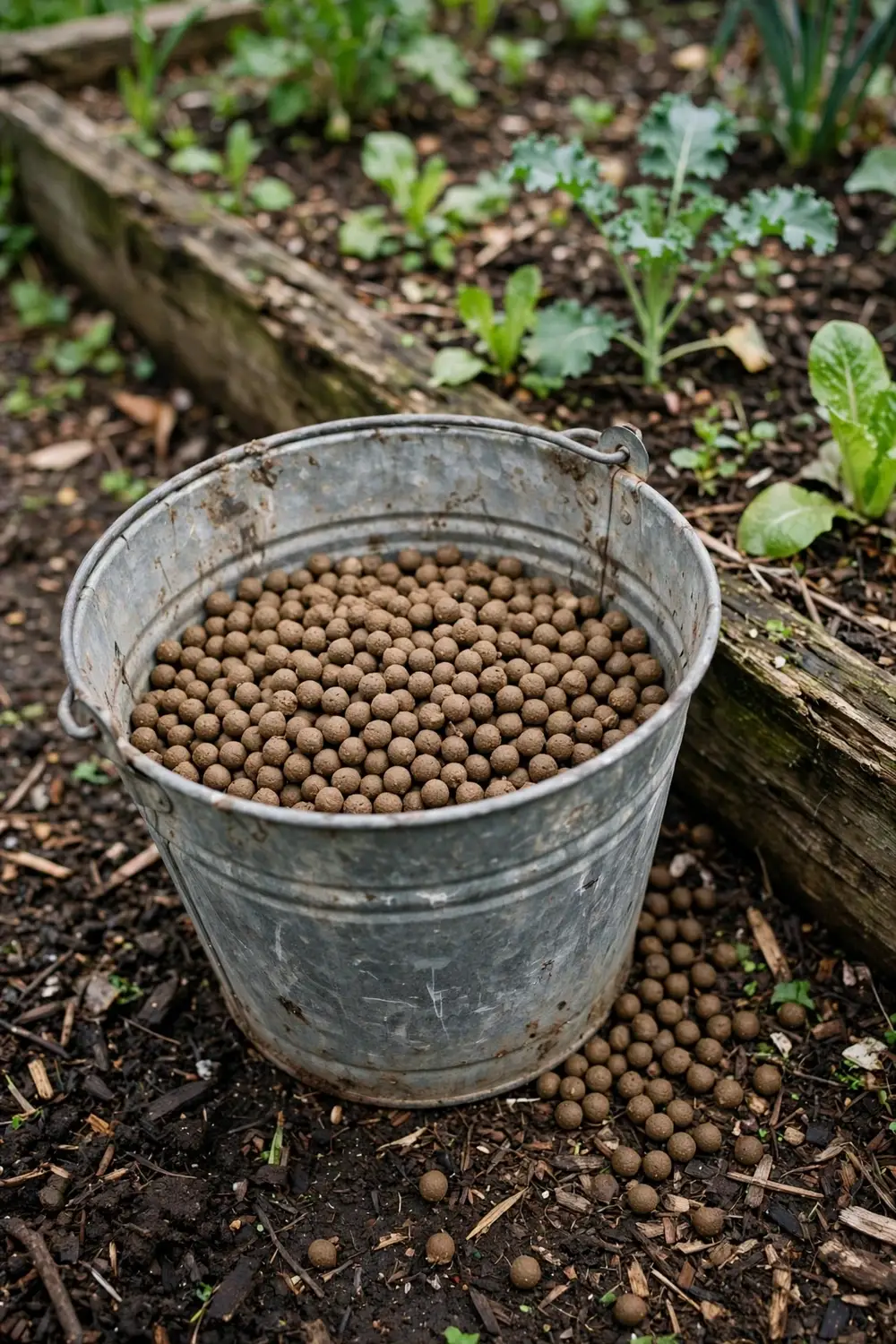

Rabbit manure feeds garden beds, and you can use it fresh on ornamental beds. On edible crops, raw manure needs 120 days between application and harvest when the harvest touches soil. That split, fresh for ornamentals and timed or composted for food crops, is the whole method.
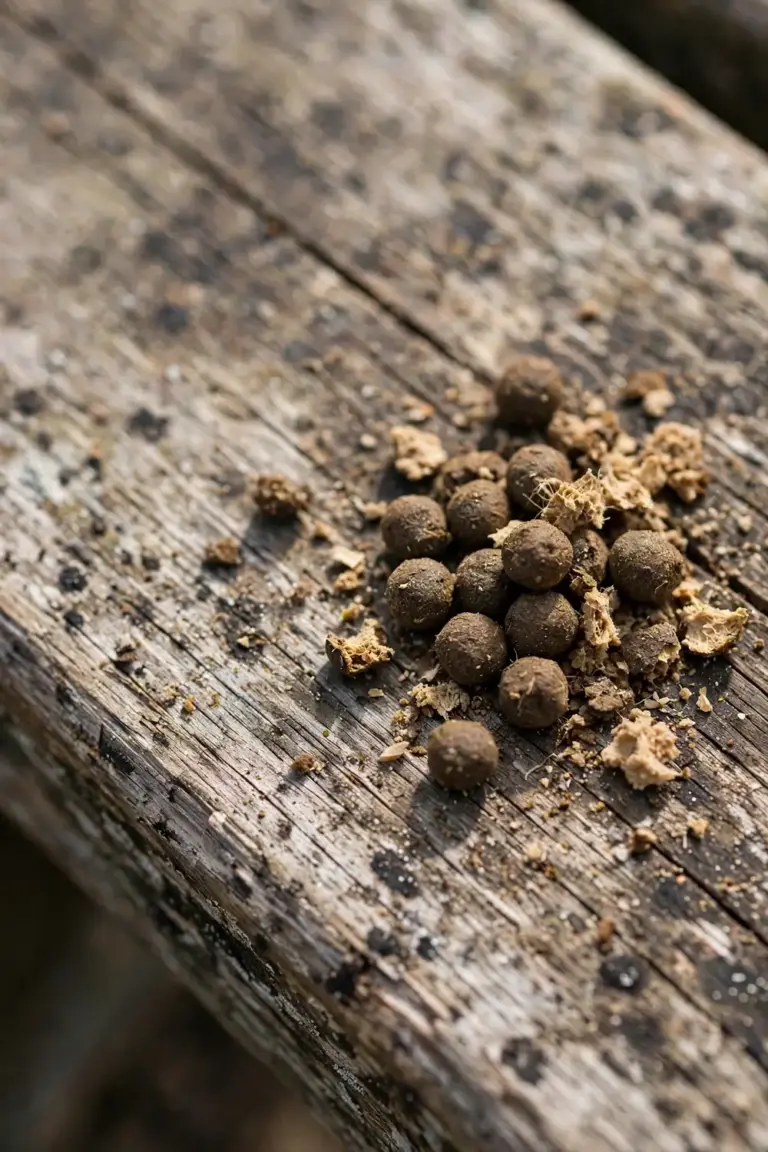
Rabbit manure is the droppings rabbits leave behind. A fertilizer is a material that feeds plants. Fresh means uncomposted. Composted means aged and processed. Gardeners also call the dry pellets bunny berries, and the pellet shape is part of the appeal: the droppings scatter cleanly, sit where they land, and break down over weeks instead of washing away in the first rain.
The pellets are dry, low in odor, and easy to handle with gloves. They also carry living microbes, so the safety rules below matter as much as the nutrient numbers. Manure feeds soil life as much as it feeds plants, and the soil health guide explains how that biology works in a garden bed.
1. Start With the 2.4-1.4-0.6 Number
Rabbit manure earns its place in the garden because the nutrient numbers are strong. Fresh rabbit droppings carry 33% organic matter and 43% moisture, and their N-P-K ratio is 2.4-1.4-0.6, according to the Old Farmer’s Almanac manure guide. The first number counts nitrogen. The second counts phosphorus. The third counts potassium.
Nitrogen feeds leaf growth, phosphorus feeds root growth and flowering, and potassium feeds fruiting. Rabbit manure carries more nitrogen and phosphorus than most other common manures, so it suits leafy greens, flowering plants, and fruiting crops that need a steady feed. The pellets also carry organic matter that improves soil structure, and the organic matter stays in the bed after the nutrients wash through.
The comparison below shows where rabbit manure sits against the other manures Australian gardeners meet. The Diggers Club lists the comparison figures below.
| Manure | N-P-K | Character |
|---|---|---|
| Rabbit | 2.4-1.4-0.6 | Rich, concentrated, low moisture |
| Chicken | 1.6-1.5-0.9 | Rich, must be composted first |
| Goat | 4.0-0.6-2.8 | Very high nitrogen and potassium |
| Sheep | 0.7-0.3-0.9 | Mild, suits seedlings and natives |
| Horse | 0.7-0.3-0.6 | Mild, often carries weed seeds |
| Cow | 0.6-0.3-0.5 | Mild, good soil conditioner |
Read the table as a buying guide, not a ranking. Rabbit manure is the richest of the mild, easy-to-handle manures. Chicken manure is close in strength, and it burns plants when fresh. Cow, sheep, and horse manures are gentle enough for seedlings and native plants. Goat manure is the strongest of the group, and it suits fruit trees and vegetable beds that need a hard feed.
2. Learn the Cold Manure Rule
Cold manure is manure you can apply fresh without burning plants. Rabbit manure is cold manure. Hot manure is manure that burns plants when fresh, and chicken manure is the common example. The cold label describes burn risk. The cold label does not describe germs.
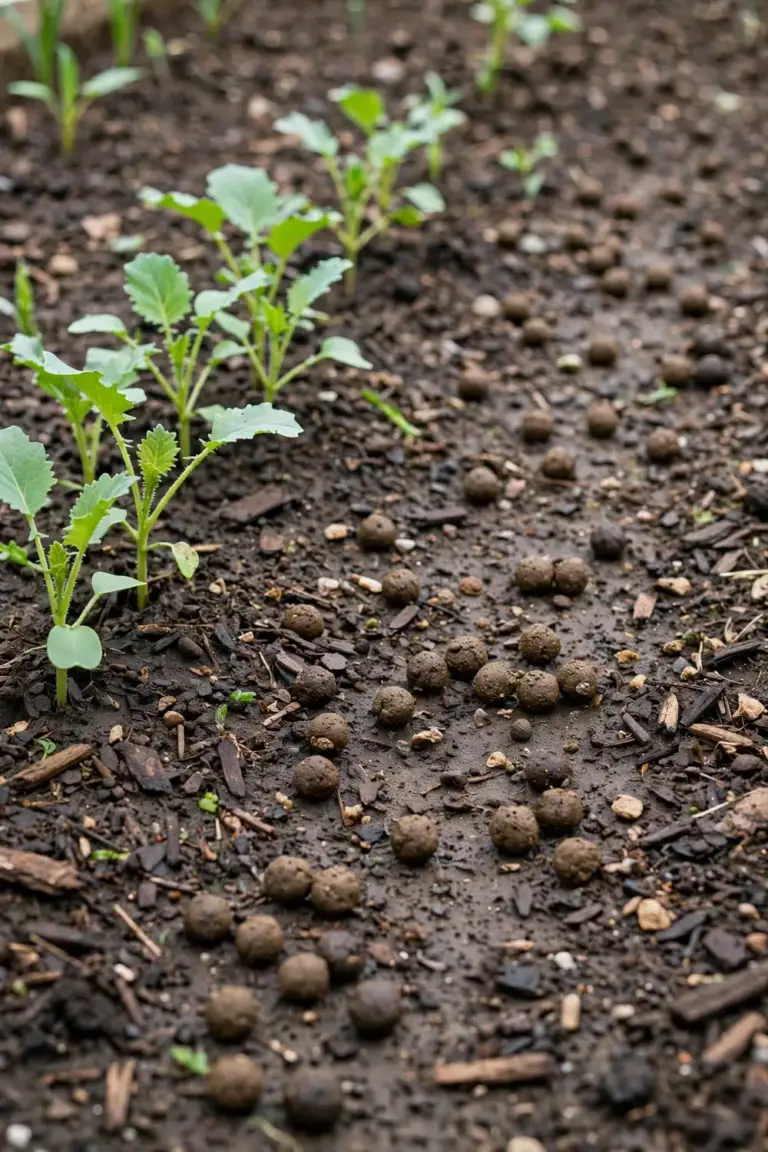
Rabbit pellets are dry and low in ammonia, so they sit on soil without scorching roots. Chicken manure is wet and high in ammonia, so it scorches roots when fresh. Horse manure sits between the two, and it carries weed seeds that survive digestion. The pellet form helps rabbit manure further: each pellet is a small, dry packet that breaks down slowly and releases nutrients over weeks.
Cold does not mean sterile. Rabbit droppings can still carry pathogens that cause illness in people. That single fact is why the fresh-versus-composted argument matters, and why the safety rules below exist. A gardener who treats cold manure as clean manure skips the step that keeps food crops safe.
Storage follows the same logic. Dry pellets keep in a covered bucket for weeks without odor, because the low moisture slows microbial activity. Wet pellets clump, smell, and start to break down in the bucket, so keep the bucket lidded and dry. Soiled bedding goes straight to the compost pile, not into storage, since wet bedding heats and smells within days.
3. Settle the Fresh vs Composted Argument
Use fresh rabbit manure on ornamental beds and on empty beds months before planting. Use composted manure on food crops that are already growing or close to harvest. The fresh-or-composted question has one answer for ornamentals and a different answer for food crops, and the harvest interval decides between them.
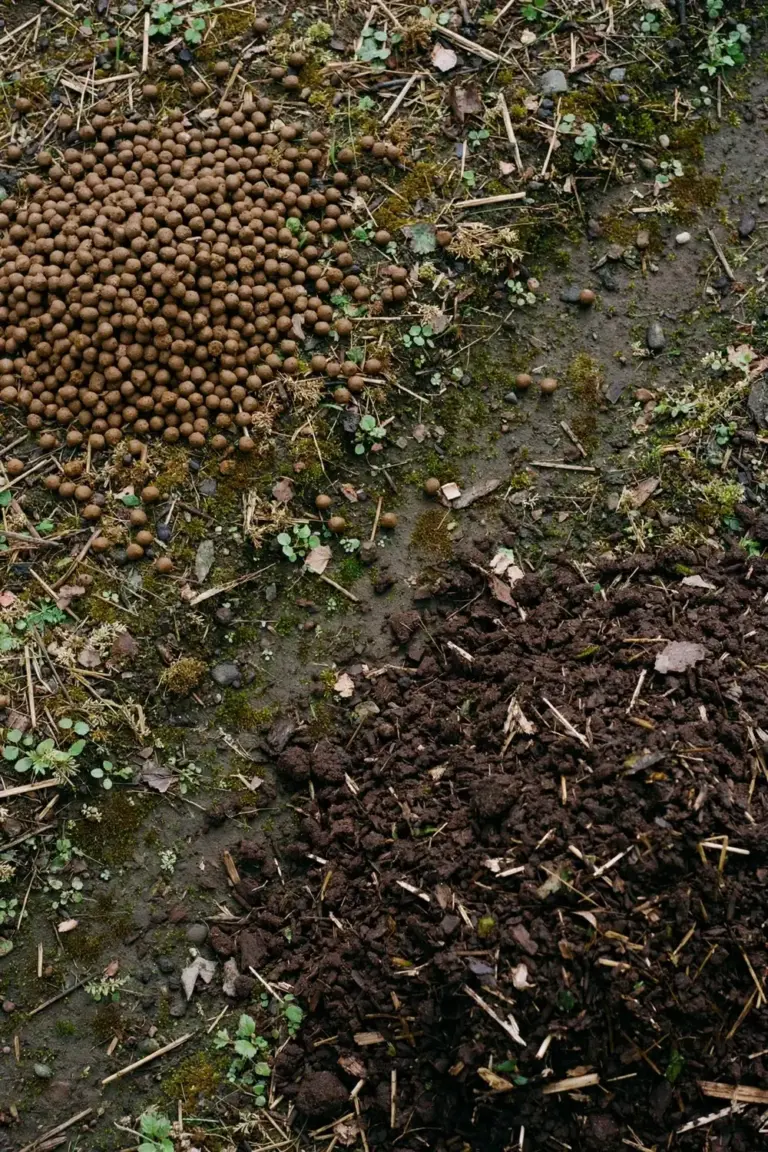
Much of the advice online repeats one line: use rabbit manure fresh, with no composting needed. That line is half right. Fresh pellets will not burn plants, so the burn argument for composting does not apply. The germ argument still applies. Raw manure can carry E. coli, Salmonella, and Listeria, and those pathogens can pass from manure to fresh fruit and vegetables through direct contact. Composting with heat reduces that risk. Waiting out the harvest interval reduces that risk. Fresh use without either step keeps the risk.
The table below turns the argument into a decision that rests on two checks: the crop in the bed and the date on the calendar.
| Situation | Fresh pellets | Composted manure |
|---|---|---|
| Ornamental beds and shrubs | Yes, worked into soil | Yes, any time |
| Empty bed, months before planting | Yes, with the interval met | Yes, any time |
| Leafy greens or root crops in growth | No | Yes, any time |
| Fruiting crops in growth | No | Yes, any time |
| Pots and seedlings | No | Yes, in small amounts |
| Manure tea for food crops | No, tea from fresh manure counts as raw | Yes, tea from aged manure only |
If you cannot meet the interval, compost the manure. If the crop is already growing, compost the manure. Fresh use belongs in the two situations where time and soil stand between the manure and the plate.
The interval is the step gardeners skip, because the pellets look clean and the bed looks tidy. A tidy bed is not a safe bed. The pathogens that matter are invisible, and they survive in soil for months. The interval and the compost pile are the two tools that reduce them, and every other step below serves one of those two tools.
4. Compost Rabbit Manure With Heat, Then Cure It
Composting rabbit manure means heating it, then letting it cure. Heat kills most pathogens. Curing finishes the breakdown and leaves a dark, stable material that will not rob nitrogen from the bed. A finished batch smells like earth, crumbles in the hand, and shows no sign of the original pellets.
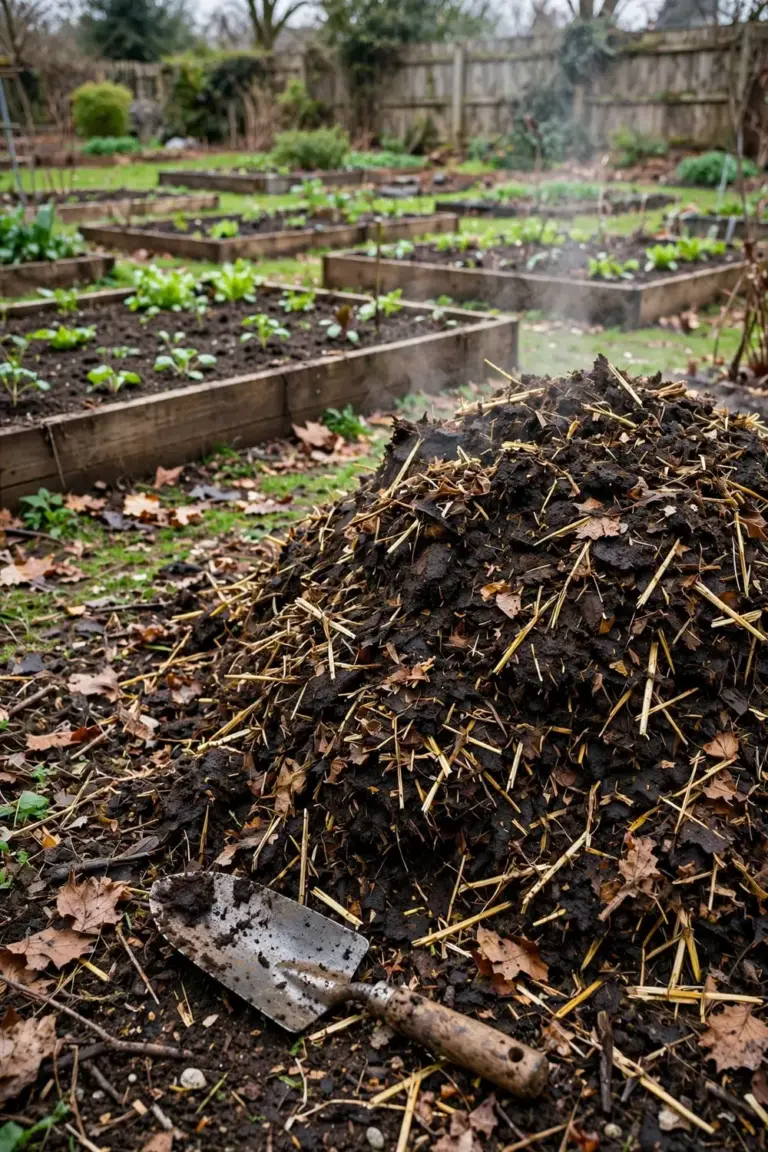
Mix the pellets with straw, leaves, or shredded paper so carbon-rich material outweighs the manure. The pellets alone are dense and nitrogen-rich, and they compost faster when fluffy carbon material opens air gaps through the pile. Keep the pile damp, like a wrung-out sponge. Turn the pile when the center cools, and the turning moves cool outer material into the hot center.
Hold the pile at 131 to 170 degrees Fahrenheit for at least a week, then let it cure for 2 to 4 months. That heat-and-cure sequence comes from the Old Farmer’s Almanac manure guide. A compost thermometer gives the reading. The pile heats fastest when it holds at least a cubic meter of material, and small piles in cool weather heat slowly.
Judge the finished compost by look and smell. Finished compost is dark, crumbly, and earthy. Unfinished compost still shows pellet shapes or smells sharp. Unfinished compost goes back in the pile for another cycle. Finished compost goes on any bed, including food crops, with no harvest interval to track.
A pile that never heats has a cause. A pile that is too small loses heat faster than microbes make it. A pile that is too dry stalls, because microbes need water to work. A pile with too much carbon and too little manure lacks nitrogen to fuel the heating. The fixes match the causes: add water until the pile feels damp, add more manure to raise the nitrogen share, and build the pile bigger. A pile that heats, cools, and heats again after turning is a pile on track.
5. Apply Fresh Manure With the 120-Day and 90-Day Rules
Fresh rabbit manure belongs on the bed before planting, with the calendar doing the safety work. University of Maine Extension sets the rule: apply raw manure at least 120 days before harvest for crops whose harvest touches soil, such as leafy greens and root crops, and 90 days for crops whose harvest stays clear of soil, such as tomatoes and peppers. The interval lets time reduce pathogen numbers in the soil.
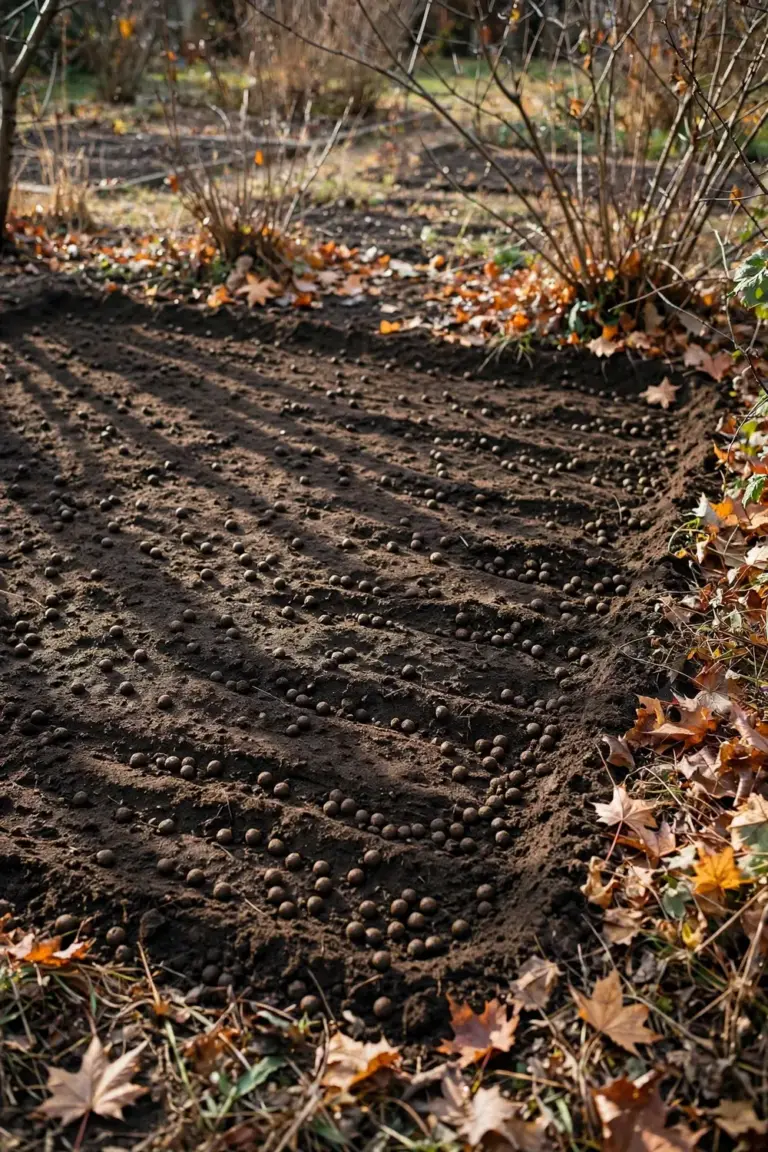
I spread rabbit manure on the empty bed in autumn and let winter do the waiting, because the 120-day rule is easier to meet when nothing is growing. Autumn application fits the Australian calendar: the bed rests over winter, spring planting follows, and the interval passes without effort. Autumn is also the season when the bed is empty and the manure can be worked into the soil instead of sitting on the surface. The fall garden bed prep guide covers the rest of the autumn bed work, from soil tests to mulch.
Work fresh pellets into the top few centimeters of soil. Incorporation beats surface scattering, because soil contact speeds breakdown and keeps pellets away from the harvested crop. Keep a note of the date, the bed, and the crop, and count forward to harvest from the application date. A written note beats memory when the harvest arrives four months later. A garden diary, a phone note, or a label on the bed all serve the same purpose, and the note doubles as a record of what fed each bed across the season.
Fresh manure never goes on a growing crop as a sidedress. University of Maine Extension bars raw manure as a sidedress to growing plants, and the reason is contact: sidedressed manure sits against stems and leaves that you will soon eat. Composted manure is the sidedress material. Fresh manure is the before-planting material.
6. Brew Manure Tea From Aged Manure
Manure tea is a liquid feed made by steeping aged manure in water. The tea suits plants that need a quick feed during growth, and it suits gardeners who want to feed without digging. Tea brewed from aged manure is the safe version. Tea brewed from fresh manure is raw manure in liquid form.
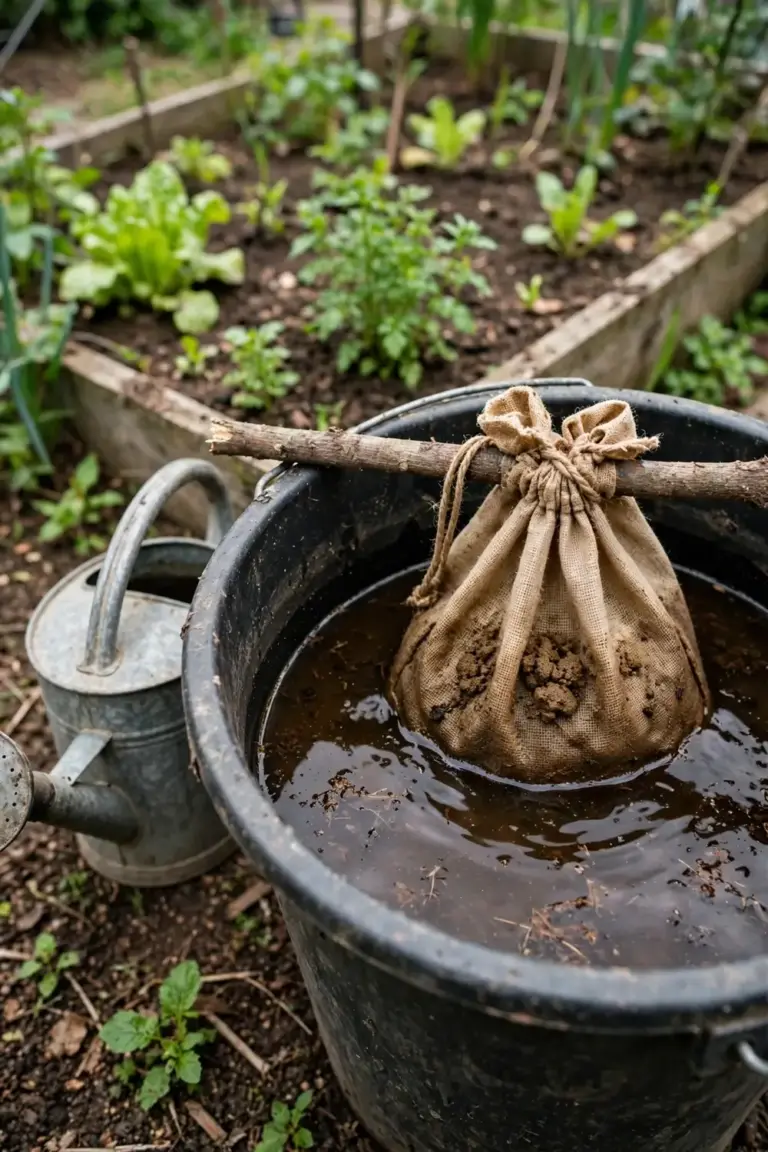
The Diggers Club manure tea method uses 1 part aged manure to 5 parts water, a brew of 3 to 4 days with two stirs a day, then straining. A cloth bag or old pillowcase holds the solids and keeps straining simple. Stirring adds air, and air keeps the brew from turning sour. Longer brews suit cool weather, when extraction runs slow.
Strain the tea before use. The strained solids go into the compost pile. The liquid should look like weak tea. Apply 2 cups of tea per 9-liter watering can, and pour at the base of the plant. The base application keeps the tea on soil, not on leaves.
Use the tea within a week. Old tea loses strength and turns sour. Never pour tea made from fresh manure on food crops. University of Maine Extension bars raw manure as a sidedress to growing plants, and fresh-manure tea counts as raw manure. Keep tea for ornamentals when the only manure on hand is fresh.
7. Feed Each Bed Type the Right Dose
One dose rule covers the whole garden: about half a kilo of rabbit manure per square meter of bed. The Old Farmer’s Almanac manure guide sets the dose at 10 pounds per 100 square feet, which converts to 490 g per square meter. That dose adds 0.2 pounds of nitrogen to the bed, and it suits a bed that gets one feed a season.
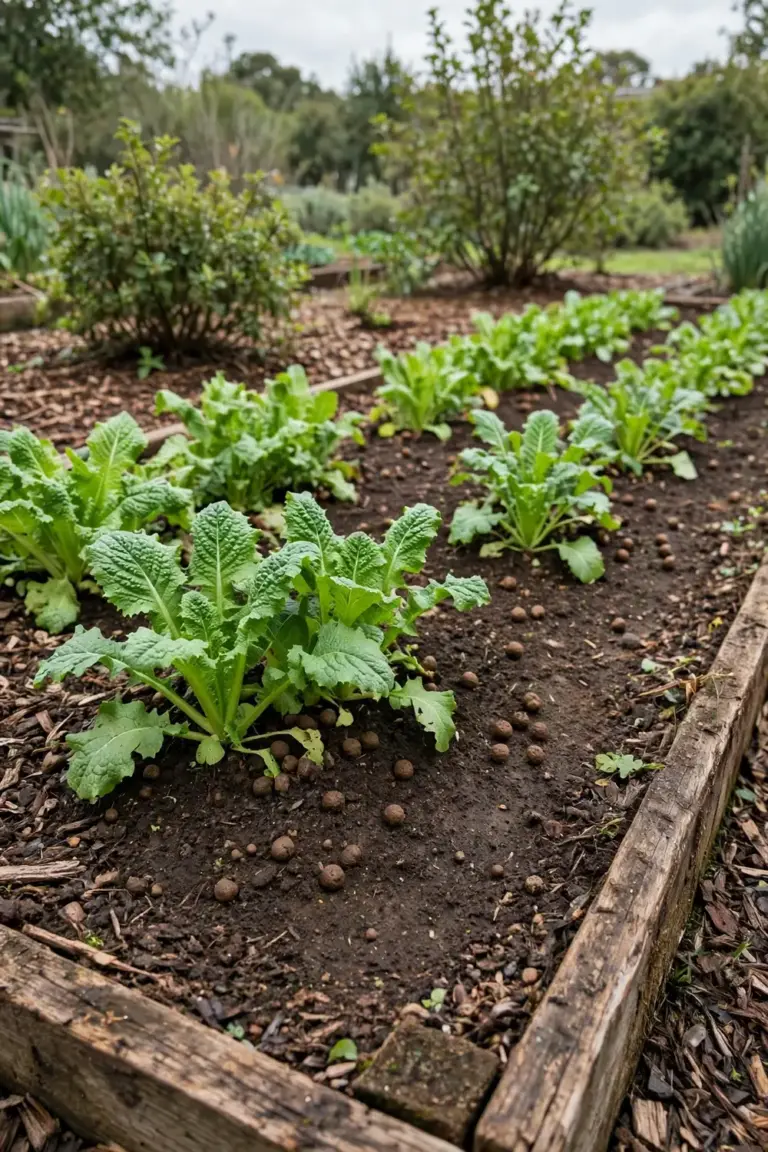
The table below varies timing and placement by bed type. The dose stays the same. The calendar and the crop change.
| Bed type | When to apply | How to place it |
|---|---|---|
| Leafy greens | Before planting, with the interval met | Work into the top few centimeters |
| Root crops | A season ahead, in autumn | Work into the top few centimeters |
| Fruiting vegetables | At planting, or as composted manure | Work into the planting hole and surrounds |
| Flower beds and shrubs | Spring or autumn | Scatter and work into the soil surface |
| Roses and camellias | Autumn, after flowering | Scatter around the drip zone |
| Pots and containers | At potting, composted only | Mix a small handful through the potting mix |
| Seedlings | After transplant, composted only | A light scatter at the base |
Root crops earn the earliest slot. Carrots and parsnips grow into the soil the manure sits in, so the manure goes in a season ahead. Leafy greens follow the same logic: the harvest touches soil, so the interval must pass before harvest. Fruiting crops carry the harvest above the soil, so the shorter interval applies, and composted manure removes the interval question entirely.
Pots need a light hand. A small handful of composted manure mixed through the potting mix feeds a 30 cm pot for a season. Seedlings need composted manure only, and a light scatter at the base beats a heavy dose. Young roots scorch easily, and a seedling that stalls from a heavy feed recovers slowly. The seed starting guide covers the early weeks in full.
Manure is not mulch. Cover the manure with mulch after application. The mulch layer keeps the manure in place, holds moisture, and keeps the bed surface clean. The mulching guide covers materials and depth. Keep manure away from stems and trunks, and spread it around the drip zone instead.
One feed a season suits most beds. Heavy feeders such as corn and tomatoes take a second feed of composted manure midway through the season, when fruit starts to set. A bed that shows soft, sappy growth with aphids gathering on the tips has had enough nitrogen, and the next feed waits until the following season. Feeding on a calendar without watching the plants wastes manure and invites pests.
8. Follow the 5 Hygiene Rules for Edible Crops
Five habits keep edible crops safe: gloves, clean hands, washed produce, no raw sidedressing, and no manure from cats, dogs, or pigs. The five habits cost nothing. The five habits cover every path by which manure reaches the plate.
Wear gloves when you handle manure. Garden gloves keep droppings off skin, and they keep soil out of small cuts. Wash your hands with soap and water after handling manure and before touching produce. Hand washing breaks the hand-to-mouth path that carries pathogens from the bed to the kitchen.
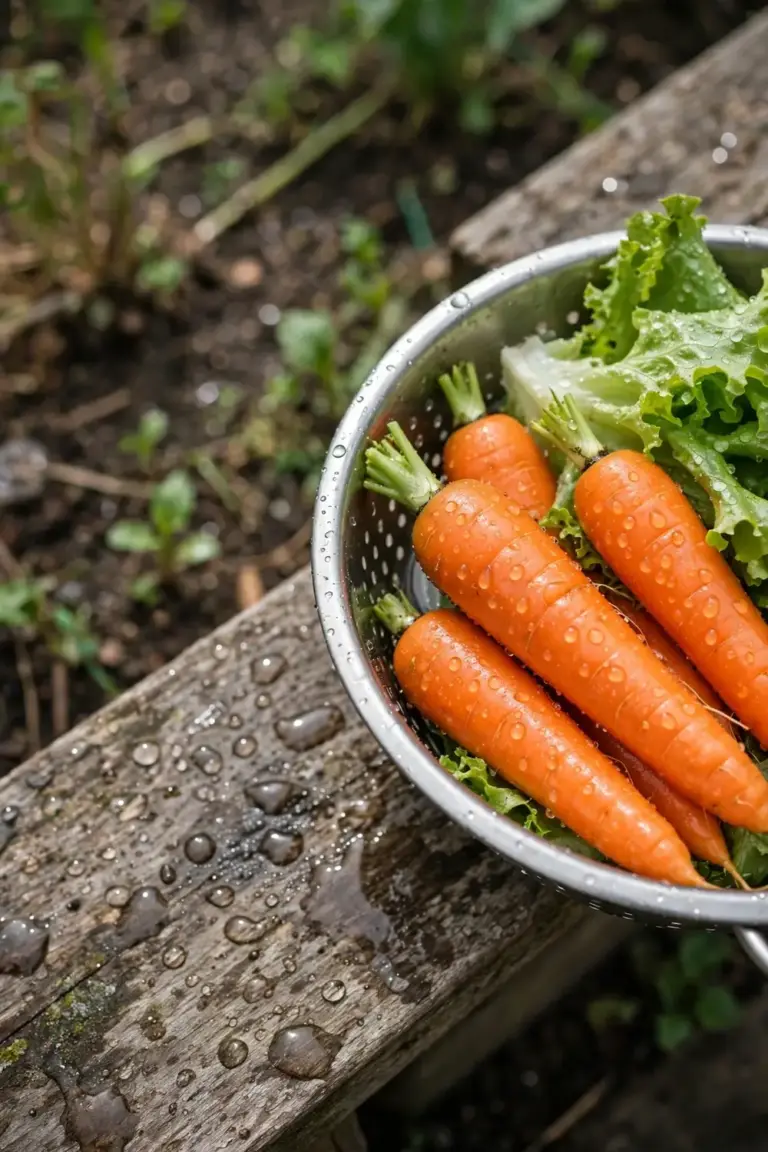
Wash produce well before eating it. Peel root crops. Cooking kills any remaining pathogens. University of Maine Extension advises washing and peeling garden vegetables, and it notes that the risk is greatest for crops like radishes, carrots, and leafy vegetables, where the edible parts touch the soil. Wash with clean, potable water. Produce washes add nothing that clean water does not already do.
Never sidedress food crops with raw manure. The rule appeared in the timing section, and it earns a repeat here because it is the rule gardeners break most often. A handful of fresh pellets tossed around growing lettuce looks harmless, and it puts raw manure against leaves that go straight to the plate. Composted manure is the sidedress material.
Never use cat, dog, or pig manure in vegetable gardens or compost piles. University of Maine Extension warns that parasites in those manures survive longer and infect people more readily than the parasites in other manures. Keep pets out of the vegetable garden. Rabbit manure is herbivore manure, and herbivore manure is the only manure that belongs in a food bed.
Some people carry higher risk from food-borne illness, and they need stricter care. University of Maine Extension names pregnant women, the elderly, very young children, and people with health issues such as cancer, kidney failure, chronic liver disease, diabetes, or AIDS. Those gardeners should not eat uncooked vegetables from manured gardens. Cooked vegetables from the same beds are a safer choice, since cooking kills the remaining pathogens.
9. Source Rabbit Manure Safely in Australia
Using rabbit manure as fertilizer starts with a known source. Own rabbits give the cleanest supply. Local sellers give the next best supply. Bagged products give the most processed supply. Each source needs one check before the manure goes on the bed.
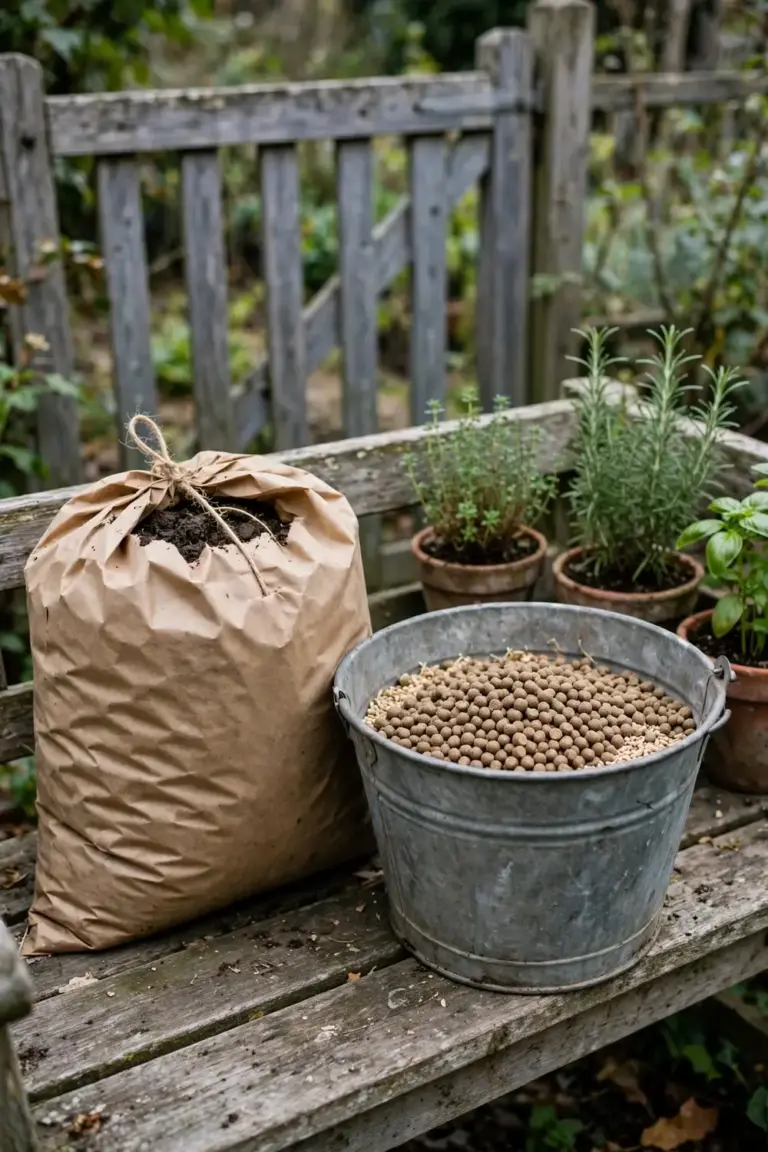
Own rabbits give droppings you can watch. Collect the pellets from the hutch or the litter tray. Add soiled bedding to the compost pile, since bedding adds carbon and keeps the pile open. The droppings from healthy rabbits suit the garden. The droppings from rabbits under treatment need a pause: ask a vet whether the treatment passes into the droppings, and hold treated droppings out of the food beds until the course ends.
Local sellers give manure with a story attached. Ask what the rabbits eat. Ask whether the rabbits receive regular medication. Ask whether the manure comes with bedding or as clean pellets. University of Maine Extension advises gardeners to consider the source when they use raw manure, and those three questions are the source check. A seller who answers them plainly is a seller worth returning to.
Queensland gardeners face one more rule. Rabbits sit on Queensland’s prohibited-pets list, so keeping a rabbit is illegal in the state, according to the Queensland Government exotic pets page. The Biosecurity Act 2014 lists the European rabbit as category 3, 4, 5 and 6 restricted matter, which bars keeping, feeding, moving, selling, and releasing rabbits. Check your state rules before keeping rabbits for manure, since the rules differ across states.
Bagged manure gives the most processed supply. Commercially processed manure should state on the package whether it is pathogen-free, according to University of Maine Extension. Read the label. A bag that states the treatment is a bag you can use on food crops without tracking an interval. A bag that states nothing is a bag to treat as raw. Bagged manure also suits gardeners without rabbits, and it suits Queensland gardeners who cannot keep rabbits at all.
Spare manure never goes to waste. Dry pellets store in a lidded bucket. Fresh surplus goes to the compost pile. A neighbor with rabbits may trade pellets for vegetables, and a local community garden may take donations. The manure that leaves your garden in a bucket is the manure that comes back as food from someone else’s bed.
10. Frequently Asked Questions
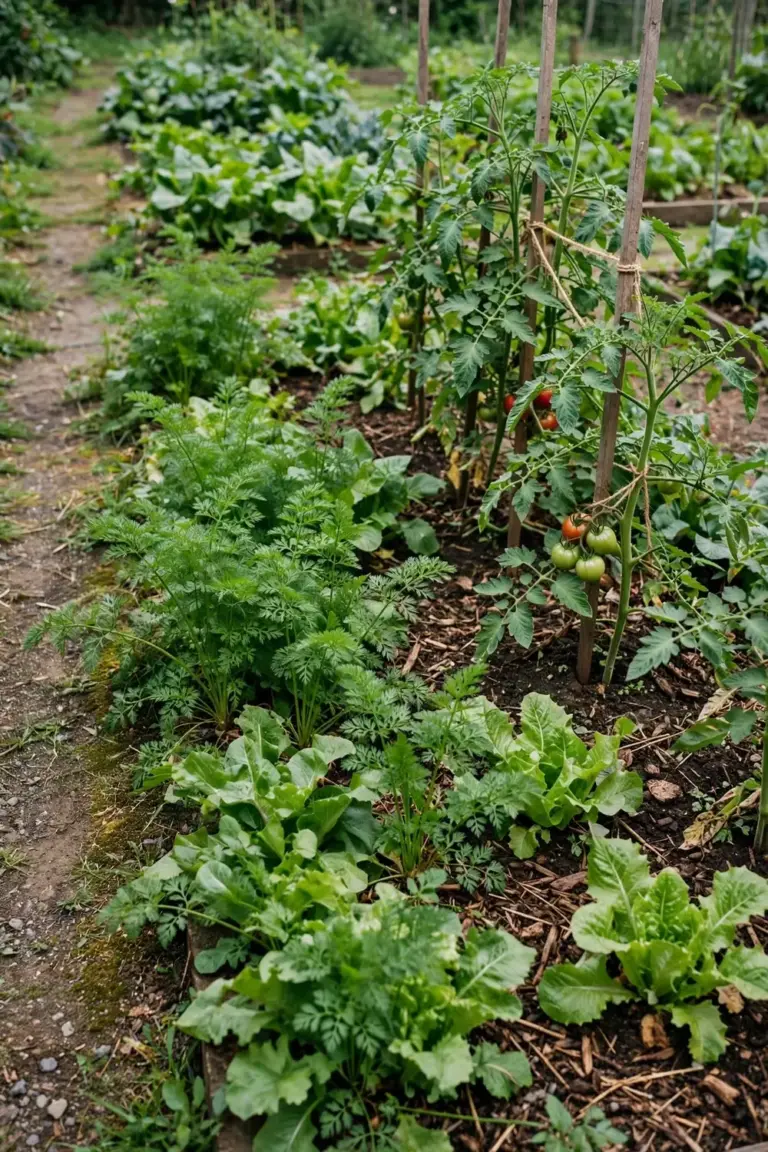
Yes, when the bed is empty and the harvest interval fits. Work fresh pellets into the soil at least 120 days before harvest for crops whose harvest touches soil, and 90 days for crops whose harvest stays clear of soil. Composted manure goes on any bed at any time. Fresh pellets never go on growing food crops as a sidedress, since sidedressing puts raw manure against leaves you will soon eat.
Yes, with the same rules as other food crops. Herbs and leafy greens count as soil-contact crops, so fresh manure needs 120 days between application and harvest. Composted manure is the easier choice for a herb bed that you pick from all season, because composted manure carries no interval to track. Wash and peel every harvest, and keep manure off the leaves at every step.
Fresh rabbit manure rarely burns plants, because the pellets are dry and low in ammonia. Chicken manure burns plants when fresh, and rabbit manure does not share that risk. A heavy dose on seedlings can still stall growth, so seedlings get composted manure in small amounts. Pots get a small handful mixed through the mix. The burn question is settled; the germ question is the one that still needs care.
A hot pile takes a week of heat plus 2 to 4 months of curing, following the Old Farmer’s Almanac heat-and-cure sequence. The pile must reach 131 to 170 degrees Fahrenheit for at least a week, then cure until the material turns dark, crumbly, and earthy. Small piles in cool weather heat slowly. Unfinished compost goes back in the pile for another cycle instead of going on the bed.
Yes, in states where keeping rabbits is legal. Queensland bans keeping rabbits, so Queensland gardeners buy bagged manure instead. Elsewhere, collect pellets from healthy rabbits and hold droppings from rabbits under treatment out of the food beds until the course ends. Ask a vet whether a treatment passes into the droppings. Bagged manure with a pathogen-free label skips the interval question entirely.
11. Start With One Bucket of Rabbit Manure This Weekend
One bucket of pellets covers a small bed, and one bed is enough to learn the method. Pick the bed, check the calendar, and decide which side of the fresh-or-composted line the bed sits on. The decision takes five minutes. The manure does the rest.
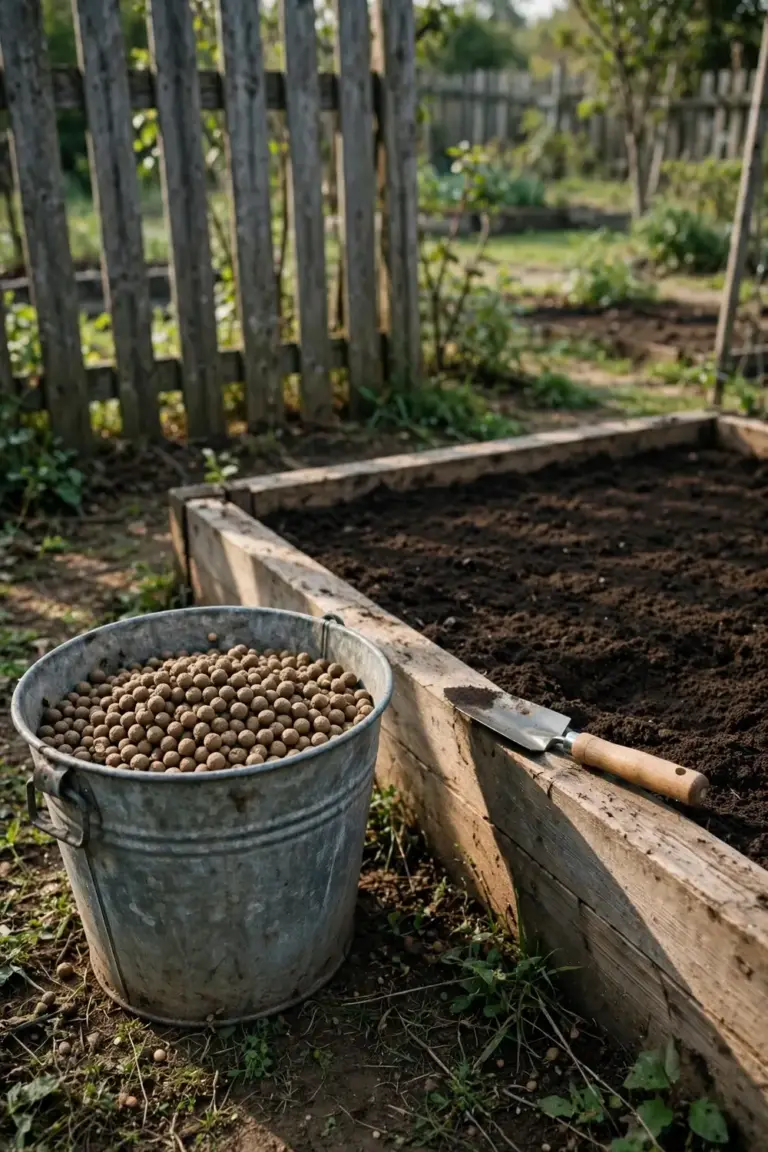
Compost what you cannot time, and time what you cannot compost. That pair of moves covers every bed in the garden, and it keeps the food beds safe without giving up a free fertilizer.
Keep the habit going through the season. Collect pellets weekly, add them to the compost pile or the empty bed, and note the date in the diary. The pile that gets fed weekly heats steadily, and the bed that gets fed in autumn is ready by spring. A rabbit that eats garden weeds and kitchen scraps closes the loop: the garden feeds the rabbit, and the rabbit feeds the garden.