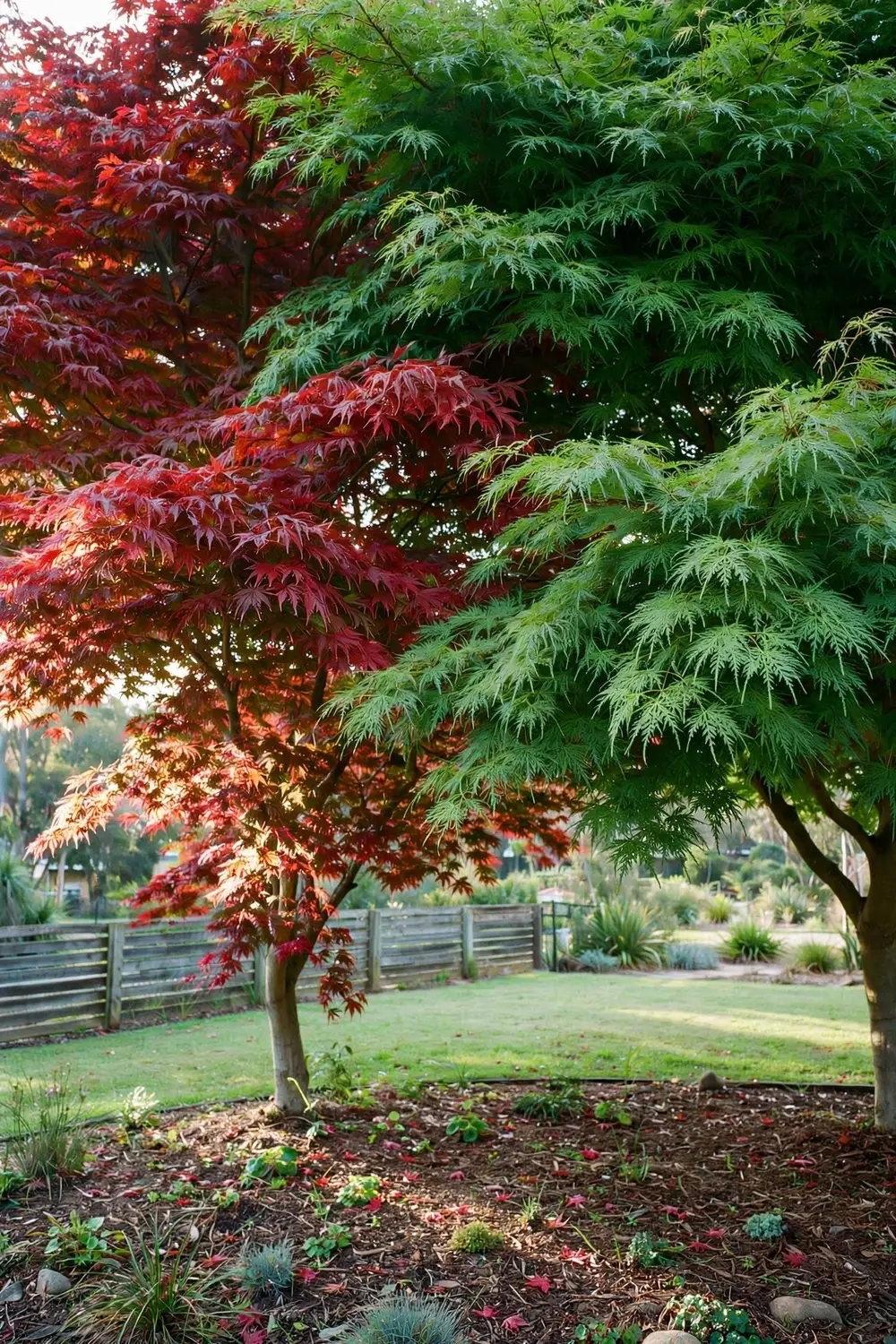

The best Japanese maple for an Australian garden is the cultivar that fits the site, and the ten picks below cover mature sizes from 1.2 m to 7.6 m. Bloodgood suits a classic red feature tree, Emperor I suits a garden where late frosts bite, Osakazuki suits a scarlet autumn show, Sango Kaku suits coral winter bark, and Shaina suits a pot. The ten cultivars below are the best Japanese maples Australia nurseries sell, ranked by the job each one does best.
Japanese maple means Acer palmatum. Every pick below is a cultivar, which is a named selection within that one species, propagated by grafting so each plant matches its name. Best means best by job, not best overall. This list covers Acer palmatum only. Full-moon maple, Acer japonicum and Acer shirasawanum, is a separate lane and is not covered here.
Japanese maples suit cool and temperate Australian gardens best. Coastal Brisbane is too hot and humid for most cultivars, while the cooler inland hinterland can work with afternoon shade. I have learned that the maple I site for afternoon shade outcolors the maple I site for full sun.
This list is a selection guide, not a growing guide and not an identification guide. It names the cultivar to buy for each job and the size to plan for. Planting, watering, mulching, and pruning appear here as short pointers only. A cultivar name on a nursery label is the buying check, because a seed grown plant will not match the name.
Use the list in three steps. First, pick the job from the table. Second, check the mature size against the space available, including the spread at full width. Third, check the site for afternoon shade and wind shelter. A cultivar that fits all three checks will hold its color and shape for decades.
1. Bloodgood: The Classic Red Feature Tree
Bloodgood is the pick for a classic red feature tree. NC State Extension lists a mature size of 20 feet tall and wide, which converts to 6.1 m each way. It grows at a slow to moderate rate, so it takes years to reach that size. Its size suits a front garden or a lawn feature spot where the canopy has room to spread. Acer palmatum ‘Bloodgood’
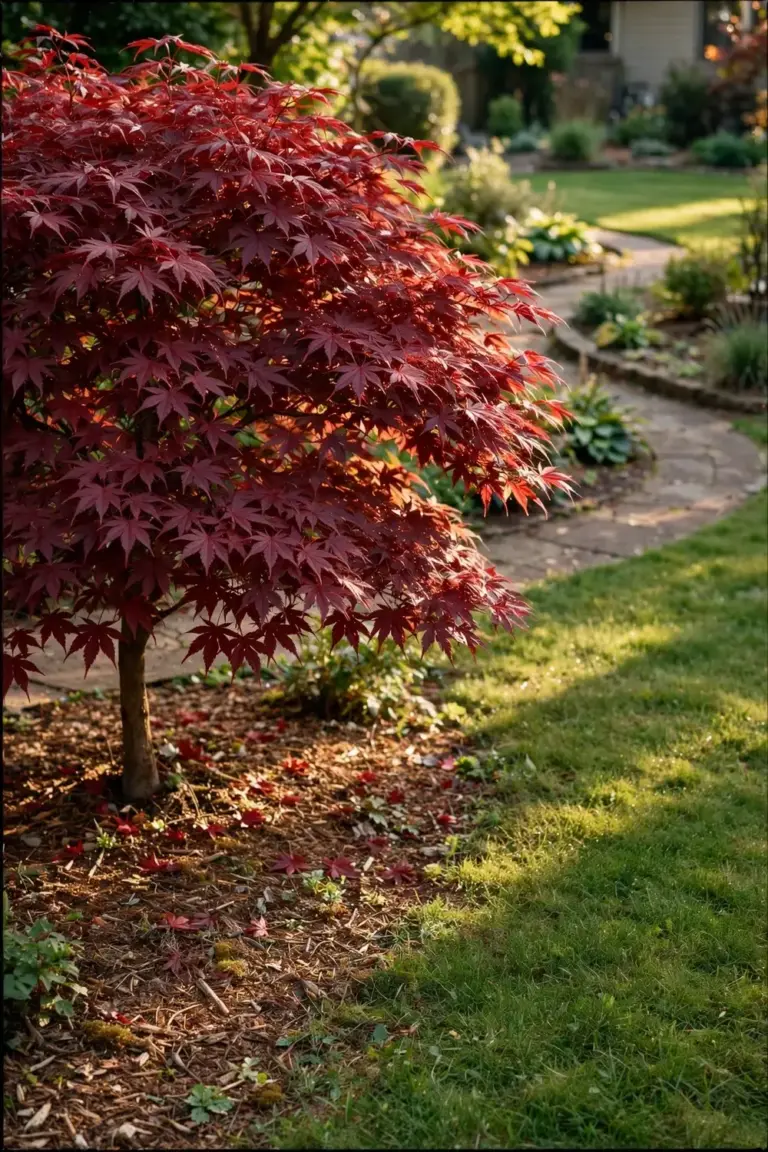
The leaves are palmate with five to seven lobes. They stay red through summer and turn greenish red only in hot dry areas. In autumn they turn a deep red. The branching forms a round, broad, upright crown with dense spreading branches. The winter form shows muscular looking multi trunks with a layered branch structure, so the tree holds interest after leaf fall.
Bloodgood suits cool and temperate Australian gardens. Site it in a sheltered spot with morning sun and afternoon shade in hot districts. Give it steady water through the first summers and room for a 6.1 m canopy. It has received the Royal Horticultural Society Award of Garden Merit. Buy a grafted plant with the cultivar name on the label so the color matches the name.
Bloodgood prefers well drained, acidic, organic soil with good air circulation. In heavy clay soil, plant it higher or in a raised bed for better drainage. It needs minimum nutrients and establishes easily from nursery containers. A raised planting position also keeps the root zone out of winter waterlogging in clay districts.
2. Emperor I: The Late Leafer for Frost-Prone Gardens
Emperor I is the pick for a frost-prone garden. The Missouri Botanical Garden Plant Finder lists it at 10 to 15 feet tall and wide, which converts to 3.0 to 4.6 m each way. It is a deciduous shrub form with an upright habit. Its smaller mature size fits a courtyard or a front garden where Bloodgood would grow too large.
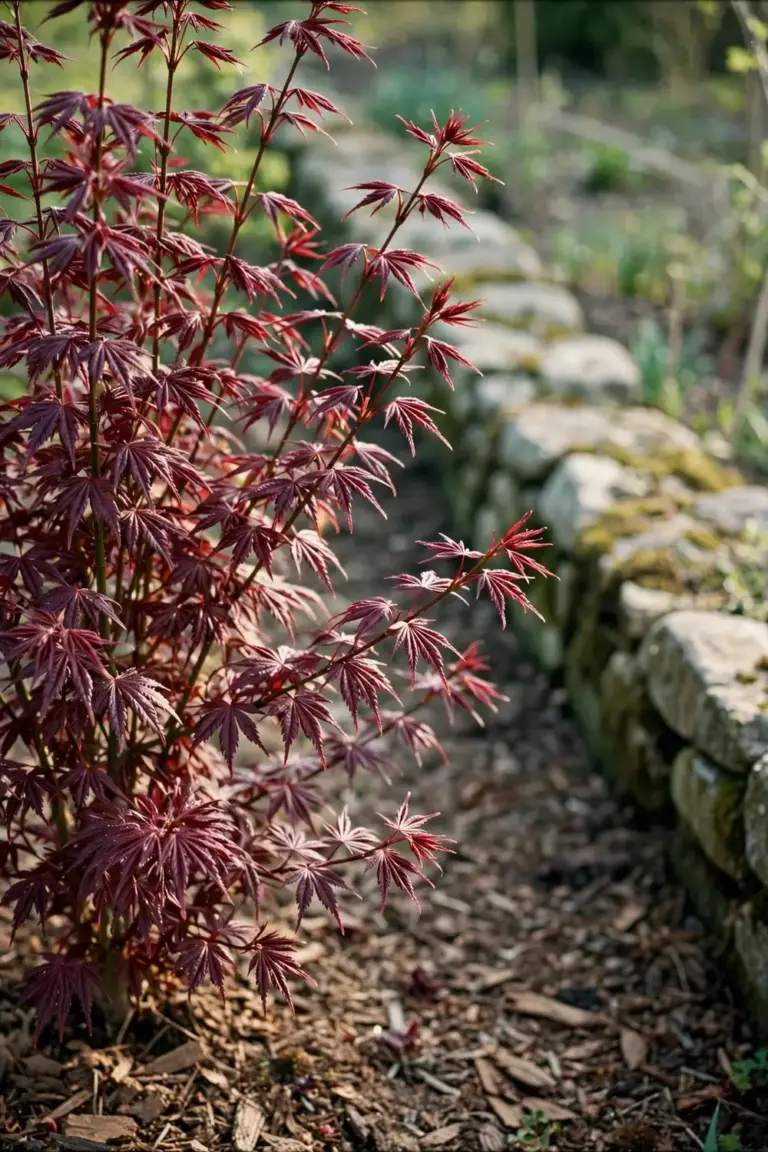
The leaves emerge a deep burgundy red and hold their color through summer. In autumn they turn a bright crimson. Emperor I leafs out several weeks later than Bloodgood, so late spring frosts are less likely to damage new leaves. That late leafing is the reason to choose it where frosts run late. It keeps the red leaf color of Bloodgood while dodging the frost window that damages early leafers.
Emperor I suits the same cool and temperate districts as Bloodgood. It fits a smaller garden better because its mature size is smaller. Site it with afternoon shade in hot districts and shelter from drying wind. Its compact canopy suits a courtyard, a front garden feature spot, or a large pot while young.
Emperor I suits a site protected from strong winds, because wind dries the leaves and scorches the margins. Avoid hot and dry sites. Keep the soil consistently moist through the first summers, and mulch the root zone to hold moisture and keep roots cool. Those two site choices, wind shelter and steady moisture, decide whether the leaves hold their color.
3. Osakazuki: The Scarlet Autumn Show
Osakazuki is the pick for the strongest autumn color. NC State Extension lists it at 15 to 24 feet tall, which converts to 4.6 to 7.3 m. It forms a rounded crown. Its size suits a specimen spot where the autumn canopy is visible from the house.
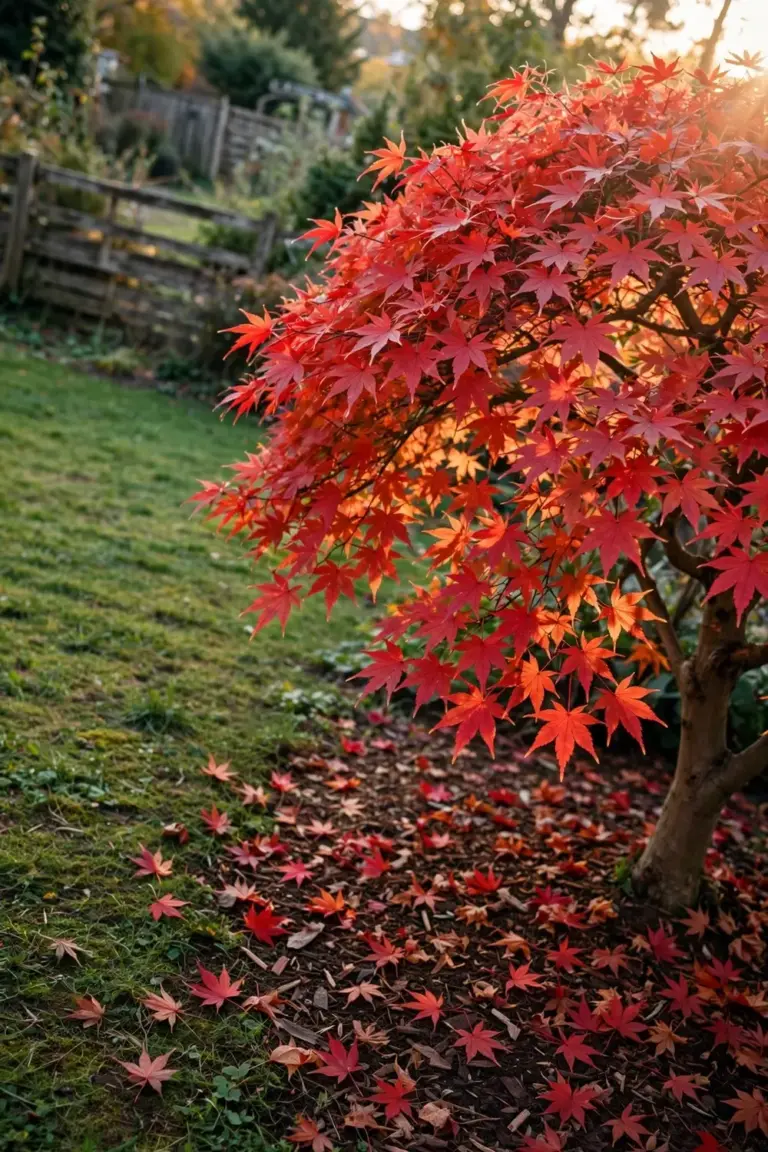
The leaves are bright green and seven lobed through spring and summer. In autumn they turn a strong scarlet that holds across the canopy. The spring flowers are insignificant and are followed by red samaras in autumn. Osakazuki gives one clear autumn peak rather than color in every season, so plant it where that peak is the point.
Osakazuki resists leaf scorch in sun but shows its best color in partial shade. Keep it watered during dry spells to keep it looking its best. It suits cool and temperate Australian gardens as a specimen or an understory tree in dappled shade. Give it room for a 7.3 m canopy at the top of its range.
Osakazuki prefers rich, moist, acidic soil. It adapts to clay and sandy soils, and it tolerates planting beside needled evergreens as an understory tree in a woodland garden. That adaptability makes it the easiest large pick in this list to place, and a deep watering routine in its first two summers helps the roots establish.
4. Sango Kaku: The Coral Bark Winter Star
Sango Kaku is the pick for winter interest. The Missouri Botanical Garden Plant Finder lists it at 20 to 25 feet tall and 15 to 20 feet wide, which converts to 6.1 to 7.6 m tall and 4.6 to 6.1 m wide. It is also sold as Senkaki. Its vase shaped form suits a feature spot with open space around it. Acer palmatum ‘Sango-kaku’
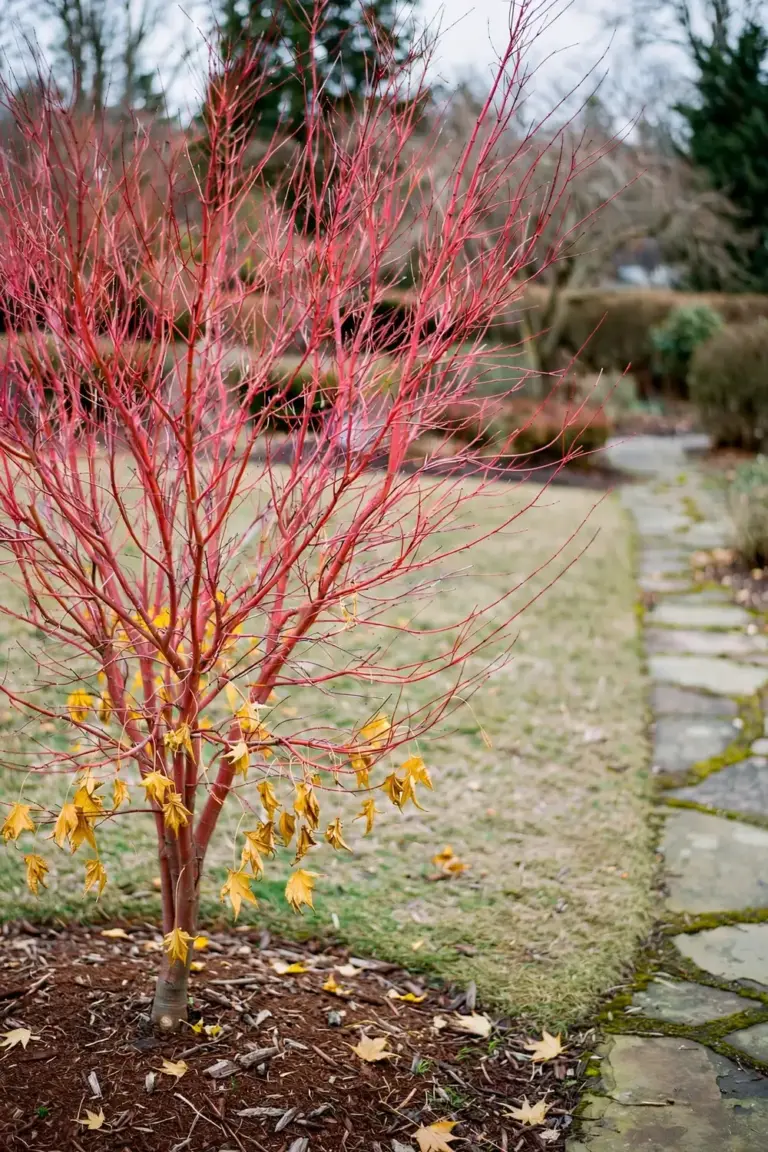
The bark is the feature. Young twigs and branches turn a showy pink to coral red in winter, and the color is strongest on young wood. Pink coloration is less pronounced to almost absent in summer. The leaves emerge yellow green with reddish margins in spring, mature to light green by summer, and turn yellow gold in autumn. The leaves are palmate with five to seven lobes and reach about 2 inches long, which is 5 cm.
Sango Kaku leafs out early in spring, so late frosts can damage new leaves. Site it where the winter bark is visible from a window or path, because the bark is the reason to plant it. It suits cool and temperate Australian gardens. Give it a sheltered spot out of drying wind and steady water in dry spells.
The best pink coloration occurs on young twigs and branches, so keep pruning minimal and let the tree build young wood. Prune only in late fall to mid winter if needed, because spring or summer pruning often results in significant bleeding. Site it where the bare winter stems catch low winter light, and the coral bark carries the garden for months.
5. Seiryu: The Only Upright Laceleaf
Seiryu is the pick for an upright laceleaf. NC State Extension calls it the only dissected form of Japanese maple with an upright habit. It grows 10 to 15 feet high and 8 to 12 feet wide, which converts to 3.0 to 4.6 m high and 2.4 to 3.7 m wide. That upright habit suits a narrow bed or a container where a weeping laceleaf would spill too wide. Acer palmatum ‘Seiryu’
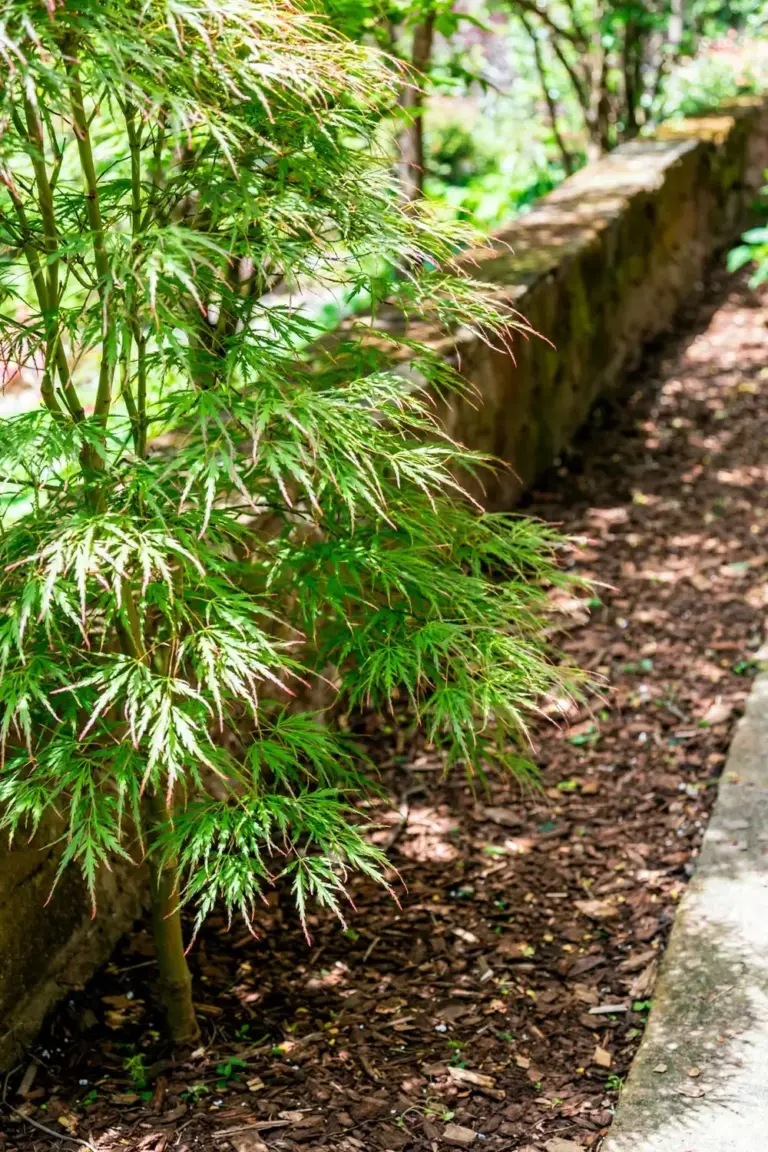
The leaves are finely cut and lacey. They are red tipped in spring, green in summer, and gold in autumn. That three season sequence gives Seiryu color in every season except winter. The laceleaf texture contrasts with broad leaved shrubs in the same bed.
Seiryu suits small spaces, containers, and specimen planting. It needs afternoon shade in hot summer areas to prevent leaf scorch. It suits cool and temperate Australian gardens. Buy it when a laceleaf form is wanted without the weeping habit, and give it shelter from drying wind.
Seiryu self seeds easily and can spread in the garden, so check for seedlings under the tree and remove them while small. That habit is a minor maintenance job, not a reason to avoid the tree. A container suits Seiryu well, because the upright habit keeps the pot balanced and the pot limits self seeding.
6. Inaba Shidare: The Big Weeping Red Laceleaf
Inaba Shidare is the pick for a large weeping red laceleaf. The Missouri Botanical Garden Plant Finder lists it at 6 to 10 feet tall and 8 to 15 feet wide, which converts to 1.8 to 3.0 m tall and 2.4 to 4.6 m wide. The crown is wider than it is high, so plan for spread rather than height.
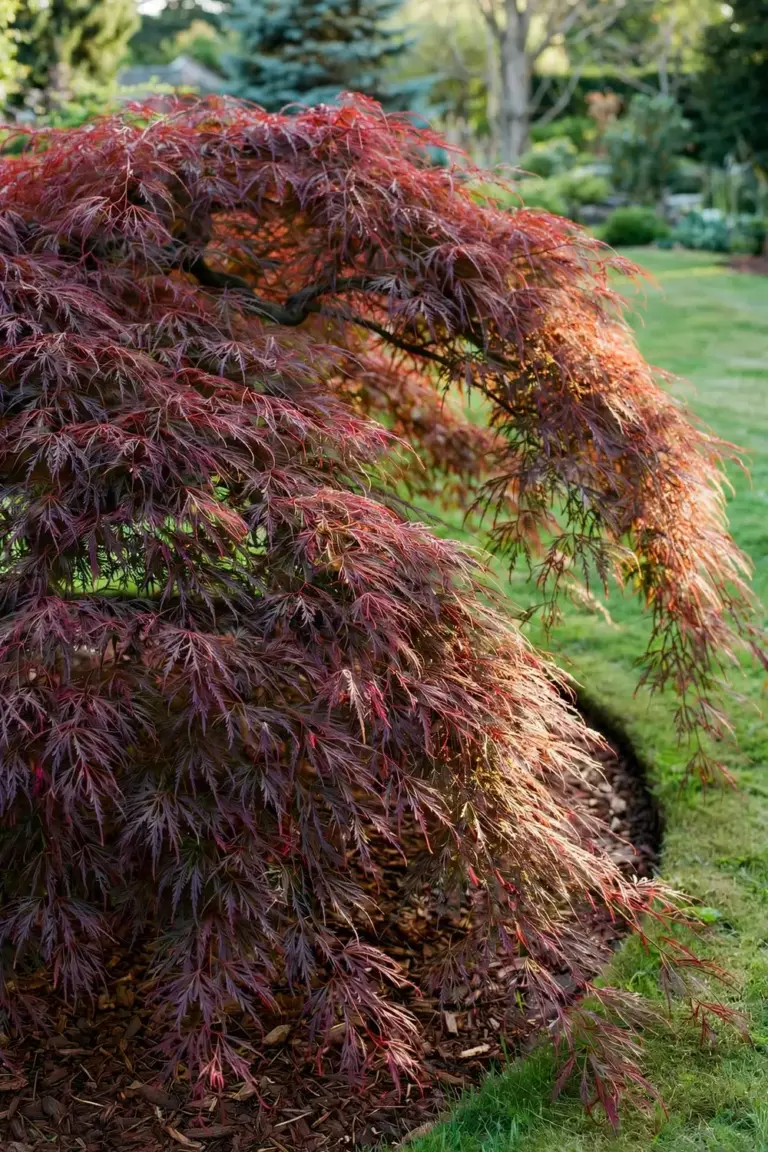
The leaves are deeply dissected with long pointed lobes. They are a dark wine red through summer and turn crimson in autumn. The branches arch and cascade, so the tree forms a low mound with a weeping outline. That cascading form is the reason to give it an open spot where the outline is visible from all sides.
Inaba Shidare suits a feature spot where the cascading form is the focal point. It suits cool and temperate Australian gardens. Site it in partial shade with shelter from drying wind. A pot suits it while young, but a mature plant needs ground space for a 4.6 m spread.
The mature size of Inaba Shidare depends on graft height, because the weeping branches cascade from the graft point. A high graft gives a taller tree with a longer cascade. A low graft gives a low mound. Ask the nursery for the graft height before buying, and match it to the space available.
7. Crimson Queen: The Compact Weeping Red Laceleaf
Crimson Queen is the pick for a compact weeping red laceleaf. NC State Extension notes that many dissected types, such as Crimson Queen, reach only eight feet in height, which converts to 2.4 m. It forms a low mound with cascading branches. That compact size makes it the easiest weeping red laceleaf to place.
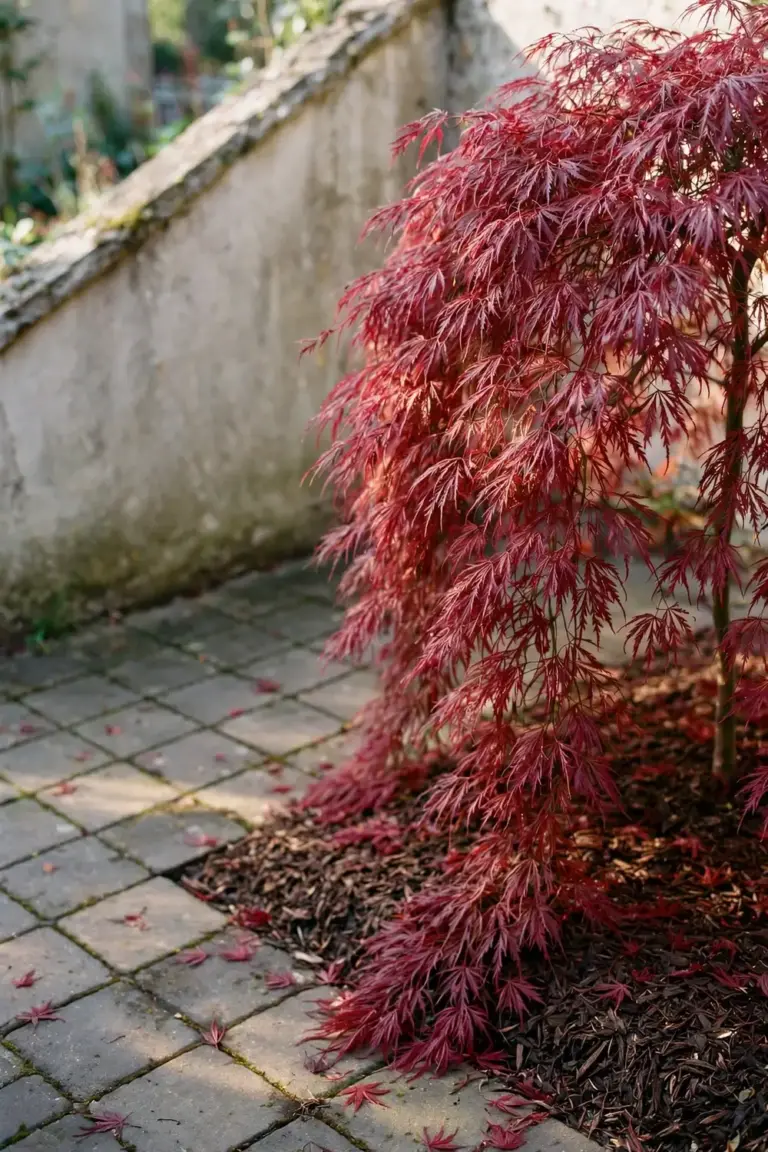
The leaves are finely dissected with seven to nine lobes. They hold a deep crimson red through the growing season and brighten to scarlet in autumn. That color retention sets Crimson Queen apart from red dissectums that turn green or bronze by midsummer. The fine texture reads well beside broad leaved shrubs and beside green laceleaf forms.
Crimson Queen suits small gardens, courtyards, and containers. It tolerates sun in cool districts and needs afternoon shade in hot districts. It suits cool and temperate Australian gardens. Its compact size makes it the best weeping red laceleaf for a pot or a courtyard corner.
Crimson Queen tolerates heat better than most red dissectums. Nursery descriptions report it enduring 38 degrees Celsius in full sun with practically no sunburn, although the deep red turned orange red under those conditions. That heat tolerance makes it the safest red laceleaf for a warm Australian district with afternoon shade.
8. Shaina: The Dwarf for Pots and Small Spaces
Shaina is the pick for a pot or a small space. The Missouri Botanical Garden Plant Finder lists it at 4 to 5 feet tall and 3 to 4 feet wide, which converts to 1.2 to 1.5 m tall and 0.9 to 1.2 m wide. It is one of the smallest upright Japanese maples in this list. Its size suits a courtyard, a balcony pot, or the front of a bed.
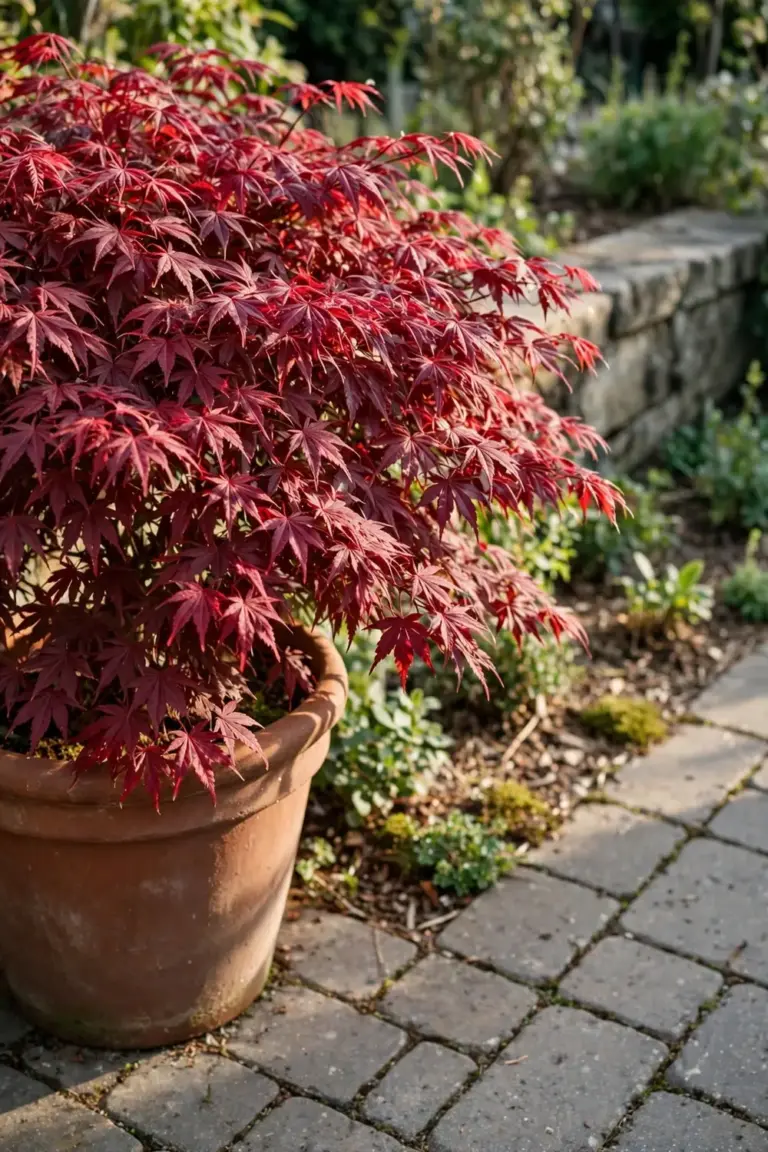
The leaves are palmate and dense, with a crimson red color through the growing season. The habit is compact and bushy, so Shaina forms a small shrub rather than a tree. That compact habit is the reason it fits pots and courtyards where a larger maple would outgrow the space within a few years.
Shaina suits a large pot with a quality potting mix and steady water. It suits cool and temperate Australian gardens. Site it with afternoon shade in hot districts. Check the label, because dwarf plants sold as Shaina should stay near the listed size.
Pot care for Shaina stays simple. Use a pot with drainage holes and a free draining potting mix. Water when the top few centimetres of mix feel dry. Move the pot up one size when roots fill the pot, and keep the pot out of hot afternoon sun in summer. Those four habits keep a potted Shaina healthy for years.
9. Butterfly: The Variegated Light-Bringer
Butterfly is the pick for variegated leaves. The Missouri Botanical Garden Plant Finder lists it at 7 to 12 feet tall and 4 to 8 feet wide, which converts to 2.1 to 3.7 m tall and 1.2 to 2.4 m wide. It is an upright form with a narrow crown. That narrow crown suits a bed edge or a courtyard where width is limited.
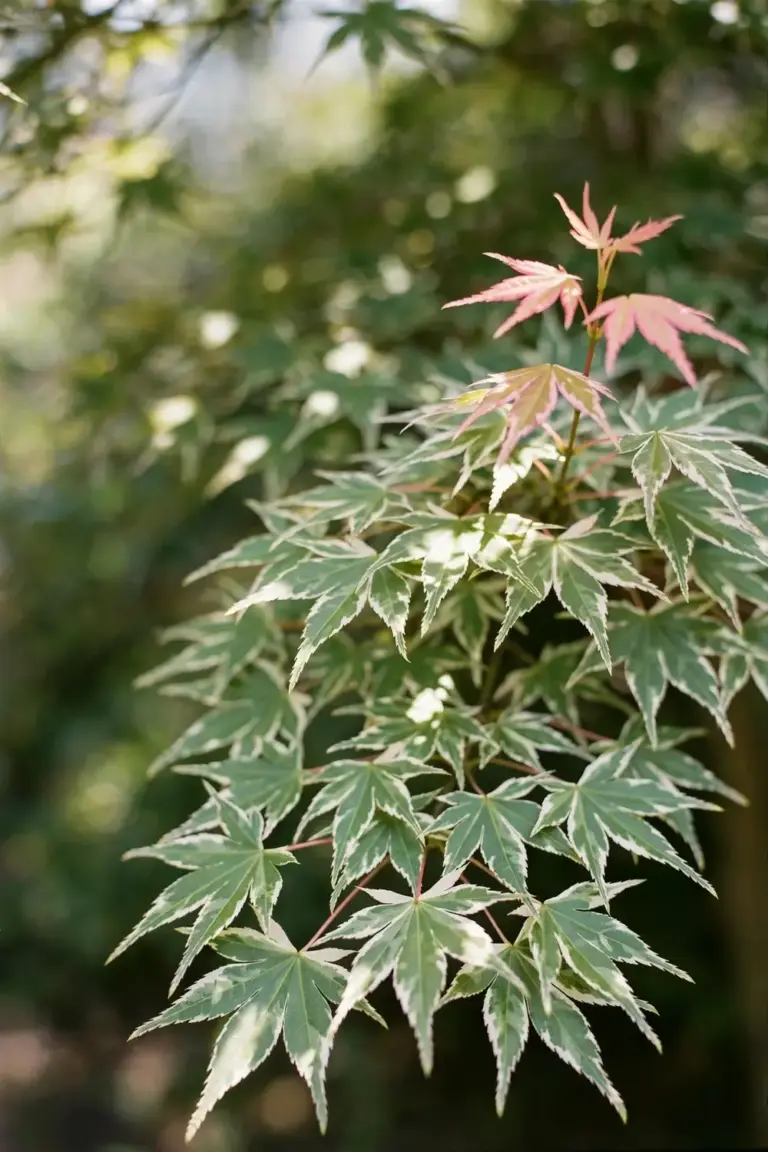
The leaves are small and green with white margins and a pink flush on new growth. That variegation lightens a shaded corner. The autumn color is a soft yellow to orange. Variegated leaves scorch more easily than plain green leaves, so shade matters more for Butterfly than for most picks in this list.
Butterfly suits a sheltered spot with dappled light and afternoon shade. It suits cool and temperate Australian gardens. Avoid hot western walls and drying wind. Buy it for the leaf pattern, not for autumn color, because the variegation is the feature.
Watch for reversion on Butterfly. A branch that returns to plain green grows faster than variegated wood and will take over if left. Cut a reverted branch back to its base in winter while the tree is dormant. That one winter job keeps the variegation true to the cultivar name.
10. Viridis: The Green Laceleaf for Contrast
Viridis is the pick for green contrast against red maples. Nursery descriptions list it at 4 to 5 feet tall and wide in ten years, which converts to 1.2 to 1.5 m each way. It is a weeping green laceleaf with a cascading form. Its dwarf size suits a small space or a container.
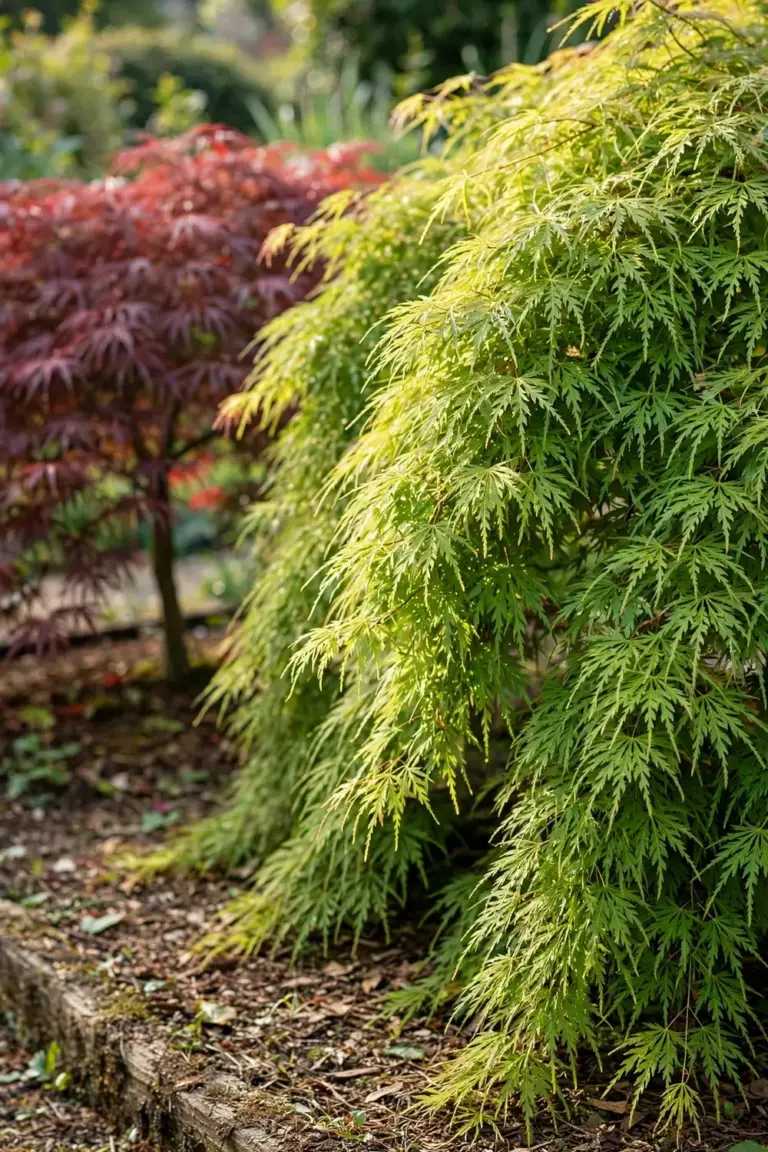
The leaves emerge a bright chartreuse green and mature to a rich green by midsummer. In autumn they turn a bright golden yellow to orange. That green to gold sequence contrasts with red cultivars in the same bed. The fine laceleaf texture matches other dissectums while the color stays apart from them.
Viridis suits small spaces, containers, and the front of a mixed planting. It suits cool and temperate Australian gardens. Site it with afternoon shade in hot districts. Pair it with a red laceleaf such as Crimson Queen for the strongest color contrast.
Viridis works as the front layer in a mixed planting. Plant it ahead of a red dissectum so the green and red laceleaf forms sit side by side. The contrast reads from spring through autumn, because the two trees hold different colors in every season. A pot suits Viridis while young, and the cascading form spills over the pot edge.
How to Choose the Right Japanese Maple for Your Garden
Choose by job first, then by size, then by climate. The table below matches each job to a first pick and a backup.
| Job | First Pick | Backup |
|---|---|---|
| Classic red feature tree | Bloodgood | Emperor I |
| Frost-prone garden | Emperor I | Bloodgood |
| Strongest autumn color | Osakazuki | Seiryu |
| Winter interest | Sango Kaku | None |
| Upright laceleaf | Seiryu | None |
| Weeping red laceleaf, large | Inaba Shidare | Crimson Queen |
| Weeping red laceleaf, compact | Crimson Queen | Inaba Shidare |
| Pot or small space | Shaina | Viridis |
| Variegated leaves | Butterfly | None |
| Green contrast | Viridis | Seiryu |
Climate decides whether a Japanese maple thrives. Cool and temperate districts suit most cultivars. Coastal Brisbane is too hot and humid for most cultivars, while the cooler inland hinterland can work with afternoon shade. Growth runs 20 to 40 cm per year in good conditions, so a young tree takes years to reach its listed size. Japanese Maples in Australia: Complete Buyer’s Guide
Sun exposure decides leaf color and scorch. Red cultivars hold their color best with morning sun and afternoon shade in hot districts. Green and variegated cultivars scorch fastest, so give Butterfly and Viridis dappled light. Dissectum forms scorch faster than palmate forms, because the fine lobes dry at the margins. When in doubt, choose afternoon shade over full sun.
Site any pick in a sheltered spot with morning sun and afternoon shade in hot districts. Keep the soil moist and well drained with organic matter. A thick mulch layer keeps roots cool and moist. What Is Mulching Build soil health before planting, because a maple settles faster in soil with good structure and organic matter. Soil Health and Pest Resistance Pruning stays minimal, and any structural work waits until the tree is dormant in winter. Spring Pruning Techniques
Buy a grafted plant with the cultivar name on the label. Seed grown plants do not match a cultivar name, so a plant sold only as Acer palmatum may grow into any form. Check the mature size on the label against the space available, because moving a settled maple is a last resort. A pot suits a dwarf pick while young, but a mature plant needs the ground space its spread requires.
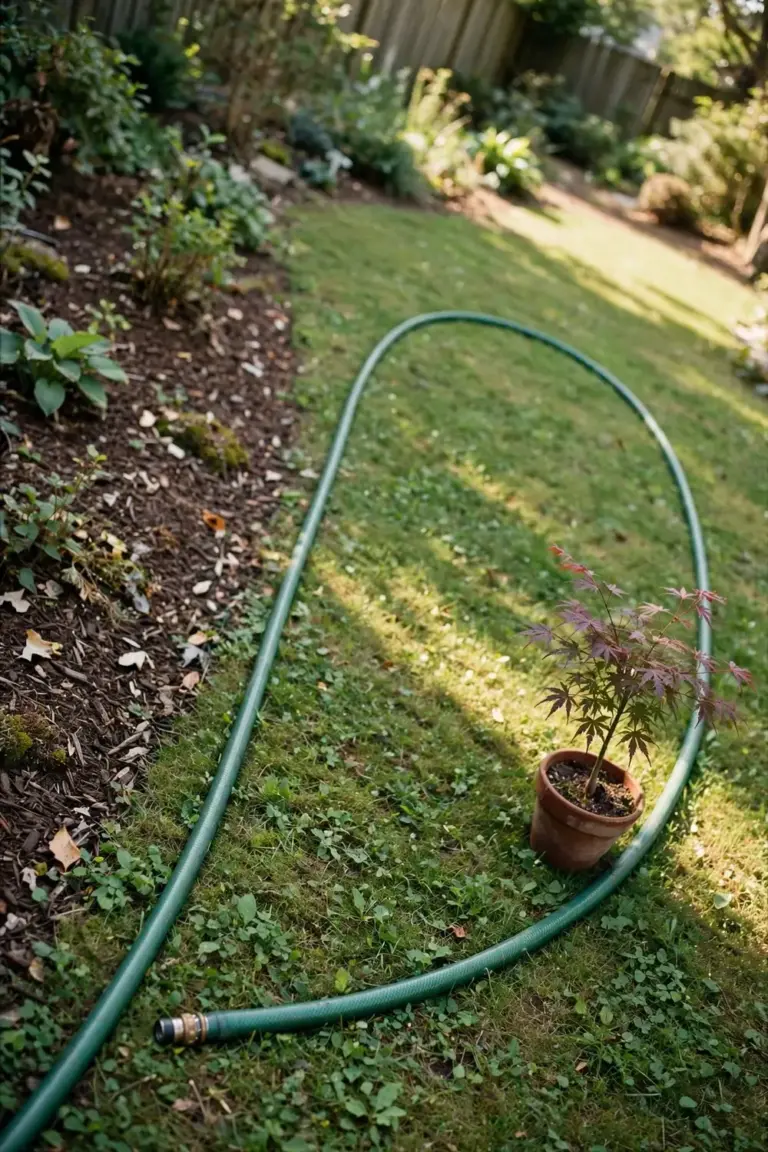
Measure the space before buying. Mark the mature spread on the ground with a hose or a rope, and stand back to check the width against fences, paths, and eaves. A tree planted too close to a wall grows one sided, and a tree planted under eaves misses rain. The marking step takes ten minutes and prevents a removal job years later.
If the first pick is out of stock, buy the backup from the table rather than a random cultivar. The backup shares the job and sits close in size and form. A nursery may offer a lookalike with a different name, so ask for the cultivar name in writing and check it against this list before paying.
Graft height matters for weeping forms. A weeping cultivar cascades from the graft point, so a high graft gives a taller tree and a low graft gives a low mound. Ask the nursery for the graft height on Inaba Shidare, Crimson Queen, and Viridis before buying. For upright forms, graft height matters less, because the trunk grows straight from the graft.
Frequently Asked Questions
Coastal Brisbane is too hot and humid for most cultivars. The cooler inland hinterland can work with afternoon shade, steady water, and a thick mulch layer. Choose a heat tolerant pick such as Bloodgood or Emperor I, and site it out of hot western sun and drying wind. A pot in a sheltered courtyard gives more control than open ground.
Shaina stays smallest at 1.2 to 1.5 m tall and 0.9 to 1.2 m wide. Viridis reaches 1.2 to 1.5 m in ten years. Crimson Queen reaches about 2.4 m. Those three suit pots, courtyards, and small gardens. Check the label, because mature size varies with graft height and growing conditions.
Osakazuki gives the strongest scarlet autumn color on a green summer canopy. Seiryu gives gold on a laceleaf form. Sango Kaku gives yellow gold leaves plus coral bark for winter. Pick Osakazuki for one autumn peak, and Sango Kaku for autumn plus winter interest.
Yes. Shaina and Viridis suit pots because they stay small, and Seiryu suits pots because of its upright laceleaf form. Use a large pot, a quality potting mix, and consistent water. Pots dry out faster than ground soil, so check moisture in hot weather and shelter the pot from afternoon sun.
Plant in autumn or early spring for the best establishment. Autumn planting lets roots settle before summer heat. Prepare the bed before planting. Fall Garden Bed Prep Water the tree in well and mulch the root zone, keeping mulch clear of the trunk.
The Short List
Buy Bloodgood for a classic red tree, Emperor I for late frosts, Osakazuki for scarlet autumn, Sango Kaku for winter bark, Seiryu for upright laceleaf, Inaba Shidare for a large weeping red, Crimson Queen for a compact weeping red, Shaina for a pot, Butterfly for variegation, and Viridis for green contrast. Match the pick to the job, the size to the space, and the site to the climate, and the tree will earn its place.
Start with the job, not the color. A red tree in the wrong site scorches, while a green tree in the right site holds its color all season. Measure the space, check the mature spread, and buy the grafted cultivar by name. The right pick earns its place for decades.