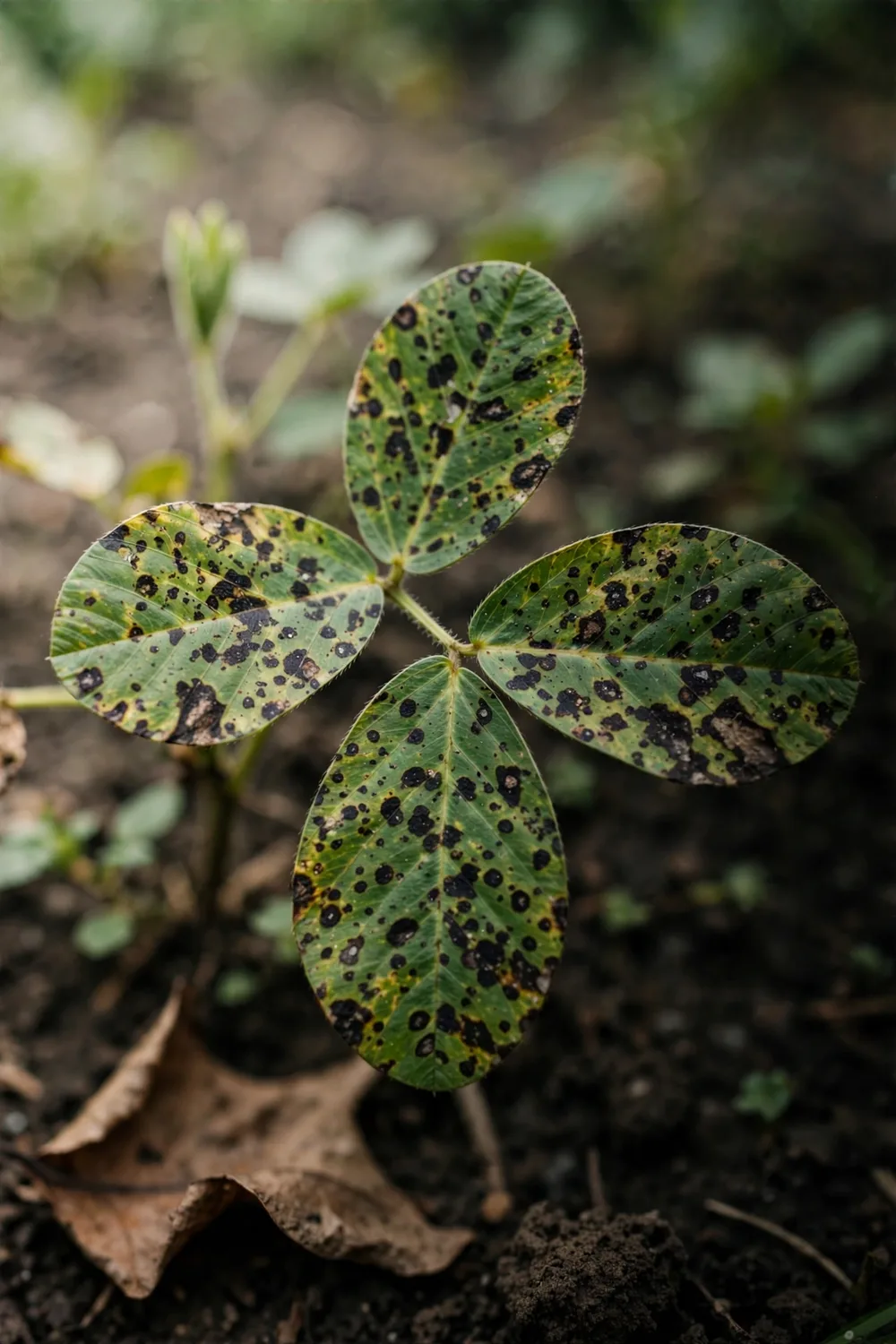

Late leaf spot is the second peanut leaf spot, and it arrives later. It is caused by Nothopassalora personata. It shows darker, rougher lesions than early leaf spot, it sporulates on the lower leaf surface, and the 5 strategies below tell you how to read the late signs, why you do not need to tell the two apart, and how to run the shared prevention program.
Peanut scoping comes first. This article is about late leaf spot of peanut. The name “late leaf spot” is generic. The disease is peanut-specific. The peanut is the host.
The shared prevention playbook lives in the companion article “Early Leaf Spot on Home-Grown Peanuts: 7 Ways to Prevent It and Keep Your Leaves On”. It carries the full 7-way prevention program for both diseases. This article covers the late-specific facts: the darker lesions, the lower-surface sporulation, the later-season timing, the microscope caveat. It does not duplicate the shared program.
What Late Leaf Spot Actually Is
Late leaf spot is a fungal disease of peanut. The pathogen is Nothopassalora personata (syn. Cercosporidium personatum, Passalora personata; teleomorph Mycosphaerella berkeleyi), and one disease carries one naming convention, since Clemson’s two entries are one disease, not two.
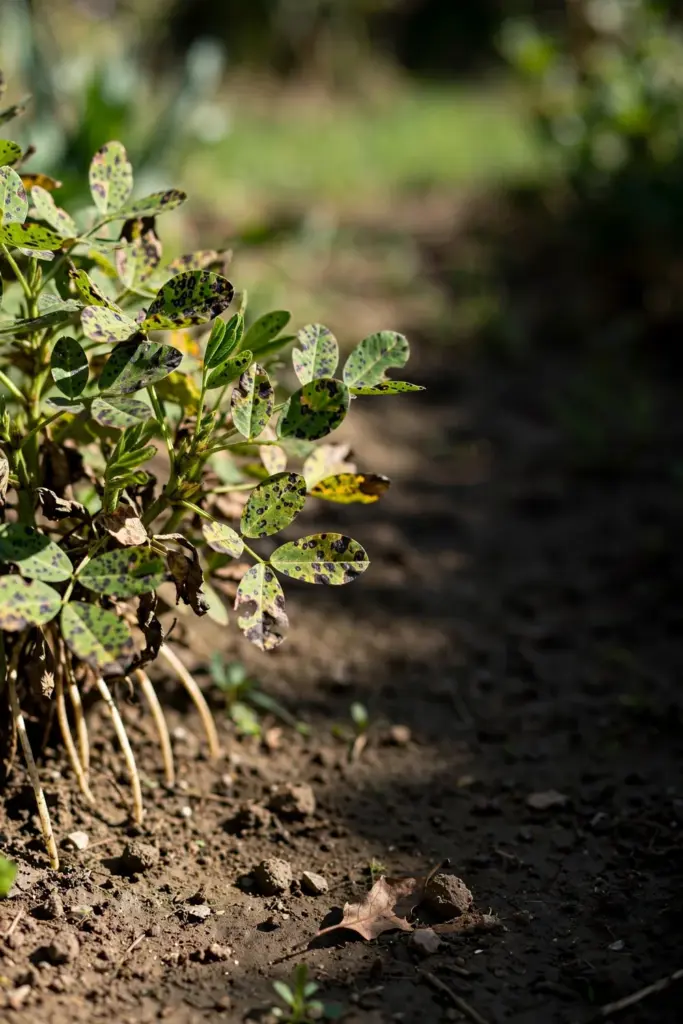
Late leaf spot is the second half of the peanut leaf-spot pair. Early leaf spot is Passalora arachidicola. Late leaf spot is Nothopassalora personata. Same host, managed together, constantly compared in Extension sources. The pair is the pair. The diseases are not the same.
Late leaf spot is more aggressive than early leaf spot. Once established, it increases very rapidly. Severe defoliation follows. The aggression is the reason to act fast. The fast defoliation is the reason to start early.
How to Identify Late Leaf Spot on Your Peanuts
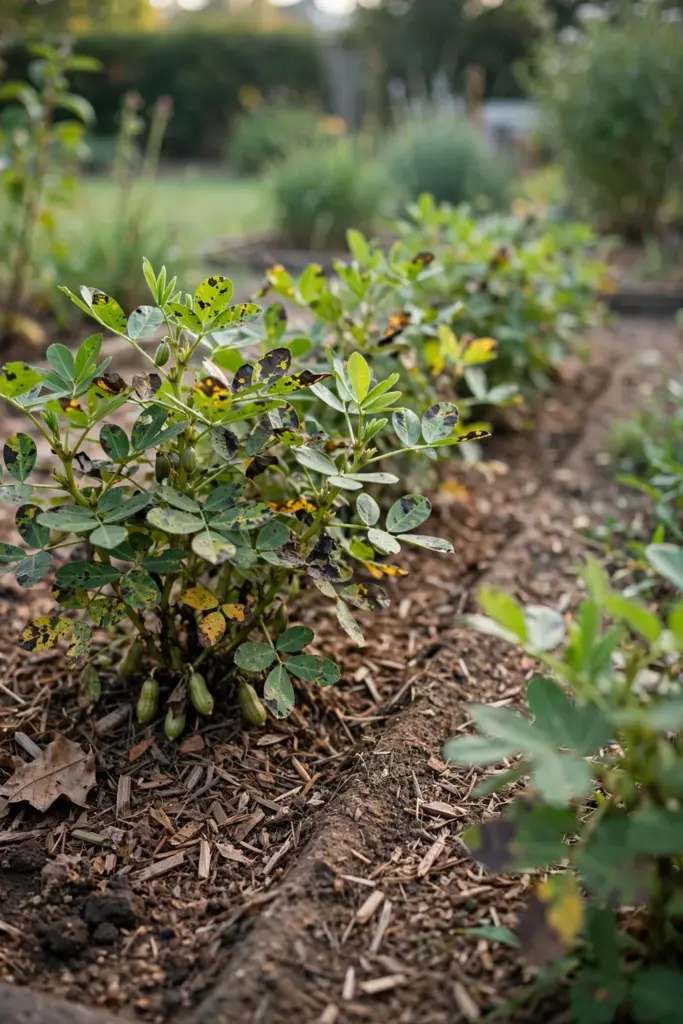
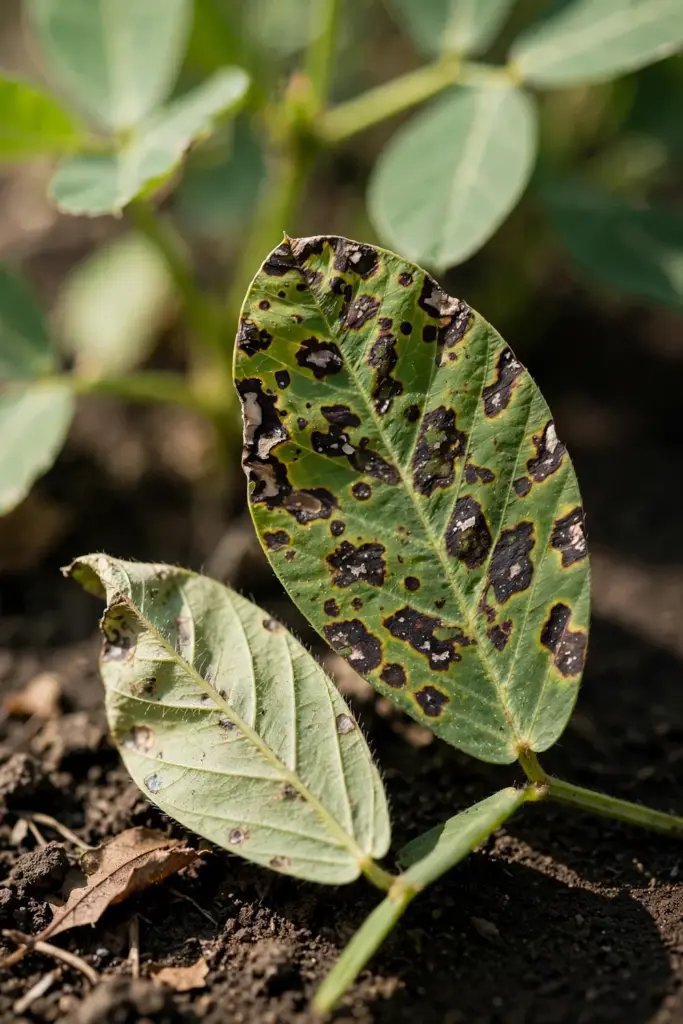
Look for dark brown to black lesions. Late leaf spot lesions range in color from dark brown to almost black and have a feathery margin. They usually are similar in size and shape to early leaf spot lesions. The darkness is the late sign. The roughness is the late sign.
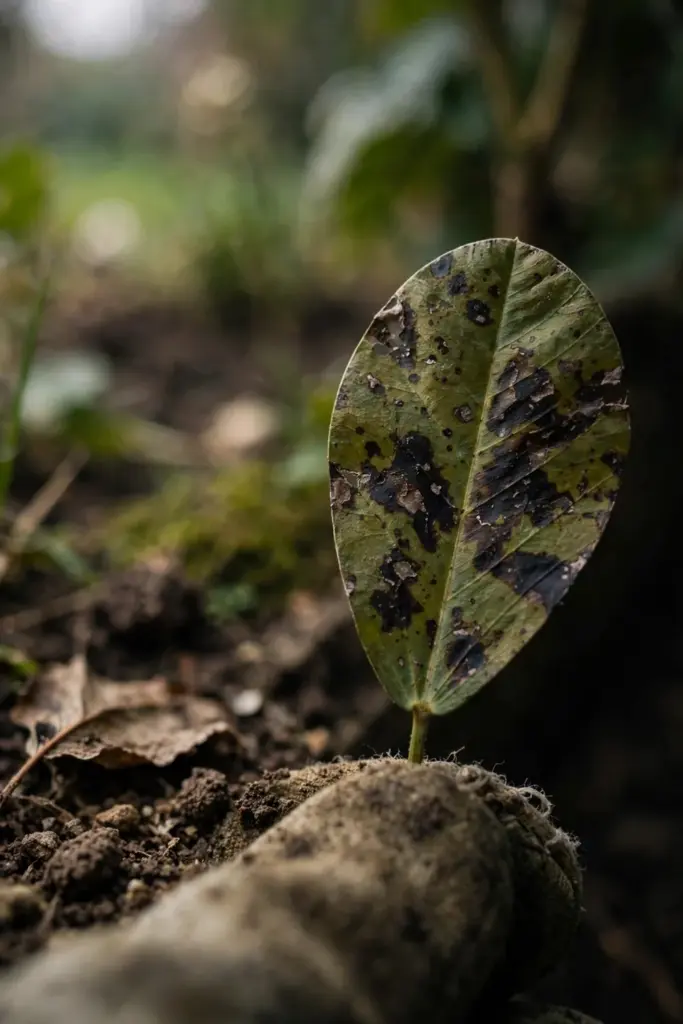
Look for the absence of a halo. Late leaf spot halos are rarely present, while early leaf spot lesions typically have a bright yellow halo. The missing halo is the late clue. The bright halo is the early clue.
Flip the leaf. Sporulation of late leaf spot occurs on the bottom of the leaf surface. Early leaf spot sporulates on the upper surface. The lower-surface sporulation is the late mark. The upper-surface sporulation is the early mark.
Check the timing. Late leaf spot typically is observed in mid-to-late August, but it can appear as early as late June to early July if it is the predominant leaf spot disease. The late season is the late window. The earlier season is the early window.
Check for defoliation from the base upward. Badly spotted leaves often fall to the ground well before harvest. Leaf shed usually starts at the base of the central or lateral stem and continues upward until all but the youngest leaves at the shoot tips are lost. The bare stem is the late result. The dropped leaves are the warning.
Why You Do Not Need to Tell the Two Apart
Symptoms alone make identification difficult. Lucid Central states that examination of the spores under a microscope is needed to tell the fungi apart. The field signs overlap. The microscope settles it. The home gardener does not need the microscope.
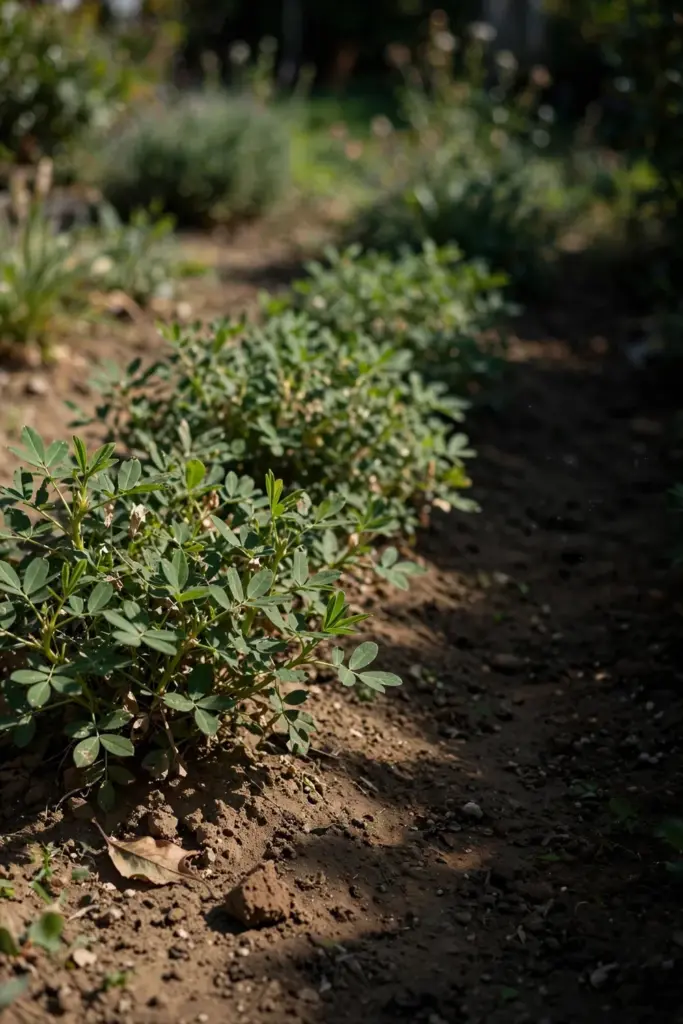
Management converges. The same prevention program blocks both diseases. The same steps block both. The shared program is the answer. The split identification is not.
Mixed infections are very common. Both early and late leaf spot can be present whenever peanut is grown, and mixed infections are very common, so the same leaf can carry both diseases. The split is academic. The program is shared.
Do not carry the Frontiers naming error. A Frontiers paper calls early leaf spot “Passalora personata” (syn. Cercospora arachidicola), which is wrong, because personata is the LATE leaf spot pathogen. The error is the trap. The name is the fence.
Do not carry the AgroBase attribution. AgroBase attributes early leaf spot to Phoma arachidicola. That is wrong. Phoma arachidicola is web blotch, a different peanut disease. The attribution is the trap. The disease is the fence.
Strategy 1: Check the Lower Leaf Surface First
Flip the leaf. Late leaf spot sporulates on the bottom of the leaf surface. The lower surface is the check. The upper surface is the early check. The flip is the habit.
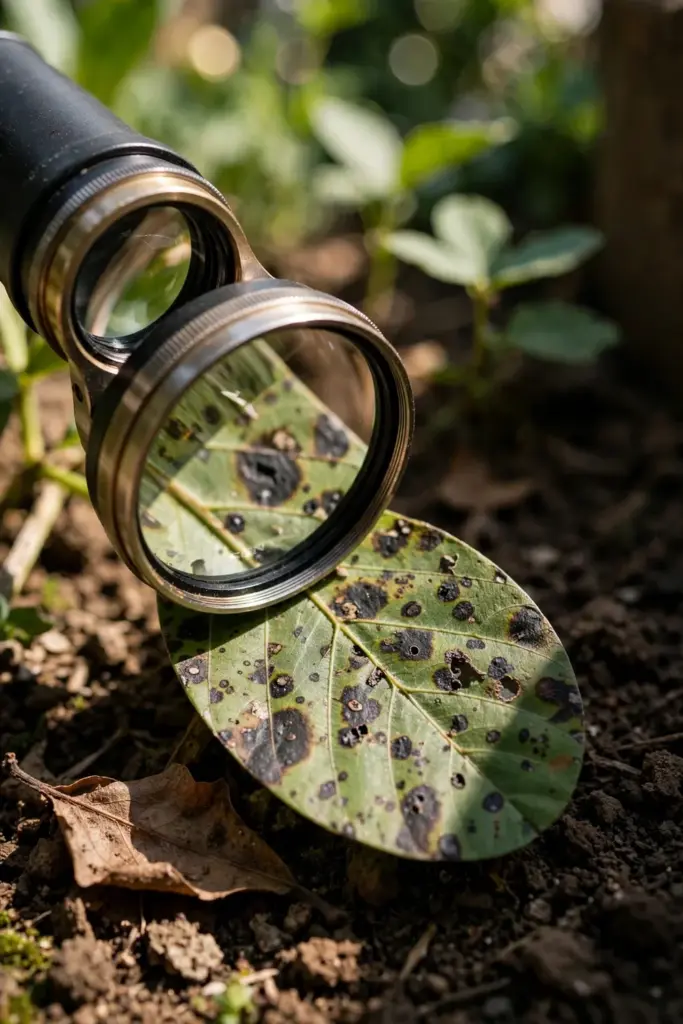
Use a 10X hand lens. When spots are actively sporulating, the gray-colored tufts of mold are visible with a 10X hand lens on the lower leaf surface for late leaf spot. The hand lens is the tool. The tufts are the sign. The lower surface is the place.
Check older leaves first. The first sign of the diseases are spots on the older leaves. These spread rapidly to leaves of all ages. The older leaves are the first check. The younger leaves are the next check.
Strategy 2: Watch the Late-Season Window
Watch from mid-to-late August. Late leaf spot typically is observed in mid-to-late August. The late window is the watch. The earlier window is the early watch. The calendar is the guide.
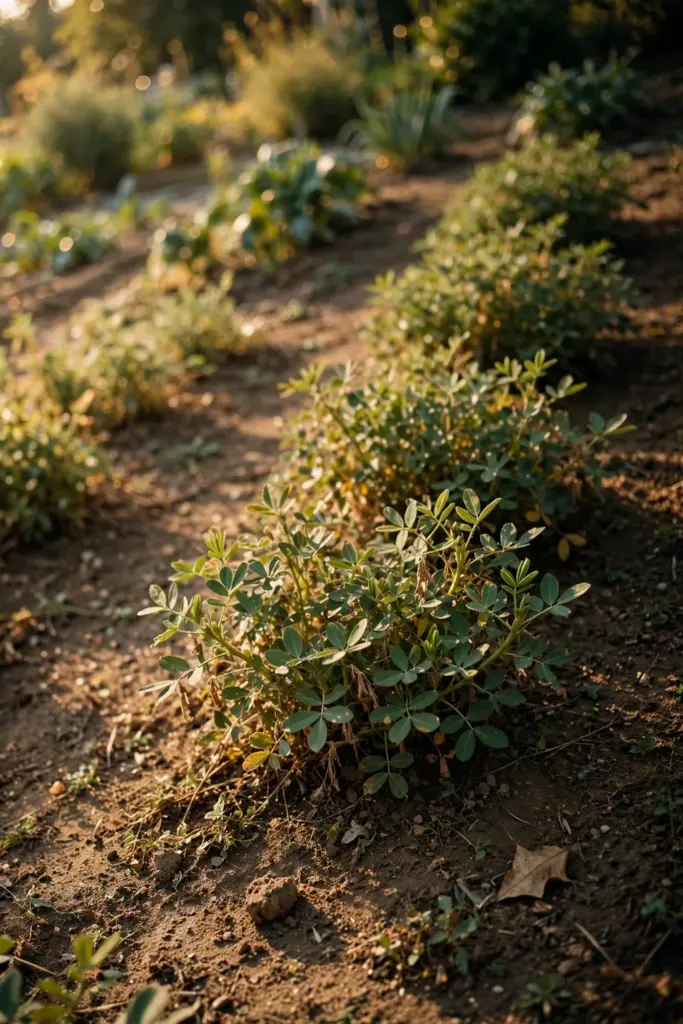
Watch earlier if late leaf spot predominates. It can appear as early as late June to early July if it is the predominant leaf spot disease. The early appearance is the predominance clue. The late appearance is the norm. The watch is the habit.
Act at the first spots. Once established, late leaf spot increases very rapidly. The fast increase is the reason to act at the first spots. The first spots are the trigger. The rapid increase is the consequence.
Strategy 3: Stop the Defoliation Before It Starts
Watch for leaf shed from the base upward. Badly spotted leaves often fall to the ground well before harvest. Leaf shed usually starts at the base of the central or lateral stem and continues upward. The base-up shed is the defoliation pattern. The bare stem is the result.
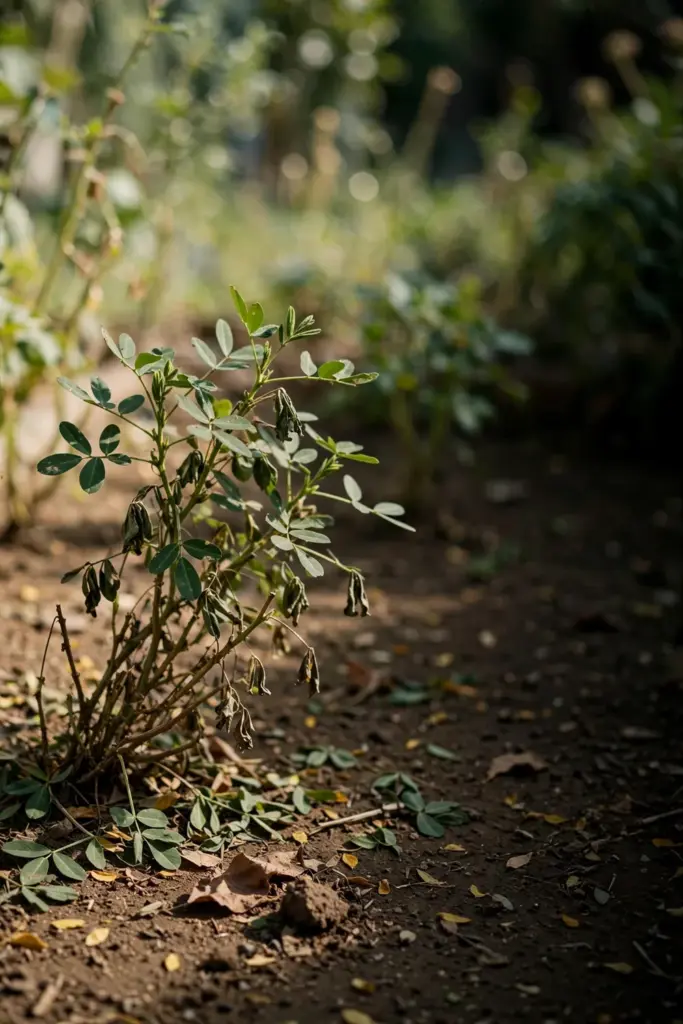
Keep the leaves on. Defoliation weakens the plant and its productivity. The leaves are the yield. The dropped leaves are the lost yield. The kept leaves are the kept yield.
Remove fallen leaves. Fallen leaves carry spores. The fallen leaves are the inoculum. The removed leaves are the removed inoculum. The cleanup is the break.
Strategy 4: Run the Shared Prevention Program
Run the shared program. The companion article “Early Leaf Spot on Home-Grown Peanuts: 7 Ways to Prevent It and Keep Your Leaves On” carries the full 7-way prevention program for both diseases. The shared program is the answer. The split is not.
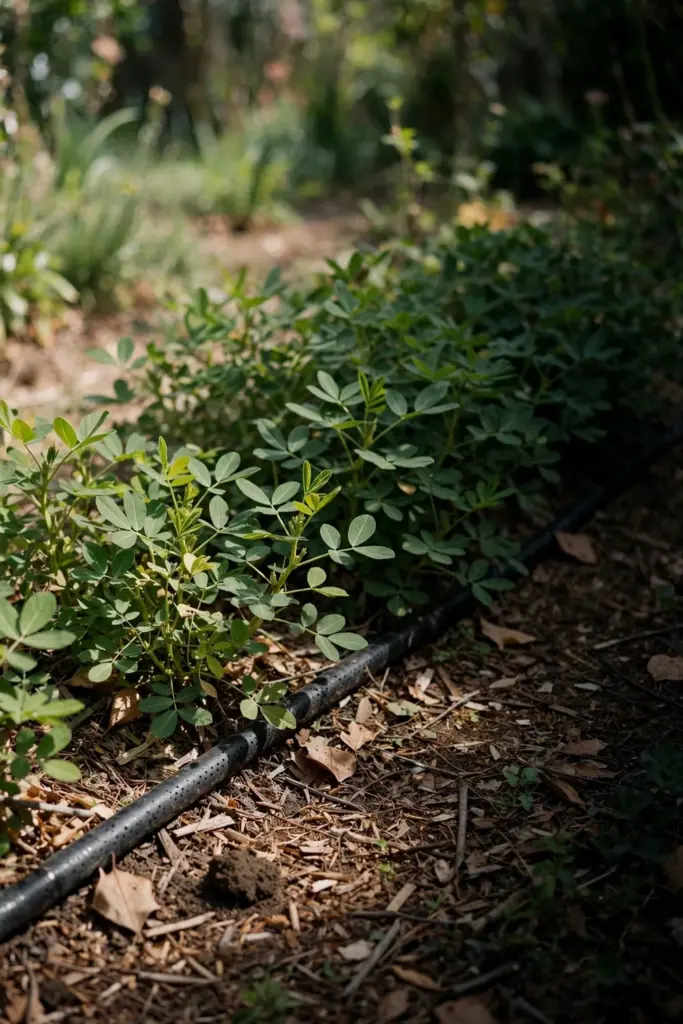
Rotate. The fungus overwinters in peanut debris, so a three-year rotation system (two years of other row crops) cuts inoculum for the subsequent peanut crop. The rotation is the break. The debris is the reservoir. The three years are the rest.
Water at the base and keep leaves dry. Wet leaves invite infection. Dry leaves resist it. The base watering is the habit. The dry leaves are the defense. The overhead watering is the risk.
Strategy 5: Use Fungicide Last, Preventive Only, Never as a Cure
Know that fungicide is preventive-only. A protective fungicide shields healthy tissue. It does not cure spotted leaves. The spray is the shield, never the cure. The cultural steps lead.
Know that well-timed fungicides are effective, but fungicide-resistance is a concern, so follow fungicide resistance management strategies. The resistance is the reason to rotate actives. The label governs. The label is the law.
Do not carry commercial programs as home advice. Fourteen-day calendar spray schedules, per-acre fungicide rates, and resistance-group rotation programs are field-scale guidance, not home advice. The label governs. The rate is the label rate. The schedule is the label schedule.
Living With Late Leaf Spot on Peanuts You Already Grow
A peanut patch with late leaf spot is a patch to manage, not a patch to abandon. Flip the leaf. Watch the late-season window. Stop the defoliation before it starts. Run the shared prevention program. Use fungicide last, preventive only. The spots will still appear, but they will appear as a few dark lesions, not as a bare-stemmed patch.
Stop three habits. Do not skip the lower-leaf check. Do not let fallen leaves sit. Do not water overhead in the evening. Keep those three lines unbroken and the late leaf spot stays cosmetic. The Plant Care archive collects the site’s disease coverage for the next problem the garden throws up.
Frequently Asked Questions
No. Late leaf spot is caused by Nothopassalora personata. Early leaf spot is caused by Passalora arachidicola. Same host, managed together, constantly compared in Extension sources. The pair is the pair. The diseases are not the same. The prevention program is shared.
Check the lower leaf surface. Late leaf spot sporulates on the bottom of the leaf surface. Early leaf spot sporulates on the upper surface. Late lesions are dark brown to black, rough, with a halo rarely present. Early lesions are brown to dark brown with a bright yellow halo. Examination of the spores under a microscope is needed to tell the fungi apart.
It is the second half of the pair. Late leaf spot typically is observed in mid-to-late August, but it can appear as early as late June to early July if it is the predominant leaf spot disease. The late season is the late window. The earlier season is the early window. The calendar is the guide.
Usually no. Sanitation, rotation, and base watering lead. A protective fungicide shields healthy tissue and never cures spotted leaves. Well-timed fungicides are effective, but fungicide-resistance is a concern, so follow fungicide resistance management strategies. The spray is the backup. The culture is the program. The label governs.
It can, if the debris stays. The fungus overwinters in peanut debris, so a three-year rotation system (two years of other row crops) cuts inoculum for the subsequent peanut crop. The rotation is the break. The debris is the reservoir. The three years are the rest.
Where to Go From Here
Late leaf spot rewards the gardener who flips the leaf, watches the late-season window, stops defoliation before it starts, runs the shared prevention program, and sprays last, preventive only. Flip the leaf. Watch the late-season window. Stop the defoliation. Run the shared program. Use fungicide last, preventive only.
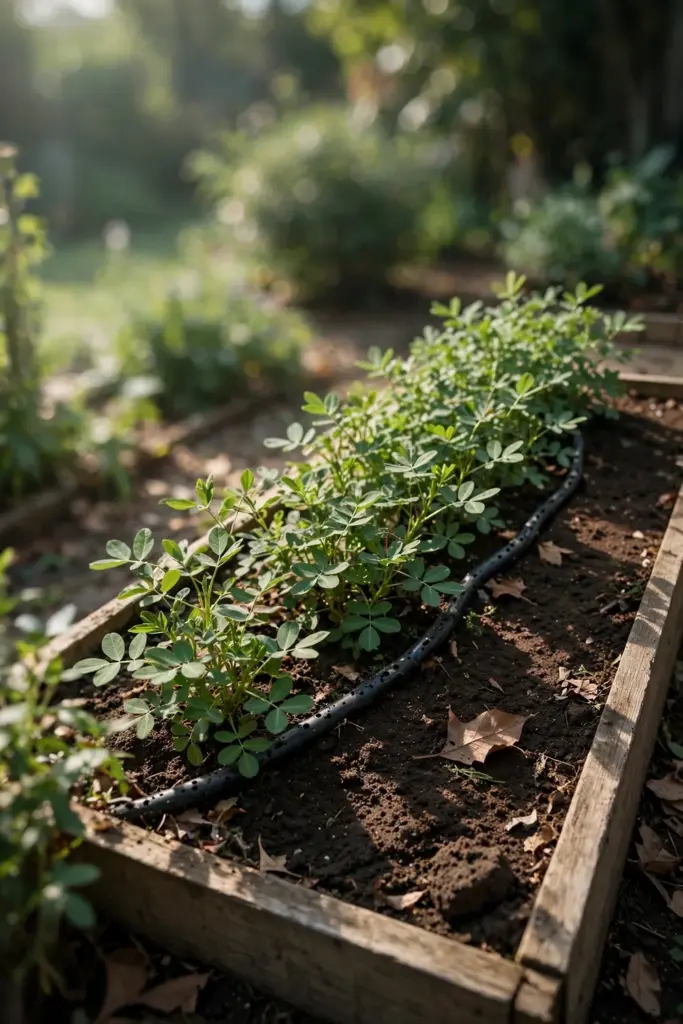
Next season, start with a clean bed. A bed with removed debris, rotated ground, base watering, and dry leaves will hold late leaf spot to a few dark lesions. The Oklahoma State Extension page on foliar diseases of peanuts is a useful companion for the full Extension picture, since it sets the home-garden response here against the university evidence behind it.