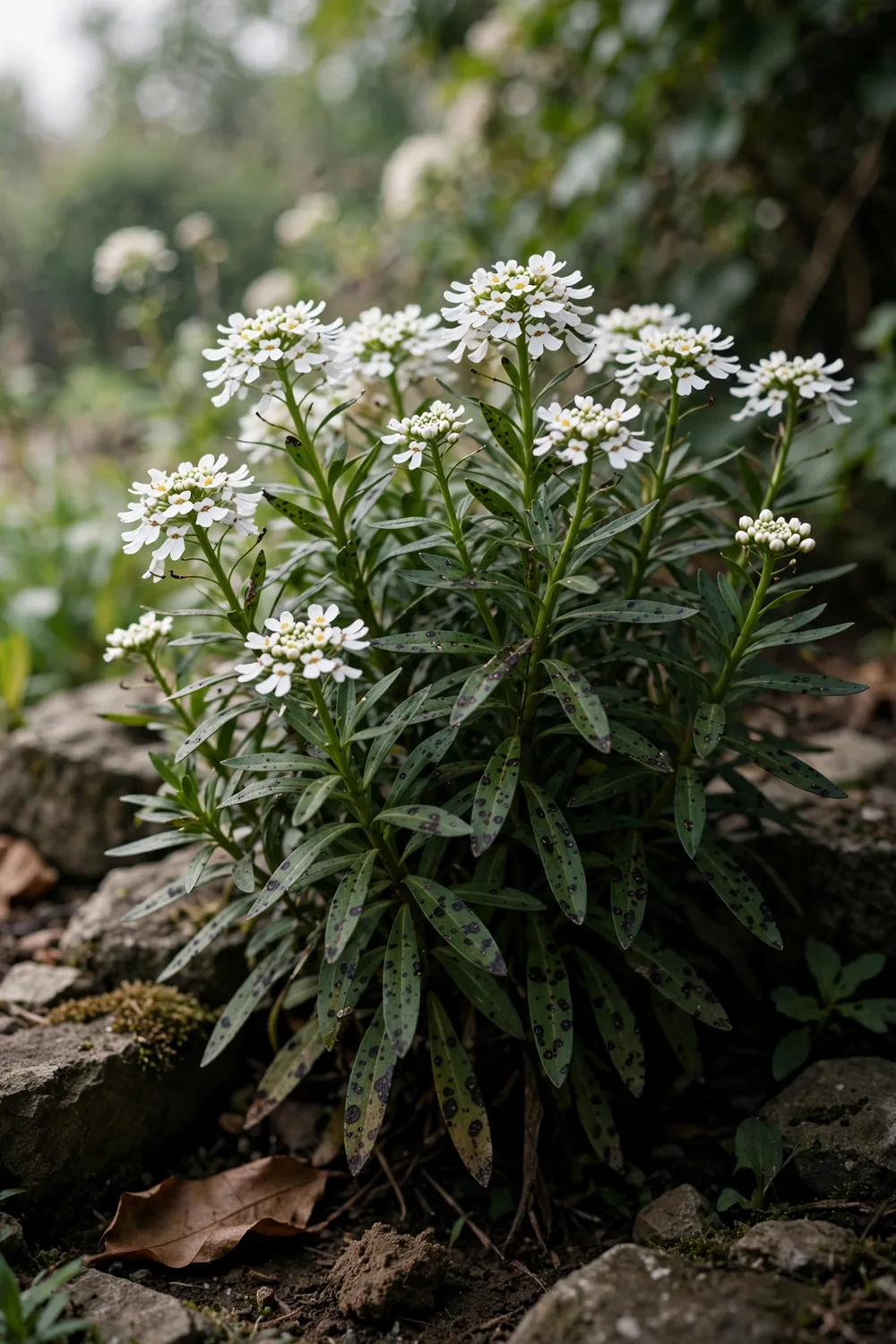

Leaf and stem necrosis on candytuft is a bacterial disease with almost no home-garden footprint. It is caused by Pseudomonas cichorii. Clemson lists it as one line under candytuft. Candytuft is remarkably disease-resistant, and the things that actually kill it are root rot, overwatering, and powdery mildew, so the 5 strategies below tell you how to read the bacterial signs, how to rule out the common problems first, and how to run the generic bacterial response.
Start with the honesty. The candytuft-specific evidence for this disease is one Clemson line. There is no candytuft-specific treatment article, no home-gardener playbook, no forum demand. This article tells you what is known, what is generic bacterial advice, and what is not this disease. It does not pretend a dedicated playbook exists.
What Leaf and Stem Necrosis Actually Is
Leaf and stem necrosis is a bacterial disease of candytuft. The pathogen is Pseudomonas cichorii. Clemson lists it as “Pseudomonas cichorii: Leaf and stem necrosis” under Iberis sempervirens (candytuft), BACTERIA. One pathogen, one host, one disease.
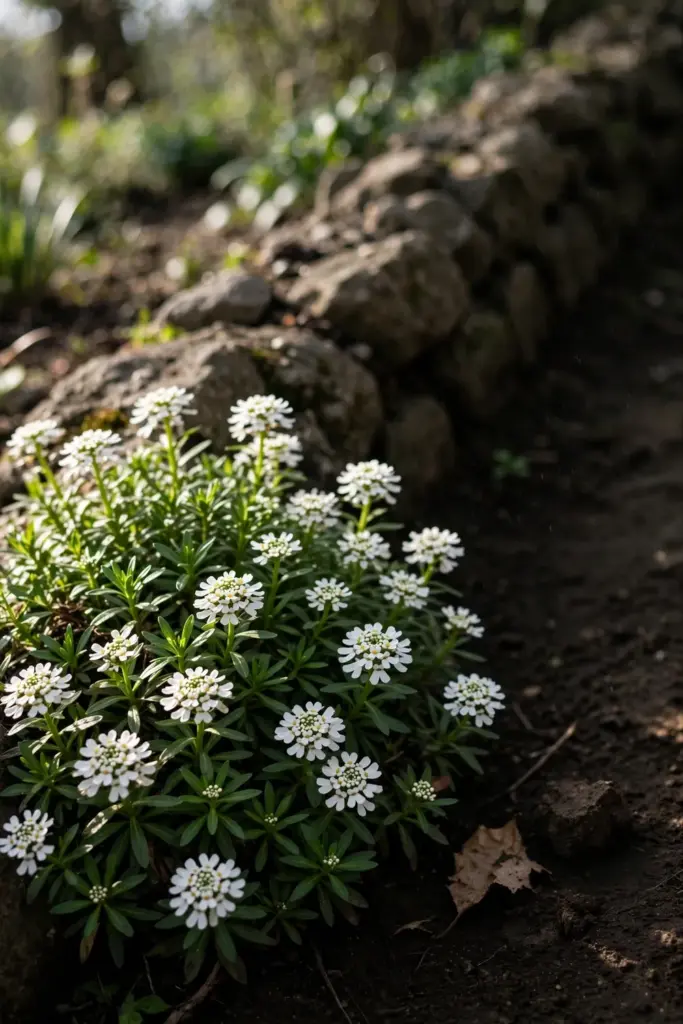
Candytuft is remarkably disease-resistant. Home candytuft content calls it “remarkably disease-resistant”, “relatively free from diseases and insects”, and “not known to have any significant pest or disease issues”. Bacterial diseases are rare on candytuft. The rare disease is the frame. The common problems are the first check.
The disease name is not a generic symptom label here. Although “leaf and stem necrosis” reads like a symptom description, Clemson uses it here as the common name of one specific bacterial disease on one host. The name is the disease. The disease is the candytuft disease. The host is the fence.
How to Identify Leaf and Stem Necrosis on Your Candytuft
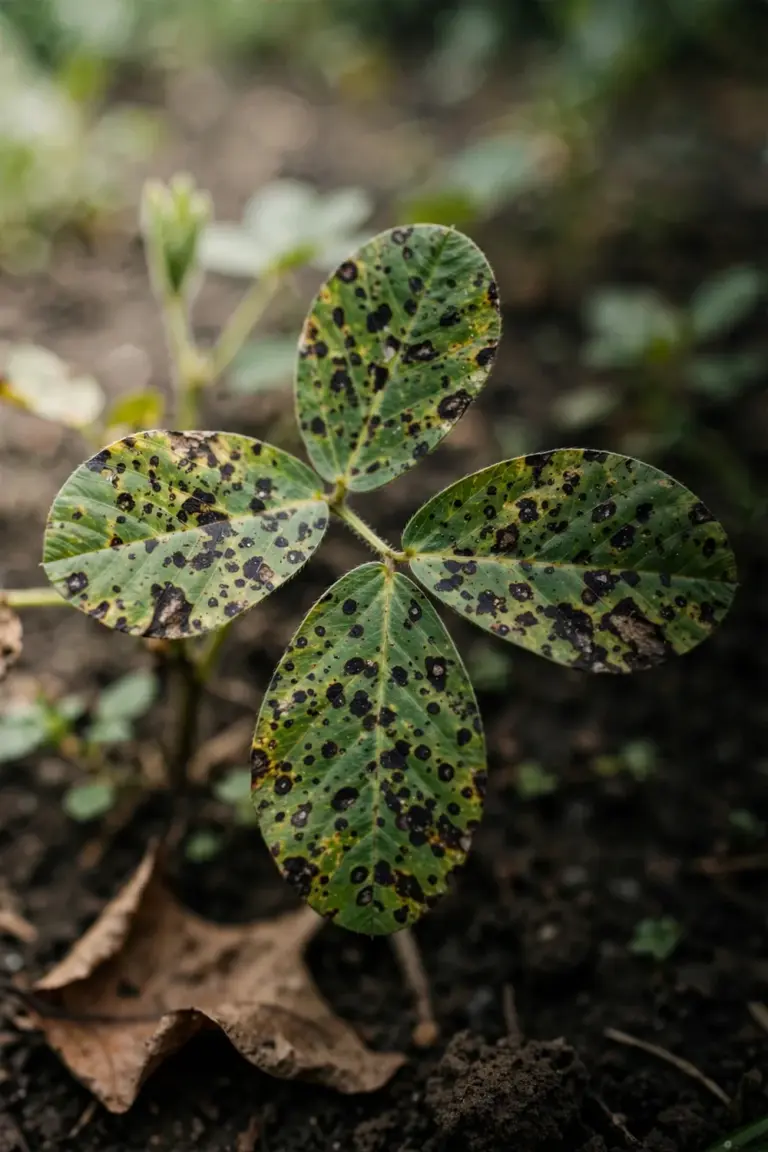
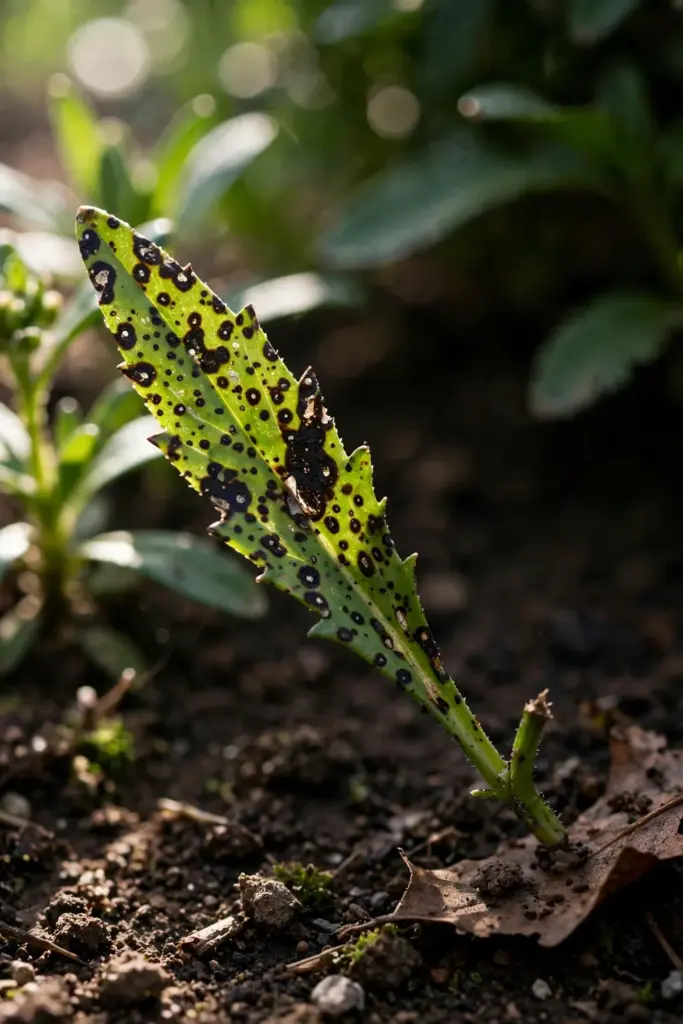
Look for water-soaked spots that turn tan to dark brown. Bacterial leaf spot begins as water-soaked spots that turn tan to dark brown, sometimes with a yellow border. Discoloration may be prominent along leaf veins, or lesions may become angular as bacterial growth is limited by major veins. The water-soaked start is the bacterial mark. The darkening is the progression.
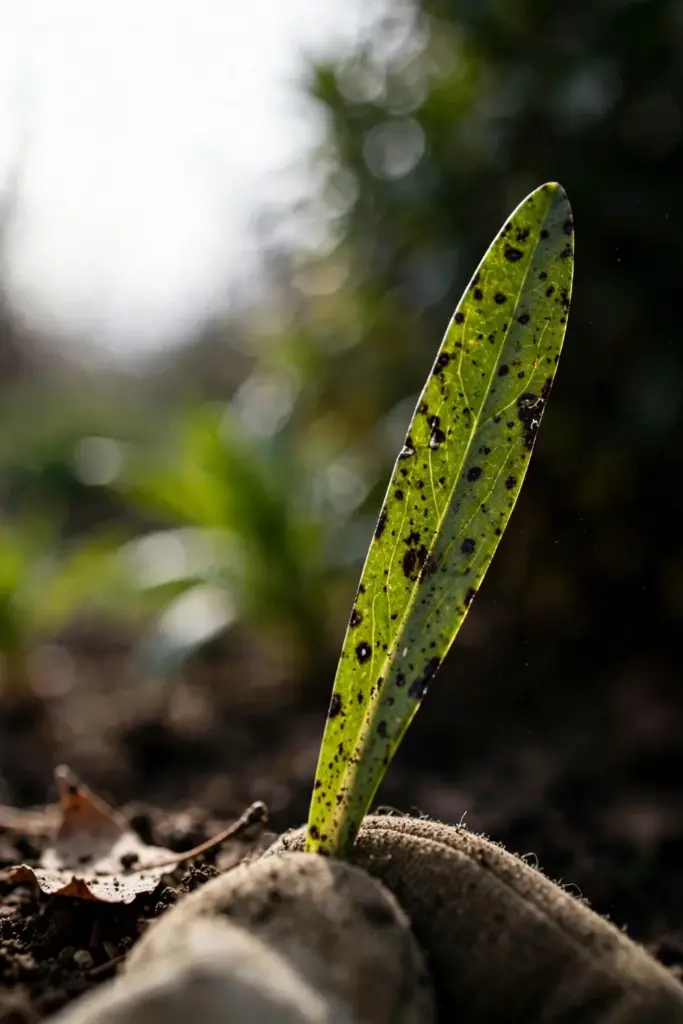
Look for dark cankers on stems. Dark cankers may also appear on stems, and leaf wilting and death often follow. The stem canker is the stem half. The leaf spots are the leaf half. The pair is the necrosis.
Hold the leaf up to the light. Bacterial leaf spots can look very similar to fungal leaf spots, but when you hold them up to the light (as if to see the light through the leaf), bacterial spots may have a translucent look to them. The translucent look is the bacterial clue. The opaque look is the fungal clue.
Rule out the common problems first. Root rot shows wilting and yellow leaves from poor drainage or overwatering. Powdery mildew shows a white powdery coating on leaves and stems. Botrytis blight shows gray mold on candytuft. None of these is leaf and stem necrosis. The common problems are the first check. The bacterial disease is the last check.
Do not confuse it with Xanthomonas leaf blight on candytuft. Xanthomonas leaf blight is a different pathogen on the same host. The documented candytuft stem symptoms in nursery-trade literature are Xanthomonas, not Pseudomonas cichorii. The host is the same. The pathogen is different. The lab is the separator.
Why Lab Confirmation Matters
Pseudomonas cichorii vs Pseudomonas syringae is lab-only. UMass: symptoms of the two are indistinguishable, differentiated in a diagnostic lab by biochemical and physiological characters. The field signs overlap. The lab settles it. The home gardener does not need the lab.

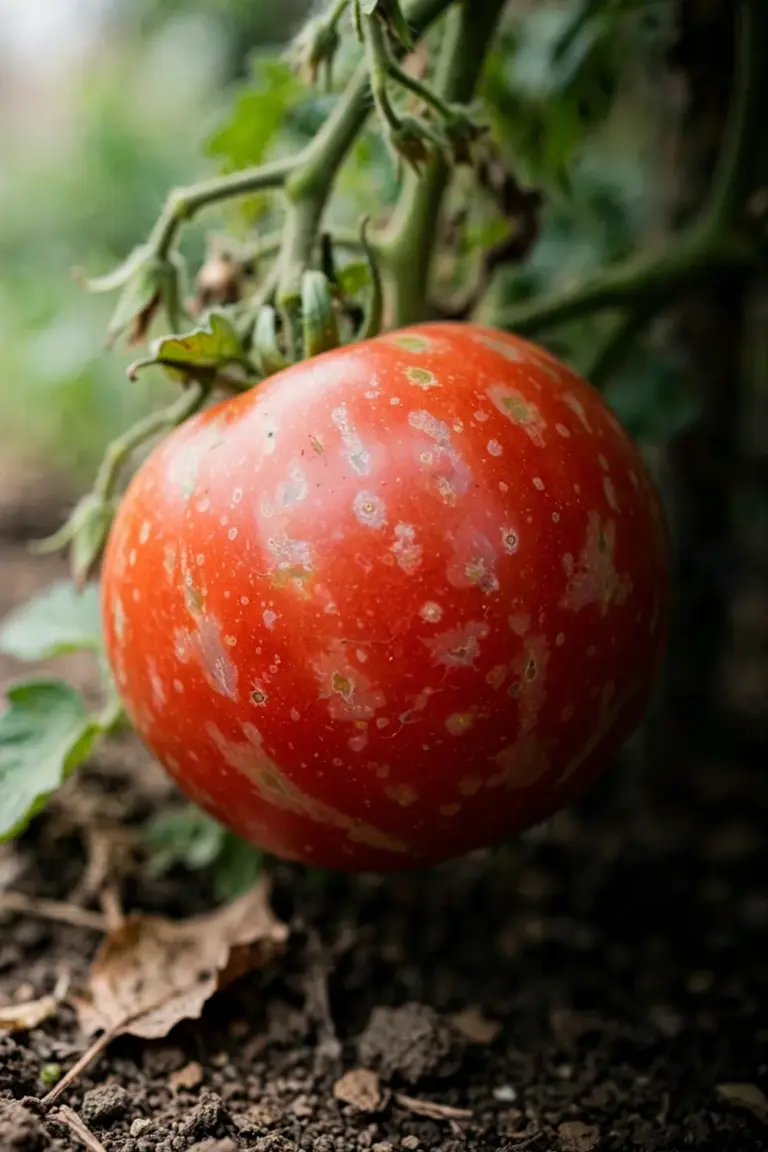
Do not borrow evidence from other hosts. Pseudomonas cichorii causes bacterial leaf spot on chrysanthemum, varnish spot and midrib rot on lettuce, leaf spot and stem necrosis on tomato, bacterial leaf spot on coreopsis and geranium, and bacterial leaf blight on plumeria. None of that evidence belongs to this row. This row is candytuft leaf and stem necrosis only. The host is the fence. The borrowing is the trap.
Do not confuse with Clemson’s other entries. Pseudomonas cichorii “Bacterial leaf spot, Stem necrosis” on Lantana is a different Clemson entry, different host, different common name. Pseudomonas viridiflava “Bacterial stem rot” on Iberis sempervirens is the same host, different pathogen and common name. The entries are the fence. The confusion is the trap.
Strategy 1: Start With the Common Problems
Check drainage first. Root rot from excessive soil moisture and poor drainage is the most common candytuft killer. The wilting plant in wet soil is root rot. The wilting plant in dry soil is underwatering. The drainage is the first check.
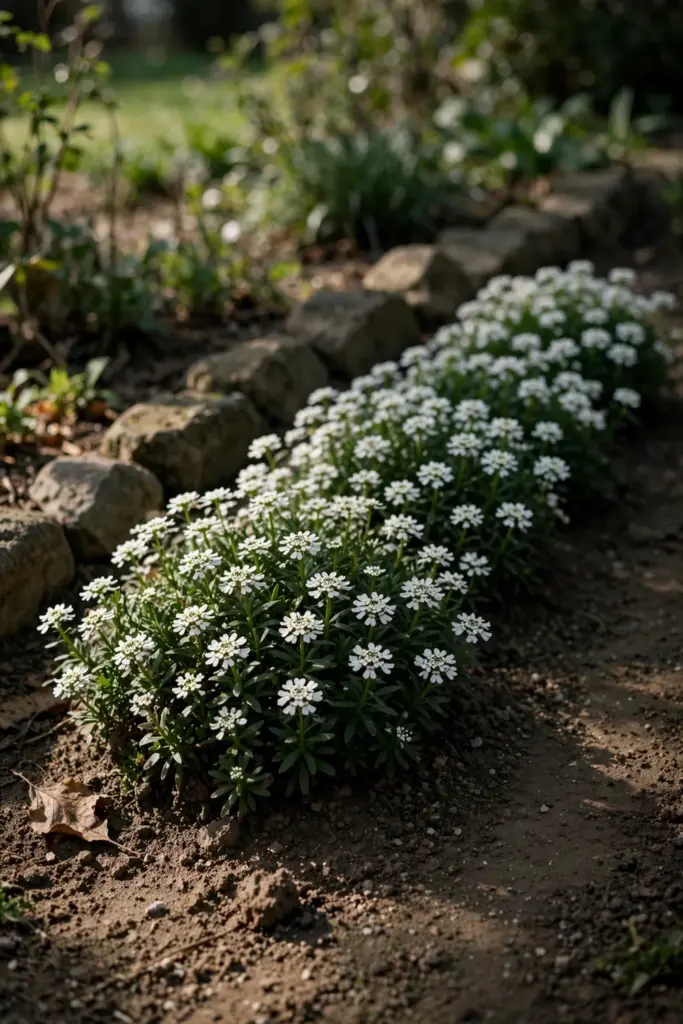
Check for powdery mildew. Powdery mildew shows a white powdery coating on leaves and stems. The white coating is the mildew. The dark spots are not the mildew. The coating is the separator.
Check for Botrytis blight. Botrytis blight on candytuft shows gray mold. The gray mold is the Botrytis mark. The bacterial spots are not gray mold. The mold is the separator.
Strategy 2: Remove and Destroy Affected Plants
Remove affected plants and infected plant debris. Sanitation is the most important disease management principle. Remove and destroy affected plants and infected plant debris. The removed plant is the removed inoculum. The left plant is the spread.
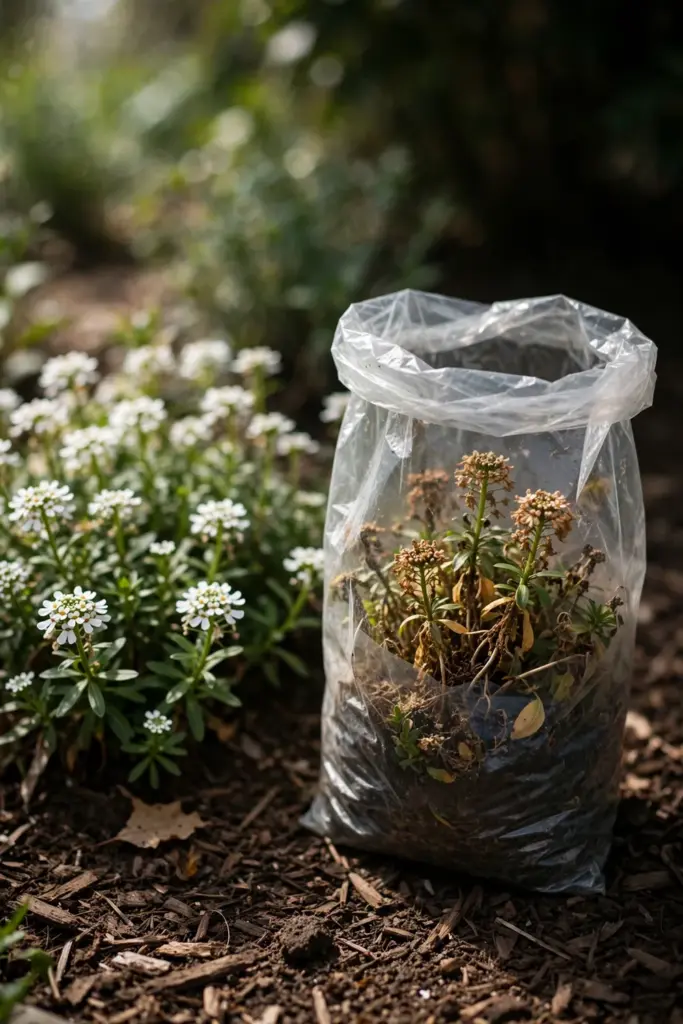
Do not compost infected material. Compost spreads the bacteria. The compost pile is a distribution route. The composted plant is the next infection. The trash is the disposal.
Clean tools between cuts. Bacteria ride on tools. The dirty tool is the spreader. The clean tool is the fence. The disinfection is the habit.
Strategy 3: Keep Foliage Dry
Minimize splashing and reduce leaf wetness duration by watering early in the day or subirrigating. The splash is the spreader. The dry leaf is the defense. The early watering is the habit.
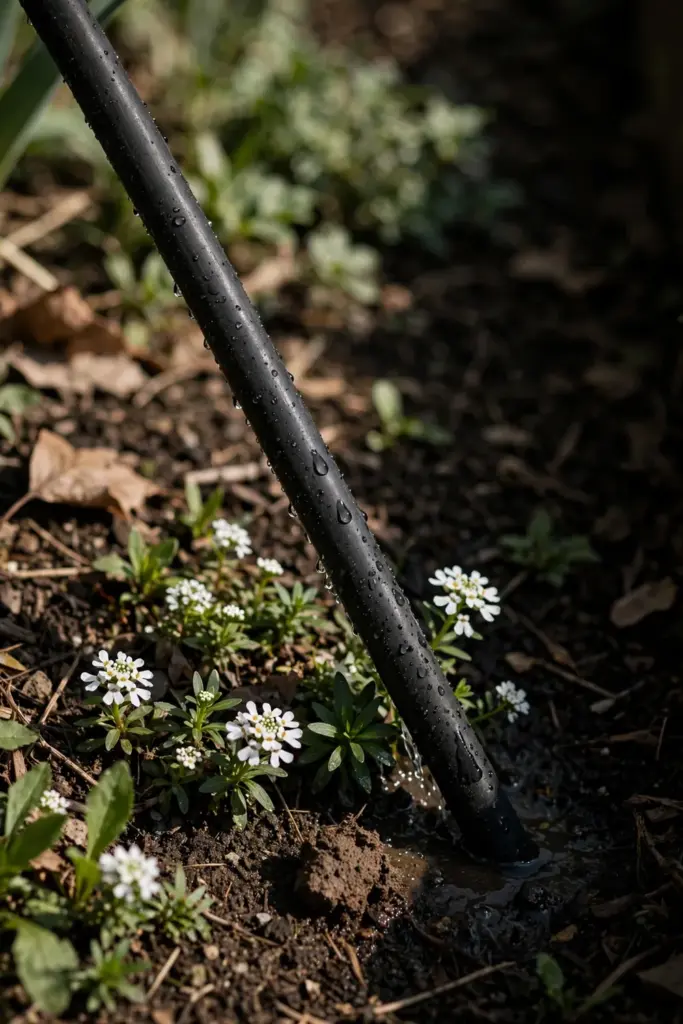
Water at the base. Overhead irrigation wets the leaves. The soaker is the safe water. The sprinkler is the spreader. The base is the watering place.
Do not handle plants when foliage is wet. Wet handling spreads bacteria. The wet hands are the spreader. The dry hands are the fence. The dry handling is the habit.
Strategy 4: Improve Air Circulation and Spacing
Reduce relative humidity by improving air circulation with fans, plant spacing, and by heating and venting. The moving air is the dryer. The still air is the incubator. The spacing is the airflow.
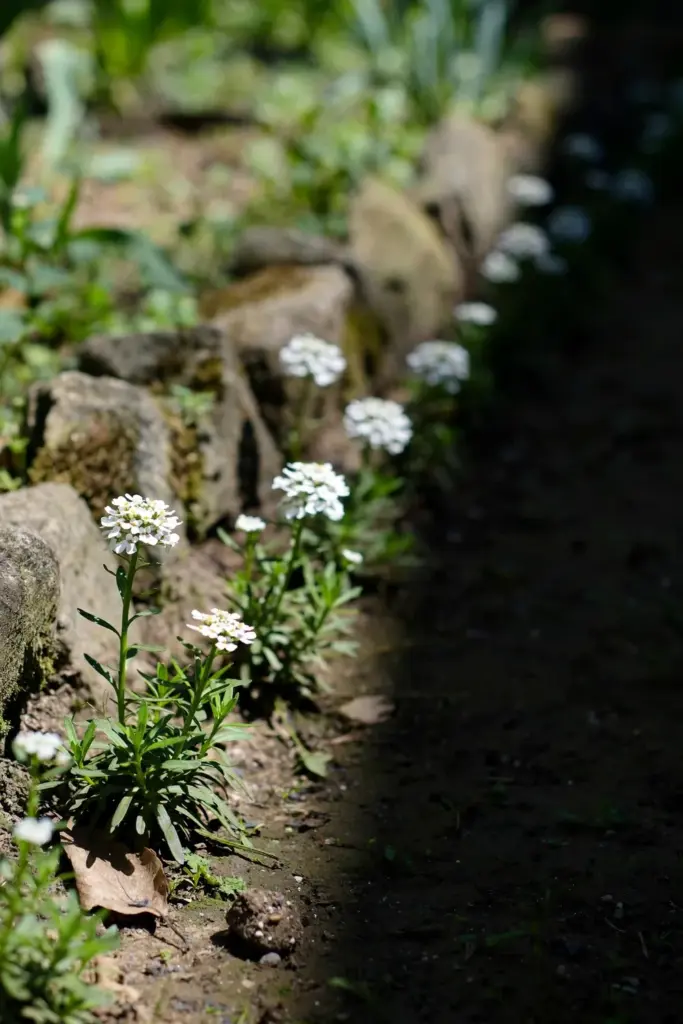
Space plants 12 to 18 inches apart to allow air circulation and reduce disease risk. The spaced plant dries faster. The crowded plant stays wet. The spacing is the fence.
Keep the bed clean. Debris holds bacteria. The clean bed is the safe bed. The debris is the reservoir. The cleanup is the break.
Strategy 5: Use Copper Last, Preventive Only, Never as a Cure
Know that copper is only marginally effective. Copper products are registered for control, but bactericides are only marginally effective in controlling bacterial diseases. The marginal copper is the last resort. The sanitation is the program.
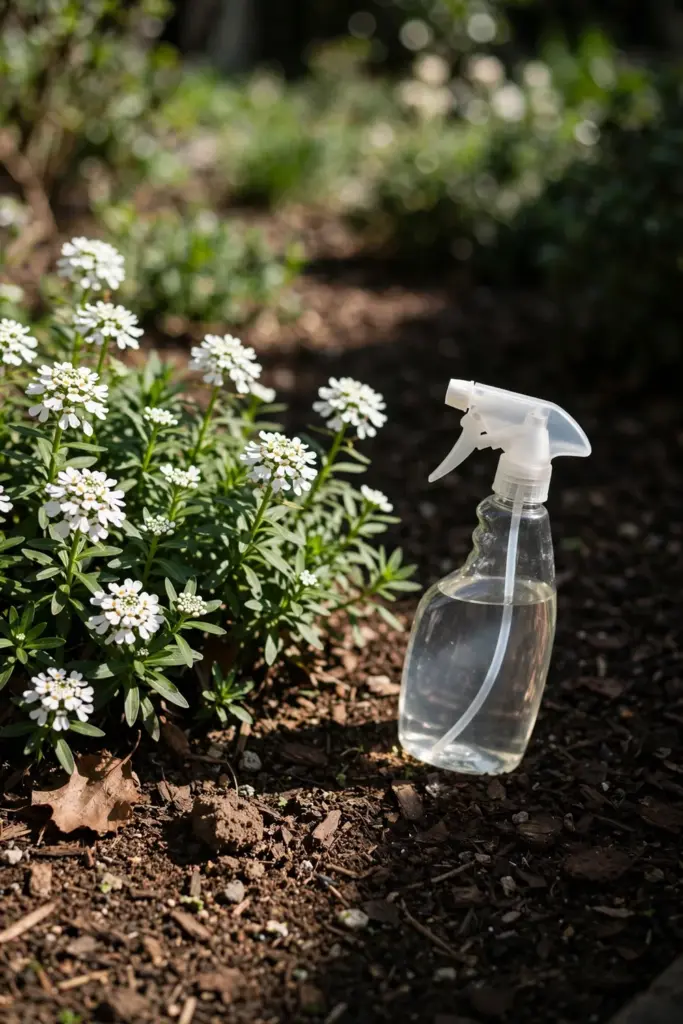
Know that plants cannot be cured. Bactericides such as copper and antibiotics are of limited effectiveness and plants cannot be cured. The cure does not exist. The removal is the answer. The prevention is the program.
Do not carry commercial programs as home advice. Greenhouse sanitation programs, commercial mum and lettuce production protocols, and per-acre rates are production guidance, not home advice. The label governs. The rate is the label rate. The label is the law.
Living With Leaf and Stem Necrosis on Candytuft You Already Grow
A candytuft bed with leaf and stem necrosis is a bed to manage, not a bed to abandon. Rule out the common problems first. Remove and destroy affected plants. Keep foliage dry. Improve air circulation and spacing. Use copper last, preventive only. The spots will still appear, but they will appear as a few bacterial lesions, not as a dead bed.
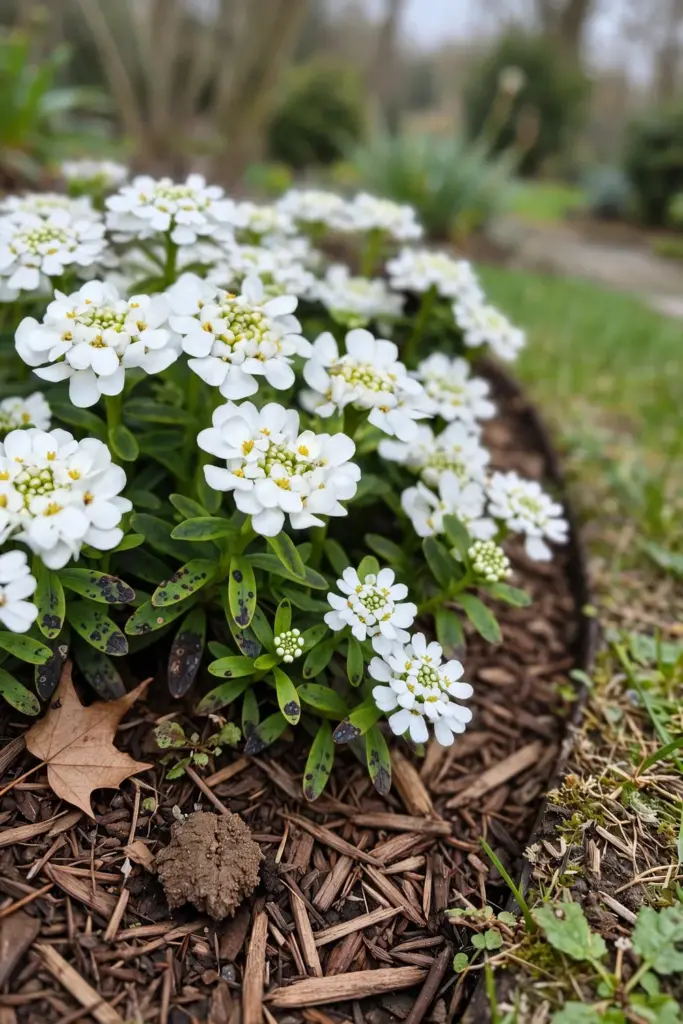
Stop three habits. Do not water overhead in the evening. Do not leave infected debris in the bed. Do not handle plants when foliage is wet. Keep those three lines unbroken and the bacterial pressure stays low. The Plant Care archive collects the site’s disease coverage for the next problem the garden throws up.
Frequently Asked Questions
No. Candytuft is remarkably disease-resistant. Home candytuft content calls it “remarkably disease-resistant” and “not known to have any significant pest or disease issues”. Bacterial diseases are rare on candytuft. The common problems are root rot, overwatering, and powdery mildew. The bacterial disease is the last check.
Check the signs. Bacterial spots start water-soaked, turn tan to dark brown, and may look translucent when held up to the light. Root rot shows wilting from wet soil. Powdery mildew shows a white coating. Botrytis shows gray mold. Xanthomonas leaf blight on candytuft is a different pathogen with the same host, and only a lab separates it.
No. Bactericides such as copper and antibiotics are of limited effectiveness and plants cannot be cured. Remove and destroy affected plants. Sanitation and water discipline lead. Copper is preventive-only at best. The cure does not exist. The removal is the answer.
Usually no. Sanitation, dry foliage, and air circulation lead. Copper products are registered for control, but bactericides are only marginally effective in controlling bacterial diseases. The marginal copper is the last resort. The sanitation is the program. The label governs.
It can, if the debris stays. Bacteria persist in or on infected plants, crop debris, infected seed, contaminated soil, and infested pots and tools. Remove and destroy affected plants and debris. The cleanup is the break. The skipped cleanup is the return. The debris is the reservoir.
Where to Go From Here
Leaf and stem necrosis rewards the gardener who rules out the common problems first, removes and destroys affected plants, keeps foliage dry, improves air circulation, and uses copper last, preventive only. Rule out the common problems. Remove and destroy affected plants. Keep foliage dry. Improve air circulation. Use copper last, preventive only.
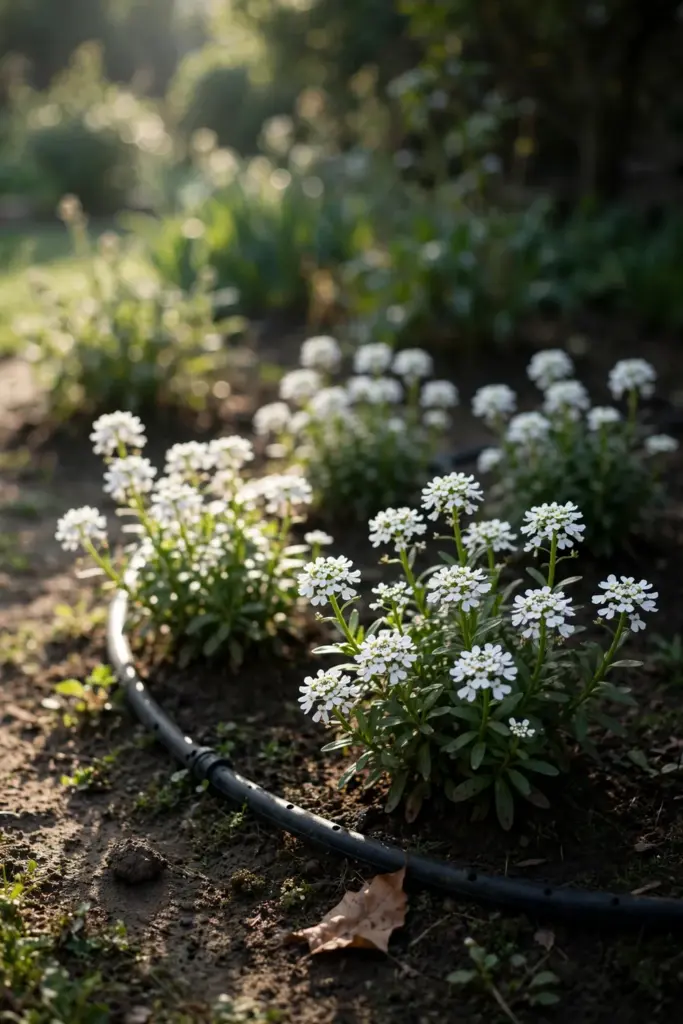
Next season, start with a clean bed. A bed with removed debris, spaced plants, base watering, and dry leaves will hold bacterial pressure to a few lesions. The UMass Extension page on leaf spot diseases of floricultural crops is a useful companion for the full Extension picture, since it sets the home-garden response here against the university evidence behind it.