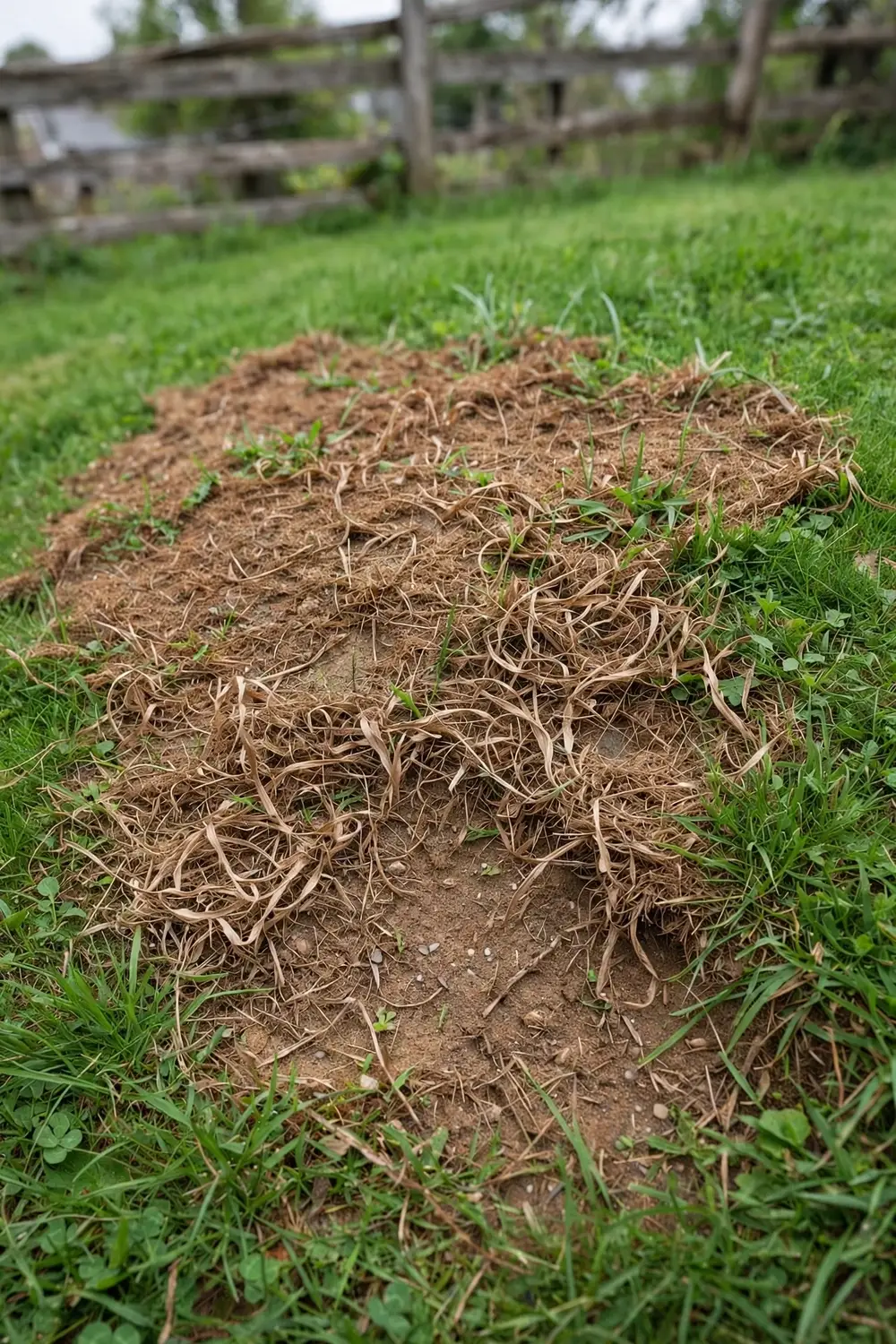

Four causes make brown patches on an Australian lawn: heat stress, fungus, dormancy, and drought. The fix for one is the opposite of the fix for another, so name the cause before you touch the hose. Run 4 field tests, footprint, morning, tug, and screwdriver, and the table below sorts the patch.
If you typed heat stress or fungus brown patches lawn into a search box, you already know the symptom. Brown patches are a symptom, not a diagnosis. The disease called Brown Patch is only one of four causes. I have learned that the footprint test answers faster than any photo of a brown patch. The rest of this page runs the four tests in order, then gives the first fix for each cause.
1. Run the 4-Way Differential Before You Water Anything
The differential table names the cause before the fix. Read the row that matches your lawn, then run its field test to confirm. Guessing costs a lawn. Watering a fungus patch feeds it. Drying a heat-stressed patch cooks it. Feeding a dormant lawn forces growth it cannot support.
| Cause | What It Looks Like | Field Test | First Fix |
|---|---|---|---|
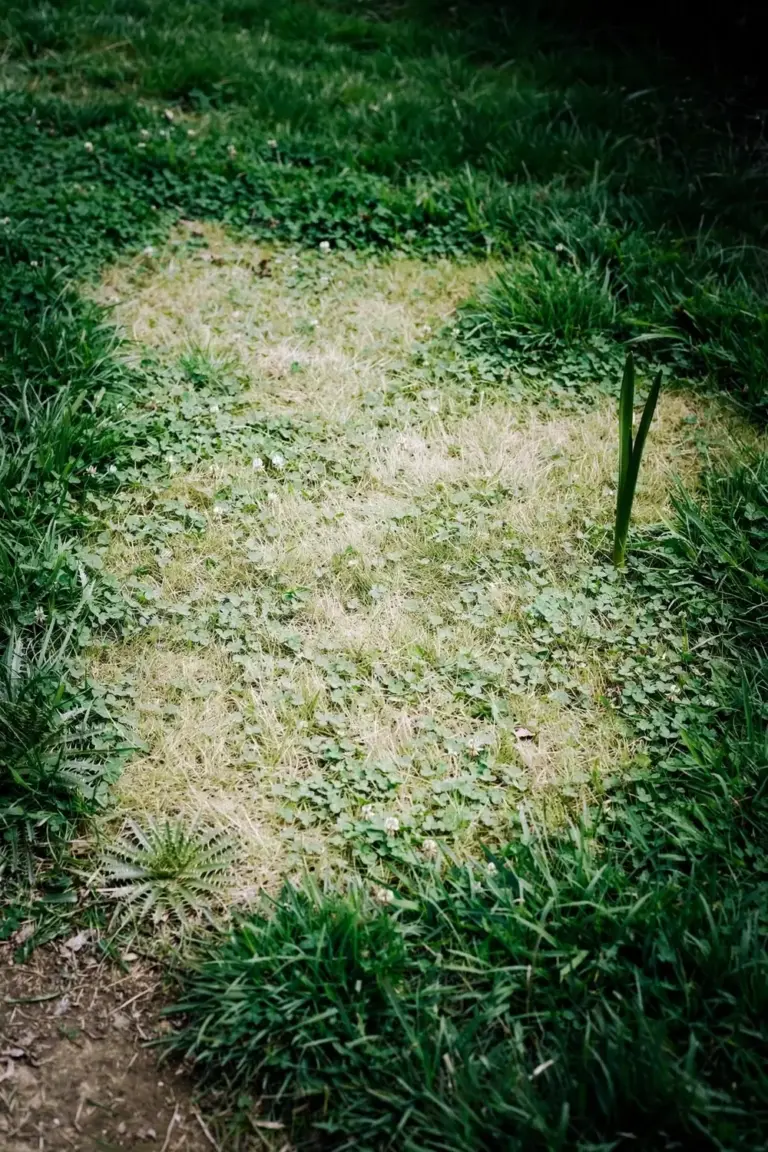
| Heat stress | Blue-gray cast, footprints stay visible, patchy browning on hot days | Footprint test: prints stay after an hour | Deep morning watering, raise the cut |
| Fungus | Circular patches, tan leaf spots with dark borders, smoke ring at dawn | Morning leaf check: spots, webbing, ring | Keep leaves dry, water early, no nitrogen while active |
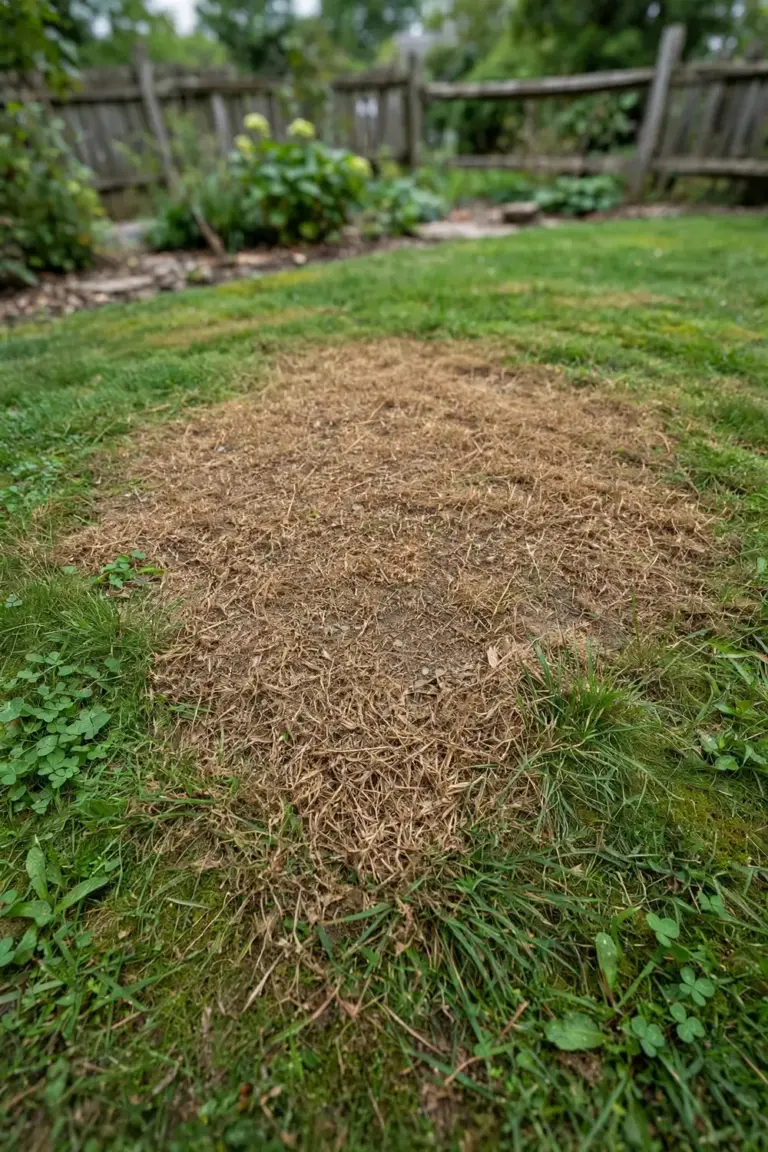
| Dormancy | Even straw-brown lawn, no green at the base | Tug test: roots hold, crown firm and pale | Water one quarter to one third of normal, wait |
| Drought | Blue-gray cast, rolled blades, dry soil | Screwdriver test: probe will not enter dry soil | Deep watering, then resume the normal rhythm |
Heat stress and drought often arrive together. The screwdriver test separates them. Footprints that linger with soil that still holds some moisture point to heat stress. A probe that will not enter dry soil points to drought. Run both tests on the same patch before you decide.
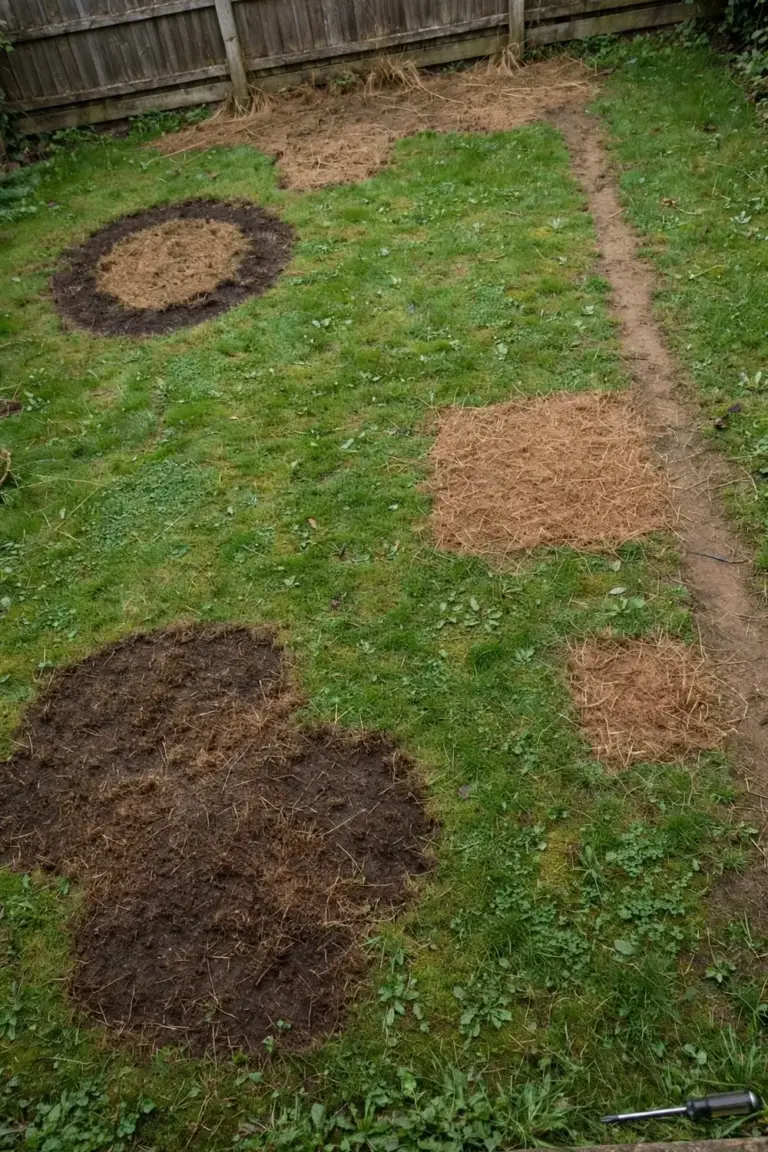
Pattern matters as much as color. Fungus grows in circles. Heat stress follows the sun, so north-facing and west-facing lawns in Australia cop it first. Drought follows the dry spots, near paths, over shallow soil, and around trees that drink first. Dormancy covers the whole lawn in one even straw-brown wash. A patch that matches none of the four rows needs a closer look at the roots, and the tug test in section 4 is the place to start.
2. Test Heat Stress With the Footprint Test
Heat stress means the grass loses water faster than the roots can replace it. The leaf folds, the color shifts to blue-gray, and the blade stays flat after a footstep instead of springing back. Walk across the brown area and look behind you. If your footprints stay visible, the lawn is short of water and short of cooling.
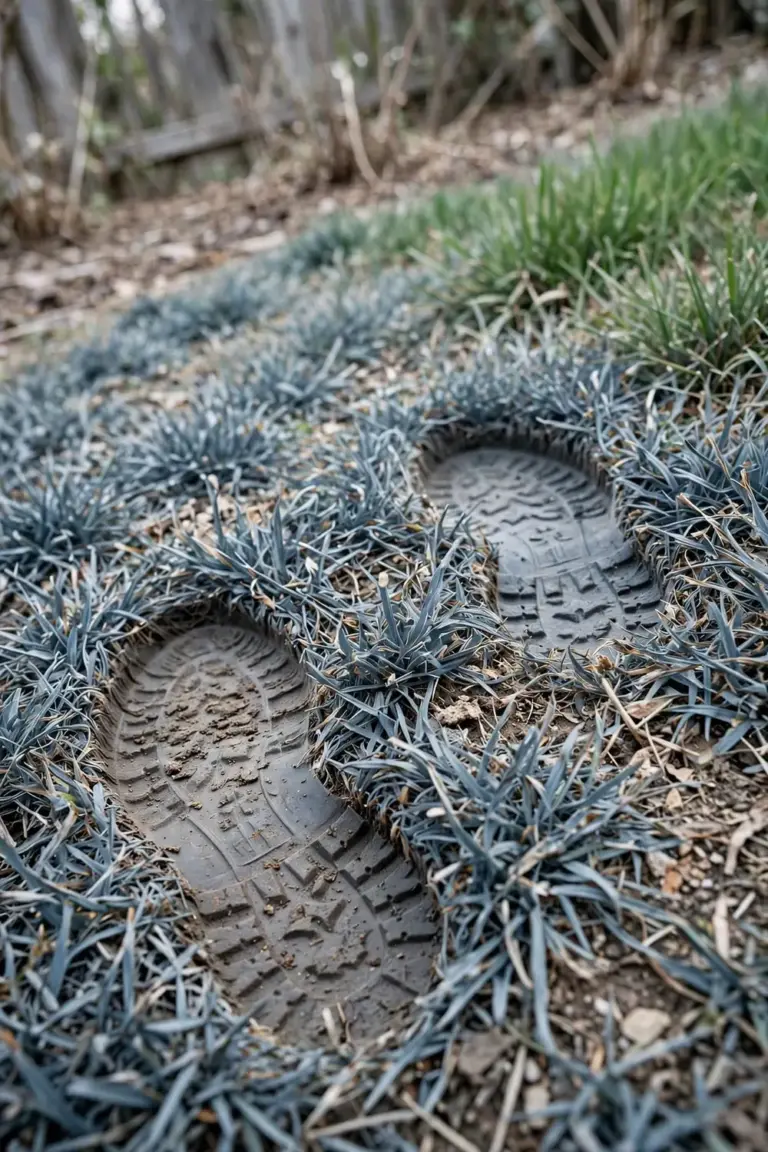
Lawn Solutions Australia describes the same footprint test: a noticeable footprint left behind means the lawn is likely lacking water, while grass that bounces back is well hydrated. In extreme heat, the same guide says the lawn can take on a blue to gray coloration before it starts to die if left unattended. That color shift is the early warning. A lawn that has gone straw-brown has moved past warning into damage.
The first fix is deep morning watering. Water early so the leaves dry before night. A wet leaf at night invites fungus, and a heat-stressed lawn does not need a second problem. Raise the cut at the same time. Taller grass shades its own soil, and shaded soil stays cooler and holds moisture longer. Mow in the cool of the day, never at midday, and leave the clippings where they fall so they return moisture to the soil surface.
Check the soil before the second watering. Push a screwdriver into the patch. If it slides in and the soil feels moist a few centimetres down, the first watering did its job. If the probe stops at dry soil, the water ran off instead of soaking in. Sandy Australian soils can turn hydrophobic in a dry spell, and water beads on the surface instead of sinking. A wetting agent helps water soak through hydrophobic soil. Water in short bursts, let each burst soak in, then repeat.
Water with the sun low and the breeze down. Morning watering puts water on the roots before the heat of the day, and the leaf dries before night. If the lawn sits on a slope, water the high side first and let the water move down. A second pass after the first has soaked in reaches deeper than one long run that sheets off the surface.
3. Check Fungus With the Morning Leaf Test
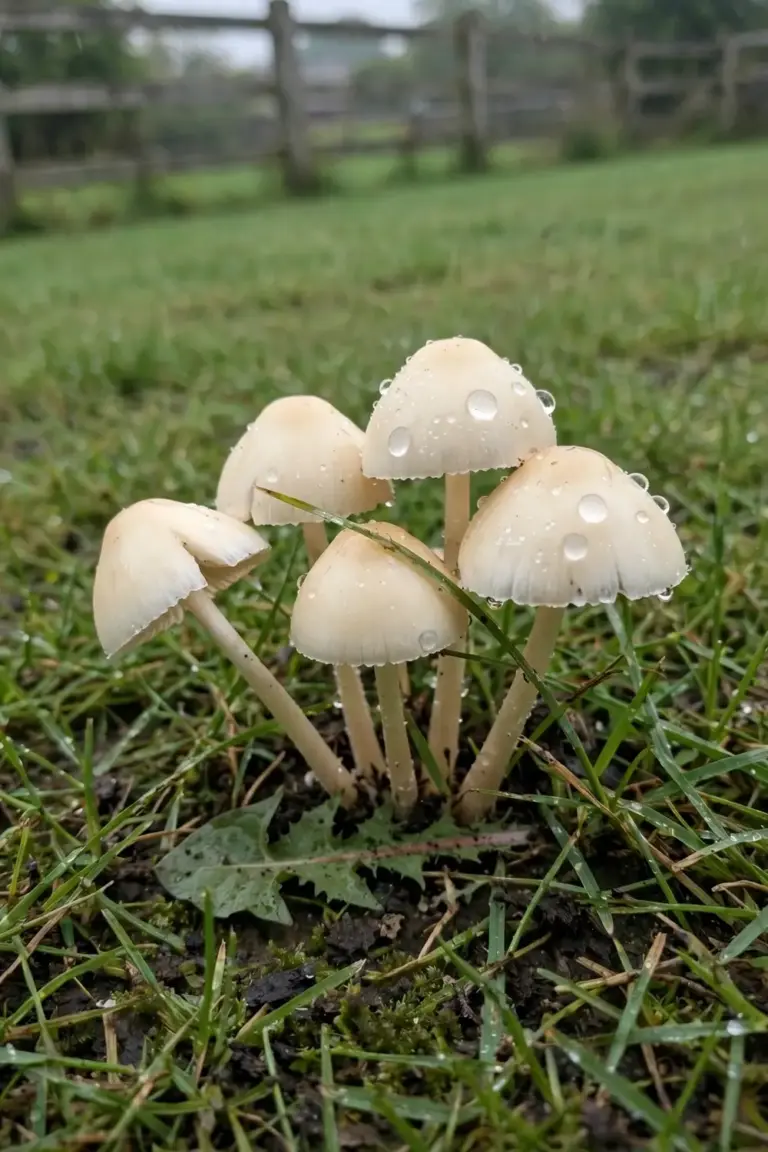
Fungus grows in circles. That is the first clue. Heat stress follows the sun and drought follows the dry spots, but a fungus patch starts as a circle and spreads outward in a ring. The second clue sits on the leaf itself. Part the grass at the edge of the patch and look at single blades. Tan leaf spots with dark borders mean fungus is feeding on the leaf.
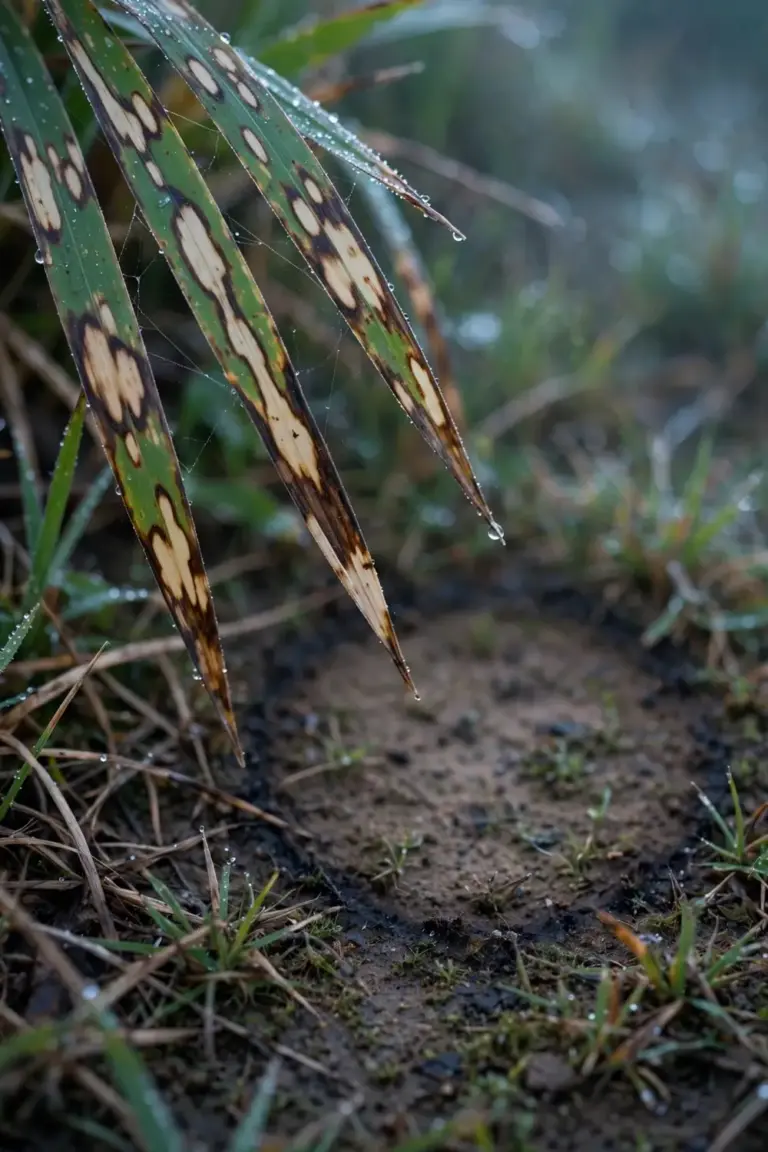
Brown Patch is the fungus most likely to cause brown patches on a home lawn. Its cause is the fungus Rhizoctonia solani. Missouri Extension says brown patch develops rapidly when night temperatures exceed 21 degrees C and leaf wetness lasts more than 10 hours, and it turns severe after extended periods of hot, rainy, humid weather from 21 to 32 degrees C. Warm humid nights are the trigger. A week of still, muggy weather after rain is prime brown patch weather.
The morning leaf test runs at dawn, before the dew dries. Look for three signs. First, leaf spots: long, irregular tan spots with dark brown or purplish-black margins on the blade. Second, webbing: fine threads on the grass in the early morning. Third, a smoke ring: a dark, smoky, yellowish ring at the edge of the patch. Nebraska Extension describes the same pattern: the patch starts small, expands up to several feet in diameter, and the center recovers first, leaving a doughnut-shaped pattern. Nebraska Extension also warns that drought symptoms may mimic brown patch, which is why the leaf test matters. Drought browns the blade without spots. Fungus spots the blade.
The first fix for a fungus patch is dry leaves. Water early in the day so the foliage dries as fast as possible. Stop night watering while the patch is active. Hold all nitrogen while brown patch is active. Missouri Extension warns that heavy nitrogen predisposes turf to brown patch, and that no nitrogen fertilizer should go down while brown patch is active. A light feed after the outbreak may speed recovery, but feeding during the outbreak feeds the fungus.
Brown Patch kills leaf blades, not crowns. Nebraska Extension states that brown patch kills grass leaf blades but does not affect the plant crown, so the lawn recovers once the disease is controlled or turns inactive. That is the good news inside a scary-looking patch. The grass looks dead. The crown is alive. Keep the leaves dry, hold the nitrogen, and the patch grows out.
If the patch keeps spreading after a week of dry leaves and no nitrogen, the diagnosis may be wrong. A second fungus, a grub problem, or a chemical spill can mimic brown patch. Re-run the differential from the top. Photograph the patch edge each morning so the spread is measured, not guessed. A patch that doubles in size overnight is not brown patch behaving normally, and a patch that holds its edge is already turning.
Other lawn fungi cause similar patches. If the patch shows no leaf spots and no smoke ring, the cause may be a different leaf-spot disease. The bipolaris leaf spot guide covers one of the common lookalikes, with its own spot pattern and its own fix. Do not spray a fungicide on a guess. Name the fungus first, or treat the patch with the cultural fixes, dry leaves, no nitrogen, better air flow, and watch whether it spreads.
4. Call Dormancy With the Tug Test
Dormancy means the grass is alive and resting. The whole lawn turns an even straw-brown, and no green shows at the base. The grass has shut down leaf growth to save the crown. Dormancy needs no fix. It needs water enough to keep the crown alive, and patience.
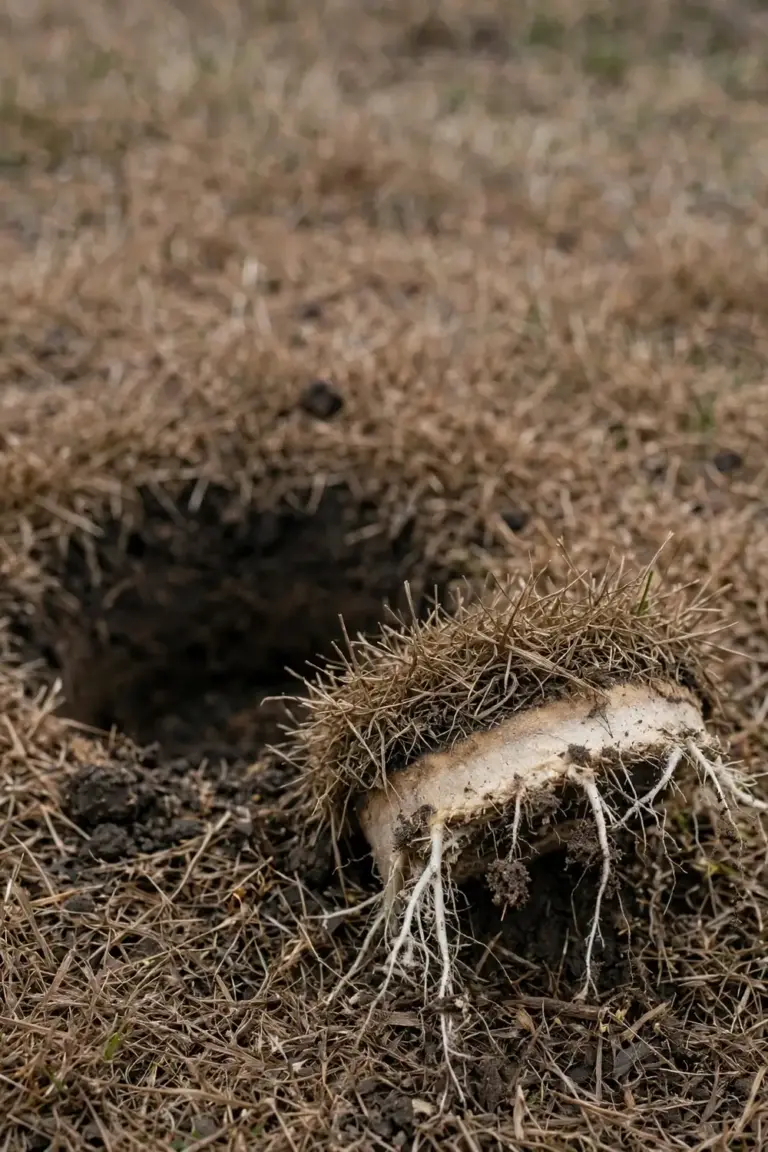
Warm-season grasses such as buffalo, couch, kikuyu, and zoysia go into dormancy during hot and dry conditions, conserving energy to maintain plant health. They recover and grow new leaves when conditions improve. That is the normal summer behavior of the grasses most Australian lawns are made of. A buffalo lawn that turns straw-brown in a dry February is usually resting, not dying.
The tug test separates dormancy from death. Grip a handful of brown blades and pull gently. If the roots hold and the blades resist, the crown is alive. Dig a small plug and look at the crown, the pale thickened point at the base where roots go down and blades grow up. A firm, pale crown means dormancy. A soft, dark, or mushy crown means that section is dead. A dead section needs re-turfing or re-seeding, not more water. Water cannot revive a crown that has rotted.
Water a dormant lawn at one quarter to one third of its normal amount. University of Nebraska-Lincoln Extension advises that turf plants stay alive but go dormant when water is greatly reduced, and that about one fourth to one third of the normal amount keeps the plants alive in a dormant or semi-dormant state. That is survival watering. It keeps the crown alive without trying to force the lawn out of dormancy. Watering a fully dormant lawn like an actively growing lawn wastes water without helping it. Under-watering a lawn you are trying to keep green stalls the recovery you are chasing.
A dormant lawn still needs watching. Check the crown every week or two with the tug test. A crown that stays firm and pale is resting well. A crown that turns soft or dark is failing, and that patch needs water or re-turfing before the whole section goes. Dormancy is a waiting game, and the tug test is the scoreboard.
Cool-season grasses play by different rules. Tall fescue and perennial ryegrass lack the rhizomes that let a lawn spring back after dormancy. University of Nebraska-Lincoln Extension advises against the dormancy strategy for tall fescue or perennial ryegrass, because those species lack the rhizomes in the root system that allow the turf to spring back after dormancy. A brown fescue lawn in summer is in more danger than a brown buffalo lawn. Water fescue and ryegrass to keep them green, or accept that a fully dormant patch may not return.
5. Test Drought With the Screwdriver Test
Drought browns a lawn from the driest spots outward. The first symptom is a blue-gray cast on the leaf blades. The blades then roll up instead of lying flat. The lawn thins, and the soil dries hard. A drought patch looks like heat stress, and the two often arrive together, but the soil test separates them.
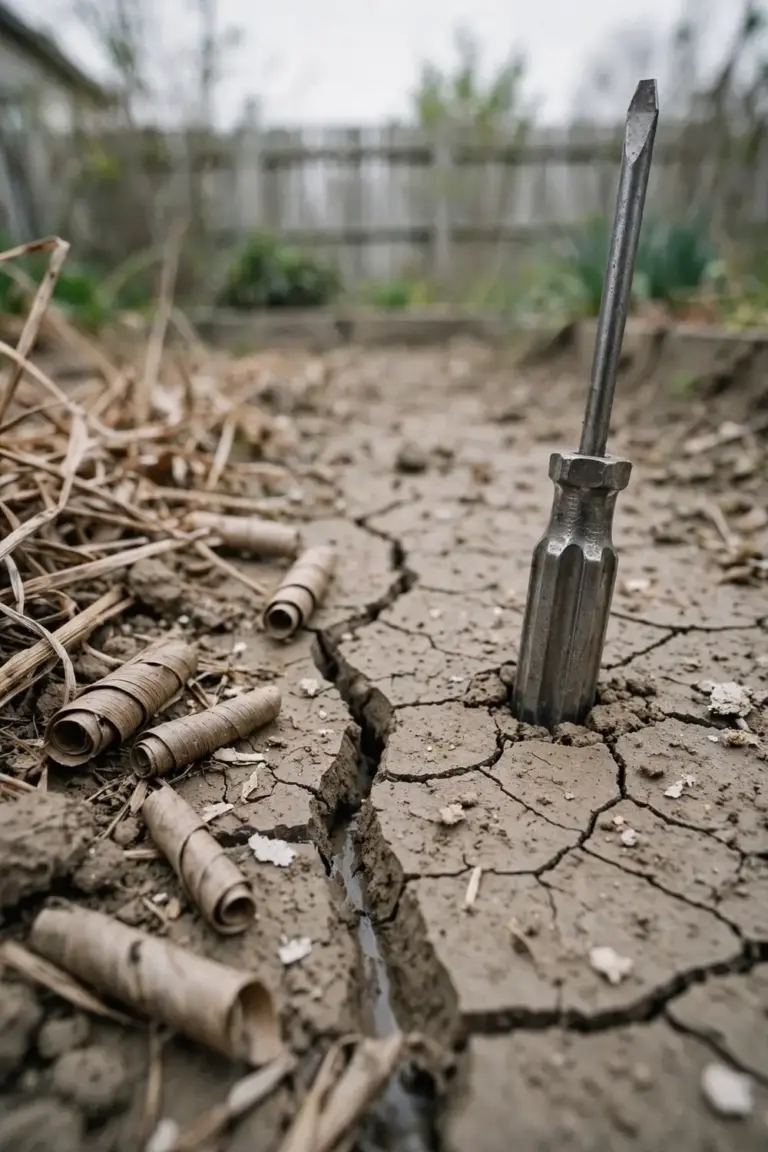
The screwdriver test reads the soil, not the grass. Push a long screwdriver or a thin metal rod into the brown patch. If the probe slides in and the soil feels moist at root depth, the soil holds water and the cause is heat stress or fungus, not drought. If the probe stops at hard, dry soil, the patch is drought. University of Nebraska-Lincoln Extension describes the same probe test: probe the soil with a screwdriver, feel the soil at various levels of root depth, and judge the moisture content. The same guide gives the footprint rule: footprints that stay visible after an hour mean the lawn is probably under drought stress.
The first fix for drought is a deep soak, then a return to the normal rhythm. Water until the soil is moist to root depth, then check with the screwdriver again. One deep watering beats five light sprinkles. Light sprinkles wet the surface and evaporate, and the roots stay dry. A deep soak reaches the roots and teaches them to grow down. After the soak, go back to watering when the footprint test says the lawn needs it, not on a calendar.
Hydrophobic soil can fake drought. Sandy soils that have dried out can repel water, so the surface looks wet after watering while the root zone stays dry. The screwdriver test catches this. If the probe finds dry soil under a wet surface, the water is running off or beading. A wetting agent breaks the repellency and lets water soak in. Healthy soil holds water better than compacted soil, and aerating compacted patches lets water and air reach the roots. Fix the soil and the water starts working again.
Measure what lands. Set out a few empty tuna cans across the lawn before you water, then read the depth after the run. One deep soak that fills the cans beats five light sprinkles that wet the surface and evaporate. The cans turn a guess into a reading, and the reading tells you whether the root zone got water or only the surface did.
Check local water restrictions before extra watering. Many Australian councils limit lawn watering in a dry spell. A deep soak inside the rules beats a fine for watering on the wrong day. If restrictions ban lawn watering, let the lawn go dormant and water at the survival rate in section 4, if the rules allow even that.
6. Obey the 5 Do-Not Rules for a Stressed Lawn
Five moves make a stressed lawn worse. Skip all five until the diagnosis is clear and the first fix has had time to work.
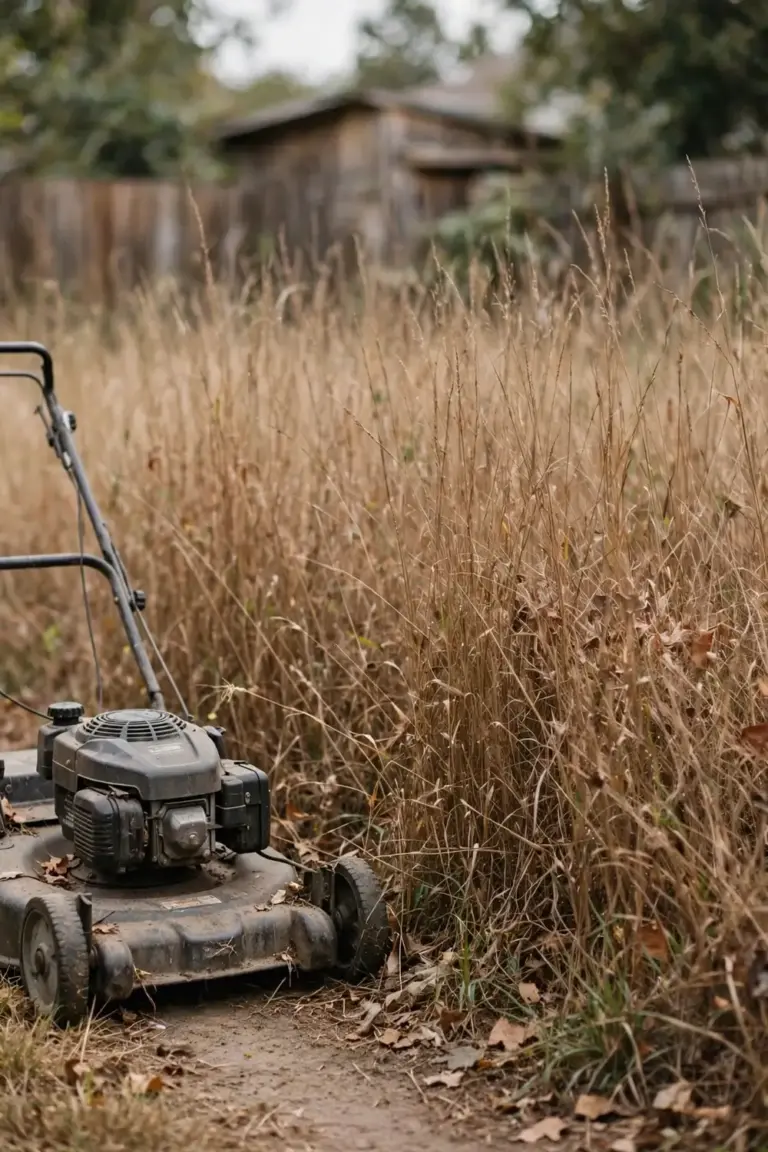
First, do not fertilize a stressed lawn. Fertilizer pushes leaf growth, and new leaves need water the lawn does not have. On a fungus patch, nitrogen feeds the fungus. On a dormant lawn, nitrogen signals growth the crown cannot support. Hold the feed until the lawn is green and growing again. The best time to fertilize a lawn in spring is when the grass is actively growing, not when it is stressed and brown.
Second, do not drench a suspected fungus patch. A fungus patch needs dry leaves, not more water. Drenching keeps the leaf wet overnight and spreads the fungus across the lawn. If the morning leaf test shows spots, water early and lightly, or skip watering until the patch dries.
Third, do not scalp. Cutting the lawn short in a heatwave strips the shade off the soil. The soil heats up, dries out, and the grass loses the leaf it needs to feed the crown. Raise the cut by one notch. Missouri Extension recommends maintaining the height of cut at 7.6 to 8.9 cm on tall fescue, and the same principle holds for warm-season grasses in a heatwave: longer leaf shades the soil and keeps the crown cooler.
Fourth, do not water at night when fungus is suspected. Night watering leaves the leaf wet for hours, and wet leaves are the condition brown patch needs. Water early in the morning so the sun and the breeze dry the leaf by midday. If the diagnosis is heat stress or drought with no fungus signs, night watering is less risky, but morning watering is still the better habit.
Fifth, do not scarify in a heatwave. Scarifying tears the surface and opens wounds across the lawn. A stressed lawn cannot heal those wounds, and open wounds invite fungus. Scarify in the mild weeks of autumn or spring, when the grass is growing strongly and can fill the gaps.
The do-not rules protect the crown while the first fix works. A stressed lawn heals slowly, and every extra wound adds a week to recovery. The hardest part of the do-not rules is doing nothing while a brown lawn stares back and begs for action. Most actions make it worse. Walk the lawn, run the tests, apply the one fix, then leave the lawn alone until the recheck.
7. Run the Recovery Order After the Diagnosis
Recovery runs in one order: diagnose, first fix, wait, recheck. Skipping a step wastes the fix. Watering before diagnosis feeds fungus. Feeding before recovery burns the crown. Scarifying before recovery tears a lawn that cannot heal, and open wounds invite fungus across the whole lawn.
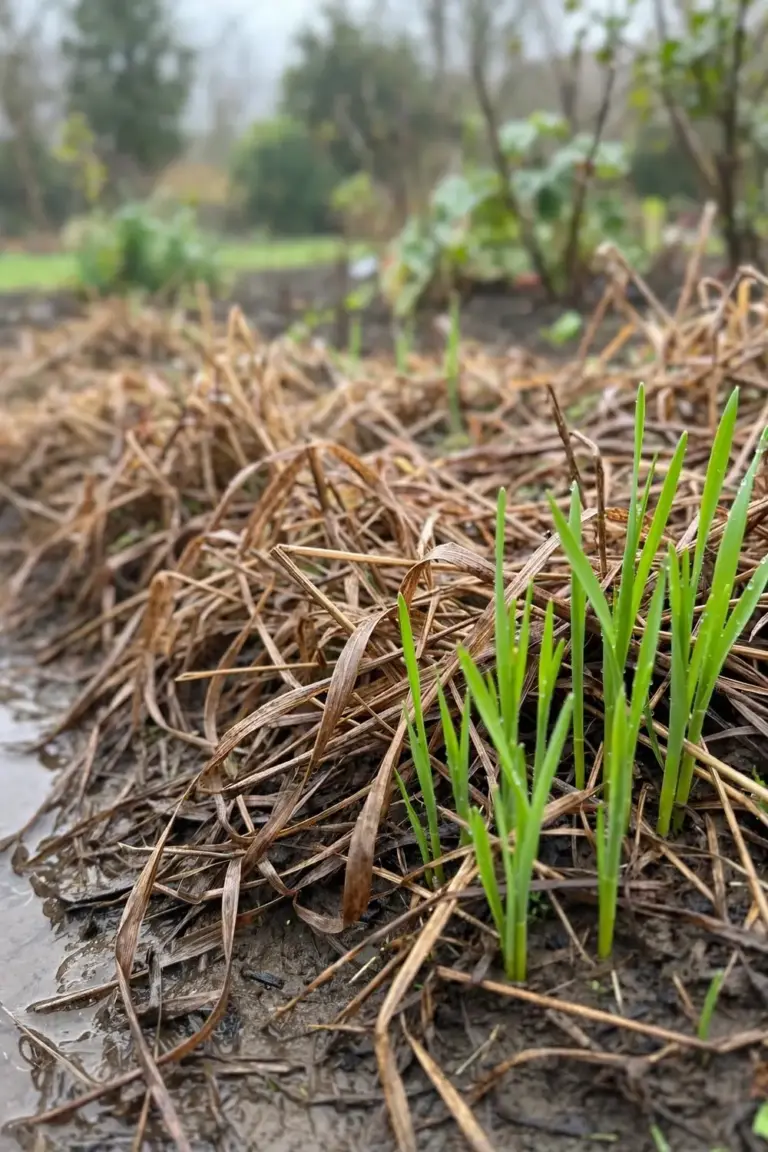
Start with the differential table in section 1. Diagnosis first. Run the four tests on the worst patch first, then on a second patch, because two patches can have two causes. A fungus ring on one side of the lawn and heat stress on the sunny side need different fixes on the same day, because watering the fungus ring feeds it while drying the heat-stressed side cooks it. Treat each patch by its own diagnosis, and write each diagnosis down, since memory blurs after a week and a written note keeps the second check honest.
Apply the first fix for the diagnosed cause, and only that fix. Heat stress gets deep morning watering and a higher cut. Fungus gets dry leaves and no nitrogen. Dormancy gets survival watering and patience, nothing more. Drought gets a deep soak and a return to the normal rhythm.
Wait. A lawn does not green up overnight. The crown needs time to push new leaves, and new leaves need a few mild days to harden. Keep the do-not rules in force through the wait. No fertilizer, no scalping, no night watering while fungus is suspected, no scarifying.
Recheck after the next watering cycle. Walk the patch and run the same test that named the cause. Footprints that spring back mean heat stress is lifting, and a patch edge with no new spots means fungus is slowing. A tug test that holds means dormancy is holding, and a screwdriver that slides in means drought is beaten. If the patch is spreading, the diagnosis was wrong, or a second cause has joined the first. Run the differential again from the top.
Keep the do-not rules in force until the recheck passes. A lawn that looks better after one watering is not a lawn that is healed. The crown needs a few mild days to push new leaves, and new leaves need time to harden before they can take sun and foot traffic. The second check, not the first watering, is the moment the lawn turns the corner.
Frequently Asked Questions
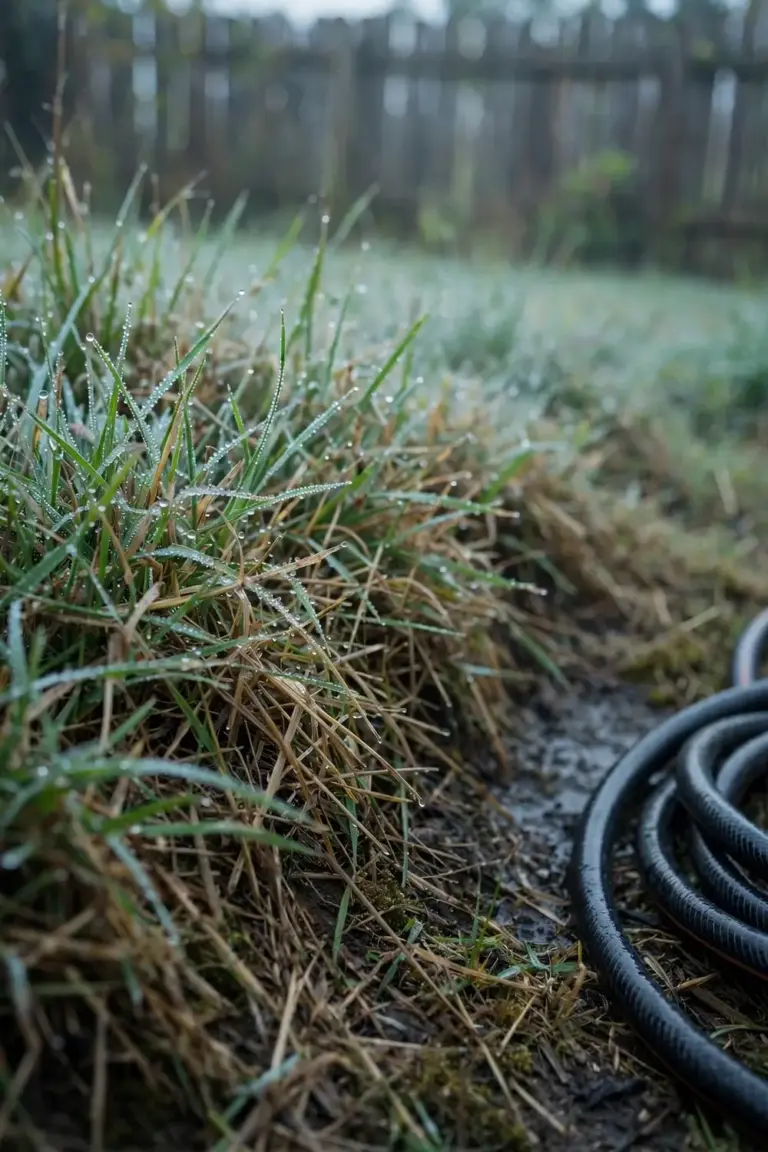
Heat stress alone rarely kills a lawn with a living crown. The leaf browns, the crown rests, and new leaves push when water and mild weather return. Death happens when heat stress runs long enough to dry the crown, or when a second problem joins it. Run the tug test. A firm, pale crown means recovery. A soft, dark crown means that section is dead.
Check the leaf at dawn. Brown Patch spots the blade with tan lesions edged in dark brown, and the patch grows in a circle with a smoky ring at the edge. Drought browns the blade without spots, and the screwdriver test finds hard, dry soil. Drought follows dry spots. Fungus follows humid nights. Run both tests on the same patch before you decide.
No. Daily light watering wets the leaf and invites fungus, while the roots stay dry underneath. Roots need air too. Water deeply in the morning, then let the soil dry between waterings. The screwdriver test tells you when to water again. Moisture at root depth means wait. Dry soil means water deep. One deep soak that reaches the roots beats a sprinkle every day that only wets the surface.
No. Fertilizer pushes leaf growth that the lawn cannot support, and on a fungus patch it feeds the fungus. Hold all nitrogen until the lawn is green and growing again. When growth resumes, feed at the normal rate for the season. A stressed lawn needs water and shade, not food. Feeding a brown lawn is the fastest way to make it worse.
Recovery depends on the cause and the crown. A heat-stress patch greens up within days of deep watering if the crown stayed alive. A fungus patch stops spreading within days of dry leaves, then grows out over weeks. A dormant lawn waits for rain or cooler weather. Recheck after each watering cycle, and run the differential again if the patch spreads.
Recheck the Lawn After the Next Rain
Rain resets the lawn. It washes the dust off the leaf, soaks the root zone, and shows which patches were thirst and which were disease. Walk the lawn the morning after rain and run the four tests again. Footprints that spring back mean the lawn is drinking. A patch edge with fresh spots means fungus is still active. A tug test that holds means the crown survived.
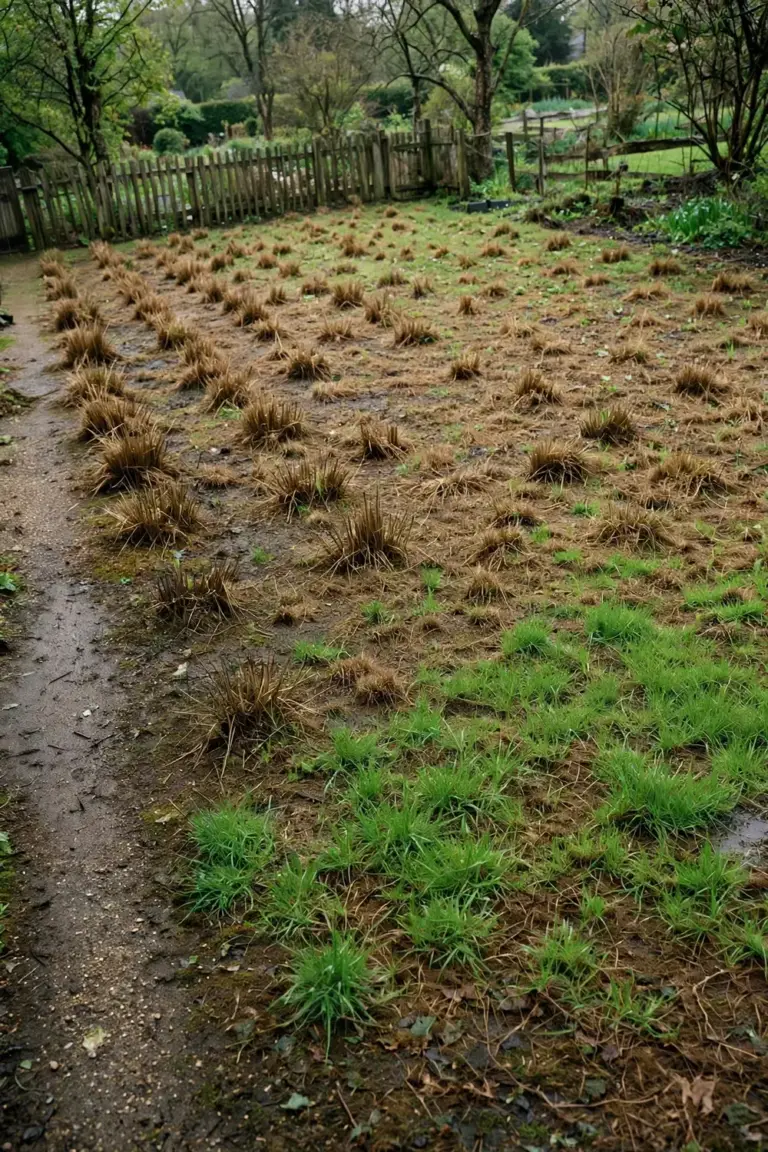
Keep the habit through summer. The footprint test takes ten seconds. The screwdriver test takes one probe. The morning leaf test takes one look at dawn. Four tests, run in order, keep a brown patch from becoming a dead lawn. Name the cause first, fix that cause, and let the lawn do the rest.
Autumn is the season that settles the argument. Mild days, cooler nights, and steady rain let a stressed lawn fill in, and a patch that stays brown through autumn has a deeper problem. That patch is the one to dig into, literally, with a plug check of the roots and the soil underneath. Most patches never reach that point. Most patches answer to one test and one fix, and the lawn moves on.