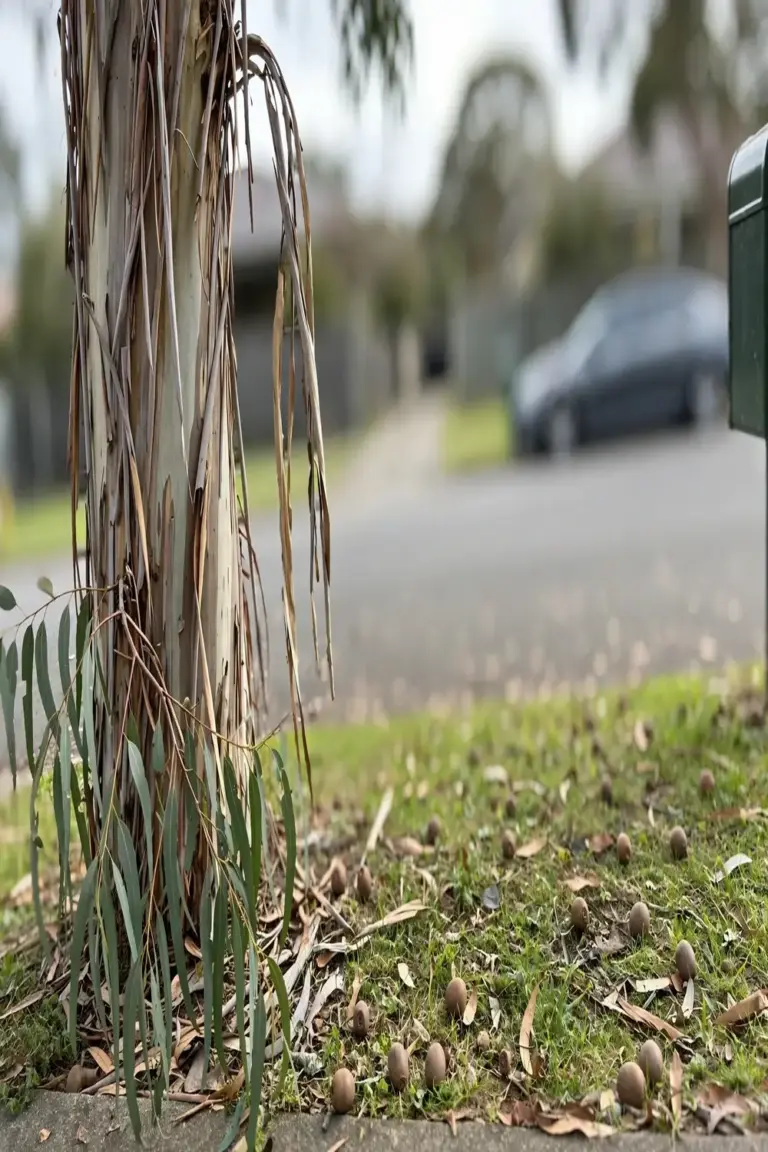

Name any gum tree with 5 clues: bark, buds, gumnuts, leaves, and habit. That is eucalyptus identification in Australia: a field key, not a guessing game. Work the clues in that order, and a tree that looked like every other gum resolves into a bark group, then a genus, then a species. I have learned that the bark I read first names the group, while the gumnut I check last names the species. The rest of this page runs the key from bark to gumnut, then splits the three genera, then walks the seven bark groups with one practice species each.
1. Run the 5-Clue Key Before You Name Any Gum Tree
Run 5 clues in fixed order before you name any gum tree. Bark names the group in seconds. Buds narrow the field fast. Gumnuts confirm the species with fruit shape, and fruit shape varies less than any other feature. Leaves catch the traps that fool beginners. Habit checks the answer against the setting. The order matters because bark survives when flowers are out of reach, and gumnuts sit on the ground when the canopy is 30 meters up.
| Clue | What to Look At | What It Settles |
|---|---|---|
| Bark | Texture on trunk and branches, shed or held | Bark group, the fastest first split |
| Buds | Shape, size, operculum, cluster count | Genus and species group |
| Gumnuts | Shape, size, valve position, disc | Species, the most reliable single clue |
| Leaves | Juvenile vs adult, shape, arrangement, scent | Traps and confirmations |
| Habit | Single trunk vs multi-stemmed, height, setting | Mallee vs tree, and the final check |
Collect all 5 clues before you open a key. A single photo of a trunk names the bark group. It never names the species. Species-level identification needs buds plus fruit plus bark together, and the key rewards the reader who gathers all three.
2. Read the Bark First for the Fastest Split
Read the bark first because bark splits 900 species into a handful of groups in seconds. Australia holds over 900 eucalypt species, and bark groups cut that field before you touch a leaf, according to the Australian Native Plants Society. Stand at the trunk and ask one question. Does the bark shed, or does it stay?
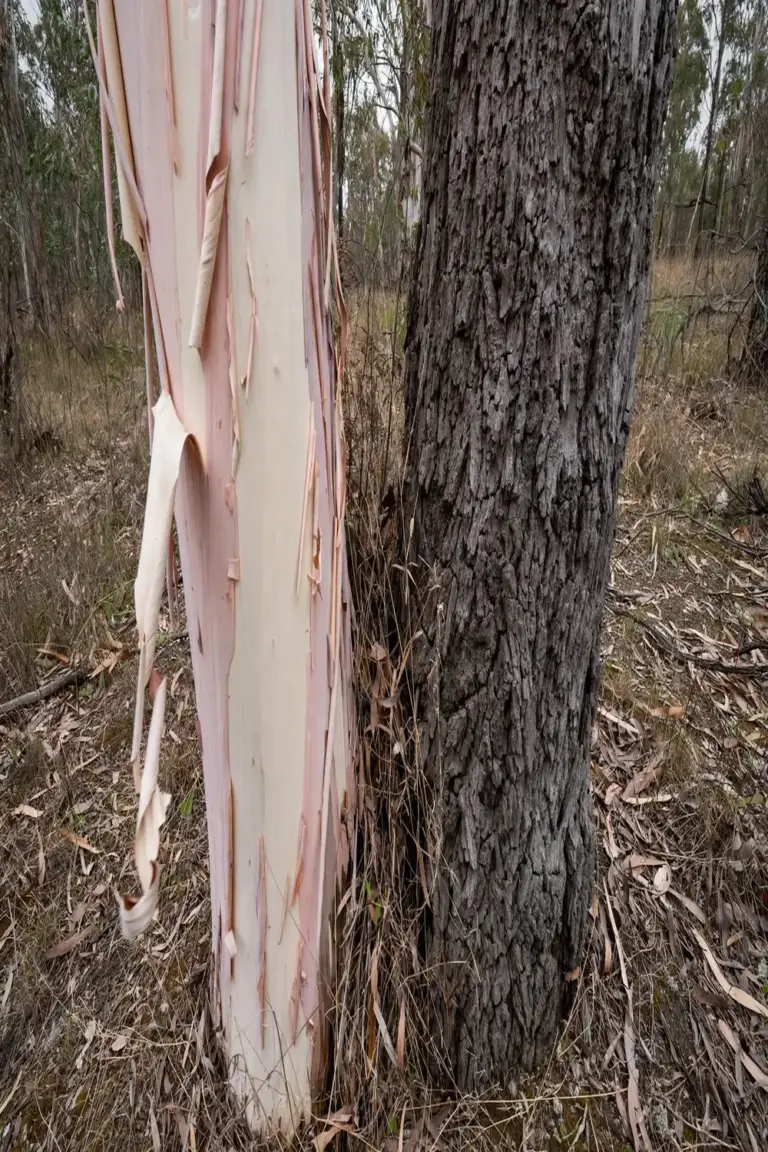
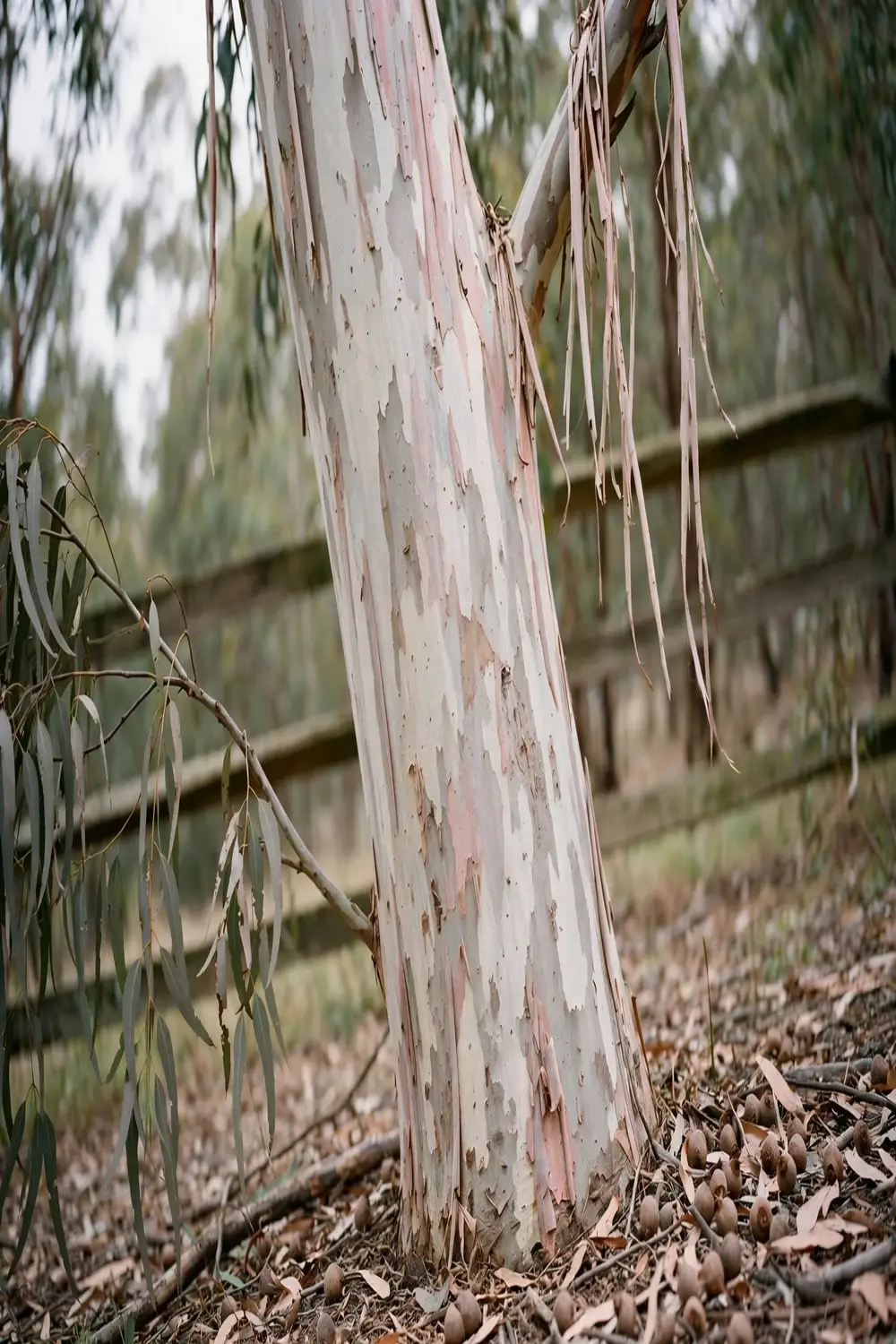
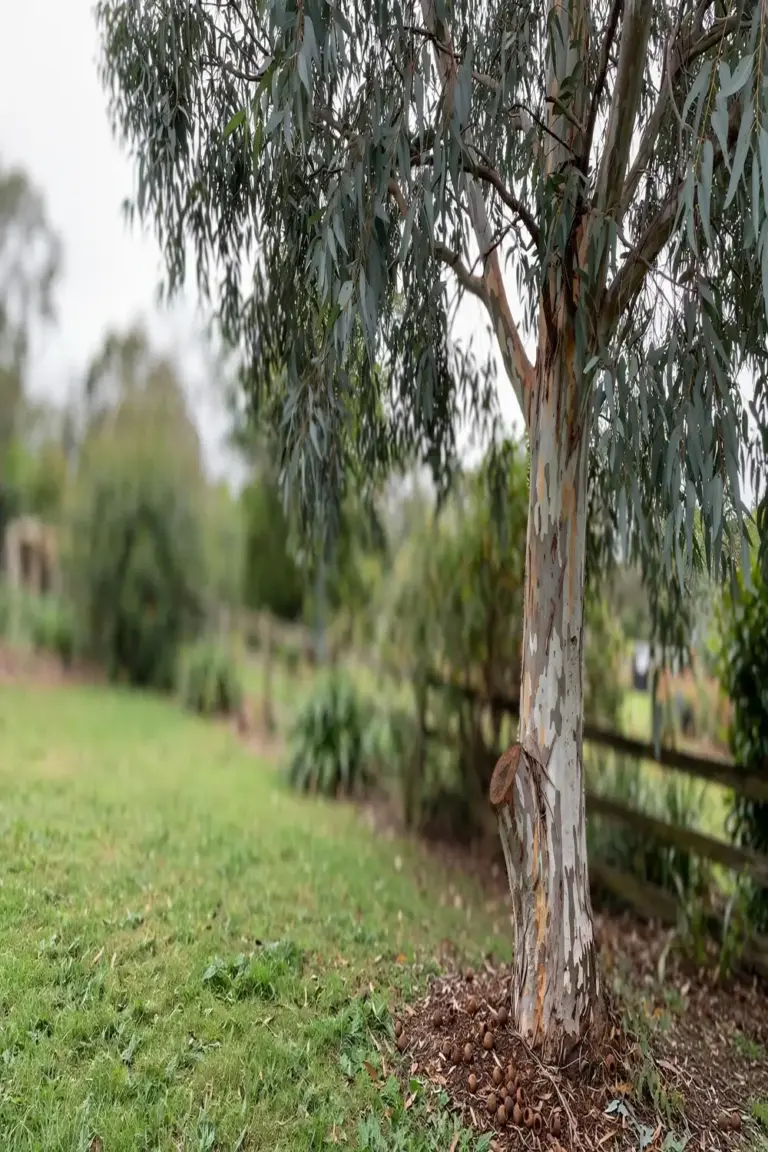
Shed bark falls in strips, patches, or ribbons, and leaves smooth skin beneath. Held bark stays on the trunk and reads as stringy fibers, short fibered plates, or hard furrowed ridges. Half-bark trees mix the two: rough bark stocks the lower trunk while smooth bark covers the upper branches. Bark is the tree’s outer skin, laid down outside the wood that adds a new ring each year. Read the whole trunk from base to first branch, since bark changes with height.
| Bark Group | What the Bark Does | Example Species | Confused With |
|---|---|---|---|
| Gum, smooth | Sheds in patches or ribbons, smooth skin below | Sydney blue gum, Eucalyptus saligna | Spotted gum, Corymbia maculata |
| Stringybark | Held in long fibers that pull off in strings | Thin-leaved stringybark, Eucalyptus eugenioides | Box, on old trunks |
| Box | Held, short fibered, plates shear off with age | Yellow box, Eucalyptus melliodora | Stringybark, on old trunks |
| Ironbark | Held, hard, deeply furrowed, dark | Narrow-leaved ironbark, Eucalyptus crebra | Box, at a distance |
| Peppermint | Rough and fibrous on the trunk, often smooth above | Broad-leaved peppermint, Eucalyptus dives | Stringybark, on the trunk |
| Bloodwood | Rough, often tessellated or flaky on the trunk | Yellow bloodwood, Corymbia eximia | Box, on the trunk |
| Scribbly gum | Sheds, smooth trunk marked with insect scribbles | Scribbly gum, Eucalyptus sclerophylla | Other smooth gums |
| Ribbon gum | Sheds in long strips that hang from branches | Ribbon gum, Eucalyptus viminalis | Other smooth gums |
Photograph the bark at chest height and at the base. Base bark runs darker and rougher than upper bark on the same tree. A blackened base after fire fools readers into calling a smooth gum an ironbark, so check above the char line before you decide.
3. Trust the Gumnuts as the Most Reliable Single Clue
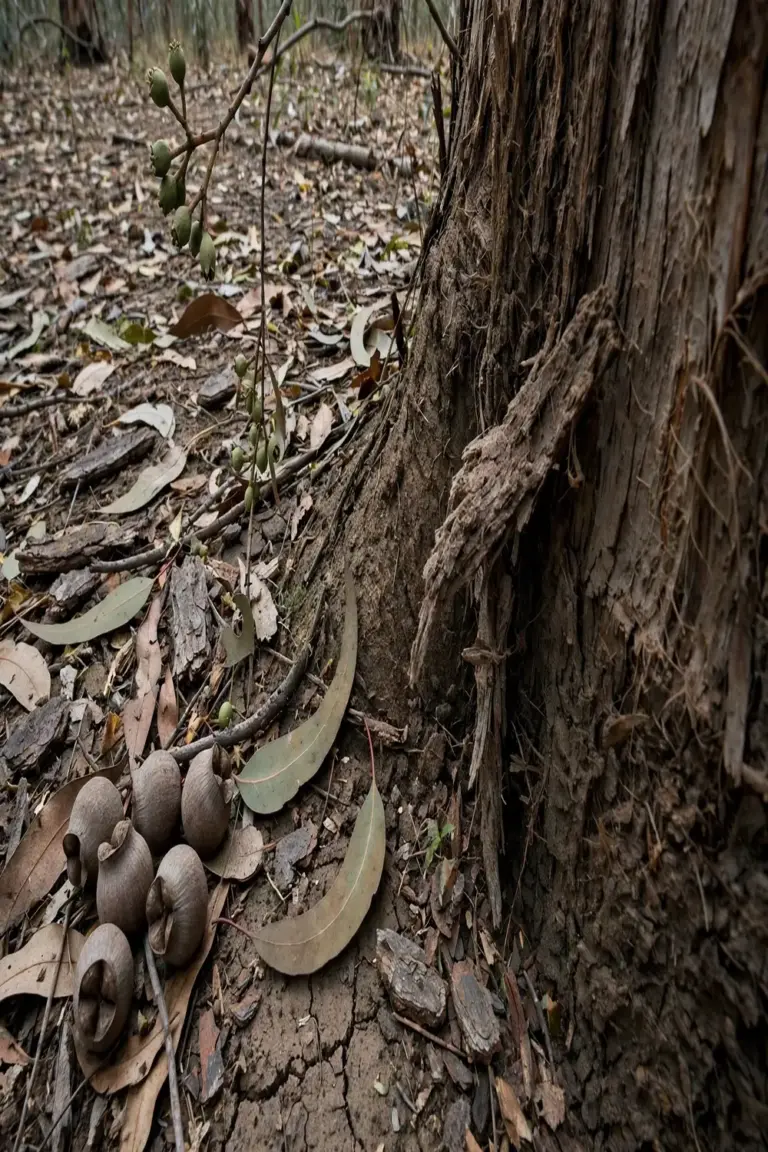
Trust the gumnuts as the most reliable single clue because fruit shape changes less than any other feature. Leaves vary with age, light, and regrowth. Bark varies with fire and age. Gumnuts hold their shape, and the shape and size of the woody pods rank among the strongest identification aids, per the same ANPSA notes. Pick up fallen fruit from the base of the tree. Fallen fruit identifies the tree when flowers and leaves sit meters above your head.
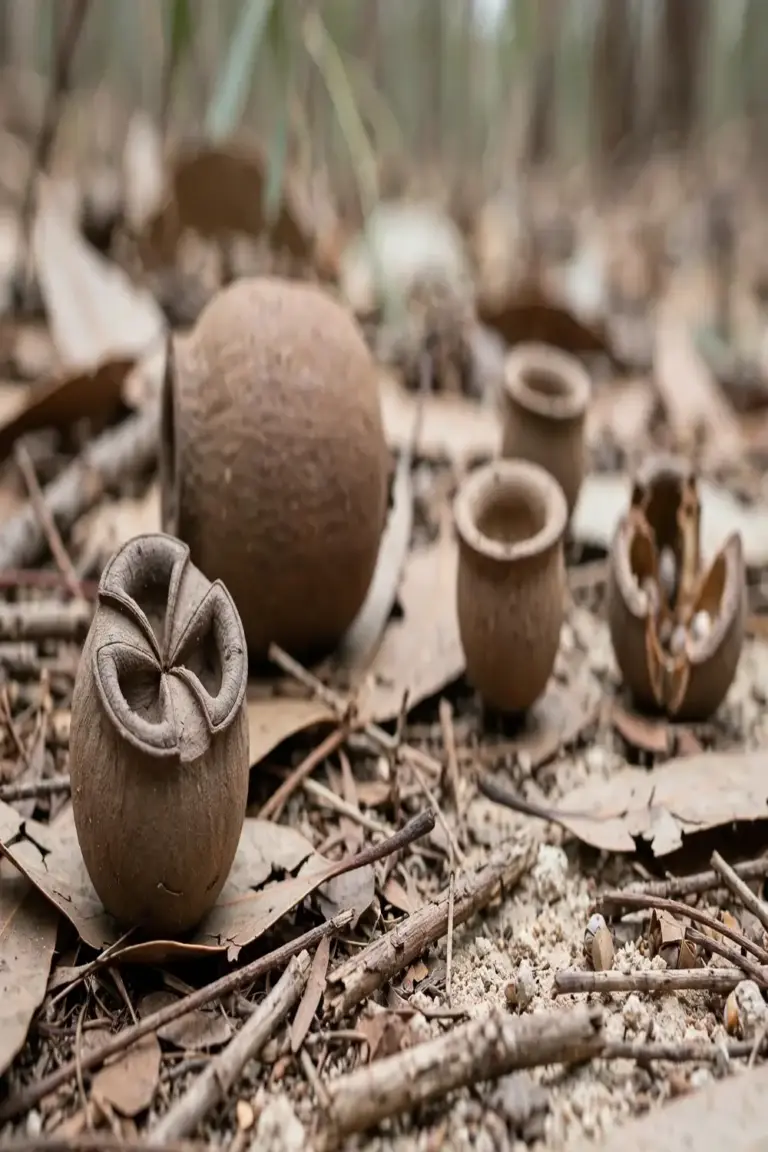
Read 4 features on each gumnut. Shape comes first: barrel, urn, cup, hemispherical, or conical. Size comes second: compare the fruit against a coin or a ruler in your photo, since memory shrinks every measurement. Valve position comes third: valves sit enclosed below the rim, level with the rim, or exserted past it. Disc shape comes fourth: the disc across the fruit top reads level, raised, or descending. One fruit can mislead, since size varies within a species. Gather 5 or 6 fruits from the ground and read the pattern across the set.
Seeds inside the fruit add one more check. Pods hold true seeds plus infertile chaff. True seeds run larger and deeper in color than the chaff. Seed matures within 12 months of flowering in most species, and the tree holds the fruit until fire or the death of the plant shakes it loose, per the same ANPSA notes. A fruit with valves stuck shut and no seed inside still counts. Shape and valves carry the identification, with or without seed.
4. Beat the Juvenile Leaf Trap
Beat the juvenile leaf trap by never identifying a eucalypt from young leaves alone. Juvenile leaves run quite different from adult leaves on the same tree. Juvenile leaves often read grayish in color and sit opposite each other on the stem, while adult leaves run green and sit alternate, per the same ANPSA notes. A reader who keys a seedling or a coppice shoot against an adult-leaf description lands on the wrong species every time.
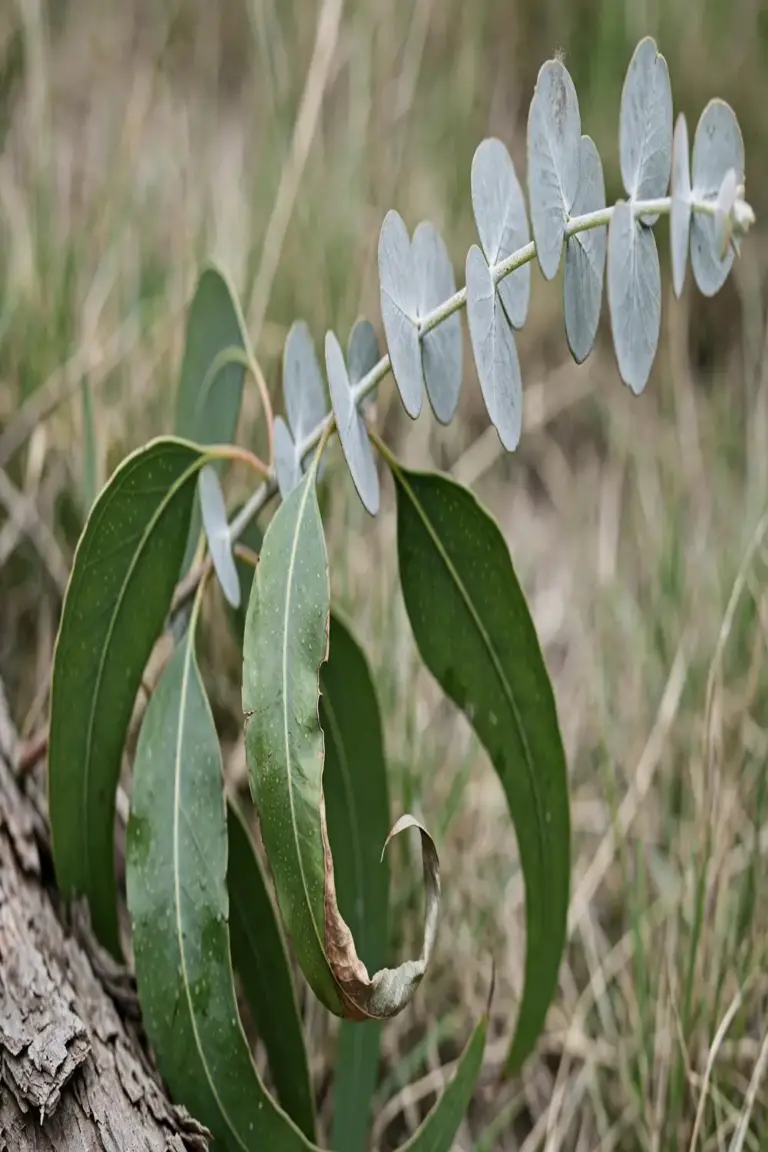
Adult leaves of most eucalypts read sickle-shaped and hang alternate on the branches. Oil glands dot the leaf tissue and give the crushed leaf its eucalypt scent. Juvenile leaves break this pattern with round or egg-shaped blades, a gray cast, and opposite arrangement. Regrowth after fire or cutting throws juvenile leaves on a mature tree, so check whether the young foliage sits on a shoot or crowns the whole canopy before you trust it.
A few species keep juvenile leaves into adult life, and those species trap even careful readers. Argyle apple, Eucalyptus cinerea, holds round silvery juvenile foliage as an adult tree, and florists prize it as decorative foliage. Tasmanian blue gum, Eucalyptus globulus, and curly mallee, Eucalyptus gillii, hold juvenile foliage for a considerable time, per the same ANPSA notes. When the leaves look juvenile but the tree stands 20 meters tall with mature bark and fruit, suspect one of these species, then confirm with gumnuts.
5. Check Buds, the Operculum, and Flowers
Check the buds before the flowers because buds carry more identification than open blooms. Flower buds cluster in the leaf axils, and the cluster count, bud shape, and bud cap narrow the field fast. Buds read oval, spindle-shaped, diamond-shaped, club-shaped, or horn-shaped, and the cap on top, the operculum, reads conical, beaked, rounded, or flattened. Photograph a cluster with a coin for scale. Bud size without scale means nothing.
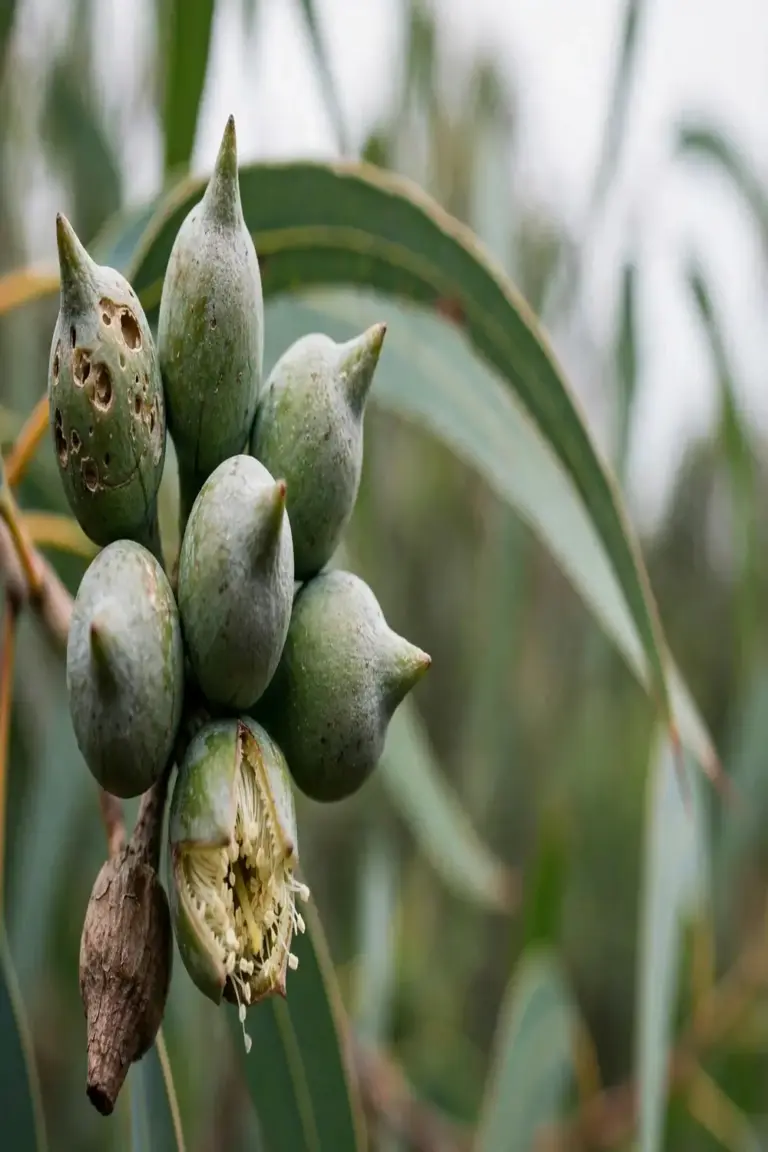
The operculum is the one technical term this key needs. In Eucalyptus and Corymbia, fused sepals and petals form a cap over the bud. The cap falls off as the flower opens, and the mass of stamens bursts out. The genus name itself records this feature: eu means well and calyptos means covered, per the same ANPSA notes. In Angophora, no cap exists, and the flower opens with small petals in place. A bud with no cap and small petals points straight at Angophora.
Flowers add color and stamen detail, and little else. The conspicuous parts of most eucalypt flowers are the stamens, the male parts, which surround the central stigma, per the same ANPSA notes. Stamen color runs white, cream, yellow, pink, or red, and red flowers narrow the field hard. Flowering season helps with local keys, yet season shifts with climate and year, so treat it as a hint. Buds plus fruit beat flowers every time.
6. Judge Habit: Mallee, Tree, or Something Else
Judge habit last because habit checks the answer the other clues built. A mallee grows multi-stemmed from a lignotuber at or just below ground level, and most mallees stand fairly small in height, per the same ANPSA notes. A tree grows a single trunk. The split sounds simple, and fire complicates it, since a single-trunked tree cut or burned to the base throws multi-stemmed regrowth that mimics a mallee.
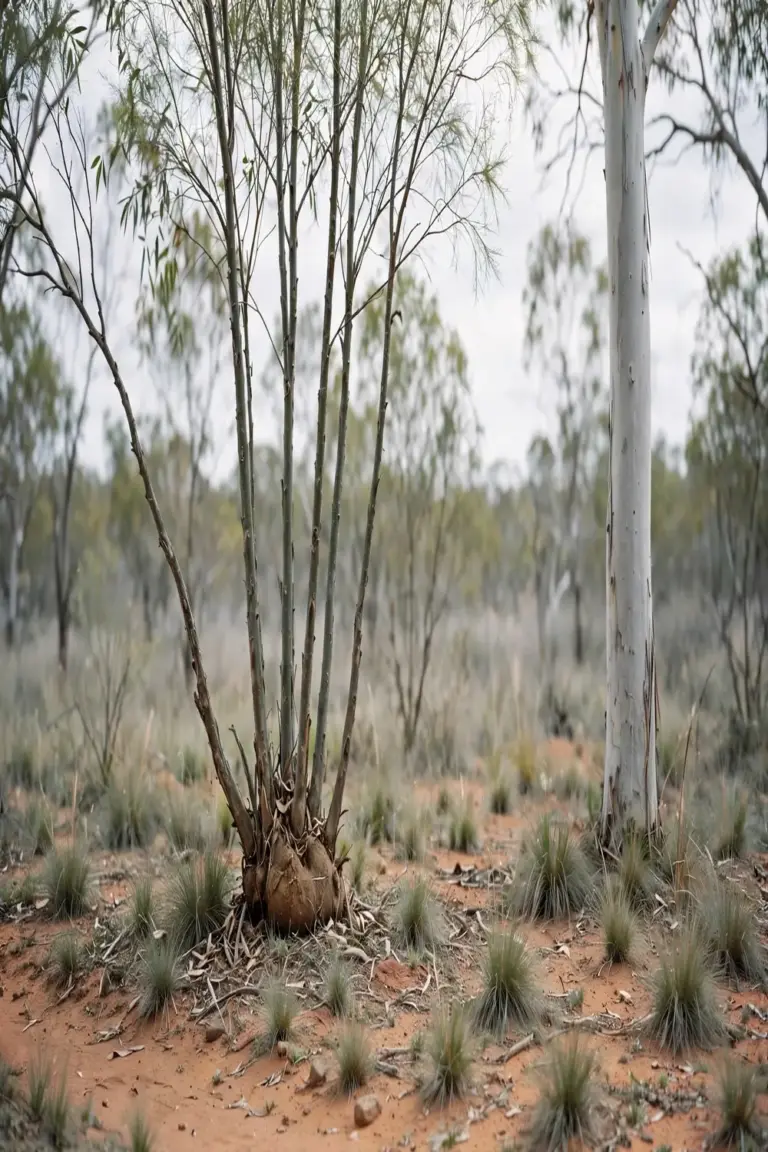
Read the base, not the canopy. A true mallee shows several stems of similar age rising from one woody base. A burned tree shows regrowth shoots of one age rising from a charred stump, with the old trunk line still visible. Photograph the base from two angles, then look for the lignotuber swelling at ground level. Mallee bark runs smooth to rough by species, so bark alone never settles a mallee call.
Setting adds the final check. Mallee country reads as open shrubland on light soils, while tall forest species need deeper soil and more rain. A 3-meter multi-stemmed eucalypt on a dry ridge fits a mallee. The same shape in a wet gully after a recent burn fits regrowth. Habit confirms the identification, but habit never makes it alone.
7. Split Eucalyptus, Corymbia, and Angophora by 3 Field Marks
Split the three genera with 3 field marks before you chase a species name. The word eucalypt covers three genera in common use: Eucalyptus, Corymbia, and Angophora. Eucalyptus holds some 800 species, Corymbia holds some 115 species, and Angophora holds 13 species, per the same ANPSA notes. Seven genera sit in the tribe, but the other four stay in Queensland rainforests or outside Australia, so home readers meet these three.
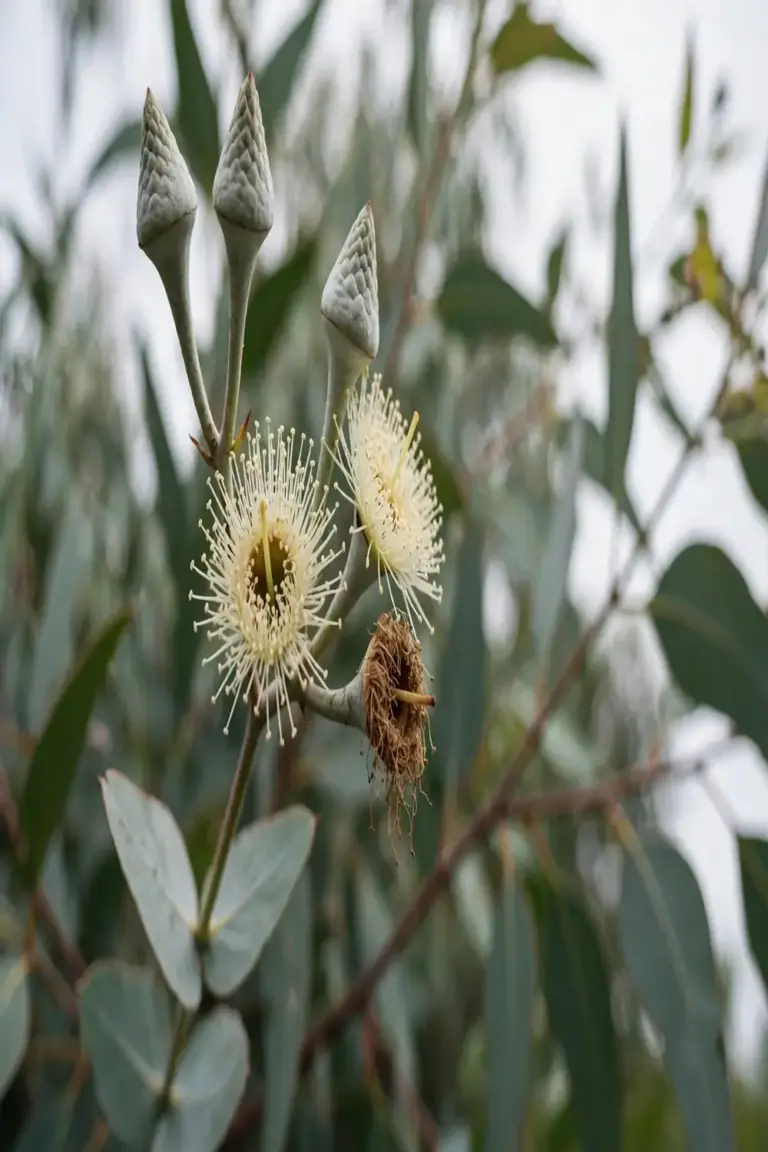
Mark one is leaf arrangement on adult foliage. Eucalyptus and Corymbia carry adult leaves alternate. Angophora carries adult leaves opposite. Check adult leaves, since juvenile leaves sit opposite across the group and mislead every beginner. Pick a mature branch in the mid-canopy, and read 3 or 4 leaf pairs before you decide.
Mark two is the operculum. Eucalyptus and Corymbia flowers carry a cap that falls off as the flower opens. Angophora flowers carry no cap and open with small petals. A bud with a clean cap points away from Angophora. A flower with small visible petals and no cap points straight at it.
Mark three is the flower arrangement. Angophora and Corymbia flowers sit in corymbs, flat-topped clusters where stalks rise from different levels on the stem yet all flowers finish in more or less the same plane. Eucalyptus flowers sit in axillary clusters instead. A flat-topped spray of buds rules out most Eucalyptus species at a glance.
Naming honesty matters here because taxonomy still moves. Bloodwoods and ghost gums now sit in Corymbia, and a 2024 proposal would move 36 species into a new genus, Blakella, per the same ANPSA notes. Field guides written before the split still label bloodwoods as Eucalyptus. Match the tree first, then check the current name in a herbarium source before you record it.
8. Name the Stringybarks by Fibrous Bark
Name a stringybark by bark that pulls off in strings. Stringybark bark stays on the tree in long fibers, and a firm pull lifts a fiber free without tearing the trunk. The bark runs gray to reddish brown, and old trunks carry deep vertical furrows between the fiber ridges. Thin-leaved stringybark, Eucalyptus eugenioides, sets the pattern, and the ANPSA notes name it as the example species.
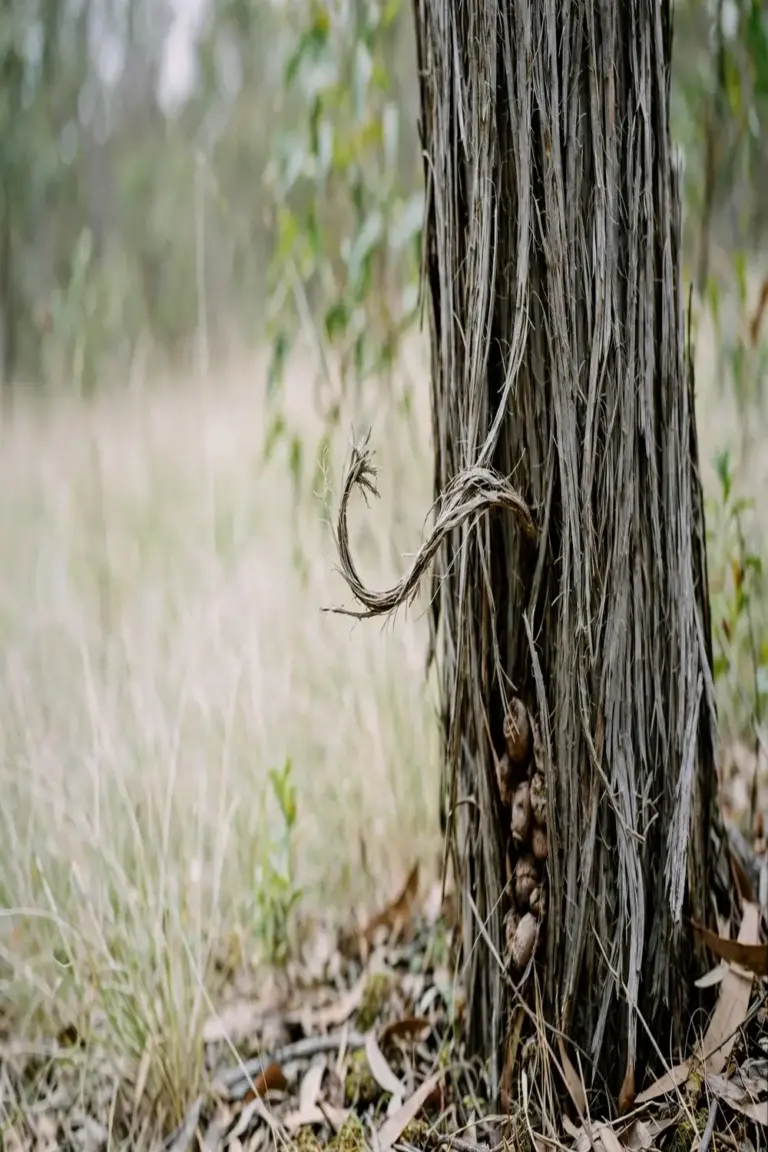
Leaves and fruit confirm the bark call. Stringybark adult leaves read lance-shaped to curved, glossy green on both sides. Buds cluster in groups of 9 to 15 in the leaf axils, and the fruit runs hemispherical with valves near rim level. A stringybark with buds in 7s or fruit like an urn points elsewhere, so count the bud cluster before you settle.
Confused with: box bark on old trunks. Box bark reads shorter in fiber and sheds plates with age, while stringybark fibers run long and stringy. Pull one fiber. A fiber that lifts in a string settles it.
9. Name the Ironbarks by Hard Furrowed Bark
Name an ironbark by bark that refuses the thumbnail. Ironbark bark stays on the tree, hard and deeply furrowed, and a thumbnail pressed into a furrow finds no give. The bark runs dark gray to black on the trunk and larger branches, while thinner branches often carry smooth pale bark. Narrow-leaved ironbark, Eucalyptus crebra, sets the pattern, and the ANPSA notes name it as the example species.
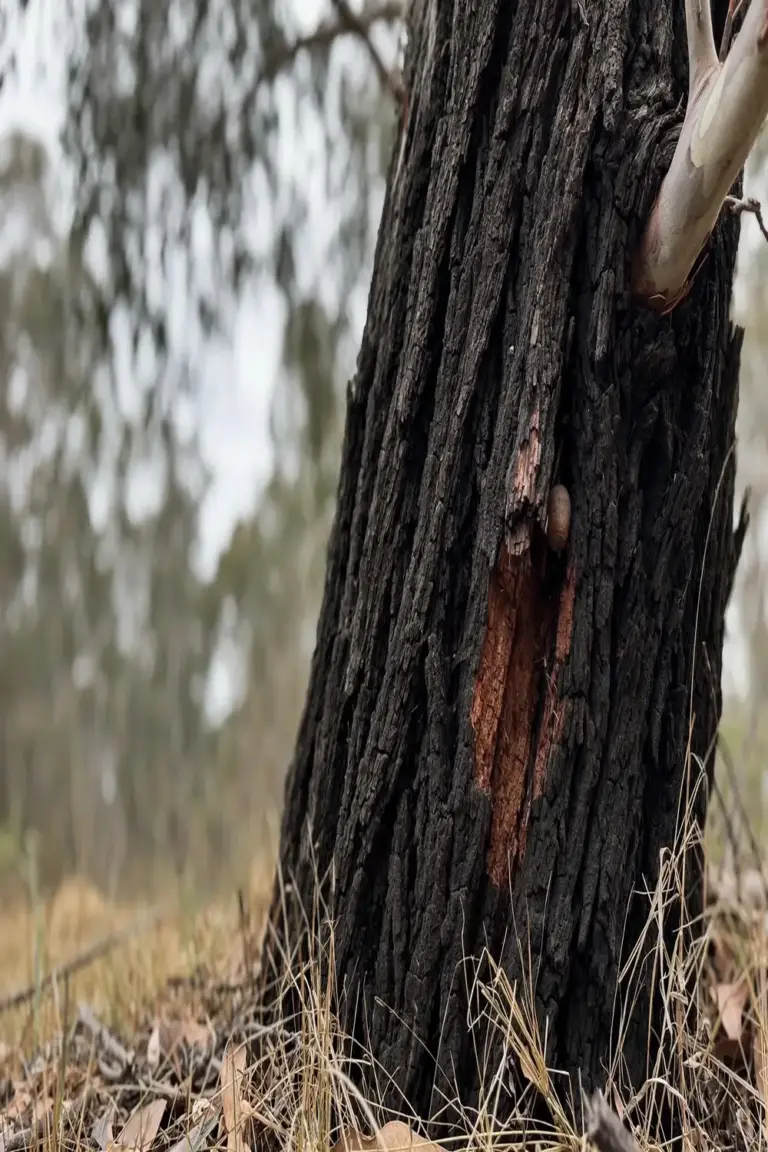
Leaves and fruit confirm the bark call. Ironbark adult leaves read lance-shaped to curved, dull on both sides, with a gray cast in several species. Buds cluster in small groups in the leaf axils, and the fruit runs conical to barrel-shaped with valves near rim level. A dark-barked tree with soft bark fails the thumbnail test and points at box or stringybark instead.
Confused with: box bark at a distance. Box bark reads short fibered and sheds plates. Ironbark reads hard, deeply furrowed, and dark. Touch the bark. Hardness settles it.
10. Name the Boxes by Short-Fibered Bark
Name a box by bark that reads short fibered and sheds plates with age. Box bark stays on the tree, yet the fibers run short, and plates of bark shear off as the tree ages, leaving a patchy trunk. Yellow box, Eucalyptus melliodora, sets the pattern, and the ANPSA notes name it as the example species. Box bark sits between stringybark and ironbark in texture, and readers confuse it with both.
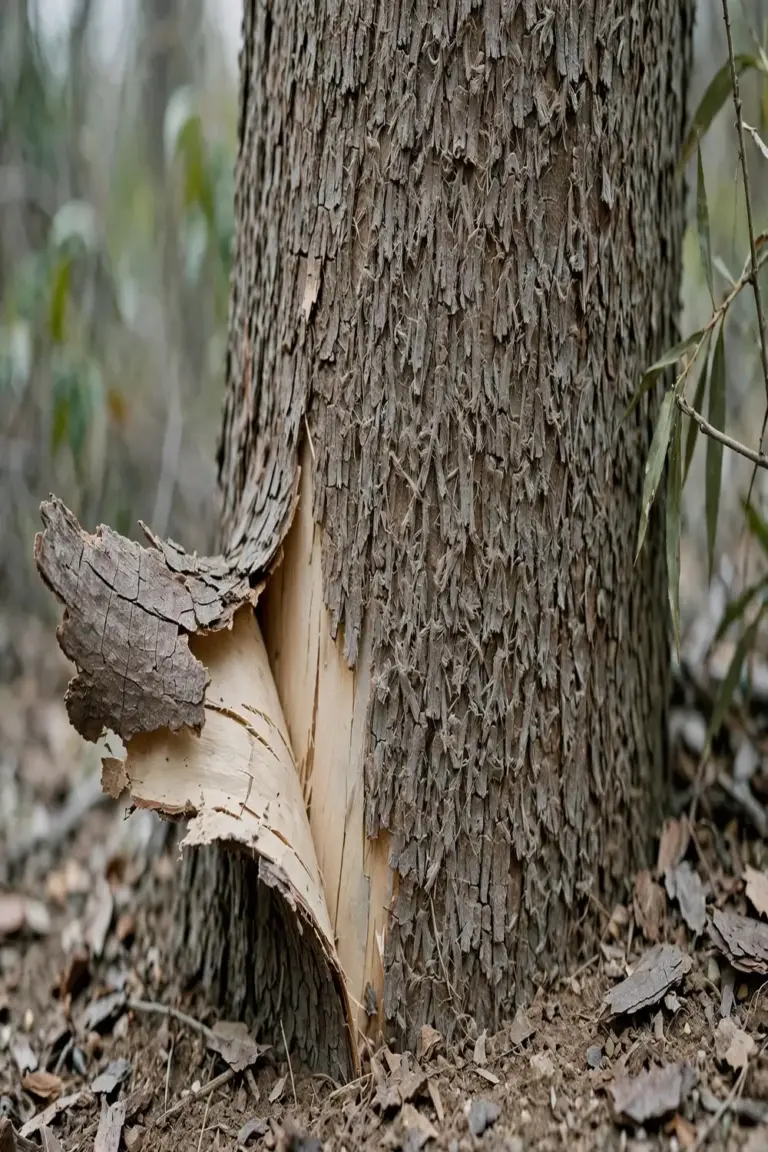
Leaves and fruit confirm the bark call. Box adult leaves read lance-shaped, the same color on both sides. Buds cluster in the leaf axils in small groups, and the fruit runs small and cup-shaped to barrel-shaped with valves near rim level. A box with long stringy fibers points at stringybark. A box with hard black furrows points at ironbark.
Confused with: stringybark on old trunks and ironbark at a distance. Read the fiber length. Short fibers that shear into plates settle it.
11. Name the Gums by Smooth Shedding Bark
Name a gum by bark that sheds and leaves smooth skin. Gum bark falls in patches, strips, or ribbons, and the trunk below reads smooth, pale, and often mottled with gray, cream, pink, or orange patches. Sydney blue gum, Eucalyptus saligna, sets the pattern, and the ANPSA notes place smooth-barked gums at the center of the bark key. Half-bark gums stock rough bark on the lower trunk and smooth bark above, so read the whole trunk.
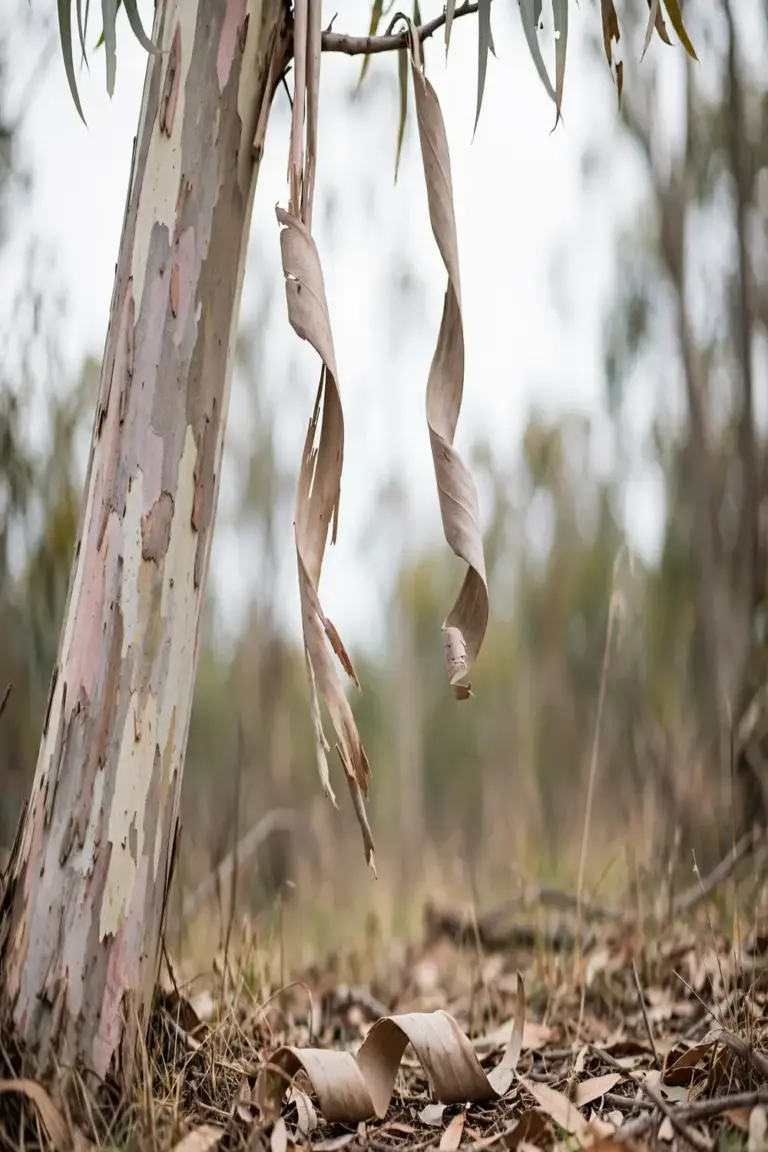
Leaves and fruit confirm the bark call. Gum adult leaves read lance-shaped to curved, glossy green, and often sickle-shaped. Buds cluster in the leaf axils, and the fruit runs cup-shaped to hemispherical with valves near rim level. A smooth-barked tree with scribbles etched into the trunk points at scribbly gum, Eucalyptus sclerophylla, where an insect larva draws the marks.
Confused with: spotted gum, Corymbia maculata. Spotted gum sheds in irregular round patches and belongs to Corymbia, so check the flower arrangement. Flat-topped corymbs point at Corymbia. Axillary clusters point at Eucalyptus.
12. Name the Peppermints by Scented Leaves
Name a peppermint by the leaf scent. Peppermint leaves carry oil with a peppermint-like aroma, and a crushed leaf releases it at once, per the same ANPSA notes. Broad-leaved peppermint, Eucalyptus dives, sets the pattern. Crush one adult leaf between your fingers, away from your face, and smell. A peppermint hit settles the group faster than any other clue.
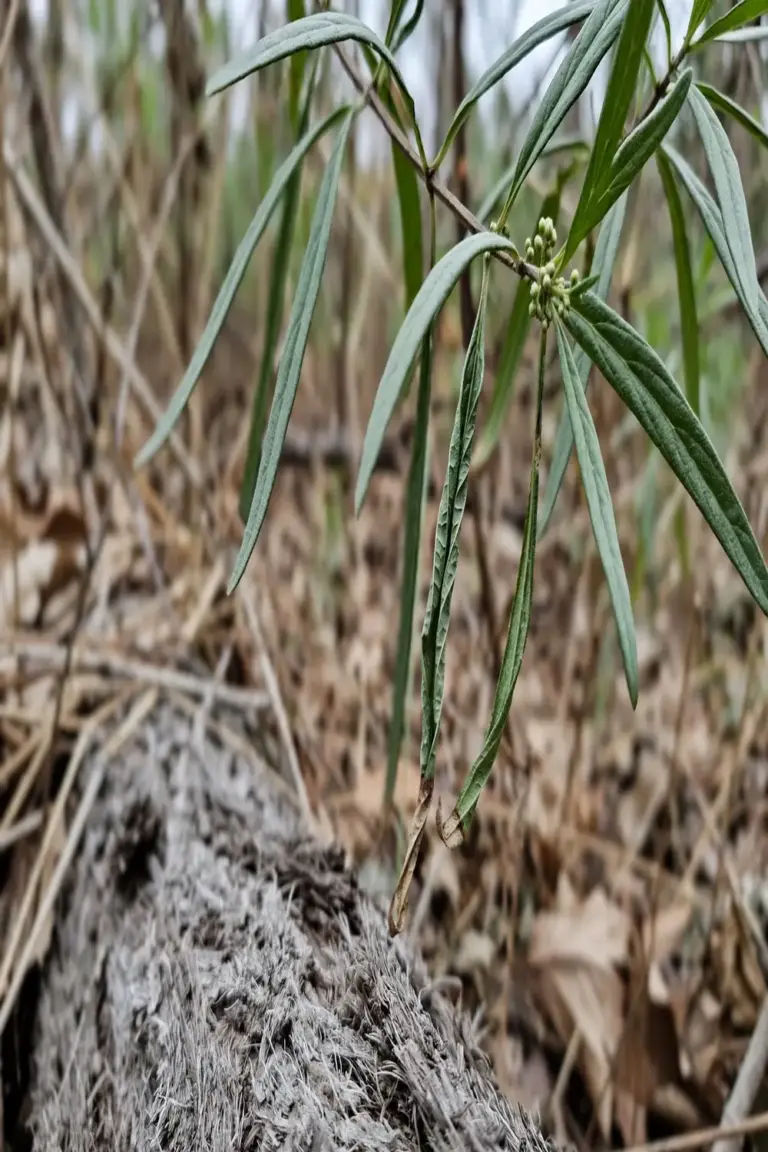
Bark backs up the scent. Peppermint bark runs rough and fibrous on the trunk, often with smooth bark on the upper branches. The combination of rough trunk bark plus peppermint scent separates peppermints from stringybarks, which smell of plain eucalyptus oil. Adult leaves read lance-shaped and dull green, and the fruit runs small and cup-shaped with valves near rim level.
Confused with: stringybark on the trunk. Scent settles it. A rough-barked tree with no peppermint scent points at stringybark or box instead.
13. Name the Bloodwoods by Kino and Corymbs
Name a bloodwood by kino plus corymbs. Bloodwood timber carries pockets of dark red gum called kino, and the name follows that feature, per the same ANPSA notes. Yellow bloodwood, Corymbia eximia, sets the pattern. Bark runs rough, often tessellated or flaky on the trunk, and old wounds weep dark red kino. Kino alone never settles a call, since other eucalypts bleed gum too, so pair it with the flower arrangement.
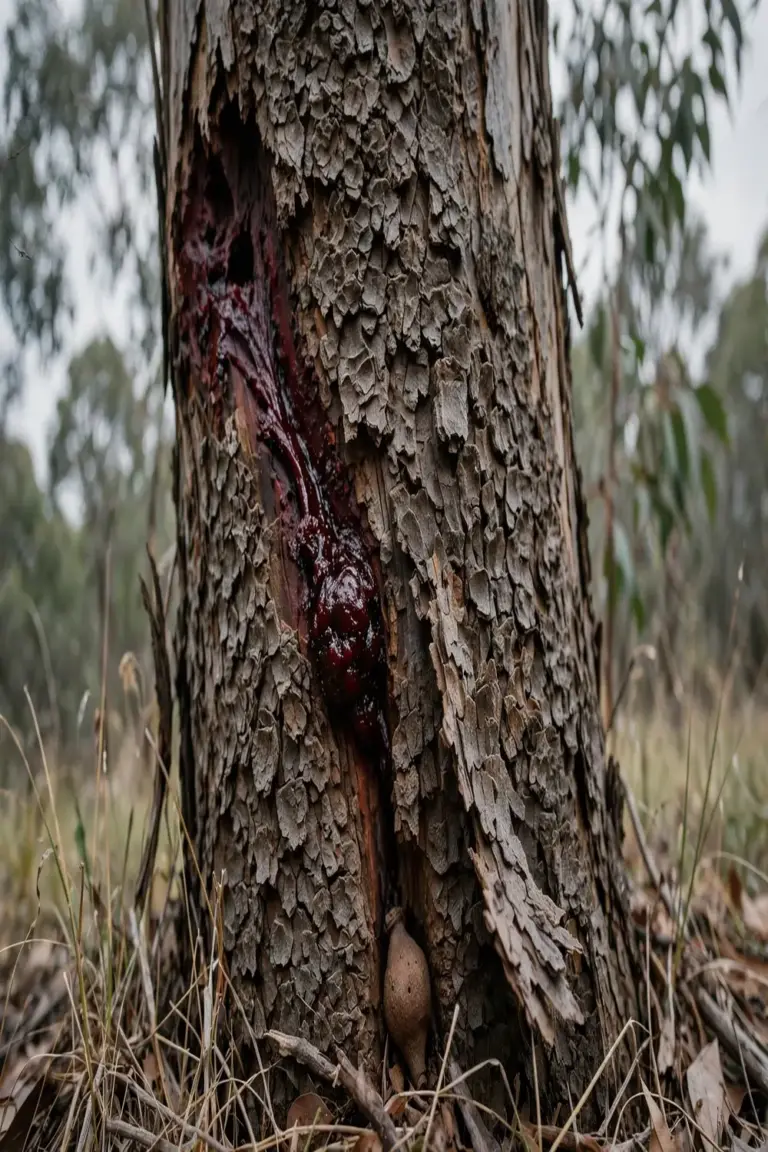
Flowers settle the genus. Bloodwoods sit in Corymbia, so the flowers sit in flat-topped corymbs and carry an operculum. Adult leaves sit alternate. Fruit runs urn-shaped to barrel-shaped with valves enclosed or near rim level in many species. A rough-barked tree with flat-topped flower sprays and urn-shaped fruit points at bloodwood.
Confused with: box bark on the trunk. Corymbs settle it. A rough-barked tree with axillary flower clusters points at Eucalyptus instead.
14. Name the Mallees by Multi-Stemmed Habit
Name a mallee by habit, since mallee names a growth form rather than a bark type. Mallees grow multi-stemmed, usually fairly small in height, per the same ANPSA notes. White-leaved mallee, Eucalyptus albida, sets the pattern. Several stems of similar age rise from one woody lignotuber at ground level, and the canopy reads as a thicket rather than a single crown.
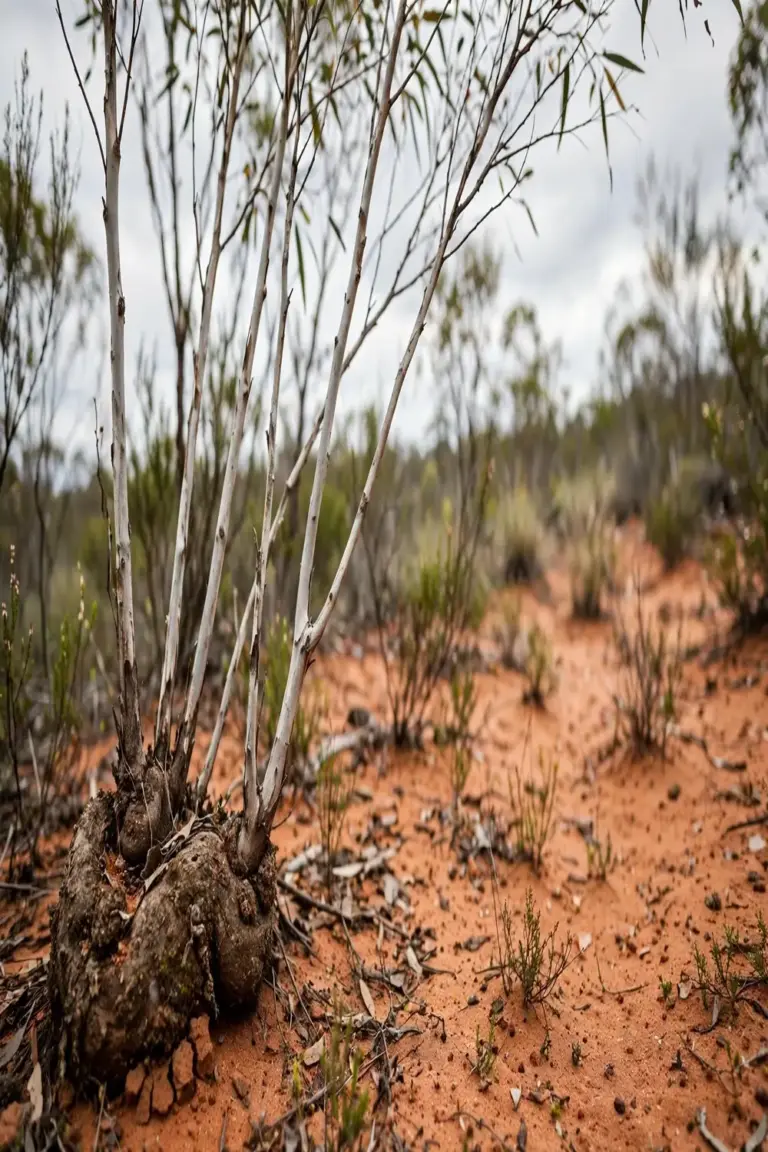
Bark varies across mallee species, so bark never settles a mallee call. Some mallees carry smooth bark. Others carry rough bark. Leaves follow the same juvenile-to-adult pattern as tree eucalypts, and fruit follows the same shape range. Read the base first, then run the bark and fruit clues as usual.
Confused with: regrowth after fire or cutting. Regrowth shoots rise from a charred stump of one age, with the old trunk line still visible. A true mallee shows several stems of similar age with no single old trunk. Read the base. The base settles it.
15. Dodge the Lookalike Traps
Dodge 4 traps that catch even careful readers. Trap one is Angophora mistaken for Eucalyptus. Angophora adult leaves sit opposite, flowers carry no cap, and the common name apple follows several species, including narrow-leaved apple, Angophora bakeri. Opposite adult leaves plus small petals with no cap settle it. A reader who ignores leaf arrangement calls every apple a gum.
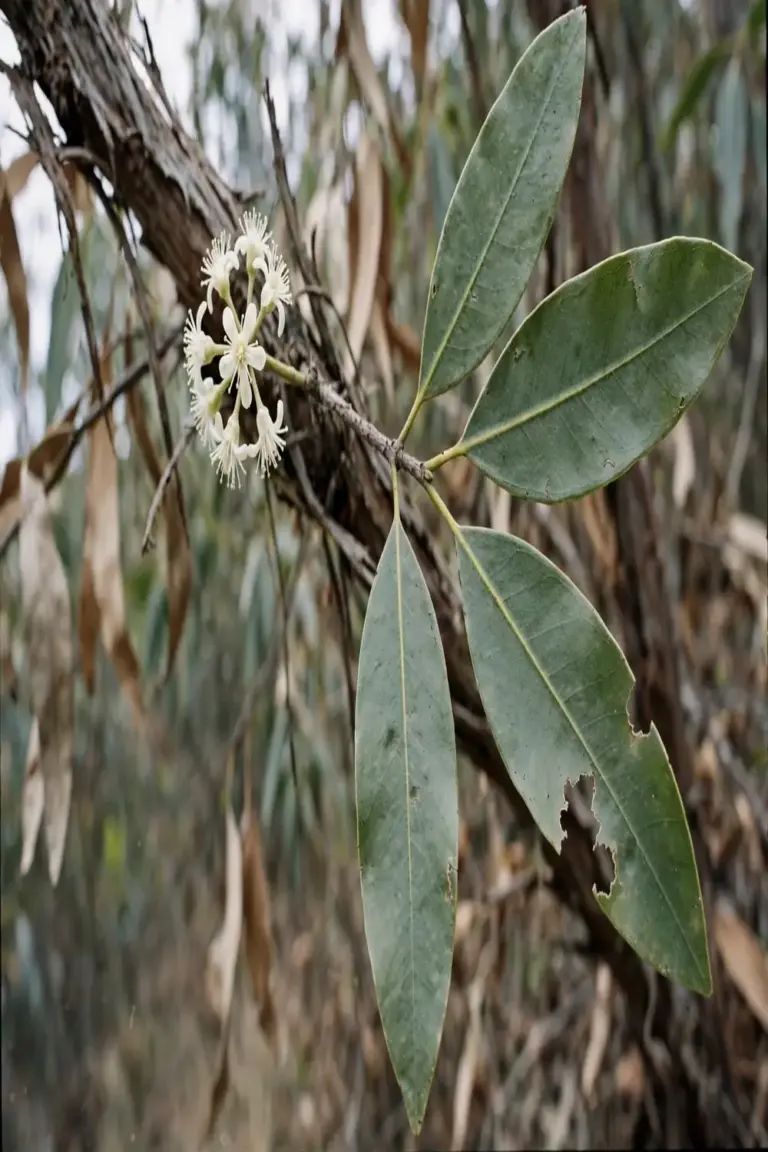
Trap two is Corymbia mistaken for Eucalyptus. Bloodwoods, ghost gums, and spotted gums left Eucalyptus for Corymbia, and old field guides still print the old names. Flat-topped corymbs plus an operculum point at Corymbia. Axillary clusters point at Eucalyptus. Check the flower arrangement before you trust a printed name.
Trap three is juvenile foliage mistaken for a species. Seedlings, coppice shoots, and post-fire regrowth all throw juvenile leaves. A round silvery leaf on a shoot proves nothing about the species. Read adult leaves from the mid-canopy, and treat juvenile leaves as a warning sign rather than a clue.
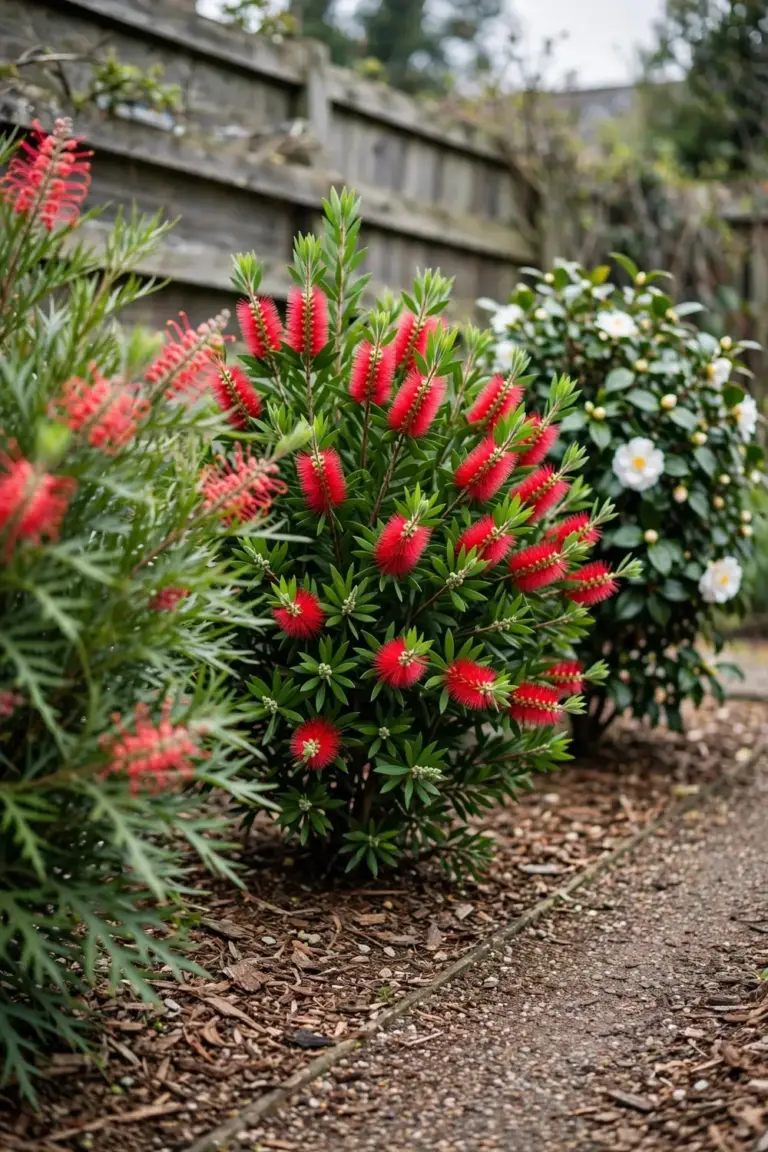
Trap four is the non-eucalypt lookalike. Paperbarks (Melaleuca) carry papery bark and bottlebrush flowers. Wattles (Acacia) carry phyllodes rather than true leaves. Turpentine (Syncarpia) carries rough fibrous bark and different fruit. When the buds show no operculum, the fruit shows no valves, and the leaves show no oil glands, the tree sits outside the eucalypt group entirely.
16. Record 6 Field Photos Before You Key It Out
Record 6 field photos before you key any gum tree out. The camera holds details the eye drops, and a key run from photos beats a key run from memory. Shoot the trunk at chest height with bark in sharp focus, then the base to show habit and lignotuber. Shoot a mature branch with adult leaves, then a bud cluster with a coin for scale. Shoot 5 or 6 gumnuts from the ground. Shoot the whole tree with its setting. Six photos carry the full key.
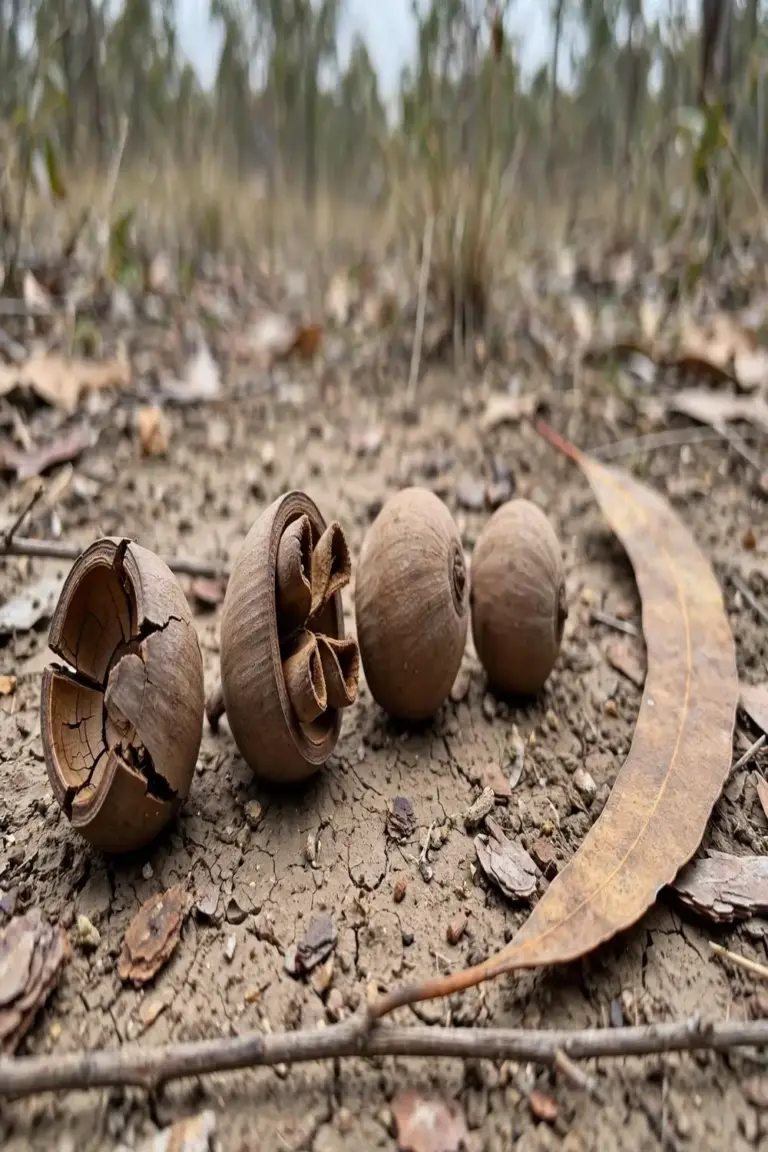
Add 3 notes to the photos. Note the location, since region narrows the field hard in a group with strong regional turnover. Note the soil and slope, since soil type tracks species groups. Note the date, since flowering season helps local keys. A photo set with location, soil, and date keys out faster than a photo set without them. Keep the notes short and factual. The key needs facts, not impressions.
A field guide in the pack helps when the phone signal drops. A printed key works without reception, and the site’s field guide roundup lists the manuals worth carrying. Photograph first, key second, and confirm third. The order keeps every identification honest.
17. Confirm Every Name With EUCLID and PlantNET
Confirm every name with EUCLID and PlantNET before you record it. EUCLID, the interactive key built from the Australian National Herbarium collection, covers 917 eucalypt species across all species native to Australia, per Lucidcentral. The same article records 65,000 eucalypt specimens behind the key. Feed EUCLID the bark group, bud shape, fruit shape, and leaf arrangement, and it returns a shortlist with photos and distribution maps.
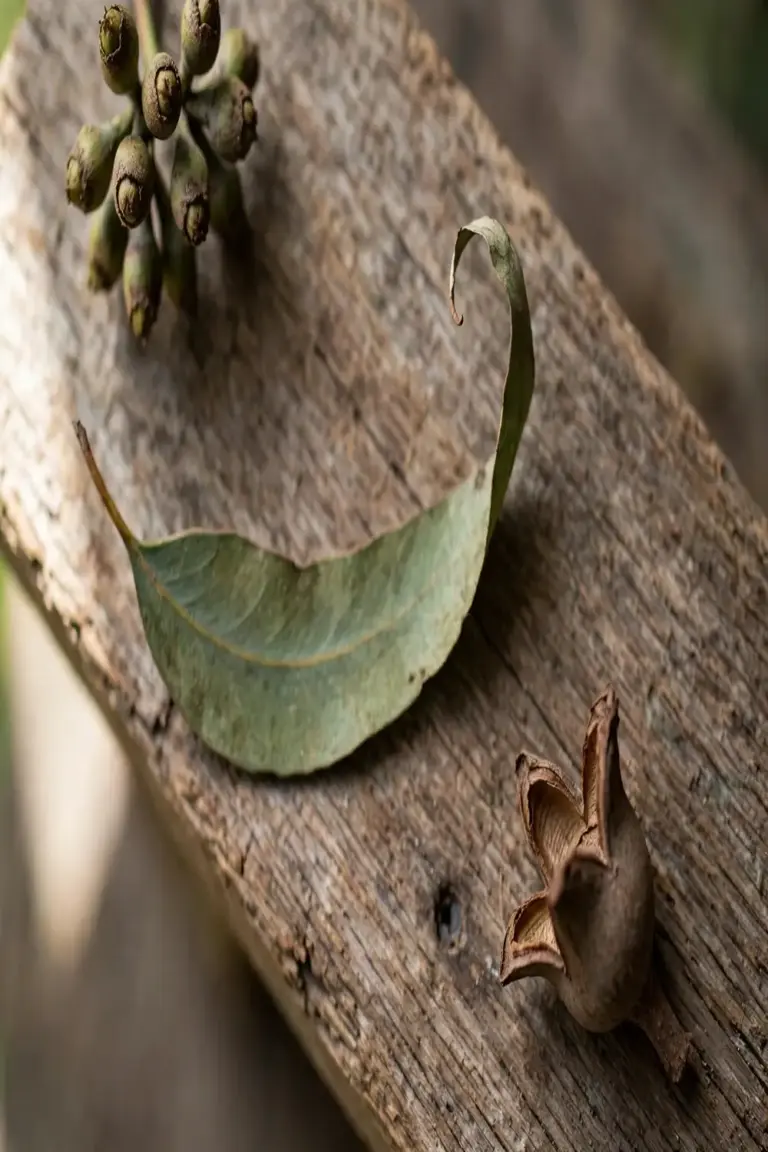
PlantNET carries the state herbarium view. The NSW Flora pages at PlantNET give the botanical description, distribution, and current accepted name for each species. Use PlantNET to check the name after EUCLID narrows the field, since taxonomy moves and printed guides age. A name that matches both tools stands. A name that matches one tool needs a second look.
Regional keys add the final check for readers in one area. The Greater Brisbane key walks bark groups and fruit size step by step, and similar keys exist for the Blue Mountains, the Strathbogie ranges, and other regions, per the Greater Brisbane key. Start national with EUCLID, confirm with PlantNET, and finish local with the regional key for your area. Three tools beat one.
18. Eucalyptus Identification FAQ
Read bark, then gumnuts, then leaves. Bark names the group. Fallen gumnuts from the base of the tree name the species. Adult leaves confirm the call. Buds help when present, but flowers are the weakest clue in the key, since they sit high and bloom briefly. A trunk photo plus a gumnut photo keys out most trees.
Eucalyptus and Corymbia carry alternate adult leaves and flowers with an operculum cap. Angophora carries opposite adult leaves and flowers with no cap. Corymbia and Angophora flowers sit in flat-topped corymbs, while Eucalyptus flowers sit in axillary clusters. Bloodwoods, ghost gums, and spotted gums sit in Corymbia.
Juvenile leaves grow round or egg-shaped, grayish, and opposite, while adult leaves grow sickle-shaped, green, and alternate. The tree swaps leaf forms as it matures. Seedlings, coppice shoots, and post-fire regrowth throw juvenile leaves, so always read adult leaves from the mid-canopy. A few species, including Argyle apple, hold juvenile leaves into adult life.
Bark alone names the bark group, never the species. Stringybark, box, ironbark, gum, peppermint, bloodwood, and mallee groups each hold many species. Bark plus gumnuts narrows the field to a species. Bark plus gumnuts plus buds settles it. Treat any bark-only name as a working guess until fruit confirms it.
Mallee names a growth form, not a species. Mallees grow multi-stemmed from a lignotuber and usually stand fairly small. Many species grow as mallees, and bark varies across them. Read the base for the multi-stemmed habit, then run the bark and fruit clues as usual. Fire regrowth mimics mallee habit, so check for a charred old trunk line.
19. Start With Bark and End With Gumnuts
Start with bark and end with gumnuts, and every gum tree in your street turns into a solvable puzzle. Bark names the group in seconds. Buds narrow the field. Gumnuts confirm the species with fruit shape, and fruit shape varies less than any other feature. Leaves catch the traps that fool beginners. Habit checks the answer against the setting. EUCLID and PlantNET confirm the name. Walk the key in that order, and the tree that looked like every other gum becomes one named species with a bark group, a genus, and a fruit to prove it.