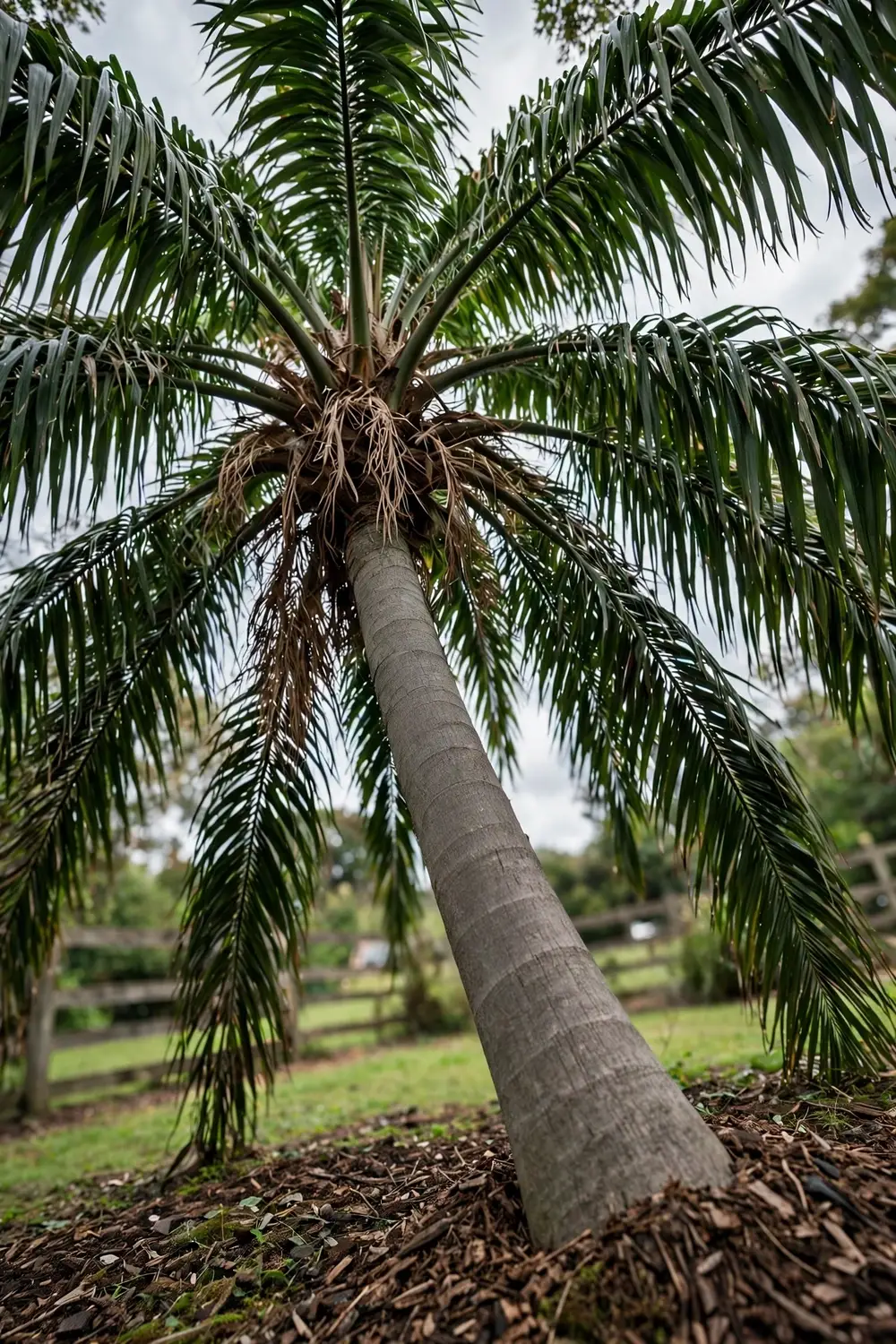

Set a new palm with the base of its stem 2.5 cm below the soil surface. That is growing palms in Australia at its most honest: depth, climate band, and job decide whether the palm lives. The rest of this page is 12 moves, from the climate match to the frost plan.
I have learned that the palm that survives is the one matched to the coldest night, not the hottest day.
A palm is a single growing point on top of a trunk. The crown holds the only bud that builds new fronds. Every choice below protects that bud: the right band, the right depth, water, food, and a frost plan.
1. Match the Palm to Your Climate Band First
Match the palm to your coldest night first, because a palm that sails through a Cairns summer still dies in a Canberra frost. Australia splits into four palm bands. The band tells you which palms survive your winter, and the job tells you which palm to plant. Band first, job second, species third.
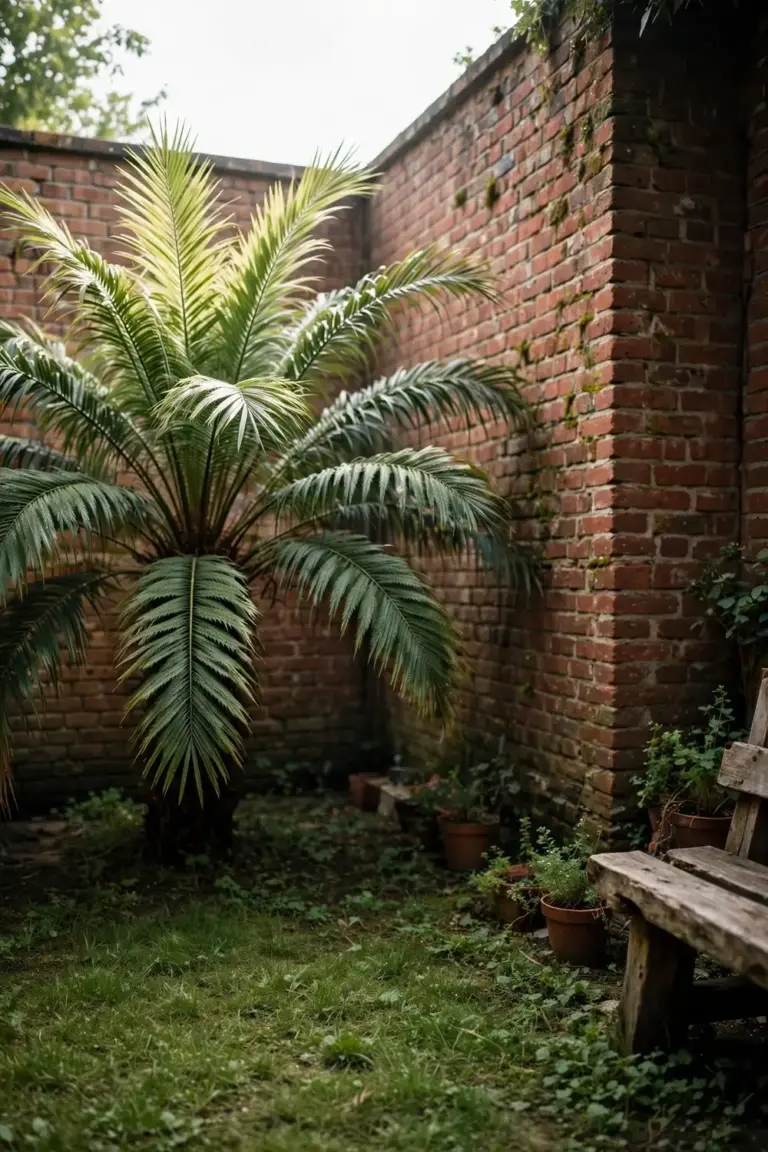
Microclimate shifts the band by half a step. A courtyard with brick walls on two sides stays warmer than an open lawn on the same street, and a coastal block copes with salt wind that an inland block never sees. Read the band first, then read the spot where the palm will actually stand. When the two disagree, the spot wins.
Check the frost record for your suburb before you buy, because a band map draws broad lines and your street may sit in a frost hollow or on a warm ridge. Ask the nursery which palms survived the last cold winter in your postcode. Local survival beats a zone map every time.
Tropical: Cairns and Darwin
Tropical bands stay warm and wet all year, and frost never arrives. Foxtail, Golden Cane, and Bangalow at its warm edge grow here. Pick for heat and humidity. Water stays available through the dry season. A palm that loves wet feet still wants drainage under the root ball, because standing water rots roots in any band.
Subtropical: Brisbane to Northern NSW
Subtropical bands bring warm summers, mild winters, and an odd cold snap. Kentia, Bangalow, Foxtail at its cool edge, and Lady Palm all grow here. The widest pick list lives in this band. One cold night still separates the survivors from the casualties, so check the frost line for your suburb before you buy.
Warm Temperate: Sydney and Perth
Warm temperate bands mix dry summers in Perth with humid summers in Sydney, plus light frost. Kentia, Bangalow with steady water, Cabbage Tree Palm, and Windmill grow here. Perth gardeners water more through summer. Sydney gardeners watch drainage through wet winters.
Cool Temperate and Frost-Prone South
Cool temperate bands cover Melbourne, the Adelaide hills, Canberra, and Hobart. Frost decides everything here. Windmill and Cabbage Tree Palm lead. Kentia survives light frost in a sheltered courtyard. Tropical palms stay in pots that move under cover before the first cold night.
2. Pick the Job: Feature, Screen, or Pot
Pick the job before the species. A feature palm stands alone. A screen palm fills a line. A pot palm stays small enough to move.
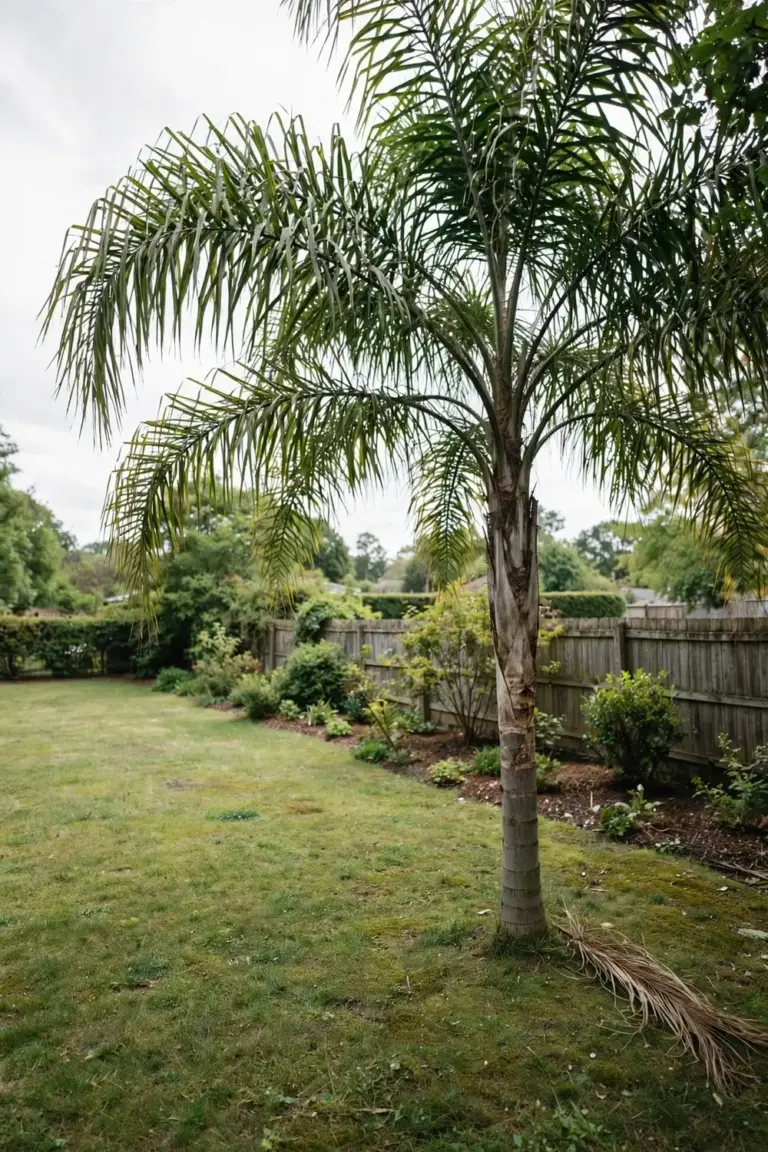
A feature palm needs space around it, so the trunk and crown read clean against sky or fence. One palm carries the whole bed. Measure the mature crown width before you dig, and leave clearance from eaves, wires, and paths. A palm planted too close to the house grows into the roofline and forces a removal that a better spot would have avoided.
A screen palm needs neighbours. Clumping Golden Cane fills a line fast, and a row of Bangalow screens with room between trunks. Space the row for the mature width, not the pot width, because plants that touch at maturity shade each other and thin out at the base.
A pot palm needs a pot and a plan to move it. Kentia, Lady Palm, and a young Golden Cane all suit pots. The pot caps the size and lets you shift the palm for frost or sun. A pot on castors moves easier than a pot you must lift. A palm you can move is a palm you can save on a cold night.
3. Read the Palm Pick Table
Start from your band, then your job. The table pairs seven palms to the bands and jobs they handle.
| Palm | Climate Band | Job | Notes |
|---|---|---|---|
| Kentia (Howea forsteriana) | Subtropical to cool temperate | Feature, pot, indoor | Native to Lord Howe Island; tolerates light frost; garden height near 5 m |
| Bangalow (Archontophoenix cunninghamiana) | Subtropical to warm temperate | Feature, screen | Native eastern Australian palm; tall and fast; give it room and steady water |
| Foxtail (Wodyetia bifurcata) | Tropical to subtropical | Feature | Native Queensland palm; needs warmth; foxtail fronds give the name |
| Golden Cane (Dypsis lutescens) | Tropical to subtropical | Screen, pot | Dense gold-green canes; keep moist through dry spells |
| Lady Palm (Rhapis excelsa) | Subtropical to warm temperate | Pot, indoor, border | Slow grower; takes shade; drainage comes first |
| Cabbage Tree Palm (Livistona australis) | Subtropical to cool temperate | Feature | Native eastern Australian palm; cold-hardy for a palm |
| Windmill (Trachycarpus fortunei) | Warm temperate to cool temperate | Feature | Cold-hardy; hairy trunk; the frost-prone south pick |
Buy the palm for the band you have. A nursery tag that says tropical does not change a frosty courtyard. A palm that fits the band forgives a missed watering. A palm outside its band forgives nothing.
When no row in the table fits your band and job together, pick the nearest band and grow in a pot. A Foxtail in a pot on a Brisbane patio beats a Foxtail in the ground in Hobart. The pot buys you a band of warmth and a move under cover. The ground gives you no second chance.
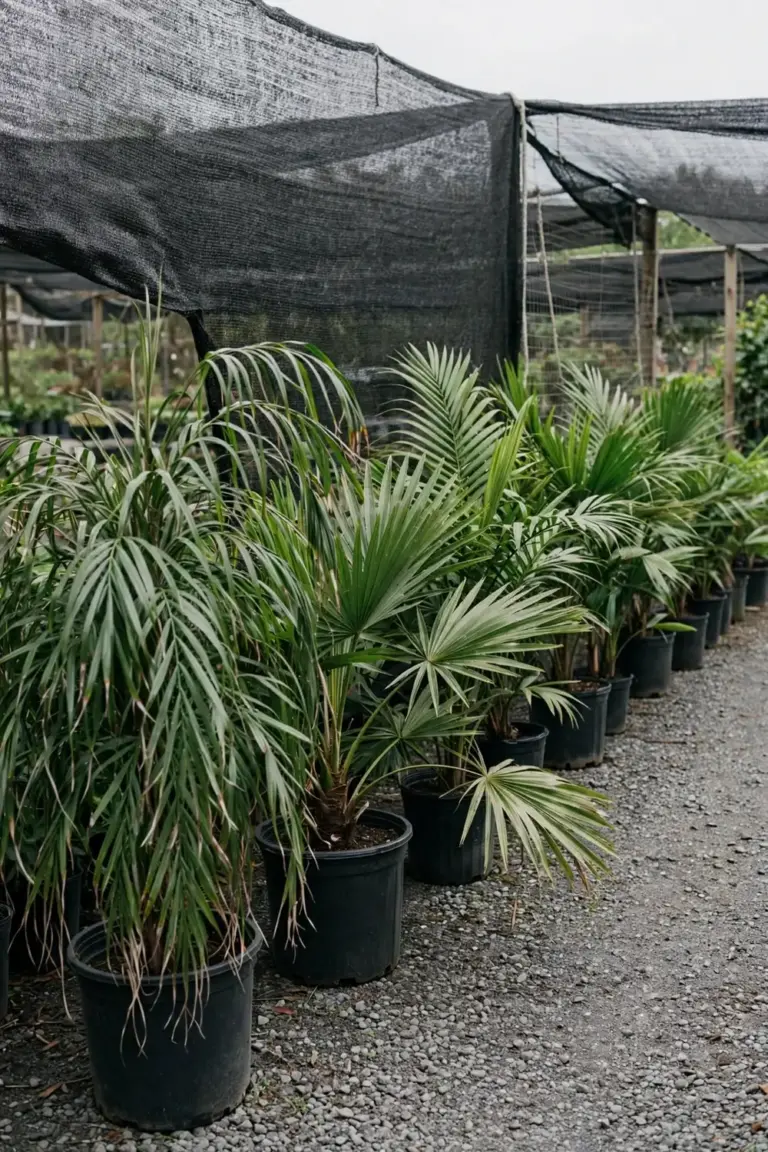
Buy nursery stock with a firm root ball and green spear fronds at the crown. The spear is the newest frond, still upright at the center. A brown or soft spear means the growing point already failed. Skip that plant. A pot-bound palm with roots circling the base needs teasing out before planting, or the roots keep circling in the ground.
4. Plant at the Right Depth
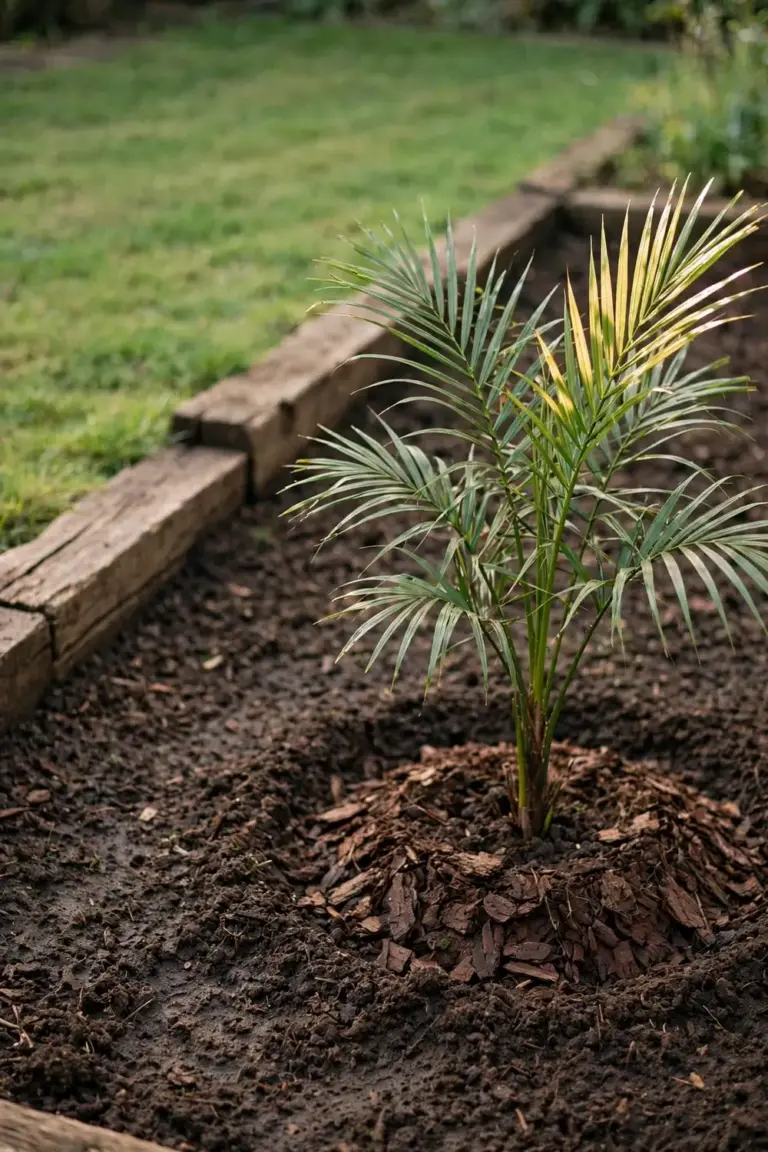
Plant a palm with the base of its stem 2.5 cm below the soil surface. Palms hate deep planting.
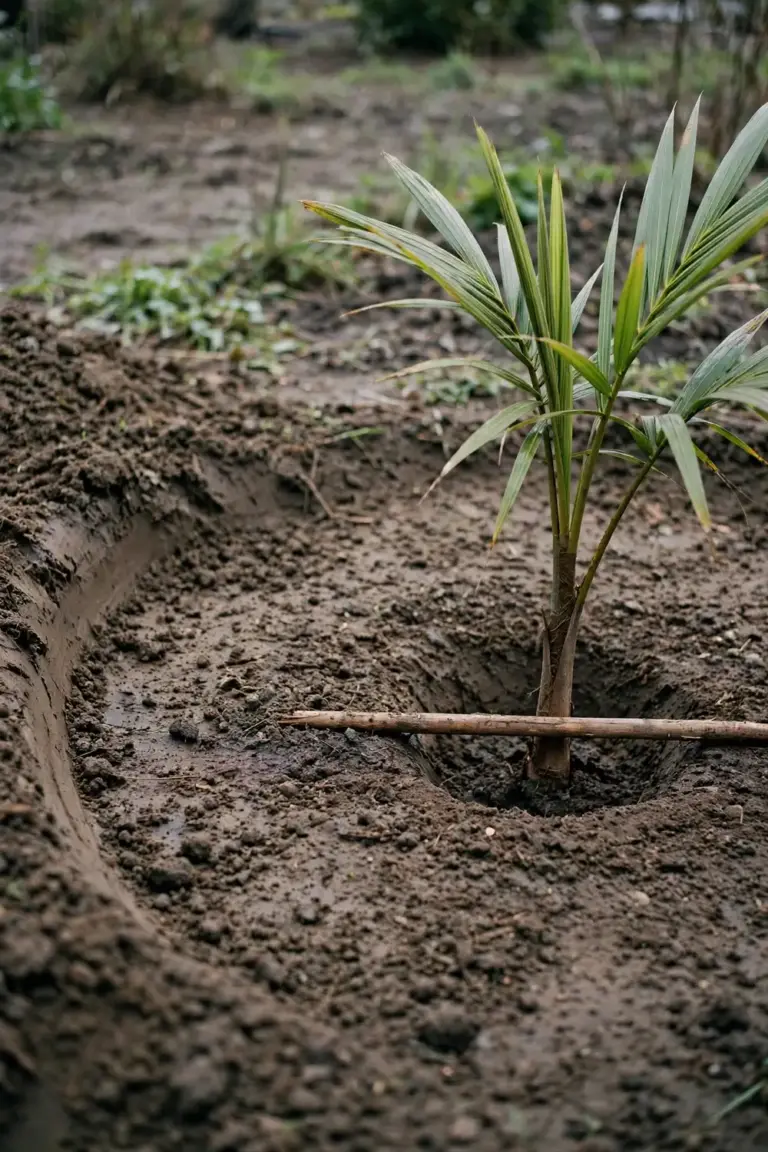
Dig the hole twice as wide as the pot and no deeper than the root ball. Set the palm so the base of the stem sits about 2.5 cm below the soil surface, because University of Florida research on palm production warns that palms are intolerant of deep planting and sets that depth for lining stock. Backfill with the soil you dug out. Water the root ball in at once. Spread compost mulch around the base and keep it clear of the trunk. Building soil health before you dig decides whether water stays in the root zone or runs off.
Test the drainage before you plant. Dig a test hole and fill it with water. Soil that drains freely suits palms. Soil that holds a puddle needs coarse organic matter worked through before the palm goes in. A palm in a wet hole rots from the roots up, and the crown shows the damage months later.
Deep planting suffocates the root initiation zone at the base of the stem. The palm starves slowly and shows it late. Shallow planting leaves the palm loose and prone to toppling in wind. The 2.5 cm figure is the anchor. Check it with a straight stick laid across the hole before you backfill. Stake only when wind rocks the palm, and remove the stake once the roots grip.
A large field-grown palm needs more hands and more bracing. The root ball runs heavy and the crown catches wind like a sail. Set the palm at the same 2.5 cm depth, brace it on two sides, and water it in at once. A big palm that rocks in its first month tears the new roots before they grip. Bracing stays until the crown holds steady in a gust.
5. Water a New Palm Until It Roots
Water a new palm deeply at planting, then keep the root zone moist until new fronds show. A new palm drinks from a small root ball.
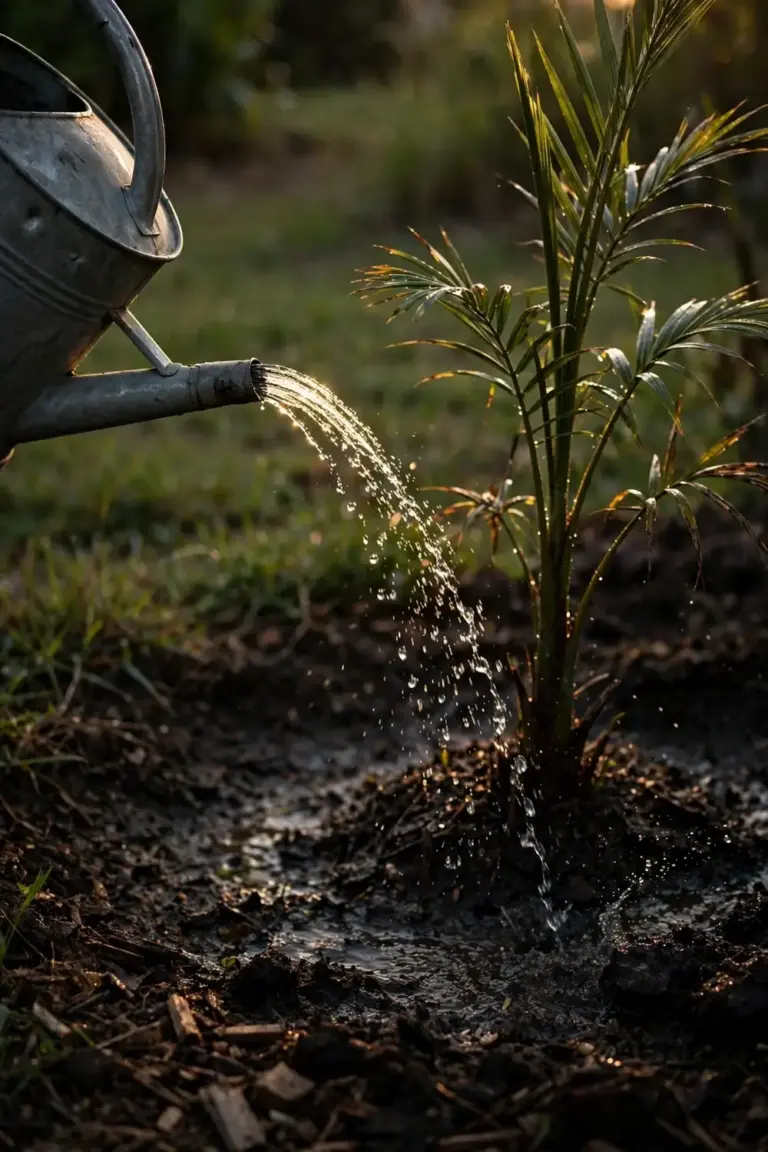
A container-grown palm keeps most of its roots inside the original potting soil for months after transplanting. Soak that root ball, not the whole bed. The surrounding soil can look damp while the ball itself stays dry. Press a finger into the mix near the stem. Water when the top of the mix dries. An established palm tolerates dry spells better, and a mature palm in a wet winter wants drainage more than water.
Perth gardeners water more through dry summers. Sydney gardeners ease off through wet winters. A palm that wilts in heat with wet soil has a drainage problem, not a water problem. Fix the drain before you add more water.
Watch the fronds for the water story. Lower fronds that yellow and drop one at a time often mean wet feet. Leaflets that fold and crisp at the edges mean the root ball dried out. The finger test settles it. Push a finger into the mix near the stem. Dry mix means water. Damp mix means wait.
Mulch helps the water story in both directions. A mulch ring holds moisture through a dry week and keeps the soil cool in summer heat. Keep the mulch off the trunk. Mulch piled against the stem holds damp against bark and invites rot at the base.
6. Feed With a Palm Fertilizer
Feed a palm with a fertilizer blended for palms, built around an 8-2-12-4Mg analysis with micronutrients. Garden fertilizer with high nitrogen and low potassium grows soft fronds.
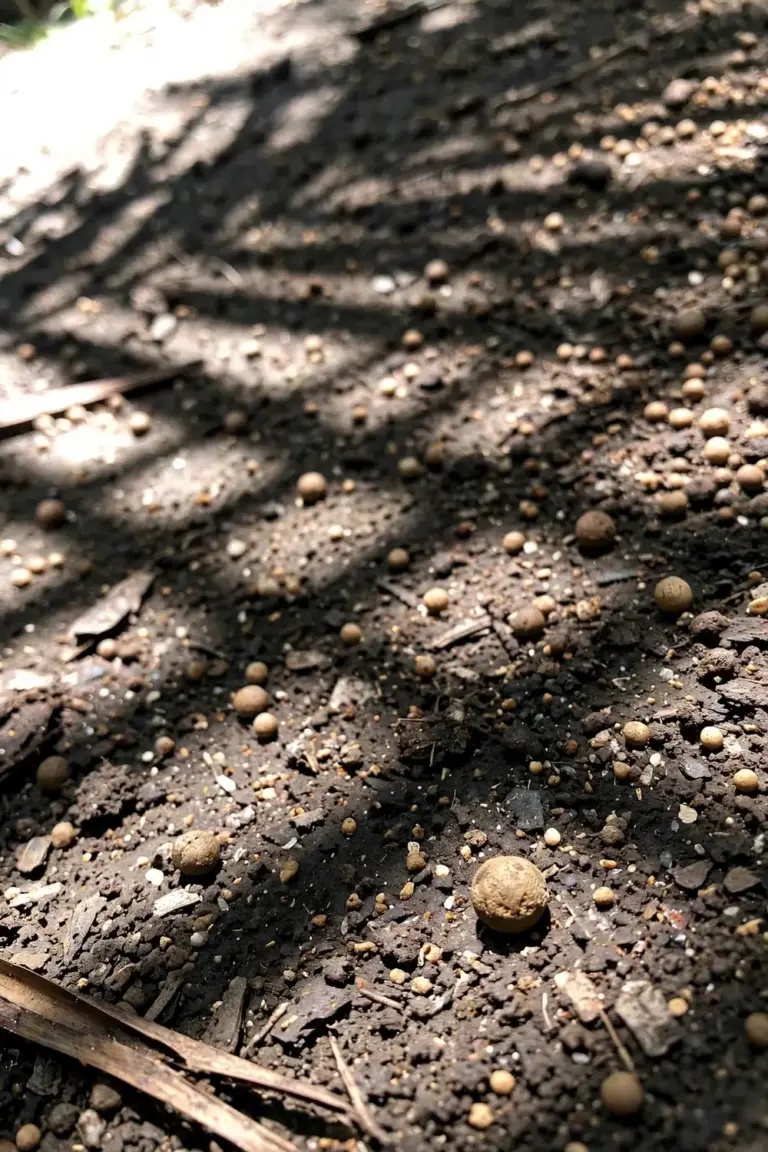
University of Florida guidance on palm production sets the landscape palm analysis near 8-2-12-4Mg with micronutrients, with granular rates starting near 227 to 454 g for a small, recently planted palm, according to the same University of Florida palm production research. Spread the granules under the canopy and water them in. Follow the label on the bag you buy. Palm fertilizer feeds the palm. Turf fertilizer feeds the lawn around it and pushes the palm the wrong way.
Slow-release granules suit palms better than a quick liquid feed. Granules release through the warm months and match the palm’s steady growth. A liquid feed spikes and fades. Whichever form you buy, keep granules off the trunk and away from the crown. Fertilizer sitting against the stem burns tissue that the palm cannot replace.
Test the soil before you chase a deficiency with fertilizer, because a soil test shows pH and the nutrients the soil already holds. A palm in alkaline soil locks up manganese no matter how much fertilizer you add. Fix the soil first, then feed. Guessing wastes the bag and hides the real problem.
Feed through the warm growing months. Skip feeding in the coldest weeks. A palm that grows soft late in autumn meets frost with weak fronds.
Read a Deficiency Before You Feed
Read a deficiency before you feed. Older fronds that yellow and brown at the tips point to a potassium shortage. New fronds that emerge frizzled and stunted point to a manganese shortage, the frizzletop pattern. University of Florida palm nutrition guidance ties both patterns to the element the palm lacks.
Do not strip old fronds to tidy the crown. Palms move potassium from old fronds into new growth. Cut the old fronds early and the shortage climbs into the new crown. Feed the palm and leave the fronds alone.
7. Grow a Palm in a Pot
Grow a palm in a pot with drainage holes, a free-draining potting mix, and a pot one size up from the root ball. Pots dry faster than beds.
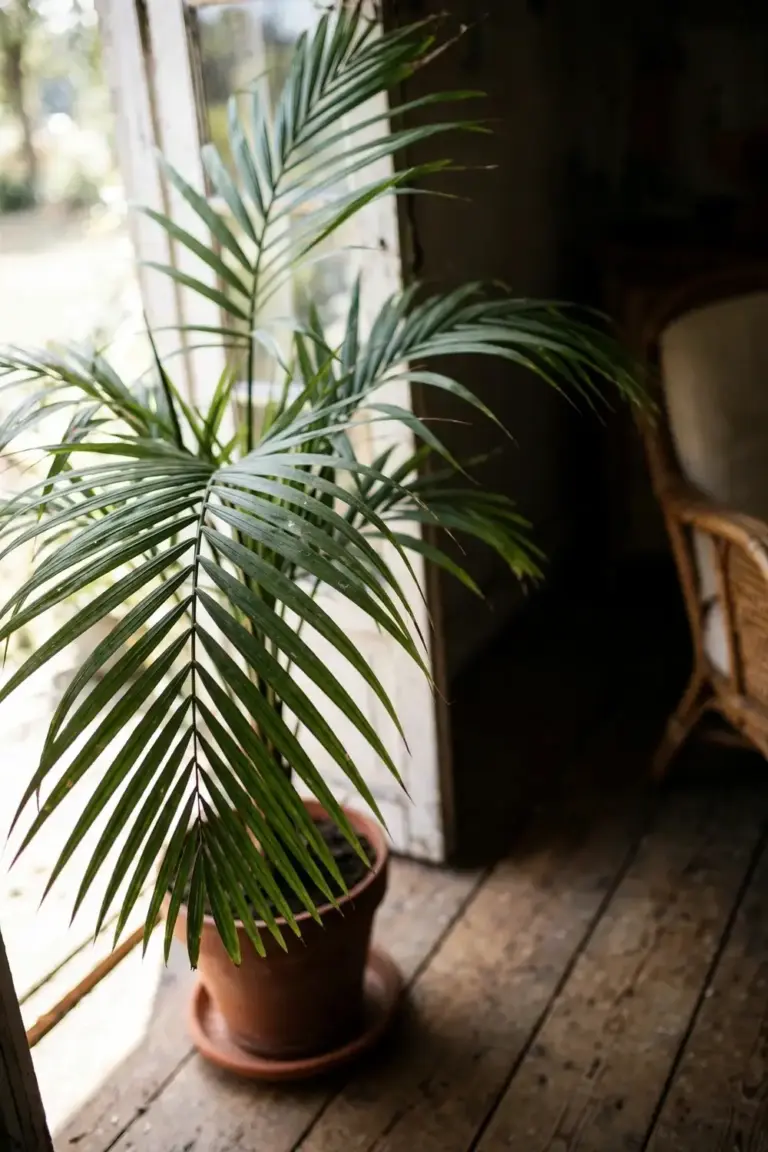
Kentia and Lady Palm lead indoors. Kentia wants bright indirect light and steady water, while Lady Palm takes shade and still looks sharp. Golden Cane suits a large pot on a patio. Water when the top of the mix dries, feed lightly through the warm months, and repot when roots circle the base of the pot. Move pots under cover before the first frost night. A pot palm that lives outdoors in a frost band needs a sheltered corner, not an open lawn.
Rotate the pot a quarter turn every few weeks. The crown grows toward the light. A pot that never turns grows lopsided, with fronds reaching one way and a bare side facing the room. A saucer under the pot catches the runoff. Empty the saucer after watering so the roots never sit in water.
8. Grow a Palm From Seed
Grow a palm from seed with fresh seed, warmth, moisture, and patience. Palm seed germinates slowly, and some species take months.
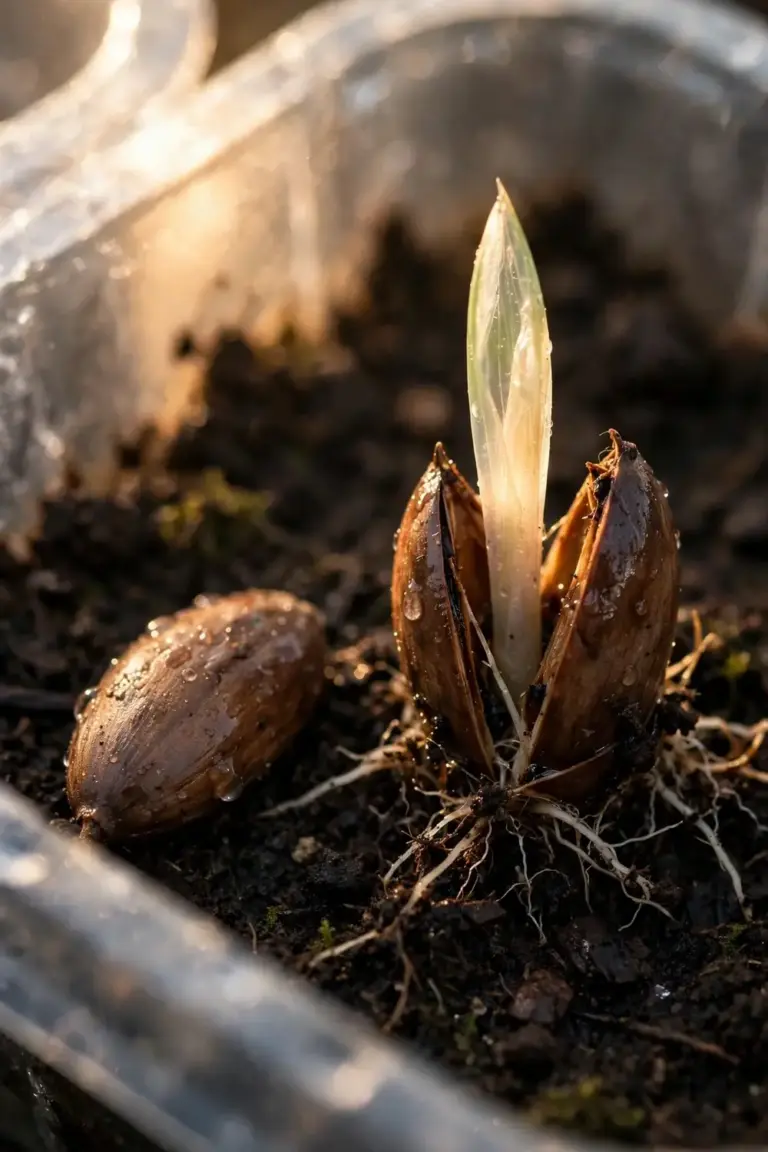
Fresh seed beats old seed. Soak the seed, sow it shallow in mix, and keep it warm and moist. A cover holds humidity over the tray. Do not bury the seed deep. Seedlings want bright indirect light. The first fronds look grassy, not palmate. Seed starting steps cover the tray, the mix, and the watering rhythm for slow starters like palms.
Seed suits the gardener with time. A nursery palm suits the gardener who wants a crown this year. Both paths end at the same trunk.
Sow more seed than you need. Some seed never wakes. Thin the tray to the strongest seedlings once the first fronds show. Move seedlings into their own pots when the roots fill the tray cell. A seedling that stays crowded in the tray stalls, and a stalled seedling rarely catches up.
9. Handle Frost Before It Hits
Handle frost by choosing a frost-tolerant palm, planting it in a sheltered courtyard, and leaving damaged fronds alone until spring. Frost burns fronds first and kills the bud last.
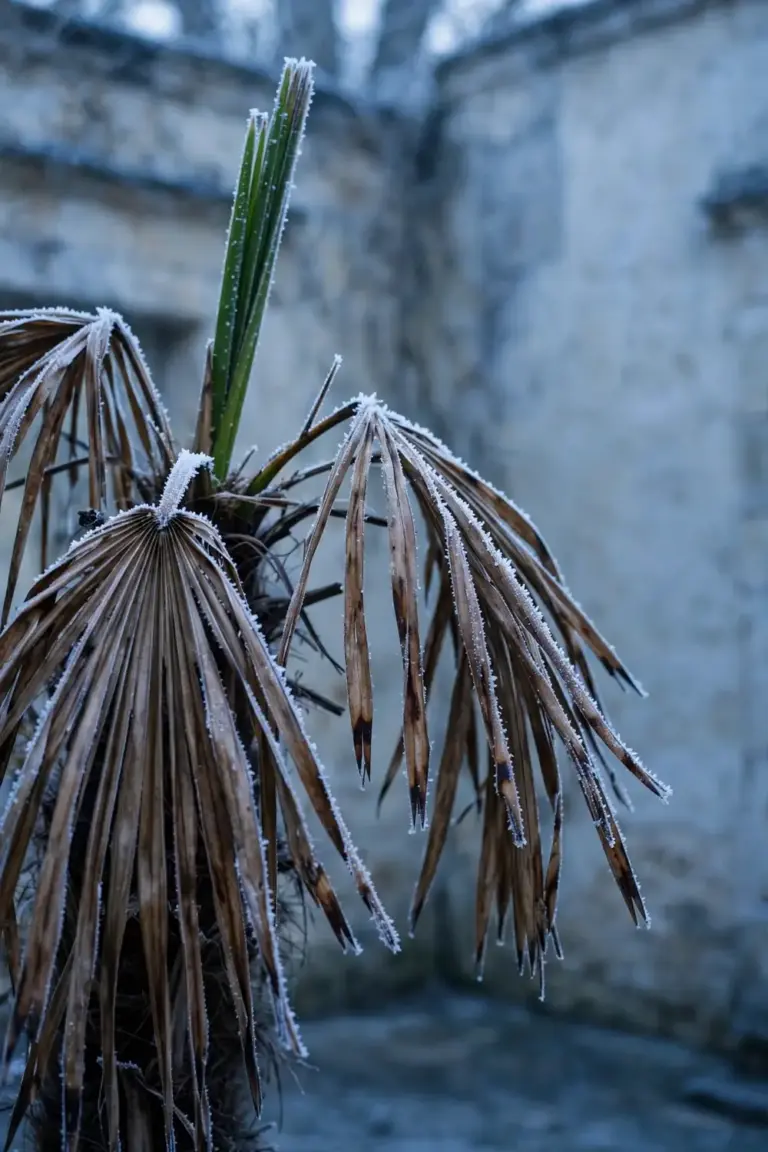
After a freeze, do not strip brown fronds at once, because the green portion of a damaged frond still feeds the palm. Do not water or feed right after freeze injury. Feed from late spring to early fall, once growth resumes. Wrapping a palm trunk in burlap or a frost blanket does not protect the apical meristem at the crown, according to Louisiana State University guidance on freeze-damaged palms. Plant a replacement in early summer, when root growth runs strongest.
Kentia tolerates light frost in a sheltered spot, and its garden height stays near 5 m, according to Gardening With Angus on the Kentia palm. Cabbage Tree Palm and Windmill handle harder cold. A potted palm moves under cover. A planted palm gets the courtyard, the wall, and the overhang. The frost plan starts at buying time, not on the cold night.
A palm that enters winter well fed and well watered handles cold better than a starved one. University of Florida research links good potassium nutrition to stronger cold tolerance in palms. Feed through the growing season and let the palm harden off before winter. A soft flush of late growth meets frost with no defense.
Shelter beats wrapping. A hedge, a fence, or a wall breaks the wind that drives frost into a crown. Plant the tender palm on the warm side of the house, where the morning sun reaches it early. A palm in a wind tunnel freezes harder than the same palm behind a hedge. The wall stores the day’s heat and gives it back at night.
10. Prune Fronds and Never Top a Palm
Prune only dead or fully brown fronds. Never cut the top off a palm.
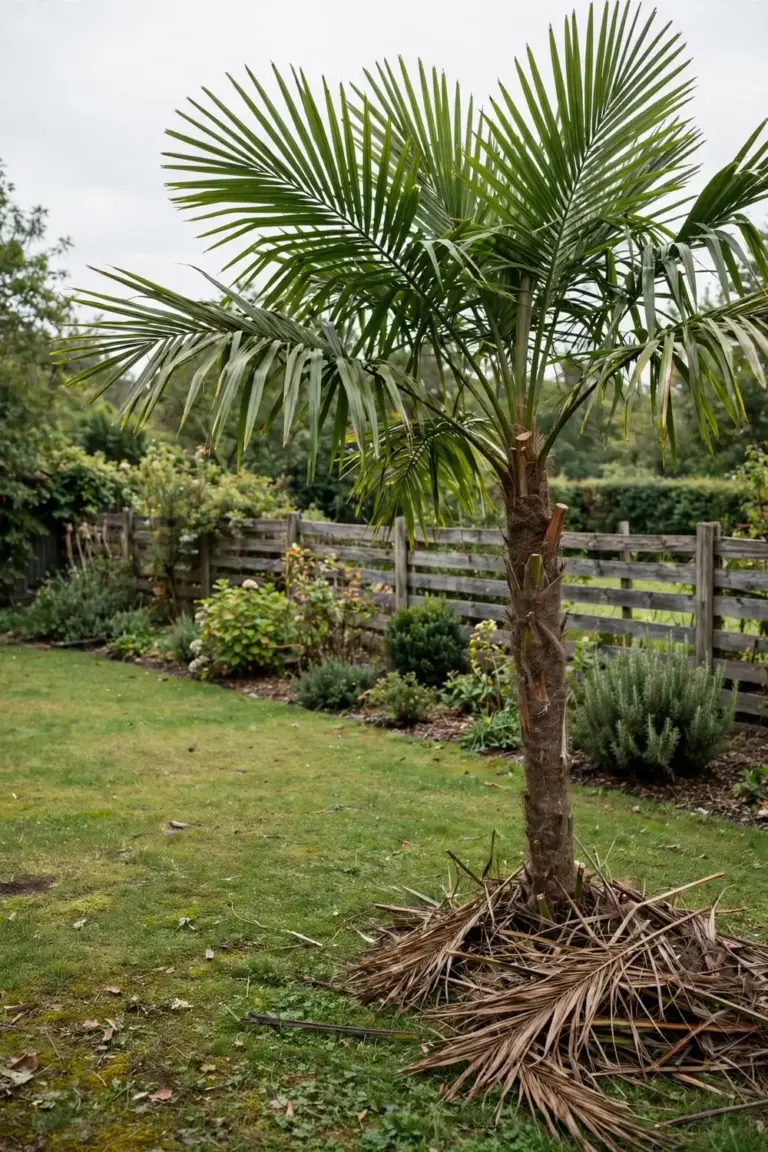
A palm grows from one terminal bud at the crown. Cut that bud and the trunk cannot regrow. The palm dies. Topping a palm to control its height kills it. Pick a smaller species instead. Remove dead fronds at the base of the frond stalk. Leave green and yellowing fronds alone: they still feed the palm and carry potassium to new growth. Sterilize tools between palms. Spring pruning techniques cover the cut, the tool, and the timing for woody plants, and the same discipline applies to palms.
Call an arborist for a tall palm. Ladder work under a heavy crown risks a fall and a crushed frond stalk. An arborist carries the rigging and the insurance. Home tools suit a Kentia in a pot and a Lady Palm at waist height. Anything above head height belongs to a professional.
Fronds with spots, streaks, or rot need a diagnosis before any spray. Spraying blind wastes the season and hides the real problem.
11. Skip the Cocos Palm in the North
Skip the Cocos palm in northern NSW and Queensland. It seeds itself into bushland and roadsides.
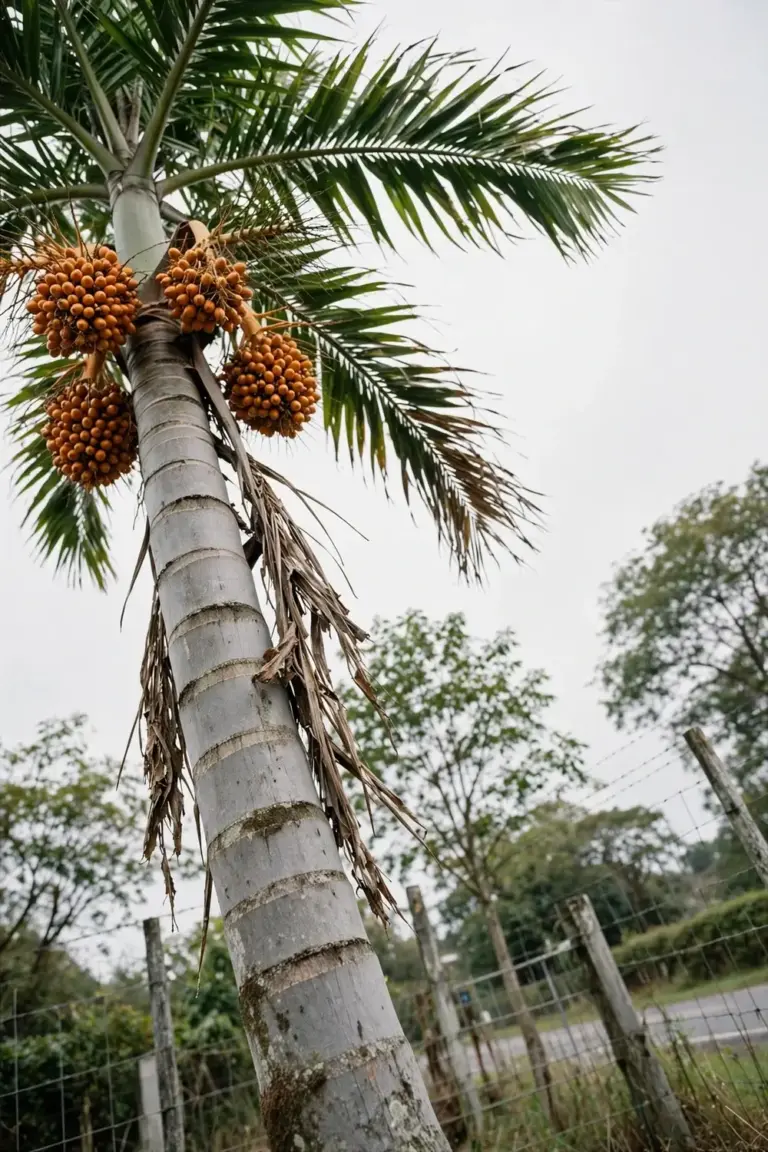
Cocos palm is a weed in the North Coast region of NSW, native to South America, and also a weed in Queensland, according to NSW WeedWise on the Cocos palm. The same listing gives its size: an average height near 12 m, a recorded maximum height of 20 m, a trunk 20 to 40 cm across, and fruit 2 to 3 cm long in large hanging clusters, according to the same NSW WeedWise listing. Birds and flying foxes spread the seed. A planted Cocos palm drops fruit that sprouts beyond the fence.
Plant a Bangalow or Cabbage Tree Palm instead for the same tall feather look. Both are native, and neither seeds into bushland. A palm that stays in the garden beats a palm that leaves it.
Remove a Cocos palm before it fruits if one already stands in the yard. Cut the fruit clusters off first so no seed drops during the work. Check local council rules before removal, because some councils list the palm as a weed to report. A stump left in the ground resprouts, so dig the root ball out or treat the cut.
12. Keep Sago Away From Pets and Kids
Keep sago away from pets and kids. Sago is a cycad, not a true palm, and every part of it poisons.
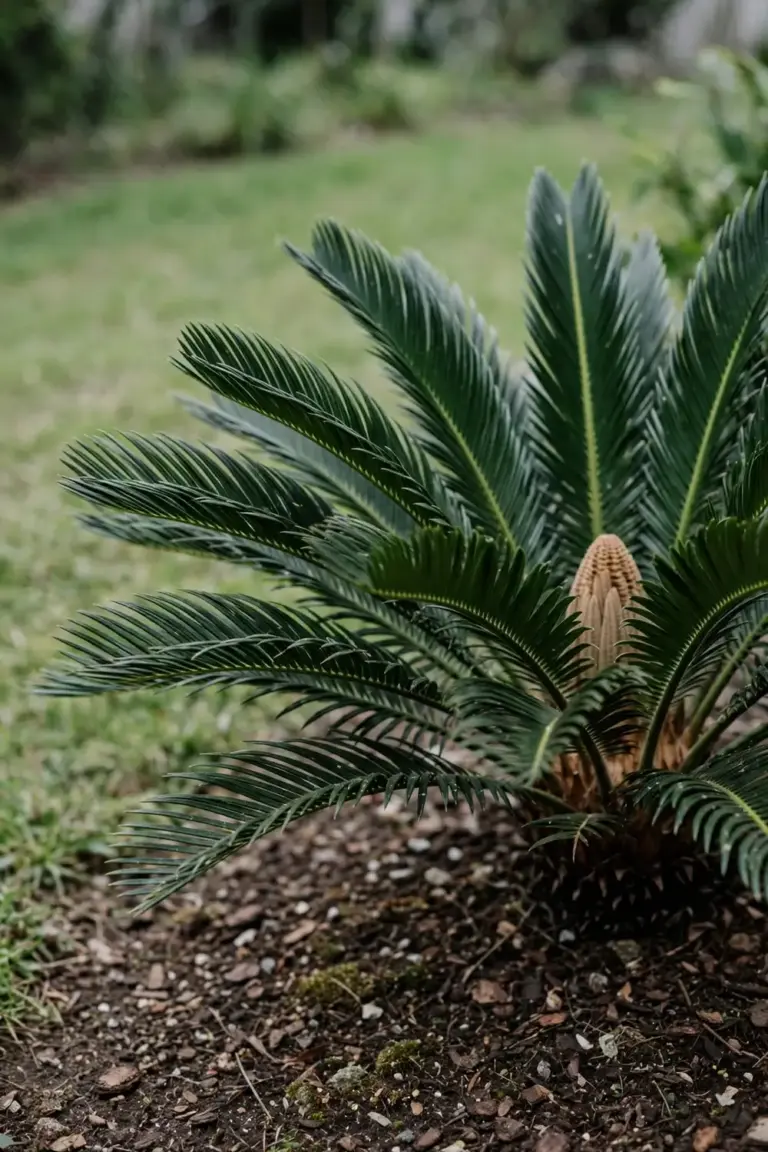
Sago carries the toxin cycasin. All parts of the plant are toxic, and the seeds carry the highest dose, according to the Veterinary Poisons Information Service. Dogs chew the seeds. Signs include vomiting and liver failure. If a pet eats any part, call a vet at once. Cycads look like palms but belong to another plant group entirely. Do not plant sago where dogs roam. Pick fallen seeds off the ground. A garden with pets and kids has better palms to choose from.
If a dog eats sago, act fast and skip home remedies. Call the vet and say the word sago. Bring a seed or a frond for identification if you can do it safely. Time matters more than the exact dose. A vet who knows the plant starts treatment at once. A garden without sago never faces the call.
Tell sago from a true palm by its cones: cycads carry cones at the crown, while true palms carry flowers and fruit. The fronds look alike at a glance, and the nursery tag settles it. Check the tag before you buy a plant that looks like a palm.
Frequently Asked Questions
Yes. Pick Windmill or Cabbage Tree Palm for an open spot. Kentia works in a sheltered courtyard with light frost. Keep tropical palms in pots that move under cover. Plant in a warm corner near a wall. Water through dry summers and leave frost-burned fronds until spring growth starts.
Kentia reaches 15 m in the wild on Lord Howe Island. In a garden it usually stays near 5 m. Indoor plants stay smaller still. The palm grows slowly, so a small plant stays small for years. Buy the size you want to live with. A Kentia in a pot stays smaller than a Kentia in the ground.
Old fronds that yellow at the tips point to a potassium shortage. New fronds that emerge frizzled point to a manganese shortage. Check the pattern before you feed. Feed a palm fertilizer with micronutrients. Leave old fronds on the palm so potassium moves into new growth. Yellow fronds from frost damage need time, not fertilizer.
No. A palm grows from one terminal bud at the crown. Cut that bud and the trunk cannot regrow. The palm dies. Topping never controls height. Pick a smaller species instead. Kentia and Lady Palm stay modest. A palm that outgrows its spot needs removal, not topping.
Yes, in parts of Australia. Cocos palm is a weed in the North Coast region of NSW and also a weed in Queensland. Birds and flying foxes spread its seed into bushland, roadsides, and waterways. The palm grows tall enough to drop seed far beyond the fence. Plant a native Bangalow or Cabbage Tree Palm for the same look without the spread.
No. Sago is a cycad, not a true palm, and every part poisons. The seeds carry the highest dose of cycasin. Dogs that chew seeds face vomiting and liver failure. Keep sago out of yards where dogs roam. If a pet eats any part, call a vet at once. Choose a true palm instead.
Start With One Palm That Fits
Walk the yard and note the coldest corner. Measure the sun in the spot where the palm will stand. Pick one palm from the table that fits the band and the job. Plant it 2.5 cm deep. Water it in. Mulch around the base and keep the mulch off the trunk. The rest is patience and one frost plan. A palm planted right in autumn settles roots before winter, and a palm planted right in spring grows all summer. Either season works when the band, the depth, and the job line up. Growing palms in Australia rewards the gardener who matches the band, the job, and the depth.