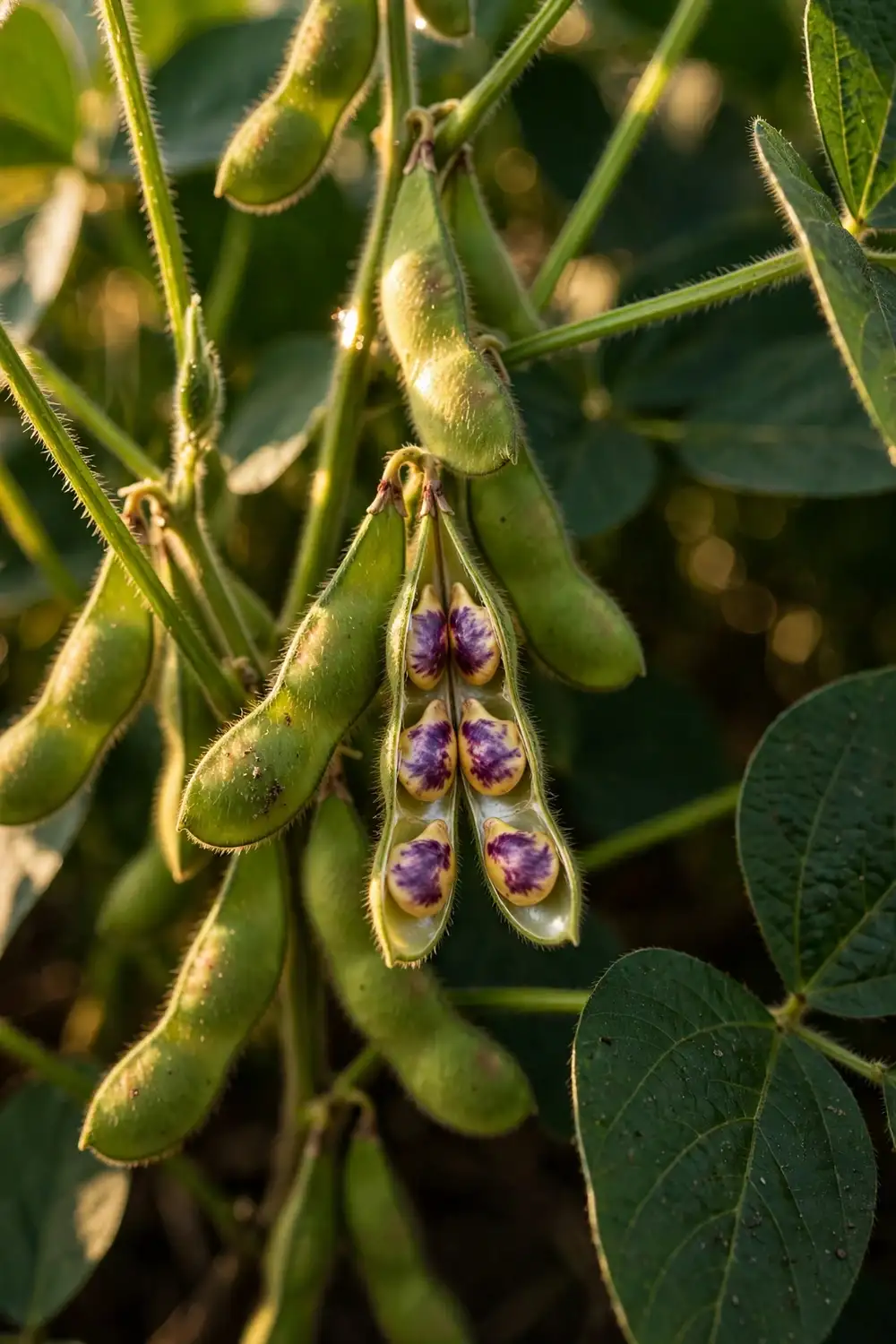

Purple-stained soybean seeds are the work of a single fungus, Cercospora kikuchii, and in most harvests the purple color costs the grower more in grain dockage than in actual yield. Leaf damage from the same fungus usually trims less than 10 percent off yield, Syngenta agronomists report, yet a load with more than half its seeds discolored can be downgraded at the elevator, a Kansas crop consultant warns. That gap between what the disease looks like and what it actually does is the whole story of purple seed stain.
If you pulled a pod apart and found purple-blotched beans, you are looking at a seed-quality disease, not a plant-killer. The fungus stains the seed coat, sometimes lightly, sometimes across the whole seed, and the stain tells you nothing about whether the bean is safe to handle. Extension plant pathologists describe it as a cosmetic and marketing problem first, an agronomic problem second, which is why the advice around it sounds so different from the advice around yield-robbing diseases.
This guide explains what purple seed stain is, what it looks like on seeds and leaves, how Cercospora kikuchii gets into the seed, when the stain actually costs money, and what growers do about it. Home gardeners who grow a row of edamame or dry soybeans will find the honest short version near the end: there is almost nothing you need to do.
What Purple Seed Stain Actually Is
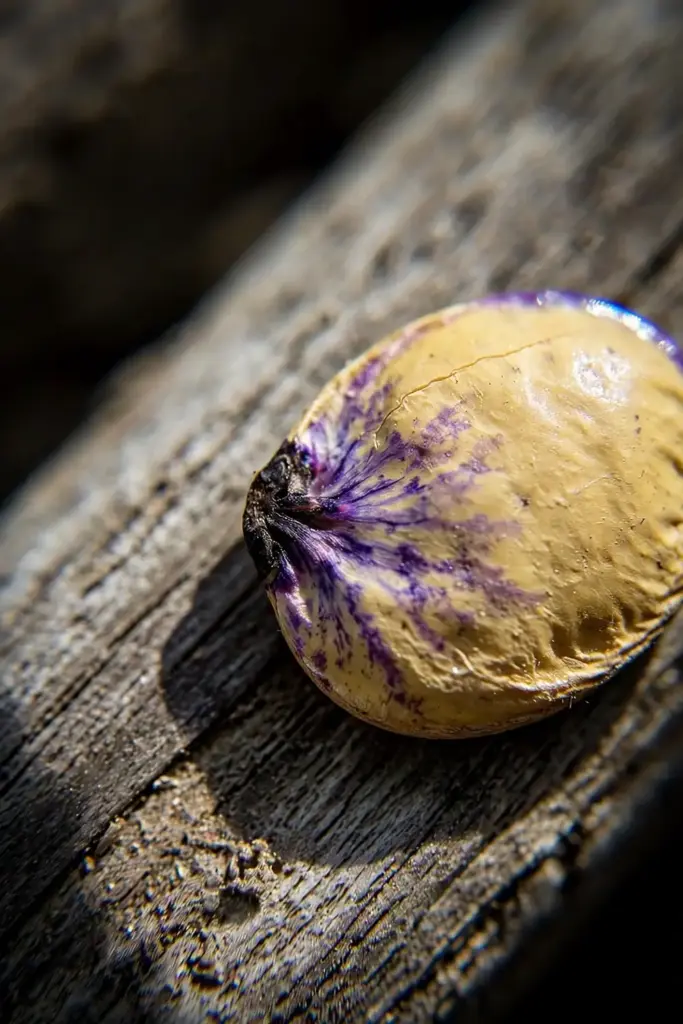
Purple seed stain is a seed-coat discoloration of soybean caused by the fungus Cercospora kikuchii. The fungus invades the pod, grows through the upper vein, and infects the hilum and then the seed coat, leaving pink to purple spots that range from tiny specks to blotches covering the entire seed.
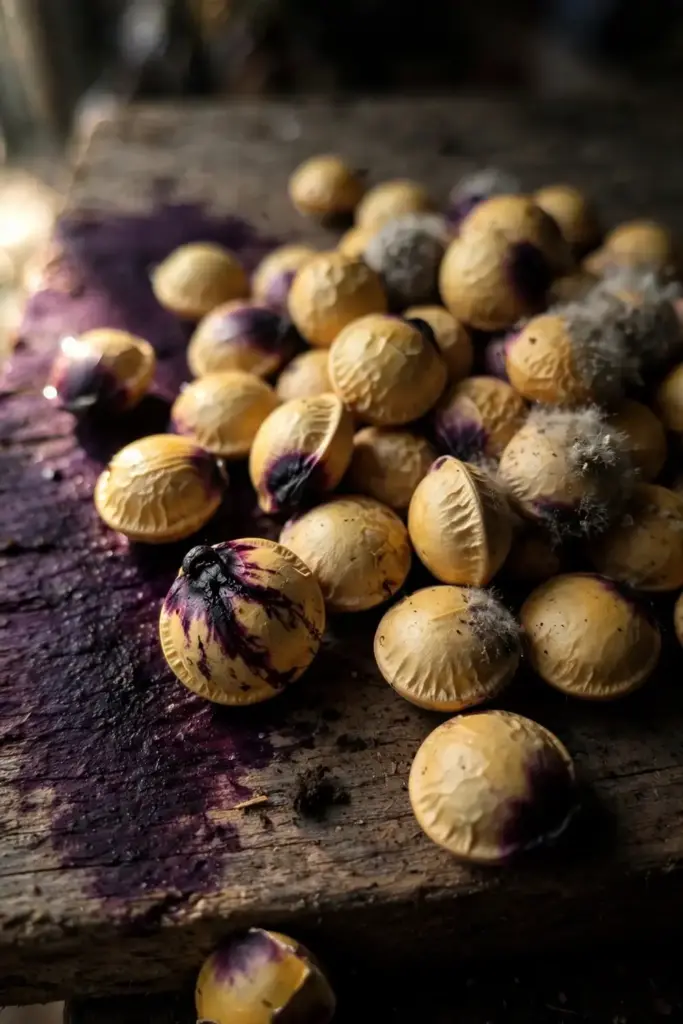
The same fungus causes a second, separate disease called Cercospora leaf blight, which bronzes the upper leaves and can defoliate the plant. Leaf blight severity does not predict seed stain severity, and that is the detail that surprises most people. University of Nebraska extension researchers note that a field can show heavy leaf symptoms with clean seeds, or clean-looking foliage with badly stained seeds. The two phases share a pathogen but run on different timetables.
Cercospora kikuchii belongs to the true fungi, the Ascomycota, and it produces a toxin called cercosporin. Cercosporin is light-activated, which means sunlight switches it on, and once active it damages plant cell membranes and kills the cells it touches. That toxin is the reason the leaf symptoms look like sunburn and the reason the stain shows up where light reaches the pod. In my experience reading extension bulletins, the diseases with the simplest explanations are the ones gardeners misidentify most, and this one is constantly confused with sunscald.
Taxonomists place the fungus in the Dothideomycetes class, alongside many other leaf-spotting fungi, and it is found almost worldwide wherever soybeans grow. That global footprint matters because it means the disease is not a regional curiosity: the same purple stain shows up in Brazilian, Midwestern, and Southern harvests, always following the same weather script. The fungus is a specialist, not a generalist, which is why your other garden plants are safe, a point worth repeating because the purple color triggers an outsized alarm in first-time growers.
What Purple Seed Stain Looks Like on Seeds
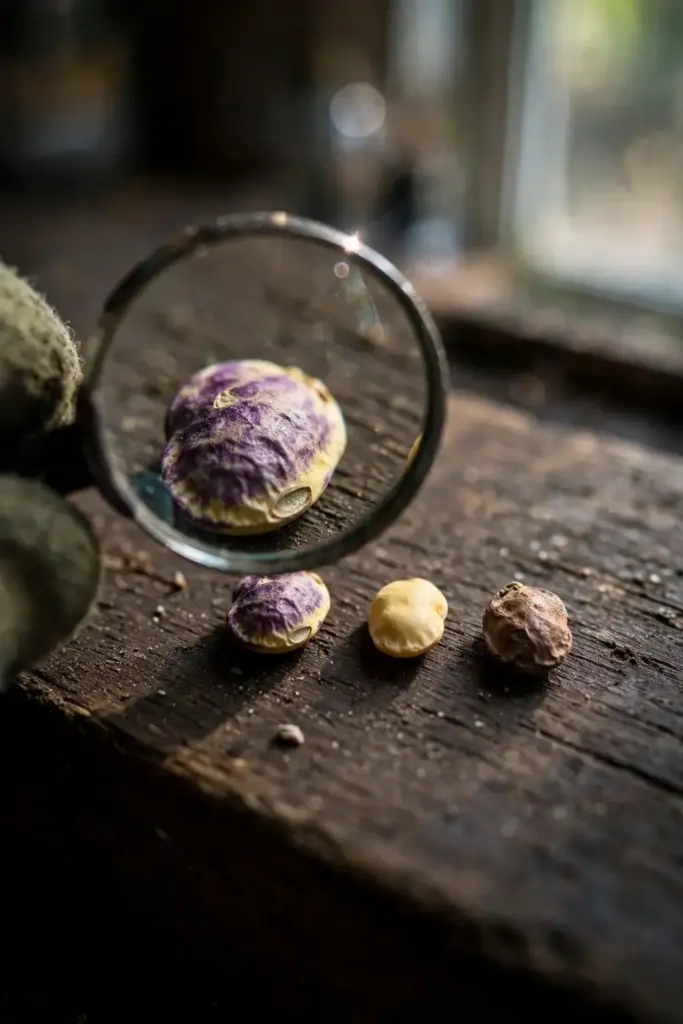
The stained seed is unmistakable once you have seen it. University of Minnesota Extension describes infected seeds as carrying pink to purple discoloration on the seed coat, starting at the hilum and spreading outward, with spots as small as pinpricks or as large as the whole seed surface.
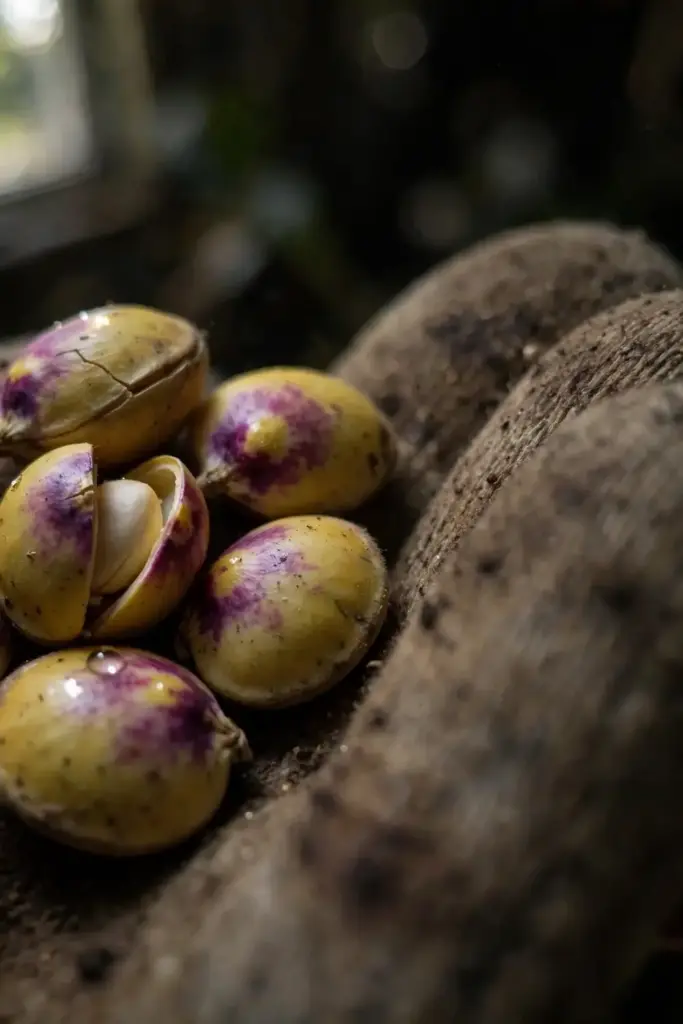
The color itself is a genuine purple, not the brown of weather damage or the black of mold. Light seeds show it best, which is why the stain is most obvious on yellow-seeded soybean varieties. Infected seeds do not always show symptoms, so a seed lot can carry the fungus without a single purple bean in the sample, and that hidden carriage is one reason the disease keeps reappearing in saved seed.
This invisible carriage is also why visual inspection is a weak diagnostic for seed lots. A gardener can sort out every purple bean and still plant infected seed, because the fungus survives inside symptomless seed coats. Commercial seed producers handle this with laboratory testing and fungicide seed treatment on suspect lots, tools no home gardener needs. For the home scale, the practical response is proportionate: select the cleanest pods and accept that a few invisible carriers may slip through. The consequence of a miss is cosmetic staining, not crop failure.
When more than half of an individual seed is covered, published research shows germination slows and the seedling that emerges is smaller. Oil content drops slightly and protein content rises slightly in badly stained seed. None of this matters much to a gardener planting twenty seeds, but it matters enormously to a seed company selling certified seed, because stained seed fails visual quality standards even when it would still grow.
How Cercospora Leaf Blight Looks on Leaves
The leaf phase announces itself as light purple spots on the upper leaf surface, always on leaves exposed to sunlight. The discolored areas expand and deepen into a reddish-purple or bronze color, and badly affected leaves take on a leathery, sunburned appearance that extension writers compare to a plant left out in harsh sun.
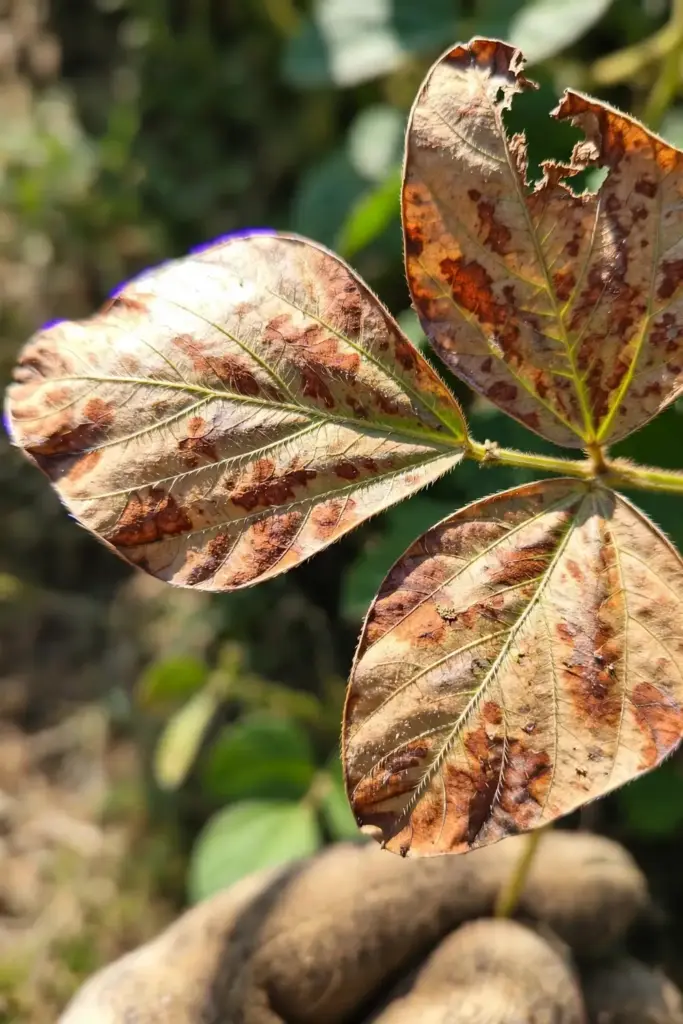
Look closer and the details sharpen. Red-brown spots can develop on both leaf surfaces, lesions range from specks to blotches up to half an inch across, and similar reddish-purple lesions appear on petioles, stems, and pods. Stem lesions run about a quarter inch and sit slightly sunken. In severe cases the upper leaves drop while the petioles stay attached to the stem, leaving a skeletonized upper canopy with the lower leaves still green, a pattern Missouri diagnosticians call characteristic.
Timing matters for identification. Symptoms usually appear from flowering to maturity, with the leaf phase most visible during the mid to late reproductive stages, and the whole collapse can move fast. One Missouri season saw fields go from first spots to severe defoliation within two to three weeks. If your soybeans bronzed in August during a hot, humid stretch, Cercospora leaf blight belongs at the top of the suspect list.
Which Soybeans Get Hit Hardest
Every soybean variety can host Cercospora kikuchii, but susceptibility is not evenly distributed. Some varieties are less susceptible than others, and seed catalogs and extension variety trials are the honest place to check, because resistance to the leaf blight phase exists commercially while no known resistance to the seed stain phase has been found.
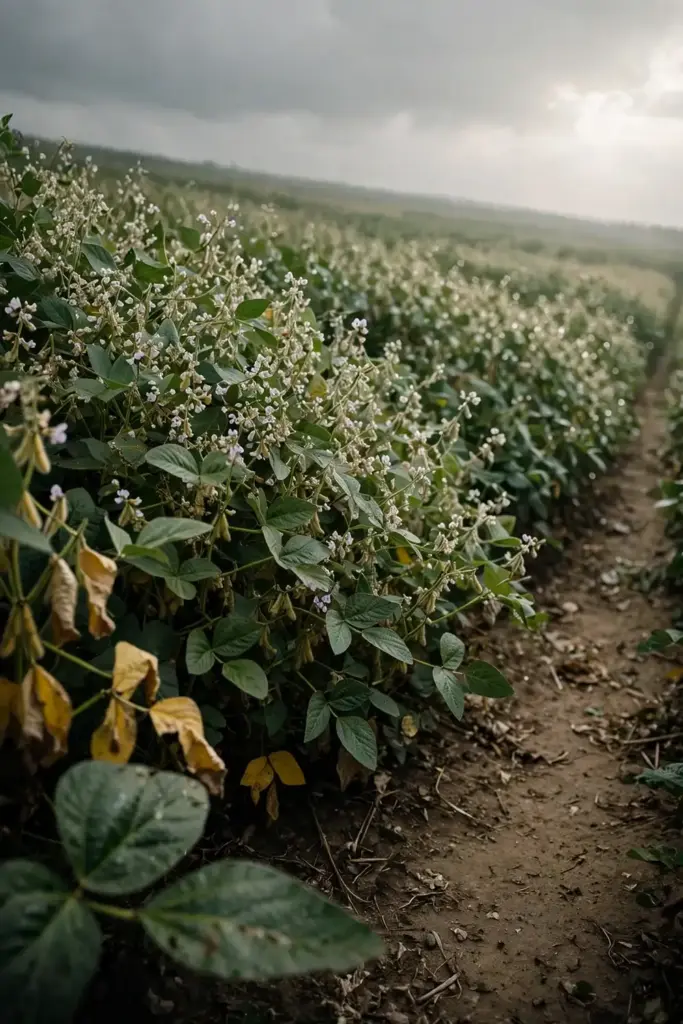
Geography shapes the risk. The disease occurs throughout the United States and Canada and is becoming more common in the Midwest, but it hits hardest in the South. Louisiana State University’s AgCenter calls Cercospora blight and purple seed stain the number one soybean disease in Louisiana. Southern Illinois extension notes that leaf symptoms concentrate in the southern areas of the Midwest and begin after flowering.
Weather at flowering is the real deciding factor, more than variety or field history. Disease severity tracks the environmental conditions during flowering, not whether the planted seed carried the fungus. A susceptible variety in a dry August may escape entirely, while a tolerant variety in a wet, humid flowering window can stain badly. That is why the same farm can have a clean year followed by a purple year with no change in practices.
Planting date and maturity group modulate this weather lottery. Earlier-maturing varieties that finish flowering before the hottest, most humid stretch can dodge the worst of the disease, while full-season varieties flowering straight through August sit in the peak window. This is not a recommendation to plant early maturing varieties just for purple seed stain, since maturity choice drives yield far more than disease avoidance, but it explains why two neighboring fields with different varieties can tell different purple stories in the same year.
Purple Seed Stain vs Other Discolored Seeds
Not every purple or spotted soybean seed is purple seed stain, and the lookalikes matter because they point to different causes. The table below sorts the common ones.
| Feature | Purple Seed Stain | Weather Damage | Stink Bug Damage | Frogeye Leaf Spot on Seed |
|---|---|---|---|---|
| Color | Pink to purple, starting at the hilum | Brown to tan, weathered look | Pale, shriveled, sometimes with puncture marks | Dark brown to black spots with lighter centers |
| Pattern | Specks to whole-seed blotches | Uneven, follows exposure | Scattered, seed feels light | Distinct round spots |
| Cause | Fungus Cercospora kikuchii | Repeated wetting and drying | Piercing-sucking insect feeding | Fungus Cercospora sojina |
| Leaf symptoms present? | Yes, bronze-purple upper leaves | No | No | Yes, but spots have gray centers with dark borders |
| What it means | Quality downgrade, dockage risk | Reduced vigor, still plantable | Poor germination, discard | Seedborne, do not save for planting |
The hilum-first pattern is the single best field mark for purple seed stain. Weather damage browns the exposed face of the seed rather than starting at the hilum. Stink bug feeding leaves the seed shriveled and light, often with visible puncture points, and the damage never shows the vivid purple of Cercospora kikuchii. Frogeye leaf spot is the closest fungal relative, but its seed spots are dark with pale centers, the reverse of the purple wash.
The two phases run on independent timetables. Finding the bronzed, leathery upper canopy alongside purple seeds still closes the case, but either symptom can appear without the other.
How Cercospora Kikuchii Gets Into the Seed
The fungus starts the season in two hiding places: infested crop debris from last year’s soybeans and infected seed. Breaking the debris cycle is mostly a sanitation job, and a thorough fall garden bed prep routine covers the end-of-season cleanup that buries or removes the residue the fungus overwinters on. When spring turns warm and humid, it produces spores that ride wind and rain splash onto the new crop, and infection can begin early while staying invisible until the reproductive stages.
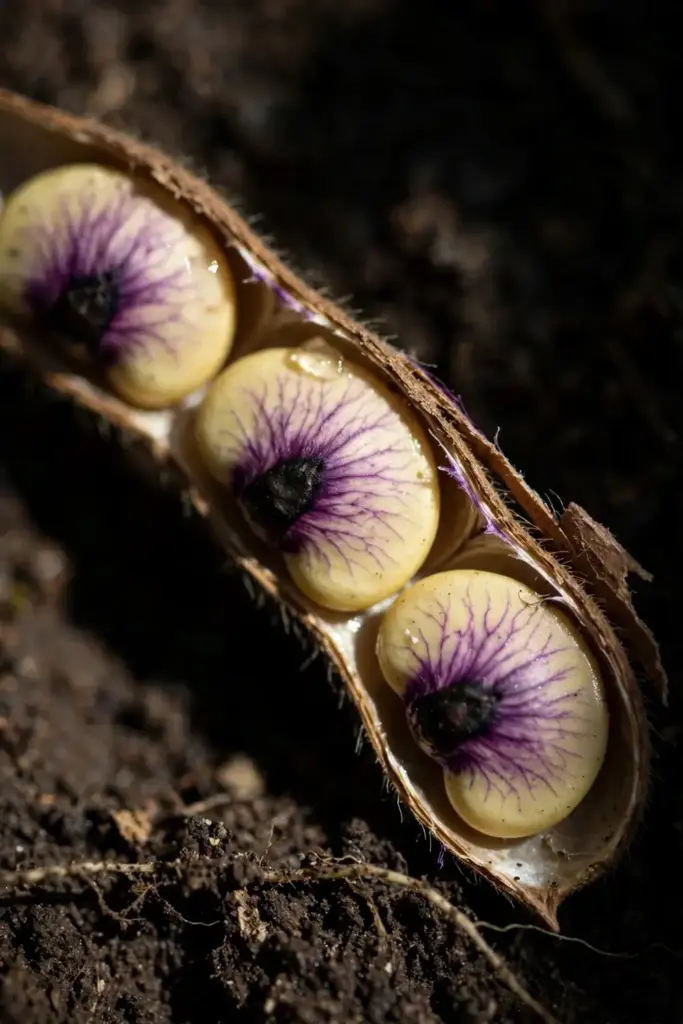
The invasion route into the seed is specific. Spores land on the pod, the fungus grows through the pod wall and the upper vein, and from there it reaches the hilum, the scar where the seed attached to the pod. The hilum is infected first, then the seed coat. That is why the purple always starts at the hilum and spreads outward, and why the stain pattern maps the fungus’s travel route.
Cercosporin does the visible damage. The toxin is light-activated, so it only becomes destructive where light reaches the tissue, which explains why the worst leaf symptoms sit on the sun-exposed upper canopy and why shaded lower leaves stay green. Once activated, cercosporin attacks cell membranes, lipids, and proteins, killing plant cells and leaving the dead, discolored tissue you see as stain or bronzing.
There is also a quiet phase. The fungus can infect seedlings and then go latent, hiding inside the plant without symptoms until favorable conditions return during pod fill. This latency is why a field can look healthy in June and stain in September, and why blaming the seed supplier is often wrong: the severity of the disease follows the weather at flowering, not the infection status of the planted seed.
Dispersal is thoroughly ordinary. Wind carries spores from sporulating lesions to new leaves, and rain splash moves them shorter distances within the canopy. The spores themselves are microscopic, and a single lesion can produce the next wave of infection when humidity stays high. There is nothing exotic about the spread, which is exactly why the disease is so consistent: give it heat, moisture, and soybeans, and the cycle runs the same way in every field.
Why Late-Summer Weather Decides Everything
Cercospora kikuchii is a heat-loving fungus. Sporulation is favored by high humidity and temperatures of 73 to 80 degrees Fahrenheit, climbing as temperatures push higher, University of Nebraska extension researchers report. Infection is favored at 75 to 80 degrees or higher with extended leaf wetness.
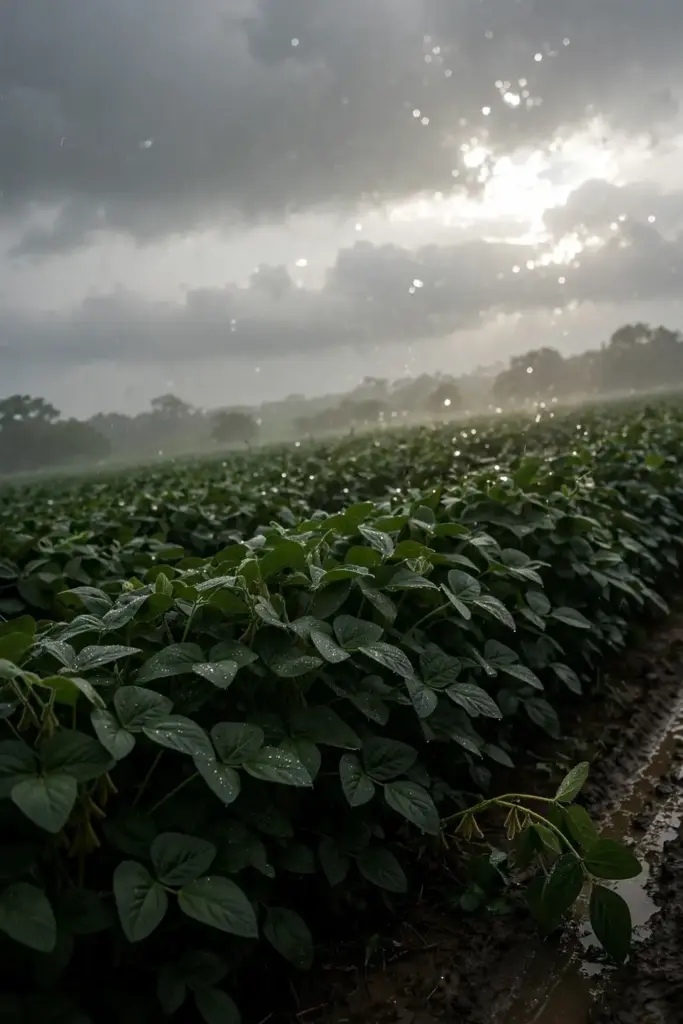
The seasonal script is consistent across extension bulletins. Infection occurs early but stays hidden. The disease becomes visible during pod-filling stages, usually August, when hot, humid weather arrives. Dry conditions at pod fill followed by wet weather is a classic trigger pattern that Missouri diagnosticians flag. Then the fungus sporulates from existing lesions, secondary infections cycle through the canopy, and seeds stain as pods mature.
This weather dependence explains the geography. Southern states with long, humid summers give the fungus the extended warm window it needs, which is why it ranks as Louisiana’s top soybean disease while remaining a sporadic visitor in the northern Midwest. It also explains the year-to-year swing on any single farm: the calendar of heat and humidity matters more than anything the grower did or failed to do.
For the home gardener, this is freeing. You cannot change August weather, and the disease does not respond to anything you do after the pods have set. The weather decides, and the right response is understanding rather than intervention.
When Purple Seed Stain Actually Matters
Start with yield. Purple seed stain is a minor player there. The leaf blight phase can reduce yields when defoliation hits during seed fill, but the loss is usually less than 10 percent, and the seed stain itself does not reduce yield at all. A purple bean grows into a normal plant.
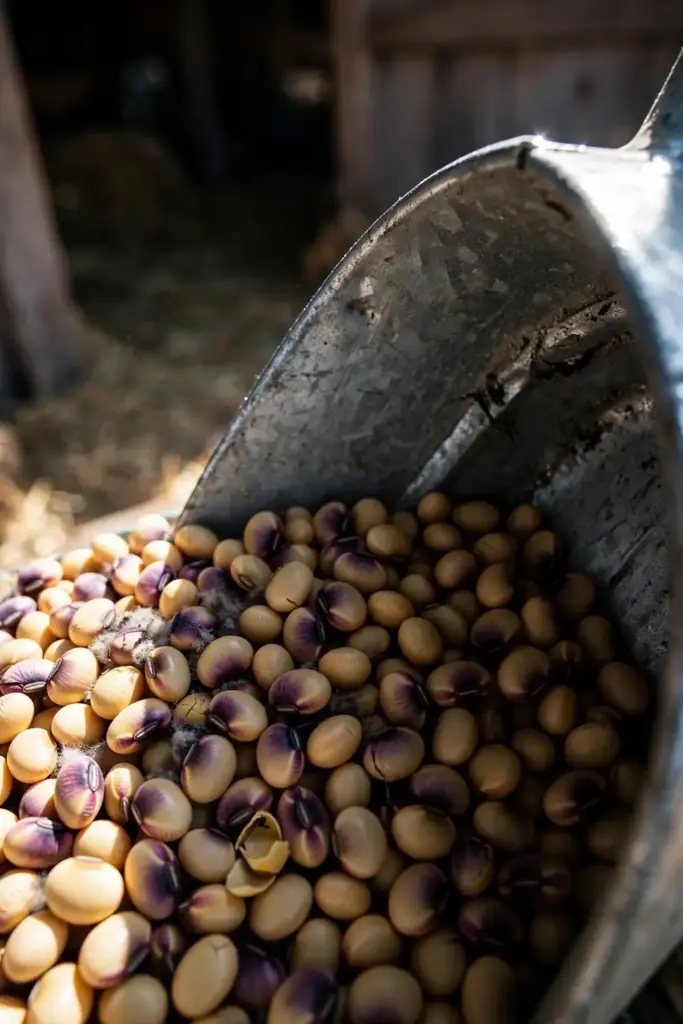
For grain quality and money, the stain is a different story. Seed discoloration triggers elevator dockage, and when more than half of a load is discolored, growers face steep discounts or have to blend the bad load with clean grain. Seed companies feel it too, because stained seed fails the visual standards for certified seed even when germination is acceptable.
For germination, the threshold is concrete. Seeds with more than half their surface covered show delayed germination and produce smaller seedlings. Below that threshold, stained seed generally performs like clean seed. This is why seed lots with a high percentage of infected seed get treated with fungicide seed treatment before planting, while lightly stained lots go in untreated.
For human health, the extension literature raises no food-safety flag. Every source frames purple seed stain as a quality and marketability issue: dockage, grade, seed vigor. Cercosporin is a plant toxin that damages plant cells in sunlight, and no extension bulletin treats stained beans as a consumer health hazard. The purple is ugly, not dangerous.
So the disease matters at the elevator and in the seed bag, and barely matters in the garden row. That single sentence is the whole decision framework.
What Growers Do About It
Commercial growers manage purple seed stain with a short, practical playbook, and it is worth knowing what it contains even if you will never use it. The context explains why the disease persists despite being well understood.
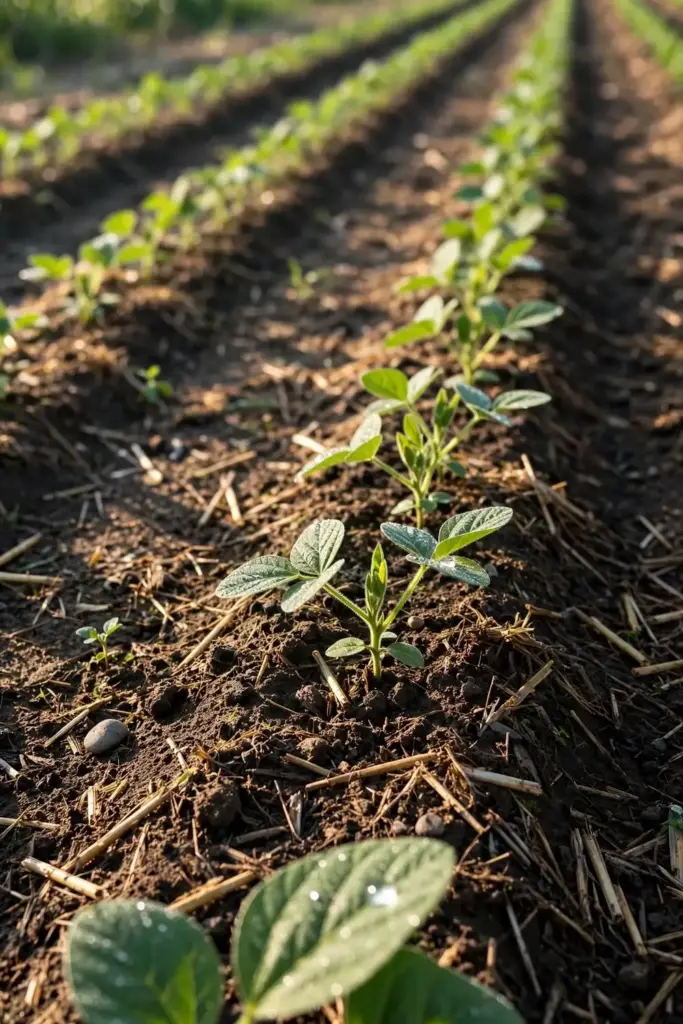
The foundation is clean seed. Planting pathogen-free seed removes one of the two overwintering sources, and seed lots with heavy staining get fungicide seed treatment before they go in the ground. Variety selection helps against the leaf blight phase, where less-susceptible varieties exist, though nothing resists the seed stain phase directly.
Rotation and residue management attack the other hiding place. Rotating out of soybeans and incorporating crop residue speeds the breakdown of infested debris, reducing the spore load for the next season. Living soil biology competes with residue-borne pathogens too, which is why building soil health is the slow, real version of the residue game. Foliar fungicides applied during the mid-reproductive stages can reduce leaf blight incidence, but Nebraska researchers are blunt about the limit: spraying may not reduce the seed stain at all.
Notice what is missing from the playbook. There is no rescue treatment for stained seed, no spray that un-purples a bean, and no soil drench that matters. Once the hilum is infected, the stain is permanent. Management is entirely about next season, which is why the disease frustrates growers: the damage you see at harvest was decided by July weather, and nothing you do in September changes it.
One more honest word on fungicides. Foliar products registered for Cercospora leaf blight go on during the mid-reproductive stages, and they can hold the leaf phase back, but the seed stain marches to its own timetable and often ignores the spray program entirely. A grower can run a textbook fungicide pass, watch the canopy stay green, and still deliver a purple load. That disconnect is documented in extension trials, not a failure of application technique, and it is the reason experienced agronomists talk about purple seed stain with a shrug: you manage the conditions you can, and you accept the stain when the weather wins.
Living With Purple Seed Stain in a Home Garden
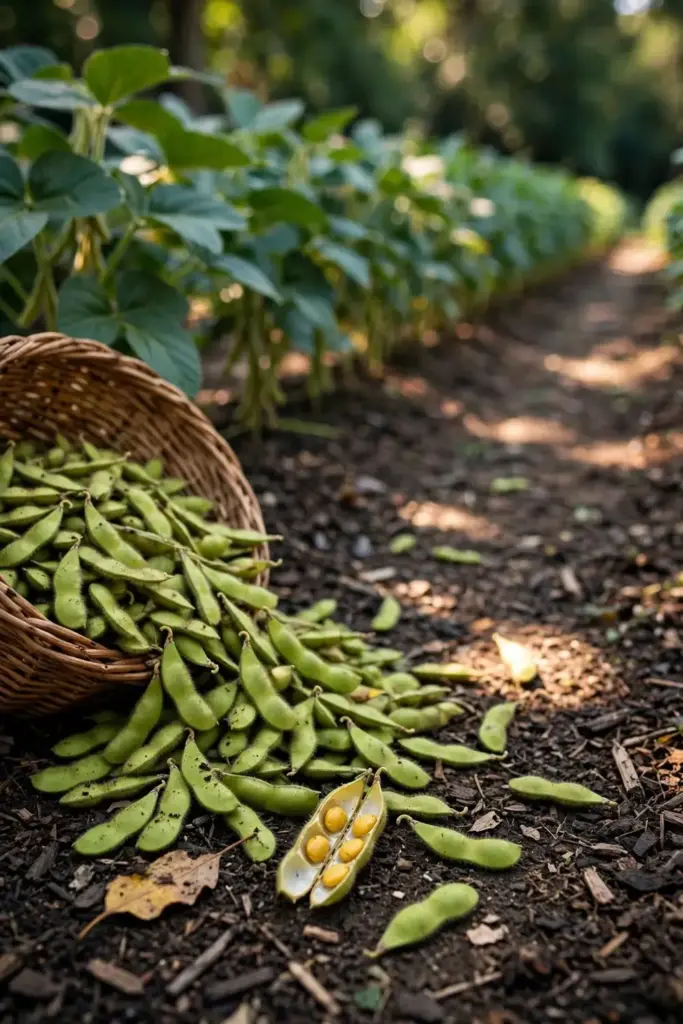
If you grow soybeans at home, whether a row of edamame or a patch of dry beans for the pantry, purple seed stain deserves about thirty seconds of your attention. The stain does not make the beans unsafe to eat, it does not spread to your tomatoes or peppers, and it will not ruin next year’s garden by itself.
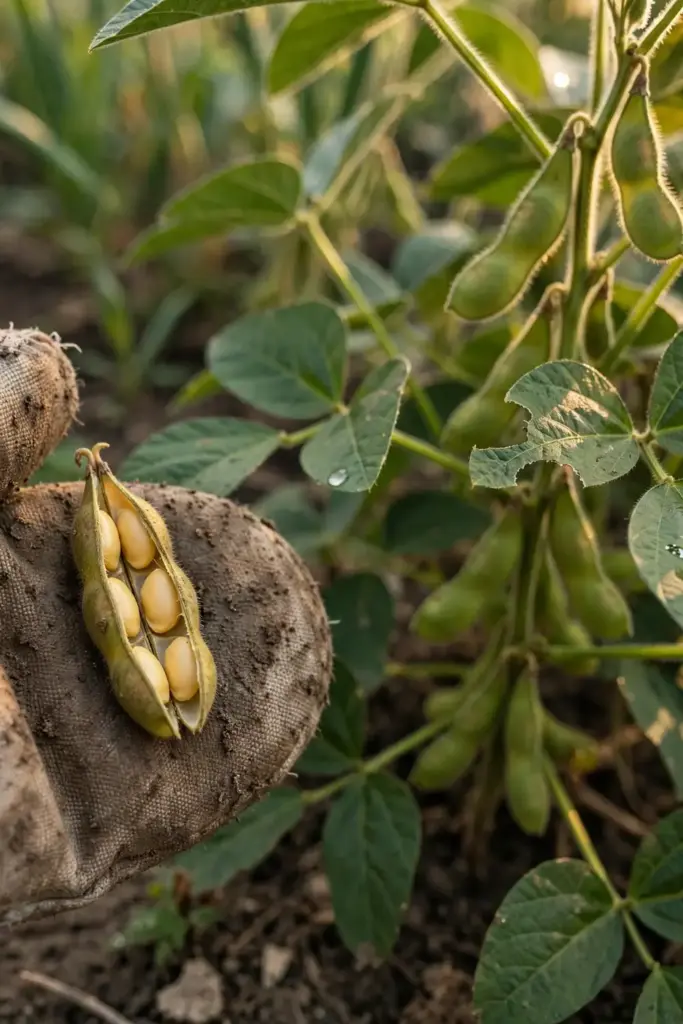
Save seed only from unstained pods if you save seed at all. The fungus rides on infected seed, so selecting clean pods for your seed jar is the one preventive act that actually works at garden scale. Proper drying and storage matter as much as selection, and the seed starting guide walks through clean seed handling from harvest to sowing. Rotate the planting spot and compost or remove the old vines rather than tilling them straight back in, since the fungus overwinters on debris. Gardeners who grow soybeans as a nitrogen-fixing cover crop should rotate the patch and terminate the stand before pods mature to break the disease cycle. These two habits cost nothing and cover the real transmission routes.
Do not spray. There is no home-garden fungicide program worth running for a cosmetic seed stain, and the commercial sprays target a growth stage and a scale you do not have. If the purple bothers you at the table, know that the color stays in the seed coat: shelled edamame and cooked dry beans show far less discoloration than the raw seed, and the flavor is unaffected.
Home gardeners meet plenty of plant problems that look alarming and do nothing. Purple seed stain is one of the cleanest examples. Learn to recognize it, file it under cosmetic, and spend your garden energy on the problems that actually eat yield.
Frequently Asked Questions
No. Purple seed stain is a seed-quality issue, not a food-safety issue. Extension sources frame it around dockage, grain grade, and seed vigor, and none raise a consumer health warning. Cercosporin, the fungal toxin involved, damages plant cells when activated by light. Stained beans are safe to handle, cook, and eat.
Yes. The purple color sits in the seed coat and does not change the flavor or safety of the bean. Shelled edamame shows less discoloration than the raw seed, and cooked dry beans lose much of the visual effect. Commercial elevators discount stained grain for appearance and quality grade, not because it is unsafe.
Rarely in a meaningful way. The seed stain itself does not reduce yield at all. The leaf blight phase can trim yields when severe defoliation strikes during seed fill, but losses are usually less than 10 percent. The real economic damage is dockage at the elevator and downgraded grain quality, not fewer bushels.
No. Cercospora kikuchii is a soybean specialist. It does not infect tomatoes, peppers, beans of other species, or ornamentals. The fungus overwinters on soybean debris and infected soybean seed, so it cannot establish on non-host plants. Your garden rotation is safe.
Save only from unstained pods. The fungus is seedborne, so stained seeds can carry it into next year’s planting. Selecting clean, unstained pods for your seed jar is the simplest effective prevention at garden scale. If most pods are stained, buy fresh seed rather than saving.
Check where the color starts and how vivid it is. Purple seed stain begins at the hilum with a genuine pink-to-purple color that can cover the whole seed. Weather damage browns the exposed face of the seed unevenly and never shows that vivid purple. Finding bronzed, leathery upper leaves on the plant confirms the Cercospora kikuchii diagnosis.
Where to Go From Here
Purple seed stain is a disease that looks worse than it is. A fungus called Cercospora kikuchii stains soybean seed coats purple, bronzes the upper leaves, and costs commercial growers money at the elevator through dockage and downgraded grain. It does not meaningfully cut yield, it does not threaten human health, and it does not spread to other garden plants.
If you farm soybeans, the management context above points to the real levers: clean seed, less-susceptible varieties, rotation, and residue management, with the honest caveat that foliar sprays may not touch the seed stain. Watch the August forecast the way you watch the markets, because the weather at flowering writes the ending. If you garden, the action list is shorter: save seed from clean pods, rotate the spot, compost the vines, and eat the purple beans without worry.
The next time you split a pod and see purple, you will know exactly what you are looking at, why it happened, and how little it matters. That is what an explainer is for.