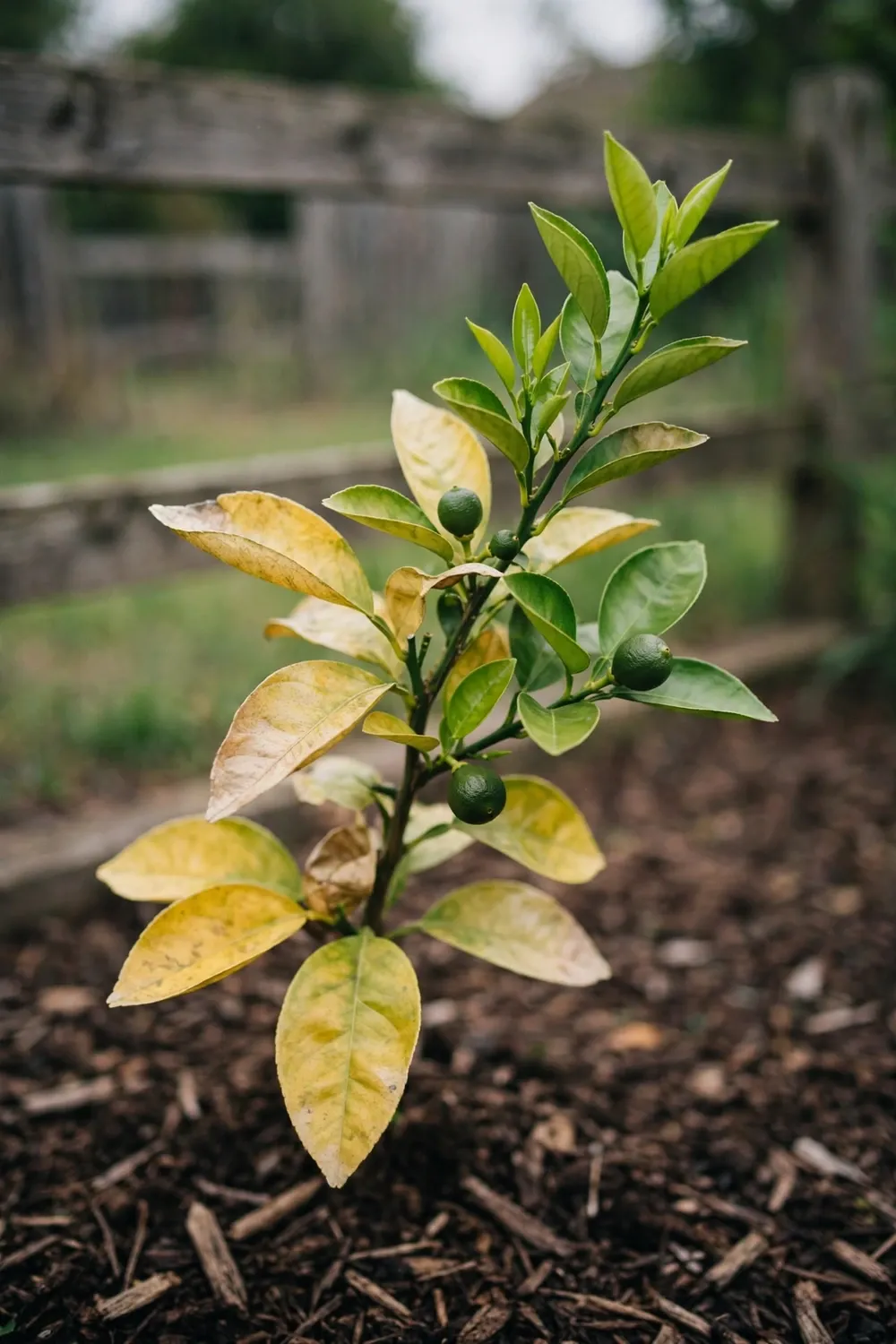

Citrus leaves turn yellow for 9 common reasons, and the pattern names the cause. Yellow on older leaves first points to nitrogen or magnesium. Yellow between green veins on young leaves points to iron, zinc, or manganese. Read the pattern first. Feed second.
I have learned that the oldest leaves tell the truth first: they show what the tree ran out of. This page walks through 9 causes in the order a gardener should check them, from feeding to water to cold to pests, and closes with the one pattern that means stop and report.
Start with two checks. Note which leaves yellowed first, old or young. Note whether the veins stay green while the tissue between them yellows. Those two answers narrow nine causes to two or three.
Read the Pattern Before You Reach for Fertilizer
The old-leaf rule sorts most cases. Mobile nutrients move through the tree to feed new growth, so a shortage of nitrogen or magnesium shows on older leaves first. Immobile nutrients stay where the leaf made them, so a shortage of iron, zinc, or manganese shows on young leaves first. The UC IPM nutrient deficiency notes describe the split: uniformly yellowish older leaves mark nitrogen shortage, while yellowing between veins marks iron or manganese shortage.

Soil pH decides whether the tree can reach the nutrients already in the ground. Citrus takes up iron, zinc, manganese, potassium, phosphorus, and calcium best when soil pH sits between 6.0 and 6.5, and iron locks up in alkaline soil, according to the UF/IFAS citrus soil pH guide. Test pH with a kit before you buy any supplement. A tree in alkaline soil does not need more iron in the ground. It needs soil the roots can use.
| Cause | Yellowing Pattern | First Fix |
|---|---|---|
| 1. Nitrogen deficiency | Uniform pale yellow on older, lower leaves | Complete citrus fertilizer at the label rate |
| 2. Iron deficiency | Yellow between green veins on young leaves, with veins staying dark green | Test pH first, then apply a chelated iron spray |
| 3. Magnesium deficiency | Yellow between veins on older leaves, margins dying back | Magnesium sulfate at the label rate |
| 4. Zinc deficiency | Small bunched young leaves, yellow mottling | Chelated zinc foliar spray |
| 5. Manganese deficiency | Pale areas between green veins on young leaves, mottled canopy | Combination zinc and manganese spray |
| 6. Overwatering and root rot | Yellow across the canopy, soft leaves, wet soil | Stop watering, fix drainage |
| 7. Underwatering | Yellow tips and margins, brown crisp edges, curling leaves | Deep soak until water runs through, then mulch thickly |
| 8. Cold damage | Yellow young flush after a cold snap, blackened tips after frost | Wait, protect on frost nights |
| 9. Pests | Yellow with insects, sticky honeydew, curling, or stippling | Treat the insect, not the yellow |
| Citrus greening (HLB) | Asymmetric blotchy mottling that crosses the veins | Stop, photograph, call 1800 084 881 |
A yellow leaf rarely greens again. Judge every fix by the new flush that follows it.
Work the table top to bottom. Match your tree to one row. Run the confirm check in that cause section before you buy anything. A gardener who feeds first and diagnoses second treats the wrong cause half the time. A gardener who reads the pattern first spends less and fixes faster.
Two causes often arrive together. A tree with wet feet loses magnesium and iron at once, since waterlogged roots cannot take up either. A tree in alkaline soil loses iron, zinc, and manganese together, since high pH locks all three. Treat the shared cause first. Drainage and pH sit underneath half the rows in the table, and fixing the shared cause clears more than one row at once.
A potted tree yellows faster than a tree in the ground. A pot holds a small volume of soil, so it dries faster, leaches faster, and swings wider in pH. A potted tree that yellows after a hot week usually needs water first and feed second. A potted tree that yellows after months without feeding usually needs feed first. The pattern check works the same in a pot, but the fix arrives sooner.
1. Nitrogen Deficiency: Uniform Pale Yellow on Older Leaves
Nitrogen moves through the tree to feed new growth, so a hungry tree strips nitrogen from its oldest leaves first. The older, lower leaves turn a uniform pale yellow while newer leaves stay greener, and growth slows. The same UC IPM deficiency notes describe uniformly yellowish older leaves with greener newer foliage as the nitrogen pattern.
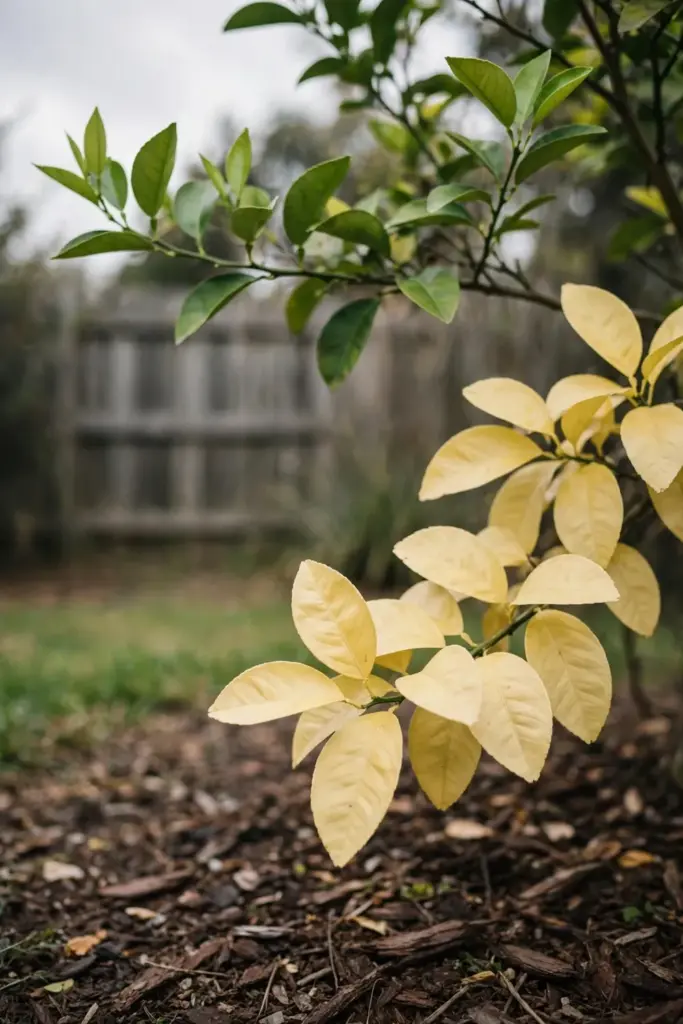
Confirm it by position. Uniform yellow on the oldest leaves, with no spots, no curl, and no insects, fits nitrogen shortage. A tree that yellowed after a heavy fruiting season or a long wet winter fits the pattern too, since fruiting and leaching both drain nitrogen from the soil.
Feed with a complete citrus fertilizer at the label rate, watered in after application. Mulch around the tree, kept clear of the trunk, to hold moisture and feed soil life. A tree that stays pale after feeding needs a soil pH test before a second dose, since locked-up nutrients look exactly like missing nutrients.
A complete citrus fertilizer carries nitrogen plus phosphorus, potassium, and trace elements in one product. That mix suits a hungry tree better than a nitrogen-only feed, since a tree short on nitrogen often runs low on its companions too. Feed in spring when growth resumes, and water the feed in. Dry fertilizer sitting on dry soil feeds nothing.
2. Iron Deficiency: Yellow Between Green Veins on Young Leaves
Iron stays put in the leaf that made it, so a shortage shows on the youngest leaves first. New leaves turn yellow between the veins while the veins stay dark green, and the pattern holds as the leaf grows. The NSW DPI guide to iron and zinc deficiencies in citrus describes the interveinal pattern on young growth and the way it persists as the leaf ages.
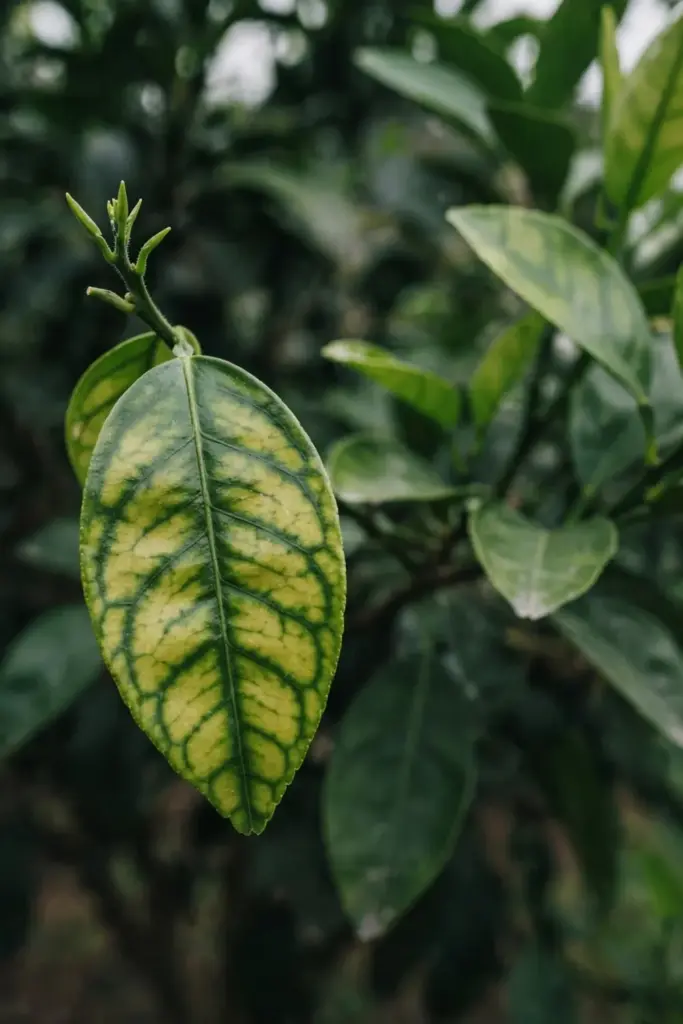
Test soil pH before you add iron. Citrus takes up iron best when soil pH sits between 6.0 and 6.5, and iron locks up in alkaline soil, per the same soil pH guide. A chelated iron foliar spray greens new growth fast and works as a short-term fix. Elemental sulfur lowers pH over months and works as the long-term fix. Pouring iron into alkaline soil without fixing pH wastes the product and leaves the tree yellow.
Sulfur works slowly. Apply it per the label, water it in, and retest pH after a season. A gardener who sprays iron every month without touching pH buys the same yellow leaves every month. Fix the soil once, and the spray becomes a bridge instead of a habit.
3. Magnesium Deficiency: Yellow Between Veins on Older Leaves
Magnesium moves like nitrogen, so a shortage shows on older leaves first. Yellowing starts between the veins on old leaves, and the margins die back while the center stays green, per the same UC IPM deficiency notes. A tree carrying a heavy crop drains magnesium faster, so the pattern often appears in autumn on fruiting trees.
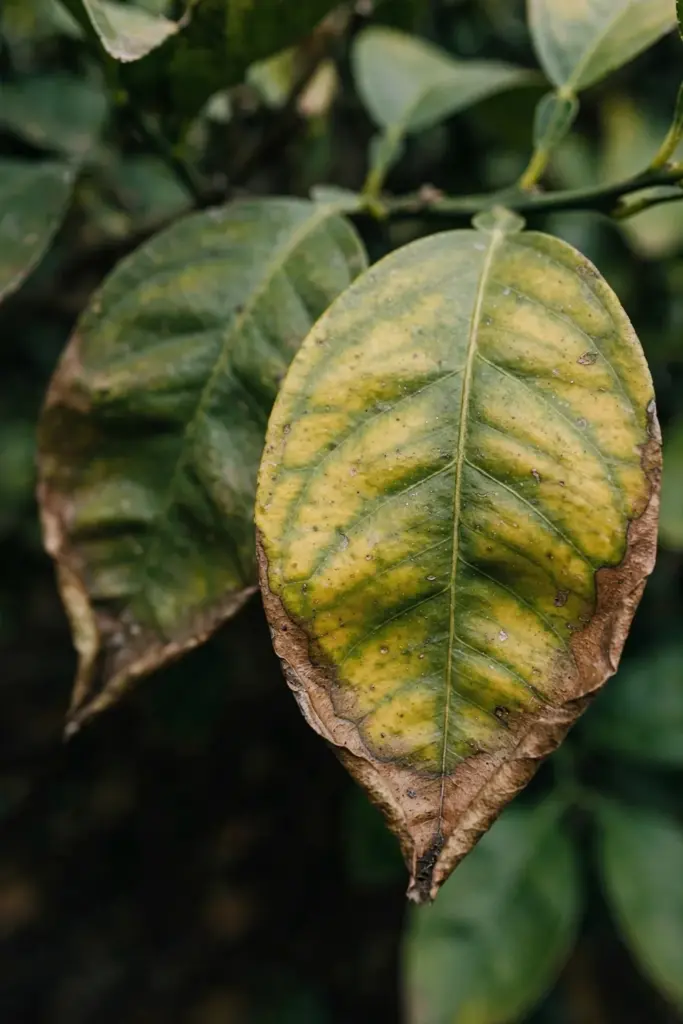
Confirm it by leaf age. Yellow between veins on the oldest leaves, with the youngest leaves still green, marks magnesium. Yellow between veins on the youngest leaves marks iron instead. The two deficiencies share a pattern and differ in position, so leaf age settles the question.
Apply magnesium sulfate, sold as Epsom salts, as a soil drench or foliar spray at the label rate. Repeat only if new growth still shows the pattern after a month. A tree that keeps yellowing after magnesium needs a pH test, since very acidic sandy soil leaches magnesium out of reach.
Sandy soil loses magnesium fastest, since water carries it below the roots. A tree in sandy soil earns a soil test before a second dose, and a mulch layer slows the leaching. A tree in heavy clay holds magnesium longer, so a clay-soil tree that yellows this way points harder at pH or water than at supply.
4. Zinc Deficiency: Small Bunched Leaves With Yellow Mottling
Zinc shortage shrinks the leaf itself. New leaves stay small, narrow, and bunched on short stems, with yellow mottling between the main veins. Twigs die back while the tree turns bushy and stunted, according to the same NSW DPI citrus guide. Fruit on a zinc-short tree stays small, pale, and coarse.
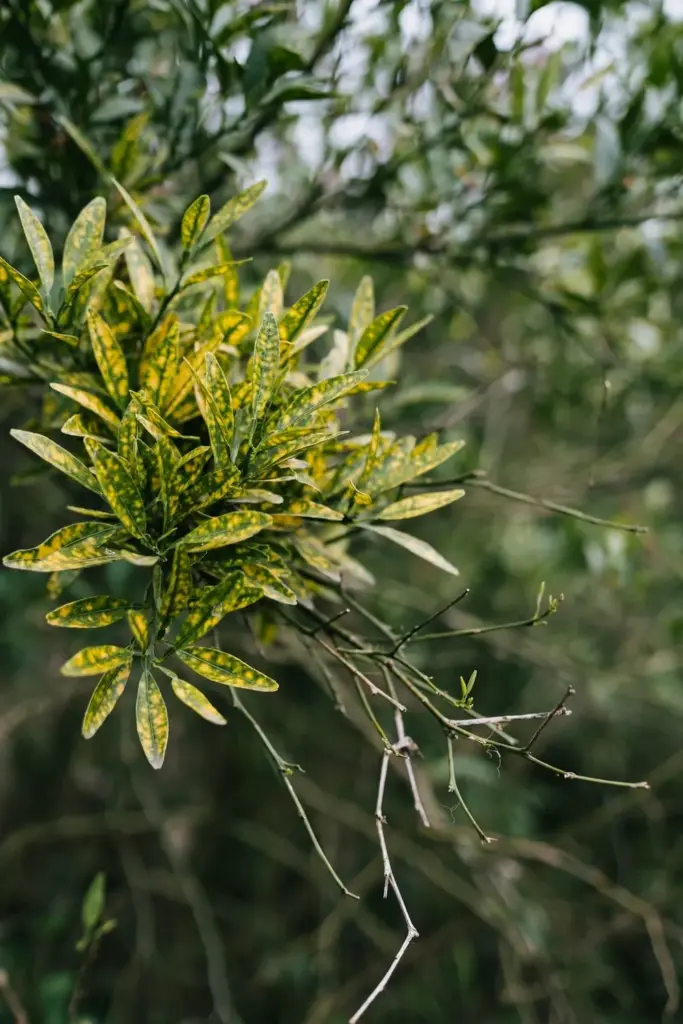
Confirm it by leaf size. Small leaves crowded on short stems, with yellow areas between the main veins, mark zinc shortage. Normal-sized leaves with the same mottling point toward manganese instead. Zinc and manganese shortage can occur together, so a tree that shows both patterns needs a spray that covers both.
Apply a foliar spray with chelated zinc at the label rate. Cut back on high-phosphorus fertilizer. Excess phosphate deepens zinc shortage, per the same NSW DPI guide. A soil test settles the question when the pattern keeps returning after spraying.
A leaf test beats a guess. A laboratory leaf analysis names the shortage and its size, while a glance at the canopy only names a suspect. Home gardeners rarely need one, but a tree that yellows twice after spraying earns the test. The result tells you whether zinc alone or zinc plus manganese needs work.
5. Manganese Deficiency: Pale Areas Between Green Veins on Young Leaves
Manganese shortage copies zinc. Young leaves turn pale between green veins, and the whole canopy looks mottled from a distance. Early zinc and manganese shortage look alike, and the two deficiencies can occur together, per the same NSW DPI citrus guide. A gardener who treats one and ignores the other watches the tree yellow again.
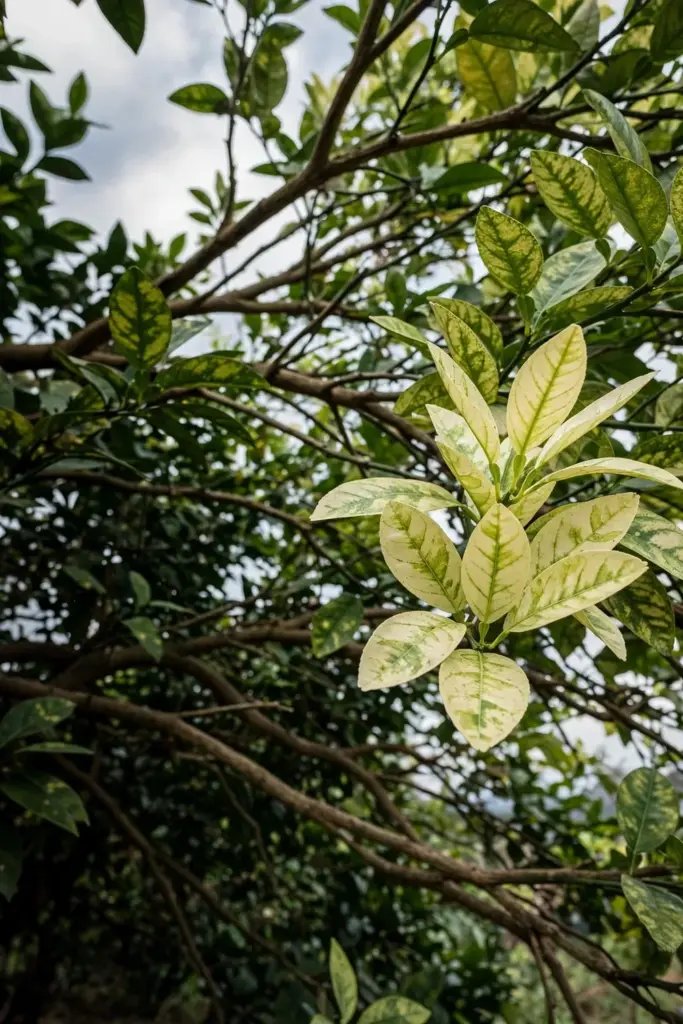
Confirm it by growth. Leaves stay near normal size with pale areas between the veins, while zinc shortage shrinks the leaf and bunches it on short stems. Manganese shortage also follows wet soil and damaged roots, since roots that cannot breathe cannot take up trace elements.
Apply a combination spray with zinc and manganese at the label rate. Fix drainage and pH first. Wet soil and alkaline soil both block manganese uptake, and a spray on a tree with wet feet greens the leaves for a week and then fades. Healthy roots hold the fix longer than any spray.
Check the watering routine before you blame the soil. A tree on daily drip in heavy soil stays wet, and wet roots cannot take up trace elements no matter how rich the soil tests. Let the top soil dry between waterings. A drier root zone takes up more manganese than a second spray.
6. Overwatering and Root Rot: Yellow Canopy in Wet Soil
Wet feet starve the tree. Roots in waterlogged soil lose air, stop taking up nutrients, and rot. Leaves yellow across the canopy, feel soft, and drop, while the soil stays wet days after watering. Overwatering mimics nutrient shortage, since roots that cannot breathe cannot feed the tree no matter how much fertilizer sits in the soil.
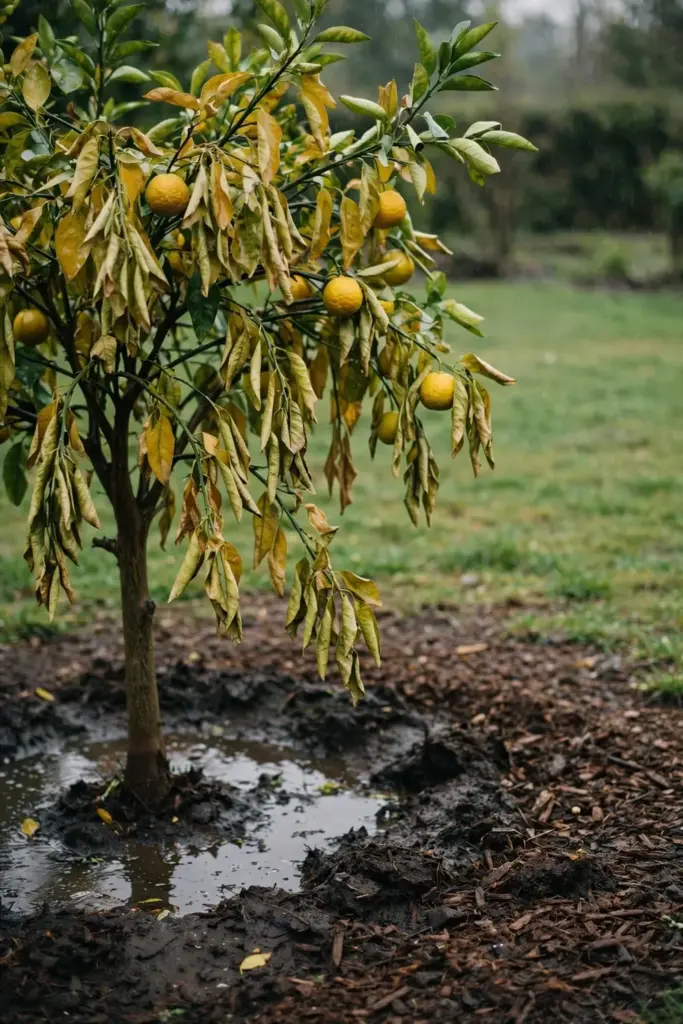
Confirm it with a finger test. Push a finger 5 cm into the soil. Wet soil at that depth days after watering means too much water. Dry soil at that depth means the tree needs water instead. A pot with no drainage hole, a saucer that never empties, or a garden bed that holds puddles all point the same way.
Stop watering and fix drainage. Let the top soil dry between waterings. Raise a bed that holds water, or move a potted tree to a pot with open drainage holes. Building soil health covers drainage and structure in full. A tree that stands in water needs drainage, not fertilizer.
Root rot follows wet soil. Phytophthora root rot attacks roots in waterlogged ground, and a tree with rotted roots cannot recover by feeding. Cut back dead wood, keep mulch clear of the trunk, and let air reach the root zone. A tree that keeps dropping leaves after the soil dries needs a closer root inspection, since rot moves faster than any feed.
7. Underwatering: Yellow Tips, Brown Crisp Edges, and Curling Leaves
Dry roots yellow leaves from the edges in. Leaf tips and margins turn yellow, then brown and crisp, and leaves curl to cut water loss. Fruit drops early on a thirsty tree, and new growth stalls. Pots dry fastest, since a pot holds a small volume of soil under full sun.
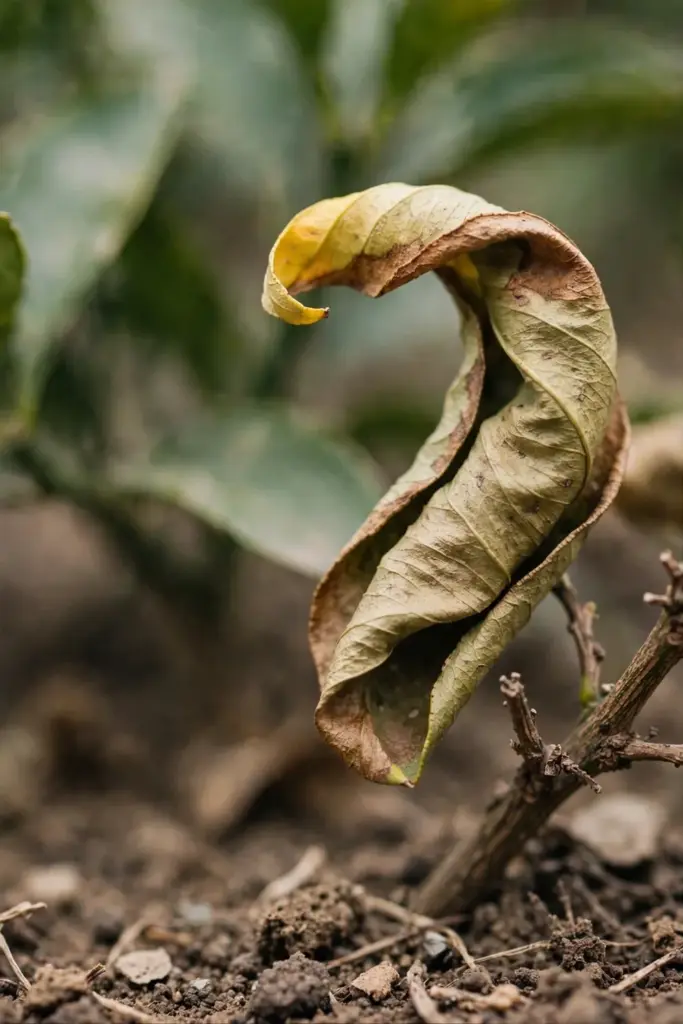
Confirm it with the same finger test. Dry soil 5 cm down, light pot weight, and crisp leaf edges mark underwatering. Soft yellow leaves in wet soil mark overwatering instead. The two problems look alike from the canopy and differ in the soil, so the finger test settles it.
Give the tree a deep soak until water runs from the drainage holes or the bed wets through. Mulch with a thick layer of organic mulch, kept clear of the trunk, to slow drying. Water in the morning so leaves dry by nightfall. A tree that keeps wilting after deep watering needs a root check, since girdled or rotted roots cannot drink.
Watering cadence follows the season. Summer heat and fruit load raise demand, while winter rest lowers it. A fixed schedule in both seasons over-waters in winter and starves in summer. Check the soil before every watering, and let the finger test set the schedule instead of the calendar.
8. Cold Damage: Yellow Young Flush After a Cold Snap
Cold yellows young leaves. A cold snap after a warm spell yellows the newest flush first, and frost blackens tender tips. Citrus grows through winter in most Australian gardens, but a sharp frost night damages new growth and young fruit. A tree that yellowed overnight after a clear cold night fits cold damage better than any deficiency.
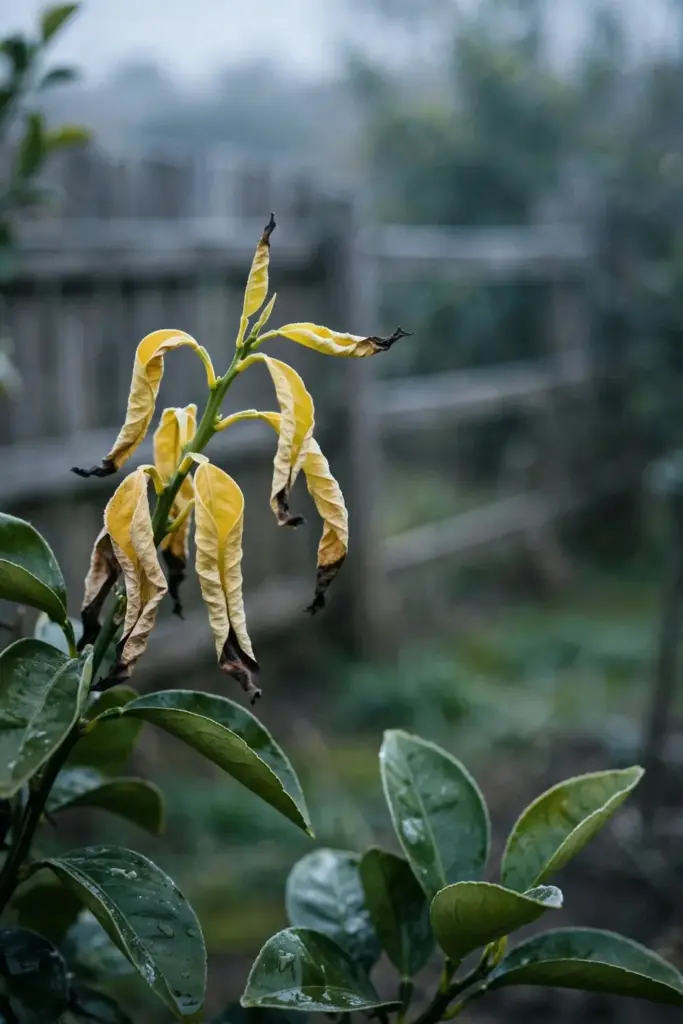
Confirm it by timing. Yellow flush that appeared the morning after a cold night, with damage worst on the windward side and on the youngest growth, marks cold. Deficiency yellowing builds over weeks. Cold yellowing arrives in a night.
Wait. Do not prune frost damage until spring growth shows what survived. Protect the tree on forecast frost nights with frost cloth draped over the canopy and pegged at the base. Do not feed a cold-shocked tree into recovery. Warmth and time fix it, and new growth replaces the damaged flush.
Site choice prevents most cold damage. A tree on a low spot collects cold air, while a tree on a slope sheds it. A wall that catches morning sun warms the tree early, dries frost off the leaves, and shelters the canopy from cold wind. A gardener planting a new tree in a frost pocket buys this problem every winter.
Cold also marks the fruit. A frost night can scar young fruit and split the rind, and scarred fruit drops early. A tree that lost fruit to frost still recovers on the next flush, since the damage sits in the fruit and the young leaves, not in the wood. Leave damaged fruit on the tree until spring, since picking it early opens wounds that frost can deepen.
9. Pests: Yellow Leaves With Insects, Honeydew, or Stippling
Sap-sucking insects drain the tree and yellow the leaves they feed on. Scale insects sit as immobile bumps on stems and leaf veins and drip sticky honeydew. Citrus leafminer tunnels through young leaves and twists them into curls. Mites stipple leaves with fine yellow dots that merge into bronze. A tree with yellow leaves plus insects, honeydew, sooty mold, curling, or stippling carries a pest cause.
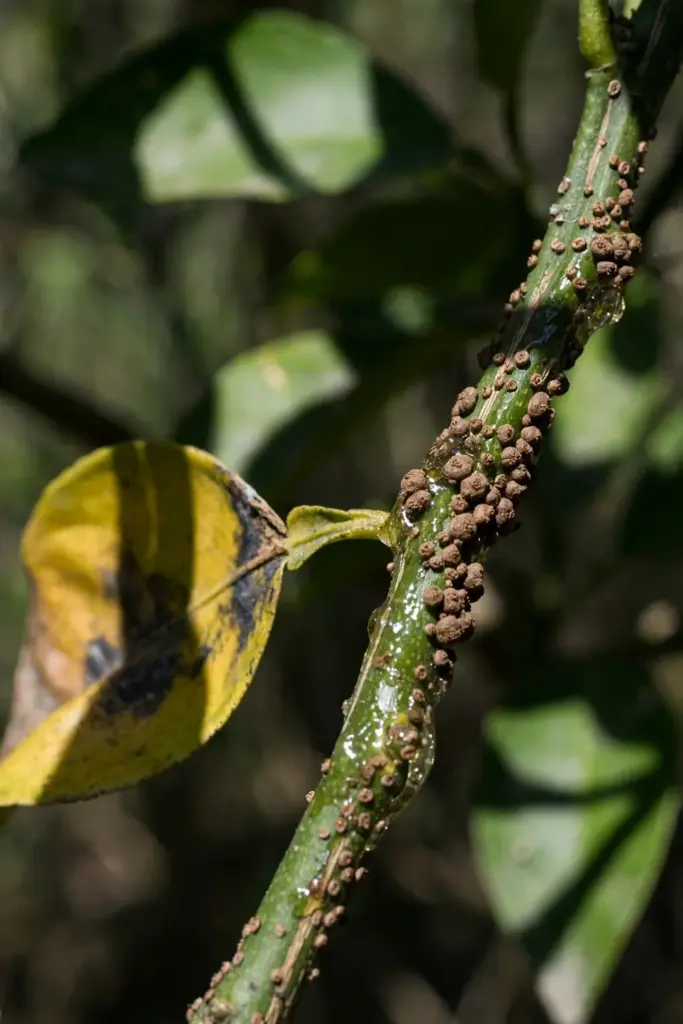
Confirm it by looking under the leaves. Scale clusters on stems, leafminer trails in young leaves, and fine webbing on leaf undersides each name the pest. A hand lens turns a guess into a name. Check the whole tree, since pests colonize one branch first and spread from there.
Treat the insect, not the yellow. Hose off light infestations. Apply horticultural oil or soap spray at the label rate for scale and mites. The citrus scale prevention guide and the citrus mealybug control guide cover the two most common sap-suckers in full, and organic pest control covers the method behind every fix. The yellow fades only on new growth, so judge the treatment by the next flush.
Check the tree weekly while pests are active. A weekly look catches a colony before it spreads, and a colony caught early falls to a hose. Beneficial insects eat aphids and mites, so a broad spray that kills the helpers costs more than it saves. Treat the branch with pests, and leave the clean branches alone.
Feed Citrus on a Seasonal Calendar
Feed citrus on a calendar, not on panic. A tree fed at the wrong time grows soft leaves that frost burns, and a tree fed in winter wastes fertilizer that leaches away. The calendar follows the tree, not the clock.
Spring starts the feeding year. Feed when new growth opens and the tree wakes from winter rest. Summer carries the second feed, when fruit swells and the tree works hardest. Autumn earns a feed only for a tree that fruited heavily, since a tired tree enters winter stronger with a full store. Winter earns nothing. A resting tree cannot use feed, and unused fertilizer leaves the soil with the next rain.
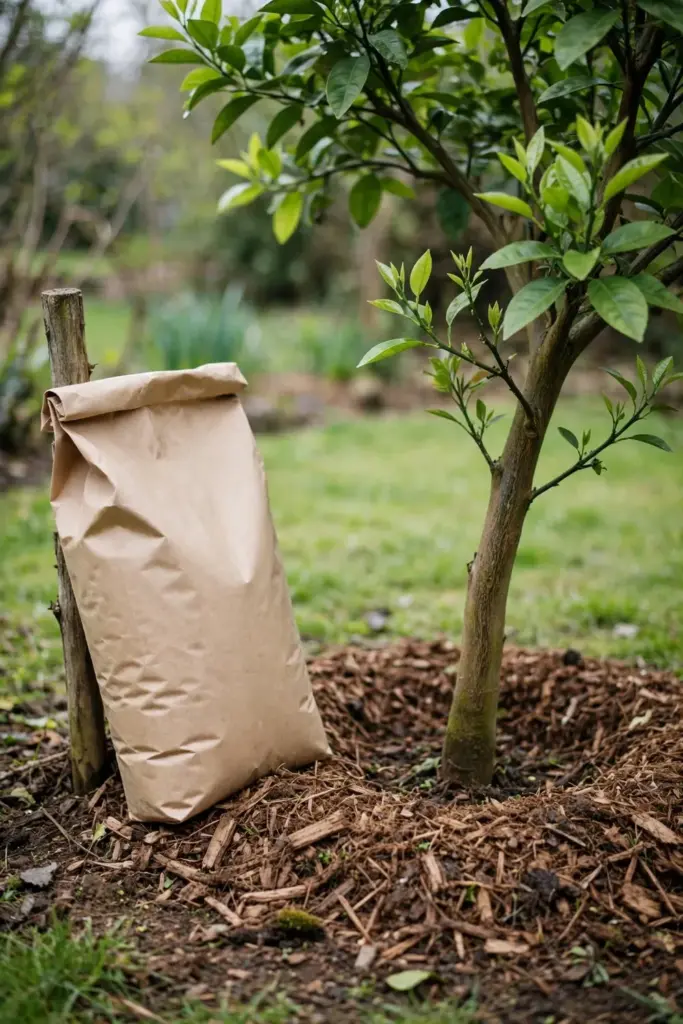
Mulch between feeds. A mulch layer holds moisture, cools the roots, and feeds soil life as it breaks down. Keep mulch clear of the trunk, since mulch piled against bark holds moisture where rot starts. Test soil pH when growth stalls or yellowing returns, since a pH shift explains a tree that stops responding to feed.
Stop and Report: Asymmetric Mottling Means Citrus Greening
Citrus greening (HLB) is a bacterial disease with no cure. It is not established in Australia. Leaves show asymmetric blotchy mottling that crosses the veins, with a different yellow-green pattern on each side of the midrib. Fruit stays small, lopsided, and bitter, and branches die back as the disease spreads, according to the NSW DPI huanglongbing fact sheet.
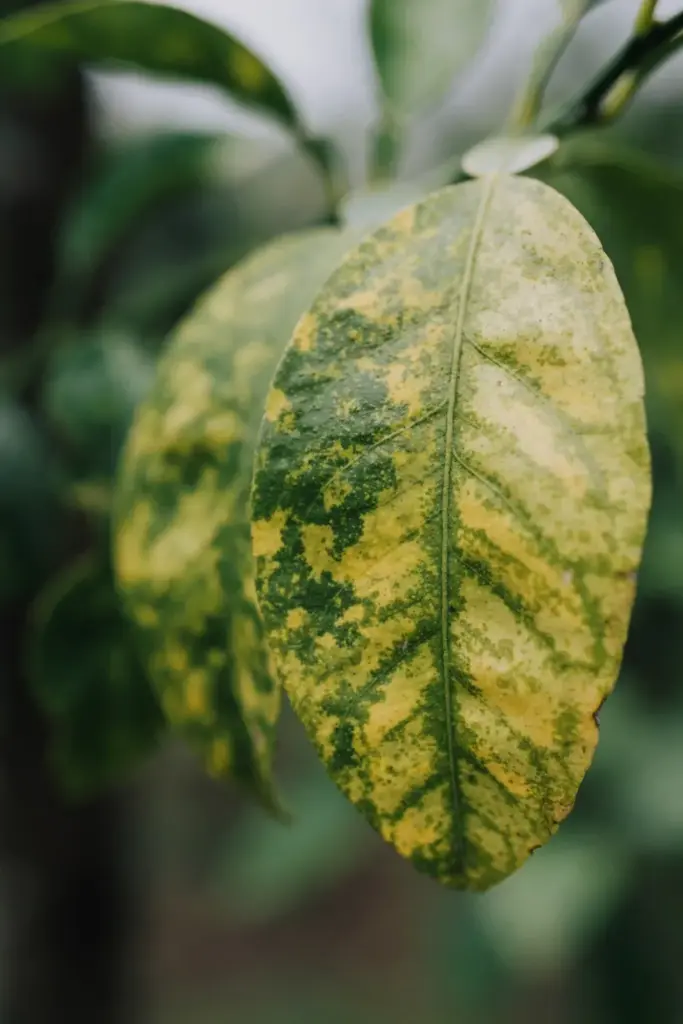
Do not prune it away. Do not feed it away. Photograph the leaves and fruit, and call the Exotic Plant Pest Hotline on 1800 084 881. Early reporting gives Australia its best chance of keeping this disease out. A deficiency yellows symmetrically, with the same pattern on each side of the midrib. Asymmetric mottling is the line between a feeding problem and a biosecurity problem.
The disease spreads through psyllid insects that feed on infected trees and through infected plant material that gardeners move. Do not move cuttings, budwood, or fruit from a suspect tree. Do not share them with neighbors. A single moved cutting can carry the bacteria to a clean garden, and a clean garden can carry it further. Containment starts with the gardener who stops and reports.
Frequently Asked Questions About Citrus Leaves Turning Yellow

Yes. Test pH first with a kit. Citrus takes up iron, zinc, and manganese best when soil pH sits between 6.0 and 6.5. Alkaline soil locks iron away, and acidic sandy soil leaches magnesium. A pH result tells you whether the tree needs feeding, a pH correction, or both. Feeding into the wrong pH wastes money and leaves the tree yellow.
A yellow leaf rarely greens again. The tree cannot refill chlorophyll in a leaf that already lost it. Judge every fix by the new flush that follows it. New leaves should open green and stay green. Old yellow leaves will drop in time. Prune them only when they turn brown and crisp, since a living yellow leaf still feeds the tree a little.
Feed with a complete citrus fertilizer at the label rate in spring, when growth resumes, and again in summer, when fruit swells. A tree that fruits heavily earns a third feed in autumn. Water every feed in. Skip winter feeding, since the tree rests and unused fertilizer leaches away. A mulch layer holds moisture and feeds soil life between feeds.
Yes, with the same pattern check. Pots dry faster and swing wider than garden soil, so potted trees yellow from underwatering and nutrient leaching first. Check drainage holes, water deeply, and feed at the label rate. Repot into fresh mix when roots circle the pot and water runs straight through. A pot that never drains needs holes before it needs fertilizer.
Report when the mottling looks asymmetric, with a different yellow-green pattern on each side of the midrib, or when fruit turns small, lopsided, and bitter alongside branch dieback. Those signs point to citrus greening (HLB), a disease with no cure that is not established in Australia. Photograph the leaves and fruit, then call the Exotic Plant Pest Hotline on 1800 084 881.
Fix the Pattern, Then Watch the New Flush
Yellow citrus leaves answer to pattern, not to panic. Name the cause from leaf age and vein pattern, then test pH before you feed and fix water before you spray. Treat the insect when insects show. Report asymmetric mottling the day you see it.
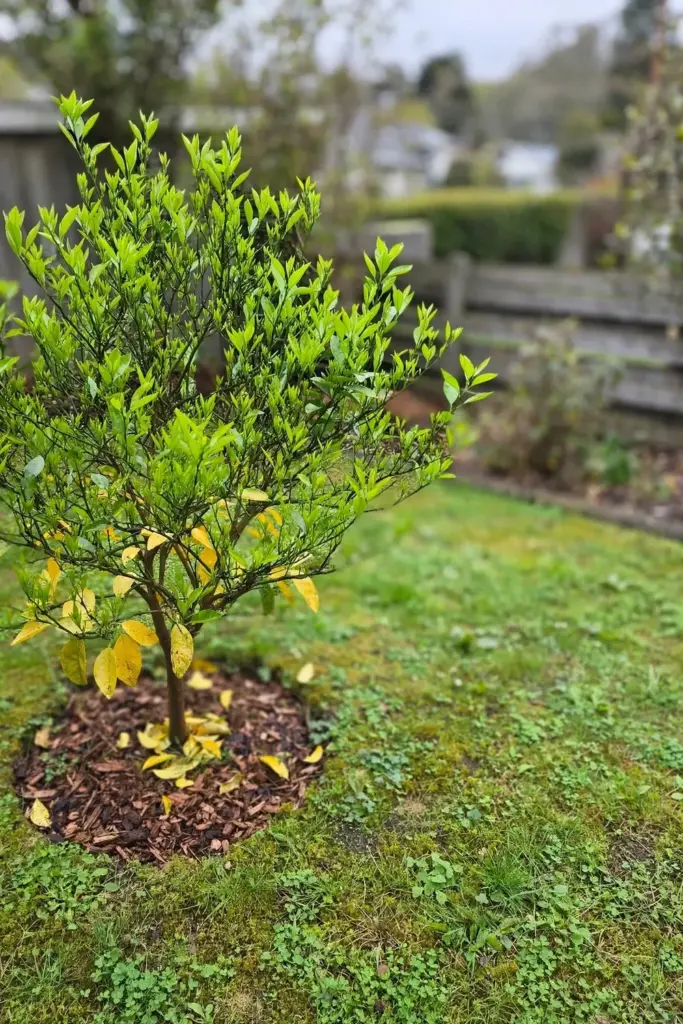
Start with one tree and one check: walk the canopy, note which leaves yellowed first, and run a finger into the soil. The next flush tells you whether the fix worked. Green new growth means the tree heard you, while yellow new growth means the cause still sits in the soil, the water, or the roots.
Keep a simple record. Note the date, the pattern you saw, and the fix you applied. A record turns a second yellowing episode into a comparison instead of a mystery. A tree that yellows the same way twice in one season points at a soil or drainage problem that one feed cannot fix, and the record shows it.