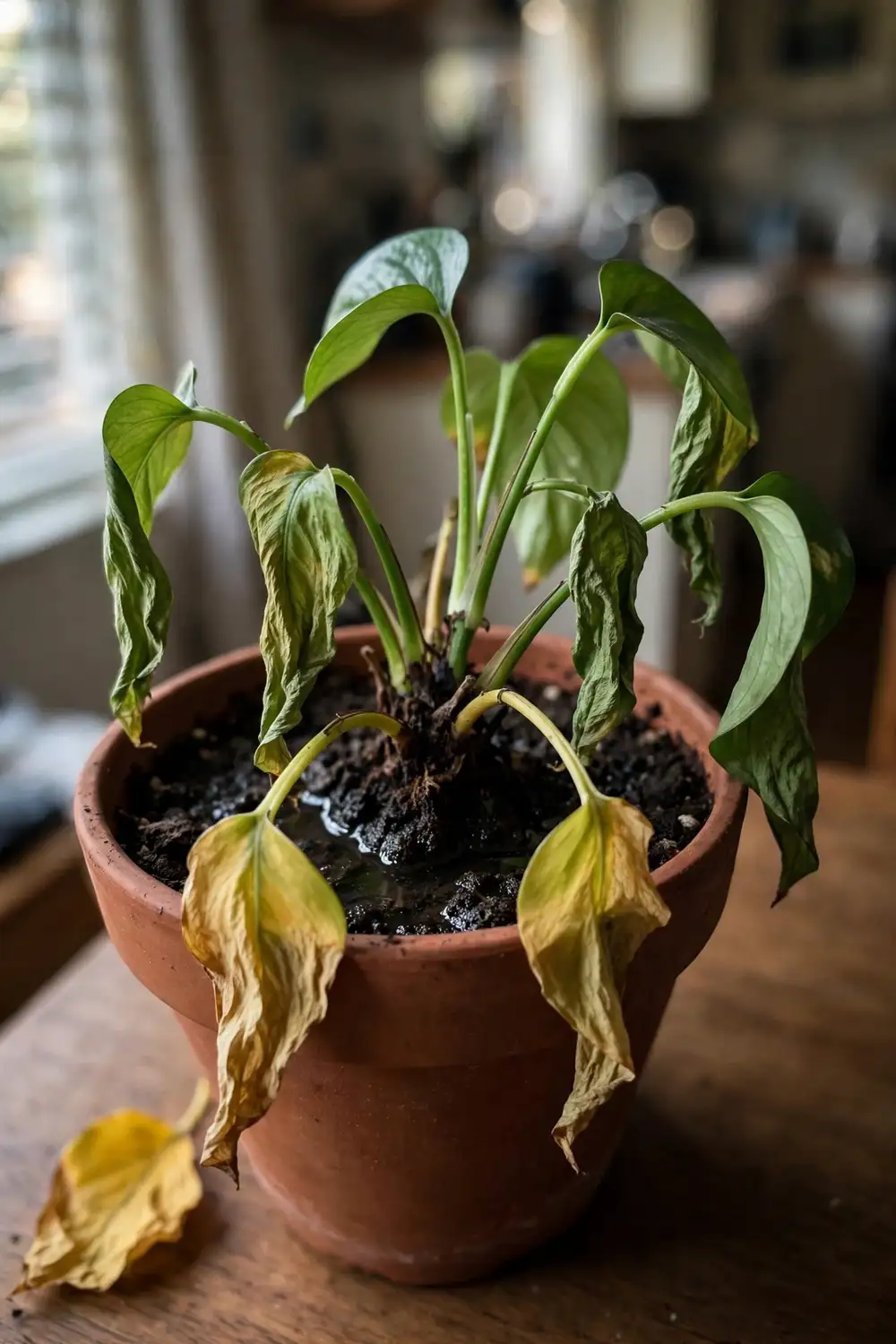

Your monstera was fine last week. Now its leaves are yellowing, the stems feel soft at the base, and the soil is still damp from the last watering. If the plant is wilting in wet soil, Pythium root rot is the most likely cause, and fast-moving species can collapse a plant within days of the first symptoms. The rescue works, but only if you act on the roots, not the leaves.
Pythium is not a true fungus. It is an oomycete, a water mold more closely related to algae, and that single fact changes how you fight it. More than 100 Pythium species exist, and they spread through swimming spores that hunt growing roots in soggy potting mix. Most fungicides sold for “root rot” never touch it. The nine steps below start with an honest triage call, then walk through the surgical rescue that actually saves houseplants.
What Pythium Root Rot Actually Is
Pythium root rot is a disease of plant roots caused by species in the genus Pythium, a group of oomycetes, or water molds. It is not a true fungus. Its cell walls are built from cellulose instead of chitin, and it reproduces with swimming zoospores that move through water in the soil toward growing roots, drawn by substances the roots release naturally. The University of Massachusetts Extension describes this plainly: Pythium is a water mold, and it is easy to imagine how such an organism flourishes in moist soil. It also forms thick-walled oospores that resist drying and let it survive in contaminated soil for a long time.
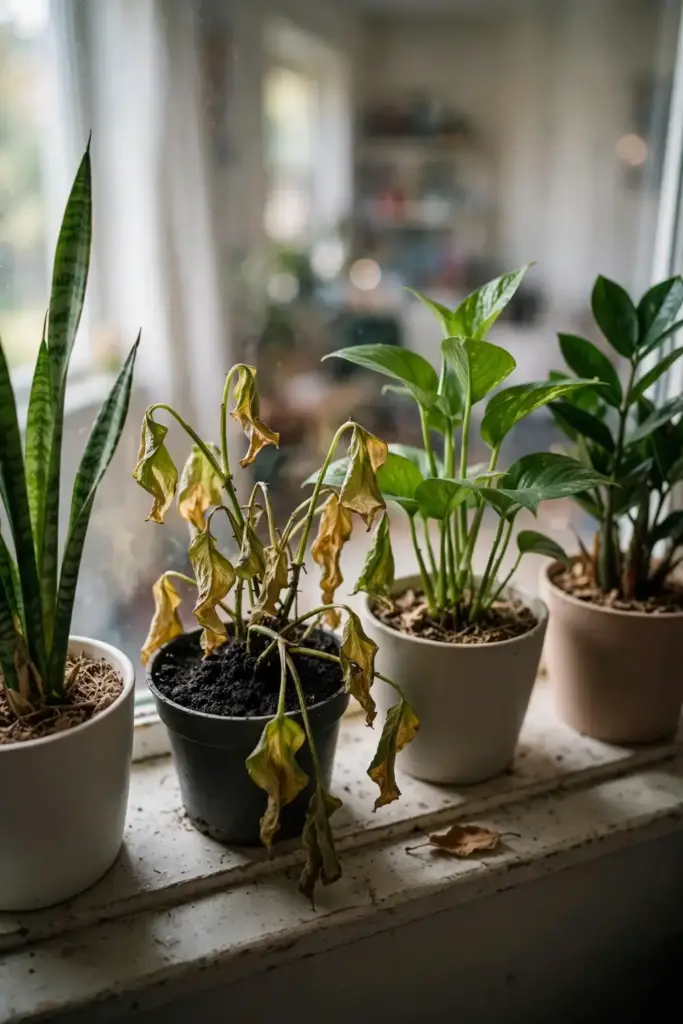
That biology matters because it explains every failure gardeners report. The pathogen needs free water to spread, so overwatered pots are its ideal habitat. It attacks the fine feeder roots first, which shuts down water uptake while the soil stays wet. That is the cruel signature of the disease: a plant dying of thirst in soaking soil. Because it is an oomycete, many general-purpose fungicides do nothing against it, and the few chemicals that work need to reach the roots as a drench, not a spray.
More than 100 Pythium species exist, and they share one habit: they are opportunists of wet, poorly aerated growing media. A healthy plant in a fast-draining mix with a drainage hole rarely gets hit. A plant sitting in saturated soil for days is an open invitation.
How to Identify Pythium Root Rot on Leaves and Stems
Above the soil, Pythium looks like several other problems, which is why so many gardeners misdiagnose it. The leaves yellow from the bottom up, growth stalls, and the plant wilts even though the potting mix is clearly moist. That last detail is the one that separates it from underwatering. If you watered two days ago, the soil is damp, and the plant still droops, stop watering and suspect the roots.
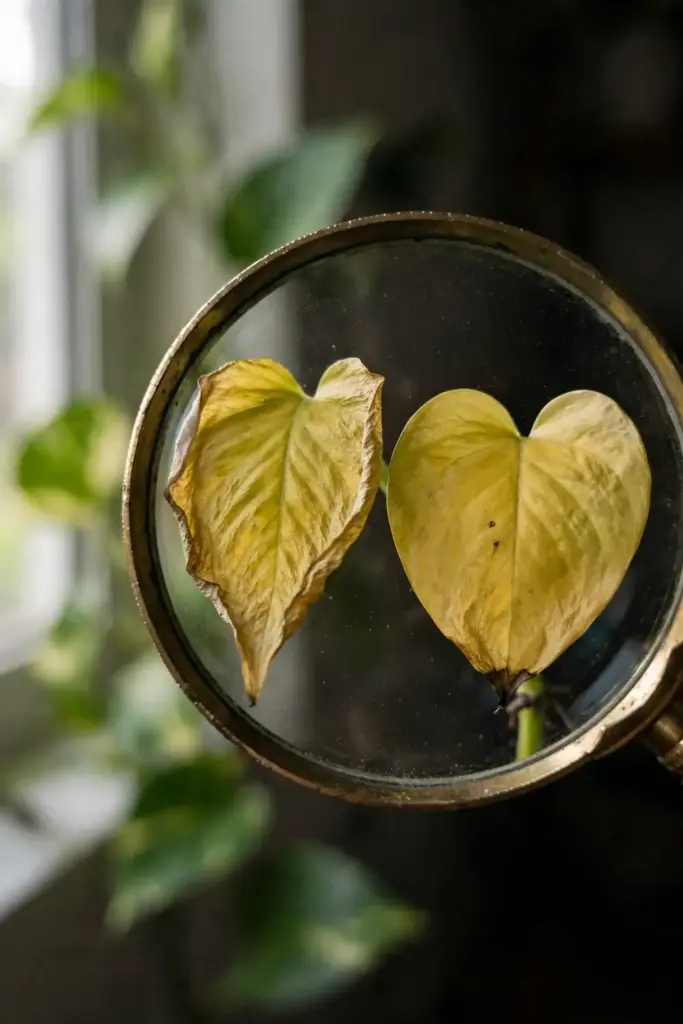
Stems may soften at the base, and in seedlings the classic sign is damping off: the stem pinches and collapses right at the soil line. On established houseplants, look for a general decline that does not respond to water or fertilizer. Leaves may drop, new growth comes in small and pale, and the whole plant has a tired look that deepens over one to three weeks. Some infections are rapid and kill within days; others are chronic and drag on for a month. Temperature plays a role, since different species peak at different ranges.
None of these leaf symptoms confirm Pythium by themselves. They only tell you to look at the roots, which is where the real diagnosis happens.
How to Identify Pythium Root Rot on Roots
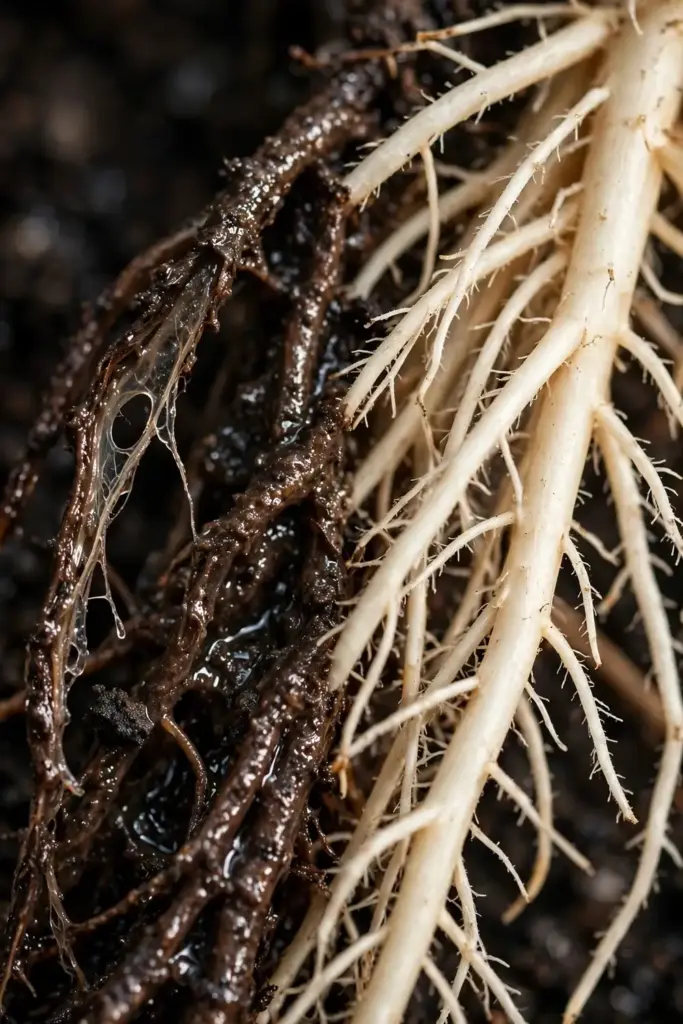
Unpot the plant and the answer is usually obvious. Healthy roots are white or cream colored, firm, and fibrous. Pythium-infected roots turn brown or gray, feel soft and water-soaked, and disintegrate when you handle them. The signature symptom is the “rat-tail”: the outer cortex of the root sloughs off between your fingers, leaving only the thin inner vascular strand behind. The University of Connecticut’s greenhouse pathology program uses exactly this test, noting that the outer root easily sloughs off when pulled, leaving the inner strand.
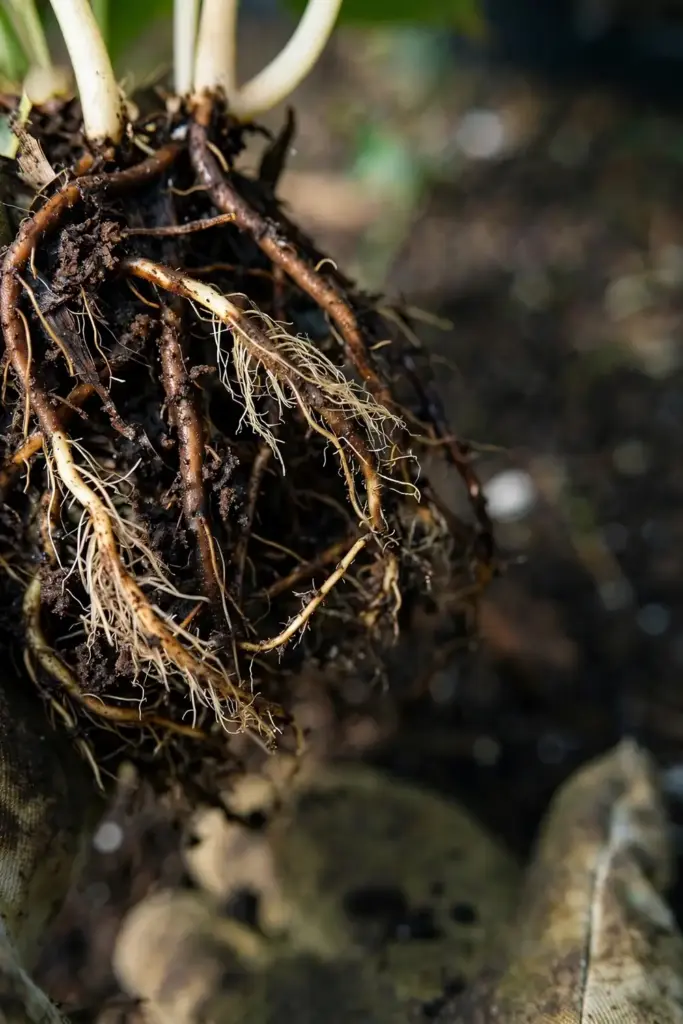
Compare that to a plant that is overwatered without infection: the roots may be brownish from sitting wet, but they stay firm and intact, and the cortex does not slide off. If the roots smell sour or rotten, bacteria have joined the infection, which happens in advanced cases.
Check how far the damage goes. If more than two-thirds of the root mass is mush, the honest answer is that rescue is unlikely, and Step 1 covers that call. If a solid core of firm white roots remains, the plant is a rescue candidate.
Which Houseplants Get Hit Hardest
Pythium has a famously broad host range, and nearly every common houseplant is susceptible when the potting mix stays too wet. Some plants show up in extension reports more than others. Poinsettias, chrysanthemums, and snapdragons are among the crops most susceptible according to Michigan State University’s plant pathology team. African violets and gerbera daisies are frequently hit, and peace lilies (Spathiphyllum) are classic victims because they are often kept in heavy, constantly moist mix.
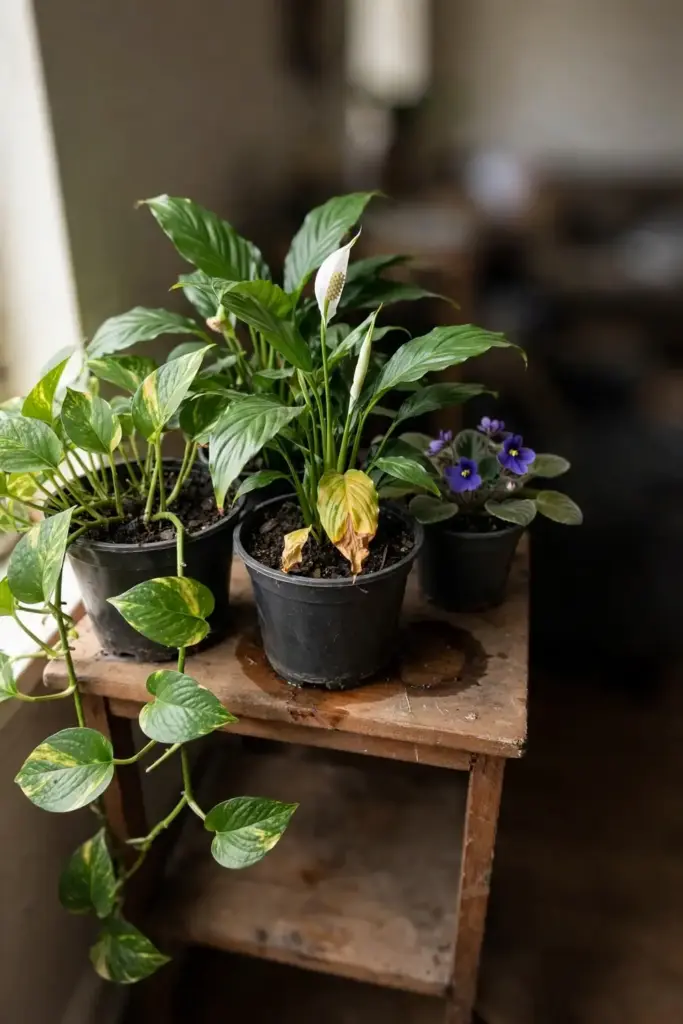
Pothos and philodendron, the two most common houseplants in most homes, get Pythium often because they are the two most overwatered plants in most homes. Their fleshy stems root easily, which also means they recover well from the surgical rescue in Step 3. Succulents and cacti rarely get it because their dry culture starves the pathogen of the water its swimming spores need.
Seedlings and fresh cuttings are the most vulnerable of all. Their tender new roots have no defenses, which is why Pythium is also the main cause of damping off in seed trays. If you start seeds indoors, the prevention habits in the steps below matter as much as the rescue itself, and our seed starting guide covers clean sowing technique in detail.
Pythium vs Phytophthora vs Fusarium vs Plain Overwatering
Four problems cause wilting in wet soil, and they need different responses. Use this table before you treat anything.
| Feature | Pythium root rot | Phytophthora root rot | Fusarium root/wilt | Plain overwatering |
|---|---|---|---|---|
| Pathogen type | Oomycete (water mold), not a true fungus | Oomycete, more aggressive cousin | True fungus | No pathogen |
| Root look | Brown, soft, mushy; cortex sloughs off leaving rat-tail strand | Brown to black roots; cankers at the soil line; crown rot | Brown vascular streaking inside stems; roots may look okay early | Brownish but firm and intact; no sloughing |
| Speed | Days to weeks | Often fast and destructive once started | Slow decline over weeks to months | Improves within days of drying out |
| Key driver | Soggy mix, poor drainage | Excess moisture plus high fertility | Contaminated soil, warm temps | Watering too often, no drainage |
| Smell | Sour or rotten in advanced cases | Rotten | Usually none | Earthy, normal |
| Fungicide response | Needs oomycete-specific drenches (mefenoxam, etridiazole, phosphorous acid) | Needs oomycete-specific products | Needs different fungicide classes entirely | No chemical needed |
| Typical victims indoors | Pothos, peace lily, African violet, seedlings | Rare indoors; mostly outdoor woody plants | Tomatoes, some ornamentals | Any overwatered plant |
The practical takeaway: if the roots are mushy and the cortex slides off, treat it as Pythium. If the roots are merely brown but firm, you likely just need to fix your watering, and no chemical will help more than a dry-out.
Why Zoospores Make Pythium So Hard to Beat
The single mechanism that drives everything about this disease is the zoospore. These are microscopic swimming spores with tiny tails, and they actively swim through water films in the potting mix toward growing root tips. The University of Massachusetts Extension notes that the zoospores are drawn to host plants by substances that growing roots produce naturally. The spore swims to the root, forms a cyst on the surface, and infects the tissue.
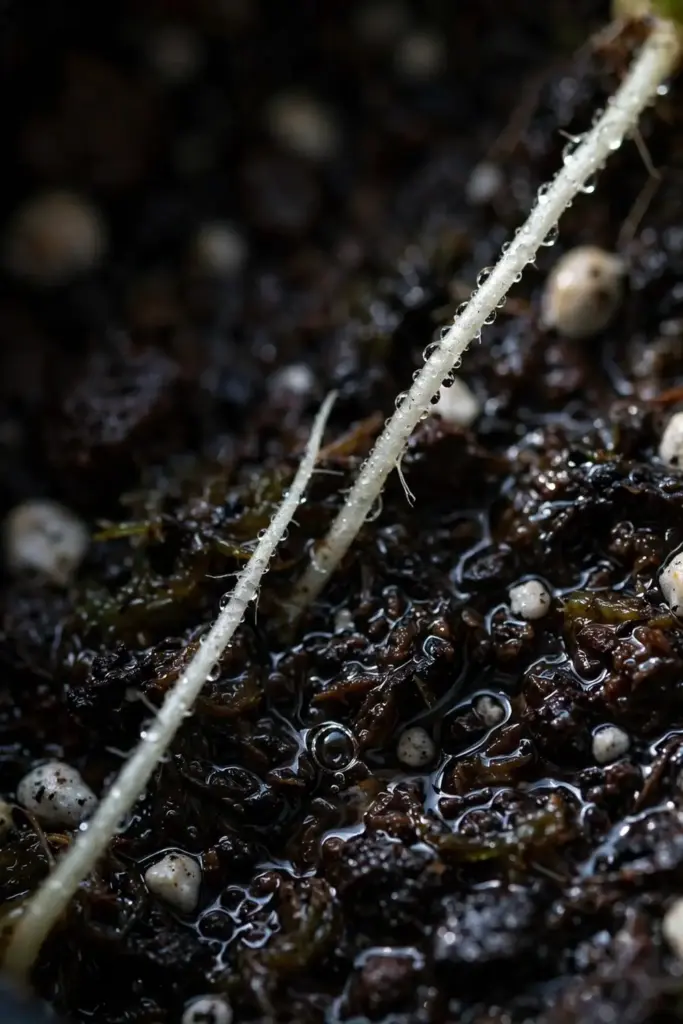
This is why drainage beats chemistry. Every puddle in the saucer, every waterlogged layer at the bottom of a pot without a drainage hole, is a swimming pool for zoospores. A fungicide drench can protect roots for a while, but if the mix stays saturated, new zoospores keep arriving. The disease is a plumbing problem first and a pathogen problem second.
The second half of the mechanism is survival. Pythium also makes oospores, thick-walled resting structures that endure drying and wait in contaminated soil, on dirty pots, and in debris. Reusing old potting mix or an unwashed pot can reintroduce the pathogen months later. That is why Steps 4 and 6 insist on sterilization and fresh mix: you are breaking both the swimming stage and the resting stage.
What Makes Pythium Worse in a Home
Five household habits feed this disease. The first is watering on a schedule instead of by soil moisture. A plant watered every Sunday regardless of need spends half its life in saturated mix. The second is pots without drainage holes, especially decorative cache pots where water collects unseen at the bottom. The third is heavy, peat-dense potting mix that stays wet for a week after watering.
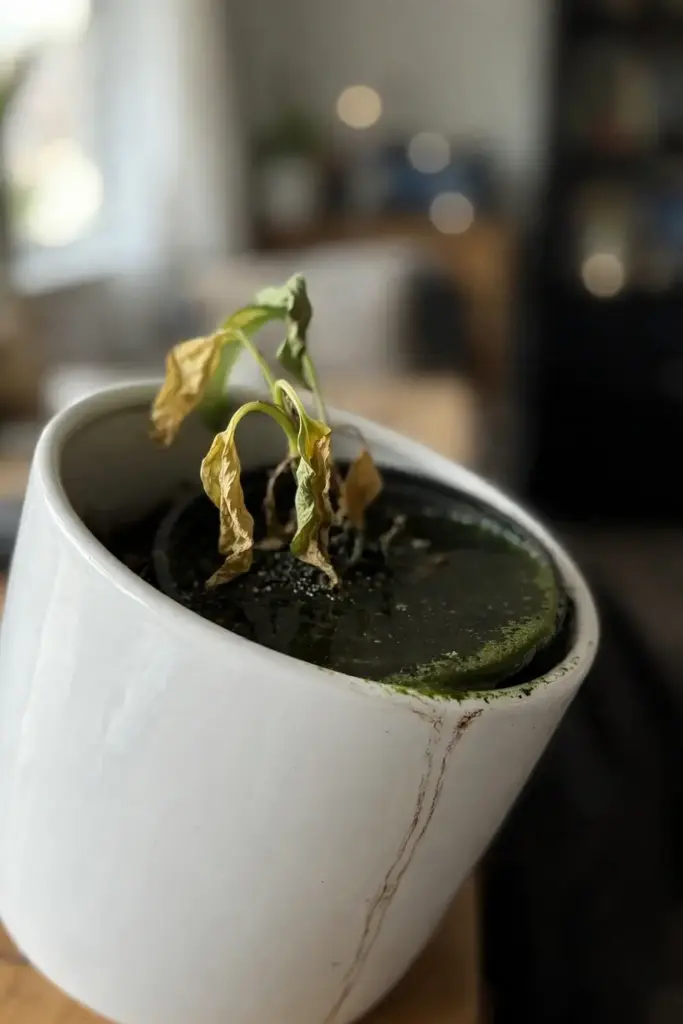
The fourth is reusing potting soil from a dead plant without sterilizing it. If Pythium killed the last plant, its oospores are still in that mix. The fifth is high soluble salt buildup from over-fertilizing. Michigan State University’s Mary Hausbeck has noted that soil with high soluble salt content is vulnerable to Pythium invasion, so heavy-handed fertilizing of a struggling plant backfires twice: it stresses the roots and invites the pathogen.
Warm, humid rooms speed everything up, and crowded plant shelves let splashed water carry zoospores from pot to pot. None of these require special equipment to fix, which is the good news running through the steps below.
Step 1: Decide Whether Your Plant Is Worth Saving
Be honest before you invest an hour in surgery. Unpot the plant, shake off the mix, and rinse the roots under lukewarm water. Count what is left. If at least one-third of the root mass is firm and white or cream colored, the plant is a rescue candidate. If nearly every root is brown mush and the stem base is soft and discolored well above the soil line, the infection has likely reached the crown, and even perfect technique rarely saves it.
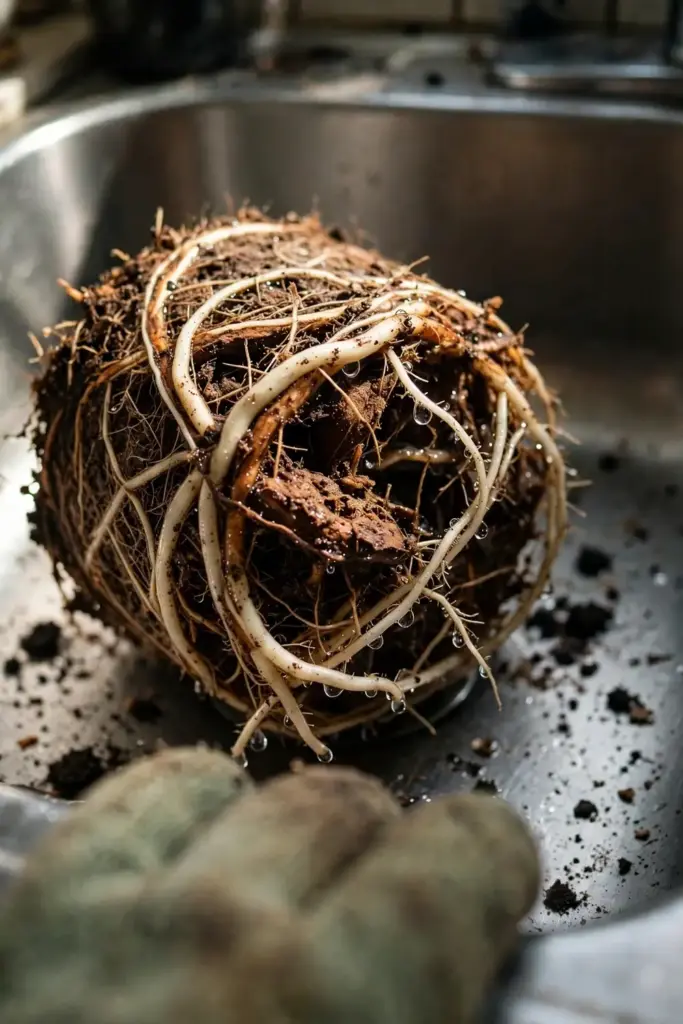
Consider the plant’s value too. A common pothos with three good nodes can be re-rooted from cuttings faster than it can be nursed back, and cuttings from above the infection start clean. A large, old specimen you cannot replace deserves the full rescue. There is no shame in composting a $6 plant and spending the hour on prevention instead. What you must not do is leave a rotting plant sitting among healthy ones, where every watering splashes zoospores onto its neighbors.
Step 2: Unpot and Wash the Root System
Work over a sink or a bucket, not over your other plants. Slide the plant out of its pot and shake off as much old mix as you can. Then rinse the entire root system under lukewarm running water until no old potting mix clings to the roots. This matters more than it looks: old mix carries both zoospores and the fine organic matter they thrive in, and you are about to put the plant in sterile mix. Every gram of old mix you leave behind is a head start for the pathogen.
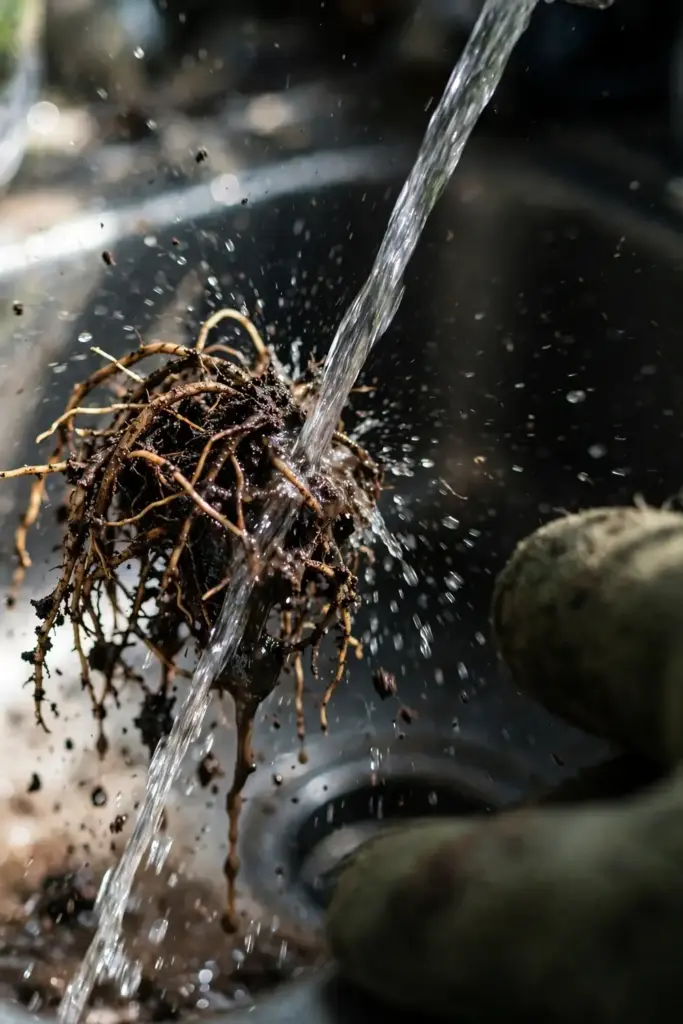
Do this gently. Healthy roots are your capital now, and tearing them adds wounds for the pathogen to enter. If roots are densely matted, soak the root ball in a bucket of lukewarm water for ten minutes to loosen the mix rather than pulling at it.
Step 3: Cut Away Every Rotted Root
This is the surgical step, and it is where rescues succeed or fail. With clean, sharp scissors or pruners, cut away every root that is brown, soft, or mushy. Cut back into healthy tissue: each cut should end at firm, white or cream-colored root. If a root is half rotted, remove the whole root. Half measures leave infected tissue that restarts the rot in the fresh mix.
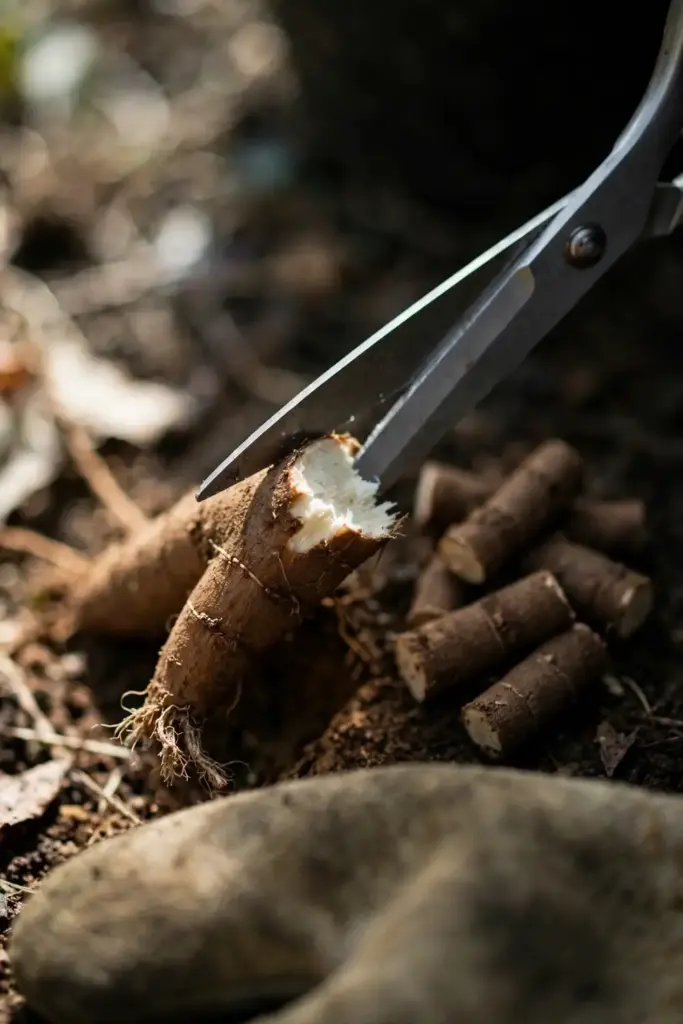
Between cuts, wipe the blades with rubbing alcohol or diluted household bleach. This feels tedious and it is the point: you are performing surgery, and unsterilized tools smear the pathogen across fresh wounds. When you finish, the remaining root system will look alarmingly small. That is normal. A small clean root system beats a large infected one every time.
If you removed more than two-thirds of the roots, also prune back about one-third of the foliage. Fewer leaves means less water demand on the reduced root system while it regrows.
Step 4: Disinfect Tools and the Old Pot
Throw away the old potting mix. Do not compost it, do not reuse it for another houseplant, and do not dump it on the garden near susceptible plants. Bag it and put it in the trash. Oospores survive home composting easily.
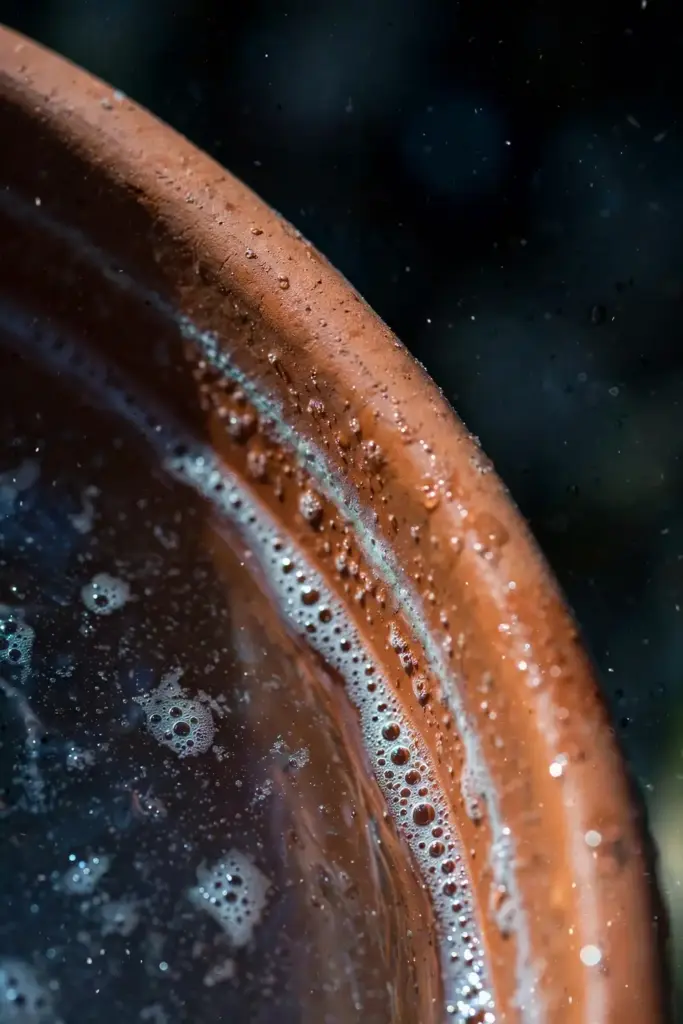
Scrub the old pot with hot soapy water to remove all soil and mineral crust, then soak it in a 10 percent bleach solution (one part household bleach to nine parts water) as Penn State Extension’s Pythium management guide recommends for every surface and tool that contacts potting mix, rinse thoroughly, and let it air dry. The same goes for the scissors, the sink area, and any saucer the plant sat in. Penn State puts sanitation at the center of control for exactly this reason: the pathogen is difficult to control once rot has begun, so every effort goes toward denying it a foothold. If the pot is a cheap nursery pot, replacing it is simpler than disinfecting it.
Step 5: Treat With Hydrogen Peroxide, Within Honest Limits
A commonly published home treatment is a soak of the trimmed roots in a dilute hydrogen peroxide solution: one part standard 3 percent hydrogen peroxide to three parts water, for about five minutes, before repotting. The peroxide kills microbes on contact and releases oxygen around the roots. Use it as a one-time disinfecting rinse during the rescue, not as an ongoing treatment.
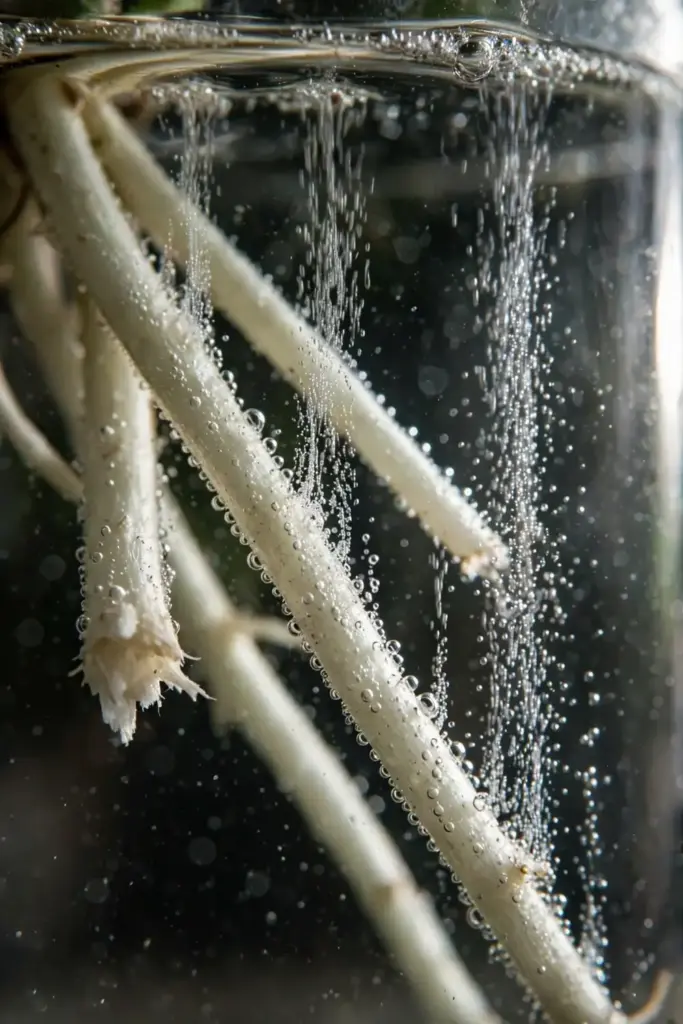
Here are the honest limits, because this remedy is oversold online. Hydrogen peroxide breaks down within hours in contact with organic matter, so it has no residual activity. It kills beneficial microbes along with harmful ones, leaving a biological vacuum. And it cannot reach pathogen hiding inside root tissue, which is why Step 3 comes first. Think of it as wiping down a wound before bandaging, not as the cure. If anyone tells you to water with peroxide weekly as prevention, they are selling you a ritual, not a solution. Prevention is drainage, and Step 7 covers it.
Step 6: Repot in Fresh, Sterile Mix
Repot into fresh, unused potting mix, never the old mix and never garden soil. Choose a mix that drains fast: a standard indoor mix amended with perlite or coarse bark works for most houseplants. The pot must have a drainage hole. If you love a decorative pot without one, use it as a cache pot with the nursery pot inside, and empty the cache pot after every watering so the plant never sits in water.
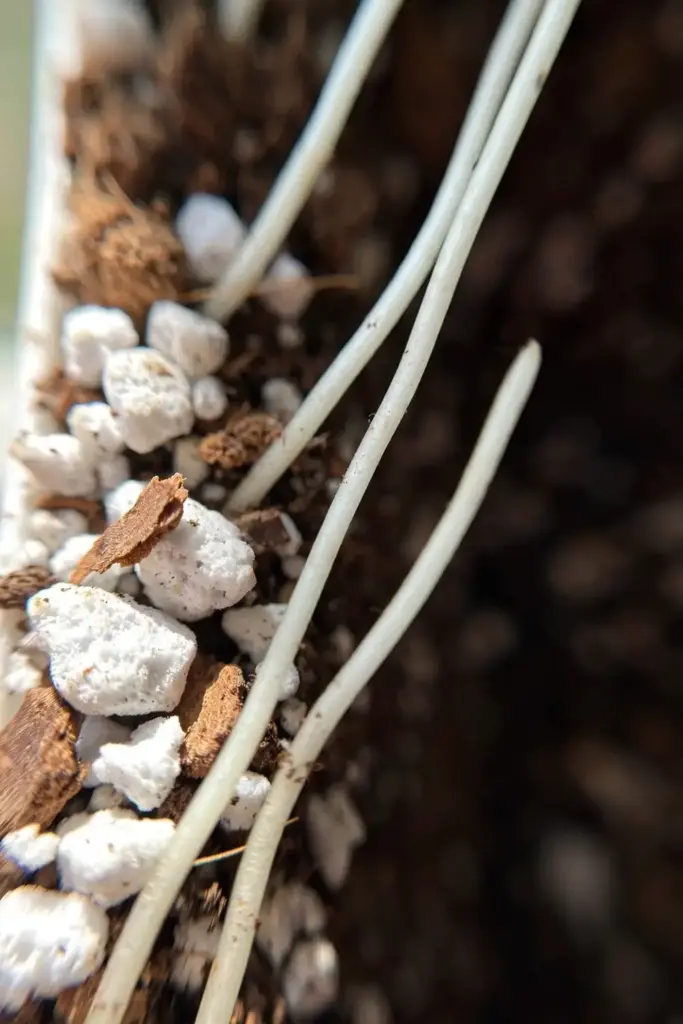
Penn State Extension recommends heat-pasteurized potting mix for Pythium-prone situations: the entire pile heated to 180°F and held there for 30 minutes. Bagged commercial mixes are generally pasteurized already, which is one more reason to start fresh rather than reuse. Our potting mix guide breaks down which ingredients actually improve drainage and which ones just hold more water.
Plant at the same depth as before, water lightly once to settle the mix, and then let the top inch dry before watering again.
Step 7: Water Like the Pathogen Is Watching
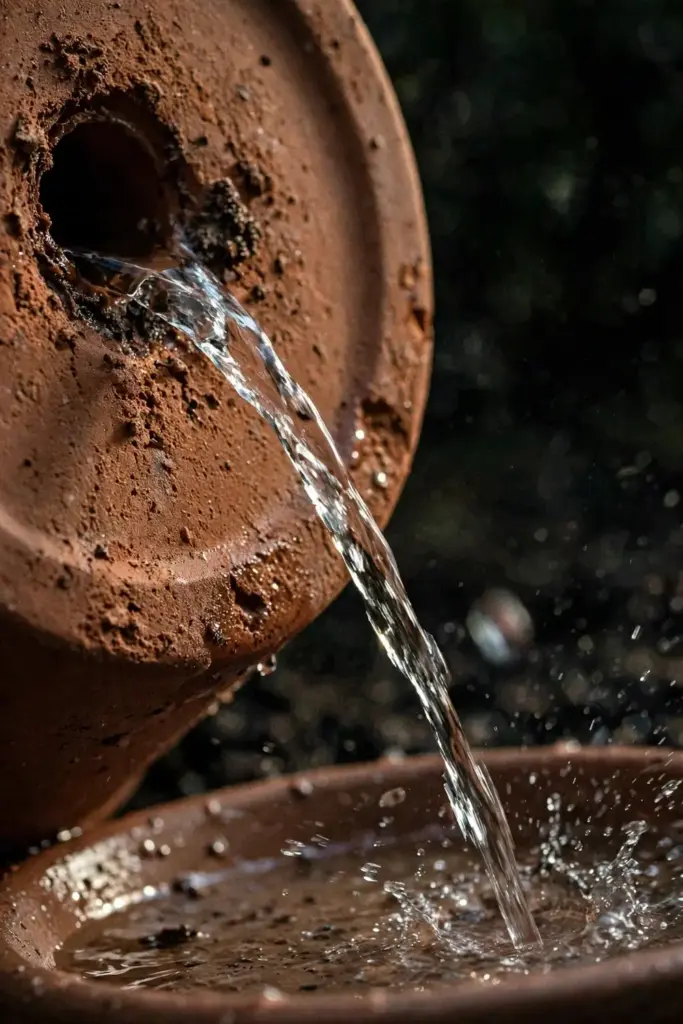
The rescue fails more often in the month after repotting than during surgery, and the cause is almost always a return to old watering habits. Water only when the top inch or two of mix is dry to your finger. Water thoroughly until it runs from the drainage hole, then empty the saucer within 30 minutes. Never let the pot sit in standing water.
Adjust for the season. A plant that needed water twice a week in summer may need it every ten days in winter, when short days and cool rooms slow everything down. Grouping plants together raises local humidity, which is fine for the leaves but means the mix dries slower, so check each pot individually. A simple wooden chopstick pushed into the mix works as a moisture meter: if it comes out damp and dark, wait.
This single habit prevents more Pythium than any product. Zoospores cannot swim without free water, and a mix that dries between waterings is a desert to them.
Step 8: Consider a Fungicide Drench, Where the Label Allows
Here is where the oomycete fact from the opening pays off. Most “root rot” fungicides target true fungi and do nothing to Pythium. The products that work are oomycete-specific, and Purdue Extension’s Pythium management bulletin lists the main classes: mefenoxam (Subdue Maxx), etridiazole (Terrazole, Truban), phosphorous acid products, and propamocarb, each with its own FRAC resistance-management code. Critically, Purdue notes that only drench applications, not sprays, are effective against Pythium root rot, and that fungicides work best as protectants before rot begins.
For a home gardener, the honest framing is narrower. Many of these products are labeled for greenhouse or nursery use, not for home houseplants, and the label is the law: if your plant is not on the label, do not use it. Some Pythium populations have also developed resistance to mefenoxam, so a product that worked for someone else may fail for you, and rotation between different FRAC codes matters. Biological options based on Trichoderma or Bacillus exist for home use and are safest applied to fresh mix at repotting time, before disease appears.
For most houseplant rescues, Steps 1 through 7 are the treatment, and this step is optional insurance. A clean root system in fresh, fast-draining mix usually recovers without any chemical at all.
Step 9: Quarantine and Watch for Four Weeks
Keep the rescued plant away from your other houseplants for at least four weeks. Water it separately, and do not share tools between it and healthy plants without disinfecting. This is not paranoia. If any infected root tissue survived surgery, symptoms can reappear, and you do not want the relapse to happen on a crowded shelf.
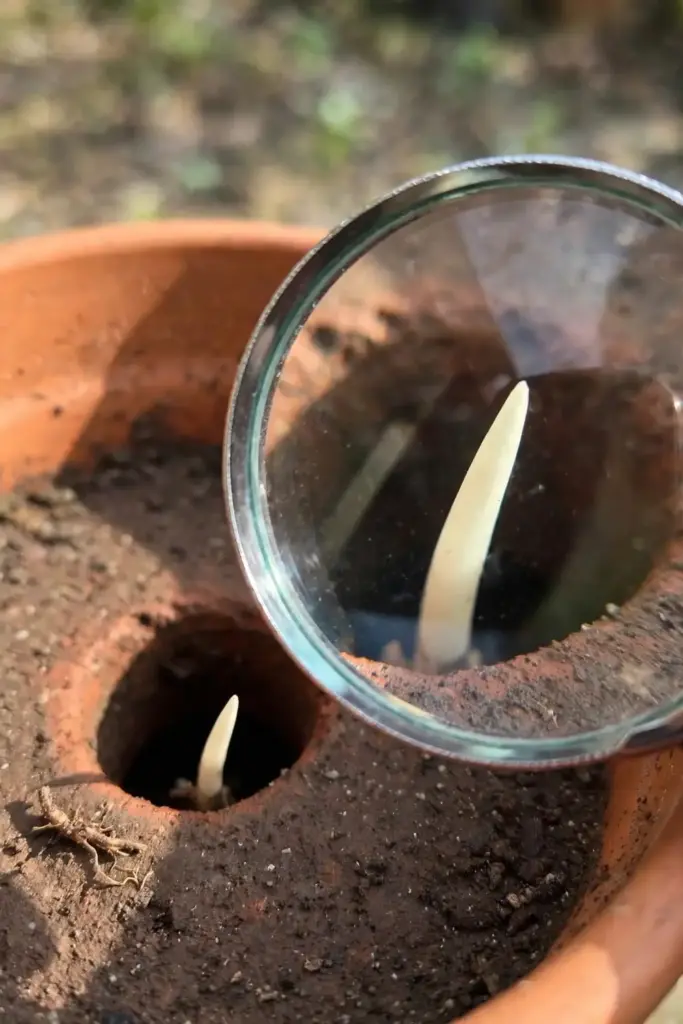
Watch for the good signs first: new growth, firming stems, and white root tips visible at the drainage hole within two to four weeks. Those mean the rescue worked. If wilting returns despite proper watering, unpot and inspect again. A second round of surgery sometimes succeeds, but two failures mean the pathogen won, and the plant should be discarded along with its mix. Do not let a sentimental rescue become a reservoir that infects the rest of your collection.
Living With a Plant That Survived Pythium
A plant that survives Pythium is not immune to it. The pathogen’s oospores can linger in tiny amounts, and the habits that caused the first infection will cause a second one. The long-term program is simple and chemical-free: fast-draining mix, a drainage hole, watering by soil moisture rather than calendar, and fresh mix at every repotting. Never reuse mix from a plant that had root rot, even if it looks fine now.
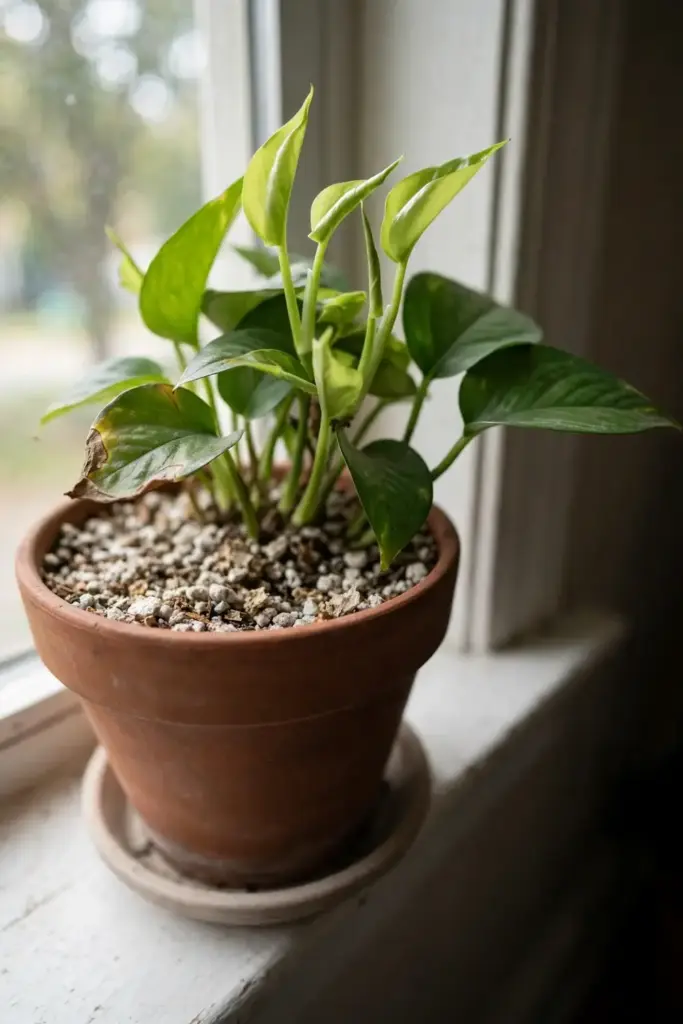
Feed lightly while the plant rebuilds. A recovering root system cannot use heavy fertilizer, and excess salts stress new roots, which is exactly the vulnerability Michigan State’s pathologists warn about. Half-strength fertilizer at most, and only once you see active new growth. Expect the plant to look sparse for a season. Houseplants regrow root systems slowly, and patience here is not passive. It is the treatment working.
Keep an eye on the plant’s neighbors too. If one plant in a group got Pythium, the others shared the same watering habits and possibly the same bag of mix. Check them with the finger test, ease off the watering can, and you may prevent the next rescue entirely.
Frequently Asked Questions
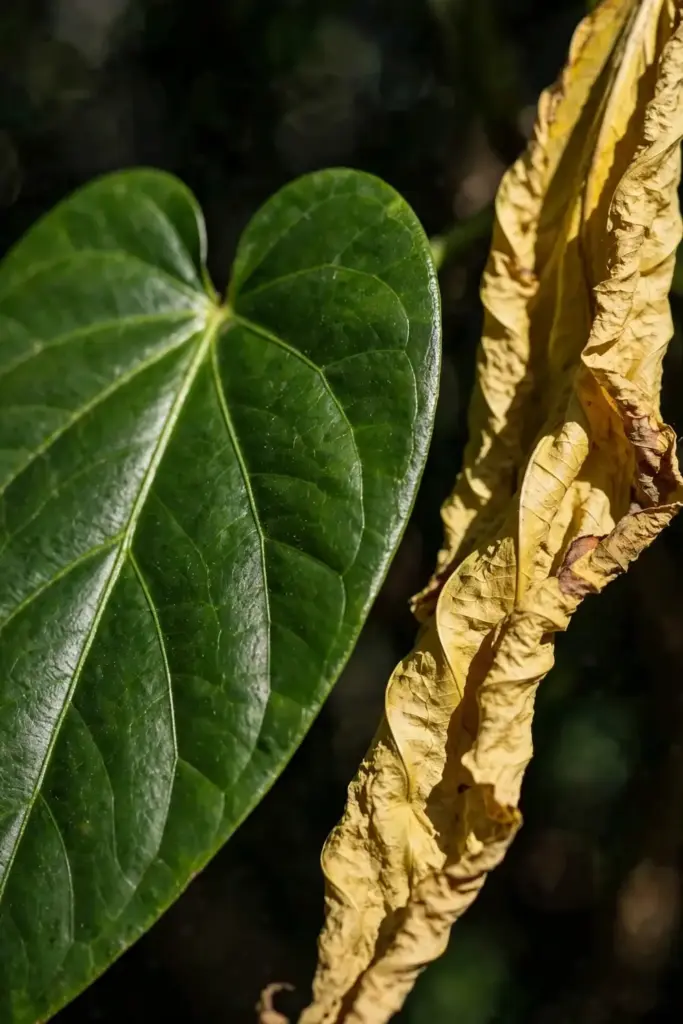
Yes, if enough healthy root tissue remains. Plants with at least one-third of their roots firm and white usually recover after surgical removal of rotted roots and repotting in fresh sterile mix. Recovery takes four to eight weeks of careful watering. If the crown or stem base is rotted, or nearly all roots are mush, the honest answer is no, and starting over from a healthy cutting is faster.
No. “Root rot” is a symptom with many causes, and Pythium is one specific pathogen behind it. The distinction matters because Pythium is an oomycete, not a true fungus, so general fungicides often fail against it. Plain overwatering without infection needs no chemical at all, just better drainage. Always check whether the roots are mushy and sloughing before choosing a treatment.
It helps as a one-time disinfecting rinse, not as a cure. A dilute soak of trimmed roots kills surface microbes and adds oxygen, but peroxide breaks down within hours and cannot reach pathogen inside root tissue. The actual cure is cutting away rotted roots and repotting in fresh mix. Anyone recommending weekly peroxide watering is describing a ritual with no residual effect, not a treatment plan.
Three causes cover nearly every repeat case. First, infected roots were left behind during surgery, so cut more aggressively next time. Second, the old potting mix or an unwashed pot was reused, reintroducing the pathogen’s long-lived oospores. Third, watering habits did not change, and the fresh mix stayed saturated. Fix all three together, because any one of them restarts the cycle alone.
No houseplant is truly resistant, since Pythium attacks through wet conditions rather than through specific host genetics. Succulents and cacti rarely get it only because their dry culture denies the pathogen the water its swimming spores need. The closest thing to resistance is cultural: any plant in fast-draining mix with a drainage hole, watered only when dry, is effectively protected regardless of species.
Yes. Bag the old potting mix and put it in the trash, and disinfect the pot with a 10 percent bleach soak before reuse. Pythium survives as thick-walled oospores that endure drying and easily survive home composting. Reusing the mix is the most common way gardeners reintroduce the disease to a rescued plant or pass it to a healthy one.
Where to Go From Here
You now know the whole picture: Pythium is a water mold that hunts roots through wet potting mix, it announces itself with wilting in damp soil and mushy sloughing roots, and it loses to surgery, sanitation, fresh mix, and disciplined watering. The chemicals exist but are optional for most home rescues, and the label decides whether they are even available to you.
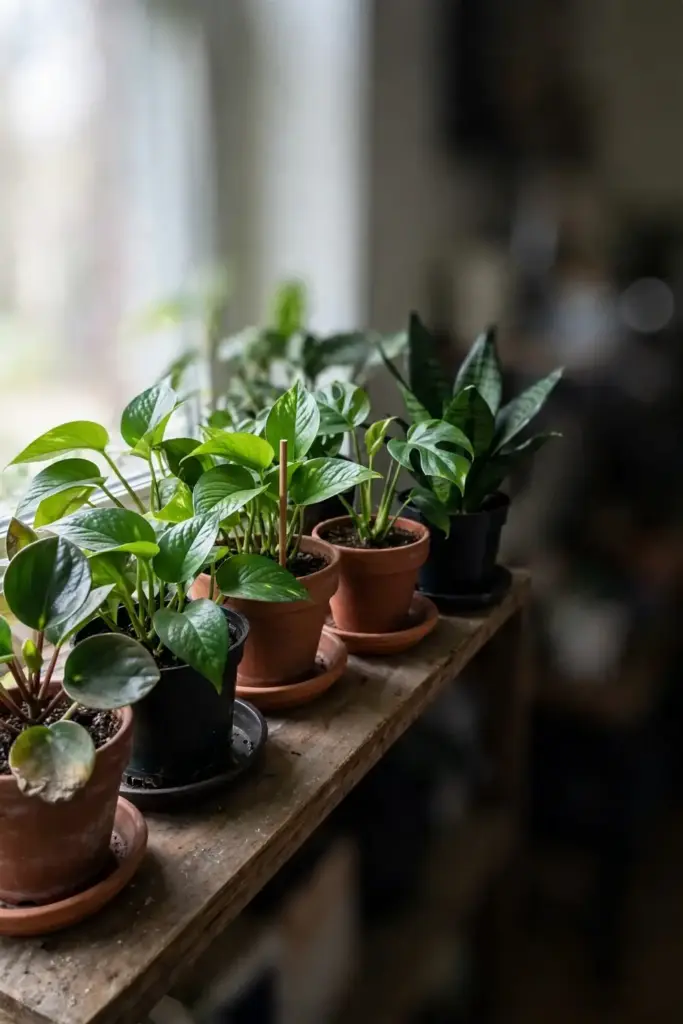
Do the rescue today if your plant qualifies. Then fix the habit that caused it, because the same watering can that drowned this plant is still in your hand. If you keep houseplants, our indoor plant guide covers the watering and light routines that keep the whole collection out of trouble, and the soil health guide explains how mix structure shapes everything roots do.