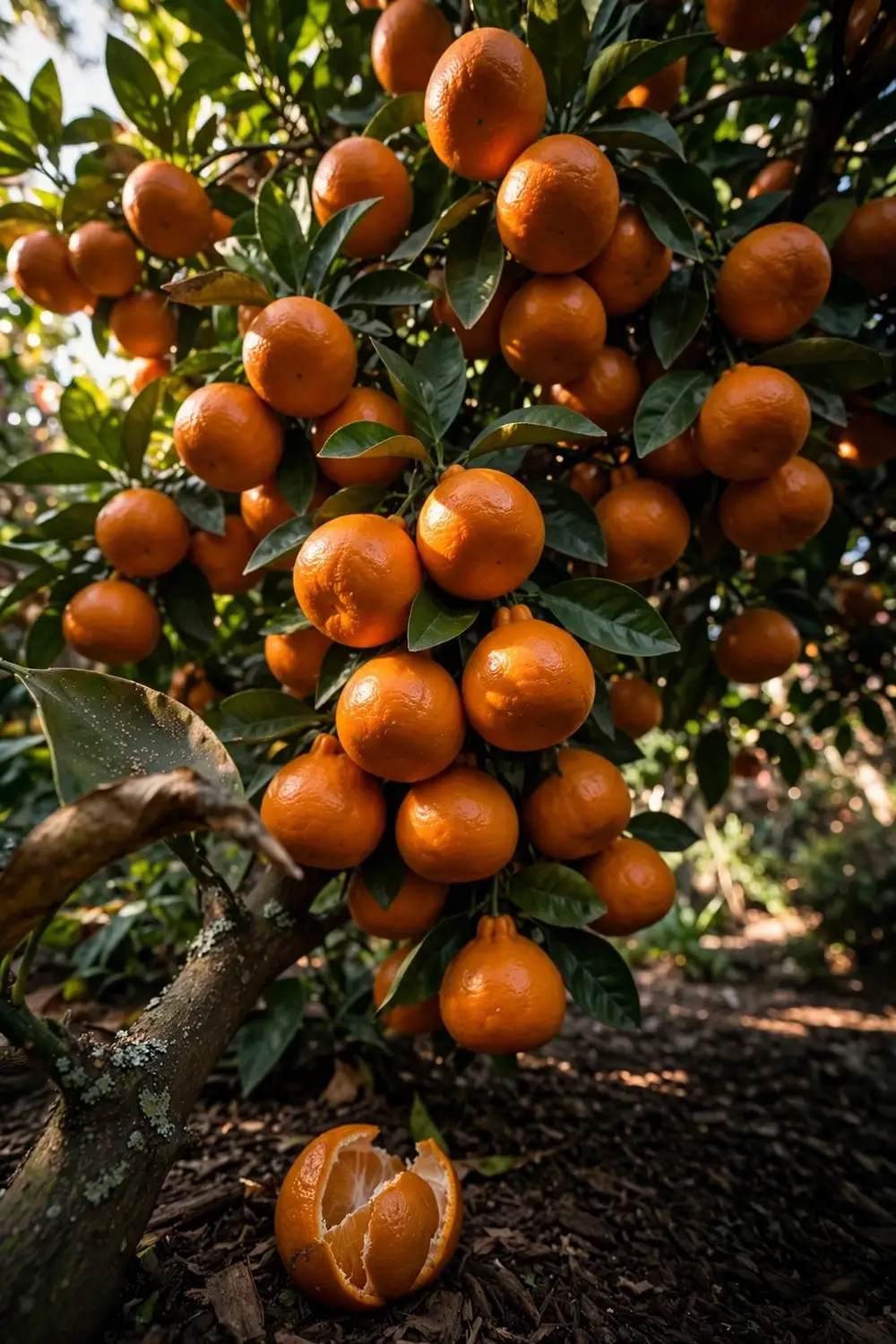

You can grow a tangelo from the seed of a ripe fruit, and the tree can fruit in 2 to 3 years if you buy a grafted sapling instead. A tangelo is a hybrid citrus, a tangerine crossed with a grapefruit, bred for easy peeling and juice-heavy segments. It grows best outdoors in zones 9 to 11, where frost is rare, and it adapts to a large pot anywhere else if you bring it inside before the first frost.
Here is how to grow tangelos from seed to first fruit: save fresh seeds from a ripe tangelo, sprout them in warm soil, raise the seedlings for a year or two, then plant out a grafted tree or keep your own seedling if you are patient. The one decision that matters more than anything else is pollination. Some tangelos fruit alone, and some famous ones refuse to, so this guide explains exactly which situation you are in.
| Tangelo | Mandarin / Tangerine | Grapefruit | |
|---|---|---|---|
| Role | The hybrid child | One parent | The other parent |
| Peeling | Easy, loose skin | Very easy | Thick, harder to peel |
| Flavor | Sweet-tart and juicy | Sweet and mild | Tart with bitter notes |
| Size | 3 to 4 inches | 2 to 3 inches | 4 to 6 inches |
Tangelo at a Glance
| Spec | Value |
|---|---|
| Botanical name | Citrus × tangelo |
| Type | Evergreen subtropical fruit tree |
| Parent fruits | Tangerine/mandarin (Citrus reticulata) × grapefruit (Citrus × paradisi) |
| Famous cultivars | Minneola, Orlando, Honeybell, Seminole, Nova |
| Mature height | 10 to 15 feet in the ground; smaller in pots |
| Fruit size | 3 to 4 inches across |
| Zones | 9 to 11 outdoors |
| Chill requirement | None to speak of; a warmth lover |
| Propagation | Seed, grafting (nursery standard) |
| Time to fruit | 2 to 3 years for grafted trees |
| Lifespan | Decades with basic care |
1. What Exactly Is a Tangelo?
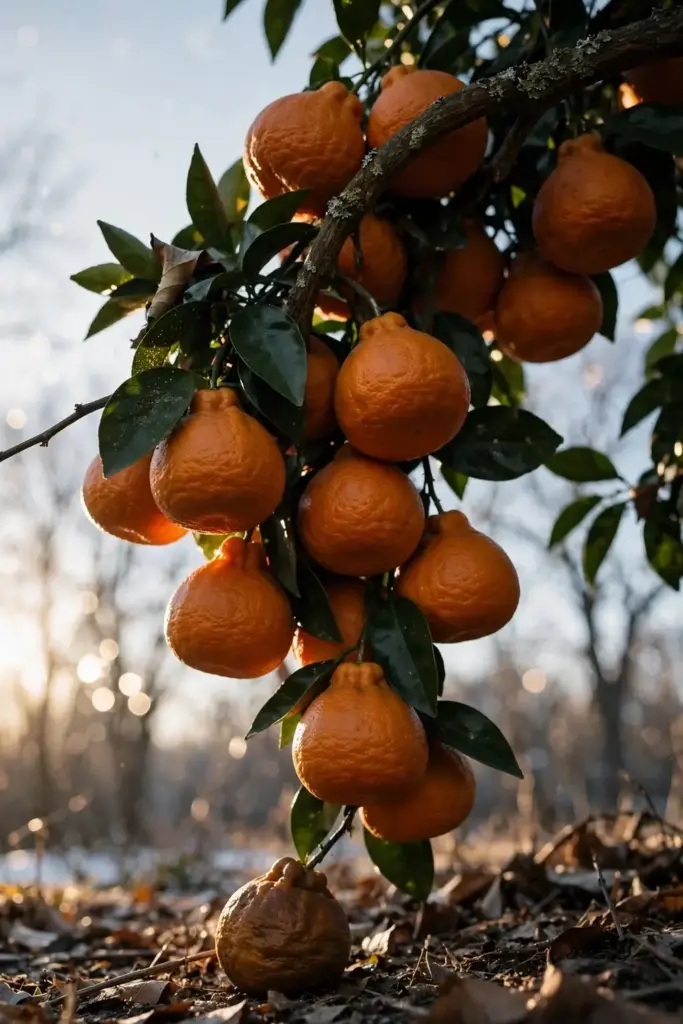
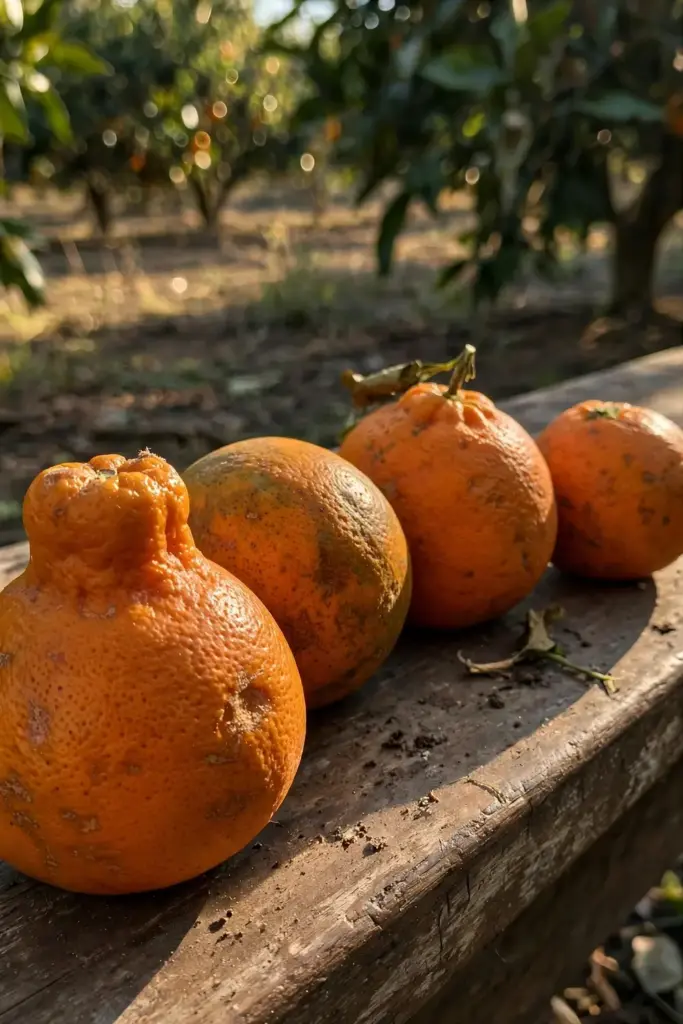
A tangelo is not a natural species. It is a human-made hybrid, roughly half tangerine and half grapefruit, which explains both its flavor and its shape. The tangerine parent gives it loose, easy-peeling skin and rich sweetness, while the grapefruit parent gives it size, juice, and that distinctive bell shape with a knobbed neck on varieties like Minneola. The name itself is a blend: tang from tangerine, elo from pomelo, an older name for grapefruit.
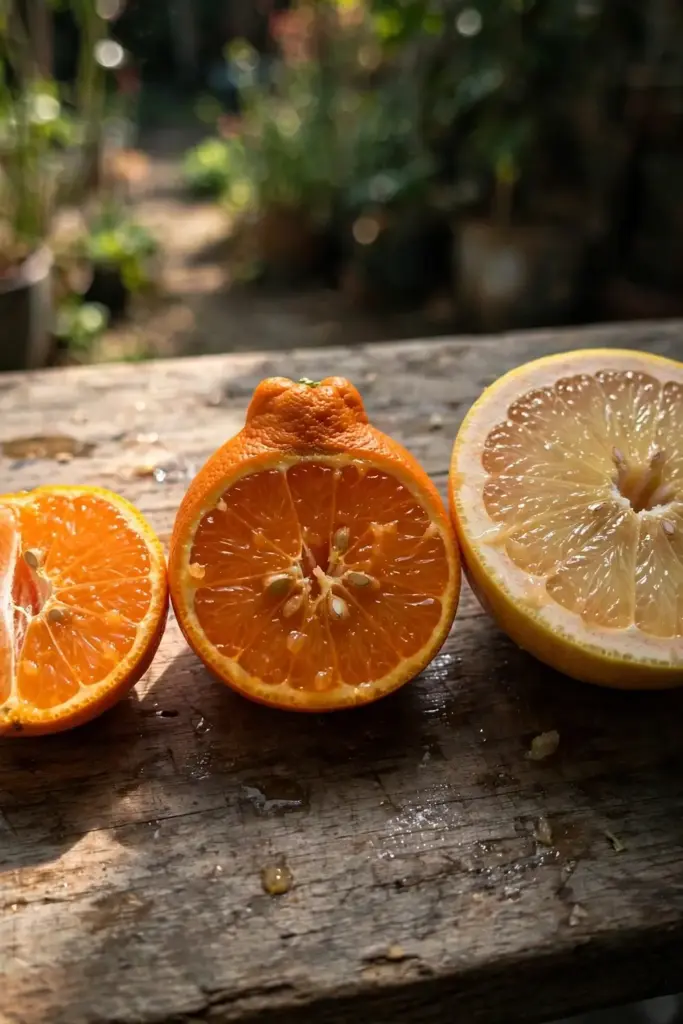
The hybrid was first worked out in Florida by Walter Swingle in 1897 and in California by Herbert Webber in 1898. The most famous cultivar, Minneola, came later, when the USDA crossed ‘Duncan’ grapefruit with ‘Dancy’ mandarin in 1931 and named the result after Minneola, Florida, where the breeding work happened. Orlando followed as its sibling. When you see a tangelo with a pronounced neck at the stem end, you are almost always looking at a Minneola.
Why does this matter for growing? Hybrids carry traits from both parents, and the parents disagree on pollination. That disagreement is the reason the internet gives you contradictory answers about whether you need a second tree. The parent species matter too: tangerine is Citrus reticulata, grapefruit is Citrus × paradisi, and the tangelo itself is written Citrus × tangelo, with the cross mark signaling its hybrid origin.
2. Climate and Location: Zones 9 to 11 and the Frost Line
Tangelos are warm-climate trees. They grow best outdoors in USDA zones 9 to 11, which covers southern Florida, southern Texas, southern Arizona, coastal California, and the Gulf Coast. In these zones, winter temperatures rarely threaten the tree, and the fruit ripens on the branch through the cool season.
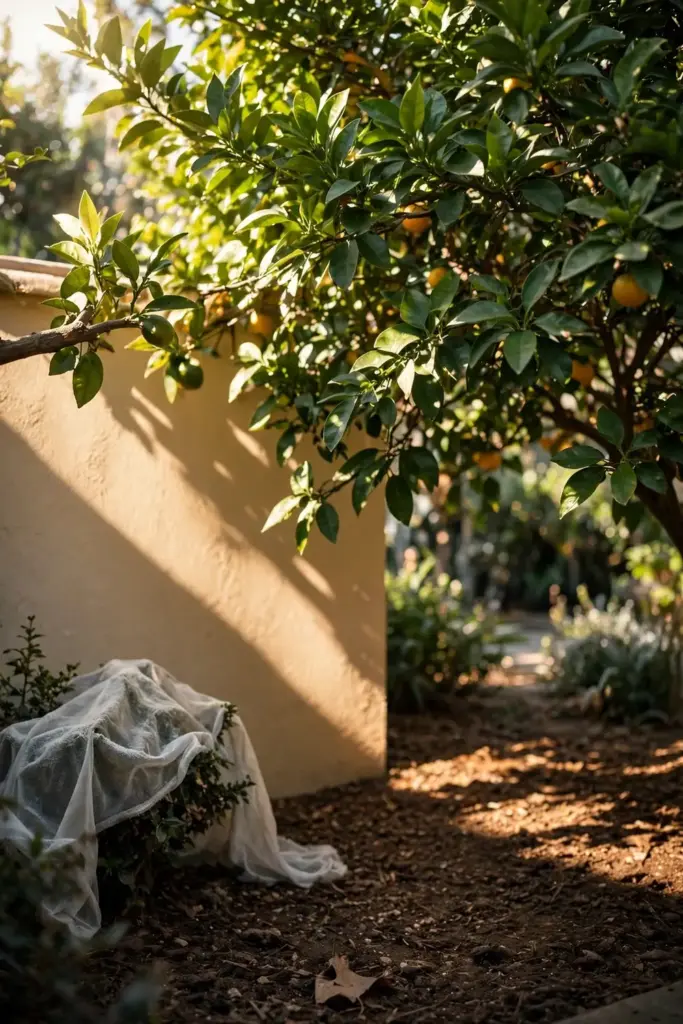
Frost is the real boundary. Tender new growth and young fruit take damage near freezing, so protect the tree below 32°F. Below 20°F the tree itself needs a blanket or landscape fabric, and an unprotected young tree can be killed outright. That stretch between a light frost and a hard freeze is the danger zone for young trees, because gardeners assume a citrus tree is tougher than it is.
If you live outside zones 9 to 11, the tree still works as a container plant. Nurseries in cold states sell dwarf tangelos specifically for patios and greenhouses, and the tree adapts well to indoor winters as long as it gets a bright spot. The continental US has a clear line here: above zone 9, the ground is not the plan; the pot is.
Sunlight is non-negotiable. Give the tree full sun, 6 to 8 hours of direct light daily, with 8 or more hours for the best yields. A tangelo in half shade survives, but it fruits poorly and the canopy stays thin. If you are choosing between two spots, pick the brighter one even if the soil is slightly worse, because light is harder to fix than soil.
3. From Seed or From a Grafted Tree: Choose Your Path
You have two ways to start, and they lead to different timelines. Growing from seed is the cheapest and, for many gardeners, the most satisfying. Buying a grafted tree is faster, more predictable, and the only way to guarantee a specific cultivar like Minneola or Orlando.
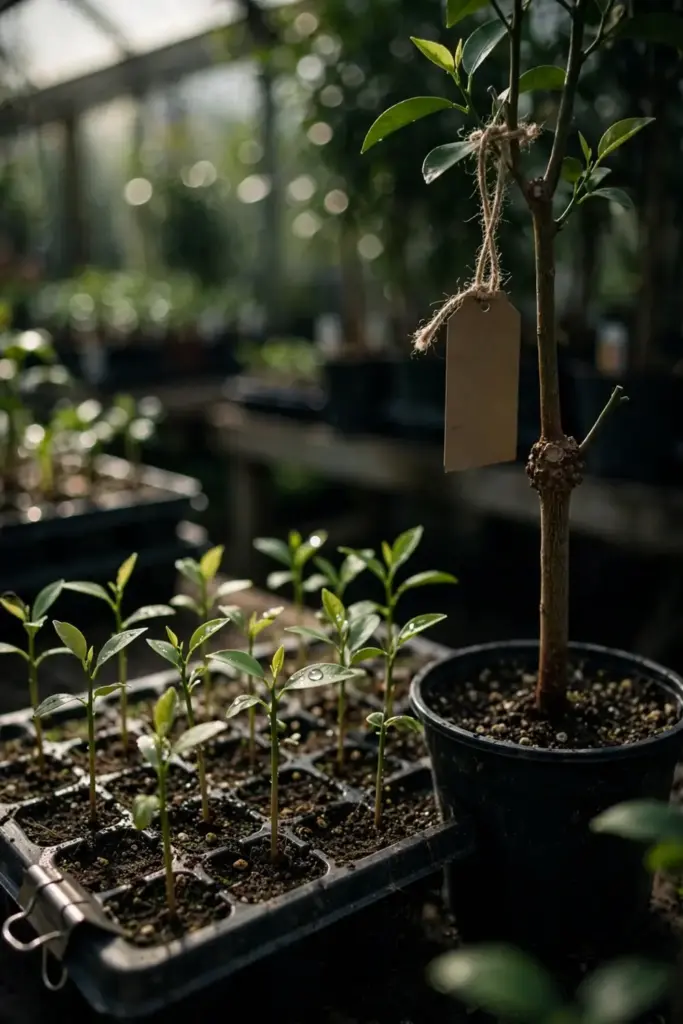
Seed costs nothing but time. A seedling tangelo can take several more years to fruit than a grafted tree, and the fruit quality is a question mark until the first harvest. That said, citrus has a trick up its sleeve: many tangelo seeds produce nucellar seedlings, which are near-clones of the parent formed alongside the normal sexual embryo. When Gardening Know How says tangelos “come true from seed,” this is what they mean. The catch is that not every seed does it, and you cannot tell which seedlings are the clones until they mature.
A grafted tree is a known quantity. The top half is a bud or scion from a proven cultivar, joined to a hardy rootstock that resists soil diseases and handles local conditions. Nurseries like Four Winds Growers sell these as container or bare-root trees, and a healthy grafted tangelo can fruit in 2 to 3 years. Some growers report fruit in about a year on vigorous young trees, but 2 to 3 years is the honest expectation.
The practical rule is simple. If you want fruit soon and a specific cultivar, buy the grafted tree. If you enjoy the experiment and have years to spare, grow from seed. Many serious growers do both: they sprout seeds for fun and plant a grafted tree for the harvest.
4. Picking Your Variety: Minneola, Orlando, Honeybell, Seminole
Not all tangelos behave the same, and the variety you pick shapes your pollination plan. The four names you will meet most are Minneola, Orlando, Honeybell, and Seminole, each with a different personality.
| Variety | Fruit character | Pollination note | Ripens |
|---|---|---|---|
| Minneola | Bell-shaped with a neck, deep orange, juicy and tangy-sweet, few seeds | Self-incompatible; needs a cross pollinator | December to February |
| Orlando | Round, mildly sweet with a hint of tartness, good for eating fresh | More self-fertile than Minneola, but fruits better with a partner | November to January |
| Honeybell (Minneola type) | Extra-large, very juicy, famously shipped as gift fruit | Same as Minneola; plant a pollinator nearby | January to February |
| Seminole | Round, seedy, mandarin-like, old Florida type | Benefits from cross pollination | November to December |
| Nova | Mandarin-like, few to many seeds depending on pollination | Self-incompatible per UF/IFAS; needs a pollenizer | November to December |
Minneola is the variety most people picture when they hear “tangelo,” and it is also the fussiest about pollination. Four Winds Growers, a California citrus nursery, lists it as a vigorous grower for zones 9 to 11 with fruit ripening December to February. Orlando is the safer pick if you only have room for one tree, though even Orlando fruits heavier with a companion. Honeybell is a premium Minneola selection, sold at a premium price, with the same pollination needs. If your nursery only stocks one tangelo, ask which pollinator varieties they recommend before you leave the shop.
5. The Pollination Question: Do You Need a Second Tree?
This is the section most guides get wrong, so here is the honest version. Tangelo pollination is genuinely confusing because different sources say different things, and they are each describing a different slice of the truth.
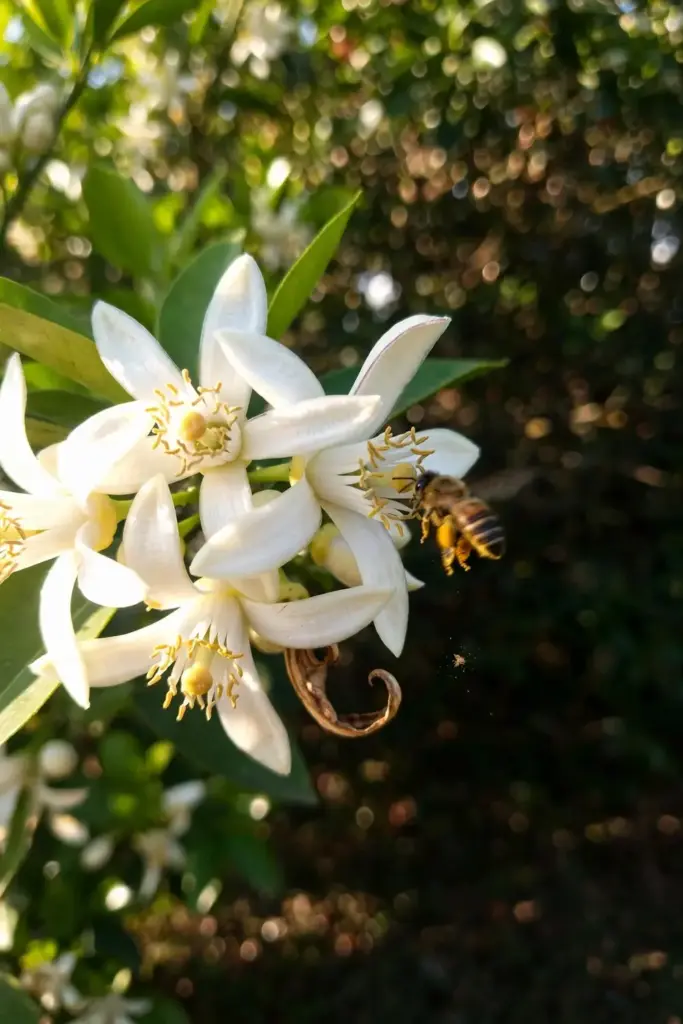
The careful sources say tangelos need cross pollination. Gardening Know How states it plainly: tangelos need to be cross pollinated with another variety or citrus to fruit, and they suggest planting a Temple orange, Fallglo tangerine, or Sunburst tangerine within 60 feet (18 m) of the tangelo. The University of Florida’s extension service goes further on specific cultivars, calling Nova tangelo self-incompatible and requiring compatible pollenizer trees like Temple, Orlando, Lee, or Sunburst for a full crop.
Other sources say the opposite. Harvest to Table writes that most tangelos are self-fertile. A Gardening Know How expert answering a reader question said two tangelos near each other would pollinate each other fine, since another tree around increases pollination either way. And plenty of home growers report single trees fruiting with no partner in sight.
Both sides can be right at once. Self-incompatibility in citrus is real but partial: a Minneola flower pollinated by its own pollen sets little or no fruit, while the same flower dusted with tangerine or sweet orange pollen sets a full crop. Some tangelos, especially Orlando, are more forgiving. And in a neighborhood full of citrus trees, a “single” tangelo may be quietly cross-pollinated by the neighbor’s mandarin two houses down.
The practical answer is to plan for two. Plant a compatible pollinator, a mandarin, tangerine, or sweet orange, within 60 feet, and the question stops mattering. If space is truly tight, choose Orlando and accept a lighter crop, or graft a pollinator branch onto your single tree. Hand pollination with a small brush during bloom is a real fallback, and it works, but it is tedious on a mature tree.
6. Finding and Preparing Tangelo Seeds
Start with a ripe fruit. The seeds inside a fully colored, fragrant tangelo are the freshest and most viable, and fresh citrus seed germinates far better than seed that has sat in a drawer. Cut the fruit, pick out the plump seeds, and rinse off every bit of pulp and juice. Citrus pulp contains compounds that can slow germination, so rinse until the seeds feel clean.
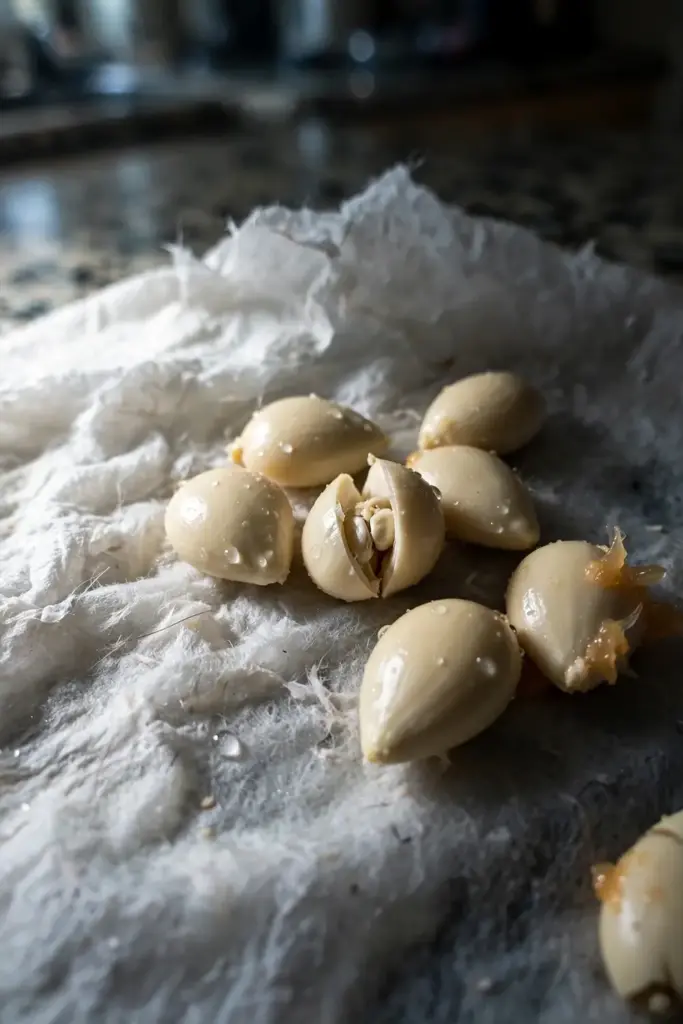
Sow quickly. Citrus seeds lose viability as they dry out, so the standard advice is to plant within a day or two of extraction. If you must wait, keep the seeds in a barely damp paper towel inside a sealed bag in the refrigerator, not the freezer, and plant within a week. A seed that has dried to a hard pebble may still sprout, but the odds drop fast.
An optional warm-water soak helps. Soak the seeds in warm water for up to 24 hours before sowing, which softens the seed coat and wakes the embryo. Change the water once if it gets cloudy. This is the step most seed sellers recommend, and it costs nothing, so there is no reason to skip it.
7. Germinating Tangelo Seeds Step by Step
Fill small pots or a seed tray with a sterile, well-draining seed-starting mix. Citrus seedlings rot in heavy garden soil, so do not skip the bagged mix. If you are following a seed-starting guide, the same warmth and moisture rules apply here.
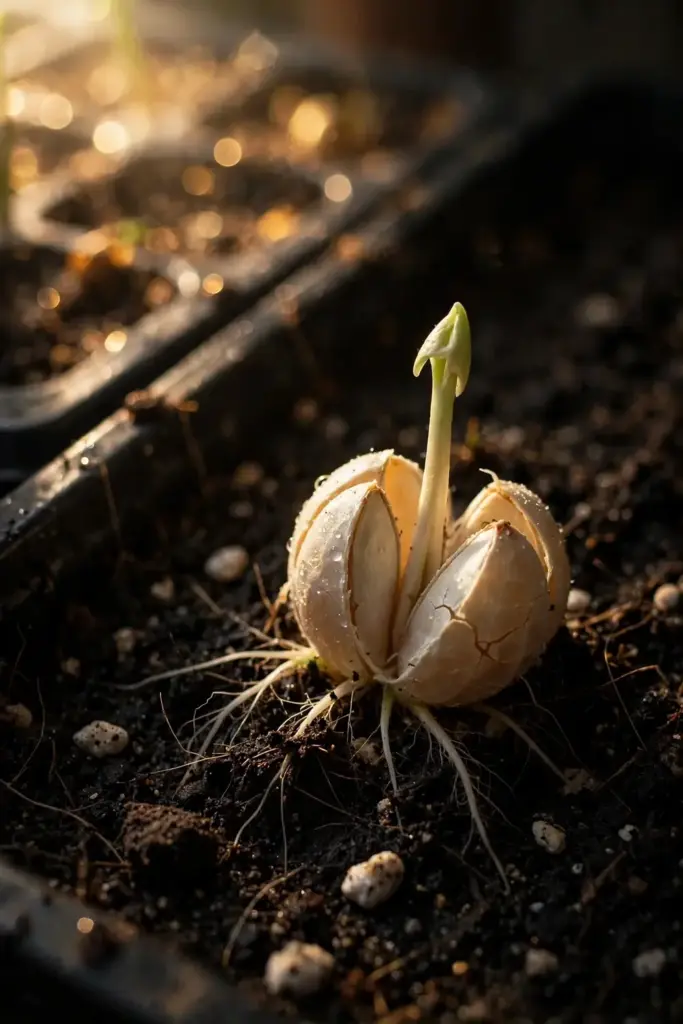
Sow each seed about half an inch deep, one per pot if you have the space. Water gently until the mix is evenly moist, then cover the pots with a clear dome or a plastic bag to hold humidity. Place them somewhere warm: 70 to 85°F is the sweet spot, and a heat mat under the tray is the most reliable way to hold that range in a cool house.
Expect sprouts in 10 to 25 days at warm temperatures, sometimes up to 8 weeks if the seeds are older or the spot is cool. The first thing you see is a sturdy green shoot, often followed by a second, weaker sprout from the same seed. That second sprout is frequently the nucellar clone, so do not thin it away until you know which seedling is strongest. Keep the mix moist but never soggy; a fungicide-free cinnamon dusting on the surface discourages damping off if your setup runs humid.
Once seedlings reach 4 to 6 inches tall with several true leaves, move each to its own 4-inch pot. They are ready for the next stage.
8. Seedling Care: Light, Heat, and Patience
Young tangelo seedlings are tropical babies: they want warmth, bright light, and steady moisture. A sunny south-facing windowsill works, but a simple LED grow light 6 inches above the tops for 12 to 14 hours a day grows stockier, healthier plants. Leggy, pale seedlings are asking for more light, not more fertilizer.
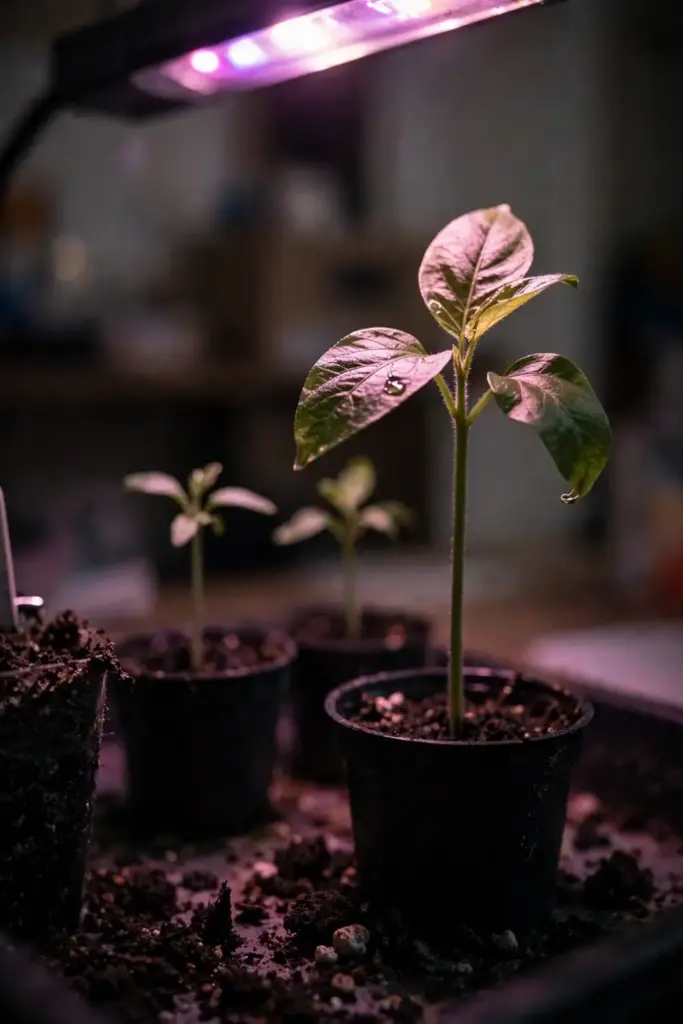
Water when the top half inch of mix dries out, and water thoroughly so it drains from the bottom. Seedlings in small pots dry fast, so check daily in warm weather. Feed lightly once the plants have 4 to 6 true leaves: a half-strength balanced liquid fertilizer every two weeks is plenty. Full-strength citrus fertilizer burns young roots, and burned seedlings stall for weeks.
Pot up as the roots fill the container, roughly every 3 to 4 months in the first year. Each move goes one pot size up, never from a 4-inch pot straight to a 5-gallon bucket, because a huge pot of wet mix rots small roots. By the end of year one, a well-grown seedling stands 12 to 18 inches tall and looks like a proper little tree.
The patience part is real. A seedling tangelo spends its first years building wood, not fruit. Expect no flowers before year 3 at the earliest, and often later. This is the price of the seed route, and it is why grafted trees exist.
9. The Seed Honesty: What Actually Comes True
Time to be precise about the “come true from seed” claim, because it is half true in a way that matters. Citrus seeds are often polyembryonic: one seed can contain several embryos, and all but one of them are nucellar, meaning they grew from the mother’s tissue without fertilization. Nucellar seedlings are genetic copies of the parent tree.
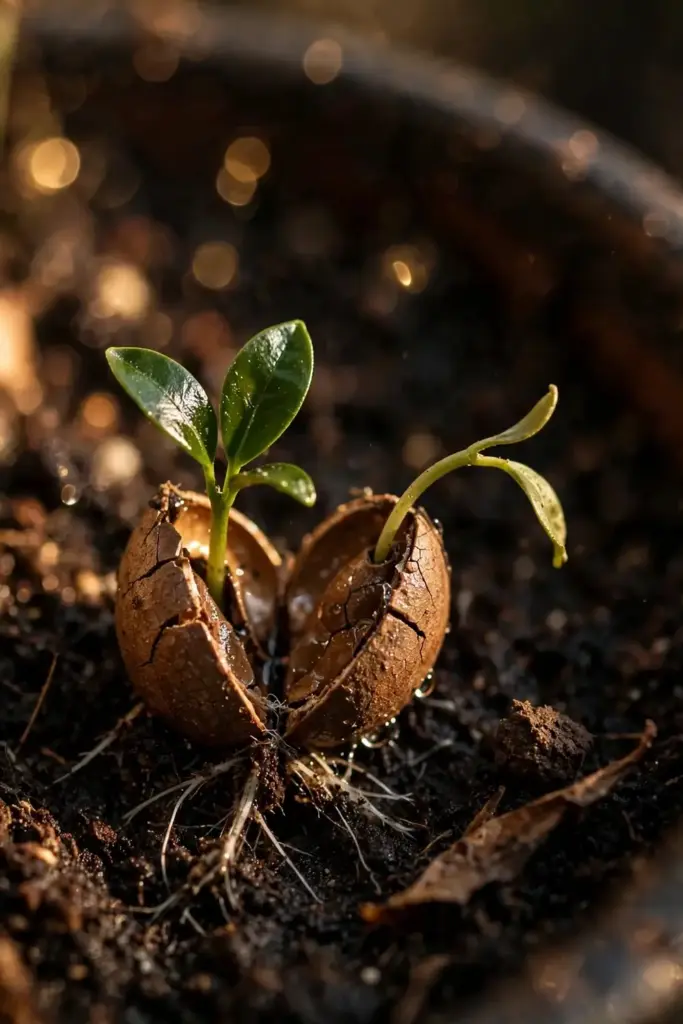
For tangelos, this means a seedling can genuinely grow into a tree that fruits like its parent. But it is not guaranteed. Some seeds produce only the sexual embryo, which is a genetic reshuffle, and its fruit is a surprise. You cannot tell the nucellar seedling from the sexual one by looking, though the nucellar seedlings are usually the more vigorous of the bunch.
Even a true nucellar seedling has a juvenile period. It must grow through several years of vegetative wood before it flowers, while a grafted tree skips juvenility because its budwood came from mature wood. So “comes true” describes the fruit, not the timeline. If you grow from seed, you are signing up for the full wait, and that is fine as long as you know it going in.
10. Grafted vs Seedling: Honest Timelines
| Path | Time to first fruit | Fruit predictability | Cost | Best for |
|---|---|---|---|---|
| Grafted nursery tree | 2 to 3 years | Exact cultivar, guaranteed | $30 to $80+ | Harvest soon, known variety |
| Seedling from fresh seed | 5 to 8+ years | Often true (nucellar), but not certain | Nearly free | Experiment, rootstock, fun |
| Grafted onto your seedling | 2 to 3 years after grafting | Exact cultivar | Scion wood + skill | Growers who learn grafting |
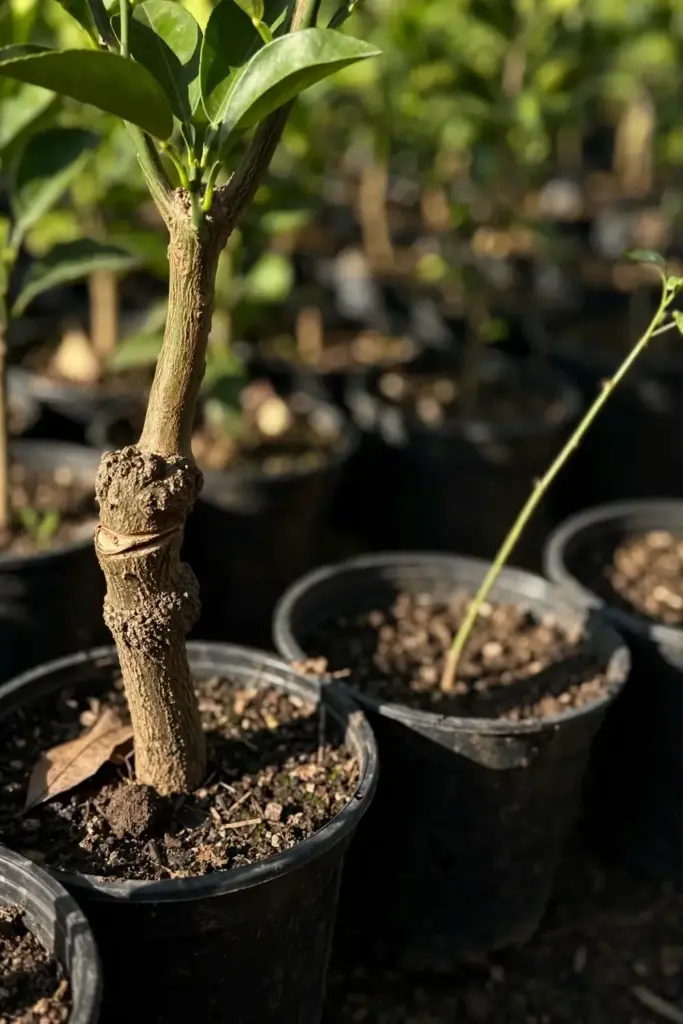
The grafted tree wins on every practical measure except price and the joy of the experiment. Nurseries graft onto rootstocks chosen for your region: trifoliate orange types for cold tolerance, citrange types for vigor, and dwarfing stocks for containers. The rootstock is half the product, and it is the reason a mail-order tree often outperforms a seedling in the same yard.
If you go the seed route and later get impatient, you can always graft. A seedling makes a fine rootstock: grow it to pencil thickness, then top-work a Minneola or Orlando bud onto it. Many citrus hobbyists start this way, and the r/Citrus growers posting their 1.5-year-old seed-grown tangelos are often a graft away from fruit.
11. Site Selection and Spacing
Pick the sunniest, most sheltered spot you have. A south-facing wall that blocks winter wind is ideal, because cold wind strips more heat from a tangelo than still cold air does. Avoid low spots where frost settles on still nights; cold air flows downhill and pools, and a tangelo in a frost pocket suffers while one 20 feet uphill sails through.
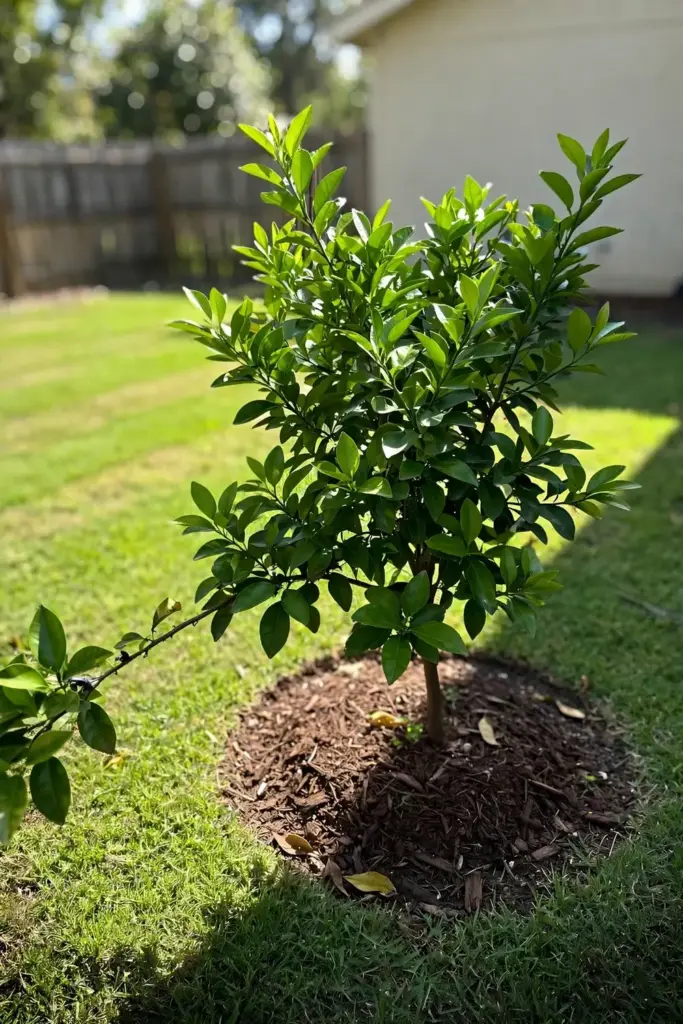
Spacing depends on the setting. In the ground, give the tree 12 to 15 feet of clear space from buildings and other trees, and 15 to 25 feet between multiple citrus trees if you want full canopies. Plants Express suggests 25 feet for orchard-style planting, which is generous but honest for a mature tree. In a home yard, 12 to 15 feet from structures is the practical number, and you can prune to hold a smaller footprint.
Check what is overhead and underground before you dig. Citrus roots are shallow and wide, so keep the tree clear of septic lines and foundations, and keep the canopy clear of power lines. A tangelo at maturity is a 10 to 15 foot evergreen. That is modest for a fruit tree, and it still needs its own airspace.
12. Planting Day: The Graft Union Rule
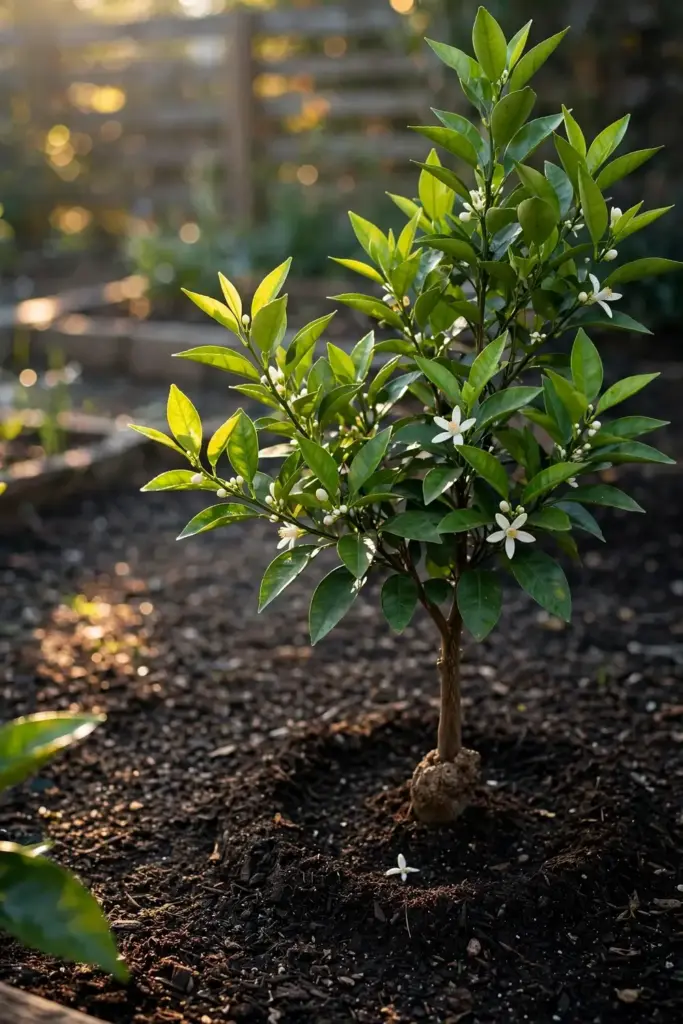
Dig the hole twice as wide as the root ball but no deeper. The single most common planting mistake with citrus is burying the tree too deep, which rots the trunk. Set the tree so the graft union, the knobby scar where the cultivar meets the rootstock, sits 2 to 4 inches above the finished soil line. After the soil settles, the union must still be visible and dry.
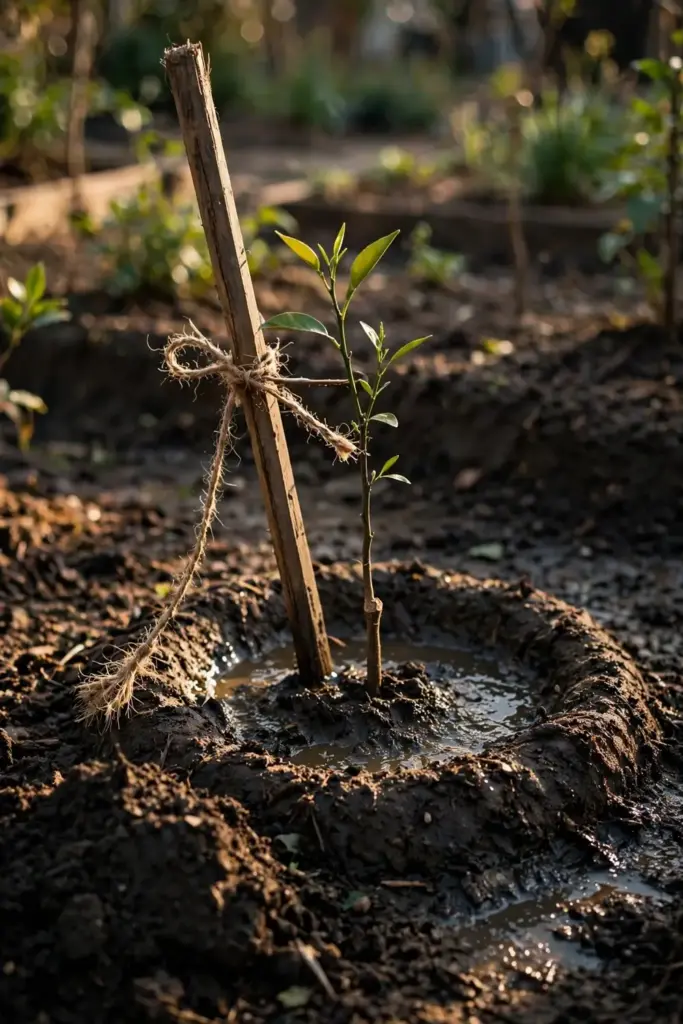
If the soil is heavy clay, plant on a slight mound. A raised mound 6 to 8 inches high and 3 to 4 feet across gives the roots the drainage citrus demands, and it is the standard fix in clay country. Mix compost into the backfill at about a 50/50 ratio with native soil, but do not create a pure compost pit; roots that never leave the rich hole girdle the tree.
Water deeply the moment the tree is in the ground, enough to settle the soil and collapse air pockets. Then build a watering basin, a low ring of soil a foot or two from the trunk, to hold irrigation where the roots are. For the first month, water 2 to 3 times a week in warm weather, then taper to the regular schedule as the tree establishes.
Bare-root trees need one extra step: soak the roots in a bucket of water for 1 to 2 hours before planting, never longer, and keep them shaded and moist until they go in the hole. Container trees just need the pot slipped off and any circling roots teased outward.
13. Watering: Deep and Steady
Tangelos like consistent moisture, not constant wetness. The rule from Gardening Know How is 1 inch of water per week during the growing season for a young tree, which works out to a deep soak 1 to 2 times a week depending on your soil and heat. Sandy soils need it more often; clay holds it longer.
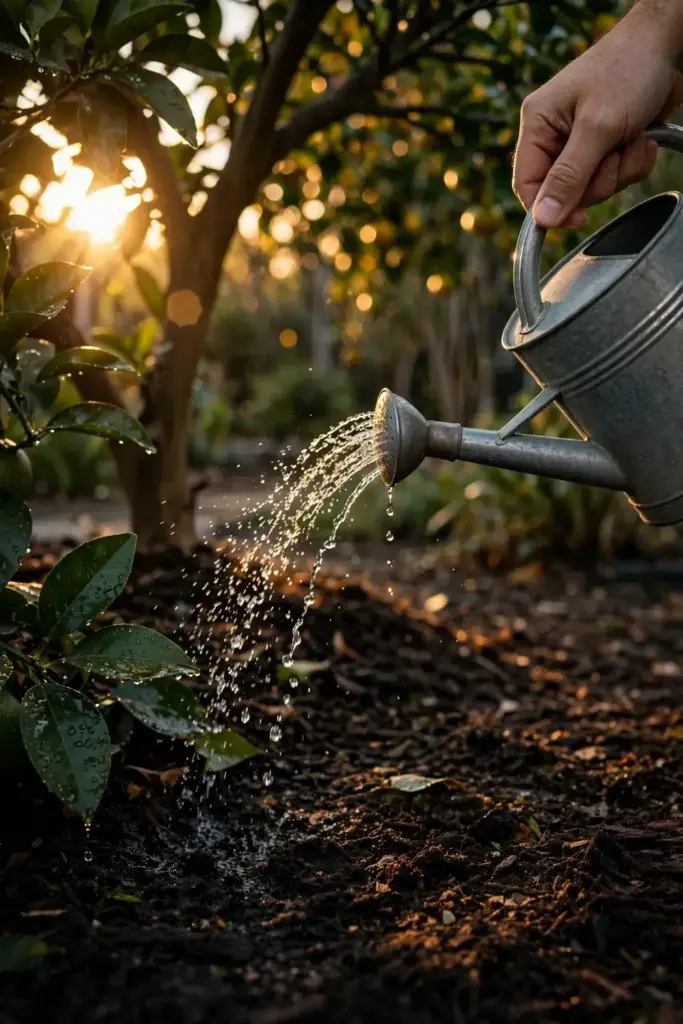
Deep watering trains deep roots. A slow soak that wets the top 18 to 24 inches of soil beats a daily sprinkle that only wets the surface. Surface watering grows surface roots, and surface roots are the first to suffer in a heat wave. If you use drip irrigation, run it long enough to push water down, not just to darken the topsoil.
Keep the base clear. Do not pile mulch against the trunk, and do not let grass or weeds crowd the root zone. Citrus hates wet feet, and anything holding moisture against the bark invites root rot and fungal disease. A ring of mulch 2 to 3 inches deep is fine starting a foot from the trunk, but the trunk itself stays bare and dry.
In winter, cut back. A tangelo in cool weather drinks far less, and overwatering a dormant-ish tree in wet winter soil is a classic way to kill it. Water only when the top few inches dry out, and skip irrigation entirely during rainy spells.
14. Feeding Your Tangelo
Feed when new growth appears. That is the citrus feeding rule in one sentence: the tree tells you when it is hungry by pushing fresh leaves, and you answer with a fertilizer made for citrus. A balanced citrus formula, roughly 2-1-1 or similar, applied according to the label, covers the tree’s needs through the growing season.
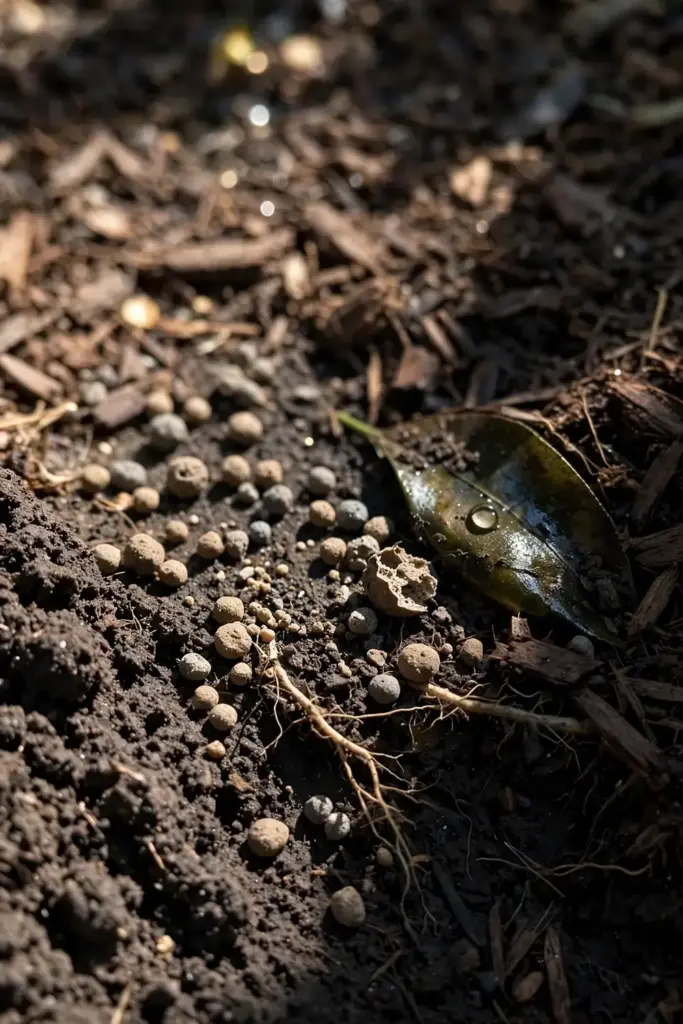
Young trees eat lightly and often. A small tree in its first two years does best with modest doses every 6 to 8 weeks during the growing season rather than one heavy annual feeding. Mature trees take 2 to 3 applications a year: early spring as growth starts, early summer, and a light fall feeding in warm climates. Stop feeding 6 to 8 weeks before your first expected frost so tender new growth hardens off.
Watch the leaves for the two classic deficiencies. Yellowing between green veins on new leaves means iron chlorosis, common in alkaline soil, and it responds to chelated iron or soil acidification. Uniformly pale older leaves usually mean nitrogen shortage, which a regular feeding schedule prevents. A healthy soil foundation makes both problems rarer, because balanced soil biology unlocks nutrients the tree would otherwise miss.
Container trees are hungrier. Nutrients wash out of pots with every watering, so potted tangelos need more frequent feeding through the growing season, at half the label rate to avoid salt buildup. Flush the pot with plain water occasionally to wash accumulated salts out of the mix.
15. Pruning: Less Is More
Tangelos need minimal pruning, which is good news. The natural shape is a rounded canopy, and the tree fruits on the outer growth, so heavy cutting just removes next year’s crop. Prune in late winter or early spring, before the spring flush, when you can see the structure clearly.
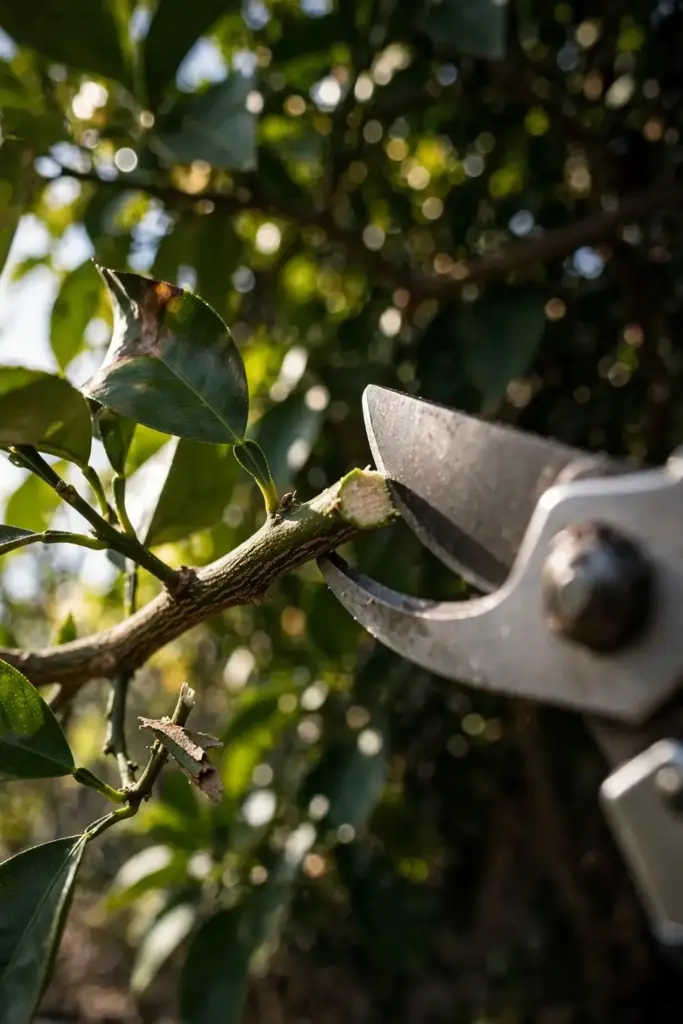
Remove the three Ds first: dead, damaged, and diseased wood. Cut back to healthy tissue, and disinfect your tools between cuts if disease is present. Then remove suckers, the vigorous shoots that sprout from the rootstock below the graft union. Suckers grow fast, steal energy, and fruit as the rootstock, not your tangelo, so rub them off while they are small. The spring pruning technique used for other fruit trees applies here: clean cuts, no stubs, no flush cuts against the trunk.
Open the center lightly for air and light. If branches cross and rub, remove the weaker one. If the canopy is so dense that the interior never dries, thin a few branches to let air move through. Never remove more than a quarter of the canopy in one year; citrus responds to hard pruning with a flush of water sprouts, not fruit.
Shape young trees early. In the first two years, select 3 to 5 well-spaced scaffold branches and remove competing leaders. A tree shaped young needs almost no corrective pruning later, which is the whole point.
16. Pests and Diseases Worth Knowing
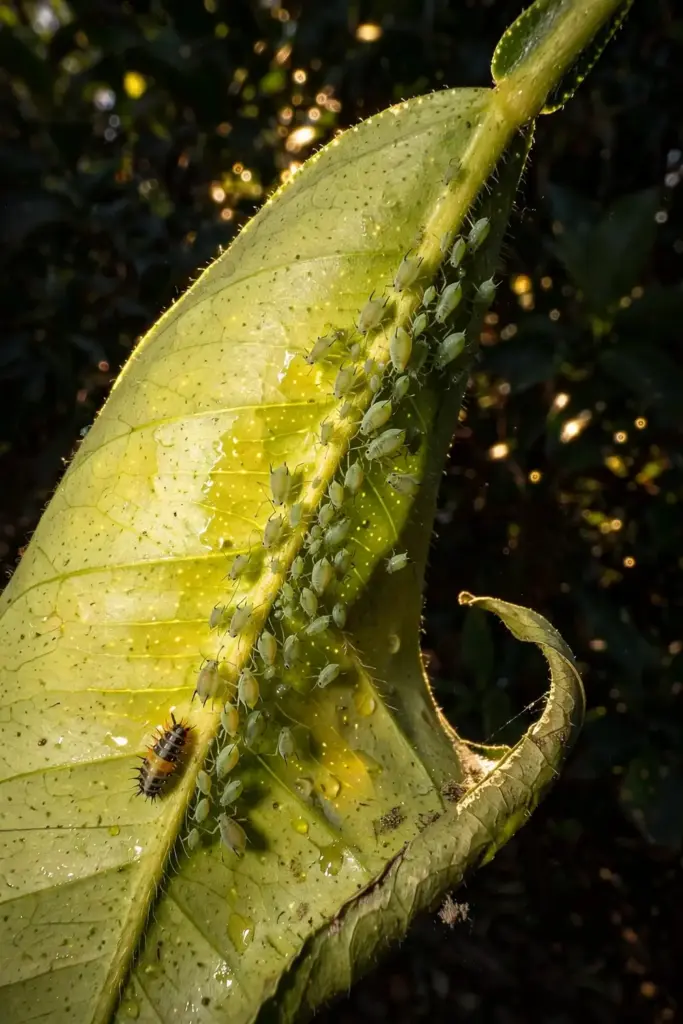
A healthy tangelo shrugs off most problems, but citrus has a few enemies worth recognizing early. The common insect pests are aphids, scale, whiteflies, mites, and fire ants, which farm the aphids for honeydew. Most outbreaks start on the tender new flush. Inspect new growth weekly in spring, and hit aphids and mites with a strong jet of water. Horticultural oil or insecticidal soap handles scale and whitefly, while spinosad works on thrips and caterpillars.
The diseases to know are greasy spot, citrus scab, and melanose, all fungal and all worse in humid climates with poor air circulation. Copper fungicide applied in spring is the standard preventive. Good spacing, morning sun that dries the leaves, and no overhead watering do more than any spray.
Two bigger threats deserve respect. Alternaria brown spot attacks young leaves and fruit of susceptible varieties in wet weather. Citrus greening (HLB), spread by the Asian citrus psyllid, is incurable and fatal; if your region has it, buy certified disease-free trees, control the psyllid, and learn the blotchy-mottle leaf symptom so you can report it. Your local extension service tracks HLB in your county, and their guidance outranks anything on the internet.
Beneficial insects are free labor. Lady beetles, lacewings, and parasitic wasps eat the pests above, and a garden with flowers like dill, borage, thyme, and marigold keeps them around. Spraying broad insecticides kills the helpers first and the pests rebound faster, so reach for the selective options.
17. Growing Tangelos in Pots
A pot is how most cold-climate gardeners grow tangelos, and the tree accepts it gracefully. Start with a container at least 18 to 24 inches across, with large drainage holes. Citrus hates wet feet in the ground and hates it even more in a pot, so drainage is the whole game.
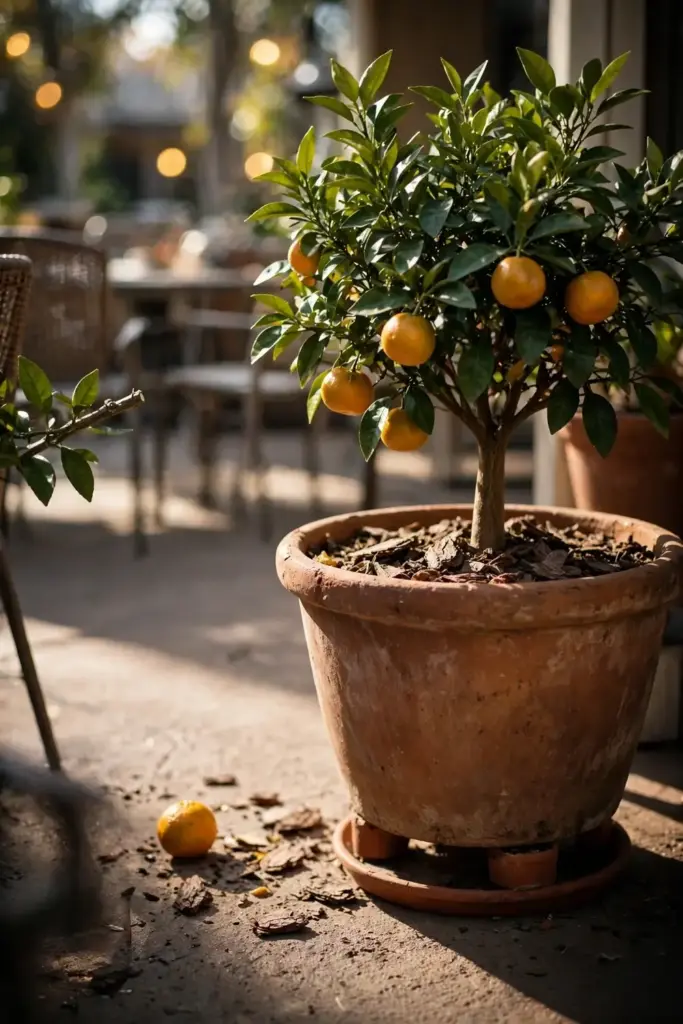
Use a coarse, acidic potting mix, not garden soil and not standard potting soil straight from the bag. A citrus or cactus mix works, or blend regular potting mix half and half with pine bark fines and perlite for the airy structure roots need. The target pH is 6.0 to 7.0, slightly acidic to neutral. A slow-release citrus fertilizer mixed into the top few inches at potting time feeds the tree for months.
Dwarf varieties are the smart pick for containers. A dwarf tangelo on dwarfing rootstock stays 6 to 8 feet tall and fruits in a pot it could never manage at full size. Even a standard variety works for years in a large pot if you prune yearly and repot as needed, but the dwarf starts ahead and stays manageable.
Water potted trees more often than in-ground ones. A pot in full sun can dry out in a day during summer heat, so check the top 2 inches of mix daily and water when dry. Indoors in winter, the tree drinks far less; water only when the top few inches dry, and never let the pot sit in a saucer of water.
18. Overwintering: Bringing the Tree Indoors
Move the pot inside before the first frost, not after. A tangelo that has already been nipped sulks for months, while one brought in early barely notices the change. The trigger is nighttime temperatures approaching the mid-30s; do not wait for a freeze warning.
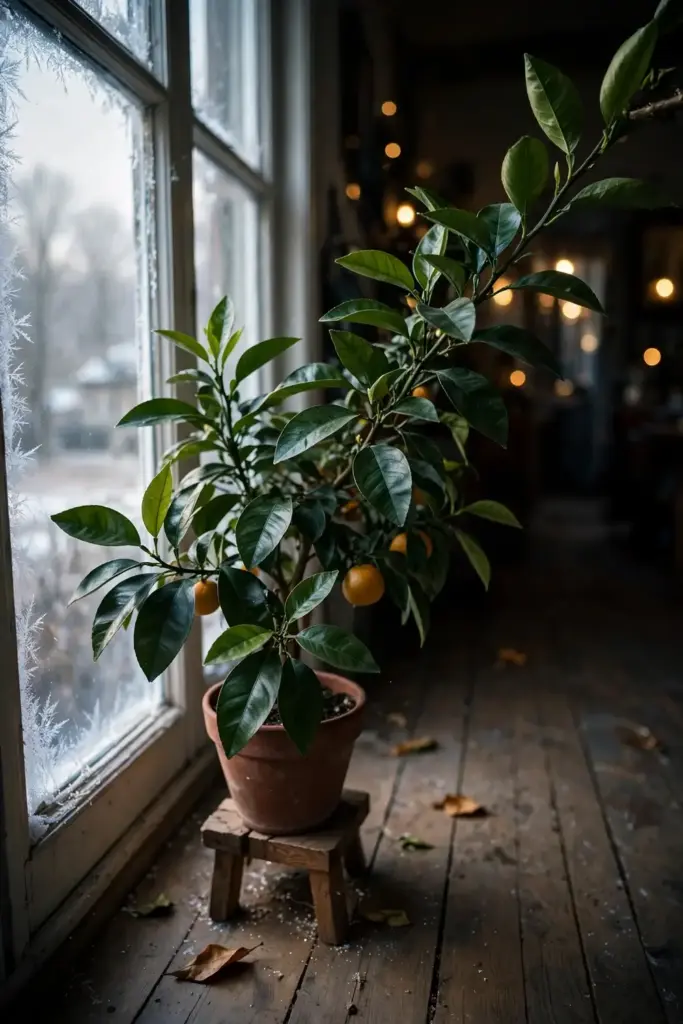
Give it the brightest spot you have. A south-facing window or a grow light for 10 to 12 hours a day keeps the tree healthy through winter. Expect some leaf drop in the first weeks indoors; this is the tree adjusting to lower light, not dying. Keep it away from heating vents, which blast dry air and invite spider mites, and away from cold drafts.
Cut water and stop feeding. An indoor tangelo in winter is barely growing, so water only when the top 2 to 3 inches of mix dry out, and do not fertilize until spring growth resumes. Misting helps with dry indoor air, but a small humidifier near the tree helps more.
In spring, move it back out gradually. A week of hardening off, a few hours of morning sun building to full days, prevents the sunburn and leaf drop of a sudden move. Wait until nights stay above 40°F consistently before the tree sleeps outside again.
19. Regional Notes: Florida, California, Arizona, and Australia
Tangelo advice shifts with the region, because “warm climate” covers a lot of variation. In Florida, humidity and summer rain are the challenge: plant on a mound, space for airflow, and watch for fungal diseases and citrus greening. Southern Florida’s warmth means fruit ripens reliably, but the psyllid pressure is real, so buy certified trees. If you already grow other warm-climate fruit, a tangelo slots into the same care rhythm as mango or guava trees.
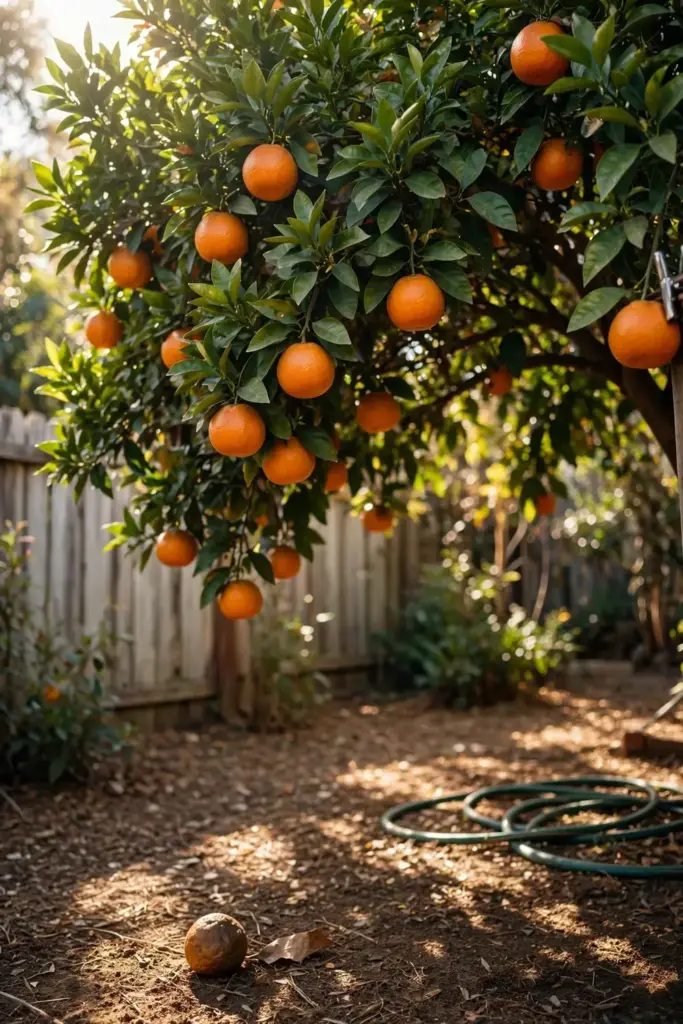
In California, the Mediterranean pattern fits tangelos well: wet winters, dry summers, and deep watering through the dry months. Coastal fog belts give enough chill-free warmth, while inland valleys need summer irrigation discipline. Arizona gardeners deal with extreme heat and alkaline soil; afternoon shade in the first summer, acidified water or soil sulfur, and extra mulch (kept off the trunk) make the difference.
Australia deserves its own note, because the search demand is there. Sydney’s subtropics grow tangelos easily in the ground with standard citrus care. Melbourne is marginal: a sheltered north-facing wall, frost cloth on cold nights, or a large pot that winters under cover. Bunnings and local nurseries stock grafted citrus on rootstocks suited to Australian soils, which beats importing a tree. New Zealand growers in the warm north, where kings.co.nz and similar nurseries operate, follow the same container-first logic as cold-climate Americans.
20. Harvest: When the Fruit Is Ready
Tangelos ripen on the tree, not in the bowl. Pick by color, fragrance, and taste, in that order. The skin turns from green to full deep orange, the fruit smells citrusy-sweet at the stem end, and a sample fruit tastes balanced rather than sharp. Minneola typically ripens December to February; Orlando runs a little earlier.
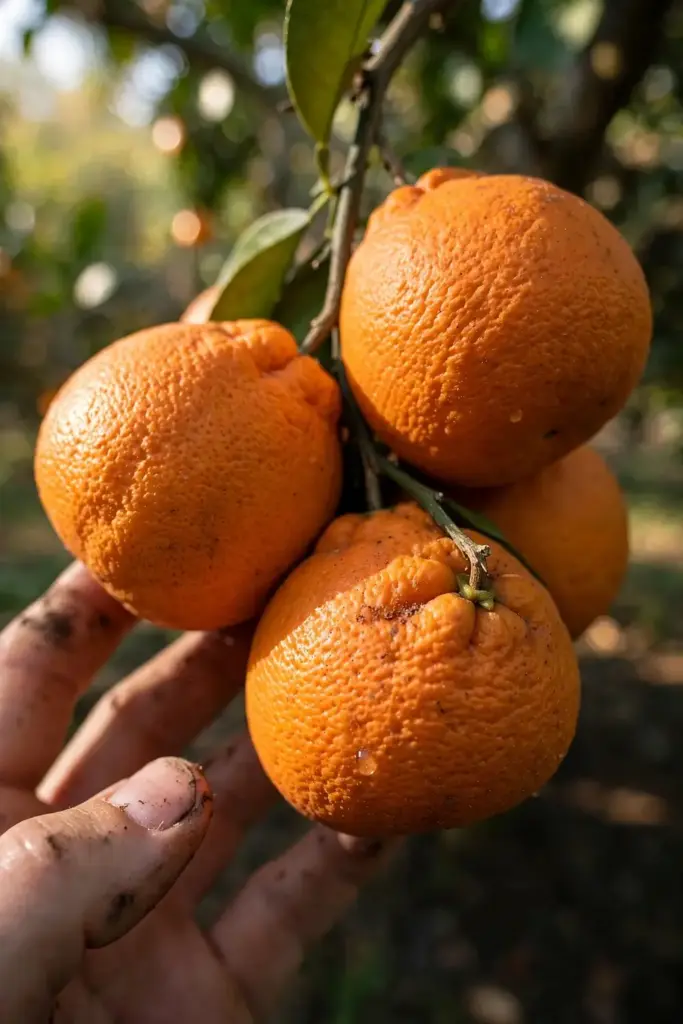
Do not rush the pick. An underripe tangelo never sweetens off the tree, and the difference between “close” and “ready” is a week or two of patience. Taste one fruit a week once color breaks, and harvest the tree in passes as individual fruits ripen rather than stripping it all at once.
Handle the fruit gently. Citrus skin bruises, and bruised fruit rots in storage. Clip the stem rather than pulling, leaving a short nub, which prevents the stem end from puncturing neighboring fruit in the basket. A mature tree in good health can carry a heavy crop; thin over-set fruit in early summer if branches bend alarmingly, because an overloaded tree makes small fruit and skips bearing the next year.
Fresh tangelos keep 2 to 3 weeks at cool room temperature and longer refrigerated. They juice beautifully, segment cleanly for salads, and the zest is as fragrant as any citrus you can grow.
21. Troubleshooting: “My Tangelo Never Fruits”
No fruit on a healthy-looking tree almost always traces to one of five causes. Work through them in order.
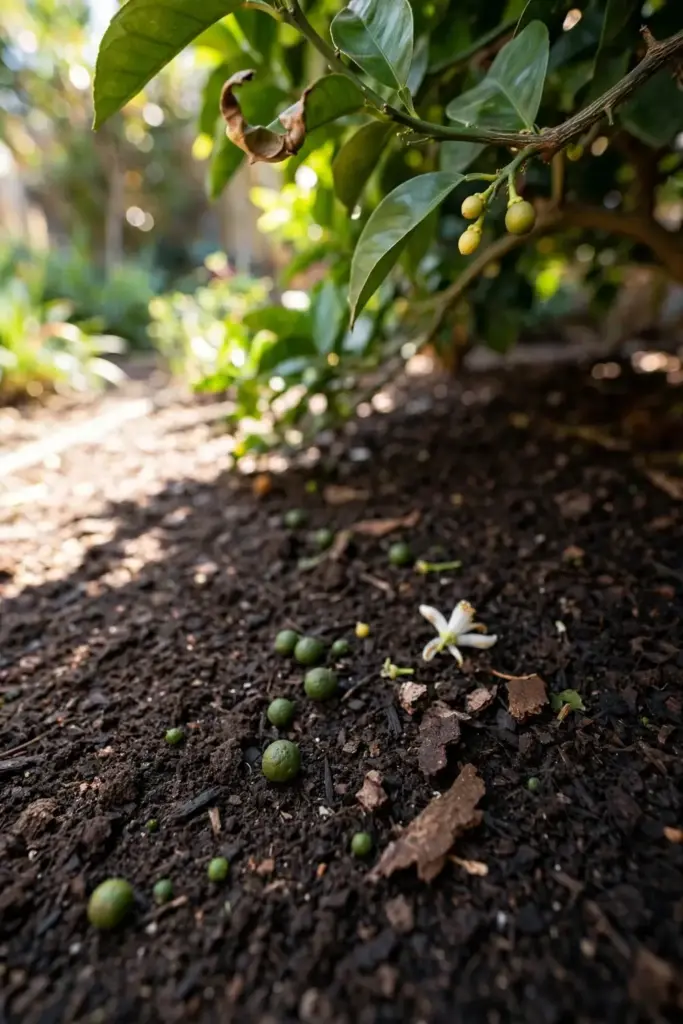
First, age. A seedling under 5 years old is not mature yet, and even a grafted tree can take 2 to 3 years to settle in. If the tree is young, the fix is patience, not fertilizer.
Second, pollination. A lone Minneola with no compatible citrus within 60 feet may bloom spectacularly and set nothing. The fix is a pollinator tree, a grafted pollinator branch, or hand pollination during bloom. Review the pollination section above and be honest about your neighborhood’s citrus.
Third, light. A tree in half shade puts its energy into reaching for light, not into fruit. If the canopy is thin and stretched, the tree needs more sun, and no amount of feeding compensates.
Fourth, nitrogen excess. A tree fed heavily with lawn fertilizer grows soft leafy growth and drops its fruitlets. Switch to a proper citrus fertilizer at label rates, and keep lawn fertilizer away from the root zone.
Fifth, water stress at bloom. A tree that dries out during flowering aborts the fruitlets it cannot support. Deep, consistent watering through bloom and early fruit set prevents the most heartbreaking version of this problem.
Frequently Asked Questions
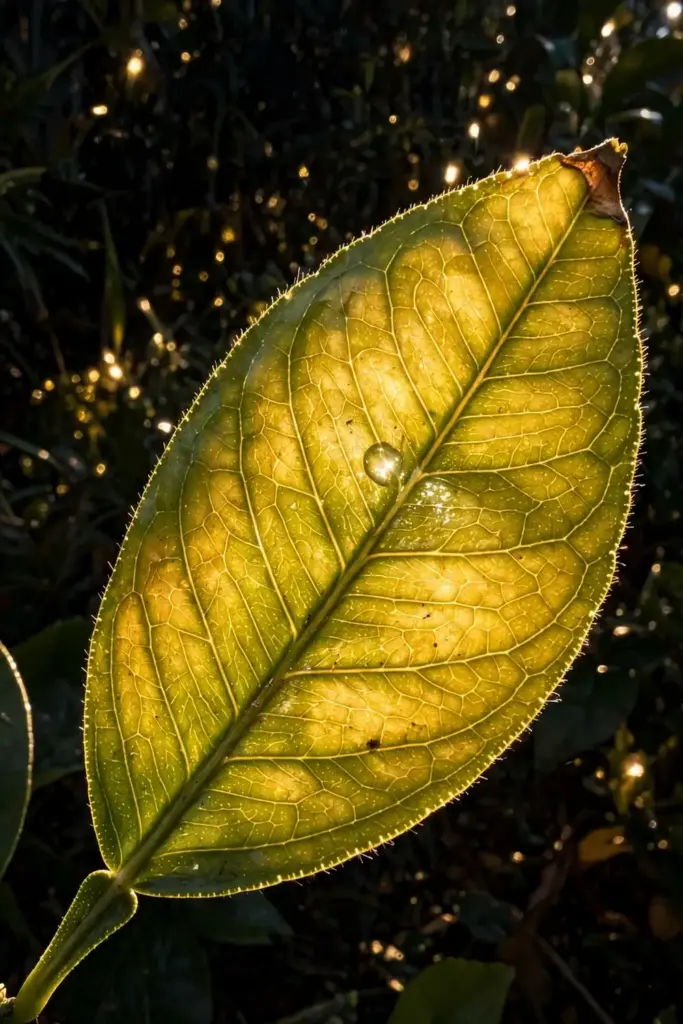
Yes, for a citrus. Tangelos ask for full sun, decent drainage, regular water, and a few feedings a year, which is a modest list as fruit trees go. The fussy parts are frost protection and, for some varieties, pollination. In zones 9 to 11 with a pollinator nearby, a tangelo is one of the lower-maintenance fruit trees you can plant.
A tangerine (or mandarin) and a grapefruit. The classic Minneola tangelo is a cross of ‘Duncan’ grapefruit and ‘Dancy’ mandarin, bred by the USDA in 1931. The tangerine parent contributes easy peeling and sweetness; the grapefruit parent contributes size, juice, and vigor.
A grafted nursery tree typically fruits in 2 to 3 years after planting. A seedling grown from seed takes much longer, often 5 to 8 years or more, because it must grow through its juvenile phase first. Vigorous young grafted trees occasionally fruit in their first year, but 2 to 3 years is the honest expectation.
Often yes, especially for Minneola. Minneola is self-incompatible and needs cross pollination from a compatible citrus, such as a mandarin, tangerine, or sweet orange, within 60 feet (18 m). Orlando is more self-fertile but still fruits heavier with a partner. When in doubt, plant the pollinator.
Yes, and pots are the standard method outside zones 9 to 11. Use a container at least 18 to 24 inches across with a coarse, well-draining citrus mix, choose a dwarf variety if you can find one, and move the pot indoors before the first frost. Potted trees need more frequent watering and feeding than in-ground trees.
They are nutritionally similar. Tangelos match oranges on vitamin C and offer the usual citrus mix of fiber, potassium, and antioxidants, with slightly more sugar in some varieties. Eat the one you like; the health difference between a tangelo and an orange is trivial next to the difference between either and no fruit at all.
Plant It Once, Pick for Decades
A tangelo is a long game played at an easy pace. Give it sun, drainage, and a pollinator, protect it from hard frost, and it pays you back every winter for decades. The seed route teaches patience; the grafted tree teaches planning. Either way, the first time you peel a sun-warmed tangelo you grew yourself, the wait makes sense.