
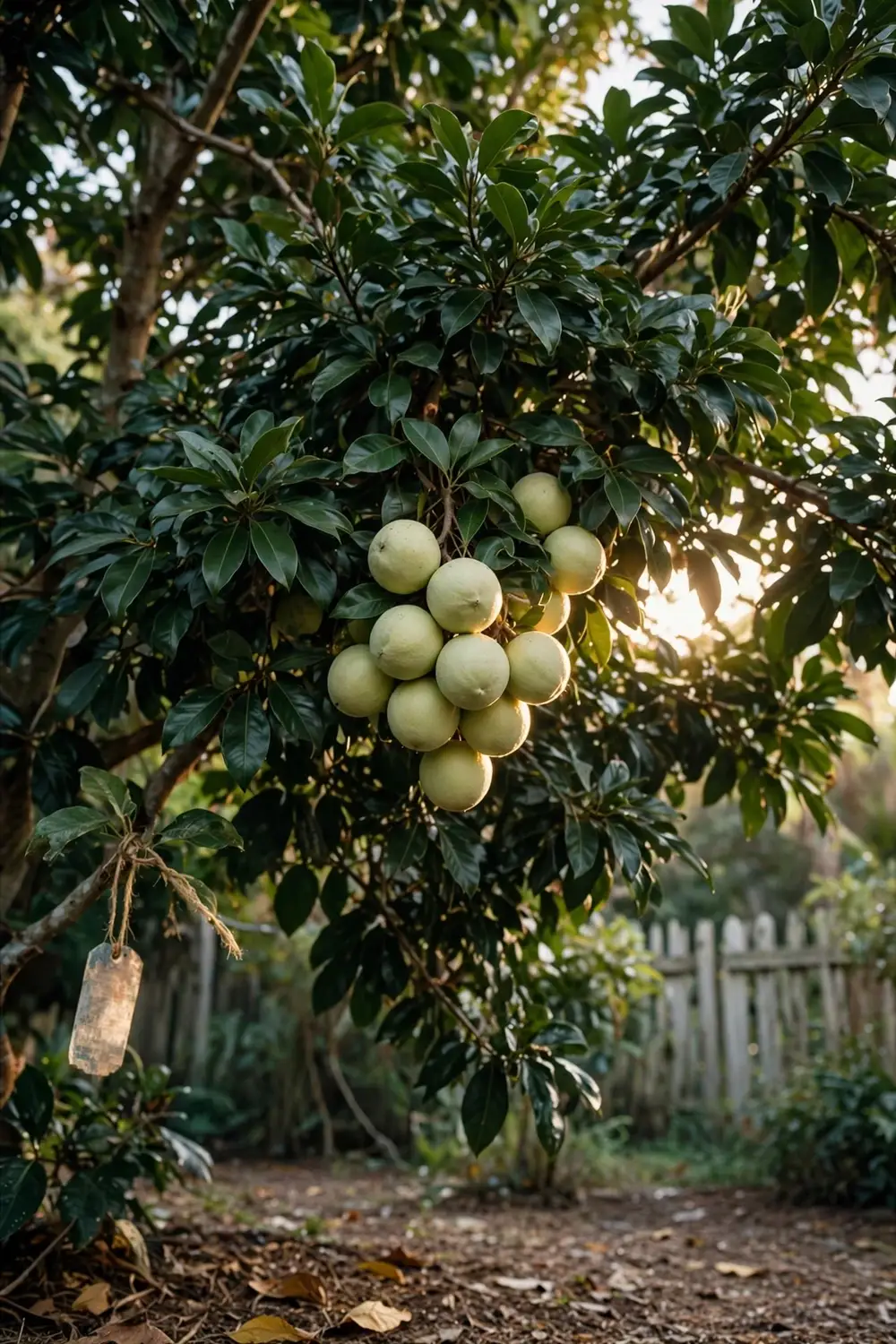

You can grow a white sapote tree from seed, and a fresh seed sprouts in two to four weeks in warm soil. I still find it remarkable that a seed this large wakes up that fast with nothing more than warmth and steady moisture. A grafted tree, on the other hand, puts its first fruit in your hand in about three to five years, while a seed-grown tree can take seven to ten. That split, between the easy satisfaction of germination and the long wait for fruit, is the single most important thing to understand before you start.
The second thing to know is what you are actually growing. White sapote (Casimiroa edulis) is not related to black sapote or mamey sapote, even though the three get mixed up constantly. All three are tropical fruits, but they come from different plant families, grow in different conditions, and behave very differently in a home garden. If you want a grafted tropical tree with a long fruiting season, growing mango from seed or grafted stock follows a similar playbook and is worth a look. For this guide, the lane is white sapote only: a subtropical evergreen that rewards patience with sweet, custard-like fruit you can barely ship and almost never find in stores.
1. What White Sapote Actually Is (And the Two Fruits It Is Not)
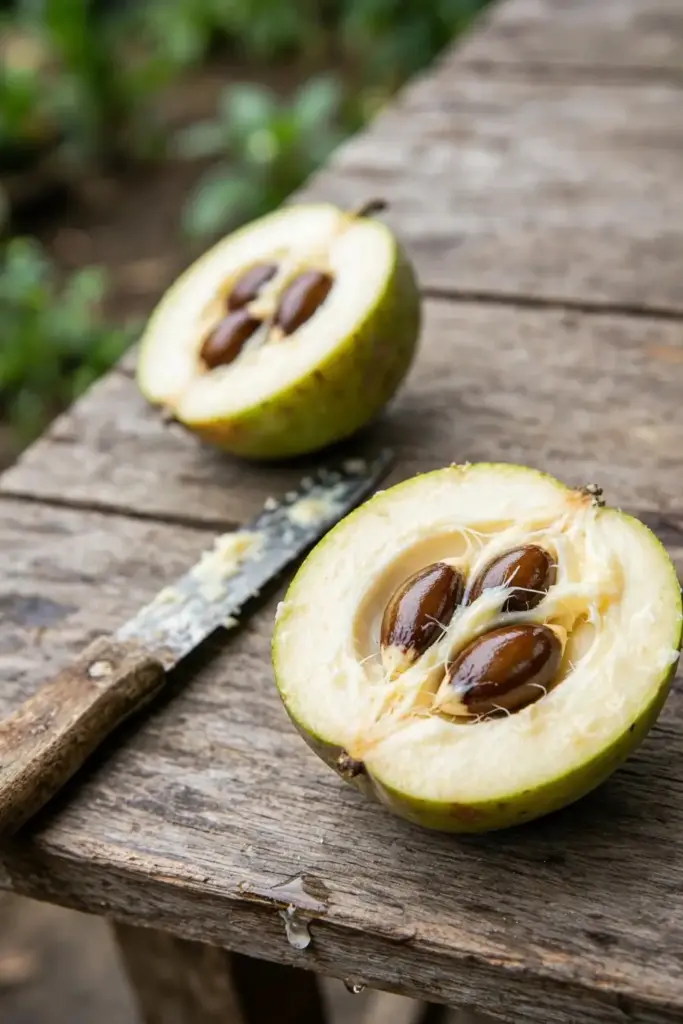
White sapote is a subtropical evergreen tree native to Mexico and Central America. A mature tree can reach 50 feet or more in the ground if you let it, though most home growers keep it at 10 to 15 feet with annual pruning. The fruit is round to oval, greenish to pale yellow when ripe, with creamy flesh that tastes like a blend of banana, pear, and custard. Each fruit holds several large seeds.
The confusion is worth clearing up first, because it affects everything from seed searches to care advice. Black sapote is a persimmon relative, and mamey sapote belongs to the sapodilla family. They are different species with different needs. Here is how they separate.
| Fruit | Species | Family | Notes for a home grower |
|---|---|---|---|
| White sapote | Casimiroa edulis | Rue family | Subtropical, zones 9 to 11, custard-like greenish fruit |
| Black sapote | Diospyros nigra | Ebony family | Persimmon relative, more tropical, chocolate-colored flesh |
| Mamey sapote | Pouteria sapota | Sapodilla family | Large tree, warm tropical only, russet skin with orange flesh |
This article covers white sapote, Casimiroa edulis, and only white sapote. If a care tip says “sapote” without a qualifier, check which species the source means before applying it to your tree.
2. The Quick Facts at a Glance
| Fact | Value |
|---|---|
| Latin name | Casimiroa edulis |
| USDA zones | 9 to 11 outdoors; containers in zones 7 to 8 |
| Sun | 6 to 8 hours direct sun; partial shade in the hottest climates |
| Soil | Sandy loam preferred, pH 5.6 to 7.8; tolerates others if well-drained |
| Spacing | 15 to 20 feet apart; 10 feet from buildings |
| Water | Deep twice weekly for the first two years, then weekly in dry summers |
| Fertilizer | 3 times per year: early spring, mid-summer, early autumn |
| Fruit timeline | 3 to 5 years grafted; 7 to 10 years from seed |
| Harvest season | Late summer to fall, 6 to 9 months after flowering |
3. Where White Sapote Grows Best: Zones and Frost Limits
White sapote is a subtropical tree, not a tropical one, and that distinction works in its favor. It grows outdoors year-round in USDA zones 9 to 11, covering southern Florida, much of coastal California, southern Texas, southern Arizona, and Hawaii. An established tree survives short frosts down to about 22 to 23 degrees Fahrenheit, which is cold tolerance that many tropical fruit trees cannot claim.
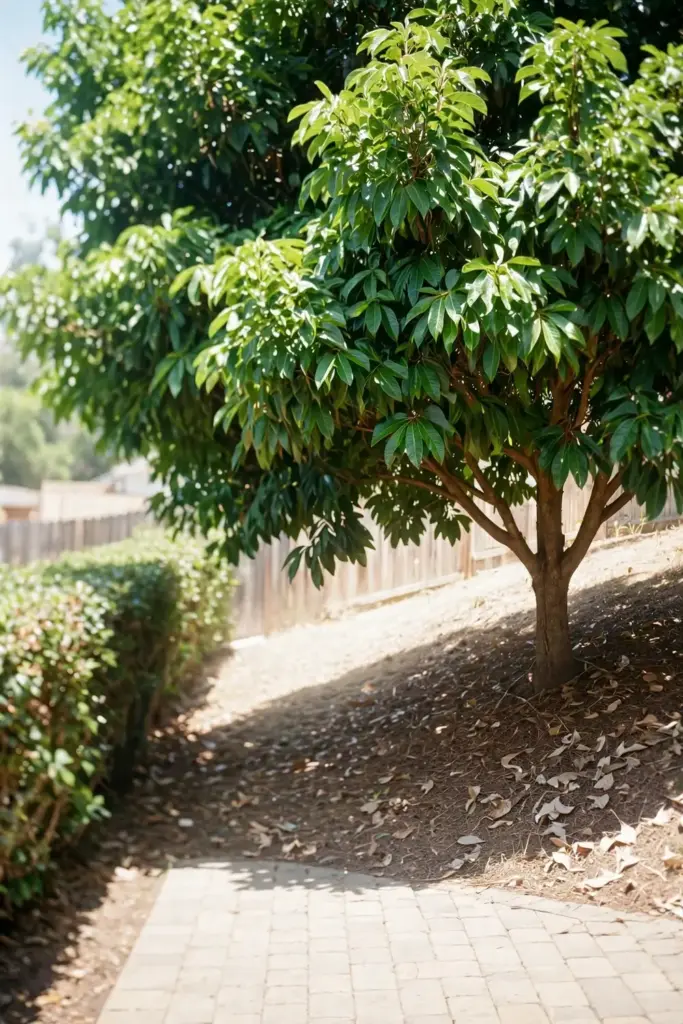
Young trees are the exception. Anything under two years old is cold-sensitive, and a hard freeze can kill a young sapote outright. If you are in zone 9 with regular winter freezes, plan frost protection from the first season. Gardeners in zones 7 to 8 are not excluded; they grow white sapote in large containers and move the trees to shelter for the cold months.
Sun matters as much as cold. White sapote wants six to eight hours of direct sun daily. In hot inland climates, a bit of afternoon shade is welcome and prevents leaf scorch. White sapote is not among the fruits that will crop in shade, though; it still wants strong morning light. In milder coastal climates, full sun all day is ideal. A south- or west-facing slope gives you extra warmth and frost drainage, and a windbreak on the exposed side keeps new growth from getting battered.
4. Getting Fresh Seeds That Actually Sprout
Fresh seeds germinate fast. Seeds pulled from a ripe fruit and planted within days sprout in two to four weeks in warm soil. Seeds that have dried out, sat on a shelf, or been stored for months germinate slowly and unevenly, or not at all. If you are buying seeds, ask when they were extracted. Etsy listings and seed swaps move white sapote seeds regularly, but freshness varies wildly.
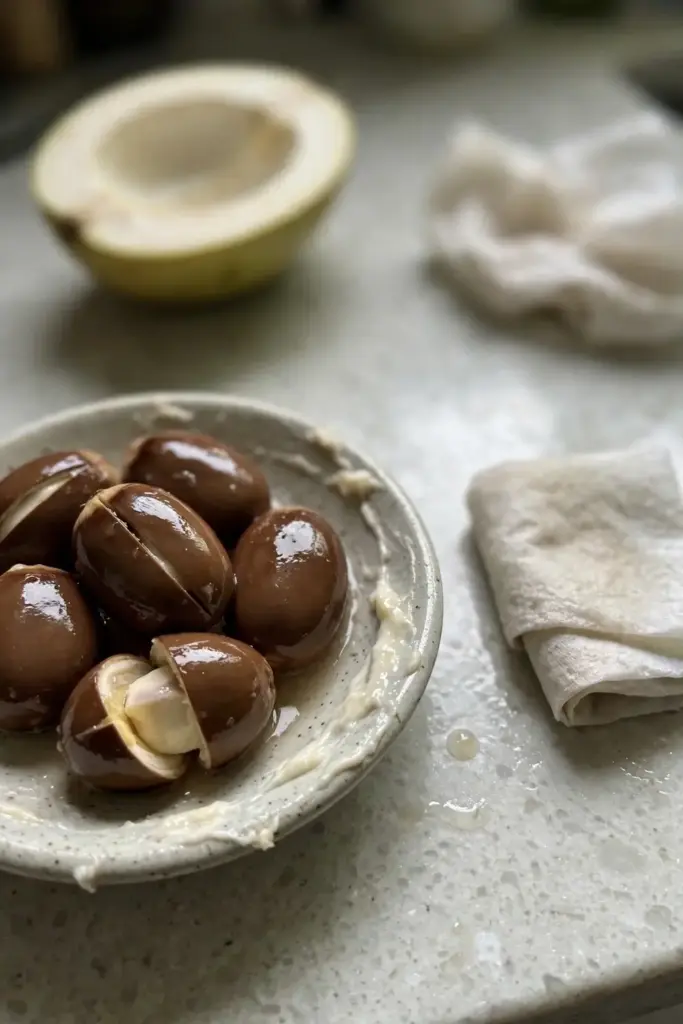
The best source is a fruit you ate yourself. White sapote fruit is fragile and rarely ships, so the most reliable way to get fresh seed is to find a tree, buy fruit from a local nursery or a farmers market in California or Florida, or ask a neighbor with a Suebelle. Each fruit typically holds three to five large seeds, so one fruit gives you several chances.
Do not refrigerate the seeds for storage. Unlike temperate fruit seeds, white sapote seeds do not need cold stratification and lose viability if they dry out completely or chill for long. Keep them moist and warm between extraction and planting, wrapped in a damp paper towel inside a plastic bag for no more than a day or two.
5. Preparing Seeds for Germination
Start with a 24-hour soak. Drop the seeds in room-temperature water for a full day before planting. This softens the coat and wakes up the embryo. Growers at greg.app recommend this soak as the first step, and it is the cheapest insurance you can buy for even germination.
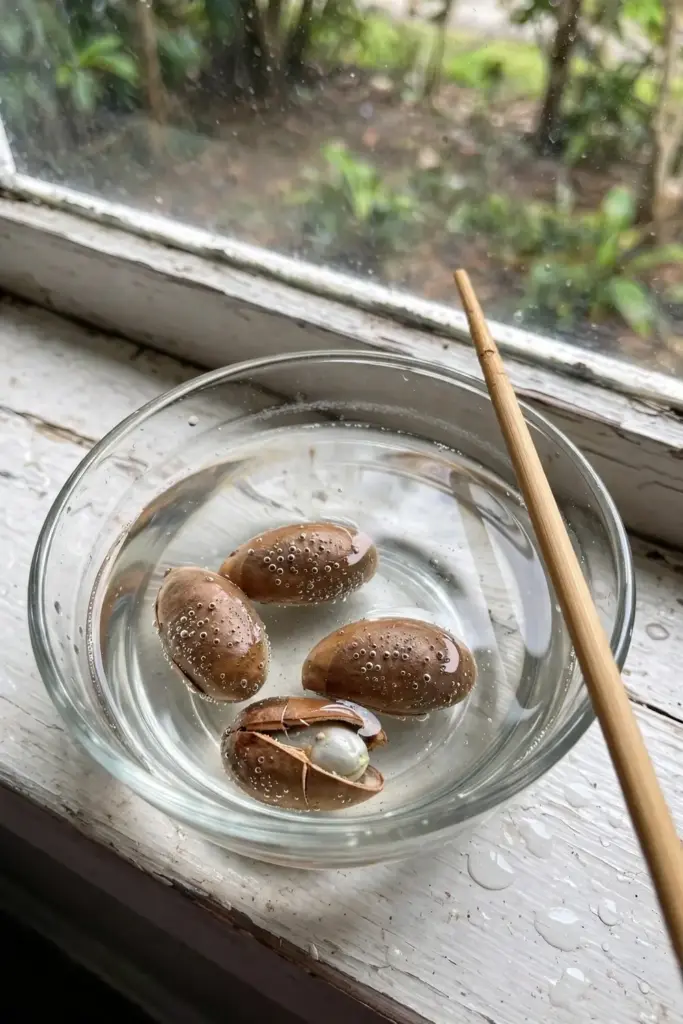
The seed coat is thick. A YouTube demonstration by TheKiwiGrower showed that removing the outer husk speeds up sprouting, because the embryo no longer has to push through the hard shell. You can nick or peel the husk carefully with your fingers after soaking. Work gently; the embryo inside is brittle, and a cracked kernel is a dead seed. If the husk resists, plant it whole instead. A whole seed takes a little longer but germinates reliably when fresh.
After soaking, skip any drying step. White sapote seeds go straight from the soak to the planting mix. Letting them dry at this stage does more harm than good, because the embryo is already active.
6. The Germination Method That Works
Use small pots filled with a loose, moisture-retentive mix. Australian grower whitesapote.com.au recommends peat moss, perlite, and vermiculite, with the seed planted one inch deep. That combination drains freely while holding enough moisture to keep the seed active. A standard peat-based seedling mix with extra perlite works just as well.
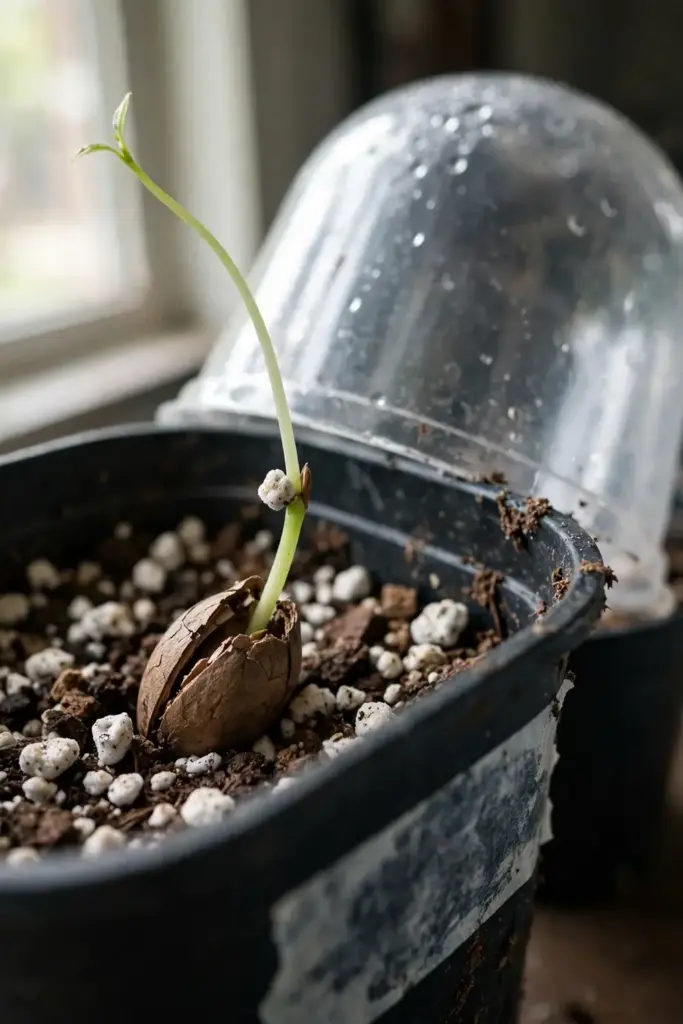
Plant one seed per pot. White sapote seedlings grow fast and produce a deep taproot early, so small communal trays are a poor choice. A three- to four-inch nursery pot gives each seedling room to develop. Cover the seed with one inch of mix, water thoroughly, and place the pots somewhere warm. Bottom heat helps; germination is fastest around 75 to 85 degrees Fahrenheit.
Expect sprouts in two to four weeks from fresh seeds. If nothing appears by six weeks, check whether the mix stayed consistently moist. Dried-out seeds stall. A clear plastic dome or a loose plastic bag over the pot holds humidity and steadies the moisture, but ventilate it daily to stop mold. Remove the cover as soon as seedlings emerge.
7. Raising Your Seedlings
New seedlings need bright, indirect light at first. Direct afternoon sun scorches tender new leaves, so a spot with morning sun and afternoon shade is ideal for the first month. Move them into stronger light gradually. By the second month they can handle full sun in mild climates.
Water consistently. Keep the mix evenly moist but never waterlogged. White sapote tolerates many soils, but seedlings in soggy mix rot fast. Let the top half inch dry between waterings, then water deeply enough that it runs from the drainage holes.
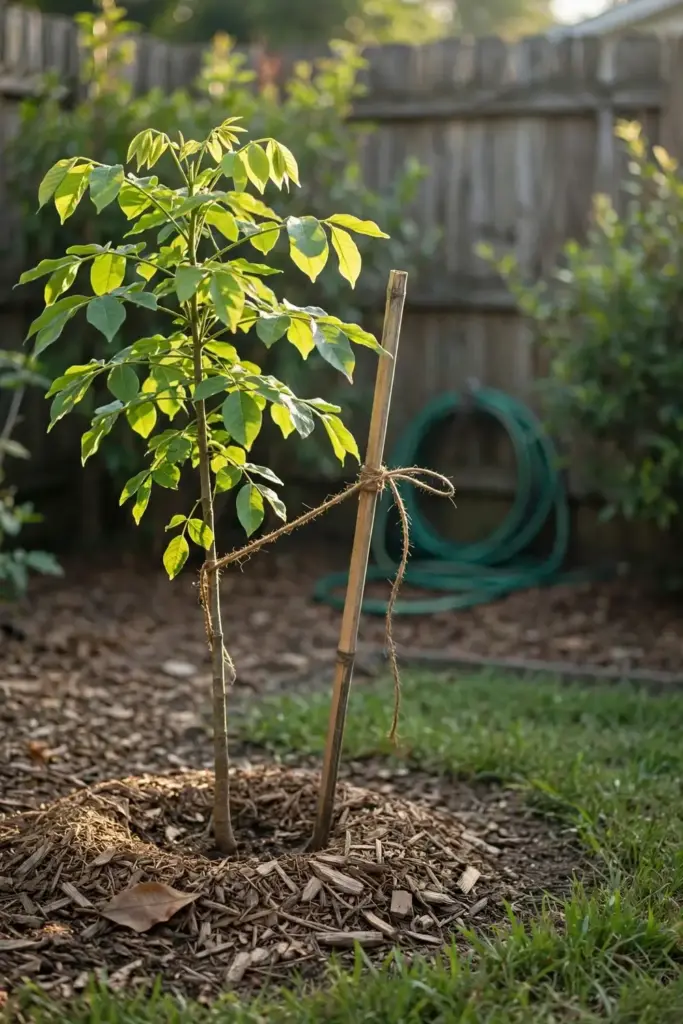
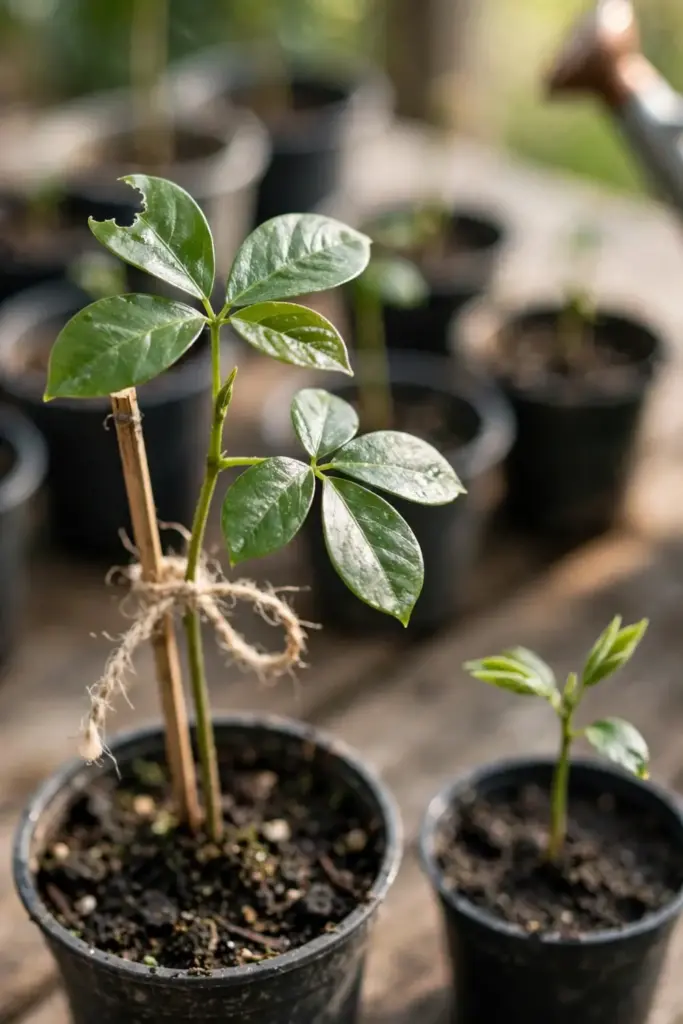
Stake early. White sapote seedlings grow fast and lanky, and wind bends them easily. A thin bamboo stake and a soft tie keeps the stem straight while it hardens. Australian growers who raise white sapote from seed specifically warn about wind damage to unstaked seedlings. Shelter young seedlings from strong wind altogether for the first season if you can.
Do not rush fertilizer. A seedling carries enough energy in the seed for the first weeks. The rhythm of warmth and steady moisture is the same one that makes growing papaya from seed in under a year work so well. Once two sets of true leaves appear, start a half-strength liquid fertilizer every two to three weeks. Full-strength fertilizer on a seedling burns roots and sets it back.
8. The Big Decision: Grafted Tree or Grown-from-Seed
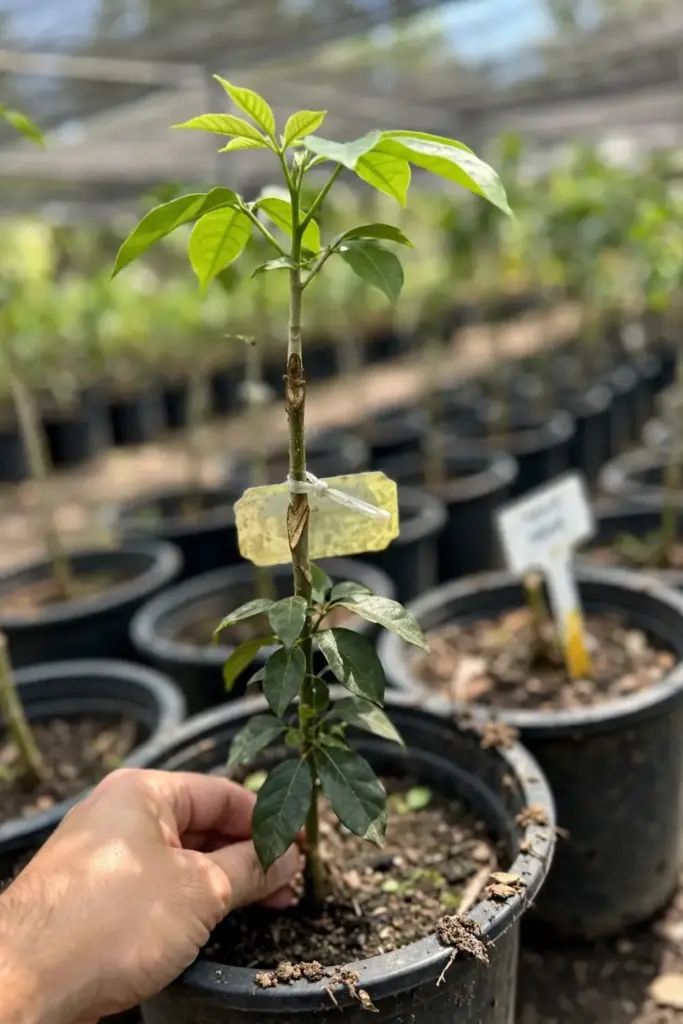
This is the central decision of the whole article, and the one competitors handle worst. Here is the honest version. White sapote varieties do not come true to seed. The University of Florida’s extension publication on white sapote states this plainly: named cultivars must be grafted or budded onto seedling rootstock if you want the named variety. A seed from a Suebelle fruit does not grow into a Suebelle tree. It grows into an unknown seedling that may produce mediocre fruit, excellent fruit, or nothing worth keeping.
| Option | Years to first fruit | Cost | Fruit quality | Size control |
|---|---|---|---|---|
| Grafted tree from a nursery | 3 to 5 | Higher upfront | Known: the named cultivar | Manageable: 10 to 15 ft with pruning |
| Seed-grown tree | 7 to 10, sometimes more | Almost free | Unknown: seedling roulette | Wild: can exceed 50 ft |
Everglades Farm, which sells white sapote trees, goes further and says the fruit “doesn’t grow properly from seeds,” recommending grafting or air layering instead. That is a nursery with a financial interest in selling trees, so read it as strong caution rather than absolute law. Plenty of home growers have raised seedlings that fruited. But the variability is real, and seven to ten years is a long time to wait for fruit that might disappoint.
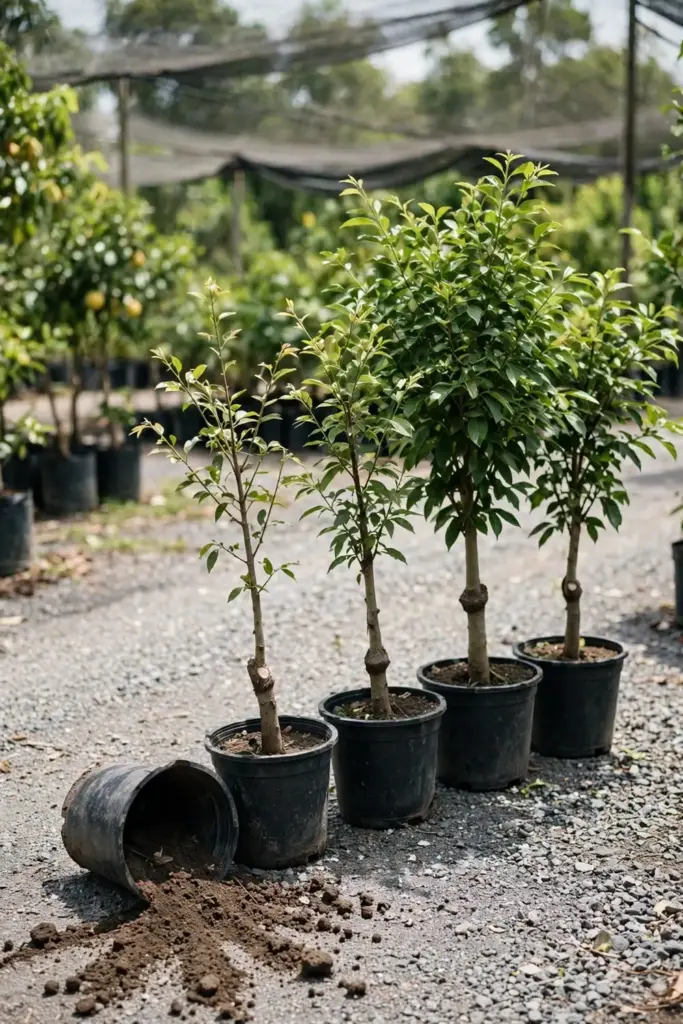
The practical route most experienced growers take: start seeds for the joy and the learning, and buy a grafted tree for the fruit. A grafted Suebelle in a container can fruit within four years, while your seedlings are still growing up. If a seedling eventually produces excellent fruit, you have discovered your own cultivar. If not, it still makes a fine grafting rootstock or a shade tree. That framing turns the long seedling timeline from a frustration into a bonus project.
Seedling rootstock serves a second purpose. If you want to learn grafting later, your seed-grown trees are the perfect rootstock. Chip budding and veneer grafting in the warm season are the methods the Florida extension recommends, and practicing on your own seedlings costs nothing.
9. Cultivar Picks: Suebelle, Vernon, Wilson, and the Rest
Not all white sapotes are equal, and the cultivar name is what you are buying when you buy a grafted tree. Suebelle is the default recommendation for most home gardeners. It is self-fertile, fruits over a long season, and adapts to containers better than most cultivars. If you can only plant one tree, plant a grafted Suebelle.
| Cultivar | Fertility | Why growers pick it |
|---|---|---|
| Suebelle | Self-fertile | The standard home cultivar: long season, container-friendly, widely available |
| Vernon | Needs a partner | Good fruit quality, common in Florida nurseries |
| Wilson | Needs a partner | Reliable producer where it is sold |
| Pike | Needs a partner | Older cultivar, still planted in California |
| McDill | Needs a partner | Sold by several online nurseries; Kenyan and East African growers stock it |
| Dade | Needs a partner | A Florida selection with loyal growers |
Availability is regional. Florida nurseries carry Vernon, Wilson, McDill, and Dade. California growers more often see Pike and Suebelle. Online nurseries ship bare-root or potted grafted trees in the planting season, but a grafted tree costs real money, often several times the price of a seedling. Buy from a nursery that names the cultivar. A tree sold as “white sapote” with no cultivar name is almost certainly a seedling, whatever the seller implies.
10. Pollination: What the Sources Disagree About
Pollination is the one topic where the sources genuinely disagree, so here is the honest state of it. Several nursery pages describe Suebelle as self-fertile: one tree sets fruit on its own. PlotMyGarden, writing for home gardeners, warns the opposite: most white sapote varieties are not reliably self-fertile, and planting two grafted cultivars gives you cross-pollination insurance.
Both statements can be true at once. A single Suebelle usually sets fruit, but heavier and more consistent crops come with a second compatible cultivar nearby. If you have room for two trees, plant two different grafted cultivars and you get both the insurance and a longer harvest window. If you only have room for one, Suebelle is the cultivar to plant, and you will still get fruit.
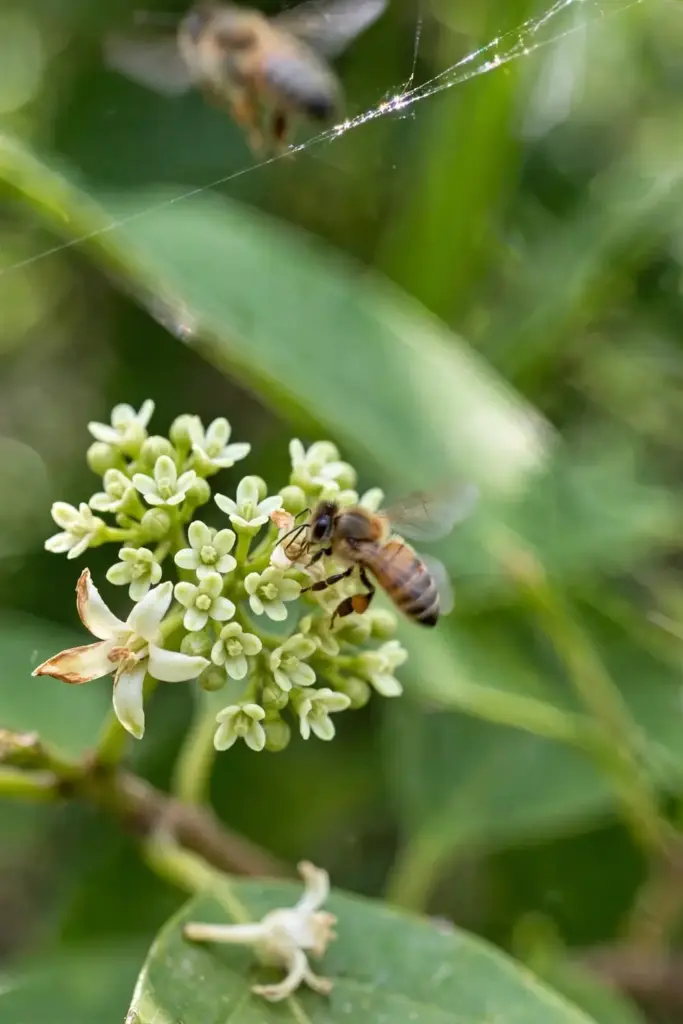
Bees and other insects do the pollination work. White sapote flowers are small and inconspicuous. Pollinators find them anyway. Avoid spraying insecticides during bloom. A garden that welcomes pollinators fruits better across every species, not just this one.
11. Choosing and Preparing the Site
White sapote tolerates almost any soil as long as it drains. Sandy loam with a pH between 5.6 and 7.8 is ideal, and the tree handles the pH range documented by California Rare Fruit Growers growers too. Waterlogged ground is the one dealbreaker. Roots that sit in standing water rot, and a drowned sapote dies fast.
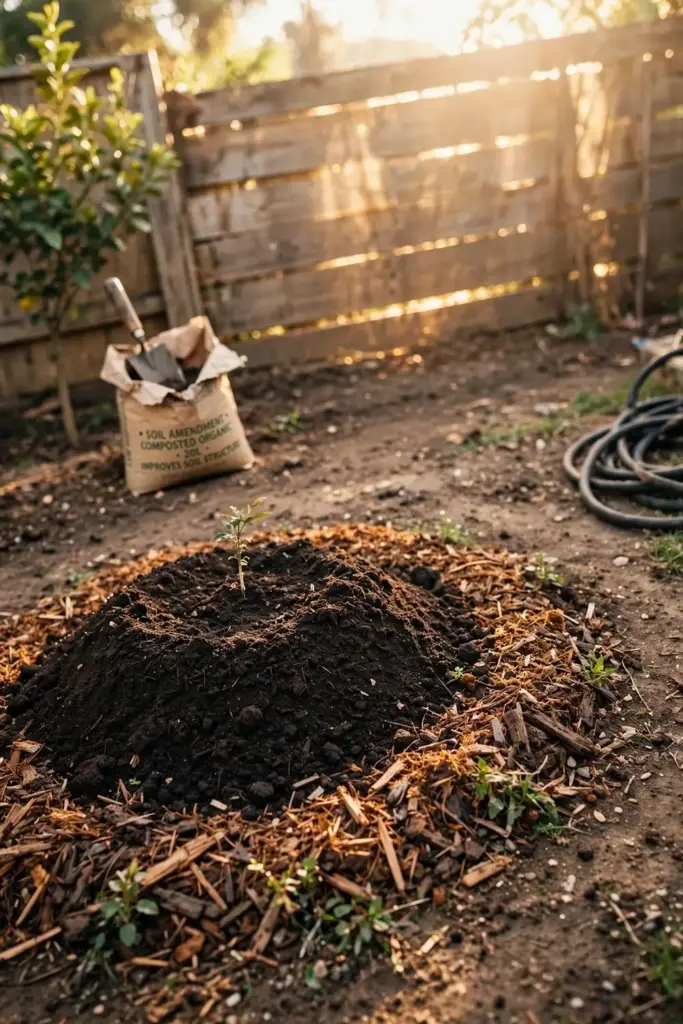
Space trees 15 to 20 feet apart. Mature trees spread wide, and crowded canopies shade out their own lower fruit. Keep 10 feet clear of buildings, fences, and other trees. In heavy clay, plant on a raised mound to lift the root ball above the wet zone. A mound 12 to 18 inches high and three feet wide solves drainage for most problem sites.
Clear a grass-free zone two to five feet around the planting spot. Lawn grass steals water and fertilizer from young trees, and string trimmers wound trunks. Wood-chip mulch does the job of weed suppression and moisture retention without the competition. The tree appreciates a site sheltered from strong wind, especially when young, because new growth is brittle and snaps in gusts.
Good soil health repays every fruit tree you plant, and white sapote is no exception. If your soil is compacted or lifeless, work in organic matter before planting rather than after. A deep, organically rich planting area carries a young tree through its first two years far better than a small hole in hard ground.
12. Planting Your Tree
Plant in late winter or early spring, after the risk of hard frost has passed. That timing gives the tree a full warm season to establish roots before winter. In frost-free climates, any time except the coldest weeks works.
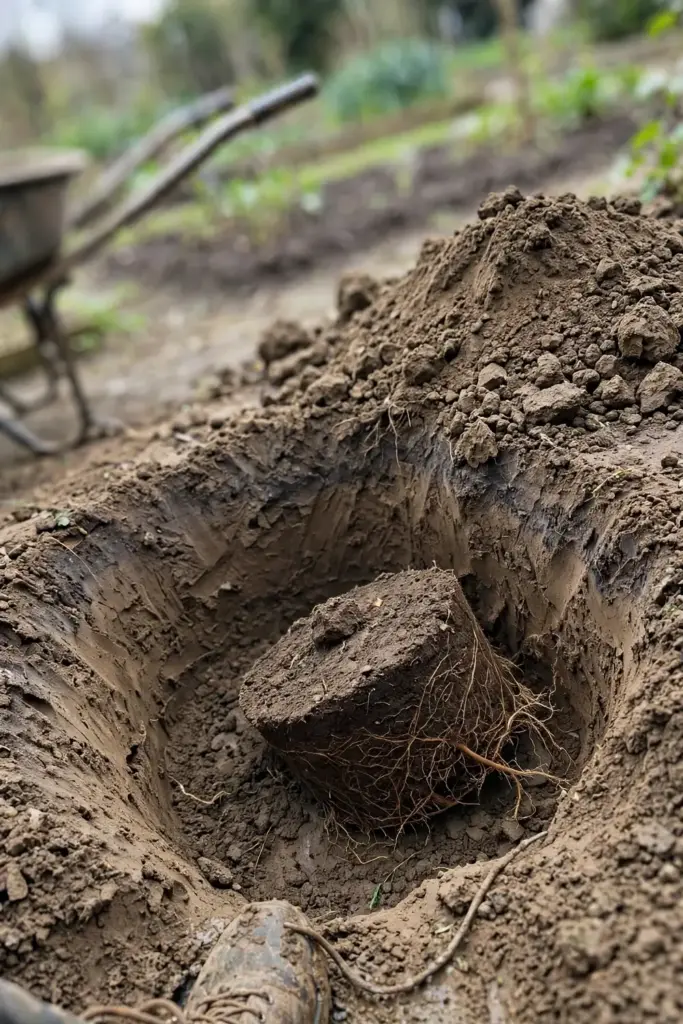
Dig the hole twice as wide as the root ball but no deeper, so the top of the root ball sits level with the surrounding soil. Planting too deep is a classic fruit-tree mistake. Buried trunks develop rot at the soil line. For a grafted tree, keep the graft union two to four inches above the soil. Soil that buries the union lets the scion root on its own, and then you lose the rootstock’s benefits.
Backfill with the native soil you dug out. Amending only the planting hole creates a bathtub that holds water against the roots. Water thoroughly after planting to settle the soil and remove air pockets. Then mulch two to six inches deep with wood chips, keeping the mulch a few inches away from the trunk. Mulch piled against the trunk holds moisture against bark and invites disease.
13. Watering Through the First Years
Young trees need deep water twice a week for the first two years. Deep means soaking the root zone, not a quick sprinkle. A slow-running hose for an hour or a drip line that runs long enough to wet the soil 18 inches down does it. The goal is to train roots downward, which makes the tree drought-tolerant later.
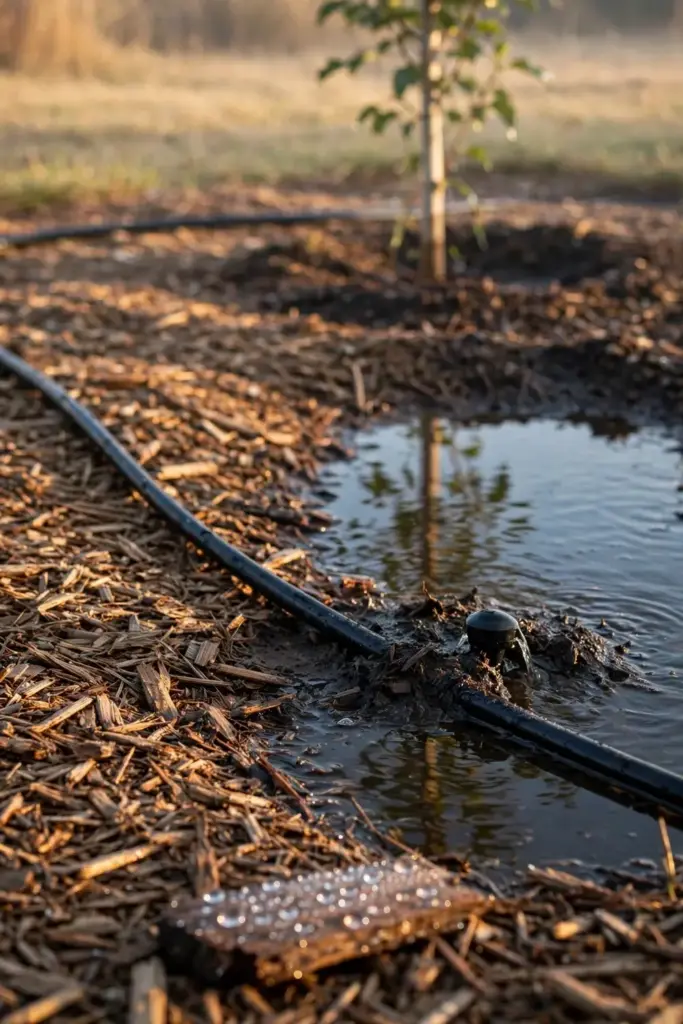
Mature trees need less. In dry summers, a deep watering once a week keeps fruit sizing up. In winter, cut back sharply. Overwatering in cool weather causes more white sapote deaths than drought. The tree is evergreen, so it never goes fully dormant, but its water demand drops when growth slows.
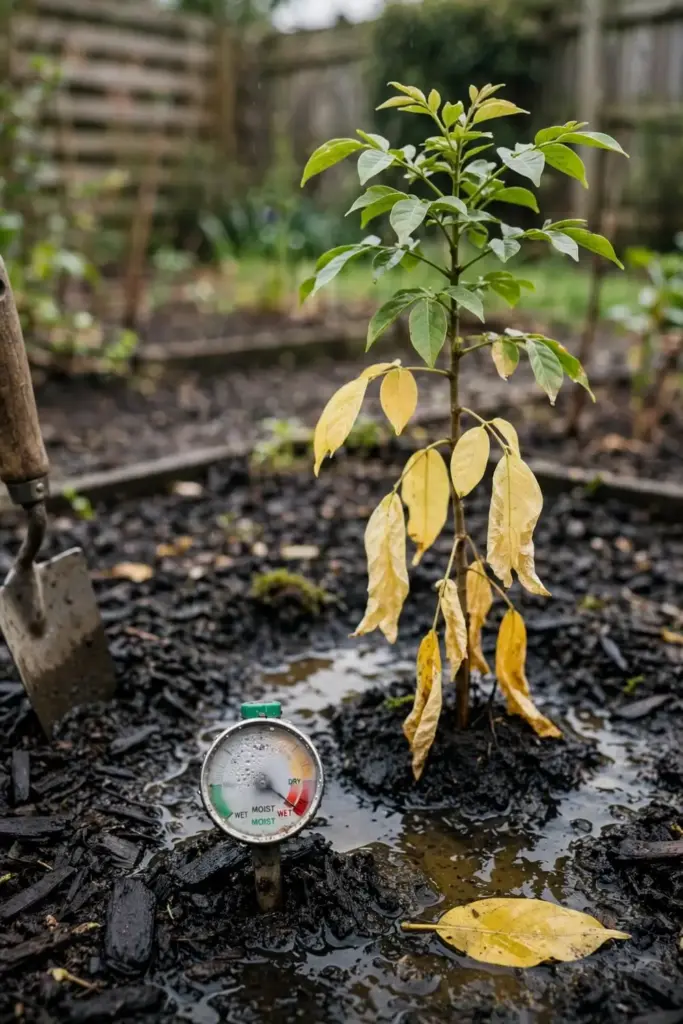
Avoid timer-controlled lawn sprinklers. They deliver shallow, frequent water that keeps the surface wet and the roots shallow. A lawn sprinkler schedule is a common cause of chronic fruit-tree stress, and white sapote responds to it with yellowing leaves and poor fruit set. Separate the tree’s water from the lawn’s water. Drip irrigation or a dedicated hose bib is the right tool.
Container trees are a different schedule entirely. Pots dry out far faster than ground soil, so check moisture by hand and water when the top two inches are dry. In summer that can mean daily watering for a 15-gallon pot in full sun.
14. Fertilizing for Steady Growth
Feed three times a year: early spring, mid-summer, and early autumn. Fairchild Tropical Botanic Garden recommends a balanced fertilizer like 8-3-9, applied in March, July, and September for Florida growers. Adjust the months to your own season; the pattern matters more than the calendar. A young tree gets smaller doses more often, while an established tree takes its share in three feedings.
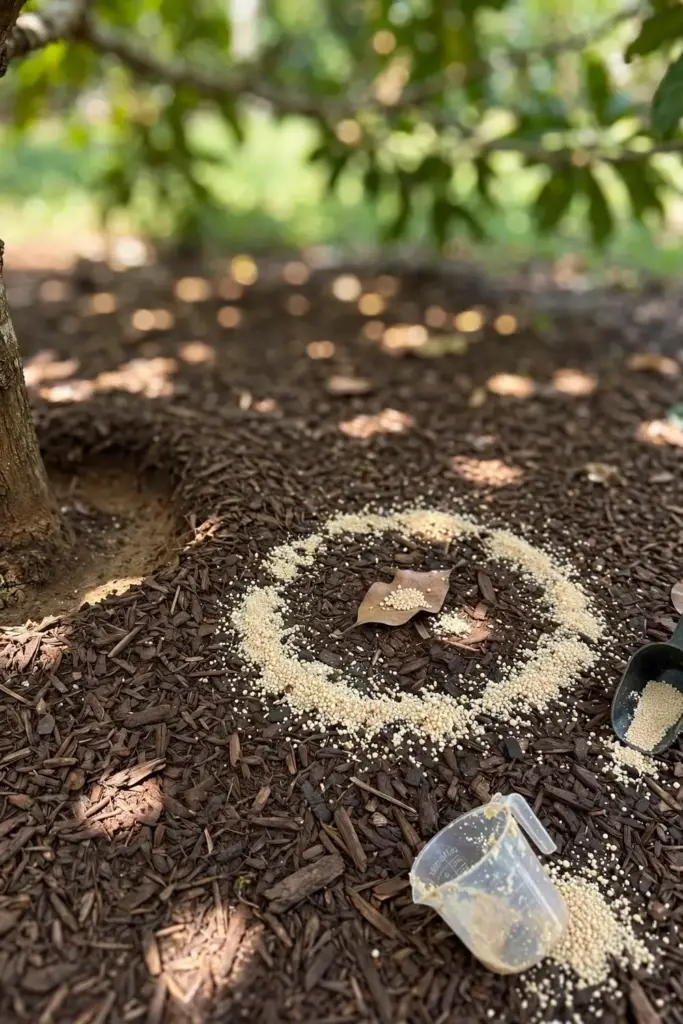
Nitrogen drives the leafy growth that supports fruit. If leaves are pale and growth is slow, the tree is hungry for nitrogen. If leaves are dark green and vigorous but fruit is scarce, you may be feeding too much nitrogen and not enough potassium. A balanced fruit-tree fertilizer handles both sides of that equation.
Spread the fertilizer under the canopy drip line, not against the trunk. Water it in after applying. Organic growers can substitute compost and mulch layers, but watch the tree’s response. White sapote is a moderate feeder with lighter demands than citrus. It shows deficiency clearly with pale new leaves.
15. Pruning for Size and Fruit on New Wood
White sapote fruits on new to one-year-old wood, and that single fact shapes the whole pruning strategy. You want a steady supply of young fruiting wood. Annual pruning keeps the canopy open and the new growth coming.
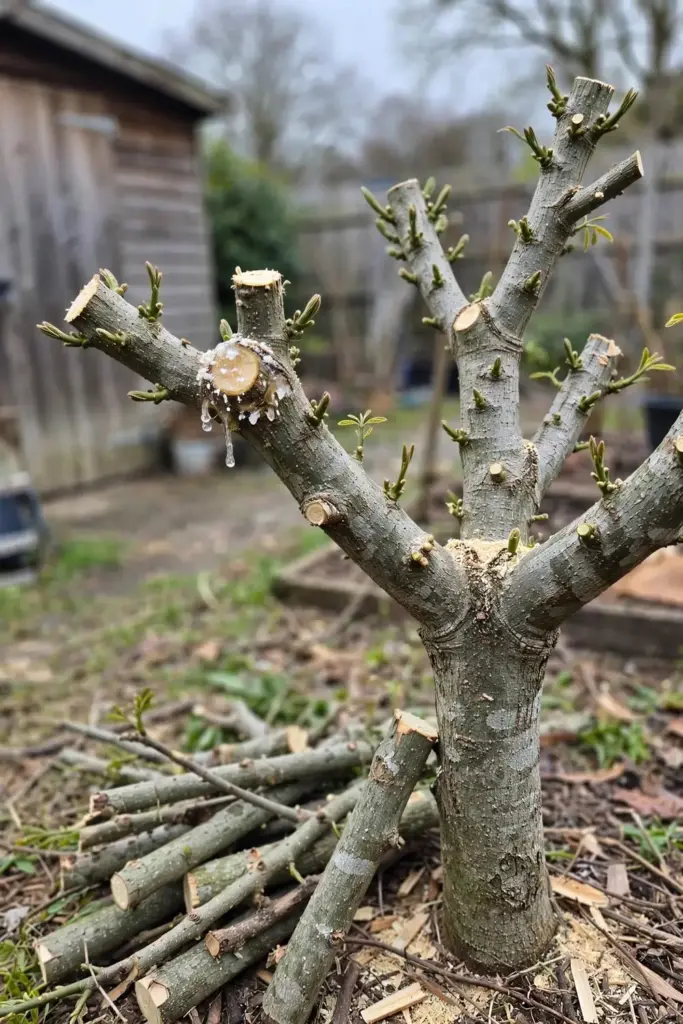
Prune in late winter, before the spring flush. Remove upright water sprouts that shoot straight up through the canopy. They shade the interior and produce little fruit. Thin out crossing branches to open the center to light and air. An open vase shape works well for home trees: three to five main branches spreading outward from a short trunk.
Keep the tree at a harvestable height. A 50-foot white sapote is a landscape specimen, not a fruit producer you can manage. Most home growers hold the tree at 10 to 15 feet with annual heading cuts. This is easier to start from a young tree than to fix later. A tree that has grown wild for five years takes hard renovation pruning, while a tree topped annually from youth stays compact and productive.
Thin heavy crops when branches overload. A branch sagging under too many young fruits produces small, poor-quality fruit and risks breaking. Removing a third of the young fruit in a heavy year gives you bigger, better-flavored fruit and protects the branch. It feels wrong the first time. The harvest proves it right.
16. Frost Protection for Young Trees
An established white sapote shrugs off a light frost. A young one does not. When frost threatens, cover trees under three years old with a frost blanket or an old bedsheet draped over a simple frame. The frame matters: fabric resting directly on leaves transfers cold and burns the foliage underneath. Stakes and a sheet form a tent that holds ground warmth around the tree.
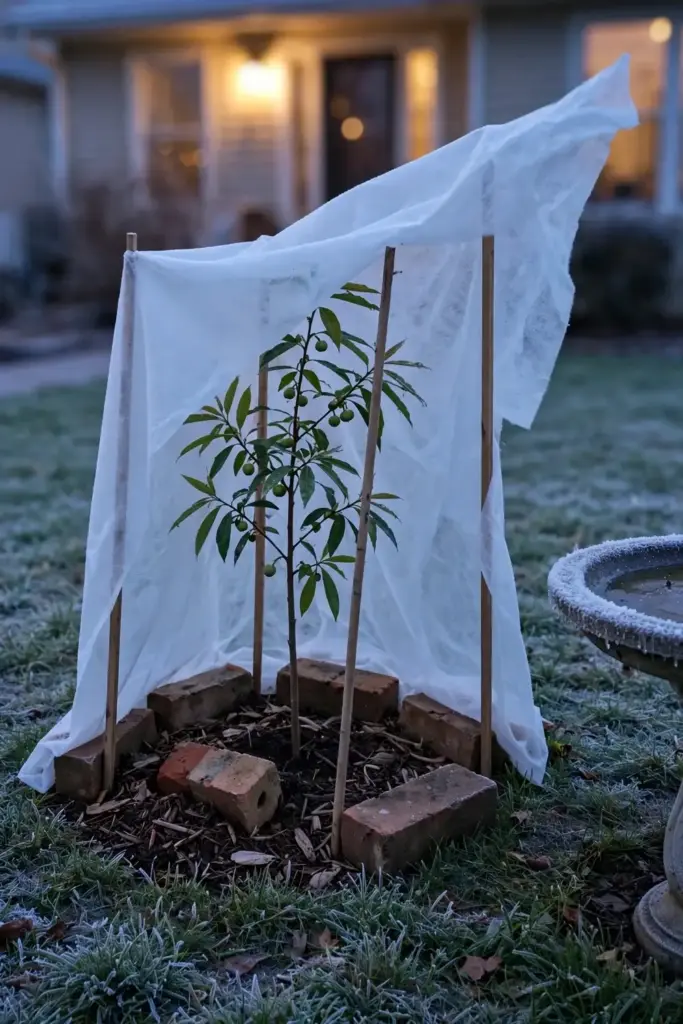
Water the soil before a frost night. Moist soil holds more heat than dry soil and releases it slowly overnight. A deep watering the day before a freeze is one of the simplest and most effective frost protections available.
Mulch helps too. A thick mulch layer insulates the root zone, which is where cold damage kills young trees. The roots matter more than the leaves; a defoliated young tree regrows, but a frozen root system does not.
Container growers have the easiest option. Move the pots against a south-facing wall, cluster them together, and cover the cluster on the coldest nights. In zones 7 to 8, move containers into a garage or greenhouse when hard freezes arrive. Suebelle in a 15- to 20-gallon pot is heavy, so plan the winter location before the tree gets big. A plant dolly rated for the weight saves your back.
17. Pests and Diseases to Watch
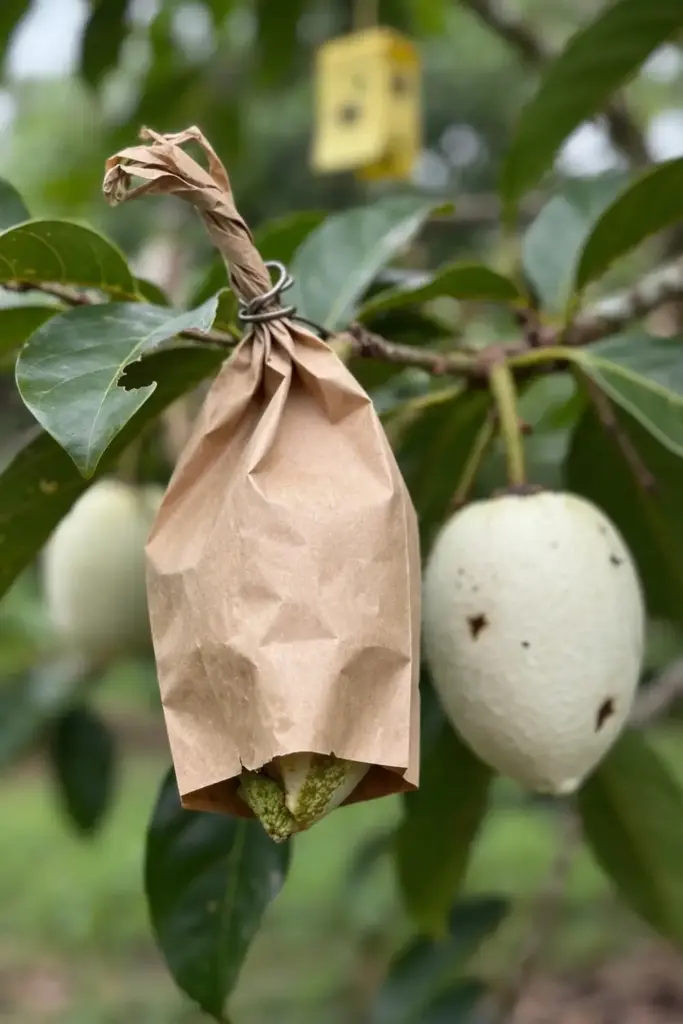
White sapote escapes the worst pest pressure of many fruit trees. It still has its share of trouble. Fruit flies are the main fruit pest in warm regions. Traps hung in the canopy catch adults and tell you when pressure is rising. Bagging individual fruits with paper or mesh bags keeps flies off the developing fruit and is the most reliable organic control for a home tree with a manageable crop.
Scale, mealybugs, and aphids cluster on new growth and the undersides of leaves. They suck sap and excrete honeydew, which grows sooty mold. A strong jet of water dislodges light infestations. For heavier ones, neem oil or horticultural oil applied according to the label smothers the insects. Treat in the cool of the evening to avoid leaf burn, and never spray during bloom when pollinators are working.
Root rot is the main disease, and it is almost always a drainage problem. A tree in waterlogged soil develops yellowing leaves, dieback, and eventually death. There is no cure for a drowned root system; prevention through site selection and careful watering is the whole strategy. If a tree shows decline, check drainage before reaching for any product.
Clean up fallen fruit promptly. Rotting fruit on the ground breeds fruit flies and fungal problems. A few minutes of cleanup during harvest season prevents most of the pest pressure that follows.
18. Growing in Containers
Containers are how white sapote reaches gardeners outside zones 9 to 11. A grafted Suebelle in a 15- to 20-gallon pot fruits reliably and stays manageable with pruning. Seedlings work in pots too, but the seven-to-ten-year timeline still applies, and a seedling in a pot is a very long project.
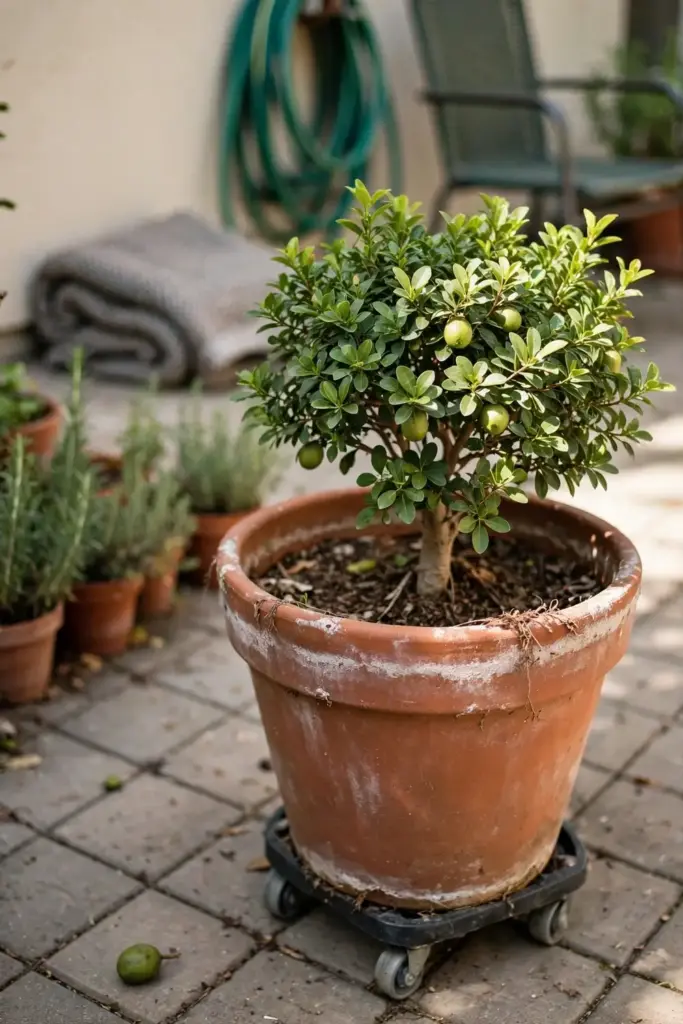
Use a large, deep pot with drainage holes. A mix of half potting soil, a quarter perlite, and a quarter compost works well for container white sapote, and that balance of drainage and richness is sound. Heavy garden soil compacts in pots and suffocates roots. A quality potting mix with added perlite drains fast enough for the tree’s liking.
Container trees need more attention to water and fertilizer than in-ground trees. Pots dry out and leach nutrients with every watering. Check moisture daily in summer, feed on schedule, and repot or root-prune when growth stalls. Every two to three years, lift the tree, trim the outer roots, and refresh the mix. Root-bound trees fruit poorly and decline.
Winter is the reason for the pot. Move the container to a sheltered spot before the first hard freeze. A garage with a window, a greenhouse, or even a covered patio works for short cold spells. The tree tolerates cool temperatures fine; it is the hard freeze that kills. In spring, move it back out after frost danger passes and harden it off gradually, because leaves grown in shelter sunburn in sudden full sun.
19. Harvest and Ripeness: Trust the Aroma, Not the Color
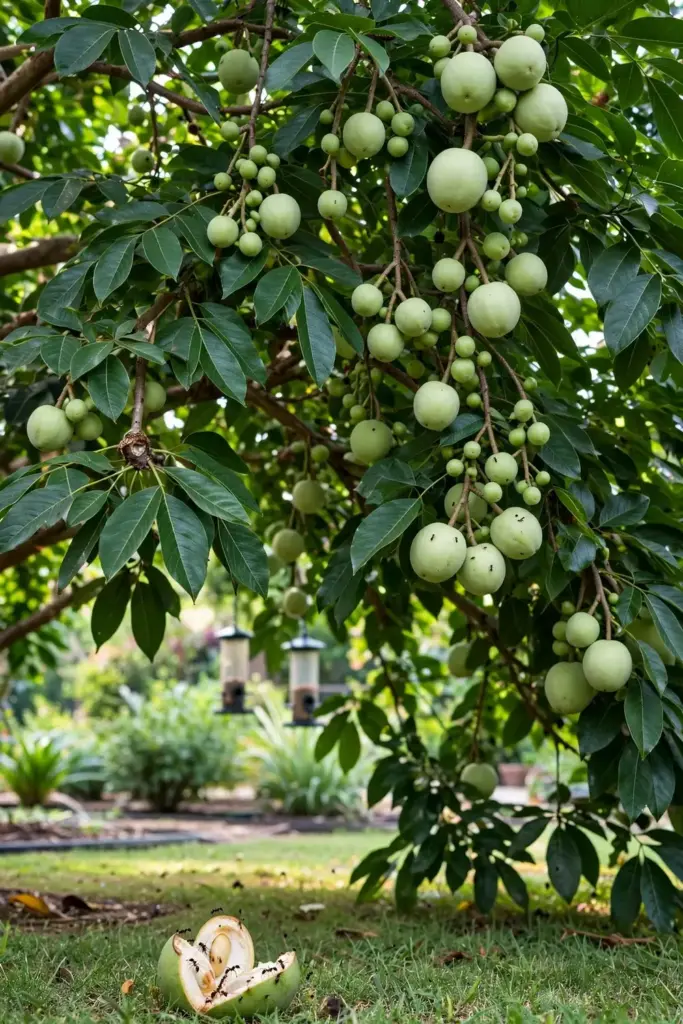
White sapote ripens six to nine months after flowering, with harvest running from late summer into fall. The fruits hang greenish and give few visual clues. The Spanish-language gardening site jardineriaon.com states the rule that every grower learns: ripeness is identified by aroma and texture, not by color changes.
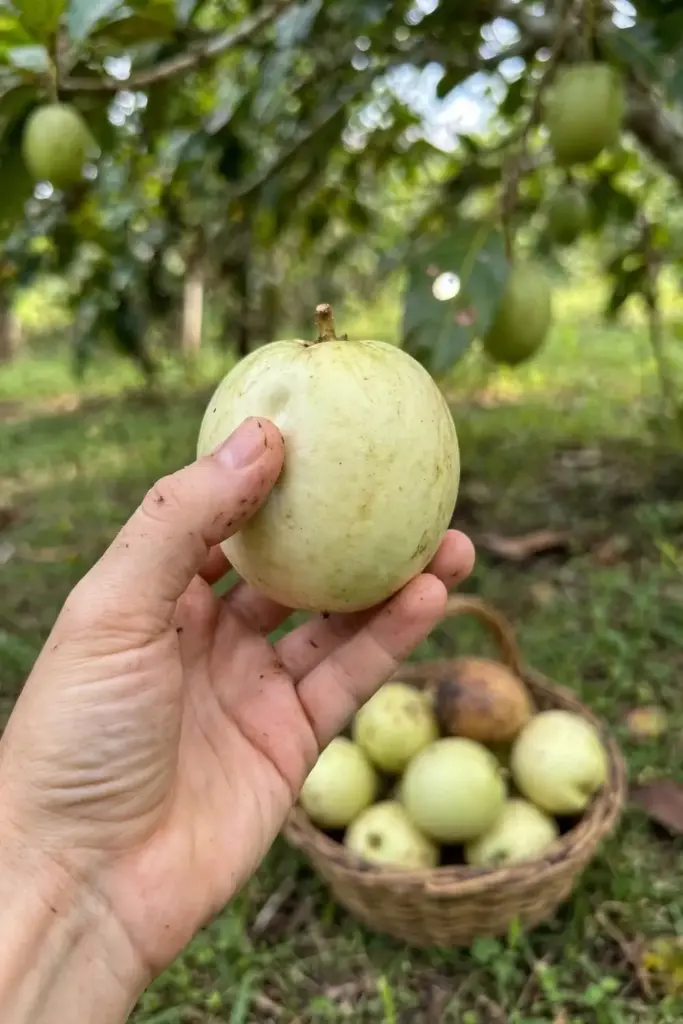
A ripe white sapote turns from bright green to pale greenish-yellow and yields to gentle pressure, like a ripe avocado. Pick fruits when they are mature but still firm, then let them soften indoors at room temperature. Clipping the fruit with a short piece of stem attached, rather than pulling, avoids tearing the skin. The fruits are very fragile when soft, which is exactly why you almost never see them in stores and why growing your own is the reliable way to eat them.
Check trees every few days during harvest season. Fruits ripen unevenly across the canopy, and a fruit that softens on the tree attracts fruit flies and drops. Harvest slightly underripe rather than overripe; a fruit picked firm and ripened on the counter tastes better than one that softened on the branch and started to ferment.
Once soft, eat the fruit fresh. Scoop the creamy flesh with a spoon and avoid the large seeds. Ripe white sapote keeps only a few days at room temperature and about a week refrigerated. The flavor is at its best the day the fruit yields to pressure.
20. Seed Safety: What We Know and What We Don’t
Brave’s related queries include “white sapote seeds toxic,” and it deserves a straight answer. White sapote seeds are large, bitter, and inedible. Traditional Mexican medicine used preparations from various parts of the plant, including the seeds, and the seeds contain compounds that are not food. Nobody eats white sapote seeds as food, and you should not either.
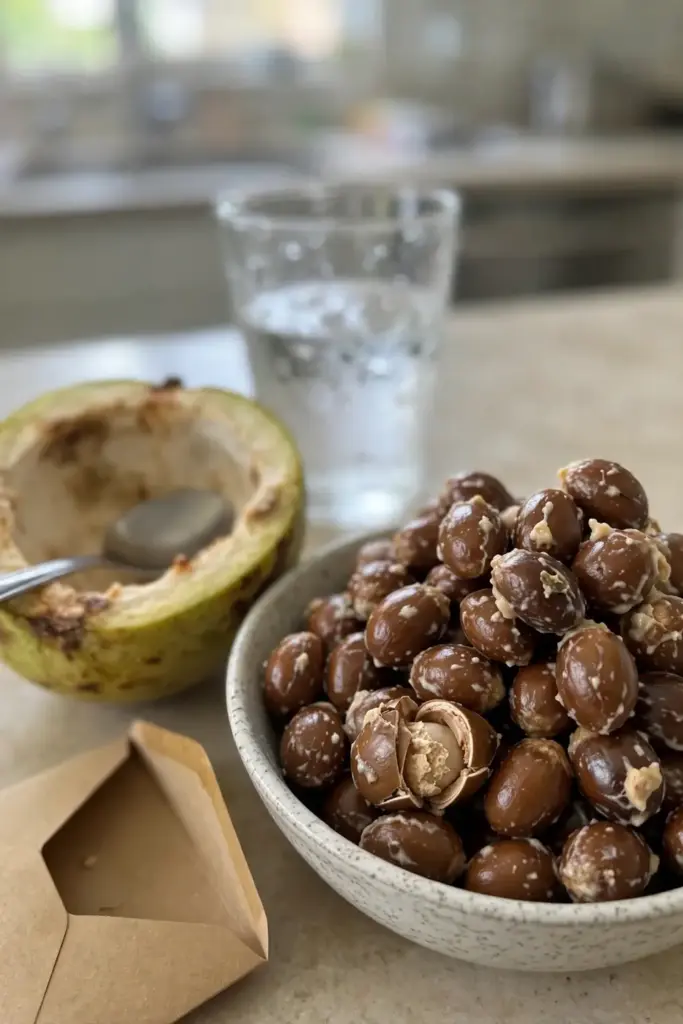
What the home gardener needs to know is simpler. Do not chew or swallow the seeds; spit them out or remove them when eating the fruit. Keep seeds away from small children and pets who might mouth them. Germinating seeds for planting is perfectly safe, and handling them with bare hands is fine.
The honest gap: no major extension publication gives a formal toxicity rating for white sapote seeds the way they do for, say, apple seeds or cherry pits. The available evidence says the seeds are bitter and traditionally used only in prepared medicinal contexts, not as food. Treat them as inedible, plant them or discard them, and the question is settled.
21. Troubleshooting
Leaves yellowing in a young tree usually means too much water or too little nitrogen. Check the soil first. If it is soggy, cut back watering and improve drainage. If it is well-drained and growth is pale and slow, feed with a balanced fertilizer. Yellowing that starts on older leaves while new growth looks fine points to nitrogen shortage.
No fruit on a mature tree has a short list of causes. A seedling under seven years old is not old enough yet; wait. A grafted tree with no fruit after five years may be a pollination problem, in which case a second cultivar helps. Excessive nitrogen pushes leafy growth at the expense of flowers; cut back feeding. And a tree pruned at the wrong time loses its fruiting wood. White sapote fruits on new to one-year-old wood, so heavy pruning right before bloom removes the crop.
Most early fruit drop follows water stress. A tree that dries out during fruit development sheds fruit it cannot support, so water deeply and consistently through the fruiting season. Wind knocks young fruit off too, which is one more reason a sheltered site pays off.
Leggy seedlings with pale, stretched stems need more light. Move them gradually into stronger sun. A seedling grown too dark never develops the sturdy stem it needs, and staking only papers over the problem. Light is the fix.
22. Frequently Asked Questions
A grafted tree fruits in three to five years. A seed-grown tree takes seven to ten years, sometimes longer, and the fruit quality is unpredictable because named cultivars do not come true to seed. If you want fruit on a schedule, buy a grafted tree. If you want the experience, grow the seeds too.
Suebelle is widely described as self-fertile, so a single tree sets fruit. Most other cultivars are not reliably self-fertile. Planting two different grafted cultivars gives cross-pollination insurance and often heavier crops. If you only have room for one tree, make it a grafted Suebelle.
Yes. A grafted Suebelle in a 15- to 20-gallon pot fruits well and is the standard way to grow white sapote in zones 7 to 8. Use a fast-draining potting mix, water more often than an in-ground tree, and move the pot to shelter before hard freezes. Prune annually to keep the tree compact.
An established tree survives short frosts to about 22 to 23 degrees Fahrenheit. Young trees are much more tender and need frost blankets on cold nights. It grows outdoors year-round in USDA zones 9 to 11. Below zone 9, grow it in a container and shelter it for winter.
Early fruit drop usually follows water stress during fruit development. Keep watering deep and consistent through the fruiting season. Overfeeding nitrogen, which pushes leaves instead of fruit, and strong wind knocking young fruit loose are the other common causes. Thin overloaded branches so the tree is not carrying more than it can ripen.
The seeds are inedible, bitter, and traditionally used only in prepared medicinal contexts, not as food. Do not eat them. Remove or spit out the seeds when eating the fruit, and keep them away from children and pets. Handling seeds for planting is completely safe.
23. The First Slice Is Worth the Wait
White sapote asks for two things: an honest decision at the start and steady care after. The decision is grafted or seed-grown, and now you know the real trade. The care is simple once the tree is established: deep water, three feedings a year, annual pruning to a pickable height, and frost blankets while it is young. Cherimoya growers follow a similar subtropical playbook, and guava in a home garden rewards the same kind of patient, consistent care. None of it is complicated. It just has to happen every year.
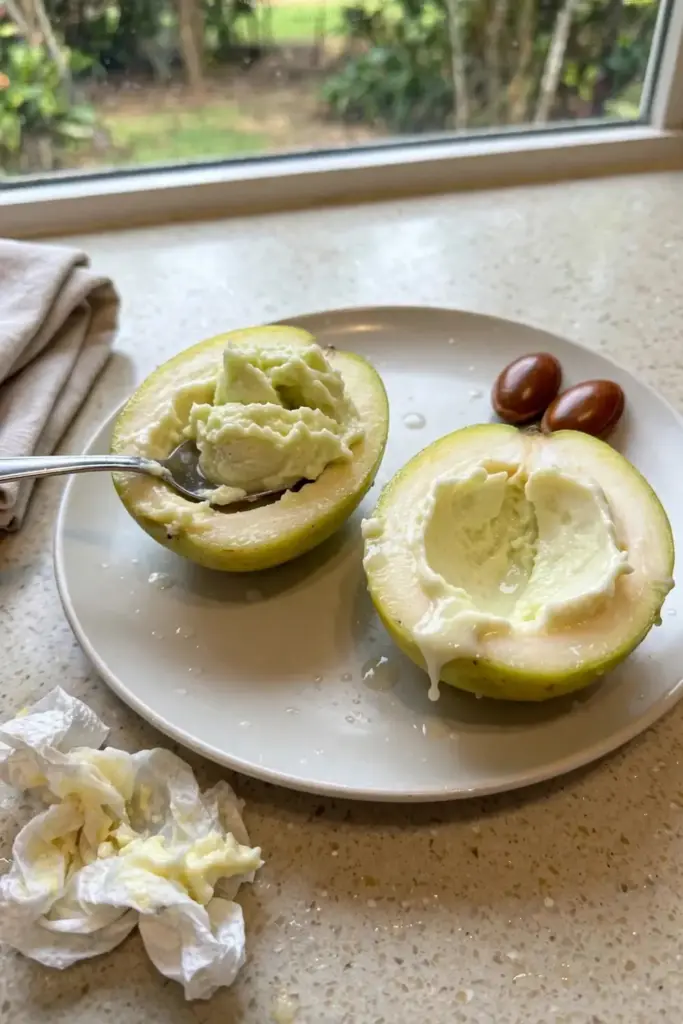
Start the seeds this week. Order the grafted Suebelle this season. In three to five years you will be scooping custard-sweet flesh with a spoon from fruit no store can sell you, and the seedlings will be coming along behind it. That is the whole project, and it is a good one.








