
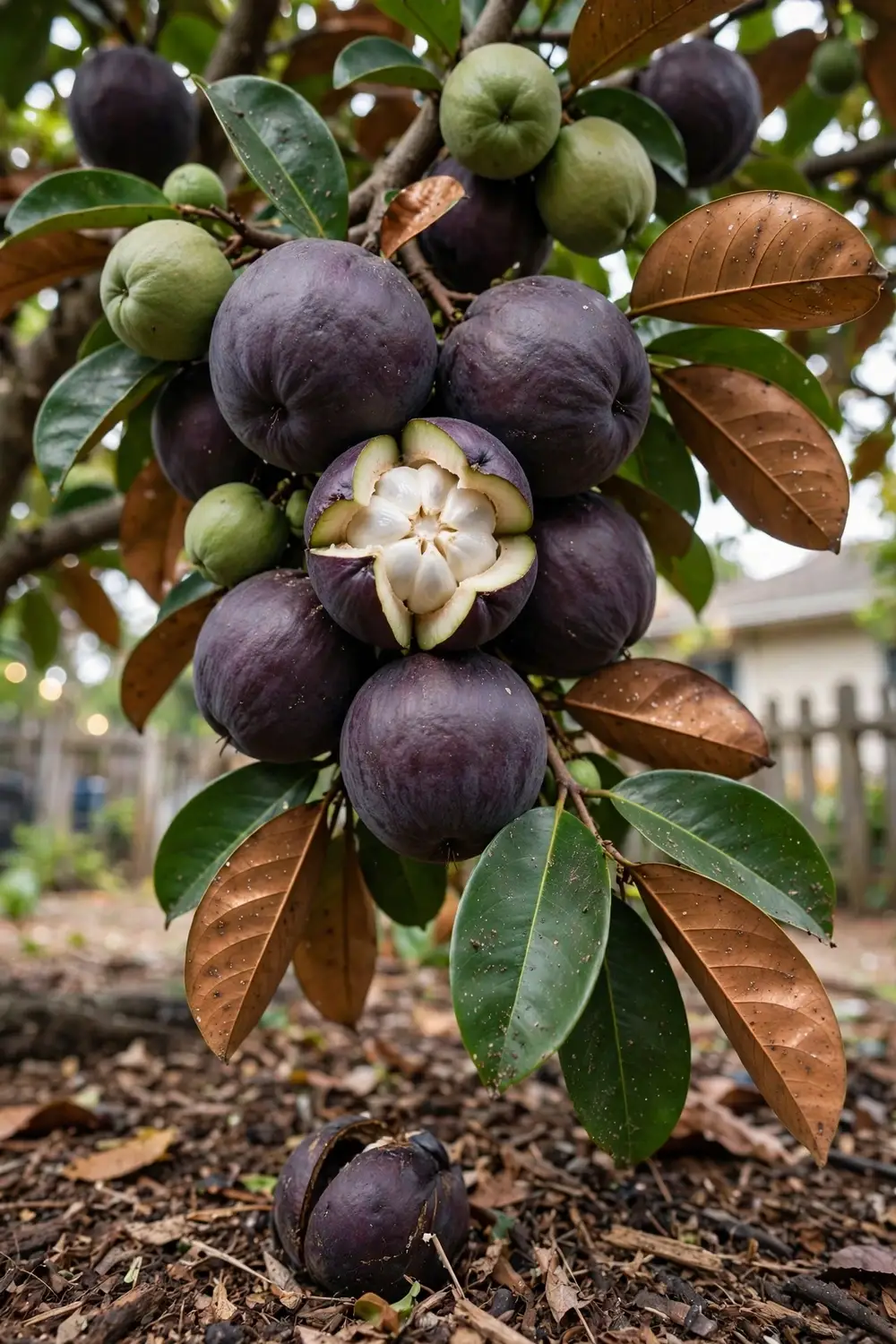

A star apple tree you grow from fresh seed bears its first fruit in 5 to 10 years, while a grafted nursery tree bears in 3 to 4 years. That single difference decides whether you start from seed or buy a grafted sapling.
Before you buy anything, be sure which fruit you want. Star apple (Chrysophyllum cainito) is a tropical evergreen from the Sapotaceae family, prized for purple or green fruit with milky white pulp that forms a star pattern when cut across. Gardeners often confuse it with star fruit (carambola) or with ordinary apples, so verify the botanical name before you buy. If you are starting from seed anyway, the same careful start used for papaya trees works well for tropical fruit seedlings.
I have learned that the growers who succeed with star apple are the ones who accept the timeline before they plant. Everything below covers germination at 70 to 80°F, honest timelines for seed-grown versus grafted trees, and the harvest signs that tell you a fruit is actually ripe.
1. Confirm the Fruit: Star Apple Is Not Star Fruit
Answer: Star apple is Chrysophyllum cainito, a Sapotaceae evergreen whose fruit reveals a star when sliced crosswise. The name creates real confusion with two other fruits, and planting the wrong tree costs years. Settle the identity before you spend money or soil.
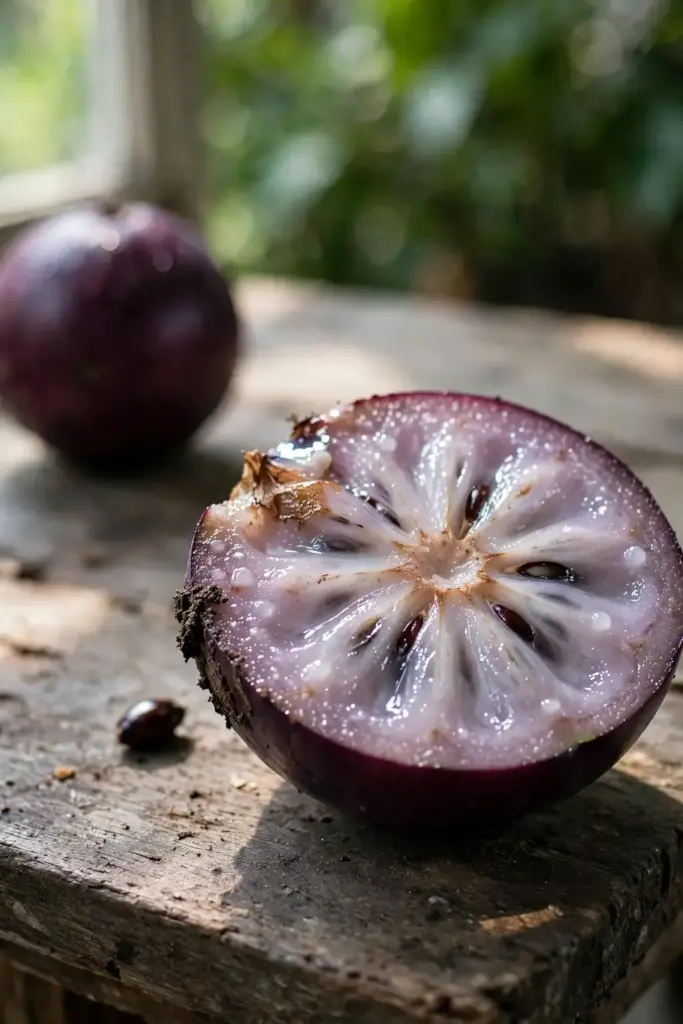
These fruits get mixed up constantly: star apple is Chrysophyllum cainito, a tropical evergreen; an ordinary apple is Malus domestica, a temperate tree; and carambola is Averrhoa carambola, a different fruit whose growing guides do not apply here. Know exactly what you are growing.
| Fruit | Real name | The difference |
|---|---|---|
| Star apple | Chrysophyllum cainito | Tropical evergreen tree, 25 to 100 ft tall; purple or green skin, milky star-patterned pulp |
| Star fruit | Averrhoa carambola | Smaller tropical tree with ridged yellow fruit that forms a star when sliced; a completely different plant |
| Ordinary apple | Malus domestica | Temperate tree needing winter chill; the fruit most people mean when they say “star apple” |
| African star apple | Chrysophyllum albidum | A different species entirely, with its own growing requirements; do not mix the two up |
Ask IFAS identifies the tree by its scientific name Chrysophyllum cainito in the Sapotaceae family, so any seed or sapling you buy should carry that label. If a listing just says “star apple” with no botanical name, ask before you buy. The African star apple confusion shows up in some growing guides, so check which species the advice targets.
2. Read the Quick Specs for Chrysophyllum Cainito
Answer: Star apple needs tropical warmth, full sun, and a long view. These numbers let you decide in thirty seconds whether your yard can host one.
| Spec | Value |
|---|---|
| Botanical name | Chrysophyllum cainito (Sapotaceae) |
| Mature size | 25 to 100 ft tall with a wide canopy |
| USDA zones | 9 to 11 |
| Temperature | 68 to 93°F (20 to 34°C); frost-sensitive |
| Sun | Full sun, 6 to 8 hours or more daily |
| Soil | Well-draining sandy loam, pH 5.5 to 7.5 |
| Spacing | At least 25 ft from other large trees |
| Time to fruit | 3 to 4 years grafted; 5 to 10 years from seed |
| Harvest | Late winter to early spring in the tropics, 3 to 4 months after flowering |
These ranges come from Ask IFAS for size, spacing, and timelines, and from Epic Gardening, Gardening Know How, and Purdue for temperature, pH, and frost limits. The wide height range reflects real variability between a container tree and a full-size landscape specimen.
3. Check Your Climate Against the 32°F Line
Answer: Star apple grows outdoors in USDA zones 9 to 11, where winter lows stay above freezing. Below that line, you are growing in a container you can move indoors.
Frost is the hard boundary. Protect the tree whenever temperatures approach 32°F (0°C). Young trees take damage below 50°F (10°C), and even mature trees can be injured below 28°F (minus 2°C). Those limits come from Epic Gardening, Gardening Know How, and Purdue.
The sweet spot is 68 to 93°F (20 to 34°C) with full sun for 6 to 8 hours daily. Hawaii and southern Florida are the classic US locations. In California or other marginal zones, you need a frost-free microclimate or a greenhouse, and California growing guides say exactly that.
One honest note from the sources: Epic Gardening says star apple is not suited for indoors, while container guides describe keeping potted trees movable so they can come inside below 40°F. Both can be true. A container tree is a compromise, not the same plant as an in-ground one, and the last section of this guide covers what you give up.
4. Pick Fresh, Plump Seeds With the Best Viability
Answer: Choose seeds from a fully ripe, fragrant fruit and plant them promptly. Fresh plump seeds germinate best in warm, moist conditions.
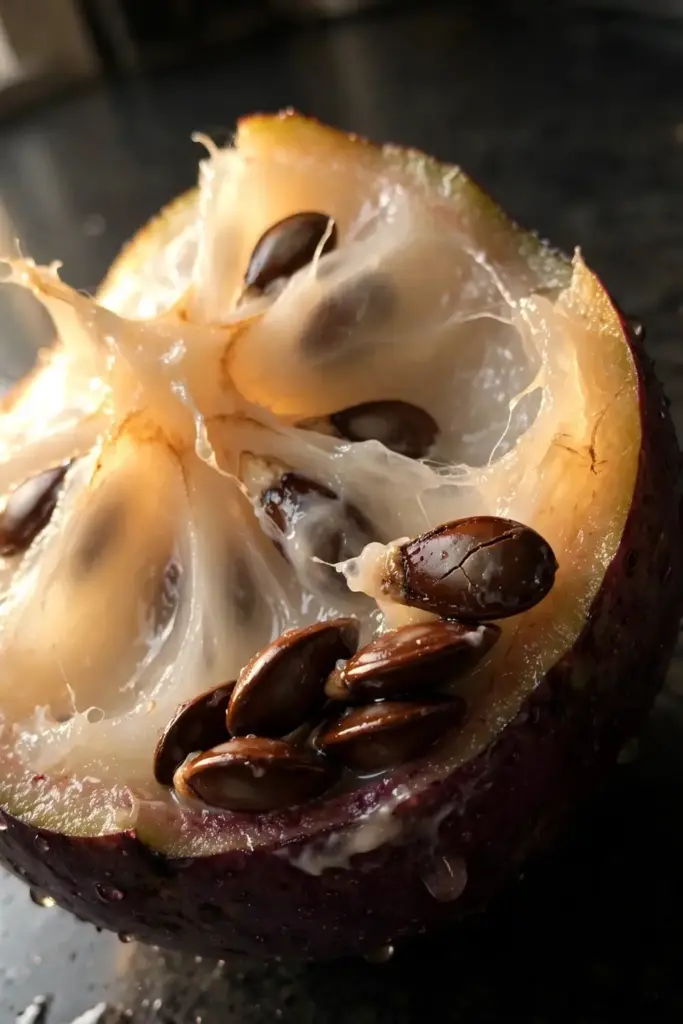
Not all seed is equal. Seeds taken from ripe fruit, firm and plump, carry the most energy. Purdue’s horticulture page notes that star apple seeds retain viability for several months, which gives you a buffer if your fruit arrives out of season. But months are not years. Older seeds lose vigor quietly, and weak seeds produce weak seedlings that stall at the two-leaf stage.
Scoop the seeds from the pulp, rinse off the sticky coating, and inspect each one. Discard any that are shriveled, cracked, or hollow when pressed between your fingers. You are selecting for the seedling you want five years from now, so start with the strongest candidates you have.
5. Pre-Chill Seeds for 4 to 6 Weeks If You Want
Answer: A 4 to 6 week cold period in the fridge is optional, not required, and may improve germination uniformity. Planting fresh seeds directly in warm soil also works.
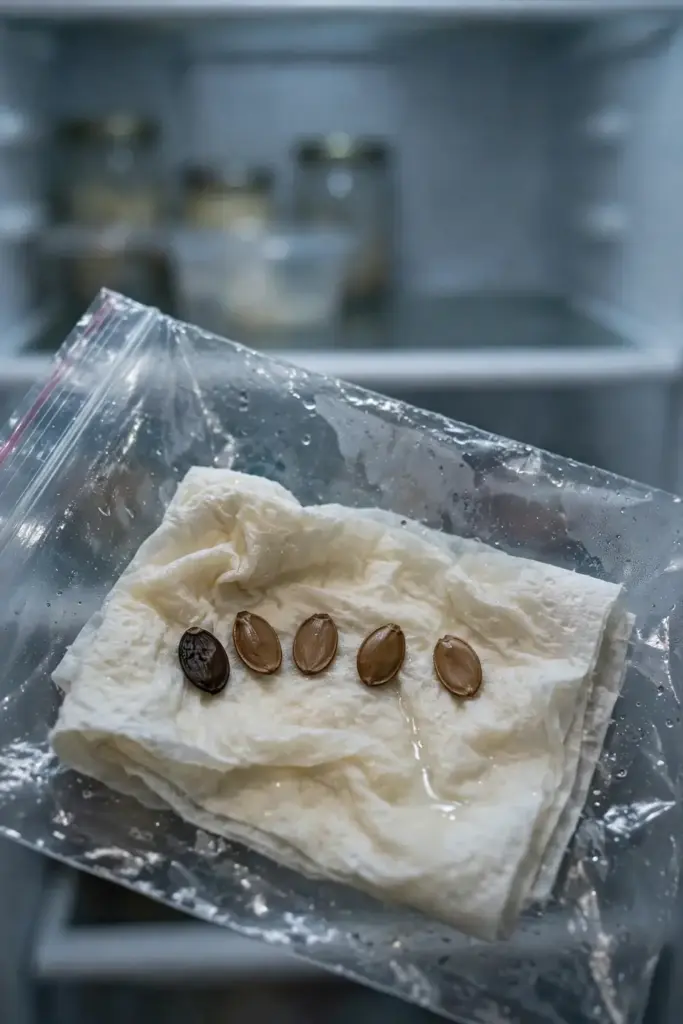
Cold-stratifying seeds in the fridge for 4 to 6 weeks before sowing is optional, not required. Star apple is tropical, so it does not require chill the way a temperate apple does. The optional chill may even out germination timing across a batch of seeds, which helps if you want several seedlings at the same stage.
If you skip the chill, plant fresh seeds immediately after cleaning. If you stratify, keep the seeds in a slightly damp paper towel inside a sealed bag, and check weekly for mold. Either way, the warm sowing bed in the next step is what actually wakes the seed.
6. Germinate Seeds at 70 to 80°F Over 2 to 8 Weeks
Answer: Sow seeds 1 inch deep in a warm, humid seedbed at 70 to 80°F, and expect sprouts within 2 to 8 weeks. A home grower documenting the bag method with moist coco coir saw sprouts well inside that range.
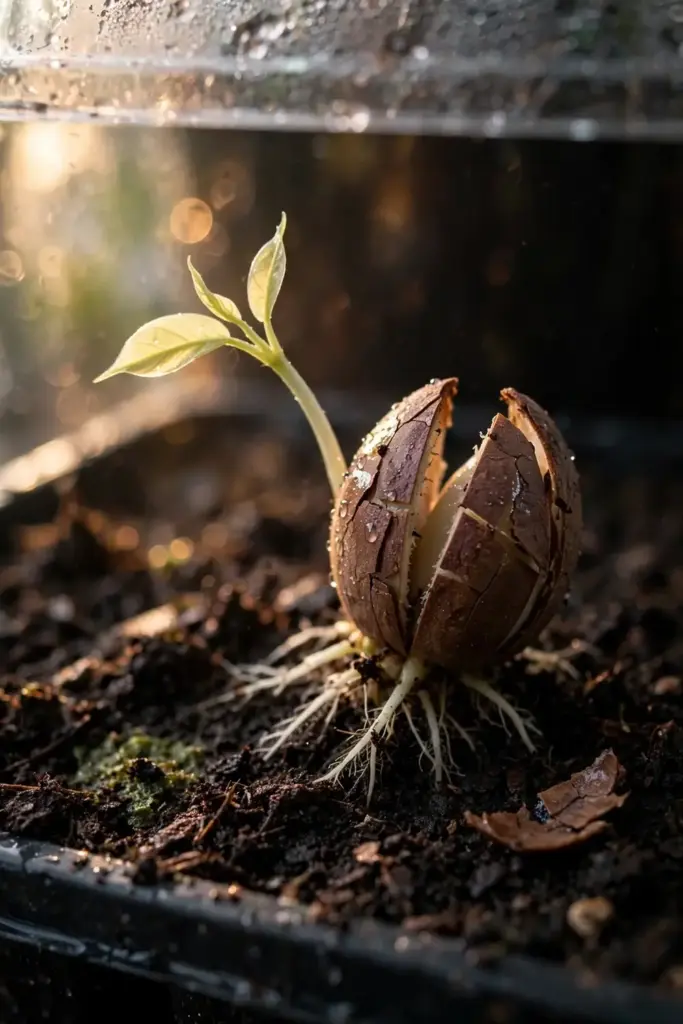
Germination temperature matters more than anything else in this step. Grower guides put the target at 70 to 80°F, while Epic Gardening and Purdue call for warm humid conditions above 77°F (25°C). Aim for the overlap: steady warmth in the mid to high 70s.
| Step | Action | Time |
|---|---|---|
| Clean | Scoop seeds, rinse off pulp, select plump ones | Day 1 |
| Optional chill | Refrigerate in damp towel inside a sealed bag | 4 to 6 weeks |
| Sow | Place 1 inch deep in moist seed-starting mix or coco coir | Day 1 of sowing |
| Seal | Cover with a humidity dome or zip bag | Same day |
| Warm | Hold at 70 to 80°F in bright, indirect light | 2 to 8 weeks |
| Vent | Open the cover briefly each day to prevent mold | Daily |
A Seattle grower documented the bag method with moist coco coir and saw sprouts well inside the normal two-to-eight-week range. That is fast, and it is not guaranteed, so do not discard a tray at week four. Seeds that rot instead of sprouting usually sat in cold, soggy mix, not warm, moist mix.
7. Nurse Seedlings Through the First Vulnerable Year
Answer: Give young seedlings bright indirect light, even moisture, and protection from cold and soggy soil. Most seedling losses come from overwatering and chilling, not from neglect.
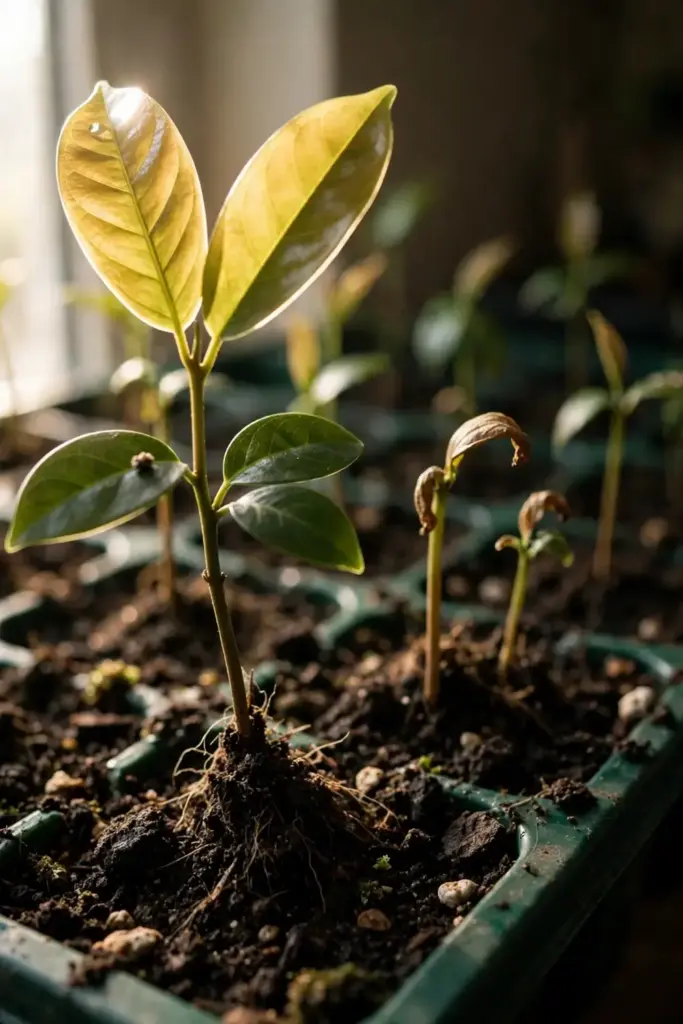
Once sprouted, seedlings want stability. Keep them in bright, indirect light and water when the top of the mix dries, never on a fixed calendar. A seedling with constantly wet feet develops root rot before you notice anything wrong above the surface. Mulch around older seedlings, but keep it pulled back from the trunk so moisture never sits against the bark.
The standard seed-starting routine in our seed starting guide applies here, with one tropical adjustment: star apple seedlings chill at temperatures a tomato seedling would shrug off. Bring flats indoors or into a warm greenhouse when nights dip toward 50°F (10°C).
8. Decide Seedling or Grafted: the 3 to 4 vs 5 to 10 Year Question
Answer: A grafted nursery tree fruits in 3 to 4 years; a seed-grown tree takes 5 to 10 years. Grafting is the preferred method for consistent fruit quality and faster production.
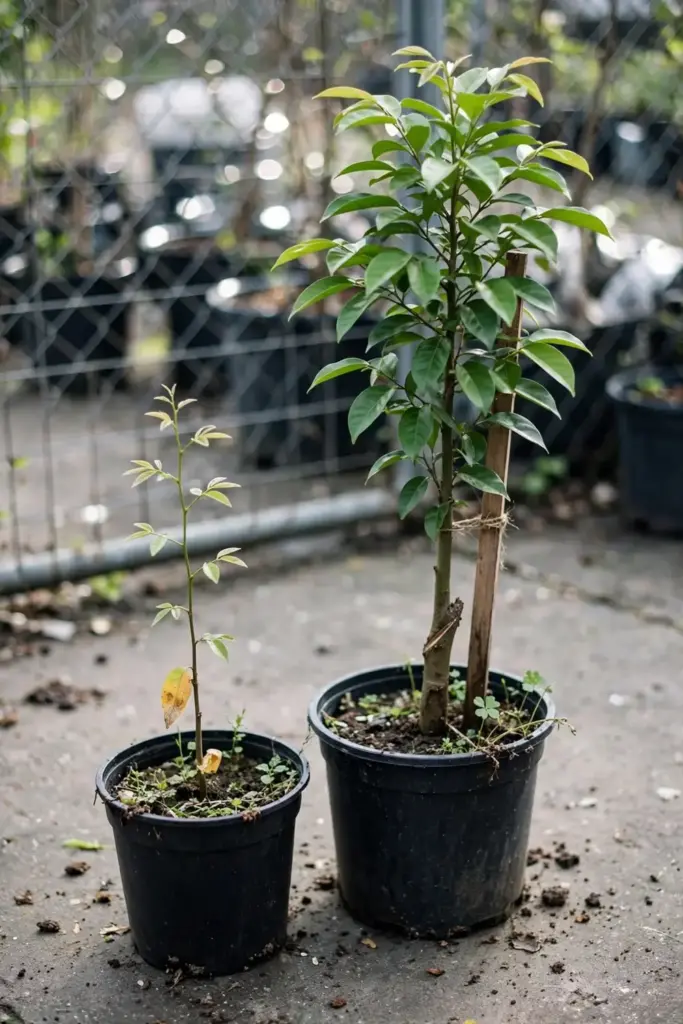
This is the decision most guides bury, and it is the one that matters most. The rule is plain: grafting is preferred for consistent fruit quality and faster production, while seeds are easier but less reliable. A seedling may also differ from its parent fruit, so the purple caimito you loved could give you something less remarkable.
| Option | Years to first fruit | Cost | Fruit reliability |
|---|---|---|---|
| Grafted nursery tree | 3 to 4 years | Higher | Predictable: same variety as the parent |
| Seed-grown tree | 5 to 10 years | Almost free | Variable: quality and type may differ |
Cuttings of mature wood root well, according to Purdue, which gives you a third path if you have access to a good mother tree. But cuttings are slower than grafting and less certain than seed for a home grower without propagation experience. For most readers, the real choice is between the patient, nearly free seed route and the faster, surer grafted tree.
Buy grafted trees from a reputable tropical nursery, and check the graft union before you pay. A clean, well-healed union just above the soil line is what you want. Avoid trees where the union is buried or where suckers sprout from below it.
9. Choose Purple or Green Caimito Before You Buy
Answer: Purple and green are the two common caimito types; both grow the same way, so pick by the fruit you want to eat. Confirm you are not buying African star apple, a different species.
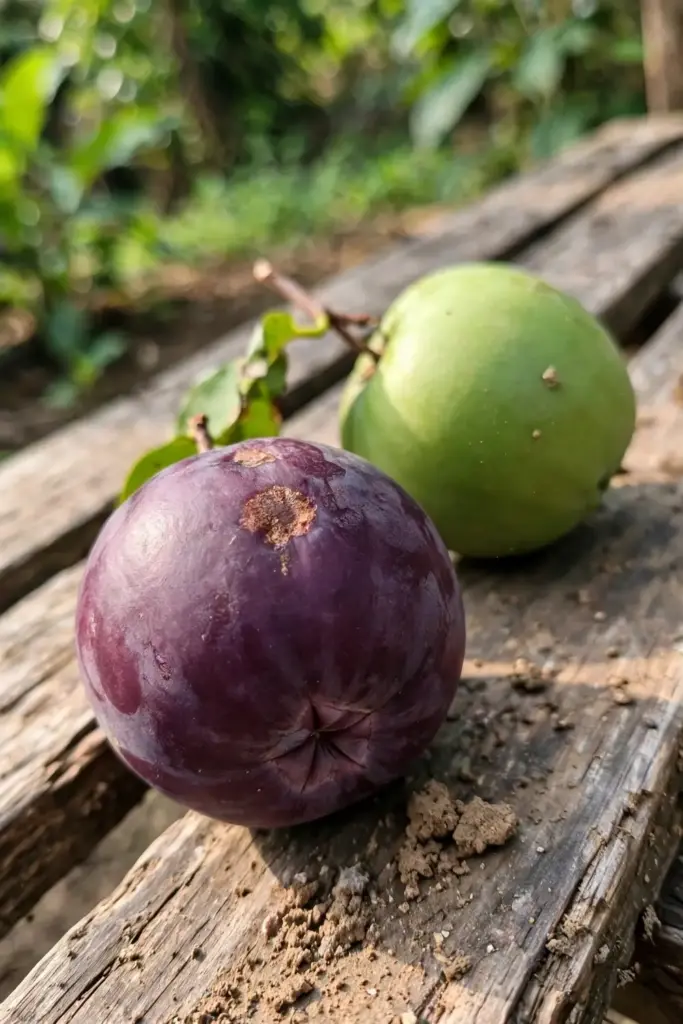
The growing advice for purple and green caimito barely changes. The difference is in the fruit: purple caimito typically has deep purple skin with rich, sweet pulp, while green types run lighter and milder. Nurseries often sell them as purple or green star apple. Either one is Chrysophyllum cainito, and everything below applies to both.
| Type | Fruit | Note |
|---|---|---|
| Purple caimito | Deep purple skin, sweet milky pulp | The classic, most widely sold type |
| Green caimito | Green to yellowish skin, milder pulp | Same species, same care |
| African star apple | Chrysophyllum albidum | Different species with different needs; verify the label |
Some guides, including greg.app’s African star apple pieces, describe Chrysophyllum albidum without flagging it as a separate species. If your climate, timing, or fruit description does not match the cainito numbers above, check which species the source actually covers.
10. Give the Tree 25 Feet of Clear Space
Answer: Plant at least 25 feet from other large trees and buildings, in full sun and well-draining sandy loam with pH 5.5 to 7.5. A mature star apple spreads wide, and crowding ruins both trees.
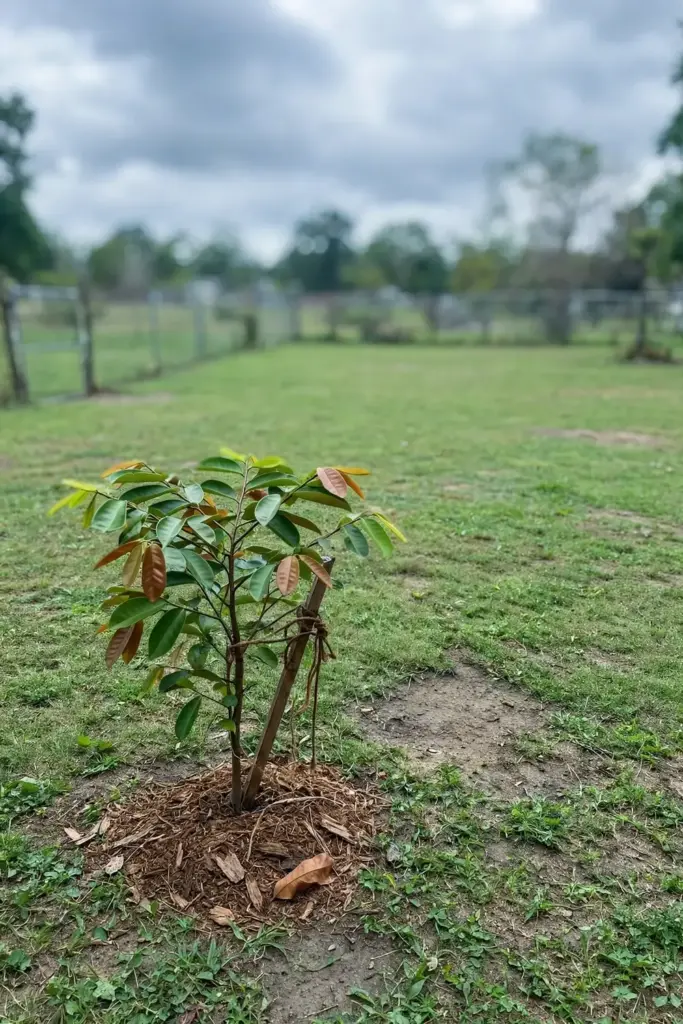
That 25-foot rule comes from Ask IFAS, echoed by Ask The Green Genie. A mature tree reaches 25 to 100 feet tall with a broad canopy, so this spacing is about sunlight and airflow, not just trunk room. Crowded trees shade each other out and invite disease.
Sun is non-negotiable: full sun, 6 to 8 hours or more daily. Sandy loam drains the way this tree likes, and the pH window of 5.5 to 7.5 comes from Epic Gardening, Gardening Know How, and Purdue. Grower guides narrow the preference to 6.0 to 6.5, so if you are amending soil, aim for that sweet spot. Good soil health practices, organic matter worked in before planting, give a young tree the buffered root zone it needs.
11. Plant at Grade in Late Spring or Early Summer
Answer: Plant in late spring or early summer, when soil and nights are reliably warm. Dig the hole twice as wide as the root ball and set the root ball level with, or slightly above, the surrounding soil.
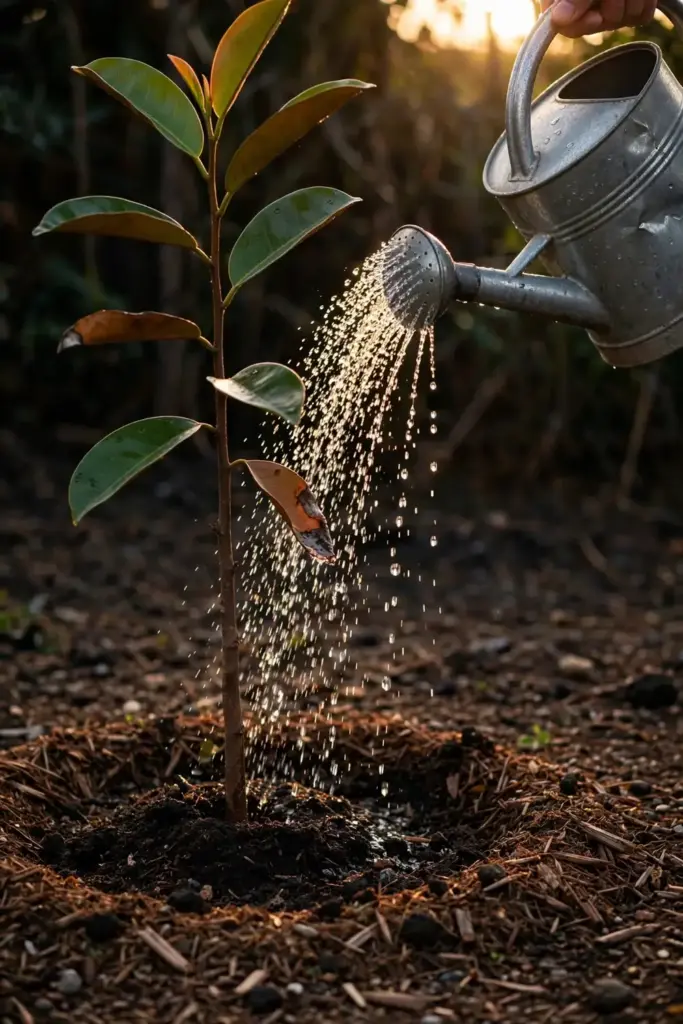
Warm planting weather matters because the tree establishes fastest when it can grow immediately. Epic Gardening and Purdue recommend late spring to early summer. Cold soil at planting time invites root stress that can haunt the tree for a year.
Dig the hole twice as wide as the root ball but no deeper than it, then mix organic compost into the backfill. Set the trunk base even with the surrounding ground, or a touch above it. Planting too deep is a frequent way gardeners weaken a new tree, and star apple is no exception. Water the tree in thoroughly to settle the soil around the roots, then spread mulch in a wide ring while keeping it a few inches off the trunk.
12. Water Deeply Weekly Through the First Year
Answer: Water deeply once a week during the first year so roots chase moisture downward. After establishment, keep soil consistently moist but never waterlogged.
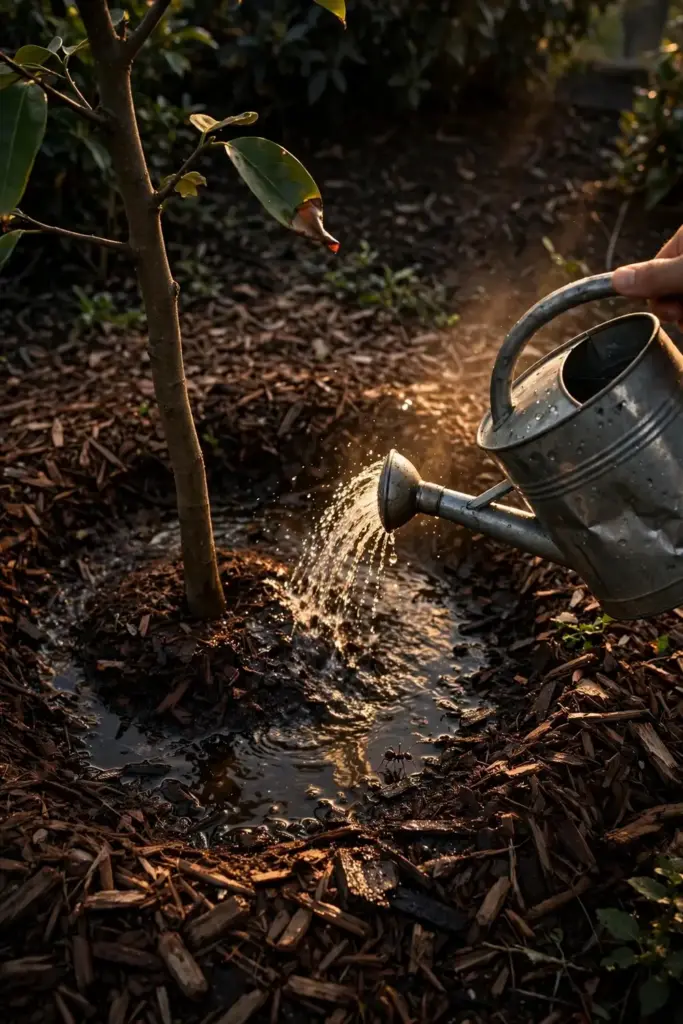
Young trees need consistent moisture to build the root system that will later support a 25-foot canopy. Ask IFAS calls for consistently moist soil for young trees, and grower guides specify deep watering weekly through the first year. Some sources set the minimum at six months, so plan on a full year of attention and treat the six-month mark as the minimum.
Deep watering means soaking the whole root zone, not sprinkling the surface. Shallow daily watering trains roots to stay near the surface, where they dry out fast and the tree blows over in wind. Once established, the tree tolerates short dry spells, but steady moisture still gives the best fruit. Mulch helps hold that moisture, and pulling it back from the trunk prevents the bark from staying wet.
13. Fertilize Every 2 to 3 Months With 8-3-9 or 10-10-10
Answer: Feed with a balanced fertilizer every 2 to 3 months during active growth, from spring through early fall. Use 8-3-9 or 10-10-10, and watch for iron chlorosis in alkaline soils.
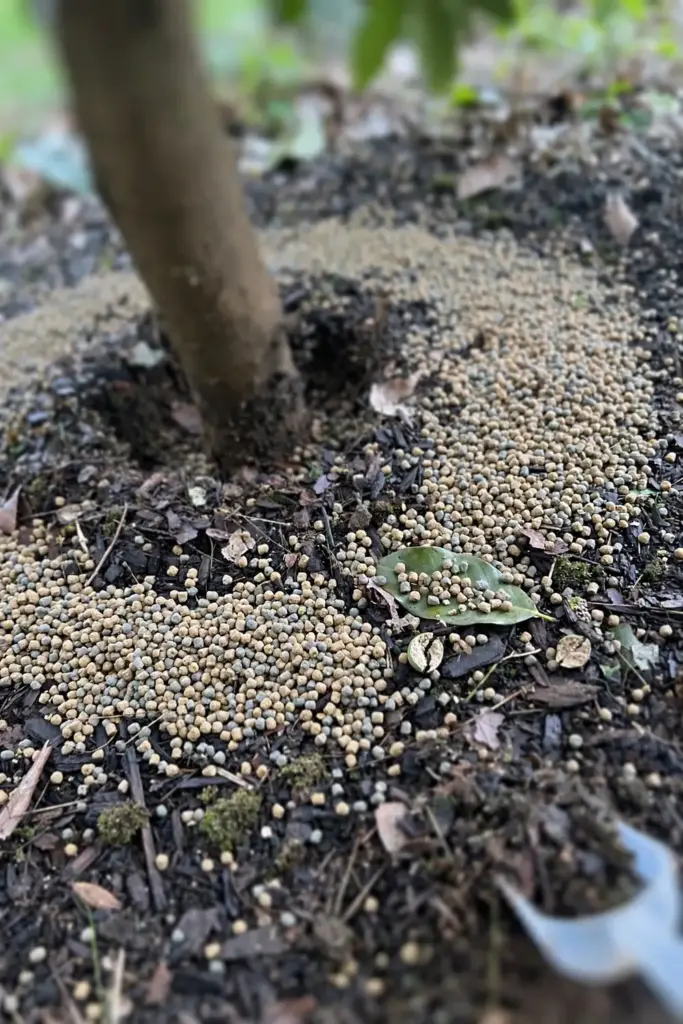
The feeding rhythm is simple: little and often through the growing season. Epic Gardening and Gardening Know How recommend fertilizing every 2 to 3 months with 8-3-9 or 10-10-10. Fairchild Garden’s own schedule fertilizes three times a year, in March, July, and September, which sits inside the same rhythm. A balanced slow-release formula through spring and early fall keeps growth steady without pushing soft, frost-tender flushes late in the year.
One nutrient problem is specific to this tree. Ask IFAS’s caimito publication (HS1069/HS309) flags iron deficiency in alkaline or high-pH soils, which almost nobody else covers. If new leaves emerge yellow while the veins stay green, especially on trees in limestone or high-pH soil, that is iron chlorosis. Correct the soil pH toward the 6.0 to 6.5 sweet spot and apply chelated iron according to the label. Guessing at extra nitrogen when the real problem is unavailable iron only makes the yellowing worse.
14. Train a Single Leader and Prune for Airflow
Answer: Train the young tree to one central leader, then prune annually to remove dead, diseased, and crowded branches. Keep the canopy at a height you can manage.
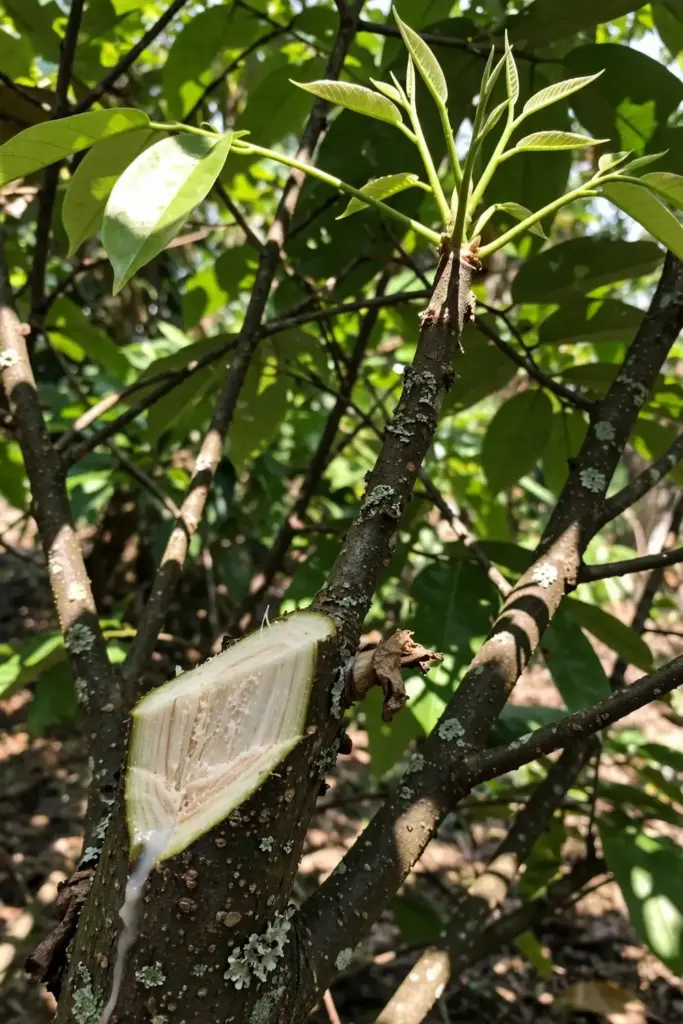
Ask IFAS recommends training the tree to a single central leader and pruning out dead, diseased, and crowded branches. A single leader gives the canopy a strong skeleton that handles wind and heavy fruit loads. Start shaping in the first two years, when cuts are small and heal fast.
Fairchild Garden advises annual pruning to keep the tree at a manageable height, which matters more than it sounds. A 40-foot tree you cannot reach is a tree you cannot inspect, spray, or harvest. Each year, thin crossing branches so air moves through the canopy, and cut back anything dead or diseased to clean wood. Sterilize your tools between cuts when disease is present.
One useful byproduct: Purdue notes that cuttings of mature wood root well. When you prune, the larger healthy cuttings are propagation material for a friend or a backup tree of your own.
15. Let the Self-Fruitful Flowers Do Their Work
Answer: Star apple trees are self-fruitful, so a single tree can set fruit without a pollination partner. You do not need two trees.
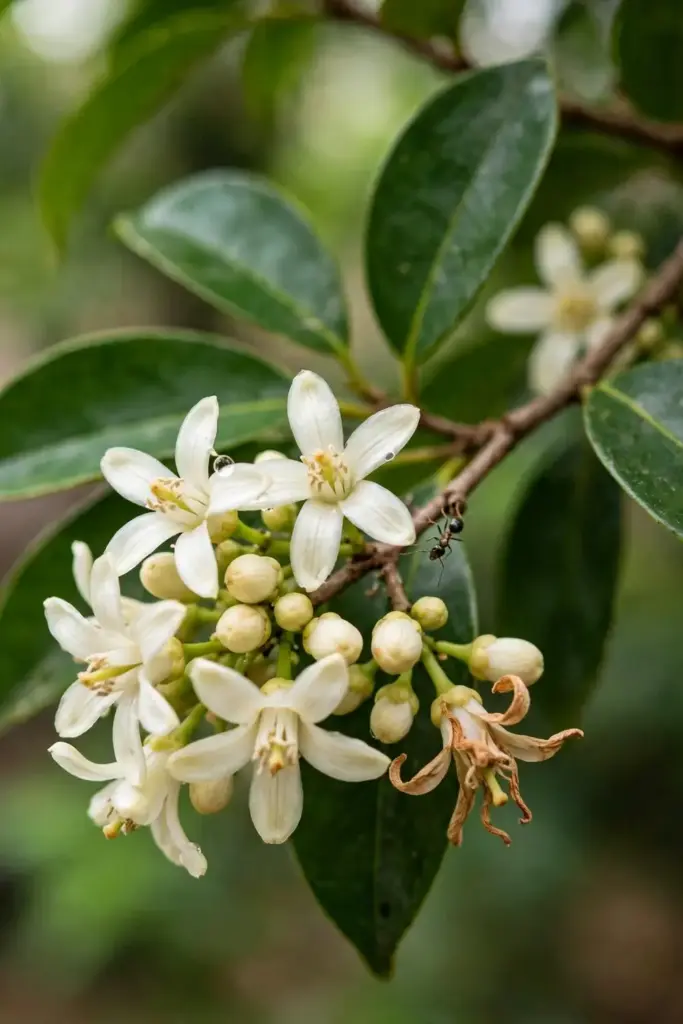
Pollination gets thin coverage in most guides because there is little to do. Epic Gardening describes the tree as self-fruitful, and it can be grown from seed or bought as saplings with no pollinator required. One healthy tree in good conditions sets fruit on its own.
That does not mean fruit set is automatic. Flower drop is the real issue, and the next section covers it. Wind protection during bloom helps more than any pollination trick, because the flowers themselves are fertile. If your tree blooms heavily and holds fruit, nothing about pollination needs fixing.
16. Block Aphids, Scale, and Fruit Flies Early
Answer: Watch for aphids and scale on new growth and fruit flies around ripening fruit. Catch them early with horticultural oil or insecticidal soap, and prevent root rot with drainage.
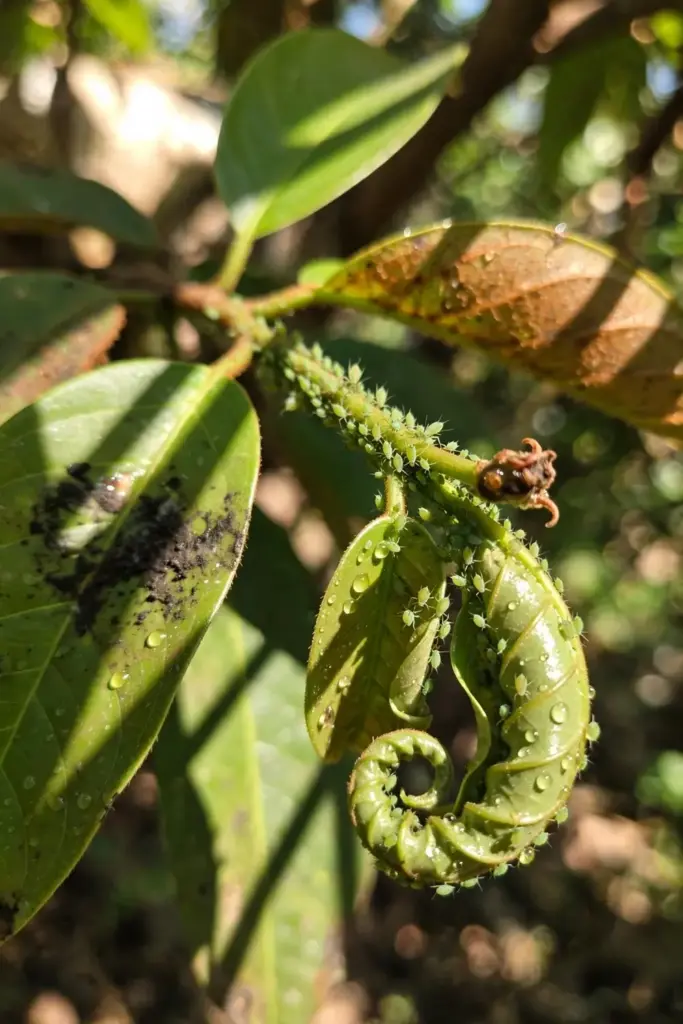
The pest list for star apple is short but real. The growingfruits.com care guide, cited in the Brave results, names aphids, scale, and fruit flies as the main insect problems, plus leaf spot and root rot on the disease side. Aphids and scale cluster on tender new shoots and the undersides of leaves, where they suck sap and excrete honeydew that invites sooty mold.
Horticultural oil and insecticidal soap handle most soft-bodied infestations if you spray thoroughly, covering leaf undersides. Repeat at the label interval, because one spray rarely finishes a scale population. For fruit flies, pick up fallen fruit promptly and harvest on time, since overripe and fallen fruit are the breeding sites. Root rot is almost always a drainage problem, not a pathogen you spray away. If the soil stays soggy, fix the drainage first and treat the tree second.
17. Diagnose Wind-Dropped Flowers and Other Bearing Trouble
Answer: The most common bearing problem is wind and rain knocking flowers off before fruit sets. Plant in a sheltered spot and avoid overhead watering during bloom.
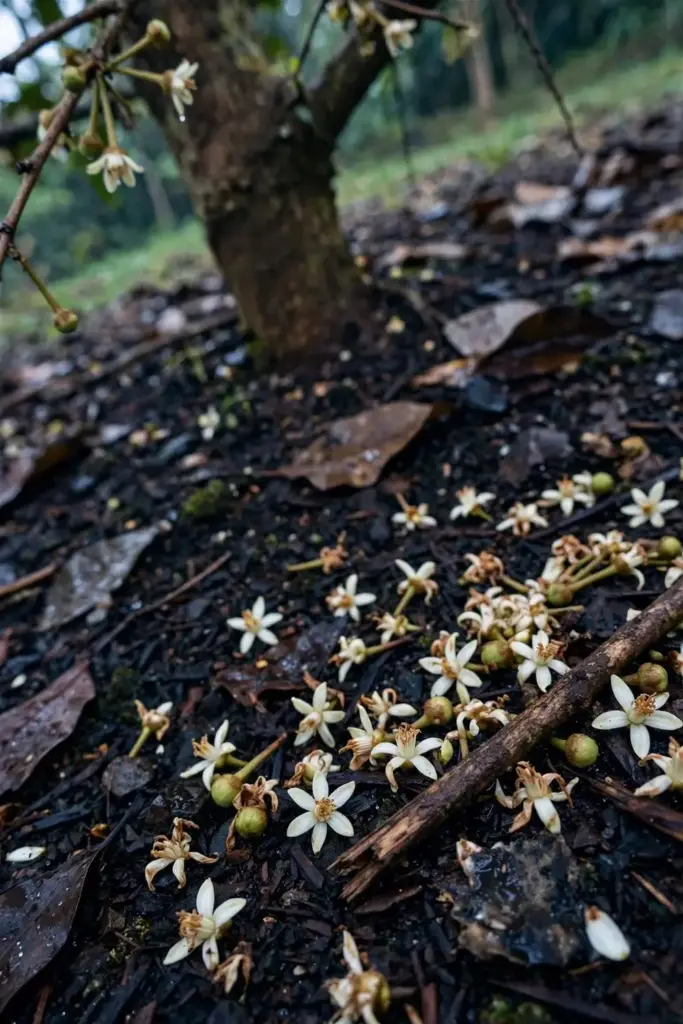
This is the complaint that shows up in forums. A long-running thread on selfsufficientculture.com puts it plainly: growing the tree is easy, while getting it to bear fruit takes real attention, because wind and rain knock flowers off before they set. If your tree blooms and then sheds everything, weather is the first suspect, not nutrition.
Site the tree where a building, fence, or windbreak softens the prevailing wind, especially during the flowering window. Avoid overhead irrigation while flowers are open, since beating water off blossoms does the rain’s job for it. After fruit sets, thin overcrowded clusters so the remaining fruit sizes up properly.
If the tree grows well but never blooms, check three things in order: age (a seedling under 5 years may be immature), sunlight (shade suppresses flowering), and nutrition (excess nitrogen pushes leaves at the expense of blooms). Fix them in that order, because impatience is the most common diagnosis of all.
18. Grow in a Container Only If You Accept the Limits
Answer: A large, deep pot can work for a dwarf or young tree that moves indoors below 40°F. Expect smaller fruit, slower growth, and more watering than an in-ground tree.
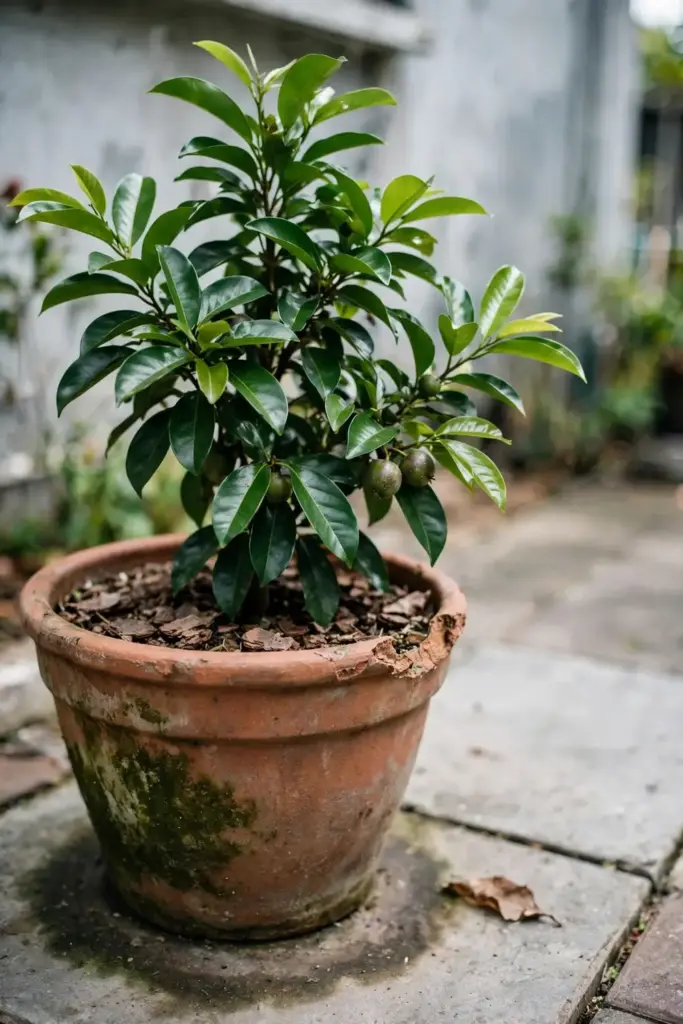
Containers are the contested zone. Growingfruits.com and guerrillahomesteader.com publish container guides with dwarf-tree tips, while Epic Gardening says star apple is not suited for indoors. The honest middle ground is that a container tree is possible but compromised: it stays smaller, fruits less, and demands constant attention.
Use the largest, deepest pot with drainage holes you can move. A well-draining sandy loam mix in the same 6.0 to 6.5 pH range as in-ground planting works. Containers dry out far faster than ground soil, so check moisture daily in warm weather. Move the pot indoors or into a greenhouse when nights approach 40°F (4°C), since a potted root ball freezes far sooner than soil in the ground.
Feed container trees on the same 2 to 3 month rhythm but in smaller doses, since nutrients wash out of pots with every watering. Repot or root-prune when growth stalls, which usually means every two to three years. Treat a container tree as a long trial, not a permanent orchard, and move it into the ground the moment you have a suitable frost-free site.
19. Pick at Peak Gloss 3 to 4 Months After Flowering
Answer: Harvest 3 to 4 months after flowering, when the fruit turns slightly soft and the skin looks glossy or slightly wrinkled. Do not pick early: star apples do not ripen properly off the tree.
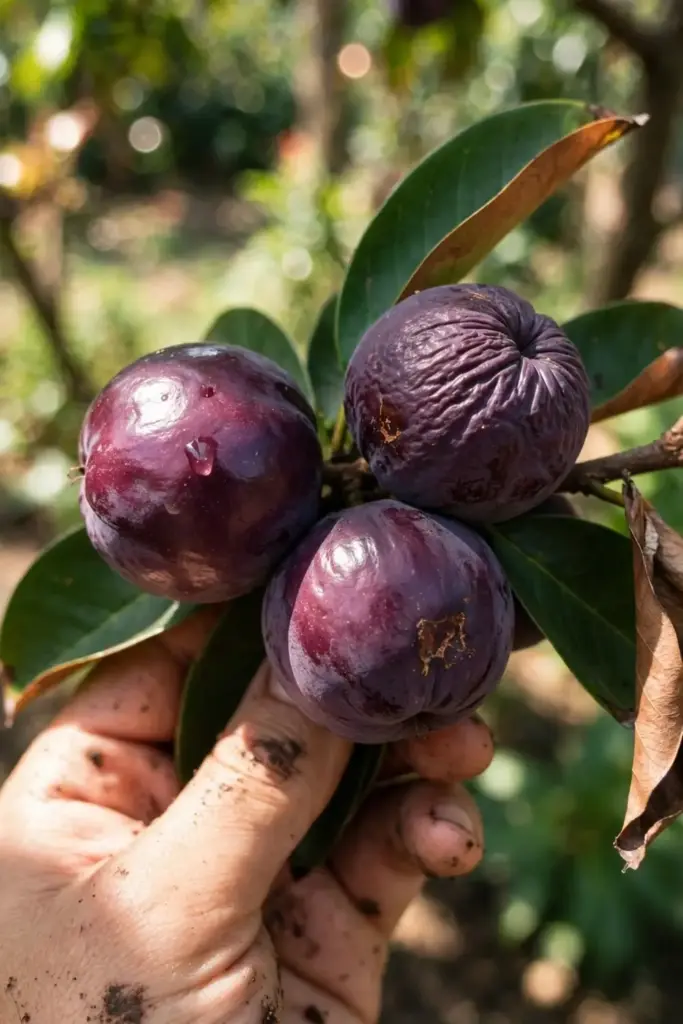
Ripeness has a narrow window, and picking too early is the mistake that wastes a season. Ask IFAS gives 3 to 4 months after flowering as the harvest timing, with slightly soft fruit and glossy or slightly wrinkled skin as the signs. The skin color deepens to its mature purple or green, and a ripe fruit smells faintly sweet at the stem end.
The critical rule is that star apples do not ripen properly if picked too early or left to ripen off the tree. A hard, dull fruit picked in hope will stay disappointing. Squeeze gently: ripe gives slightly under the thumb, like a ripe plum. In the tropics, harvest season typically runs from late winter into early spring.
Harvest by hand or with a pole picker for high fruit, and handle the fruit gently. The milky pulp bruises easily once ripe. Eat fresh fruit within a few days, or refrigerate to stretch it a little longer. Mango ripens on a similar tropical schedule, so a mixed home orchard can keep the harvest coming across the season.
Frequently Asked Questions
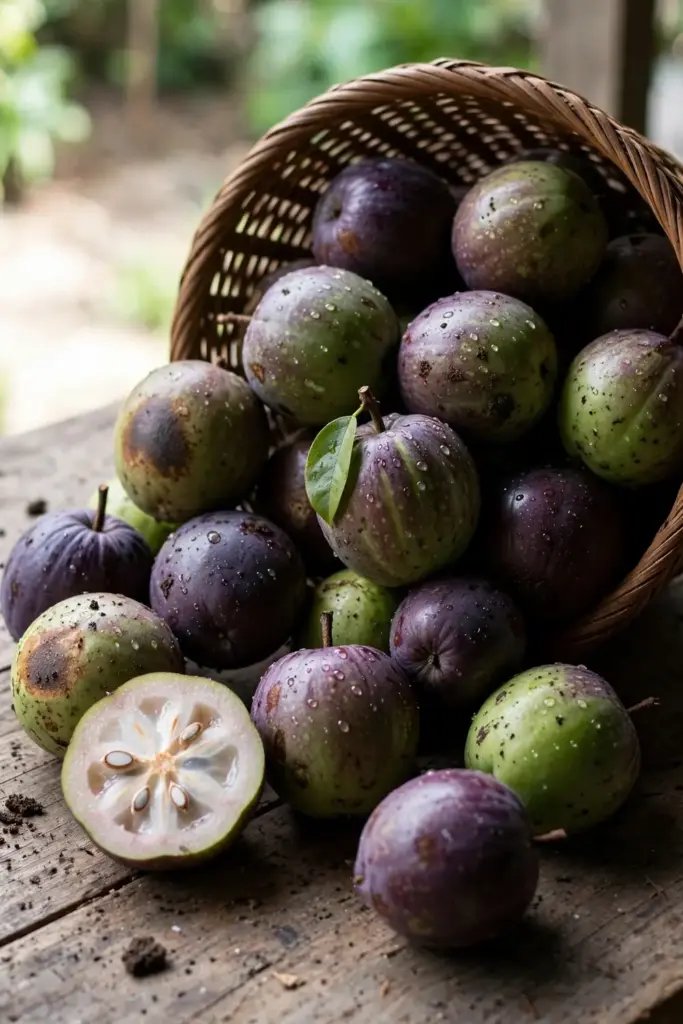
A grafted nursery tree typically fruits in 3 to 4 years, while a tree grown from seed takes 5 to 10 years. Those ranges come from Ask IFAS. Cuttings of mature wood root well, according to Purdue, but they are slower than grafting for a home grower. If you want fruit sooner and fruit that matches the parent variety, buy a grafted tree.
Mature trees reach 25 to 100 feet tall with a wide canopy, depending on variety, climate, and care. That range comes from Ask IFAS. The 25-foot spacing rule exists because the canopy spreads wide, not just tall. Annual pruning at a manageable height, as Fairchild Garden recommends, keeps a home tree harvestable.
No. Star apple is Chrysophyllum cainito, a Sapotaceae evergreen with round purple or green fruit whose pulp forms a star when cut crosswise. Star fruit is Averrhoa carambola, a completely different tree with ridged yellow fruit. The two get confused constantly, so always check the botanical name before following any growing advice.
You can, in a large deep pot, but with trade-offs. Container trees stay smaller, fruit less, and need daily moisture checks plus feeding every 2 to 3 months. Move the pot indoors or under cover when nights approach 40°F (4°C), since potted roots freeze faster than ground soil. Epic Gardening says the tree is not suited for indoors, so treat containers as a compromise.
No. Star apple trees are self-fruitful, so a single tree sets fruit on its own. You do not need a second tree or hand pollination. If your tree blooms but drops its flowers, the cause is usually wind or rain during bloom, not a pollination failure. Shelter the tree during flowering and avoid overhead watering while blossoms are open.
Wind and rain are the usual cause. A forum thread on selfsufficientculture.com notes that bearing fruit is tricky because wind and rain knock flowers off before they set. Site the tree behind a windbreak, skip overhead watering during bloom, and check that the tree is mature enough, getting full sun, and not overloaded with nitrogen.
Your First Star Apple Is Worth the Wait
Answer: Pick the right fruit, give it warmth and space, and choose seed or grafted with open eyes about the timeline. The tree does the rest.
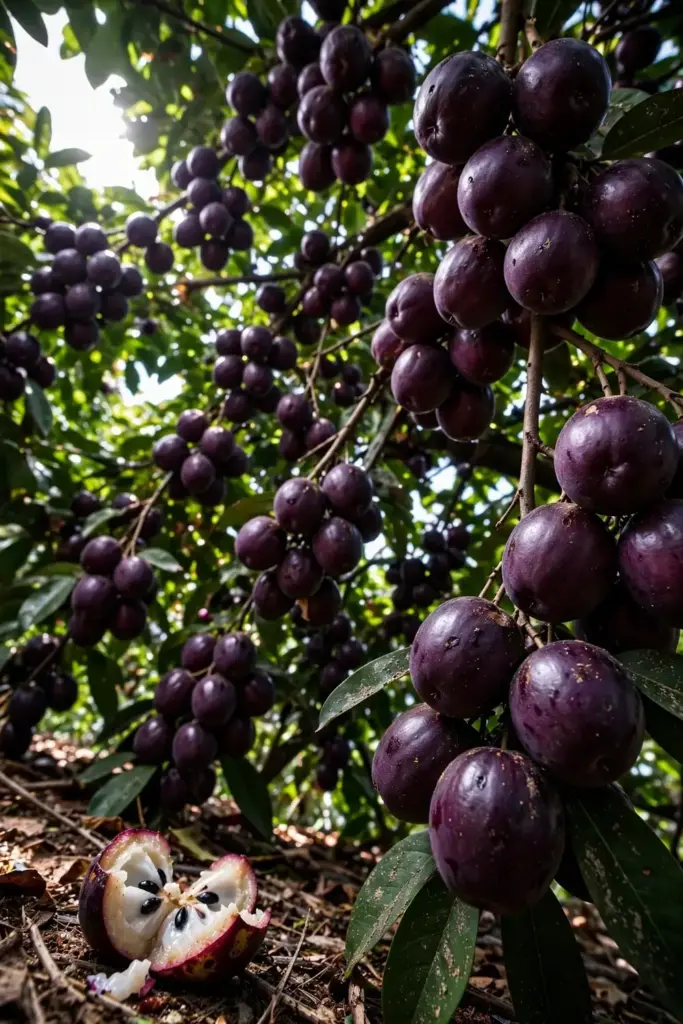
Star apple rewards the grower who plans. Confirm the species, match your climate to the 32°F line, and start with fresh seed or a clean grafted tree. Water deeply, feed on schedule, prune for airflow, and pick each fruit at peak gloss. Whether your first harvest comes in year three or year eight, it will taste like patience paying off.








