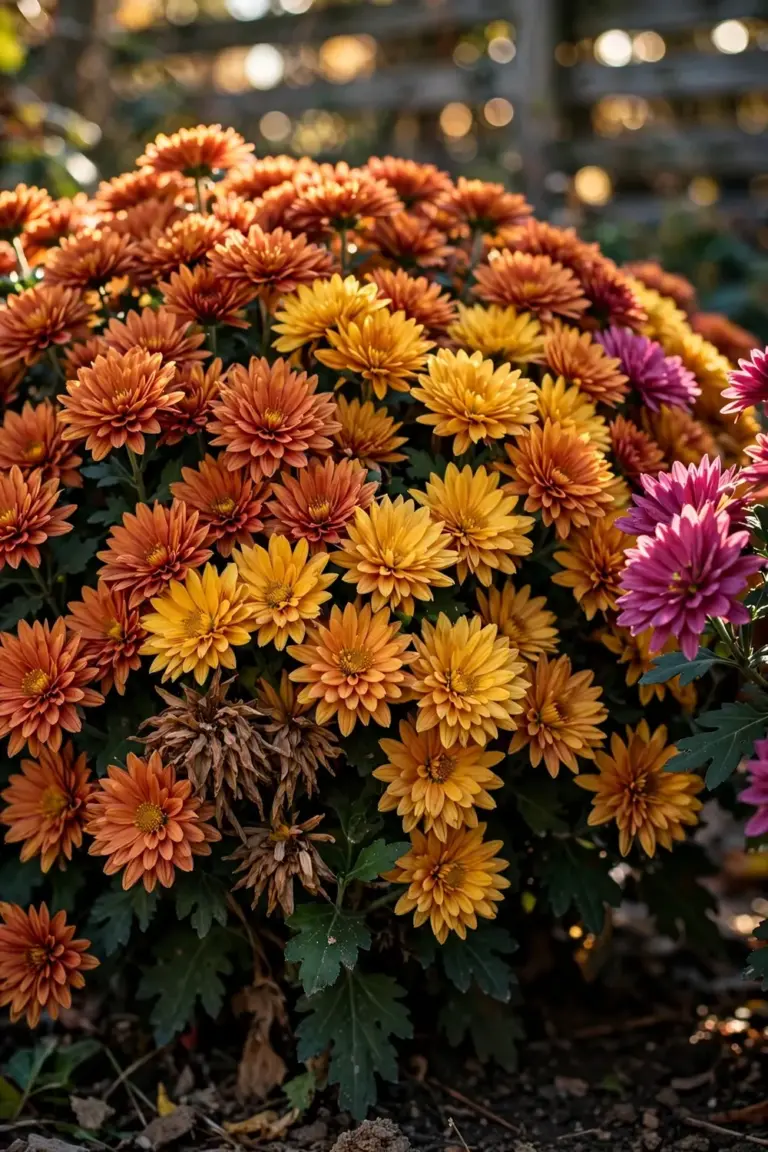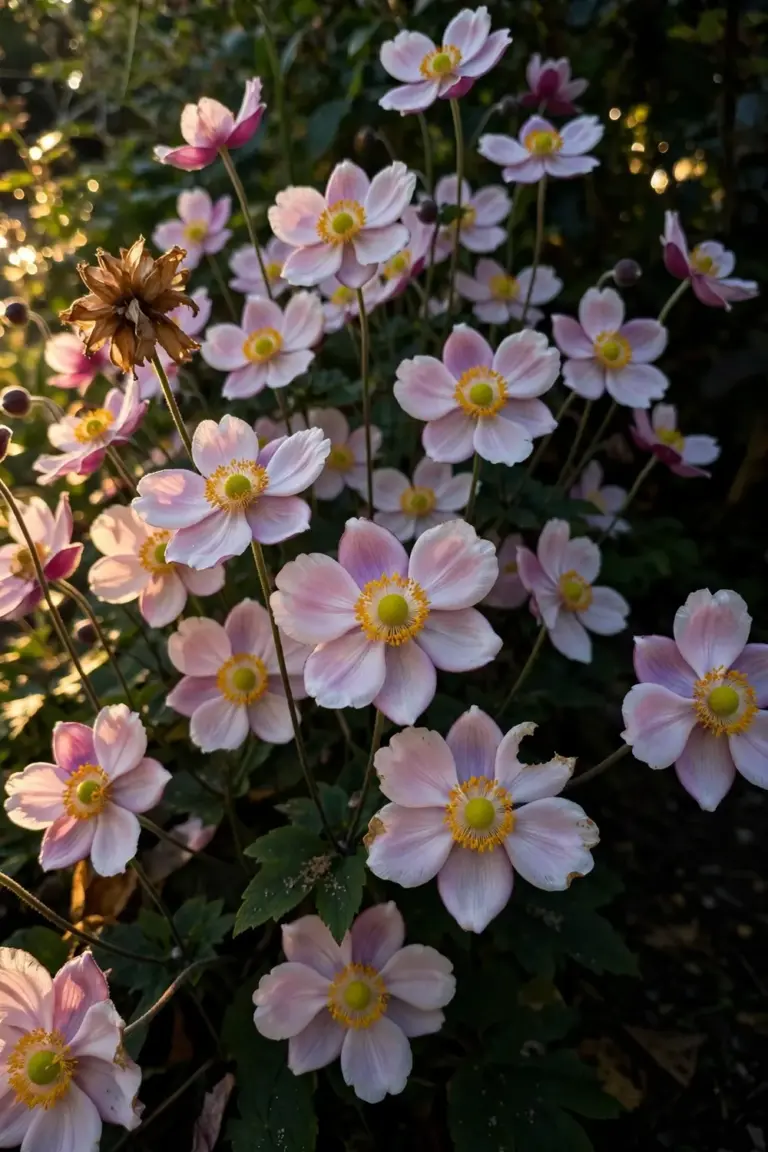

Plant 16 asters this fall and your October garden feeds migrating monarchs instead of sitting empty. That is the whole trick behind fall asters: native daisies that bloom from August into November, carry more late-season pollinators than garden mums, and return every spring without replanting. The rest of this page is 16 species and named cultivars, each tagged by height, bloom window, zone, and sun, plus the care that keeps them standing: pinching, mildew control, spring division, and winter stems.
Plant nursery asters 6 to 8 weeks before your first hard freeze so roots anchor before the soil locks up. Spring planting works too, and fall-planted asters that go in early enough establish faster than spring ones because cool soil holds moisture longer.
For the 21-item fall-bloomer roster that lists asters among many, see the fall blooming perennials article. For vase life and harvest stage, fall cut flowers. This page covers asters alone: the species, the named cultivars, the native and pollinator framing, and the species-level care.
Asters vs Mums: the Honest Comparison
Garden centers sell mums by the truckload every September, and most of those mums are florist types that die with the first hard winter. Asters are hardy perennials. A New England aster planted this fall blooms next August and every August after, while a florist mum planted the same week is compost by March.
The bloom windows overlap but asters stretch further. Mums peak in September and October. Asters start in August with Italian aster and run into November with Tatarian and aromatic asters. Monarch butterflies migrating south in September and October find almost nothing left blooming except asters and goldenrods.
Skip the wall of identical potted mums. Do one drift of five New England asters behind a low row of ‘Purple Dome’ and watch which plants the bees choose.
The 16 Asters at a Glance
Every aster below carries five tags. Species: the botanical name. Height: mature height in meters from nursery reference data. Bloom: the bloom window. Zone: USDA hardiness zones from nursery reference data. Sun: full sun means 6 or more hours of direct light each day.
| Aster | Height | Bloom | Zone |
|---|---|---|---|
| New England aster | 0.9-1.8 m | Aug-Oct | 4-8 |
| Tatarian aster | 1.5-2.1 m | Sep-Nov | 3-8 |
| ‘Alma Potschke’ | 0.9-1.2 m | Aug-Oct | 4-8 |
| ‘Purple Dome’ | 0.3-0.45 m | Aug-Sep | 4-8 |
| ‘Wood’s Purple’ | 0.3-0.45 m | Aug-Sep | 4-8 |
| ‘Professor Kippenburg’ | 0.4-0.6 m | Aug-Sep | 4-8 |
| ‘Snow Cushion’ | 0.25-0.4 m | Aug-Sep | 4-8 |
| Smooth aster | 0.6-1.2 m | Aug-Oct | 3-8 |
| Blue wood aster | 0.6-1.2 m | Aug-Oct | 3-8 |
| Calico aster | 0.6-1.5 m | Aug-Oct | 3-8 |
| Aromatic aster | 0.3-0.6 m | Sep-Oct | 3-8 |
| Heath aster | 0.6-1.2 m | Sep-Oct | 3-8 |
| Italian aster | 0.4-0.7 m | Jul-Sep | 4-7 |
| Frikart’s aster ‘Mönch’ | 0.6-0.9 m | Jul-Oct | 5-8 |
| ‘Lady in Blue’ | 0.3-0.45 m | Aug-Sep | 4-8 |
| Alpine aster | 0.15-0.3 m | May-Jun | 4-7 |
Height and zone figures above are standard nursery reference data, stated collectively here rather than cited per row.
Tall Natives for the Back of the Border
1. New England Aster
Species: Symphyotrichum novae-angliae, 0.9-1.8 m tall and blooming August to October. Zone 4-8, sun full sun to part shade.

This is the anchor species of the whole article. Ohio State’s New England aster profile calls it an excellent plant for the fall garden and a late-season pollen source for bees and other pollinators, growing 3 to 6 feet tall with a 2 to 3 foot spread. Maryland’s native plant profile notes it can reach six feet, blooms August through October, and feeds monarchs stocking up for migration.
Give it moist, rich soil and it tolerates clay once established. The lower leaves dry up when it blooms, which is normal and not disease. Plant it where the bare ankles hide behind shorter perennials.
Failure it avoids: a back border with nothing blooming after Labor Day.
2. Tatarian Aster
Species: Aster tataricus, a late-fall giant reaching 1.5-2.1 m and blooming September to November. Zone 3-8, sun full sun.
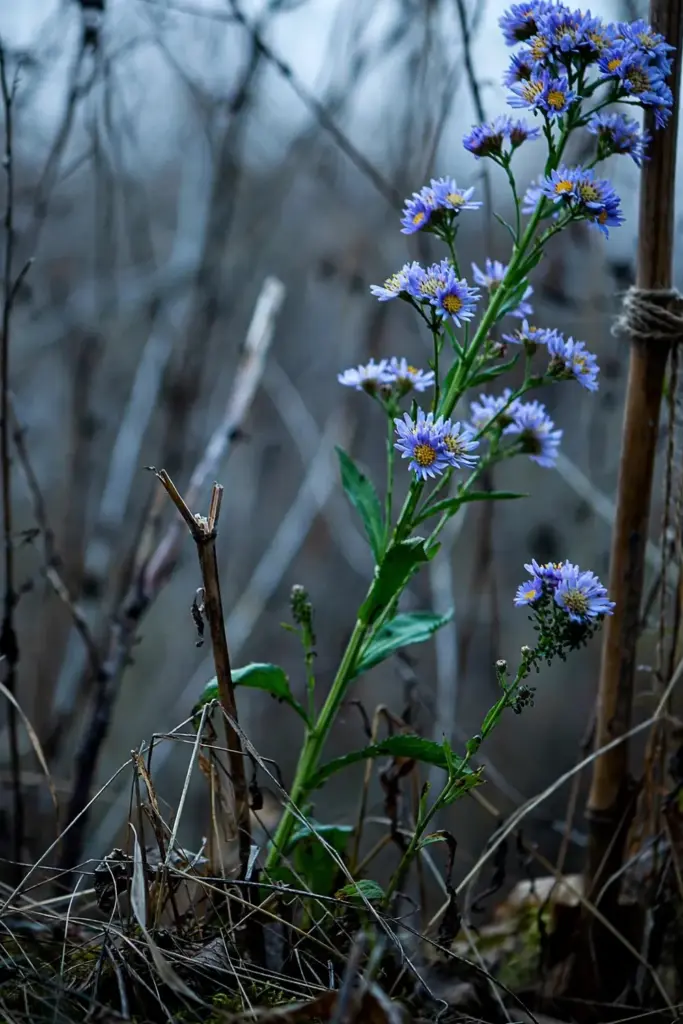
The latest bloomer on this list. Iowa State’s asters and mums guide describes it as a strong-growing species reaching five to seven feet tall, throwing lavender-blue flowers in late fall when almost everything else has finished. It is the answer to “what blooms in November.”
It needs room and it needs the back of the border. Stake it in windy sites or let it lean against a fence. Do not plant it in front of anything shorter than a meter.
Failure it avoids: the November garden that looks dead while the calendar still says fall.
3. New England Aster ‘Alma Potschke’
Species: Symphyotrichum novae-angliae ‘Alma Potschke’, 0.9-1.2 m tall and blooming August to October. Zone 4-8, sun full sun.

A selected form of the species with vivid pink-red flowers and a more compact habit than the straight species. It keeps the pollinator value and the late bloom while fitting a mid-border slot instead of demanding the back row.
Pinch it once in early summer and it branches into a fuller plant with more flower heads. Iowa State’s aster guide recommends cutting asters back slightly in late spring or early summer for more compact plants with additional flowers.
Failure it avoids: a New England aster that flops across the path by September.
Compact Asters for the Front Row
4. New England Aster ‘Purple Dome’
Species: Symphyotrichum novae-angliae ‘Purple Dome’, 0.3-0.45 m tall and blooming August to September. Zone 4-8, sun full sun.

The most reliable dwarf aster in the trade. Iowa State Extension lists ‘Purple Dome’ among the most reliable asters for smaller spaces, forming a dense mound that stays under 24 inches tall. It needs no staking and no pinching.
Use it as the front edge in front of its tall cousins. The color echoes the species behind it, which reads as one designed drift instead of two separate plants.
Failure it avoids: front-of-border gaps where tall asters show bare stems.
5. New York Aster ‘Wood’s Purple’
Species: Symphyotrichum novi-belgii ‘Wood’s Purple’, 0.3-0.45 m tall and blooming August to September. Zone 4-8, sun full sun.

The Wood’s series was bred for compact habit and mildew resistance, and ‘Wood’s Purple’ is the best known. New York asters as a group are more mildew-prone than New England types, so a resistant dwarf earns its place.
Plant in groups of five or seven for a solid block of color. Single specimens of dwarf asters read as dots; drifts read as design.
Failure it avoids: a mildew-white New York aster by late August.
6. New York Aster ‘Professor Kippenburg’
Species: Symphyotrichum novi-belgii ‘Professor Kippenburg’, 0.4-0.6 m tall and blooming August to September. Zone 4-8, sun full sun.

A mid-compact New York aster with rich lavender-blue flowers. It sits between ‘Purple Dome’ and the tall species in height, which makes it the bridge plant in a layered border: dwarfs in front, ‘Professor Kippenburg’ in the middle, species asters behind.
Give it the same air circulation treatment as all New York asters. Space it a full 45 cm from neighbors.
Failure it avoids: the awkward height gap between edging plants and back-border giants.
7. New York Aster ‘Snow Cushion’
Species: Symphyotrichum novi-belgii ‘Snow Cushion’, 0.25-0.4 m tall and blooming August to September. Zone 4-8, sun full sun.

The white option. Most asters on this list are purple, blue, or pink, and a white drift stops the border from reading as a purple blur. ‘Snow Cushion’ stays low enough for the very front edge or a container.
White flowers show every spent bloom, so shear it lightly after the first flush if you want a tidy edge. In a naturalistic planting, leave it alone.
Failure it avoids: a fall border with no light values in it.
Woodland and Shade-Tolerant Asters
8. Smooth Aster
Species: Symphyotrichum laeve, 0.6-1.2 m tall, blooming August to October. Zone 3-8, sun full sun to part shade.

The shade answer. Smooth aster tolerates more shade than most asters on this list while keeping the classic blue daisy flowers. Iowa State’s aster guide lists smooth aster among the good choices for its range of garden situations.
It also handles drier shade once established, which makes it one of the few fall bloomers for the dry strip under deciduous trees. Plant it where the lawn thins out under the canopy edge.
Failure it avoids: the shade bed that goes green and flowerless after August.
9. Blue Wood Aster
Species: Symphyotrichum cordifolium, 0.6-1.2 m tall and blooming August to October. Zone 3-8, sun part shade.
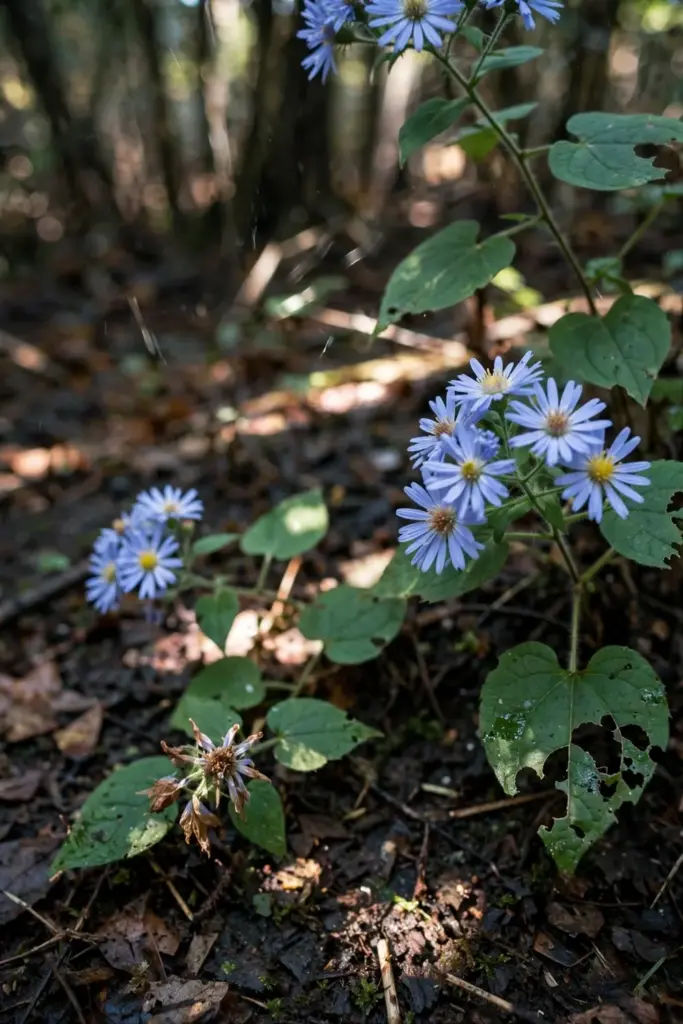
A true woodland edge plant. Blue wood aster evolved for dappled light and holds its pale blue flowers in part shade where sun-lovers stretch and flop. It self-sows gently, which suits a naturalized planting and annoys a formal one.
Pair it with ferns and hostas that have finished their season. The aster carries the bed from August on while the shade perennials rest.
Failure it avoids: the woodland edge that peaks in May and disappears by fall.
10. Calico Aster
Species: Symphyotrichum lateriflorum, 0.6-1.5 m tall and blooming August to October. Zone 3-8, sun full sun to part shade.
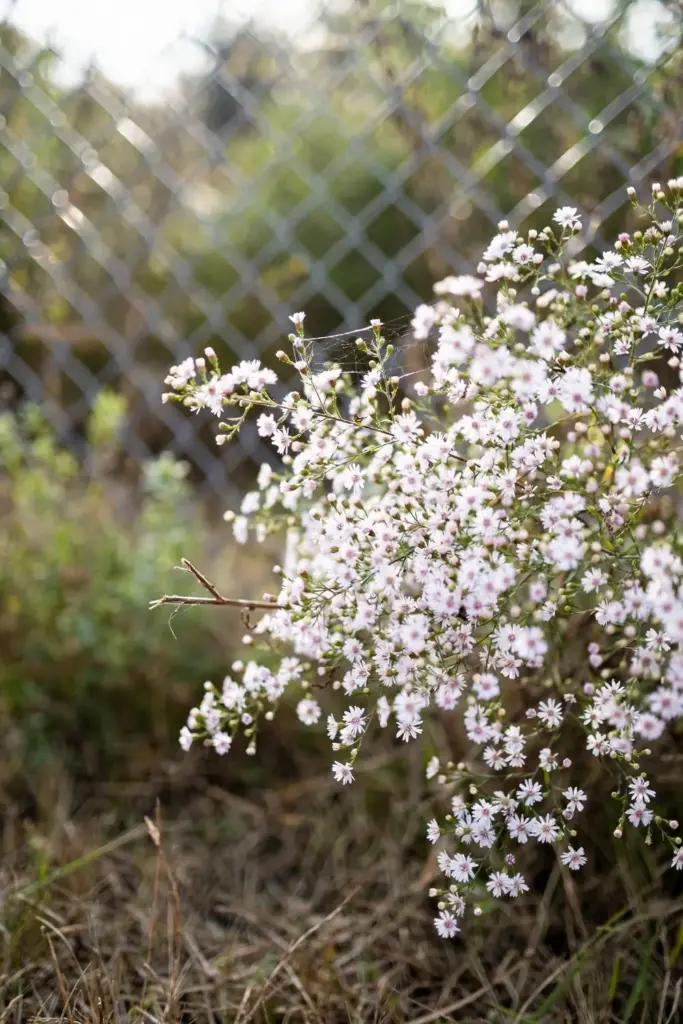
Hundreds of small white flowers with pink centers on branching stems, blooming over a long window. The effect is a cloud rather than a clump, which makes calico aster the best filler among the species here.
It tolerates poor soil and some drought. Cut it back by half in June if you want it bushier; left alone it leans into a loose, airy habit.
Failure it avoids: the stiff, formal look that big-flowered asters can impose.
Late Bloomers and Specialists
11. Aromatic Aster
Species: Symphyotrichum oblongifolium, 0.3-0.6 m tall, blooming September to October. Zone 3-8, sun full sun.

The foliage smells of balsam when crushed, which is the trait behind the name. Iowa State Extension calls aromatic asters such as ‘October Skies’ and ‘Raydon’s Favorite’ outstanding native pollinator plants. The two named cultivars are the ones to buy: compact, floriferous, and later than most.
It handles heat and poor soil better than almost anything else here. In hot climates it outperforms New England aster, which sulks in sustained heat and drops lower leaves early.
Failure it avoids: the late-September gap between the early asters and the first frost.
12. Heath Aster
Species: Symphyotrichum ericoides, 0.6-1.2 m tall and blooming September to October. Zone 3-8, sun full sun.
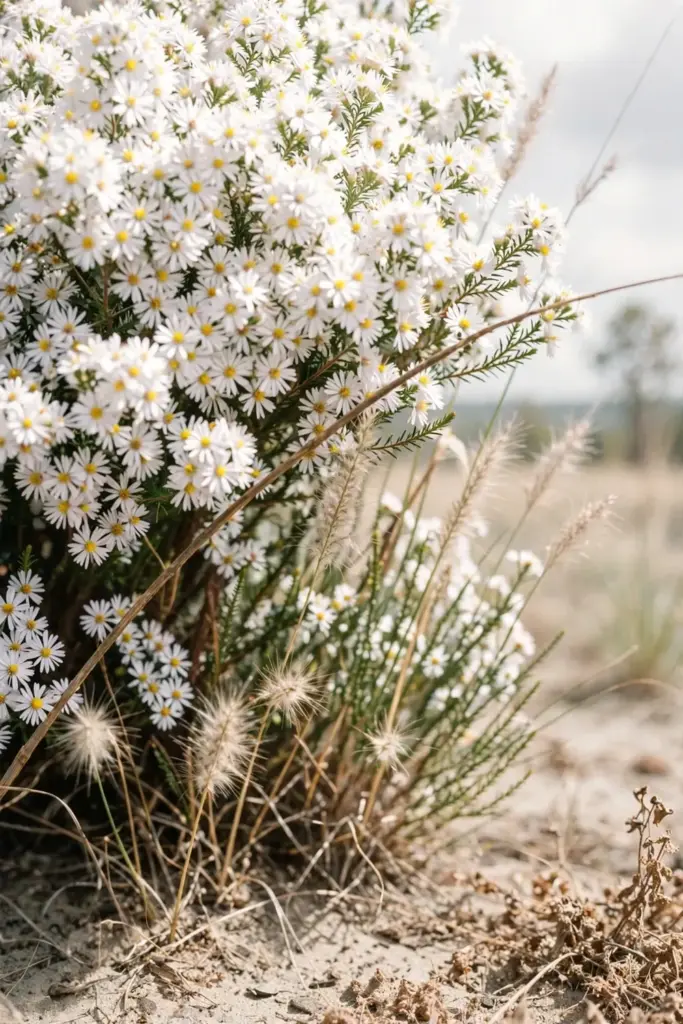
Fine, needle-like foliage covered in small white flowers. Heath aster is a prairie plant that tolerates drought and poor soil, and its cloud of bloom pairs well with ornamental grasses.
Do not overwater it. Rich, wet soil makes it floppy and mildew-prone, which defeats the whole point of a tough prairie species.
Failure it avoids: the dry, lean soil where fussier asters rot.
13. Italian Aster
Species: Aster amellus, 0.4-0.7 m tall and blooming July to September. Zone 4-7, sun full sun.

The early one. Italian aster starts in midsummer, which extends the aster season backward into the gap before the native species open. Iowa State’s guide values it for drought tolerance and a long bloom season, with cultivars like ‘King George’ performing well in sunny, well-drained sites.
It wants sharp drainage. Heavy clay that stays wet in winter kills it faster than cold does.
Failure it avoids: the July-to-August hole before the main aster show.
14. Frikart’s Aster ‘Mönch’
Species: Aster × frikartii ‘Mönch’, 0.6-0.9 m tall with the longest bloom window here, July to October. Zone 5-8, sun full sun.

A hybrid with the longest bloom window on this list, running July into October. The lavender-blue flowers are large for an aster and keep coming if you deadhead.
It is less cold-hardy than the American species, so in zone 5 give it a sheltered spot and winter mulch. In zones 6 and warmer it is carefree.
Failure it avoids: the border that blooms in waves with dead gaps between them.
15. New York Aster ‘Lady in Blue’
Species: Symphyotrichum novi-belgii ‘Lady in Blue’, 0.3-0.45 m tall and blooming August to September. Zone 4-8, sun full sun.

A compact, clear-blue New York aster for the front of the border or a container. Like the other dwarfs, it needs no staking, but it does want the mildew-prevention routine: air, spacing, and watering at the soil line.
Combine it with ‘Snow Cushion’ for a blue-and-white front edge that reads crisp against the taller purples behind.
Failure it avoids: containers that look tired by September.
16. Alpine Aster
Species: Aster alpinus, 0.15-0.3 m tall and blooming May to June. Zone 4-7, sun full sun.

The exception that proves the rule. Alpine aster blooms in late spring, not fall, and belongs in rock gardens and the front of sunny borders. It is here so you do not buy it expecting October flowers.
If you want spring asters and fall asters in one bed, plant alpine aster at the front edge and let the tall fall species rise behind it. Two aster seasons, one border.
Failure it avoids: buying the wrong aster for the wrong season.
Plant 6 to 8 Weeks Before Your First Hard Freeze
Fall planting works when roots have time to anchor. For asters the rule is simple: nursery plants go in 6 to 8 weeks before the first hard freeze, in soil that drains. The fall planting guide has the full timing tables by crop and zone.
Spring planting is the safer default in zones 3 and 4, where the freeze comes early. In zones 6 and warmer, fall planting gives asters a head start because cool, moist soil grows roots while the tops rest.
Water new plants deeply at planting and then leave them alone. Asters rot in soggy soil faster than they die of drought.
Pinch Before Midsummer and Stake the Tall Ones
Pinching controls height and multiplies flowers. Ohio State’s aster guidance says pinching back stems several times before mid-July keeps plants stockier and can remove the need for staking. Maryland’s native plant profile suggests pruning one-third of the plant in early summer for the same effect.
The rule covers the tall species: New England, Tatarian, and their cultivars. Stop pinching by mid-July so flower buds have time to form. Dwarf cultivars like ‘Purple Dome’ need no pinching at all.
Stake anything over a meter in a windy or rich site. Slide a single grow-through support over the plant in June; the foliage swallows it completely by August.
Keep Powdery Mildew Off the Leaves
Powdery mildew is the signature aster disease: white coating on the upper leaf surfaces, worst in late summer. Iowa State’s aster guide names good air circulation as the main defense, and the mechanism is simple. Crowded, damp foliage feeds the fungus; spaced, dry foliage starves it.
Three rules hold for every aster on this list. Space plants for mature width, not nursery-pot width. Water the soil, never the leaves. Cut stems back in late spring or early summer so the plant regrows with better-spaced foliage.
New York asters mildew first and worst. If mildew ruins them yearly in your garden, replace them with New England types or the resistant Wood’s series.
Divide Every Two to Three Years in Spring
Asters are vigorous growers and congested clumps bloom less. Dig and divide in early spring as new shoots emerge, keeping divisions with several growing points and replanting immediately at the same depth.
Discard the woody center of old clumps. It is exhausted and will not recover. The outer divisions are the future of the plant.
Spring division beats fall division for asters. Fall-planted divisions face winter with damaged roots, which is exactly the stress that kills borderline-hardy cultivars.
Leave the Stems Standing for Winter
Cutting asters to the ground in fall is the most common aster mistake. Iowa State Extension recommends leaving stems standing through winter and applying a protective mulch after the ground freezes. The stems shelter overwintering beneficial insects and the seed heads feed birds.
Cut the dead stems in early spring when new growth appears at the base. Compost them or chop them as mulch. The two minutes of spring cleanup buys a winter of habitat.
Plant These Next to Your Asters
Asters peak with company. Maryland’s native plant profile suggests planting New England aster along with late-blooming goldenrods, and the pairing is the classic for a reason: purple and gold, same bloom window, same pollinator crowd.
Ornamental grasses give tall asters something to lean on and hide their bare lower stems. Little bluestem and switchgrass both peak in fall color as the asters open.
For the front of the border, plant fall-blooming perennials like sedum and Japanese anemone at aster feet.
Mistakes That Ruin Asters
Planting florist mums and expecting asters. Florist mums are greenhouse annuals in most zones; asters are hardy perennials. Different plants, different outcomes.
Watering overhead every evening. Wet leaves plus crowded stems equals mildew by August. Water the soil in the morning.
Skipping the pinch on tall species. An unpinched New England aster hits 1.8 m and flops. Pinched twice before mid-July, it holds 1.2 m and stands up.
Dividing in fall. Spring divisions establish; fall divisions heave. Wait for the new shoots.
Cutting everything down in October. The stems are winter habitat and the seed heads feed birds. Leave them until spring.
Frequently Asked Questions
Do Asters Bloom in the Fall?
Yes. Most asters bloom from August into October or November, which is why they anchor fall gardens. Italian aster and Frikart’s aster start as early as July, Tatarian aster runs into November, and alpine aster is the exception that blooms in May and June.
How Tall Do Asters Grow?
It depends on the species. Dwarf cultivars like ‘Purple Dome’ stay under 45 cm. New England aster reaches 0.9 to 1.8 m, and Tatarian aster can hit 2.1 m. Check the tag table above and plant tall species at the back of the border.
What Sun Do Asters Need?
Full sun for most species, meaning 6 or more hours of direct light daily. Smooth aster and blue wood aster tolerate part shade, which makes them the picks for woodland edges and the dry shade under deciduous trees. Give new plantings afternoon shade in zones 8 and warmer.
How Do Fall Asters Differ From Garden Mums?
Asters are hardy perennials that return every year and feed late-season pollinators. Most garden-center mums are florist types grown as fall annuals and die in winter. Asters also bloom longer, from August into November depending on species, while mums peak in September and October.
Should I Divide My Asters?
Yes, every two to three years in early spring. Dig the clump as new shoots emerge, keep divisions with several growing points, discard the woody center, and replant at the same depth. Spring division establishes reliably; fall division risks winter heaving.
How Do I Prevent Powdery Mildew on Asters?
Space plants for mature width, water the soil instead of the leaves, and cut stems back in late spring so regrowth has better air circulation. New York asters are the most susceptible; if mildew strikes yearly, switch to New England types or the resistant Wood’s series.
Plant for the Pollinators, Not Just the Color
Asters earn their place twice: once in October color and once in the food web. Monarchs migrating south, native bees stocking winter nests, and the pearl crescent caterpillars that host on aster foliage all depend on plants most gardens skip. For seed-grown asters, the seed-starting guide on this site covers indoor timing. For bloom timing by zone, the fall garden start guide has the frost-date math. Plant the asters this fall and the October garden takes care of itself.