
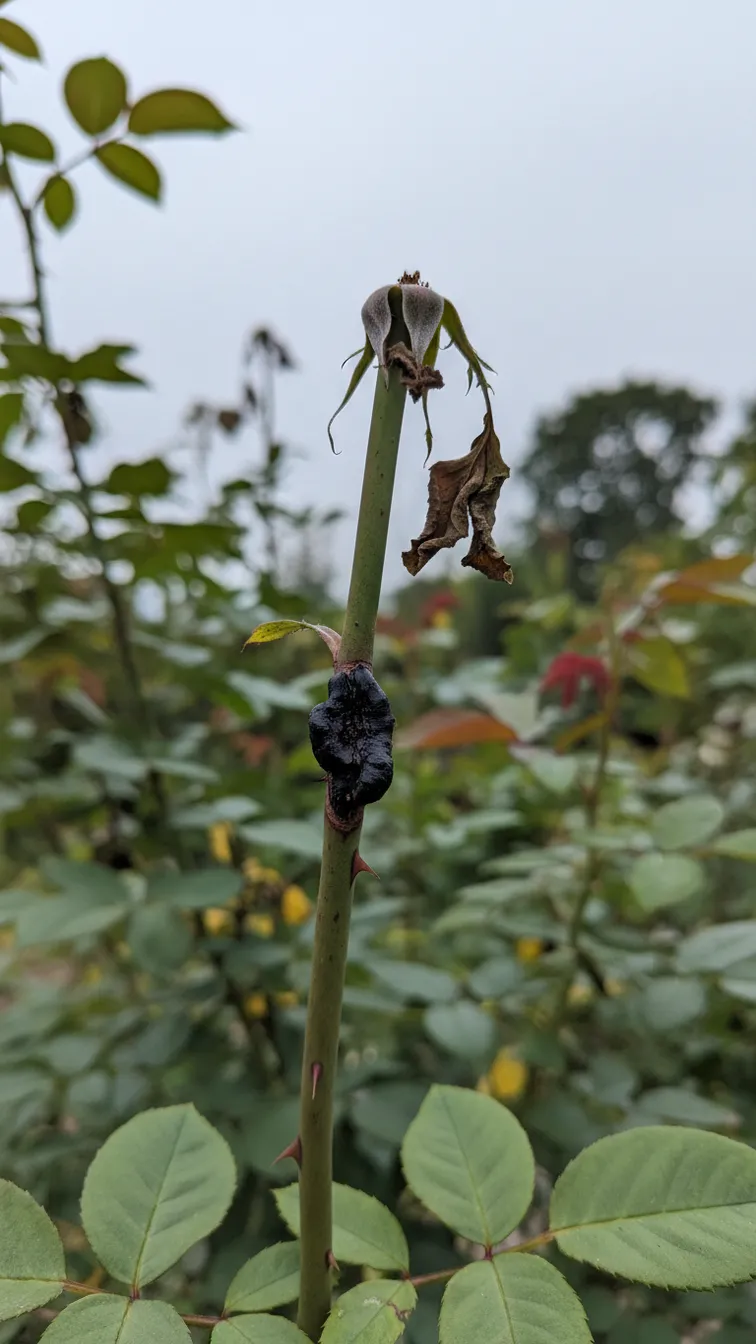

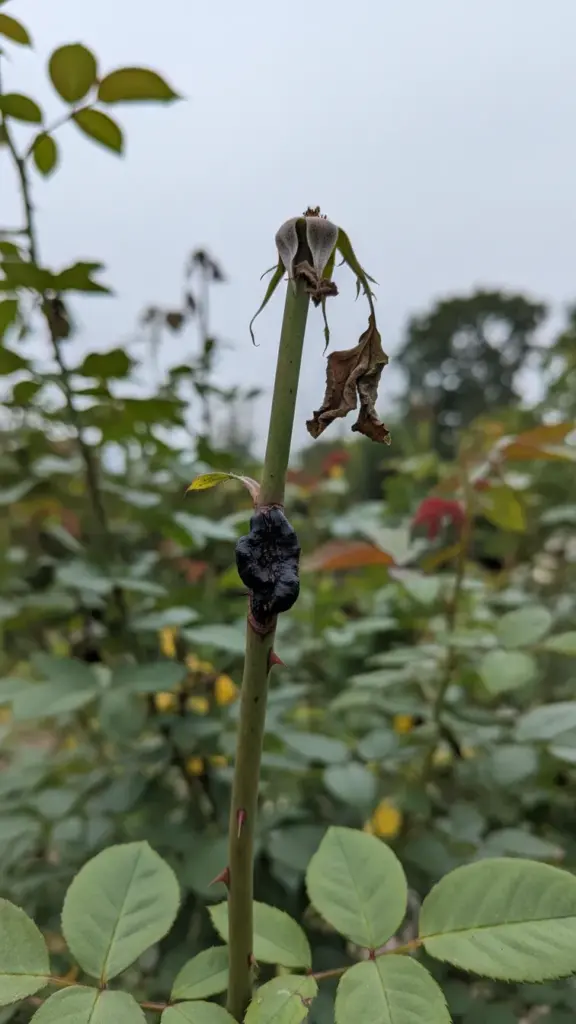
Coniothyrium canker and dieback is one of the most common reasons a healthy-looking rose cane turns brown and dies from the tip down, often within a single growing season. If you already spend time pruning your roses each spring, this disease is worth learning to recognize early, since the cuts you make can either stop it or spread it further.
What Coniothyrium Canker and Dieback Is
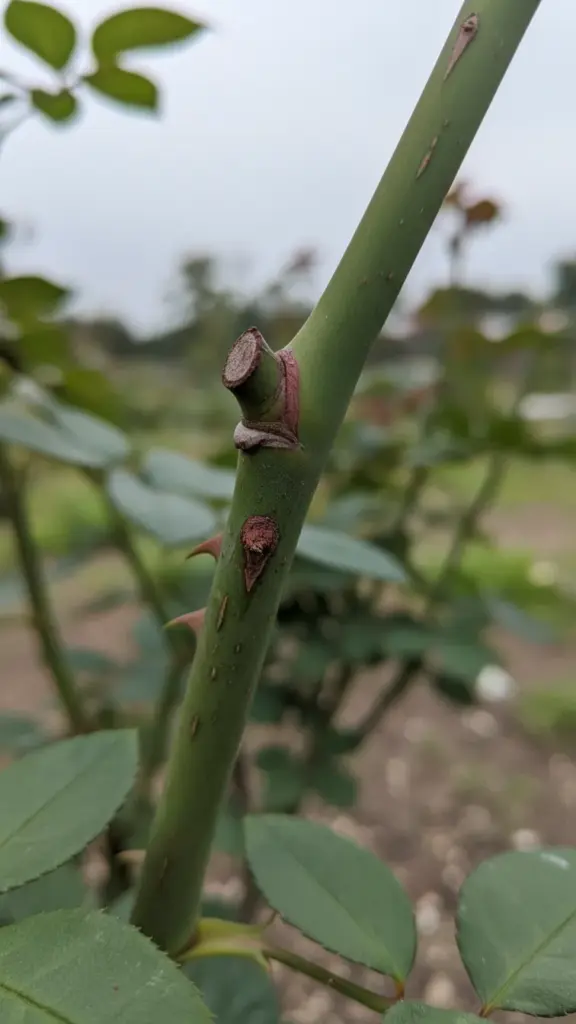
Coniothyrium canker is a fungal disease of rose canes most often caused by Paraconiothyrium fuckelii (formerly classified as Coniothyrium fuckelii), along with a related species, Coniothyrium wernsdorffiae, sometimes called brand canker. Both fungi invade woody cane tissue and cause it to die back from the point of infection.
Cankers usually start where a pruning cut, insect wound, or winter injury has broken the cane’s outer bark. Once the fungus establishes itself, it kills the tissue in that area and can spread further down the cane, eventually girdling and killing everything above the canker.
This disease is frequently grouped together with several other canker-causing fungi, including Botryosphaeria and Cryptosporella, because they produce similar symptoms and are managed the same way. Diagnosing the exact species rarely changes what you need to do about it.
How to Identify Coniothyrium Canker on Canes
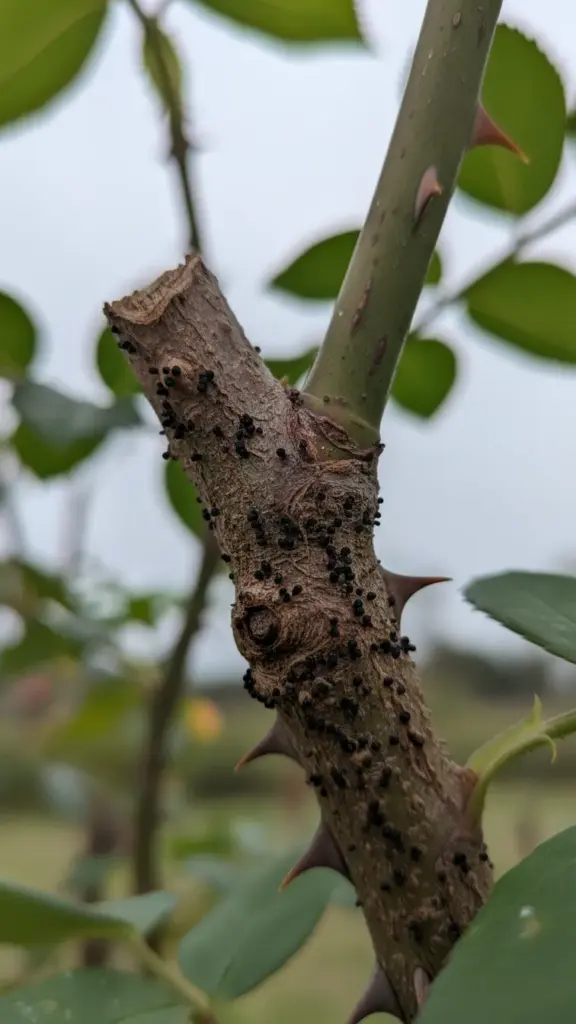
The earliest sign is a reddish-brown spot on an otherwise green cane, often centered on or near a pruning cut. Over the following weeks that spot expands and darkens, turning light brown and then a deeper brown as the infection spreads.
Look closely at the surface of an older canker and you will usually find tiny black dots scattered across it. These are the fungus’s fruiting structures, called pycnidia, and they are one of the more reliable identification features for this group of canker diseases.
As the canker grows large enough to encircle the cane, everything above that point wilts and dies, even though the roots and the rest of the plant may remain completely healthy. A cane that looks fine one week and suddenly collapses at the top the next is a strong sign this disease is at work.
Where Coniothyrium Canker Appears on the Plant
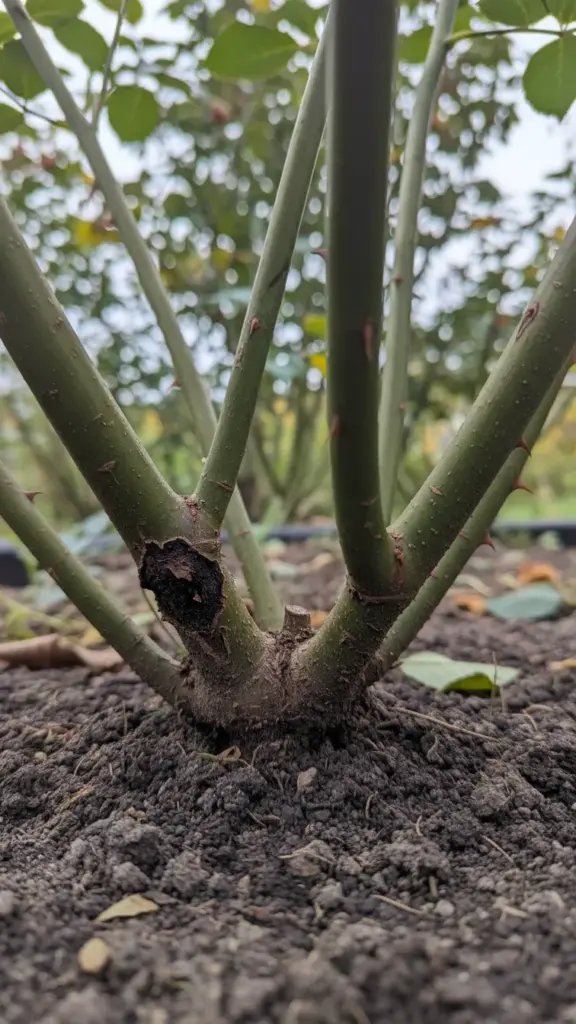
Canes are by far the most common site, and infections tend to cluster around pruning cuts, since fresh cuts are the easiest entry point for spores. The crown, where multiple canes meet near the soil line, is another vulnerable area, and an infection there can threaten the entire plant rather than just one cane.
Roots are rarely affected directly by this fungus. If you see healthy roots below a badly cankered crown, there is usually still a chance to save the plant by removing the infected canes.
How Coniothyrium Canker Spreads and Survives
The fungus survives between seasons on dead canes, pruned debris left on the ground, and old cankers still attached to the plant. Spores form on that infected material and are carried by wind or splashing water to fresh wounds on nearby canes, according to Illinois Extension.
Wet weather speeds up spore production and infection considerably, which is why canker outbreaks often follow a rainy stretch during the growing season. Infection almost always requires some kind of wound, whether that is a pruning cut, frost damage, an insect entry hole, or simple mechanical injury from wind or handling.
Because a single infected cane left on the plant or on the ground can keep producing spores for a long time, sanitation matters just as much as pruning technique when it comes to stopping this disease from spreading to new canes.
Coniothyrium Canker vs Other Rose Cane Problems
Rose canes can turn brown or die back for several different reasons, and it helps to compare the most common ones side by side.
| Problem | Typical Cause | Key Feature | Where It Starts |
| Coniothyrium Canker | Fungal infection through wounds | Reddish-brown spot with tiny black fruiting dots | At pruning cuts or injuries |
| Botryosphaeria Canker | Fungal infection, often stress-related | Sunken, discolored bark, dark cankers | At wounds or stressed branches |
| Frost Dieback | Cold injury, no pathogen involved | Blackened shoot tips, no fruiting bodies | At the tips of young shoots |
| Grey Mould Dieback | Botrytis cinerea fungus | Fuzzy grey mould on dead flowers and shoots | Spent blooms and frost-damaged tips |
The presence of small black fruiting bodies on an older canker is the clearest way to separate a true fungal canker from simple frost damage, which never produces that dotted, spore-bearing surface.
Conditions That Favor Coniothyrium Canker
Wet weather during the growing season is the single biggest driver of new infections, since spores need moisture to spread and germinate on wounded tissue. Roses that are already stressed by drought, poor soil, or a hard winter are noticeably more prone to canker than plants growing under good conditions.
Pruning at the wrong time or with the wrong technique creates larger, slower-healing wounds that stay vulnerable to infection longer than a clean, well-timed cut. Excess winter injury, whether from an unusually cold snap or inadequate winter protection, leaves canes with damaged tissue that the fungus can colonize as soon as spores arrive.
Can Coniothyrium Canker Be Cured Once It Girdles a Cane
No. Once a canker has fully encircled a cane, the tissue above that point is already cut off from water and nutrients, and nothing will bring it back. There is no fungicide that reverses damage already done to girdled wood.
The only effective response at that stage is to remove the dead or dying cane below the canker. Acting before the canker fully girdles the cane gives you a better chance of saving more of that cane’s length, which is why early identification matters so much with this disease.
Step 1: Scout Canes for Early Discoloration and Black Fruiting Bodies
Check your rose canes regularly through the growing season, paying particular attention to areas around recent pruning cuts. A small reddish-brown spot is much easier to deal with than a canker that has already spread several inches down the cane.
Look closely at any suspicious spot for the tiny black dots that indicate fungal fruiting bodies. Catching a canker at this stage means you can often remove it with a much smaller cut than if you wait for obvious wilting above the infection.
Step 2: Prune Out Infected Canes at the Right Point
Cut cankered canes well below the visible discoloration. Penn State Extension recommends making the cut immediately above a healthy bud, since leaving even a small amount of infected tissue behind can let the canker continue spreading.
If an entire cane is affected, cut it back to the main stem or crown rather than leaving a stub. Stubs left behind after pruning are a common entry point for new infections, so removing the whole cane cleanly is usually the safer choice.
Step 3: Sanitize Pruning Tools Between Cuts
Dip your pruning shears in a disinfectant solution between cuts whenever you are removing cankered wood, since dirty blades can carry spores from an infected cane directly onto a healthy one. A simple mix of rubbing alcohol or diluted bleach works for most home gardeners.
Clean tools before you start pruning a new plant too, especially if you have already handled canker-infected material elsewhere in the garden that same day.
Step 4: Reduce Wounds and Winter Injury
Avoid pruning during wet weather when possible, since fresh cuts made just before or during rain are more likely to pick up airborne or splashed spores. Time major pruning for dry stretches whenever your climate allows it.
Provide adequate winter protection in colder climates, since frost-damaged canes are far more susceptible to canker than canes that came through winter undamaged. Reducing insect damage and avoiding unnecessary mechanical injury during routine garden work also closes off entry points the fungus would otherwise use.
Step 5: Keep Plants Vigorous With Water and Balanced Fertilizer
Consistent watering and moderate, balanced fertilization keep roses growing vigorously, and vigorous plants recover from small wounds faster than stressed ones. A rose that heals quickly gives canker fungi a much smaller window to establish an infection.
Avoid heavy nitrogen applications late in the season, since they can push soft, fast growth that is more vulnerable to winter injury and, in turn, more vulnerable to canker the following spring.
Should You Apply Fungicide After Pruning
Fungicides play only a supporting role here. Most sources agree there is no fungicide that reliably controls established canker fungi once they are inside the wood, though some growers apply a protective fungicide spray immediately after pruning cankered canes to reduce the chance of a fresh wound becoming reinfected.
Sanitation and good pruning technique do far more to manage this disease long term than any spray program, so treat fungicide as an occasional supplement rather than the main strategy.
Common Questions
Is Coniothyrium Canker the Same as Rose Dieback
Not exactly. Rose dieback is a broader symptom that can be caused by several different problems, including frost damage, grey mould, and root stress. Coniothyrium canker is one specific fungal cause of dieback, identifiable by its reddish-brown cankers and tiny black fruiting bodies, as described by the RHS.
Can Coniothyrium Canker Kill an Entire Rose Bush
Yes, if the infection reaches the crown or spreads to enough canes that the plant cannot support new growth. Most of the time, though, it kills individual canes one at a time rather than the whole plant at once.
Does Coniothyrium Canker Affect Other Plants Besides Roses
Yes. Related Coniothyrium and Paraconiothyrium species can infect raspberries and other cane-forming plants, where the disease is sometimes called cane blight rather than canker.
How Quickly Does a Cane Die Once Infected
It varies with weather and plant vigor, but a canker can grow from a small spot to a fully girdling infection within a few weeks during warm, wet conditions. Cool, dry weather slows that progression considerably.
Can You Save a Cane That Already Shows Black Fruiting Bodies
Sometimes. If the black dots are confined to a small area and the cane still looks otherwise healthy above and below it, cutting well past the visible infection can save the rest of the cane. Once wilting appears above the canker, that portion of the cane is no longer salvageable.
Where to Go From Here
Coniothyrium canker rarely takes down a healthy, well-tended rose bush overnight, but it can quietly claim one cane after another if pruning cuts and winter wounds go unmanaged. Scouting regularly, sanitizing your tools, and keeping plants vigorous will do more to control this disease than any single treatment applied after the fact.








