
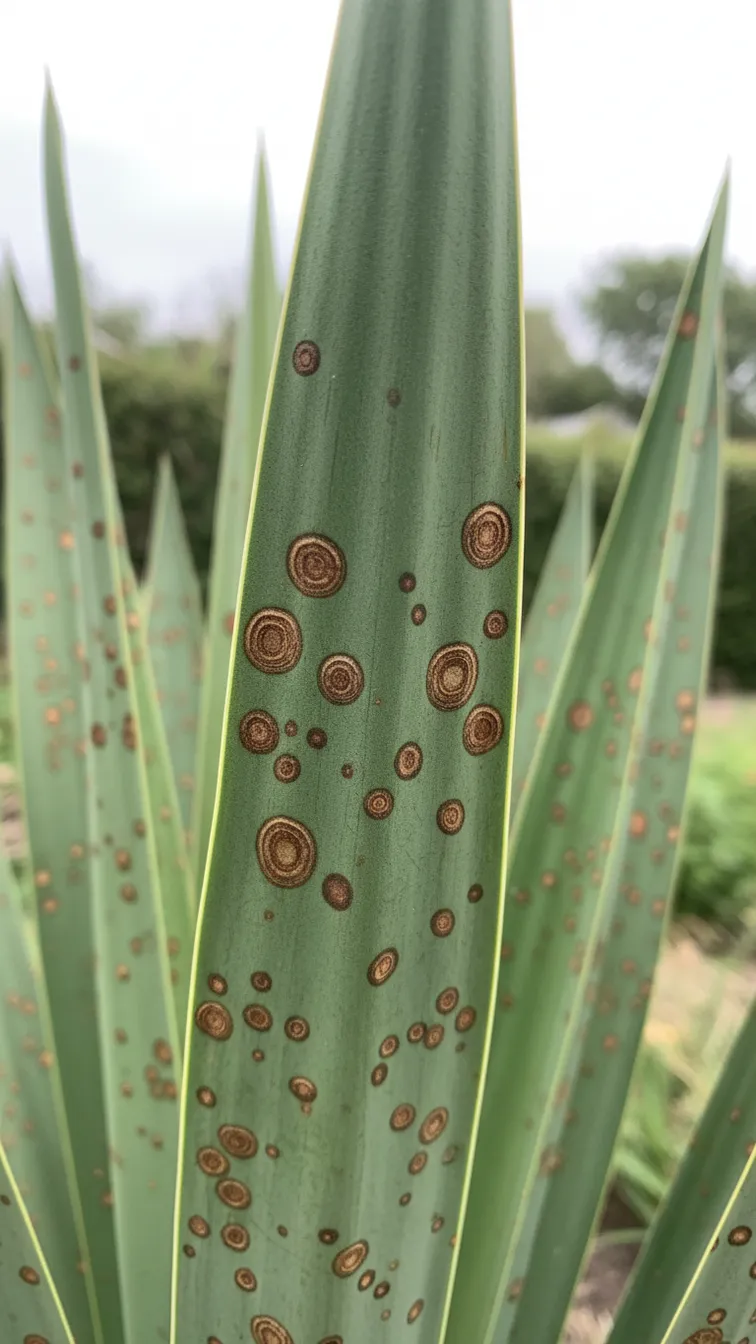

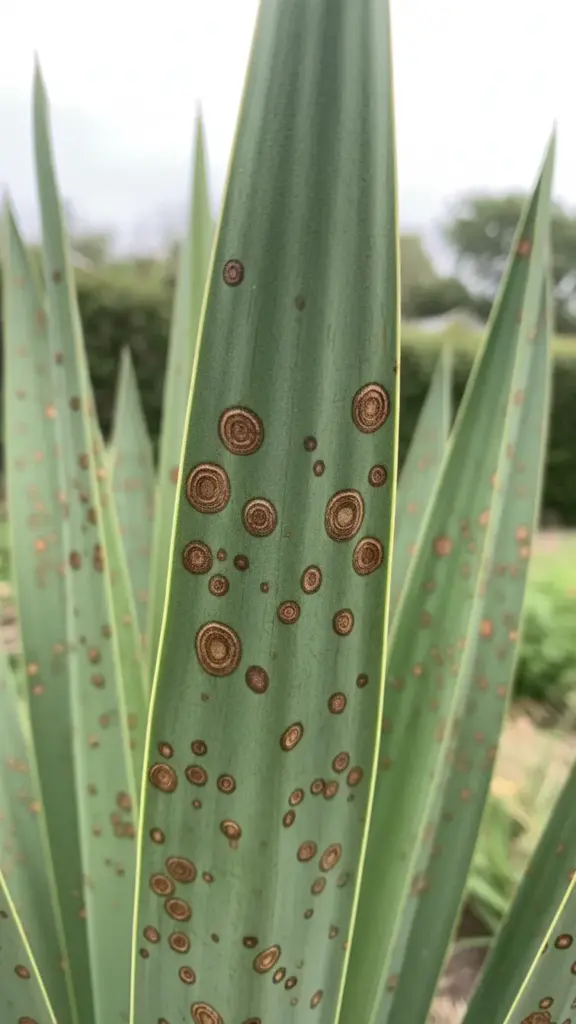
Coniothyrium leaf spot is a fungal disease best known for scarring yucca leaves with sunken brown lesions, though the same genus of fungi causes similar leaf spots on agave, dracaena, and a range of other landscape and houseplants. If you grow a dracaena or keep yucca outdoors, this is one of the more common cosmetic problems you are likely to run into eventually.
What Coniothyrium Leaf Spot Is
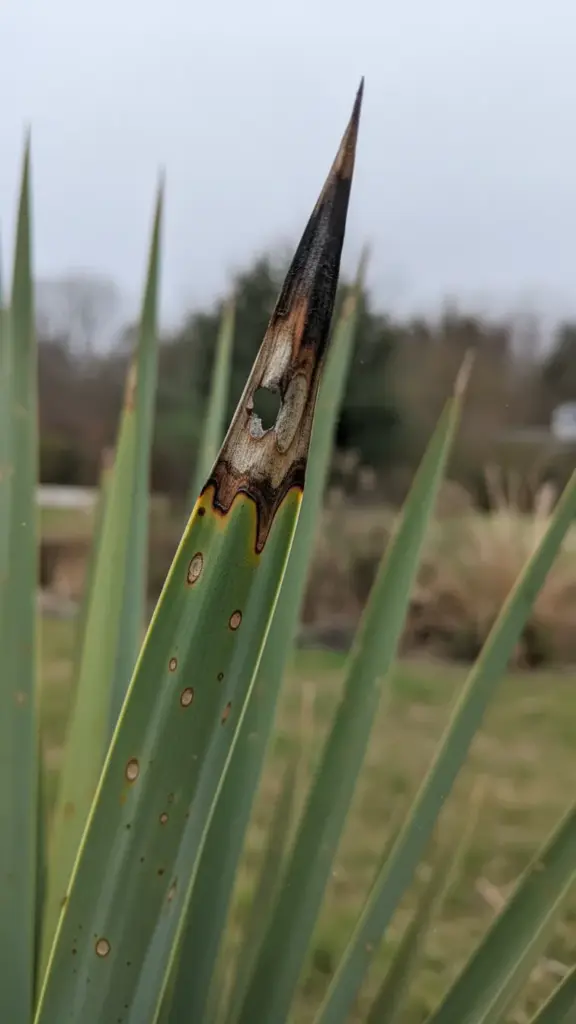
Coniothyrium leaf spot is caused by fungi in the genus Coniothyrium, with Coniothyrium concentricum (also classified as Microsphaeropsis concentrica) being the species most associated with yucca leaf spot specifically. The disease produces distinct spots on leaves that expand over time, eventually giving affected foliage a scorched or blotchy appearance.
Until recently, yucca and similar plants were largely free of foliar disease problems, but this leaf spot has become increasingly common and widespread on outdoor plantings in many regions. It is mostly a cosmetic issue rather than one that threatens the plant’s survival, though heavily spotted leaves can look unattractive enough that gardeners want to manage it.
How to Identify Coniothyrium Leaf Spot
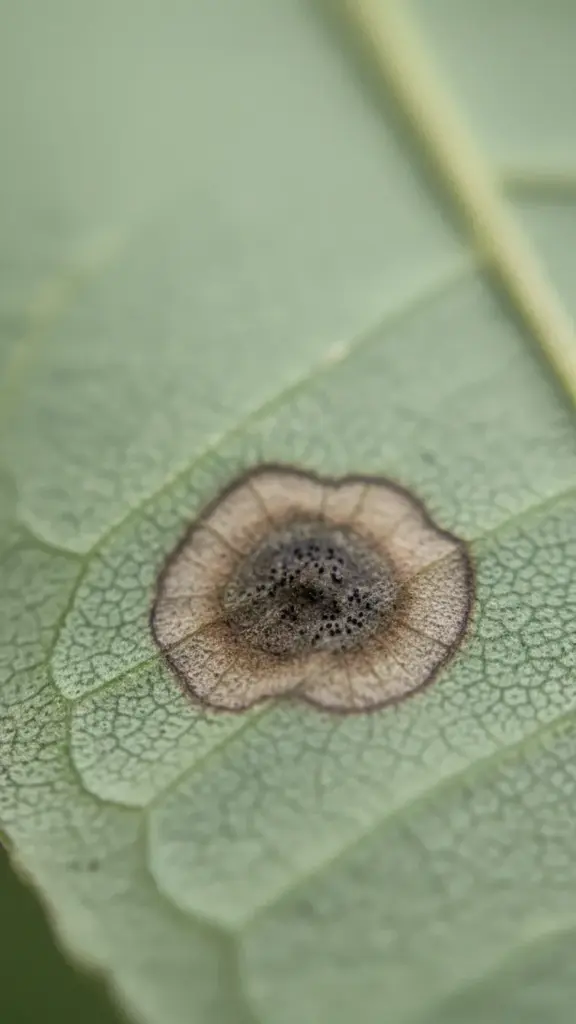
Spots start small, often just a few millimeters across, and appear as brown or tan lesions with a slightly darker border. As they mature, spots enlarge and can develop a concentric, ringed pattern, which is part of where the species name concentricum comes from.
On badly affected leaves, spots merge together into larger blotches, and the leaf can take on a scorched, sunburned look from a distance. Tiny black fruiting structures, called pycnidia, sometimes appear within older spots, similar to what you would see with related canker-causing Coniothyrium species.
Unlike some leaf spot diseases that cause wilting or yellowing across the whole leaf, Coniothyrium leaf spot tends to stay confined to individual lesions, with the tissue between spots often remaining green and healthy for a long time.
Which Plants Are Affected by Coniothyrium Leaf Spot
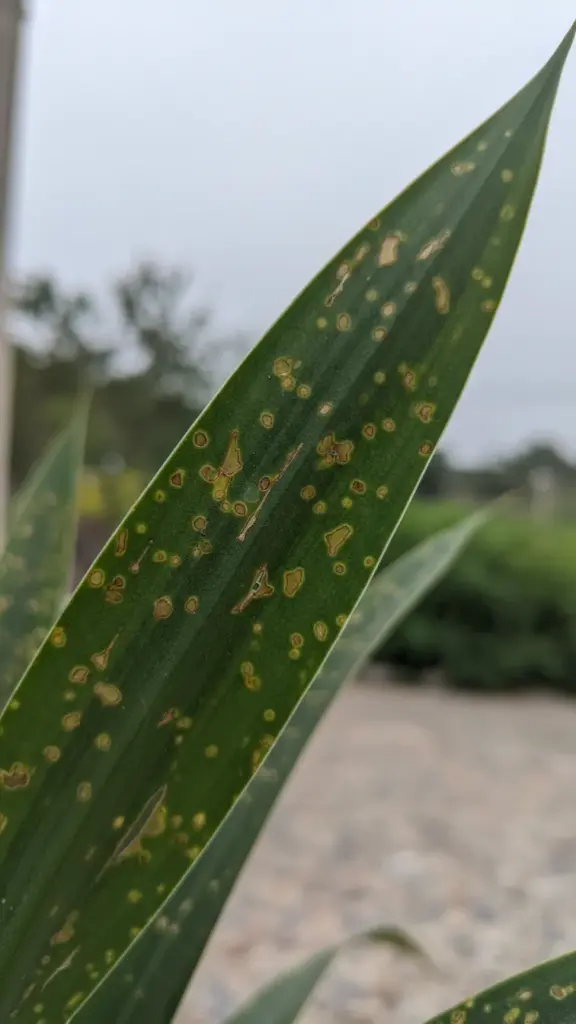
Yucca is the most commonly reported host, and outdoor plantings in particular have seen a noticeable rise in cases in recent years, according to the RHS. Agave and dracaena are also named as susceptible hosts, which matters if you grow any of these plants as houseplants or in a mixed succulent bed.
Because the fungus is not limited to a single plant family, gardeners with a mixed collection of succulents should watch more than one species if leaf spot shows up on one plant nearby.
How Coniothyrium Leaf Spot Spreads and Survives
Wet weather is the main driver of spread. Spores are splashed around by rain droplets and germinate to produce new infections if the leaf surface stays wet for an extended period, a pattern the RHS notes as the most likely spread mechanism even though the exact conditions are not fully documented for every host.
Related Coniothyrium-type fungi overwinter as mycelium and pycnidia in dead leaves and stems, based on findings from UC IPM on a related host. That means fallen or dying leaf material left at the base of a plant can act as a source of new spores the following season.
Because splashing water is the main spread mechanism, plants grown close together or in a spot with poor drainage after rain tend to see leaf spot move from plant to plant more quickly than plants with good spacing and airflow.
Coniothyrium Leaf Spot vs Other Leaf Spot Diseases
Several unrelated pathogens produce leaf spots that can look similar at first glance, so it helps to compare them.
| Problem | Typical Host | Key Feature | Spread Pattern |
| Coniothyrium Leaf Spot | Yucca, agave, dracaena | Concentric ringed brown spots, black pycnidia in older lesions | Rain-splashed spores |
| Bacterial Leaf Spot | Wide range of ornamentals | Water-soaked spots, often with a yellow halo | Splashing water, contaminated tools |
| Alternaria Leaf Spot | Wide range of vegetables and ornamentals | Dark, target-like rings with concentric pattern | Wind and rain-splashed spores |
| Sunscald or Environmental Scorch | Any plant, no pathogen involved | Bleached or tan patches, no spore structures | Not contagious |
The clearest way to rule out a non-fungal cause is to look for the tiny black pycnidia inside older spots. Environmental scorch never produces these structures, no matter how similar the discoloration looks from a distance.
Conditions That Favor Coniothyrium Leaf Spot
Extended leaf wetness is the single biggest factor. Overhead watering, frequent rain, high humidity, and poor air movement around the plant all keep leaf surfaces wet long enough for spores to germinate and infect new tissue.
Crowded plantings make the problem worse because leaves stay damp longer when they are pressed against each other or shaded by nearby foliage. Stressed plants, whether from drought, poor soil, or root problems, also tend to show more severe symptoms once infected, even though stress alone does not cause the disease.
Can Coniothyrium Leaf Spot Be Cured Once Spots Appear
No. Existing spots will not disappear or heal once they have formed, since the fungus has already killed that patch of leaf tissue. Nothing you apply will restore the damaged area to its original green color.
What you can do is stop the disease from spreading to new leaves and reduce how much inoculum is available for future infections. That shifts the goal from curing existing damage to managing the problem going forward.
Step 1: Remove and Destroy Infected Leaves
Cut away leaves with heavy spotting, particularly any that are more than half covered in lesions, and dispose of them away from the rest of your planting rather than leaving them nearby. This lowers the amount of fungal tissue producing new spores close to healthy foliage.
Leave lightly spotted leaves in place if removing them would strip the plant bare, since a plant with some cosmetic spotting is still healthier than one with too few leaves left to photosynthesize well.
Step 2: Improve Air Circulation Around Plants
Space new plantings further apart than you might for a purely ornamental look, since tighter spacing keeps humidity higher around the foliage. If existing plants are crowded, thinning out nearby vegetation can help leaves dry faster after rain or watering.
Pruning back overhanging branches or nearby shrubs that block airflow gives leaves a better chance to dry between wet periods, which directly reduces the window spores have to germinate.
Step 3: Adjust Your Watering Habits
Water at the base of the plant rather than overhead whenever possible, since wetting the foliage directly is one of the easiest ways to spread spores from plant to plant. If you must use overhead irrigation, run it early in the day so leaves have time to dry before evening.
Avoid watering on a fixed schedule regardless of weather. Skipping irrigation after a rainy stretch keeps leaves from staying wet longer than necessary.
Step 4: Clean Up Fallen Leaf Debris
Rake up and remove fallen leaves and dead plant material from around the base of affected plants regularly, since this debris is where the fungus survives between growing seasons. Do not compost heavily infected material unless your compost system reaches temperatures high enough to kill fungal spores.
Cleaning up debris in fall and again in early spring, before new growth resumes, gives you two chances each year to reduce how much fungus carries over into the next season.
Step 5: Apply Fungicide for Severe or Recurring Cases
Fungicide treatment is rarely necessary for a plant with only minor spotting, but persistent or severe outbreaks may justify a protective spray program during the wettest part of the growing season. Products labeled for general leaf spot control on ornamentals are typically applied before new infections start rather than after spots have already formed.
Because sanitation and cultural changes address the root causes more effectively than spraying alone, treat fungicide as a supplement to Steps 1 through 4 rather than a replacement for them.
Does Coniothyrium Leaf Spot Kill the Plant
Rarely. This disease is mostly cosmetic, and a plant can carry a fair amount of leaf spotting for years without any real decline in health. Severe, repeated infections on an already-stressed plant can reduce vigor over time, but outright plant death from this disease alone is uncommon.
Common Questions
Is Yucca Leaf Spot the Same as Coniothyrium Leaf Spot
Yes, in most cases. Yucca leaf spot is caused by Coniothyrium concentricum, making it the most well documented example of Coniothyrium leaf spot, though the same genus can affect other hosts under slightly different circumstances.
Can Coniothyrium Leaf Spot Spread to Nearby Plants of a Different Species
It can, if the nearby plant is a susceptible host such as agave or dracaena, since splashing water can carry spores between plants growing close together regardless of species, as long as both are hosts the fungus can infect.
Should You Remove an Entire Leaf or Just the Spot
Remove the entire leaf if more than half of it is affected. For a leaf with just one or two small spots, leaving it in place usually does less overall harm to the plant than removing otherwise healthy tissue.
Does Coniothyrium Leaf Spot Affect Indoor Dracaena Differently Than Outdoor Yucca
Indoor dracaena typically sees less severe outbreaks because indoor conditions rarely provide the extended leaf wetness the fungus needs, though overwatering or misting the foliage can still create enough moisture for infection.
How Long Do Spores Survive on Fallen Leaves
Exact survival times vary by species and climate, but related Coniothyrium fungi are known to persist through winter in dead leaf material, based on observations from Illinois Extension on related leaf spot pathogens, which is why removing fallen debris each season matters.
Where to Go From Here
Coniothyrium leaf spot is more of a long-term cosmetic nuisance than a serious threat to plant health, but it can spread steadily through a bed of yucca, agave, or dracaena if wet leaves and fallen debris are left unmanaged. Improving airflow, adjusting how you water, and cleaning up debris each season will do more to control this disease than any single treatment applied after spots appear.








