Count 10 flower clusters on one apple branch 3 weeks after bloom. A fruit set check is the count of swelling fruitlets that tells you whether the tree holds a crop or sheds it by June.
Fruit set is the moment a flower decides to become a fruit. Pollen lands, fertilization follows, and the ovary swells instead of dropping. Most flowers never reach that point. A healthy apple tree opens thousands of flowers and keeps a small share of them, and the share it keeps decides the harvest months before the fruit ripens.
| Point | Detail |
|---|---|
| Definition | A pollinated flower that swells and holds instead of dropping |
| Measure | Fruitlets per cluster, counted 3 weeks after petal fall |
| Drop rule | A fruitlet growing slower than half the fastest fruitlet drops |
| Thin at | 12 mm fruitlet size, one fruit per cluster |
| Apple reality | Thousands of flowers open, a small share becomes fruit |
What Is Fruit Set?
Fruit set is the share of flowers that turn into young fruit and stay on the tree. A flower sets when pollen reaches the stigma, fertilization follows, and the ovary starts to swell. A flower that never gets pollen, or gets pollen too late, drops within days. The Penn State Extension guide to home orchards with no fruit puts it plainly: all flowers must be pollinated to form fruit consistently, and better pollination in apple and pear trees grows larger fruit.
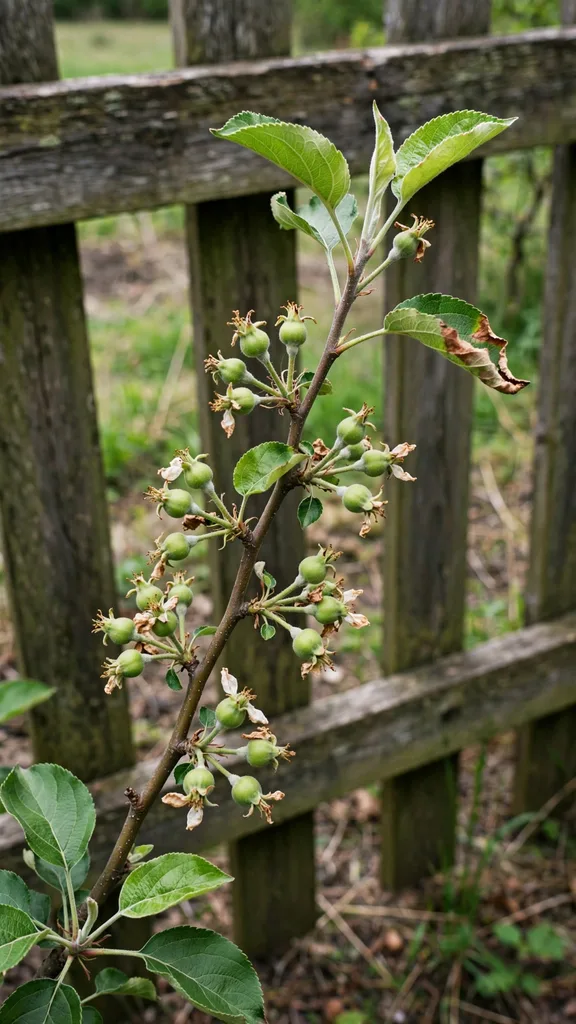
The count starts at bloom and ends at June drop, as flowers open, bees work, and fruitlets swell, and then the tree sheds the weak ones. The fruitlets left after June drop are the crop. Strong set means one fruitlet on most clusters. Weak set means one fruitlet on a few clusters, and the rest drop.
Fruit set is a rate, not a yes or no. A single tree can set heavily in a warm spring and thinly in a cold wet one. The rate moves with bee flight, bloom overlap, frost, and the health of the tree. The same tree tells a different story every year, and the count after petal fall is the only honest reading.
How Fruit Set Works
Pollen lands on the stigma and grows a tube down to the ovary. Fertilisation joins pollen and egg, and the flower starts building a fruit. The petals fall, the ovary swells, and the tiny fruitlet draws sugars from the leaves. The whole chain takes days, and a frost night or a dry spell in that window breaks it.
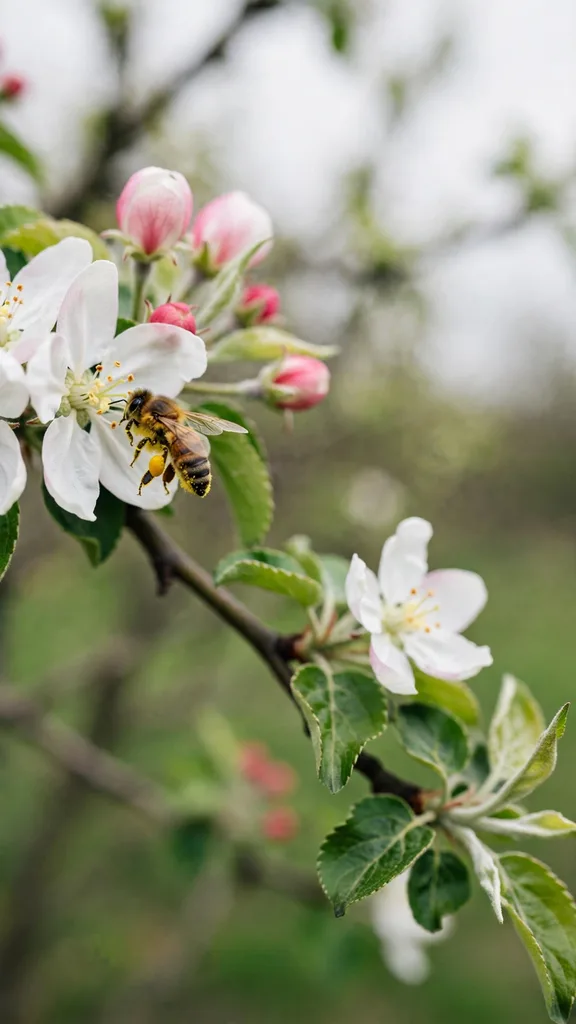
The tree then runs a contest between fruitlets. Each fruitlet needs sugars, and the tree cannot feed them all. Strong fruitlets grow fast. Weak fruitlets stall. A growth-rate model in the Utah State University crop load guide predicts the outcome from growth rates: a fruitlet growing slower than half the rate of the fastest fruitlet on the tree drops, while one growing faster than half that rate stays. The model reads the contest 2 to 3 weeks before the eye can see it.
June drop is the visible end of that contest. The tree sheds the losers in one wave, usually 4 to 6 weeks after bloom. The drop looks like failure. It is the tree matching its crop to its leaves. A tree that kept every fruitlet would grow small fruit, break branches, and skip bloom next year. The drop protects the crop that stays.
Thin the crop by hand at the 12 mm fruitlet stage, leaving one fruit per cluster. The same guide lists hand thinning as one fruit per cluster at full bloom, with chemical thinning timed to the 12 mm fruit size stage. One fruit per cluster gives the tree room to size the fruit that stays.
Fruit Set vs Fruit Drop
Fruit set and fruit drop are two ends of one count. Set is what stays. Drop is what leaves. Every flower either sets or drops, and the gap between the two decides the harvest. Confusing them leads gardeners to celebrate a heavy bloom and mourn an empty tree in the same season.
| Point | Fruit Set | Fruit Drop |
|---|---|---|
| Meaning | Flower becomes a young fruit and holds | Flower or fruitlet falls from the tree |
| Timing | Bloom to 3 weeks after petal fall | Petal fall to June drop, 4 to 6 weeks after bloom |
| Driver | Pollen, bees, bloom overlap, frost-free nights | Weak pollen, poor fertilization, sugar shortage, frost |
| Good sign | One swelling fruitlet on most clusters | A light shed of weak fruitlets after bloom |
| Bad sign | Few clusters holding fruitlets | Heavy shed, bare clusters, no crop |
| Fix | Bees, partners, frost protection | Thin early, feed the tree, fix pollination |
A heavy bloom means nothing on its own. Apple trees open far more flowers than they can ever carry, and a tree in full bloom can still set a thin crop, because bloom counts flowers and the crop counts fruitlets. Count fruitlets. The fruitlet count 3 weeks after petal fall is the first real number of the season.
A heavy drop after a heavy bloom is normal. The tree sheds the weak fruitlets and keeps the strong ones. A heavy drop after a thin bloom is a warning, because the tree had little to keep and still shed most of it. Check pollination first. Then frost. Then the health of the tree. The pollination page sets out how bees and bloom overlap carry the set.
How to Recognise / Measure Fruit Set
Count clusters 3 weeks after petal fall. Pick 10 clusters spread around the tree, at arm height, on different branches. Count the swelling fruitlets on each cluster. A healthy apple holds 1 to 2 fruitlets per cluster at that stage. A weak set shows empty clusters, or one fruitlet on every third cluster.
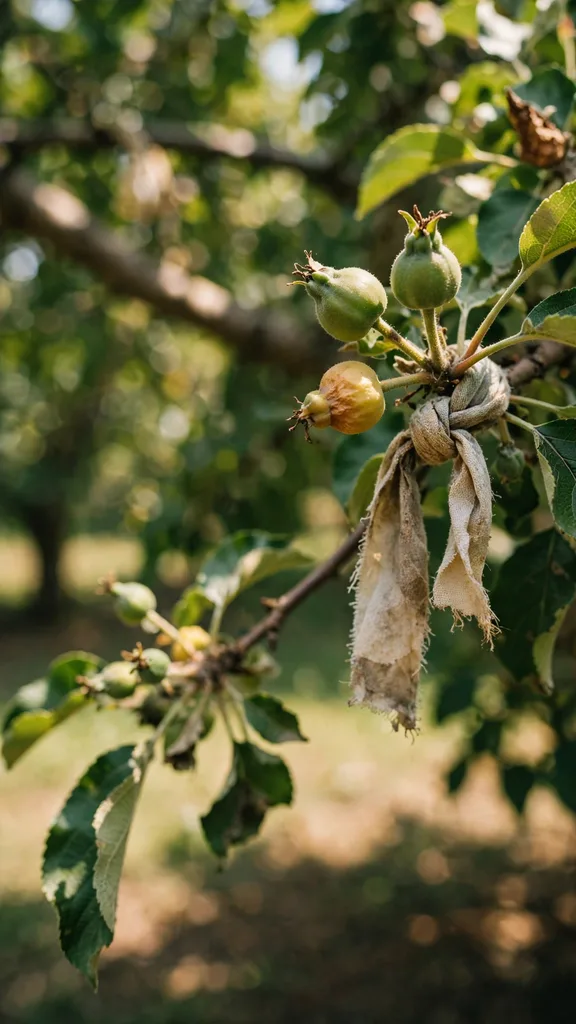
Watch the fruitlets grow: a setting fruitlet swells daily and turns a deeper green, while a dropping fruitlet stalls, yellows at the stem, and loosens. Tag 5 fruitlets with ribbon and check them every 3 days. The ones that keep growing are the crop. The stalled ones are gone within a week.
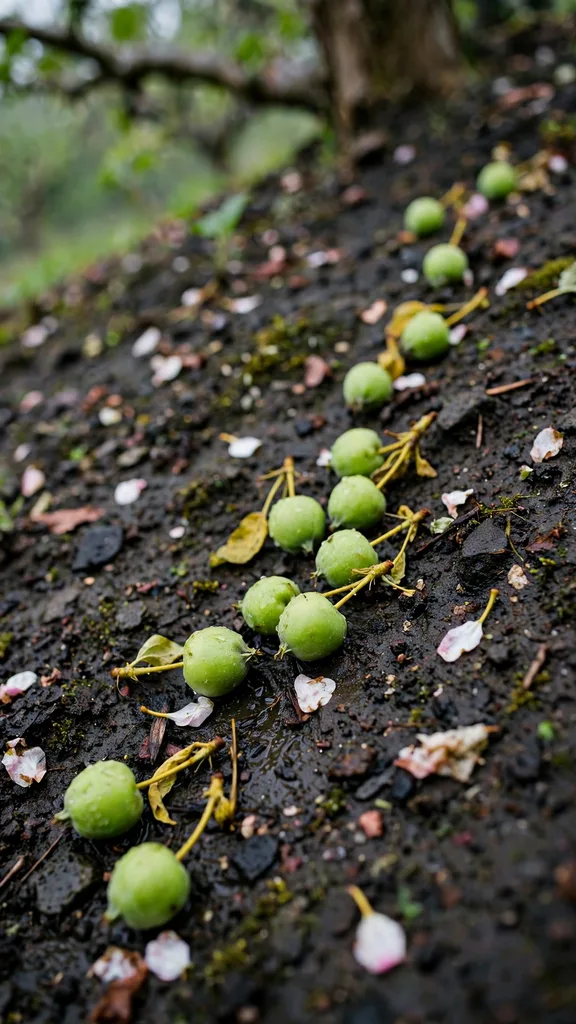
Measure the drop at June drop. Lay a sheet under the tree for a week in June and count the fallen fruitlets each morning. A light scatter of small fruitlets is normal. A thick carpet of fruitlets the size of marbles means the tree set heavily and thinned itself hard, or set weakly and shed most of it. The cluster count from 3 weeks earlier tells you which one it was.
Compare the count with last year. A tree that held 1 fruitlet per cluster last year and holds 1 per cluster this year is steady. A tree that falls from 2 per cluster to 1 in 5 clusters has a pollination or frost problem, not a feeding problem. Feed never fixes a bloom-week failure. The self-fertile page shows how a missing partner thins the set before June even starts.
Common Mistakes With Fruit Set
The first mistake is counting flowers, because a heavy bloom is a show, not a crop: flowers open by the thousand and drop by the thousand. Count fruitlets 3 weeks after petal fall. That count is the crop.
The second mistake is spraying at bloom. Insecticide on open flowers kills bees, and dead bees mean unpollinated flowers. Unpollinated flowers drop. Hold every spray from first bloom to petal fall, even the ones labelled safe. The bloom window is short. The pest damage waits.
The third mistake is thinning too late. Hand thinning after June drop sizes the fruit that stays, and it does nothing for the crop load the tree already chose. Thin at the 12 mm fruitlet stage, one fruit per cluster. Early thinning feeds the fruit that stays and protects next year bloom.
The fourth mistake is feeding a tree that failed to set. Fertilizer grows leaves, not fruitlets, and a tree that set thinly because bees stayed home will not set more fruit because it got fed. Fix the bloom week first: partners, bees, and frost cover. Feed the tree after the set is counted.
The fifth mistake is blaming the tree for a frost year. A frost night on open bloom kills the flowers before pollen moves, and no tree sets fruit from dead flowers. The tree did nothing wrong. Note the frost date, plant a later bloomer next time, and check the chill hours total before you buy. The gardening glossary gathers every fruit term on this site in one place.
When Fruit Set Matters in Your Garden
Fruit set matters most in the 3 weeks after bloom, because that window decides the crop and no later job changes it. Pruning, feeding, and watering all serve a crop that either exists or does not. Walk the tree with a notebook in that window. Count clusters. The count tells you what the season holds.
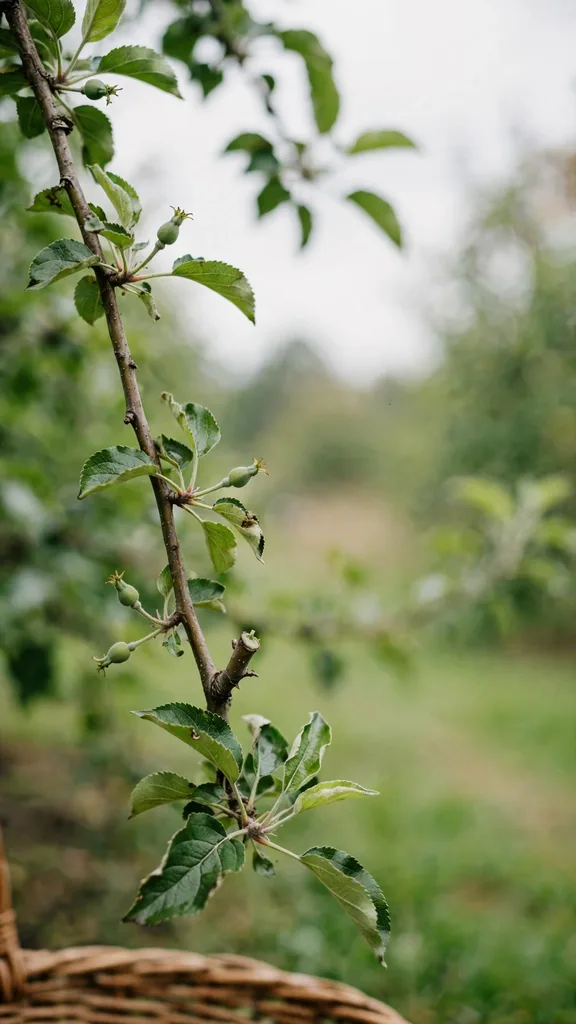
Fruit set matters again at thinning time. The count tells you how much to thin and whether to thin at all. A tree holding 1 fruitlet per cluster needs a light hand. A tree holding 3 fruitlets per cluster needs a firm one. Thin without counting and you thin blind.
Fruit set matters least after June drop. The crop is fixed by then, and the jobs turn to sizing, pest cover, and harvest timing. A thin set after June drop is a note for next spring, not a job for this summer. Write it down, plant the partner, and wait for bloom.
Fruit set never matters on its own. It is the middle link in a chain that runs from chill hours through bloom and bees to harvest. A break anywhere in the chain shows up as a thin set. Read the chain, not the link.
FAQ
Count fruitlets 3 weeks after petal fall. Pick 10 clusters around the tree and count the swelling fruitlets. A healthy apple holds 1 to 2 fruitlets per cluster. Fewer than 1 in 5 clusters holding fruit means pollination failed, frost hit the bloom, or the tree lacks a partner.
Unpollinated flowers drop within days of bloom. Bees carry the pollen, so a cold or wet bloom week, a missing partner cultivar, or a spray at bloom all leave flowers unpollinated. Frost on open bloom kills flowers before pollen moves. Count fruitlets next spring instead of admiring the bloom.
June drop is the wave of fruitlet shedding 4 to 6 weeks after bloom, when the tree drops the weak fruitlets it cannot feed. A light drop is normal and healthy. A heavy drop after a thin bloom points to poor pollination or frost. Thin by hand before June drop to help the tree keep the strongest fruit.
Yes, when the tree holds more than 1 fruitlet per cluster. Thin at the 12 mm fruitlet stage and leave one fruit per cluster, because early thinning grows larger fruit, stops branches from breaking, and protects next year bloom. A tree holding 1 fruitlet per cluster needs little or no thinning.
Almost never in a home garden. Wind moves a little pollen, and gravity drops some, but bees carry most of it from anther to stigma. A tree in a still courtyard with no bees sets a thin crop even with perfect bloom. Plant bee-friendly flowers nearby and skip sprays during bloom week.