Stand 1 apple tree flat against a sunny wall and tie its branches into 3 level tiers. An espalier is a tree grown flat against a sunny wall, its branches tied into level tiers, and it turns a blank fence into a fruiting wall that fits a garden 2 meters wide.
Espalier is pruning with a plan. A tree that would spread into a round crown grows flat instead, one plane deep, its branches tied to wires in a pattern you chose. The fruit hangs within reach, the sun hits every leaf, and the wall behind it holds the day heat into the evening.
| Point | Detail |
|---|---|
| Definition | A tree trained flat in one plane against a wall, fence, or wires |
| Best fruit | Apple and pear, with supple young branches |
| Wall gap | At least 15.2 cm between trellis and wall |
| Sun need | 6 hours of direct sun each day |
| Wire spacing | 30.5 to 45.7 cm between levels |
| Build time | 2 to 3 years to fill the pattern |
What Is Espalier?
Espalier is the art of growing a tree flat in two dimensions, usually against a wall, a fence, or a freestanding wire frame. The University of Missouri Extension guide to espalier describes it as a centuries-old art of growing plants in two dimensions, or on a single plane, and names apple and pear among the easiest trees to espalier because their young branches bend without breaking. The tree keeps its roots and its fruit. It gives up its round shape.
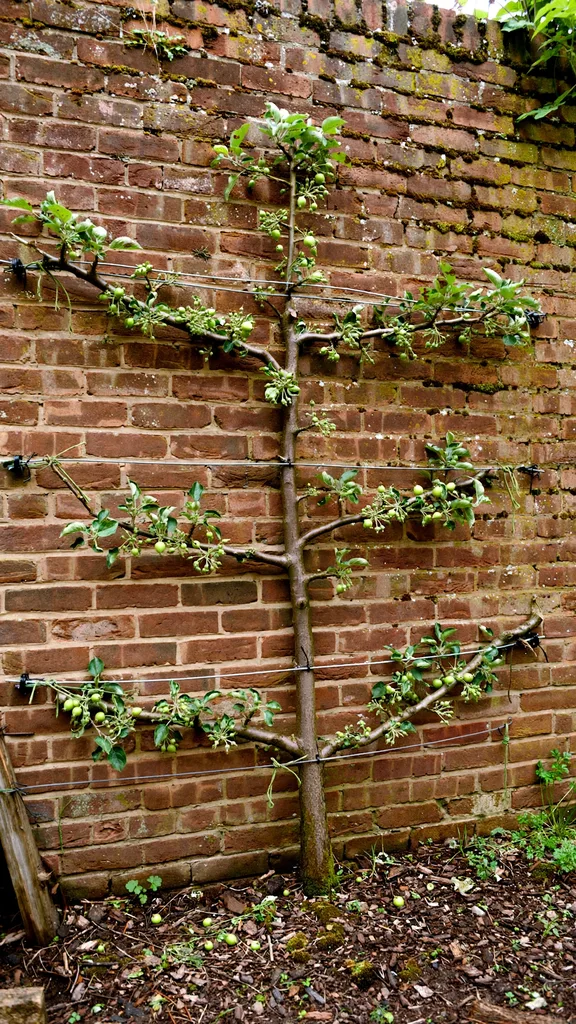
The word covers both the technique and the tree. You espalier a tree, and the result is an espalier. The pattern has a name too: a horizontal cordon runs one trunk with arms left and right, a fan spreads branches upward like a hand, and a Belgian fence weaves several trees into a lattice. The pattern you pick decides the frame you build.
Espalier suits small gardens first. A standard apple needs a circle 6 meters across. An espaliered apple needs a strip 2 meters wide and a wall behind it. The fruit per square meter runs higher than a free-standing tree, because every branch sits in sun and every fruit hangs where a hand reaches it.
What Espalier Looks Like
A finished espalier reads like a drawing on the wall. One straight trunk rises up the center, and level arms run left and right at even heights, tied to horizontal wires. Short fruiting spurs stud the arms, and in spring the whole frame blooms in one flat sheet. In autumn the fruit hangs in a row, each piece visible from the path.
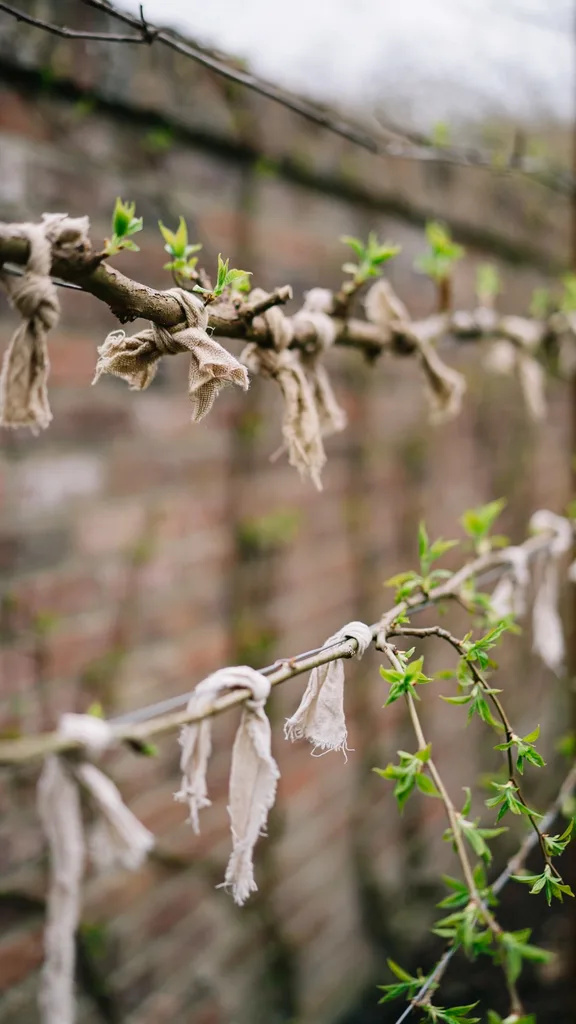
The frame comes first. Posts go in before planting, wires run level between them, and the tree goes in front of the frame, never behind it. The UC Marin Master Gardener guide to espalier puts the structure 15.2 to 20.3 cm from the wall for air flow, sets the first wire level 38.1 to 45.7 cm above the soil, and spaces further levels 30.5 to 45.7 cm apart. Build the frame first. Plant second. Train third.
Young branches bend and old branches snap, so training starts on a 1- or 2-year-old tree, called a whip, with one straight stem and no side branches yet. Cut the whip above the buds where the first arms will start. Let the shoots grow long through the first season, tie the best two outward at the end of it, and cut the rest off. The pattern grows one level per year.
The wall does quiet work behind the frame. Brick and stone soak up sun through the day and release it at night, which ripens fruit faster and shelters bloom from a light frost. A wall also blocks wind, and wind is the enemy of a flat tree: it tears ties, rubs branches, and dries leaves. The gap between frame and wall keeps air moving so mildew never settles in the damp pocket behind the branches.
Espalier vs Trellis
Espalier and trellis are partners, not synonyms. The trellis is the frame. The espalier is the trained tree on it. A garden can hold a trellis with no espalier on it, and a free-standing espalier can stand on wires with no trellis panel at all. The confusion comes from the fact that most espaliers need a trellis to exist.
| Point | Espalier | Trellis |
|---|---|---|
| Meaning | A tree trained flat in one plane | The frame that holds the tree flat |
| What it is | A living tree, pruned and tied | Wood, wire, or metal structure |
| Needs the other | Yes, almost always a frame | No, it can hold vines or stand bare |
| Plants | Apple, pear, fig, stone fruit | Any climber: beans, roses, grapes |
| Skill | Pruning and training over years | Building and fixing |
| Where to learn it | This page | Spring garden trellis ideas |
A trellis on its own grows beans, roses, and grapes without any training plan. An espalier without a frame grows into a round tree within 2 years, because nothing holds the branches flat. The frame is the skeleton. The tree is the body. Buy the frame first, and the tree second.
The same gap rule covers both. Leave at least 15.2 cm between the trellis and the wall so air moves behind the plant and you can reach the wall to paint or repair it. The same guide gives that number for espalier frames, and the same gap keeps a bean trellis dry and a rose trellis free of mildew.
How to Recognise / Measure Espalier
A good espalier shows level arms. Stand back 3 meters and sight along each tier. The arms run horizontal, the gaps between tiers stay even, and no branch crosses another. A sagging arm means a tie slipped or the branch grew too heavy. Retie it before the wood sets in the sag.
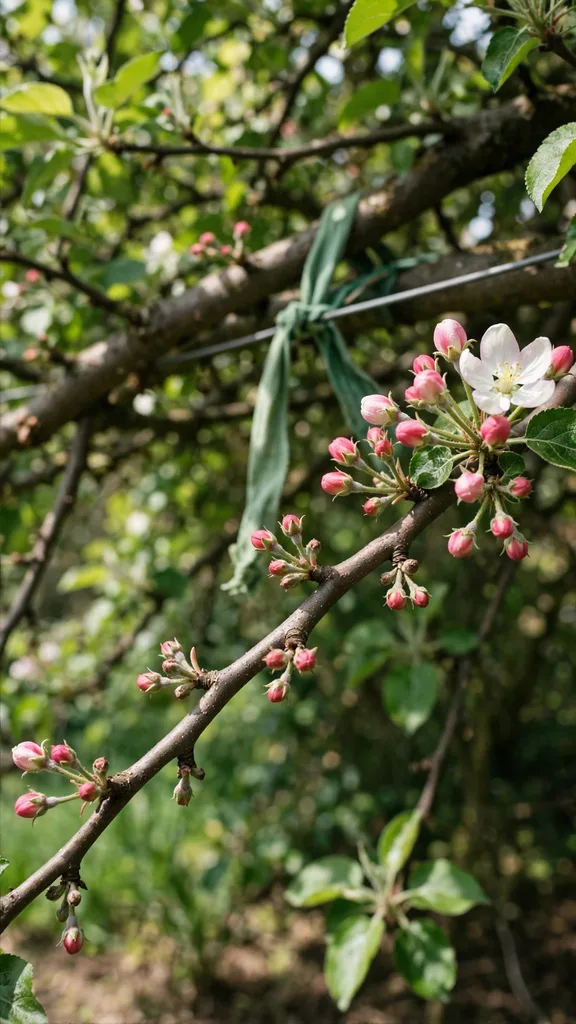
A good espalier shows short spurs, not long whips. Spurs are the stubby side shoots that carry flowers and fruit, and a mature espalier arm carries spurs every 10 to 15 cm along its length. Long bare stretches mean the arm grew vegetatively and never settled into fruiting. Prune those stretches back to a bud in winter and wait for spurs to form.
Measure the wall gap with a ruler. The frame should sit 15.2 to 20.3 cm off the wall. A frame pressed tight to the bricks traps damp air, and mildew follows. A frame more than 30 cm off the wall wastes the heat the wall gives back at night. The ruler settles it in 10 seconds.
Measure the sun. Fruit trees need 6 hours of direct sun each day, and an espalier against a south-facing wall in the southern hemisphere, or a north-facing wall in the northern hemisphere, never gets it. Count the sun hours on the wall in midsummer. Fewer than 6 means the wall suits shade plants, not fruit.
Common Mistakes With Espalier
The first mistake is starting with an old tree. A 5-year-old apple has stiff branches that snap when bent, and its crown already runs in every direction. Start with a whip, 1 or 2 years old, on a dwarf rootstock. The whip has nothing to unlearn.
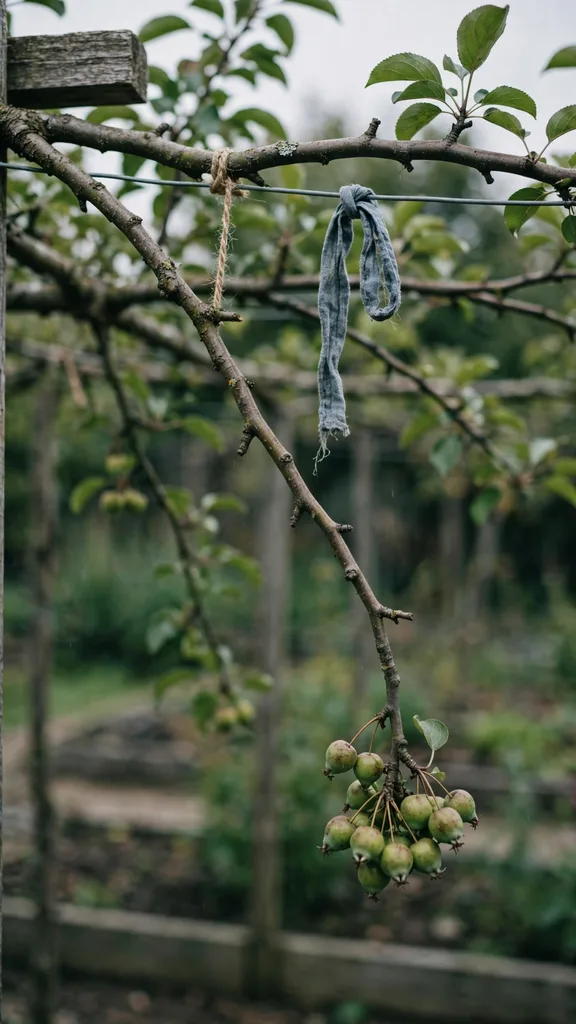
The second mistake is building the frame after planting. A tree planted against a bare wall grows round while you order timber, and by the time the frame goes up the branches point the wrong way. Build the frame first. Plant second. Train third. The order never changes.
The third mistake is tying branches tight to the wall. A tie with no slack strangles the branch as it thickens, and the branch dies above the tie. Use soft ties, leave a finger of slack, and check them every spring. A tie that fit in September girdles the branch by March.
The fourth mistake is skipping summer pruning. Espalier needs 2 prunes a year: a hard structural prune in winter and a light trim in summer that cuts new shoots back to 3 or 4 leaves. Skip the summer trim and the tree throws long whips that shade the fruit and tangle the pattern. The pollination page explains why shaded bloom sets thinly even on a well-built frame, and the same shade thins an espalier crop.
The fifth mistake is picking the wrong fruit. Stone fruit grows fast and resents hard pruning, so peaches and cherries fight the frame every year. Apples and pears accept it. Figs tolerate it. Start with apple or pear, learn the rhythm, and try stone fruit only after the first frame fills.
When Espalier Matters in Your Garden
Espalier matters most in a small garden with a sunny wall. A courtyard, a narrow side bed, and a fence line all grow fruit once the tree goes flat. The technique turns dead vertical space into a crop, and the crop hangs where a child reaches it without a ladder.
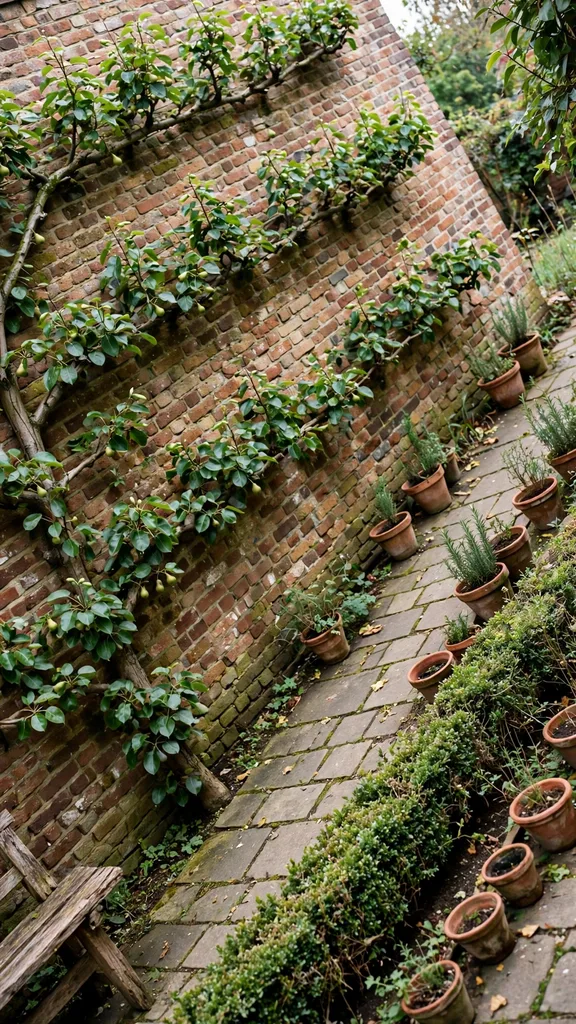
Espalier matters again on a cold site. A south-facing wall in the northern hemisphere, or a north-facing wall in the southern hemisphere, holds day heat into the night and shelters bloom from a light frost. Figs and peaches ripen against a warm wall where they fail in the open yard. The wall is a microclimate you can build.
Espalier matters least in a big open garden. A free-standing tree fruits just as well there with a tenth of the work, and the hours spent tying and summer pruning buy nothing. Plant the tree round, let it spread, and save espalier for the wall that needs it.
Espalier never matters as a quick fix. A frame takes 2 to 3 years to fill, and the tree needs yearly pruning for its whole life. A gardener who wants fruit this year should buy a dwarf tree in a pot. A gardener who wants a living wall for a decade should build the frame. The gardening glossary gathers every fruit term on this site in one place.
FAQ
Expect 2 to 3 years for a young whip to fill a 2-meter frame, with one new tier each year. The tree fruits lightly from year 2 onward and crops fully once the pattern fills. Summer pruning each year keeps the shape tight, and the frame needs no rebuilding once the wires are set.
Apple and pear suit espalier best because their young wood bends without breaking and they fruit on short spurs that sit neatly on level arms. Figs tolerate it well. Peaches, cherries, and plums grow fast and resent hard pruning, so they fight the frame and need more summer work.
Keep the frame 15.2 to 20.3 cm off the wall. The gap moves air behind the branches so mildew never settles, and it leaves room to reach the wall for paint or repairs. A frame pressed tight to the bricks traps damp air, while one set too far out wastes the heat the wall gives back.
Only if it is young, 1 or 2 years old, with supple branches and no established crown. An older tree has stiff wood that snaps when bent, and its branches already point in every direction. Start fresh with a whip on dwarf rootstock, and the pattern forms in 2 to 3 years.
No, it raises the crop per square meter because every branch sits in full sun and every fruit hangs within reach. The total crop per tree runs smaller than a free-standing tree, because the tree itself is smaller. The trade is a smaller tree with more fruit for its size, not less fruit overall.