Count 40 apples on one branch this year and 4 next year. Biennial bearing is when a tree spends this year fruiting and leaves nothing for next year buds, and the tree is not sick.
Biennial bearing turns a good apple tree into a tease. One autumn brings baskets. The next brings a bare tree and a shrug. The pattern repeats every 2 years unless you break it, and the break is a job done in spring, not in autumn when the empty branches finally show.
| Point | Detail |
|---|---|
| Definition | Heavy crop one year, light or no crop the next |
| Cycle length | 2 years, on then off |
| Worst hit | Apple and pear, most of all |
| Cause | Next year flower buds form while this year fruit grows |
| Fix | Thin fruitlets within 6 weeks of full bloom |
What Is Biennial Bearing?
Biennial bearing is the habit of bearing a heavy crop one year and a light crop, or no crop, the next. The Iowa State Extension guide to alternate bearing states it plainly: the tendency of fruit trees to bear fruit in two-year cycles, consisting of a large crop followed by a small crop, is termed alternate or biennial bearing, and it occurs in almost all tree fruits but is particularly common in apple and pear.
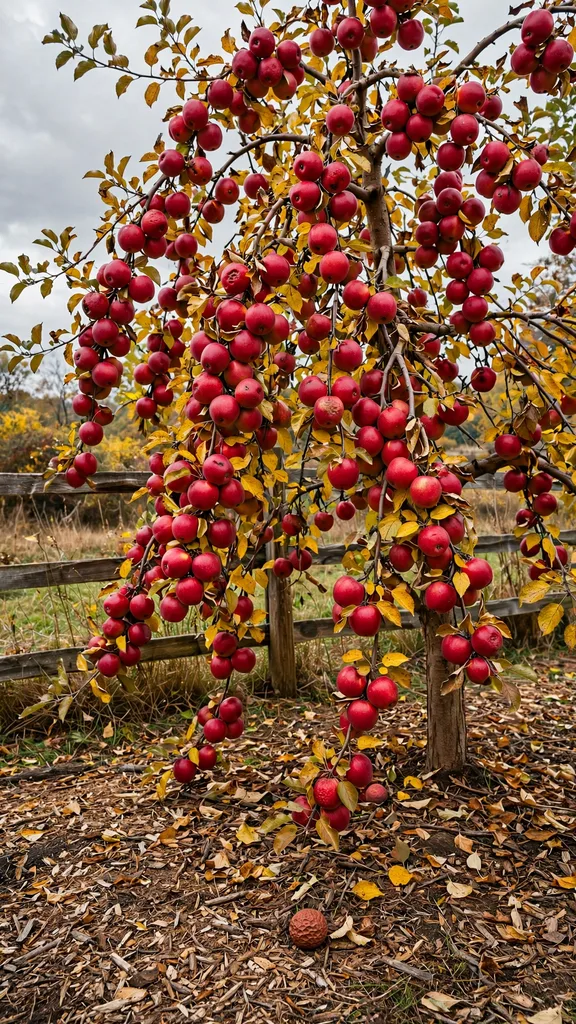
The tree is not broken. It is budgeting. A heavy crop eats the sugars that would have built next year flower buds, so the buds never form and the next spring opens few flowers. A light year then rebuilds the budget, buds form freely, and the year after brings another heavy crop. The cycle feeds itself.
Some cultivars lean into the pattern harder than others. Honeycrisp, Fuji, and Golden Delicious swing wide between on years and off years. Gala and Liberty swing less. The cultivar sets the tendency. Thinning sets the result. A heavy-cropping cultivar thinned hard every spring can bear yearly. The same cultivar left alone alternates for its whole life.
How Biennial Bearing Works
Next year flowers start forming while this year fruit still hangs on the branch. Buds for the coming spring initiate in early summer, at the same time the fruitlets swell and demand sugars. The fruit wins the contest for food, and the buds lose. A branch loaded with fruit forms few flower buds or none at all.
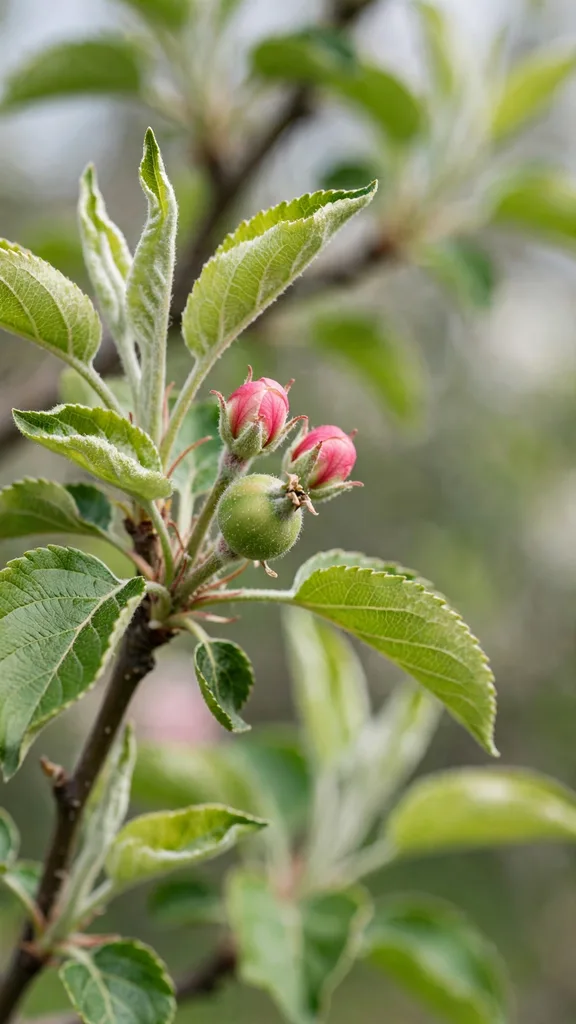
Hormones carry the message. Seeds inside the fruitlets release gibberellins, and those hormones suppress flower bud formation on nearby spurs. More seeds mean a stronger stop signal. A cluster of 5 fruitlets shouts louder than a single fruit, which is why thinning to one fruit per cluster quiets the signal enough for buds to form.
The timing of the fix is narrow. The Delaware Extension notes on alternate bearing in fruits put the tool plainly: the main tool used to prevent alternate bearing is fruit thinning, and hand thinning of apples should be done within 6 weeks of full bloom. Thin inside that window and buds form for next year. Thin after it and the fruit sizes up nicely while next year bloom still fails, because the buds already missed their start.
The pattern locks in fast. One unthinned heavy year sets up an off year. The off year then sets up a heavy year, because a tree with no fruit pours everything into buds. Two seasons of neglect build a rhythm that takes 2 to 3 years of steady thinning to break. Start thinning the first heavy year, not the third.
Biennial Bearing vs Biennial Plants
Biennial bearing and biennial plants share one word and nothing else. One is a fruiting rhythm on a tree that lives for decades. The other is a whole life cycle that ends after 2 years. Gardeners mix them up because the word biennial sits in both names, and the mix-up sends people looking for the wrong fix.
| Point | Biennial Bearing | Biennial Plants |
|---|---|---|
| Meaning | Heavy crop one year, light the next | Plant lives 2 years, then dies |
| Plant life | Tree lives 20 years or more | Leaves year 1, flowers and seeds year 2, dies |
| Examples | Apple, pear, plum | Carrot, parsley, foxglove, hollyhock |
| Cause | Fruit load blocks next year buds | Built-in life cycle, not a problem |
| Fix | Thin fruit within 6 weeks of bloom | None needed, sow again |
| When it shows | Every second autumn | Second summer, then the plant is gone |
A biennial plant never needs thinning to fix its cycle. It flowers once, sets seed, and dies on schedule. A biennial bearing tree needs thinning every heavy year, or the cycle repeats for decades. The word is the same. The job is not.
A tree that fruits heavily one year and lightly the next is not a biennial plant. It is a perennial tree with a budgeting problem, and the budget gets fixed in spring. The fruit set page shows how the count after bloom tells you whether the tree needs thinning this year.
How to Recognise / Measure Biennial Bearing
The history is the diagnosis. Look back 3 years. A tree that cropped heavily, then lightly, then heavily again is biennial bearing. A tree that cropped lightly 3 years running has a different problem: pollination, frost, or feeding. The pattern needs 2 full cycles to confirm, and a notebook beats memory every time.
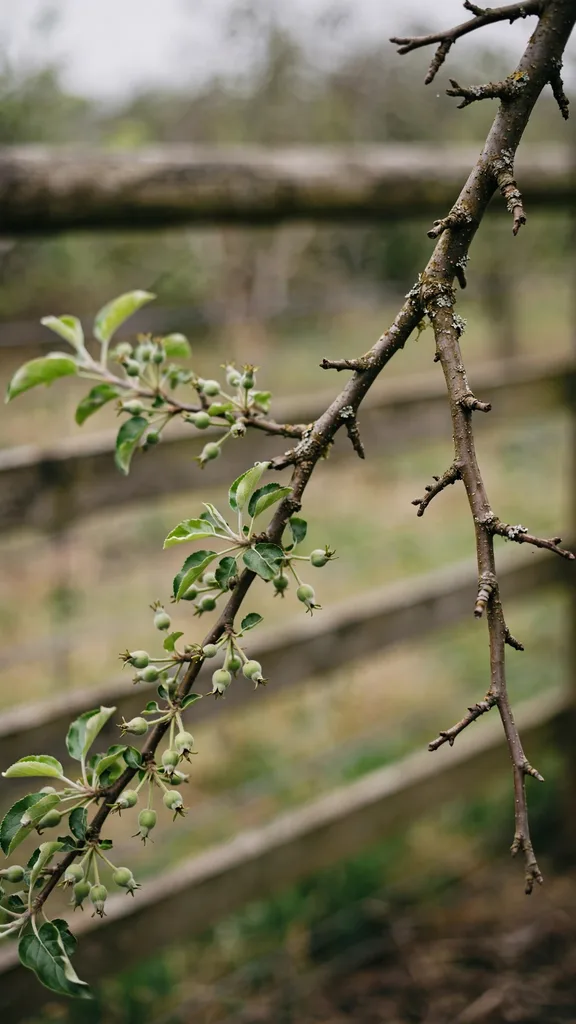
The bloom count is the early warning. Count flower clusters in spring before they open. An on-year tree carries clusters on most spurs. An off-year tree carries clusters on a few spurs and bare wood elsewhere. The count takes 10 minutes and predicts the autumn 6 months early.
The fruitlet spacing is the measurement. The spacing target from the same notes runs 20.3 to 25.4 cm between apples on the branch after thinning, and that spacing is the target that breaks the cycle. Walk the tree 6 weeks after full bloom and measure the gaps between fruitlets with a ruler. Gaps under 10 cm mean the tree still carries too much fruit, and next year buds are already losing.
The branch tells the story too. A branch that fruited heavily last year carries few flower buds this spring, while a branch that rested last year blooms hard. The two branches sit side by side on one tree, and the contrast is the pattern in miniature. Thin the heavy branch first.
Common Mistakes With Biennial Bearing
The first mistake is thinning too late. Hand thinning after June drop grows bigger fruit, and it does nothing for next year bloom, because the buds needed thinning within 6 weeks of full bloom. Thin early or do not thin at all for the cycle. Late thinning is a sizing job, not a cycle breaker.
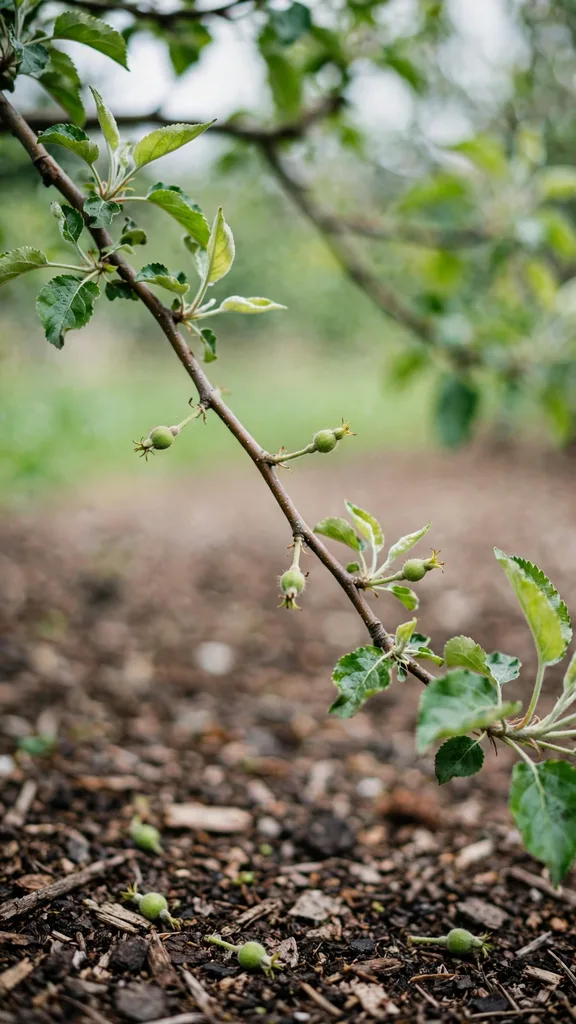
The second mistake is feeding the off-year tree. Fertilizer grows leaves and wood, and it never grows flower buds that the heavy crop already blocked. The tree looks healthier and still blooms thin. Save the feed for the on-year tree, and spend the off year thinning nothing because there is nothing to thin.
The third mistake is pruning hard in the off year. Heavy pruning pushes vegetative growth, and vegetative shoots carry no flower buds. The tree grows long green shoots all summer and blooms thin again the next spring. Prune lightly in the off year. Remove dead wood and crossing branches, and leave the fruiting spurs alone.
The fourth mistake is picking the wrong cultivar and blaming the yard. Honeycrisp and Fuji alternate hard even with good care, and a gardener who wants a yearly crop should plant Gala or Liberty instead. The cultivar sets the tendency before the tree ever meets your soil. The chill hours page shows how cultivar choice decides the crop before planting, and the same logic holds for bearing habit.
The fifth mistake is treating one heavy year as a gift. A heavy year feels like success, and it is the setup for the empty year that follows. Thin the heavy year hardest. The basket shrinks this autumn. The tree fruits next autumn too.
When Biennial Bearing Matters in Your Garden
Biennial bearing matters most on apple and pear, the two fruits where the pattern runs strongest. A home gardener with one apple tree feels it hardest, because the off year means no apples at all. A gardener with 3 apple trees of different cultivars spreads the risk, since their cycles rarely line up.
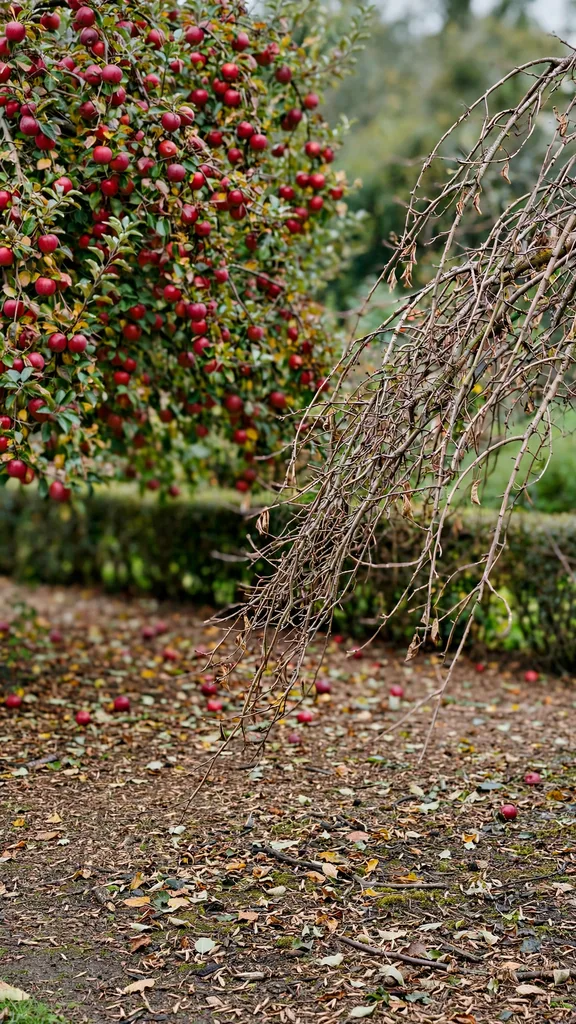
Biennial bearing matters again at planting time. The cultivar list is the decision. A gardener who wants a yearly crop picks a steady bearer. A gardener who loves Honeycrisp accepts the cycle and thins hard. Both choices work. Only the surprise fails.
Biennial bearing matters least on peach, plum, and cherry. Those fruits alternate less, and their thinner crops reset the cycle on their own. A peach that crops heavily one year usually crops well the next, because peaches thin themselves through June drop and frost. The pattern belongs to apples and pears first.
Biennial bearing never matters after the fruit is picked. The cycle is set in spring and locked by June. Autumn is the wrong season to fix it. Mark the calendar for bloom week next year, and thin inside the 6-week window while the buds still have time to form. The gardening glossary gathers every fruit term on this site in one place.
FAQ
Thin fruit within 6 weeks of full bloom, leaving one fruit per cluster and 20.3 to 25.4 cm between apples on the branch. Early thinning frees sugars and quiets the seed hormones that block next year buds. Keep it up every heavy year for 2 to 3 years, and the cycle breaks into yearly cropping.
Honeycrisp, Fuji, and Golden Delicious swing widest between heavy and light years. Gala, Liberty, and Enterprise bear more evenly. The tendency is built into the cultivar, so a gardener who wants a yearly crop should pick a steady bearer or commit to hard thinning every spring on a swinging one.
No. Late thinning grows larger fruit this year, and it does nothing for next year bloom, because flower buds form in early summer while fruitlets still hang. The thinning window closes 6 weeks after full bloom. Thin inside it or accept the off year that follows.
A heavy crop ate the sugars that would have built next year flower buds, and seed hormones from the fruitlets blocked bud formation on top of that. The tree is healthy and budgeting, not dying. Thin hard next heavy year, and the tree returns to yearly cropping within 2 to 3 seasons.
Yes, pears alternate almost as hard as apples, and plums alternate less. Peaches and cherries rarely lock into a strict 2-year cycle. The fix is the same everywhere: thin early, one fruit per cluster, inside 6 weeks of bloom, and pick steady cultivars when you plant.