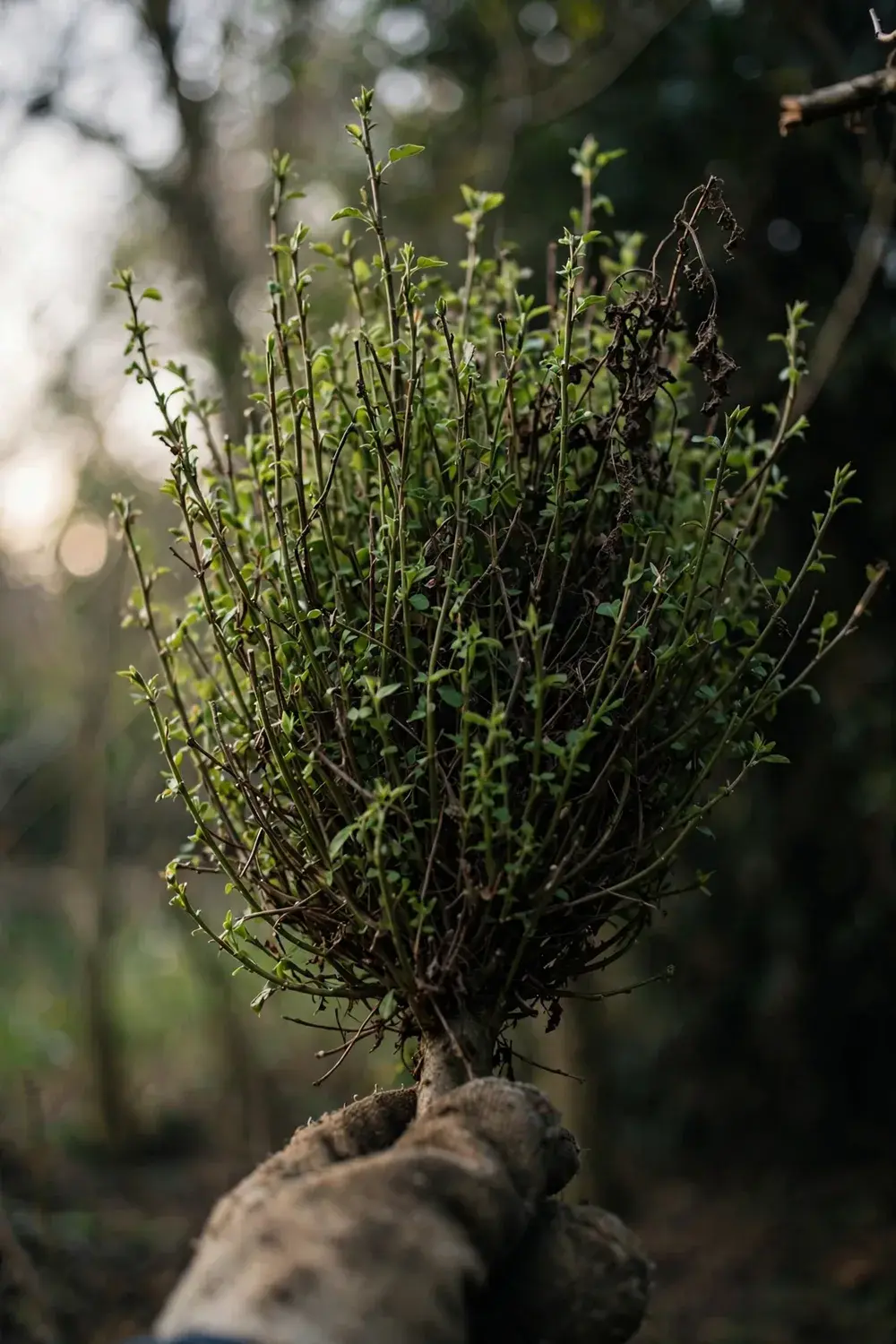

Spend 10 minutes looking at the whole plant before you touch the shears. That dense mass of shoots bursting from one point is a witches’ broom, a symptom with many causes, and most brooms are harmless. The rest of this page runs 7 steps, from naming the broom to deciding whether to prune it, leave it, or remove the plant.
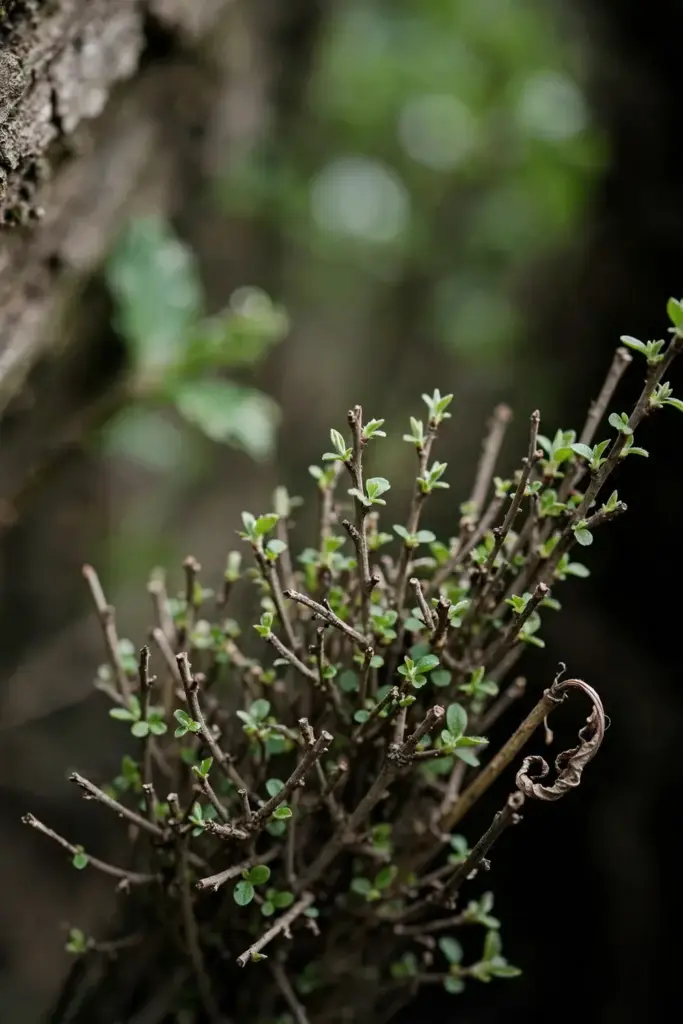
The broom looks like a bird’s nest wedged in the branches. Shoots crowd together, short and stocky, with small leaves, while the rest of the branch grows normally. I have learned to read the rest of the plant before reaching for the shears.
The broom itself rarely kills a tree. The danger sits in the cause behind it, and the cause decides the action. If the broom sits on asters or annual flowers, the likely cause is aster yellows, a phytoplasma disease of herbaceous plants, and that case follows a different path.
What Witches’ Broom Actually Is
Witches’ broom is a growth deformity, not one disease. Many different agents produce the same shape, so the broom tells you that something interrupted normal growth, never which agent did it.
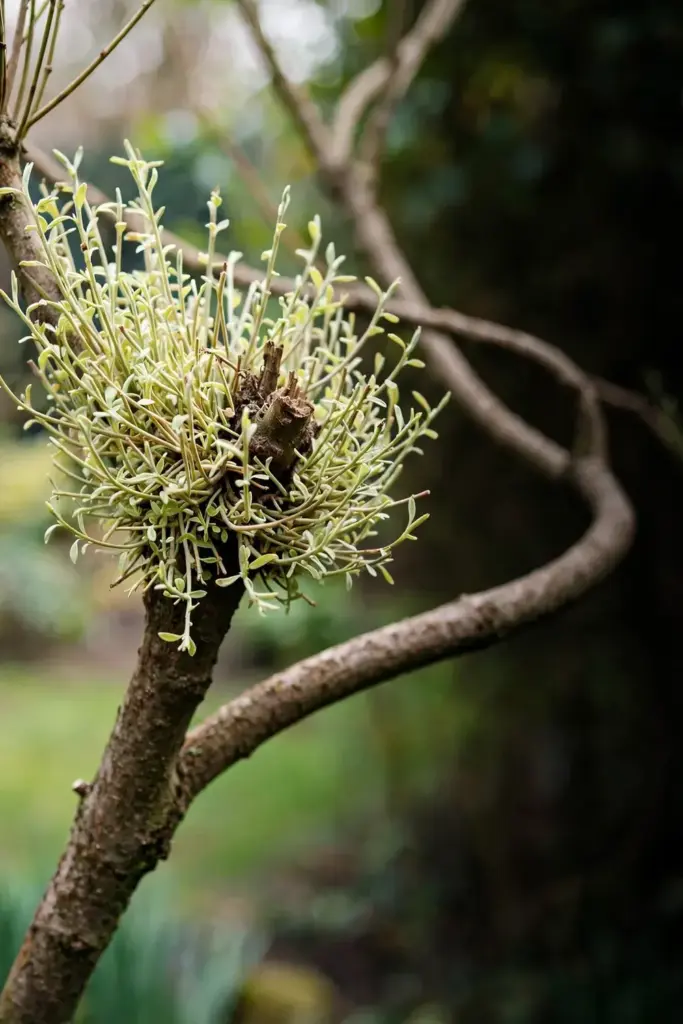
The mechanism is straightforward. The causal agent kills a growing point, and the plant answers with a flush of side shoots from that one spot. The University of Maryland Extension describes this sequence in its overview of witches’ broom on trees, and it notes that the shoots come out shorter, stockier, and more upright than normal growth. The broom draws nutrients, so growth around it may slow while the broom itself keeps pushing new shoots.
A broom can persist on the same branch for years. Some stay small and quiet. Others keep growing, shed leaves, and die back at the tips. The broom alone does not tell you which future your plant faces. Read the rest of the plant. Step 3 shows what to look for there.
How to Identify Witches’ Broom on Branches and Twigs
Look for a tight ball of twiggy shoots at one point on a branch. That dense cluster, with many thin shoots rising from a single spot, is the signature of witches’ broom on branches and twigs.
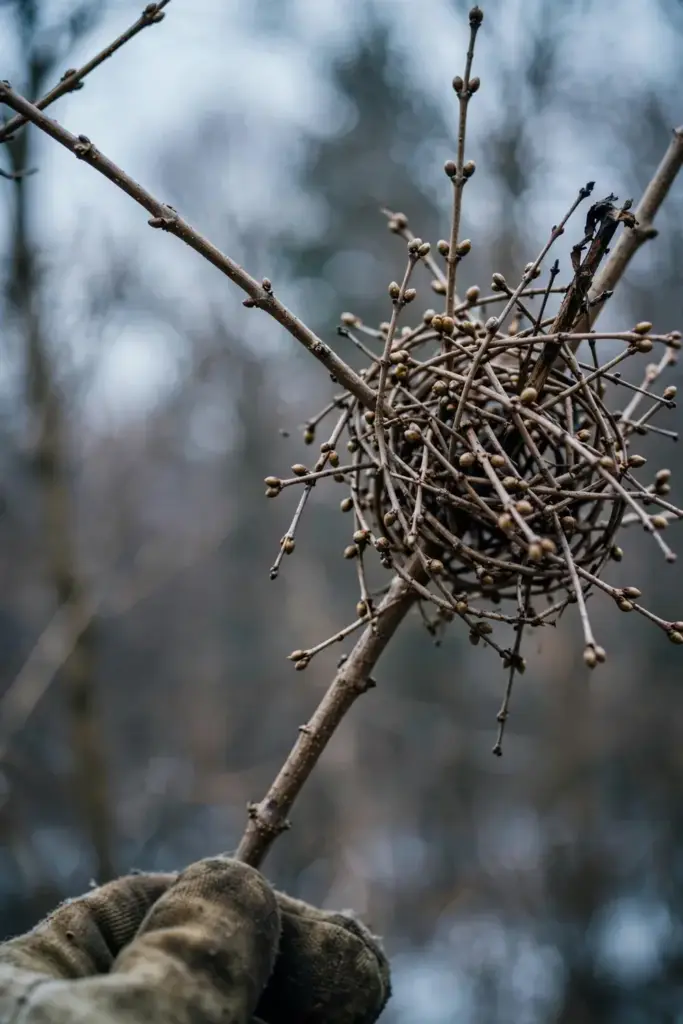
The shoots inside the cluster differ from normal twigs in four ways. Internodes stay short, so leaves sit close together. Shoots stay thin and numerous where a normal branch would carry a few strong twigs. Leaves come out small. Growth points upward in a compact tuft rather than spreading outward. A broom on a bare winter branch stands out against the sky as a tangled knot at the end of an otherwise clean branch.
Check whether the broom leaves out, flowers, or fruits. A broom that leafs out with small but normal-looking leaves and then stalls fits the harmless pattern. A broom that stays leafless, drops its leaves early, or shows dieback at the tips points toward a disease cause. Growth around the broom matters too. When the wood beyond the broom looks thin and weak, the broom is diverting more than a fair share of nutrients.
How to Identify Witches’ Broom on Shrubs
On a shrub, a broom looks like a clump of twiggy growth bursting from one cane or stem. The same crowded shoots appear, packed into a small volume, with small leaves and short internodes.
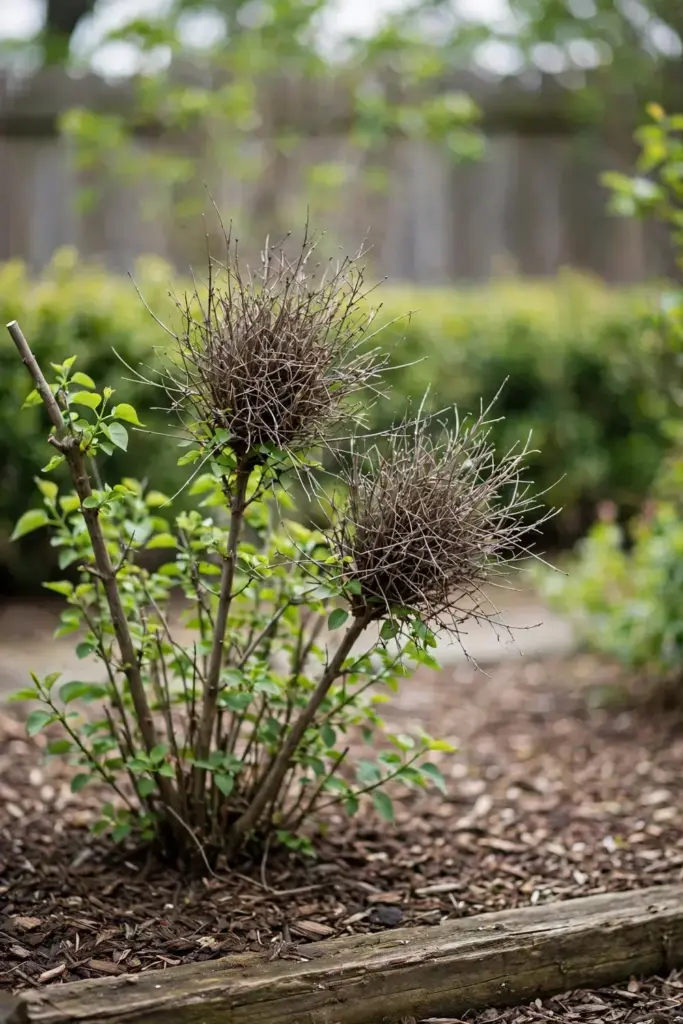
Lilac shows the pattern on terminal growth. Brooms cluster at the stem tips, leaves stay small, and the shrub loses vigor as brooms spread. Lilac brooms trace back to a phytoplasma, a wall-less bacterium-like organism that colonizes the sap-conducting tissue. The cause lives inside the plant, so cutting the broom off never removes the cause, and brooms return.
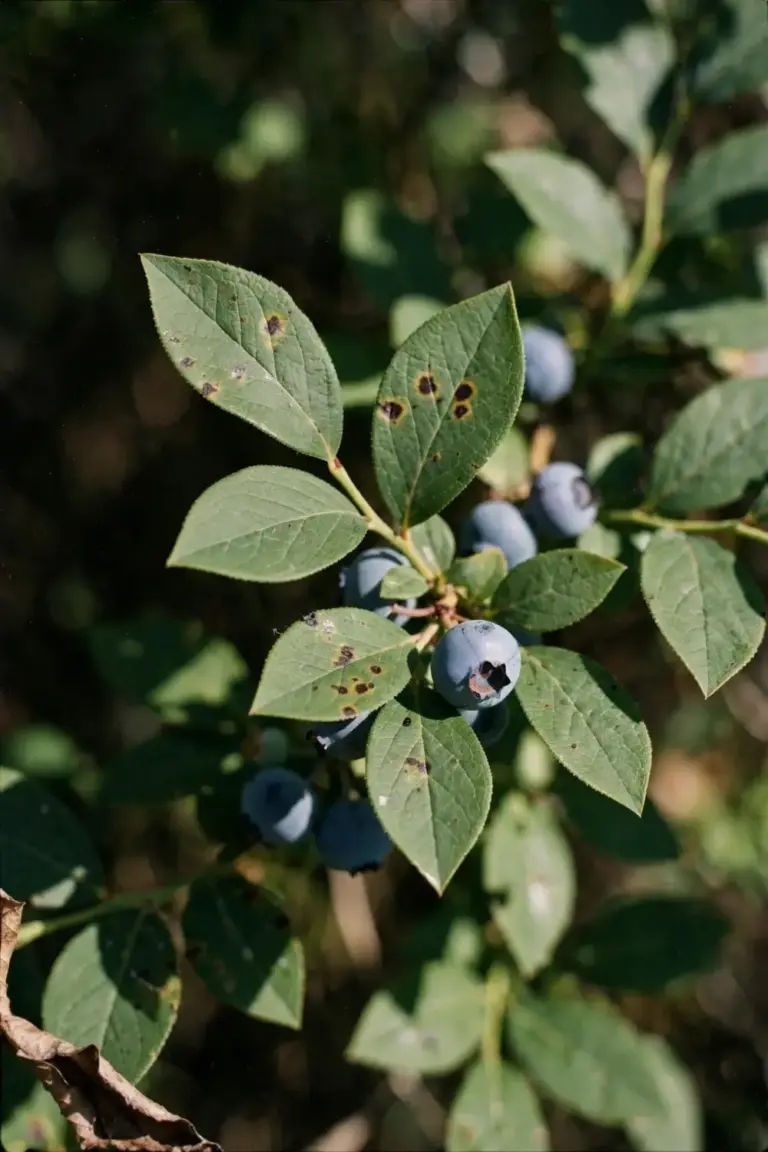
Blueberry shows a different texture. Michigan State University Extension describes broom-like masses of swollen, spongy shoots with short internodes and small leaves. Young stems on the brooms start yellow or reddish, then turn brown and shiny, and finally dry and cracked. Heavily infected plants produce no fruit, and the brooms persist for many years, pushing infected new growth each spring.
Cherry brooms grow on twigs, and the fungi Taphrina cerasi and Taphrina weisneri cause them. Oleander brooms come from the fungus Sphaeropsis tumefaciens, which Pima County Extension identifies as the usual cause of the gall-like growths on oleander in Arizona landscapes. The shrub species changes the cause, and the cause changes the action, which is why the host matters from the start.
Which Trees and Shrubs Show Witches’ Broom Most Often
Any woody plant can grow a broom, and the usual hosts are lilac, cherry, oak, pine, fir, blueberry, and oleander. The list spans trees, shrubs, fruit crops, and ornamentals, which is one more sign that the broom is a shared symptom rather than one disease.
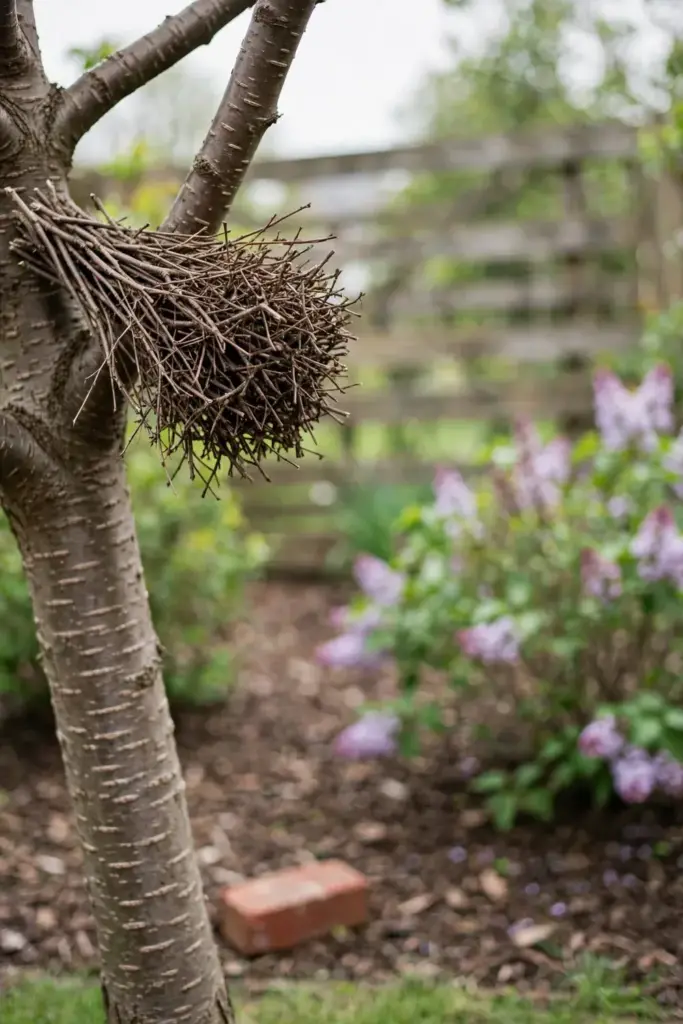
The Wisconsin Department of Natural Resources forestry blog treats witches’ broom the same way, calling it a term that describes a disease of many different plants. Its September 2025 explainer names serviceberry broom fungus, Apiosporina collinsii, as one cause, and it notes that little can be done to prevent that perennial fungus. The same explainer covers fir-broom rust, Melampsorella elatina, which can deform young firs for life and kill stems on mature trees.
Elm, ash, walnut, dogwood, willow, apple, black locust, honeylocust, papaya, peach, and sassafras also appear on the host list for phytoplasma brooms. Live oak, willow oak, and ninebark host a powdery mildew fungus that builds brooms, and juniper hosts juniper broom rust. Cacao carries its own witches’ broom disease, a commercial chocolate-crop problem in Central and South America, and it has no place in a home-garden plan.
What Causes Witches’ Broom
No single pathogen causes witches’ broom. Seven cause groups share the symptom, and they range from microbes to mites to mutations.
| Cause group | How it builds a broom | Hosts you may see it on |
|---|---|---|
| Phytoplasmas | Wall-less organisms colonize the phloem and interrupt sap flow, and the growing point fails | Lilac, peach, elm, ash, walnut, dogwood, willow, apple |
| Fungi | Rusts, Taphrina species, and mildews infect buds and force crowded shoot growth | Cherry, blueberry, fir, serviceberry, oak, ninebark, juniper, oleander |
| Viruses | A virus redirects growth at the infected tip and shoots proliferate | Roses through rose rosette virus, plus other woody hosts |
| Mites and insects | Eriophyid mites and sap feeders damage buds or carry pathogens that trigger brooming | Palo verde and other desert trees, plus many ornamentals |
| Dwarf mistletoe | A parasitic plant invades the branch and forces a broom of host shoots around the infection | Pines and cypresses |
| Genetic mutations | A mutation in vegetative cells, called a sport, changes growth at one point | Any woody plant, including conifers |
| Environmental damage and herbicide injury | Injury kills the growing point and the plant answers with side shoots | Any woody plant near roads, spray drift, or salt exposure |
The University of Maryland Extension overview of witches’ broom on trees lists fungal, viral, and phytoplasma causes alongside eriophyid mites, mistletoe, environmental damage, and mutation. The same overview notes that phytoplasmas colonize the sap-conducting tissue and damage it by interrupting sap flow. It also notes that horticulturists sometimes propagate mutation brooms for breeding dwarf plants, which is the clearest proof that a broom is not always a disease.
Two groups deserve a plain warning. Oomycetes and nematodes also appear in the cause list for brooms, and they stay rare in home gardens. Rose rosette deserves its own name. It is a distinct mite-vectored virus disease of roses whose symptoms include brooming, and it needs its own handling, not absorption into a general broom article.
What Makes Witches’ Broom Worse in a Home Garden
Stress, nearby alternate hosts, and dirty tools make brooms worse. A stressed tree or shrub shows brooms more readily than a vigorous one, and poor water, poor soil, and root damage all add stress.
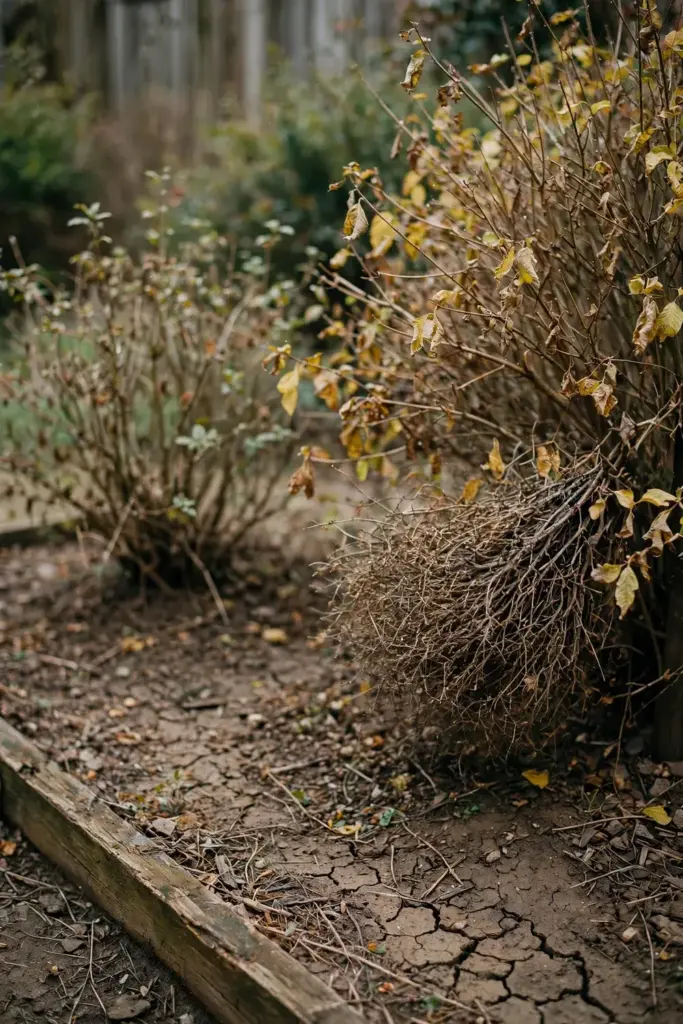
Alternate hosts drive the rust brooms. The blueberry rust fungus needs balsam fir to complete its life cycle, so a blueberry patch near fir trees sits inside the disease loop. Michigan State University Extension makes the same point in its management notes for blueberry witches’ broom, and Step 6 carries the distance figure.
Sap-feeding insects carry phytoplasmas between plants, so a garden with heavy leafhopper or aphid pressure moves the cause faster than a garden with clean, vigorous plants. Tools spread fungal spores from a broom to healthy wood when blades move from cut to cut without cleaning. Leaving a brooming shrub beside healthy shrubs of the same species risks spread on lilac, where early removal of a badly broomed shrub protects the healthy plants beside it.
Wounds open the door. A torn branch, a mower nick, or a hard pruning cut gives fungi an entry point, and a broom can follow at the wound site. Storm breakage leaves the same opening, so a tree that loses limbs in a storm deserves a close look at every break the next season. Clean cuts, prompt removal of torn wood, and disinfected blades close the openings that broom fungi use.
Step 1: Decide Whether This Broom Needs Any Action at All
Most brooms need nothing. Decide first, cut second, and let the verdict below set the rest of the work.
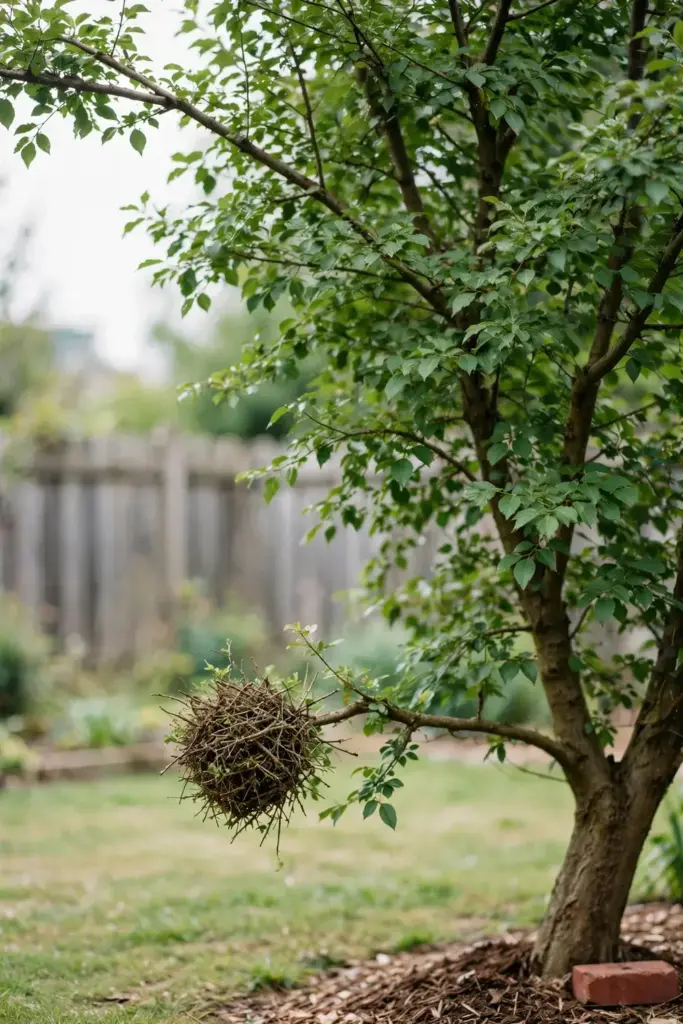
A single broom on an otherwise healthy plant is cosmetic. The plant feeds itself, fruits normally, and carries the broom as a quirk. Cutting it out improves the look and nothing else. A broom with warning signs attached means a disease cause, and that case earns action. A broom that keeps returning after pruning means the cause lives inside the plant, and cutting alone will not end it.
| What you see | Verdict | Action |
|---|---|---|
| One broom, healthy plant, normal leaves and fruit | Cosmetic | Leave it, or prune for looks |
| Broom plus yellow or distorted leaves, dieback, or no fruit | Disease cause likely | Work Steps 2 through 6 |
| Brooms spreading across the plant, or neighbors showing brooms | Spreading cause | Work Steps 2 through 6 and plan removal |
| Broom high in the crown of a mature tree | Out of safe reach | Work Step 7 and call a pro |
| Broom on blueberry that returns after pruning | Systemic rust | Skip repeat pruning and remove the plant |
The cost side of the call is real. Every cut opens wood to infection, and a large removal can strip a big share of the canopy. A broom that harms nothing costs nothing to keep. A broom that signals a spreading cause costs a shrub if you wait.
Step 2: Rule Out the Lookalikes Before You Cut
Three lookalikes fool gardeners, and they are mistletoe, galls, and herbicide injury. Check all three before the shears come out.
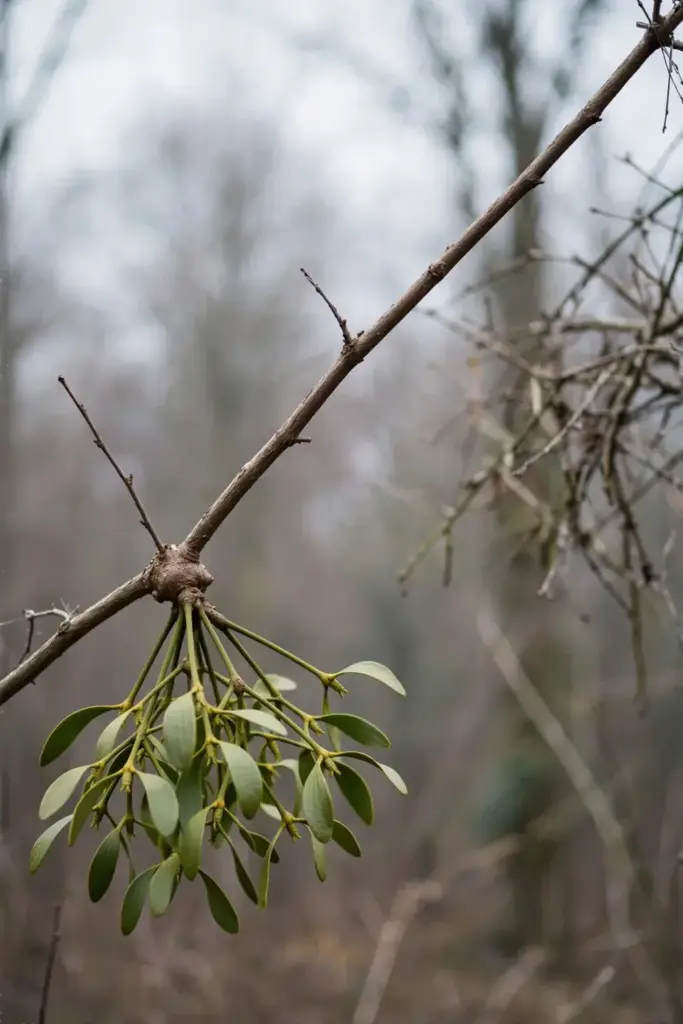
Mistletoe is a separate parasitic plant growing on the branch, not part of the tree. It carries its own leaves and stems, often in a green clump that hangs from the branch, while a broom is a mass of the tree’s own shoots. Mistletoe needs different handling, and the site’s mistletoe guide covers that plant on its own terms.
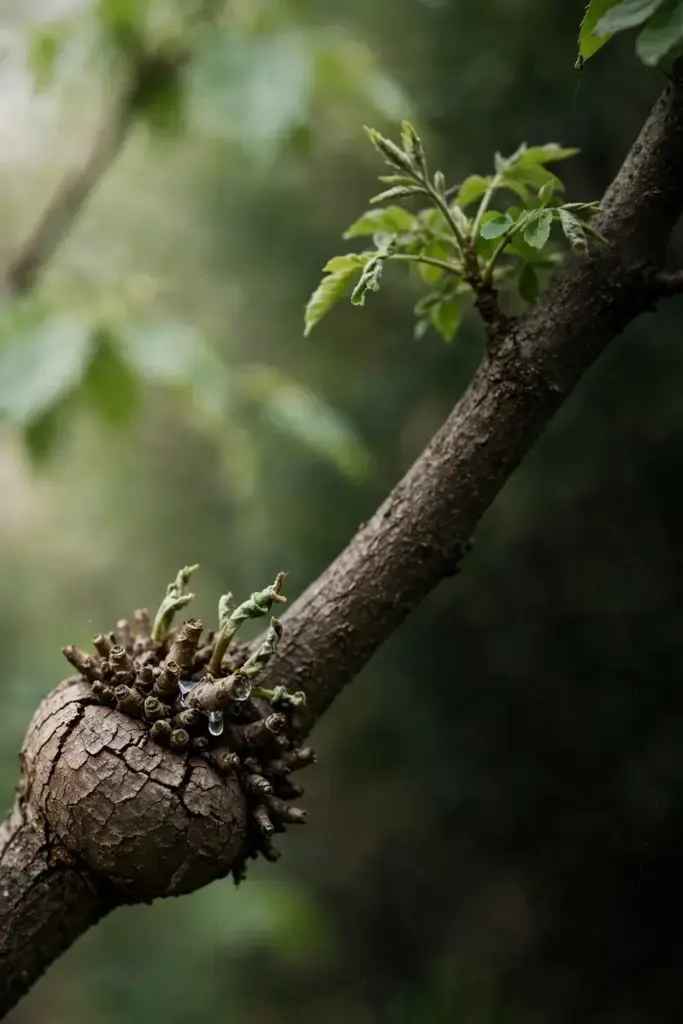
Galls are swellings, not shoot masses. A gall bulges from a stem, root, or leaf as a tumor-like overgrowth, while a broom bristles with many thin shoots. Crown gall and stem gall wasps both produce swellings that a quick glance can mistake for a broom, and bacterial gall shows the gall pattern in full.
Herbicide injury twists growth across the whole plant or across one drift-exposed side. Leaves cup, curl, or narrow, and shoots distort without forming one dense broom point. Drift damage follows the spray path, so the pattern runs across many branches at once, while a broom stays local, with one crowded point and normal growth elsewhere.
Step 3: Read the Warning Signs That Mean Real Trouble
Other symptoms beside the broom mean disease, not a harmless quirk. Read the whole plant. Distorted or yellowing leaves beside the broom point toward a pathogen cause. Dieback on the same branch pushes the same way, and so do leaves clinging past their season and fruit that fails to set.
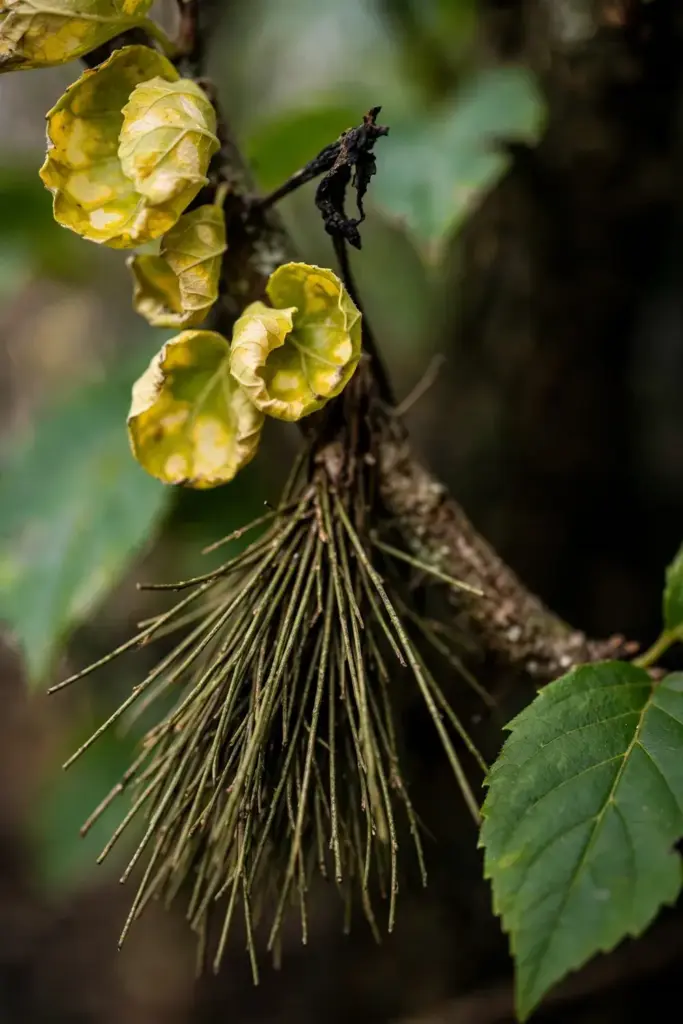
Stems inside the broom turning brown, shiny, and cracked match the blueberry rust pattern, which means the fungus already holds the crown. Brooms spreading across the plant mean the cause is moving. So do brooms on neighboring plants of the same species.
The opposite pattern reassures. One broom, healthy leaves, normal fruit, and vigorous growth elsewhere mean the broom is most likely cosmetic. A mutation broom on an otherwise thriving conifer fits this pattern, and so does a lone broom on a mature shade tree that keeps its canopy. When the plant looks healthy everywhere except the broom, the broom earns a watch, not a rescue.
Step 4: Prune the Broom Back to Healthy Wood
Cut the whole broom out, back to healthy wood on the main branch. A partial trim leaves infected wood behind and the broom returns.
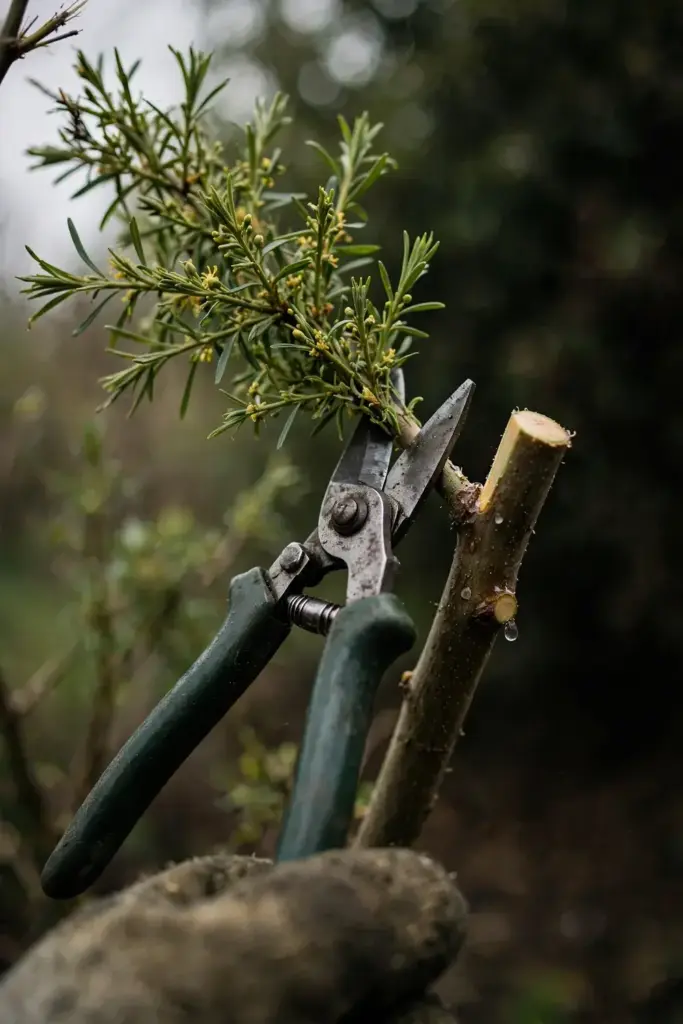
The Pima County Extension answer on oleander witches’ broom sets the cut line at least 15.2 cm below visible symptoms. Look at the cut end of the stem for discoloration from fungal growth in the wood, and cut further back when discoloration shows. The same guidance sets the weather window, with pruning in dry times and no rainfall expected 24 hours before or after the cut.
Make each cut clean, with sharp bypass pruners or a pruning saw matched to the branch size. Cut back to the main branch or to a healthy lateral, never to a stub. A stub dies back and invites rot. The site’s spring pruning techniques cover cut placement for woody plants in full, and the same placement rules apply here.
Two limits apply. Pruning cannot cure a systemic cause, so a blueberry broom cut out in spring returns because the fungus holds the crown. Pruning a broom that takes a large share of the canopy harms the tree more than the broom does, and that case belongs to Step 7.
Step 5: Disinfect Tools Between Every Cut
Disinfect the blades between every cut. This step matters more than the cut itself, because a dirty blade carries spores from a broom to healthy wood.
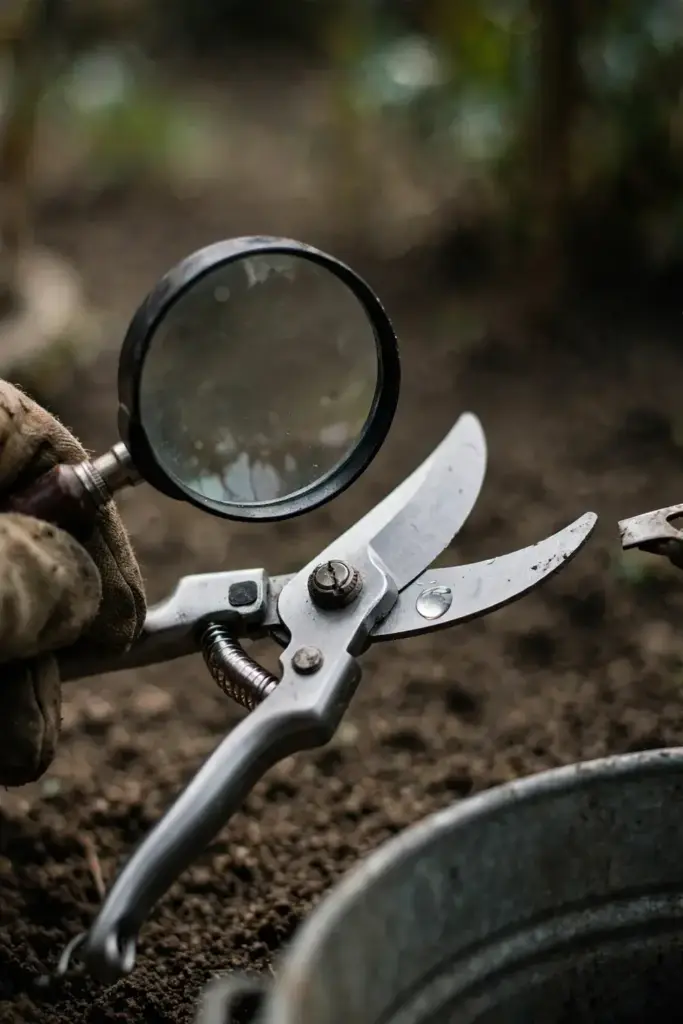
Use a disinfectant such as 10 percent bleach or rubbing alcohol, and dip the blades before moving to the next branch or plant. The same Pima County Extension guidance sets the contact time for bleach at 30 seconds to sanitize the pruner surface. A bucket of solution beside the work area makes the rhythm easy, with one pruner soaking while another cuts, and the pair swaps after each cut.
Wipe debris off the blades before dipping, since sap and wood chips shield spores from the solution. Rinse the blades with clean water when the session ends, and dry them before storage. Bleach pits steel when it sits on the metal, and a quick rinse keeps the edge honest.
Step 6: Bag the Cuttings and Remove the Plant When the Broom Wins
Bag every cutting and trash it. Never compost broom cuttings, since compost piles do not reliably kill the spores and insects that ride along.
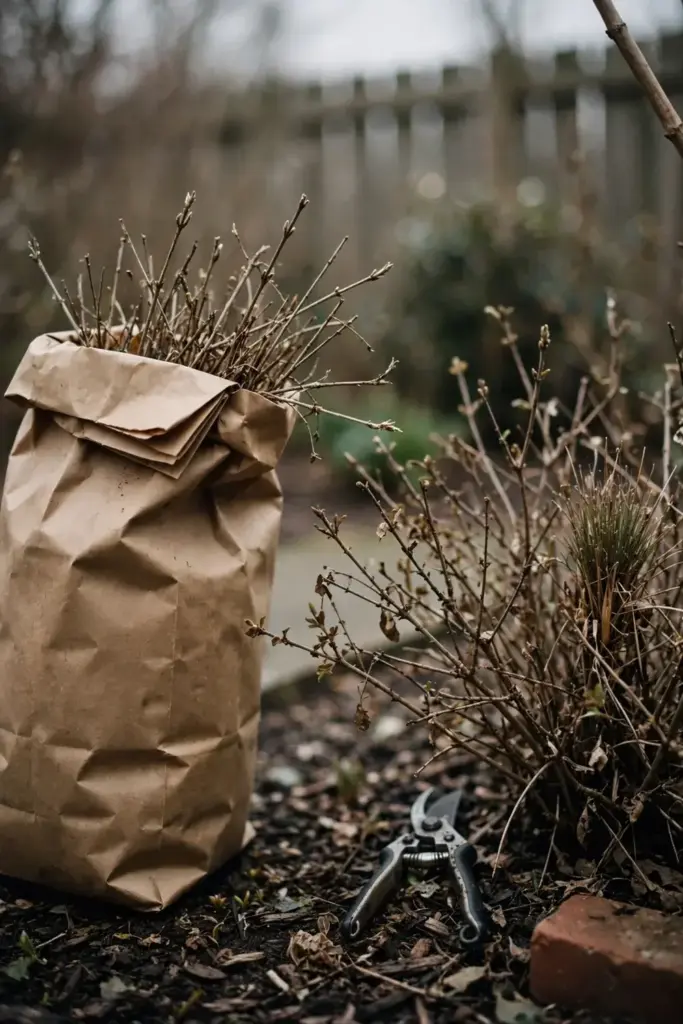
Seal the cuttings in a bag at the work site, and move the bag straight to the trash. Do not drag open armloads of broom cuttings across the garden, and do not pile them beside the compost bin for later. The point of pruning is to remove the cause from the garden, and a pile of cuttings on the ground undoes that work.
When most of the plant shows brooms, remove the whole plant and destroy it. Early removal protects healthy plants of the same species nearby, and it costs less than watching the cause spread through a hedge or a row. The Michigan State University Extension fact sheet on blueberry witches’ broom states the systemic case plainly, since the pathogen is systemic in the blueberry crown and pruning will not eliminate the disease. The same fact sheet sets the fir distance at 460 m, since the rust fungus needs balsam fir as its alternate host, and it names ‘Rancocas’ as a resistant cultivar for replanting.
Lilac follows the same logic. A lilac that is mostly broom, with brooms spreading across the shrub, will not recover through pruning, and removal protects the healthy lilacs beside it. Replant with a resistant choice when one exists for the host, and site the replacement away from the alternate host when the cause is a rust.
Step 7: Leave It Alone or Call a Pro When Cutting Makes Things Worse
Leave a cosmetic broom alone when cutting it out would strip a large share of the canopy. The tree pays for the cut with lost leaves, lost shade, and open wounds, and a harmless broom is not worth that price.
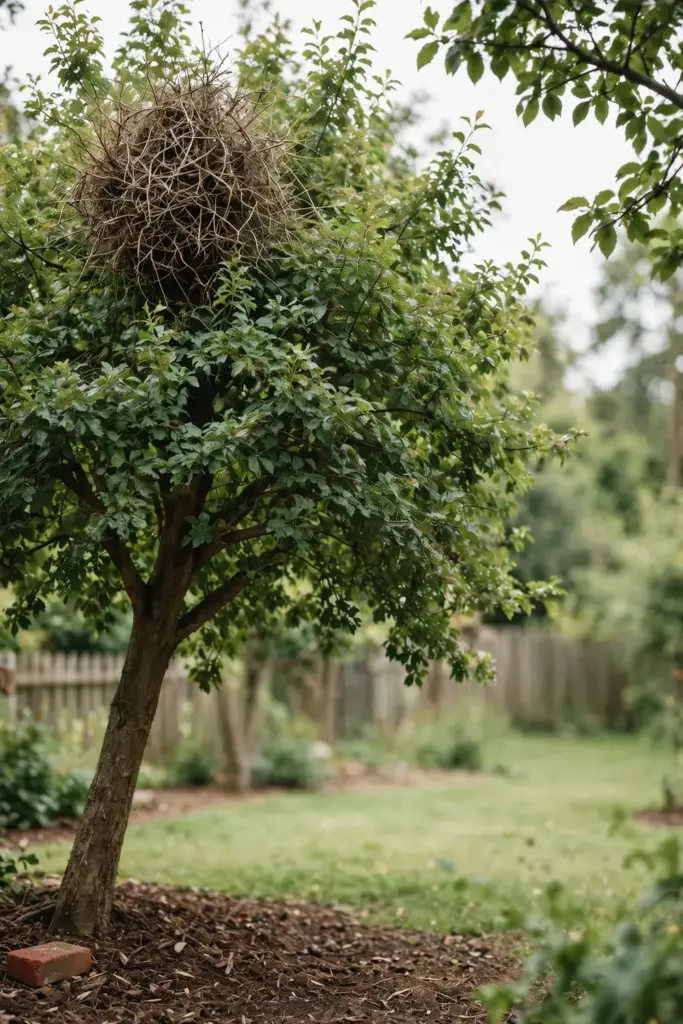
Mutation brooms belong in the leave-it column. A broom caused by a sport carries no pathogen, spreads to nothing, and sometimes becomes the parent of a dwarf plant. The University of Maryland Extension notes that horticulturists propagate such brooms for dwarf breeding, which settles the question of whether every broom is a problem.
Call a pro for crown work on a mature tree. Climbing, ladders, and chainsaws sit outside home-garden work, and a certified arborist carries the gear and the insurance for the job. A pro also settles the hard cases, such as a broom high in a heritage oak or a broom on a tree that overhangs a roof.
Accept the systemic exception. When brooms keep returning on blueberry after pruning, or when a lilac keeps brooming across the shrub, pruning will not cure the plant. Removal is the answer, and the sooner it happens, the fewer healthy plants the cause reaches.
Living With Witches’ Broom Damage You Cannot Undo
A broom you cannot cure still leaves a plant worth keeping in many cases. A lilac that keeps a few brooms but still blooms, or a pine that carries one old broom high in the crown, can stay in the garden for years.
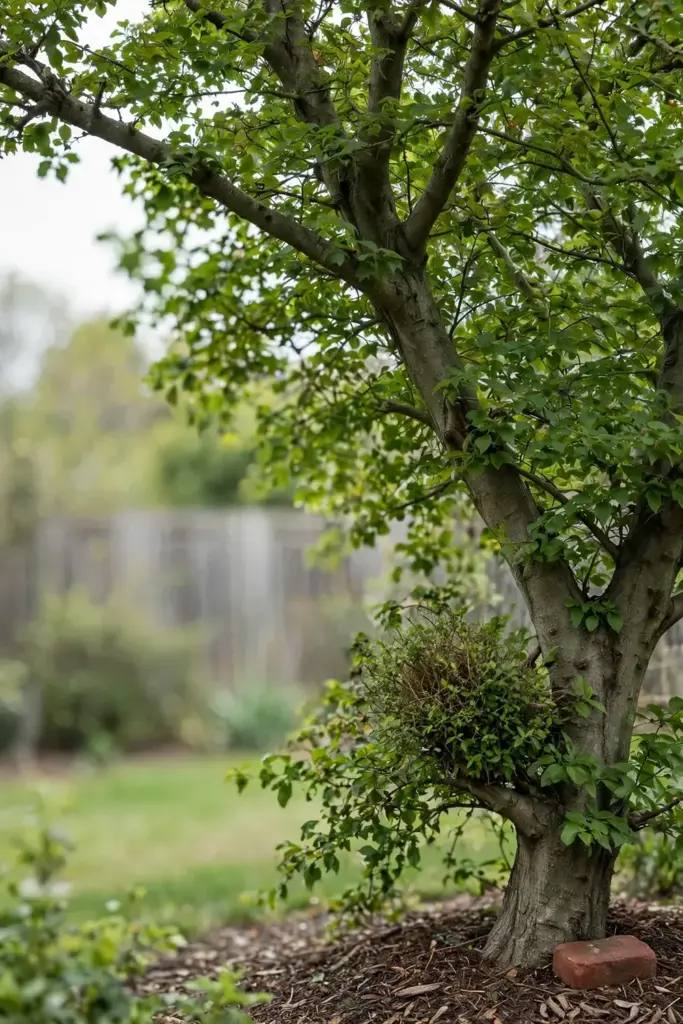
Work with what remains. Keep the plant watered through dry spells, and feed the soil rather than the broom. Mulch the root zone, keep mower and trimmer damage away from the trunk, and give the plant the vigor it needs to feed around the broom. A pruned broom stub needs a watch, since fresh brooming at the same spot means the cause survived, and a second cut buys little.
Track the broom across seasons. Photograph it each spring from the same spot, and note whether it grows, stalls, or dies back. A broom that holds steady for two seasons on a healthy plant has announced itself as cosmetic. A broom that doubles in size, sheds leaves, or gains company on nearby branches has announced the opposite, and the notes make the removal call easy when the time comes.
Replace the plant when the balance tips. A shrub that stops blooming, drops leaves early, or shows dieback across the crown has passed the point where patience pays. Pull it, bag the material, and replant with a resistant choice sited away from the alternate host. The garden gains more from a clean replacement than from one more season of nursing a failing shrub.
Frequently Asked Questions
Rarely. The broom itself drains a small share of nutrients, and a healthy tree feeds around it for years. The causes behind brooms carry the real risk, and a systemic rust or a spreading phytoplasma can kill a shrub over several seasons. Watch the rest of the plant. A broom on a tree that keeps its leaves, sets fruit, and grows normally is a cosmetic quirk, not a death sentence.
No. Bag broom cuttings and trash them at the work site. Compost piles rarely heat evenly enough to kill fungal spores, and the insects that ride along survive a cool pile without trouble. Dragging open armloads of cuttings across the garden spreads the same spores the pruning just removed. Seal the bag, carry it straight to the trash, and keep broom material out of the compost bin for good.
No spray cures a broom. Fungicides cannot reach a phytoplasma inside the phloem, cannot undo a mutation, and cannot clear a systemic rust from a blueberry crown. Pima County Extension states that no chemical fungicides are available to control the oleander broom fungus, and blueberry rust answers the same way. Spend the spray budget on plant vigor and tool hygiene, and spend the cutting effort on pruning and removal.
Sometimes. A mutation broom rarely returns, since the cause sat in one growth point and the cut removed it. A broom caused by a systemic fungus or phytoplasma returns, since the cause lives inside the plant and the cut only removed the symptom. Watch the cut site through one full season. Fresh brooming at the same spot means the cause survived, and removal beats a second round of pruning.
It depends on the cause. A mutation broom spreads to nothing, and a mistletoe broom stays on its host branch. A fungal broom spreads by spores, and a phytoplasma broom spreads through sap-feeding insects, so both can reach neighboring plants of the same species. Remove a badly broomed plant early when healthy plants of the same species stand nearby, and disinfect tools between every cut.
Where to Go From Here
Start with one walk around the plant. Mark every broom, read the leaves and the fruit, and run the Step 1 verdict before the shears leave the shed.
Most brooms end there, as a quirk to watch. A broom with warning signs earns the full sequence, from lookalike check to disinfected cut to bagged cuttings. A broom that keeps returning earns removal, and the garden moves on.
One honest look beats a season of worry. Walk the plant, name the broom, and act on what the whole plant shows.