Pick 1 rootstock before you pick a fruit variety. Rootstock is the lower half of a grafted tree, the part that becomes the roots and decides how tall the tree grows, how soon it fruits, and which soils it tolerates.
Every grafted tree is 2 plants in 1 body. The top carries the fruit you chose. The bottom carries the roots that feed it. A grower who ignores the bottom half buys a surprise: a tree that towers over the fence, sulks in wet clay, or waits a decade to fruit.
| Item | Detail |
|---|---|
| What it is | The lower half of a grafted tree |
| What it controls | Tree size, fruiting age, disease, soil fit |
| Common types | Dwarfing, semi-dwarfing, and standard |
| Watch out for | A graft union buried below the soil |
What Is Rootstock?
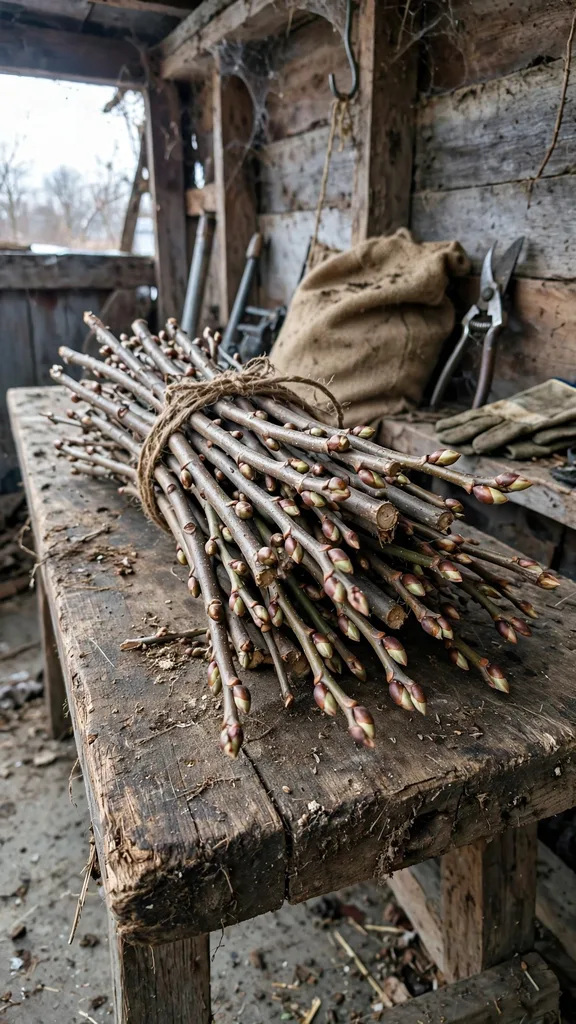
Rootstock is the part of a plant that becomes the root system of a grafted or budded tree. Nurseries raise it from seed or from a cutting, then graft the chosen fruit variety onto its top. The two parts heal into a single tree, and from then on the rootstock governs the roots while the scion governs the branches and fruit. Clonal apple rootstocks recommended in one southern state include Malling-Merton 106 (MM 106), MM 111, and Merton 7A (M 7A), according to the Mississippi State University Extension grafting guide.
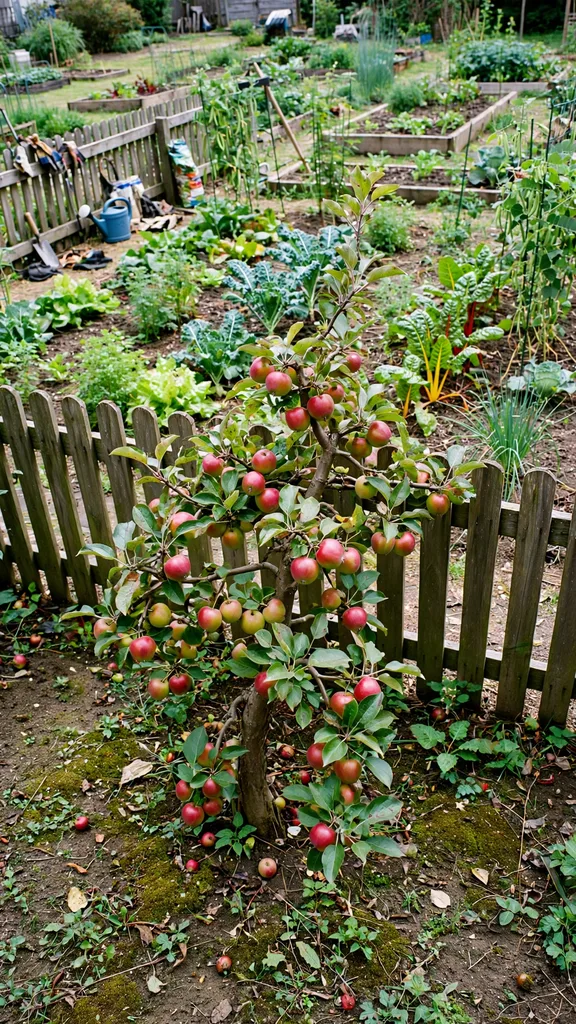
Size is the rootstock trait most gardeners feel first. A dwarfing rootstock holds an apple tree near 2 to 3 meters, a semi-dwarfing one near 4 to 5 meters, and a standard rootstock lets it reach full height. Small trees fruit sooner, pick easier, and fit a suburban plot. Big trees live longer and crop heavier, and they suit orchards with room to spare. Disease resistance and soil fit run second: some rootstocks shrug off wet feet, others resist collar rot, and a few handle drought better than seedling roots.
How Rootstock Works
A rootstock works through 3 channels: hormones, water, and anchorage. Dwarfing roots send less growth signal upward, so the shoots stay short and the tree puts energy into fruit instead of wood. The root system also sets the water supply: deep roots find moisture in a dry spell, while shallow roots need steady watering through summer. Anchorage follows size. A dwarfing tree on a windy site needs a stake for life, while a standard tree anchors itself within a few seasons. Grafting tools work best on young stock no thicker than a pencil, so nurseries bench graft in late winter.
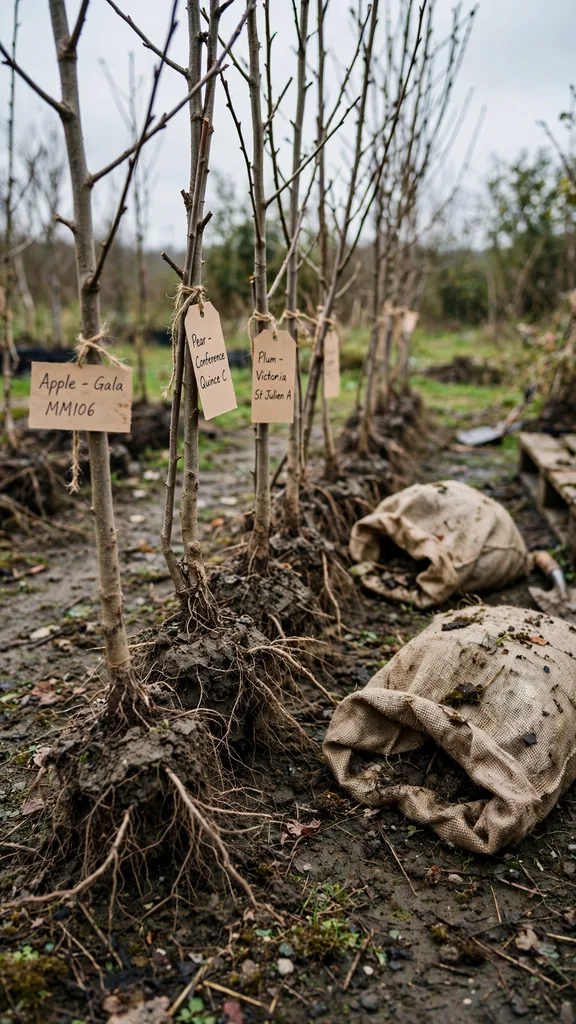
Compatibility decides whether the pair lasts. The cambium layers must meet and knit, and the two parts must grow at a similar pace, or the union swells into a weak bulge that snaps in a storm. By grafting to a dwarfing rootstock that comes into production much earlier than a standard or semi-dwarf rootstock, a grower can taste a new variety years sooner, as the Penn State Extension bench grafting guide explains. That speed is why nurseries graft almost every fruit tree they sell. Seedling trees fruit late, grow uneven, and never repeat the parent. The join itself is covered in the grafting guide, which walks through whip, tongue, and cleft grafts step by step.
Rootstock vs Scion
Rootstock and scion are the two halves of one grafted tree. They meet at the union, and each governs a different half of the plant. Mixing them up leads to the classic error: blaming the variety for a fault that belongs to the roots.
| Feature | Rootstock | Scion |
|---|---|---|
| Position | Below the graft union | Above the graft union |
| Becomes | The root system | The trunk, branches, and fruit |
| Governs | Size, vigor, soil fit, disease | Variety, flavor, fruit shape |
| Chosen for | Ground and garden size | Taste and cropping |
| Visible sign | Roots and the union bulge | Leaves, flowers, and fruit |
How to Recognize and Measure Rootstock
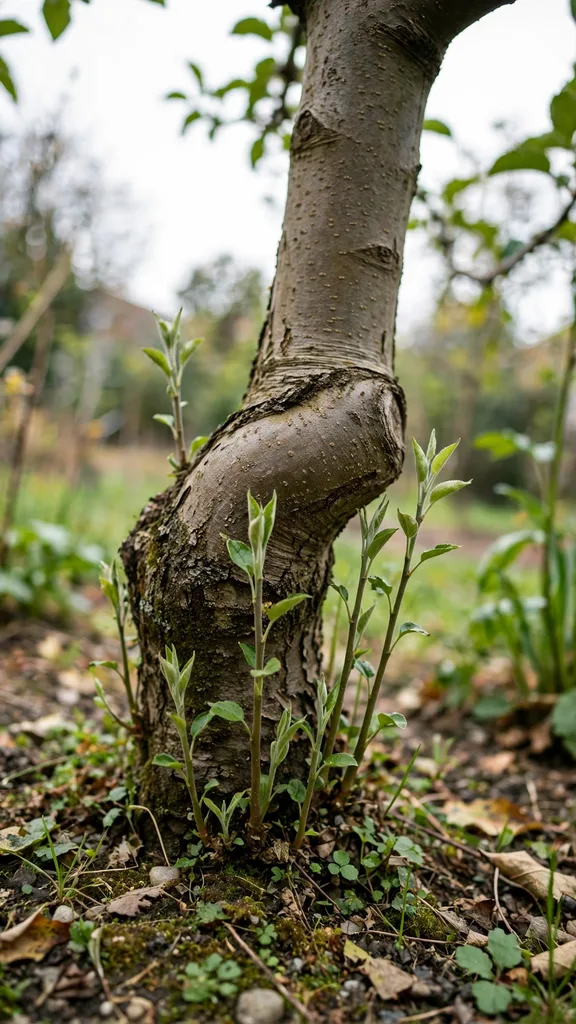
Spot the rootstock by the union. Look for a slight bend or swell on the trunk, usually 15 to 30 cm above the ground on a nursery tree. Below that line lies rootstock wood, often rougher barked and sometimes a different shade. Above it sits the variety. Suckers give the game away: shoots from below the union carry rootstock leaves, not the variety, and they grow fast and upright. A tree that fruits early, stays short, and crops heavily for its size almost always stands on a dwarfing rootstock.
Measure the fit by the tree, not by the label. A dwarfing apple should reach near its mature height within 5 to 7 years and then slow down. A tree still racing upward after that point may carry a scion-rooted union, or a rootstock stronger than the label promised. Check the union every winter: a smooth, even ring means a sound join, while a sharp ridge or a crack calls for a stake and a closer watch. When a tree leans after a storm, the roots are the first suspect, and staking beats pruning as the fix.
Common Mistakes With Rootstock
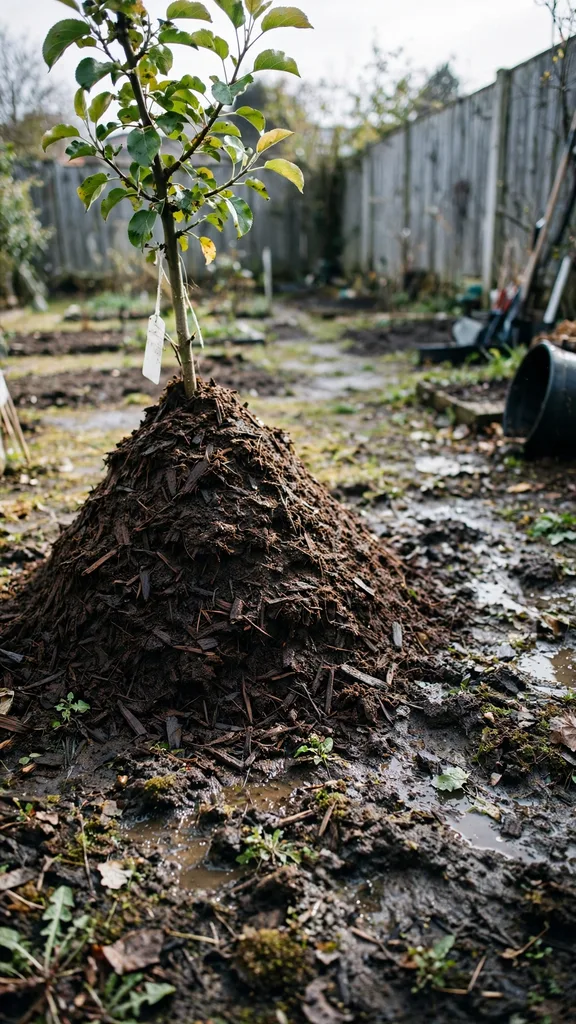
- Burying the union. Soil against the scion lets it root, and the dwarfing effect dies with the rootstock. Keep the union clear of soil and mulch at planting time.
- Picking variety first. A fine apple on roots that hate your soil will sulk for years. Choose the rootstock for the ground, then pick the fruit that suits it.
- Skipping the stake. Dwarfing roots anchor poorly, and a young tree in wind rocks until its fine roots tear. Stake at planting and leave the tie loose enough to move.
- Letting suckers grow. Rootstock suckers outgrow the variety and drain its water. Cut them at the base the moment they appear, and check again each month.
- Planting in a wet hollow. Some rootstocks cope with damp ground, yet most sulk and rot when water stands around their roots for days after rain. A hollow that holds water will rot roots no matter how good the variety is.
When Rootstock Matters in Your Garden
Rootstock matters most at buying time, before the spade touches soil. A small garden needs dwarfing roots, a windy site needs a staked tree, and heavy clay needs a rootstock that tolerates wet feet. Get those 3 calls right and the tree looks after itself for decades. Get one wrong and every season becomes a repair job. The shoot that sits on those roots has its own rules, covered in the scion guide.
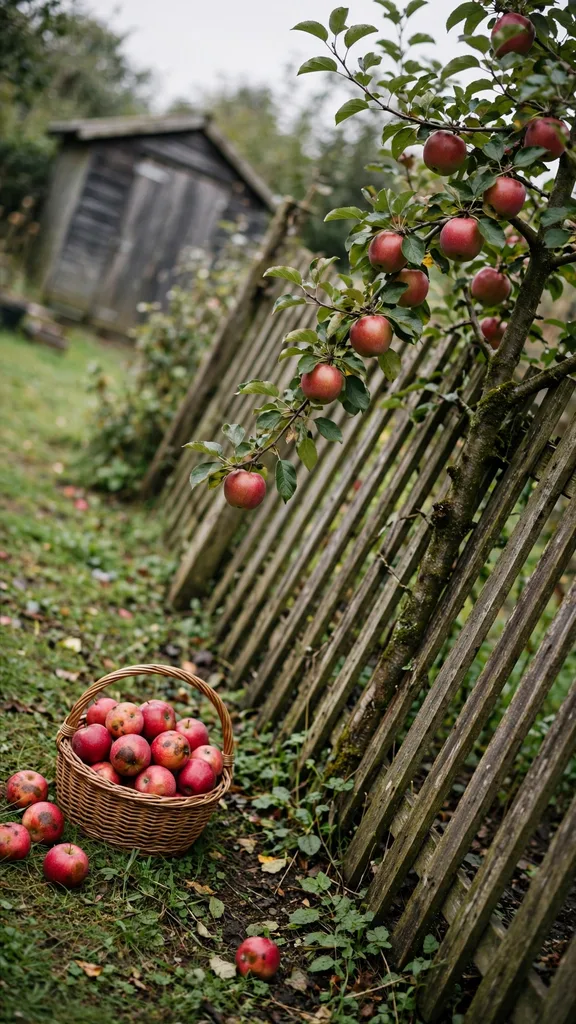
It matters again at planting. Set the union above the soil, firm the roots into damp earth, and stake a dwarfing tree on day one. A tree planted deep in year one spends year two and three recovering, and the fruiting delay costs more than the planting saved. For the full picture of the terms in this series, see the gardening glossary.
FAQ
Yes, and it will grow into a tree of its own kind, usually with small, sour fruit. Rootstocks are bred for roots, not for eating, so the fruit disappoints. Their value lies underground: size control, disease resistance, and soil tolerance that the fruiting variety cannot supply on its own roots.
Check the nursery label first, since it names the rootstock code. Without a label, watch the tree: early fruiting and short stature point to dwarfing roots, while late fruiting and tall growth point to standard roots. The union bulge on the trunk marks where the rootstock ends and the variety begins.
Flavor belongs to the scion, and the rootstock does not change it directly. It changes flavor indirectly by setting crop load and vigor: a dwarfing tree often crops sooner and ripens fruit more evenly, while an over-vigorous tree can delay ripening and dilute flavor with leafy growth.
A standard tree can live 50 years or more, while a dwarfing tree often lives 20 to 30 years. The union itself rarely fails first. Drought, waterlogging, and suckers left to grow cause most early losses. A staked, well-watered dwarfing tree outlives a neglected standard one.