Wait for 2 true leaves before you move a seedling, and wait for several sets before you feed it. The true leaves rule is that the first leaves with the adult shape of the plant mark the moment a seedling stops living on seed stores and starts feeding itself.
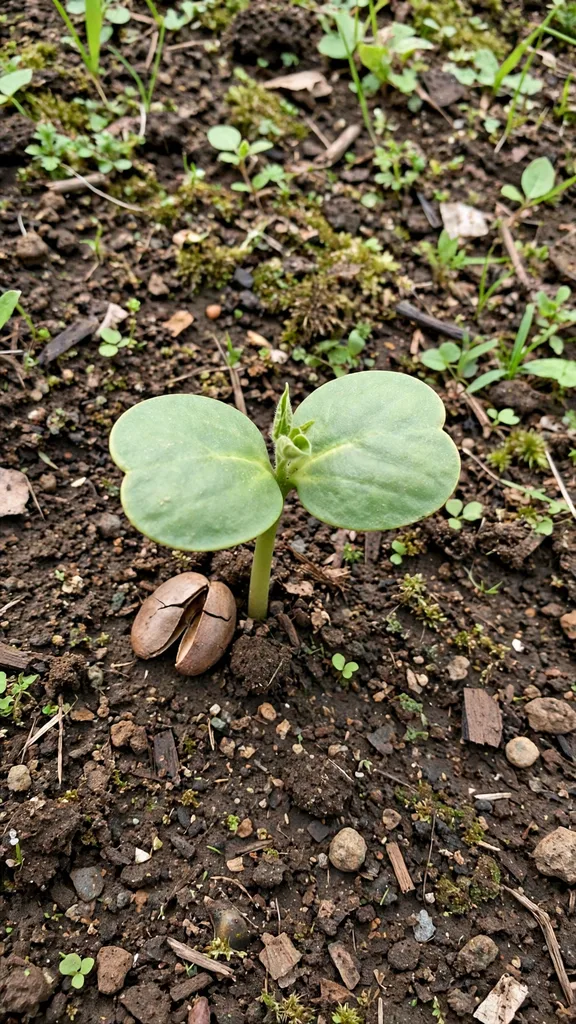
True leaves look like the plant. A tomato seedling grows jagged leaflets, a bean seedling grows broad three-part leaves, and a lettuce seedling grows soft oval leaves with a ruffled edge. Cotyledons look like none of those. They are smooth, plain, and generic, and they vanish once the plant outgrows them. Learn the pair, and the seedling tray stops looking like a tray of strangers.
The count also runs the nursery calendar. Thinning, transplanting, feeding, and hardening all key off true leaves, not off the calendar. A seedling with 2 true leaves takes a move. A seedling with several sets takes weak fertilizer. A seedling with no true leaves takes nothing but light, water, and patience. The seed starting guide covers the tray setup that comes before this stage.
| True Leaves at a Glance | Detail |
|---|---|
| What they are | First leaves with the adult shape of the plant |
| Appear after | Cotyledons open and the stem straightens |
| Transplant signal | First true leaves appear |
| Feeding signal | Several sets of true leaves |
| Feeding rate | Fertilizer at 1/4 strength, once a week |
| Light need | 12 to 16 hours of light a day |
What Are True Leaves?
True leaves are the first leaves a seedling grows that carry the shape, edge, and texture of the adult plant. They follow the cotyledons, which are the plain seed leaves that open first. A gardener who can tell the two apart can thin, transplant, and feed at the right moment instead of guessing.
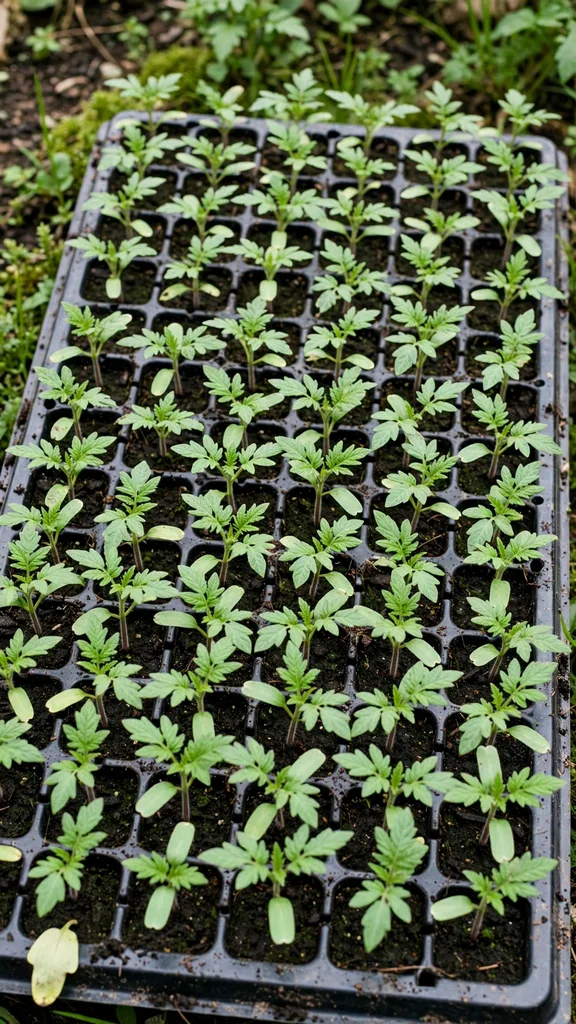
The deciding signal is the transplant moment. The ideal time to transplant young seedlings is when the first true leaves appear, according to the North Carolina Extension Gardener Handbook chapter on propagation. Seedlings left in the flat too long crowd each other, stretch for light, and tangle roots. Seedlings moved before true leaves appear have no root system strong enough to hold soil.
True leaves also mark the start of real photosynthesis. Cotyledons feed the seedling from stored energy for a short while. True leaves catch light with a larger surface and a proper leaf structure, and they drive growth from that point on. A seedling with 4 true leaves grows visibly faster than a seedling with none, since each new leaf adds catching surface.
The term covers all seed plants, yet the leaves differ by crop. Tomato true leaves come jagged and hairy. Pepper true leaves come smooth and pointed. Squash true leaves come broad and rough. The shape is the identification tool: match the leaf in the tray to the leaf on the packet photo or the mature plant, and the weed seedlings stand out at once. The cotyledon page describes the seed leaves that come first.
How True Leaves Work
True leaves work as solar panels with plumbing. Each leaf holds chlorophyll in cells that catch light, and veins that carry water in and sugars out. The cotyledons run the same chemistry on a smaller scale, yet their small surface and short life limit them. True leaves take over the job and keep it for the life of the plant.
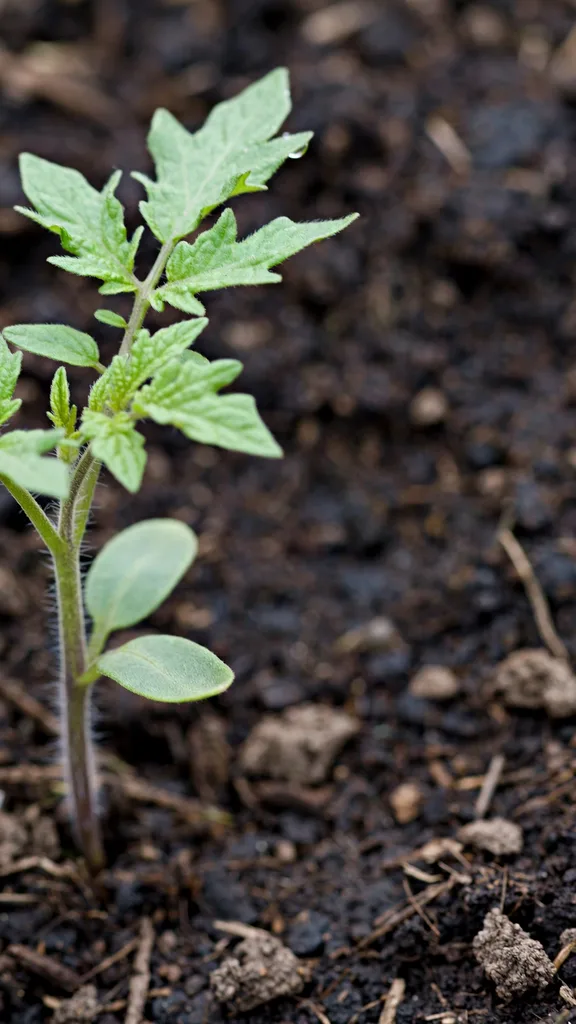
The plant builds true leaves from the growing tip, one set at a time. Each new set grows larger than the last while the stem thickens below. The first set often looks small and plain beside later sets, yet it still carries the adult shape in miniature. Count sets from the bottom up: the lowest true leaves are the oldest, and the newest pair sits at the tip.
Light drives the pace. Seedlings need 12 to 16 hours of light a day from a soft white fluorescent or grow light, according to the University of Minnesota Extension guide to starting seeds indoors. Window light alone runs short, and seedlings stretch toward it with long pale stems. A timer on the light keeps the day steady, and the leaves stay compact and green.
Feeding waits for the leaves. Seedlings draw energy for germination from nutrients stored in the seed, and the same notes hold fertilizer until several sets of true leaves appear. Feed then at 1/4 strength once a week, and water with plain water for the rest of the week. A seedling fed too early burns at the leaf edge. A seedling fed at the right time greens up within days.
True Leaves vs Cotyledons
| Feature | True Leaves | Cotyledons |
|---|---|---|
| Shape | Adult shape of the plant | Smooth, plain, generic |
| Number | Many sets through the season | 1 in monocots, 2 in dicots |
| Job | Photosynthesis for life | Short-term food from seed stores |
| Lifespan | Lasts the season | Withers once true leaves take over |
| Edges | Toothed, lobed, or hairy by crop | Smooth and untoothed |
| Signal | Transplant and feeding time | Germination succeeded |
The count of cotyledons sorts plants into two great groups. The same handbook notes that monocots such as corn produce only one cotyledon, while dicots such as beans produce two. Some gymnosperms such as pines carry many. The cotyledon count never changes for a species, while the true leaf count climbs all season.
Cotyledons also behave differently underground and above it. In beans, the cotyledons rise above the soil and open green. In peas and corn, they stay below the surface while the shoot pushes up alone. True leaves always grow above the soil, from the tip, in the open air. A leaf pair at the soil line with no adult shape is a cotyledon pair. A leaf pair higher up the stem with the crop shape is a true leaf pair.
Mistaking one for the other causes the two classic errors. A gardener who counts cotyledons as true leaves transplants a seedling with no roots to hold the move. A gardener who waits for true leaves on a crop whose cotyledons look leafy waits past the thinning window and crowds the row. Check the shape against the mature plant, not against the neighbor seedling.
How to Recognise True Leaves
Recognise true leaves by shape first. Hold a mature leaf of the same crop beside the seedling, or open the packet photo. True leaves repeat the adult outline, edge, and texture in miniature. Cotyledons repeat nothing. They look the same on a tomato, a pepper, and a squash, which is exactly why they confuse new gardeners.
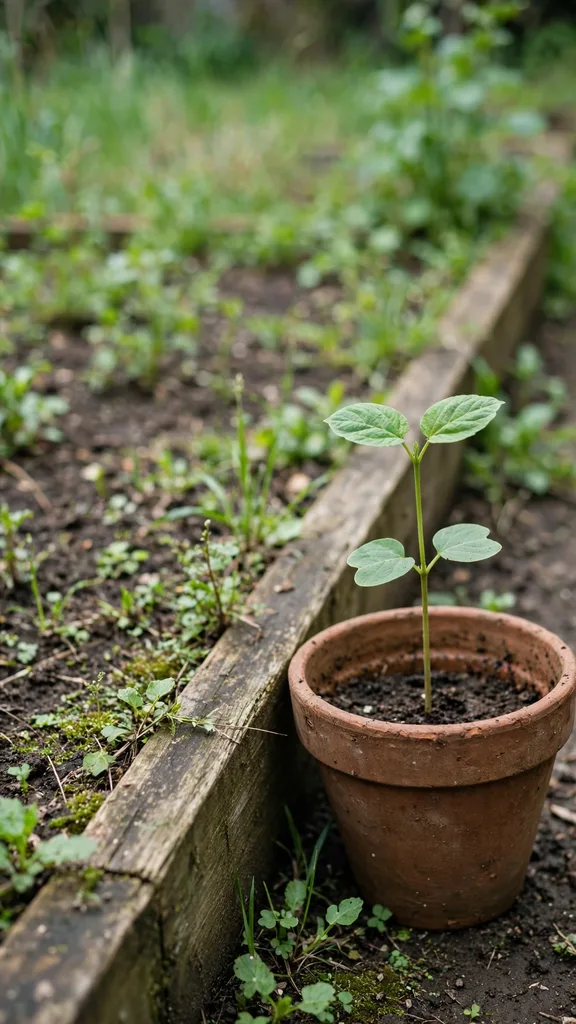
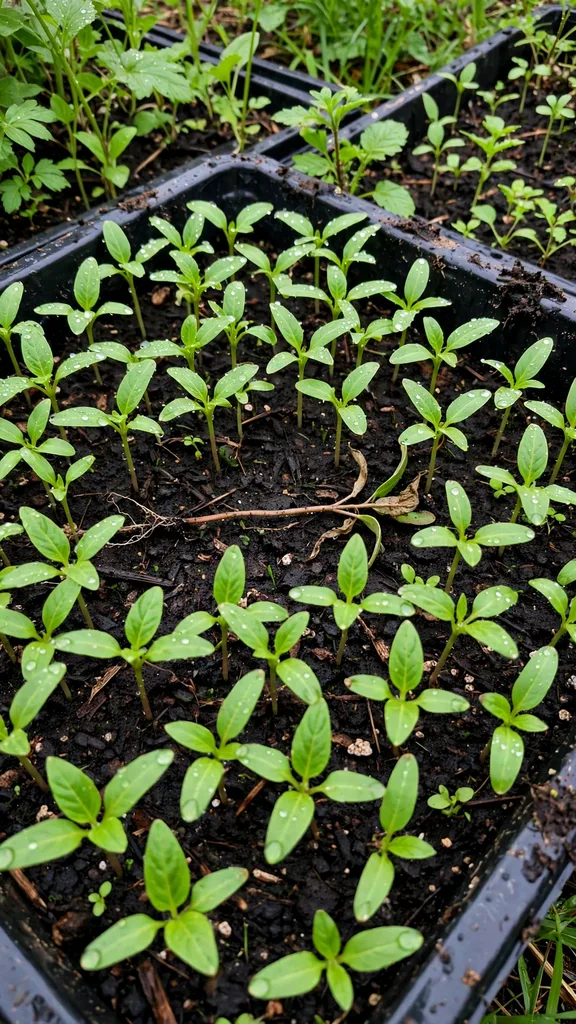
Count the sets from the soil up. The lowest pair above the cotyledons is the first set of true leaves. The next pair up is the second set. A seedling with 2 sets stands ready for a pot of its own. A seedling with 4 sets stands ready for weak fertilizer and a hardening schedule. Write the set count on the label when you check the tray, and the whole tray reads at a glance.
Watch the veins and the edge. True leaves show clear veins, a toothed or lobed edge, and often fine hairs. Cotyledons show a smooth edge, faint veins, and a thick fleshy feel. Rub the leaf gently: a true tomato leaf smells of tomato, while its cotyledon smells of nothing. The nose works where the eyes hesitate.
Check the stem below the leaves. A seedling with true leaves has a stem thick enough to hold the leaf weight upright in a light breeze from a fan. A seedling with only cotyledons has a thin pale stem that bends under its own pair. Air movement from a small fan thickens stems, and a stem that still bends after a week of air needs more light, not more time.
Common Mistakes With True Leaves
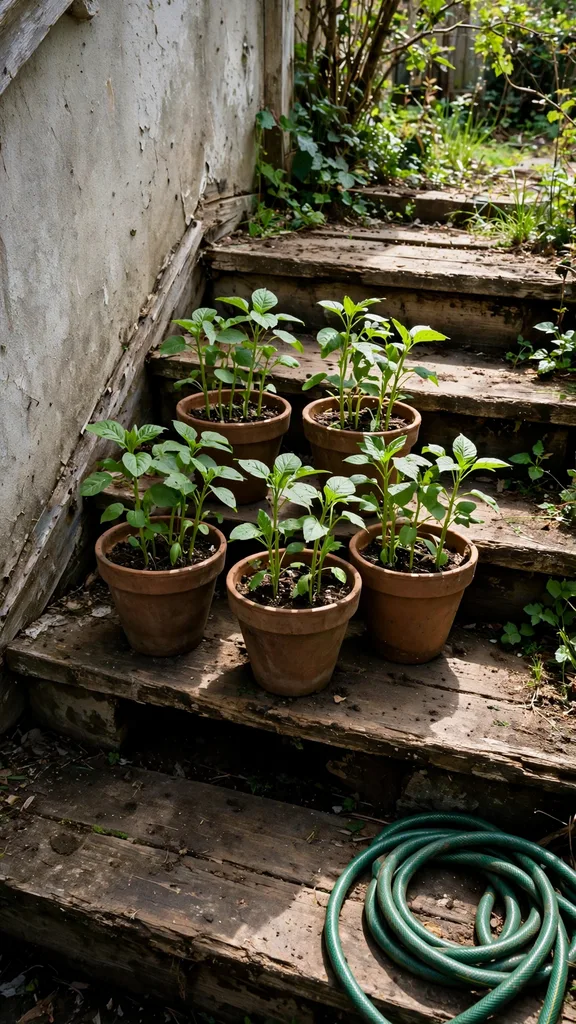
Transplanting before true leaves appear tops the list. The seedling has roots too small to hold soil, and the move tears them. The plant stalls for a week or dies outright. Wait for the first set, then move the seedling with a fork under the root ball, never by the stem.
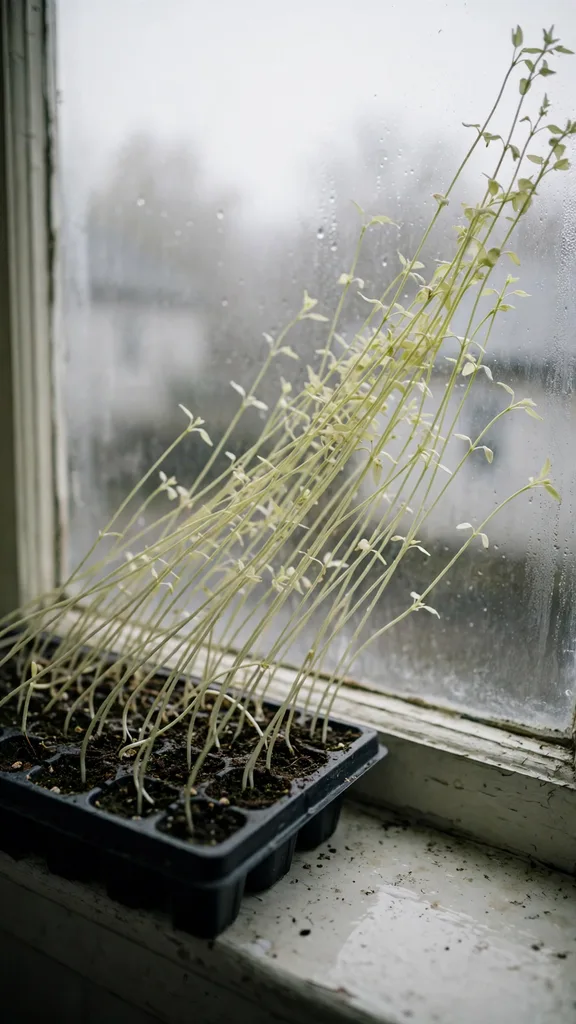
Feeding before several sets appear burns the second error into the tray. Fertilizer on a seedling with no true leaves scorches the cotyledons and the root tips. The seedling stalls, and the gardener feeds again to fix the stall. Hold all fertilizer until several sets stand, then feed at 1/4 strength once a week.
Counting cotyledons as leaves misreads the tray. A bean seedling with 2 cotyledons and no true leaves is not a 2-leaf seedling. It is a newborn still on seed stores. Thin it, move it, or feed it on that count and the seedling pays. Count true leaves only, from the first adult-shaped set upward.
Leaving seedlings in the flat past 4 sets crowds the tray. Roots tangle, stems stretch, and the lower leaves yellow from shade. Pot seedlings on when the first true leaves appear, and pot them on again when roots circle the pot. A seedling kept too long in a small cell never catches up, even after transplanting.
When True Leaves Matter in Your Garden
True leaves matter at every nursery decision. Thinning waits for them, transplanting waits for them, feeding waits for them, and hardening waits for them. A gardener who reads the leaf count reads the seedling. A gardener who reads the calendar guesses, and the guess costs seedlings.
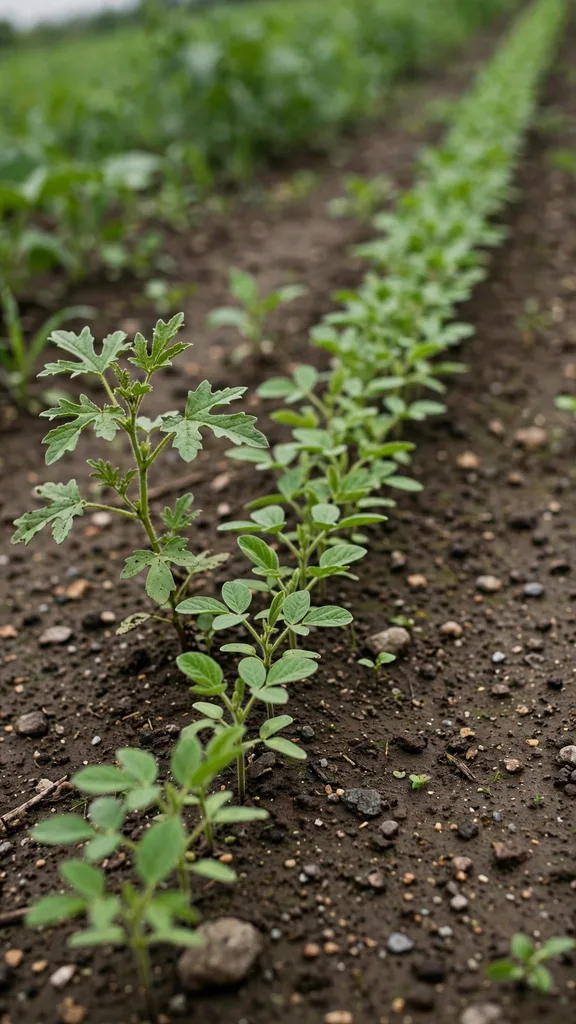
They matter for weed control too. A weed seedling in the row shows its own true leaves within days, and the shape gives it away. Pull the strangers while they are small, and the crop keeps the bed. Wait until the weeds set true leaves of their own, and the roots tangle with the crop.
They matter for diagnosis as well. Yellow cotyledons on a seedling with green true leaves signal nothing, since cotyledons yellow and drop on schedule. Yellow true leaves signal hunger, cold, or wet feet, and the gardener acts. Brown spots on true leaves signal disease or burn, while brown cotyledons signal only age. Read the true leaves, and the plant tells you what it needs. The full index of seed terms lives in the gardening glossary.
FAQ
Move seedlings when the first true leaves appear, and move them gently with a fork under the root ball. One set is enough for the move into a bigger pot. Wait for several sets before feeding at 1/4 strength, and wait for a sturdy stem before hardening off. Seedlings moved too early stall or die.
No. Cotyledons are seed leaves that feed the seedling from stored energy, and they look smooth and generic on every crop. True leaves carry the adult shape, edge, and texture of the plant. Count only the adult-shaped leaves when you judge transplanting, feeding, or thinning time.
Cold soil, dim light, and soggy mix all stall the first true leaves. Seedlings need 12 to 16 hours of light a day and warm soil to push new growth. Move the tray under a grow light on a timer, warm the mix with bottom heat, and let the surface dry between waterings. New leaves follow within days.
Leave them alone. Cotyledons feed the seedling until true leaves take over, then yellow and drop on their own schedule. Pulling them starves a young seedling and opens a wound at the stem. Remove only a cotyledon that has turned brown and dry, and cut it with scissors rather than pulling it.